Win The Battle Against Boring Images
Summary
Making Images Interesting
Having a great idea for an illustration is only the beginning. The gap between the exciting image in your head and the dull result on the page is one of the most common frustrations in picture making. Even experienced artists struggle with this, producing work that technically functions but fails to captivate or communicate with any real power.
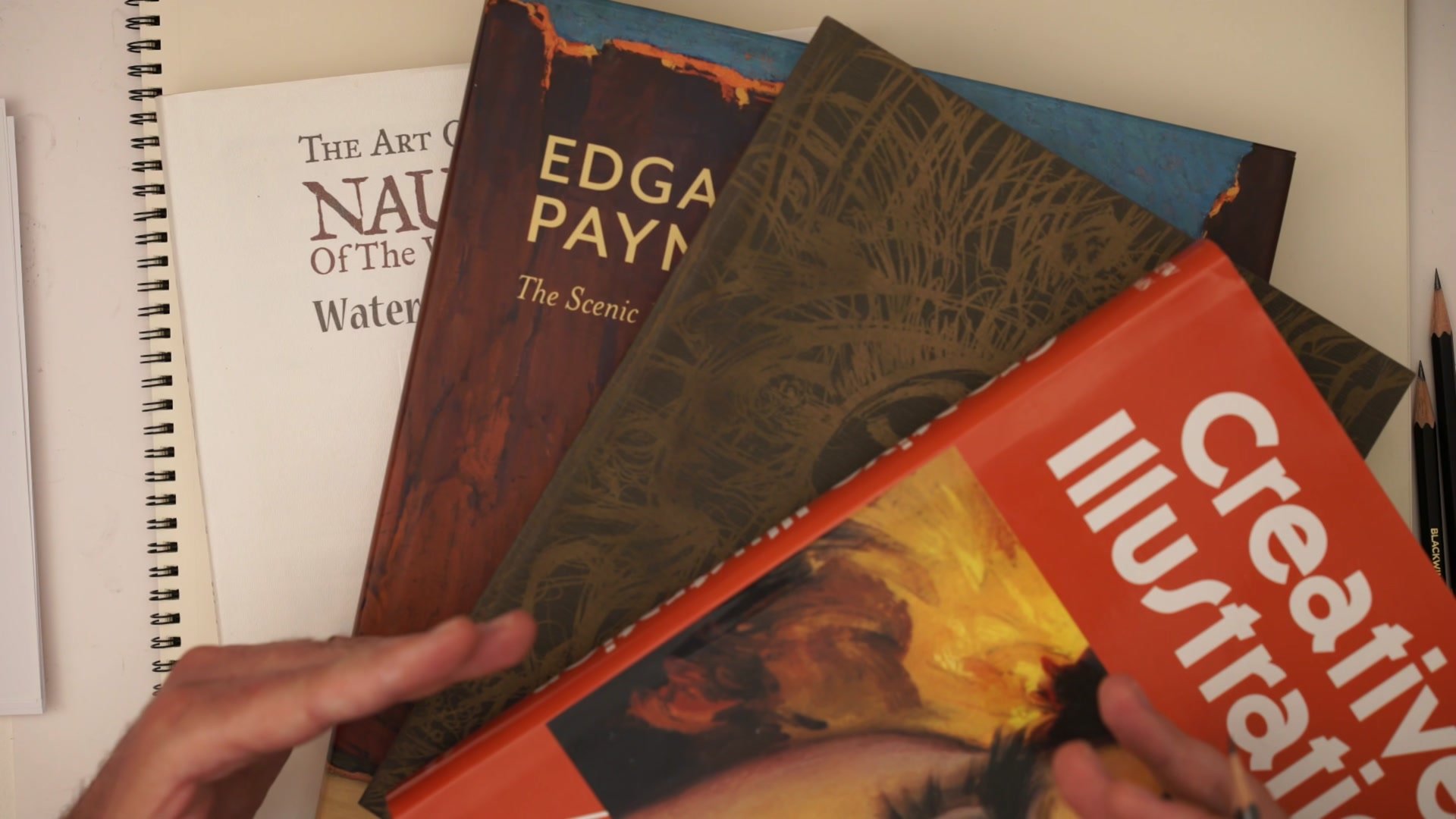
The principles of composition and illustration are well documented in books by masters like Edgar Payne and Andrew Loomis, but knowing these rules and actually applying them to your own work are completely different things. What often separates compelling images from forgettable ones is not the subject matter itself, but the way an artist identifies and manipulates the malleable elements within a scene. Every image has things that are fixed and things that can be moved, reshaped, and rearranged. Understanding this distinction is the foundation of making anything visually interesting.
Master References
Fixed vs Malleable Elements
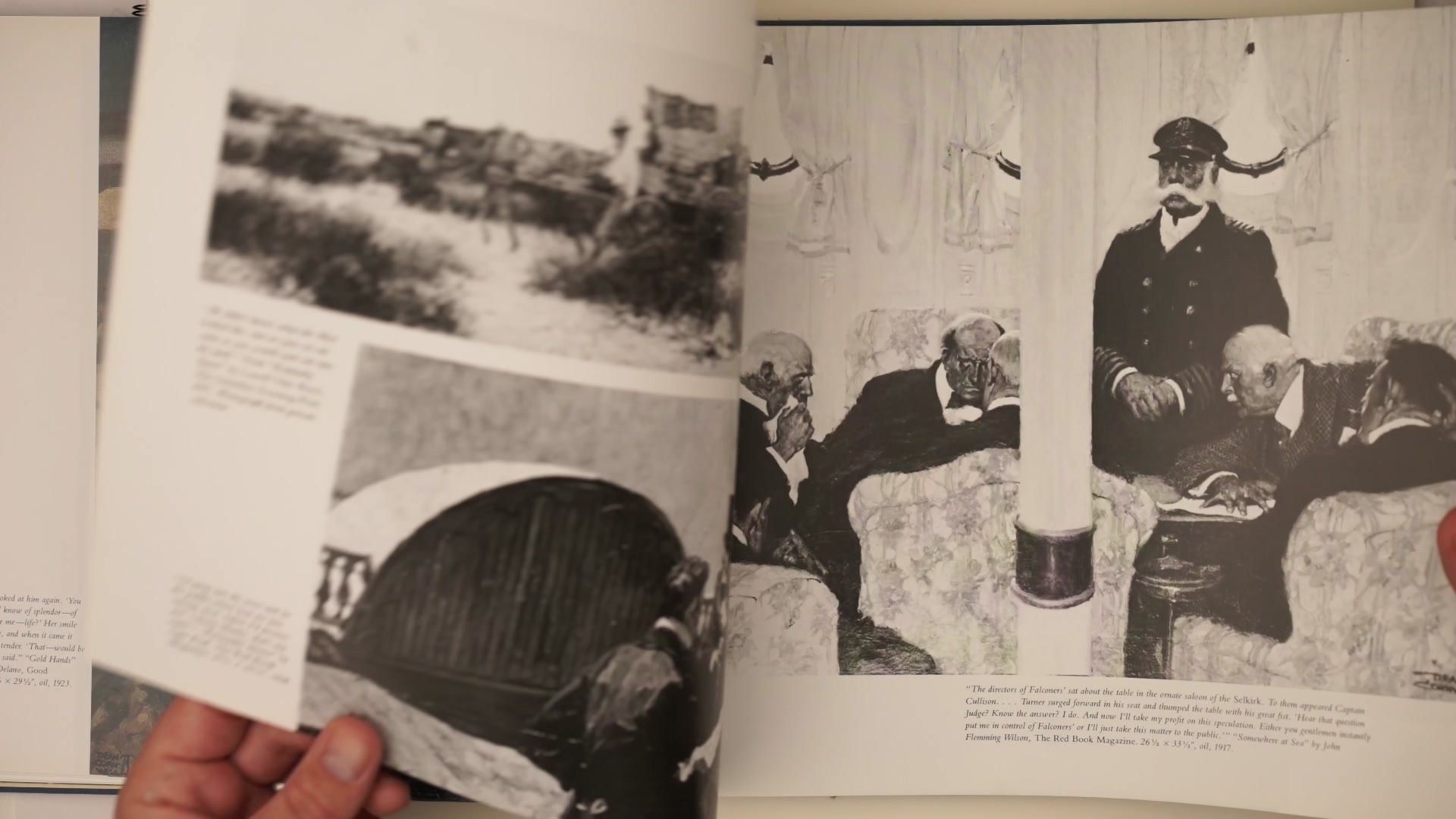
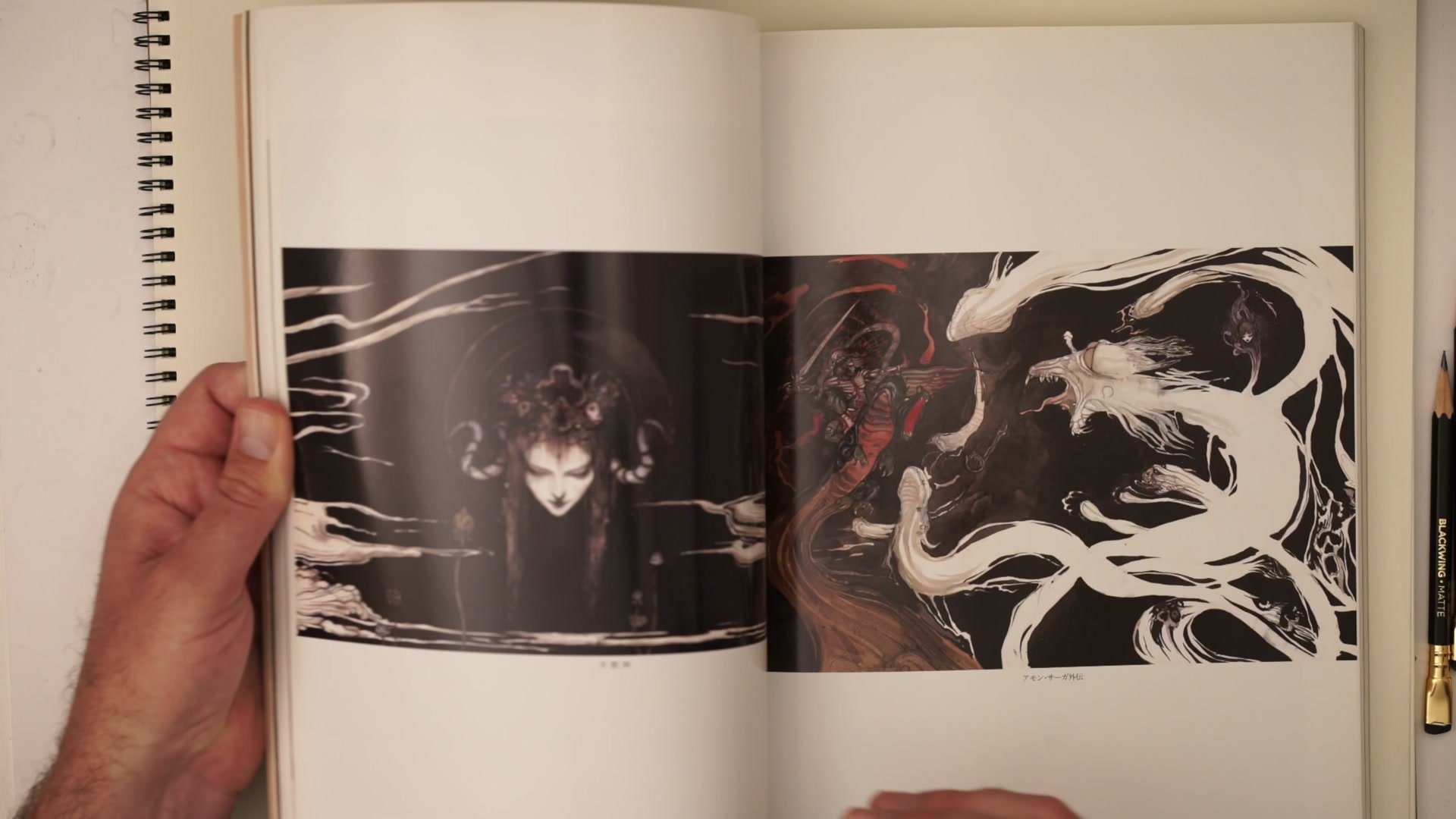
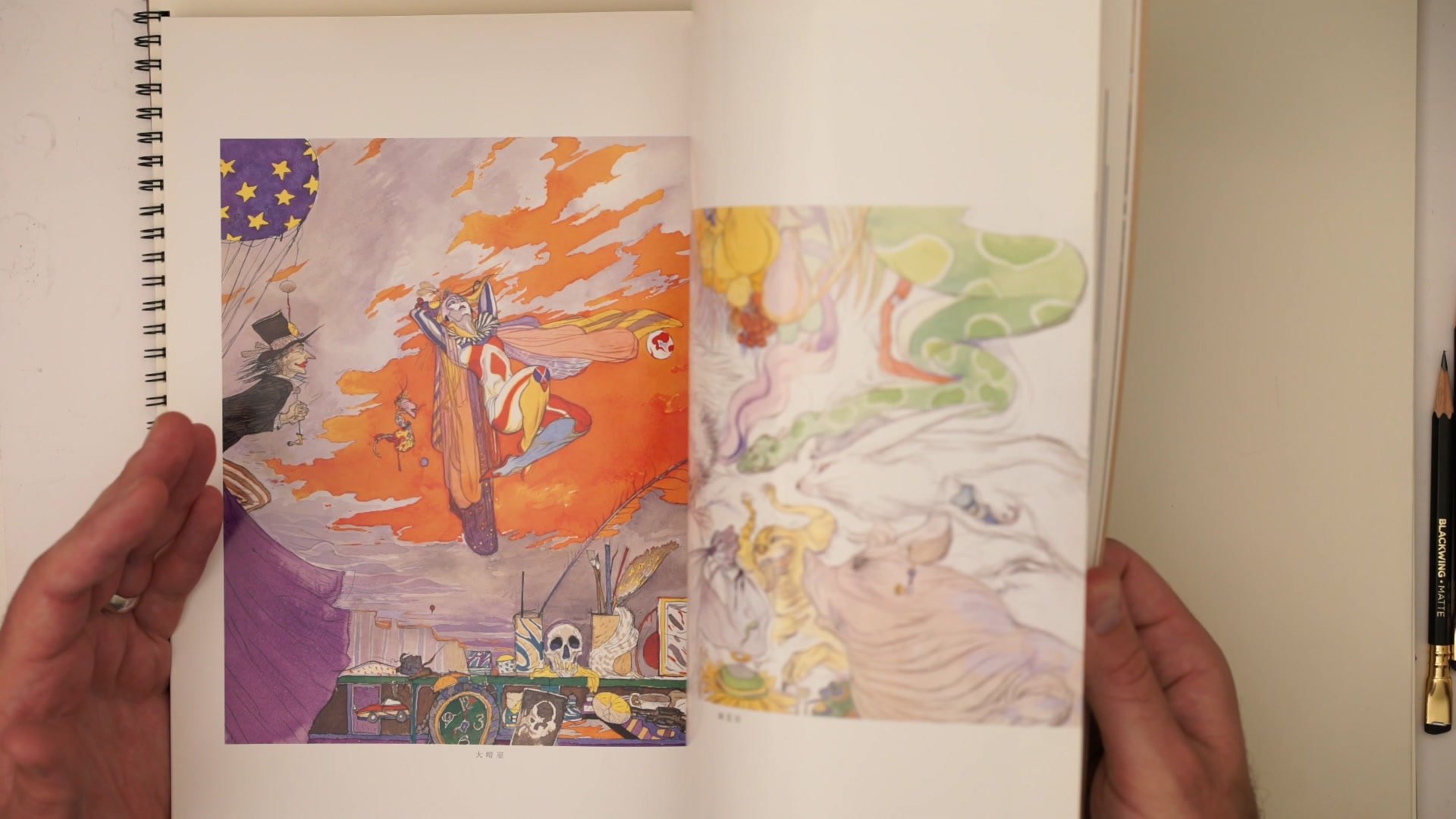
Different art serves different purposes. Miyazaki's preparatory work for Nausicaa explored ideas and worlds, while Dean Cornwell elevated commodity illustration into something people still study decades later. Yoshitaka Amano makes simple subjects extraordinary through the elements he chooses to manipulate. What separates all of these is not the basic subject matter but how the surrounding elements are handled.
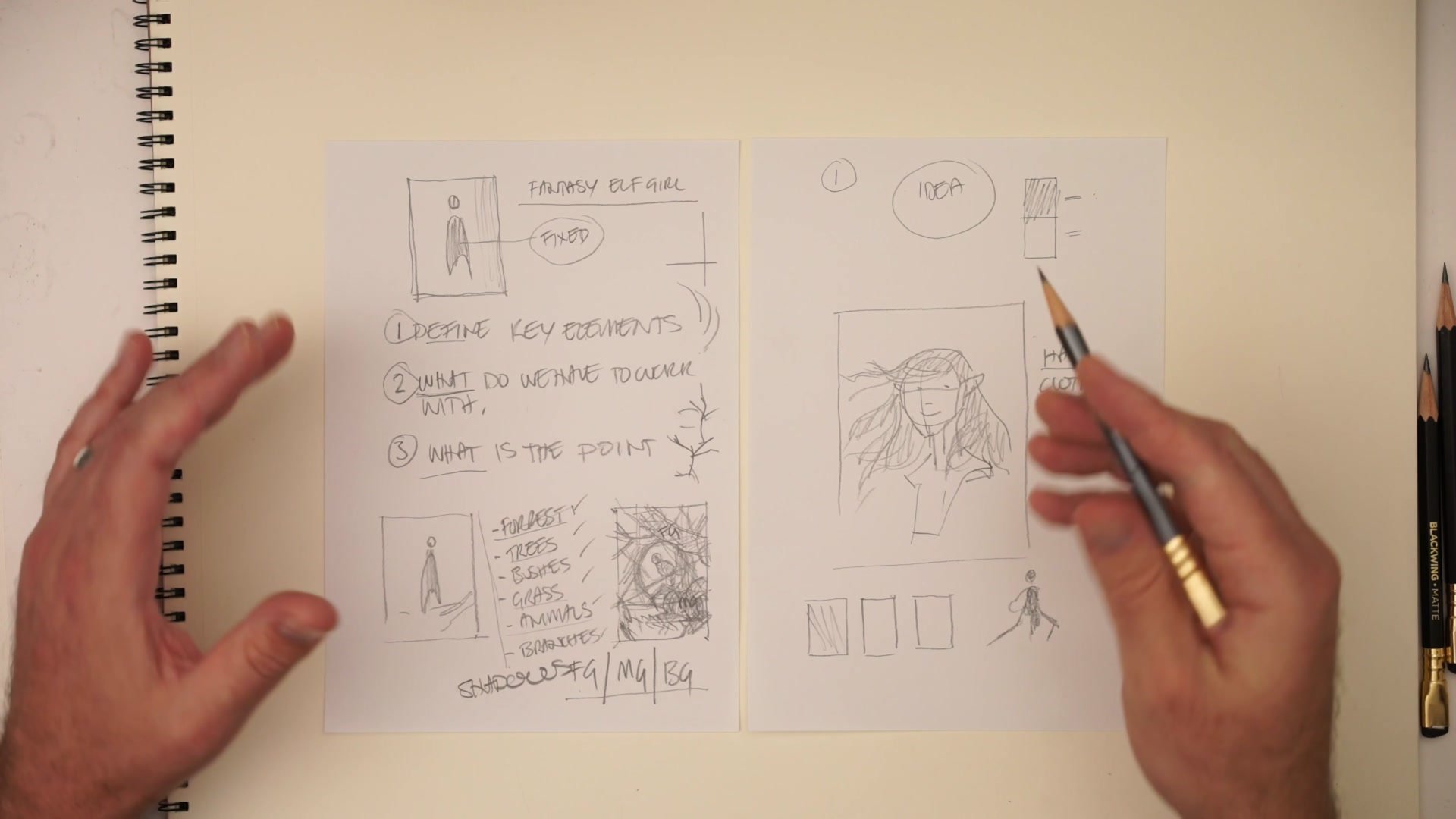
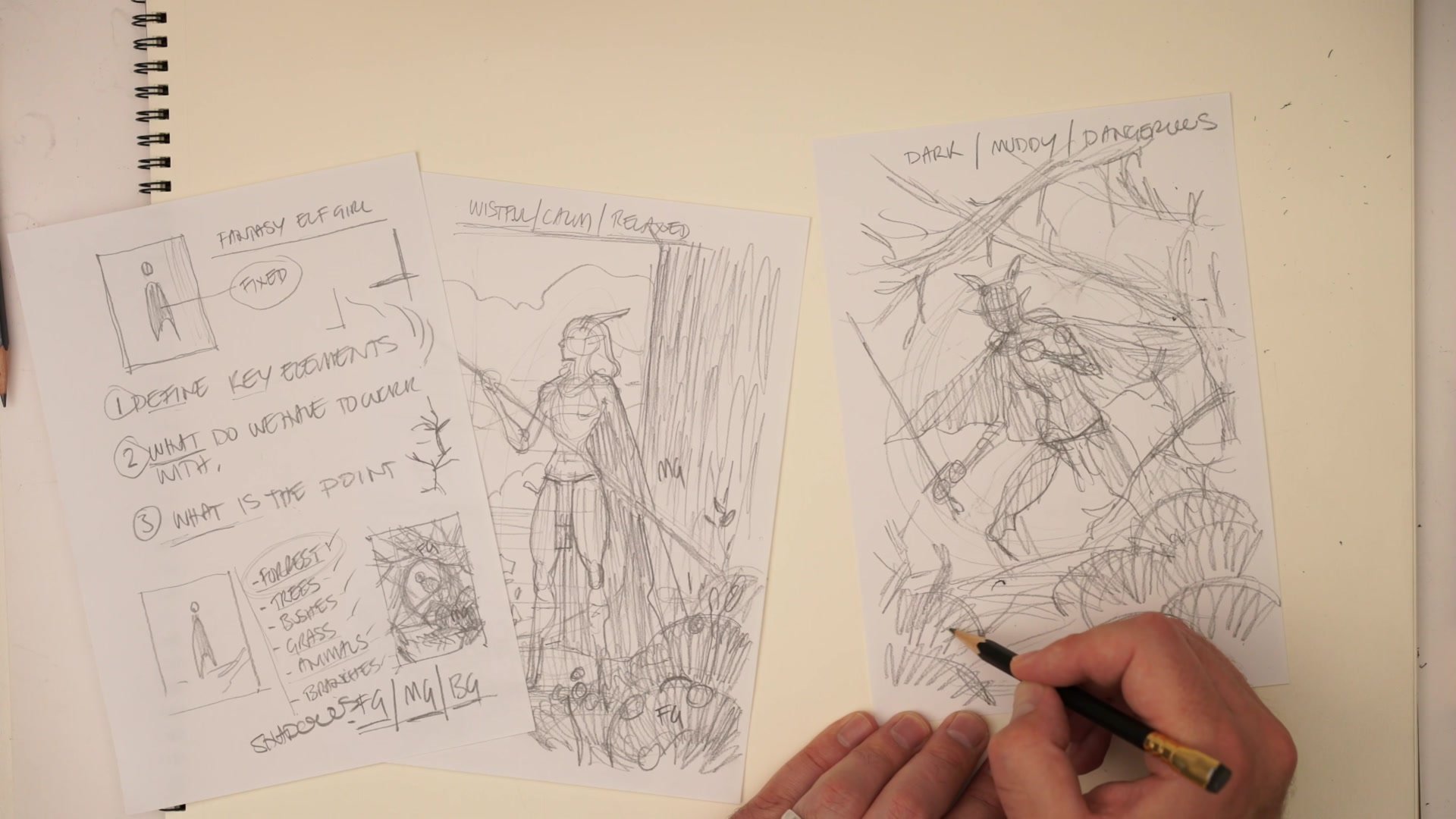
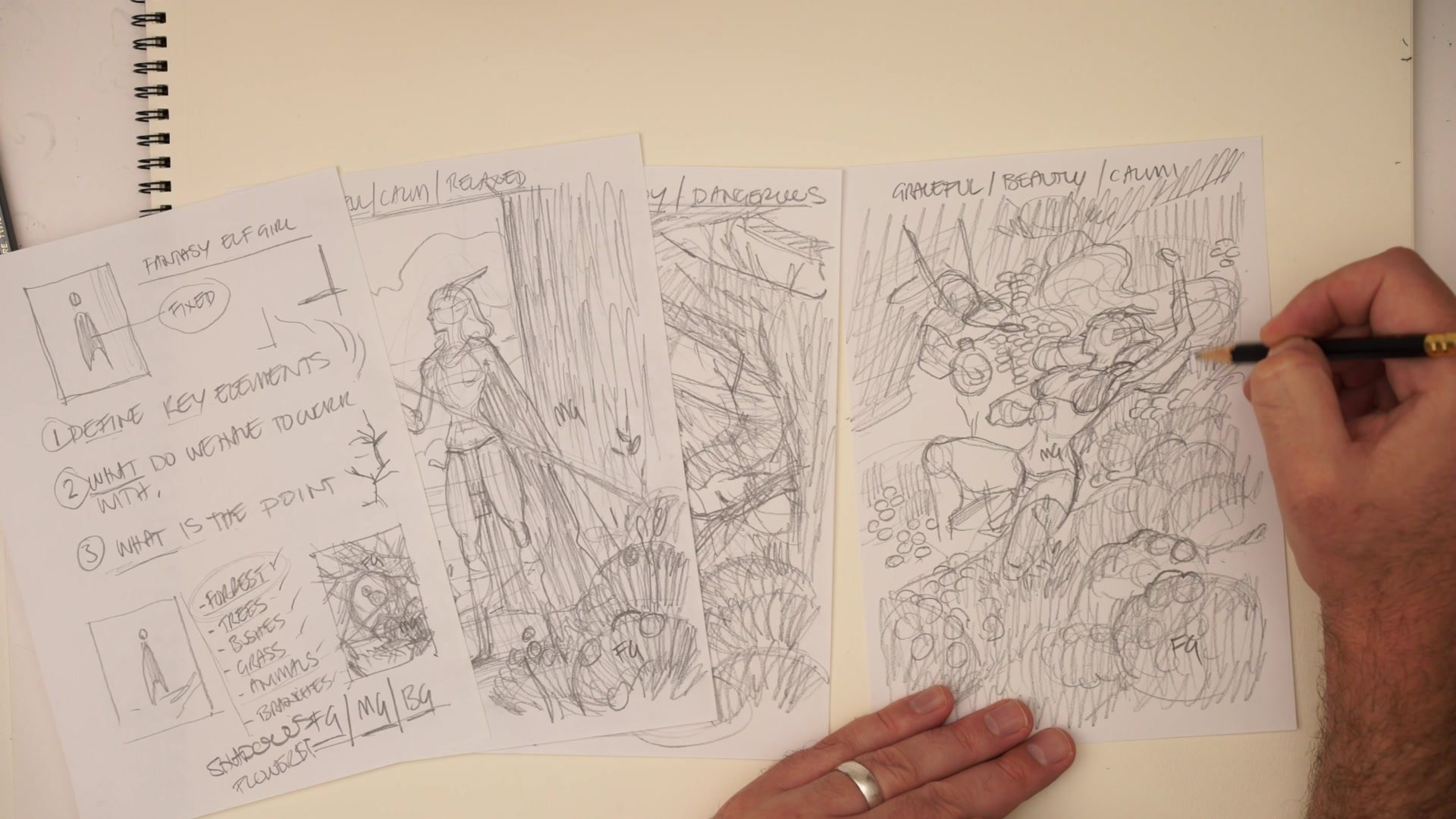
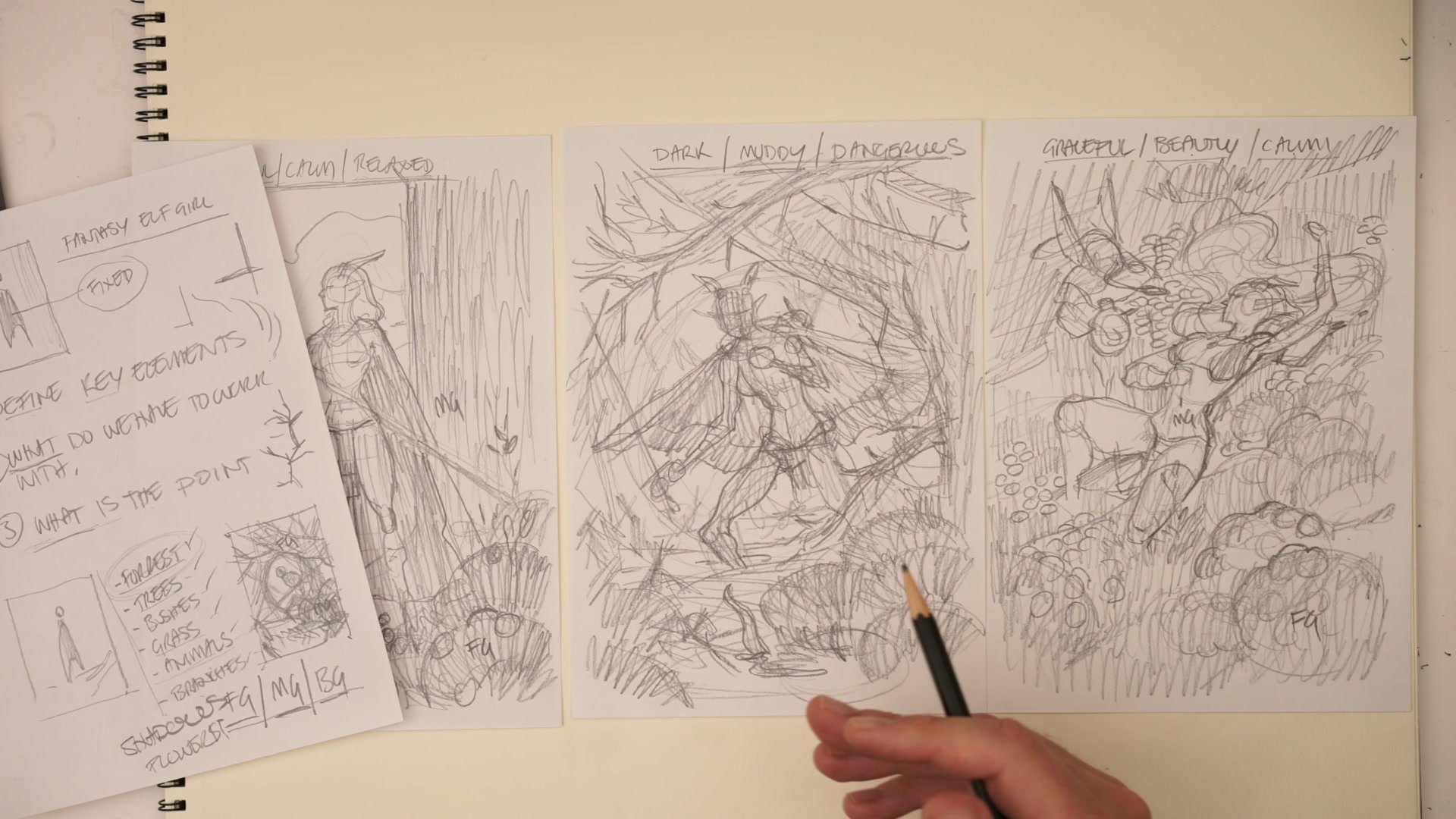
The first step in any composition is separating what needs to be there from what can be changed. A fantasy character in a forest is the fixed element, but trees, bushes, grass, flowers, animals, branches, shadows, and light are all tools that can be arranged, emphasized, or removed entirely. The real creative work happens in this malleable space. Most artists never consciously identify what their tools are for a given image, and that is precisely why they get stuck halfway through and feel like the work is boring.
The Framework in Action
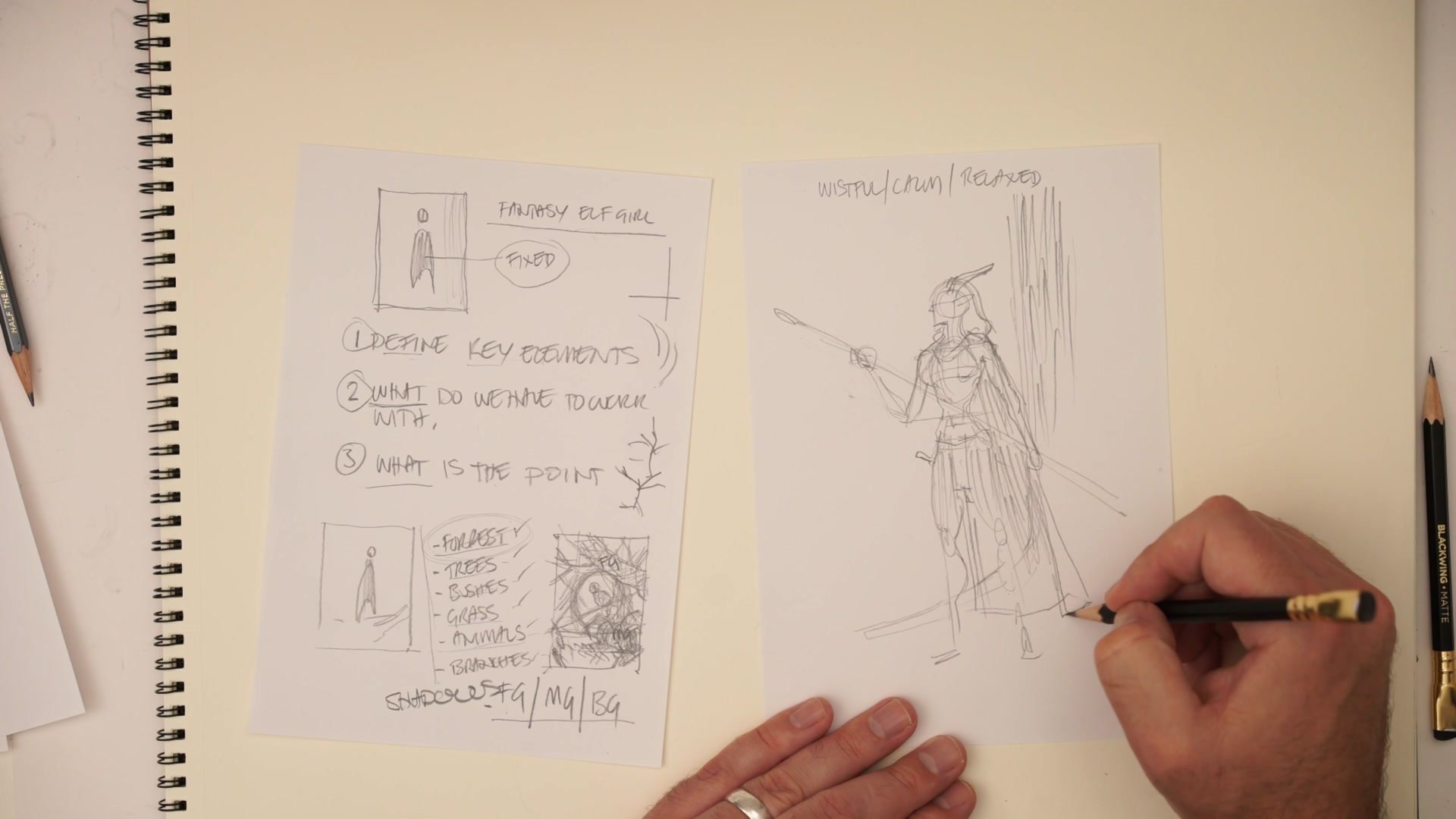
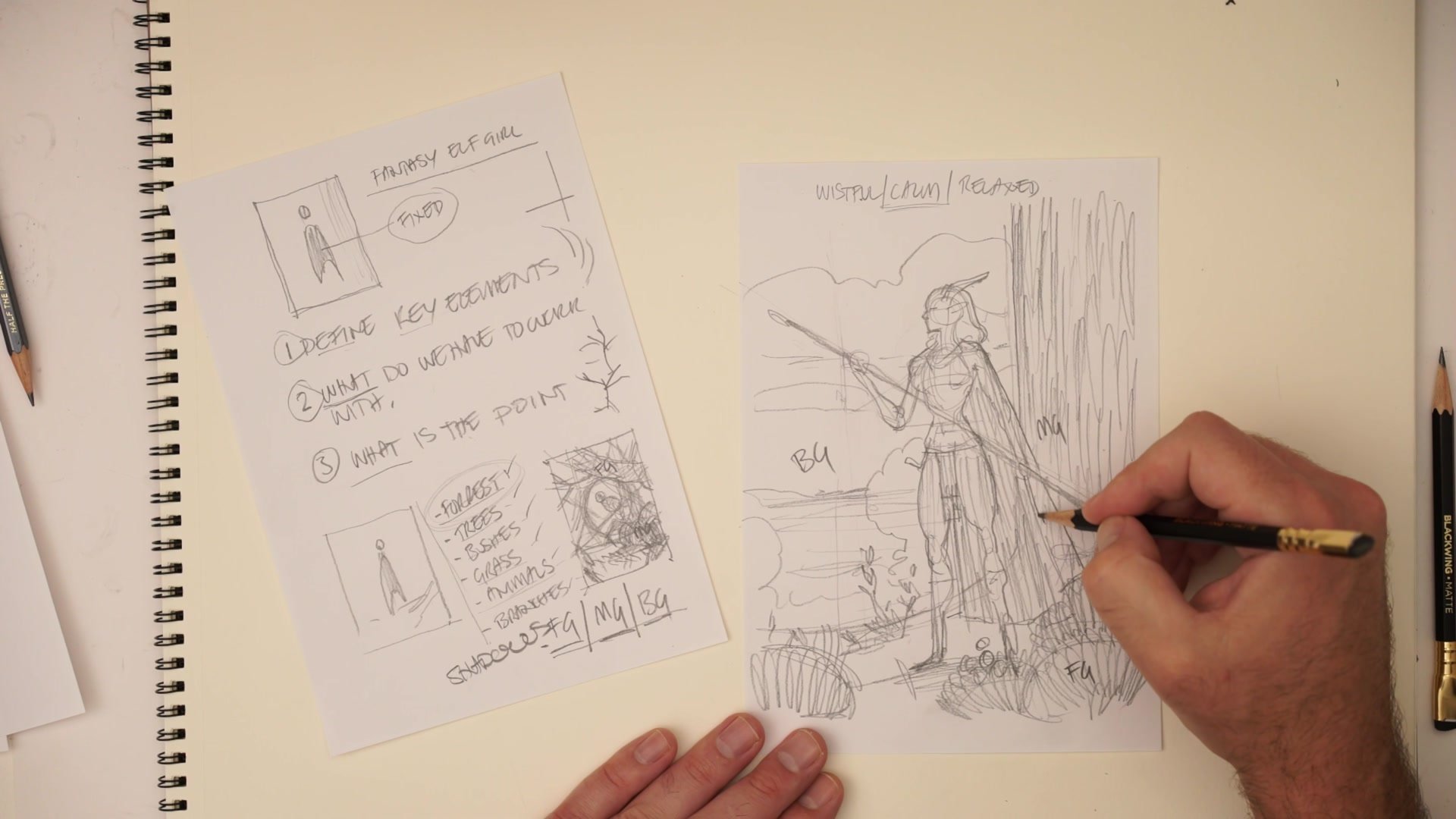
Mood Shapes Your Toolkit
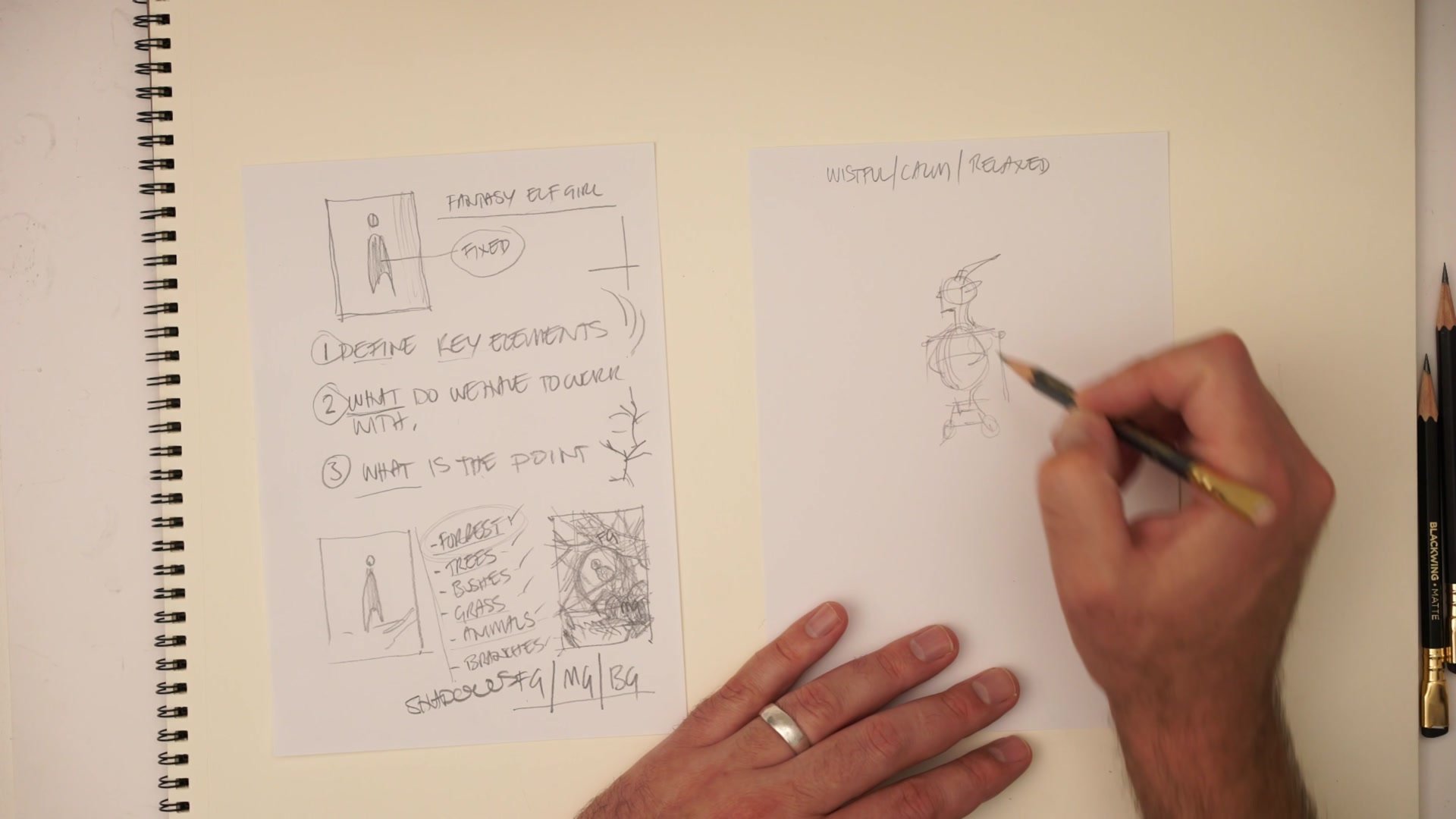
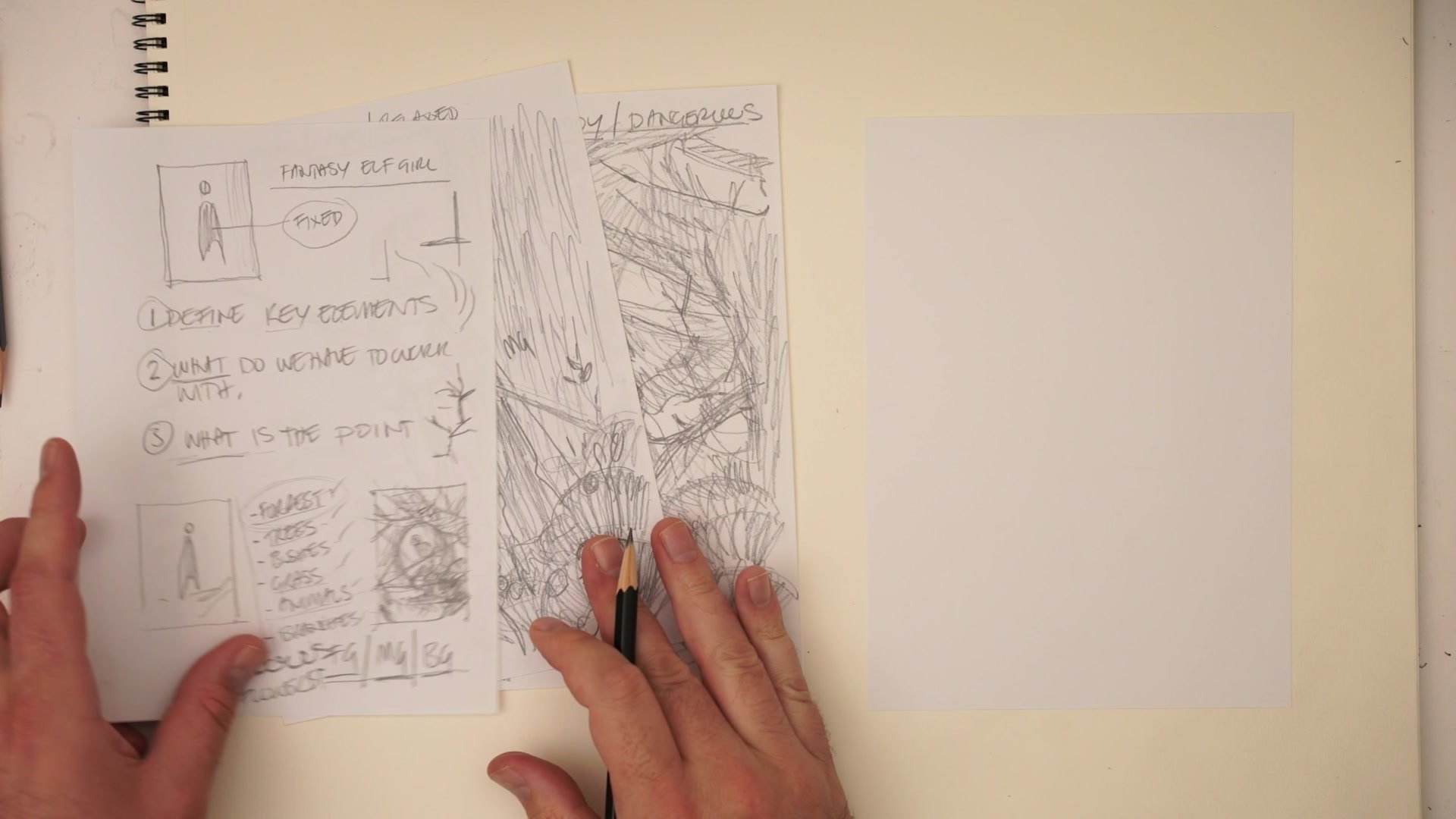
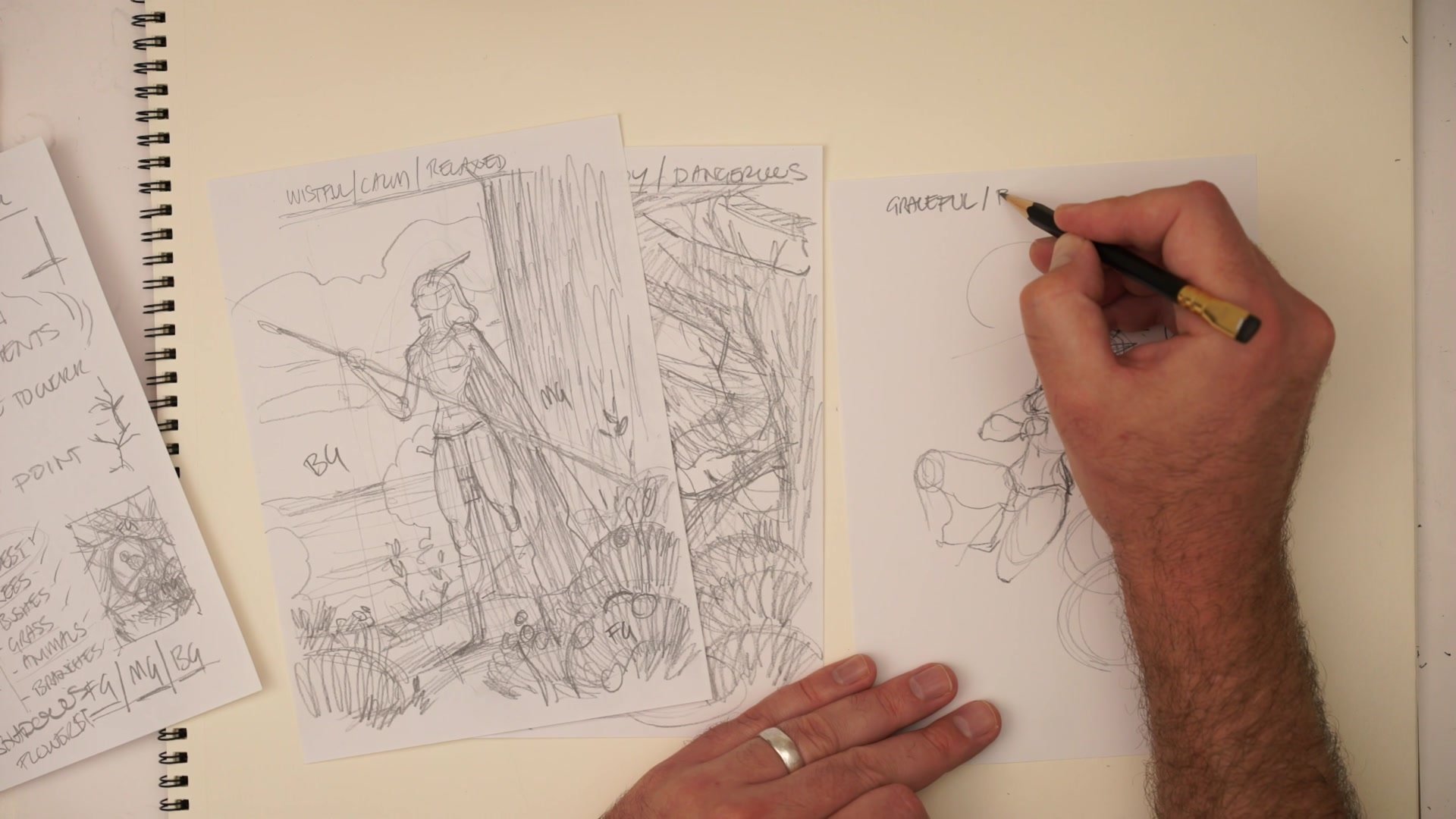
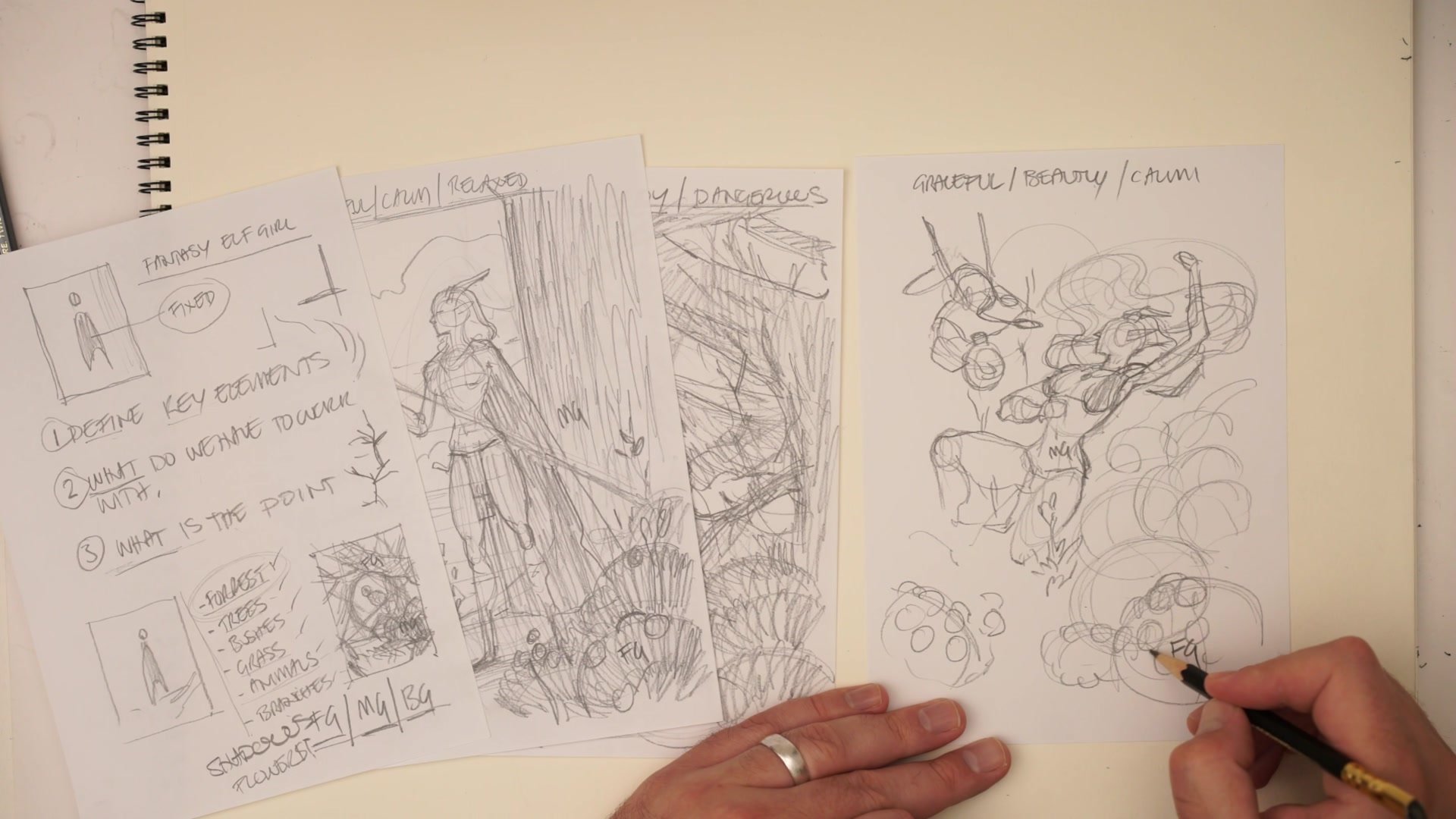
The same set of elements can produce radically different images depending on the emotional note being targeted. A calm, wistful composition uses organized L-shaped geometry, smooth flowing shapes, flowers, and grouped elements that create a sense of order. The same character in the same forest becomes threatening when the tools shift to jagged branches, chaotic angular shapes, circular compositions that close in on the figure, and heavy dark masses filling the frame.
This is where focus becomes essential. When the intended mood is clear, every decision about which elements to emphasize and how to arrange them becomes easier. Flowers reinforce calm. Jagged branches reinforce danger. The composition style reinforces the story. Without this clarity, artists oscillate between conflicting ideas and never land on something that reads as a strong, clear visual statement. The point of the image is the organizing principle that guides every choice.
Changing the Mood
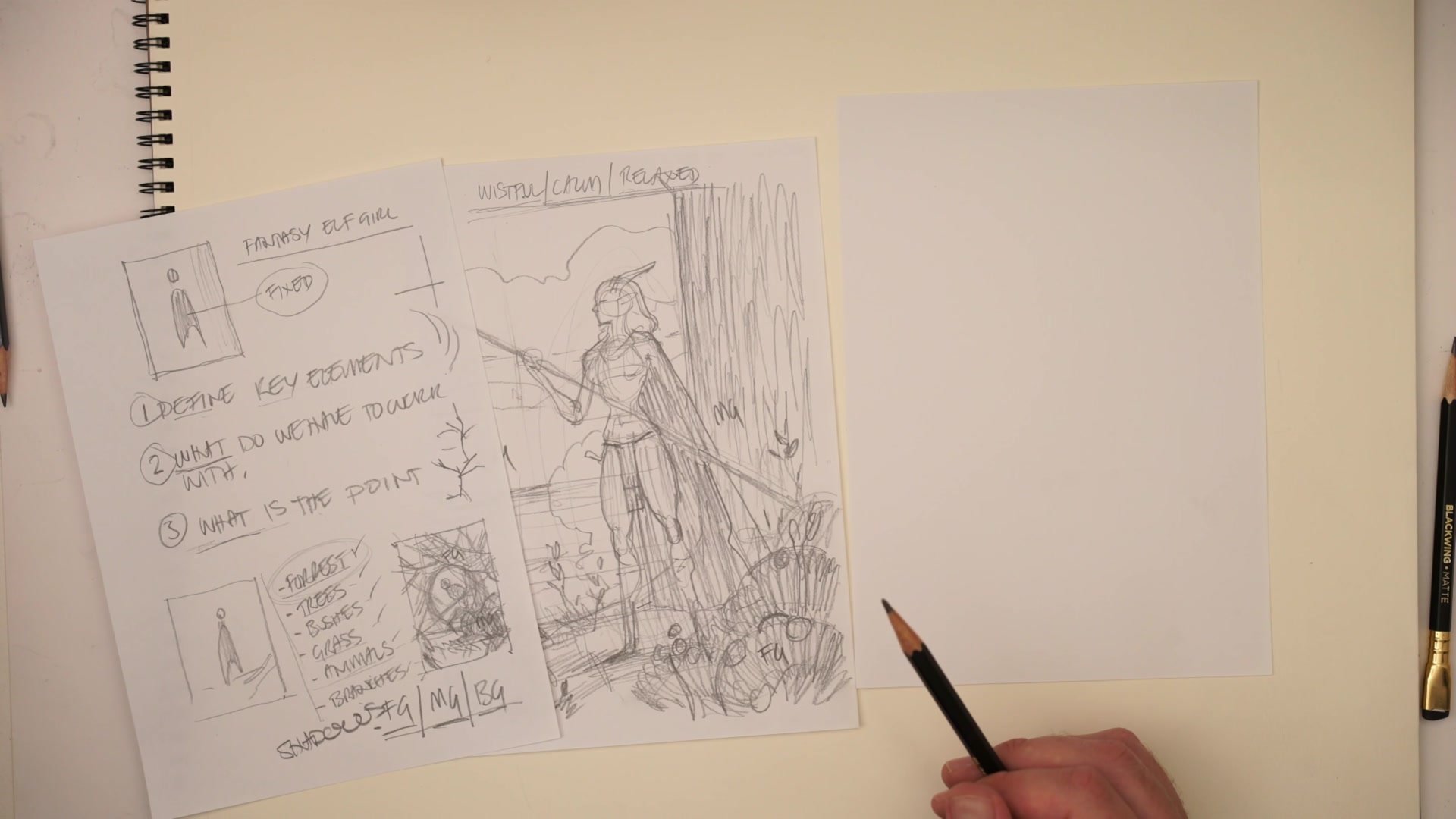
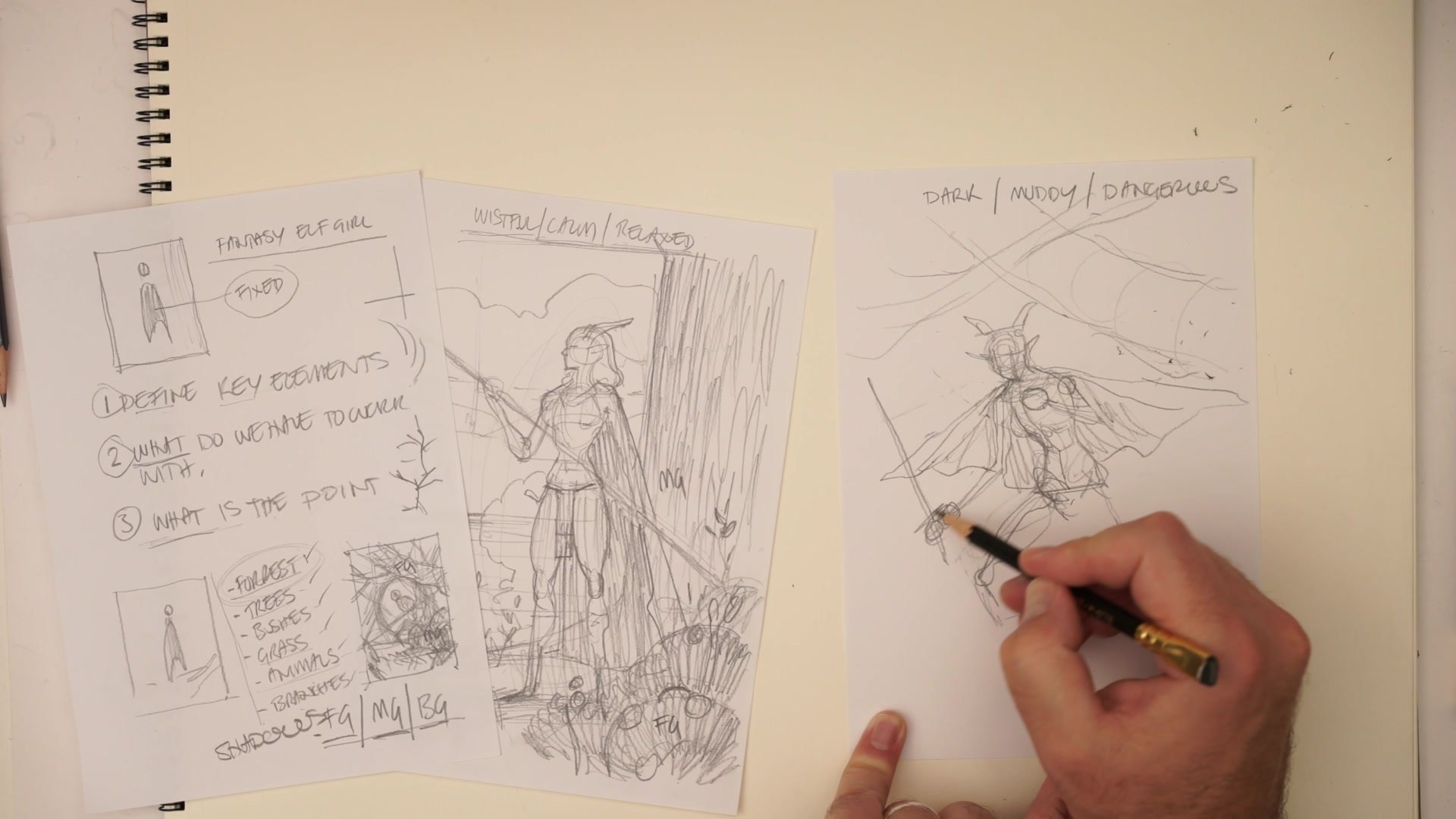
Solving Problems With Focus
The most common place to get stuck is halfway through an image when it feels boring or empty. The instinct is usually to make things more dynamic or crank up the color, but these are blunt instruments that often undermine the intended mood. A calm scene does not need to be more dynamic. It needs the right compositional tools applied with more precision.
What actually works is going back to the malleable elements and asking what can be added, refined, or rearranged. Need more depth? Use overlapping forms at different scales. Need more interest in an empty area? Place a pattern of flowers or a shadow shape. Need more narrative? Add a small creature, a discarded object, something that implies a story. The more tools in the compositional toolkit, the more options available for solving these problems without abandoning the original intention. Clarity of purpose combined with a well-stocked toolkit is what makes it possible to push past the boring stage.
Building Compositions
Key Concepts
Separate Fixed From Malleable: Every image has elements that must be there and elements that can be freely arranged. Identifying both is the first and most important step in making a composition work.
The Point Guides Everything: The mood, story, or emotional note of the image is the organizing principle. Every element added or adjusted should reinforce that central intention, not work against it.
Build Your Toolkit: Compositional rules from books become useful when paired with an understanding of what specific elements are available in your scene. Trees, shadows, flowers, patterns, light, and costume elements are all tools that can be manipulated to solve visual problems.
Try This Framework
Define What Is Fixed: Before drawing, write down the key subject and setting. These are the elements that cannot change. Everything else is open for manipulation.
List Your Tools: For the given setting, list every element that could exist in the scene. Trees, grass, flowers, animals, shadows, light, costume details, hair, weather. These are the things that can be moved, scaled, and arranged.
Choose a Clear Intention: Pick a mood or feeling for the image. Use that as the filter for every decision. If the note is calm, lean into organized shapes and gentle elements. If the note is dangerous, lean into angular, chaotic, closing shapes.