The Power of Simple Flat Color: What These Art Books Teach Us
Summary
The Elegance of Flatness
It is easy to be inspired and impressed by artists who possess great rendering and shading, who imbue their characters and environments with a lot of dimensionality. But there is also a lot to be said for the elegance of flatness, of simple flat line and color work. The artists examined in this study session demonstrate that the problem is rarely rendering. It is rarely how shiny things are. The real keys are design, storytelling, and composition. Those are what make images work. When you commit to a simple line and color process, you are leveraging the drawing itself. If the drawing is good and the design is good, the image is going to be good. This makes it much easier to focus on what is actually important.
One of the dangers that can happen with artists early on is getting hooked on trying to make things shiny. Over-rendering becomes a crutch. The thinking becomes that if the image is just rendered a little more, it will look good. But the reality, as the old saying goes, is that you cannot polish something into being well-designed. Spending time focusing on the simplicity of flat line and color work is a powerful way to focus on fundamental design and fundamental drawing. Much of what we are often trying to do even when adding rendering is to make the silhouettes, both internal and external, and the color pattern really be effective. It is often these simple things that make all the difference.
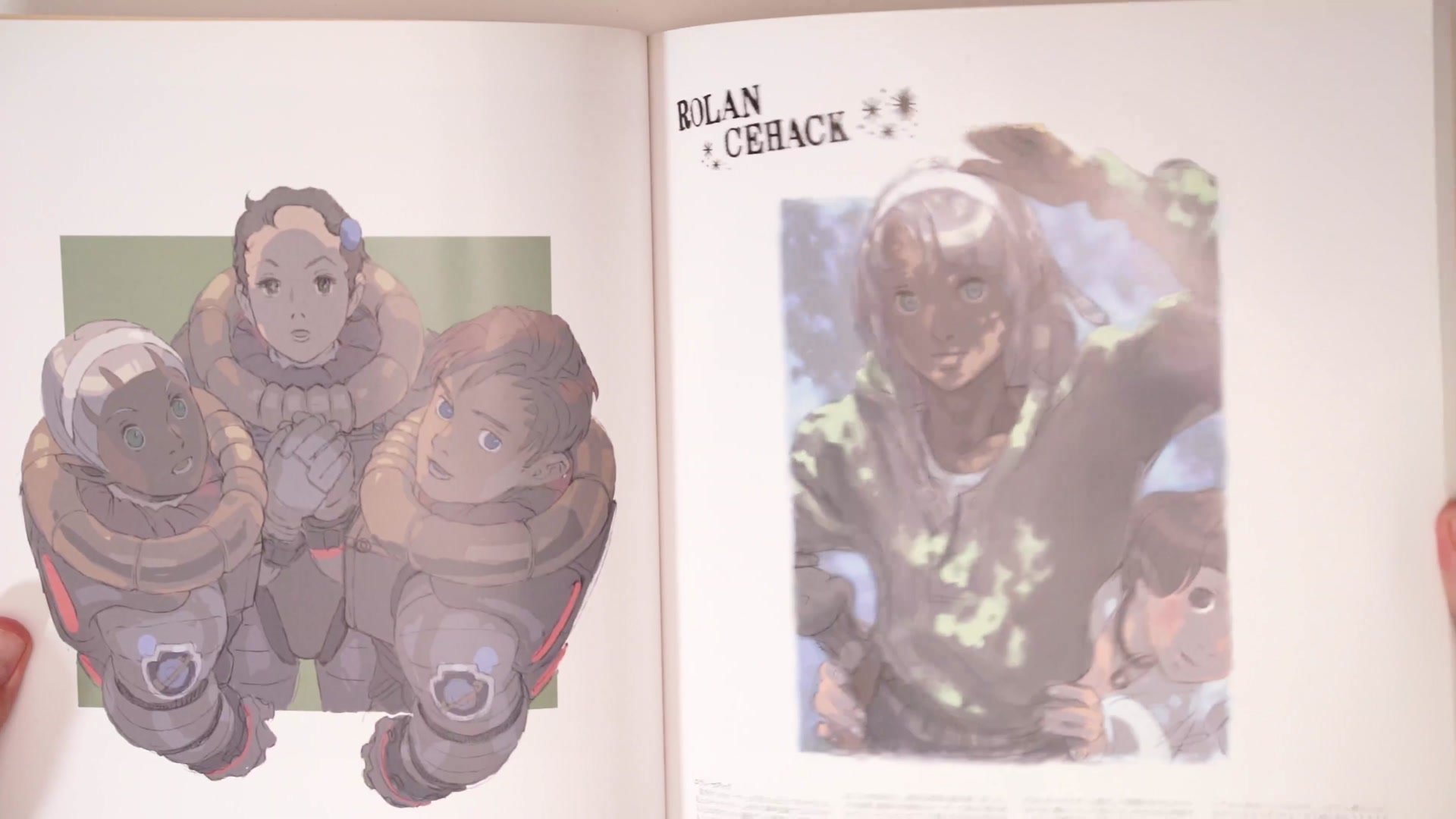
Tatsuya Yoshikawa and Shape Design
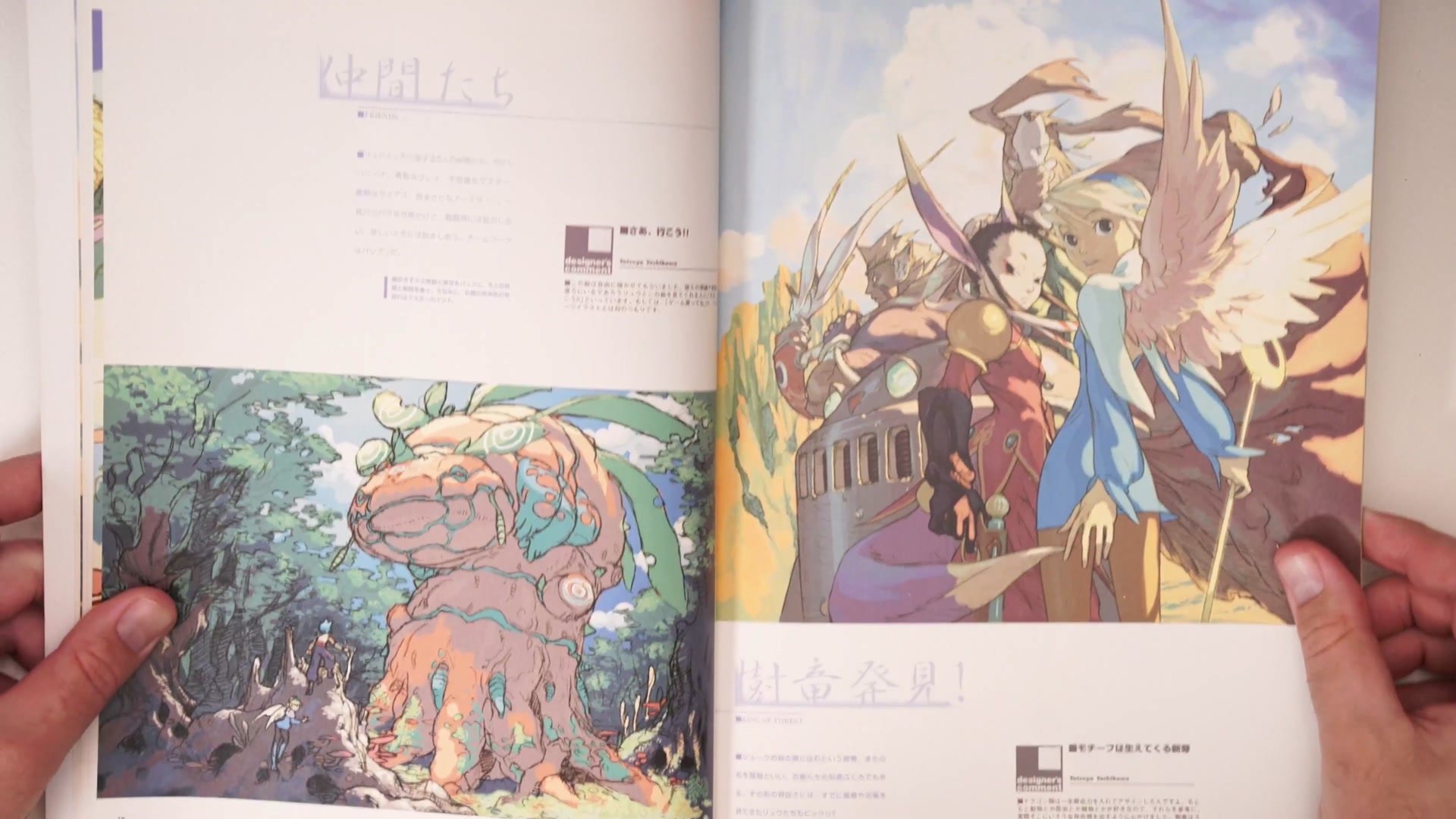
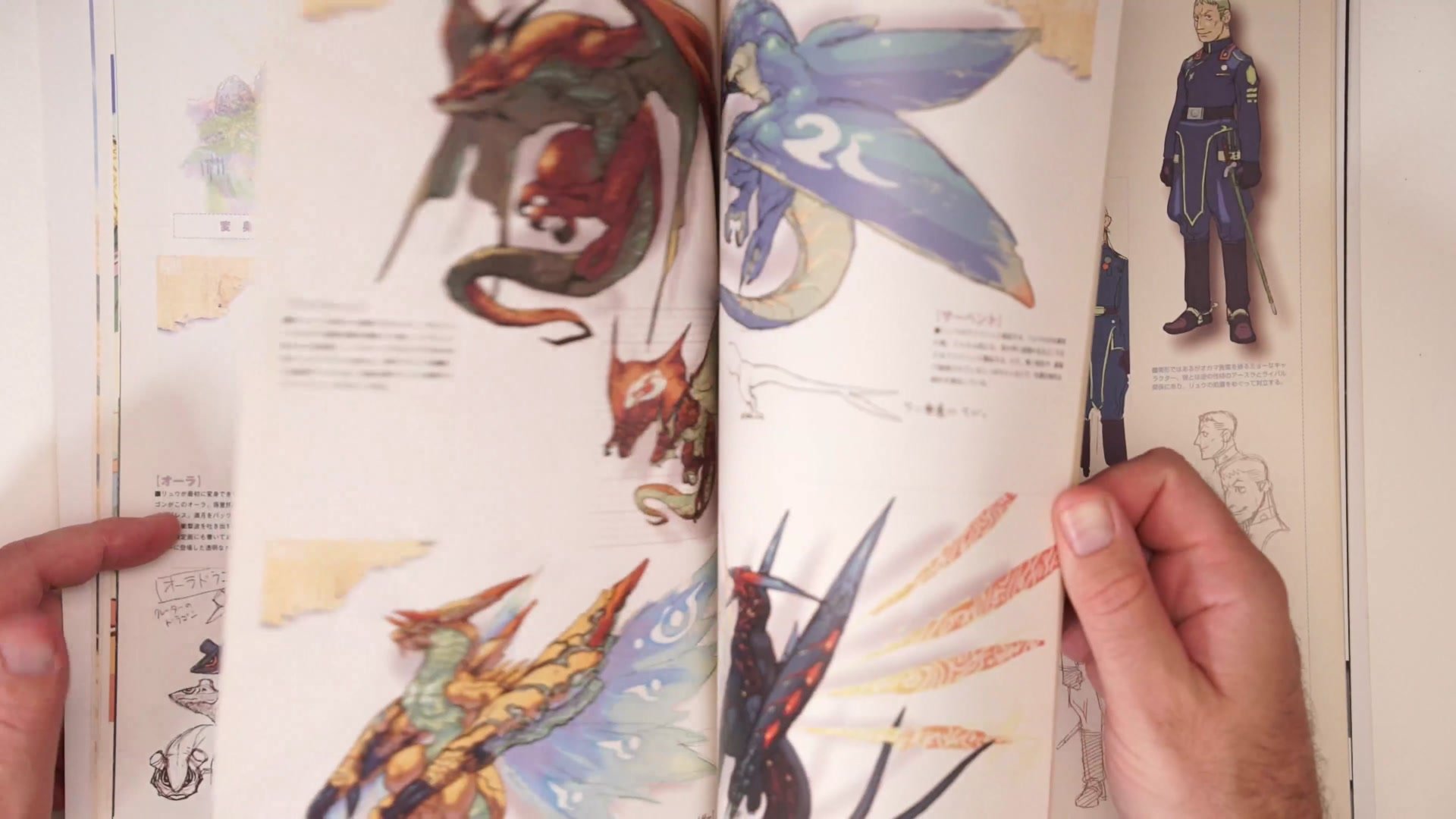
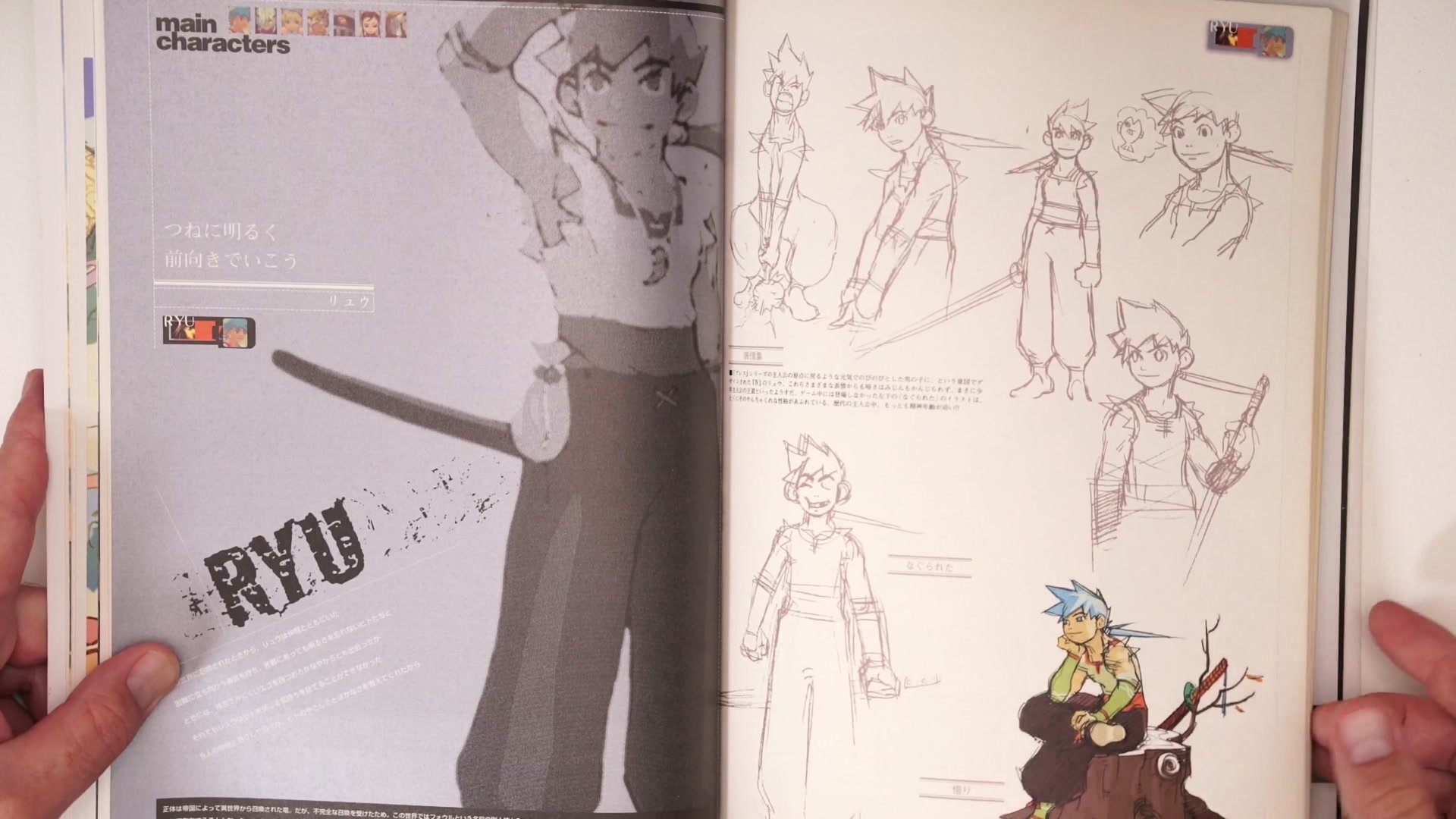
The Breath of Fire art books by Tatsuya Yoshikawa demonstrate what is possible with simple Photoshop brushes and great drawing combined with great design. The character designs are super creative, super interesting, and have a real sense of style. Even with the simpler scenes, what makes them work is the shape design. This art book contains a huge amount of sketches, and that volume of drawing work is something important to understand about simple line and color styles. When you are dealing with a simple process, one of the things you are really doing is just leveraging the drawing. If the drawing is good and the design is good, the image works and everything comes together.
Yoshikawa's work also demonstrates that artists inspired by simple styles like comic books, Asterix, Tintin, French comics, and anime can get good at foundation and drawing while still rendering in a really simple style. It sounds obvious, but artists often get dissuaded by the message that improving means adding more rendering. These art books prove that keeping it simple while focusing on great shape design is more than enough.
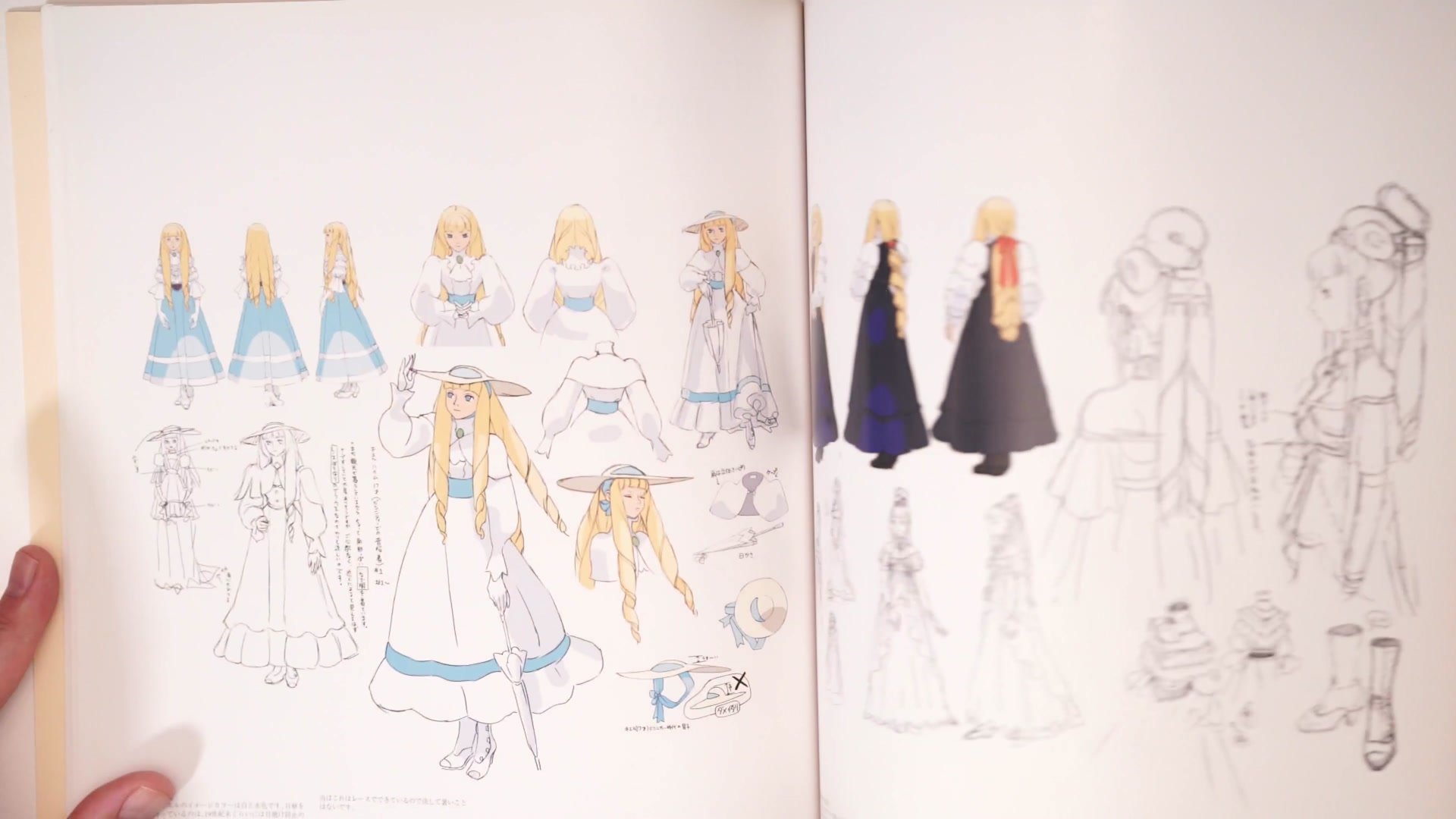
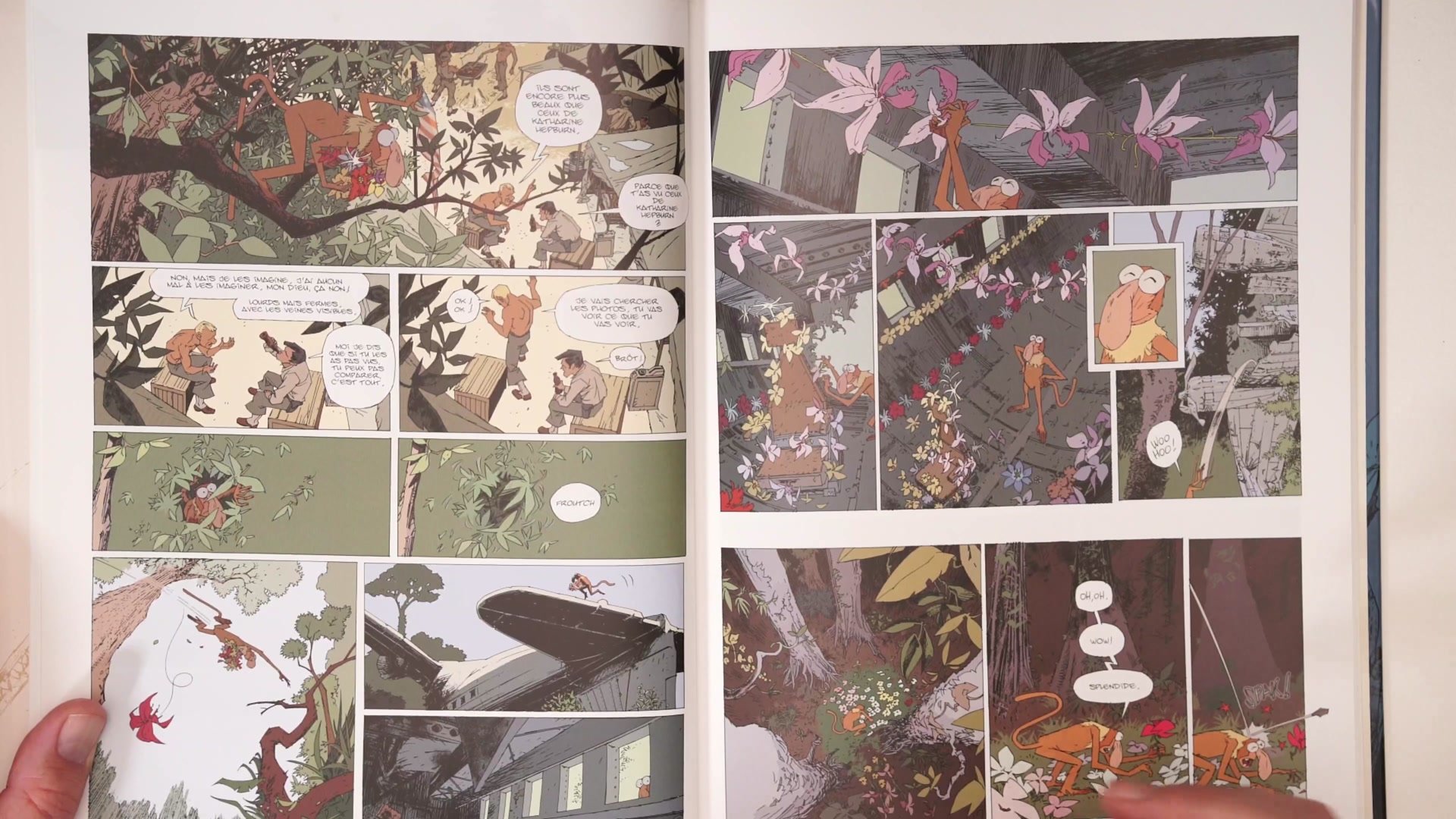
Akiman and Authentic Design
Akiman (Akira Yasuda), the classic Capcom artist, demonstrates another facet of what simple flat color can achieve. His Turn A Gundam designs are simple and elegant, but what makes them work is the authenticity of the design process. This is someone who studied costume design, who did actual research, who created a whole world with an old-world vibe mixed with anime and Japanese design aesthetic. The spacesuit designs, the costumes, everything has a feeling of authenticity that comes from doing the work of real design.
Sid Mead designed the Gundam itself for this series, which is a fascinating example of what happens when a high-level industrial designer works on an anime mech. But the broader lesson from Akiman's work is about the response to feeling that your designs need more rendering. The answer is not to render more. It is to design better, pick better colors, study more costumes, think more carefully, and simplify. This is a great example of what is possible if you keep it simple but actually do the job of making great designs.
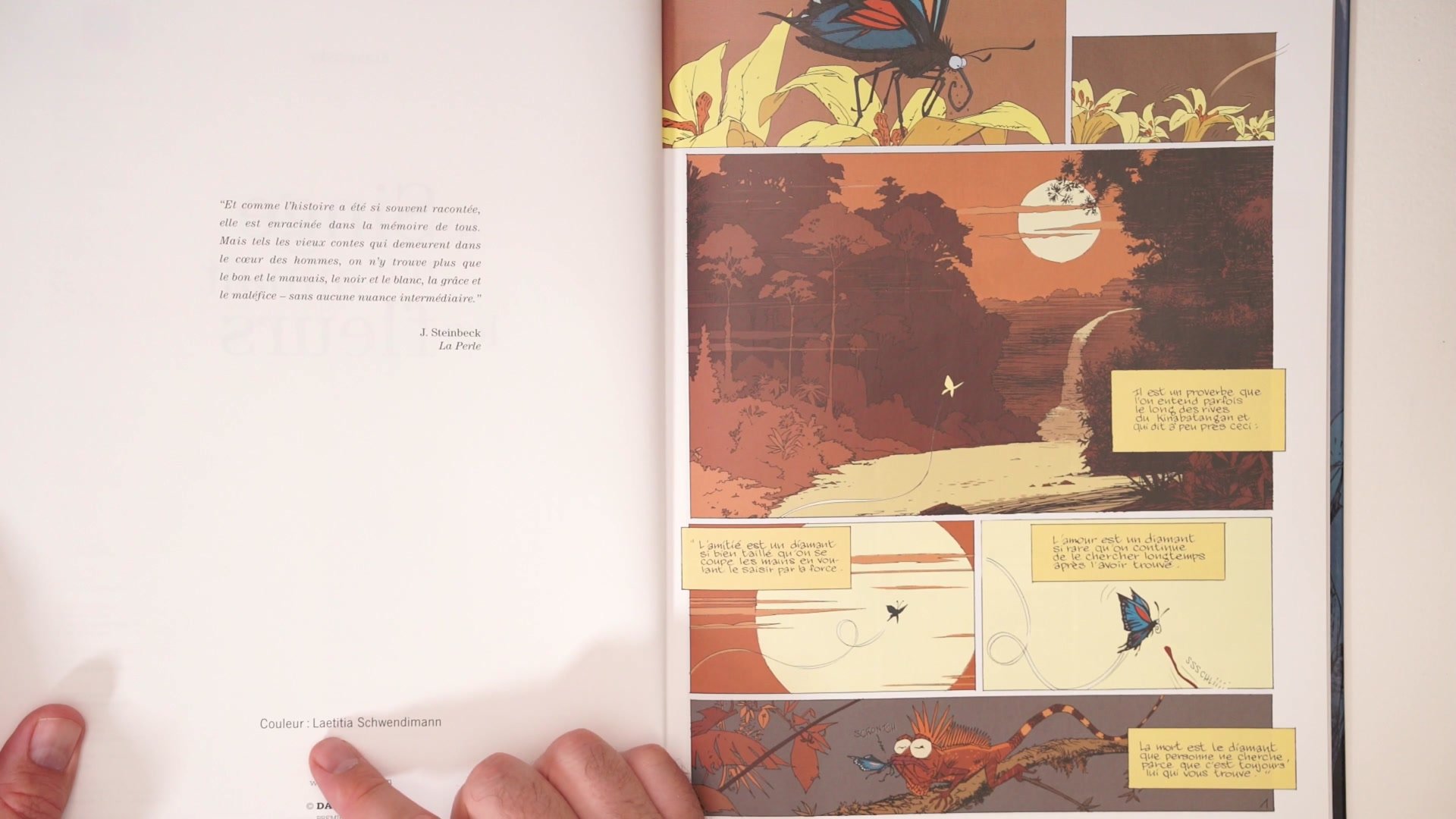
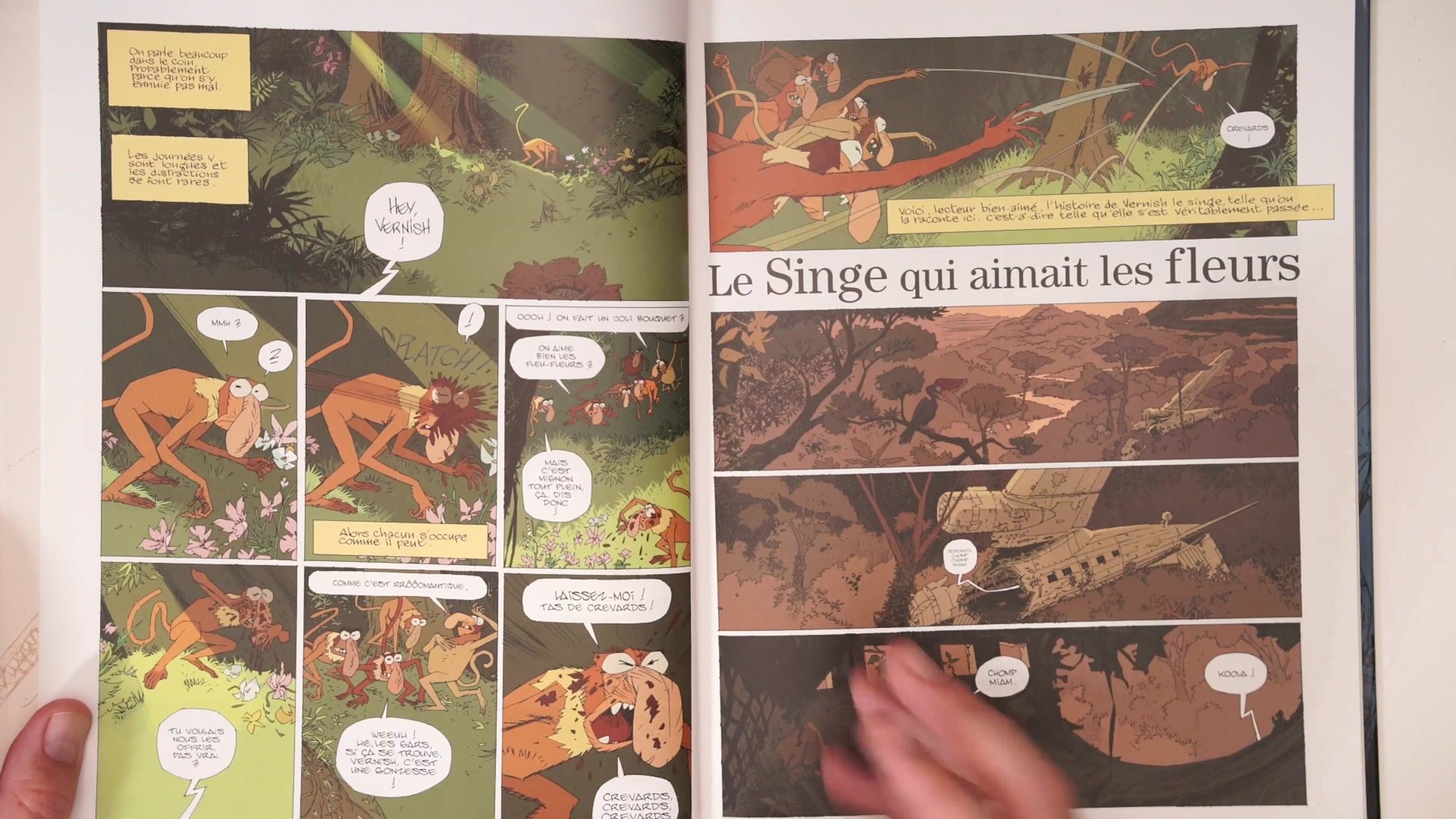
Krassinsky and Compositional Depth
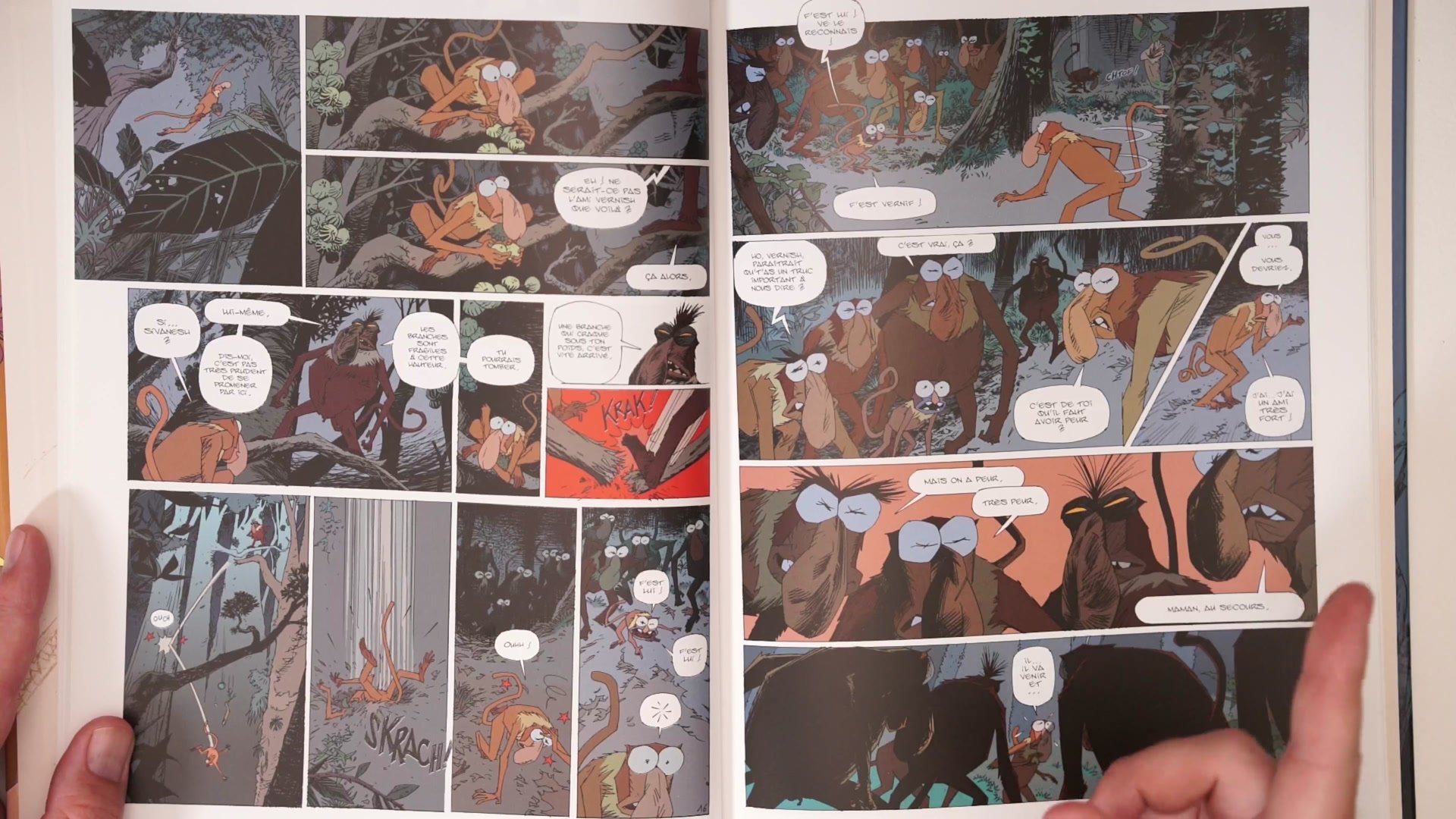
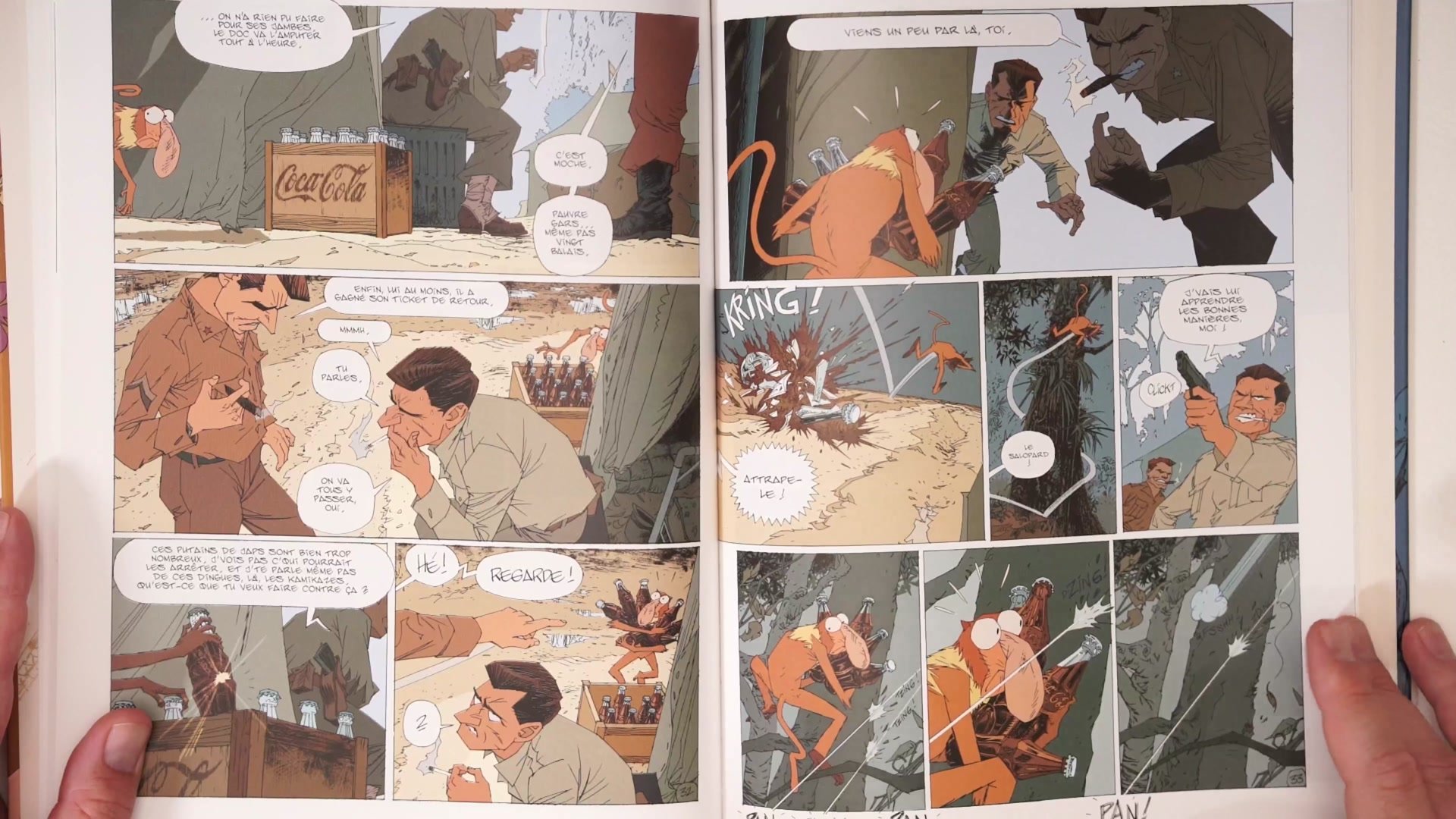
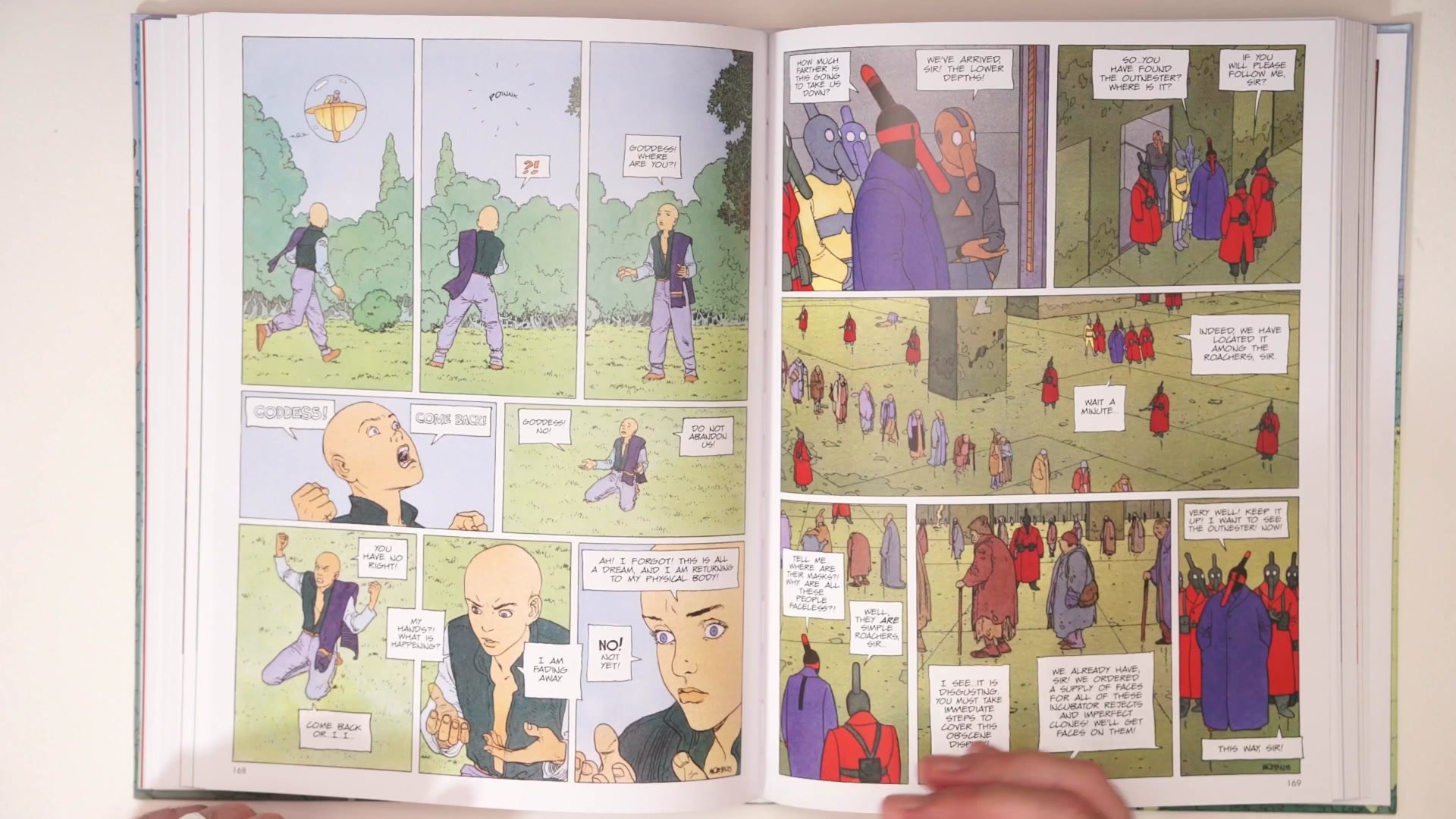
The Franco-Belgian comic work by Krassinsky, with colors by the colorist, demonstrates something important about what flat color forces artists to do. When you do not have fancy rendering to hide behind, you need to elevate your understanding of composition and design. Strong design language becomes necessary. Research becomes necessary. Foreground, middle ground, and background become essential. Warm and cool color relationships need attention. Illustrative principles need focus because there is not a huge amount to hide under.
Every panel in this work, even though it is very simple, has a great sense of depth and dimensionality. The different planes exist clearly. The characters are nicely drawn. What makes these scenes feel cinematic is not rendering. It is composition, high-level cinematography in the staging, and color work that separates elements and keeps things simple. Paying attention to foreground, middle ground, background, overlapping shapes, and depth makes things feel cinematic far more than trying to render or create dramatic lighting. So much of it is just about depth and dimensionality, and flat color forces you to solve that problem through composition rather than through rendering tricks.
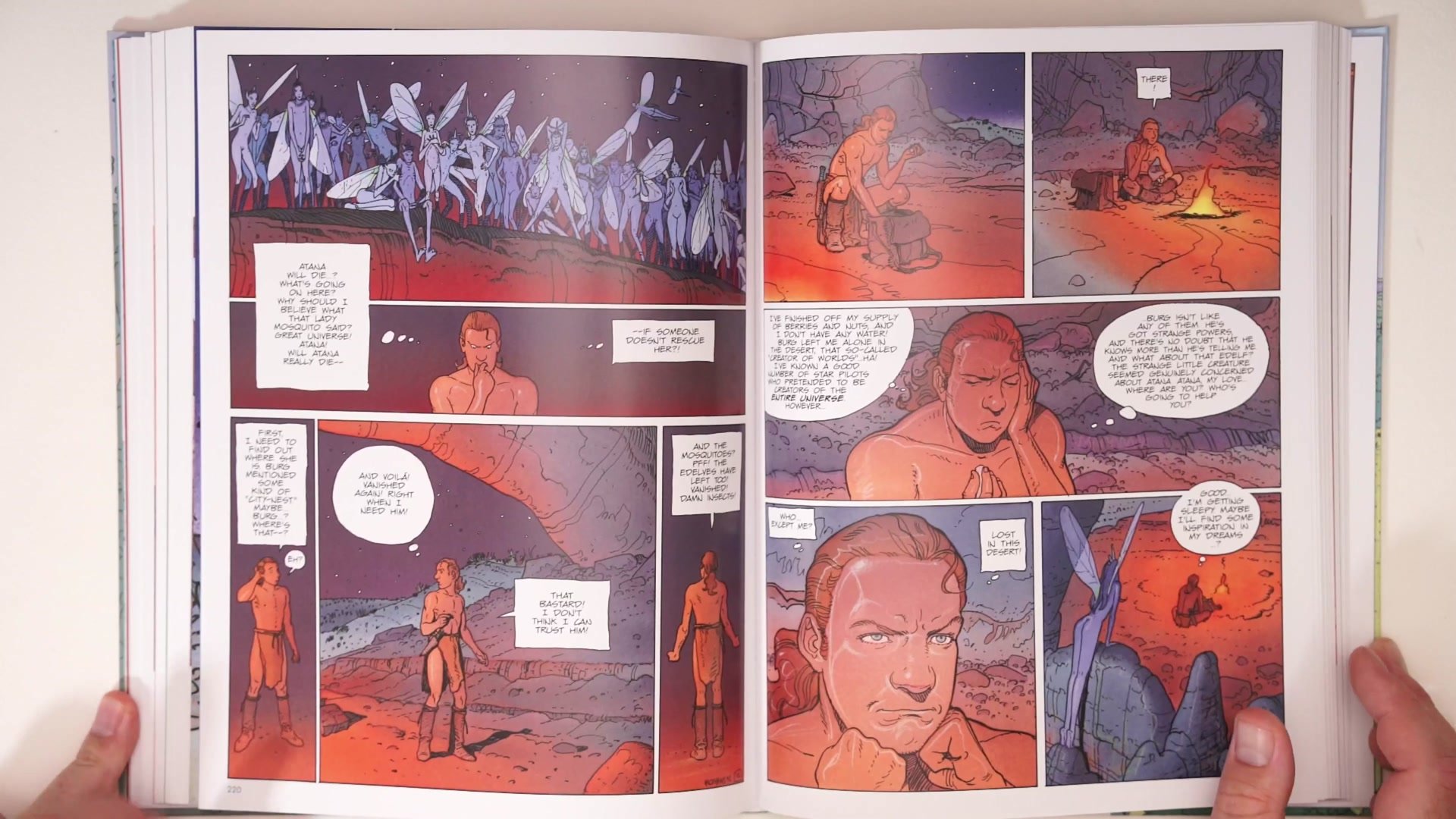
Moebius and the Ground Plane
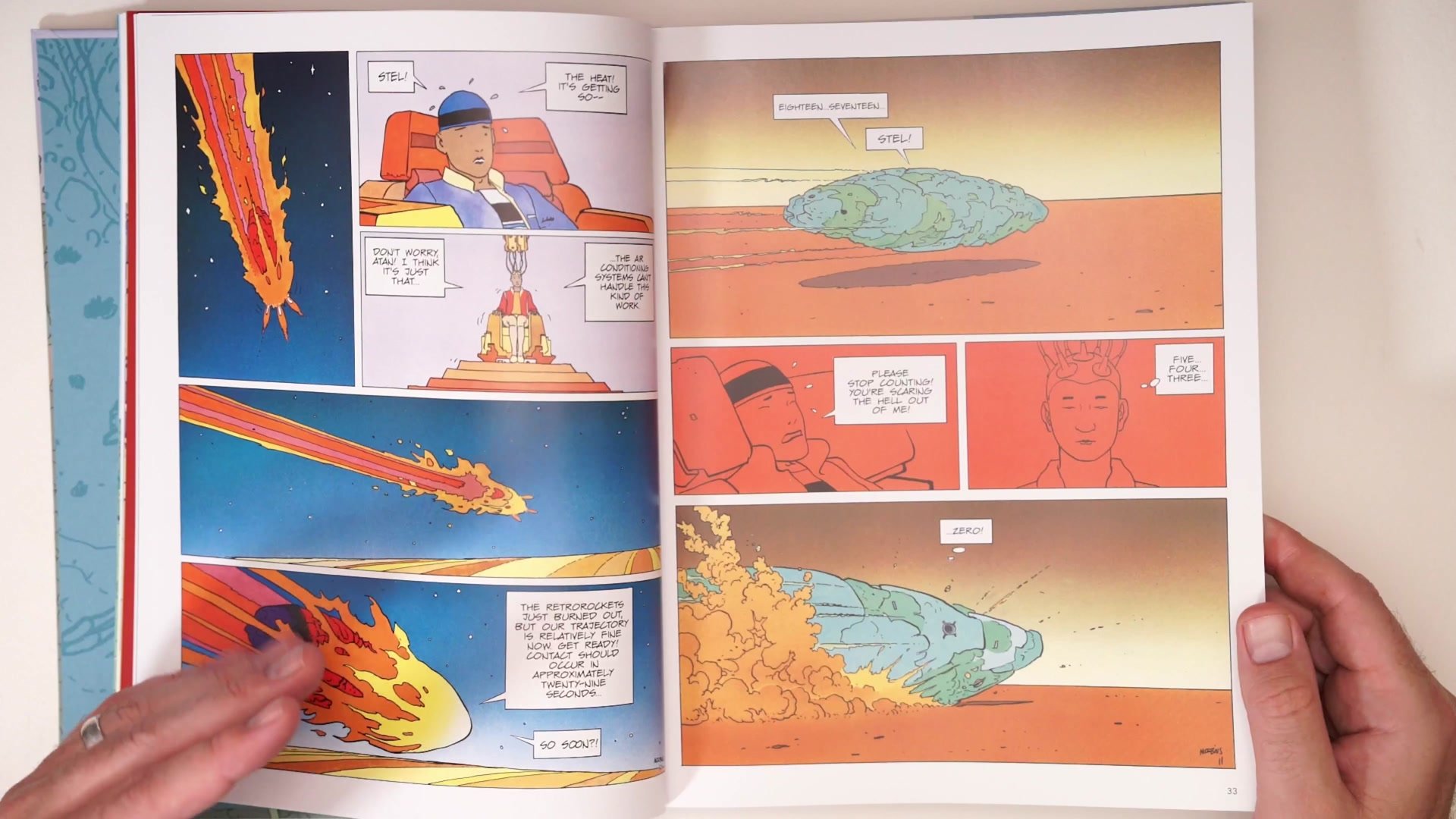
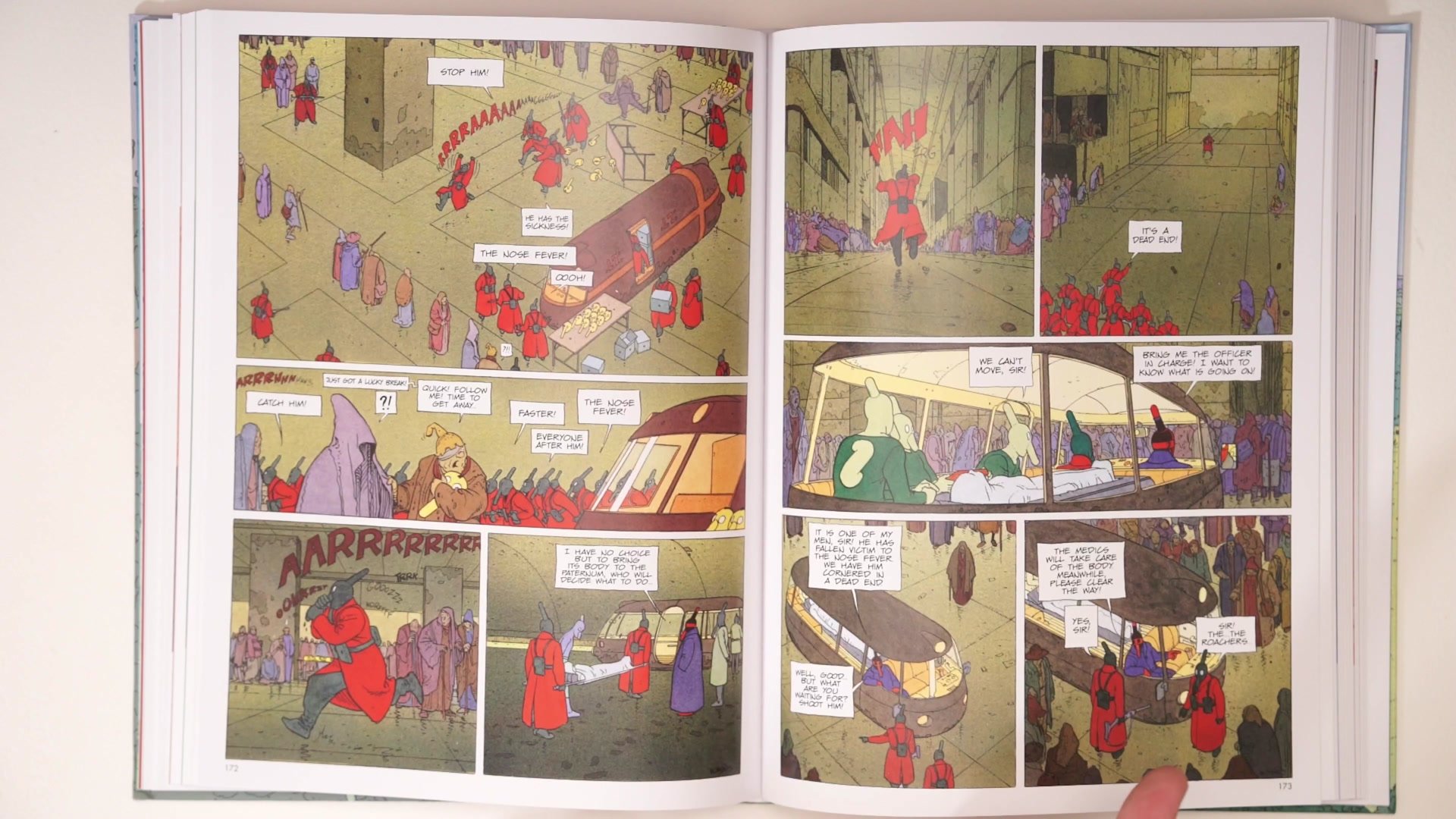
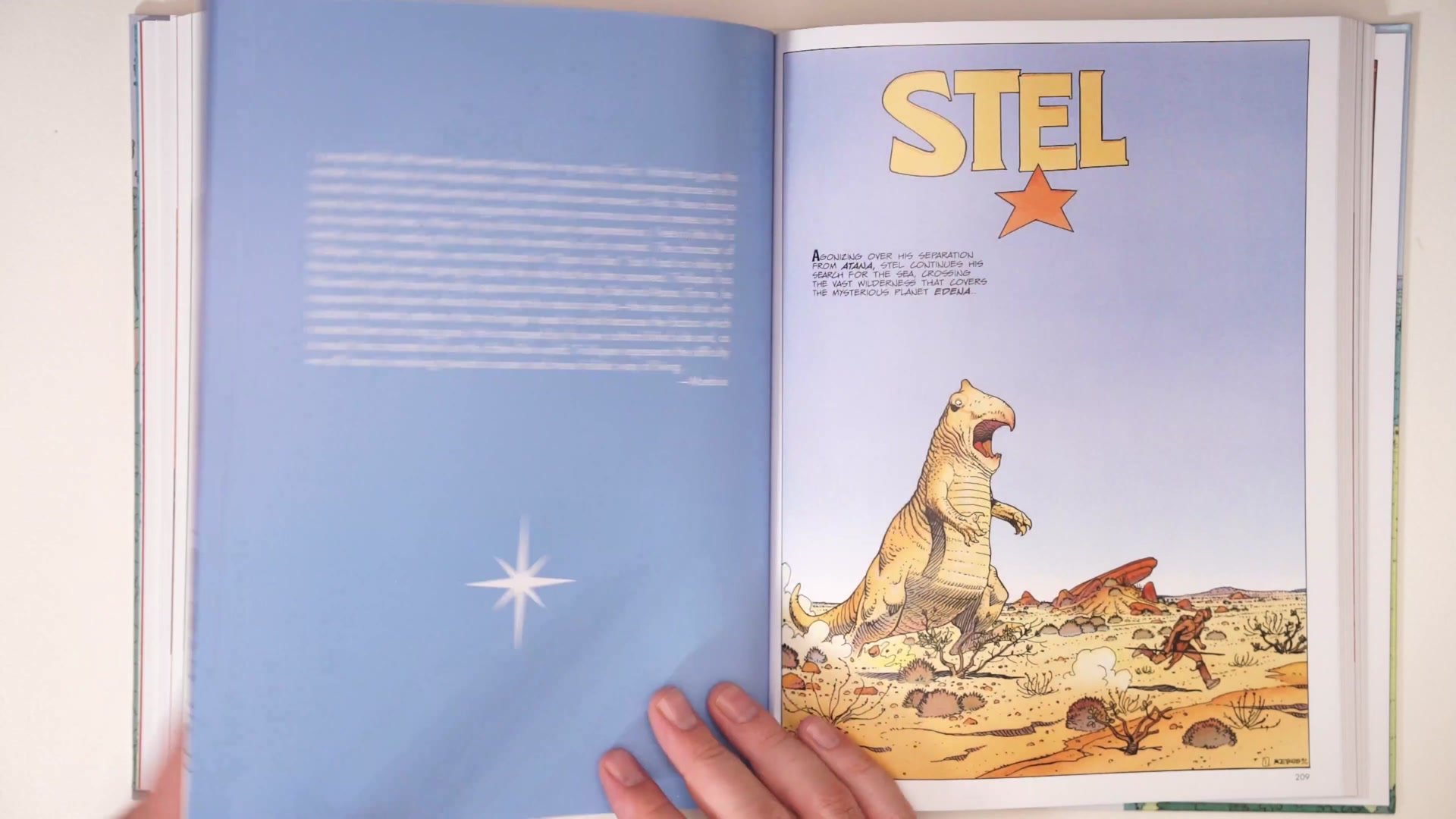
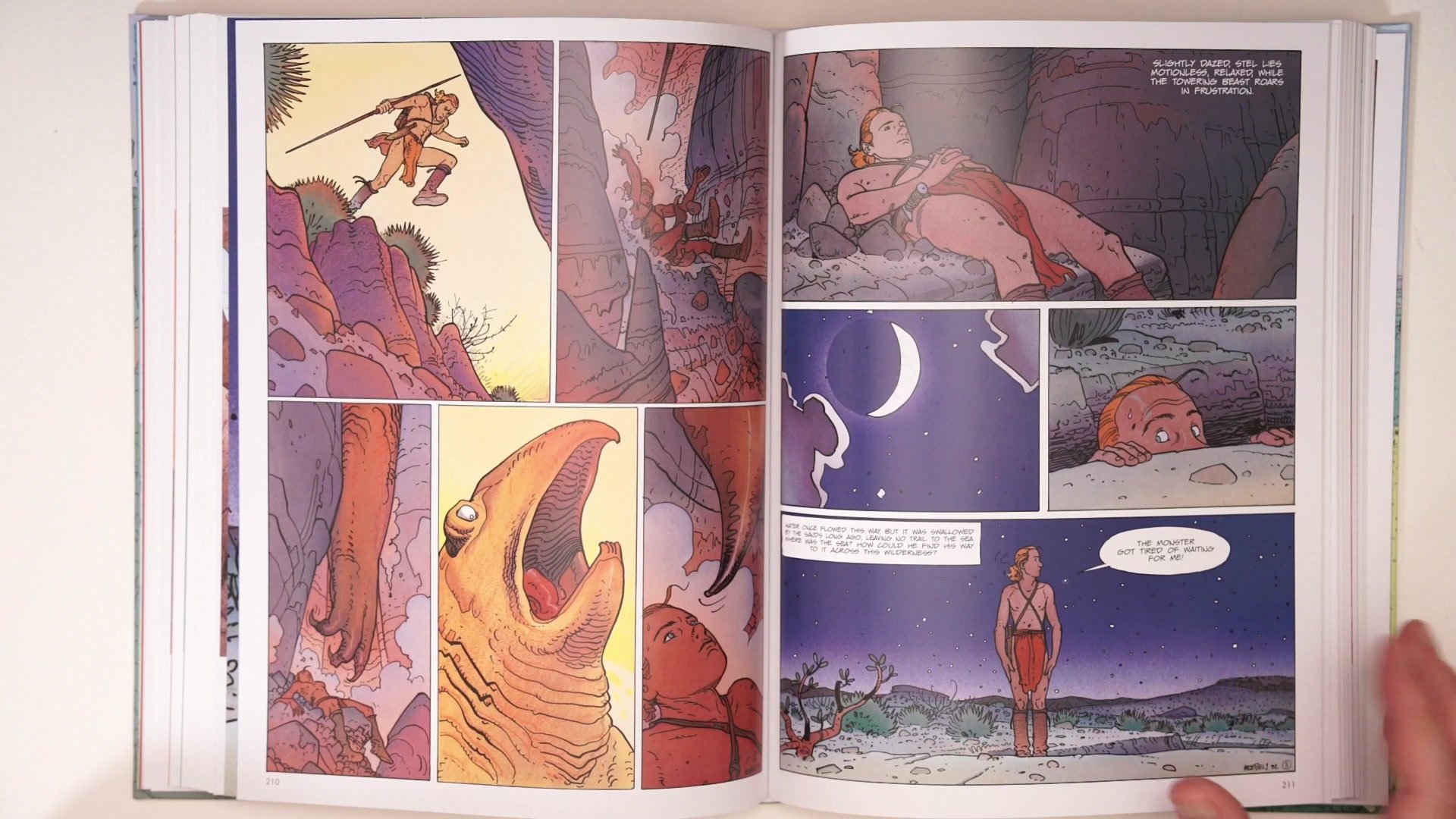
When discussing flat line and color style, Moebius (Jean Giraud) embodies some of the best aspects of the French clean line style. Two major lessons emerge from studying his work. First, Moebius approaches color as design. The overall look, the local colors, the feeling of dynamism and color contrast, all seem purposeful and designed at a high level. He thinks about how different scenes work, how different characters play within those scenes, and how the color theory and schema of different characters interact. This produces evocative, bright, meaningful color schemes rather than arbitrary choices.
Second, and perhaps more importantly, Moebius demonstrates expert use of the ground plane. If you try to draw above-the-head shots, they are challenging to make work. They often look flat. Moebius was masterful at utilizing the ground plane. You get a really solid sense of where the character is standing, which often means zooming out a little more. These scenes have both a sense of depth and dimensionality and a really strong two-dimensional graphic sense. The ground plane, careful attention to where everything is on the ground, and getting the dimensionality and perspective right gives these images a real graphic quality that leads directly into the line and color style. If you are not looking for this, you do not notice it because it is so well done. But studying how these shots are designed reveals a huge focus on the ground plane that makes a huge difference.
Key Concepts
Design Over Rendering: The problem is almost never that you need more rendering. It is almost always design, storytelling, and composition. If the drawing and design are good, the image works regardless of how simply it is rendered. Simple flat color forces you to get the fundamentals right.
Leverage the Drawing: When working with simple line and color, you are leveraging the drawing itself. This is a feature, not a limitation. It makes it easier to focus on what is important: shape design, silhouettes, and color pattern.
Compositional Depth: Foreground, middle ground, and background relationships create cinematic feeling far more effectively than rendering or dramatic lighting. Flat color forces you to solve depth through composition, which is the stronger solution.
The Ground Plane: Drawing the ground and showing where characters stand relative to surfaces creates a sense of place and traversability that makes even the most fantastical imagery feel concrete. Moebius demonstrates this expertly and it is one of the most underutilized tools available.
Flexibility, Not Purism: None of this is about being puritanical and saying everything must be 100 percent flat color. It is about leaning into simplicity, focusing on the drawing, and letting the drawing carry the show. The color becomes real color, shape-based and design-based, rather than an attempt to render dimensionality.
References
Artists and Art Books Featured
Tatsuya Yoshikawa -- Breath of Fire series art books. Character design, shape design, and simple Photoshop brush work that demonstrates how great drawing carries an image without complex rendering.
Akiman (Akira Yasuda) -- Turn A Gundam design work. Classic Capcom artist whose costume and world design shows what authenticity and research bring to simple flat color illustration.
Krassinsky -- Franco-Belgian comic work demonstrating how flat color forces compositional depth. Strong foreground, middle ground, and background relationships create cinematic staging without rendering.
Moebius (Jean Giraud) -- French clean line style. Masterful use of the ground plane, color as design, and graphic composition that makes flat line and color feel dimensional and alive.
Study This
Choose Your Study Artist: Pick one of the four artists featured in this session whose style resonates most with your own work or aspirations. Spend time looking at their art books or published work specifically through the lens of how they create visual interest without relying on rendering.
Analyze Three Images: Select three images from your chosen artist. For each one, identify: What makes this work? Where is the depth coming from? How are foreground, middle ground, and background handled? Is the ground plane visible? How do overlapping shapes create spatial relationships?
Apply to Your Own Work: Create one piece using only flat color. No gradients, no rendering, no shading. Force yourself to make the image work entirely through design, composition, shape relationships, and the ground plane. Notice what you have to think about when rendering is not available as a solution.