Master the Craft of Line and Color
Comics | Concept Art | Illustration
Join over 600 artists • 60-day guarantee • Lifetime access
Ancient yet Modern
Why Line and Color Still Matters
Line and Color Magic
For creating art for comics or illustration, the line and color style is something special. It's both simple and easy to understand, but also immensely sophisticated. Most artists imagine there's something magical about the skills of professionals. The truth is simpler than that.
Line and color is a technique that lets you see the emotion and sensitivity of the artist through their finish lines. Those primal marks you make often remain all the way through to the finished artwork. It's honest in that way. Your hand, your choices, your story, all visible in the line work.
This is why it works across so many different contexts: comic books, illustration, concept art, visual development. It's incredibly flexible.
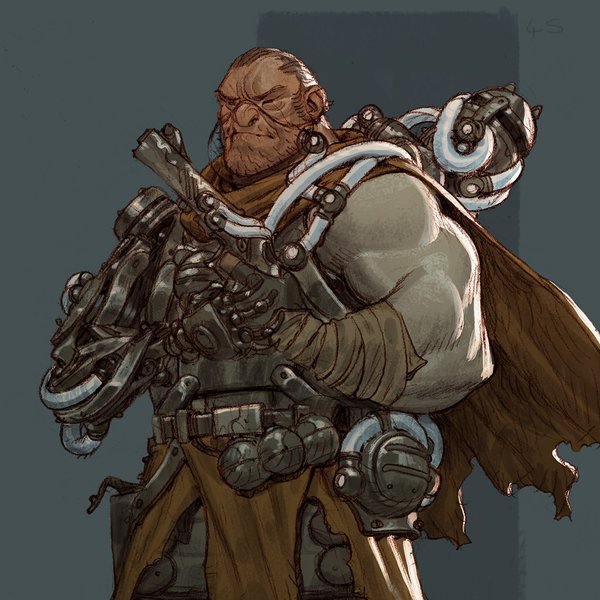
Simple & Effective
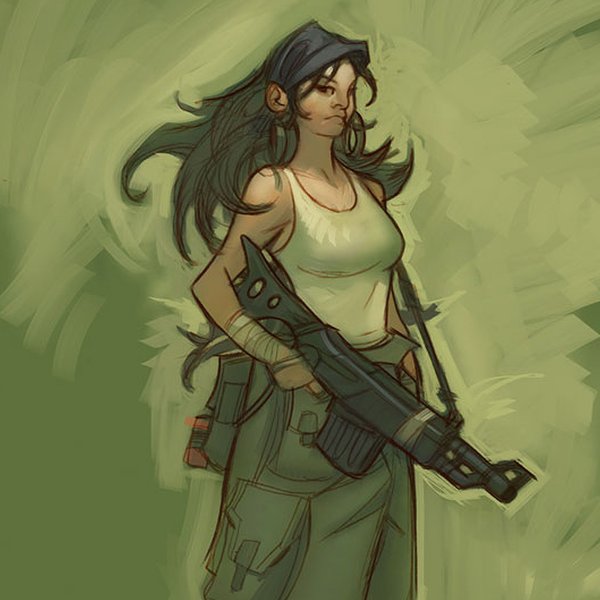
Quick pencil sketch, add some color, and you've captured the heart and soul of a character.
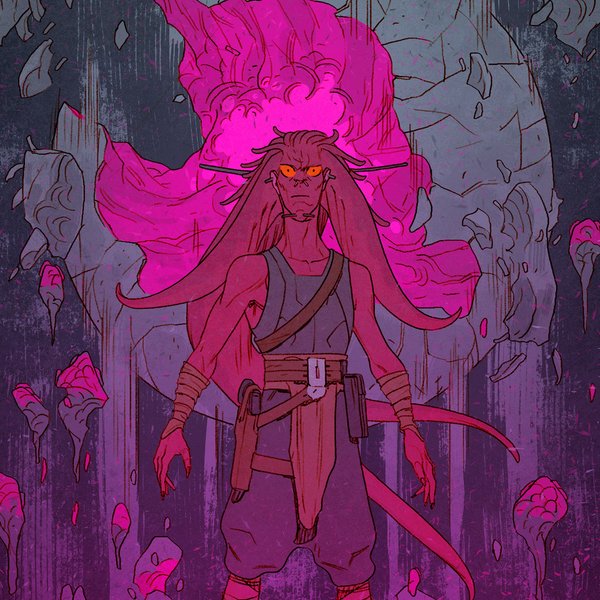
Simple Flat Color
Create a finished look in record time. Fast and effective, but also polished and sophisticated!
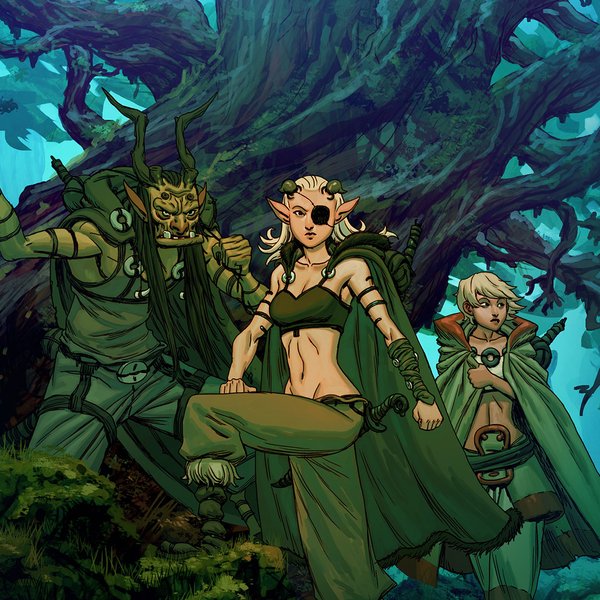
Painted Cover Quality
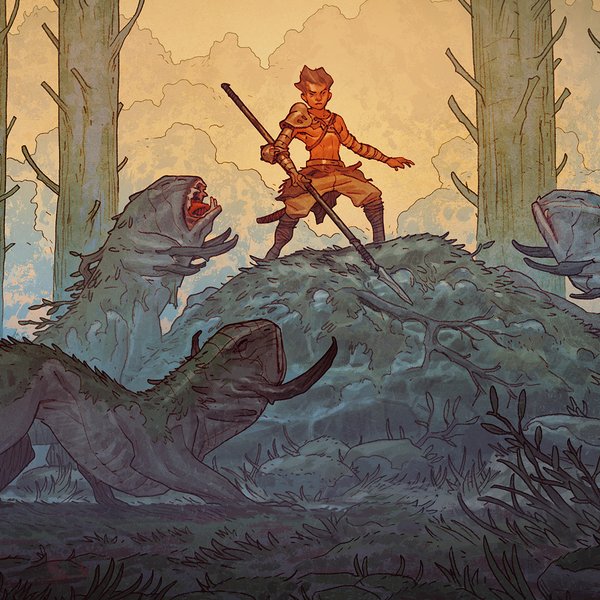
Combine painted elements with line work, creating atmosphere and flexibility.
The Range of Possibilities
You can create simple line and color work that highlights the beauty of lines with pure flat color... effortless, effective simplicity. Or you can go fully rendered, painting backgrounds, combining line work with painted styles, mixing traditional and digital approaches.
You can succeed through the highest levels of craft, or you can succeed through imbuing your art with pure emotion, using subtle shifts in your hand to create perfect emotional marks, transcending realism with raw feeling and symbolic power.
If you are Stuck trying to get your art to a Professional Level, you might be going about it the wrong way.
The Trap You're In
The Hidden Problem
But here's what I've noticed: most intermediate artists don't really know what their style should look like yet. And when you don't know where you're going, it's incredibly easy to get stuck.
You get caught in a specific trap: thinking the answer is more. More tutorials. More techniques. The next brush pack. The perfect workflow. Another YouTube video about a new tip that might be the thing that finally unlocks everything.
It feels logical. You're intermediate, so you need to get better. Better means more knowledge, right? More learning, more techniques, more tools.
So you spend time collecting techniques and tips... things that work here, things that work there. You cobble together different ideas and approaches. And your art does get better. You reach a decent level.
But to truly get to the next level, to make your art feel professional, clean, polished, with real impact, the answer isn't more.
The answer is less.
What Actually Separates Intermediate From Professional
I've spent years looking at how artists improve, and here's what's true: most great artists don't constantly chase new techniques. They're not exploring new brushes every week. They're not hunting for the perfect workflow.
They're focused on the actual art. On the pictures they're making. On the stories they're telling. On how their work connects with people.
Most great artists have one thing in common: they have a really solid, reliable way of making art.
When you try to learn a new hot tip every week, or apply some new technique you just discovered, you lose the ability to go deep with your tools and process. You lose the ability to actually focus on the fundamentals of how to make a great picture.
Here's the reality: to take ideas from your head and put them down on the page in a way that feels professional and impactful, you need a solid, reliable way of doing this. You need a process.
Not a complicated one. A simple one. But one that's real and that you understand completely, so you know exactly where you are at every step, and can focus on what actually matters: the emotion, the story, the fundamentals of picture-making.
The Mentor
My Philosophy
My Own Journey
After spending almost 25 years as a professional artist, 10 of those teaching, working in the line and color style for most of my career, I've realized something important.
Most artists think their problem is that they need to draw better. They need to get better at anatomy. They need to do more study, more life drawing, more fundamental exercises. They think the path to being good involves years of abstract exercises and doing anything but making the art they actually want to make.
But that's not actually true.
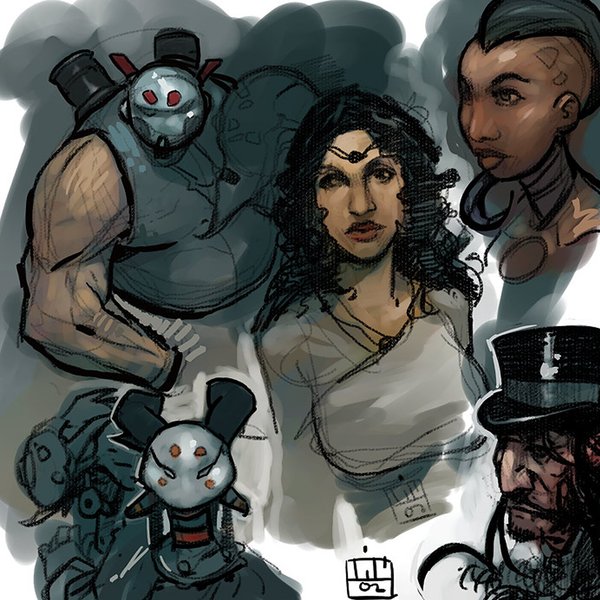
Beginning
Starting your journey with enthusiasm and fundamental practice.
Intermediate
Building skills and finding what works for you through consistent creation.
Professional
Making a lot of art with a reliable process that works for you.
There Are Many Ways to Succeed
I know artists who've taken one path: they doubled down hard on craft. They learned perspective, rendering, anatomy... built very technical, deep understanding. They studied the elements of light, learned to draw figures in complex perspective, built a structured theoretical knowledge of art.
But I also know artists who are extremely successful, millions of people love their art, and they couldn't tell you much about how perspective works. They don't really care about rendering theory. They just got good by drawing. By making a lot of art.
The Technical Path
Deep mastery of perspective, anatomy, and rendering theory.
The Practice Path
Learning through doing, making a lot of art and focusing on what matters to you.
Here's what connects all great artists: they make a lot of art. That's it. That's the real constant.
The Physical Reality of Getting Good
Art isn't primarily knowledge. It's not ideas, though ideas help. Art is a physical skill. The only way to get really good at it is to do a lot of it. To practice. To make a ton of work.
But here's where most people get stuck: they want to make a lot of art and learn at the same time, but they don't have a reliable way of doing it.
And that's the actual difference-maker. No matter what style you want to have, no matter how much technical foundation you want your art to have, you need an easy, reliable way of making art that you completely understand.
What Great Artists Actually Have
Great artists often have what I call a simple reliable process. A way of going from nothing on the page and just an idea, through all the stages, to polishing it off with all those final details.
When you have this kind of reliable process, something shifts. You're not worried about which brush to use. You've got your tools figured out. You're not hunting for the next technique. You know what you need to do at each stage.
When you practice this process a lot, people don't see the process. They're just captivated by the story and the emotion you're able to convey.
The solution isn't often found in more. It's found in less... in simplicity, in focus, in understanding exactly what you need to do and doing it well.
The Solution

What This Course Actually Teaches
The Line and Color Academy is designed to teach you a professional, battle-tested, simple reliable process for line and color art.
This isn't about learning new techniques or collecting more brushes. It's about giving you a clear framework for how to approach making a picture from start to finish. A framework that works whether you're creating cover-quality illustrations, comic pages, or concept sketches.
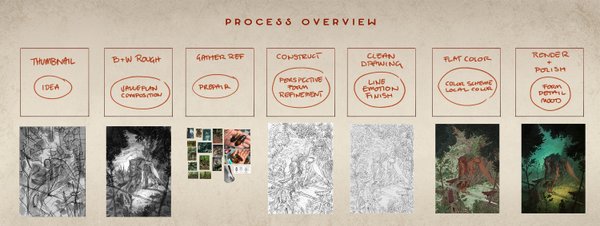
The Process: From Idea to Finished Work
This is simple... but the secret is in understanding each step and how they help your image improve.
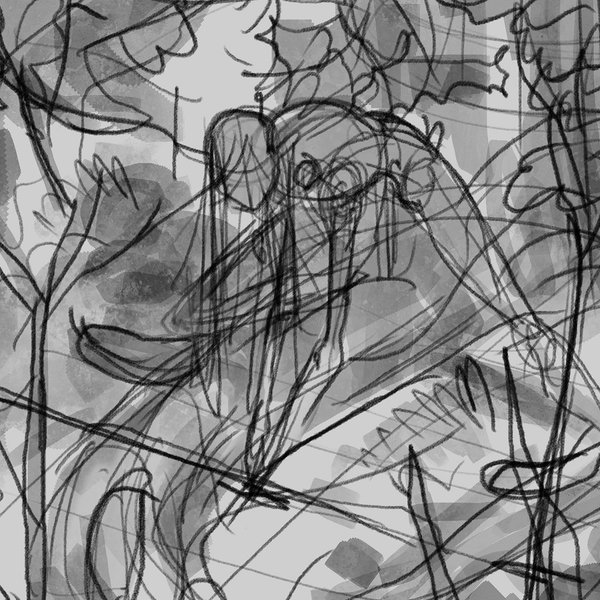
Idea & Thumbnail
Plan and perfect images that move your audience and communicate effectively.
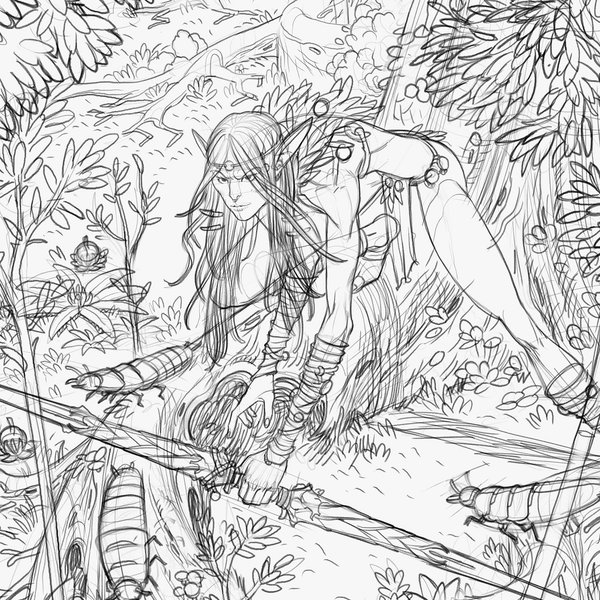
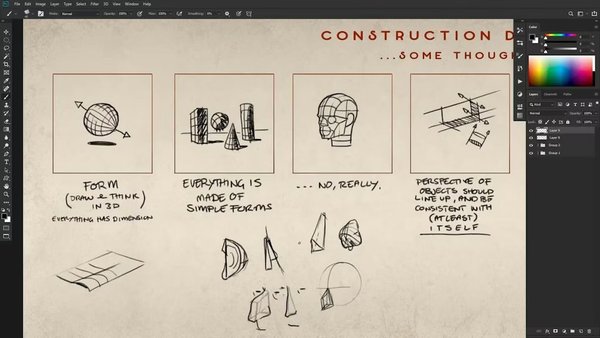
Construction
Solve all technical problems before the visible stages. This is where real improvement happens.
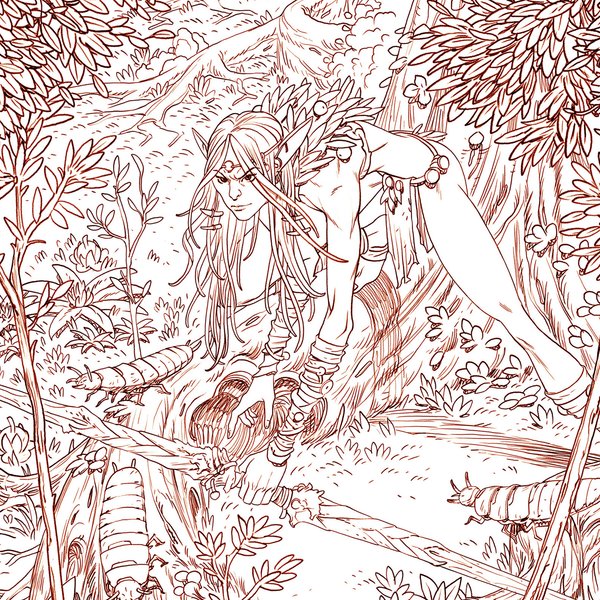
Line Work
Focus on motion, expression, texture, emotion. Getting your story into the line work.
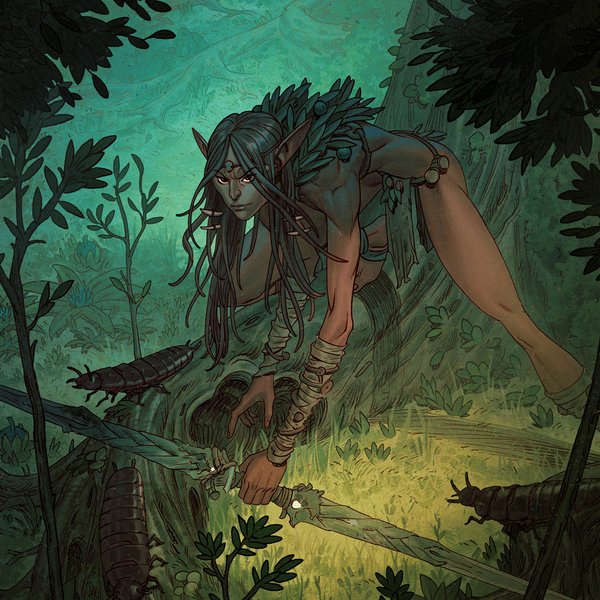
Color & Rendering
Define the style and mood. Flat color or full rendering... you decide.
Step 1: The Idea and Thumbnail - We start with the concept. What's the story, what's the core of your image? This stage is critical because this is where you align yourself with your intention.
Step 2: Construction - This is where most intermediate artists rush or skip, and it's often where the real work lives. You solve all the technical problems before you get to the "visible" stages.
Step 3: Line Work - This is the heart of line and color. This is what people see, what they understand as your style. If you've done your construction work properly, this phase isn't stressful.
Step 4: Color - This is where you decide: do you add rendering and dimensionality, or do you rely on flat color and linework to carry the emotion?
Step 5: Effects and Polish - Lastly come the effects and final touches. The subtle things that take an image from good to great.
Why This Works For Everything
Here's the beautiful part: when you have this reliable process, you're not constantly wondering "what should I do next?" You know. And because you know, you can actually focus on the important stuff: the picture, the story, the emotion.
Whether you need to create a page a day, two pages a day, or maybe a page a week, you know how to squeeze all of the quality out of that time. This is what separates professionals from amateurs.
The Illustration Journey Guide
HOW DO I TELL IF I'M IMPROVING?
The Challenge With Learning Through Doing
Here's the uncomfortable truth: process is often the key to really improving. But even knowing that, we don't always get there.
There are a million things pulling at your attention. Different styles to explore. Questions about foundation... how much do you really need? Career options and possibilities. Confusion about what to focus on. And most critically: if you aren't making a lot of art, you're unlikely to get better quickly. It's that simple.
The problem is that learning through doing, which is one of the best ways to improve, rarely comes with guideposts.
You can count tutorials watched. You can list the brushes you've collected. You can track life drawing lessons attended or the number of Loomis heads you drew this week. These feel like progress because they're measurable.
But actual improvement? That's harder to track. You get better slowly. Sometimes imperceptibly. And it can be a huge challenge to actually see that improvement and know if you're heading in the right direction.
This is the real reason so many intermediate artists feel stuck. It's not that they're not improving, it's that they can't see the improvement happening, so they keep searching for external validation. More tutorials. More techniques. More certainty.
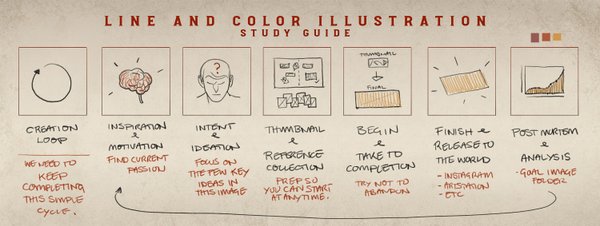
The Illustration Journey Guide: A Map For Your Development
This is why I created what I call the Illustration Journey Guide, a system to figure out what to focus on. More importantly, what not to focus on.
It's not about judging where you are or telling you that you're "not good enough." It's about giving you clarity so you know what will actually move the needle right now.
Think of it like this: if you're trying to climb a mountain, you don't need to worry about the summit before you've figured out which base camp to start from. Most artists are trying to reach the summit while still deciding which mountain to climb.
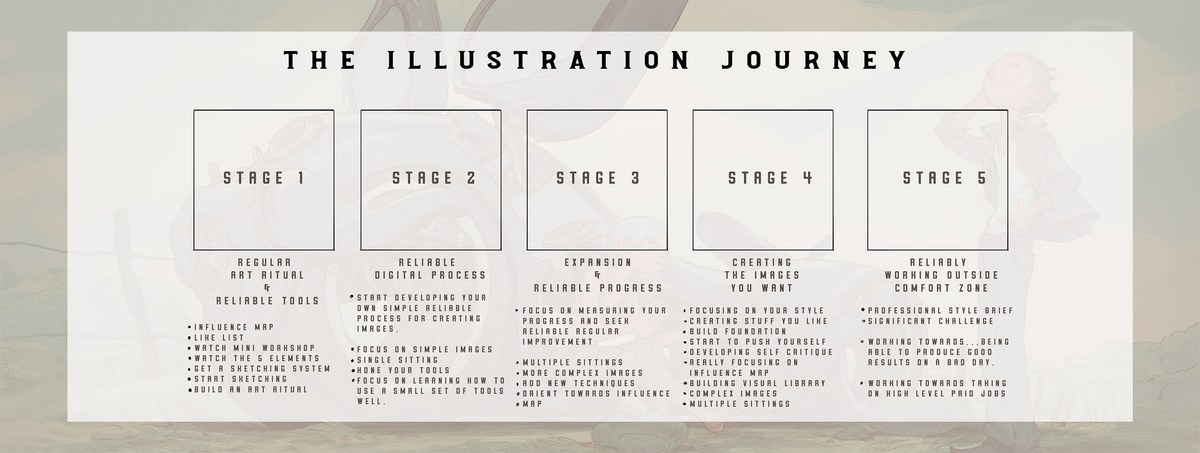
Stage 3: Where You Want To Be
Let's start by talking about what we're aiming for: Stage 3.
This is where you can reliably take ideas from your imagination and turn them into finished illustrations. You're making art regularly. You're seeing progress. You understand the basics of picture-making. You can look at your own work, identify what needs to improve (composition, anatomy, color theory), and actually work on those things.
At Stage 3, you're not struggling with "how do I even start?" anymore. You have a system. You have a process. You can make art that you're proud of, even if you know it's not perfect yet. Most importantly, you can feel yourself getting better.
This is the sweet spot where learning through doing actually works, because you have the foundation to learn from what you're making.
But here's the catch: most intermediate artists aren't actually at Stage 3 yet. And that's okay, because trying to force yourself to Stage 3 without addressing what comes first is exactly why you feel stuck.
What Actually Needs to Come First
Before you can reliably reach Stage 3, before you can make art you're proud of and see yourself improving, there are two foundational things you need:
First: A Regular Art-Making Habit
Not someday. Not when you have the perfect setup. Right now.
Most artists aren't actually drawing enough. This isn't a character flaw, it's just that building a real habit is hard, and nobody talks about it. You might make art sporadically. Sometimes you create for hours, sometimes weeks go by without picking up a stylus. This inconsistency means you're constantly starting from zero, and you never build real momentum.
Stage 1 of the Illustration Journey Guide is entirely about this: building the structures in your life that make creating art a regular thing. Not complicated. Just regular.
Second: A Reliable Digital Process
You need a way to reliably take an idea from your head and put it on the page. Not perfectly. Not with all the techniques you've learned. Just reliably.
This is what Stage 2 is about. It's not fancy. It's not about finding the perfect brush or the perfect software. It's about having a simple, repeatable system for going from blank canvas to finished image.
Most artists are missing this. They have techniques scattered everywhere. A bit of this process from one tutorial, a different approach from another artist's video, some workflow hack they found online. It cobbles together into something that sometimes works, but it's not reliable. So every time you sit down to create, you're essentially figuring out your process from scratch.
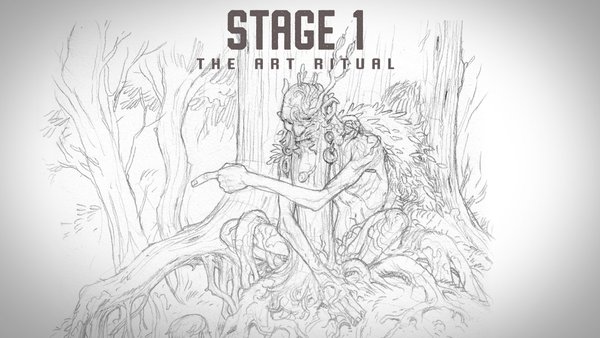
Stage 1: Building The Habit
Create a regular art-making practice. Not perfect, just consistent.
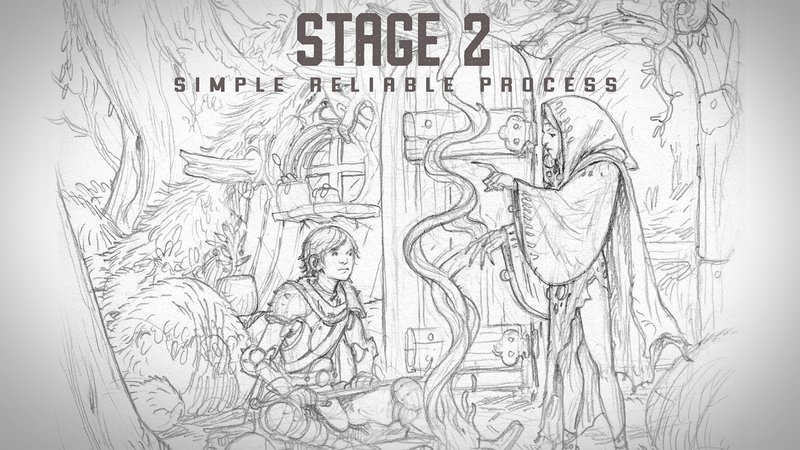
Stage 2: Reliable Process
Develop a simple system for taking ideas from blank canvas to finished image.
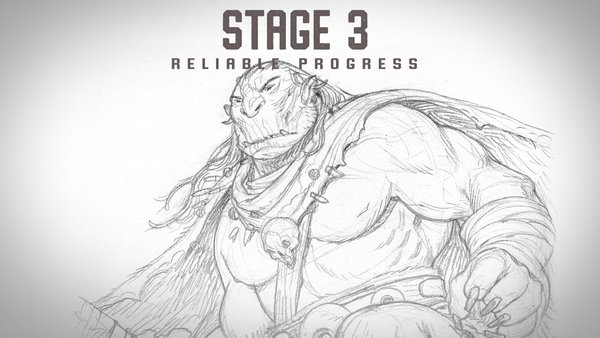
Stage 3: Learning Through Doing
Make art regularly and see measurable progress in your skills.
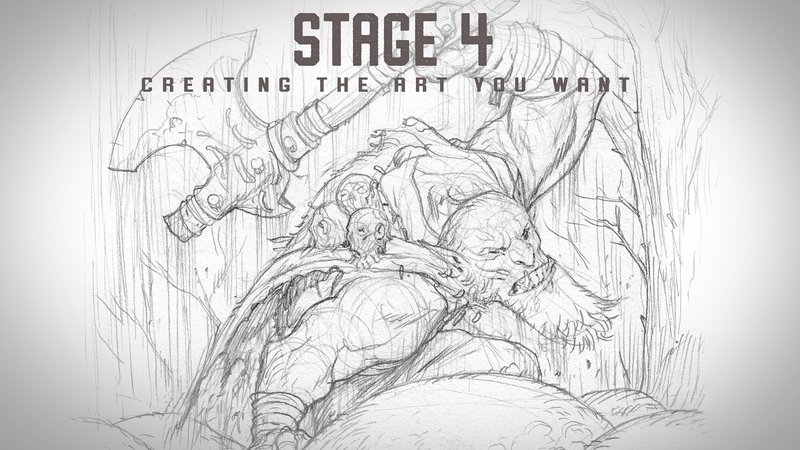
Stage 4: Professional Polish
Refine your craft and develop your unique artistic voice.
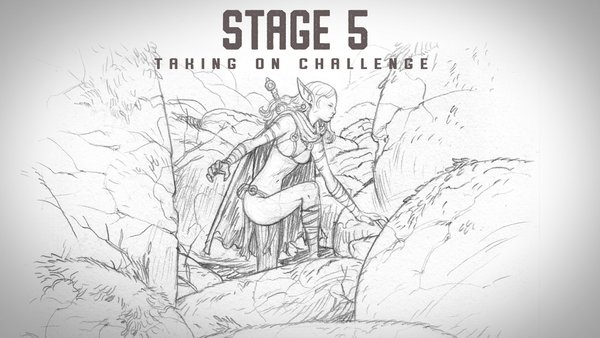
Stage 5: Professional Craft
Pursue the last 5% of quality that separates good from great. Portfolio, efficiency, and professional presentation.
Why This Matters For Seeing Progress
Here's why these two things matter: you can't accurately assess if you're improving until you have them in place.
Stage 3 is where you start asking "Am I getting better?" and being able to answer that question. But you can't answer it honestly if you're not making art regularly (because there's no baseline to compare to) and if you don't have a reliable process (because your results are too inconsistent to measure against).
So the Illustration Journey Guide is a framework for understanding where you actually are and what you actually need to work on right now, not what you think you should be working on based on watching other artists or feeling insecure about your skills.
If you're not making art regularly, don't worry about developing a professional process or refining your style or building a portfolio. Focus on the regular habit first.
If you're making art regularly but you feel like you're taking twice as long as you should, or your results are wildly inconsistent, focus on simplifying and clarifying your process.
And once you have both of those things solid? Then you can move into Stage 3, where all the real learning and improvement starts to accelerate.
This is the map. Let me show you where you are and what comes next.
What You'll Learn
Complete Course Curriculum
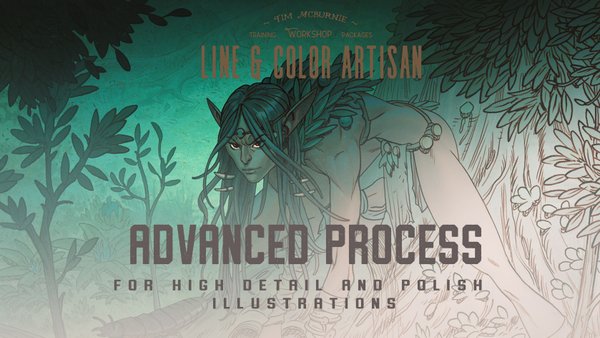
Advanced Process Mega Tutorial
28 videos
22 hours
The longest and most in-depth tutorial I have created to date. A massive real time (not sped up) fully narrated tutorial where I show you how I create a highly polished Illustration from start to finish.
Advanced Process Mega Tutorial
The longest and most in-depth tutorial I have created to date. A massive real time (not sped up) fully narrated tutorial where I show you how I create a highly polished Illustration from start to finish.
Lessons:
- Come up with ideas and set the right 'Intent'
- Create thumbnail idea sketches
- Turn your thumbnail into a detailed value plan
- Create a solid construction/rough drawing
- Improve and develop your drawing WHILE in the rough phase
- Create amazing polished finished lines
- Plan a color scheme and add shadows/lighting
- Refine all the little details
- Add Atmosphere, mood, and painted elements
- Create multiple 'color grades' to explore the final look
The longest and most in-depth tutorial I have created to date. A massive real time (not sped up) fully narrated tutorial where I show you how I create a highly polished Illustration from start to finish.
What You'll Achieve
You get the Brushes, The PSDs, Step by Step Images. Everything. You'll understand the complete professional workflow from concept to finished illustration.
Sections
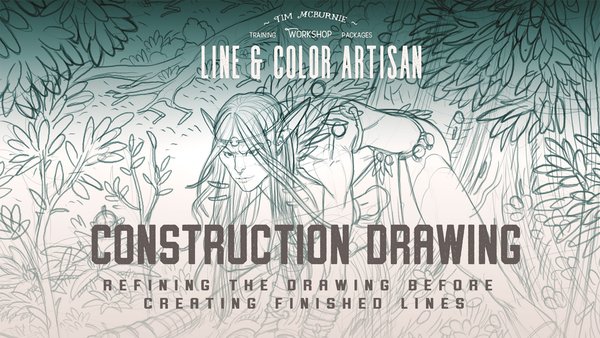
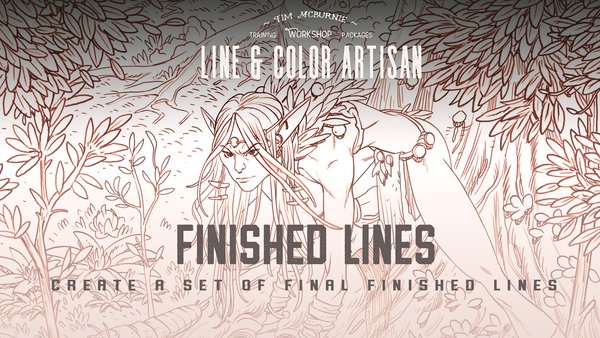
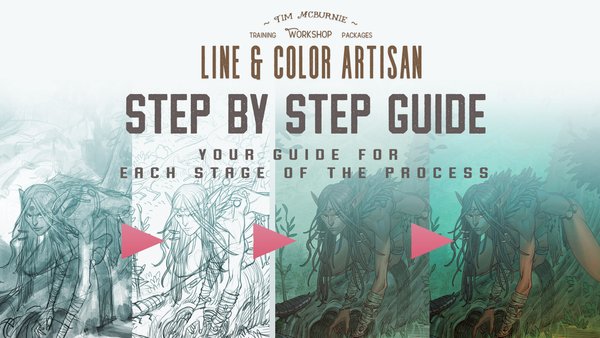
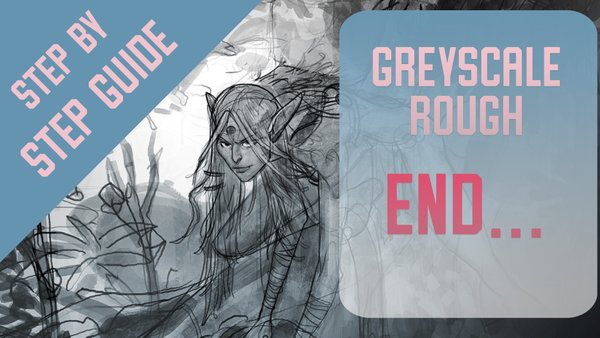
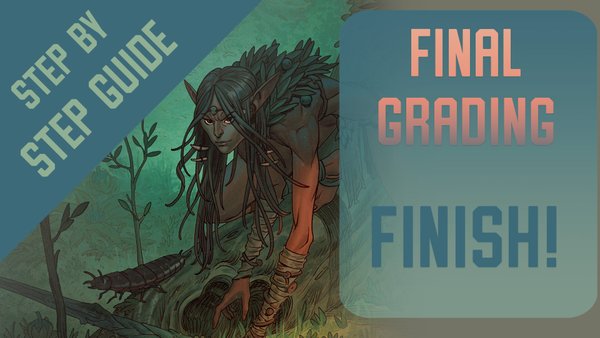
Step by Step Guide
17 videos
2.5 hours
A series of small 10-15 minute videos you can watch when you start and finish each stage of a detailed image.
Step by Step Guide
A series of small 10-15 minute videos you can watch when you start and finish each stage of a detailed image.
Lessons:
- Beginning the Construction advice
- Finishing the Construction checkpoints
- Starting the Line Work guidance
- Completing the Line Work review
- Color Blocking strategy
- Final Rendering approach
- Targeted advice for each stage transition
A series of small 10-15 minute videos you can watch when you start and finish each stage of a detailed image.
What You'll Achieve
If you feel lost or need advice to focus on, watch the relevant video and get targeted guidance on what to do in the coming stage. It's my complete guide to creating a detailed Illustration from start to finish.
Sections
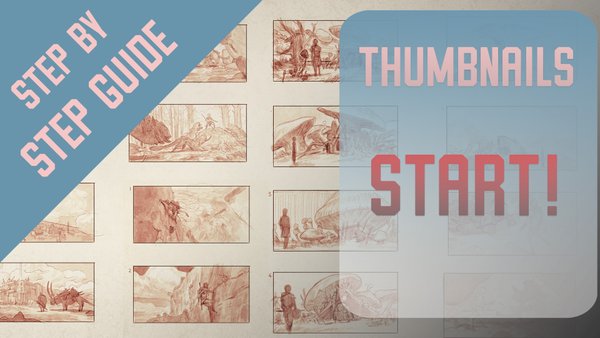
Simple Reliable Process
21 videos
9.5 hours
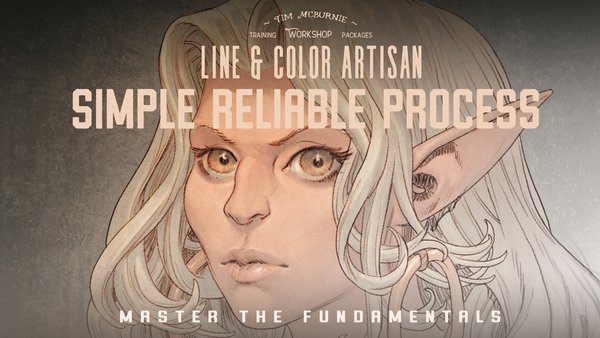
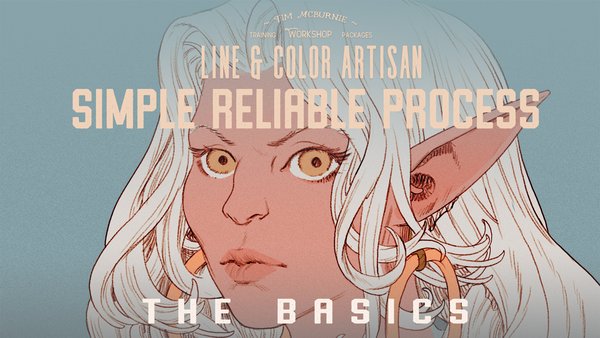
Learn a simple set of tools first. Get really good at the basics. Then start adding more advanced techniques one piece at a time.
Simple Reliable Process
Learn a simple set of tools first. Get really good at the basics. Then start adding more advanced techniques one piece at a time.
Lessons:
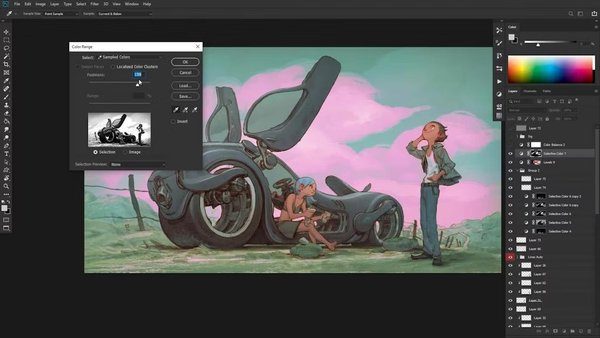
- How to use 3 tools in Photoshop to create the entire drawing and color pass
- The basics of Line and Color
- How to add advanced techniques one at a time
- Adjusting Colors, Gradients, Line colors
- Adding Texture, Simple Shadows, Rendering
- Adding a color 'grade' to tweak the final look
Learn a simple set of tools first. Get really good at the basics. Then start adding more advanced techniques one piece at a time.
What You'll Achieve
If you're just starting out, you'll be able to jump in and hit the ground running. Start building an Art Ritual and creating cool stuff immediately with a proven, reliable workflow.
Sections
Five Stage System
11+ videos
4+ hours
Chart your progress and manage your level of challenge. Slowly increase complexity and difficulty as you master each stage.
Five Stage System
Chart your progress and manage your level of challenge. Slowly increase complexity and difficulty as you master each stage.
Lessons:
- Stage assessment and goal setting
- Managing technical challenge levels
- When to focus on style development
- When to pursue professional work
- How to pace yourself through each stage
- What NOT to focus on at each level
Chart your progress and manage your level of challenge. Slowly increase complexity and difficulty as you master each stage.
What You'll Achieve
You'll know exactly where you are in your artistic journey and what to focus on next. No more feeling overwhelmed or biting off more than you can chew.
Sections
Tutorial Library
12+ videos
10+ hours
Complete project-based tutorials including The Travellers (6.5 hours), The Dancing Girl (3 hours), and the new Pinocchio Comic Page tutorial. Watch professional workflows in action.
Tutorial Library
Complete project-based tutorials including The Travellers (6.5 hours), The Dancing Girl (3 hours), and the new Pinocchio Comic Page tutorial. Watch professional workflows in action.
Complete project-based tutorials including The Travellers (6.5 hours), The Dancing Girl (3 hours), and the new Pinocchio Comic Page tutorial. Watch professional workflows in action.
What You'll Achieve
See how the Line and Color principles adapt to different subjects, styles, and compositional challenges.
Sections
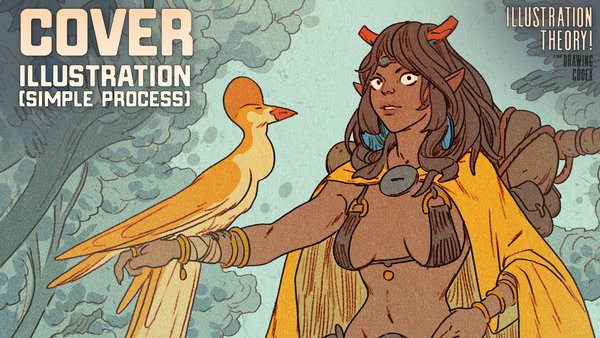
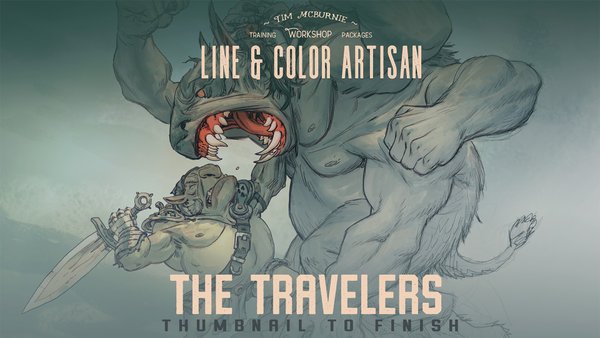
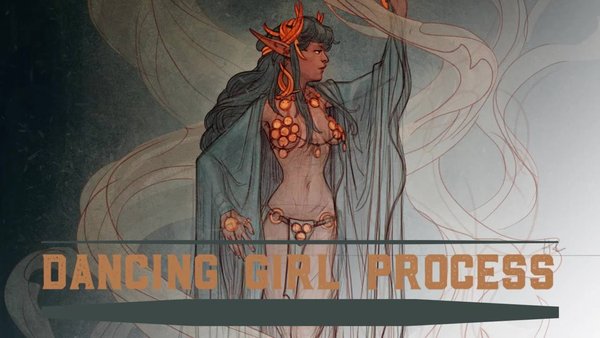
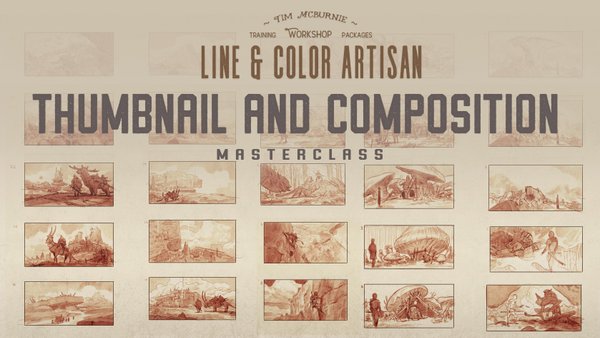
Composition and Thumbnailing Masterclass
5 videos
3.5 hours
Master the critical planning phase that determines whether your illustration will succeed.
Composition and Thumbnailing Masterclass
Master the critical planning phase that determines whether your illustration will succeed.
Lessons:
- Thumbnail sketching strategies
- Compositional principles for dynamic images
- Problem-solving before detail work begins
- Creating multiple variations quickly
Master the critical planning phase that determines whether your illustration will succeed.
What You'll Achieve
Never waste hours on a detailed drawing that doesn't work compositionally. Learn to solve problems at the thumbnail stage.
Sections
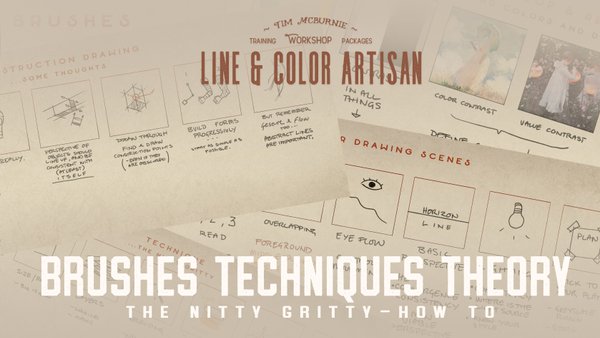
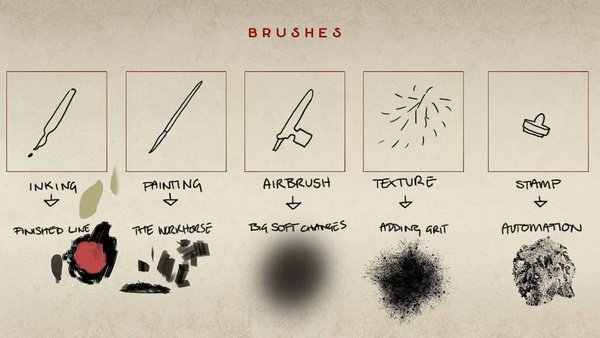
Brushes, Techniques and Theory
13 videos
5.5 hours
All the brushes and technical details that go into creating line and color images.
Brushes, Techniques and Theory
All the brushes and technical details that go into creating line and color images.
All the brushes and technical details that go into creating line and color images.
What You'll Achieve
Master the technical side of digital drawing. Understand not just WHAT brushes to use, but WHY they work.
Sections
Get Instant Lifetime Access
Pay once, yours forever
Line and Color Academy
Master the Craft of Line and Color
What's included
- 160+ video lessons (120+ hours)
- Advanced Process Mega Tutorial (22 hours)
- Simple Reliable Process series
- Five Stage System for tracking progress
- Step by Step Guide
- Tutorial Collections (The Travellers + Dancing Girl + Pinocchio)
- Composition & Thumbnailing Masterclass
- Brushes, Techniques and Theory Mini Course
- 5 Elements of Drawing
- All brushes, PSDs, and resources
- Lifetime access with free updates
- 60-day money-back guarantee
- Learn at your own pace
Pay once, own it forever
$290 USD
Enroll Now - $29060-day money-back guarantee • Join over 600 artists
Learn From Someone Who's Done The Work

Tim McBurnie
Professional Artist & Instructor
Professional Experience: I've worked as a professional artist for almost twenty-five years, as a comicbook artist, illustrator & concept artist. I've helped launch several successful Kickstarter campaigns My client experience includes:
- Editions Delcourt
- Gunfire Games
- Animal Logic
- Blur Studios
- Blizzard Entertainment
- Wizards of the Coast
Teaching & Community: Over the past thirteen years, I've taught hundreds of 8-week and 12-week intensive classes through Concept Design Workshop and CG Society. My tutorials have been published on multiple platforms since 2009. I'm the founder of the Drawing Codex and the host of the Visual Scholar Podcast. I run the Drawing Codex community which helps people find their creative rhythm and make more art as well as build sustainable artistic careers.
Current Work: I'm currently working on developing the Drawing Codex into the best place to hang out and learn art, as well as developing a series of new graphic novel pitches.
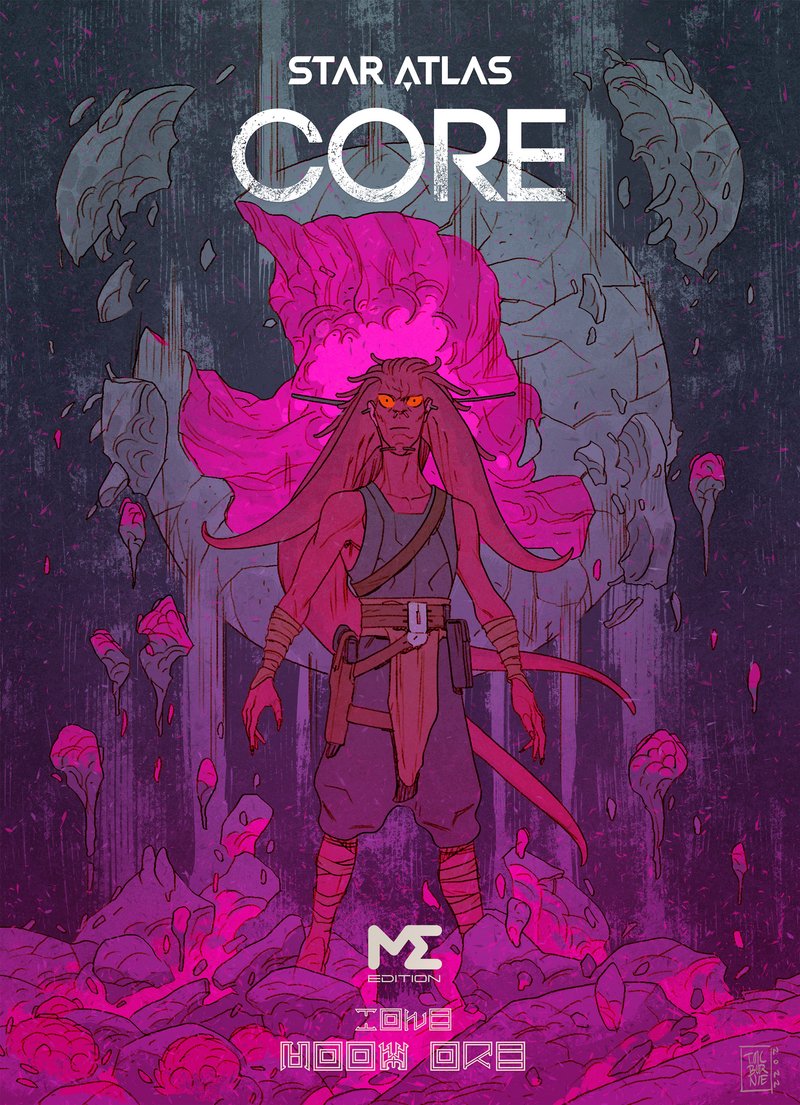
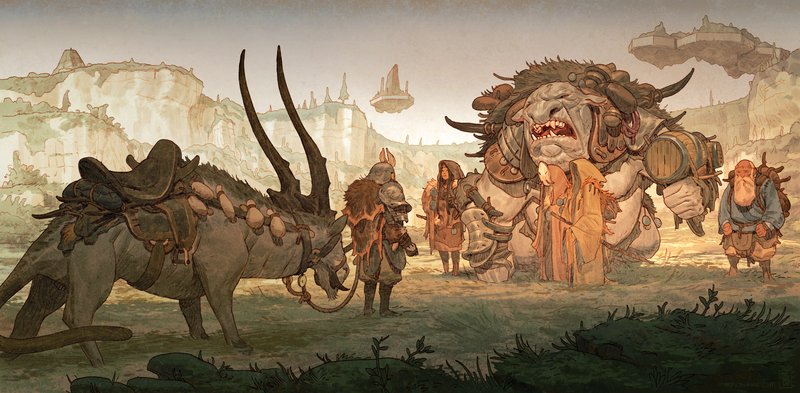
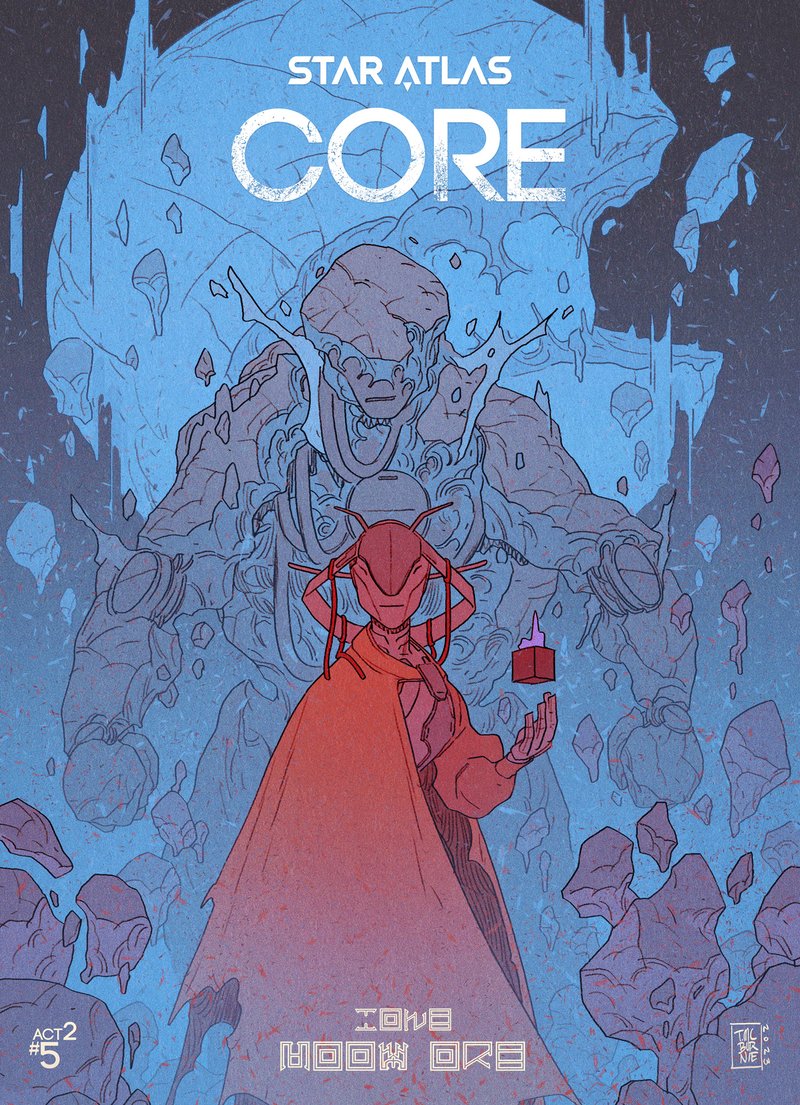
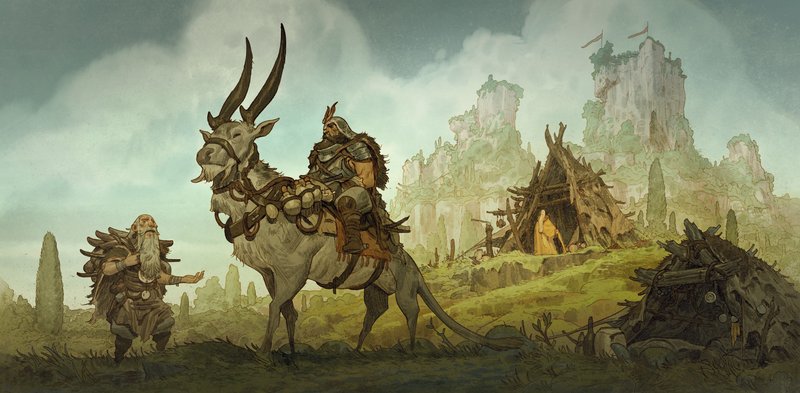
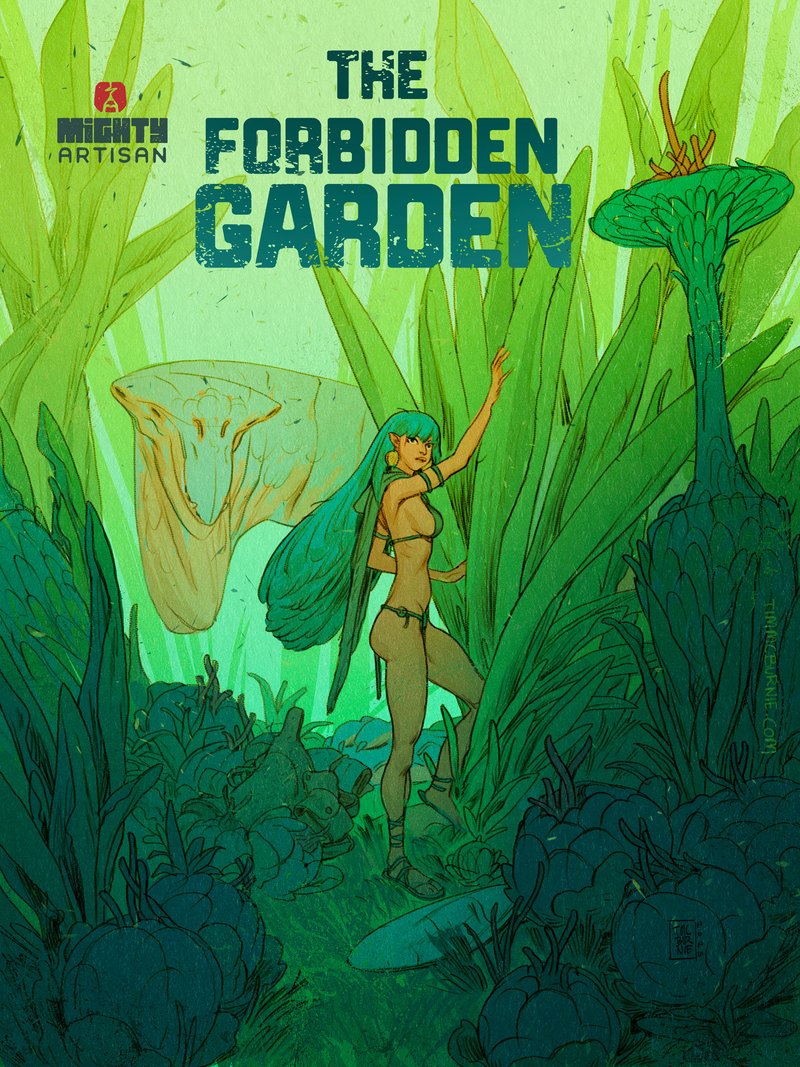
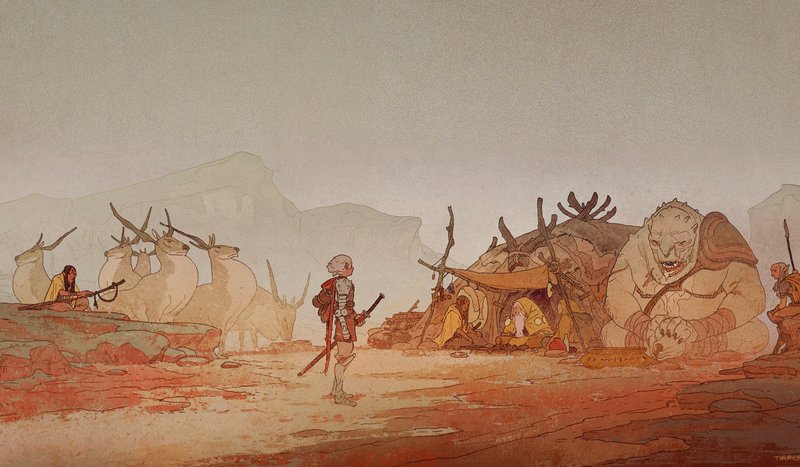
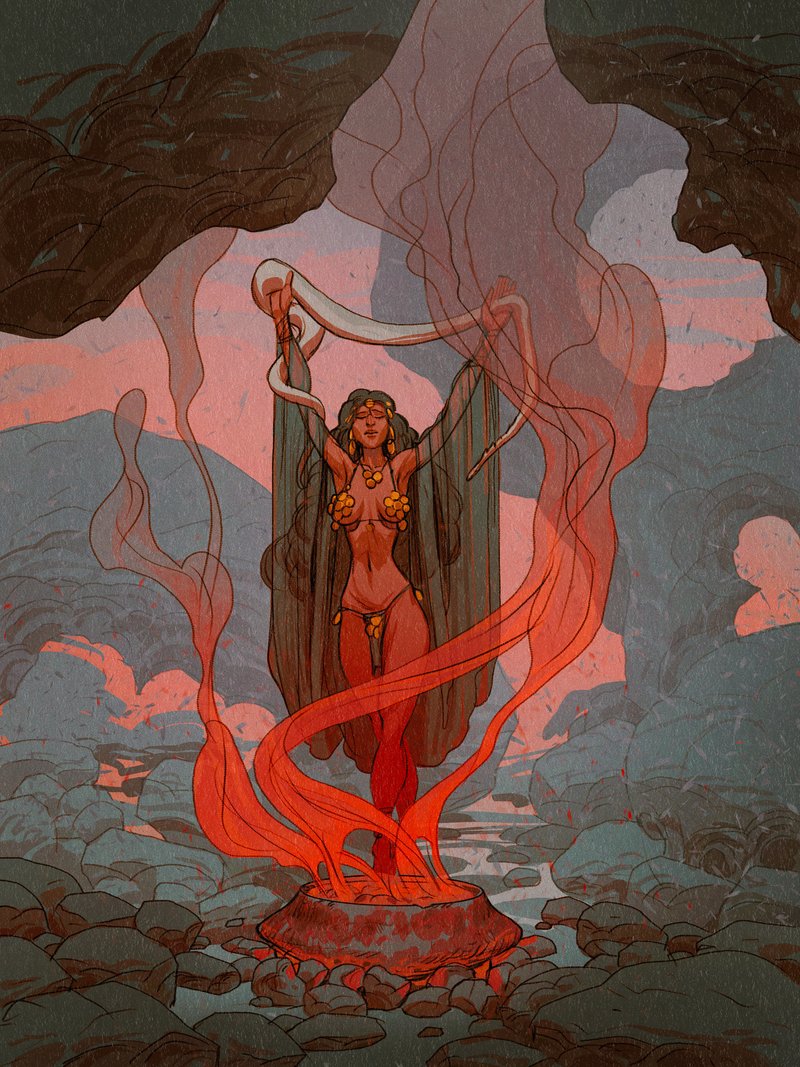
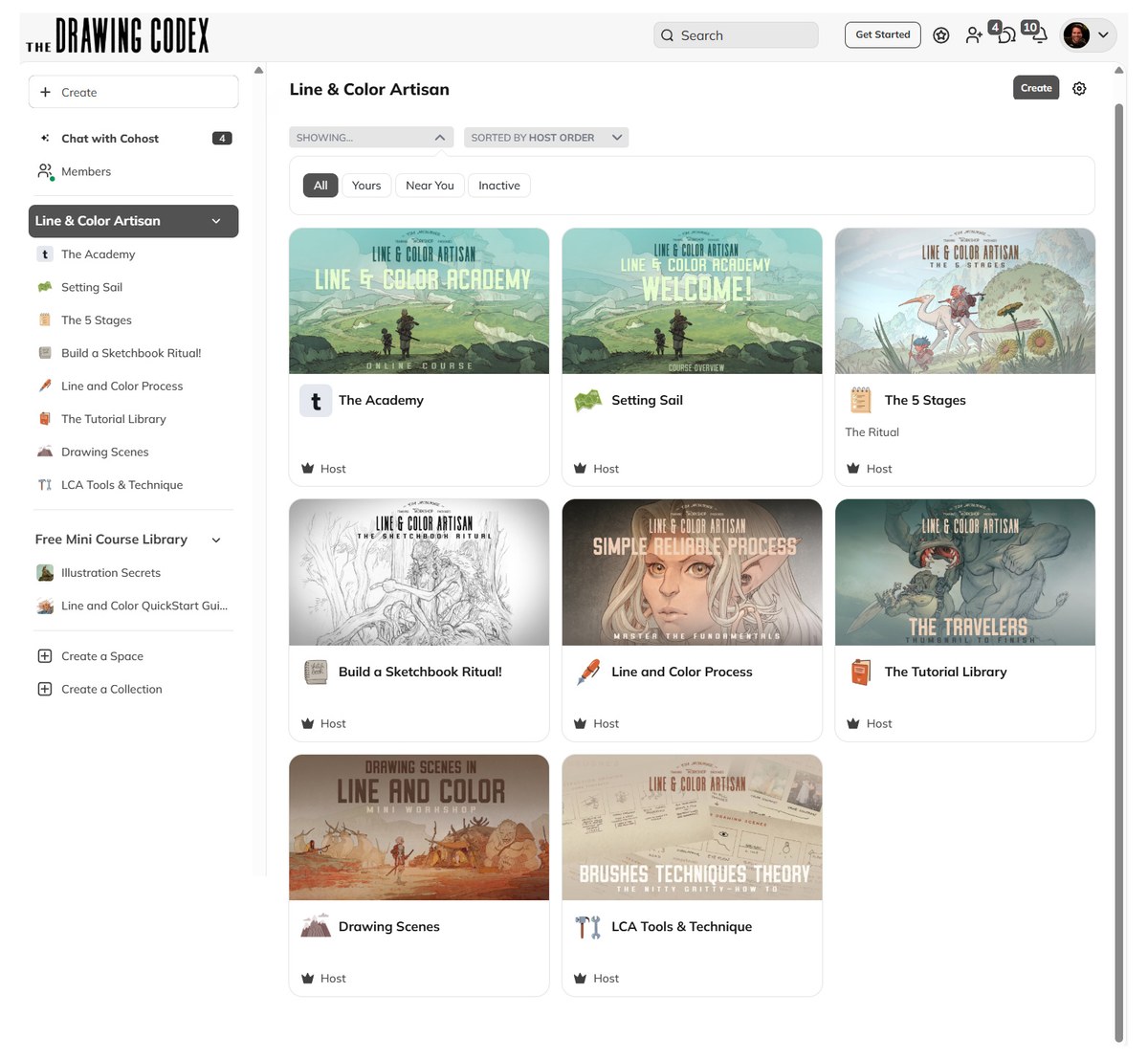
Portfolio Highlights
Everything You Need to Master Line and Color
- Comprehensive Video Instruction
- Over 160 videos covering every aspect of the Line and Color workflow, from establishing your art ritual to advanced rendering techniques.
- All Resources Included
- Brushes, PSDs, step-by-step images, reference materials - everything I use to create professional illustrations.
- Self-Paced Learning
- Learn at your own rhythm. 16 hours a day or 16 minutes a day. The course is designed so you don't need to ask questions - my best advice is available any time you want it, from anywhere in the world.
- The Five Stage System
- A systematic approach to managing your artistic development. Know exactly what to focus on and what NOT to worry about at each stage of your journey.
Why This Is Different
Designed From The Ground Up to Work
Not Just Another Tutorial
This is a complete system designed from the ground up to work without feedback and mentorship. Unlike normal 12-week courses sold 'without teacher feedback', this is designed to work that way from the beginning.
More Content Than 8-Week Courses
I have taught a lot of 8-week online courses over the years. They normally cost $700-$1000+. Line and Color Academy has at least 4-5x the content of any 8-week course I have run.
A Resource For Your Entire Journey
This is not a simple 4-week course where you watch a few quick tutorials. It is a resource. You can come back to it as you progress. Spend 1 week, 2 months, or 2 years on any stage.
Learn What NOT to Focus On
The 5 Stage System tells you when to worry about style, when to pursue professional work, and when to just focus on building the habit. Stop wasting time on the wrong things.
At Your Own Pace
16 hours a day or 16 minutes a day. What matters is consistency, not duration. This is one of the key components to reliable long term improvement.
Incredible Value
Advanced Process Mega Tutorial
$16028 videos, 22 hours of detailed instruction following a complete professional illustration from concept to final render. Includes all brushes, PSDs, and step-by-step images.
Complete Video Course
$290160+ videos covering Simple Reliable Process, Five Stage System, Step by Step Guide, and all core techniques. Over 120 hours of instruction.
Tutorial Collections
$160The Travellers (6.5 hours), The Dancing Girl (3 hours), and the new Pinocchio Comic Page tutorial - complete project-based learning with real professional illustrations.
Composition & Thumbnailing Masterclass
$905 videos, 3.5 hours teaching the critical planning phase that determines illustration success.
5 Elements of Drawing
Priceless1-hour deep dive into the fundamental principles that underpin all effective drawing.
All Brushes, PSDs, and Resources
PricelessEvery tool and file I use to create professional Line and Color illustrations. No searching for the right brush or wondering how something was done.
60-Day Money-Back Guarantee
Try it Risk Free. I'm offering a 60-day Guarantee. If you try the course out for 60 days and decide ultimately that it's not for you, I will refund you 100%. No questions asked. I want this course to work for you. If it's not a good fit, no problem. Send me an email and I'll give you your money back.
Common Questions
The Line and Color Academy is for anyone who is interested in mastering the line-and-color process and style. Whether you're just starting out or you've been drawing for years but feel stuck, the 5 Stage System will help you find your place and move forward.
Yes and no. The Line and Color Academy is a system that helps you learn through doing. You're going to get the most benefit from actually making more art and becoming comfortable with having a simple, reliable way of making art. This is what we teach in the 5-stage framework, but this is not about having a million basic drawing lessons. This is a matter of understanding how to make art regularly and learning through process. What you will do is: 1. Build a sketching habit in Stage One 2. Learn how to make really simple images, even if in the beginning they're very rough 3. Slowly increase the complexity of those images using the principles that we teach
If you're looking for a quick fix or a 4-week transformation, this isn't it. This is a complete system designed to serve you over your entire journey. It requires commitment to regular practice. It is also not for people who are after foundational drawing or beginning drawing tutorials or exercises. This is about you starting to make art right now and learning from that process.
The course uses Photoshop, but the principles apply to any digital painting software (Clip Studio Paint, Procreate, etc.). The Line and Color technique is about approach and workflow, not specific software features.
Yes! Stage 1 of the 5 Stage System focuses heavily on traditional sketching and building a regular drawing habit. Digital techniques come in Stage 2. A lot of these fundamental principles work just as well with traditional drawing scanned in with digital color added.
Lifetime access. Once you enroll, the course is yours forever. Watch the lessons as many times as you need, at your own pace. All future updates and new content are included.
You don't need to. The course is designed to work whether you have 16 hours a day or 16 minutes a day. Consistency matters more than duration. Even short, regular practice sessions will move you forward.
This is designed differently. It's not just tutorials - it's a complete system for building your art ritual, managing your level of challenge, and tracking your progress. The 5 Stage System tells you exactly what to focus on (and what NOT to focus on) at each point in your journey.
The Step by Step Guide provides targeted advice for each stage of creating an illustration. The 5 Stage System helps you identify if you're taking on too much challenge. With our recent platform change on the Drawing Codex, the Line and Color Academy now has a small community section for people who are taking the course. There is an area where you can interact, ask questions, post your work, check what stage you should be at, and talk to other people who are taking the course. Feel free to ask questions @Tim there if you need direct help.
There are now automatically generated English captions on all videos in the course. Other languages may be coming at some point in the future.
No. While the Line and Color style is used extensively in comics, manga, BD, and anime, it's also fundamental to concept art, illustration, and character design across all industries and styles.
Yes, but not right away - and that's good. The Five Stage System tells you when to start worrying about style (hint: not when you're just starting out). Focus on building your art ritual and mastering the basic tools first. Style emerges naturally from consistent practice.
Yes. You get everything - all brushes, all PSD files, all step-by-step images. Every resource I use to create the illustrations in the course.
Get Instant Lifetime Access
Pay once, yours forever
Line and Color Academy
Master the Craft of Line and Color
What's included
- 160+ video lessons (120+ hours)
- Advanced Process Mega Tutorial (22 hours)
- Simple Reliable Process series
- Five Stage System for tracking progress
- Step by Step Guide
- Tutorial Collections (The Travellers + Dancing Girl + Pinocchio)
- Composition & Thumbnailing Masterclass
- Brushes, Techniques and Theory Mini Course
- 5 Elements of Drawing
- All brushes, PSDs, and resources
- Lifetime access with free updates
- 60-day money-back guarantee
- Learn at your own pace
Pay once, own it forever
$290 USD
Enroll Now - $29060-day money-back guarantee • Join over 600 artists
What's New
2026 Updates to Line and Color Academy
Line and Color Academy is constantly being updated with new tutorials and materials.
Last year in 2025, we added a new, more linear way you can start the course. This gives you a little bit more guidance and introduction into the main concepts before you really start your journey on the 5 stages. This also gets you up and running with some very basic digital processes if you're new to making art, and we do this in Procreate.
For 2026, the Drawing Codex and thus the Line and Color Academy has moved to a new community-first platform. This means that you are able to post up work, ask questions, and there is a chat area and a feed area. You'll get notified easily of updates to the course there, and if you get stuck, you can either ask Tim or talk to other people to get clarification.
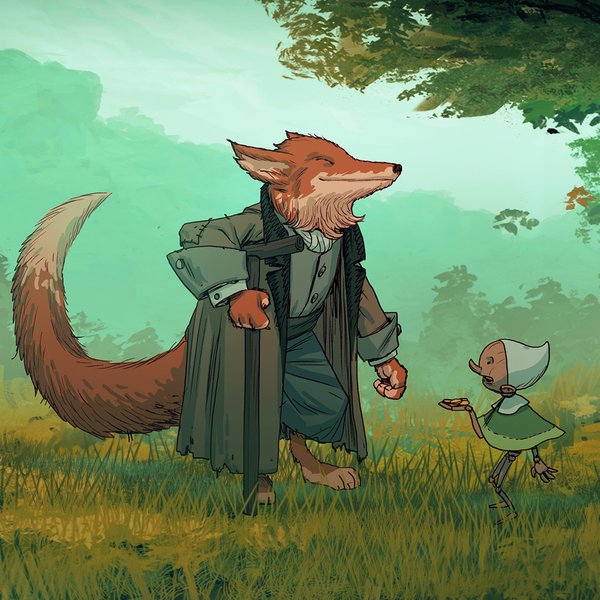
Latest tutorial added: An older tutorial that Tim created on creating a comic book page. This is from 2014, and it goes over the process he used to create a page from Pinocchio. This is an example of how the course is always being updated with new content and new material. You get access to all of these types of updates as part of your lifetime access.
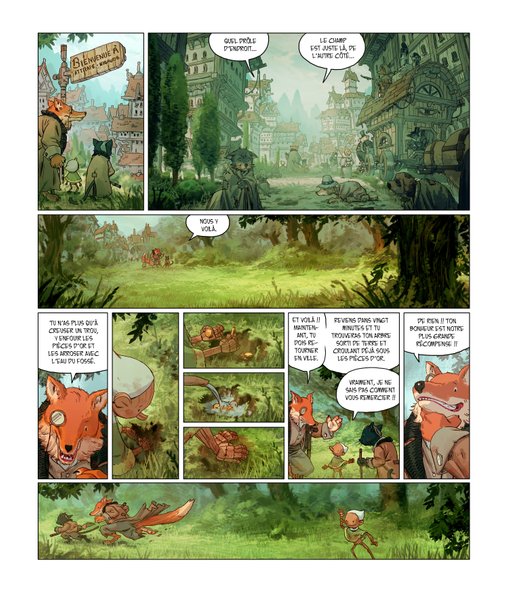
New: Pinocchio Comic Page Tutorial
Watch the complete process of creating a professional comic book page from start to finish.
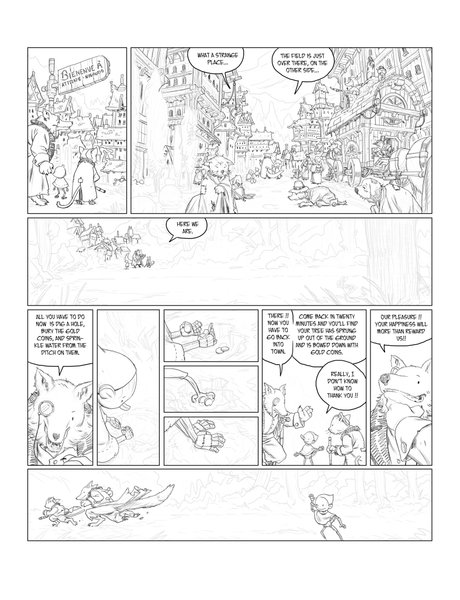
Full Comic Page Process
See how the final page came together, from initial sketch to finished colors.
Ready to Start Your Journey?
Join over 600 artists who have taken Line and Color Academy. Start building your art ritual and mastering Line and Color today.