Why a Million Ideas Creates Noise Instead of Signal
Summary
The Million Monster Problem
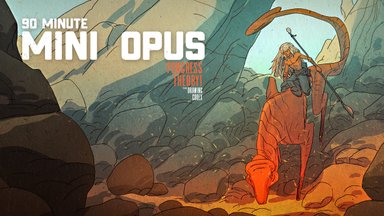
When artists finally create their own personal projects, the temptation is to pack everything into them. Years of designing fantastical creatures, characters, and worlds as concept artists builds a particular muscle: turning up the volume on everything. The result is often a project with a million interesting elements that nobody remembers, instead of one clear idea that people understand instantly.
The problem is not creativity itself. The problem is that overwhelming creativity without focus creates noise rather than signal. A project with a million monsters has no monster. A world with a million interesting ideas becomes impossible to communicate, impossible to share, and impossible for an audience to connect with.
Core Insights
Clear Signal Over Creative Chaos
The elevator pitch exists for a reason beyond Hollywood commerce. Projects that succeed have something people can grab onto, share with others, and understand through a single encounter. Star Wars works because underneath all the aliens and spaceships lies a clear idea about humanity's relationship with technology. Luke Skywalker represents human faith against the Death Star and Darth Vader, both embodiments of humanity consumed by technology. Everything else orbits this core.
Artists often resist this clarity because it feels like constraint. The skills developed working on other projects are all about maximizing interesting elements. But when hired for someone else's project, artists design the monsters and fantastical elements precisely because everything else can be ordinary. The contrast creates the signal. When every element competes for attention, nothing stands out.
The Stan Lee Lesson
The tension between Stan Lee and Jack Kirby reveals something important about creative projects. Kirby was the creative engine, designing Thor, the Hulk, the psychedelic aspects of Asgard. Lee understood how to channel that creativity into communicable ideas. Spider-Man. X-Men. Fantastic Four. Simple concepts people could grasp immediately.
When Kirby left Marvel for DC, he created prolifically. But none of it achieved the cultural impact of his Marvel work. The firehose of creativity, unchecked by editorial focus, produced interesting things that failed to connect. This is not an argument against creativity. It is an observation that creativity alone does not create connection. Someone needs to ask which of these million ideas is worth building everything around.
One Idea, Deep Investment
The practical reality is stark. A meaningful creative project consumes years of life. There is nothing more depressing than spending four years on something nobody can understand well enough to care about. The editing mindset that feels like restriction is actually what makes communication possible.
Great directors make perhaps ten films in a career. Fantasy authors spend twenty years returning to the same world. One idea, properly developed, can sustain an entire creative life. The million-monster approach wastes energy on breadth when depth is what creates meaning. Pick the most interesting element of a world. Build the entire dramatic structure around that single aspect. The other ideas can exist, but as supporting details rather than competing centerpieces.
Key Takeaways
Analytical: Audiences need something to hook onto before they can experience all the creativity behind a project. The difference between working as a cog creating interesting elements and building a complete project is understanding that everything must orbit one clear core idea.
Simple: If you confuse, you lose.
Practical: Out of all the ideas in a world, pick one. Build the entire project around that single element. Understand that this one idea could be all that is needed for the next five or ten years. Depth beats breadth.
Philosophical: The skills of marketing, pitching, and commercial communication are not separate from artistic integrity. They are the mechanism by which meaning reaches an audience. Owning these skills as an artist opens possibilities that treating them as someone else's problem never will.
Try This
Step 1: List the most interesting elements of the world being developed. Monsters, magic systems, technological innovations, locations, whatever populates the creative vision.
Step 2: Pick one. Not the five best. One. Ask what makes this particular element connect to human experience in a way someone could understand in twenty seconds.
Step 3: Rebuild the project with everything else serving that central idea. The other elements can exist, but as context rather than competition.