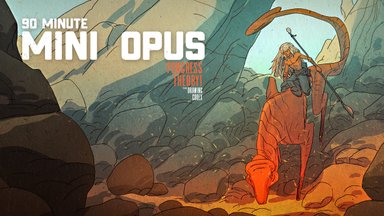
How I Got My First Professional Comic Job
Summary
The First Gig
Getting a first professional comic job often feels like an impossible task, especially when targeting an industry on the other side of the world with a language barrier in the way. In 2005, an unexpected opportunity emerged to work on "Seven Pirates," a French comic that would become part of the acclaimed "Seven" series. This wasn't the result of a calculated plan or strategic networking. It was the culmination of being visible, practicing the craft, and recognizing a genuine opportunity when it arrived.
The path to that first professional gig reveals something important about creative careers: the opportunity side is often chaotic and unpredictable. What matters is being prepared when the right moment arrives and being able to distinguish real opportunities from the endless stream of people who just want to talk about making comics.
Core Insights
Real vs. Fake Opportunities
The artistic community contains two distinct types of aspiring creatives. There are people who actually want to create things and do create them. Then there are people who want to talk about creating things, who seek buddies and friends to discuss maybe doing something big someday. Distinguishing between these groups becomes essential for career progress. The real opportunities share specific characteristics that become recognizable through experience. Genuine collaborators send scripts early, scripts that have endings, that demonstrate actual storytelling ability. Professional opportunities include early discussions about money and clear plans for how the project will actually get published and how artists will get paid. The talking-about-it crowd avoids these concrete details, preferring vague promises about credit, exposure, or pitches to unnamed interested parties. This distinction isn't about judging people at different stages of their journey. Everyone starts somewhere. But recognizing where genuine opportunity lives versus where creative energy gets drained into endless discussion fundamentally shapes whether artistic careers move forward.
The Challenge of Style Adaptation
Landing the opportunity was only half the battle. The French comic style demanded fundamentally different approaches than Western superhero traditions. Panel counts ran higher. Detail expectations exceeded anything previously attempted. The storytelling rhythm compressed more story into fewer pages. Test pages revealed gaps between imagined capability and actual execution. The painterly style that seemed promising simply wasn't working. Contrast was insufficient for print. Detail levels fell short of requirements. Physical challenges emerged around page sizes, scanning workflows, and how to actually produce work at professional speed. Multiple test pages were required, each iteration exposing new problems. The first page was okay. The second was good but not better. The third still fell short. Eventually a pirate action page demonstrated enough potential to secure the contract, though significant style changes would be required throughout production. This experience reinforced something crucial: practicing comics before getting a comic job makes the opportunity far easier to seize. Theory and aspiration don't translate directly into professional pages.
The French Publishing Culture
The French approach to comics publishing differs dramatically from Western superhero markets. Rather than operating production lines with separate pencilers, inkers, colorists, and letterers, French publishers often work with complete creative visions. Editors actively seek out talent and invest in developing that talent over time. They provide practical guidance on craft, offer detailed feedback on storytelling, and build long-term relationships with artists. This nurturing approach creates space for unique artistic voices to develop. The French market supports tremendous variety: political comics, historical comics, art house work, romance, emotions, blockbuster action, and experimental storytelling. Comics exist as a respected medium for serious artistic expression rather than a niche entertainment product. Working within this culture fundamentally changed perspectives on what comics could be and what creative careers could look like. The relationship between editor and artist became collaborative rather than transactional, focused on developing artistic vision rather than simply filling publication slots.
Key Takeaways
Analytical: The opportunity side of creative careers operates chaotically and unpredictably. Comics require an enormous variety of skills including style, expression, storytelling, and raw craft. Getting the job is half the battle because execution demands capabilities that only develop through actual practice.
Simple: Put work out there and practice the craft. The more you can actually do it without needing your hand held, the more likely someone is to work with you.
Practical: Identify real opportunities by two tells: genuine collaborators send scripts early with clear endings, and they discuss money and publication plans quickly and concisely.
Philosophical: Every generation's opportunity looks different. Pursue dreams even without a clear path forward. Creating a book produces something permanent, something to show, something that becomes greater than the sum of the experience and work that went into it.
Try This
Evaluate Current Collaborations: Look at any creative partnerships or projects currently in discussion. Has there been a complete script shared? Has money been discussed clearly?
Create a Complete Work: Even a short comic demonstrates more than endless discussion. Completing any comic instantly earns respect from others who understand the difficulty involved.
Identify Your Tells: Notice which communications feel real and which feel like endless potential that never materializes. Start documenting patterns in how genuine opportunities present themselves versus time-wasting discussions.