Use 3D To Help Draw Your Backgrounds
Summary
3D as a Drawing Tool
One of the most common suggestions for improving backgrounds in comics and illustration is to use 3D. The options range from building complete 3D environments to simply hacking together a few boxes that establish perspective. But there is a gap between having a 3D model and actually knowing how to draw over it effectively. The assumption that 3D makes everything easy is misleading. Without a foundation in drawing, perspective, and composition, 3D will not magically fill in the gaps. What 3D does extremely well is solve specific problems: maintaining consistency when drawing the same object from multiple angles, establishing accurate perspective early in the process, and allowing focus on design tasks rather than repeatedly reconstructing basic forms. The real challenge is figuring out where 3D starts and where it stops in a given workflow, and that depends entirely on the end result and style being pursued.
Concept Art and 3D Design
3D in the Design Process
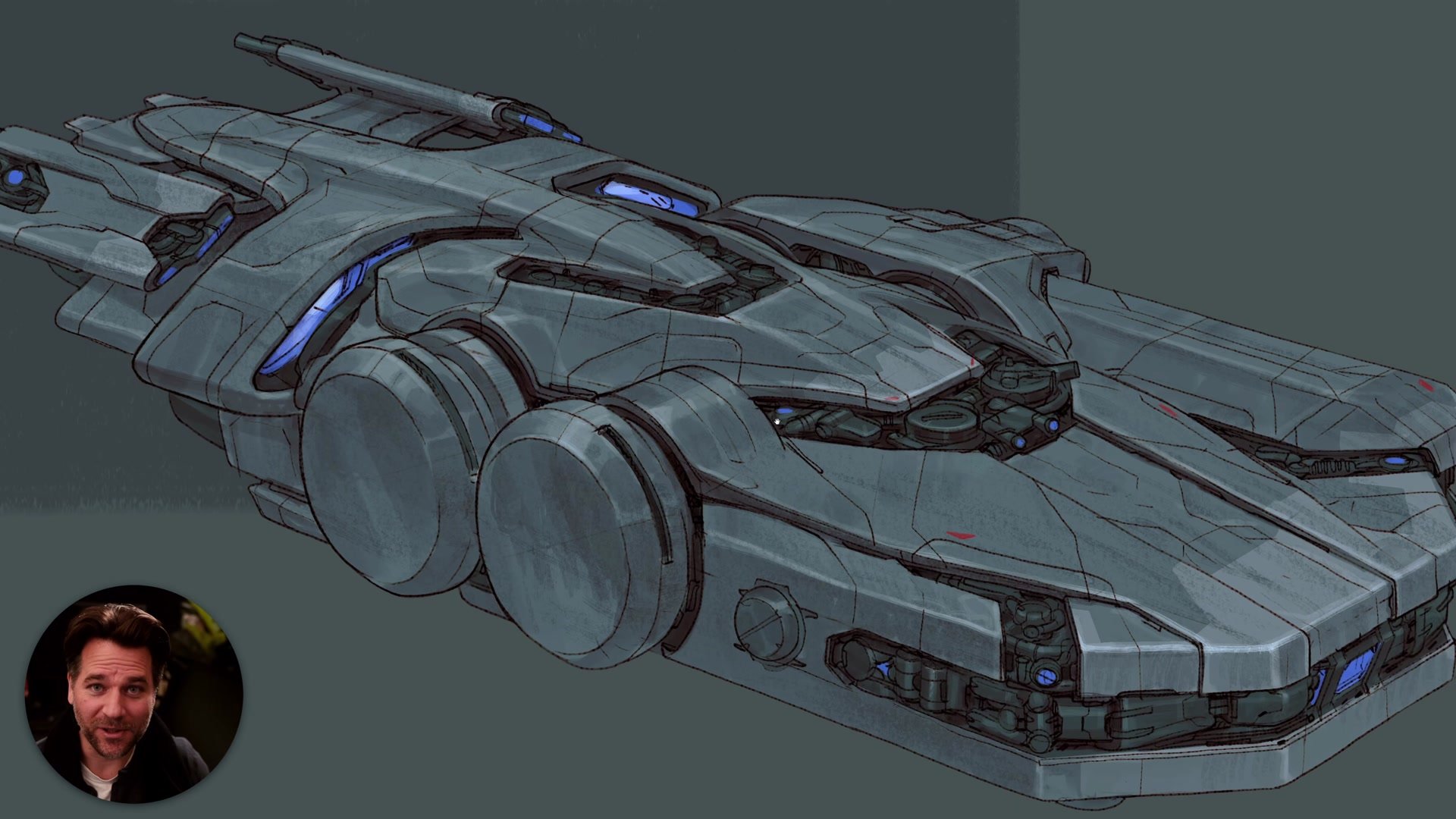
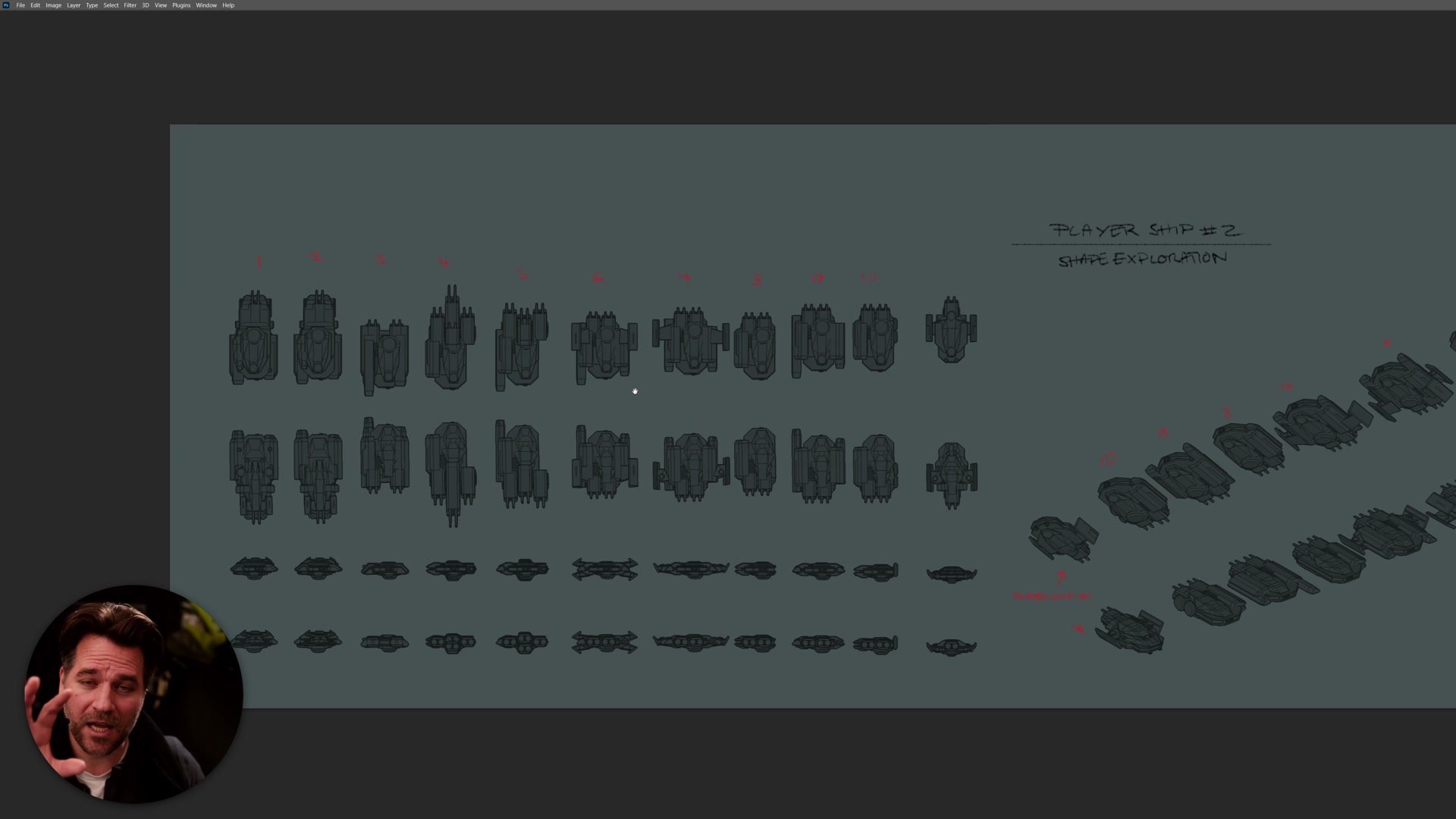
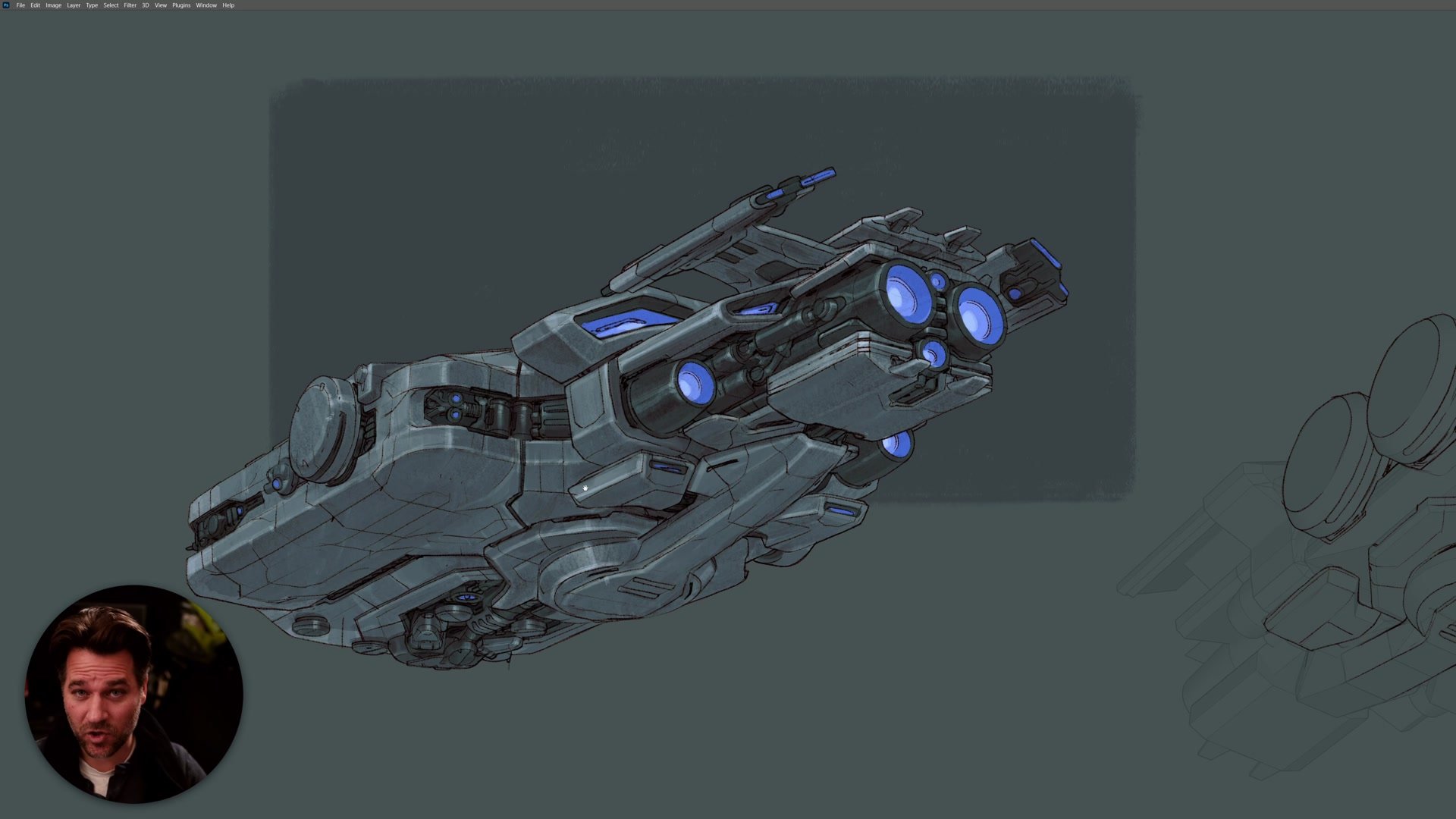
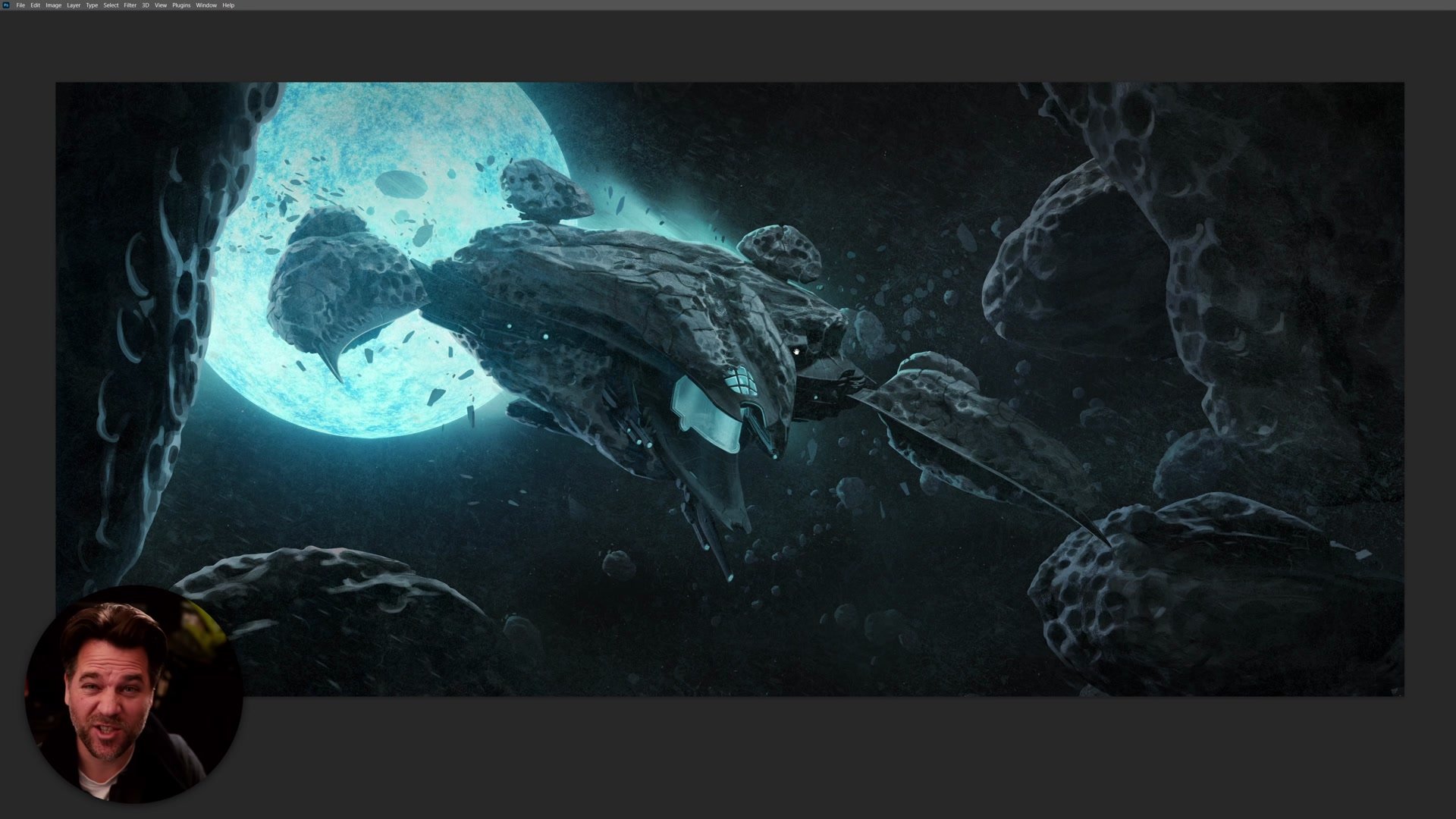
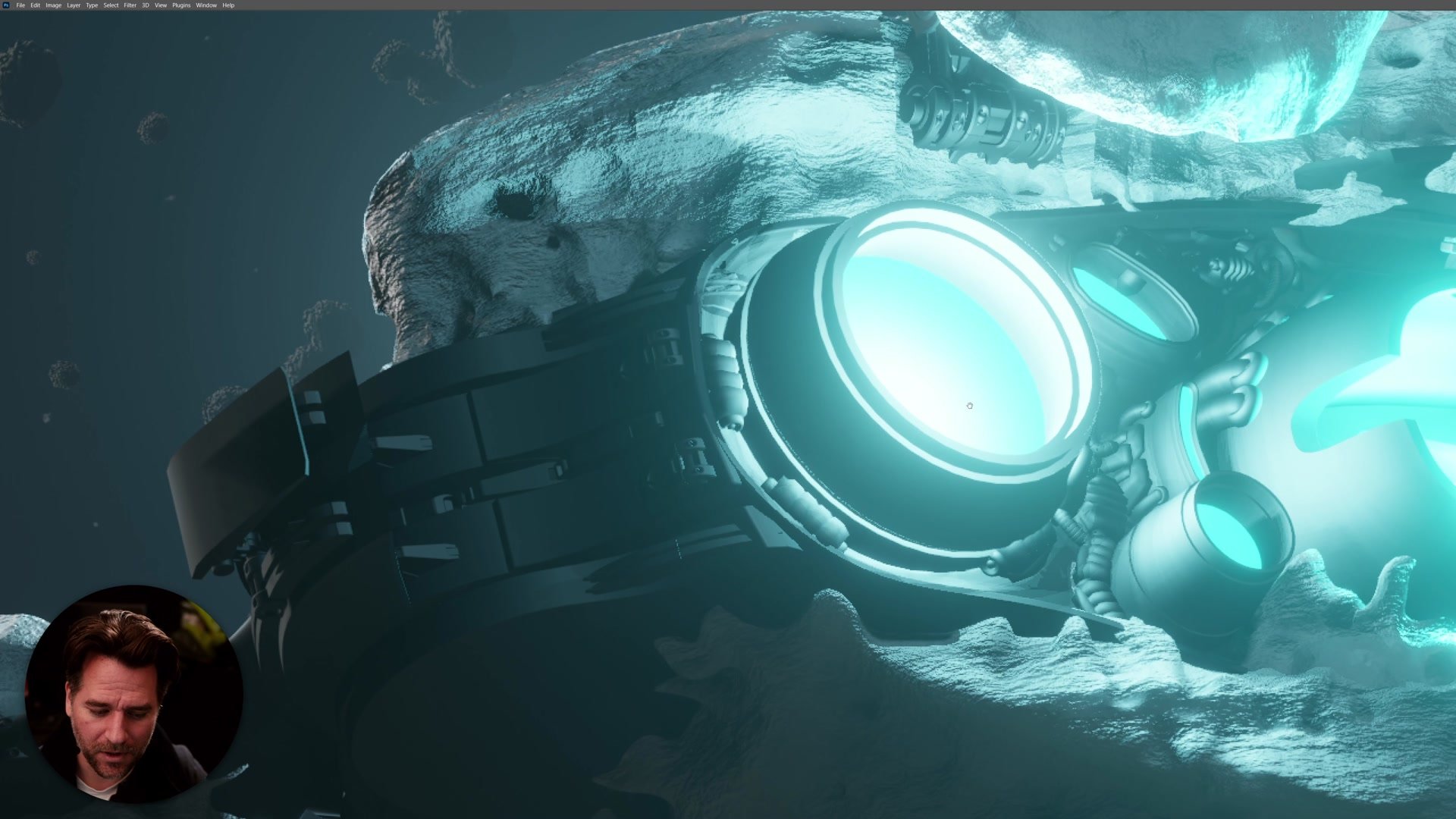
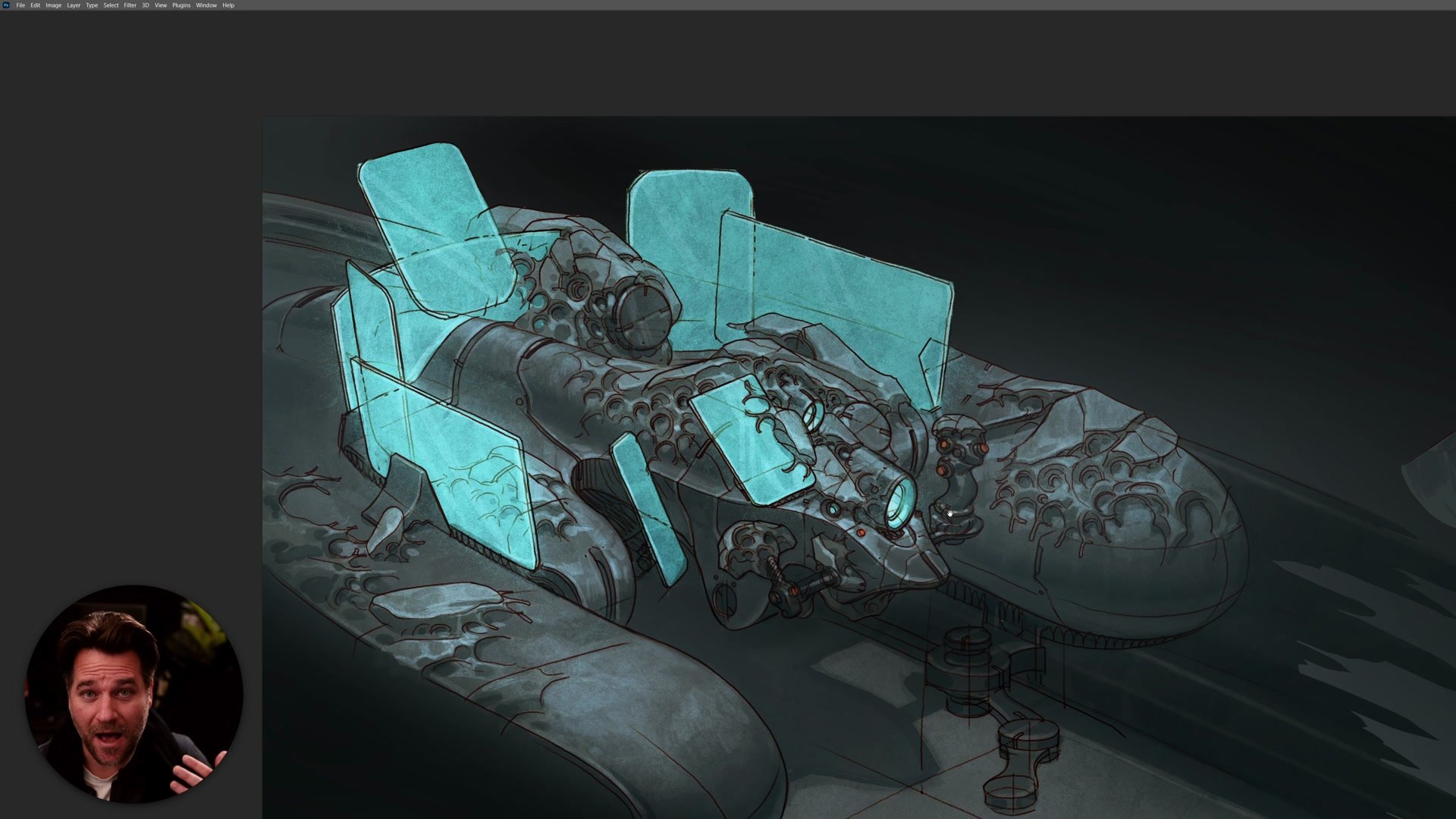
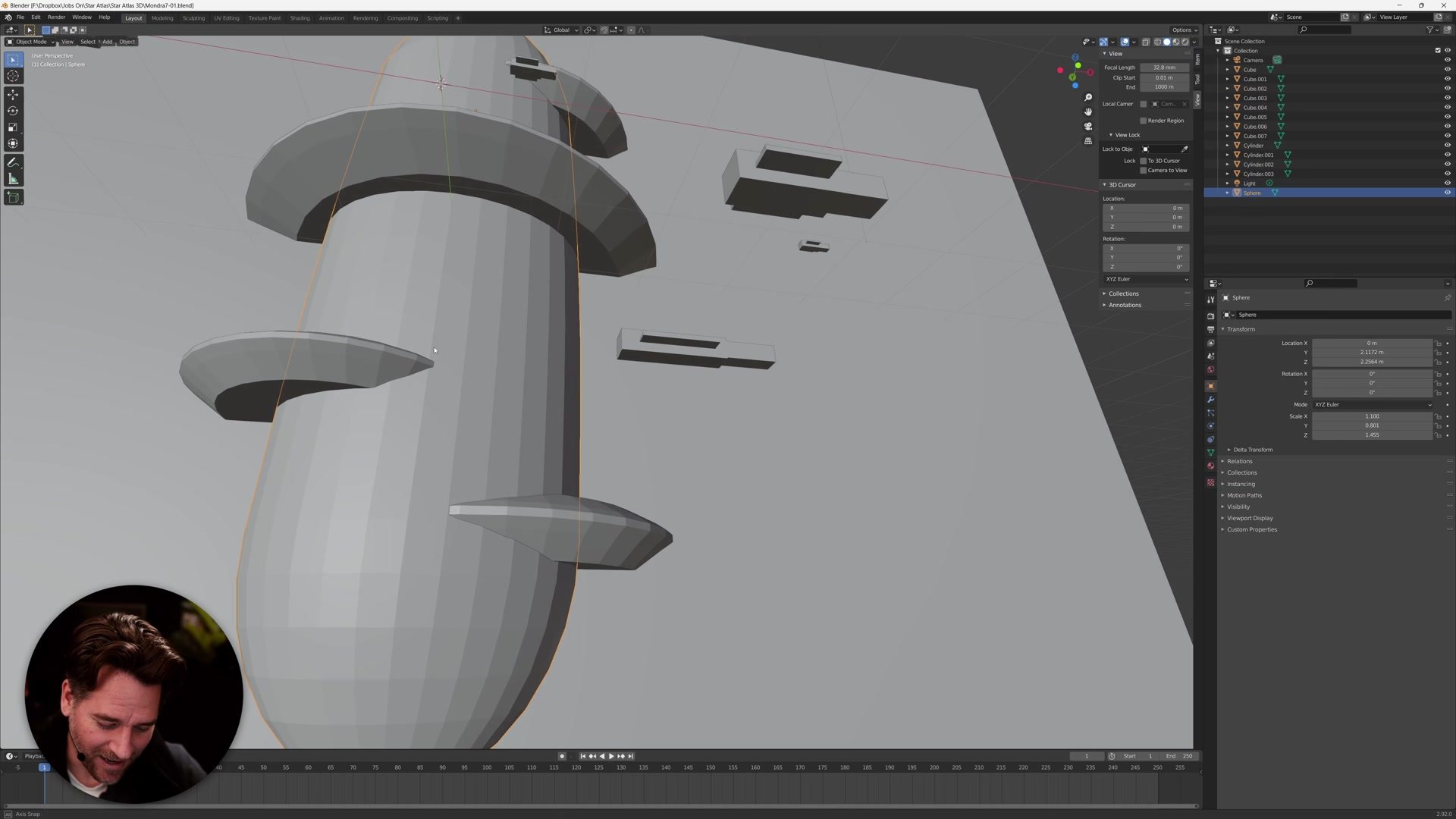
Where 3D becomes genuinely powerful is in the iterative design process. When designing something like a spaceship for a game, the object needs to be redrawn from dozens of angles across multiple revision cycles. Building even a very basic 3D model means that each new angle is already proportionally correct and structurally consistent. The design conversation can focus on shape breakup, secondary forms, and detail rather than constantly re-establishing basic perspective and proportion. This is not about creating production-ready 3D assets. Even rough kit-bashing of simple primitives can provide enough structure to accelerate the drawing phase significantly. The finished 2D illustration then adds detail, character, and polish that the 3D model was never meant to provide. The 3D is scaffolding, not the building itself. Knowing that a design actually works in three dimensions before committing to a polished illustration saves enormous time and prevents the frustrating discovery that something looks great from one angle but falls apart from another.
3D in Comic Production
Practical 3D for Comics
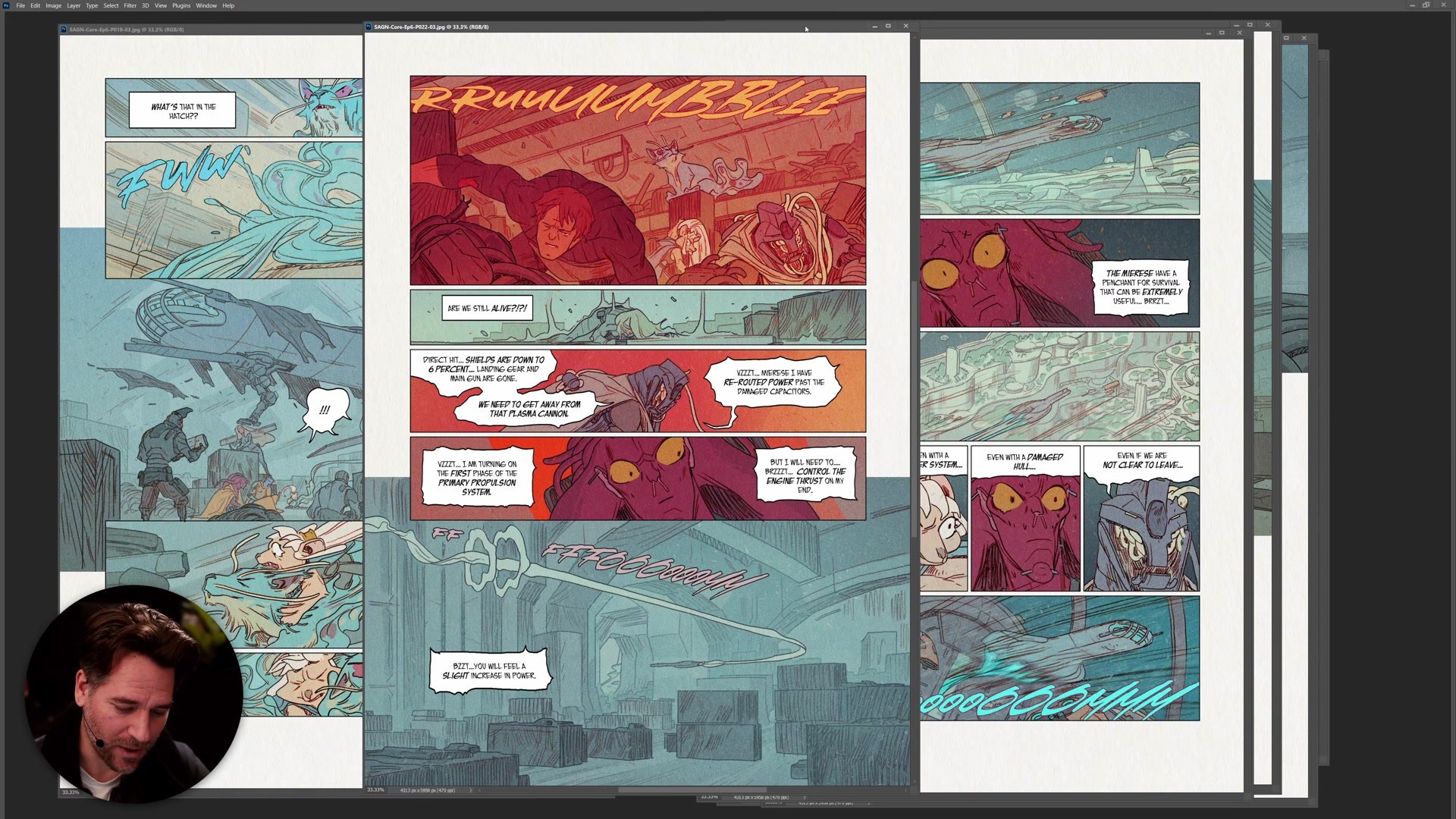
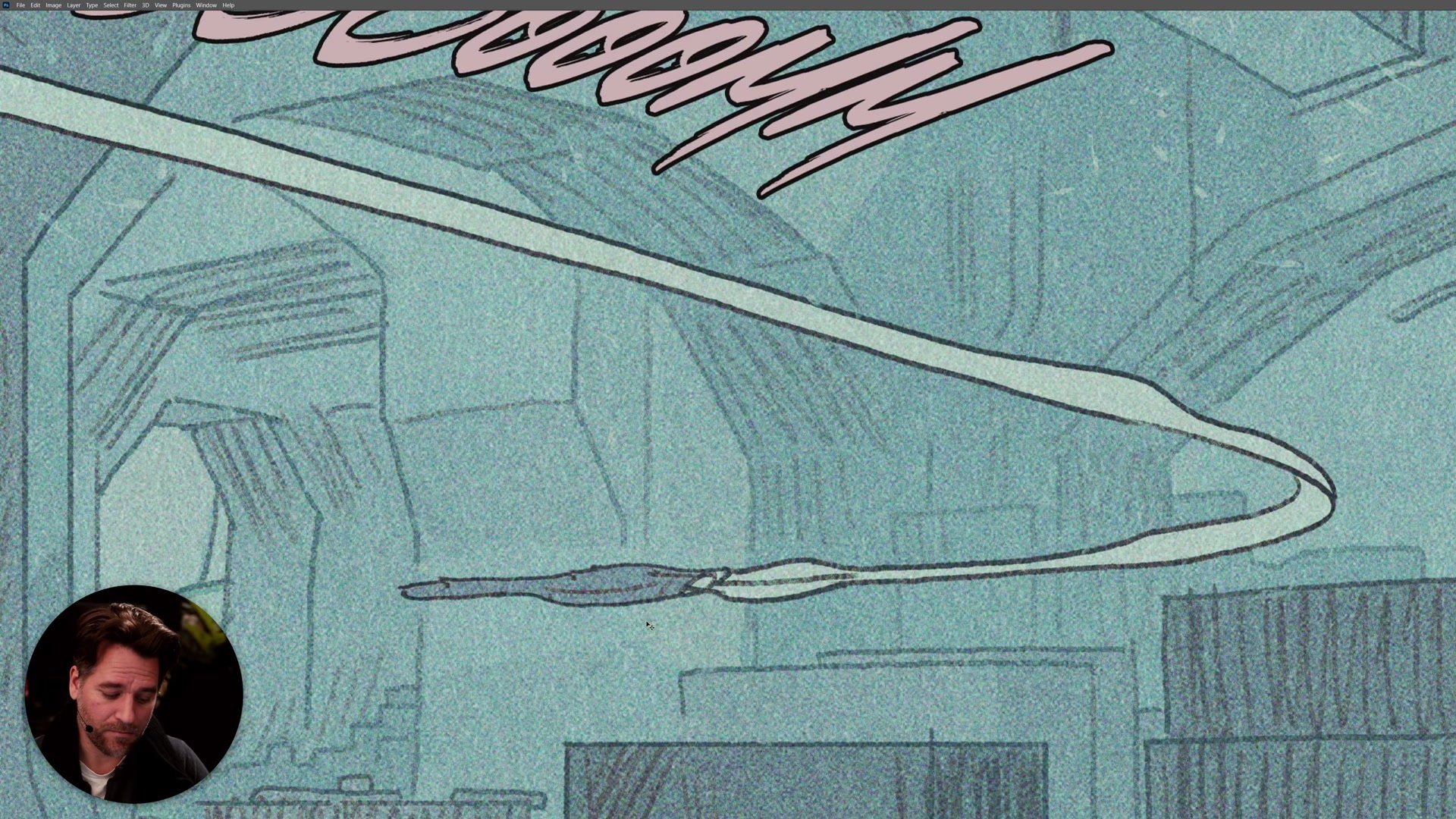
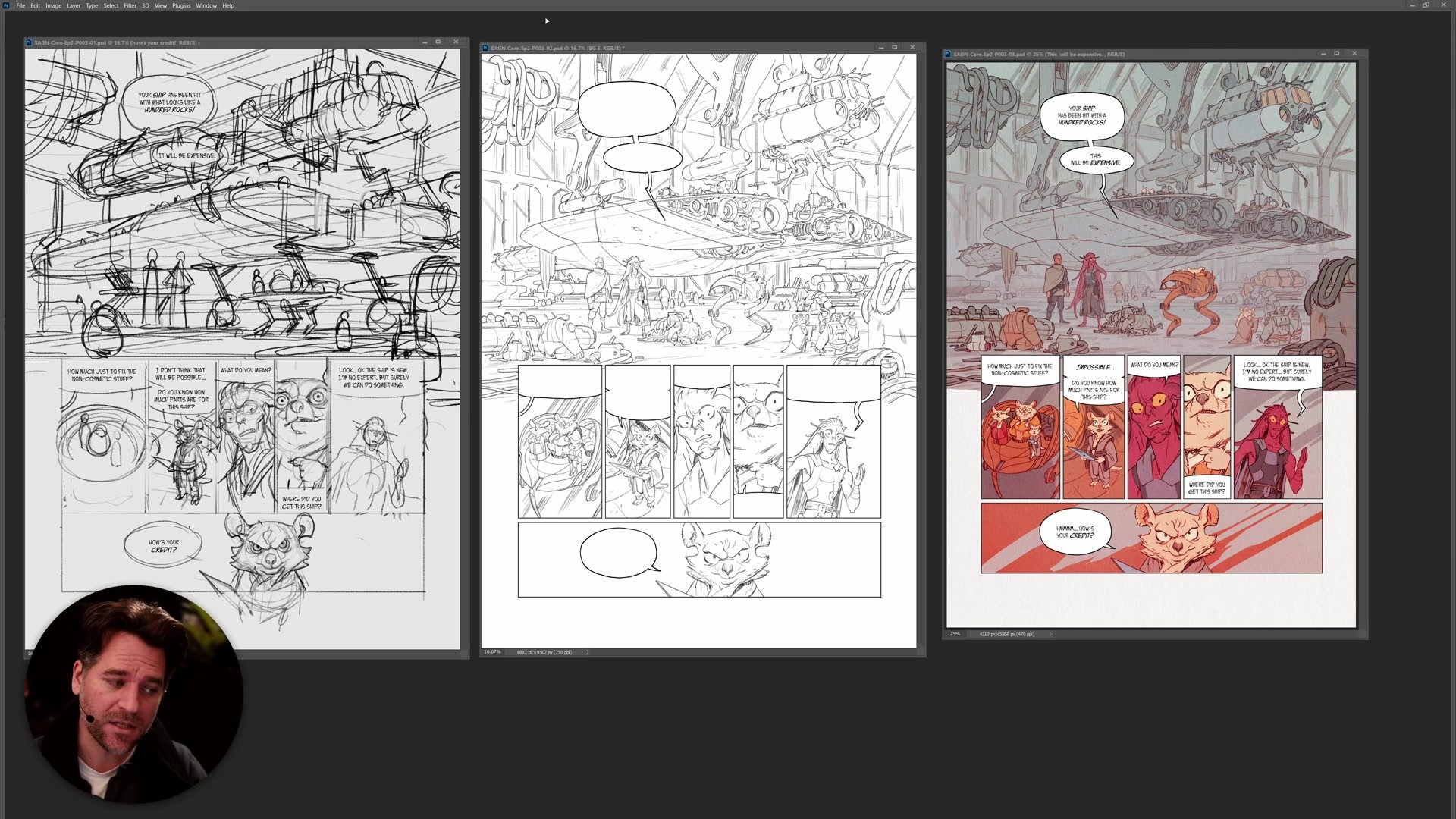
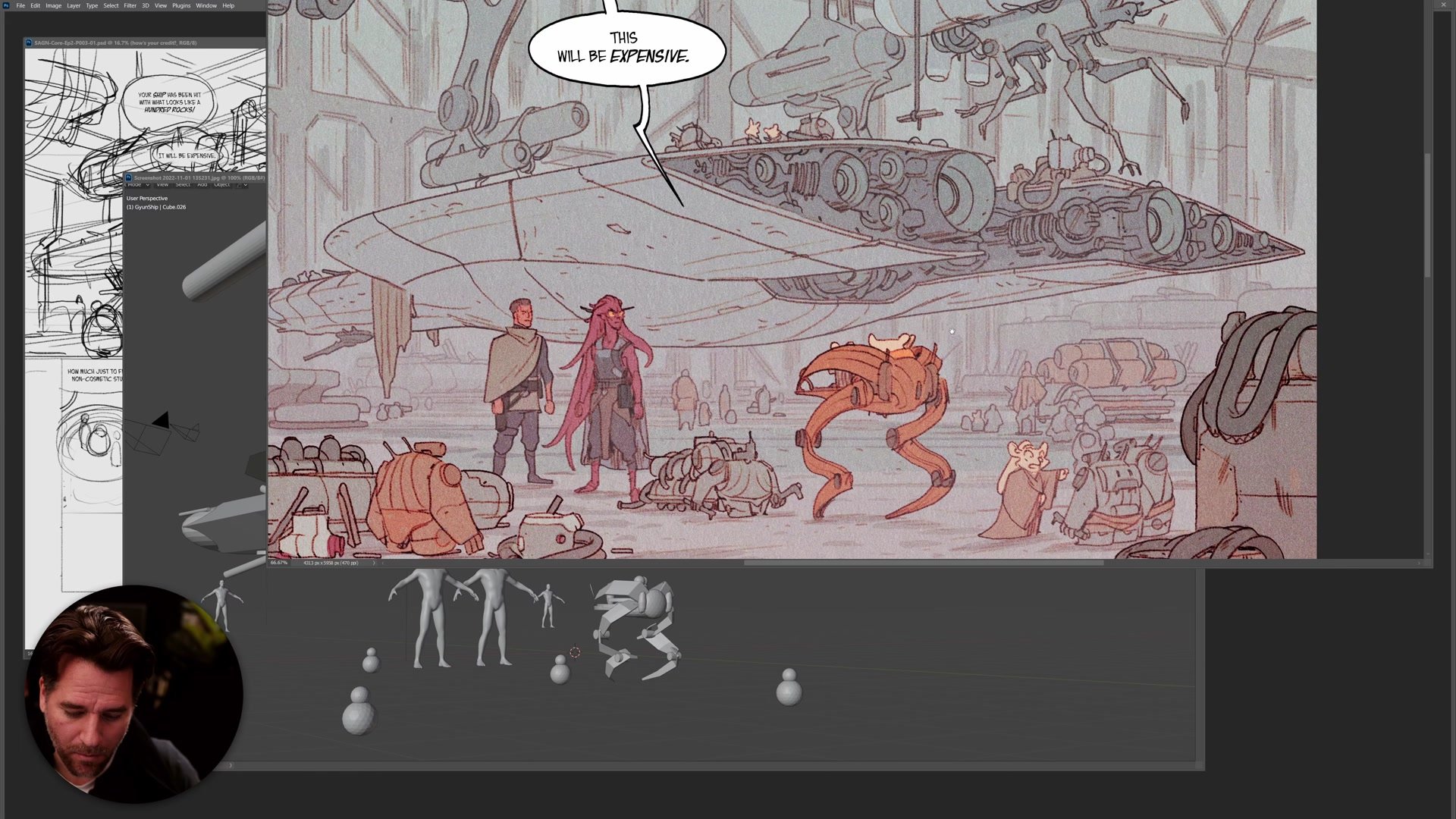
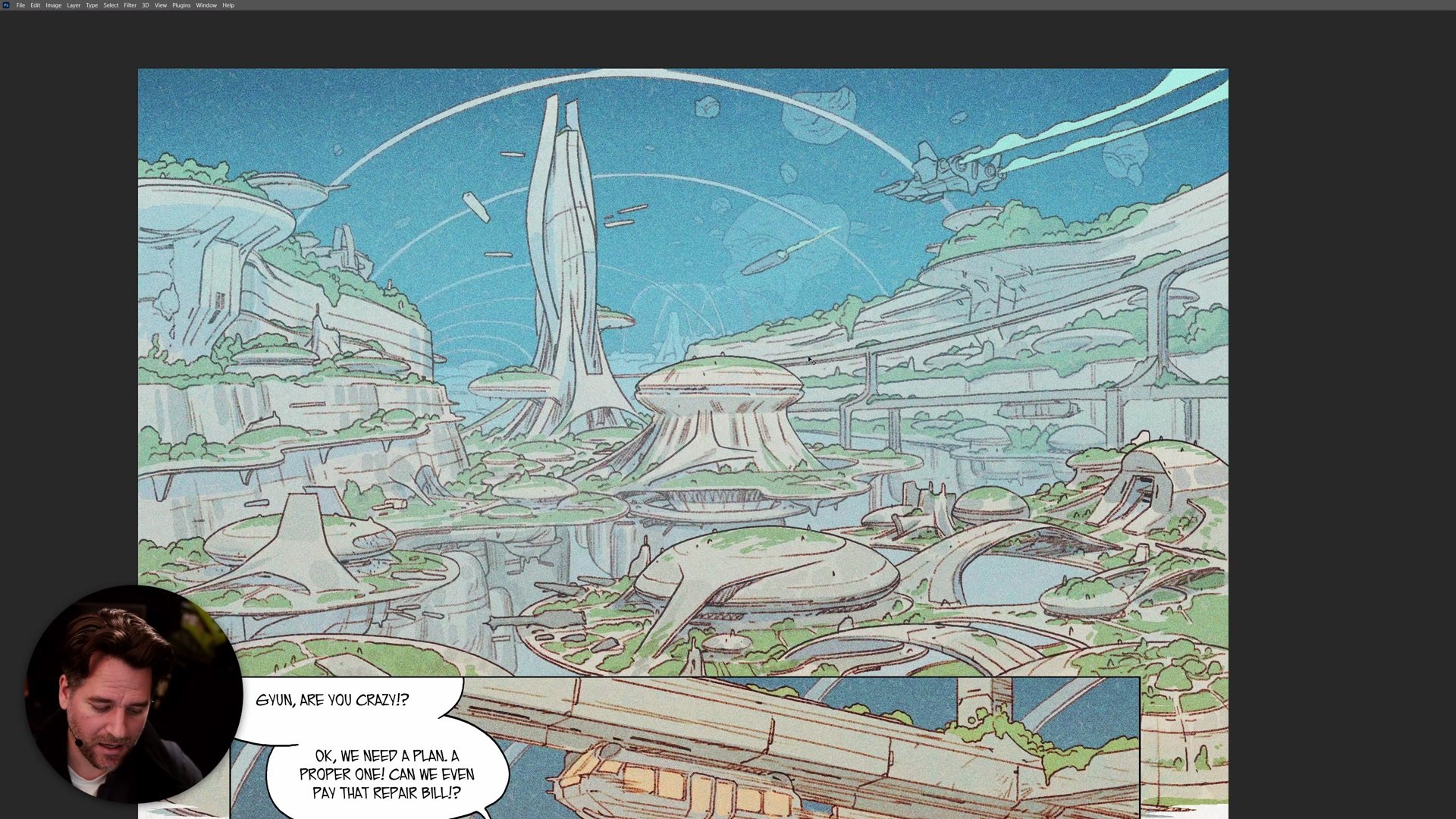
In comic book production, 3D serves a very specific and practical purpose. A ship or recurring environment that appears on page after page needs to look consistent. Even a brutally simple 3D model made of basic primitives can be rotated to match any panel angle, screenshotted, brought into Photoshop with a find-edges filter, and used as a perspective-accurate base to draw over. The drawing knowledge fills in everything the 3D cannot provide, which is design detail, character, and stylistic coherence. The key insight is knowing which elements benefit from 3D consistency and which are better served by drawing directly. Background elements that involve tricky perspective, recurring vehicles, or architectural structures with precise ellipses and vanishing points are ideal candidates. Organic environments, character interactions, and story-driven compositions often work better when drawn from scratch because the design process itself is part of figuring out what the image needs to say. The two approaches can coexist on the same page without conflict.
Process and Backgrounds
Where 3D Stops
The most important principle when integrating 3D into any drawing workflow is that it should never control the process. The ability to create the same image with or without 3D is a critical skill benchmark. 3D is a tool that makes certain tasks faster and more consistent, but it does not replace the need to understand perspective, composition, and construction. A ground plane with a few character-scale spheres can establish whether figures in the background are the right size relative to a foreground ship. A handful of cylinders and boxes can lock in the perspective for a space station establishing shot. These minimal interventions solve real production problems without requiring deep 3D expertise. The creative decisions, the design exploration, the storytelling through visual hierarchy, all of that still comes from drawing knowledge and artistic judgment. The artists who use 3D most effectively are those who treat it as one tool among many, deploying it precisely where it adds value and drawing freely everywhere else.
Key Concepts
3D Solves Specific Problems: The real value of 3D is consistency across multiple angles and accurate perspective establishment, not replacing the need to draw well. It is scaffolding for the drawing process, not a substitute for foundational knowledge.
Keep It Simple: Even extremely basic 3D models made from simple primitives are enough to provide the structural accuracy needed. Production-quality 3D is rarely necessary for illustration and comic workflows that are primarily drawing-based.
Don't Let 3D Control You: The ability to produce the same quality of work with or without 3D is the real goal. Use 3D where it genuinely saves time and adds consistency, and draw directly where design exploration and storytelling are better served by the freedom of working on a blank canvas.
Try This Approach
Start With a Recurring Element: Pick one object that appears repeatedly in a project, whether a vehicle, a building, or a prop, and build a very simple 3D version using basic primitives in Blender or SketchUp. It does not need to look good. It just needs to capture the basic proportions.
Use It as a Drawing Base: Screenshot the model from the angle needed for a specific panel or illustration, bring it into the drawing program, and draw over it. Focus on adding design detail, texture, and stylistic decisions that the 3D model cannot provide.
Compare the Results: Draw the same object once from 3D reference and once from scratch. Notice where the 3D version gave genuine advantages in consistency and perspective, and where the freehand version had more character and design energy. That comparison reveals where 3D fits in the workflow.