Why Thumbnailing Makes You 20X Better
Summary
The Power of Planning
We all want to get better at drawing faster, but most of us focus on the wrong things. We do master studies, life drawing, still lifes. We draw endless Loomis heads, cubes, and spheres. That work helps, but we don't just want to draw disembodied heads. We want to create illustrations, living worlds, and characters that feel interesting and alive.
What actually makes illustrations work is the planning phase. The thumbnails. This is where composition, overlap, depth, and silhouette get worked out. These are the fundamental building blocks that make images interesting, and most of us skip right past them. Doing more of this planning work means getting twenty times more practice at the stuff that actually matters.
Pinocchio Thumbnail Process
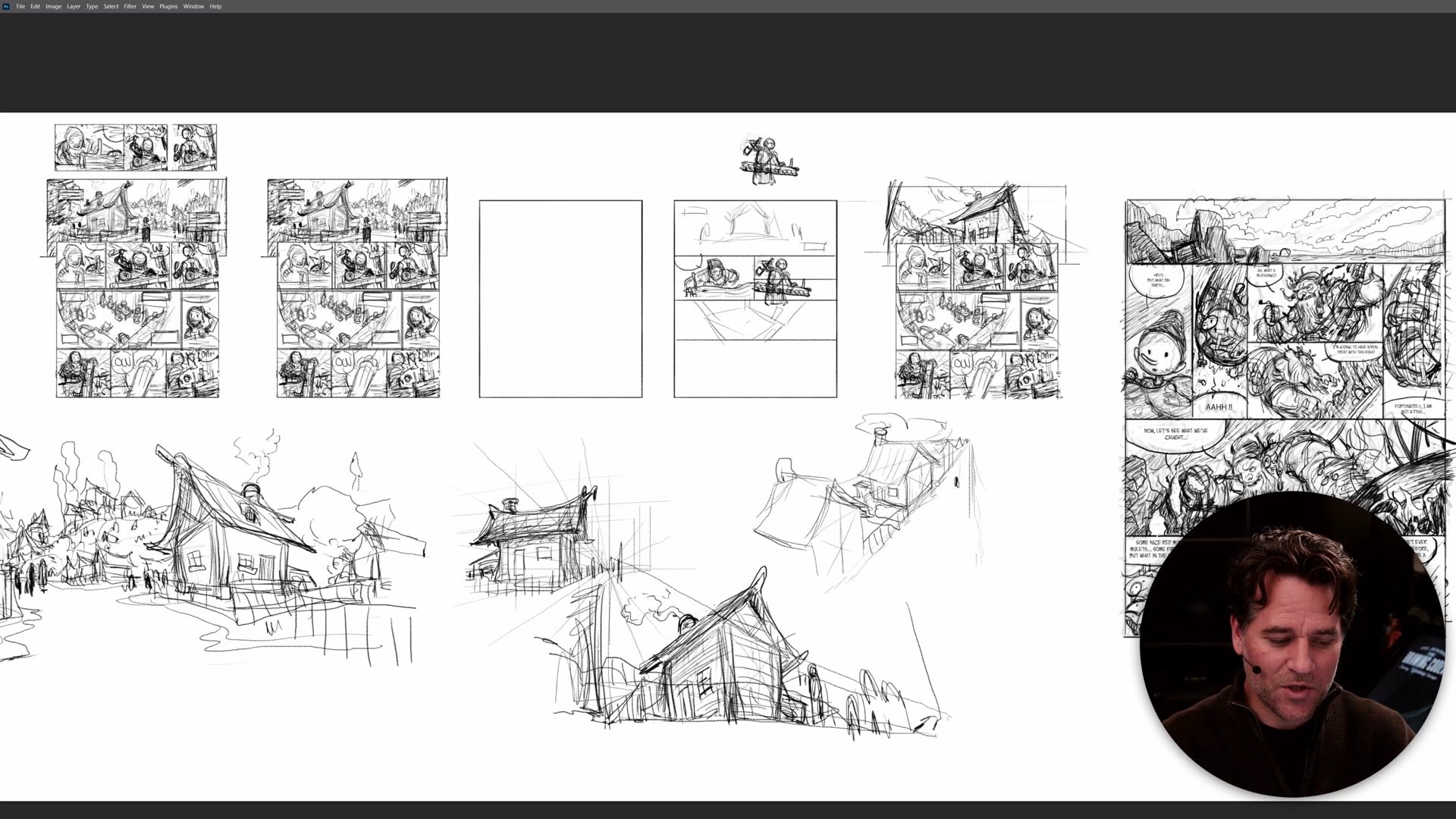
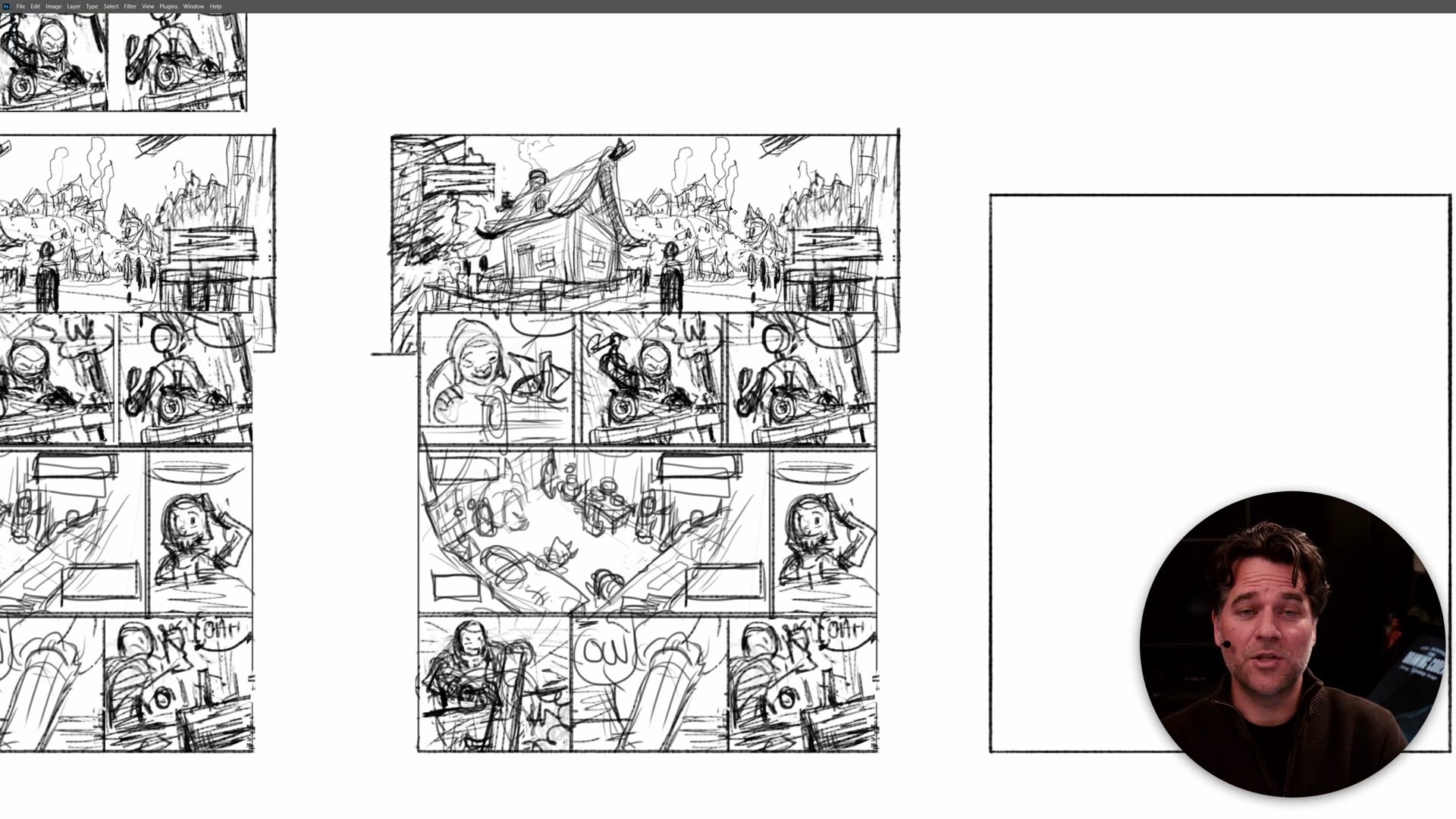
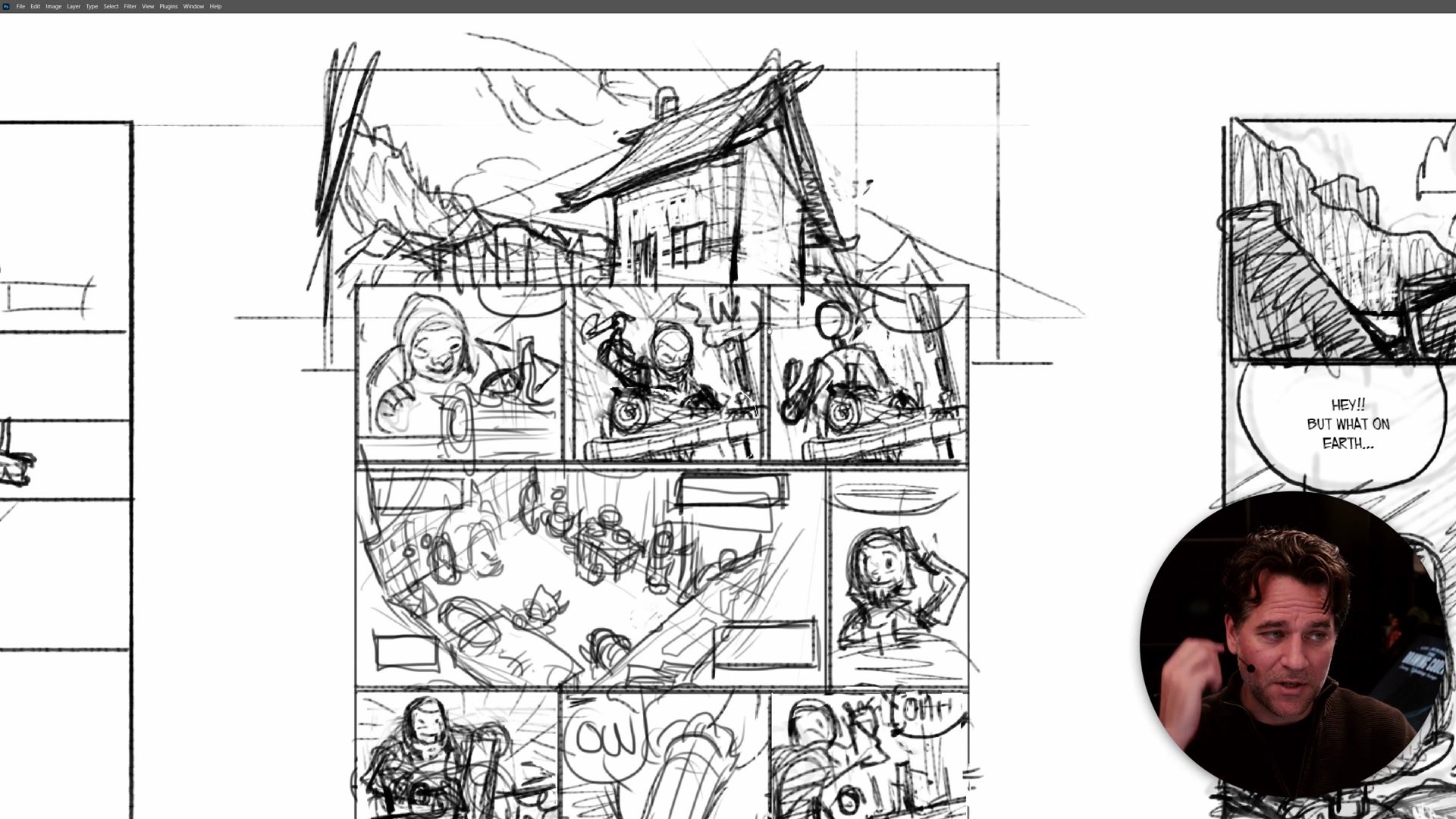
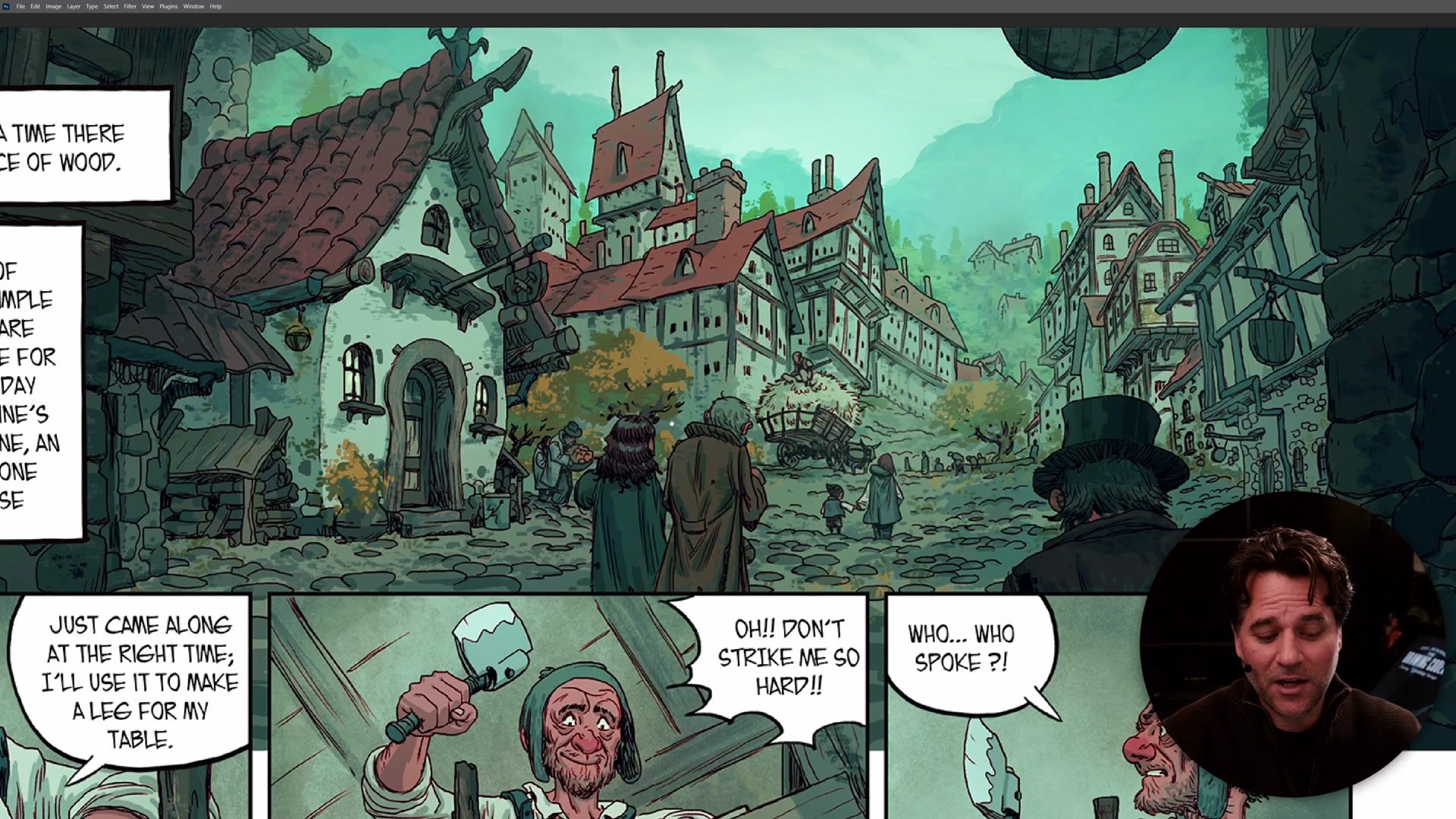
How Thumbnailing Saved Pinocchio
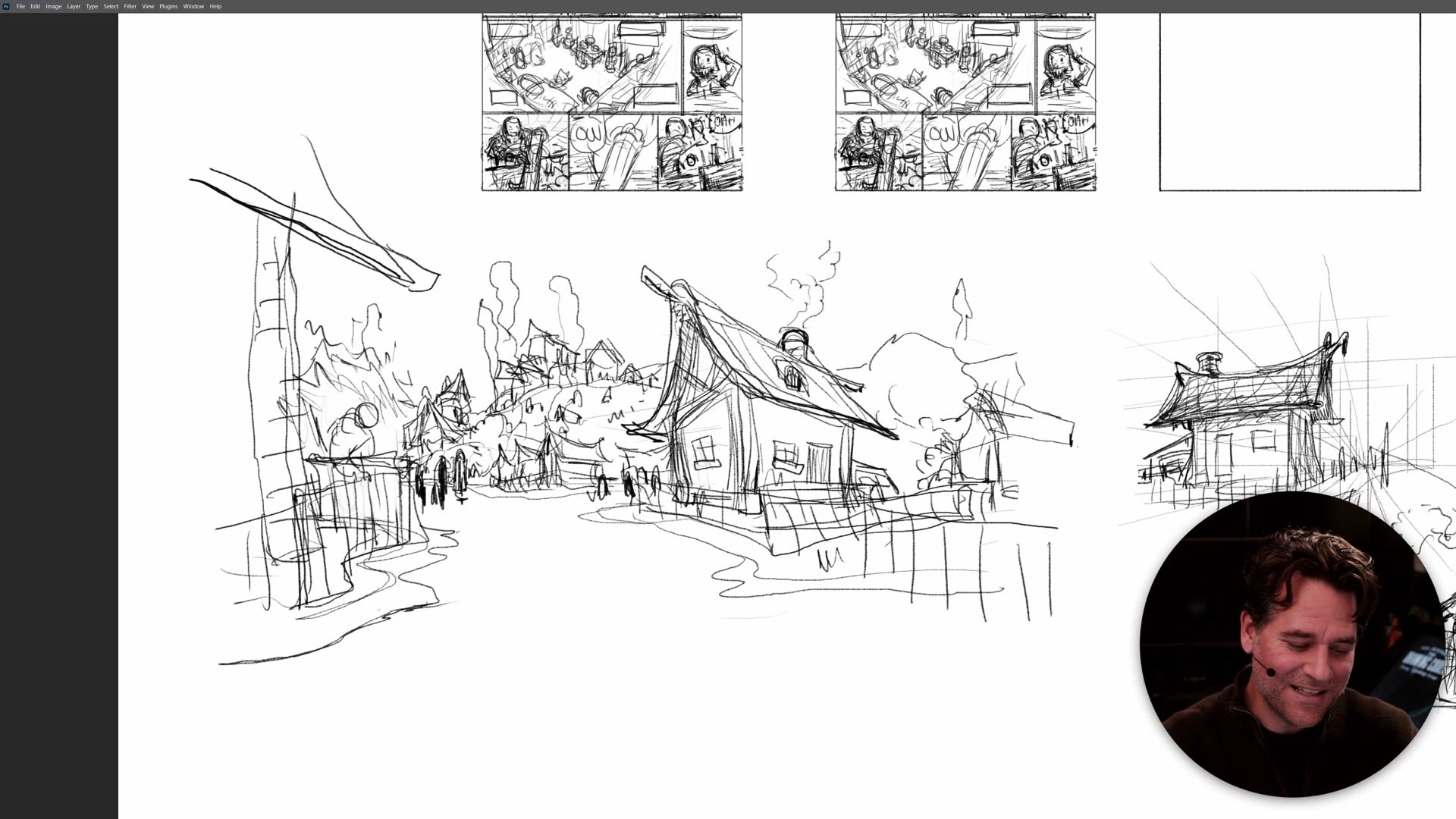
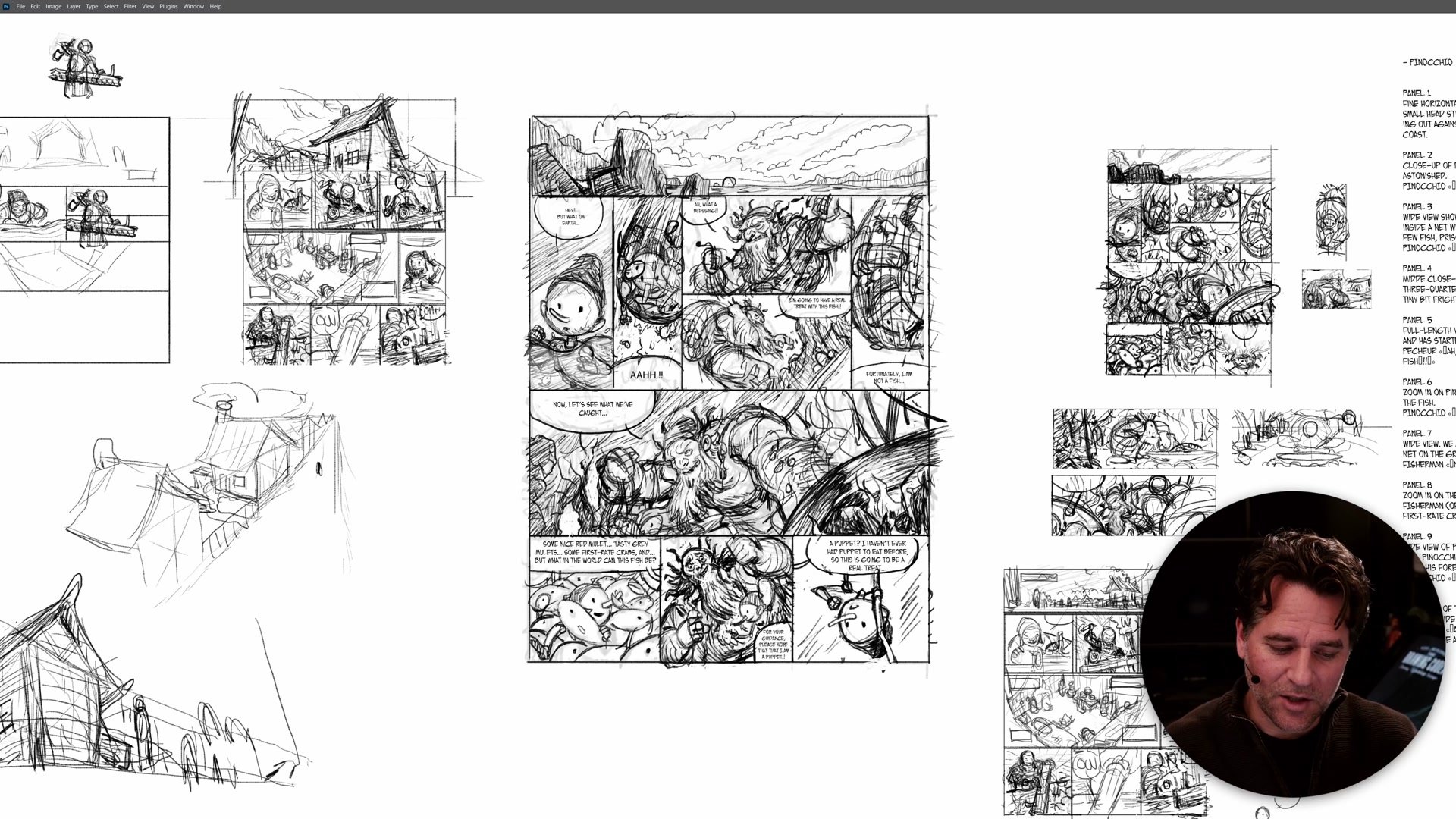
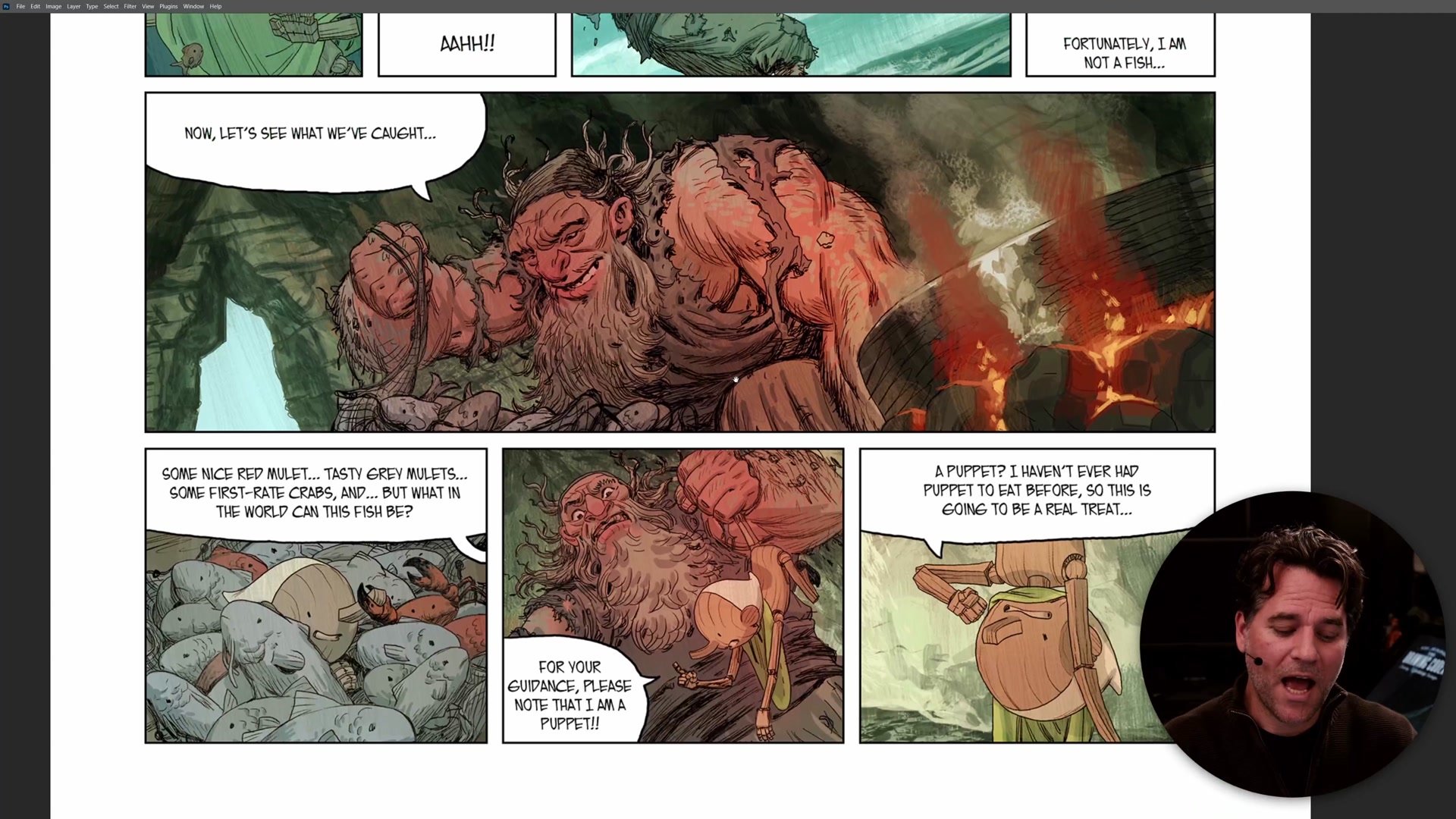
Even early on, before developing years of professional skill, thumbnailing can save a project. The Pinocchio comic created with David Chauvel required a first splash panel that would sell the entire book. Franco-Belgian comics demand detailed, polished backgrounds, and the vision was an epic Italian village that felt alive and fantastical.
The first attempts were basic art school perspective with silly box houses. Nothing close to the goal. But through painful iteration, trying different angles from above, below, and worm's eye view, adding more buildings and depth, something eventually clicked. Buildings at different angles on slopes. A medieval European village turned up to eleven. The perspective skills were not there, but the iteration was. That process of working through thumbnails, sweating through failures, and pushing past the obvious is exactly what allowed that scene to come together.
From Thumbnails to Finished Pages
A Separate Skill
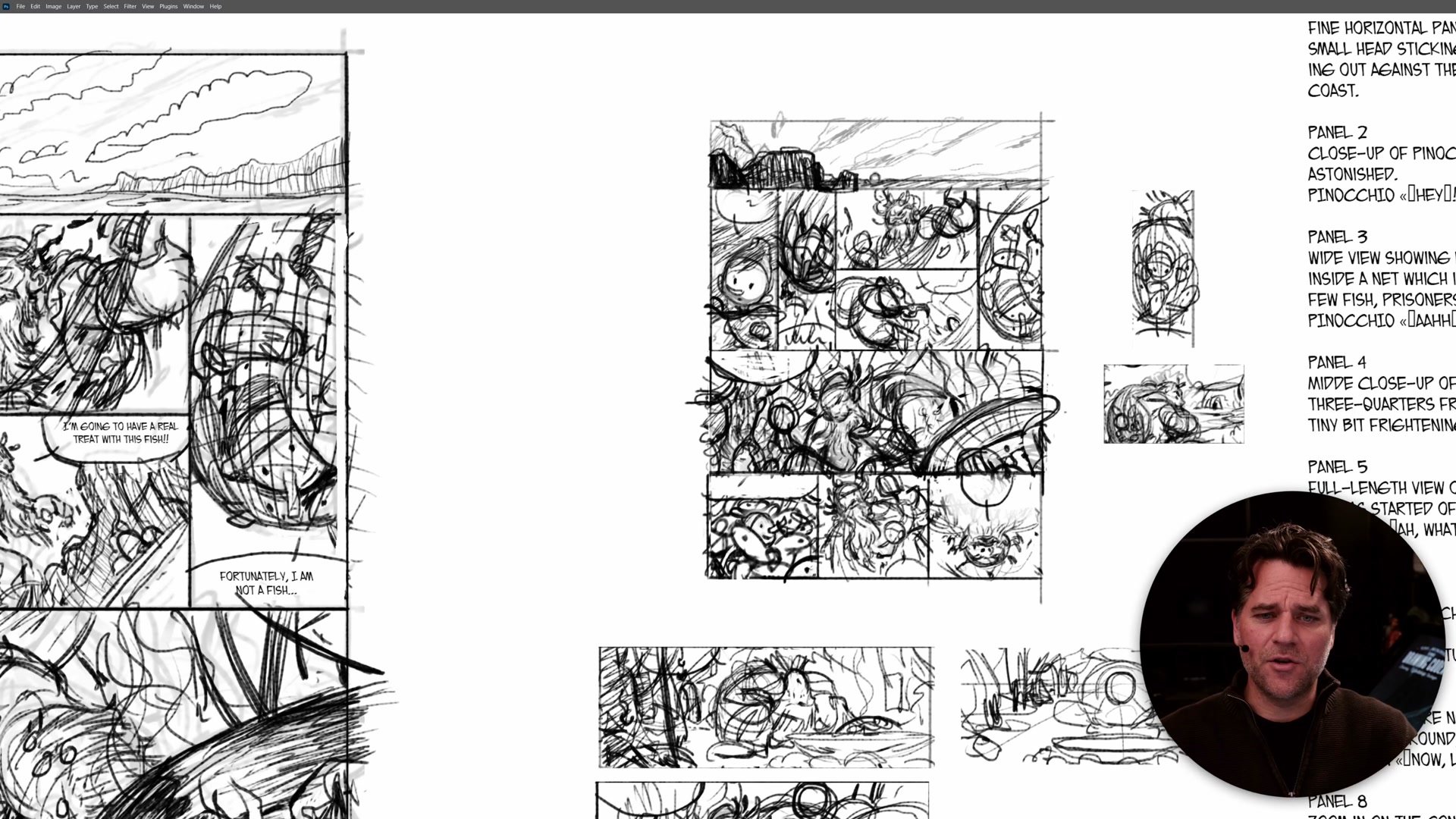
Thumbnailing is a skill unto itself, and this is critical to understand. Drawing big does not mean the ability to draw small. Working at thumbnail scale means learning a visual shorthand, figuring out how to suggest detail when there is no room for it, how to space elements so they read clearly at a tiny size. First thumbnails always look terrible. That is normal. There is a learning curve before fast iteration becomes possible.
Once that skill develops, everything changes. Working professionally in games means creating huge sheets of thumbnails, sometimes producing a keyframe illustration every day. After hundreds of these, placing elements within a scene becomes automatic. Compositional concepts like rule of thirds, Fibonacci spirals, balance, rhythm, and depth become real tools rather than abstract theory from a book. Thumbnailing turns them into an actual playground for ideas.
Professional Keyframe Work
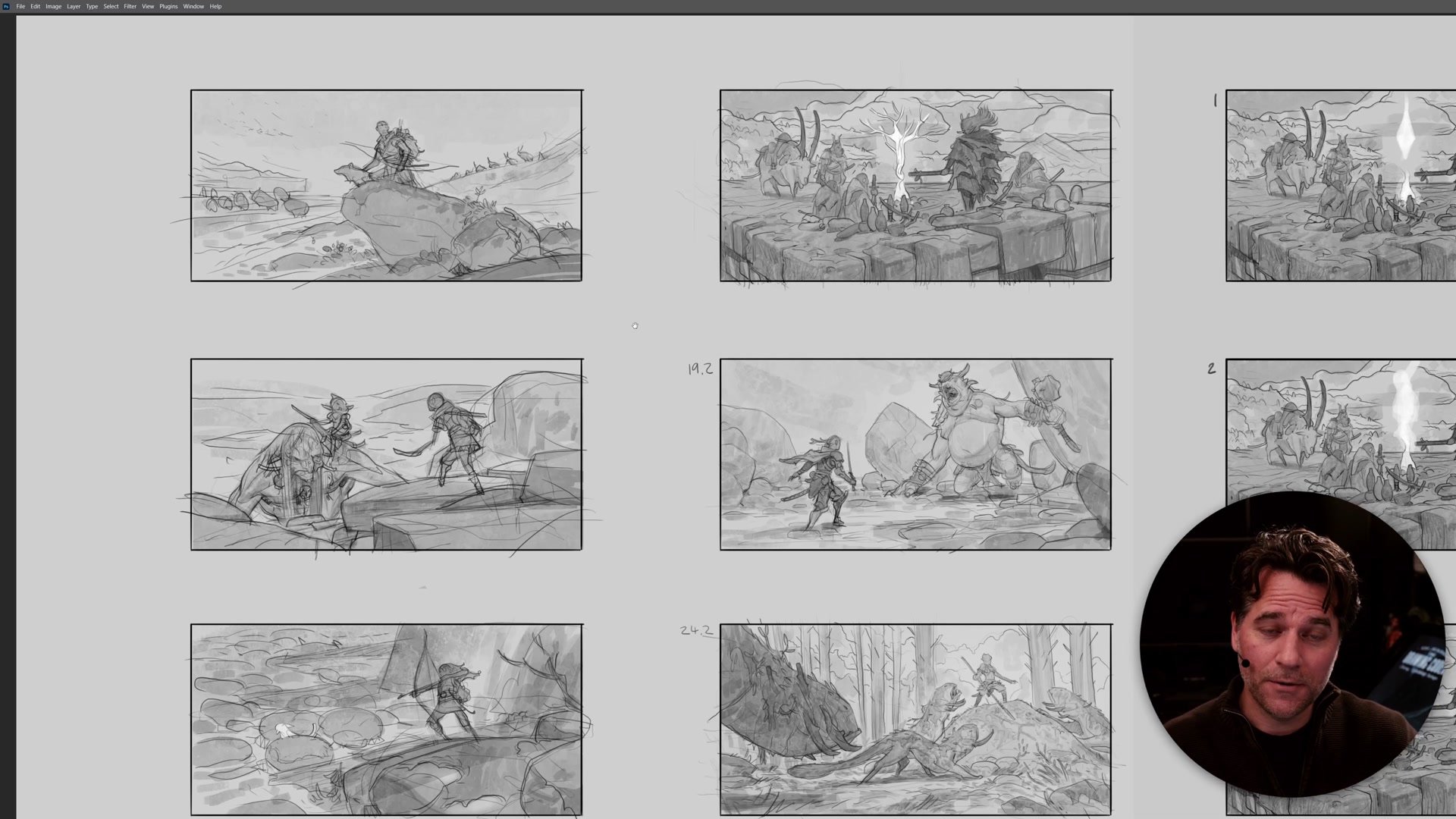
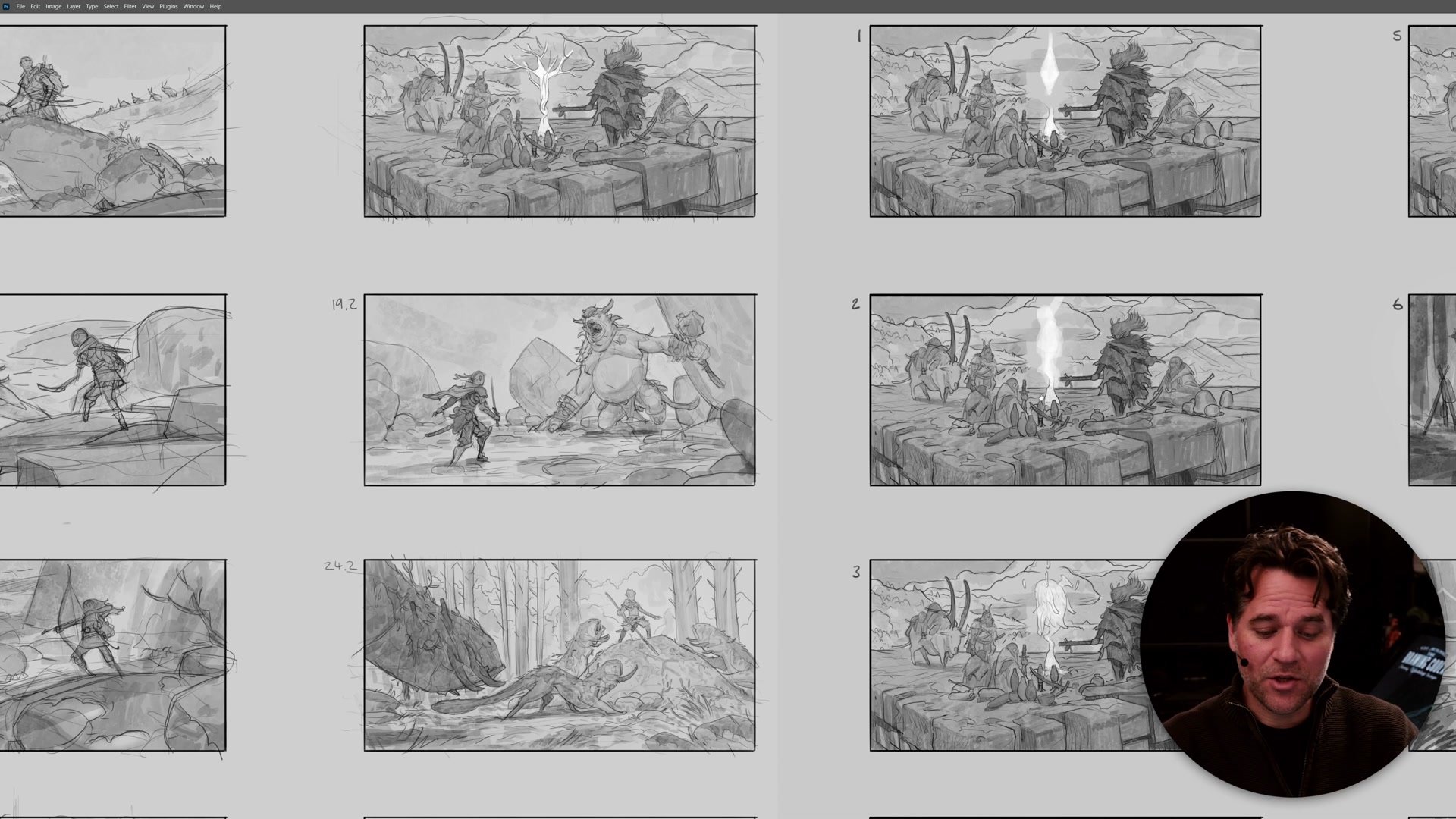
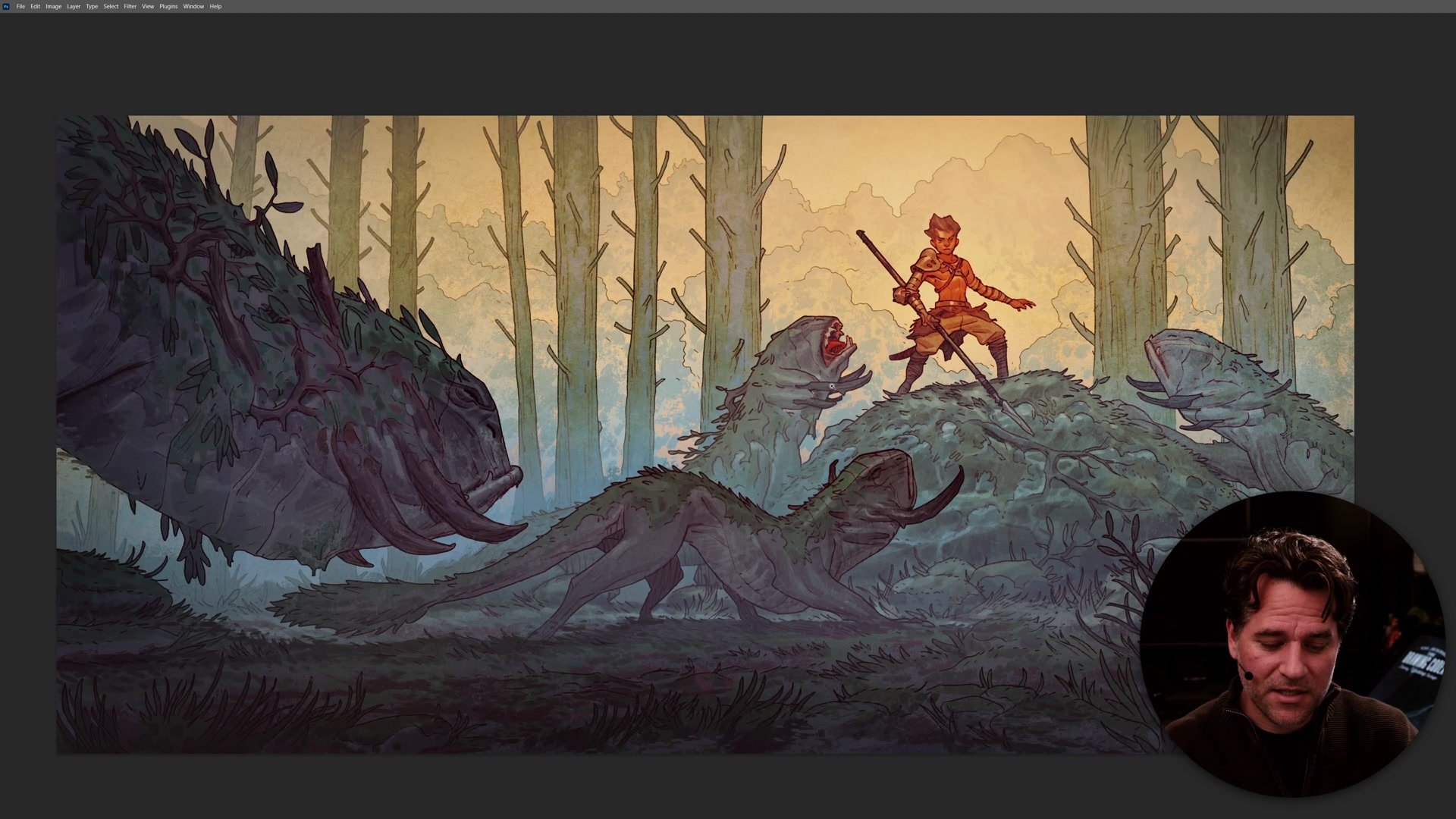
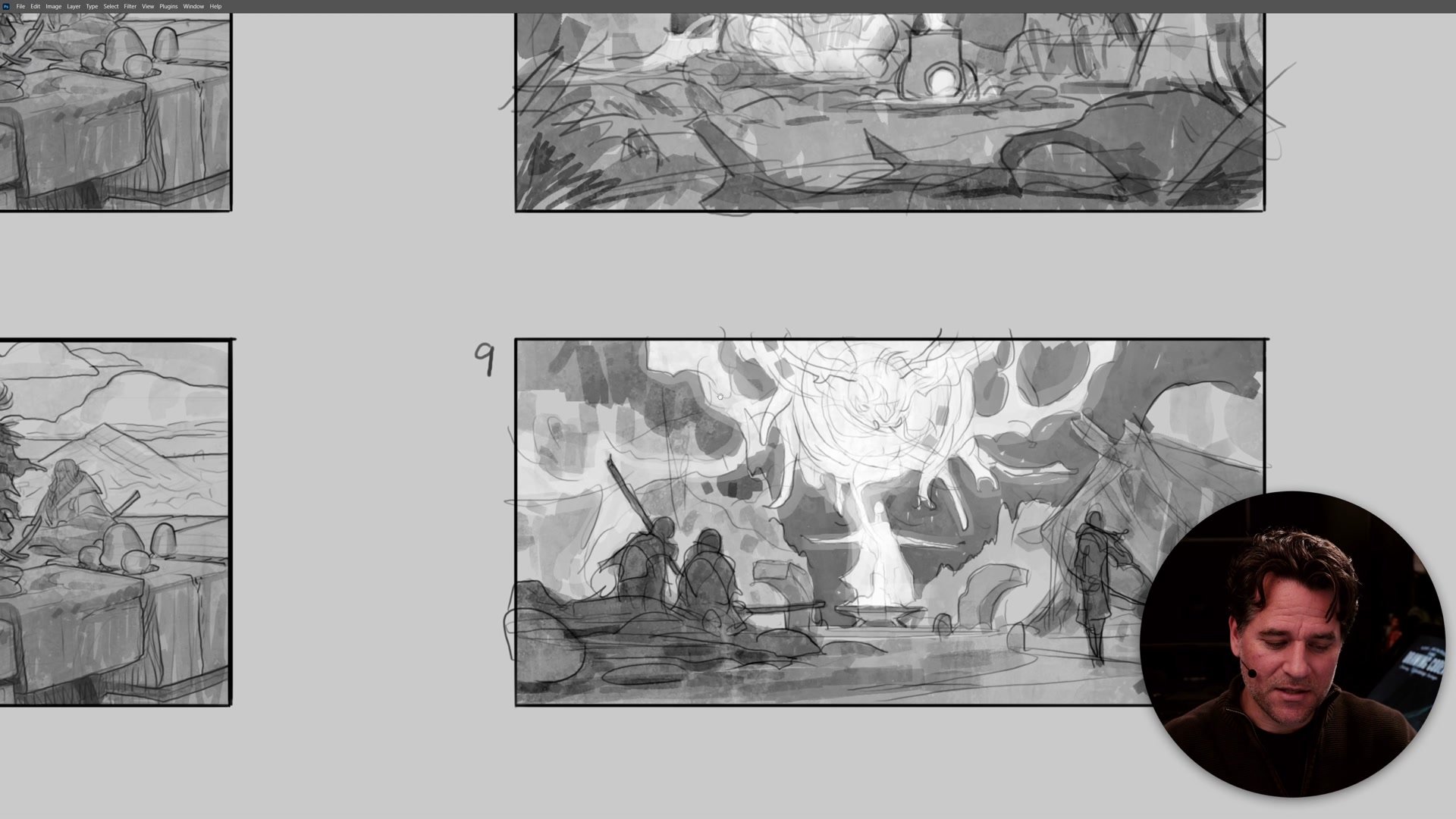
Twenty Times the Practice
When clients know a thumbnail can become a finished illustration, it opens doors. The exploration phase becomes free and fun. Different angles, different ideas, no commitment. Small sketches that everyone understands. Pure ideas with no rendering. This applies to every aspect of art. Character design starts with silhouette and gesture. Scene illustration starts with composition and depth. The real core of any artwork, the things that matter most, are these big foundational decisions.
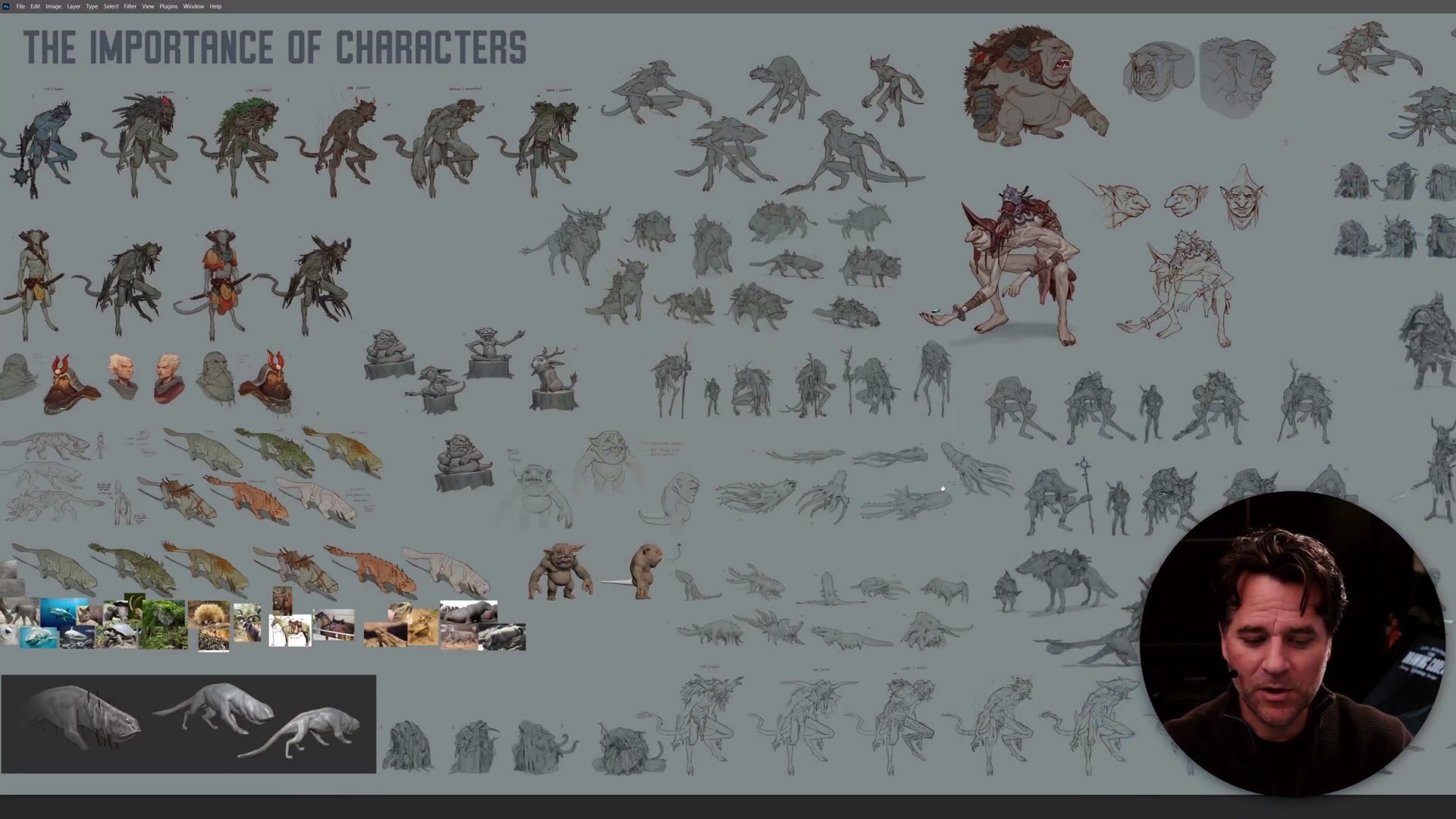
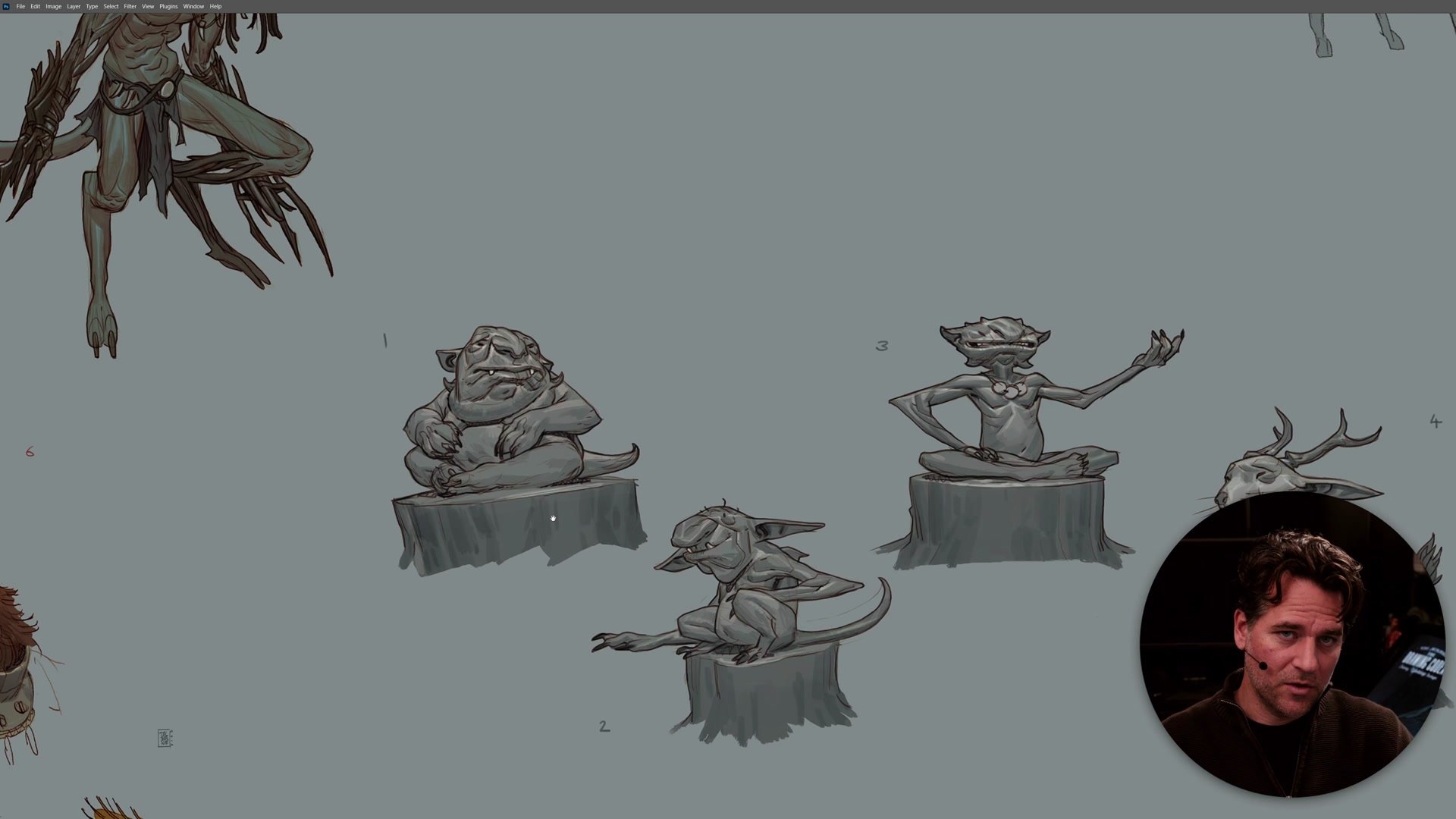
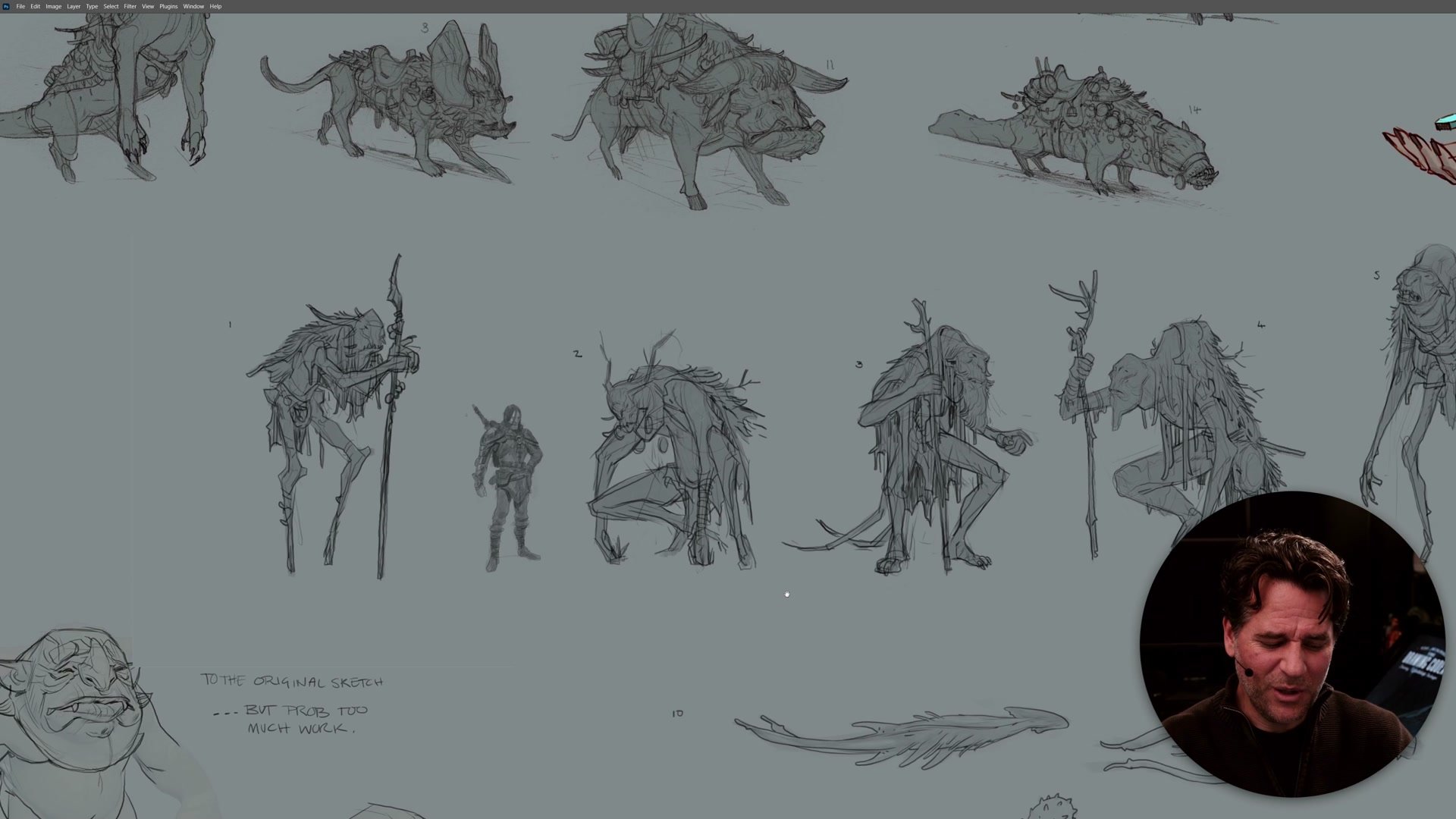
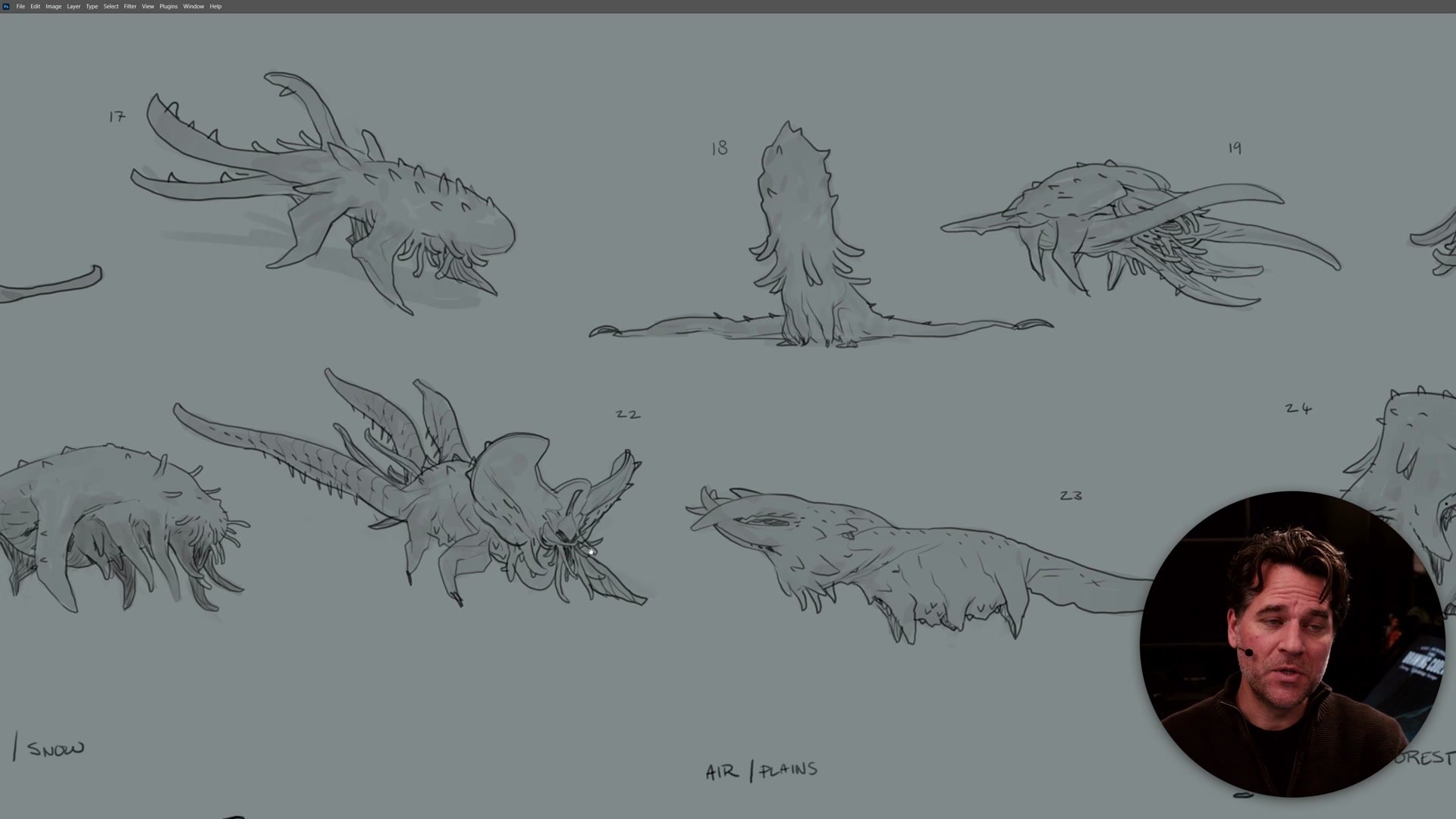
Drawing twenty characters a day as thumbnails means massive repetition at shape design. It means pushing past boring first ideas because each one takes minutes, not hours. What would be weirder? What would be crazier? How would this actually work? The only way to get better at illustrations and design is to do them, and the best way to get reps is to work smaller and focus on the things that really matter.
Character Design Exploration
Key Concepts
Thumbnailing Is Its Own Skill: Drawing small is not the same as drawing big. It requires learning a visual shorthand for suggesting detail, spacing elements, and making tiny sketches read clearly.
Iteration Over Perfection: The Pinocchio comic came together not through perfect perspective skills but through relentless iteration. Working through painful failures at thumbnail scale is how problems get solved.
Composition Becomes a Playground: Once thumbnailing becomes comfortable, abstract compositional rules transform into real tools. Rule of thirds, depth, rhythm, and balance become things to play with rather than theory to memorize.
First Ideas Are Usually Average: The real creative work starts after pushing past obvious ideas. Thumbnailing makes this possible because the cost of each attempt is minutes, not hours.
The 20 Thumbnail Challenge
Create 20 Thumbnails: Before starting the next illustration, draw twenty small thumbnails using roughly two-inch squares. Focus on shapes, values, and composition only.
Push Past the Obvious: The first five ideas will be predictable. Keep going. Try different compositional rules in each one. Rule of thirds in one, dramatic angles in another, symmetry in a third.
Focus on What Matters: Rough thumbnails are fine. This skill develops separately from rendering. The goal is twenty times the practice at composition and silhouette, which is how to get twenty times better at what actually counts.