Stylized Faces With The Loomis Method
Summary
Using Loomis for Stylized Faces
The Loomis Method gets taught as a rigid system for drawing one type of face. Most instruction stops at the basic proportional block-in and never shows how working artists actually use it. The real power of the method is that once the proportional markers are understood, they can be deliberately modified to create entirely different characters, face shapes, and stylistic choices while keeping everything structurally consistent.
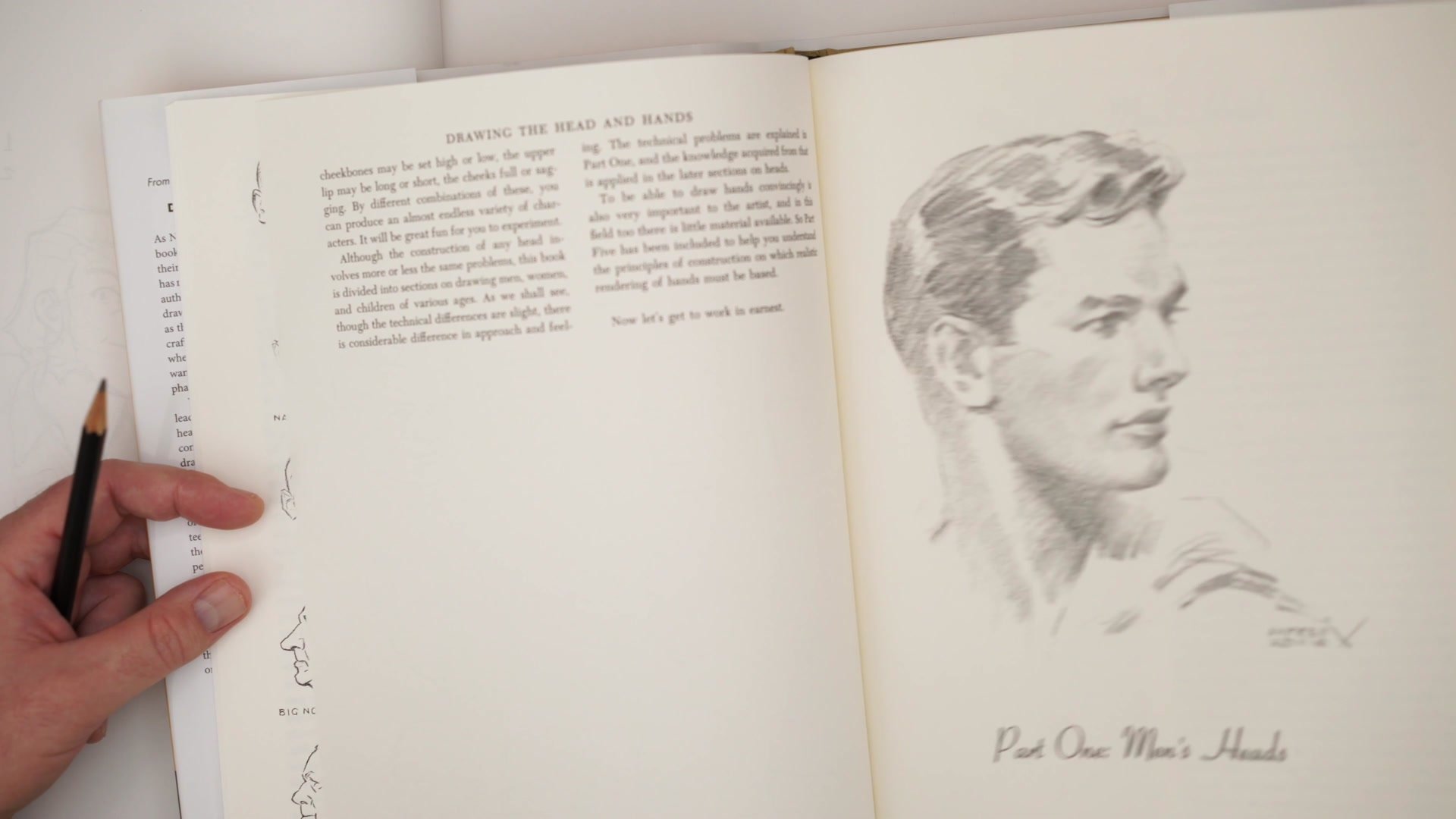
This video walks through the actual Loomis book, explains the core proportional system, then demonstrates how to adjust those same proportional markers to draw a range of stylized faces for comics and manga. Long faces, wide faces, female characters, and fantasy creatures all use the same underlying construction with deliberate proportional shifts.
Loomis Proportions Explained
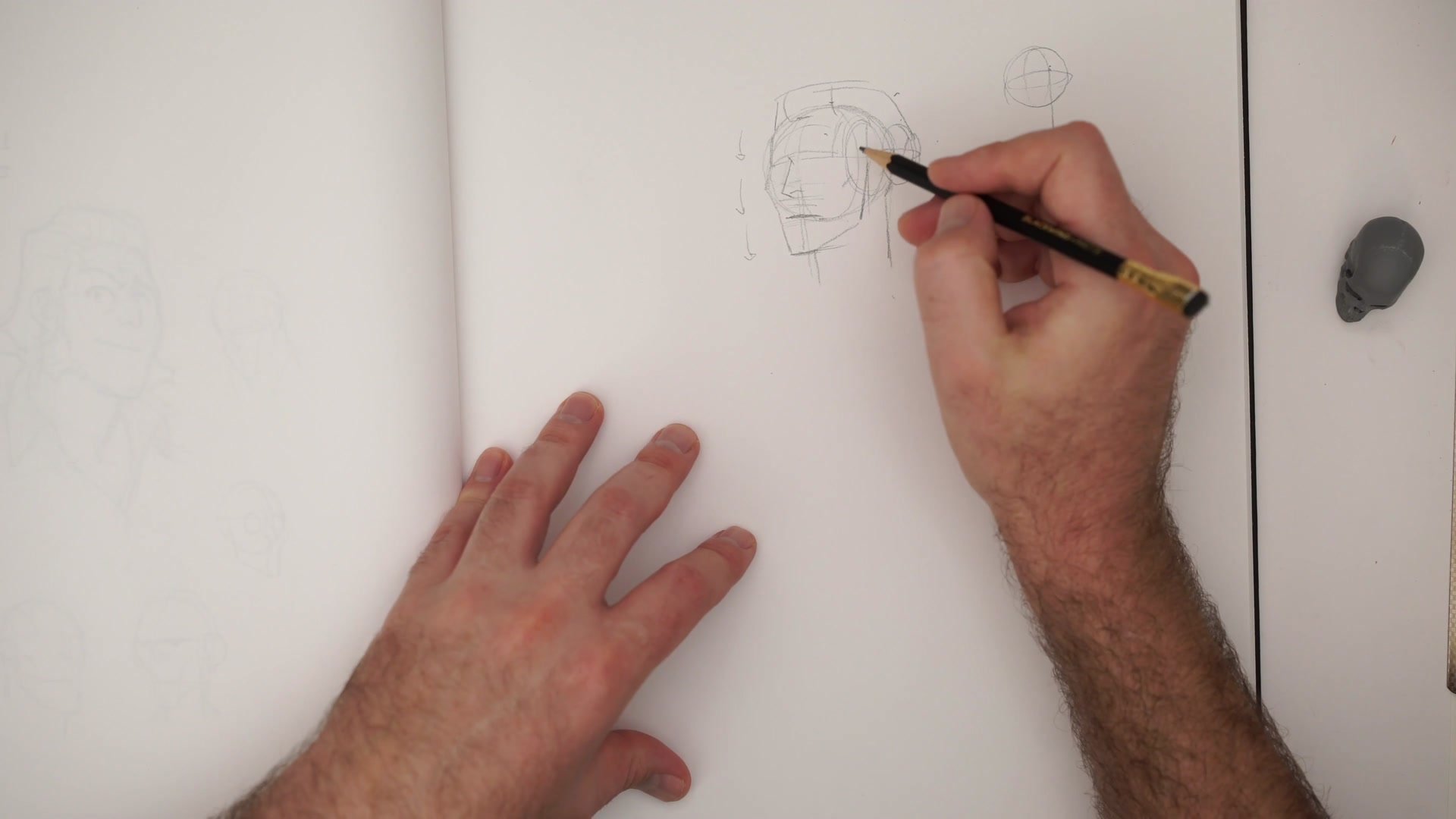
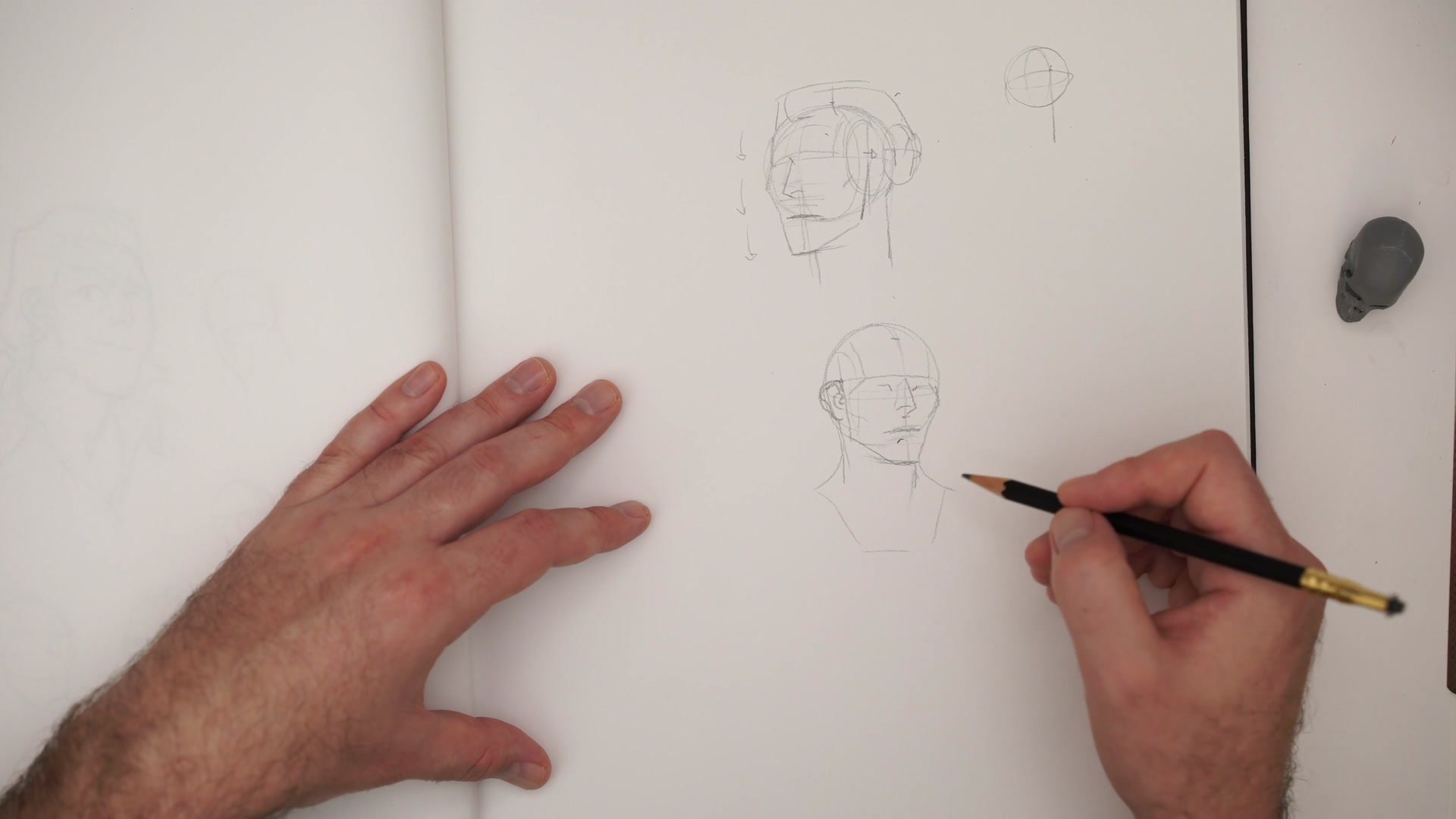
The Baseline Proportional System
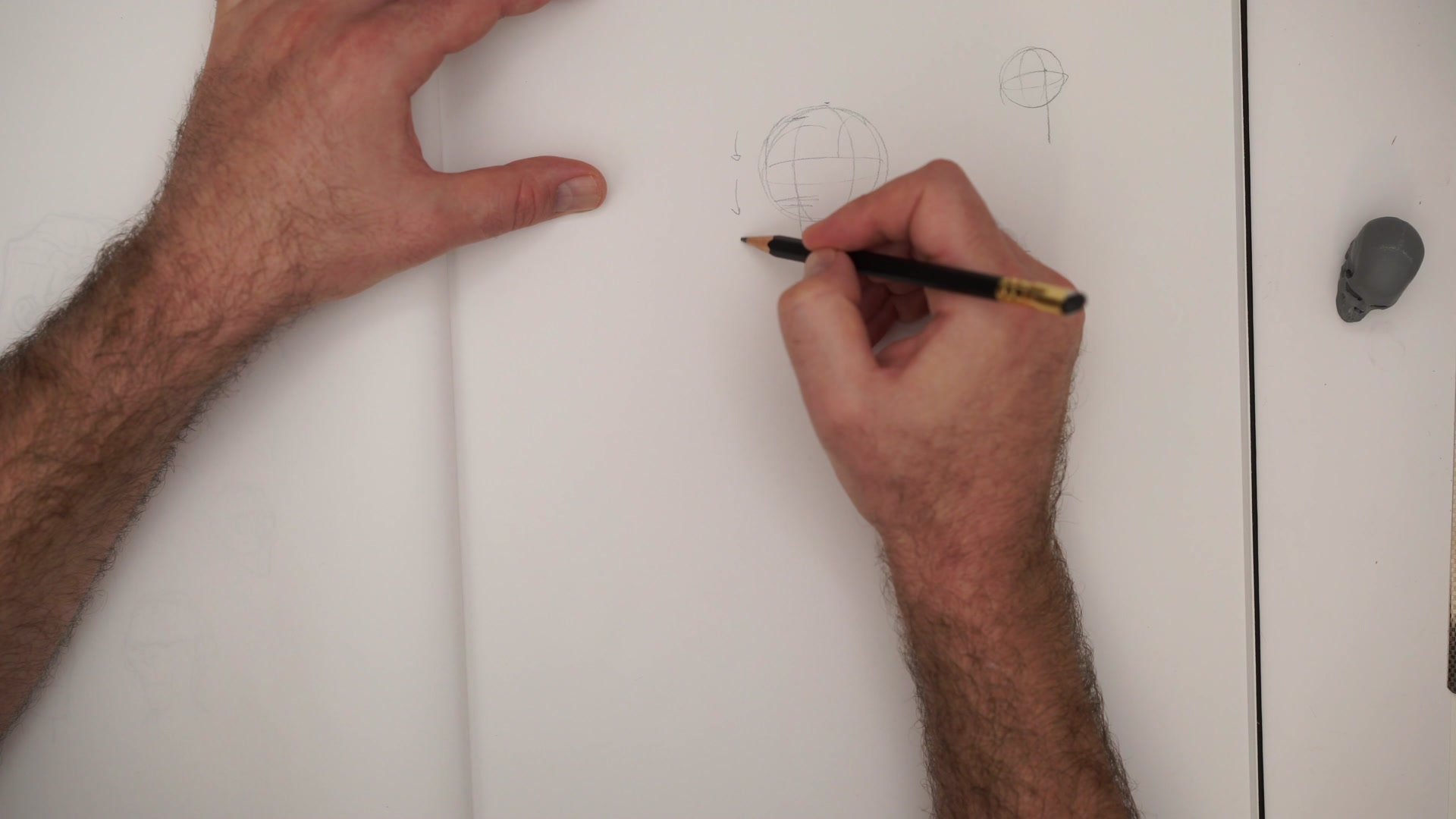
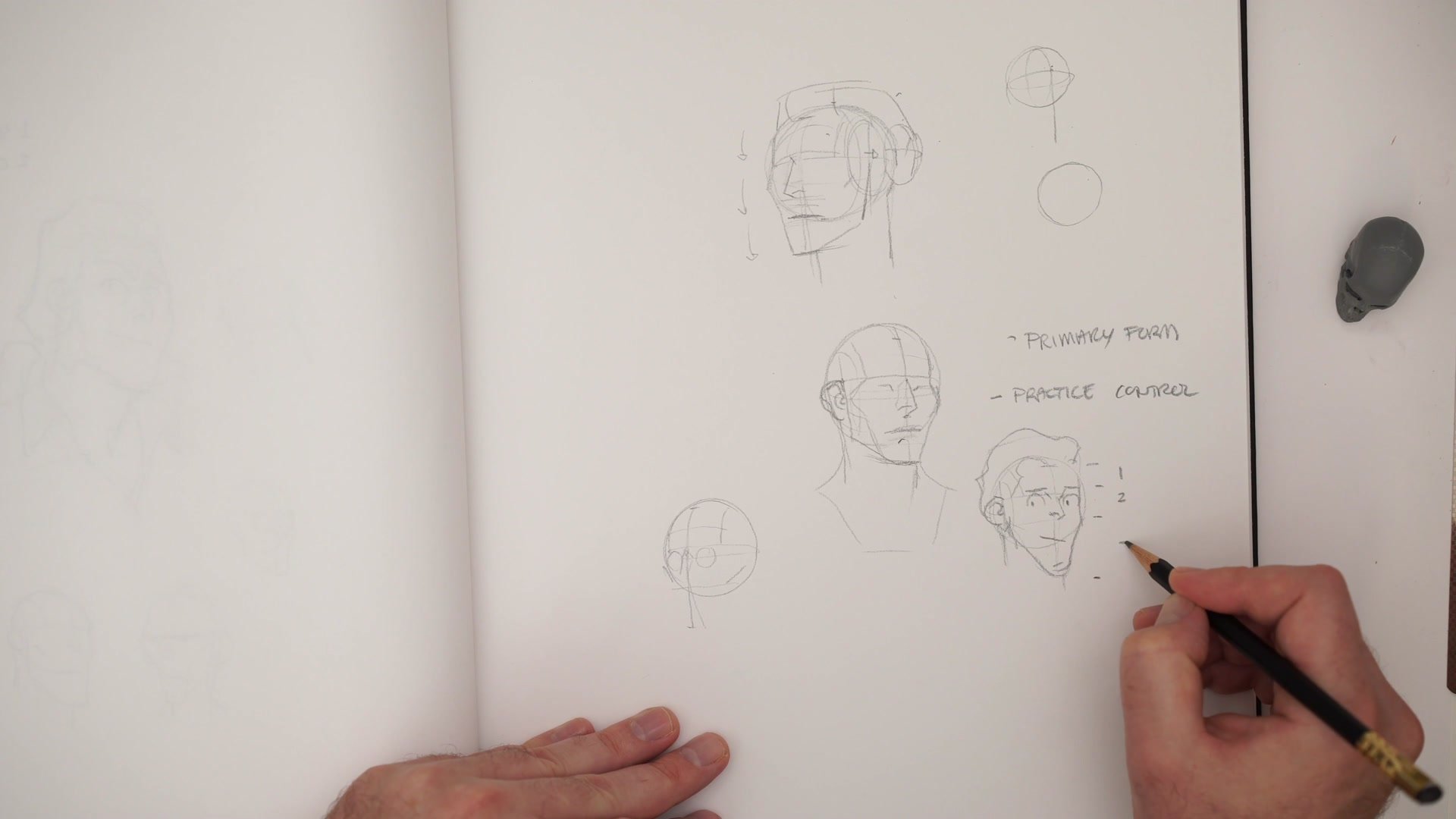
The Loomis Method starts with a sphere that gets divided into three proportional zones. The first zone runs from just below the top of the sphere down to the brow ridge and represents the forehead-to-hairline proportion. That same measurement mirrors downward to establish the nose position, then mirrors again to establish the chin. These three equal zones create the standard proportional block-in.
The purpose of practicing this baseline is control. Getting these proportions accurate from multiple angles teaches the fundamental skill of measuring and placing primary forms. The basic block-in is not the destination though. It exists to build the control needed for what comes next. If the basic proportional system feels challenging, that signals a need to work on general drawing fundamentals or study the measurement process more carefully. Good drawing often comes down to doing ten simple things correctly every time rather than mastering one complicated technique.
Modifying Proportions
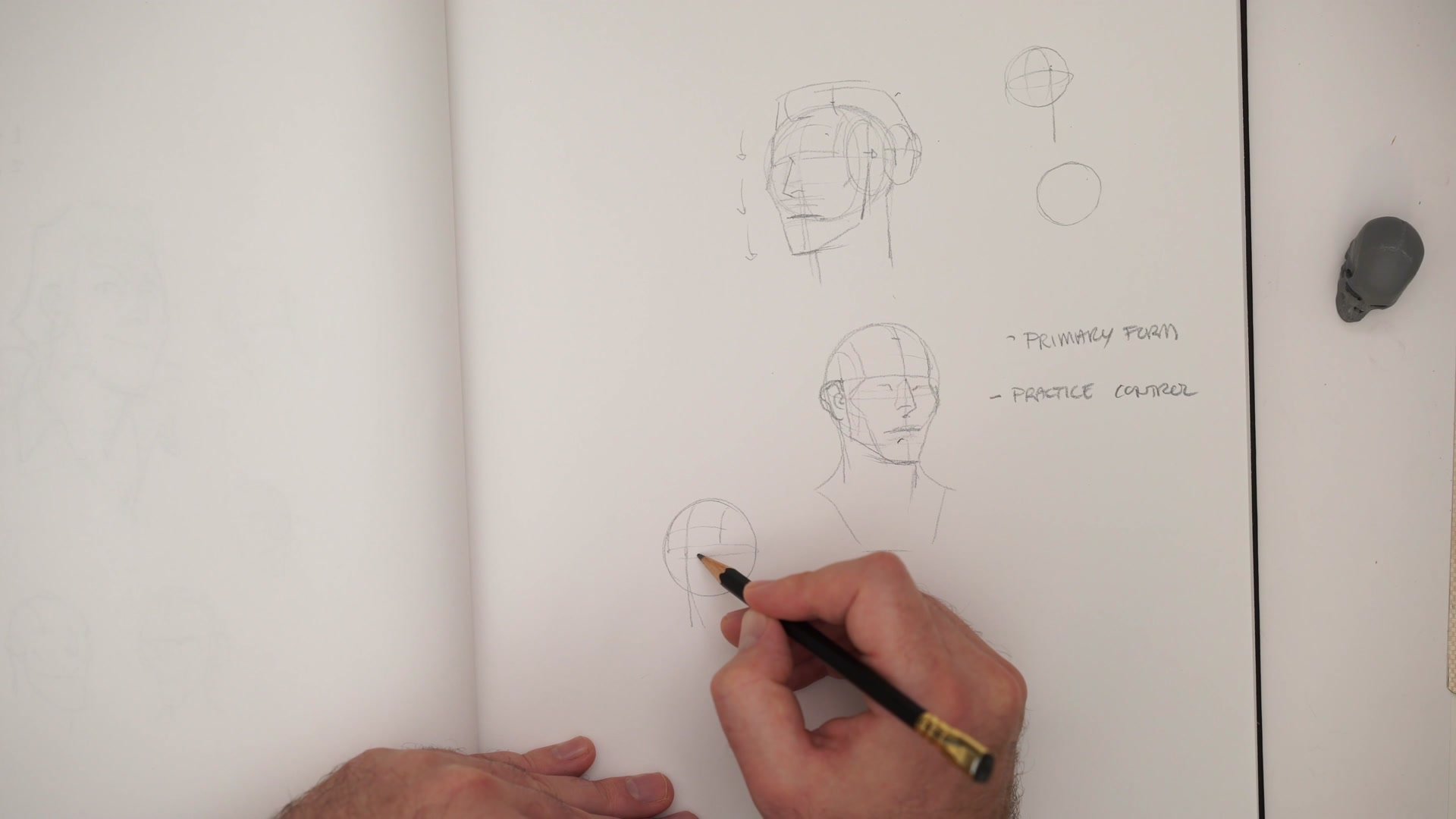
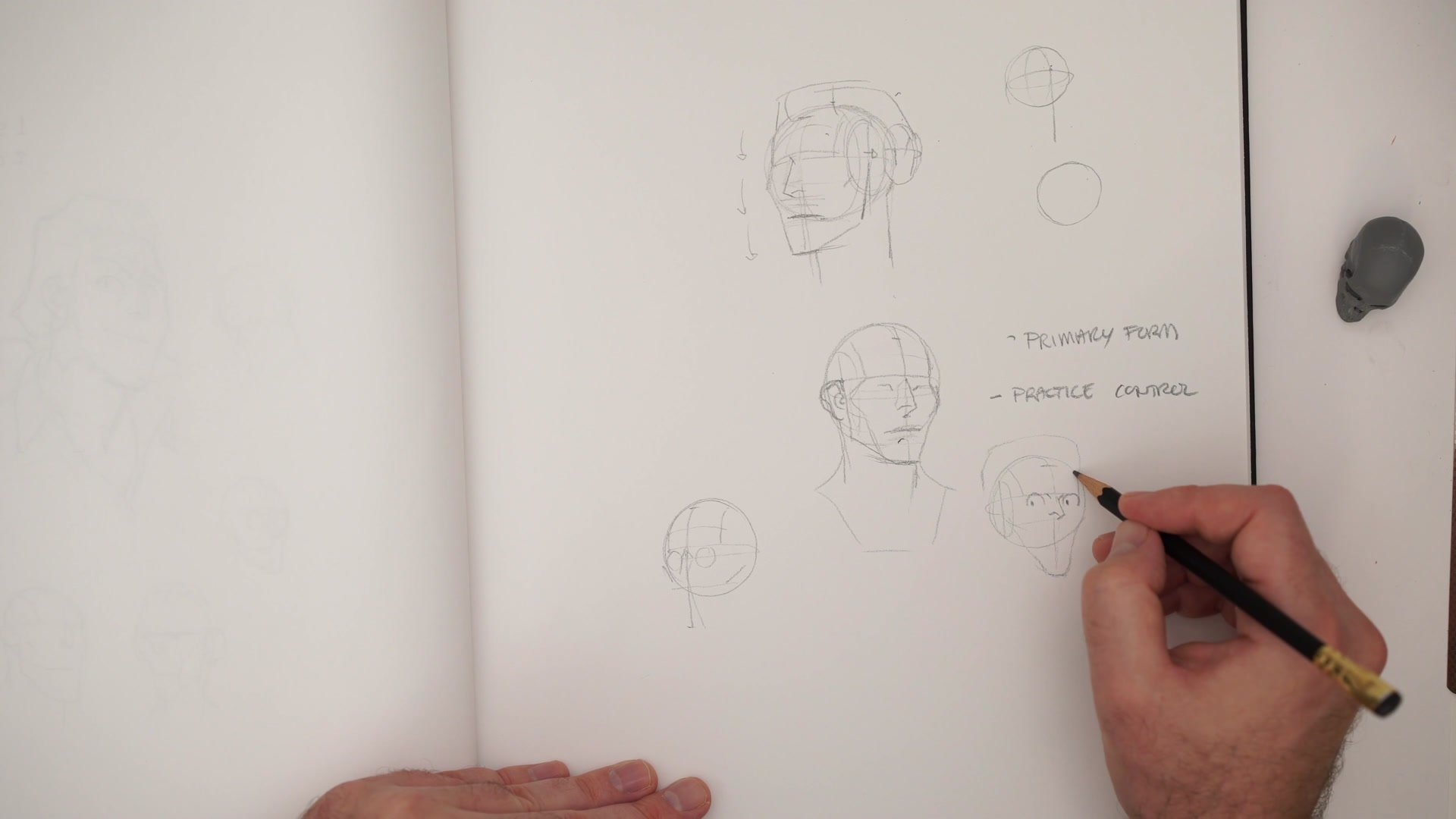
Defining Your Own Proportional Markers
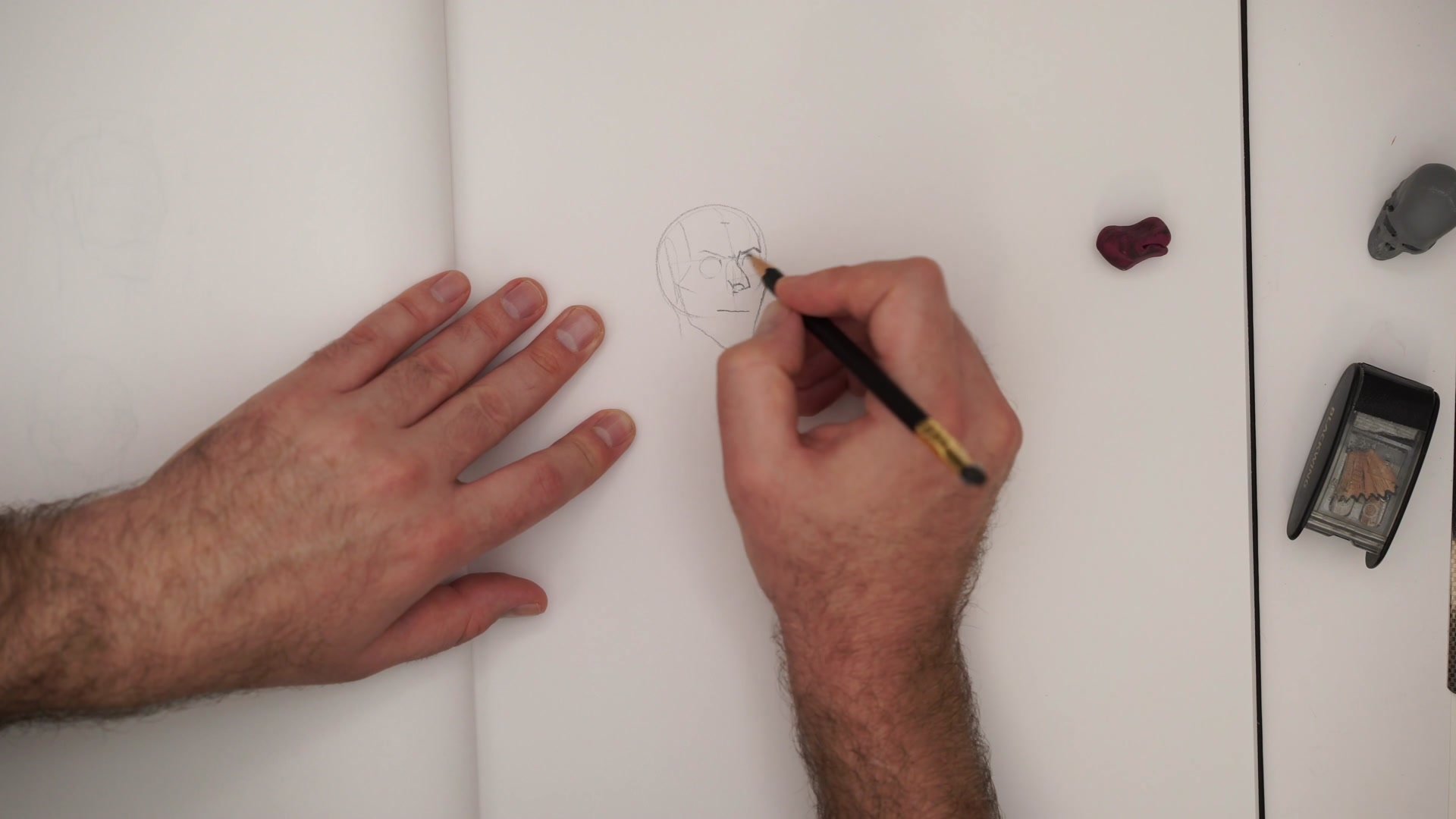
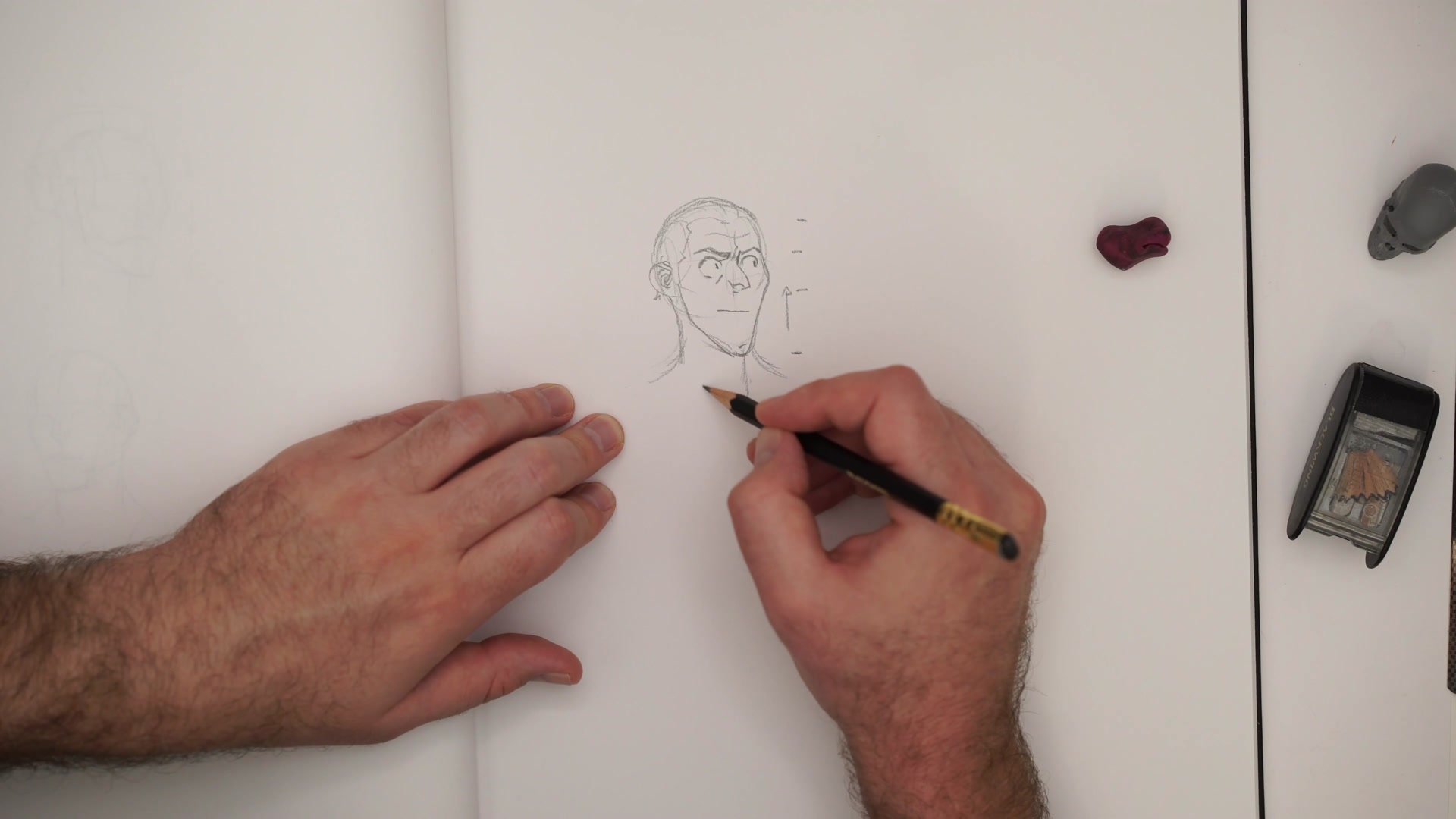
Once the baseline proportions are solid, the method opens up. Style comes from making consistent, deliberate changes to those three proportional zones. Compressing the top two proportions while elongating the third creates a specific look. Keeping the nose proportion smaller relative to everything else while making the eyes proportionally larger produces a different character feel. The key insight is that these changes are not random. They represent a defined set of proportional adjustments applied consistently across every character drawn.
Consistency is what makes it work. Knowing exactly which proportions get compressed and which get elongated means every character drawn in that style will feel like it belongs in the same world. Male, female, large, small, the proportional system stays the same. Studying artists with distinctive styles reveals the same principle at work. They compress certain zones, elongate others, and apply those choices consistently across their entire body of work.
Character Variety
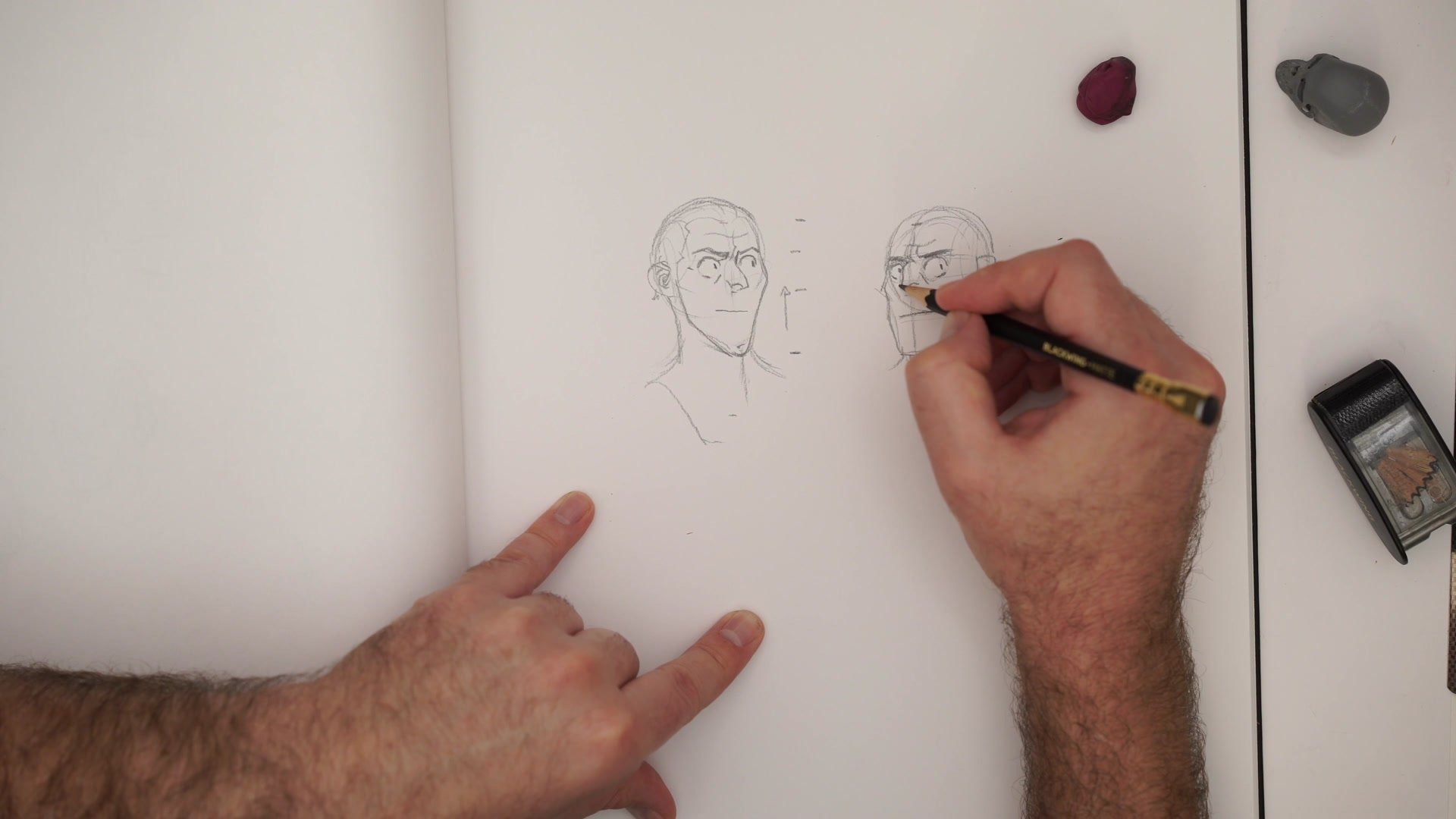
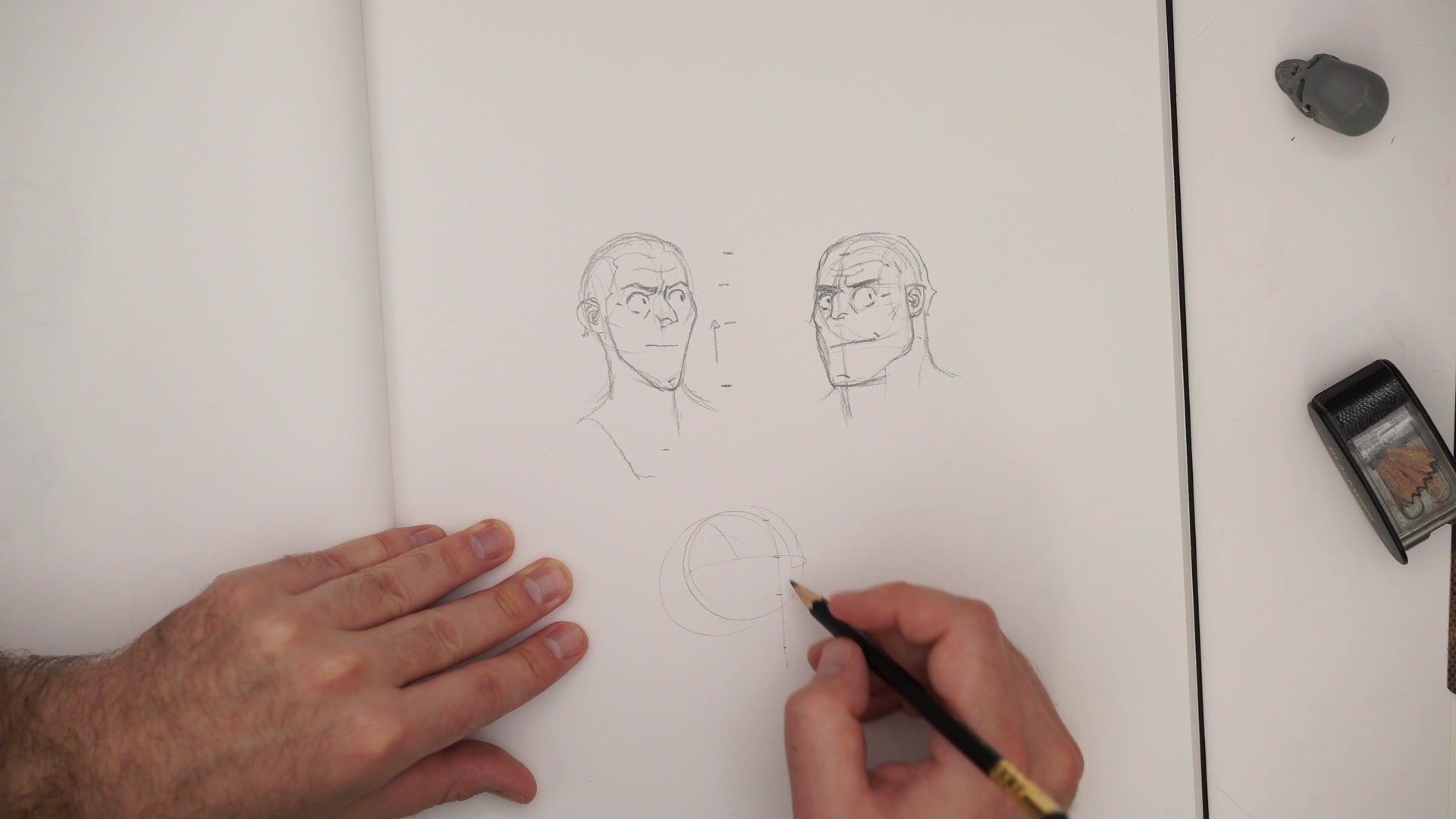
Applying Proportions to Different Characters
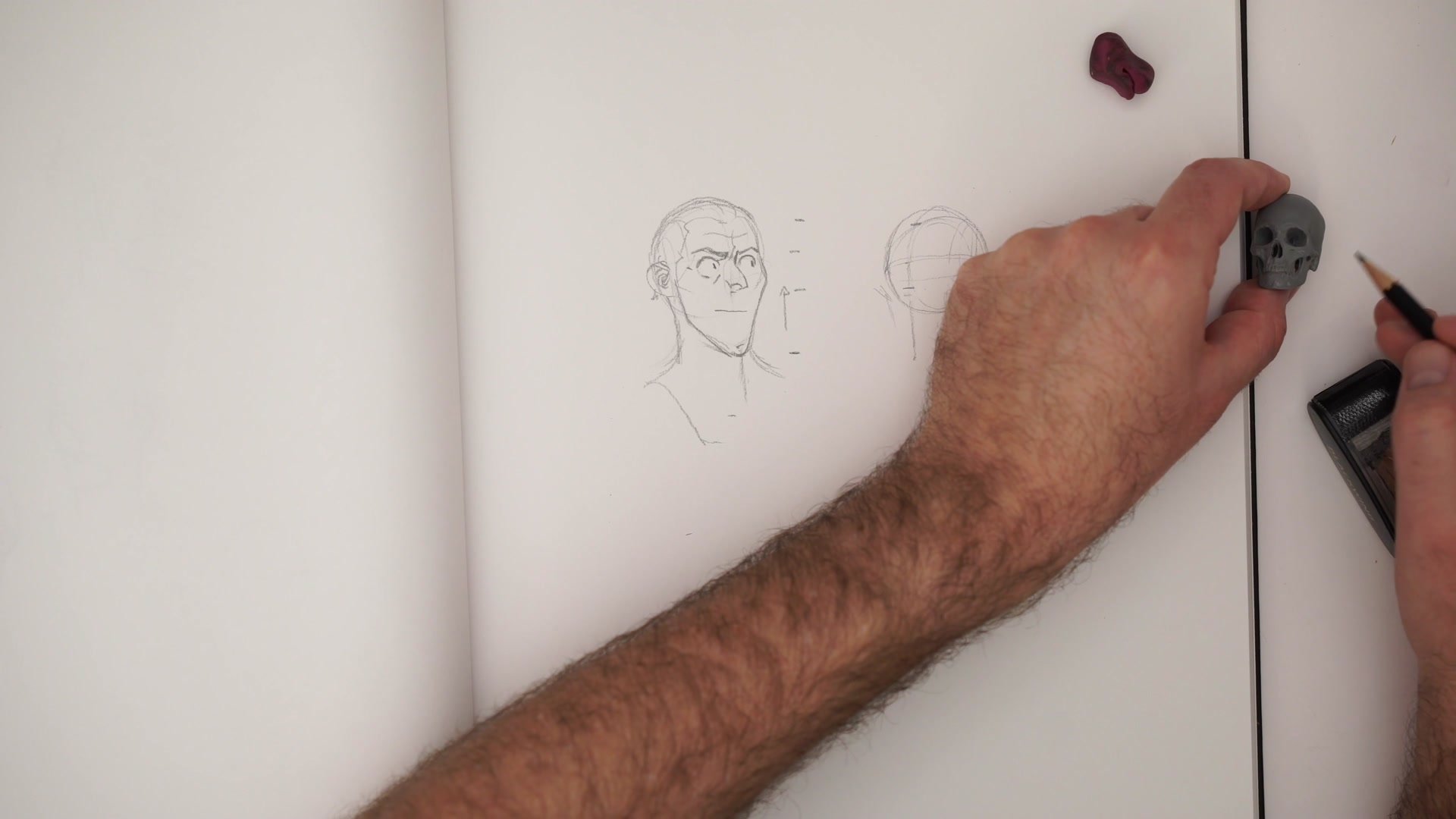
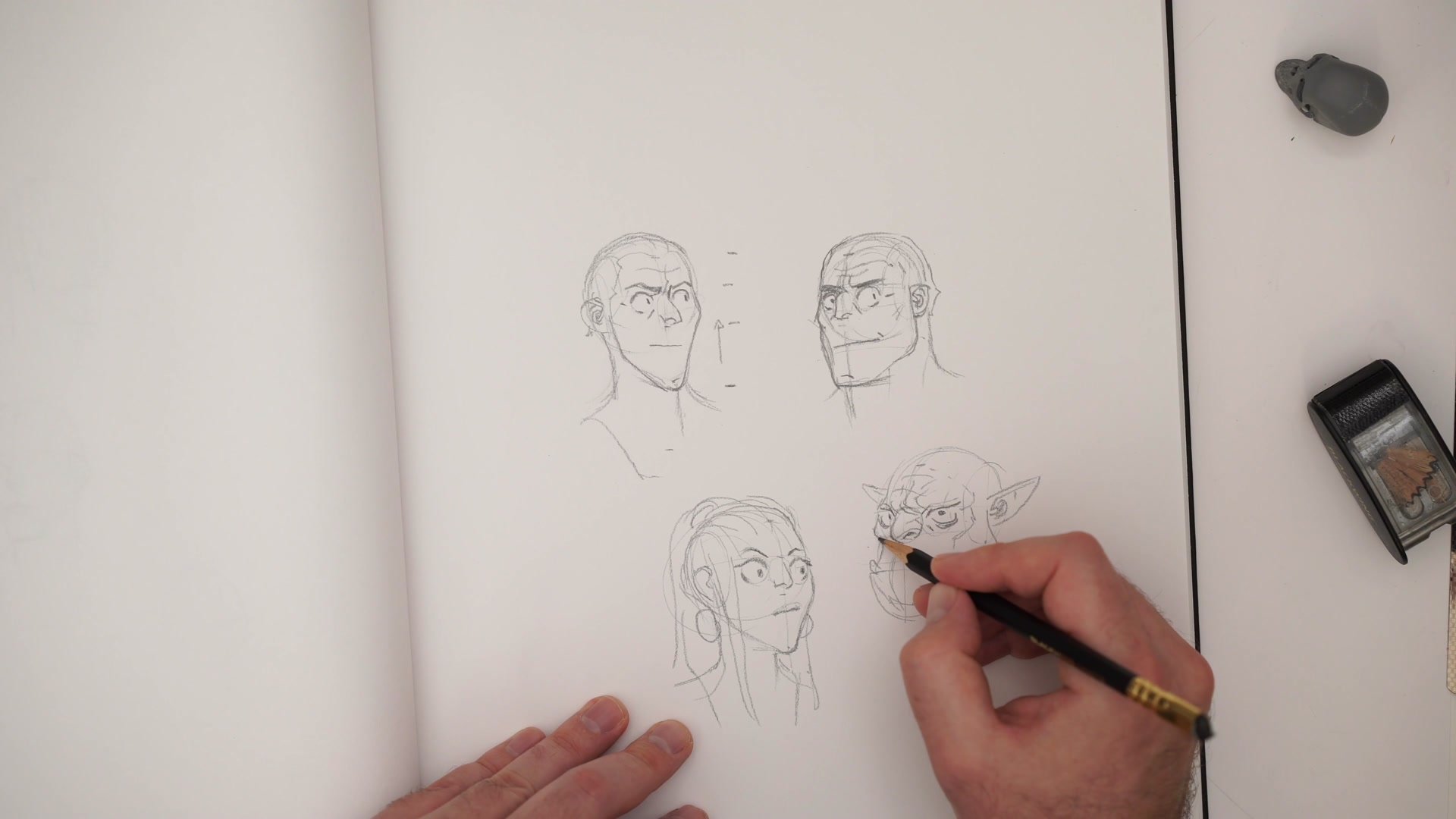
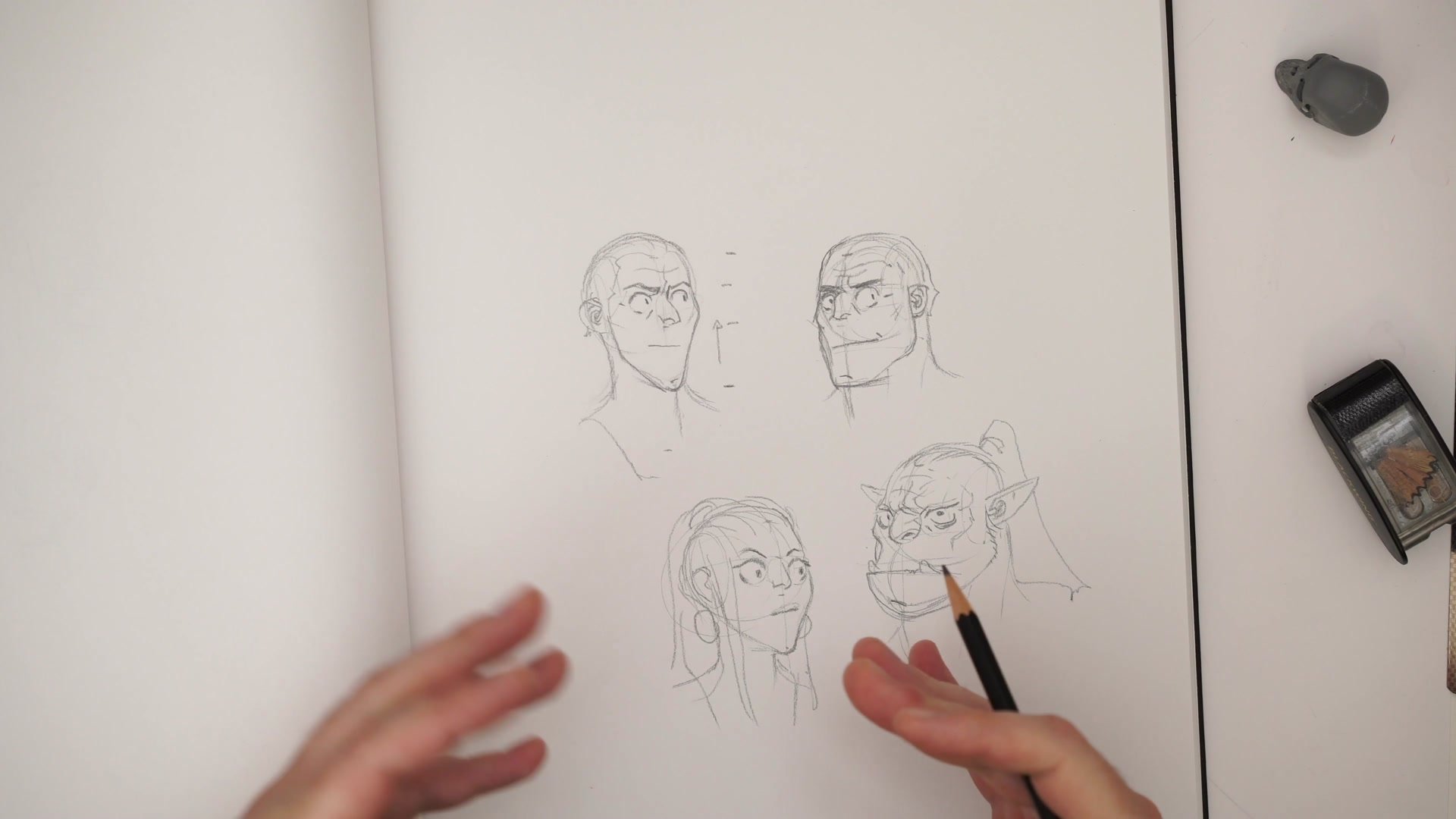
The demonstration covers four distinct character types built from the same construction method. A long face increases the third proportional zone and keeps the face width narrow. A wide face keeps the skull the same size but pushes the jaw outward, which naturally suggests a muscular character with a thick neck. A female character uses similar proportional markers but adjusts the iconic features, the eyelash weight, lip structure, and neck width, to shift the character read while maintaining the same underlying construction.
The fantasy character, an orc, takes the method furthest. The same center line and proportional markers are in place, but the mound along the center line gets exaggerated, features get pushed to more extreme proportions, and the iconic details sell the character type. All four faces feel like they belong in the same stylistic world because the underlying proportional system is consistent. The Loomis Method functions as a tool for drawing from imagination with structural control, not a rigid academic exercise.
Final Character Lineup
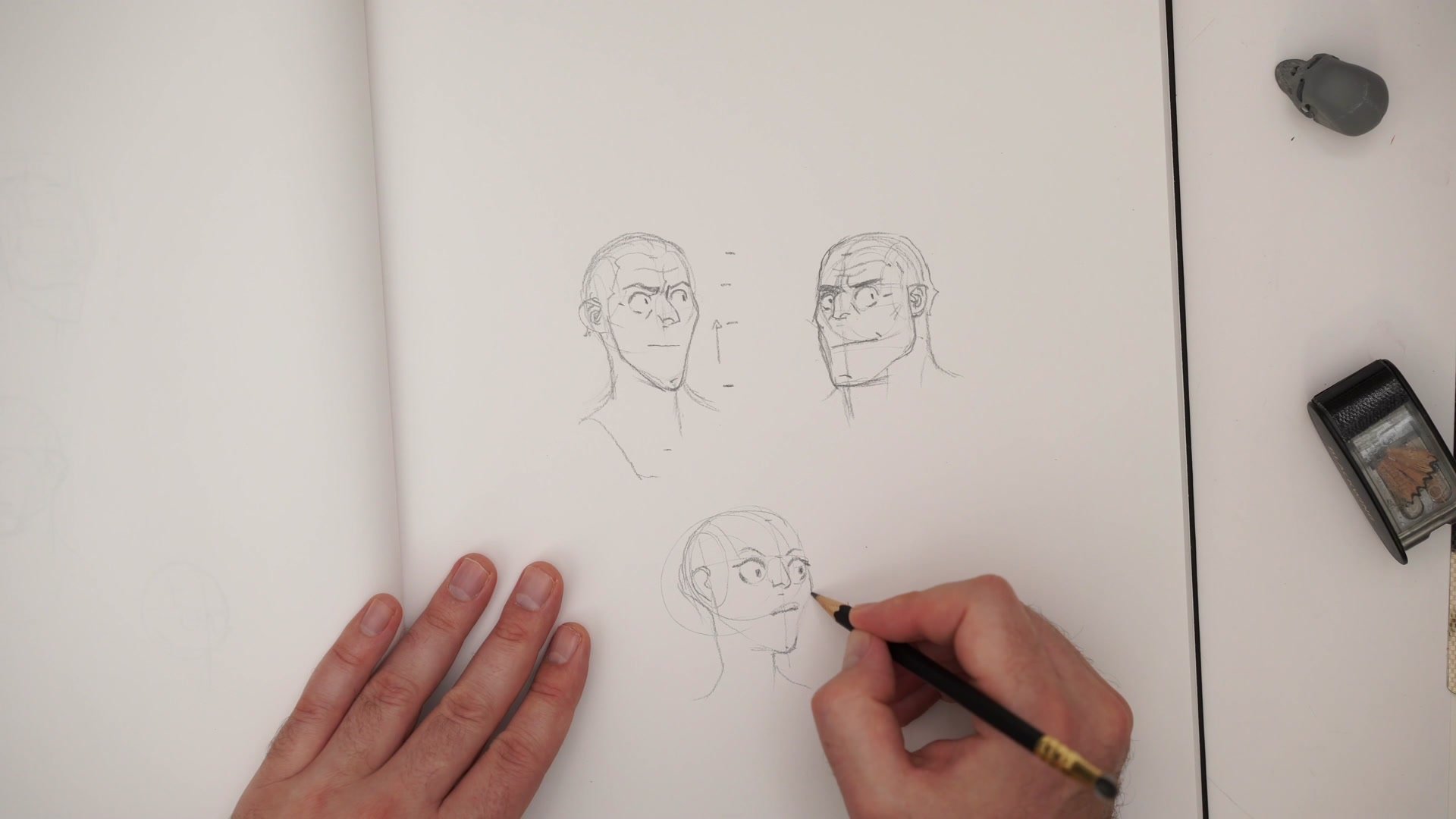
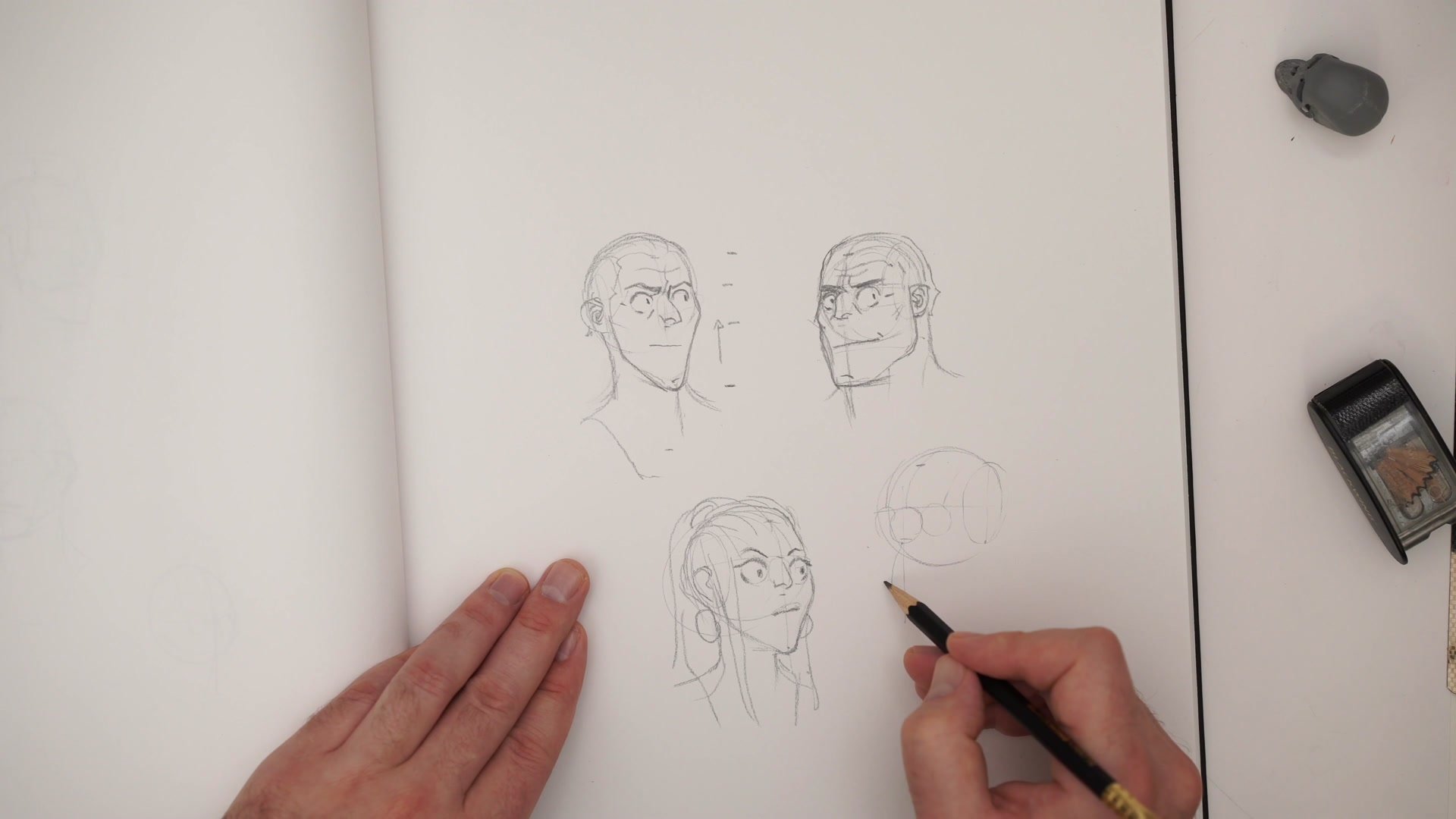
Key Principles
Proportional Zones Are Adjustable: The three zones of the Loomis Method are not fixed. Compressing or elongating specific zones is what creates personal style and character variety.
Consistency Creates Style: Applying the same proportional modifications across all characters makes them feel like they belong in the same world. Style is consistent proportional choice, not random variation.
Primary Form First: The Loomis block-in teaches control over primary forms. Secondary details like specific nose shapes or ear structures come after the proportional framework is solid.
Construction Enables Imagination: The method is a tool for drawing from imagination with structural accuracy, not a system for copying reference. Once the proportional markers are internalized, characters can be designed rather than traced.
Practice This
Define Your Proportions: Draw the standard Loomis block-in, then create a second version where the top two proportional zones are compressed and the third is elongated. Note exactly which measurements changed.
Draw Four Faces: Using the same modified proportional system, draw a long face, a wide face, a female face, and a fantasy face. Keep the underlying construction consistent while changing the jaw width, feature placement, and iconic details.
Study an Artist: Pick an artist whose style appeals to you. Break down their face proportions into the three Loomis zones and identify which proportions they consistently compress or elongate.