Make Your Character Drawings Solid
Summary
Controlling Proportion in Three Dimensions
Drawing characters that feel solid, especially from different angles and in dynamic poses, comes down to controlling proportion in three-dimensional space. Most foundational drawing education teaches this through endless box and sphere exercises before ever touching a figure, which can kill momentum for artists who want to draw comics, manga, or concept art. This drawing lesson takes a different approach, covering the key concepts that underpin structural drawing and showing how to apply them directly to figure construction, so the fundamentals serve the work rather than replace it.
The core ideas are deceptively simple: center lines, symmetry, and proportion in three dimensions. These three concepts account for most of what makes a figure drawing feel solid and dimensional, and they can be practiced and applied at any skill level without waiting until perspective knowledge is fully developed.
Reference and Context


The Center Line as Foundation
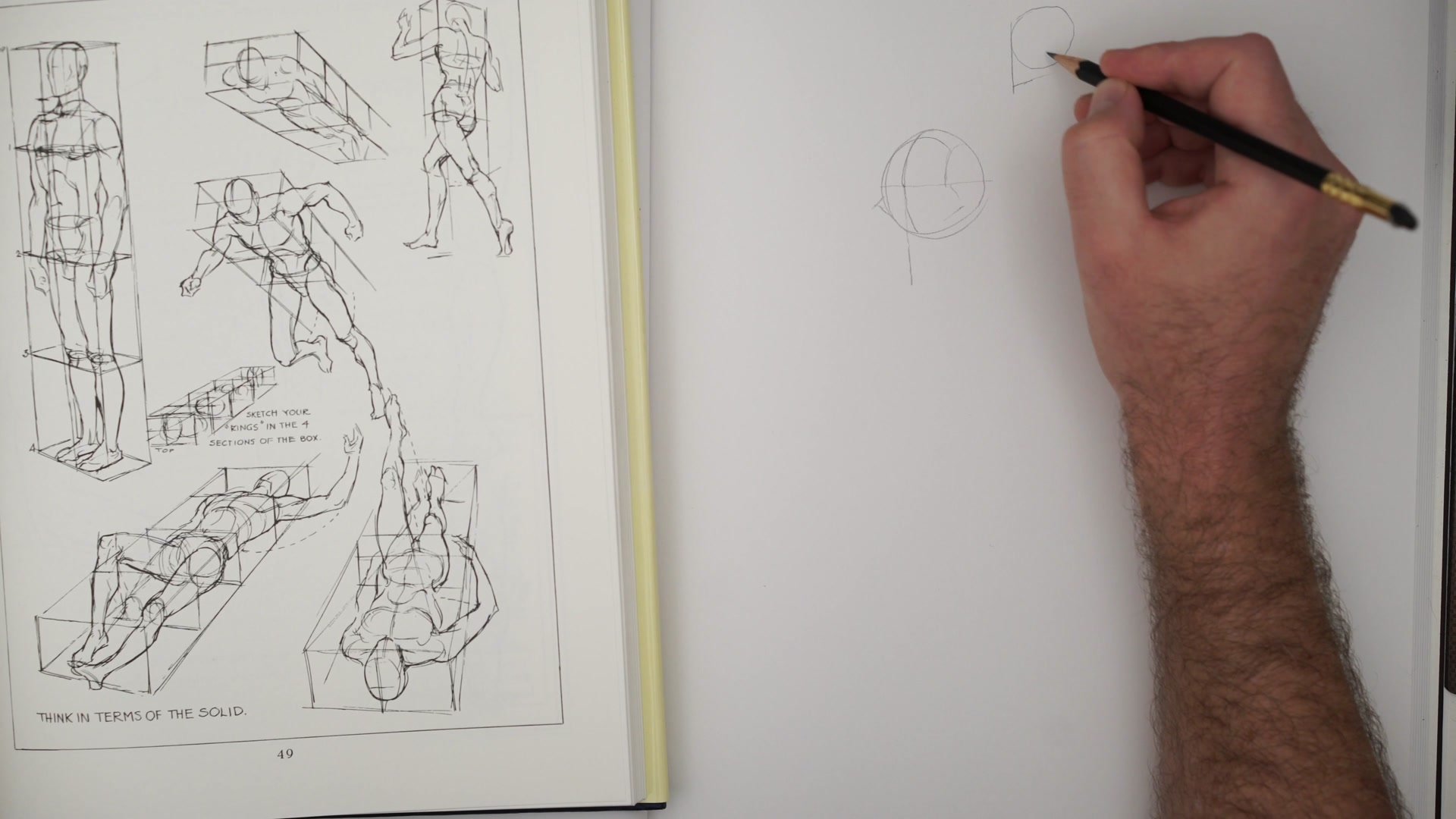
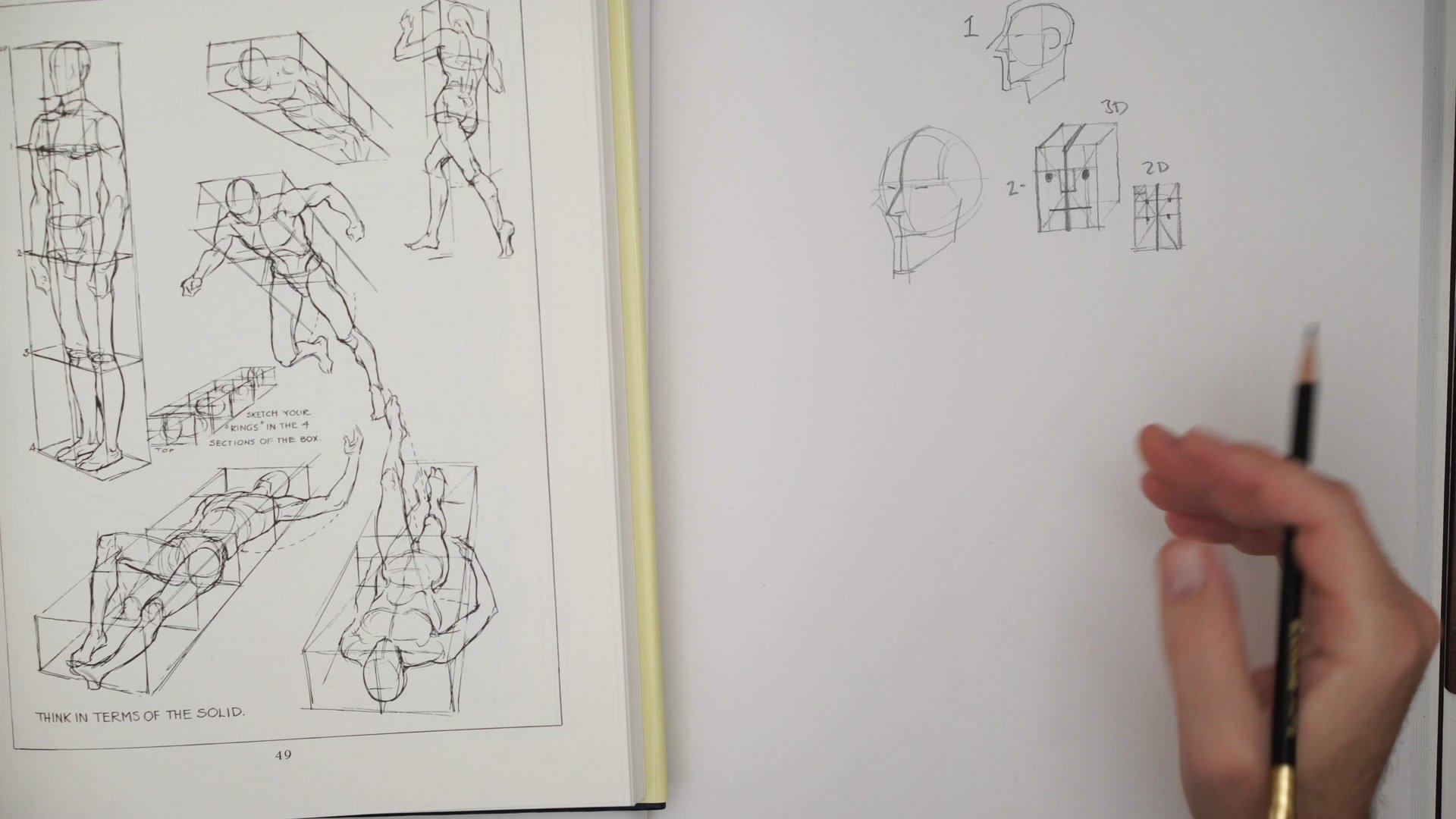
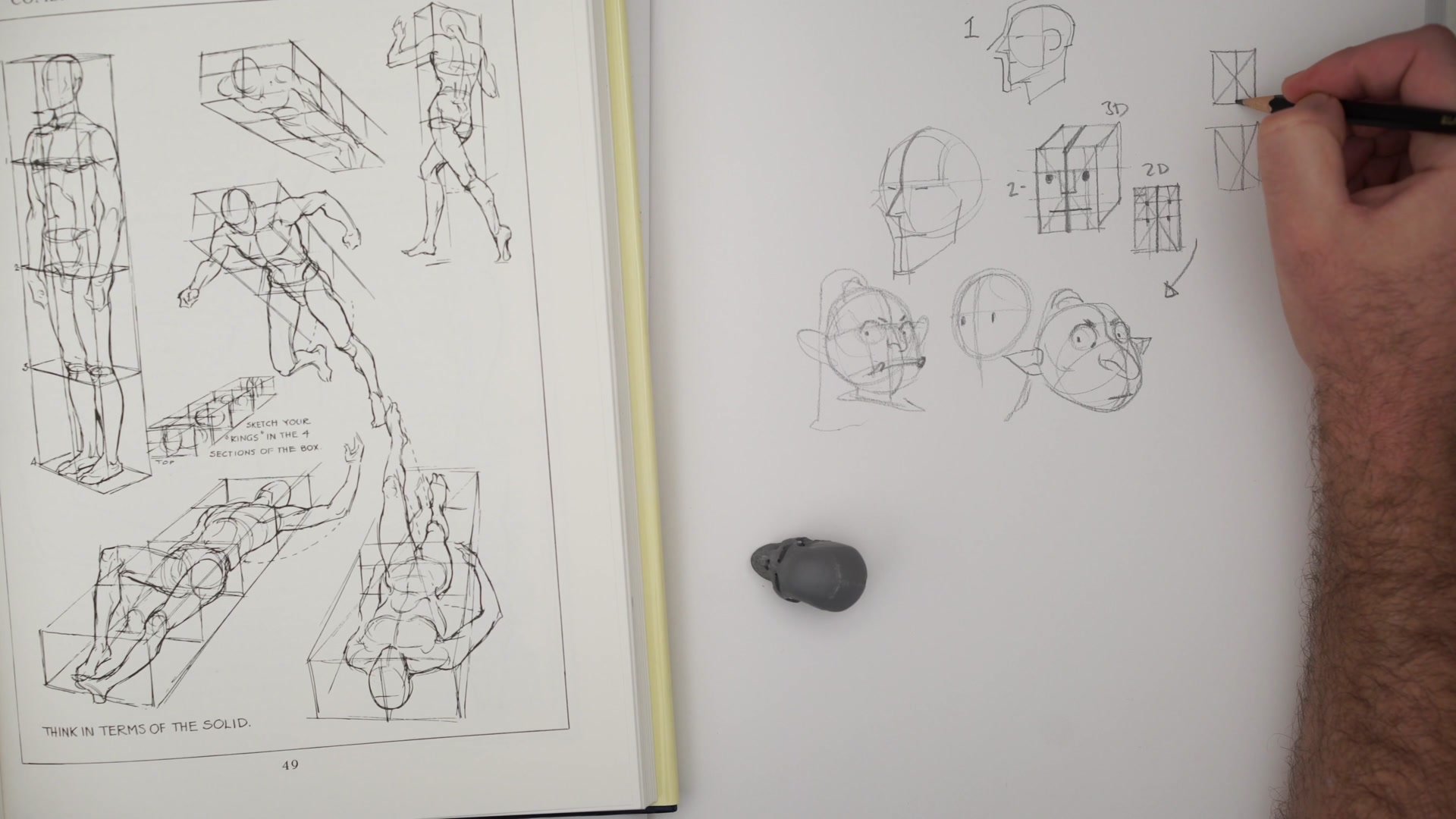
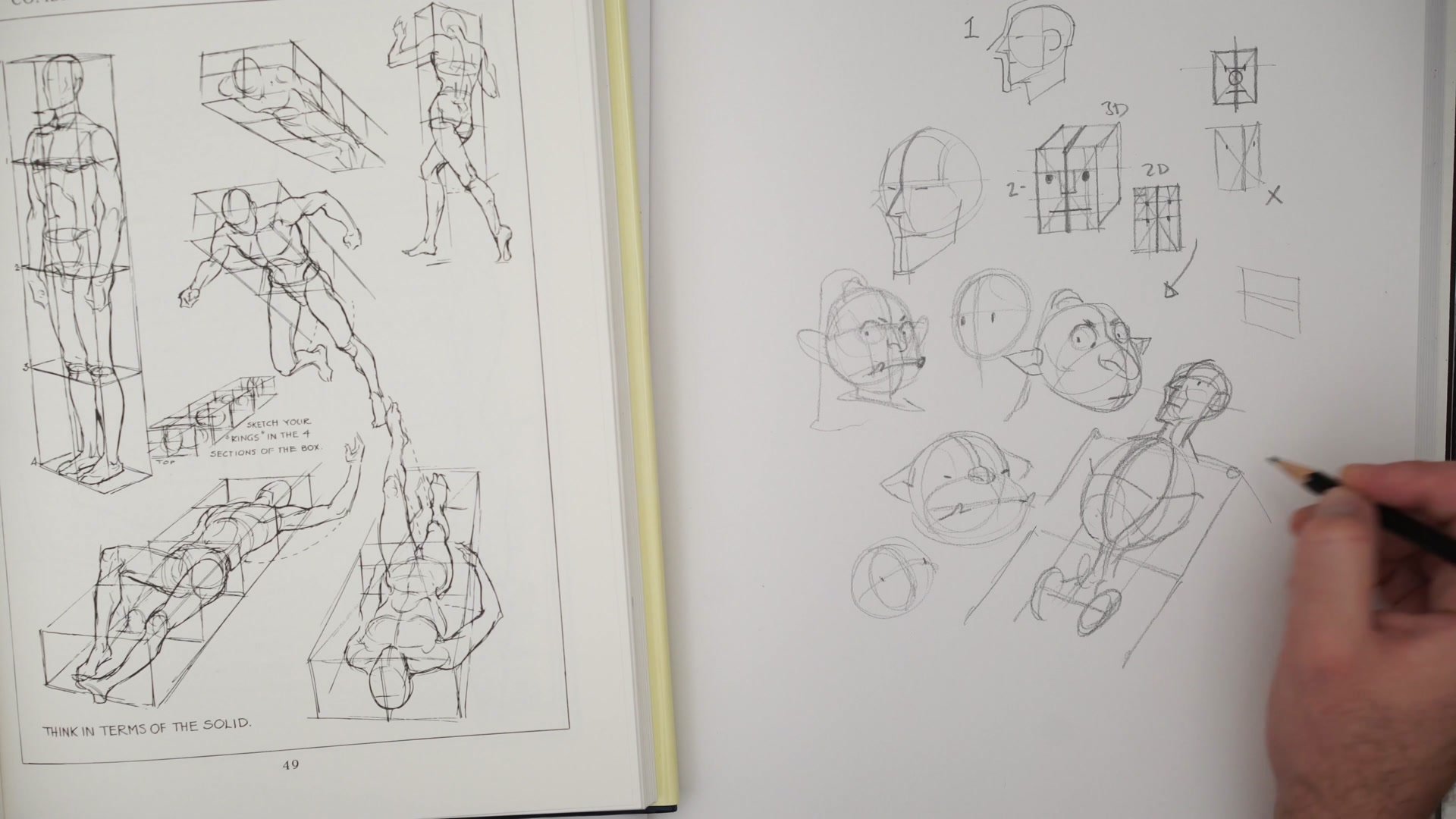
The center line is the single most important structural tool for controlling proportion. It serves two critical functions. First, it tracks the dimensionality of whatever form is being drawn, representing how that form turns in space, much like viewing the profile of a head or figure from the side. Second, it creates an axis for mirroring and measuring, allowing symmetrical features to be placed accurately on either side.
This concept applies identically whether drawing a simple box, an organic head shape, or a full mannequin figure. The difference between a blocky technical exercise and a fluid character sketch is just that the organic version wraps the same center line logic around more complex forms. The key insight is that this is not a rigid step to follow, but a visualization that happens within the artist's mind. The goal is to train intuition so that placing features symmetrically across a turned form becomes second nature rather than requiring measured construction every time.
Construction Principles
Symmetry, Mirroring, and Lining Things Up
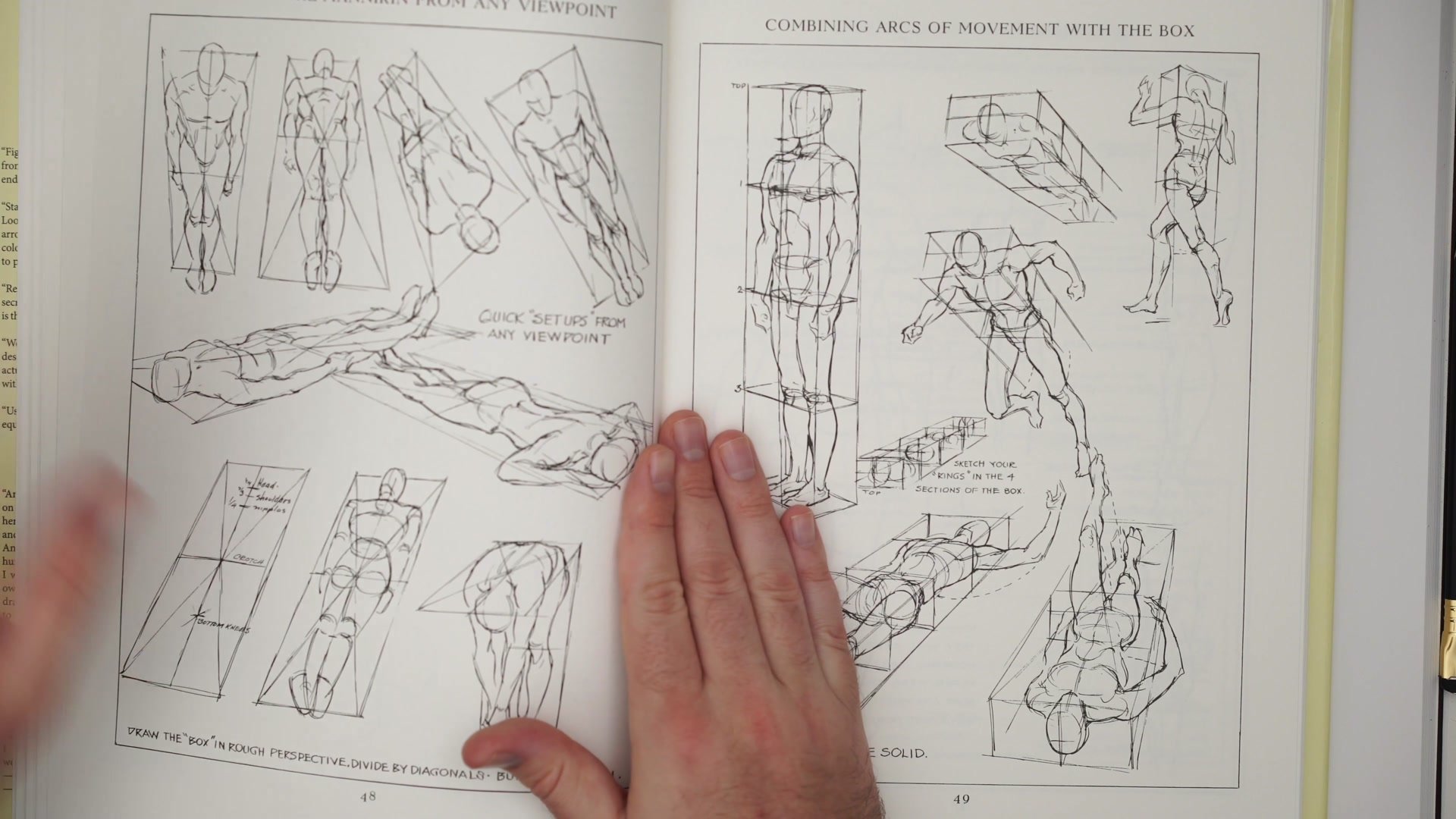
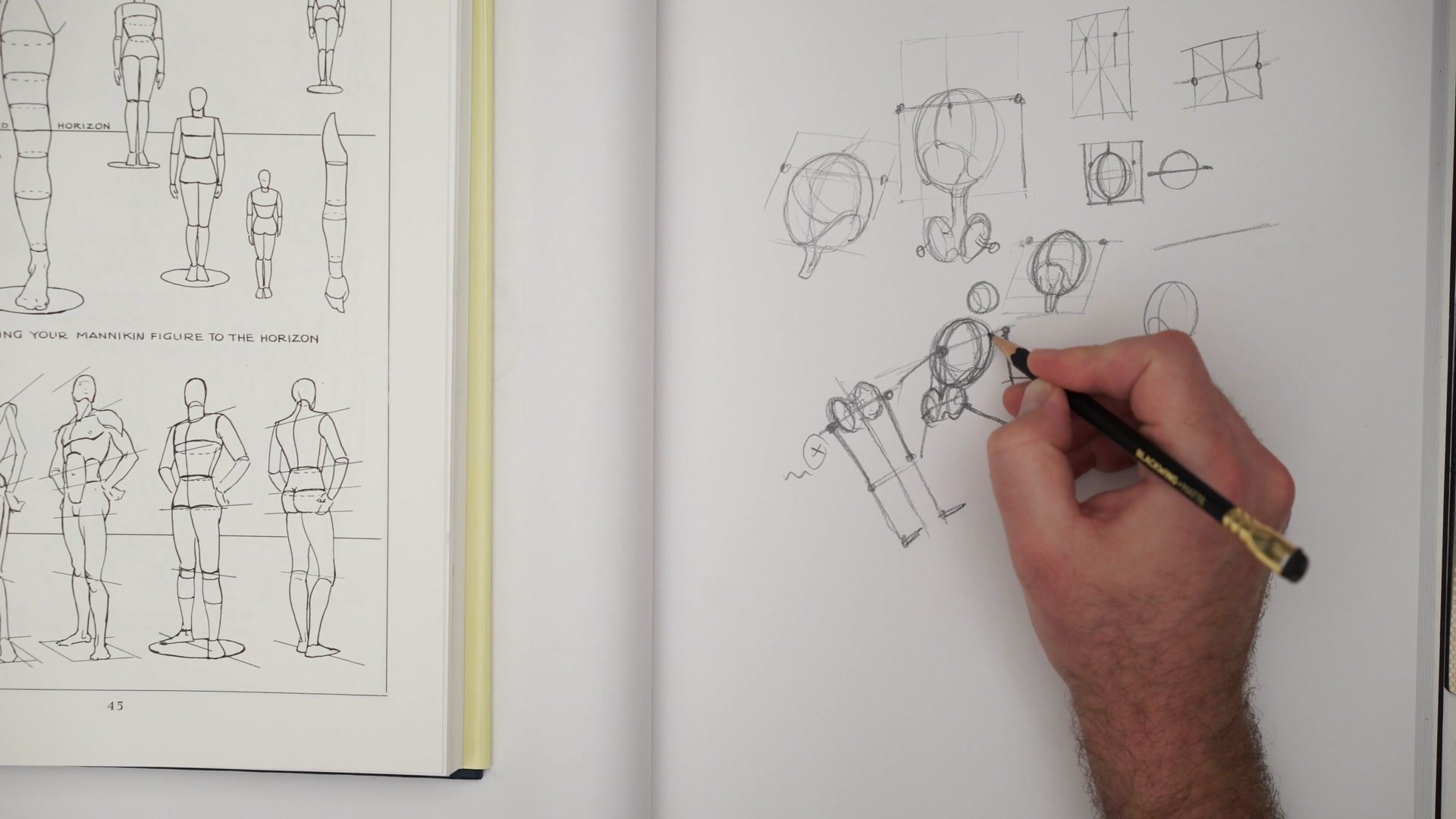
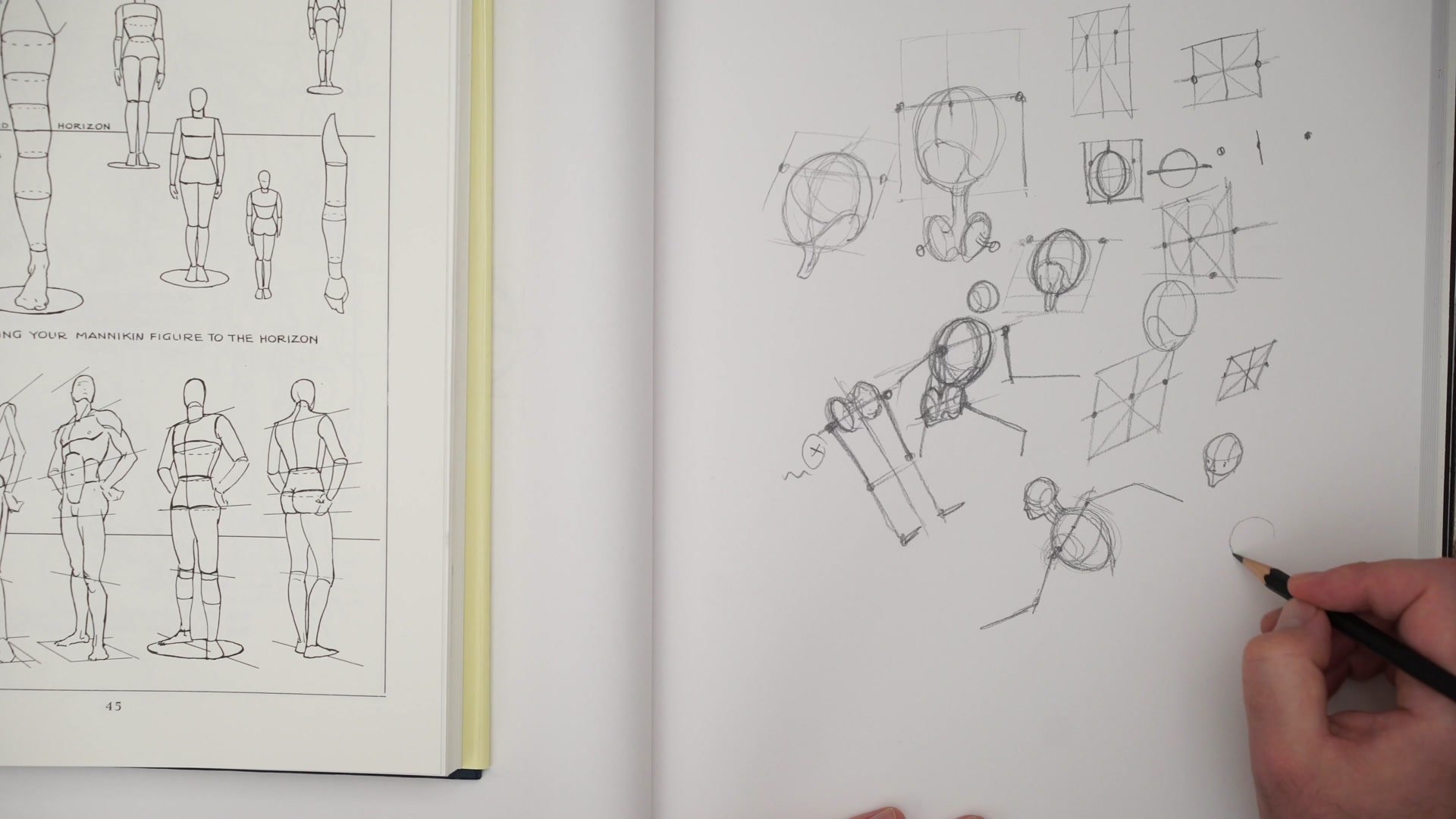
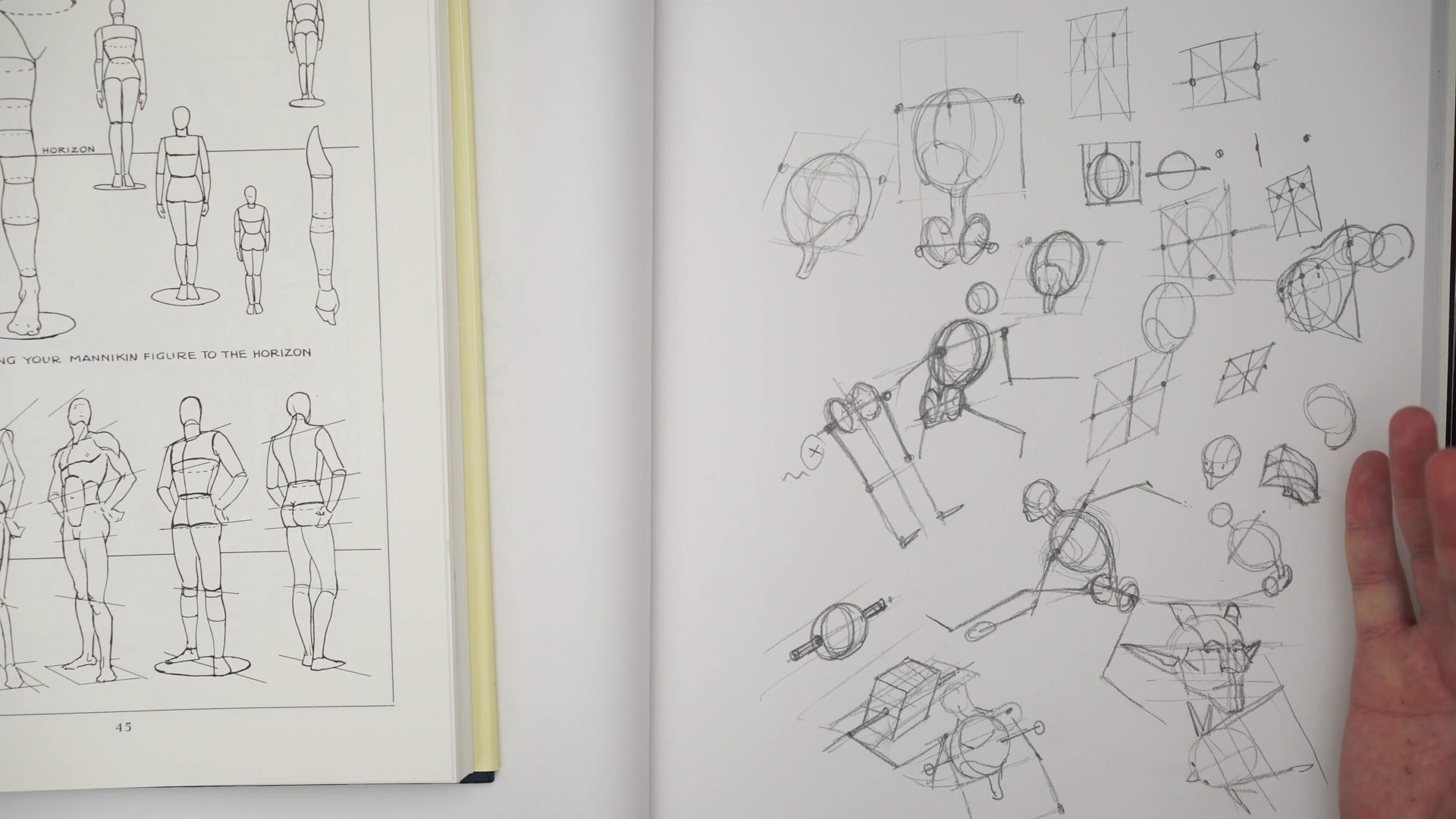
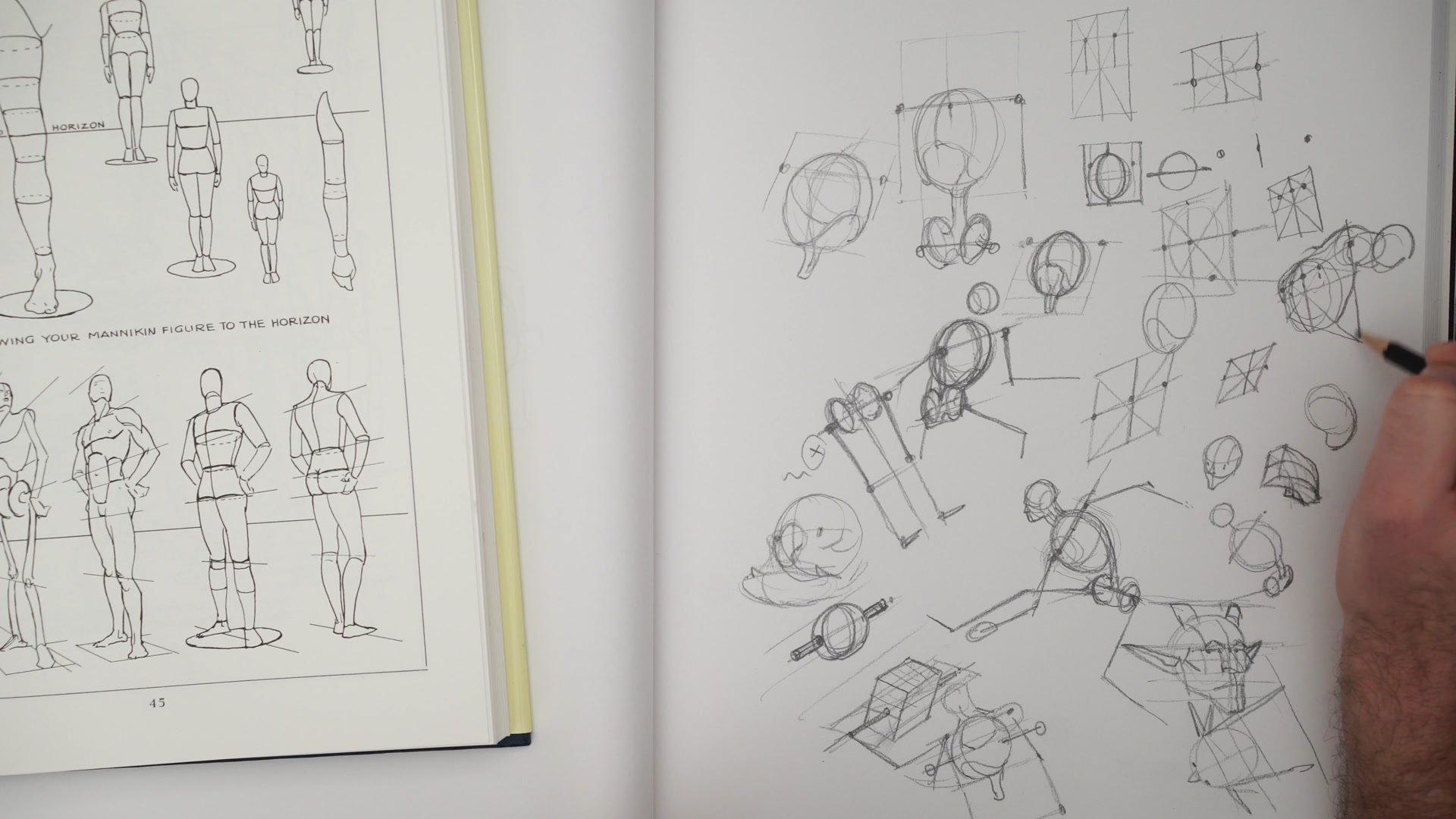
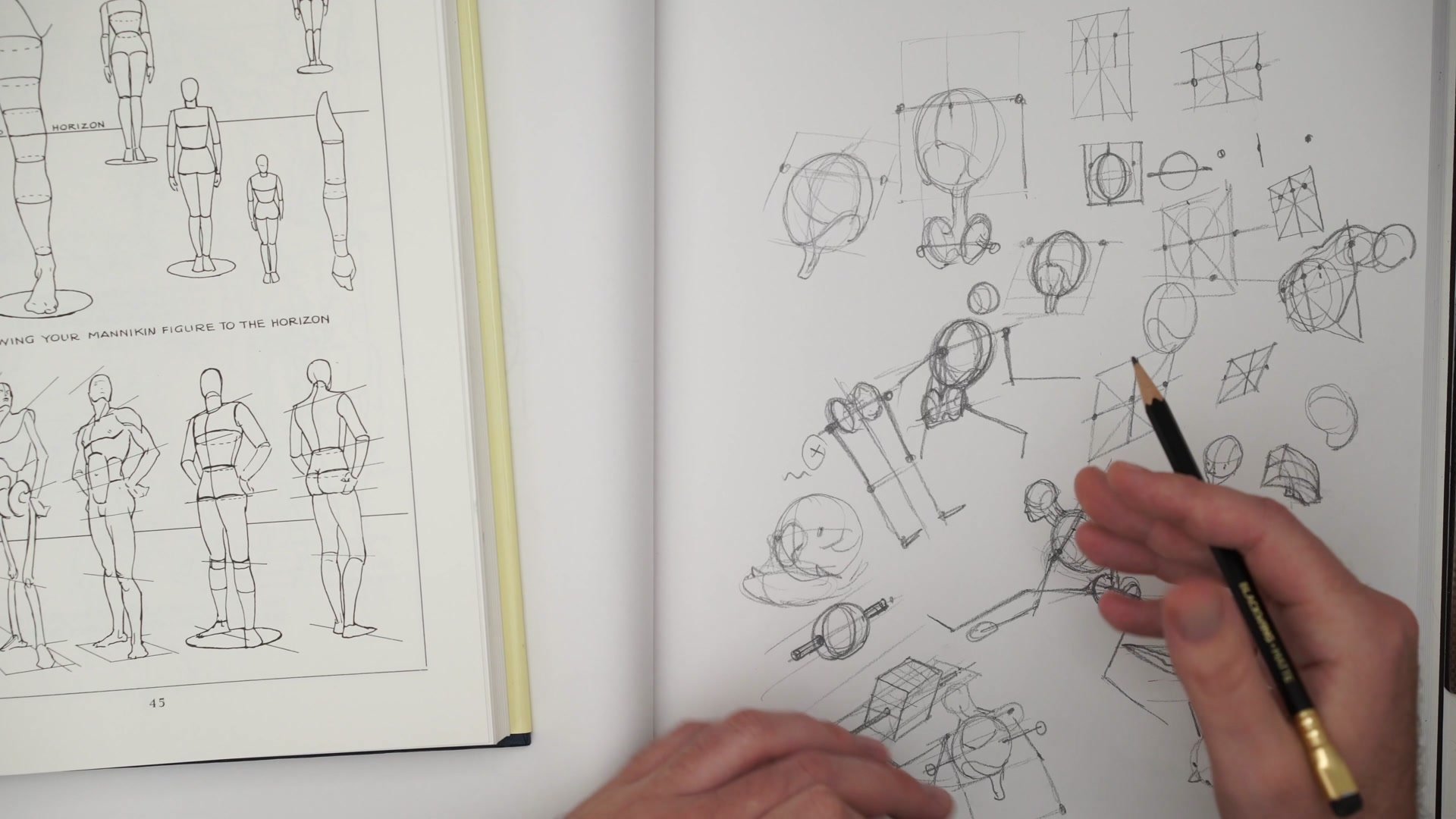
The human figure is fundamentally symmetrical, which means that a huge portion of figure drawing accuracy comes down to controlling the mirroring of features across center lines. Eyes, shoulders, hips, hands, everything lines up across invisible perspective lines, and simply drawing those guide lines in will solve a surprising number of proportion problems. This is what reference books like Loomis demonstrate when they show figures inside boxes: not that every drawing requires boxing everything out, but that the underlying logic of symmetry and perspective alignment is always at work.
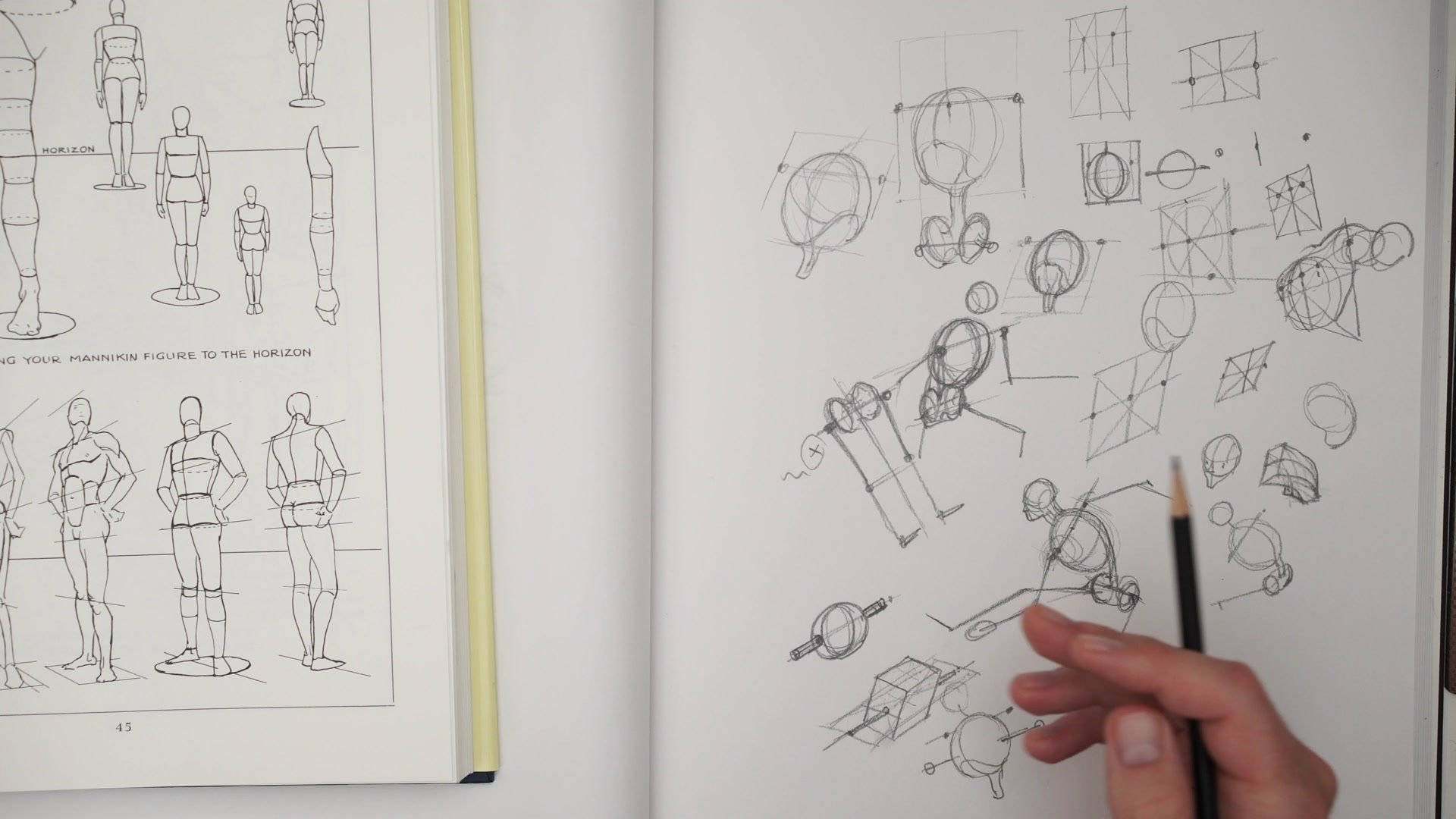
A critical distinction here is that these reference drawings are visualizations of the thought process, not a prescription for the drawing process itself. Working artists are not drawing boxes around every figure. They are guesstimating based on trained intuition, and that intuition was built through understanding these structural relationships. The practical skill is the ability to place two symmetrical points on a form that is turned in space, and that skill improves through repetition of both technical exercises and organic drawing practice.
Figure Application
Breaking Down the Mannequin
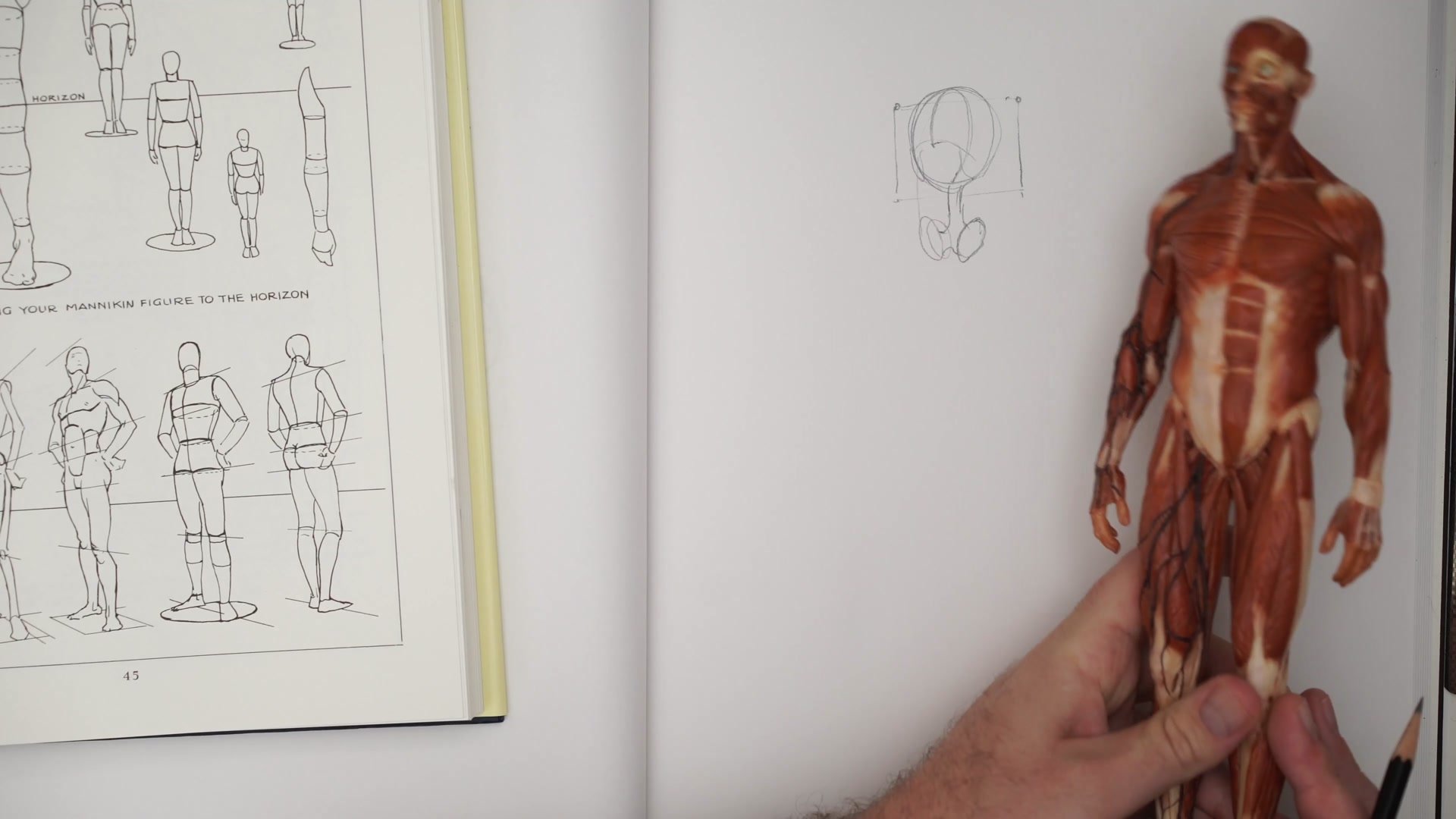
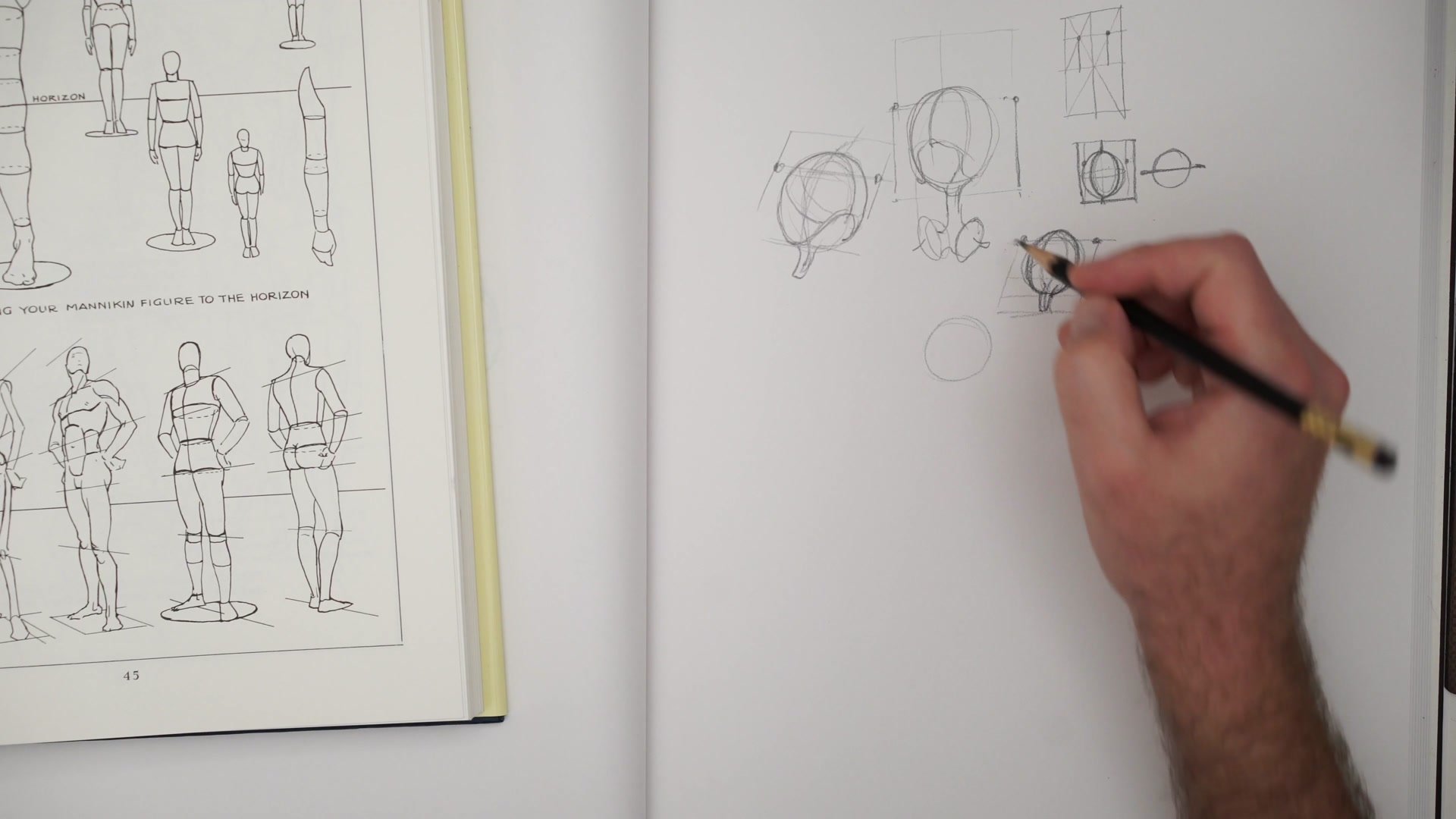
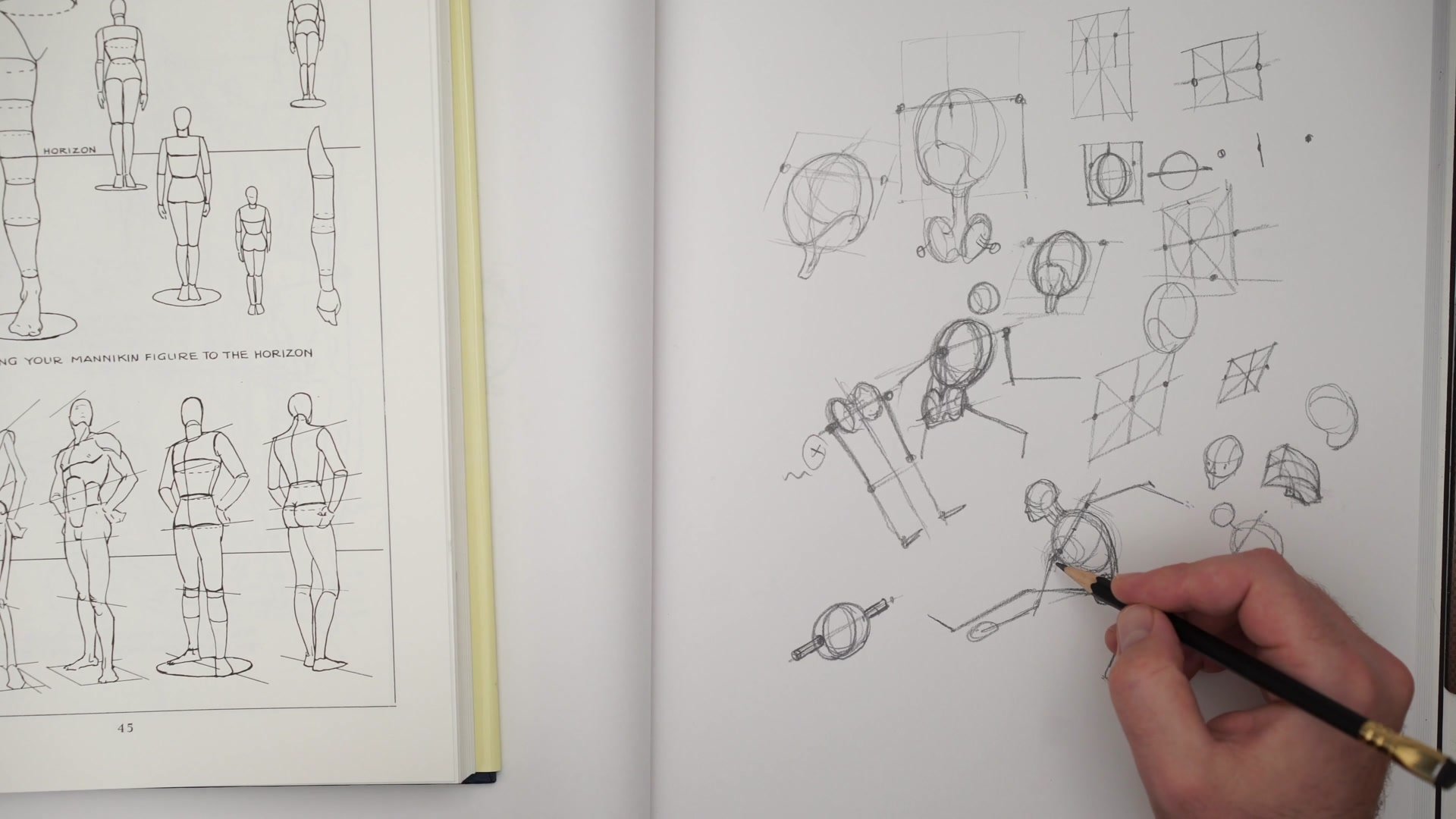
Applying these concepts to the figure works best when the body is broken down into separate static objects: the torso as an egg shape, the pelvis as a second mass, the head, and the limbs. Each piece presents the same proportional challenge, finding the center, placing symmetrical points, and controlling their position as the form rotates. The advantage of the mannequin approach is that static objects are far easier to control than a full anatomical figure with muscles shifting over each other.
Not all poses are worth drawing. Just because a pose can be drawn accurately does not mean it will look good. Pose selection matters enormously, and the best starting point is drawing simple, static, well-staged figures rather than attempting extreme foreshortening. Clarity of posture beats complexity of angle every time. The crazy foreshortened Capcom-style poses come from applying these same basic concepts at a higher level of difficulty, combined with heavy selection of angles that actually work.
Mannequin Studies
Key Principles
Center Line First: The center line tracks dimensionality and creates an axis for symmetrical measurement. It is the single most useful structural tool for controlling proportion across any form.
Symmetry as Mirroring: Most figure proportion problems are symmetry problems. Placing features accurately on both sides of a turned center line accounts for the majority of what makes a drawing feel solid.
Lining Things Up: Drawing guide lines between corresponding points on the figure, shoulders to shoulders, hips to hips, helps maintain proportion without needing full perspective construction.
Simplify the Mannequin: Working with the simplest possible version of each body part makes manipulation easier. Complexity can be added after proportion is controlled.
Pose Selection Matters: Not all poses are good just because they can be drawn accurately. Start with clear, well-staged positions and build a repertoire of poses that work.
Practice This
Start Simple: Draw a standing figure using basic mannequin shapes (egg torso, sphere head, cylinder limbs). Focus on getting center lines and symmetrical points correct before adding any detail.
Rotate Gradually: Take that same standing figure and rotate it slightly, practicing placing the same proportional points as the form turns. Do not jump to extreme angles.
Mix Technical and Organic: Alternate between blocky box-style exercises for accuracy and more organic gestural drawing. The technical work trains the intuition that feeds the organic work.