Sketch Fantasy Creatures and Talk Technical Perspective
Summary
How Much Perspective Do You Actually Need?
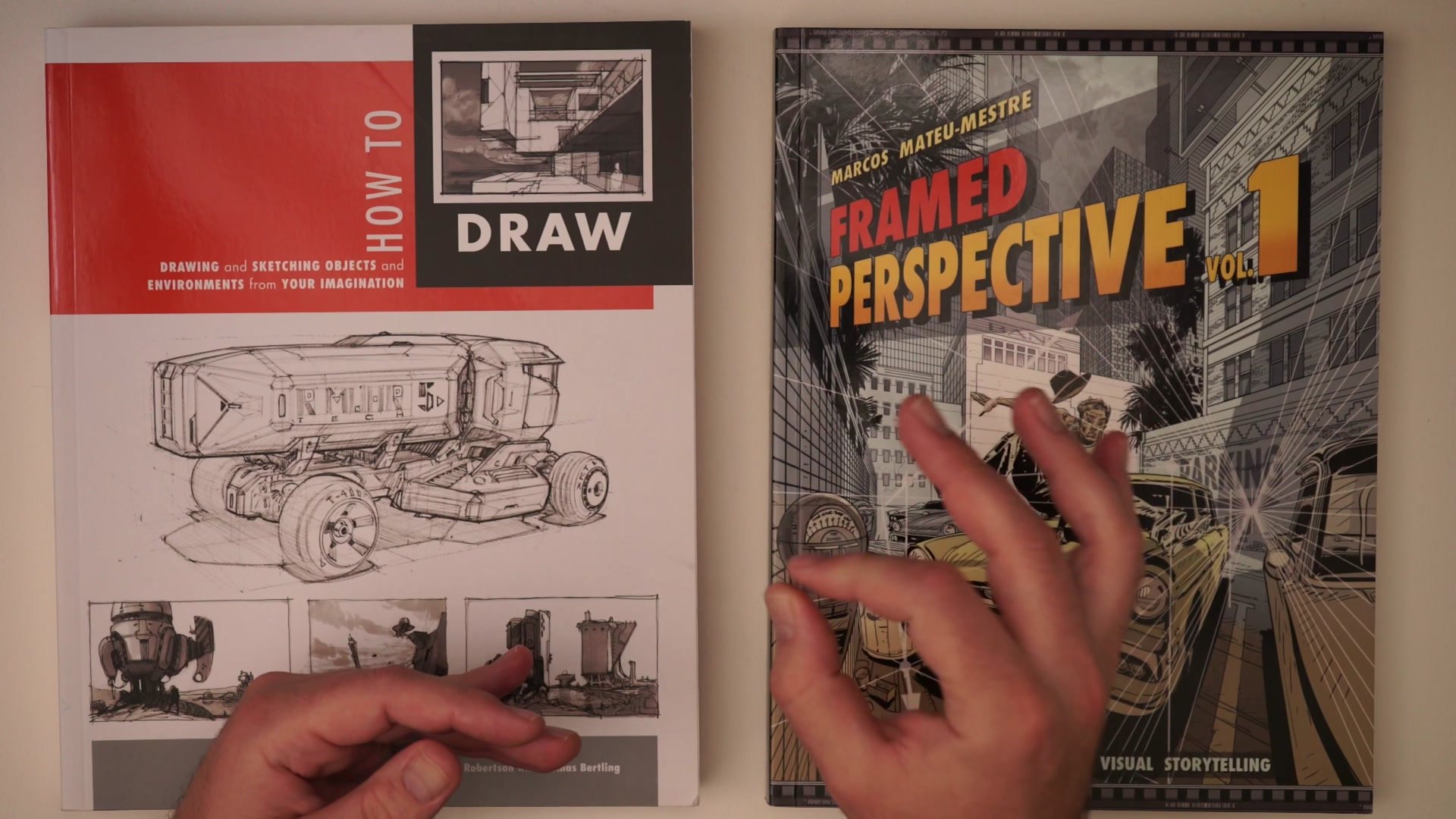
Technical perspective is one of the most intimidating fundamentals for artists to study. Books like Scott Robertson's How to Draw and Marcos Mateu-Mestre's Framed Perspective represent two different approaches to learning it, and most artists never get past the first few chapters of either. The real question is not whether perspective matters, but how much of it working artists actually use when they sit down to draw.
This session tackles that question head-on by sketching a fantasy creature rider from imagination while discussing the practical reality of perspective knowledge. The answer is nuanced: the more technical the study, the more artistic the actual practice can be. Understanding grids, measuring points, and cones of vision to the millimeter makes guesstimating in real work dramatically better.
Perspective Books Compared
Two Books, Two Approaches
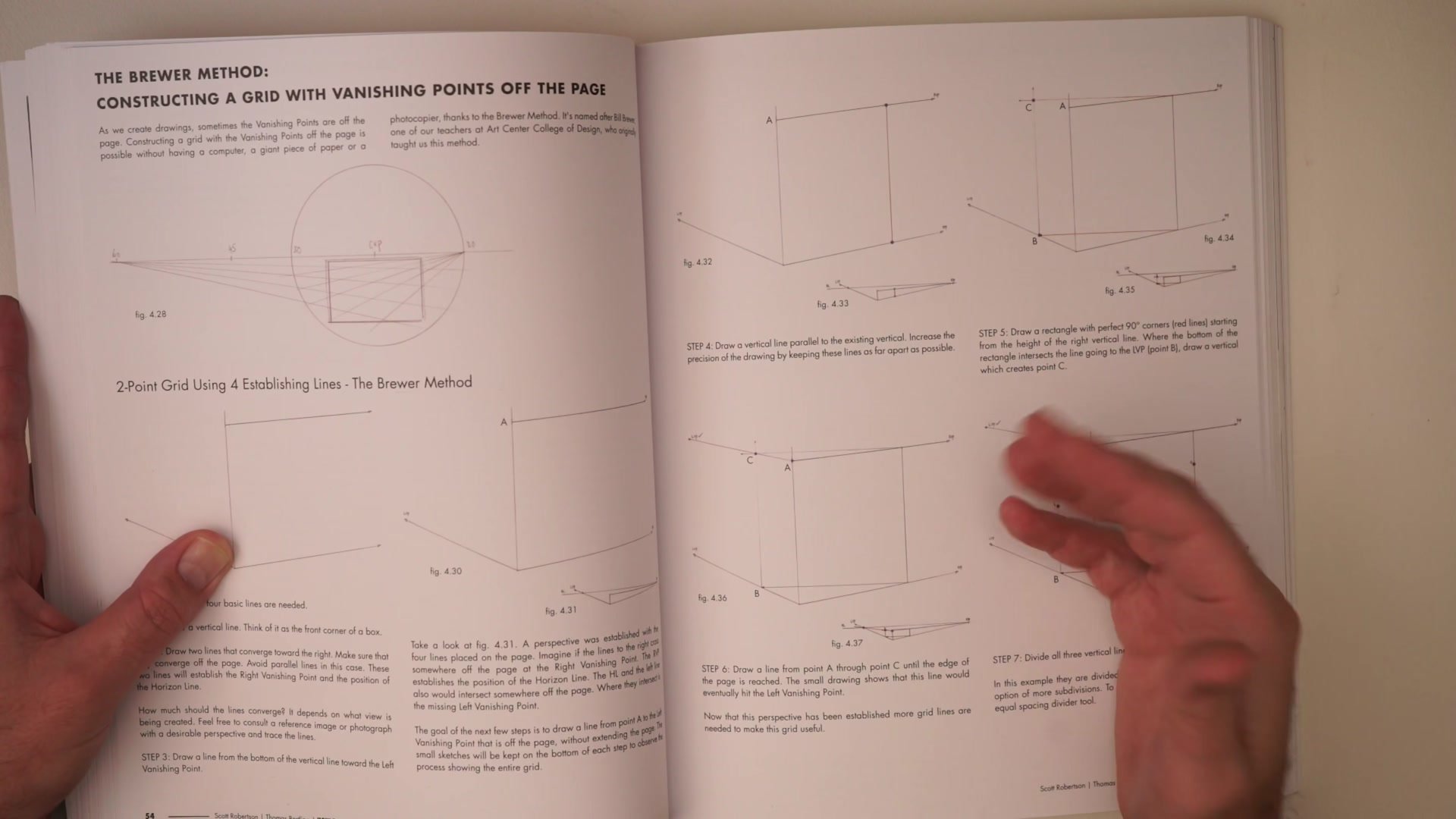
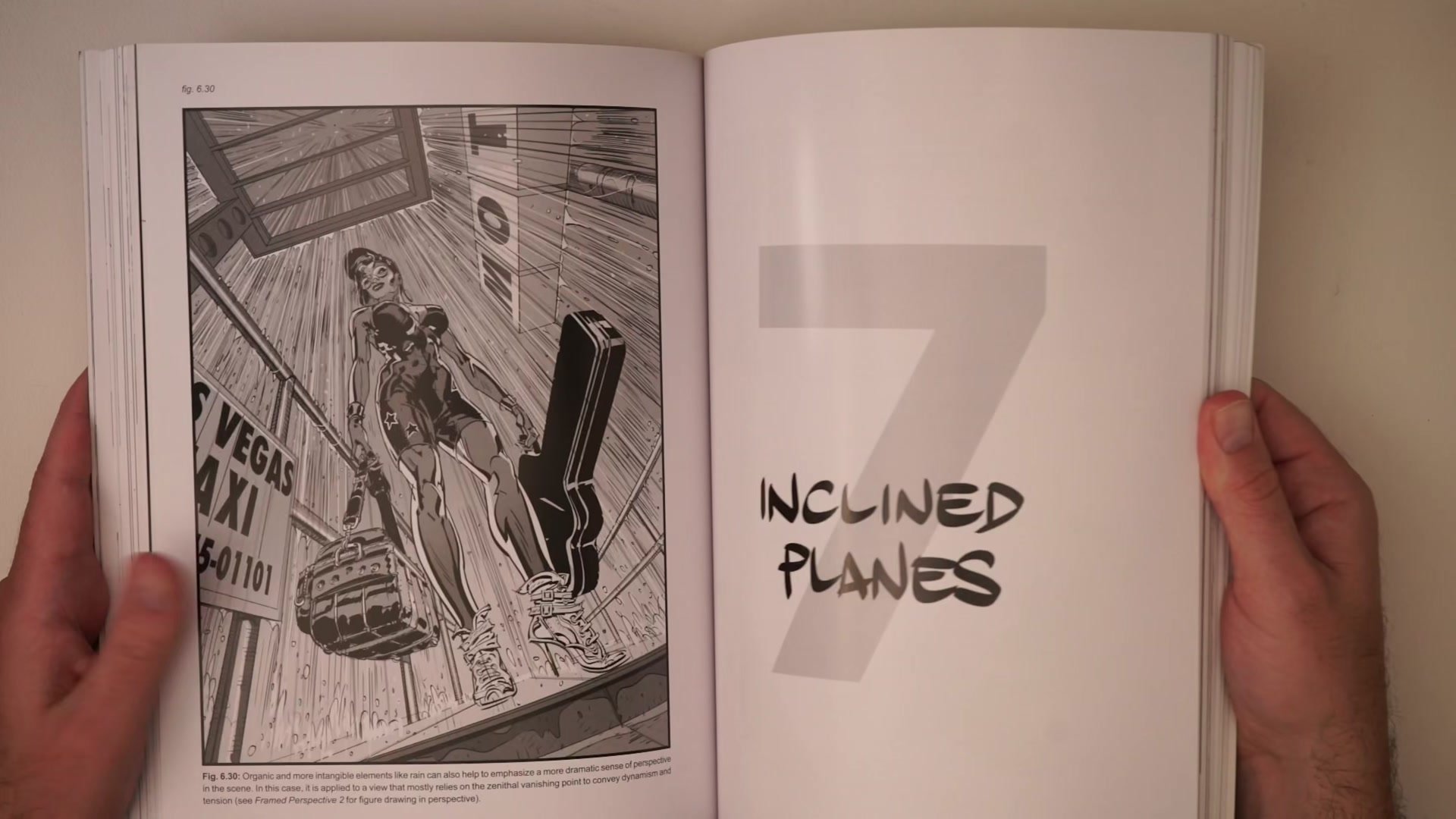
How to Draw by Scott Robertson and Thomas Bertling approaches perspective from an industrial design perspective. It covers mirroring rotated tilted planes, constructing grids with vanishing points off the page, and drawing curved surfaces with mathematical precision. The depth is unmatched, but the material reads like a textbook and feels heavy for figurative artists. Framed Perspective by Marcos Mateu-Mestre covers similar core theory but applies it to drawing scenes with characters and compositions. The demonstrations turn technical exercises into finished illustrations, making the learning feel more connected to actual art-making.
Neither book replaces the other. How to Draw goes deeper into industrial design construction that Framed Perspective does not cover. Framed Perspective shows practical scene-building that How to Draw barely touches. Seeing different people explain the same concepts in different ways is one of the most effective ways to actually internalize perspective fundamentals.
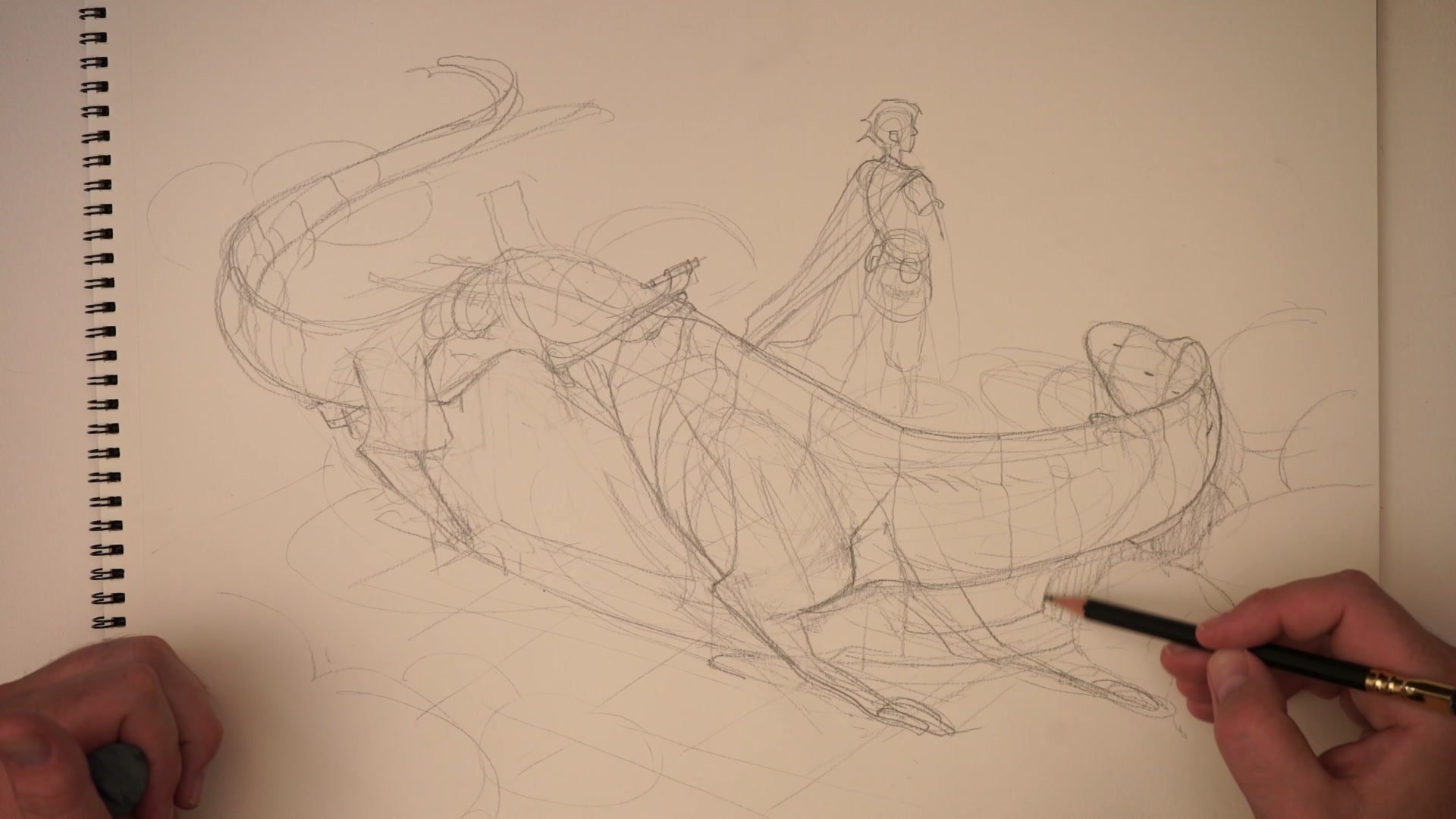
Gestural Blocking
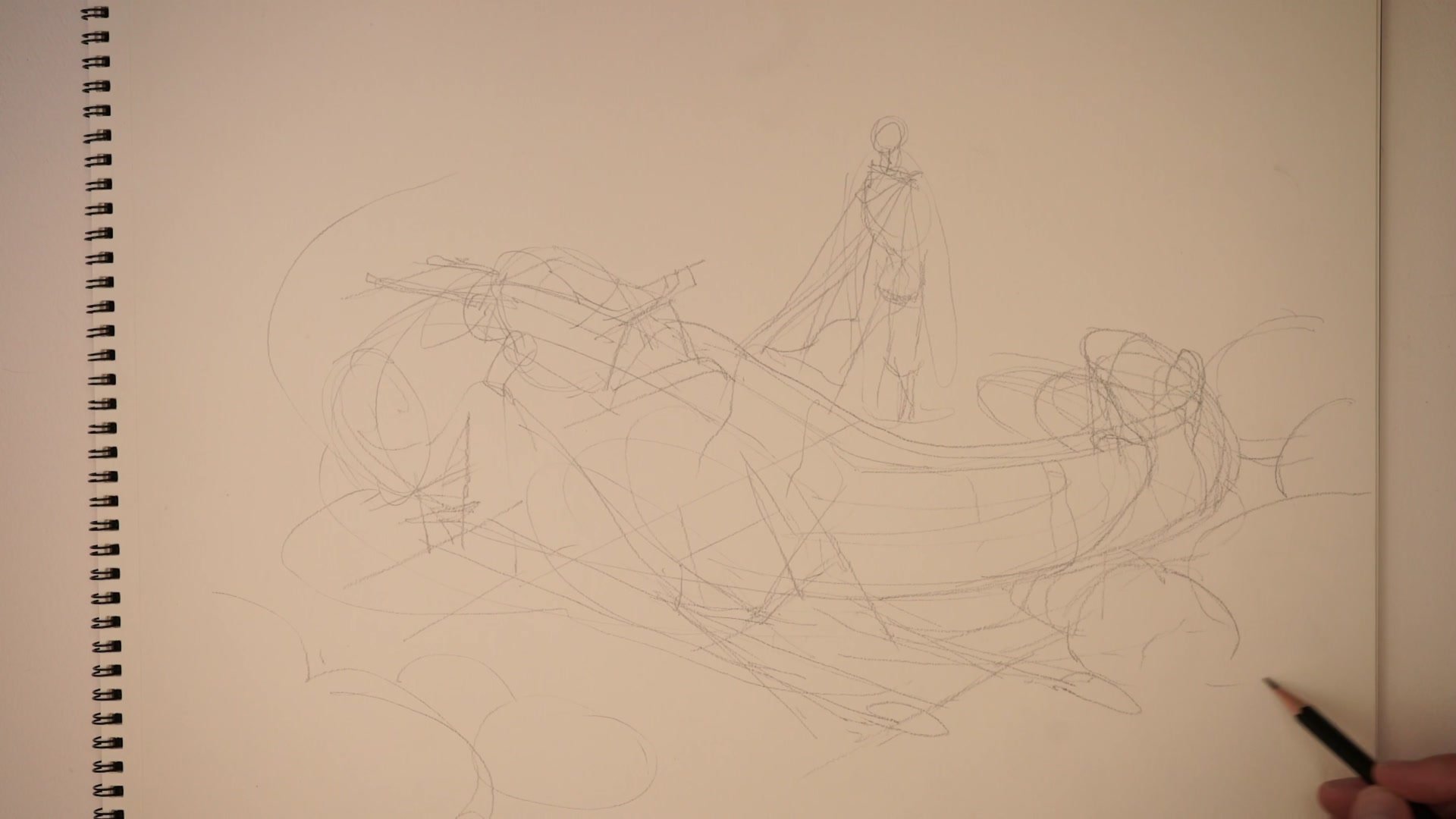
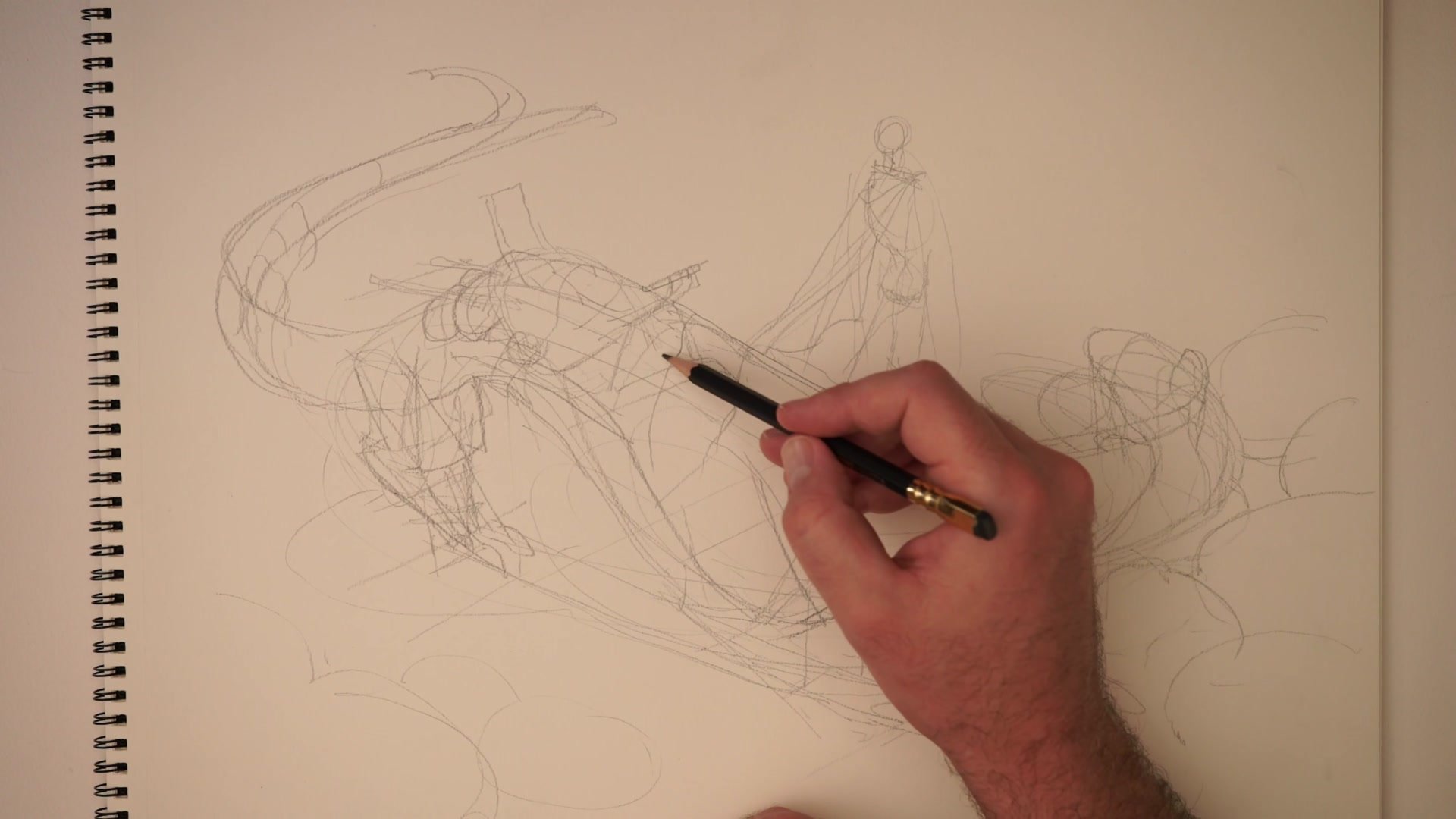
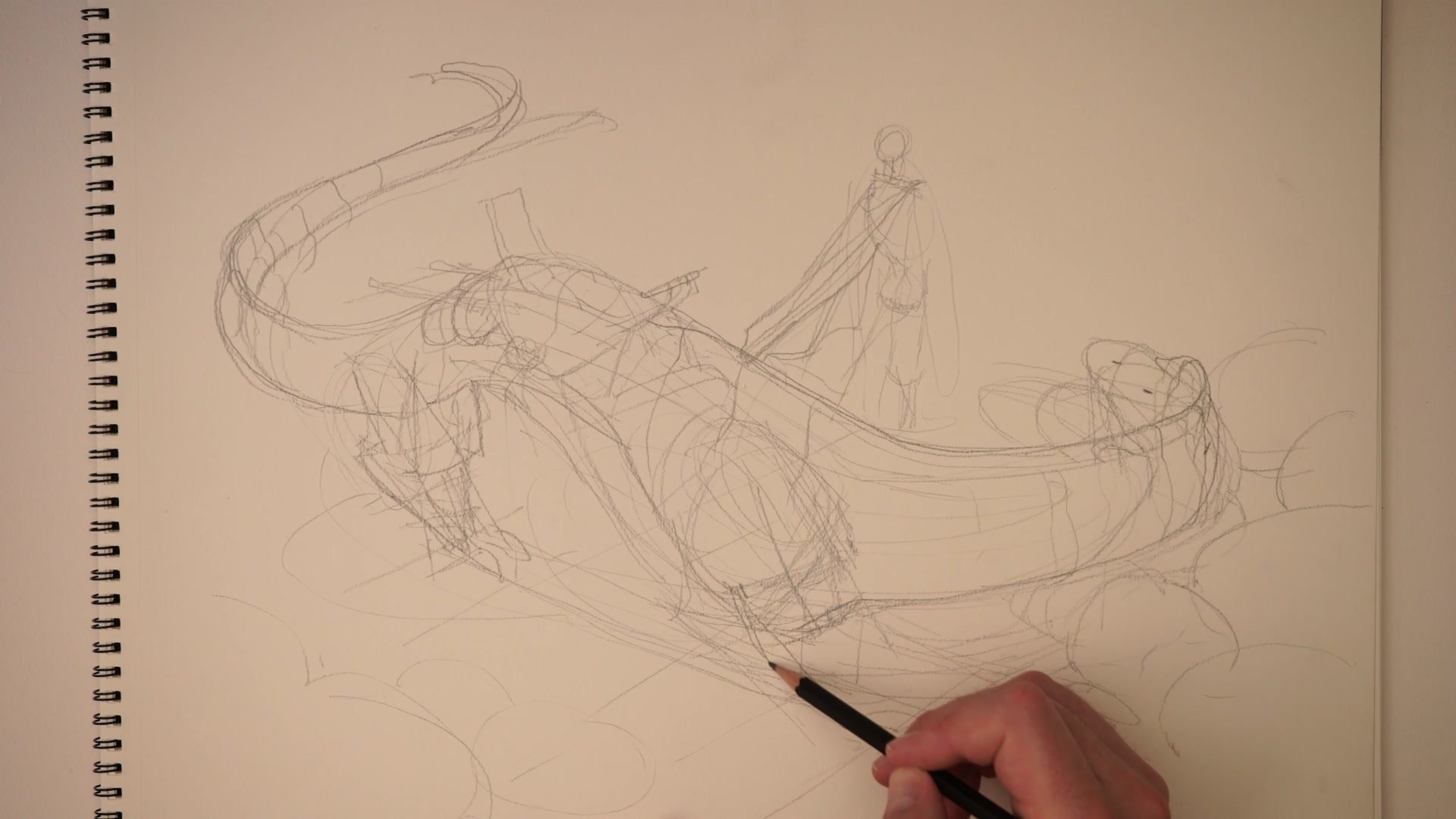
Technical Study Powers Intuitive Drawing
The core insight about perspective is counterintuitive: the more technical and precise the study, the less technical the actual drawing practice needs to be. Measuring to the millimeter, using the biggest paper possible, making sure every line truly converges to a vanishing point during practice sessions builds an instinctive understanding that stays even when the ruler gets put away. Most professional artists are guesstimating. They are fudging ground planes, eyeballing center lines, and roughing in spatial relationships. But the quality of that guesstimation is directly proportional to how deeply the fundamentals were studied.
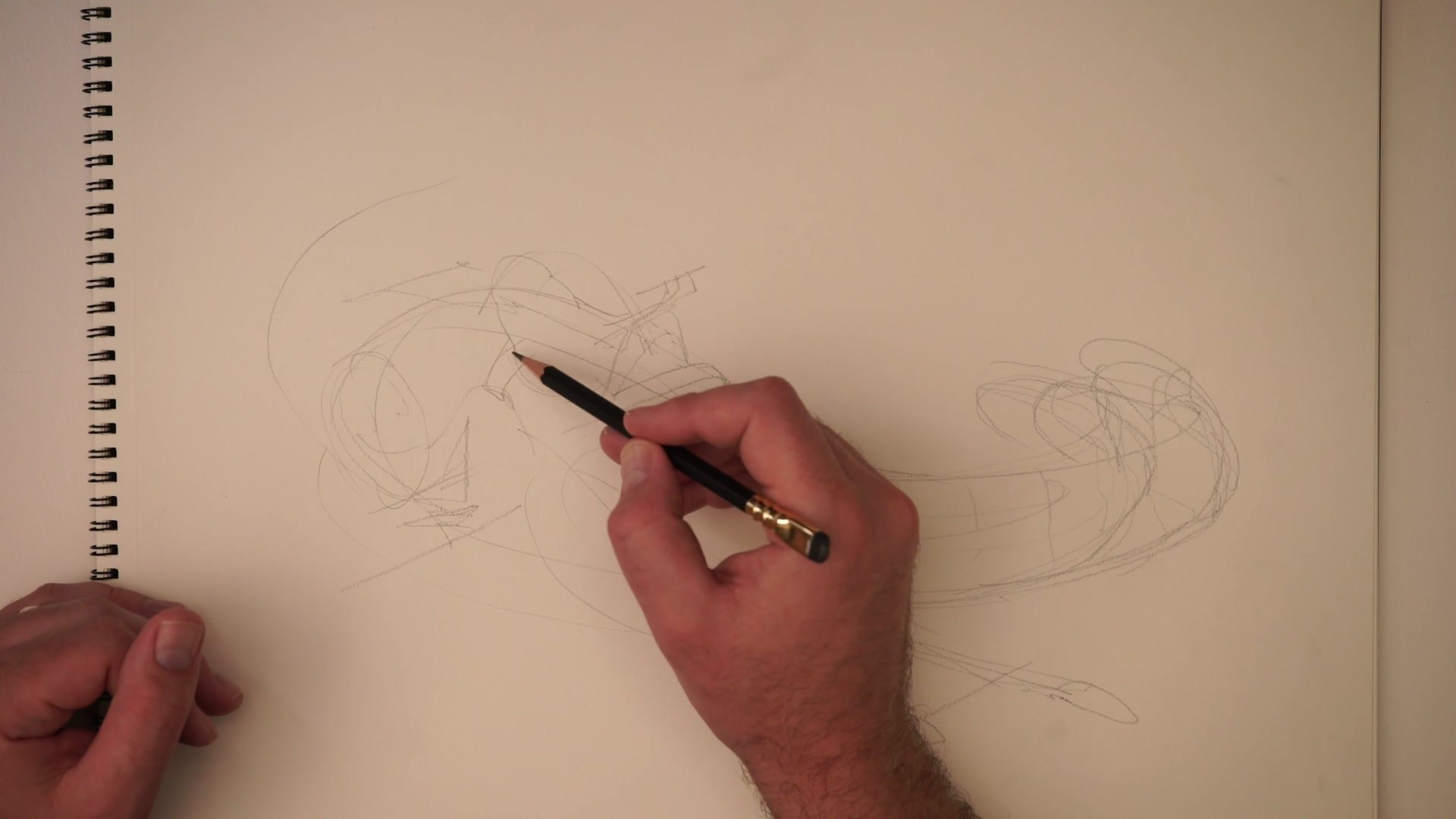
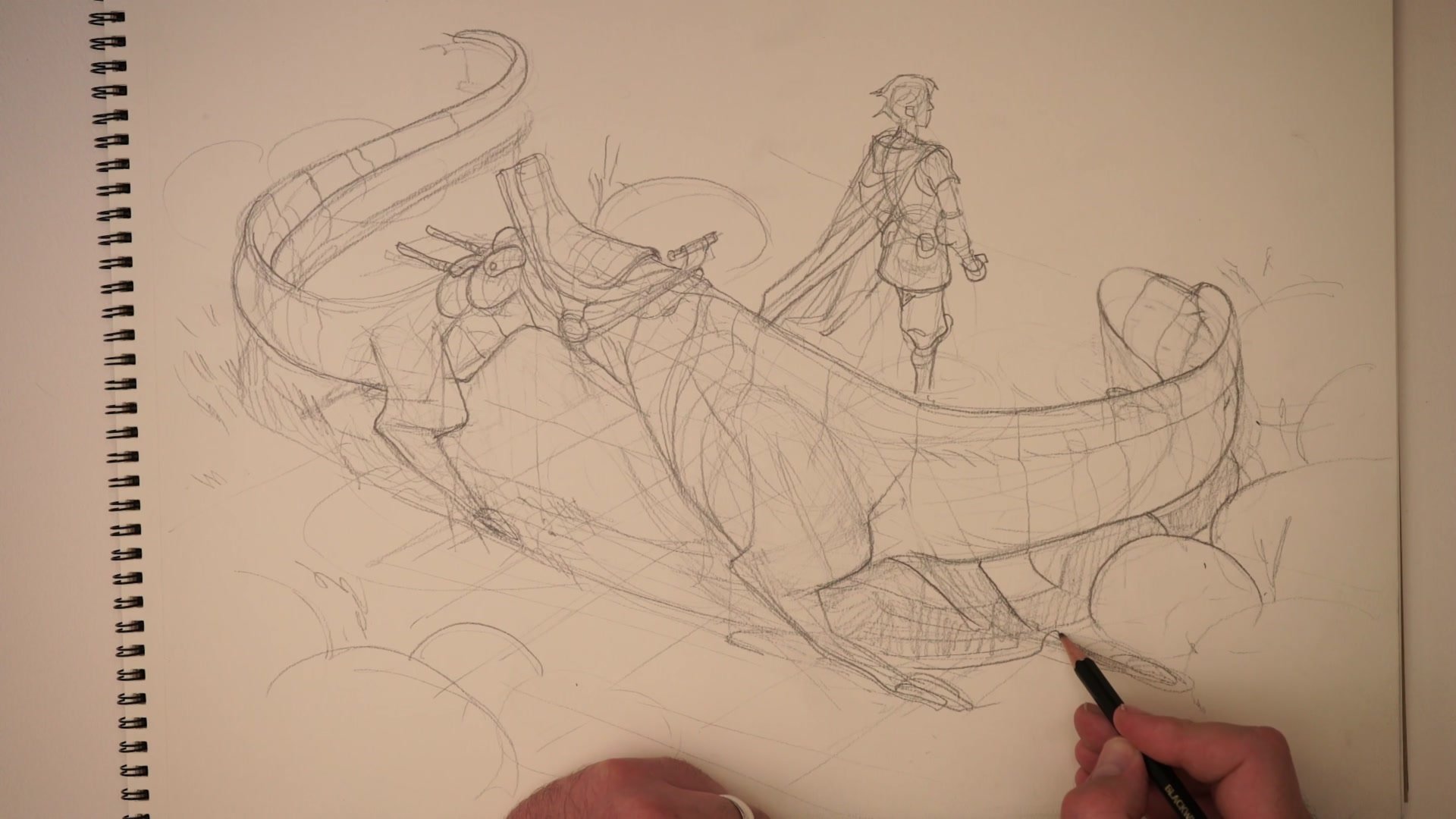
This is visible in the sketching process throughout the session. Dropping lines to find the ground plane, visualizing where shadows fall across rocks, and thinking about quadruped anatomy in three-dimensional space all happen intuitively. None of it requires a ruler or a grid because the knowledge has been internalized through previous technical study.
Structural Refinement
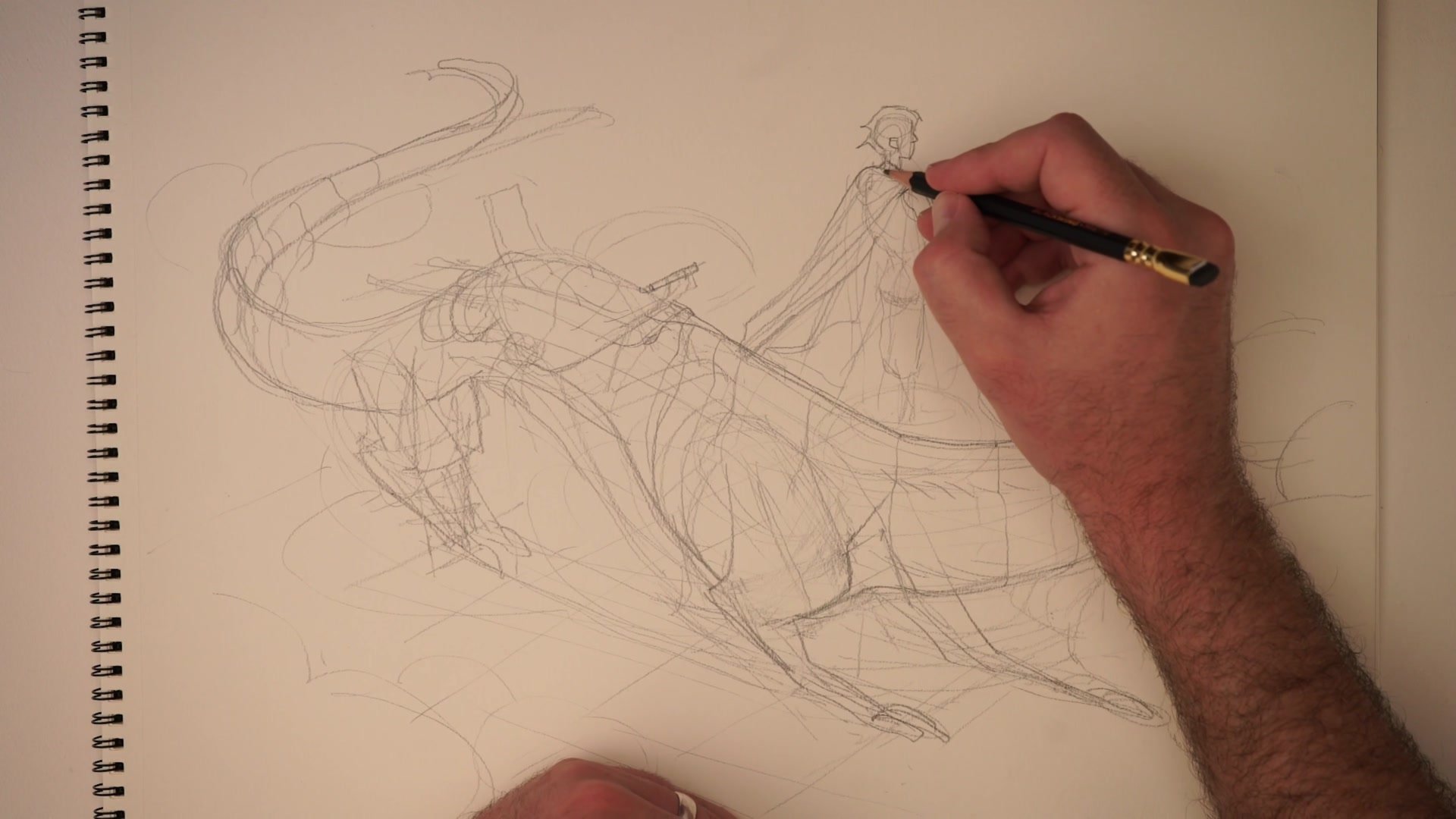
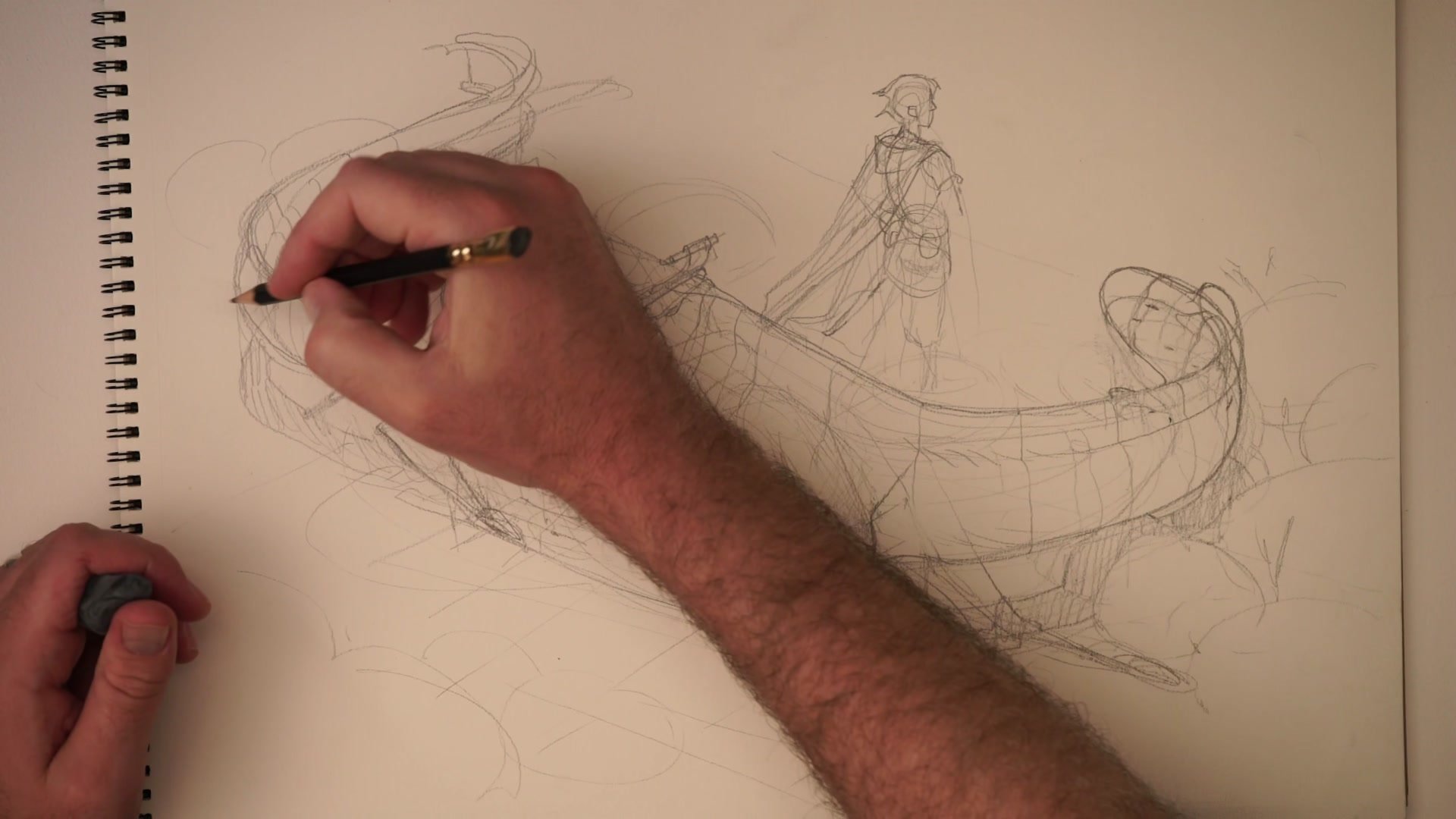
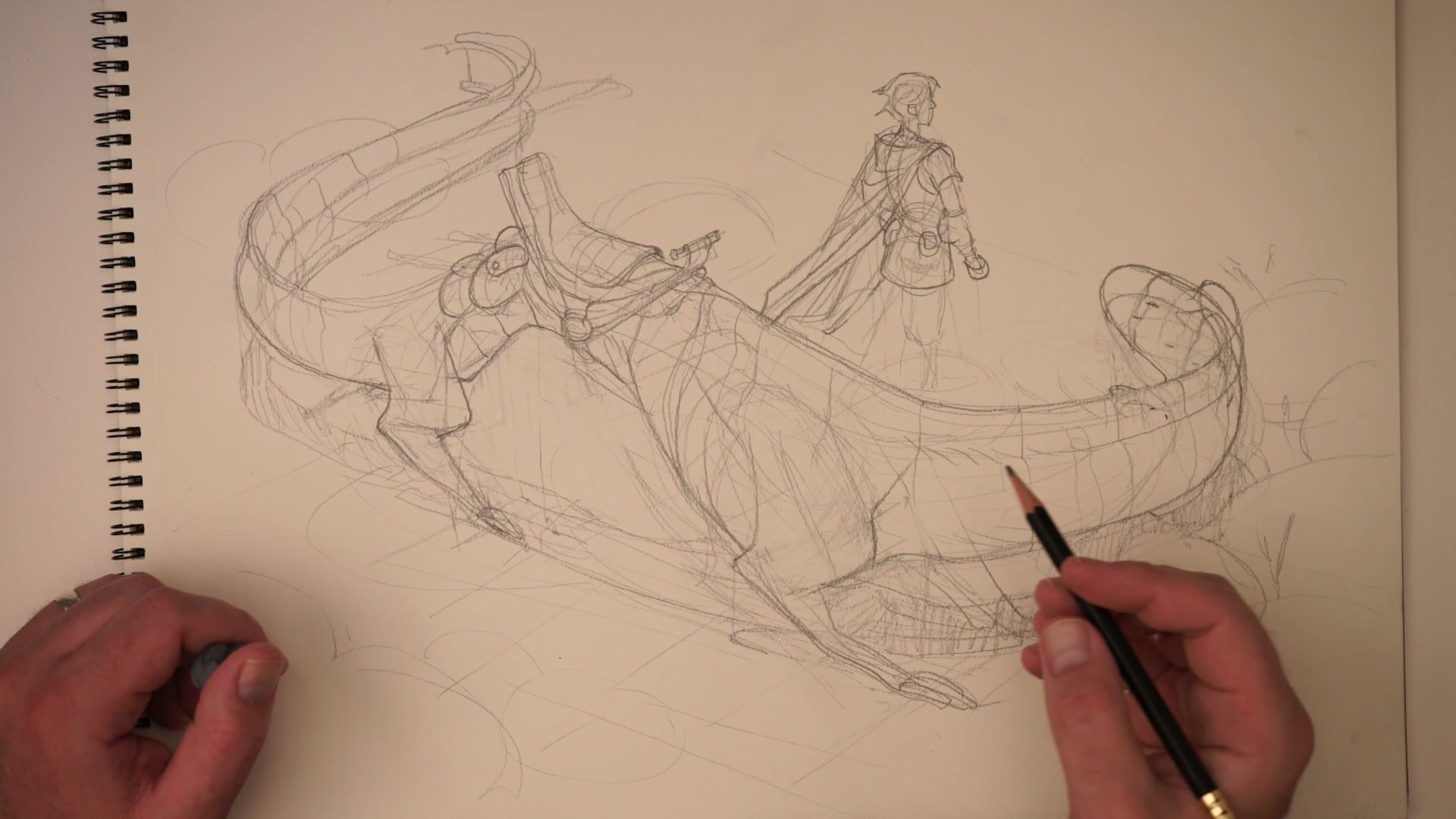
You Do Not Need All of It
Most professional artists could not explain every system in How to Draw. Many have no interest in technical grids and measuring points. They guesstimate, they use 3D software when precision matters, and they work at a level of perspective understanding that sits well below industrial design mastery. That works fine for most illustration and entertainment art careers. The catch is that even studying perspective once, doing the exercises poorly, and forgetting most of it still leaves a residue. The subconscious absorbs structural understanding that improves all future drawing. Every bit of additional study raises the floor of instinctive spatial reasoning, making it easier to draw characters in environments, place shadows convincingly, and describe three-dimensional form with loose sketching.
Learning perspective is also genuinely difficult to do alone. Missing one measurement cascades into everything going wrong, and unlike drawing where you can nudge things into place, perspective errors compound. Finding a teaching format that works, whether that is video, in-person instruction, or working alongside other students, makes a significant difference in actually getting through the material.
Final Sketch
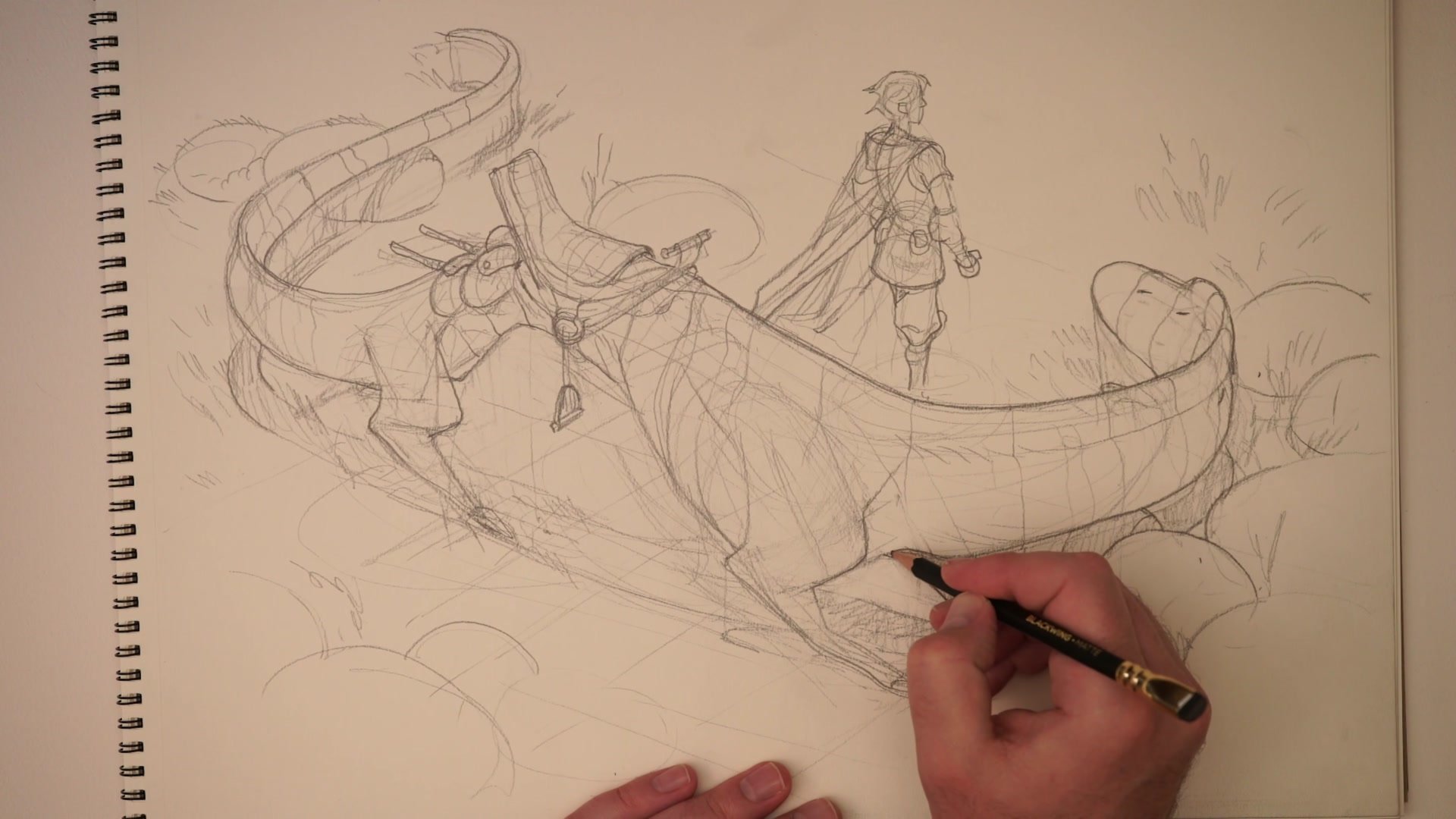
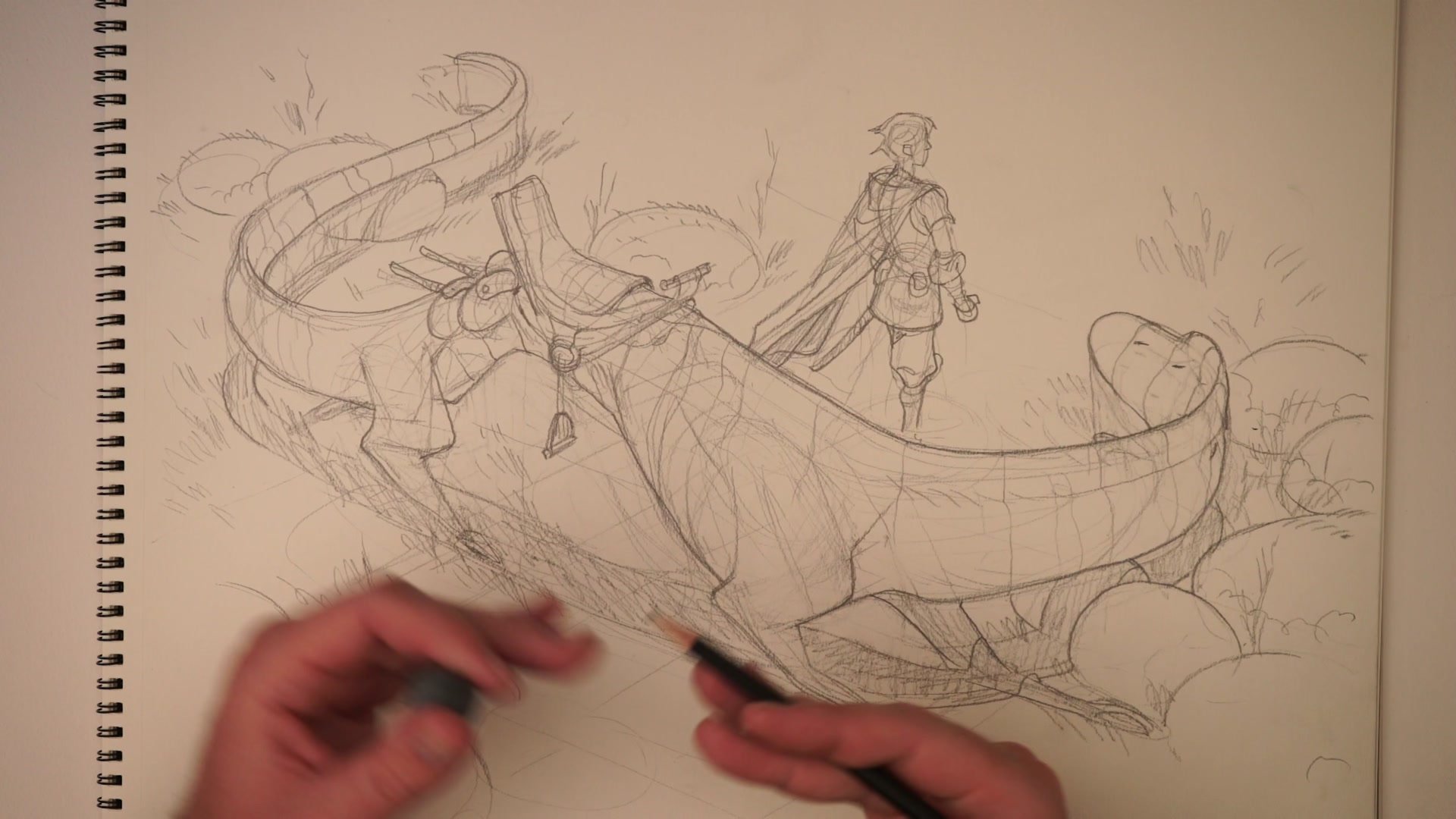
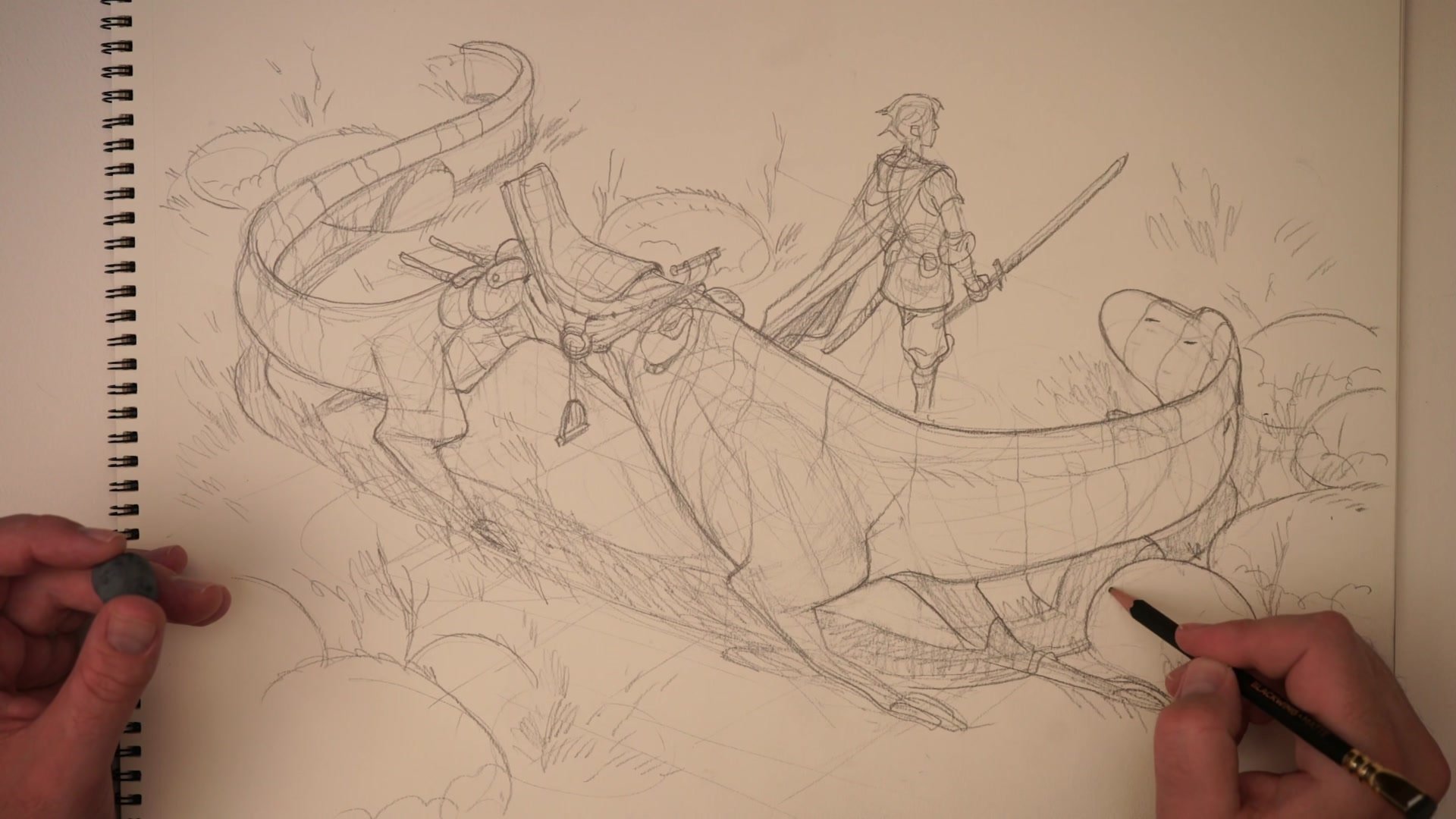
Key Principles
Technical Study, Artistic Practice: The more precisely perspective is studied with rulers, measuring points, and proper grids, the easier it becomes to draw loosely and intuitively without any of those tools.
Guesstimation Quality: Every professional artist guesstimating perspective. The difference is that artists who have studied deeply guesstimate significantly better than those who skipped the fundamentals.
Perspective Is Not All-or-Nothing: Even partial understanding that was studied once and mostly forgotten still improves structural drawing. The subconscious retains spatial reasoning that makes every sketch more convincing.
Find Your Learning Format: Perspective is uniquely difficult to self-teach because errors cascade. Video tutorials, bootcamps, or any format that provides feedback will accelerate learning far beyond working from a textbook alone.
Practice This
Start Small: Spend ten minutes a day on one basic perspective exercise from either book. Draw a true cube, construct a simple grid, or find the measuring points for a two-point setup.
Apply Immediately: After each technical exercise, spend equal time drawing something from imagination that uses what was just practiced. A character standing on a ground plane, an object in a room, anything that connects the technical work to real art-making.
Track the Guesstimation: Notice where perspective breaks down in regular sketching. Those weak spots reveal exactly which technical exercises would have the most impact on improving intuitive drawing ability.