Sketch With Sepia Lines
Summary
Sepia Lines and Simple Sketching
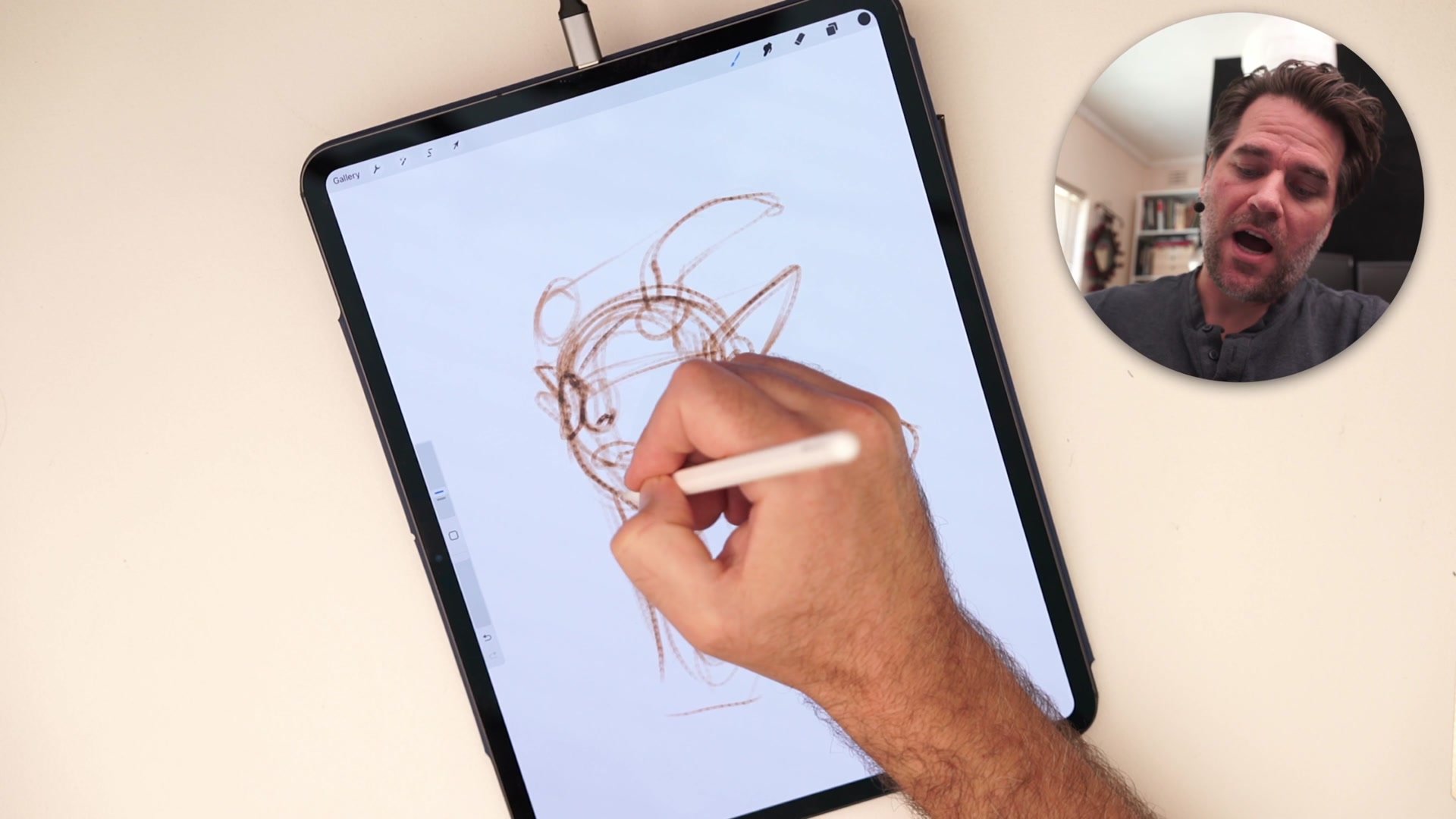
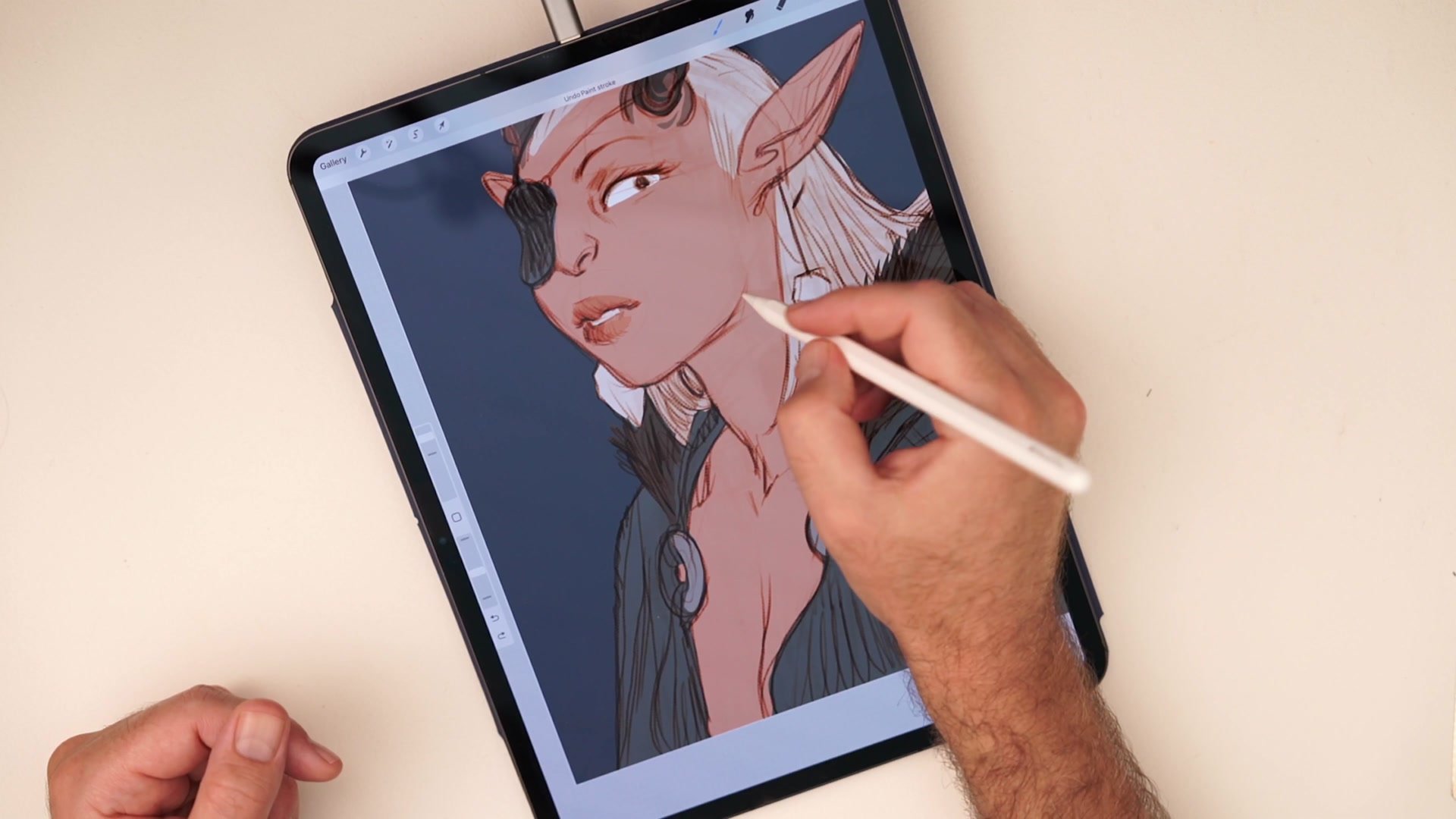
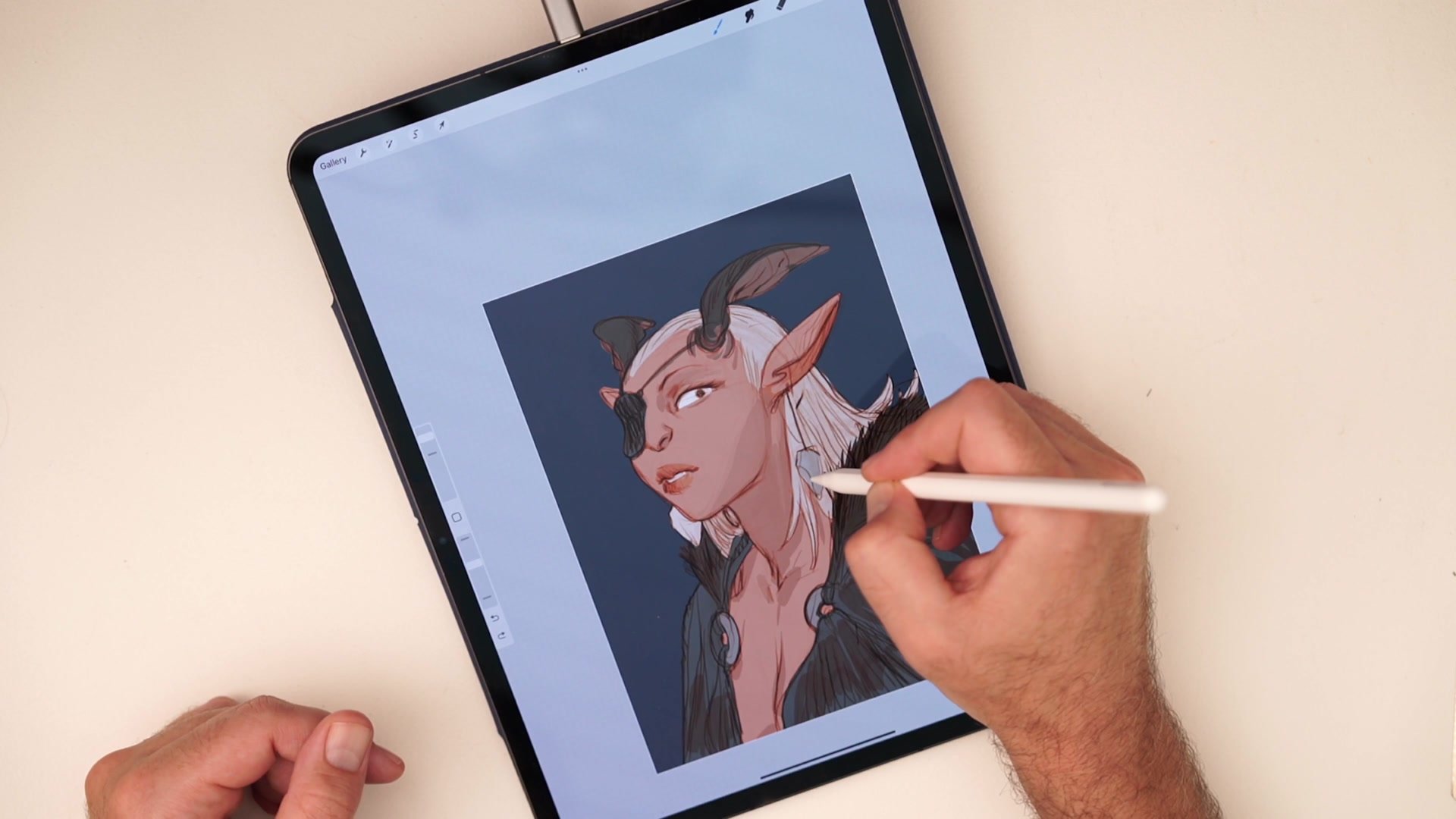
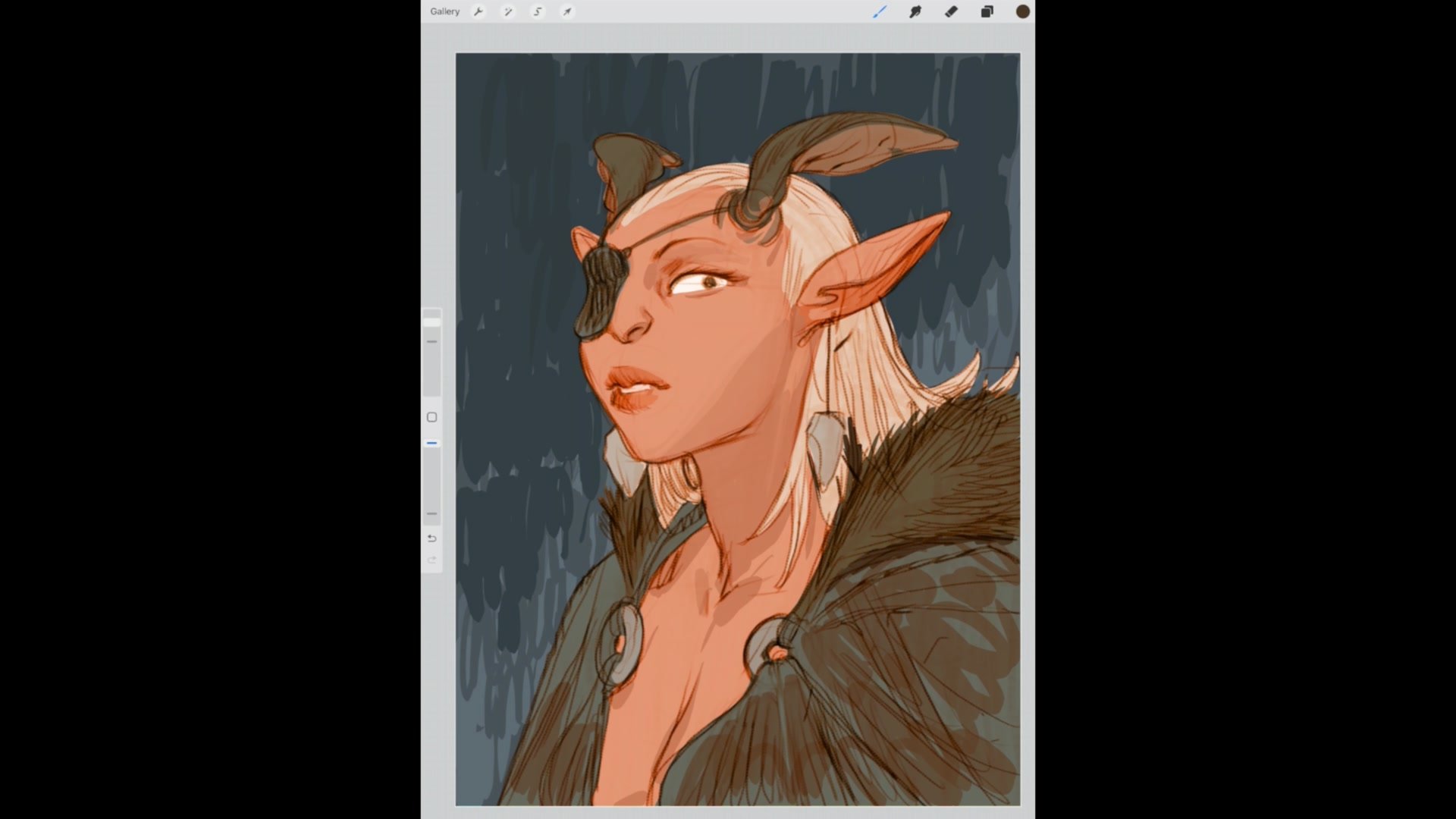
Building illustration skills does not require complex setups or ambitious projects. Sometimes the most effective practice comes from sitting down with a single brush, a familiar character, and fifty minutes of focused sketching. This real-time demonstration walks through creating a fantasy portrait of Ara in Procreate on iPad Pro using a sepia line technique that adds energy and warmth to sketchy work. The sepia coloration changes the relationship between line and color, allowing construction lines to fade naturally into the finished piece rather than fighting against it.
The process covers thumbnailing for composition, iterative line refinement, and a simple flat color pass that brings the sketch to life. Every decision along the way connects back to building a simple reliable process and training compositional instincts through repetition.
Thumbnail and Rough Sketch
Starting Small With Thumbnails
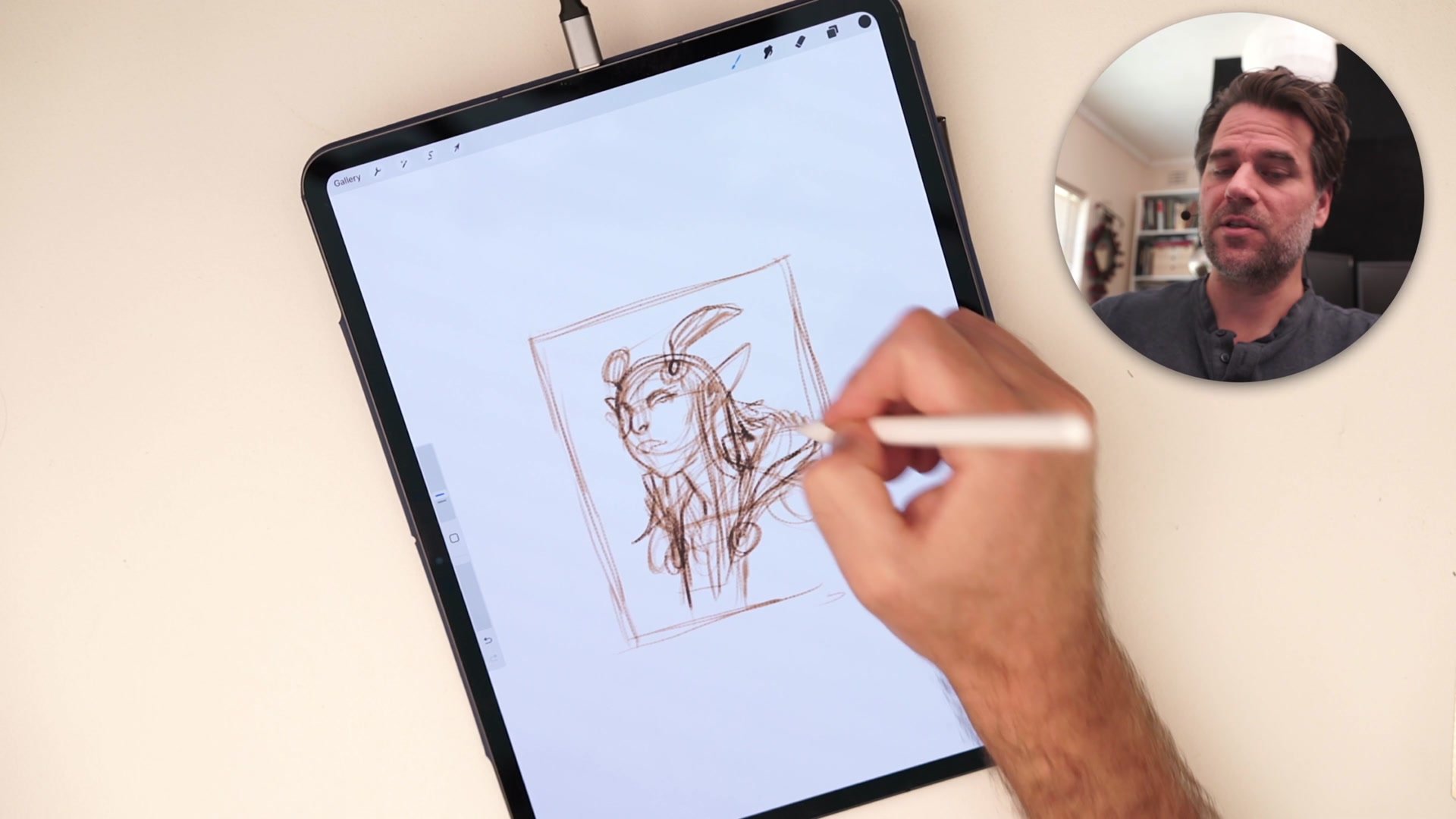
The five percent rule applies even to quick sketch sessions. Spending a few minutes on a small thumbnail before committing to the full drawing builds compositional awareness without the pressure of detail. Working small forces attention toward large shapes, negative space, and where the primary read falls within the frame. The thumbnail is where composition decisions happen, where character placement and frame ratios get sorted out before the drawing hand takes over.
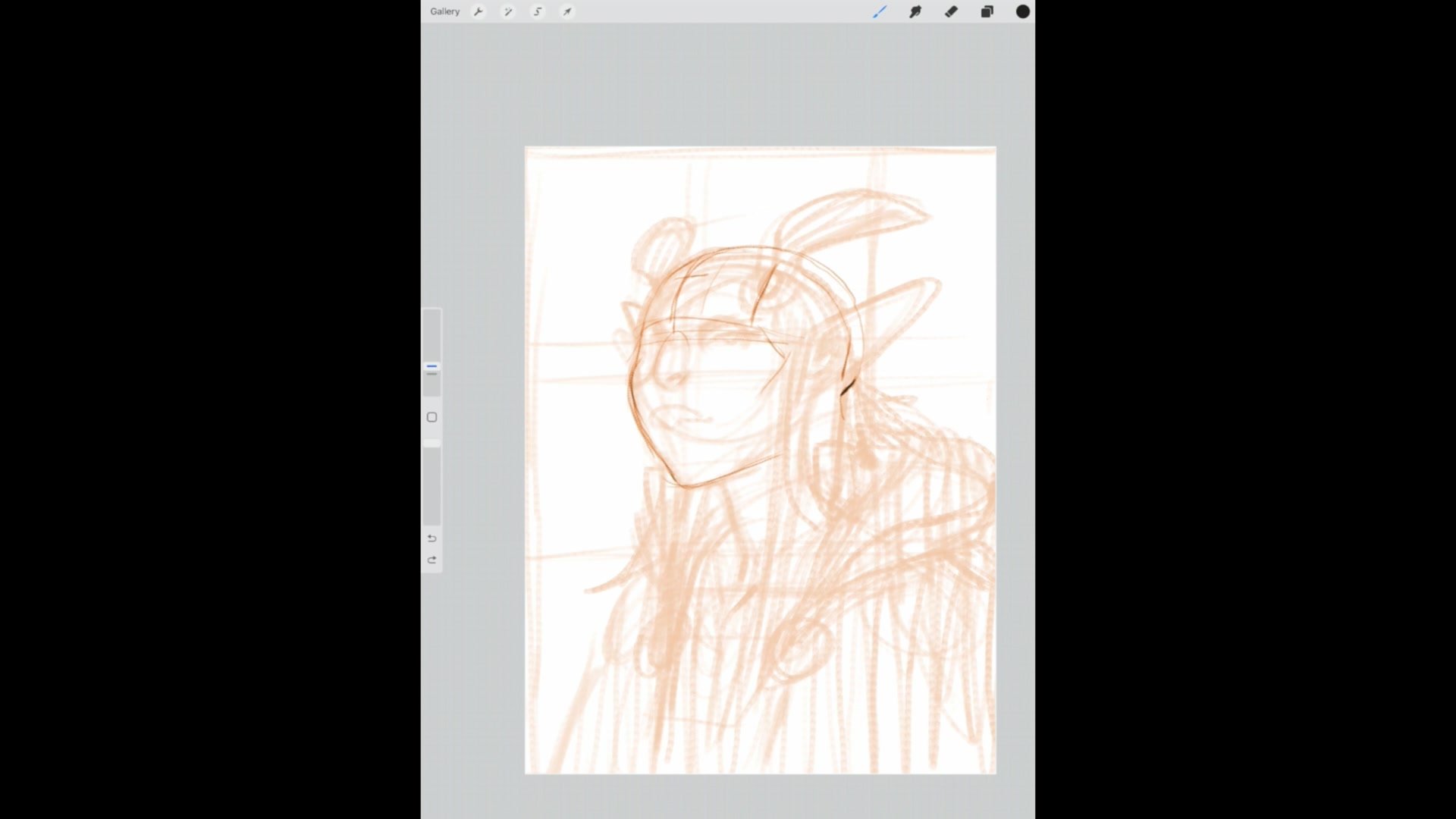
Duplicating and resizing the thumbnail into a larger working area creates an iterative bridge. The rough shapes from the small sketch guide the bigger version, but there is room to adjust, to find the center line, to rough in anatomical markers. This iterative approach means the drawing evolves through stages rather than demanding everything be perfect from the first stroke.
Line Refinement
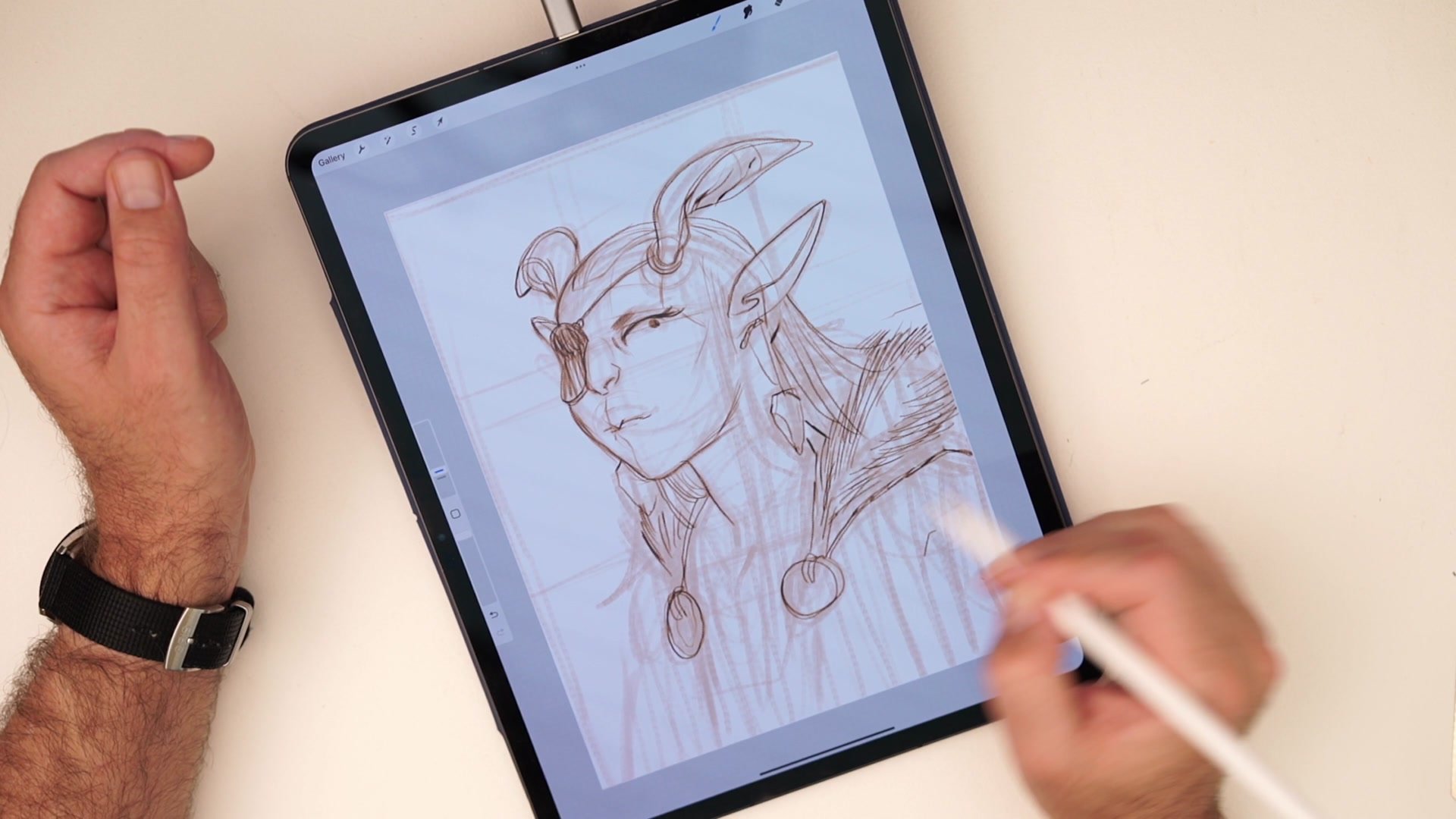
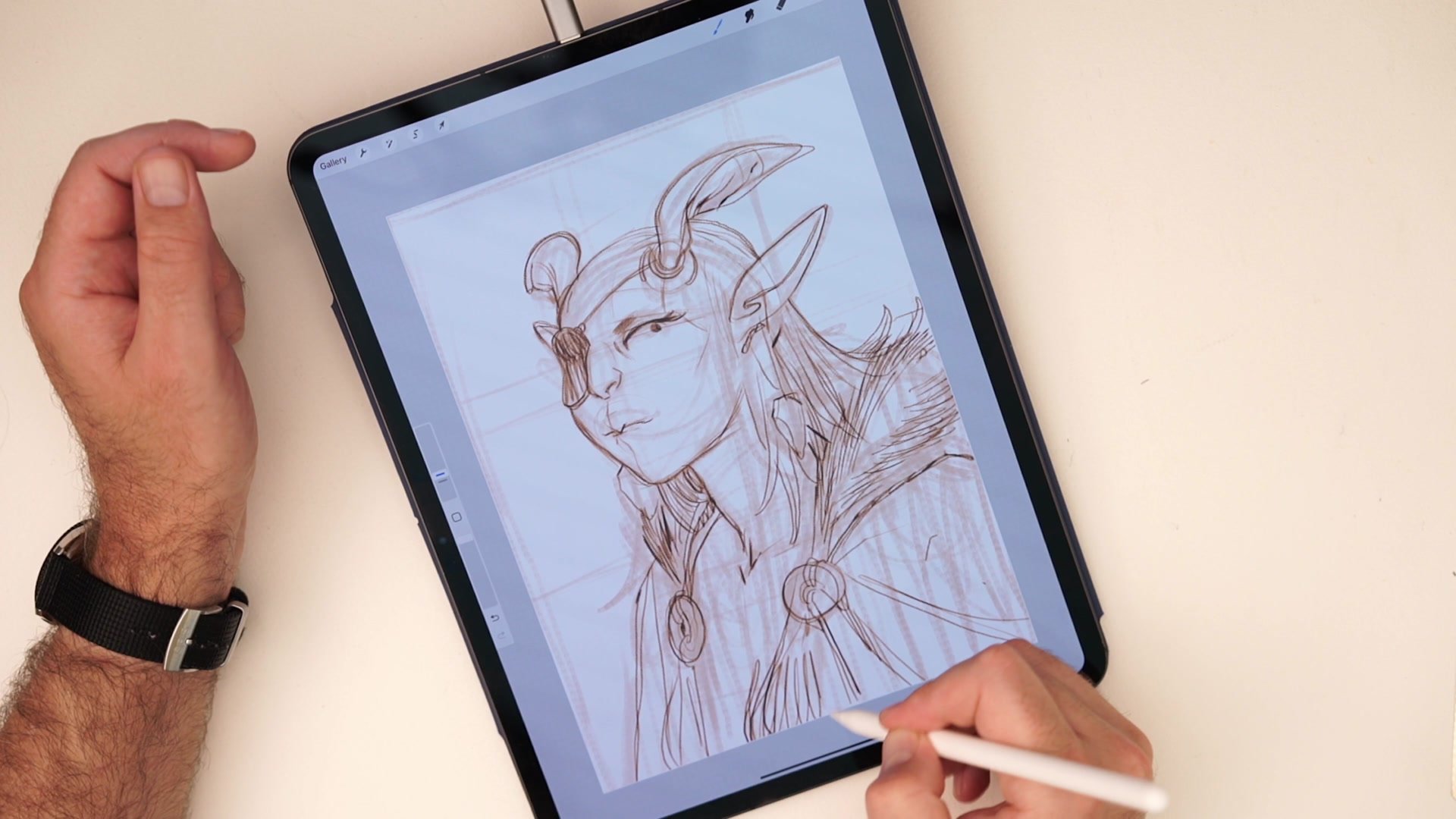
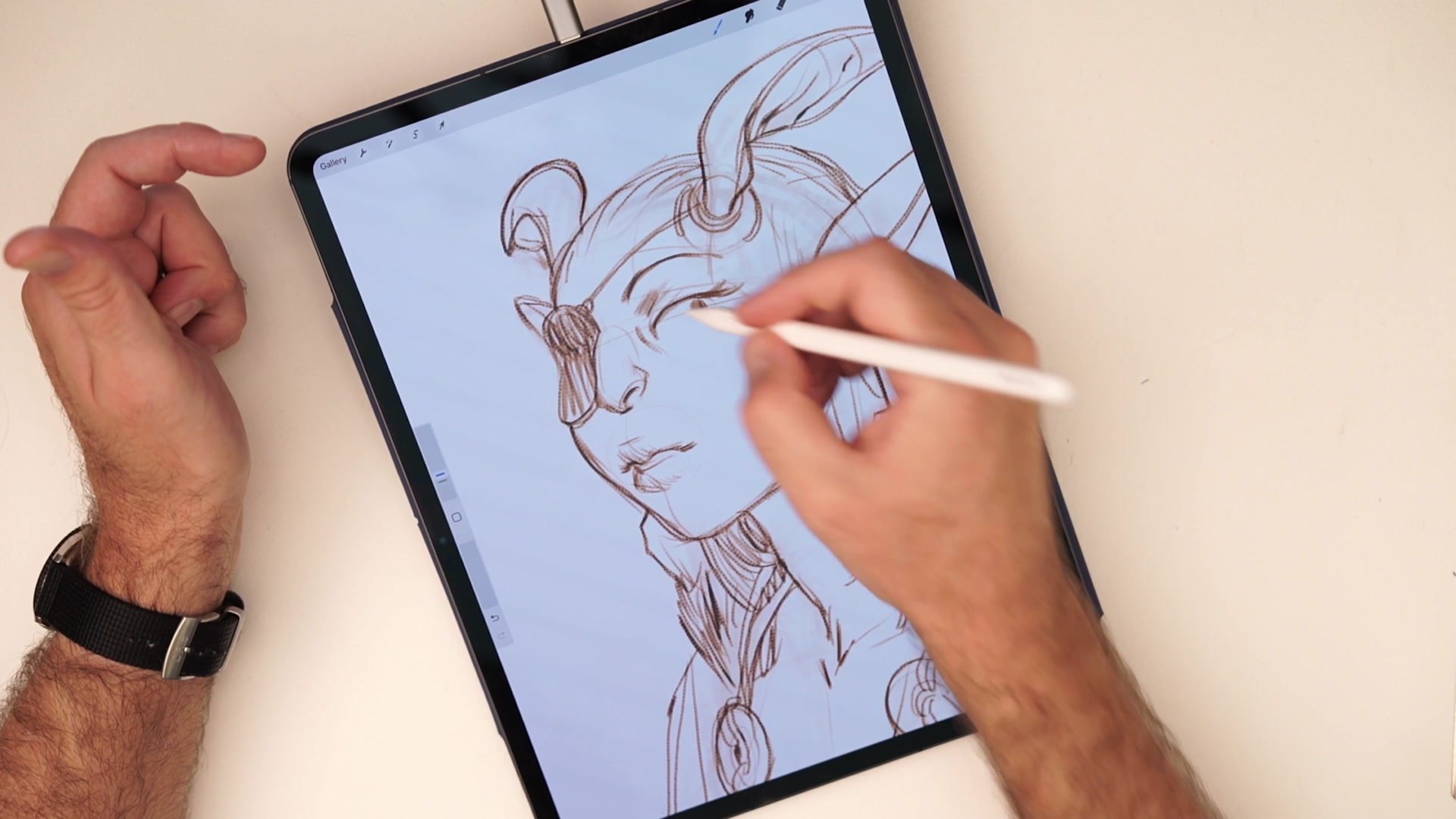
Why Sepia Lines Change Everything
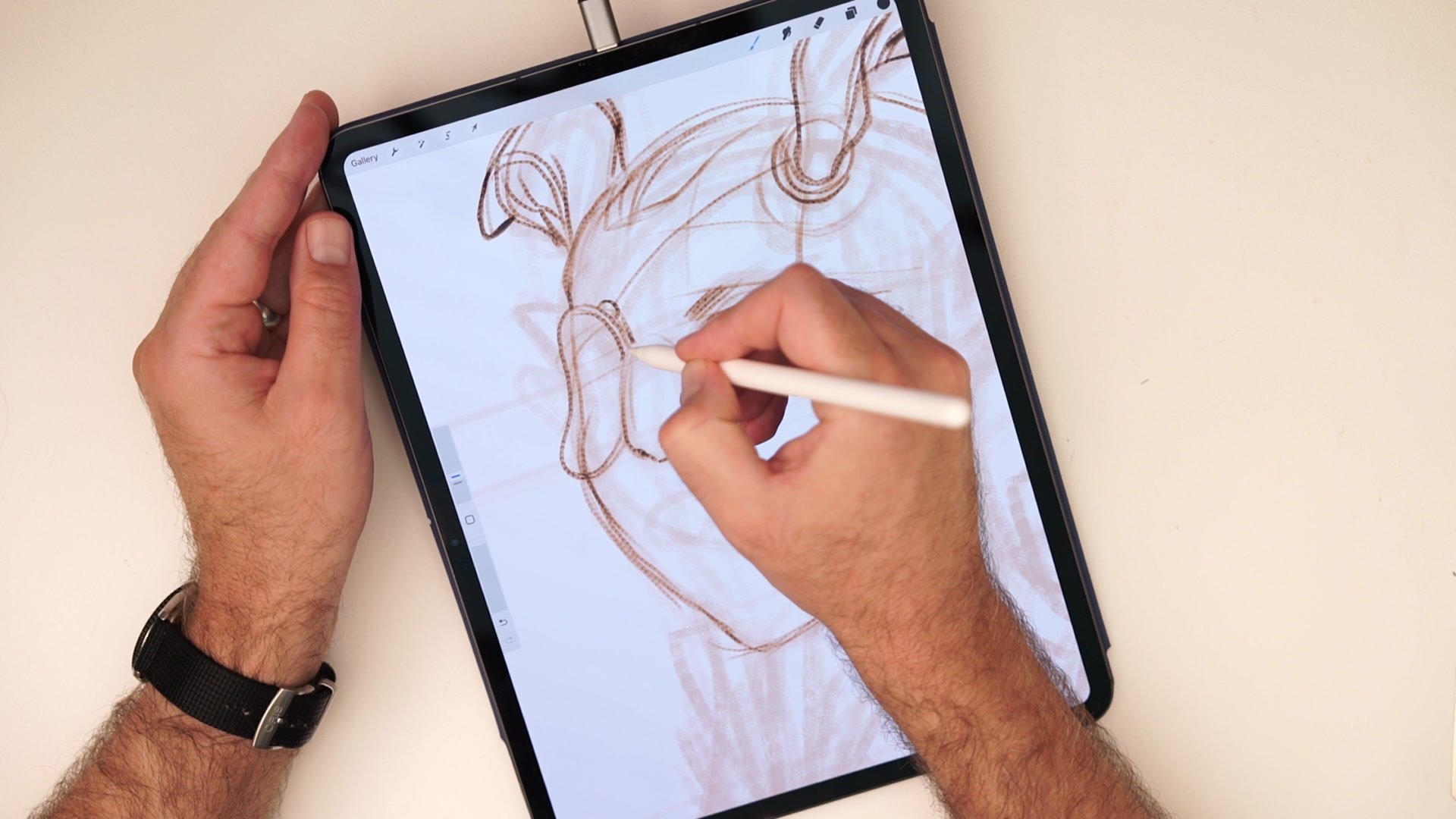
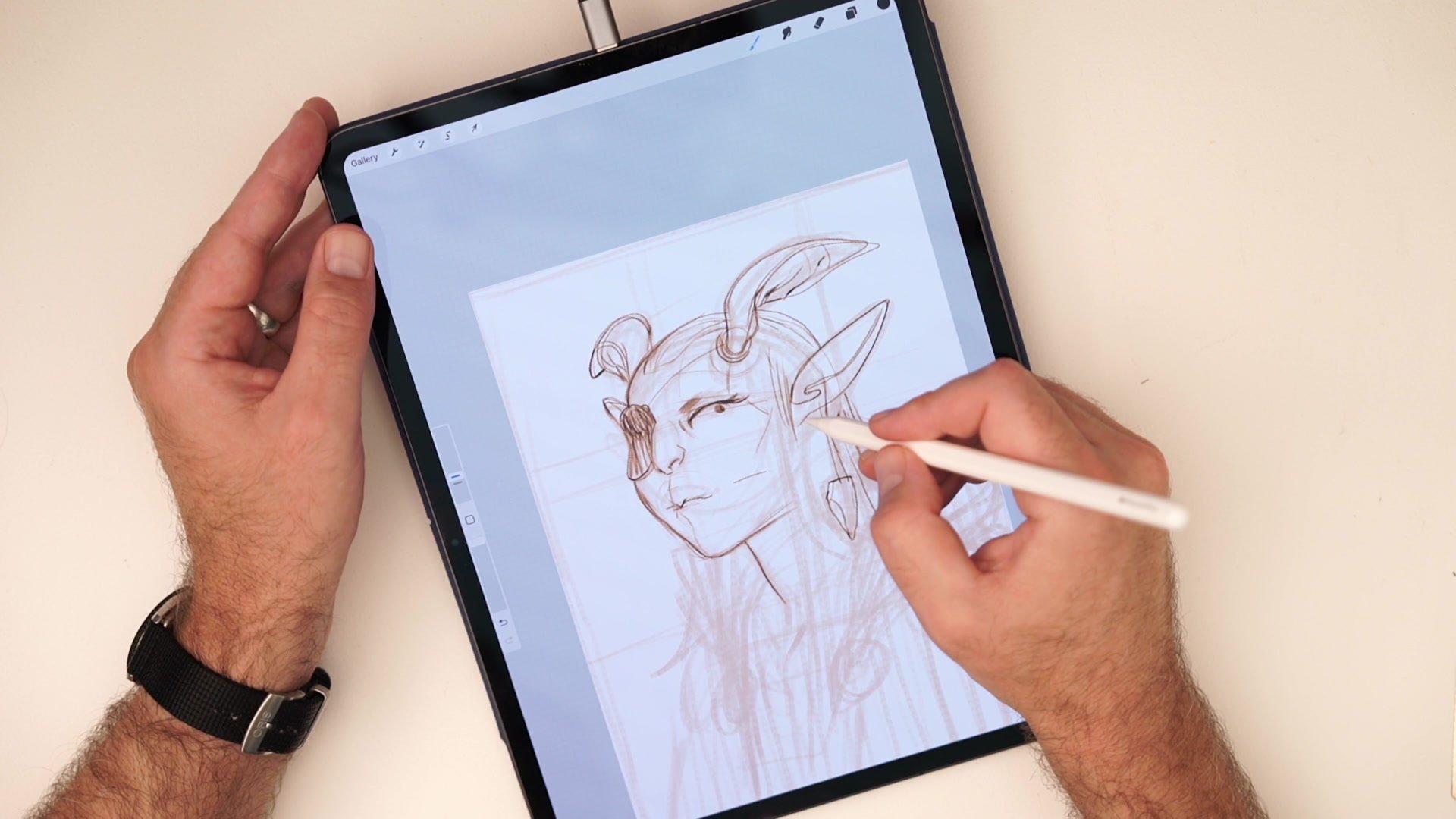
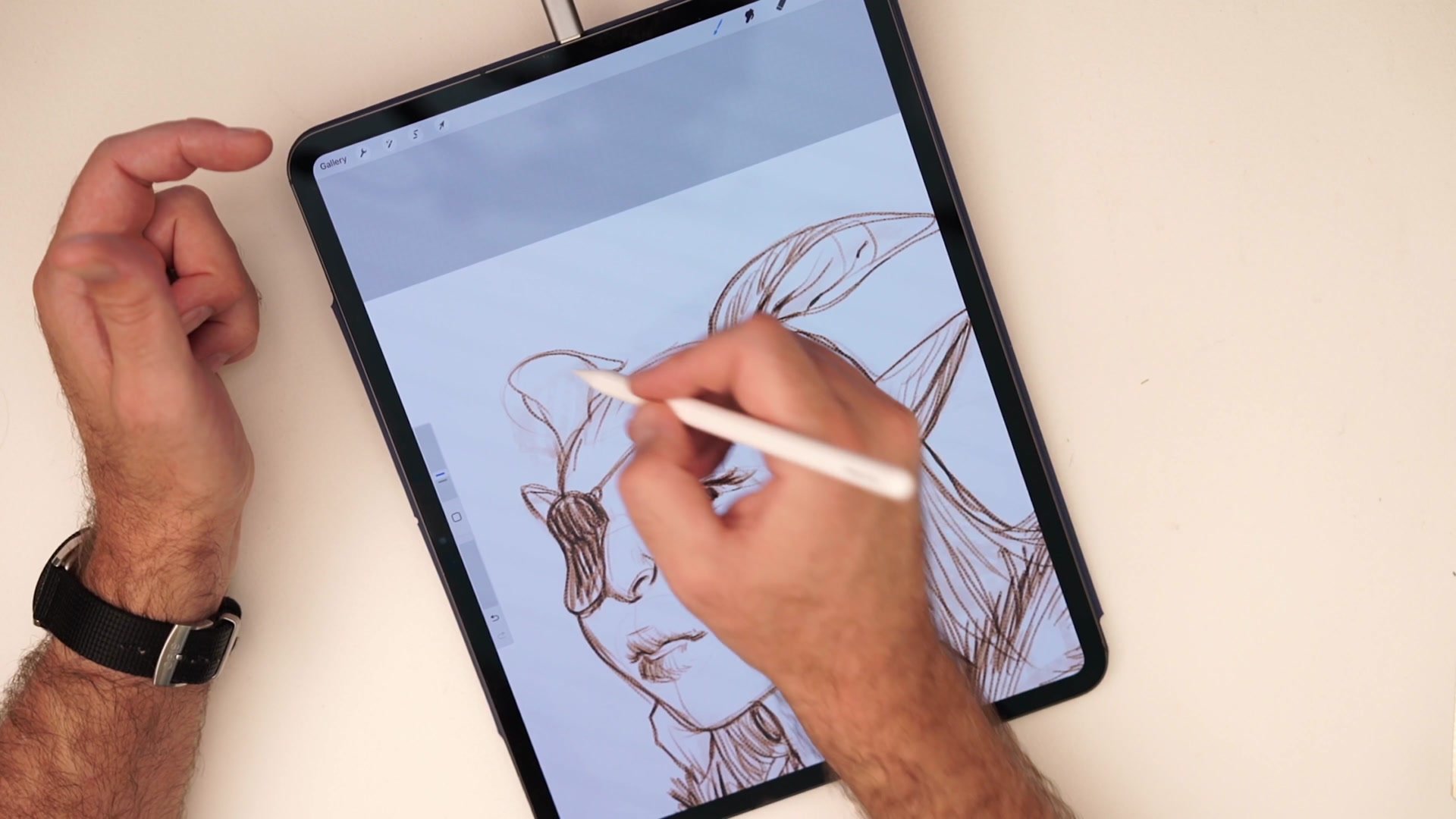
Drawing with sepia-colored lines instead of black creates a different kind of working relationship between the artist and the sketch. The warm tone provides enough contrast to read clearly, but the lighter touch trains a gentler approach to line pressure. When saturation builds from repeated strokes, it becomes immediately visible, which naturally discourages the death grip and over-rendering that black lines can encourage.
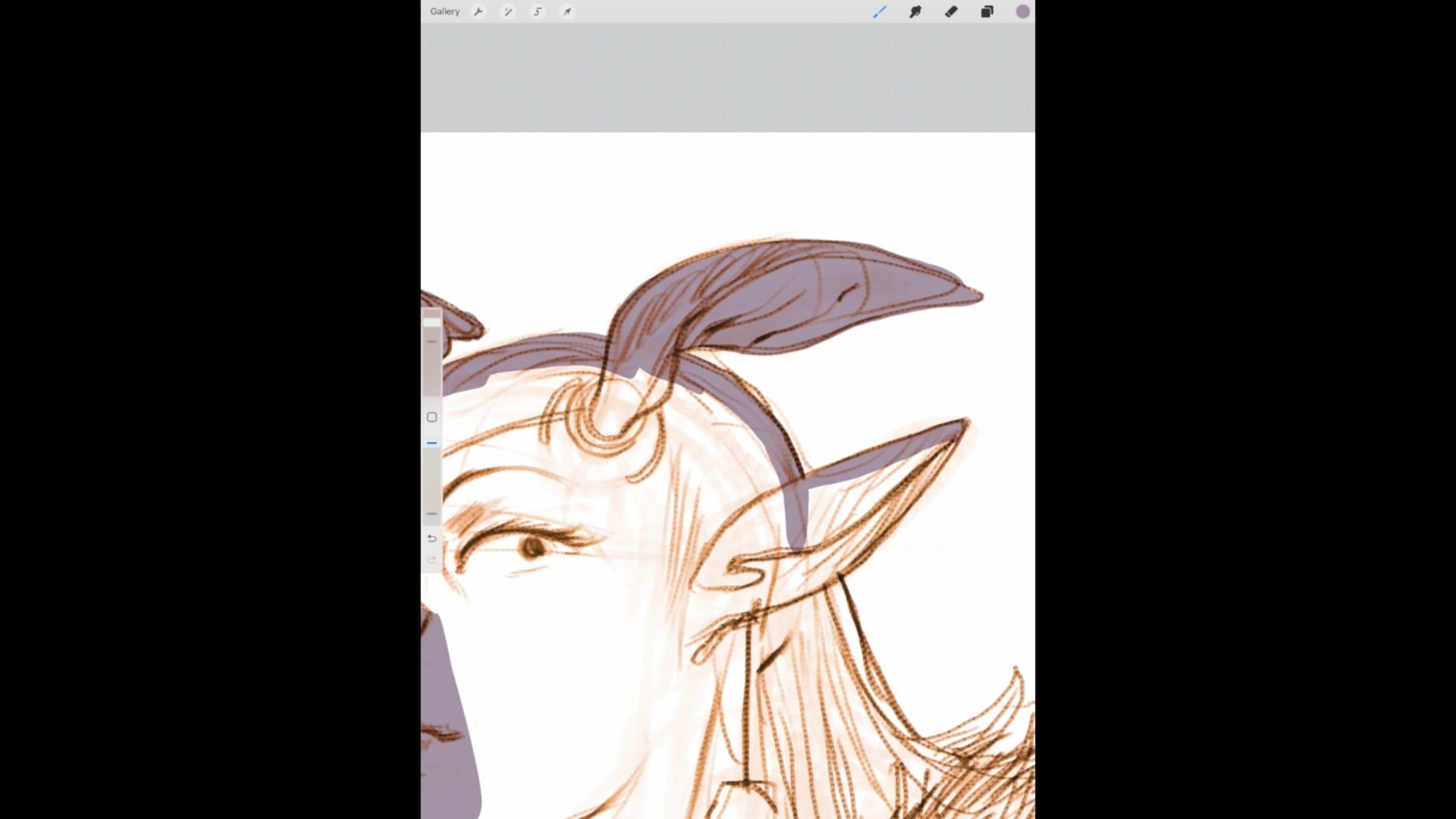
Where sepia lines really prove their value is in semi-finished work. Construction lines, exploratory marks, and sketchy passages fade into the background once color goes underneath. Black linework tends to fight with flat color, making features feel harsh. Sepia integrates. It blends with warm skin tones and cool background colors in ways that let the drawing participate in the story rather than dominating it. This makes the technique especially suited to quick sketch sessions where polish is not the goal but character and energy are.
Color Application
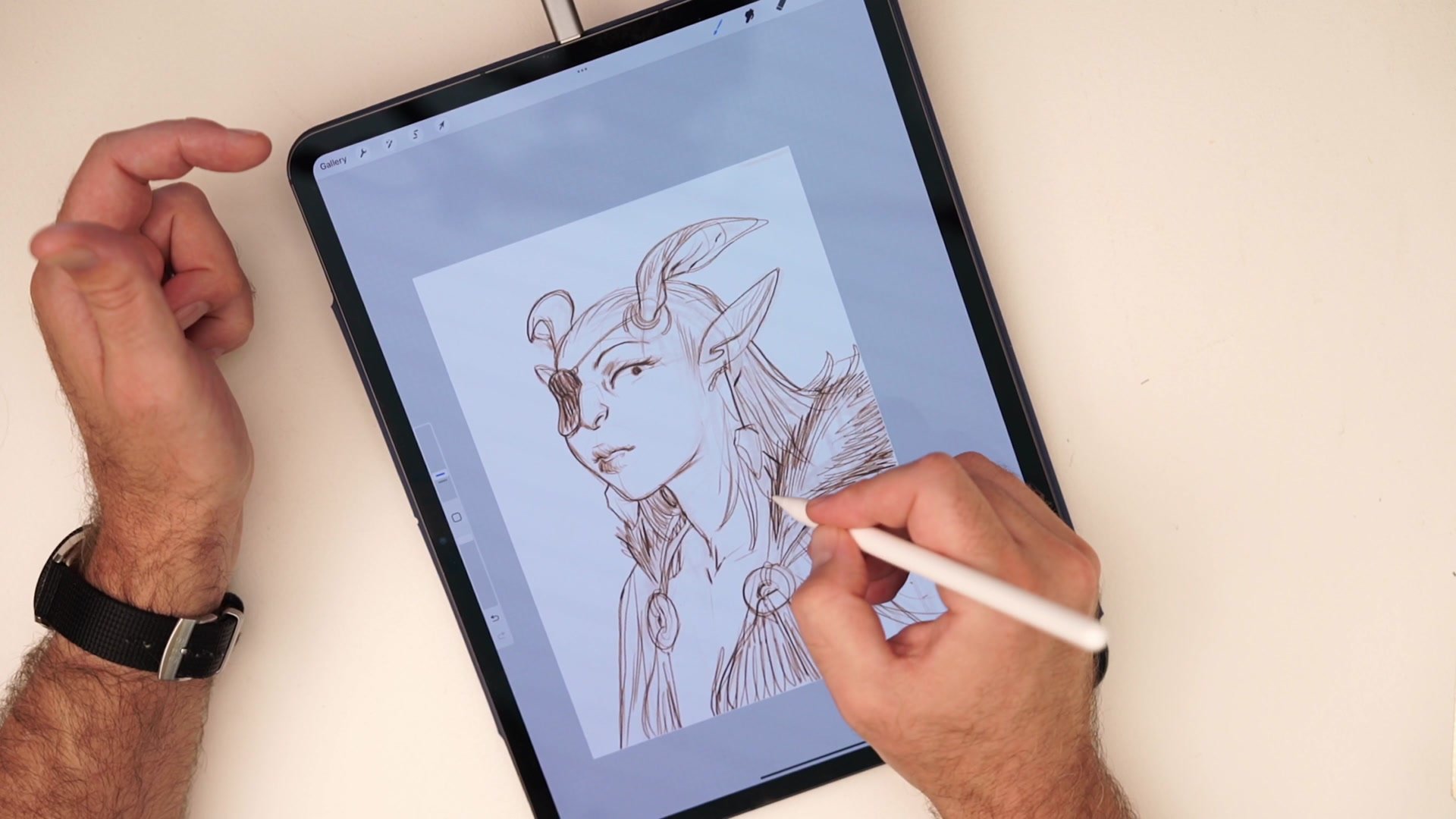
Simple Color and the One-Two-Three Read
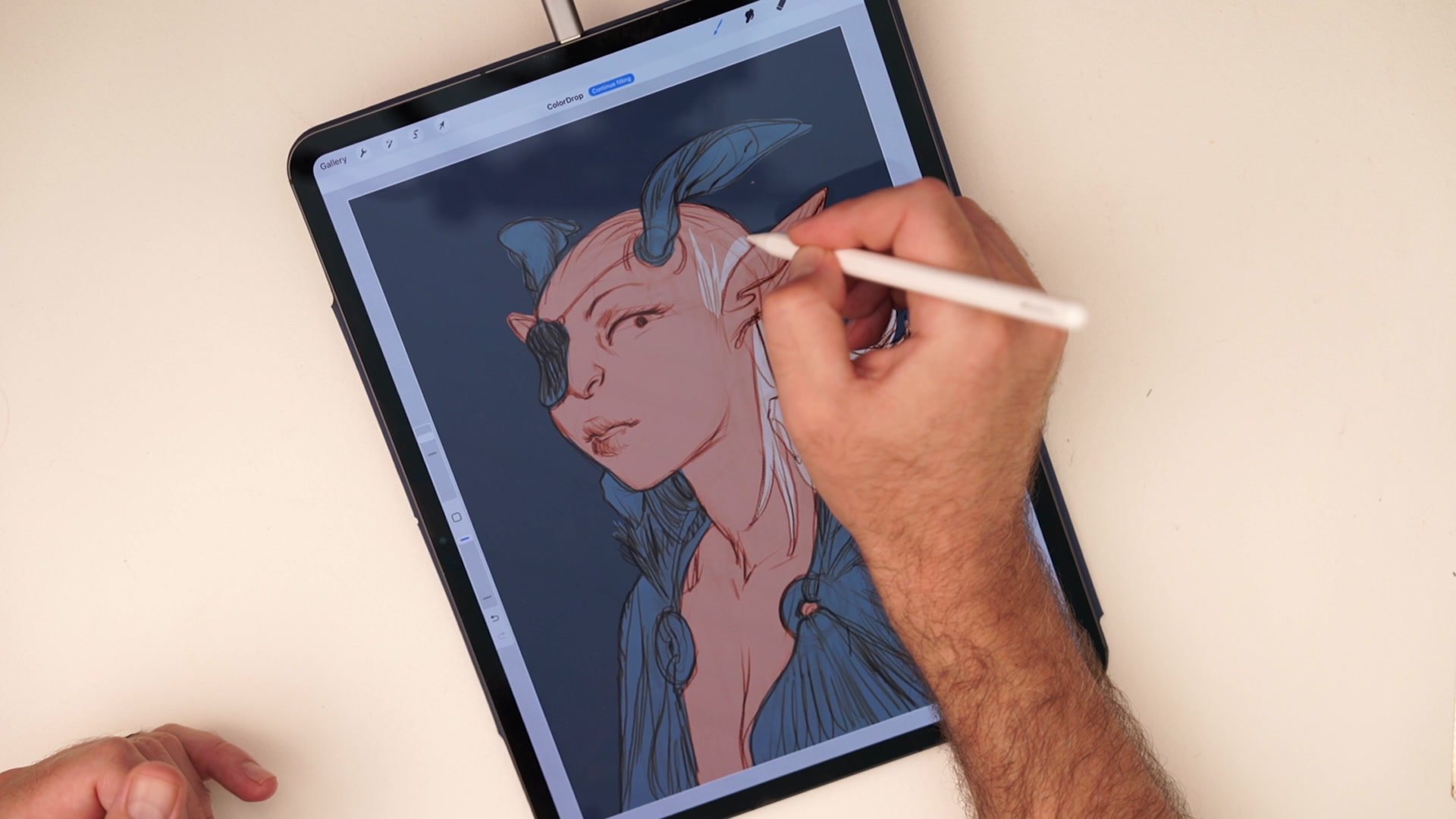
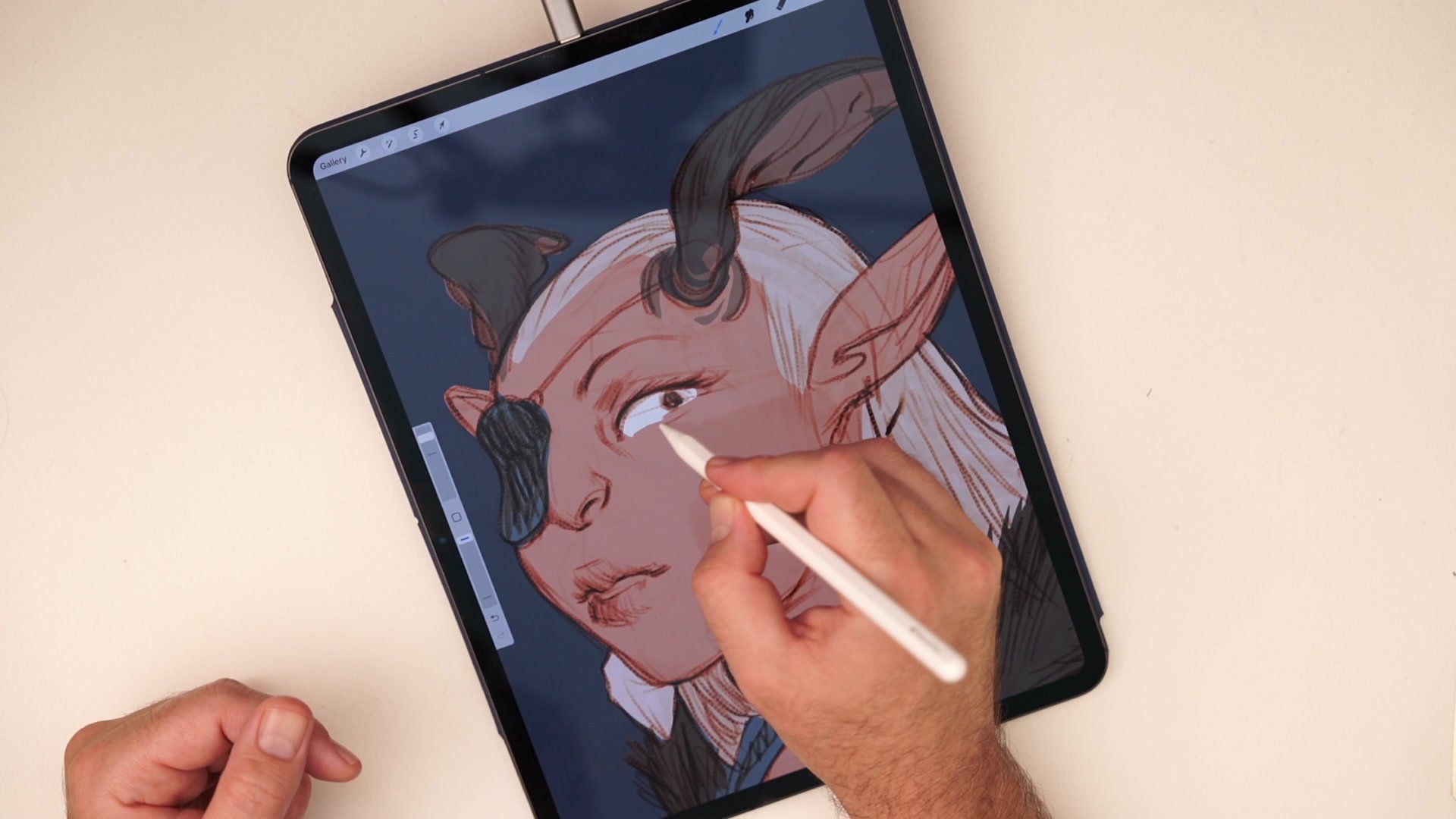
The color pass uses a deliberately simple approach. Starting with a harmonious dark color scheme means the background and character already share a family of tones. Most of the contrast comes from the skin, which creates an automatic one-two-three read without needing a complicated palette. Alpha-locking the flat color layer allows quick refinement, picking colors directly from the canvas to find natural transitions between warm and cool.
Knowing what to prioritize and what to leave rough is a skill that only comes from repetition. The silhouette edges and primary facial features get the most attention because those high-contrast areas carry the most visual weight. Secondary and tertiary details can stay loose because they will get lost in the reading anyway. Having original characters to practice with makes this significantly easier because familiarity with what needs to be drawn removes a massive cognitive burden from the process.
Finished Sketch
Key Principles
Sepia Over Black: Drawing in sepia tones trains lighter pressure, integrates better with color, and lets construction lines disappear naturally into the finished piece.
Five Percent Planning: Even for a one-hour sketch, spending a few minutes on a small thumbnail builds compositional instincts and prevents aimless noodling.
Know What You Draw: Practicing with familiar characters or original designs removes the cognitive overhead of figuring out what things look like, letting illustration skills develop faster.
Process Has an Ugly Phase: Every drawing goes through a stage where nothing looks right. Putting in repetitions builds the confidence to push through that phase knowing the finish will resolve it.
Try This Session
Pick a Familiar Subject: Choose a character, fan art subject, or original design that already lives in your visual library. Eliminating the design step lets you focus purely on illustration skills.
Thumbnail First: Spend five minutes drawing the composition at a small scale. Think about frame placement, primary read, and negative space before scaling up.
Set a Time Limit: Keep the full sketch between thirty minutes and one hour. The constraint forces prioritization and builds the instinct for knowing what matters in a finished illustration.