Quick Warm Up Sketch - Fantasy Character
Summary
Fantasy Character Warm-Up Sketch
This session is a laid-back, real-time pencil sketching warm-up focused on drawing a fantasy character called Malouk from the Aura comic. Starting with a quick ArtStation art review covering fantasy illustration and character design, the session moves to the drawing table where the character gets built from scratch using constructional anatomy and the Loomis method, all with a Blackwing matte pencil on a spiral-bound sketchbook.
The real value here is watching how a professional approaches a 30-minute warm-up sketch. Rather than chasing a polished finish, the focus stays on structural accuracy, proportion checking, and developing a hierarchy of detail that makes even a rough sketch read clearly.
Art Review and Setup
Constructional Sketching
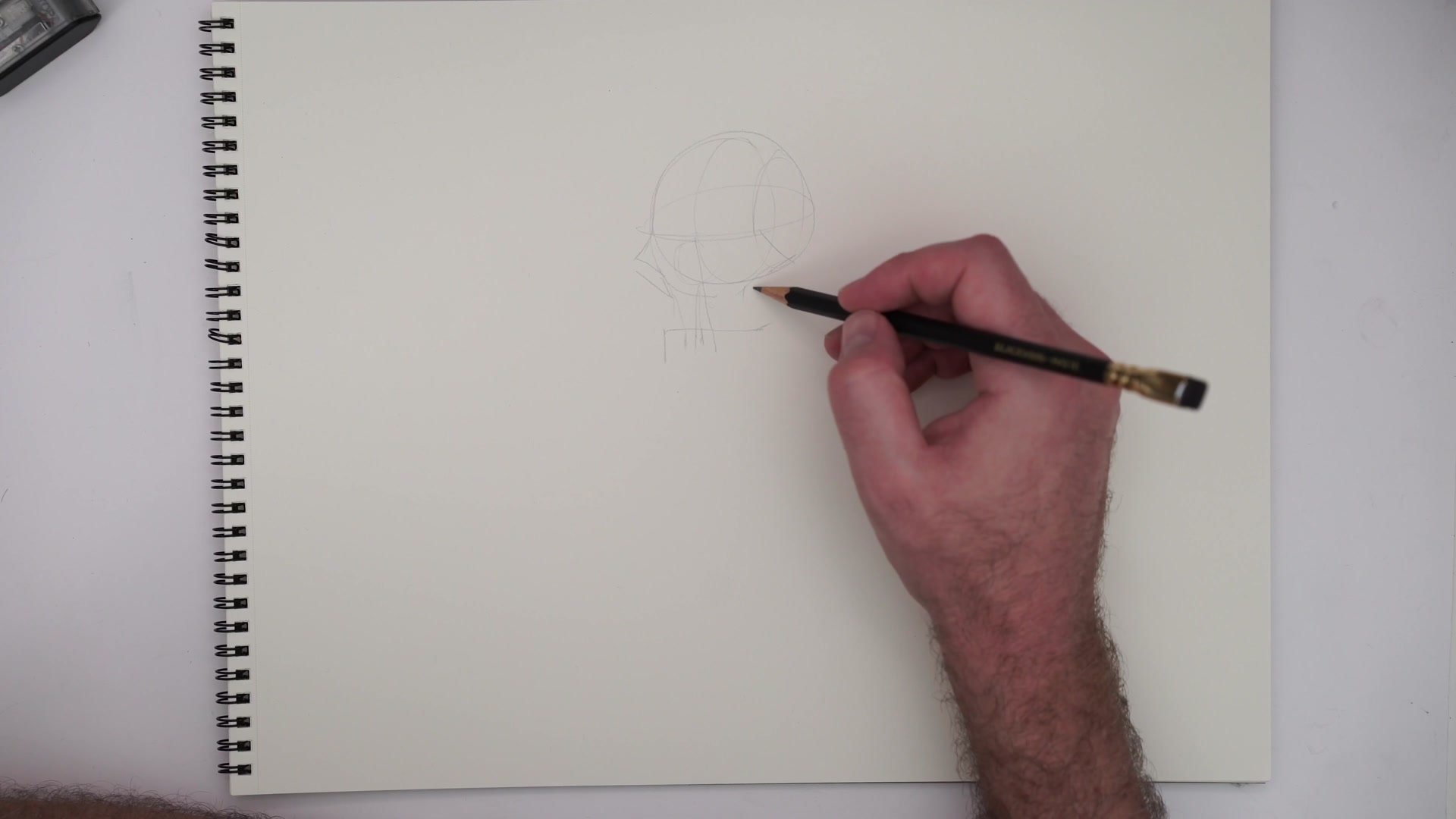
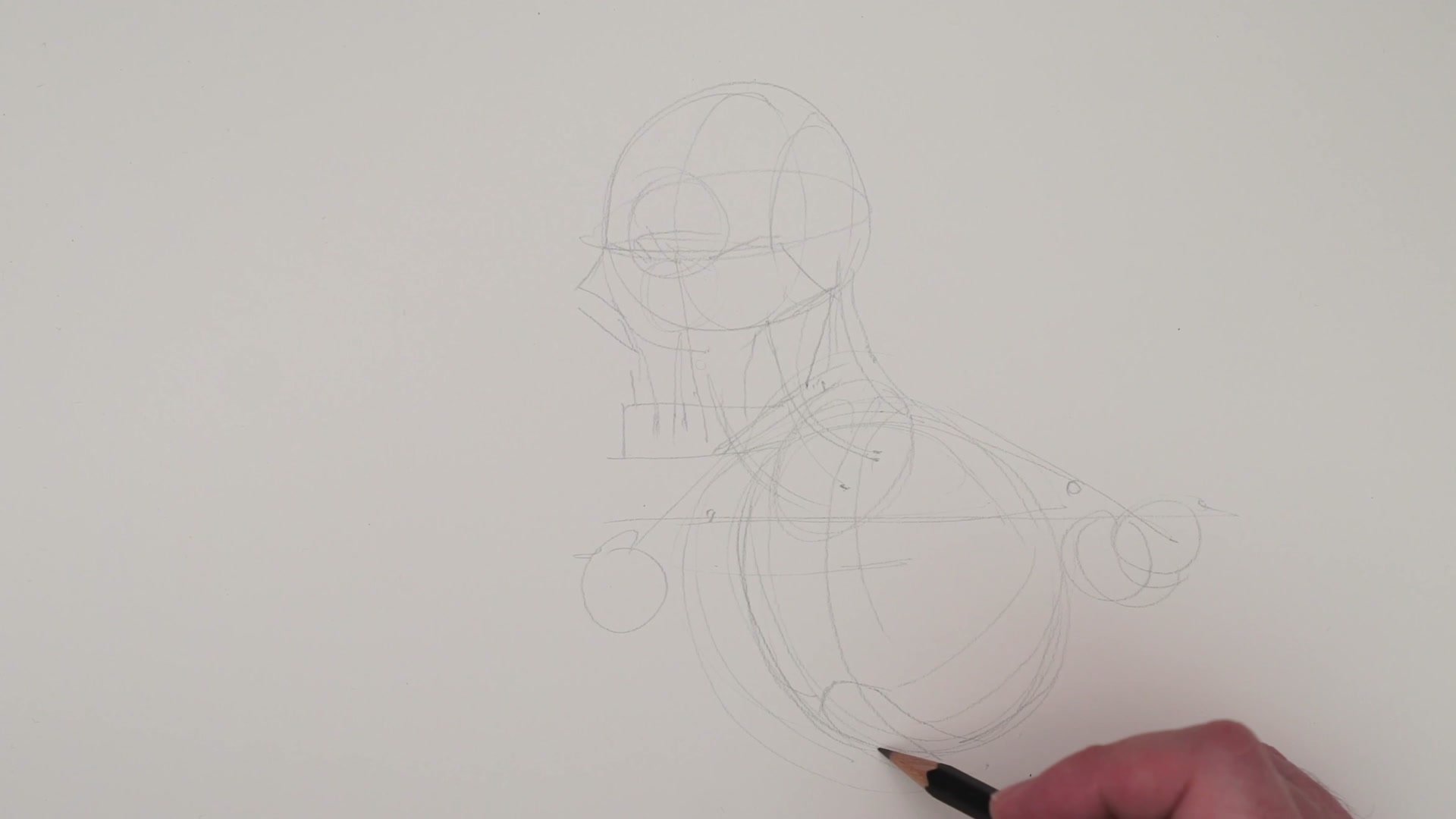
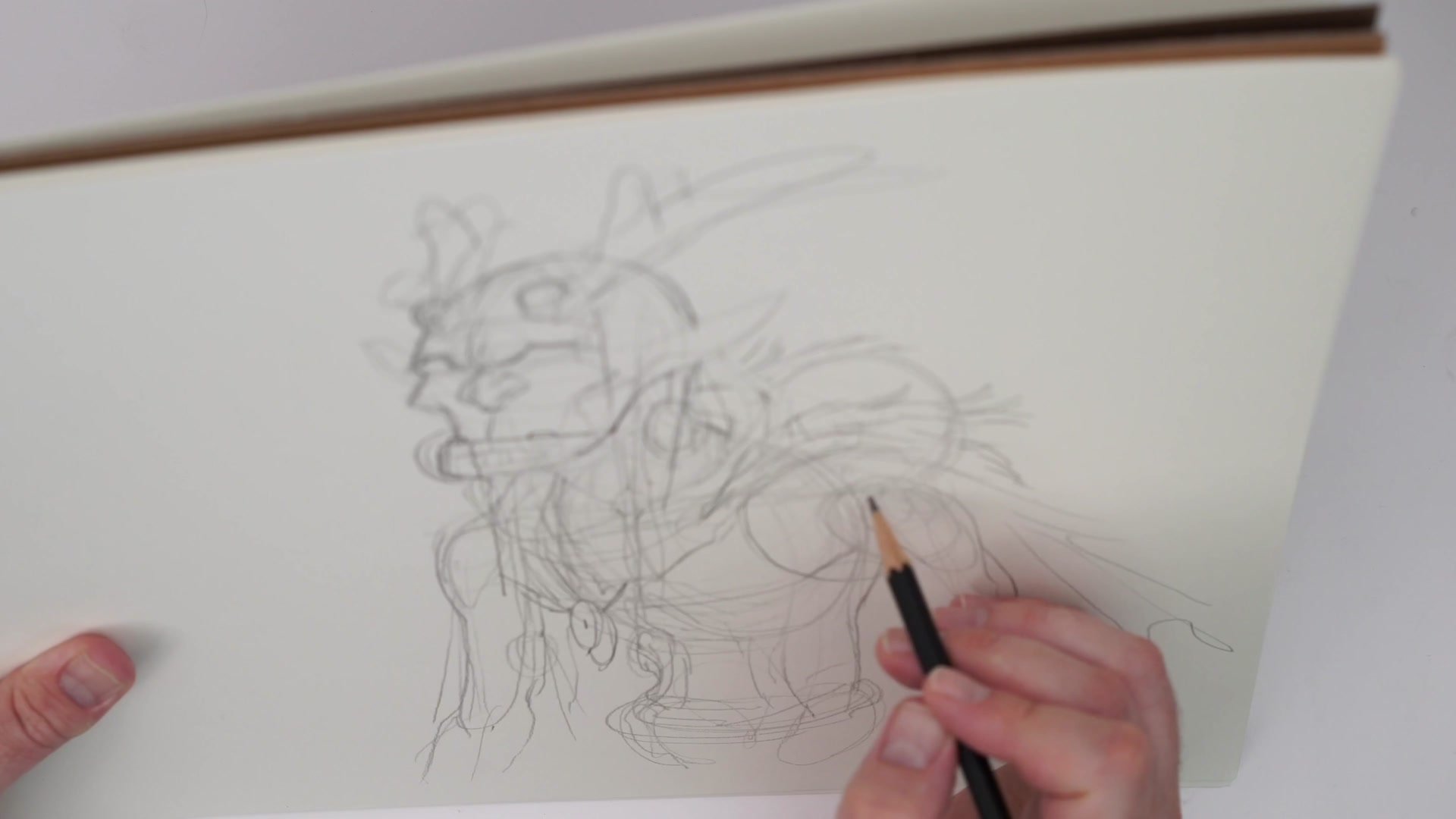
The sketch begins with Loomis-method head construction, placing the sphere and dividing it into planes with a center line. From there the spine, ribcage, and shoulders get roughed in very lightly. The goal at this early stage is not accuracy but placement. Getting the head-to-torso relationship right, checking where that center line falls, and making sure the proportions feel correct before committing to any detail.
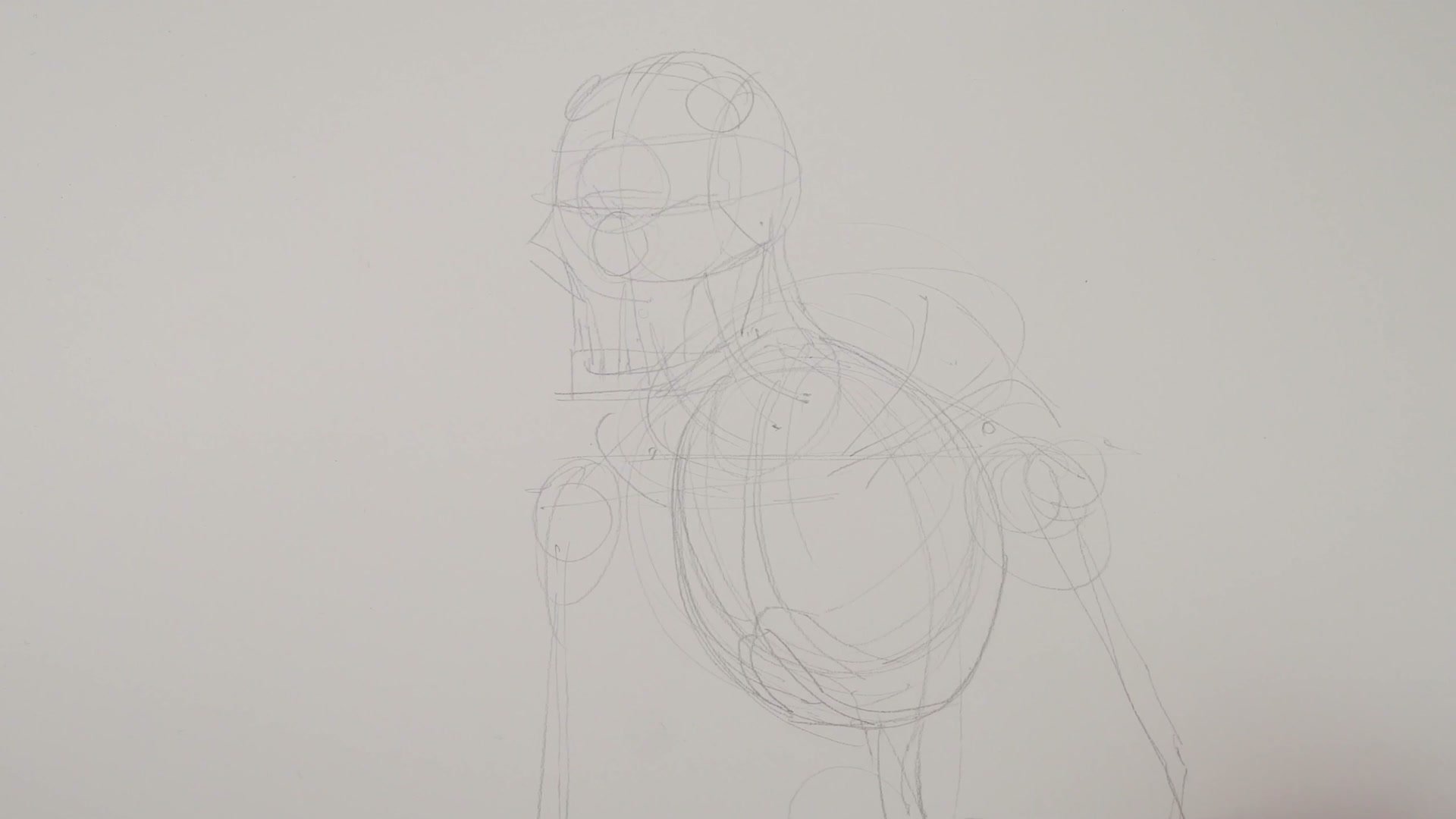
Multiple passes are part of the process. The first rough placement acts as a check. If it does not look right, it gets redrawn before moving forward. The character has wide, hunched shoulders and a distinctive silhouette, so nailing the large shape relationships early saves significant rework later. Constructional anatomy here means treating each major mass as a separate form, then connecting them through the neck, collarbone, and deltoid placements.
Building the Character
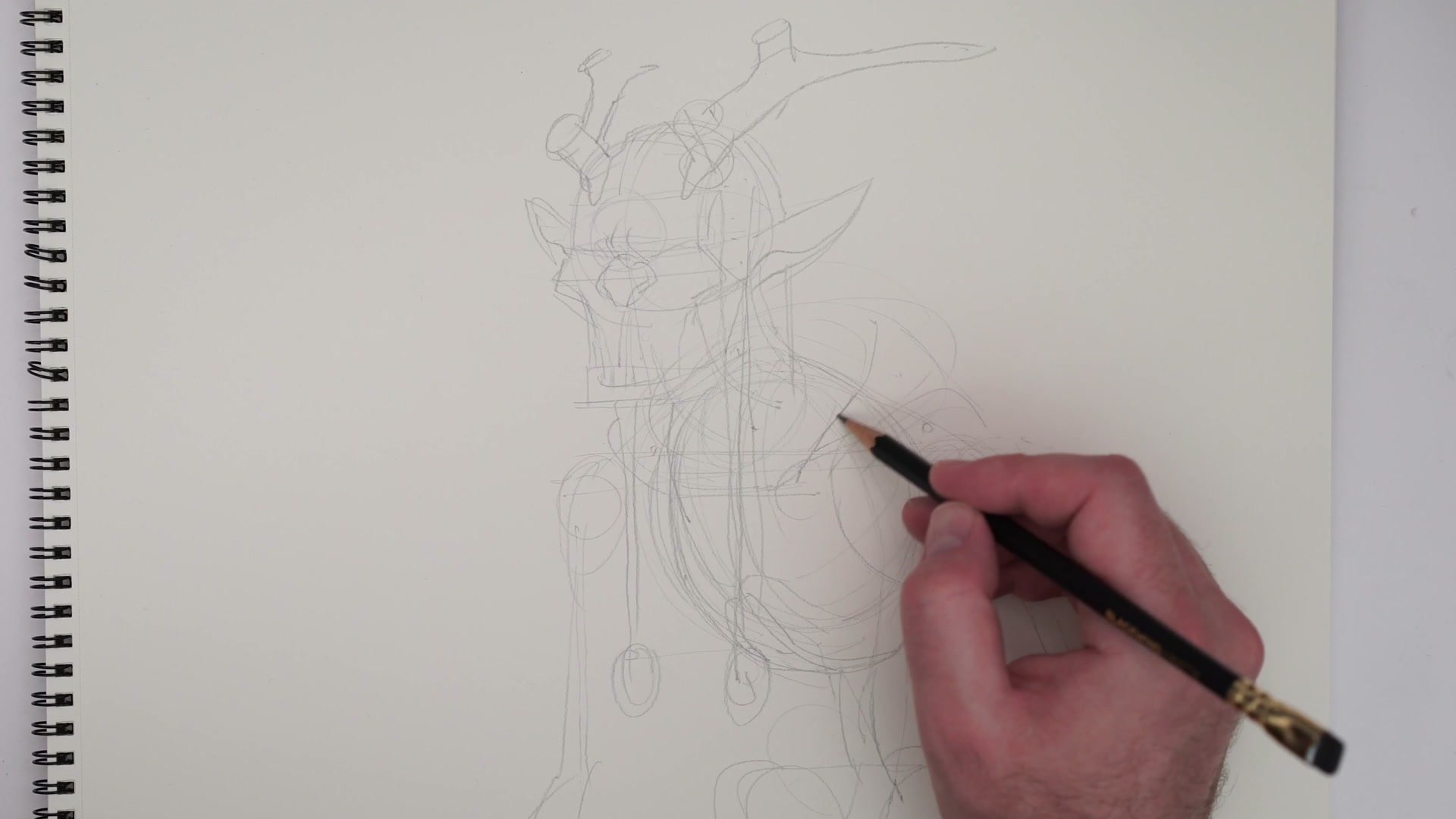
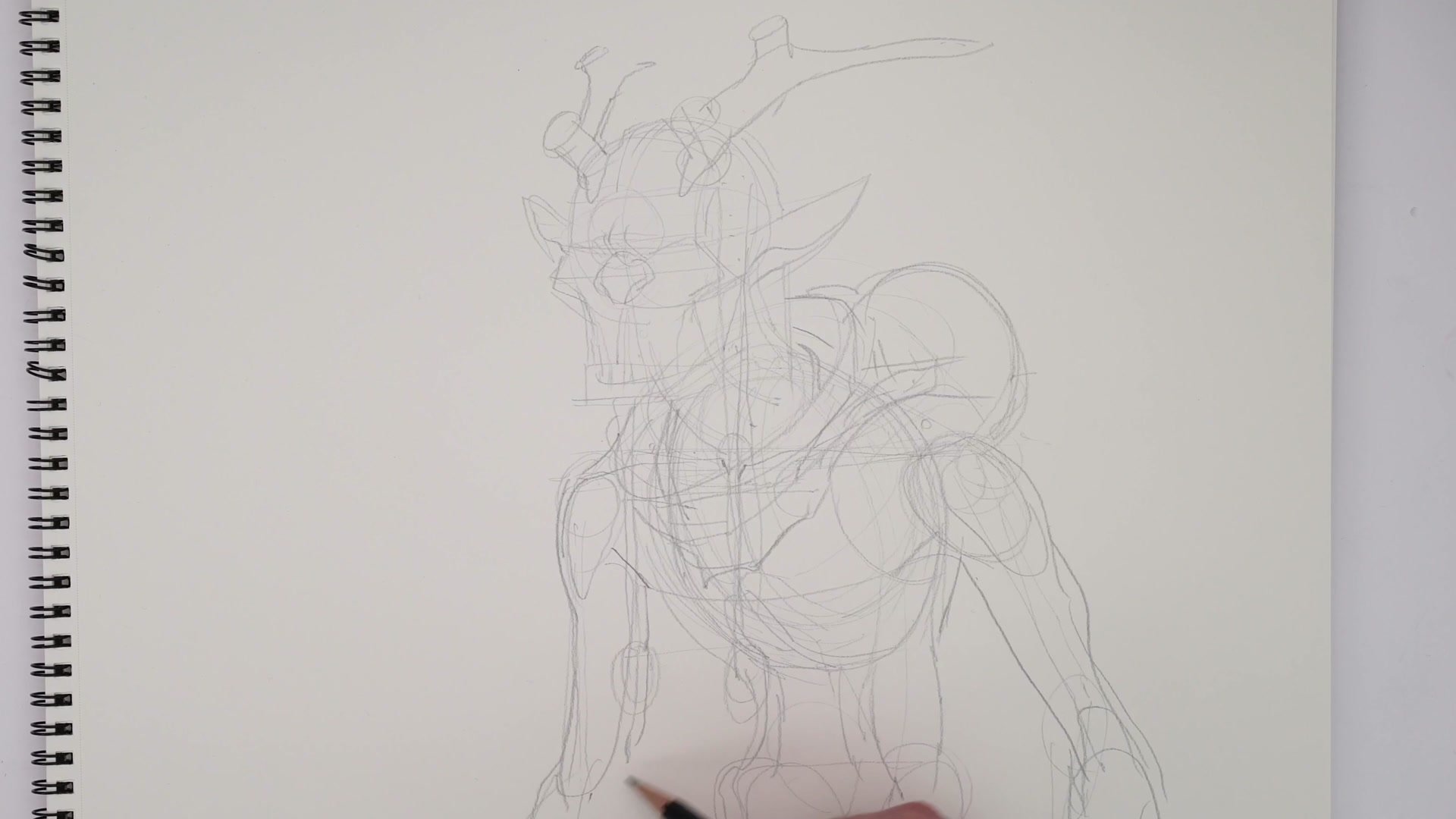
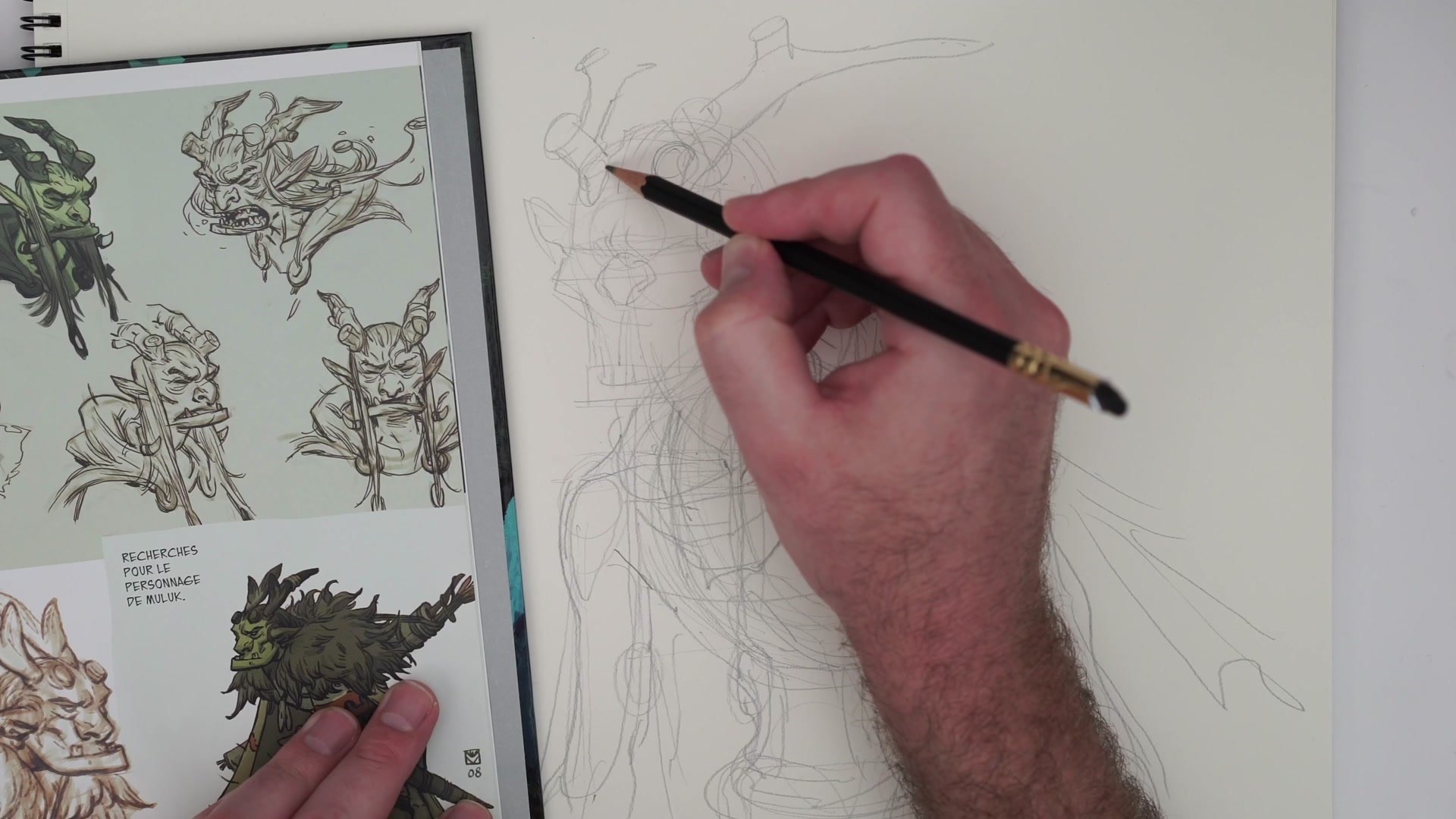
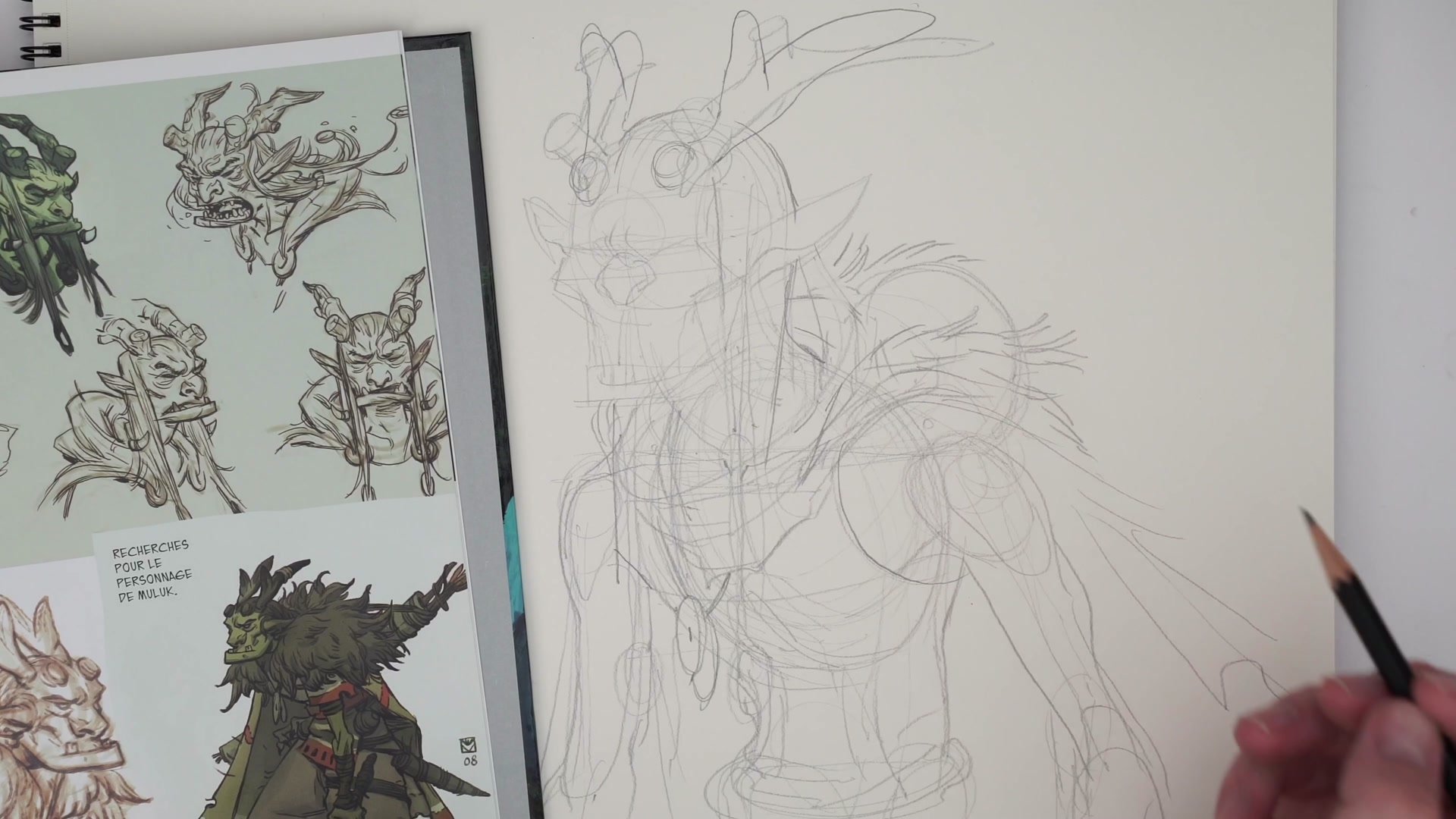
Working From Reference
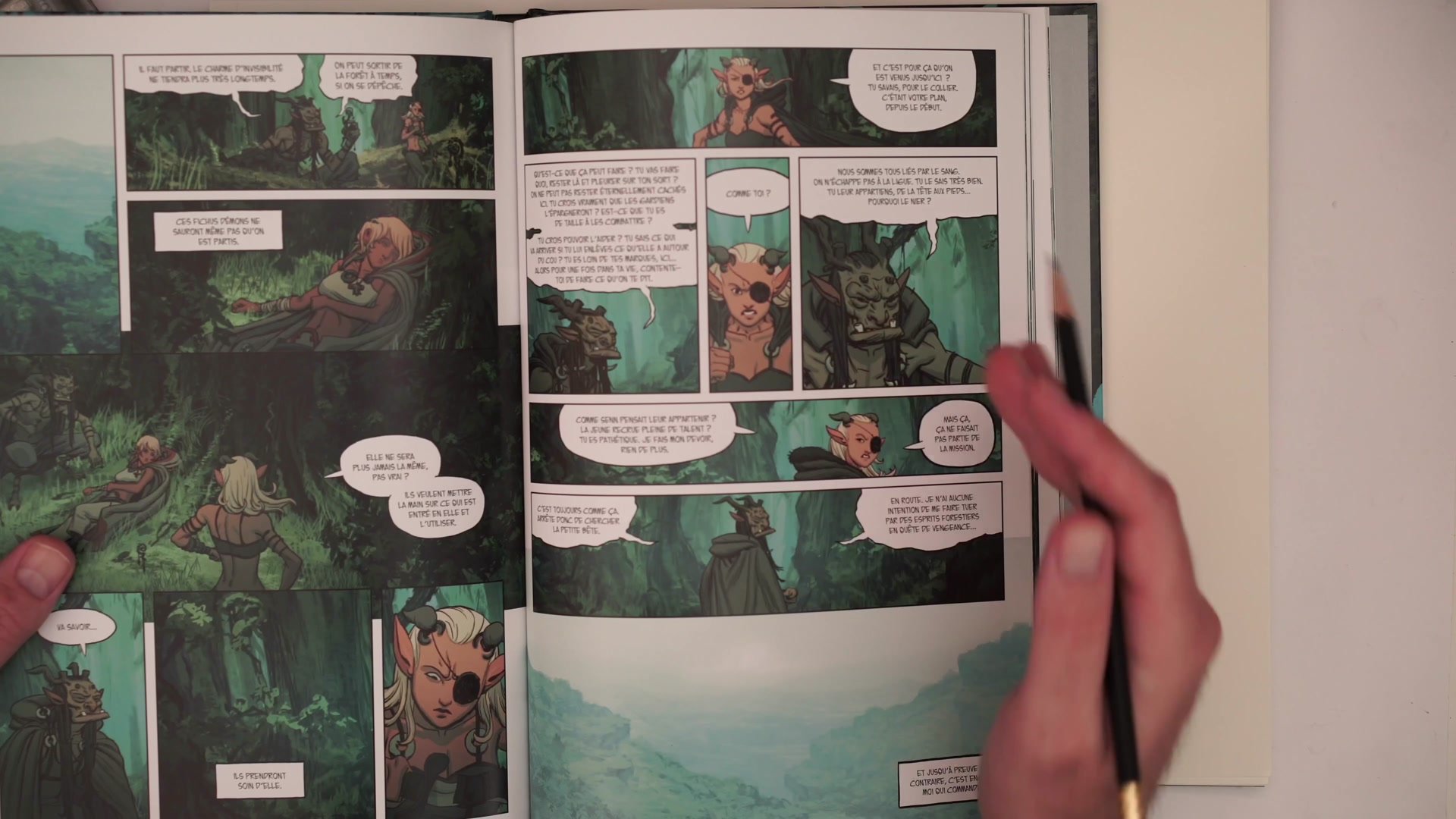
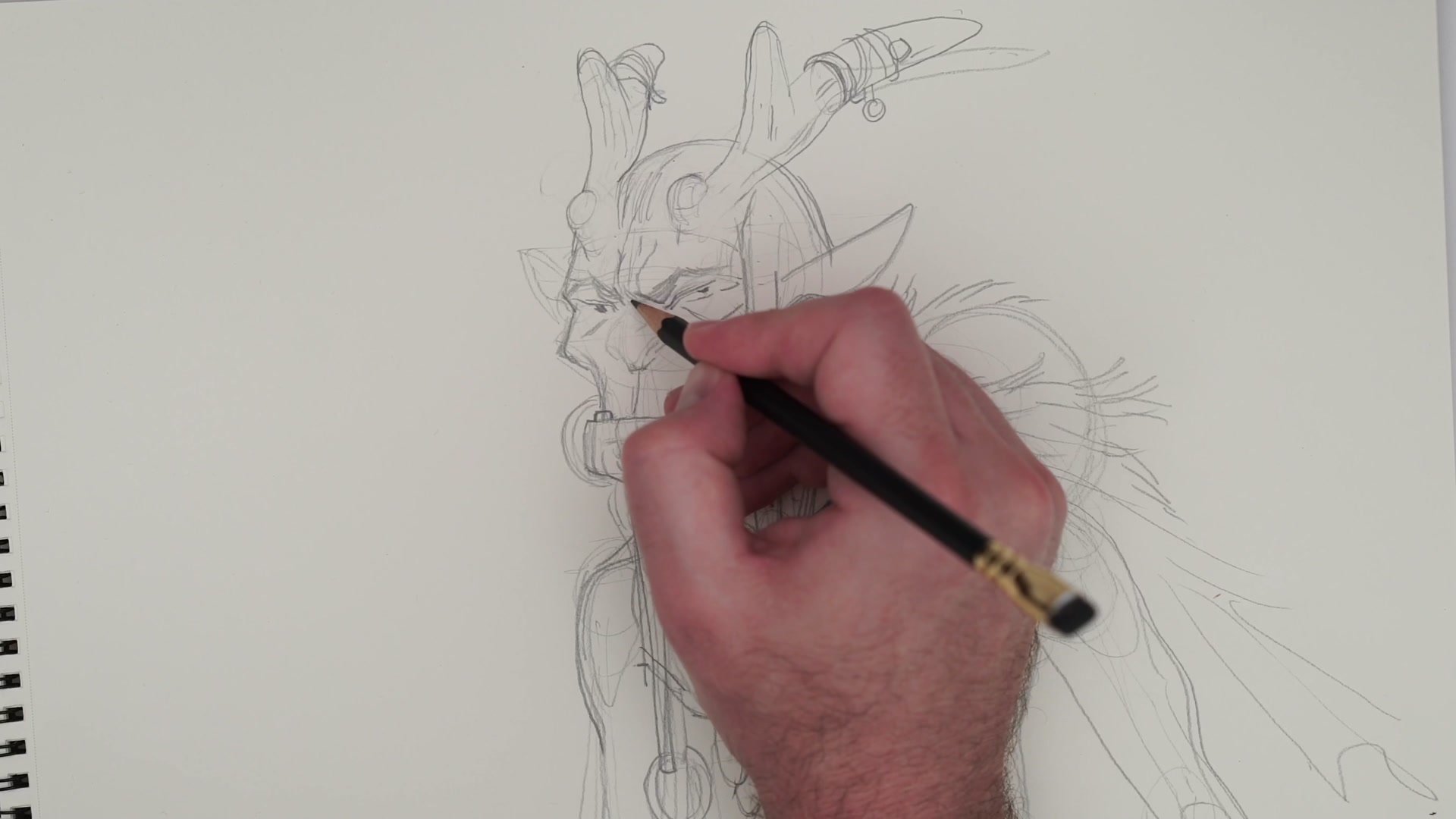
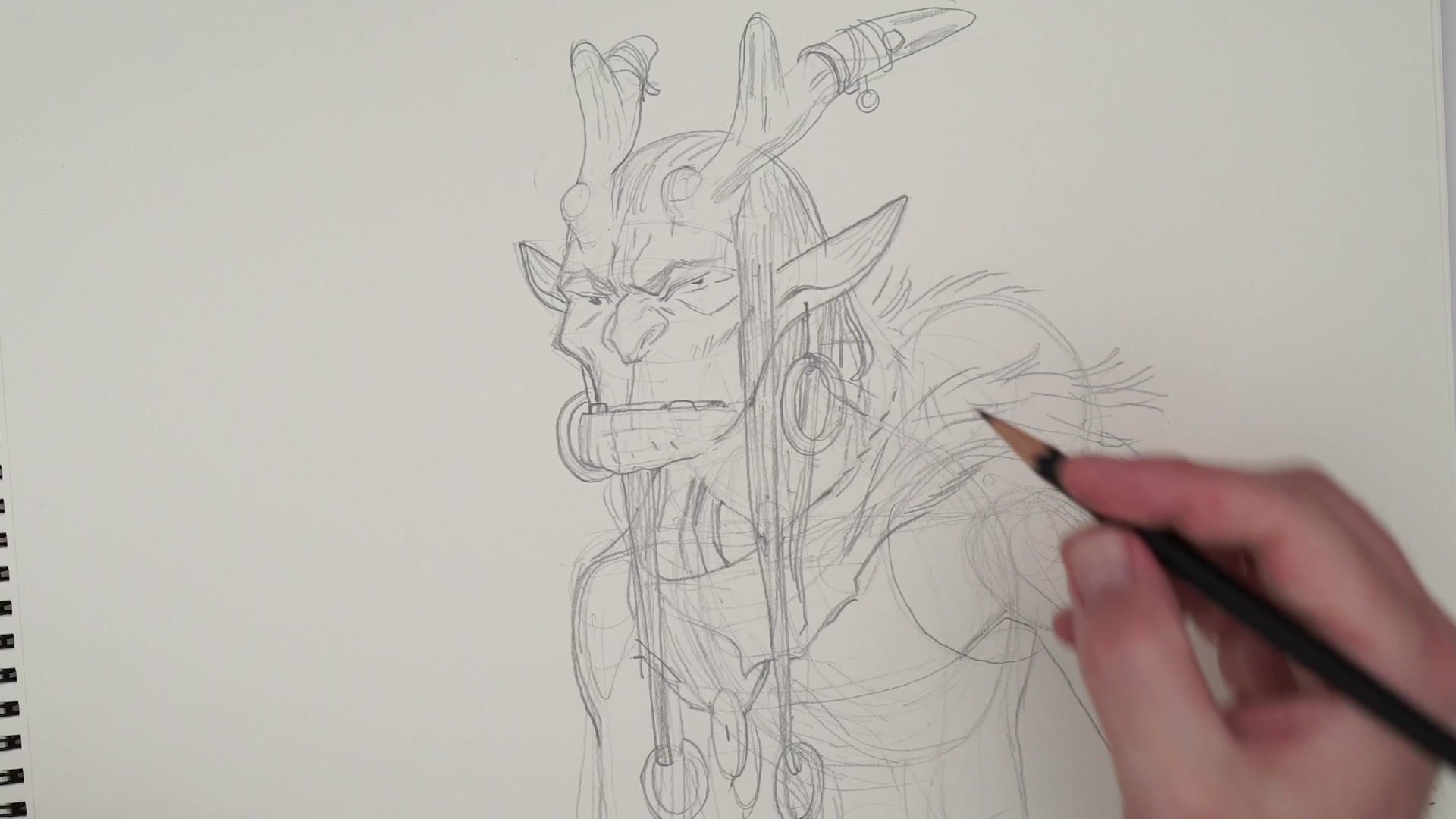
Partway through the sketch, the original concept art for Malouk gets pulled out as reference. This is where the session shows something crucial about warm-up sketching: going back and forth between your own work and the source material is not cheating, it is the process. The reference reveals details like horn placement, hair with rings, costume elements, and the overall character attitude that memory alone would not capture accurately.
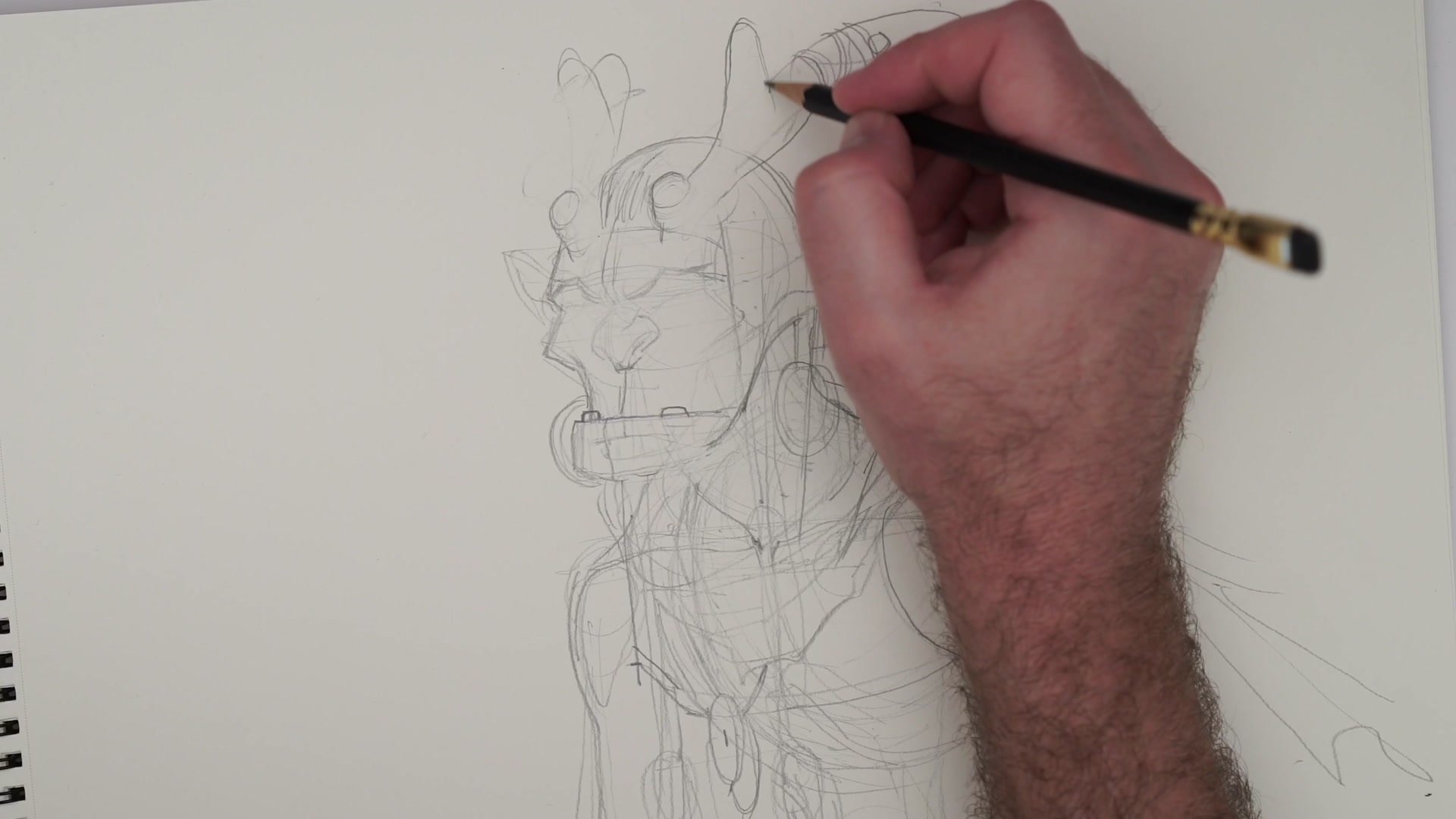
Interesting design decisions happen in real time. The horns get simplified from the original design because the more elaborate version would be a pain to draw repeatedly in comics. Costume elements get modified to feel more ragged. These are the kinds of practical choices that separate a warm-up sketch from a pure copy exercise. The character is being reinterpreted, not reproduced.
Refining Details
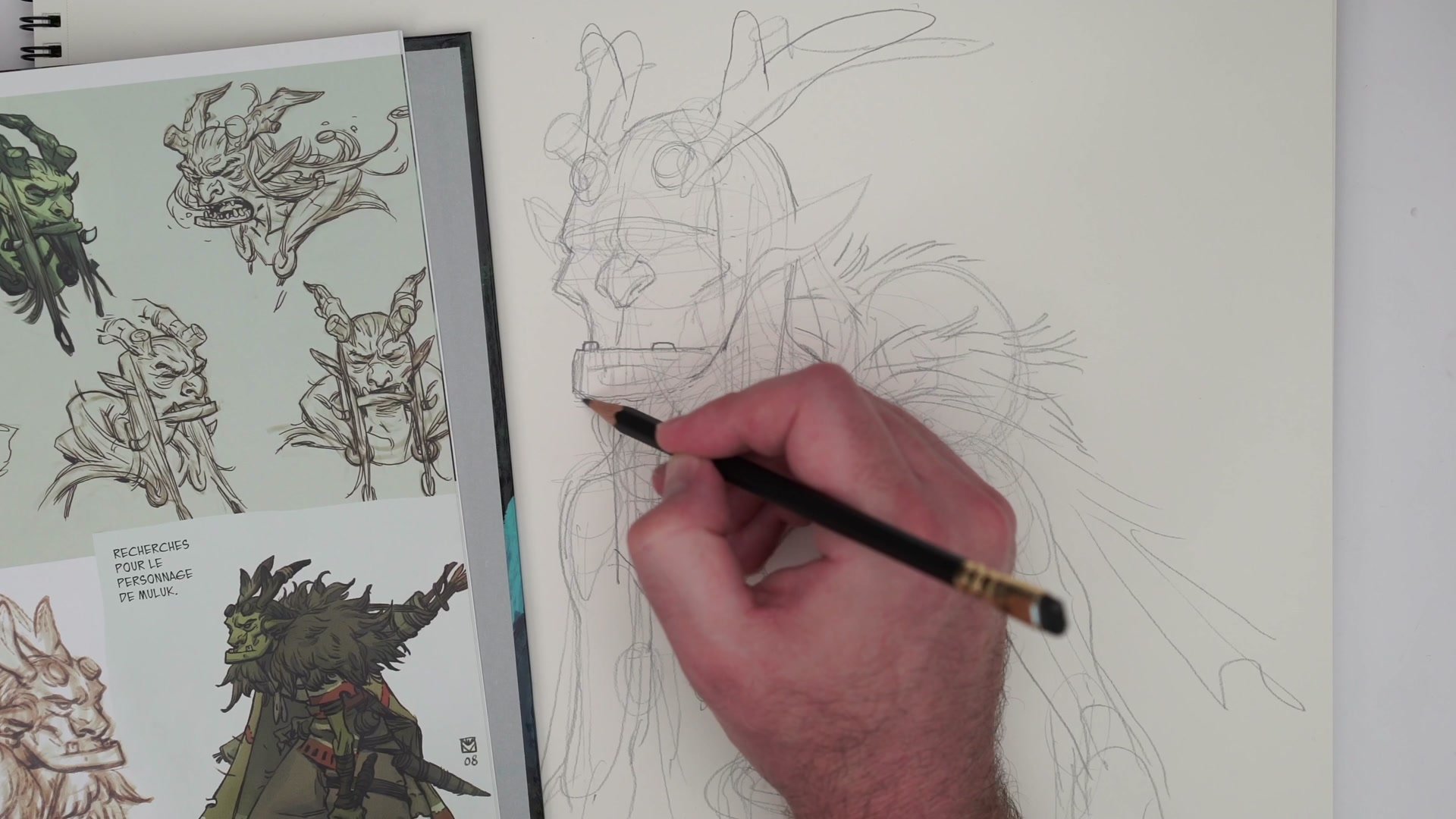
Hierarchy of Detail
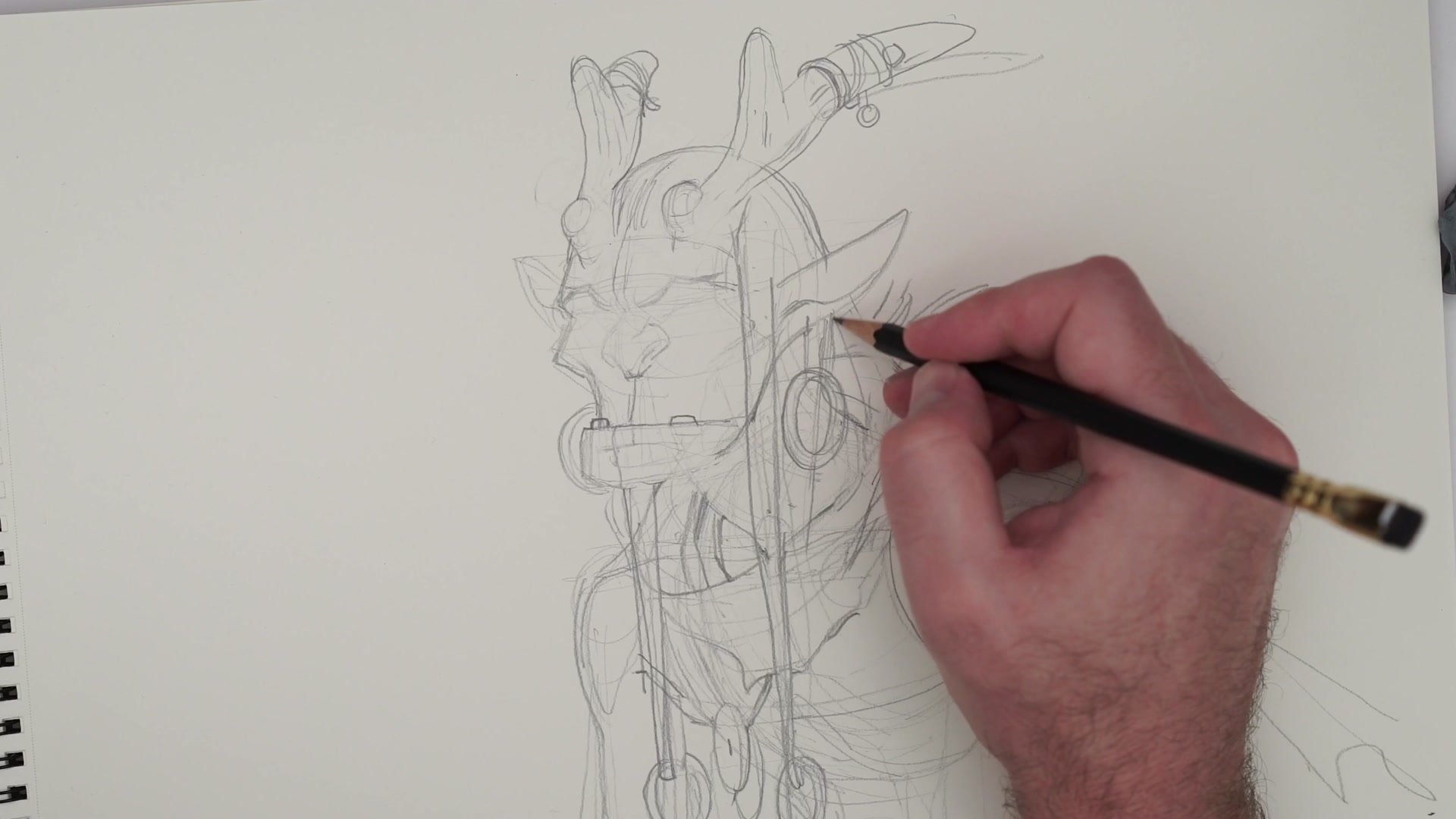
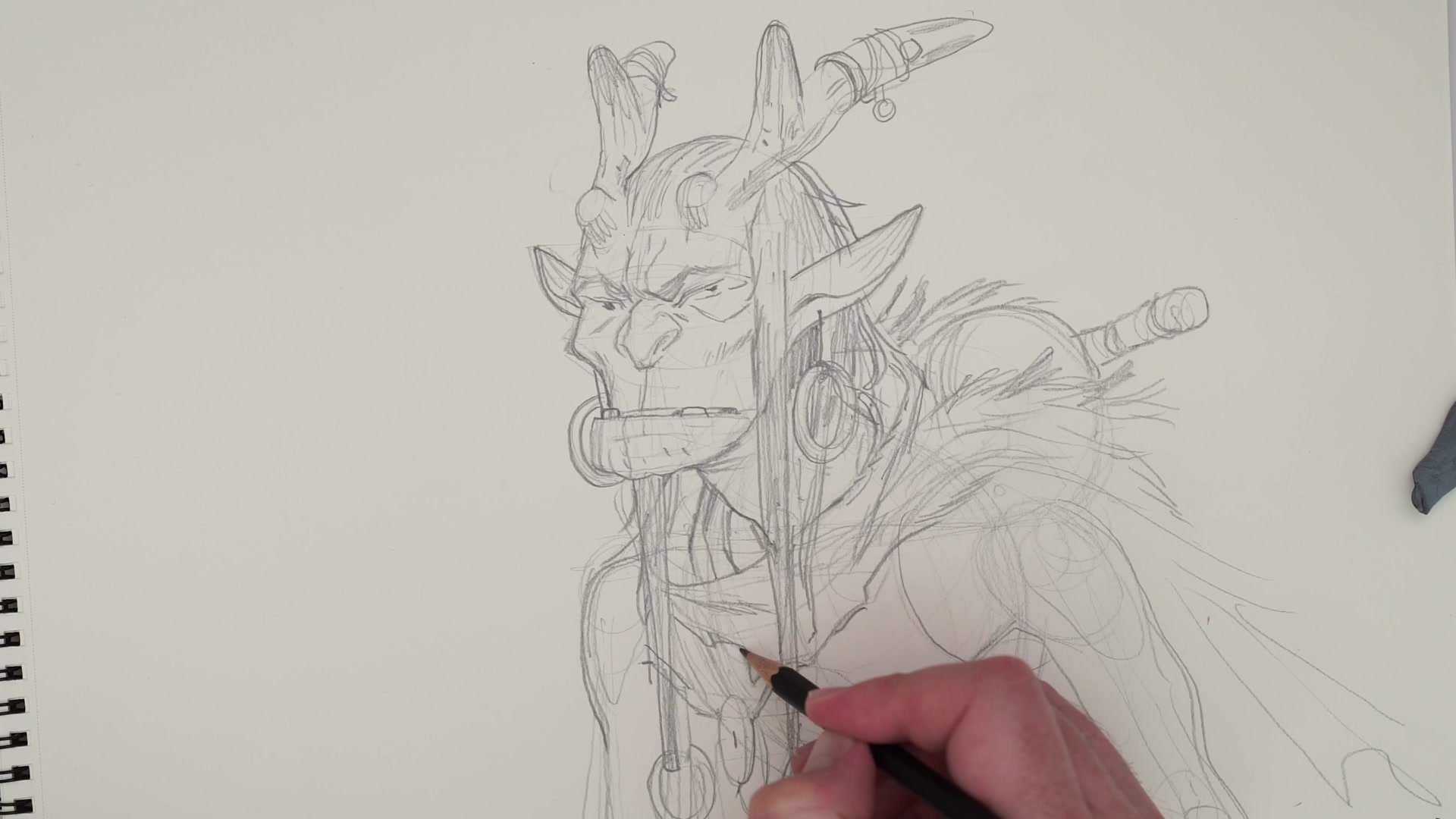
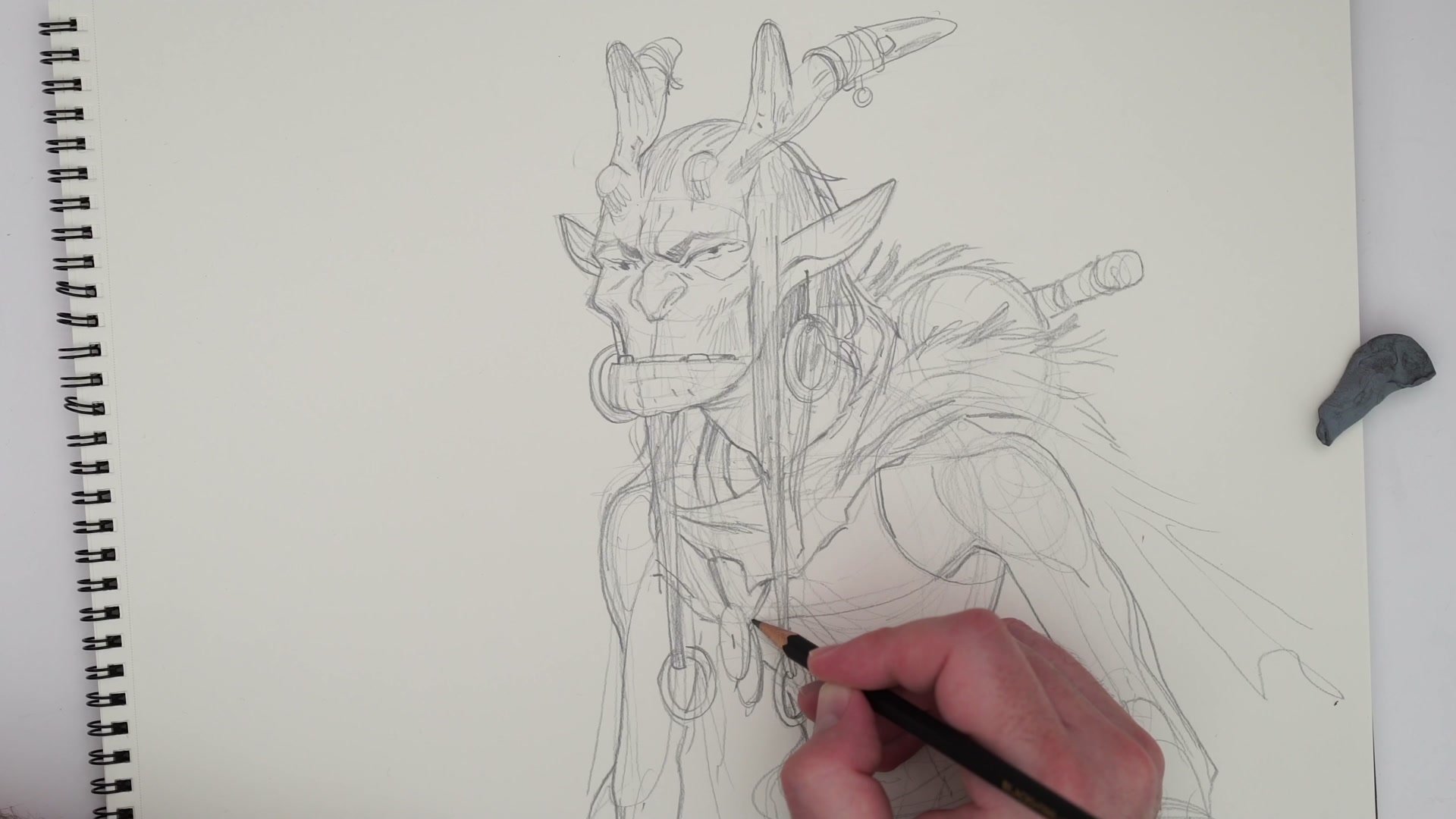
The final phase of the sketch demonstrates the concept of hierarchy of detail in a sketchy context. Even though this is a warm-up and not a finished piece, the same illustrative principles apply. The face gets the most attention and the most defined marks. The shoulders, torso, and costume accessories get progressively less detail as they move away from the focal point.
This hierarchy is what separates a controlled sketch from a messy one. The tendency is to think that sketchy means stopping halfway, but what actually makes it work is the deliberate application of a one-two-three read. The face reads first, the upper body second, everything else third. Proportion checking happens throughout, including physically tilting the sketchbook to see the drawing from a different angle, which almost always reveals alignment issues that looked fine from the normal viewing position.
Finished Warm-Up Sketch
Key Techniques
Loomis Head Construction: Starting with the sphere, dividing into planes, and establishing the center line before adding any features. This structural foundation keeps proportions stable even in a fast sketch.
Proportion Checking: Tilting and rotating the drawing to view it from different angles catches alignment problems that are invisible from the normal working position. Almost universally reveals issues.
Hierarchy of Detail: Even in a warm-up sketch, applying a focal hierarchy (face first, body second, periphery third) creates a controlled read instead of an even mess.
Time-Boxed Practice: Finding a consistent time window for warm-up sketching, around 30 minutes, creates a sustainable ritual that produces more art than occasional long sessions.
Try This Warm-Up
Pick a Character: Choose a character from your own work or a reference you admire. Set a 30-minute timer and commit to finishing within that window.
Structure First: Spend the first 10 minutes on constructional placement only. Head sphere, torso mass, shoulder width. Keep it light enough to redraw.
Apply Hierarchy: In the remaining time, push detail where the eye should land first and deliberately leave the rest loose. Check proportions by tilting your page at least once.