Master Spaceship Design Basics
Summary
Functional Design for Spaceships
Drawing spaceships is one of the most fun but challenging subjects because unlike trees or people, there are no real-world references to study directly. Most artists default to drawing random technological shapes and hoping they look convincing. The real problem is not drawing ability but understanding what makes a spaceship design believable versus fake-looking.
This video tackles spaceship design through a function-first approach, breaking down the engineering logic behind great ship designs. By examining real NASA spacecraft, iconic science fiction vessels like the Millennium Falcon and Avatar's Venture Star, and professional game design examples, the video reveals why understanding how spaceships actually work transforms generic blobs into vehicles that feel purposeful and real.
Professional Design Examples
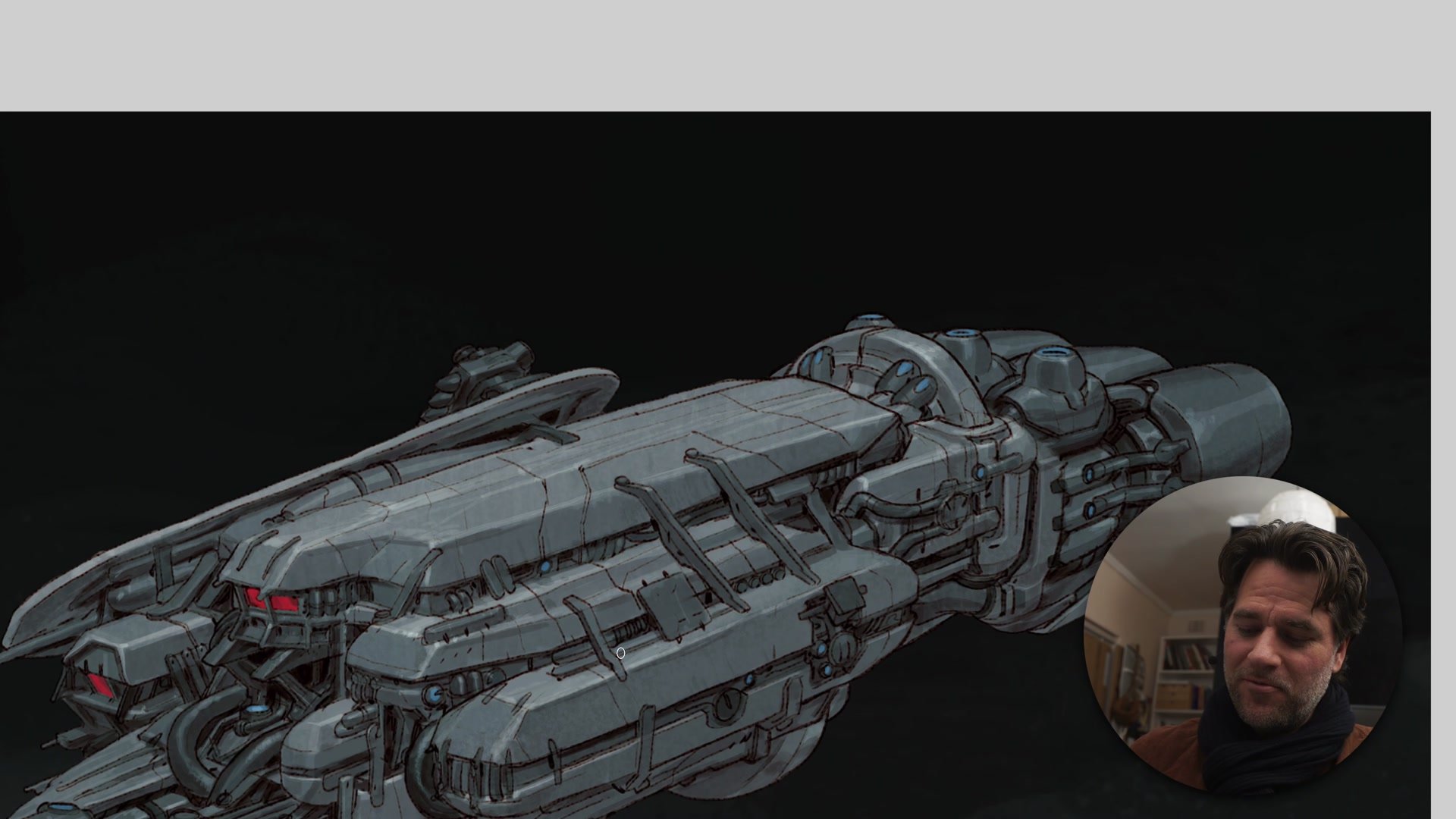
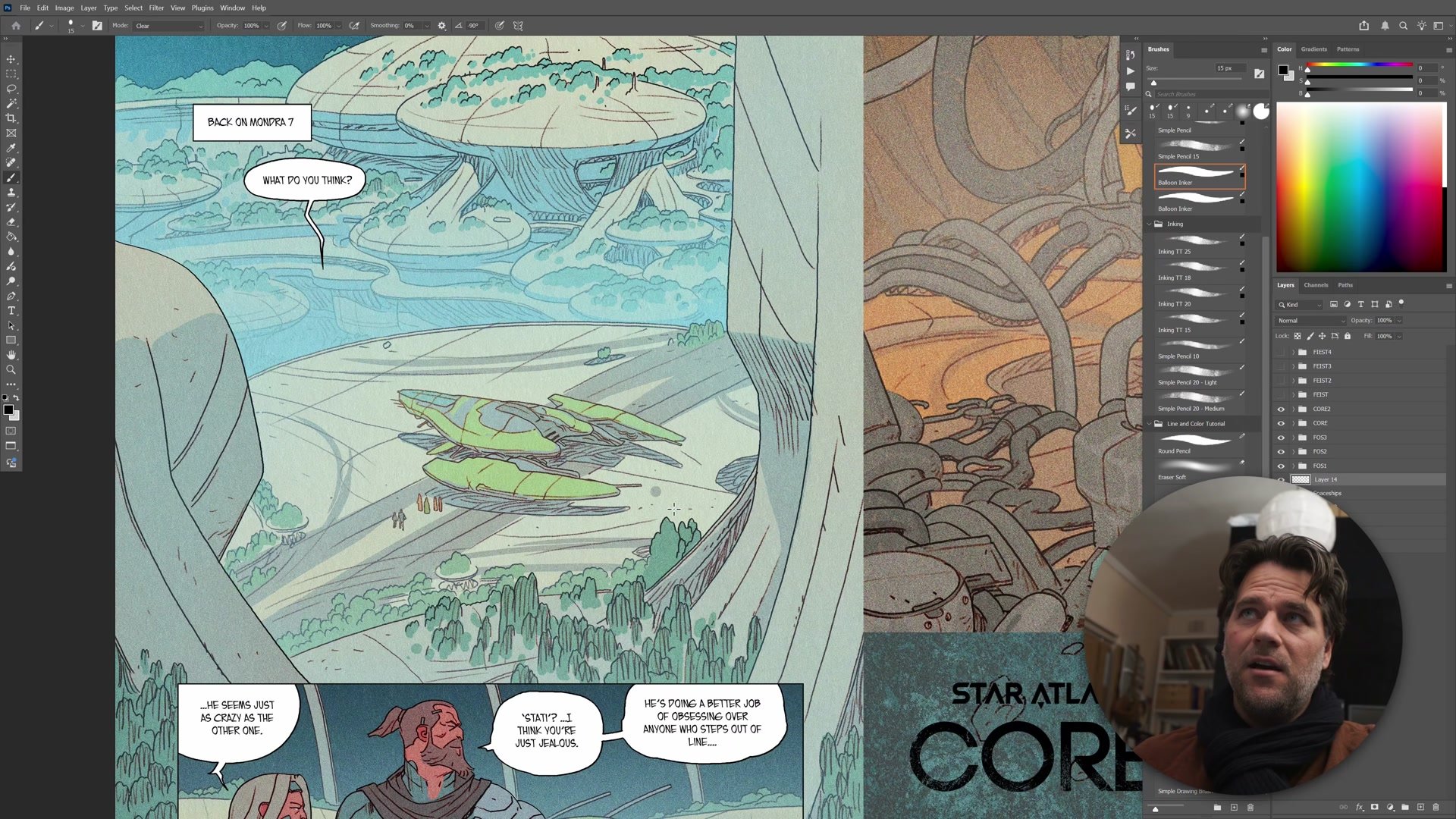
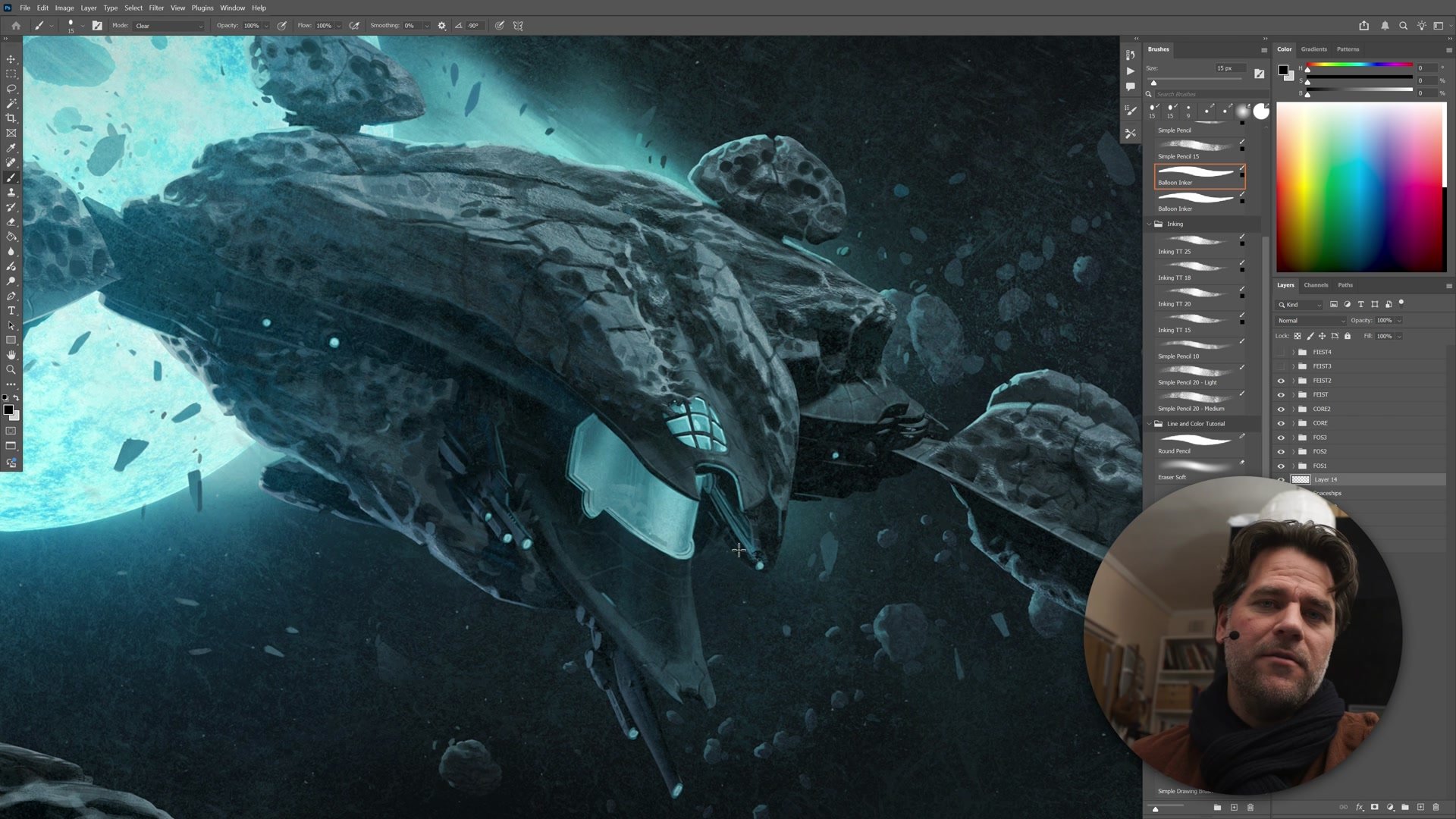
The Four-System Framework
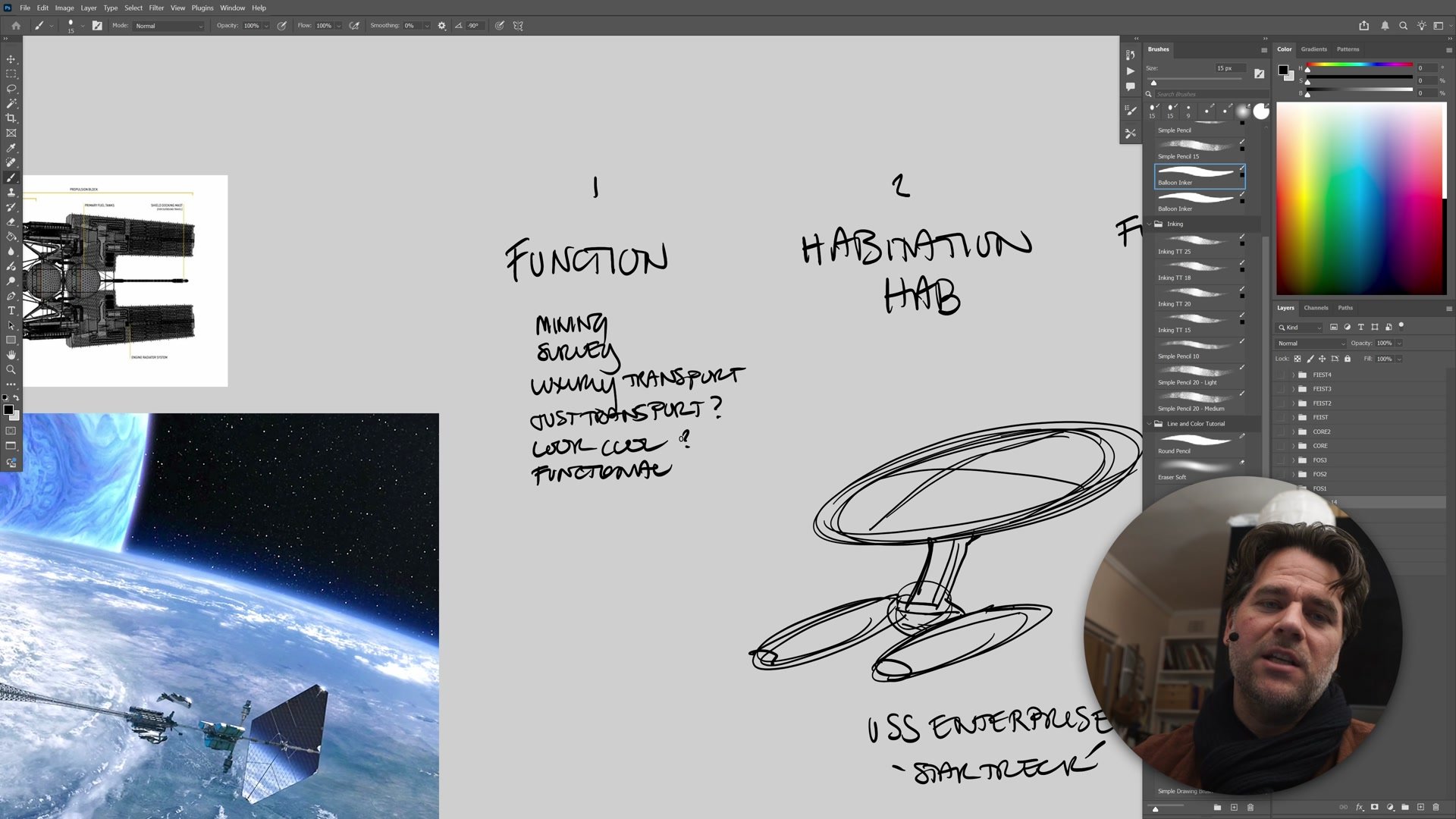
Every spaceship, whether for a NASA mission or a space opera video game, requires four essential systems working together. Habitation defines where people live and work, from a cramped cockpit to luxury passenger quarters. Propulsion determines how the ship moves, whether chemical rockets for planetary escape or theoretical drives for interstellar distances. Fuel storage addresses the fundamental energy problem of space travel, where even reaching a nearby star demands incomprehensible amounts of energy. Function defines the ship's specific purpose, whether mining, cargo hauling, military operations, or luxury transport.
These four systems are not artistic decoration. They are engineering requirements that directly shape what the ship looks like. A cargo hauler has minimal crew space and maximum payload. A luxury transport prioritizes habitation and aesthetics. A deep space freighter needs massive fuel reserves that dominate the entire silhouette. Thinking through these requirements before drawing a single line transforms spaceship design from guesswork into systematic problem-solving.
Reference Analysis
Learning from Real Engineering
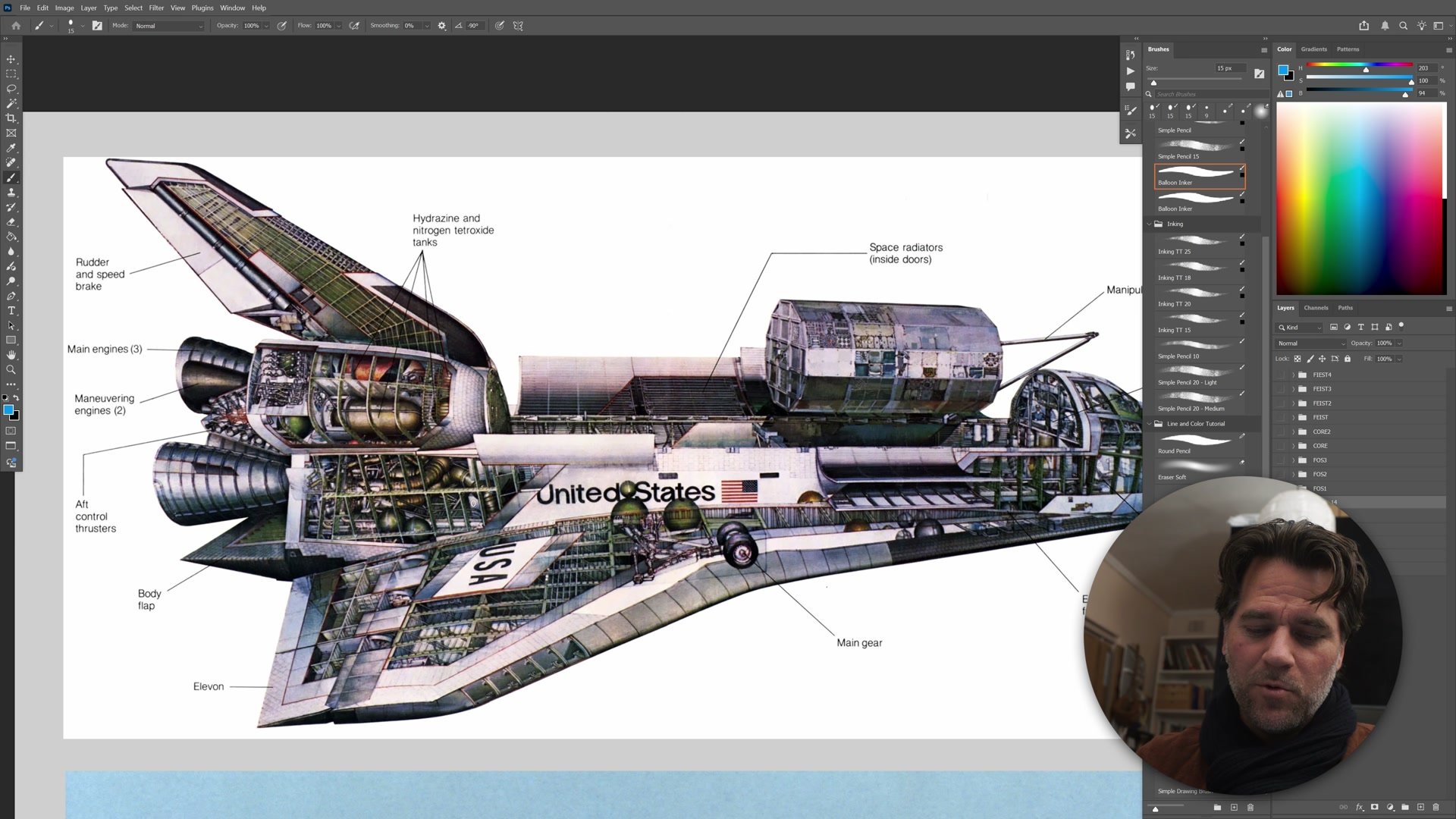
Real spacecraft provide the strongest foundation for understanding functional design. NASA ships and the International Space Station demonstrate pure function driving form, where every visible element serves a specific engineering purpose. The Space Shuttle's cutaway reveals how propulsion, cargo, habitation, and control systems all compete for space within the same vehicle. SpaceX's Starship achieves a futuristic look purely through engineering decisions about heat tiles, engine placement, and steel construction.
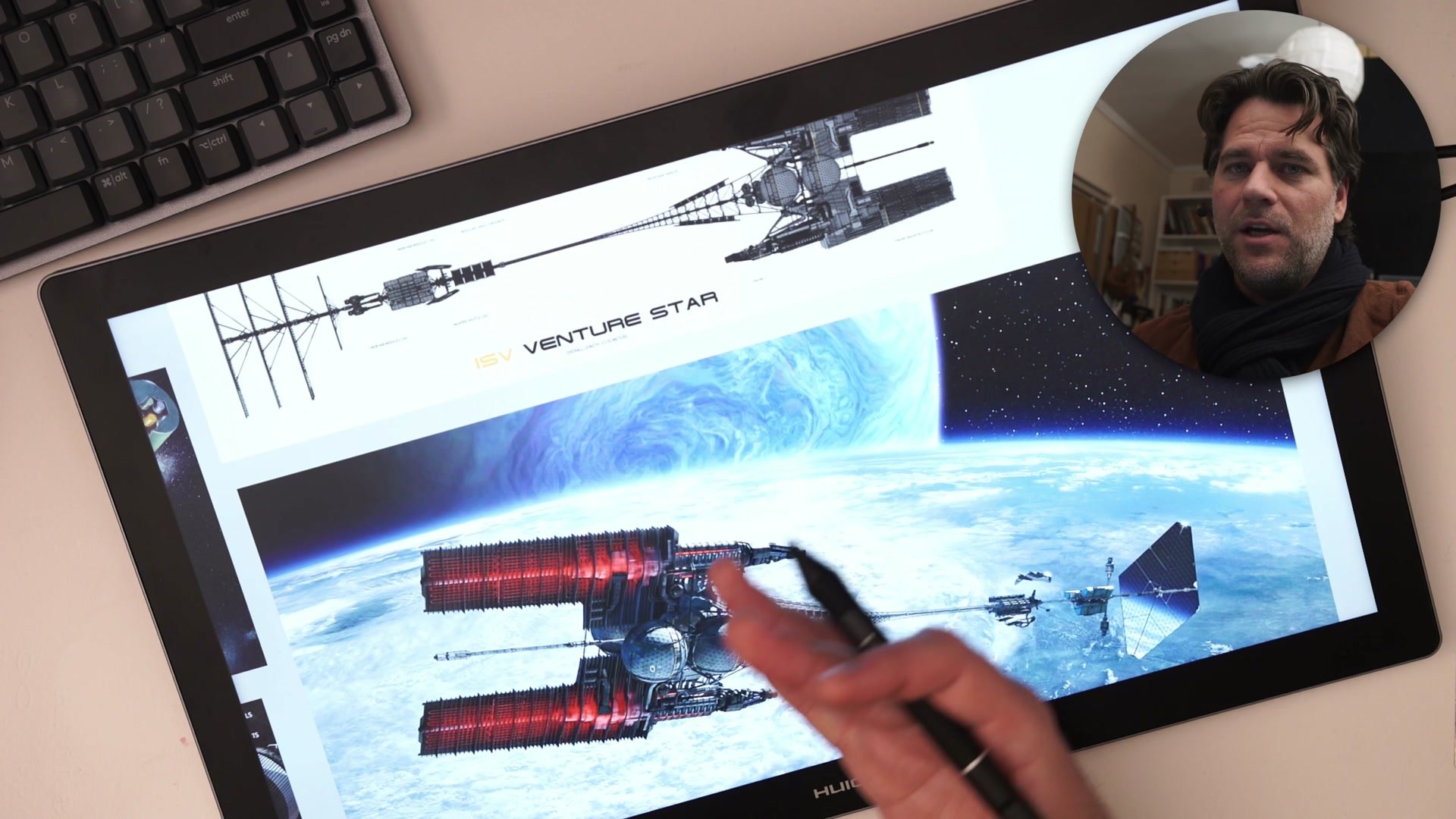
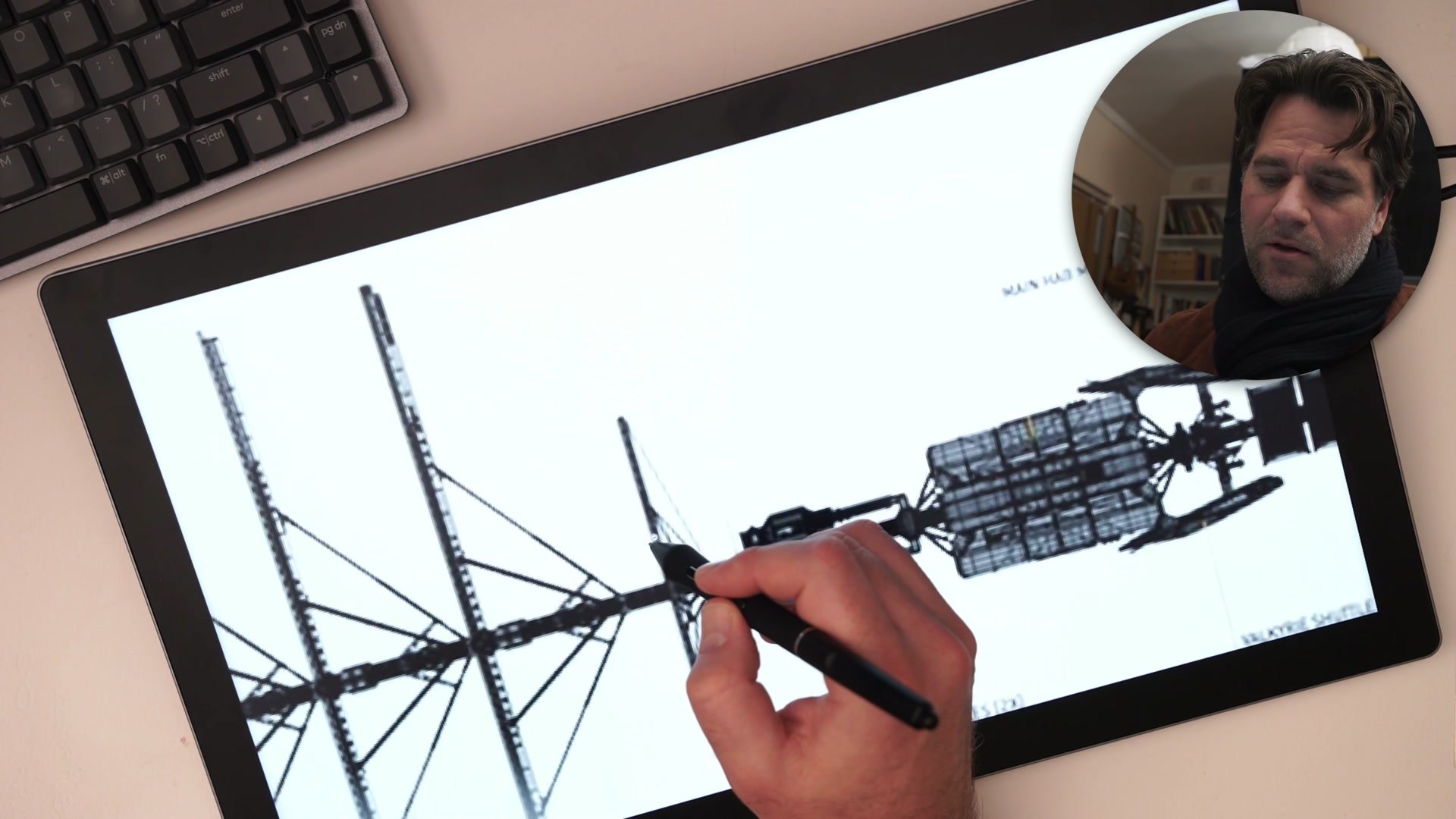
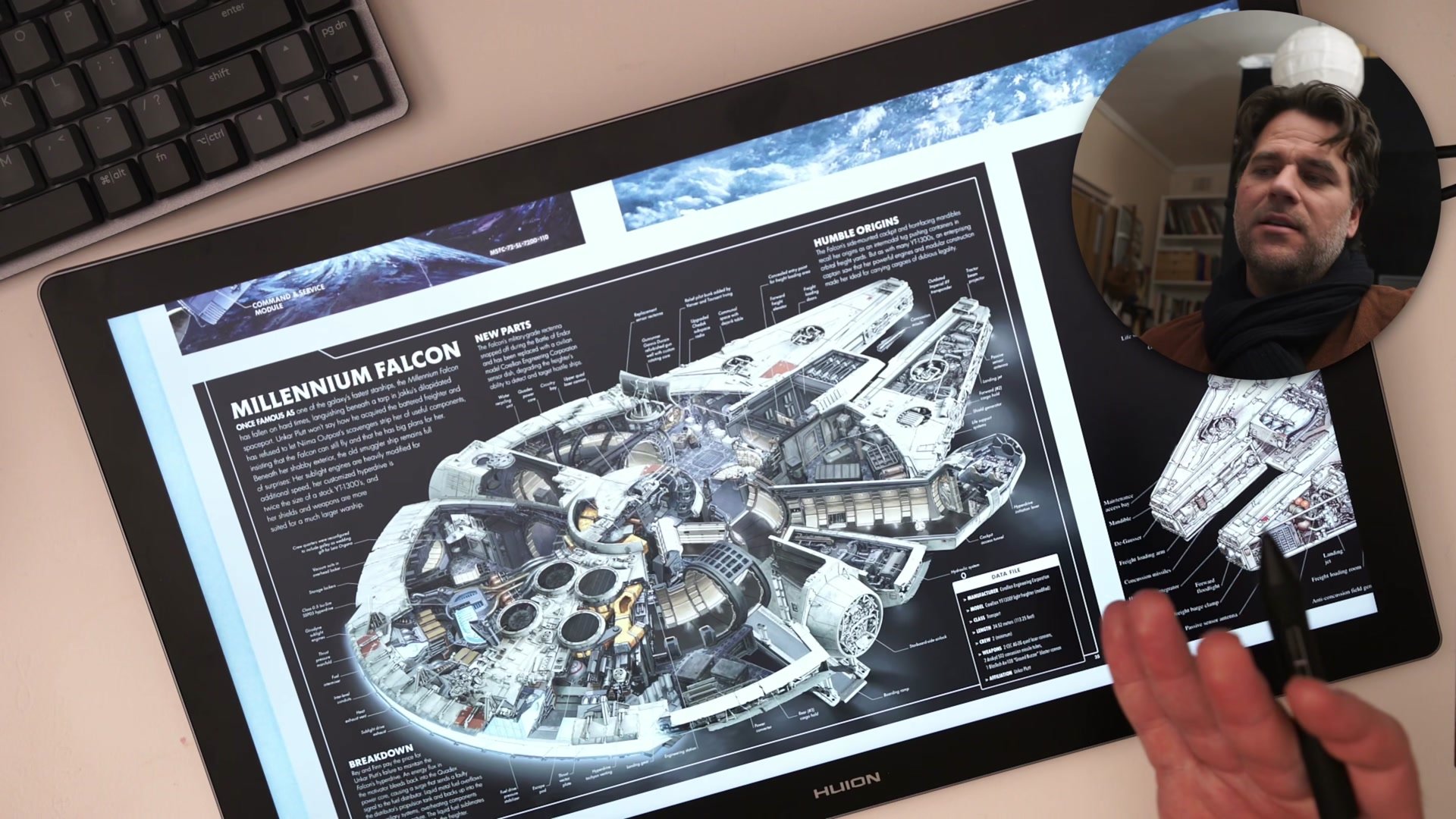
Avatar's ISV Venture Star demonstrates how hard science fiction principles create extraordinary designs. Its massive radiator arrays, lattice structure for weight minimization, and separated habitation modules all follow from real physics about interstellar travel, solar sail propulsion, and the staggering energy requirements of reaching another star system. Understanding which scientific rules a fictional universe breaks, and why, determines what ships in that universe should look like. Star Wars assumes unlimited energy so ships fly like airplanes. Star Trek assumes exotic propulsion so ships prioritize crew comfort. Each assumption creates completely different design opportunities.
Sketching Spaceship Concepts
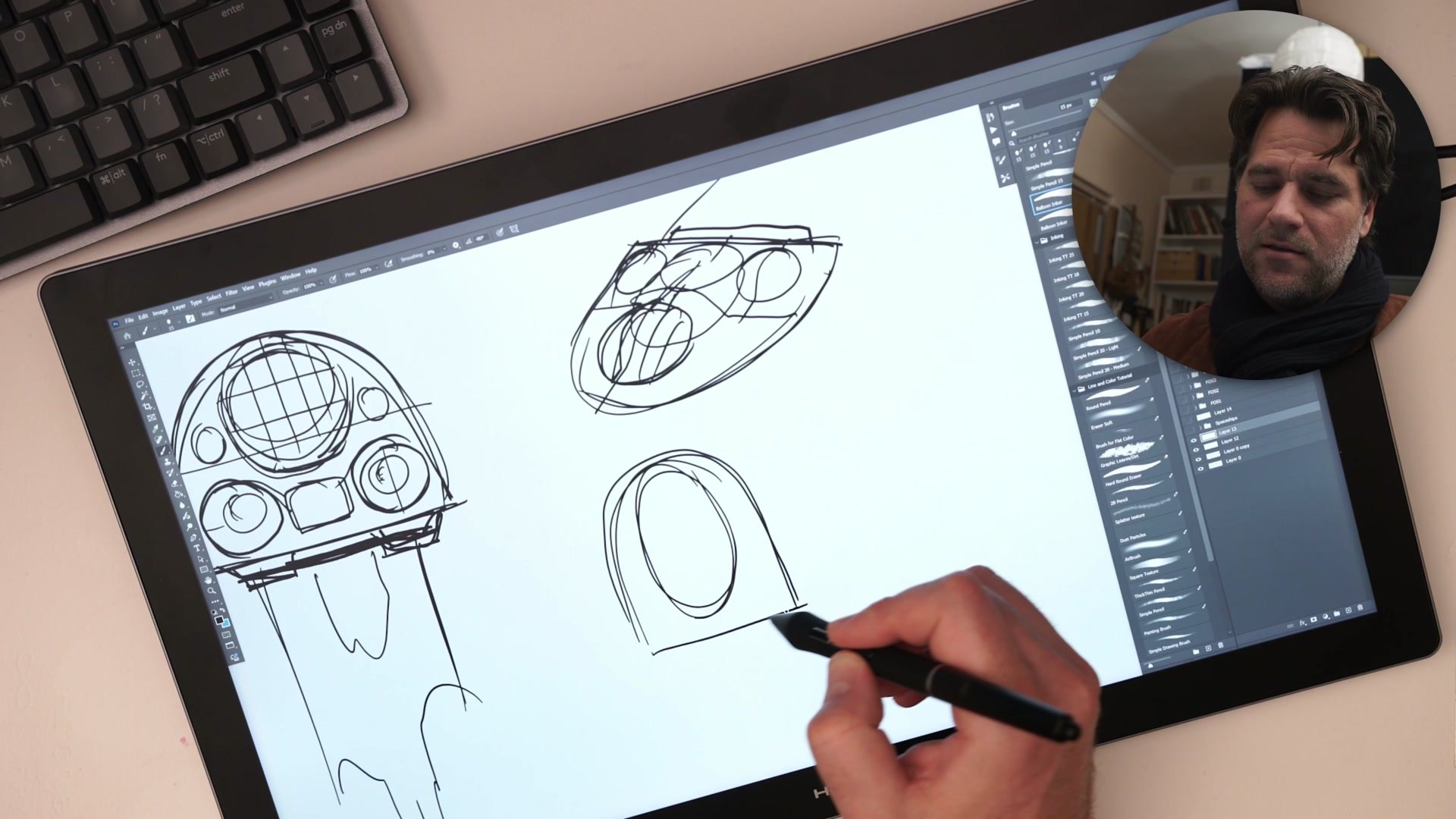
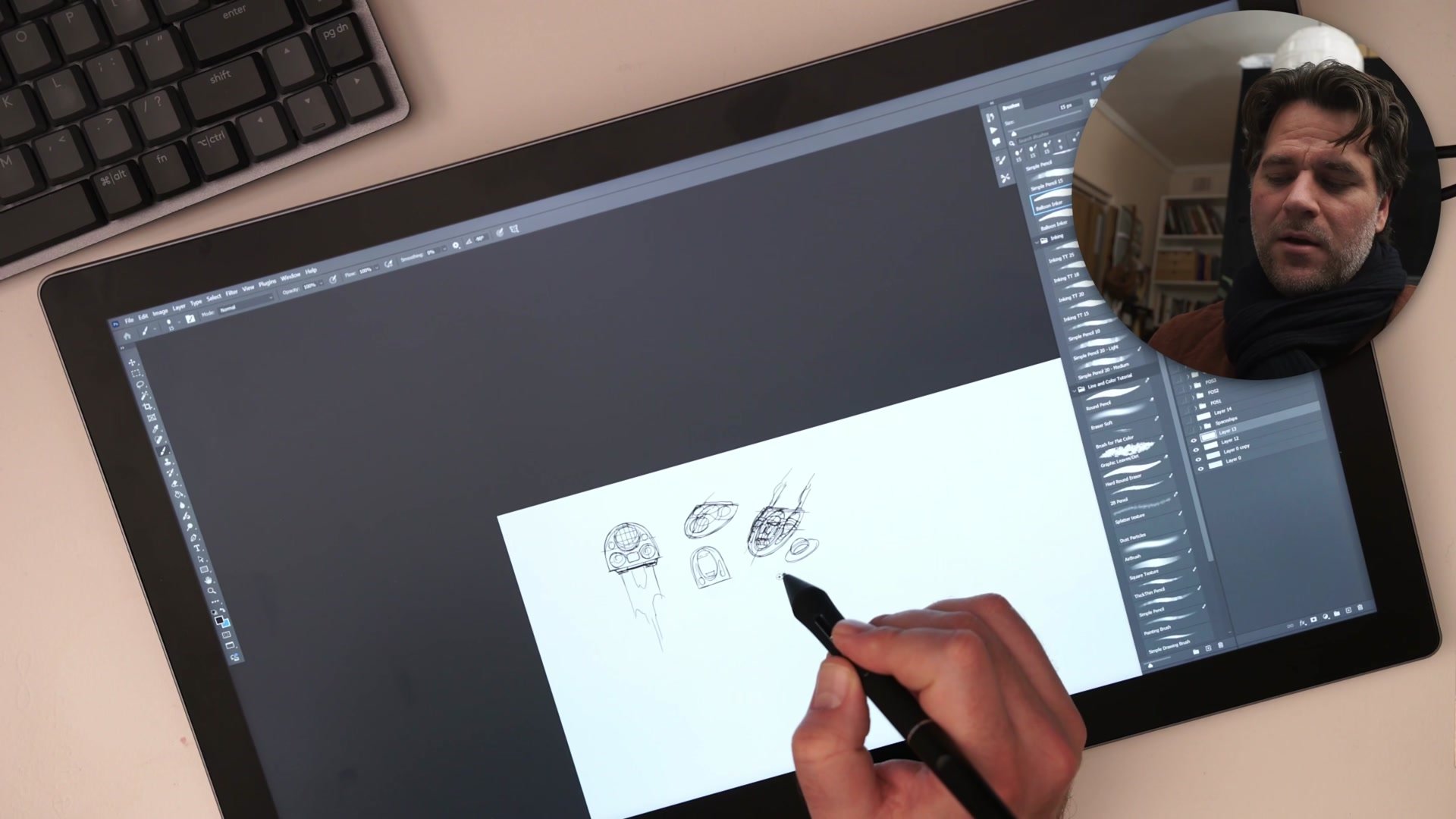
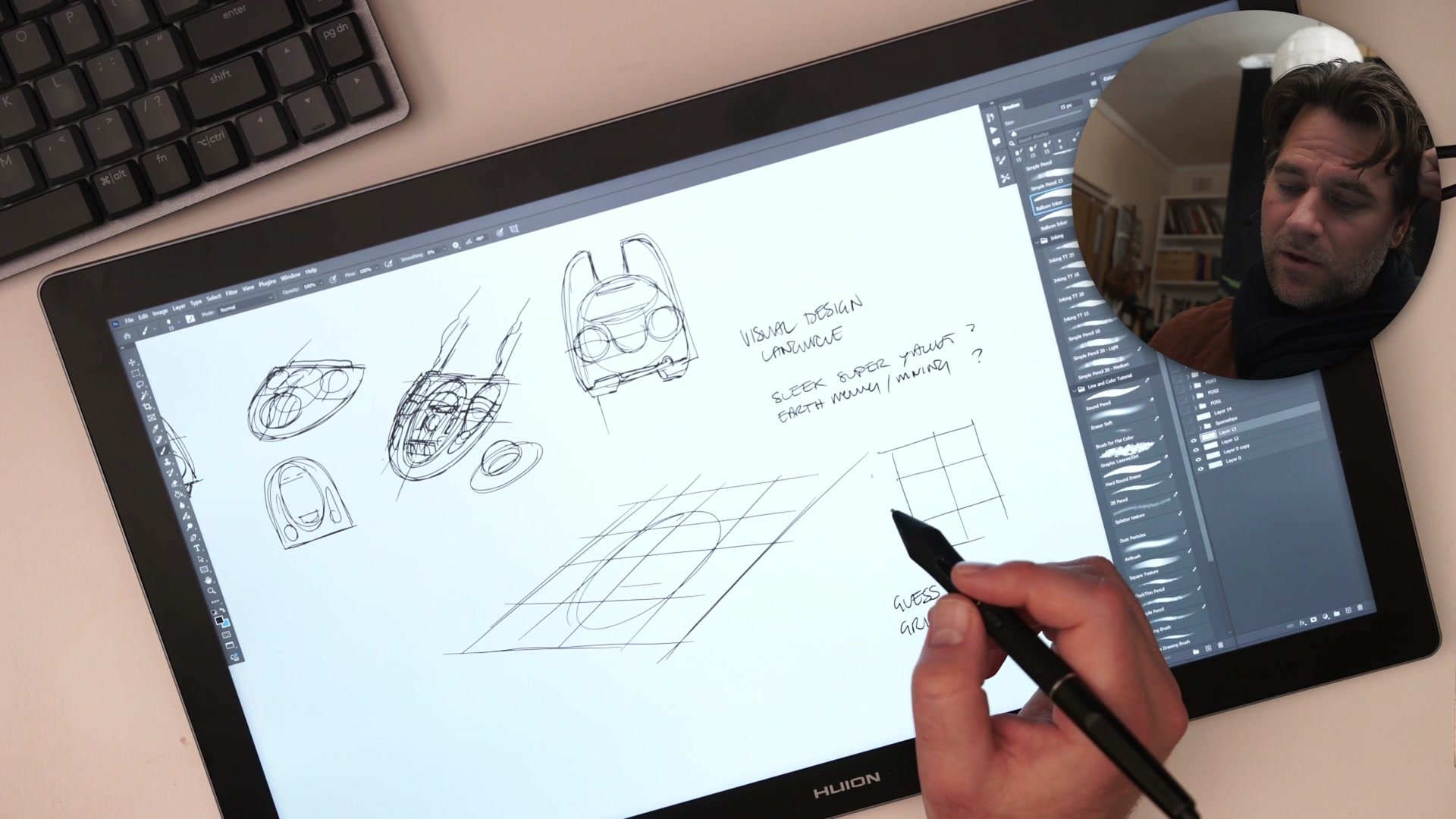
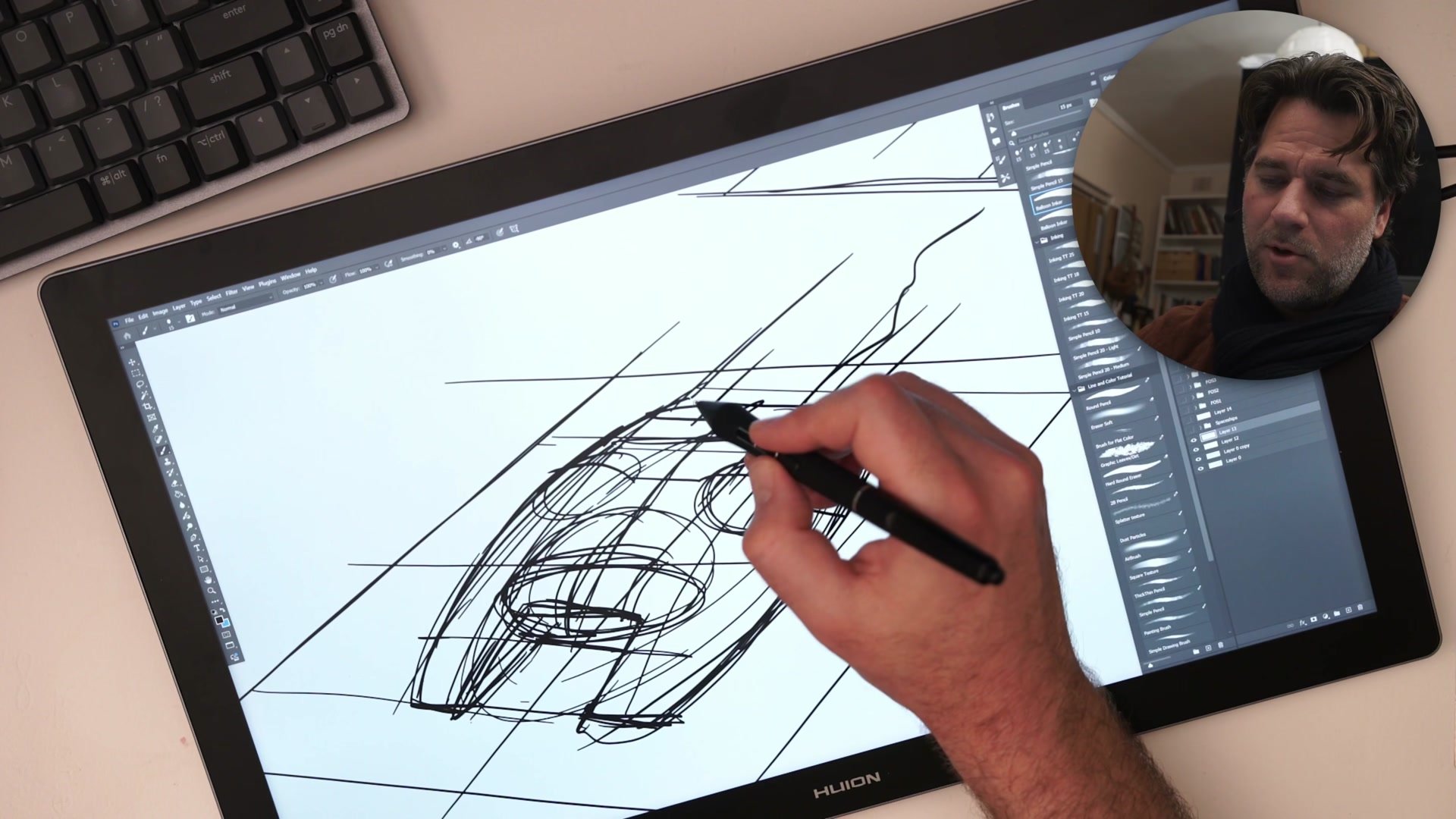
From Function to Sketches
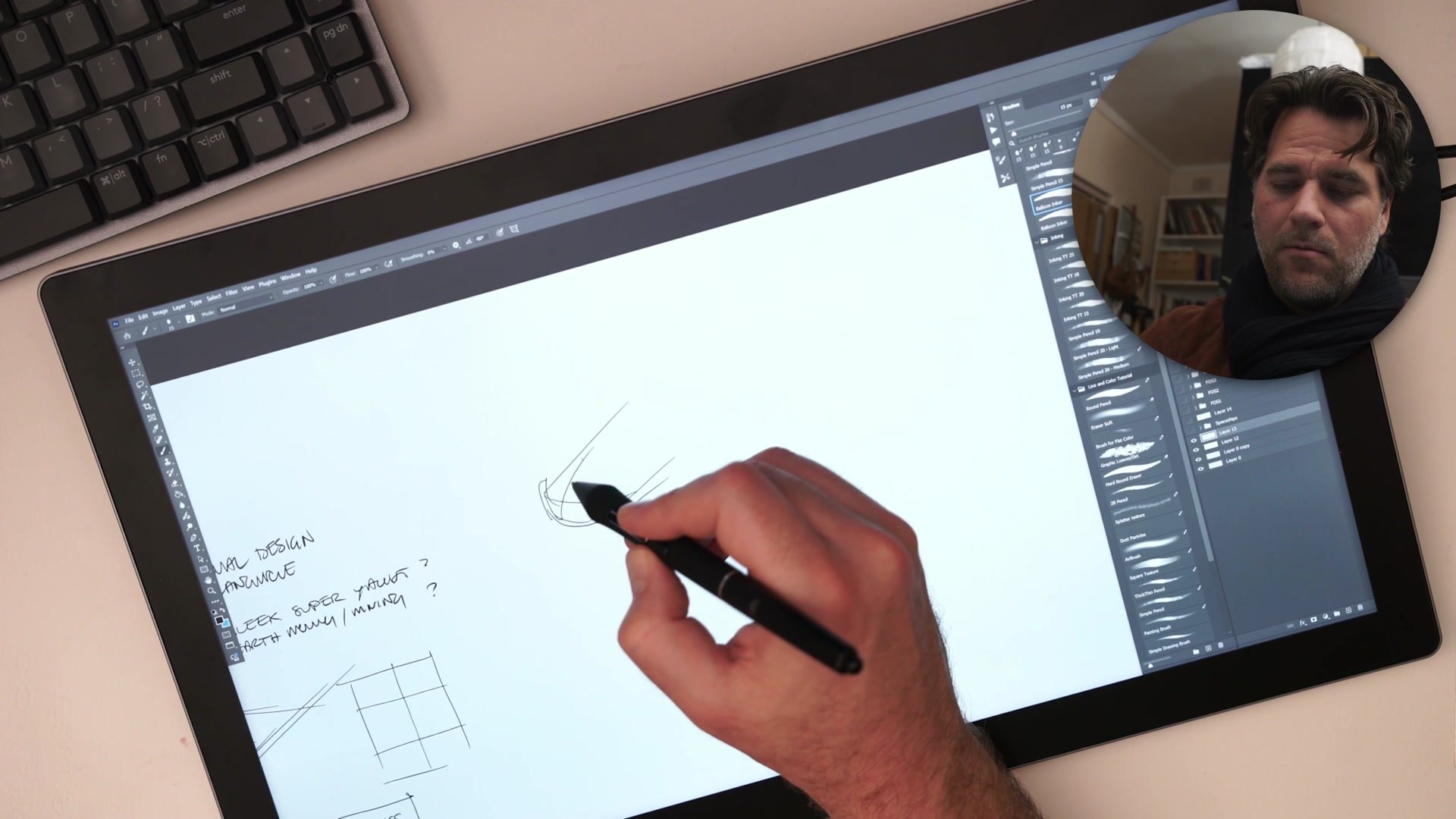
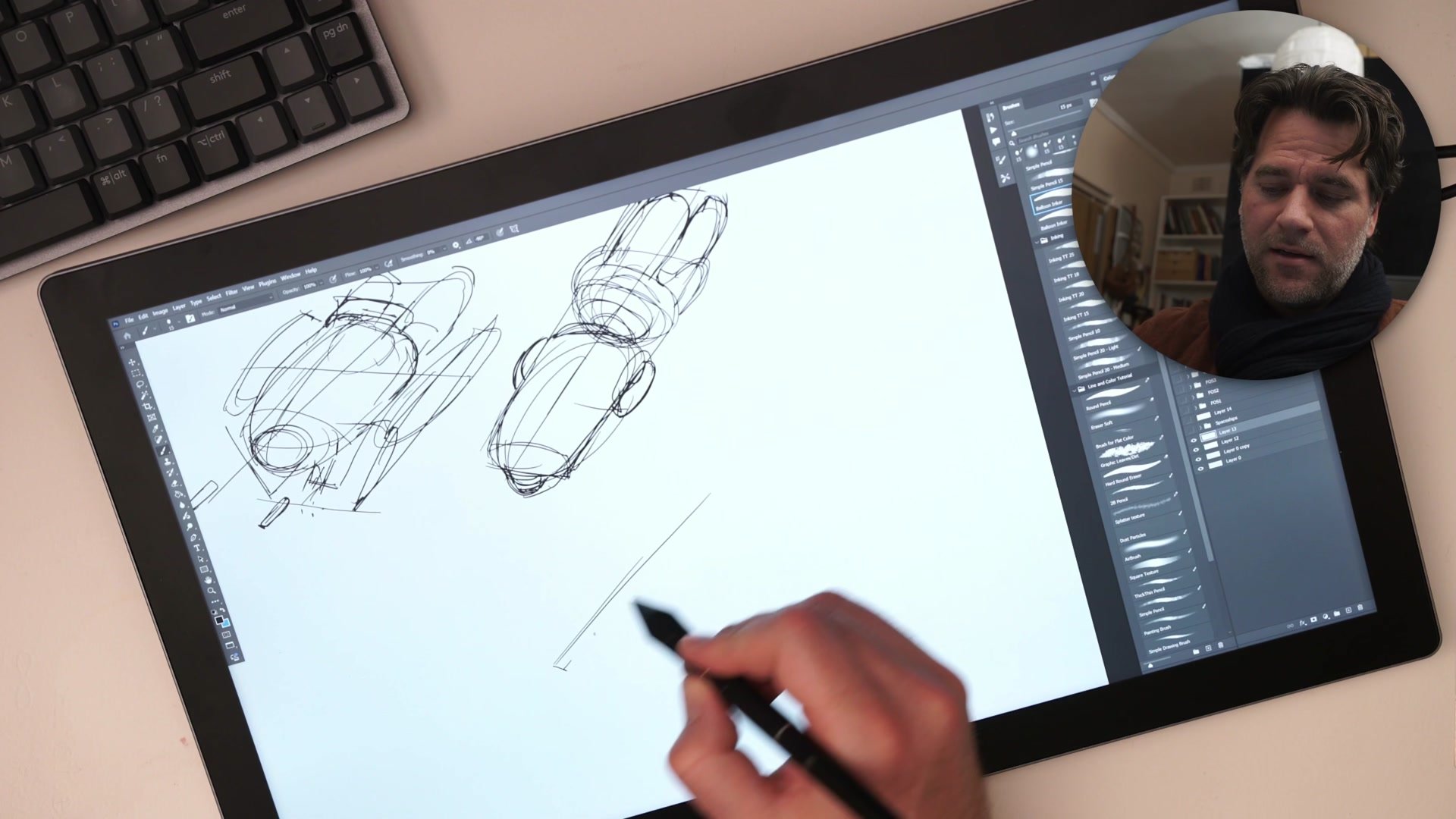
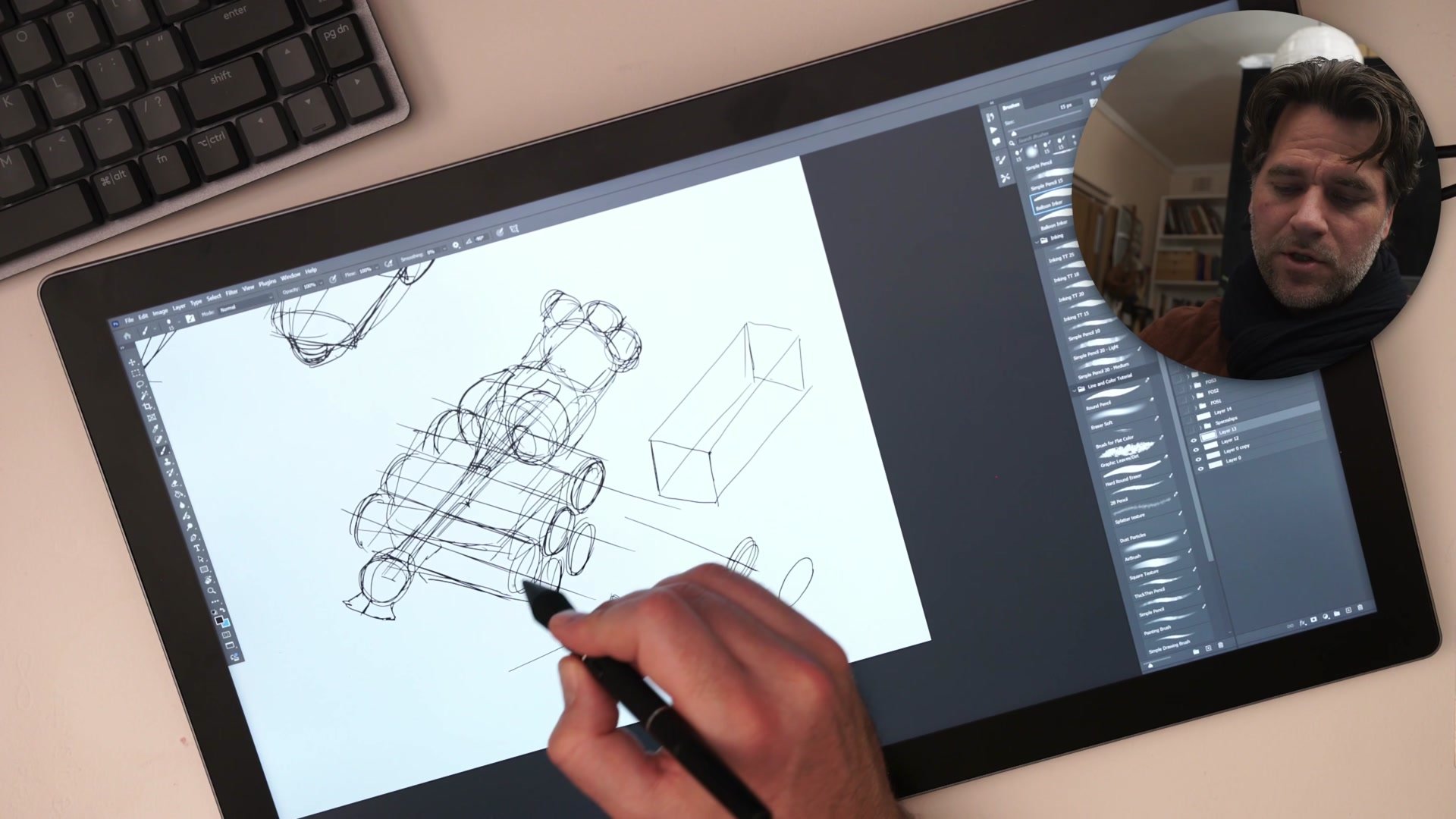
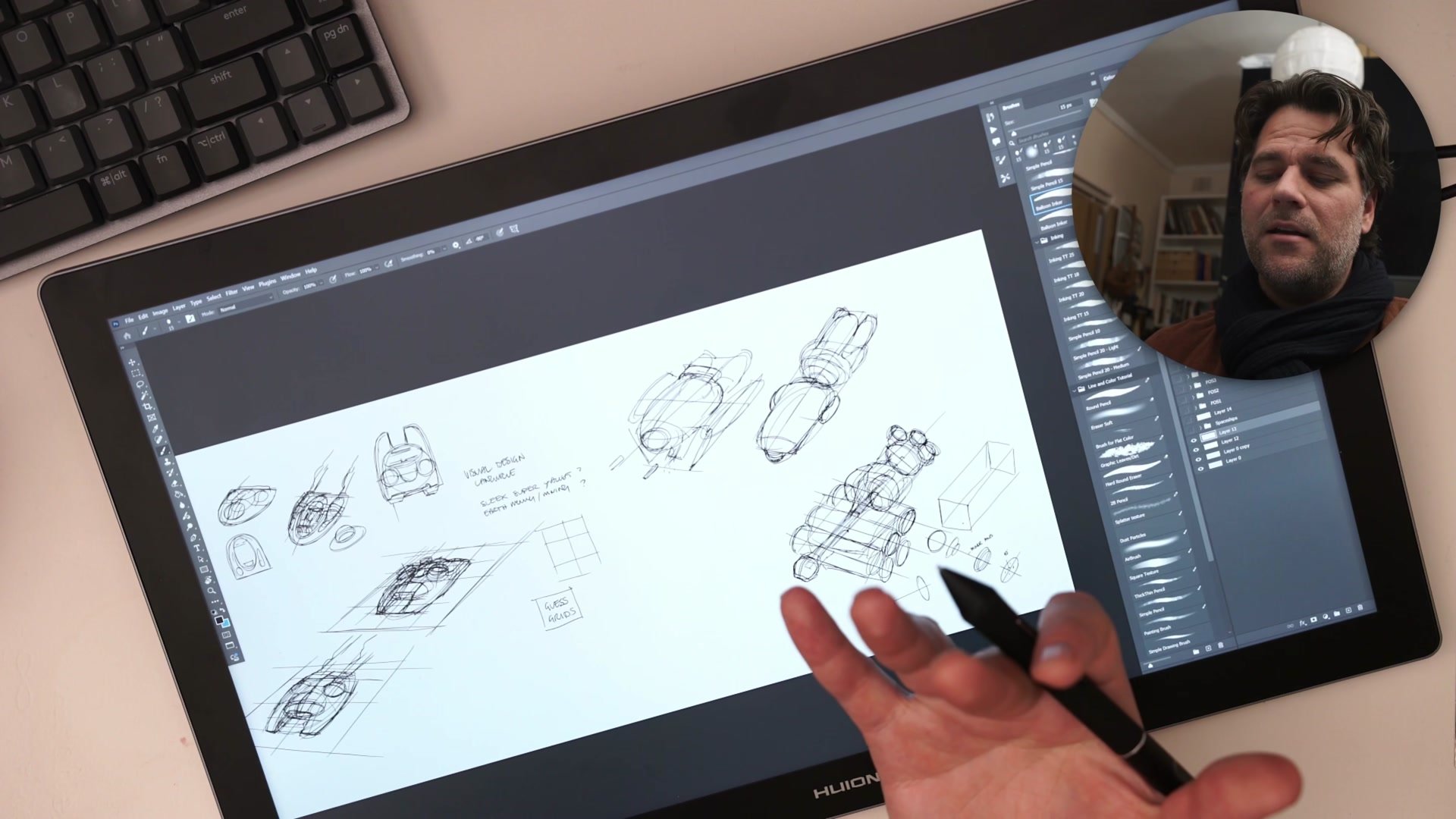
The design process demonstrated in the video starts with defining the four systems on paper before committing to any visual style. Choosing the ship's function first, whether luxury transport, cargo freighter, or survey vessel, immediately constrains the design in productive ways. Placing the habitation module, engine, fuel tanks, and functional equipment as simple blocks on a perspective grid creates compositions that would never emerge from purely aesthetic exploration.
Basic perspective grids and ellipse construction provide the drawing foundation needed for mechanical forms. Even rough thumbnails benefit enormously from understanding where the engine exhaust exits, how big people are relative to the ship, and whether the fuel is stored internally or in external tanks. Cross-referencing vehicle types from real life, such as super yachts for luxury ships and industrial cargo vessels for freighters, builds the visual library that makes fictional designs feel authentic. The shapes get interesting precisely because the engineering constraints force creative solutions.
Cargo Freighter Design
Key Principles
Function Before Aesthetics: Defining what a spaceship does, how it moves, where people live, and what fuel it uses before drawing creates designs that feel purposeful rather than decorative. Engineering constraints generate interesting shapes that pure aesthetic exploration never finds.
The Four-System Framework: Habitation, propulsion, fuel, and function are engineering requirements that compete for space within every ship. Balancing these competing needs produces authentic-looking designs regardless of how stylized or cartoony the final rendering becomes.
Visual Library Through Understanding: Studying real spacecraft, science fiction reference, and existing vehicle types builds the knowledge needed to design from imagination. Copying surface details from other artists produces derivative work, but understanding the underlying functionality enables truly original designs.
Scale Defines Everything: The size of a person relative to the ship completely changes the design. A two-seater sport ship has a cockpit that opens like a fighter jet canopy. A large crew vessel needs ramps, corridors, habitation modules, and recreational space that all influence the exterior silhouette.
Design Exercise
Choose a Purpose: Pick a specific ship function such as cargo hauler, luxury transport, mining vessel, or deep space survey craft. Define the crew size, mission duration, and how far it needs to travel.
Block Out the Systems: Using simple shapes on a rough perspective grid, place the habitation, propulsion, fuel storage, and functional equipment as separate blocks. Consider how big people are relative to the ship and where they enter and exit.
Cross-Reference Real Vehicles: Look at super yachts, cargo ships, NASA spacecraft, or industrial machinery that matches the ship's intended purpose. Borrow proportional relationships and functional details to make the design feel grounded in reality.