Plan Your Images With the 5% Rule
Summary
The Planning Problem
One of the most common reasons artwork falls apart, particularly when it comes to more finished illustrations and larger works with significant detail, is a lack of planning. How much time we spend creating thumbnails and figuring out what an image should be before we start drawing it makes an enormous difference to the outcome. But the challenge is that planning and thumbnailing are typically associated with professional illustration work, complex briefs, and client-driven ideation processes. Most artists, especially those earlier in their journey, skip this step entirely for their everyday art.
The concept at the heart of this is remarkably simple: spend at least five percent of your total art creation time planning what that thing should be. Whether the piece will take thirty minutes or thirty hours, that small upfront investment in a thumbnail or rough sketch creates the foundation everything else sits on. When the thumbnail is good, the entire process feels like a snowball rolling downhill. When it is skipped, the process feels like pushing a rock uphill, and the problems that surface halfway through become much harder to solve.
Planning in Practice
Start Small, Build the Muscle
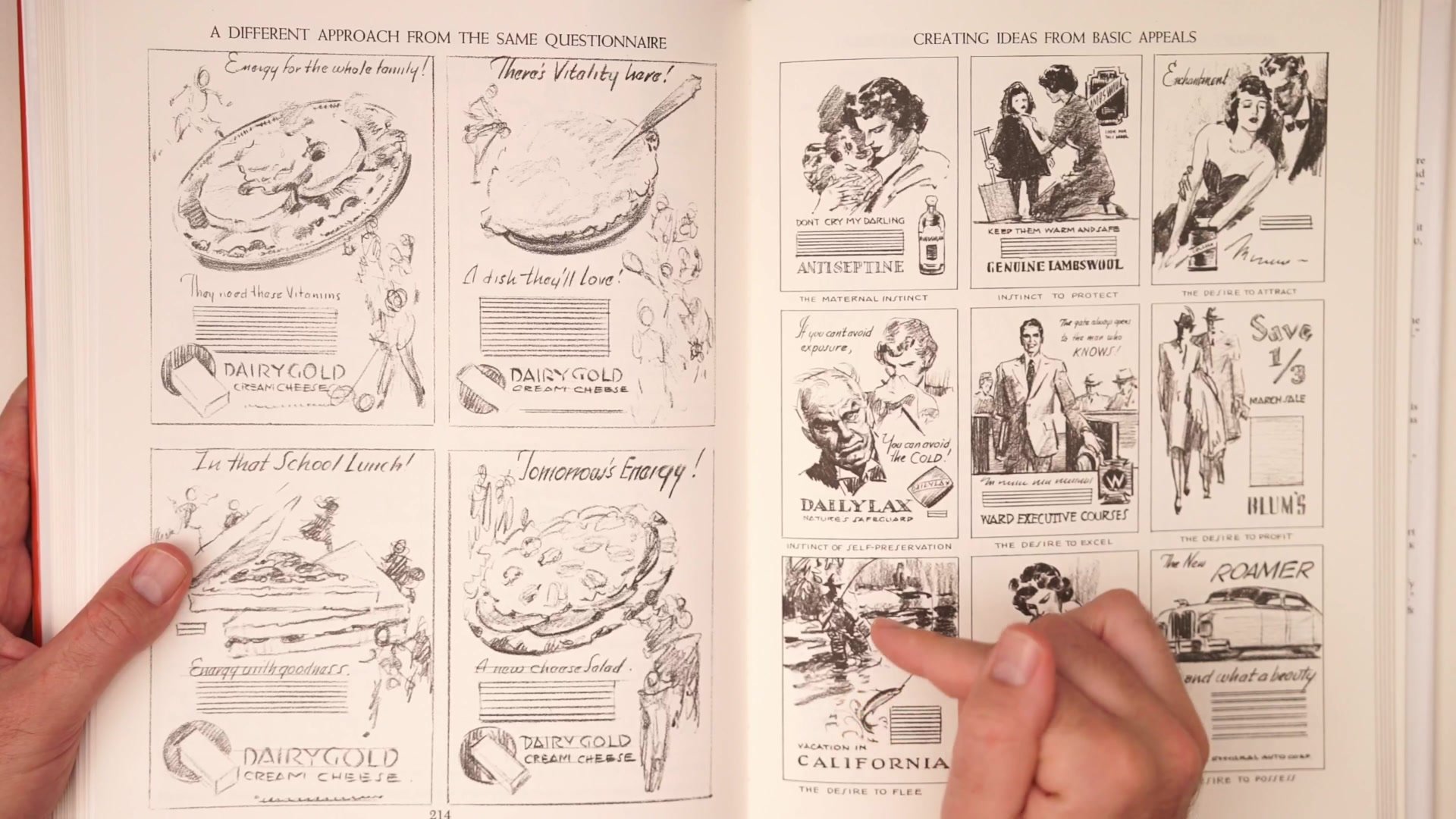
The instinct for many artists is to reserve thumbnailing for serious illustration work. Andrew Loomis in Creative Illustration demonstrates extensive planning processes for professional illustration, and most courses teach thumbnailing in that context. The disconnect is that artists then assume this level of planning does not apply to simpler work like sketchbook drawings or one-hour speed paints.
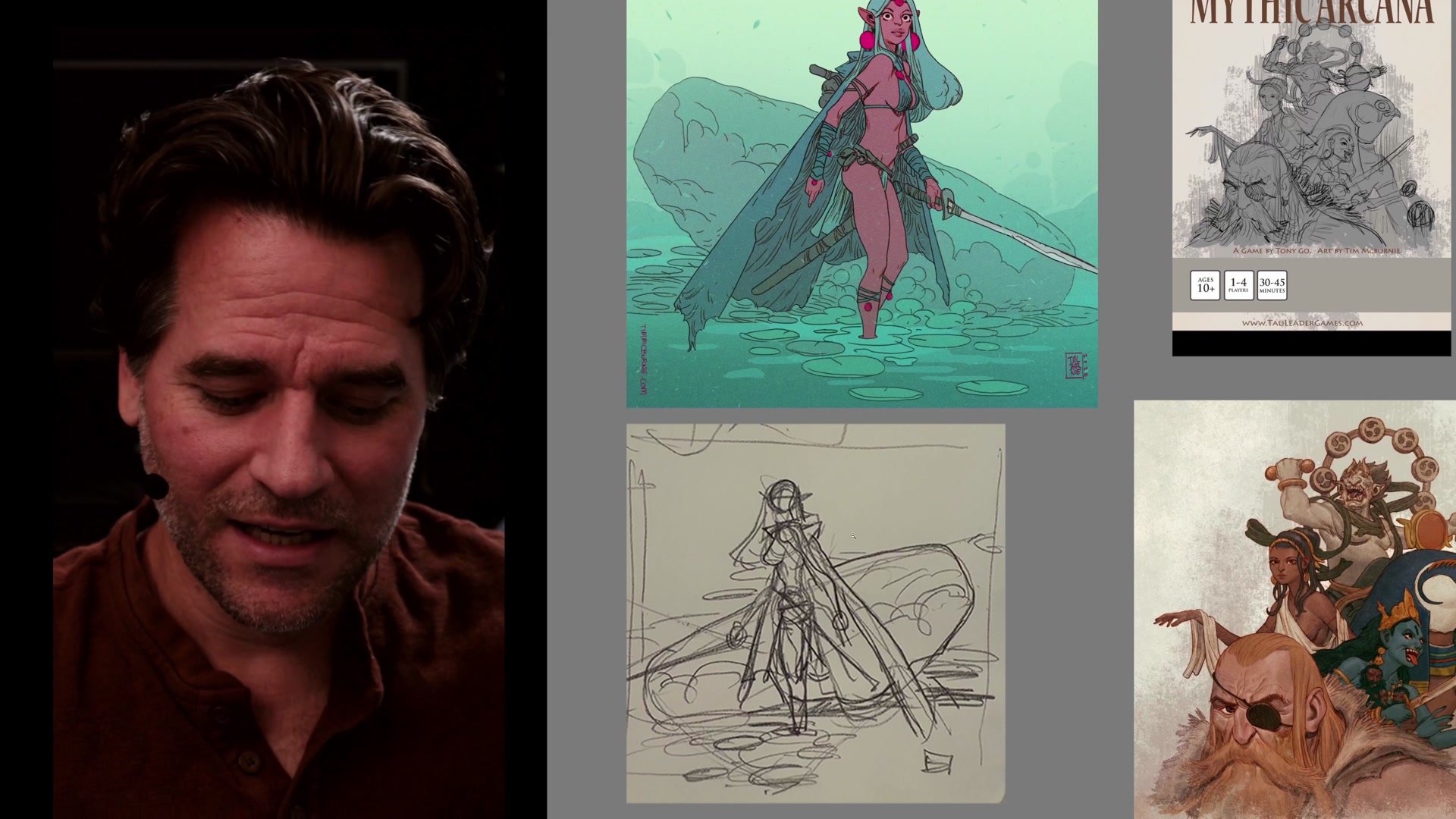
What actually unlocks this skill is practicing it on everything. Even spending five minutes thumbnailing a one-hour sketch makes a substantial difference, because those five minutes establish where the figure goes, what the basic composition looks like, and whether the shapes create an interesting arrangement. Building this muscle on small, low-pressure work is exactly what makes it effortless when the stakes are higher. Art is created through a process with multiple steps, and the more familiar that process becomes through regular practice, the more reliable every part of it gets. A quick thirty-second sketch before a ten-minute drawing is already applying the five percent principle.
Scaling Up the Plan
Planning Matches the Stakes
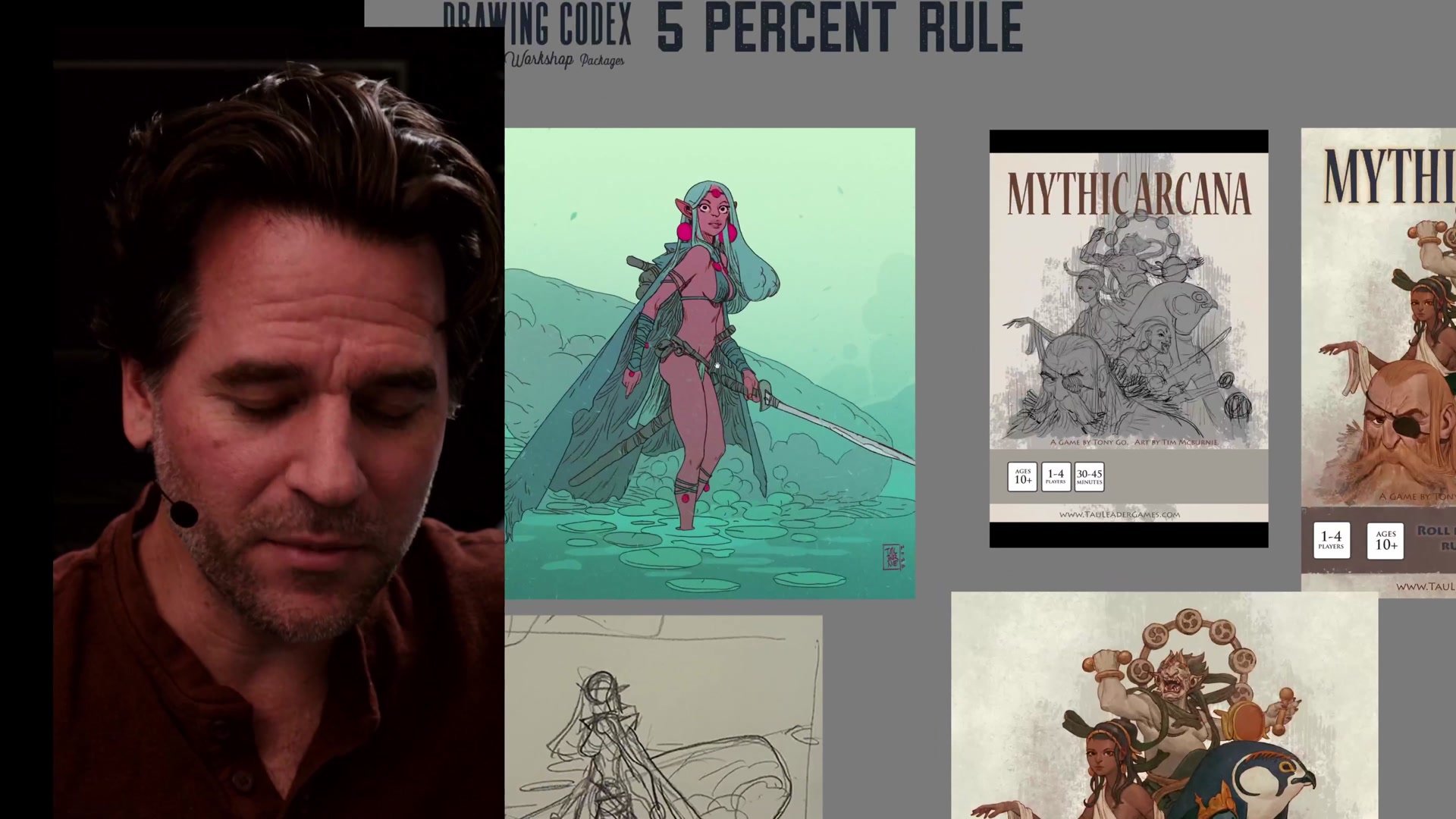
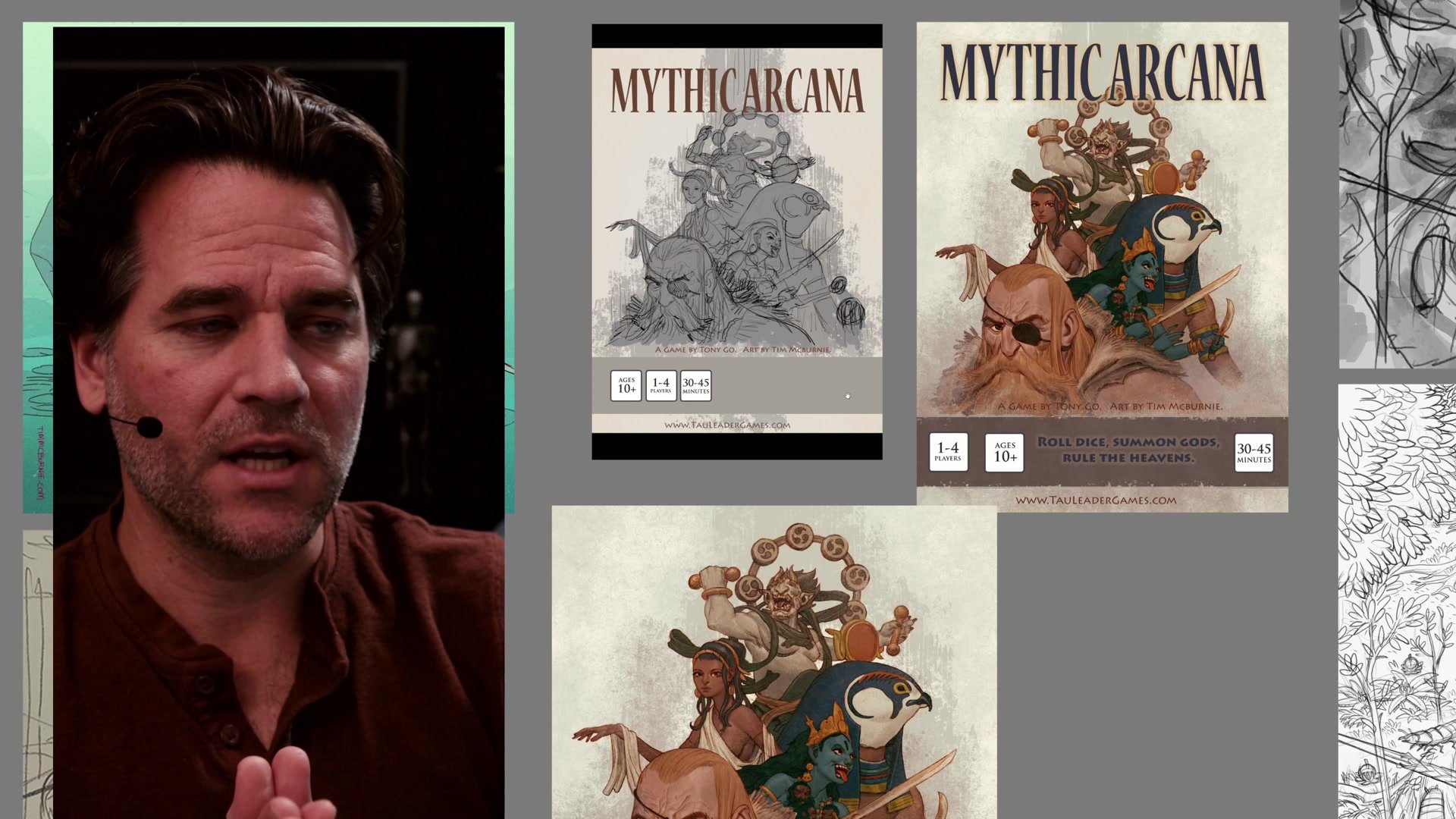
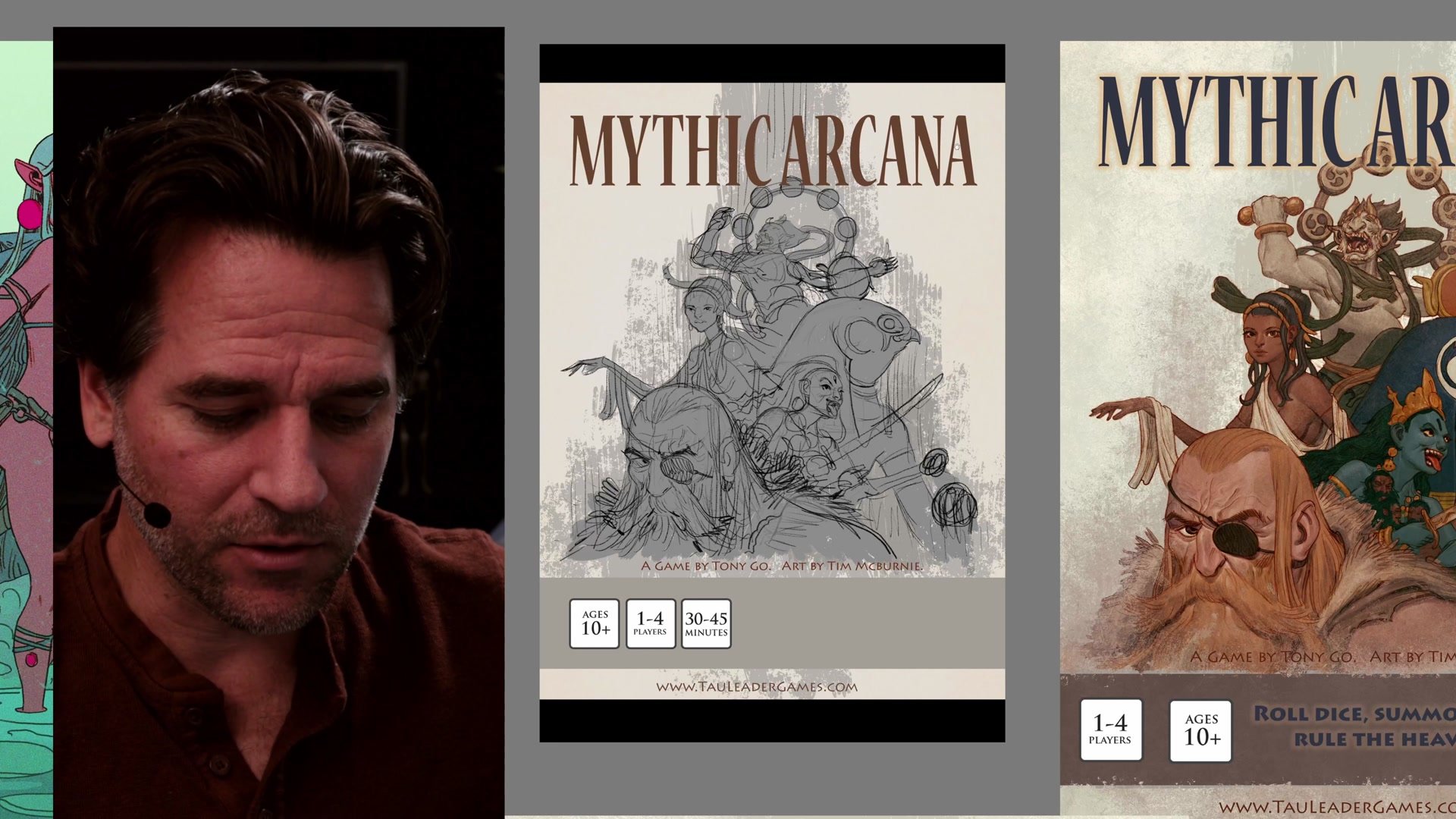
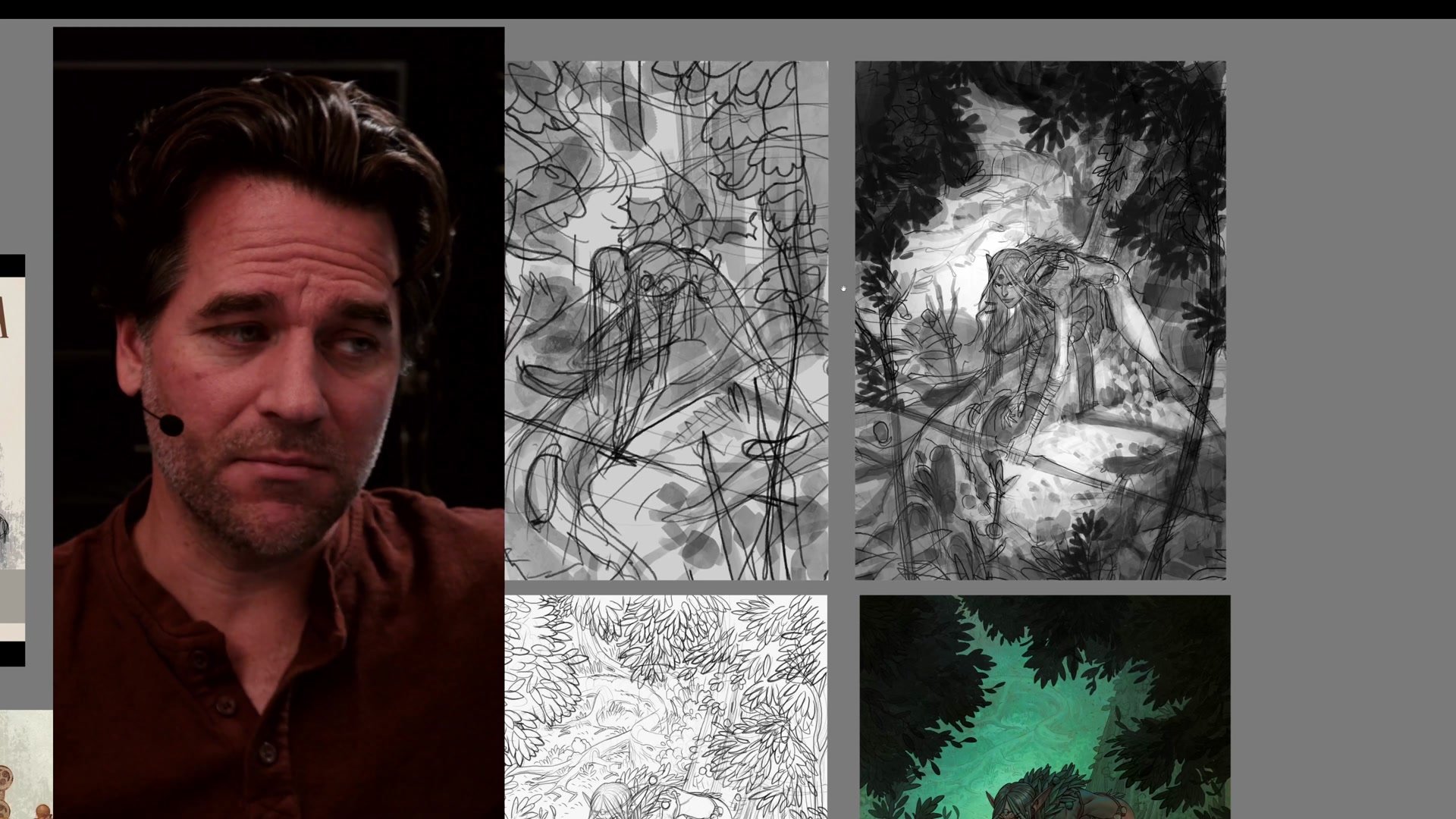
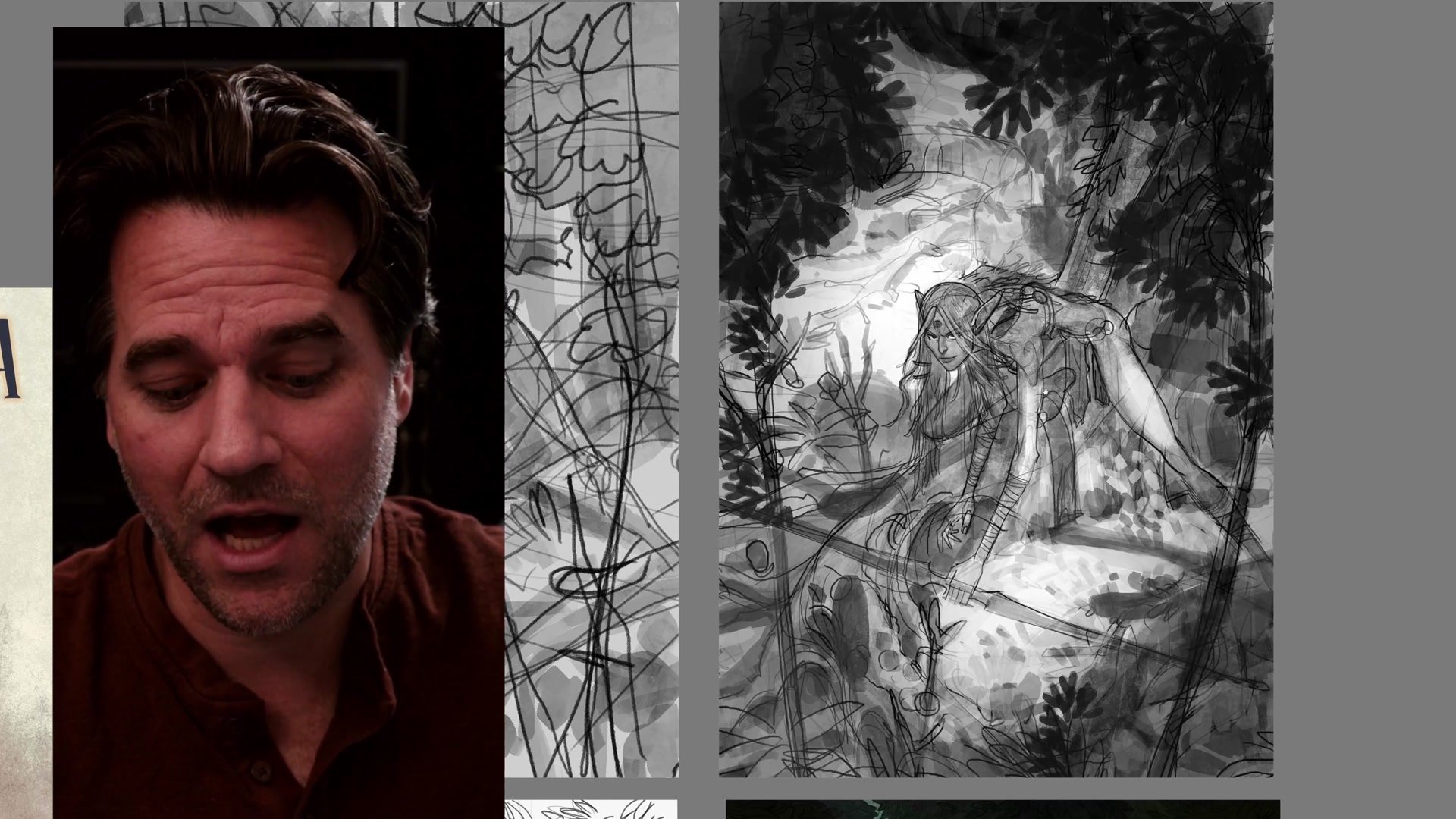
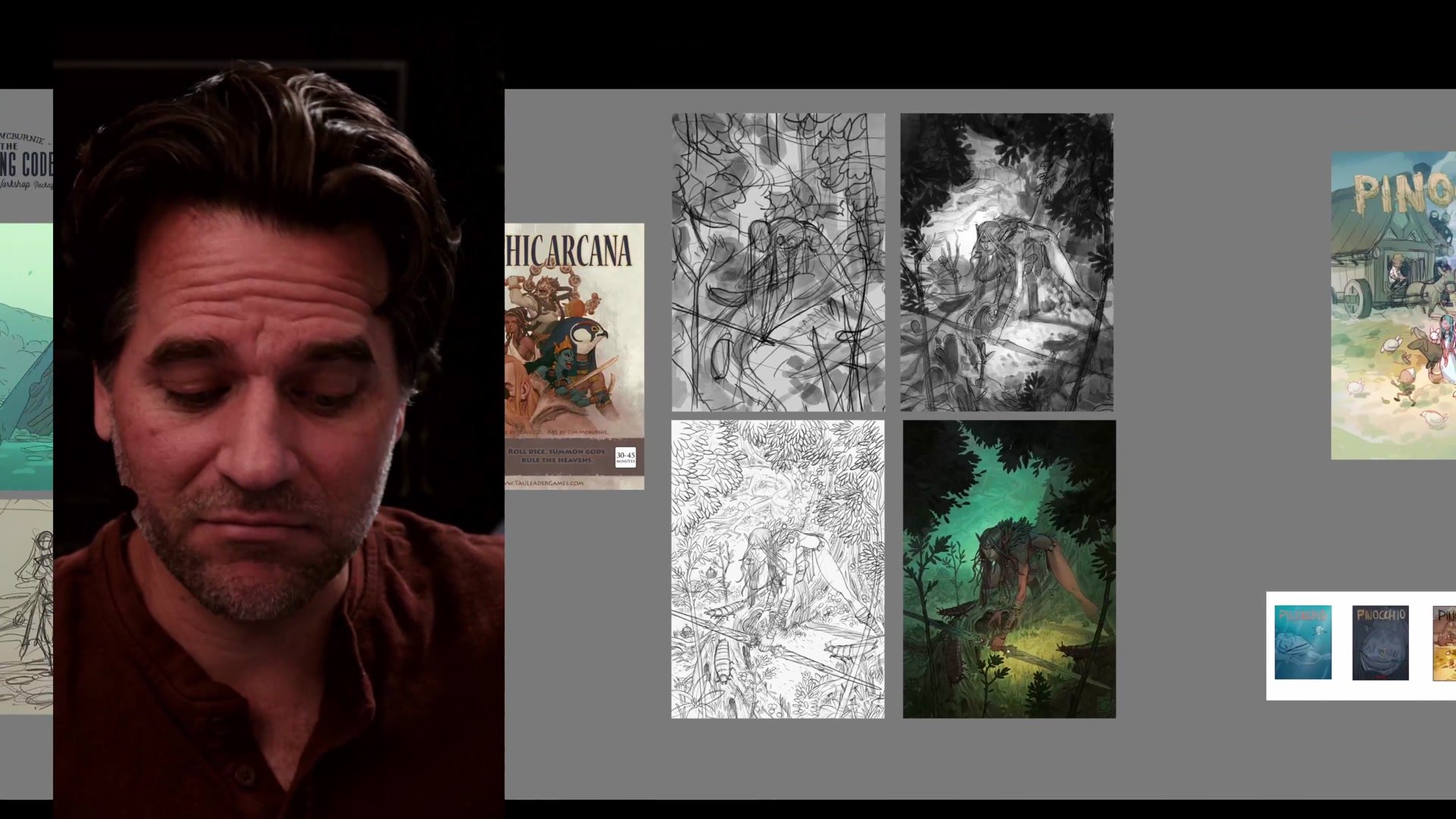
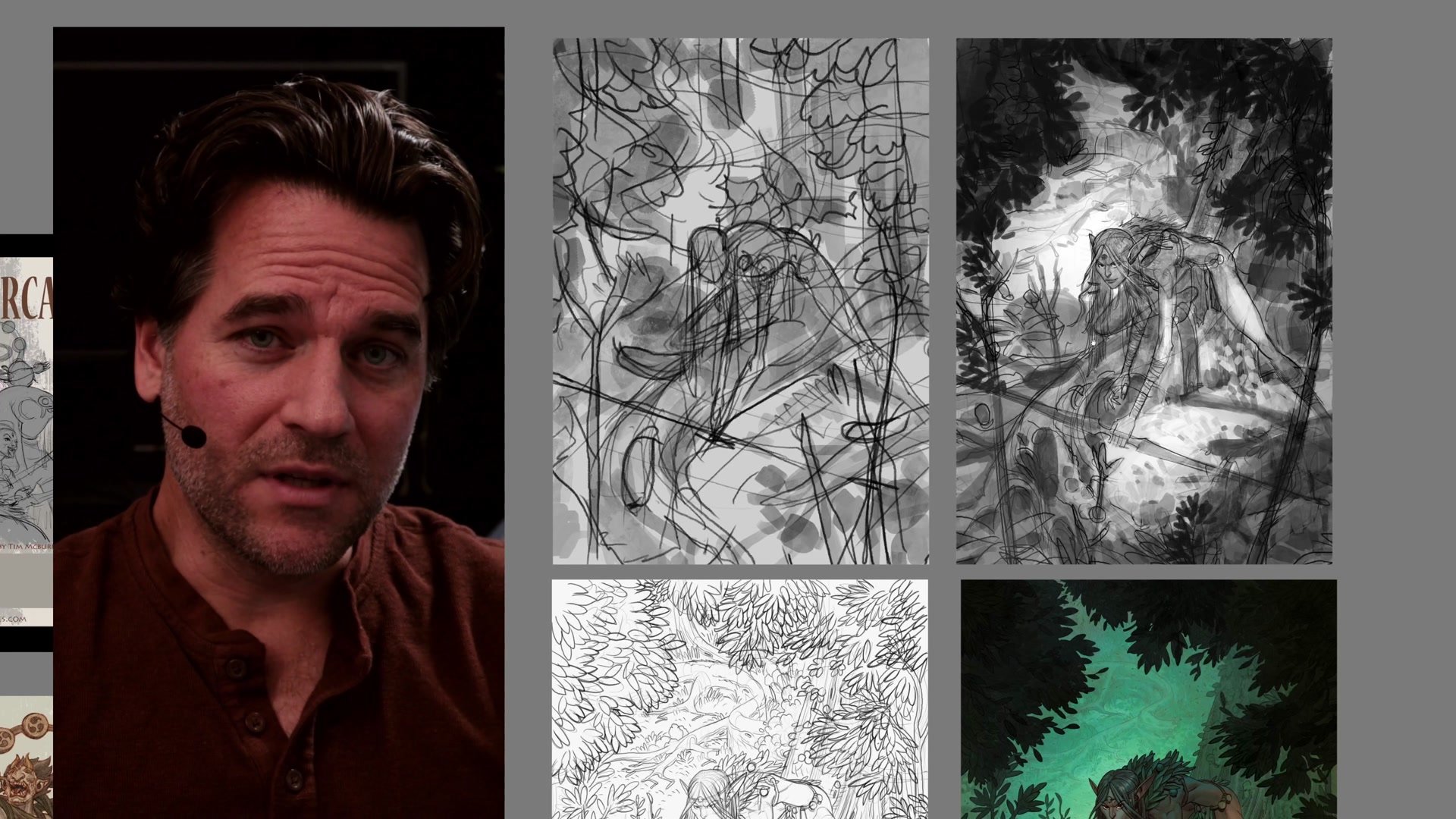
As project complexity increases, planning naturally needs to grow with it. A board game cover that must integrate with a logo, player count information, and website details requires deliberate positioning of the artwork within a design framework. A twenty-five hour illustration benefits from at least an hour of thumbnailing, plus additional stages where the tonal arrangement and colour relationships are worked out before committing to the final render.
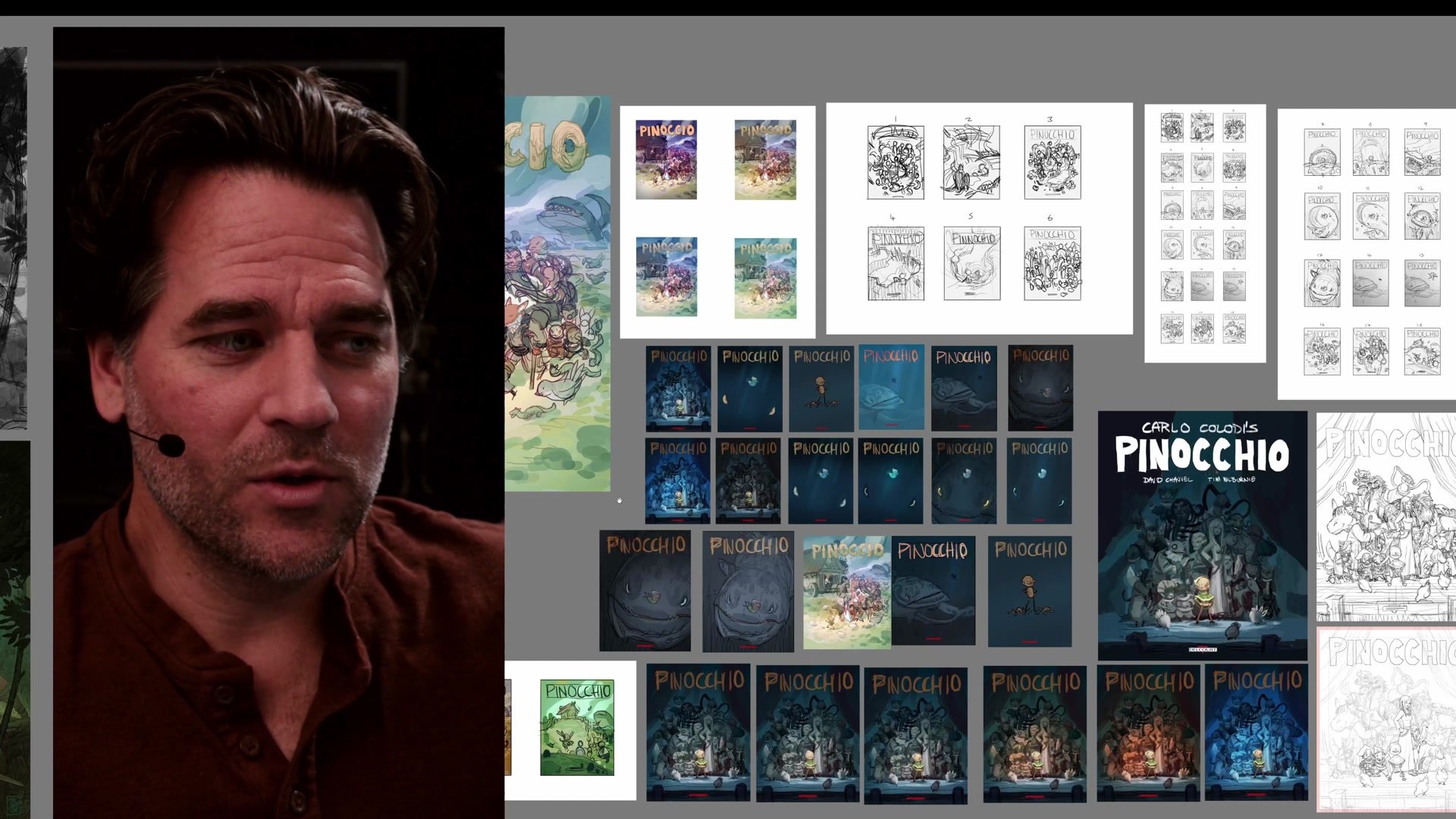
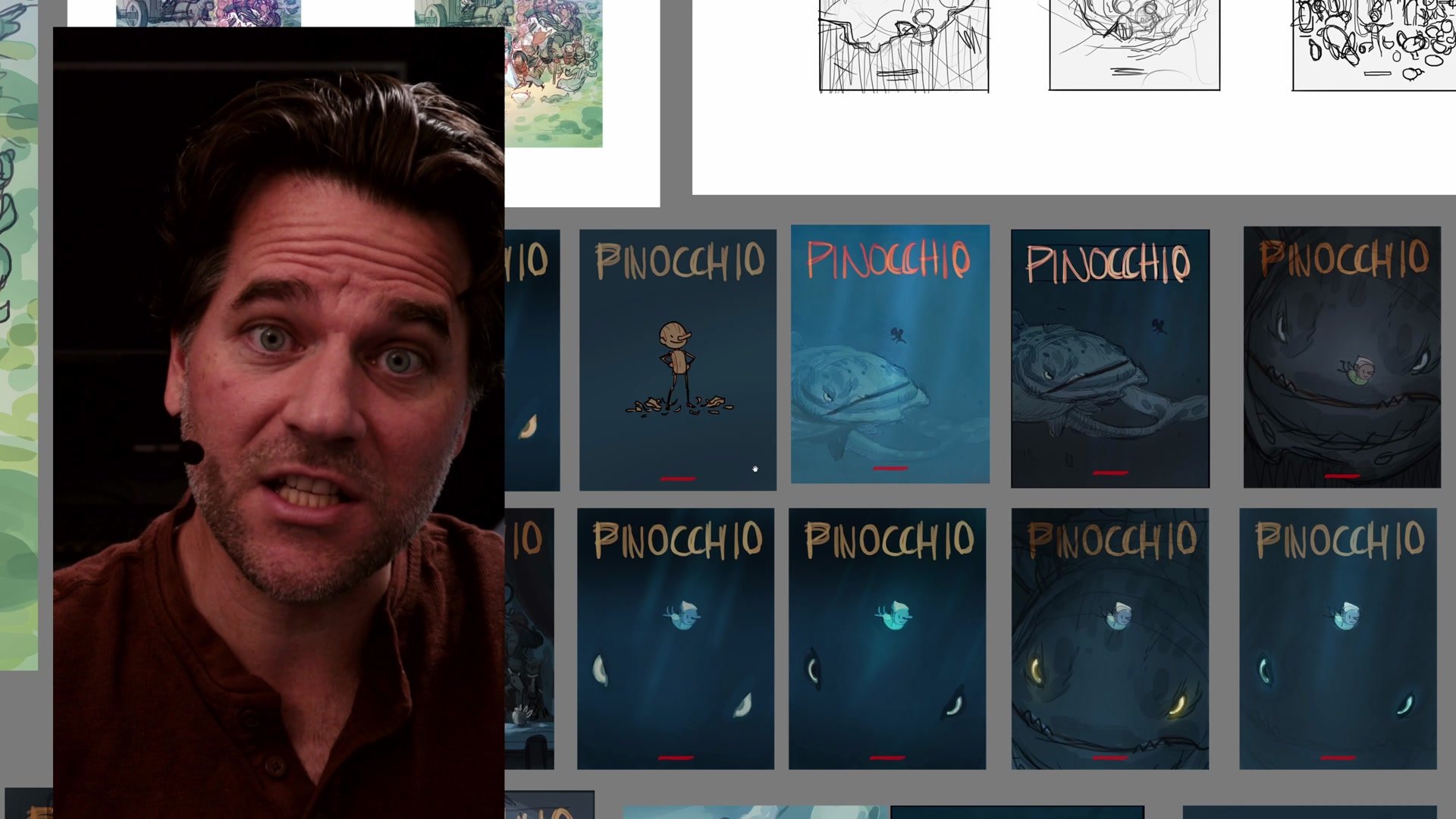
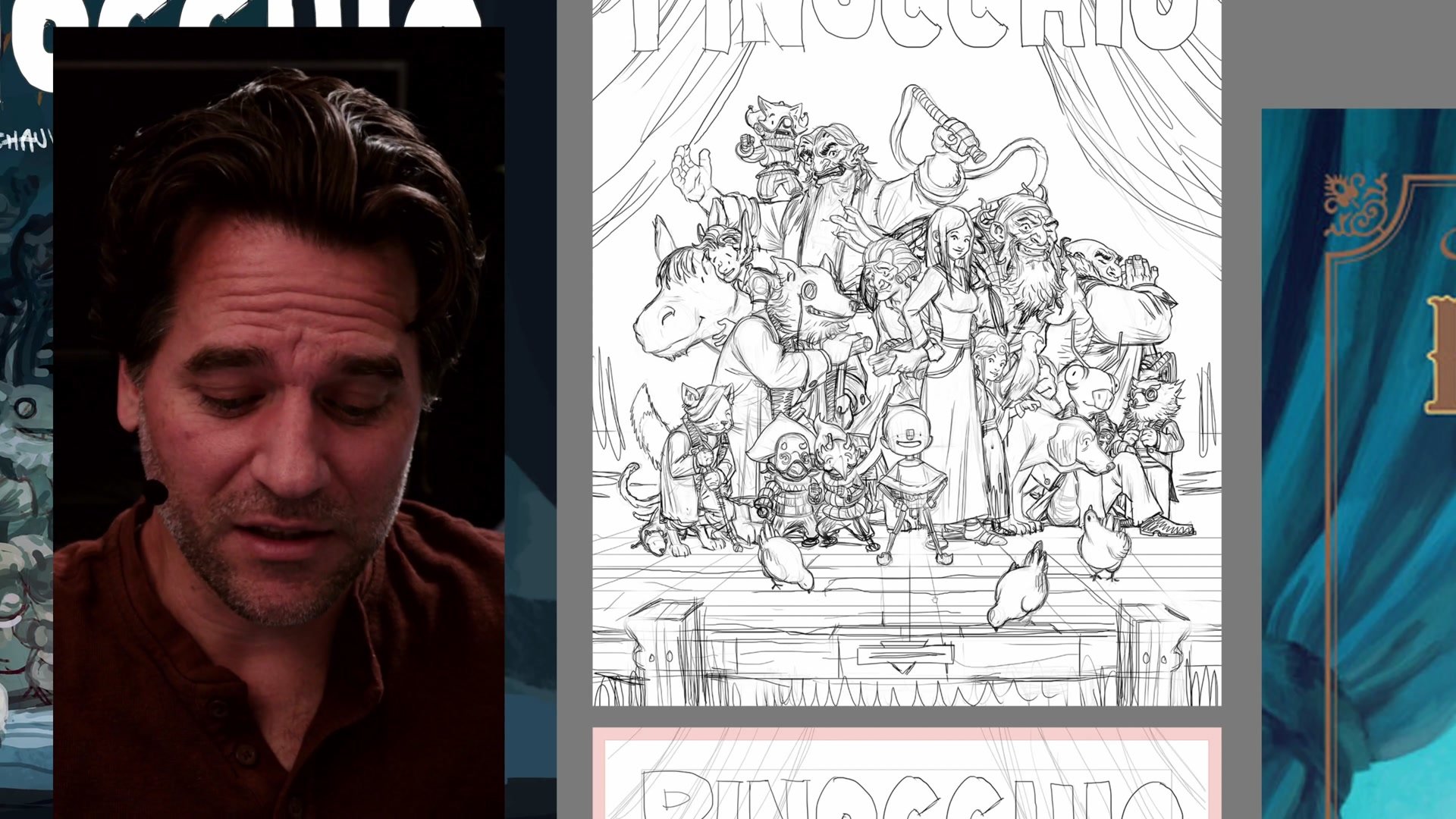
These intermediate planning stages are often where the real value appears. A rough tonal study that establishes whether a character reads as dark against a light background, or vice versa, prevents the devastating discovery at ninety-five percent completion that the values are not working. Having that plan anchors the process through the inevitable ugly middle phase that every illustration goes through, regardless of medium or style. It allows the artist to push forward with confidence rather than abandoning work because the direction feels uncertain. The Pinocchio book cover, for example, went through dozens of thumbnail variations, colour studies, and iterative refinements before the final illustration could begin with full confidence.
Professional Iteration
Planning Creates Freedom
The counterintuitive truth about planning is that it creates more freedom, not less. When the composition, value structure, and basic arrangement are resolved in a thumbnail, all the mental energy that would have been spent second-guessing those decisions during execution becomes available for the actual craft of drawing. Anatomy, construction, proportion, rendering, getting things on the right layers in Photoshop, all of these demand focused attention. Trying to solve composition problems and technical problems simultaneously is what causes that exhausting feeling of not knowing where an image is going.
Planning also makes it possible to return to work after a break. Setting an image down for a weekend and coming back to it without a plan means starting from scratch mentally. With a thumbnail to reference, picking the work back up becomes straightforward. The entire creative experience shifts from anxiety-driven to relaxed and confident, and that emotional state shows up in the quality of the marks on the page.
Key Concepts
The 5% Rule: Spend at least five percent of total art creation time planning and thumbnailing. This applies to everything from quick sketchbook drawings to professional covers, and acts as a reliable minimum that keeps the process on track.
Planning Scales With Stakes: A thirty-second sketch before a ten-minute drawing, five minutes before a one-hour piece, and a full hour or more before a twenty-five hour illustration. The principle stays the same even as the investment grows with project complexity.
Planning Unlocks Execution: When the thumbnail is resolved, the creative process shifts from pushing a rock uphill to a relaxed, confident progression where technical skills can be fully applied without the distraction of unresolved compositional decisions.
{% component: video_card_start, title: "Try the 5% Rule" %} Start With Your Next Sketch: Before beginning any drawing, spend five percent of the planned time on a quick thumbnail. For a ten-minute sketch, that is thirty seconds. For an hour-long piece, spend three to five minutes roughing out the composition.
Keep It Rough: The thumbnail does not need to be polished. Focus on where the figure sits, what the basic shapes look like, and whether the overall arrangement creates something interesting. Respond to the shapes on an abstract level.
Scale Up When Ready: Once this habit feels natural on small work, apply it to more ambitious pieces. Add tonal planning, consider value arrangements, and think about how elements like lighting and silhouettes support the composition before committing to the full illustration. {% component: video_card_end %}