Making Any Scene Dimensional: My Journey
Summary
The Depth Gap
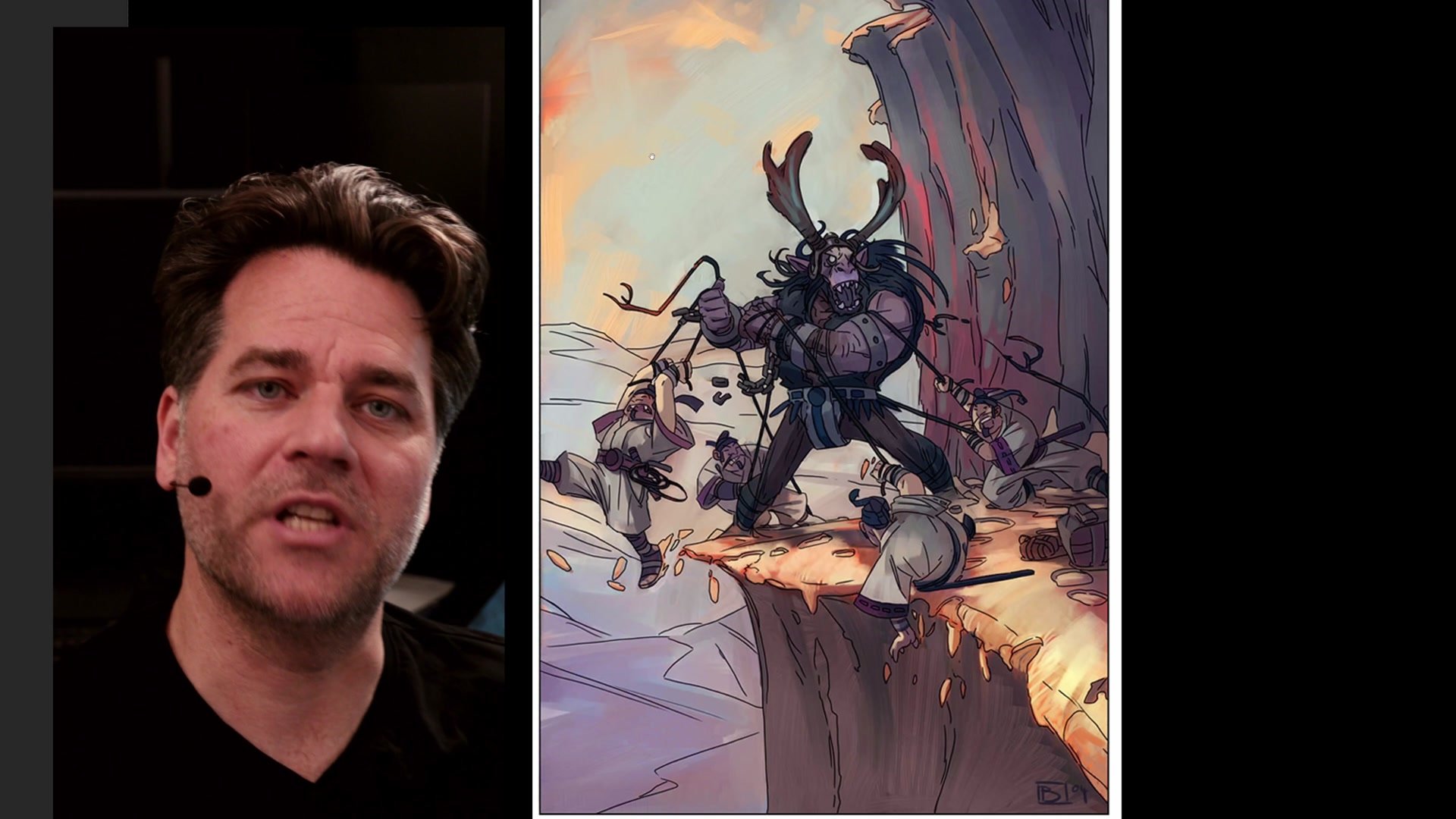
One of the most frustrating patterns in artistic development is inconsistency. Some images come together and feel dimensional, alive, interesting. Others fall completely flat. The pattern tends to look like this: scenes with natural drama -- characters battling on a mountainside, epic vistas, sweeping panoramas -- tend to work. These subjects come loaded with built-in depth cues. There is overlap, atmospheric perspective, characters at different distances, natural foreground-to-background separation. The composition almost does the work on its own.
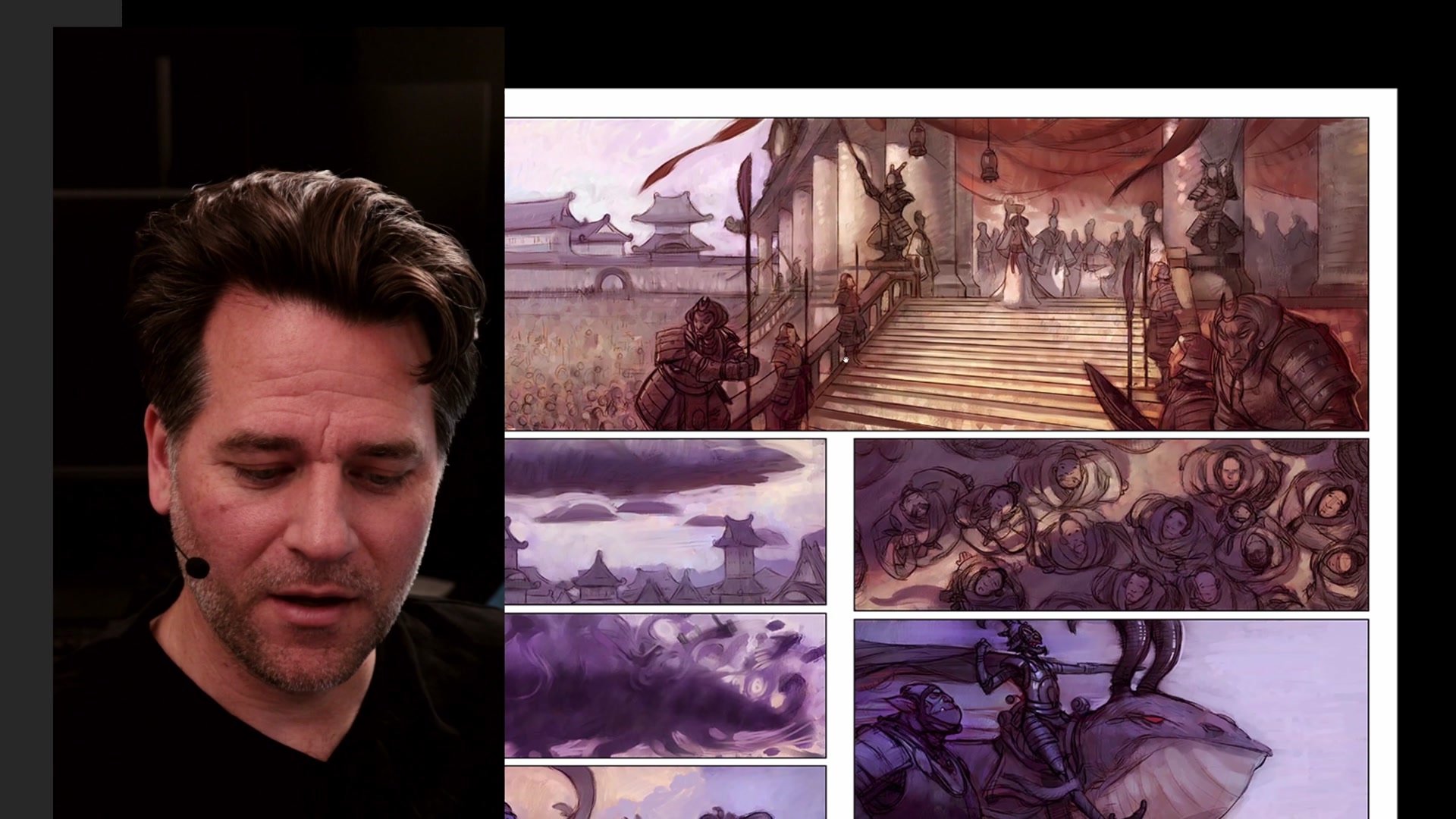
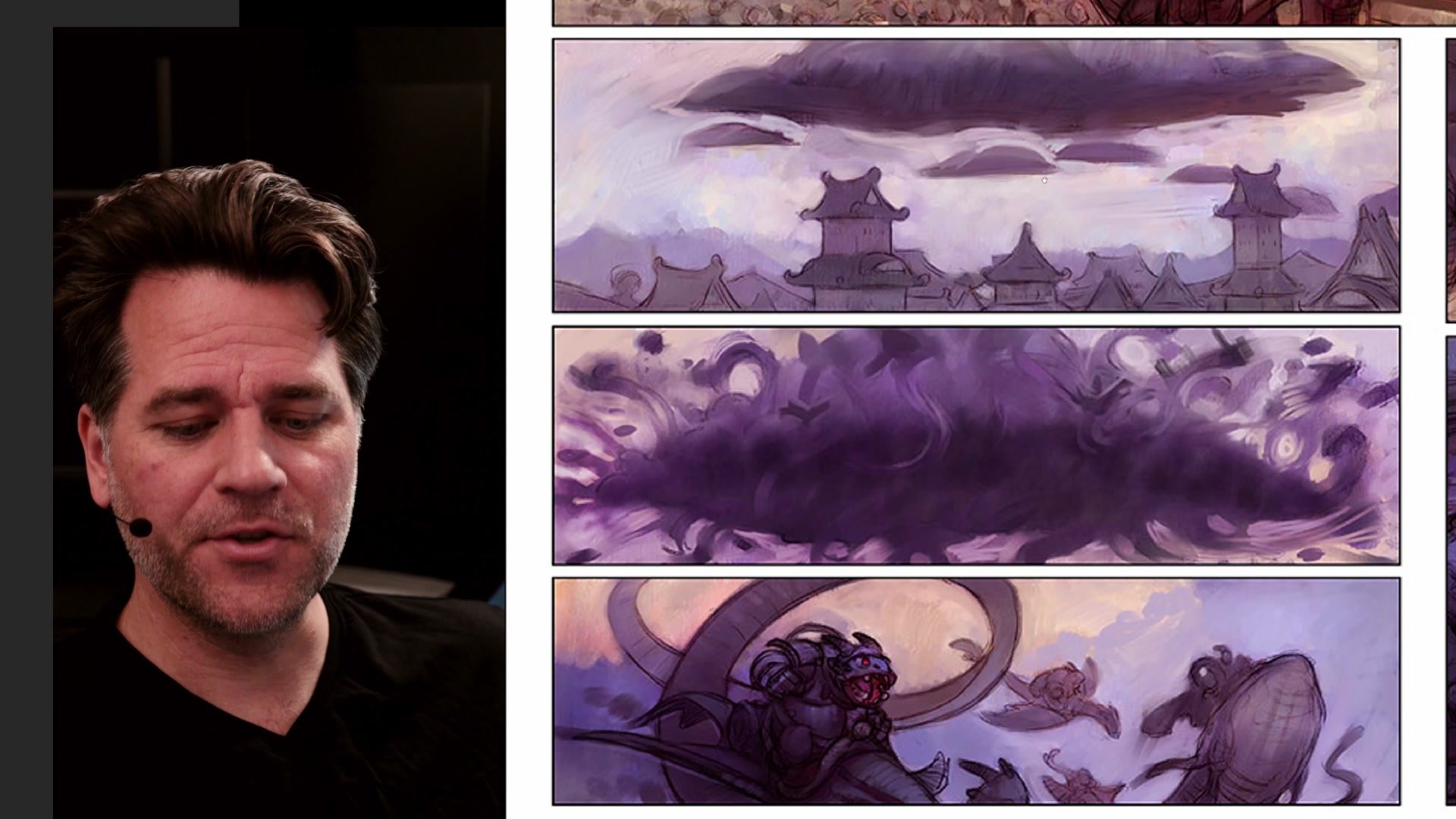
But give that same artist a simple scene -- clouds, a character walking up a ladder, a basic establishing shot -- and everything collapses. No amount of painterly rendering or sketchy energy saves a panel that lacks constructed depth. The rendering skill is irrelevant when the compositional foundation is missing. This gap creates a dangerous limiting belief: that certain artists are just "the kind who create dynamic work" and need to find jobs that let them draw cool stuff while avoiding boring scenes. What is actually happening is a failure to construct depth deliberately. When the subject provides natural depth cues, the image succeeds. When it requires active construction through compositional choices, the image fails.
Early Work and the Depth Gap
Simpler Scenes Need More
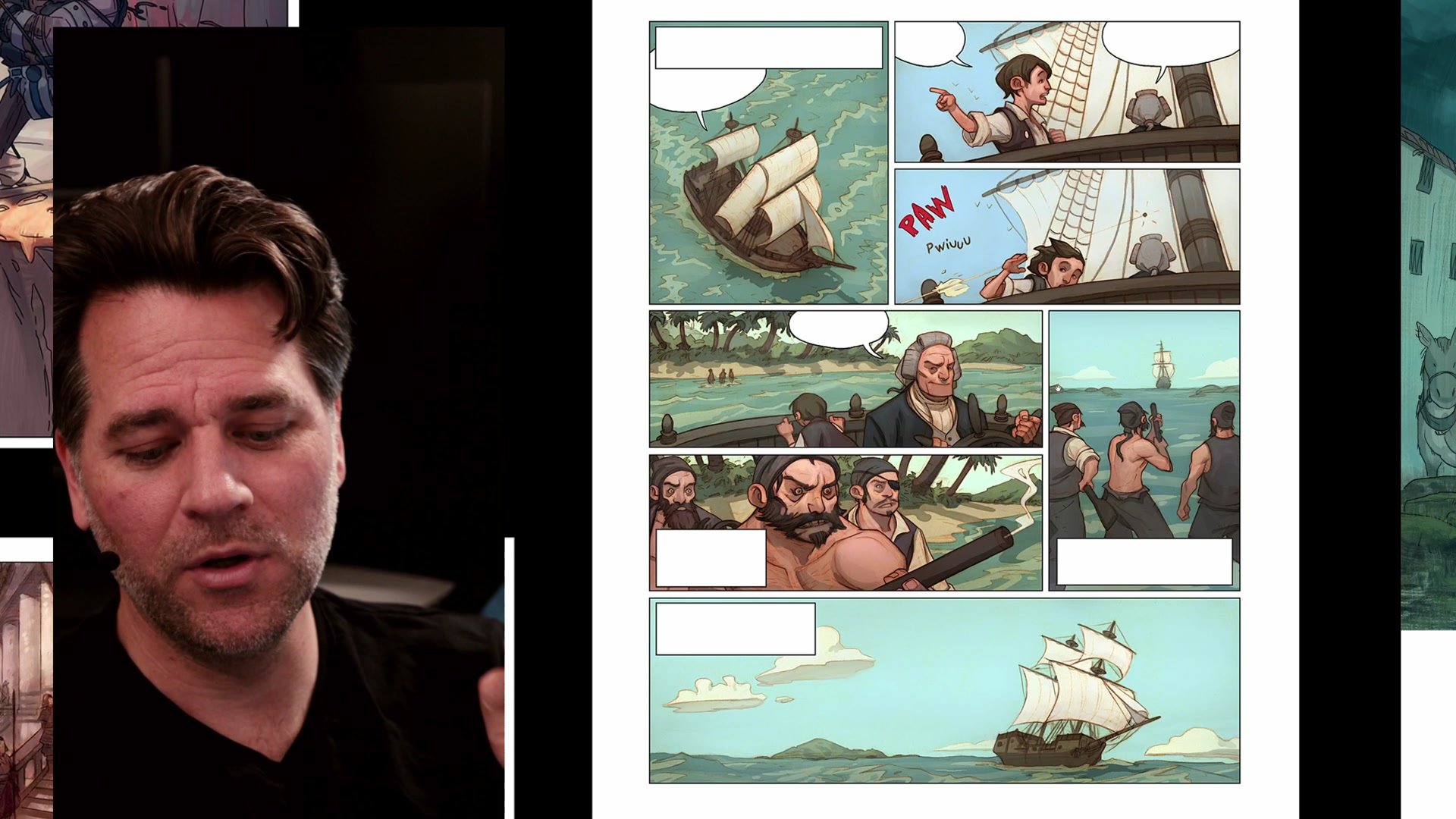
Working from another artist's storyboards can expose this gap sharply. The storyboards for the Seven Pirates comic included compositions that seemed unnecessarily complex -- shots with carefully constructed foreground elements, deliberate overlap, strong separation of spatial planes where a simpler approach might have seemed adequate. The revelation was that simpler scenes actually require more compositional work to make interesting, not less. When the subject does not hand depth on a plate, the artist must construct it through foreground elements, overlap, and clear spatial relationships. This is not extra work. This is the actual work of composition.
The critical mindset shift follows from this: it is always the artist's responsibility to make whatever is being drawn as interesting as possible. Thinking "this is just a boring scene, not my fault" creates a self-fulfilling cycle. Taking responsibility and asking "how can I make this as dimensionally interesting as possible?" turns every image into training. A good cinematographer can take any old thing and through lighting design, angle, and framing make it into art. The same principle applies to illustration and comics.
Depth Construction in Practice
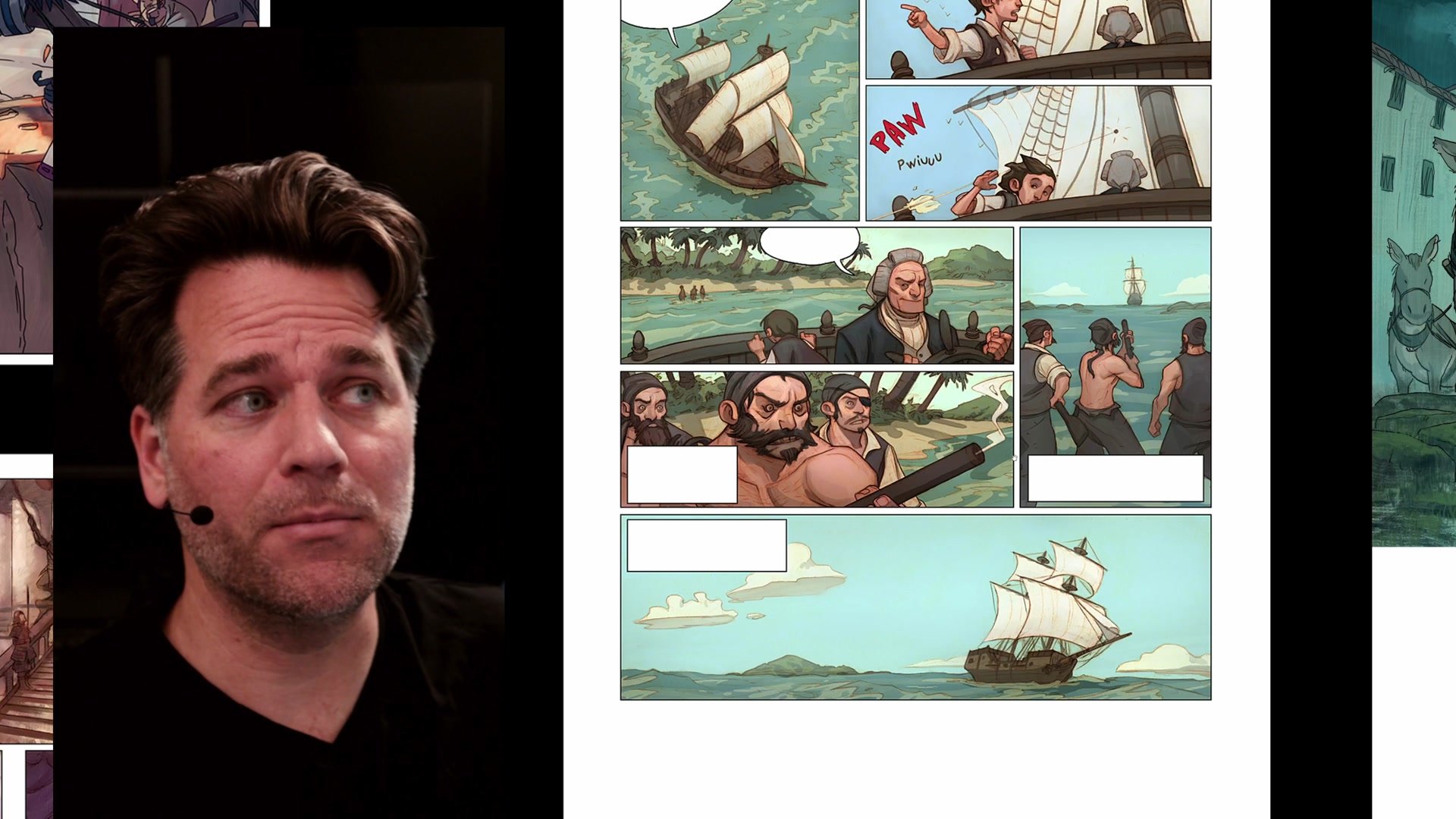
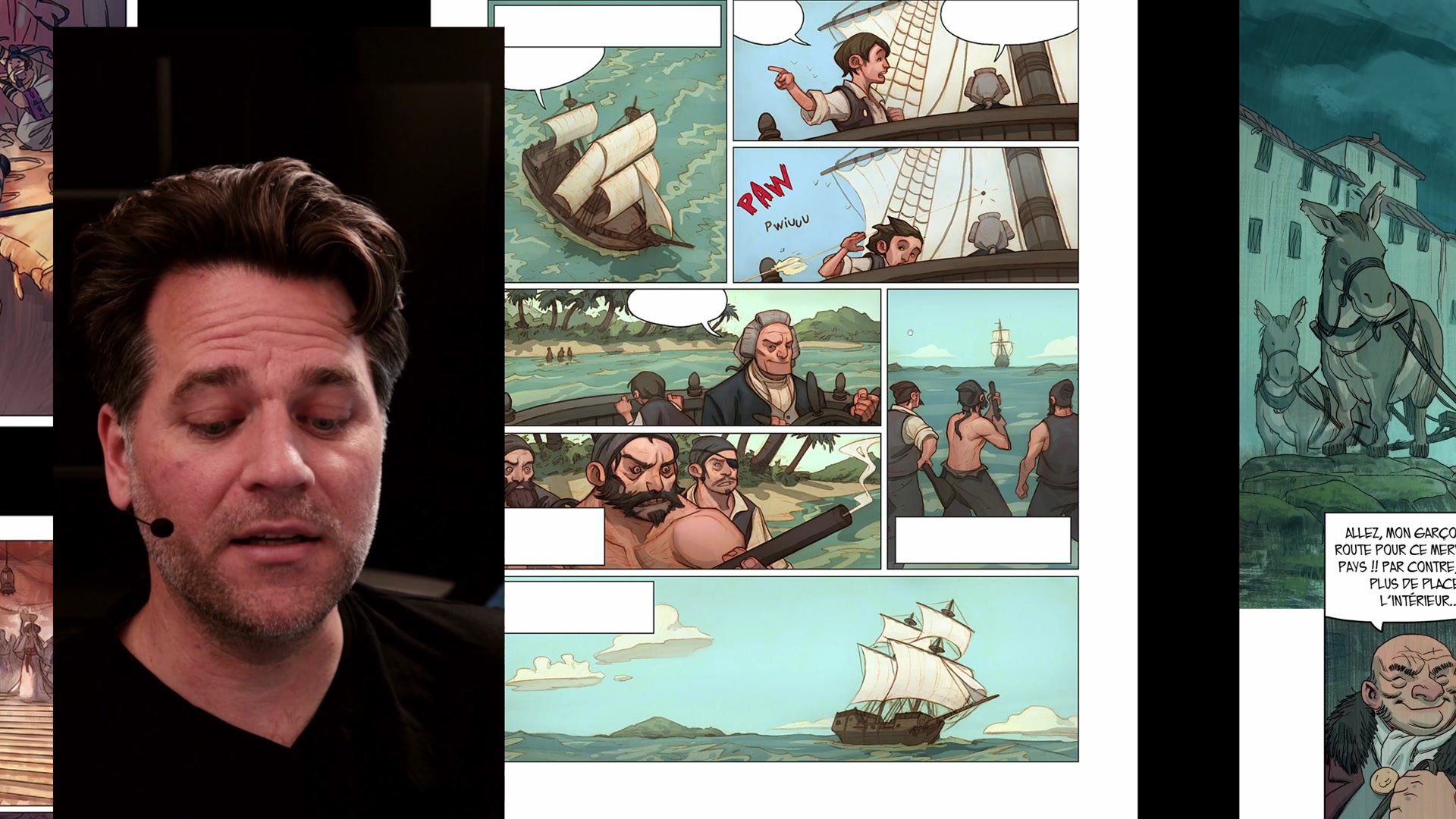
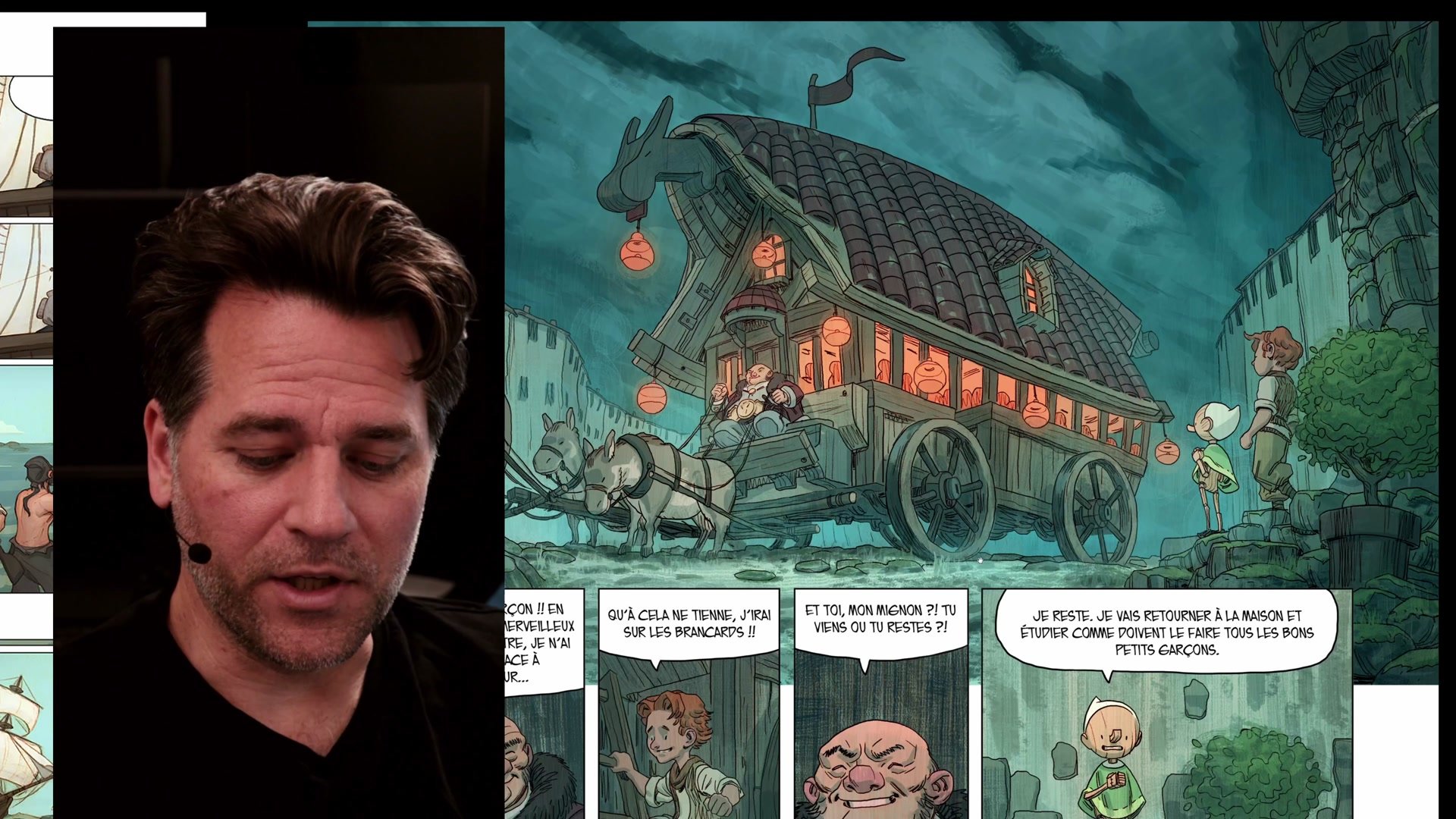
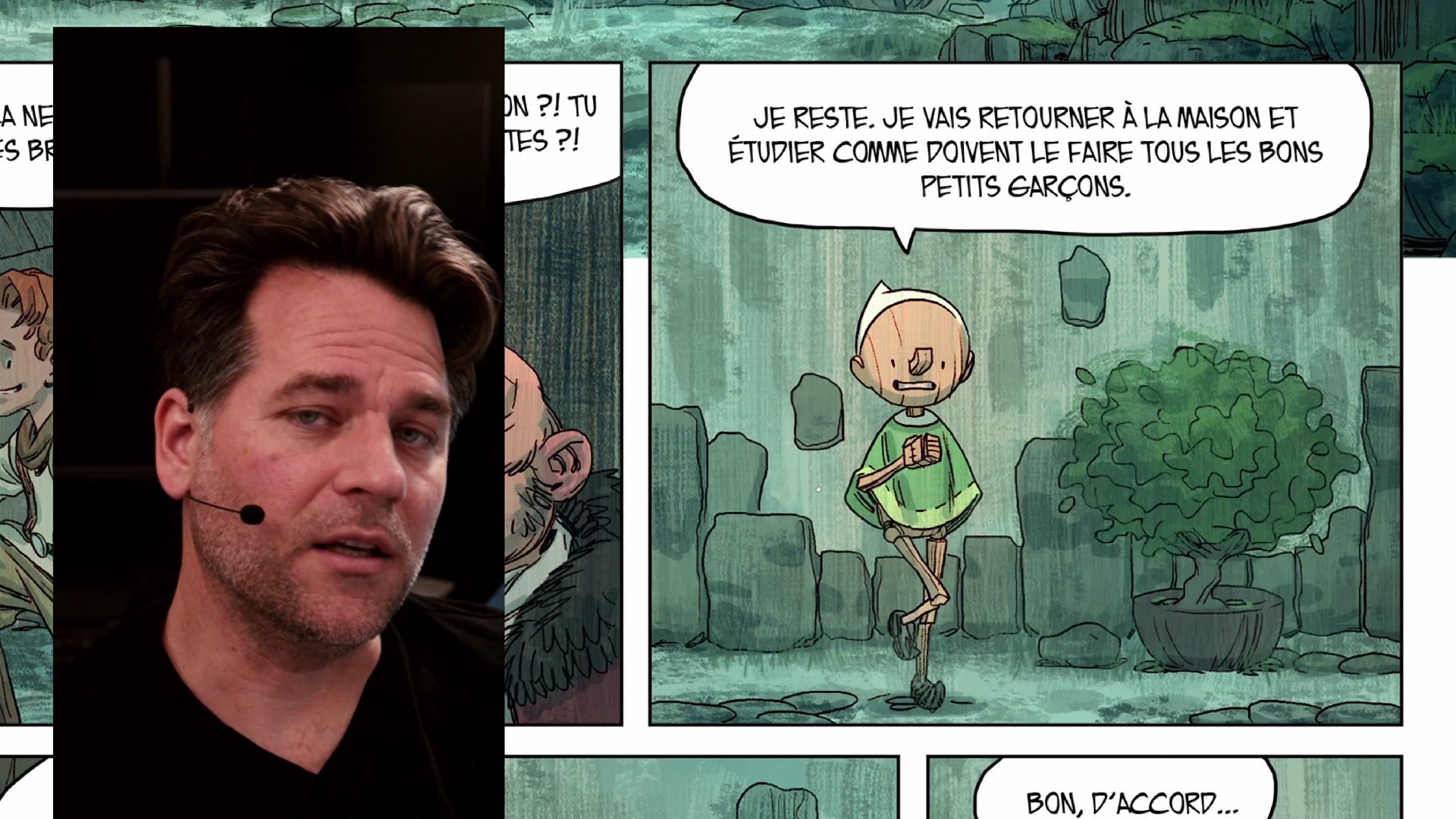
Building the Muscle
Years of applying this principle to every panel -- especially the mundane ones -- builds the muscle until depth construction becomes automatic. A character walking up a ladder becomes practice in thinking like a director. Even intentionally flat compositions can be made interesting through small choices: cobblestones to establish the ground plane, grass growing between the stones, ensuring characters overlap background elements in interesting ways. These tiny decisions create foreground, middle ground, and background relationships even in shots that would otherwise read as flat.
The compound effect is significant. When those baseline depth-building skills become automatic, epic scenes with inherently dramatic elements get even stronger. The same small tricks that make simple scenes work -- overlapping shapes, atmospheric perspective, foreground elements, spatial layering -- amplify already dramatic compositions. The question "how do I add depth?" becomes constant and automatic, applied to every image. Sometimes it fails, sometimes it works, but the repetitions build the instinct. That is how depth and dimensionality eventually feel effortless: through thousands of reps making simple things work.
Key Concepts
Depth is constructed, not found: Epic scenes succeed because depth cues are built into the subject. Simple scenes fail not because they are boring, but because the artist has not constructed depth through foreground elements, overlap, and spatial separation. The compositional work is what makes any scene dimensional.
Responsibility changes everything: The belief that boring scenes produce boring art is a self-limiting cycle. Taking personal responsibility for making every image as interesting as possible -- regardless of subject matter -- turns mundane panels into the most valuable training ground for depth-construction skills.
Repetition builds automaticity: Depth-building principles start as conscious decisions that require deliberate effort. After years of applying them to every image, especially the simple ones, these choices become automatic and the baseline quality of everything improves.
Try This
Flip the switch: On the next image or panel that feels boring or simple, stop and ask "how do I make this as dimensionally interesting as possible?" instead of rushing through it. Treat the scene as an opportunity, not an obstacle.
Check the spatial layers: For every composition, identify where the foreground, middle ground, and background are. If any layer is missing, add elements -- overlapping shapes, atmospheric separation, small foreground details -- to construct depth deliberately.
Think like a cinematographer: Consider the camera angle and framing that would give a simple scene the most dimensionality. What angle creates the most spatial interest? What overlap and layering can be introduced through the chosen viewpoint?