Mastering Color Contrast Upgraded My Art Style
Summary
The Color Contrast Challenge
Knowing how to make art feel like it has contrast, punch, and energy is one of the biggest challenges in illustration. A huge part of that challenge comes down to understanding the difference between tonal contrast and color contrast. Not understanding these concepts sits at the root of a lot of artistic frustration, especially when it comes to developing a personal art style.
The journey to understanding tonal versus color contrast is rarely linear. It can take years to figure out how these ideas relate to picture making in general, and more specifically to personal style. But that understanding is what ultimately allows artists to push different aspects of their work and even develop very different styles for different projects. What makes this particularly tricky is that we often find ways to make art work without fully understanding why, and that partial understanding creates habits and ruts that become very hard to escape.
This exploration traces the evolution of that understanding across two decades of professional comic and illustration work, looking at the pitfalls, traps, and breakthroughs along the way.
Early Work and Simple Image Plans
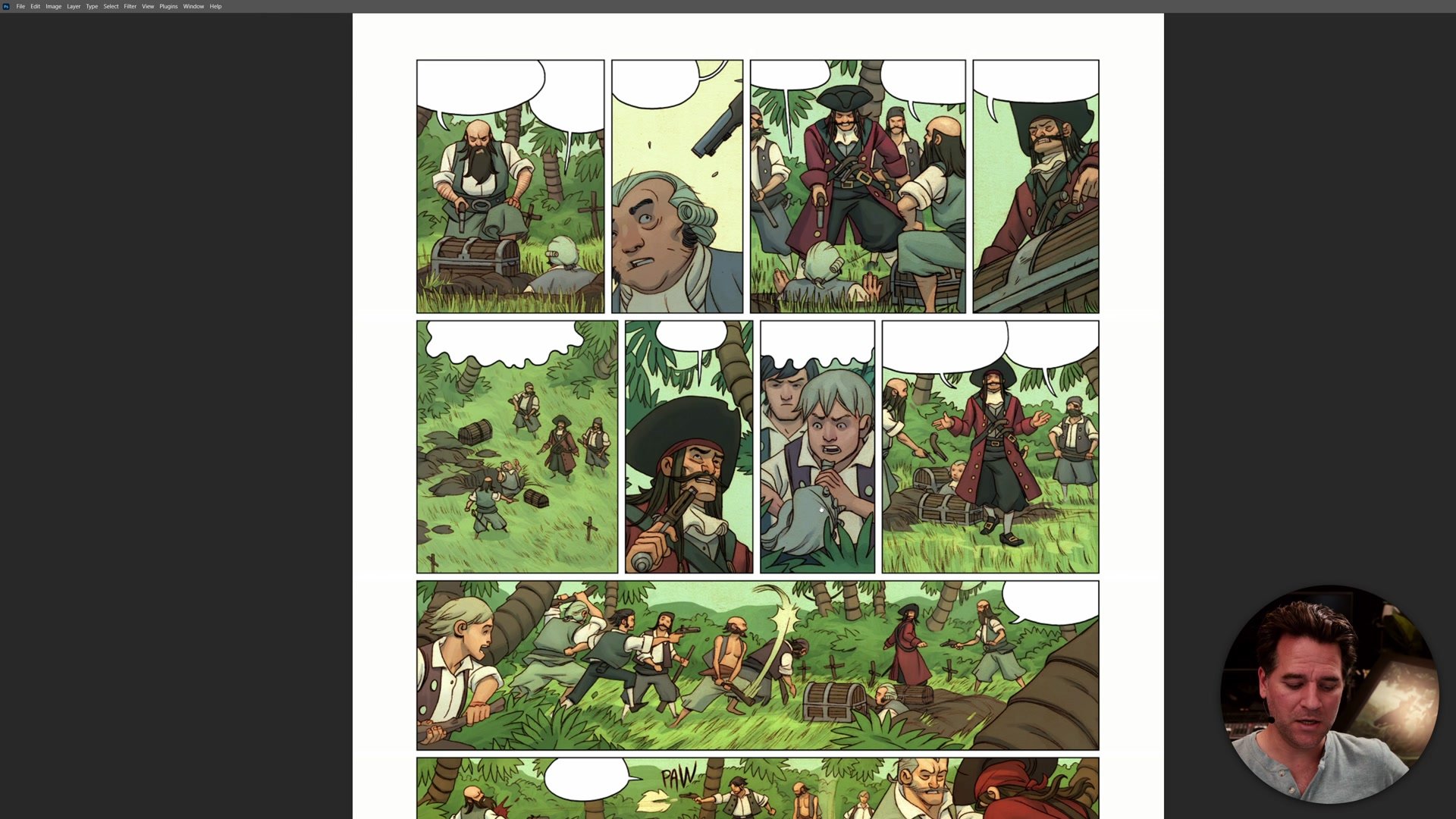
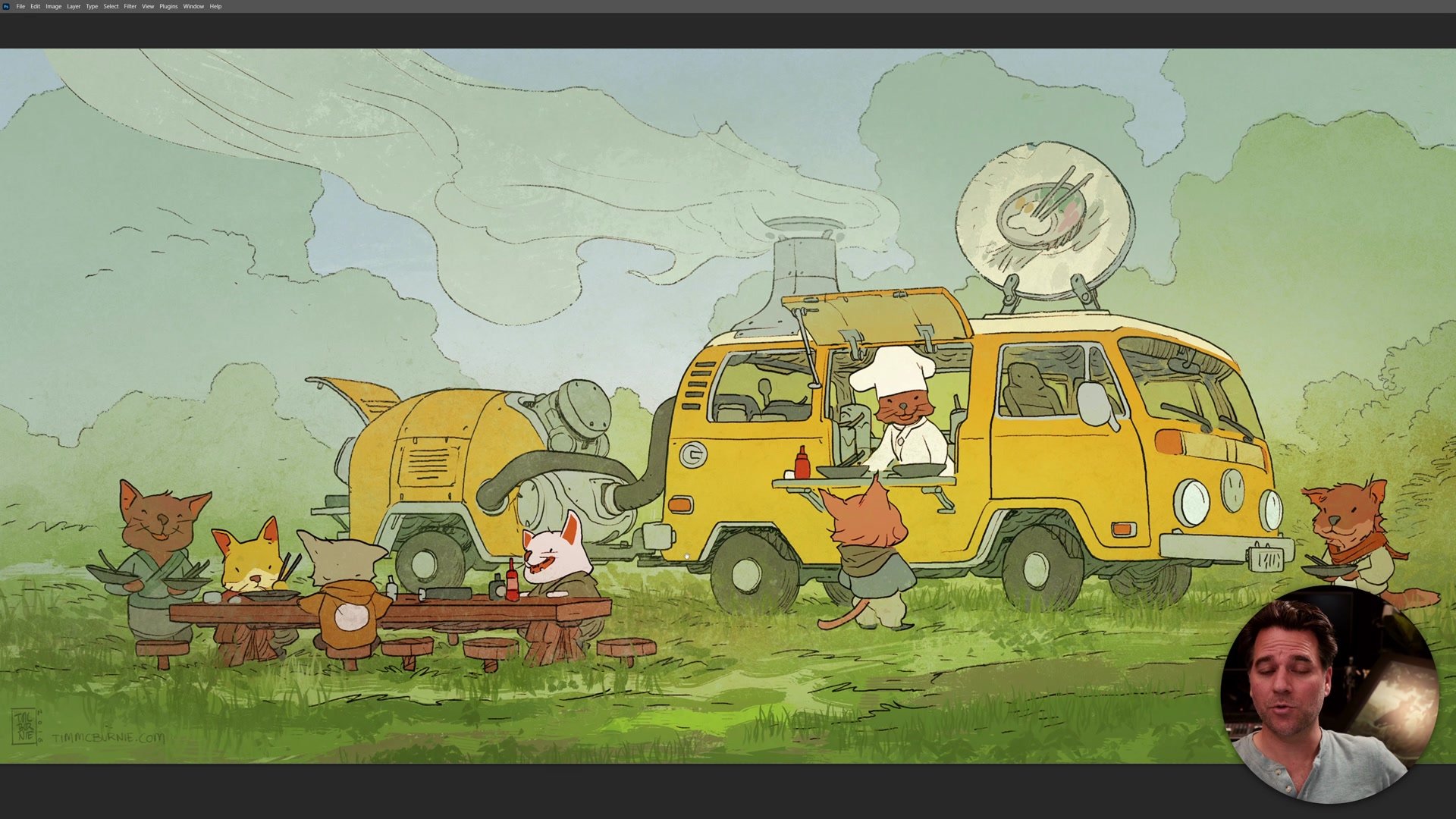
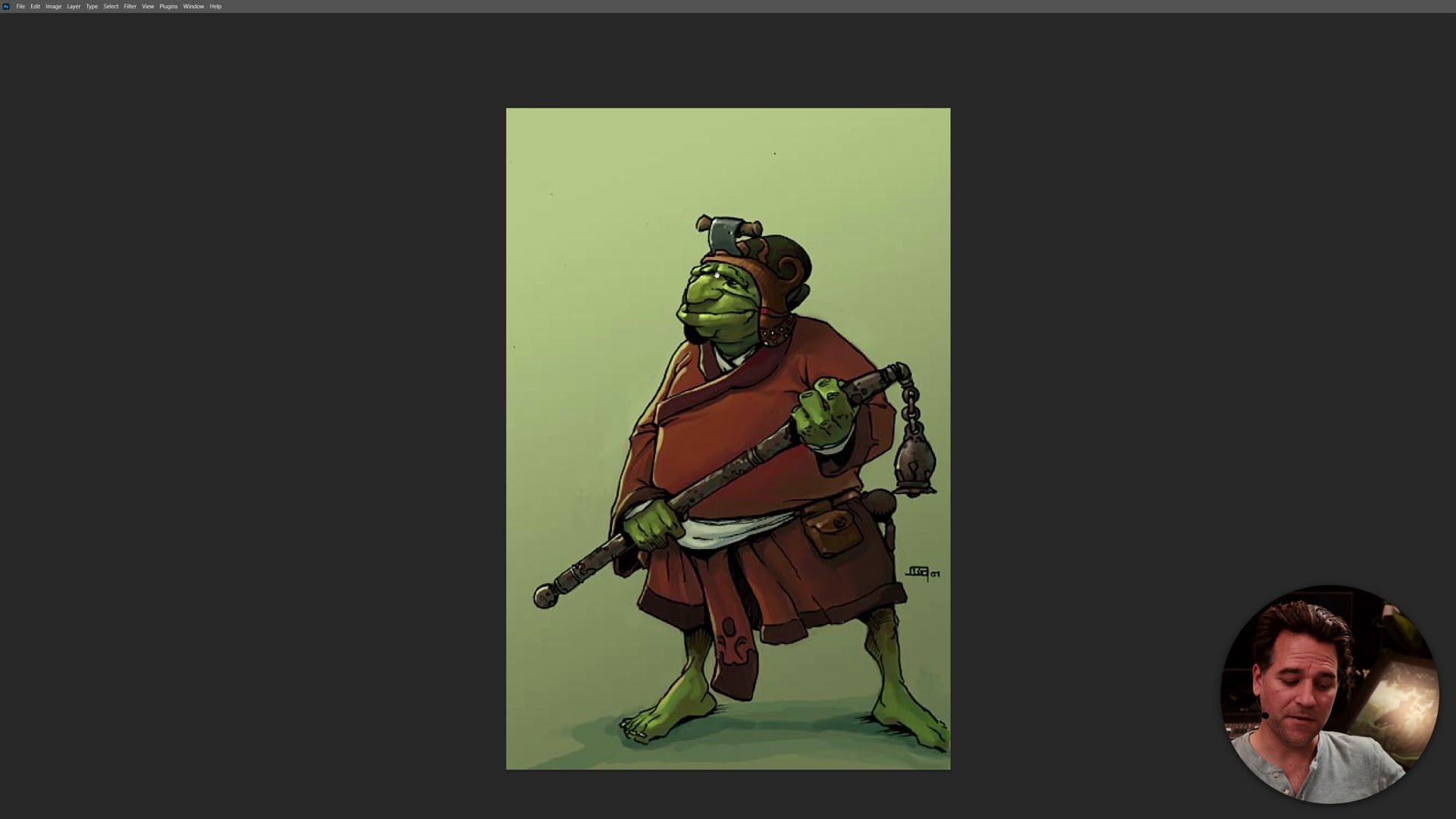
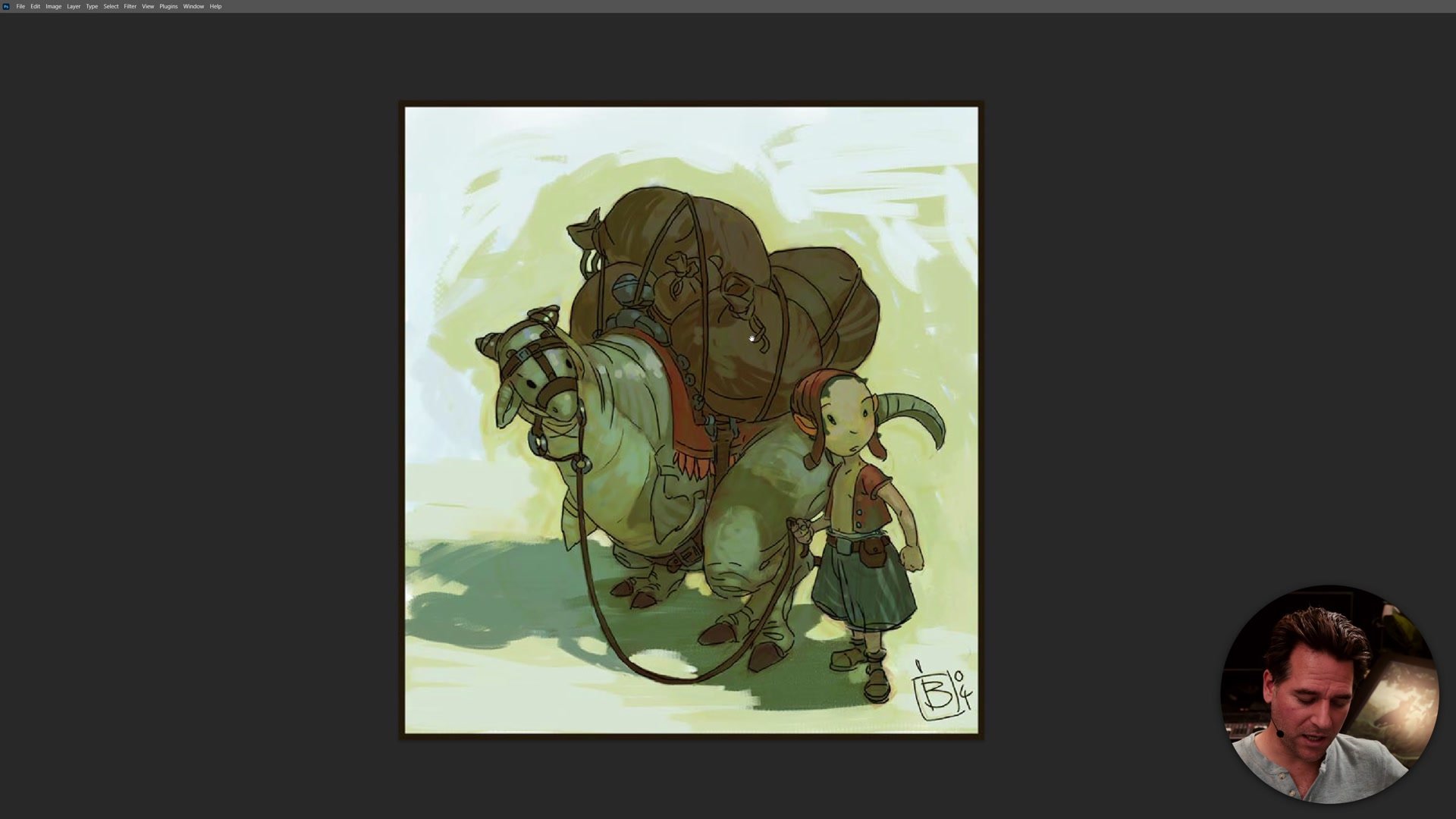
The Tonal Contrast Comfort Zone
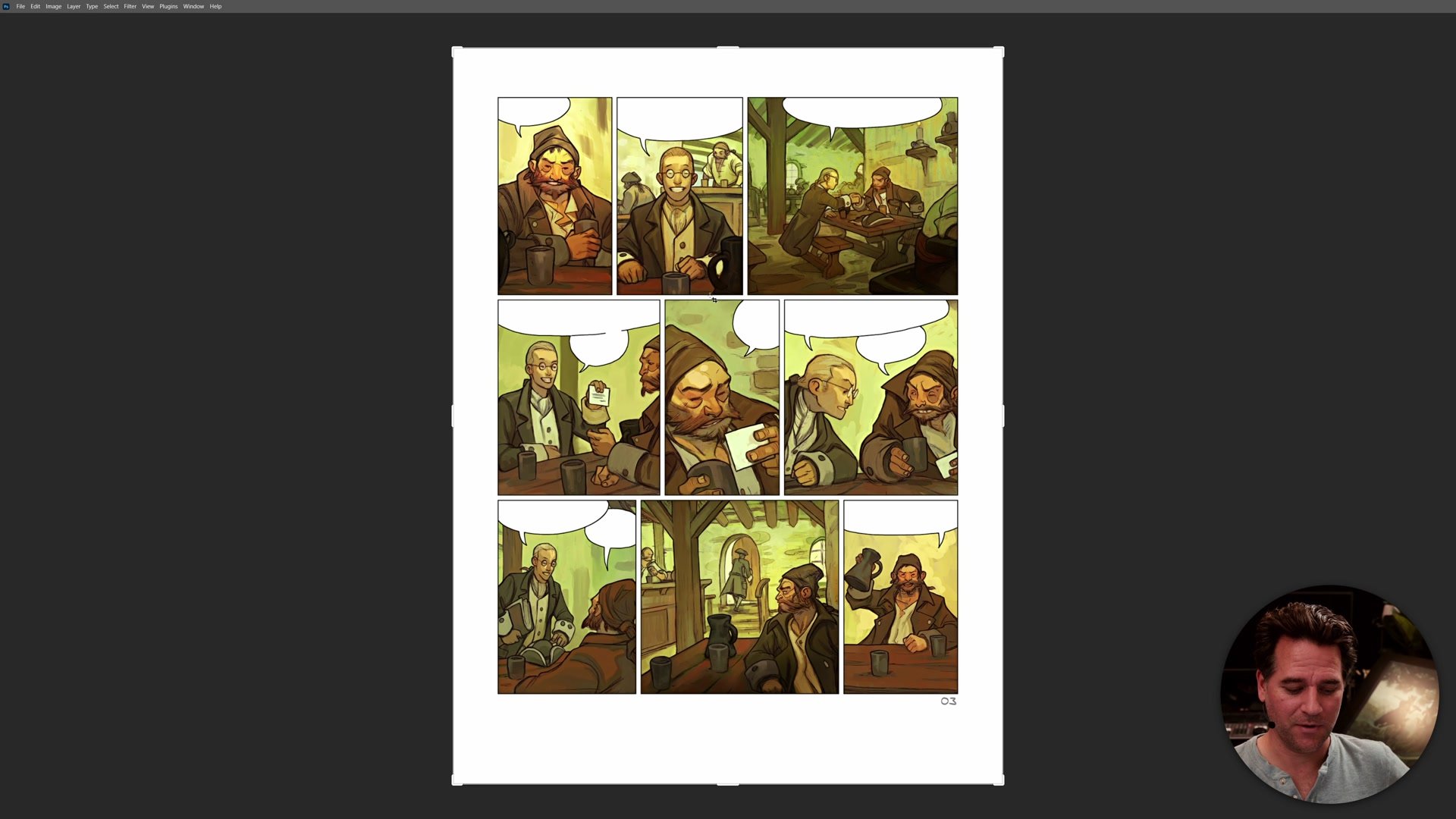
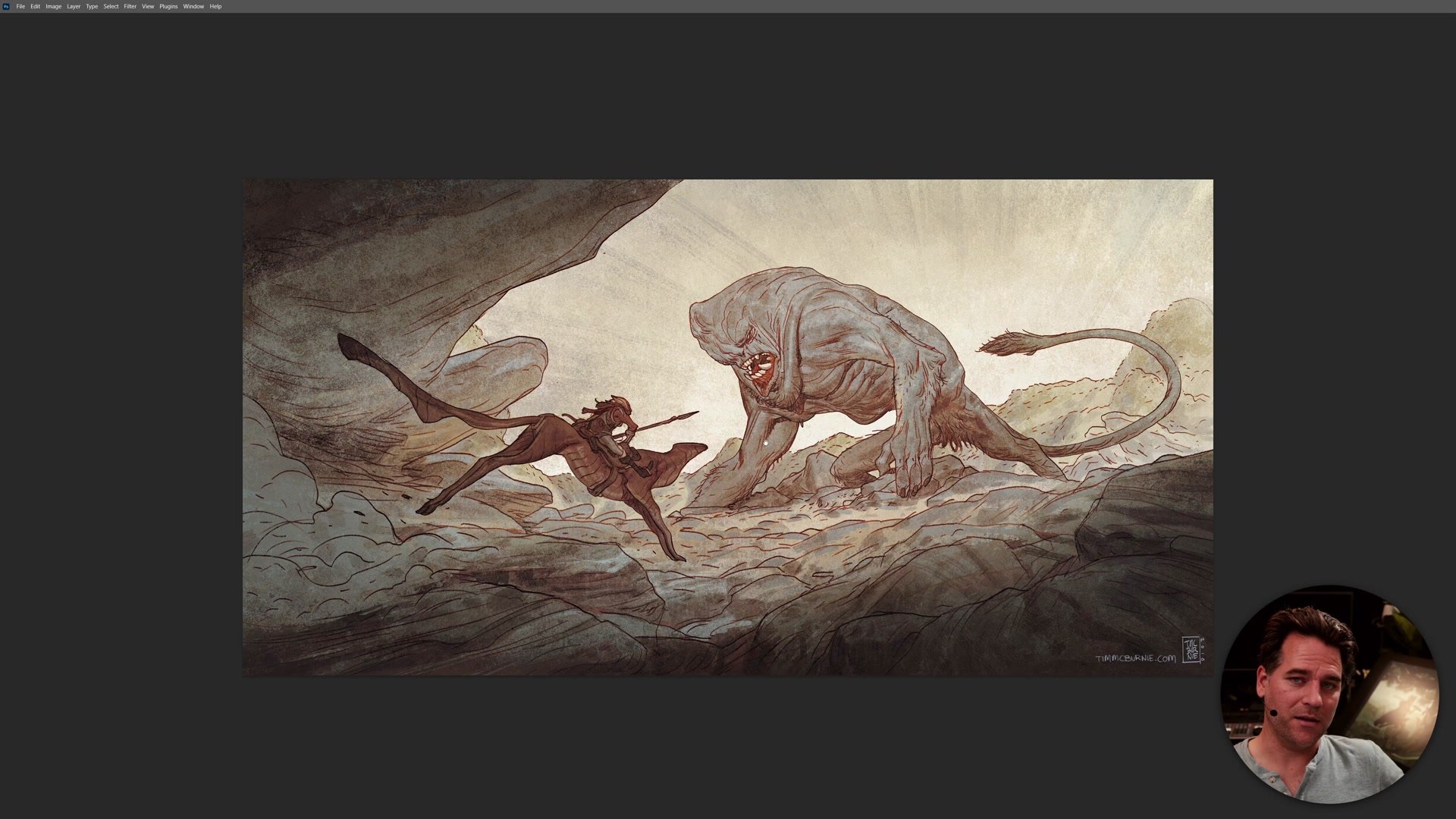
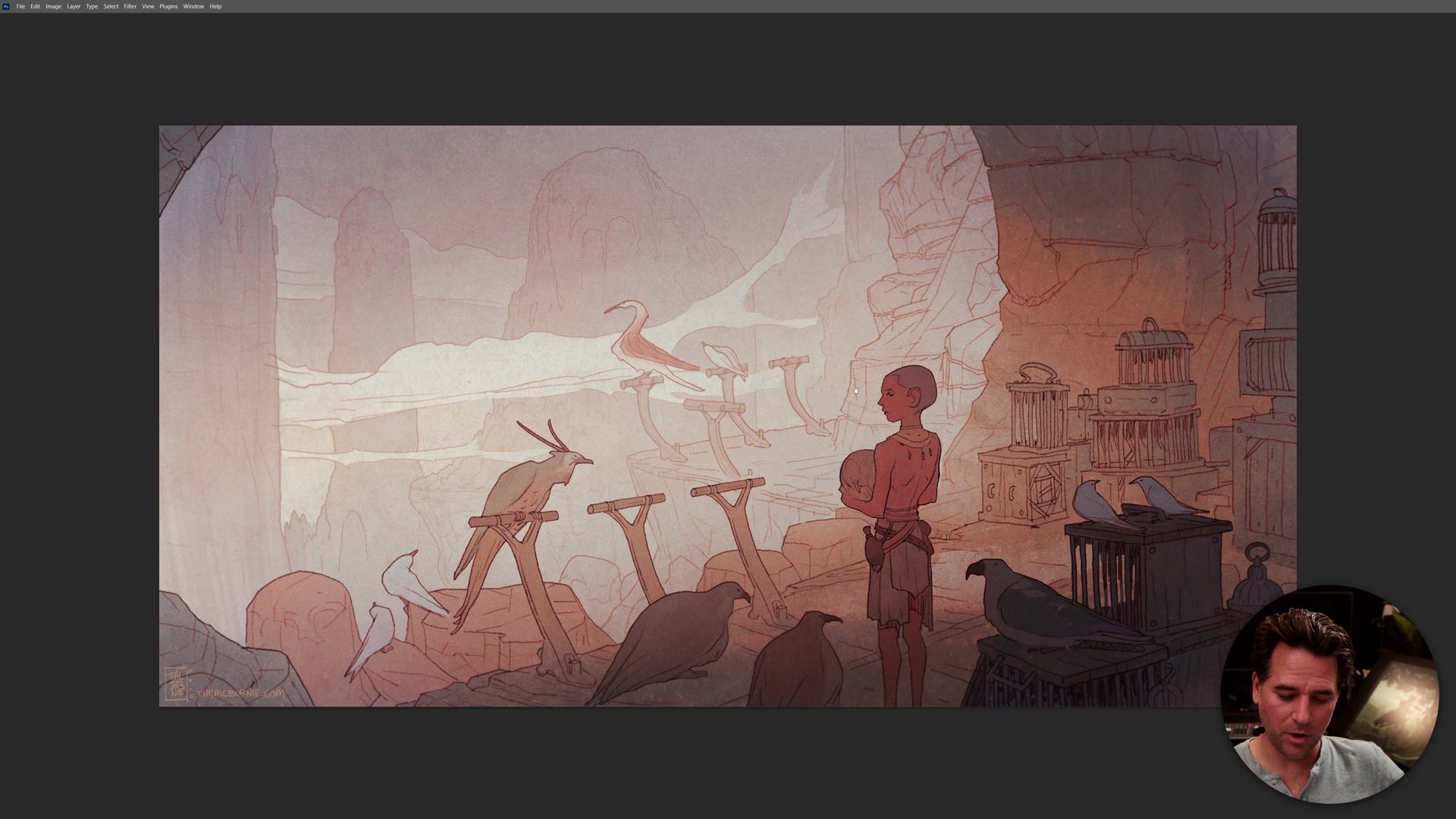
Early in an art career, there is often confusion about whether to focus on painting or line art. That indecision tends to push artists toward monotone work using very simple image plans. Getting good at darker characters on lighter backgrounds, essentially working with simple silhouettes, becomes the default. The key operating principle is tonality: using black, white, dark, and light to define contrast. The common advice that art needs to work in black and white gets taken to heart, and the style that develops leans heavily on value-based contrast.
This approach works well for single character illustrations. Dark character on light background, or light character on dark background. The problem surfaces when the work gets more complex. Working from someone else's storyboard, tackling multi-figure scenes, or being asked for more contrast in larger illustrations reveals the limitations of relying on tonal contrast alone. The feedback loop of "more contrast" becomes a broken record, but just sliding the contrast slider up does not actually solve the underlying issue.
Professional Work and Contrast Struggles
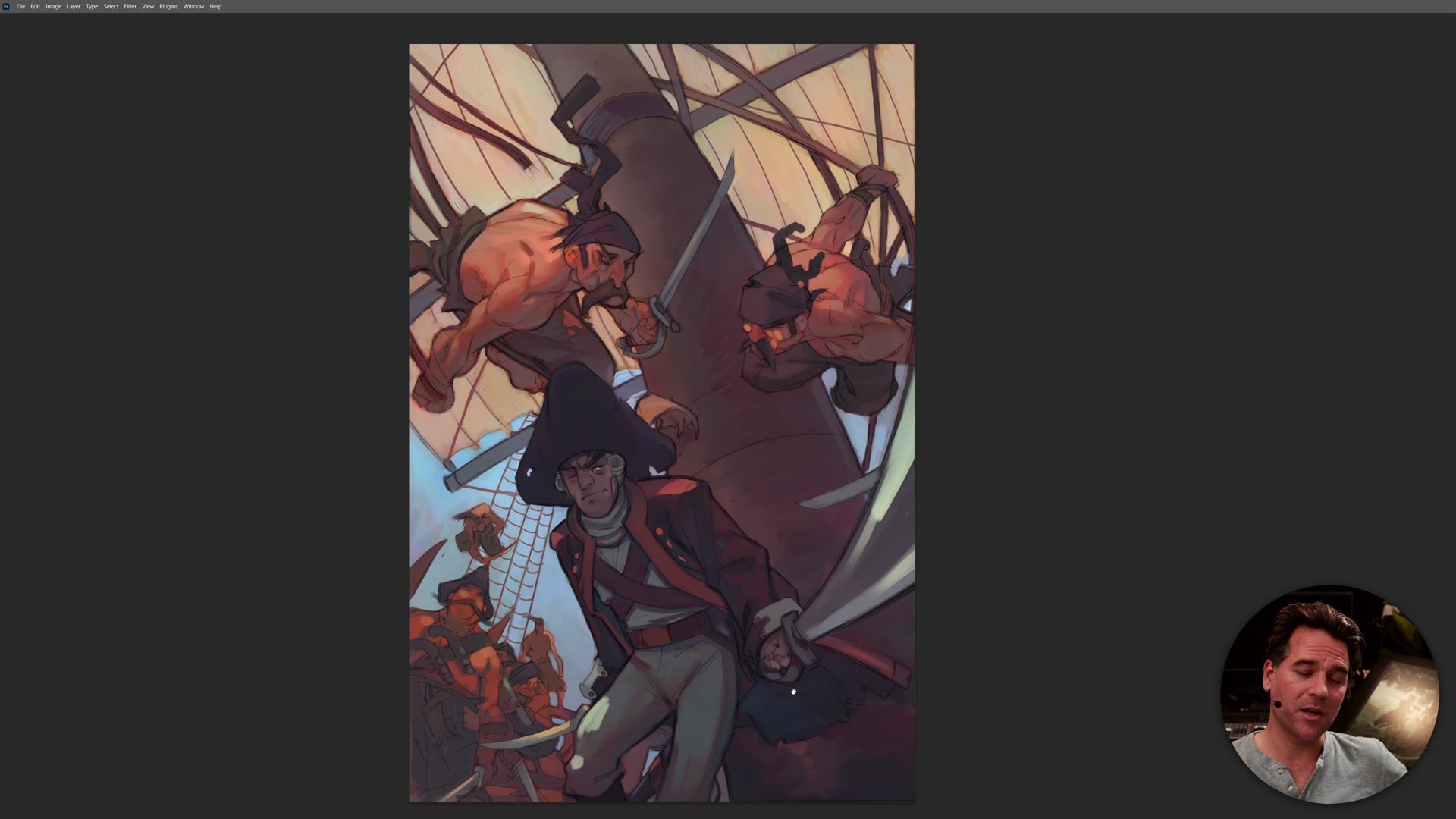
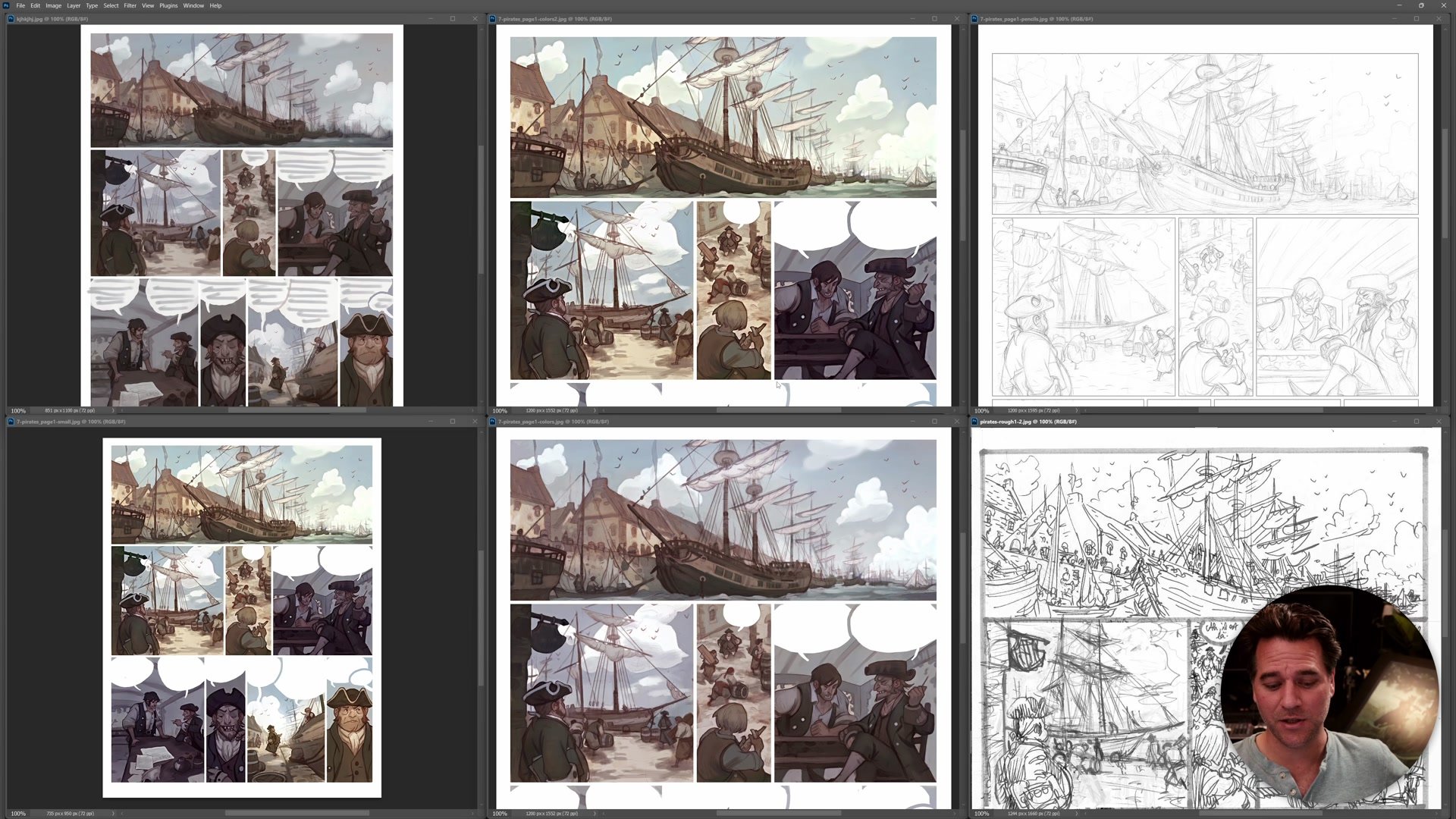
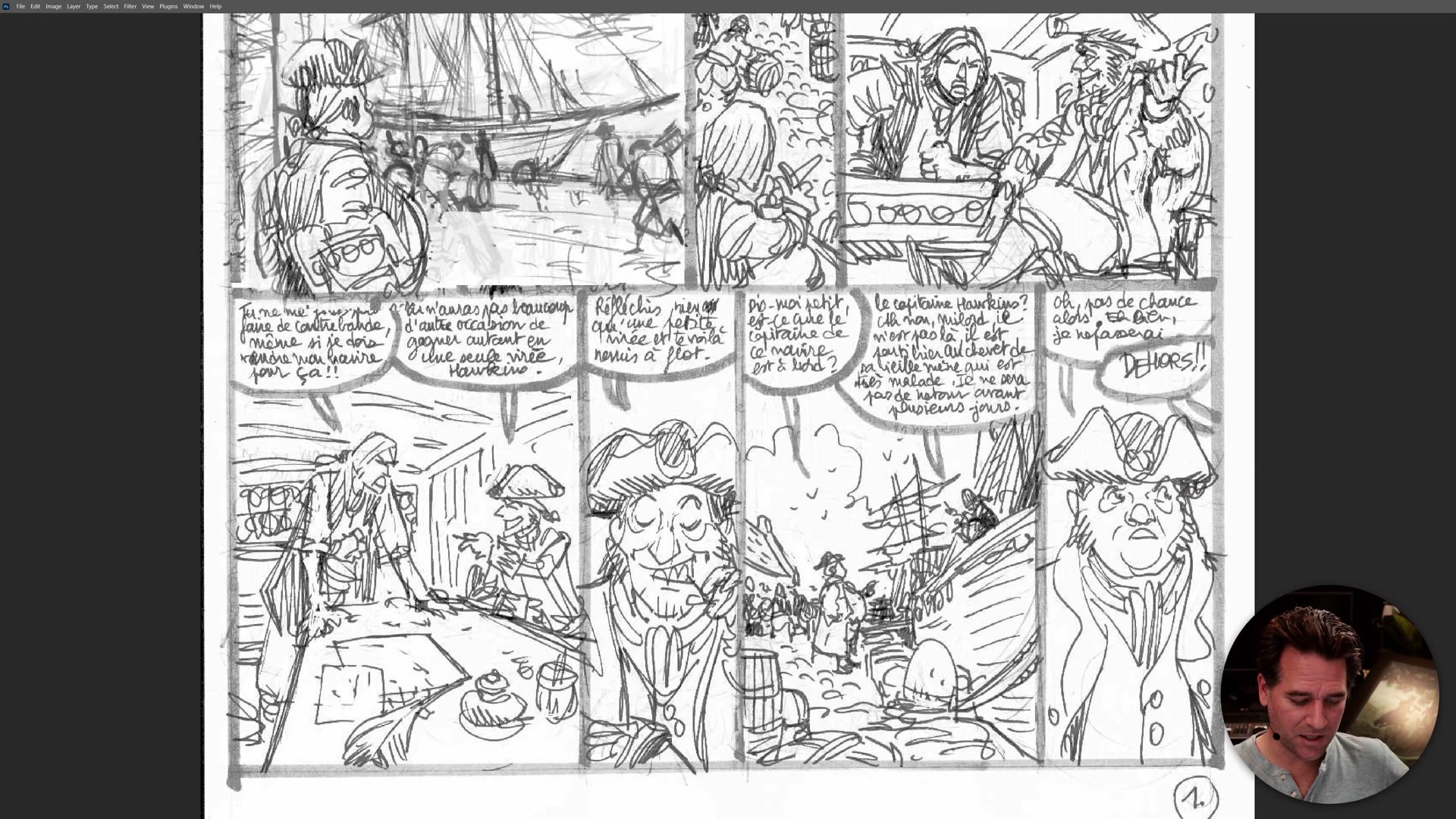
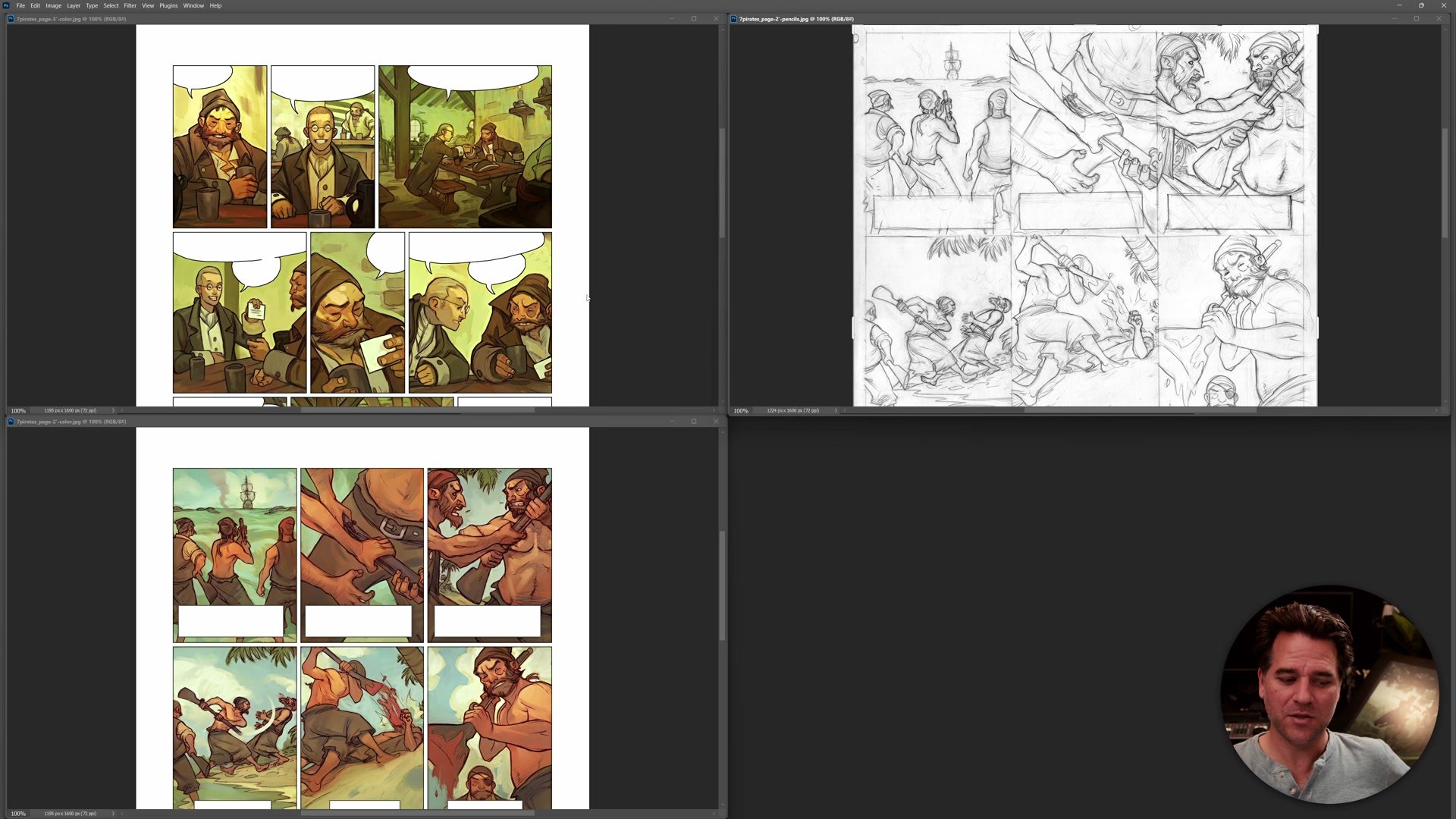
When Tonal Contrast Hits a Wall
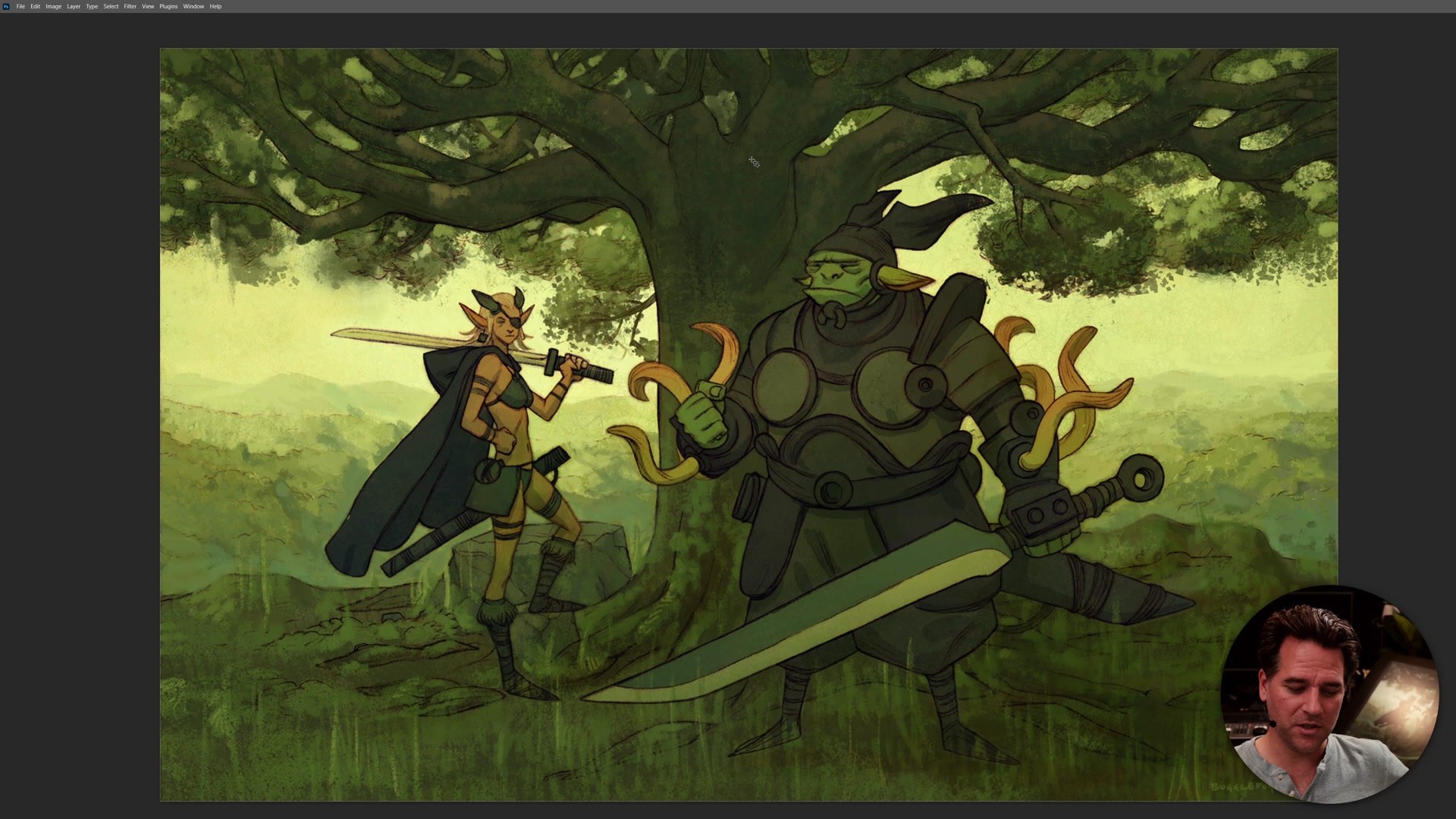
Professional comic work brings these limitations into sharp focus. Not all images can be built the same way, and there is not always the luxury of organizing compositions to fit a preferred tonal approach. When given someone else's image plan or a complex multi-figure scene, the lack of understanding about color as a contrast tool becomes painfully obvious. Adding more tonal contrast to an image that needs color contrast creates problems: brush strokes become more visible, the work looks rougher, and the painterly style that worked for simple compositions starts to feel unprofessional.
The interesting thing is that when scenes naturally contained color contrast, like warm skin tones against blue-green sea backgrounds, the same brushy technique suddenly looked like intentional style rather than sloppiness. That accidental success with color contrast was the clue to what was missing, but it took a long time to consciously recognize and apply that lesson. The frustration of knowing something worked sometimes but not understanding why is one of the most common experiences in artistic development.
Style Evolution and Breakthroughs
Unlocking Color Contrast
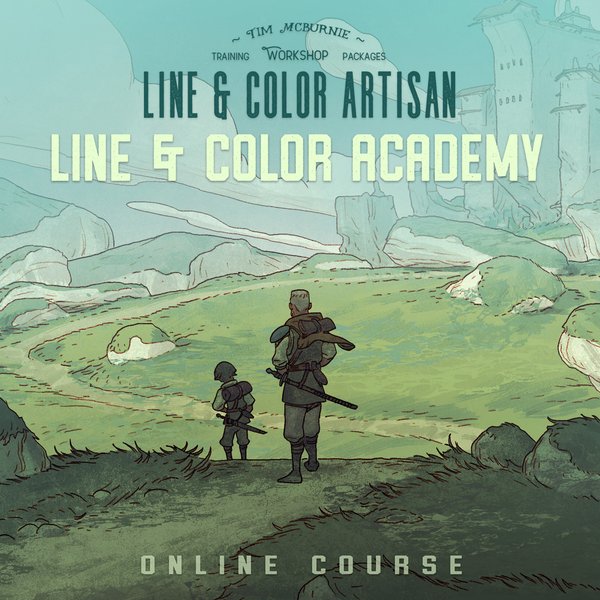
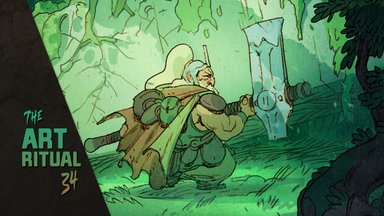
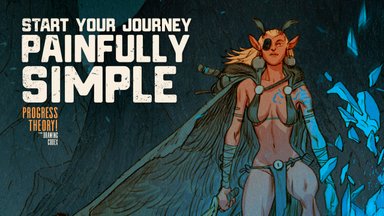
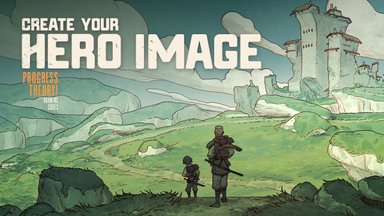
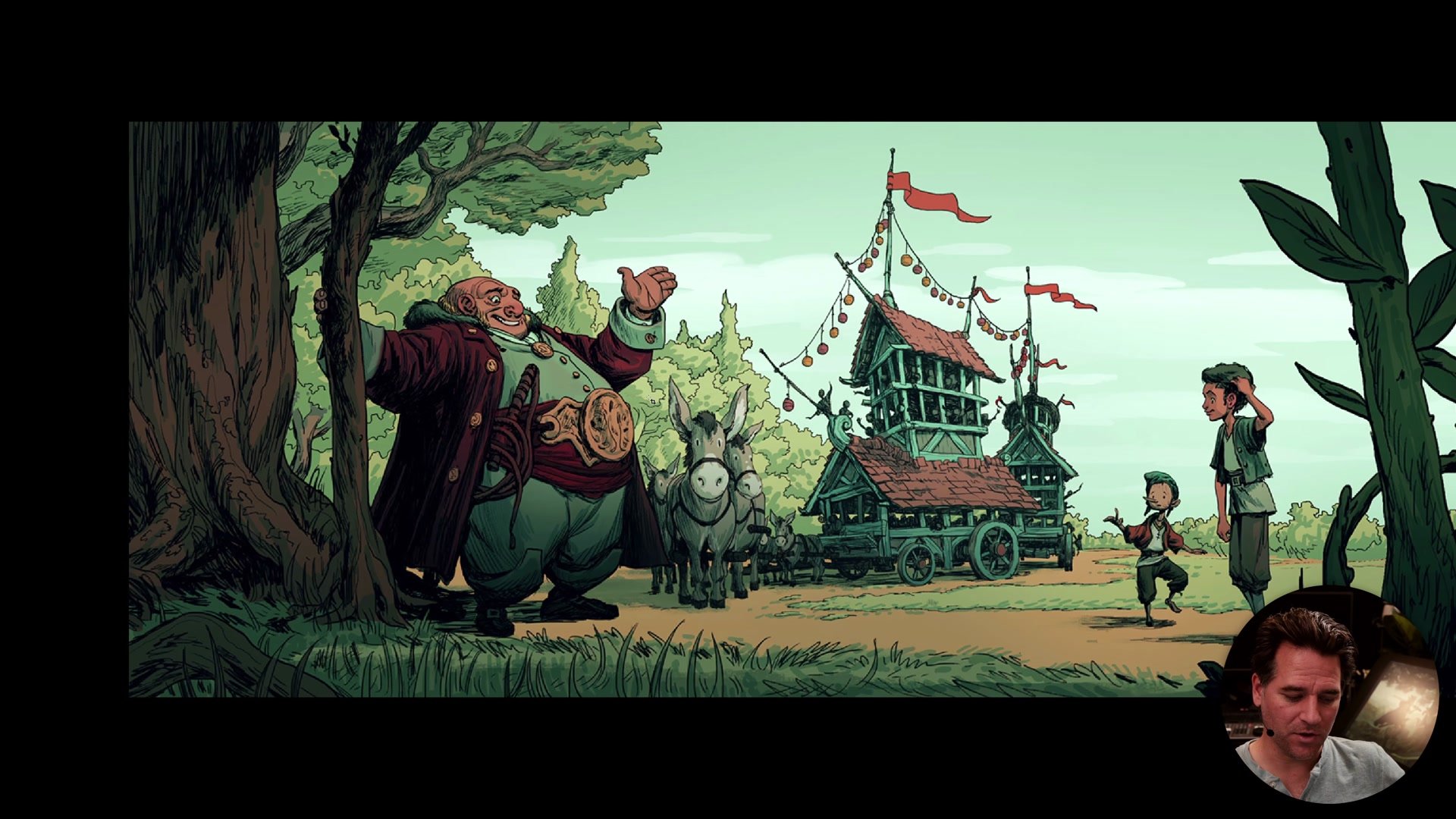
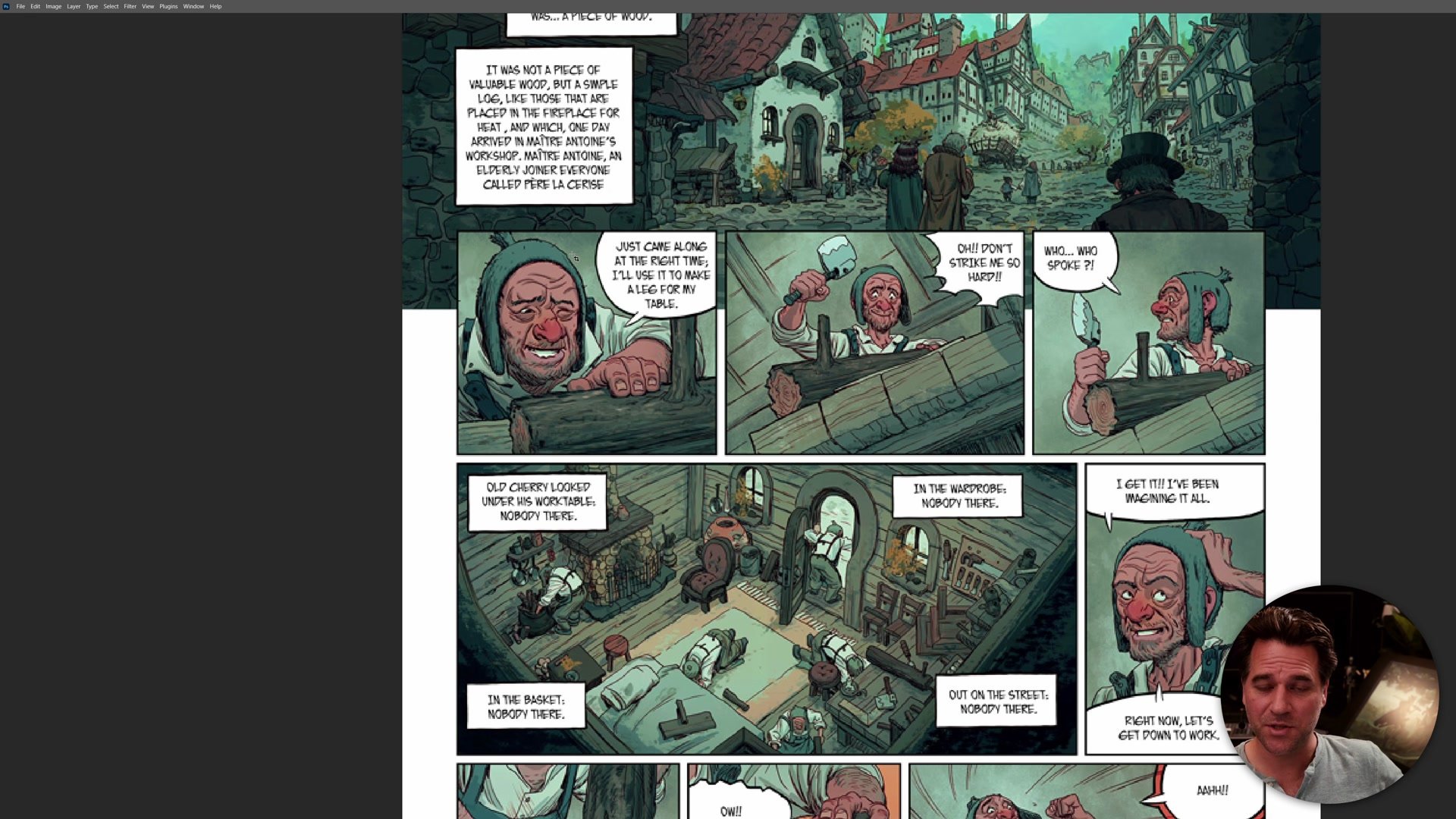
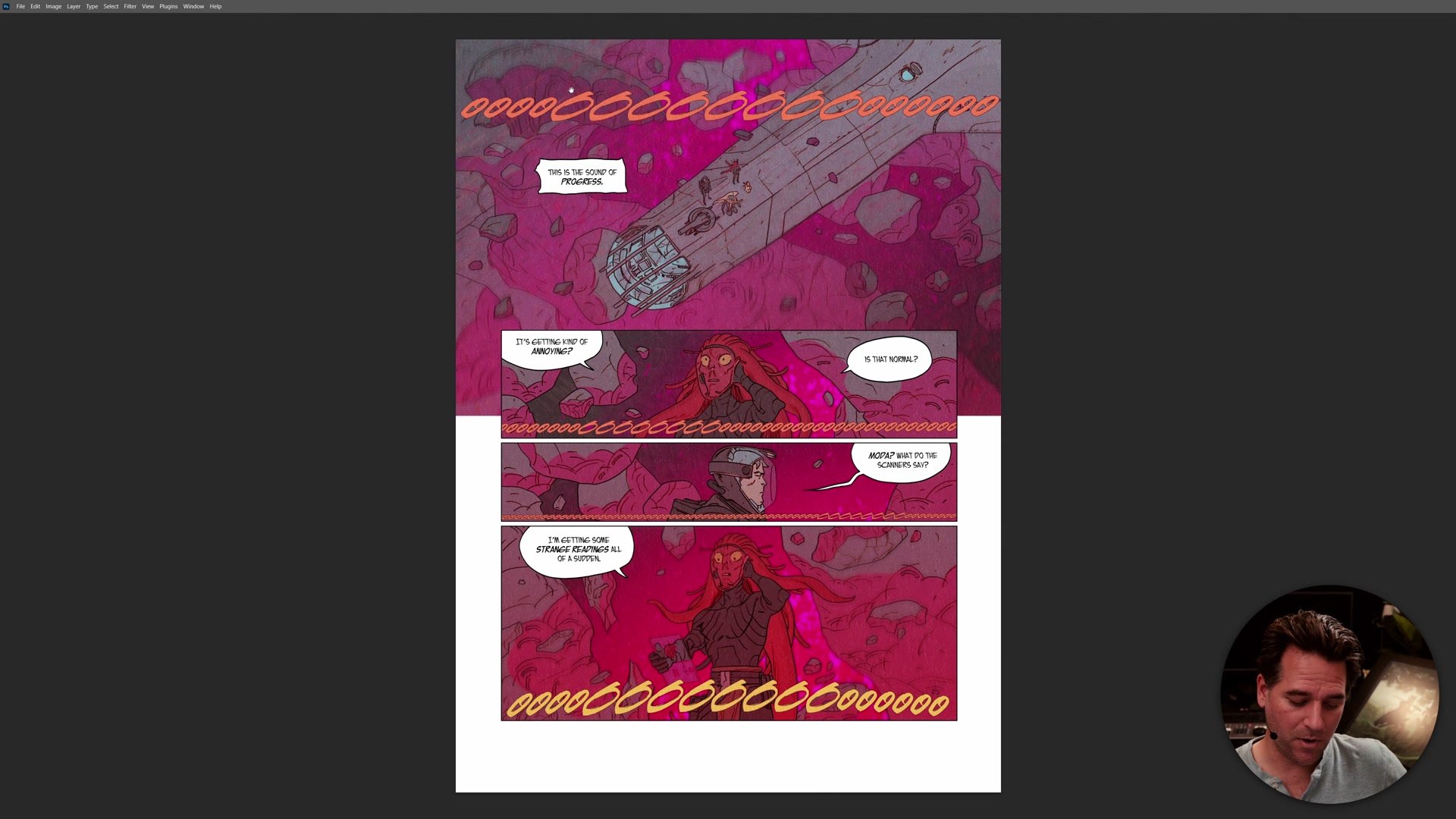
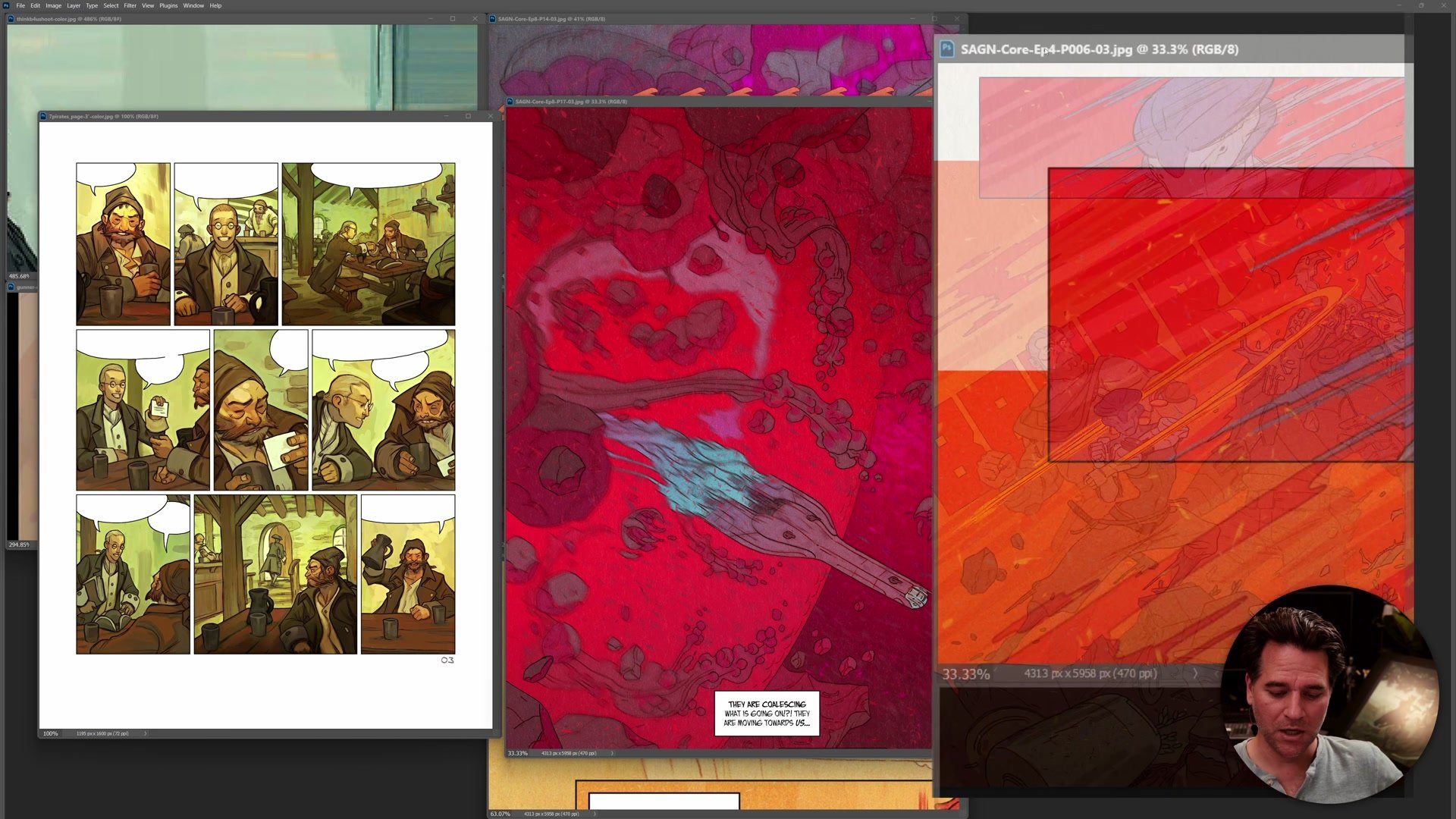
The breakthrough came through deliberately experimenting with flat color illustration. Working on projects that demanded a cleaner, more graphic style forced the development of color contrast skills that tonal work alone could never provide. The inspiration from clean line French comics like Tintin and Asterix pointed toward a style that was fundamentally built on color relationships rather than light and dark values.
The real test of whether an image relies on tonal or color contrast is simple: turn off the color. If the image still works in black and white, it is tonal contrast doing the heavy lifting. If the image loses all its interest and energy when desaturated, color contrast is the dominant force. Learning to intentionally create images that rely on color contrast opened up an entirely new range of possibilities: vibrant scenes, psychedelic moods, dramatic pinks and blues, and a whole visual language that flat tonal work could never achieve. This understanding also made it possible to work faster, because clean line flat color workflows are significantly quicker than rendered tonal approaches.
Color Contrast in Practice
Key Concepts
Tonal vs Color Contrast: These are two fundamentally different tools for creating visual interest. Tonal contrast uses light and dark values. Color contrast uses hue and temperature relationships. Most artists default to one and struggle when the other is needed.
The Desaturation Test: Turn off the color in an image. If it still works, tonal contrast is dominant. If it falls flat, color contrast was doing the work. Understanding which is driving an image helps diagnose why some pieces feel dead or muddy.
Style Flexibility Requires Both: Being locked into one form of contrast limits what kinds of projects and stories an artist can tackle. Understanding both tonal and color contrast allows for deliberate style choices rather than falling into the same approach by default.
Analyze Your Contrast
Pick a finished piece: Choose one of your own illustrations and desaturate it completely. Does the image still have clear visual hierarchy and impact, or does it become muddy and flat? This tells you which form of contrast is dominant in your current style.
Identify your default: Look across several of your pieces. Do you consistently rely on dark characters against light backgrounds? Do your compositions always need strong value separation to read? Recognizing the pattern is the first step toward expanding your range.
Try the opposite: If your work is primarily tonal, attempt a piece where the color relationships carry all the contrast with minimal value difference. If your work already leans on color, try making something that works entirely in black and white. The discomfort reveals exactly where the growth opportunity lives.