Master the Mannequin Method for Figure Drawing
Summary
The Mannequin Method for Stylized Figures
Drawing stylized figures for comics, manga, or concept art creates a specific challenge. Achieving both structural solidity and dramatic exaggeration requires a system that separates proportion control from anatomical complexity. The mannequin method, rooted in the Loomis tradition, addresses this by building a skeletal framework first for confident posing, then layering musculature systematically on top.
This approach gets demonstrated through the construction of a Lion Warrior character inspired by classic Capcom Street Fighter art. The goal is that hyper-reality where technically well-executed drawing gets pushed to expressive extremes. The key insight: pose first, anatomy second. This separation makes consistent character construction possible across multiple drawings while allowing confident exaggeration for stylized work.
References and Foundation
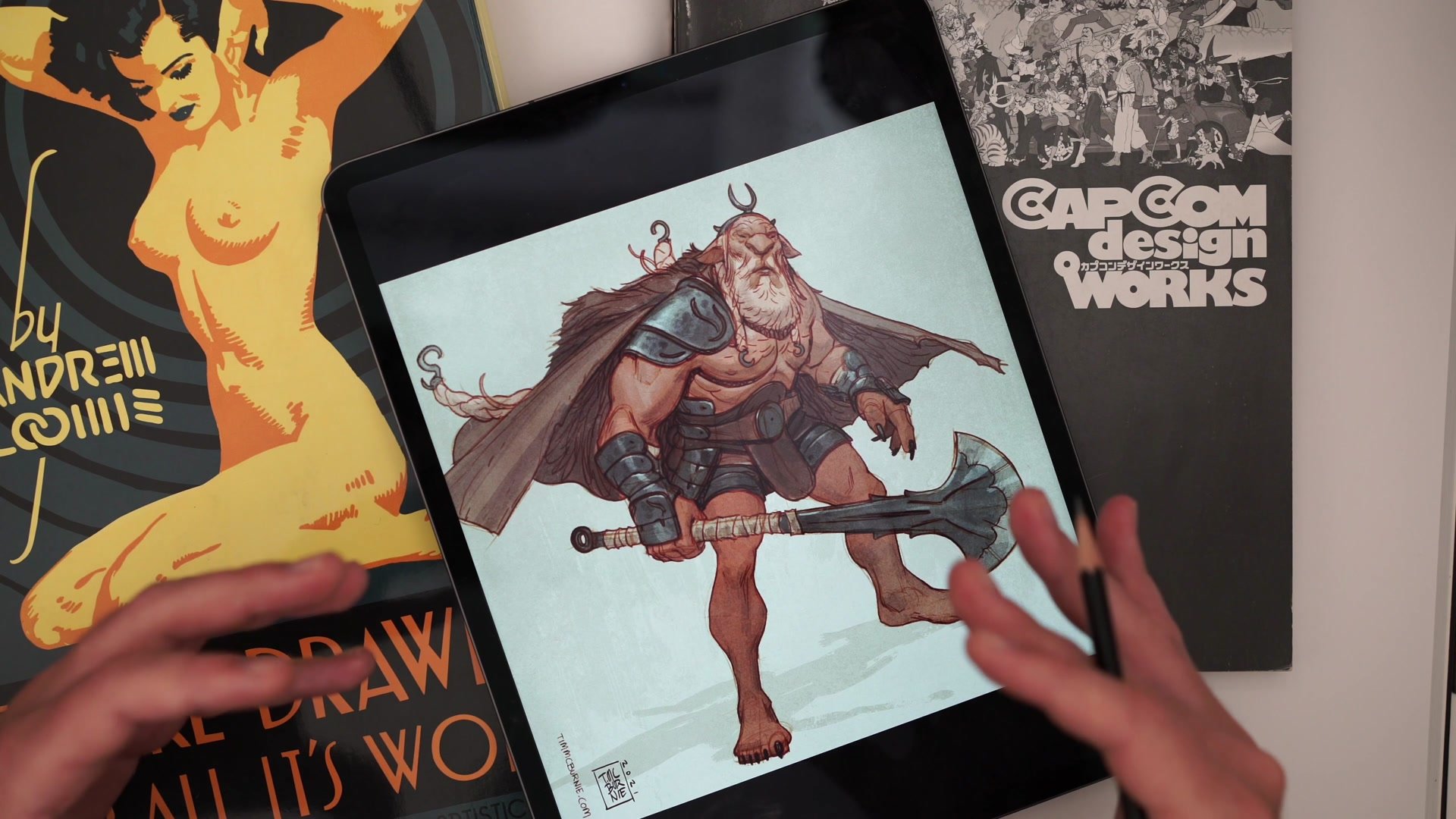
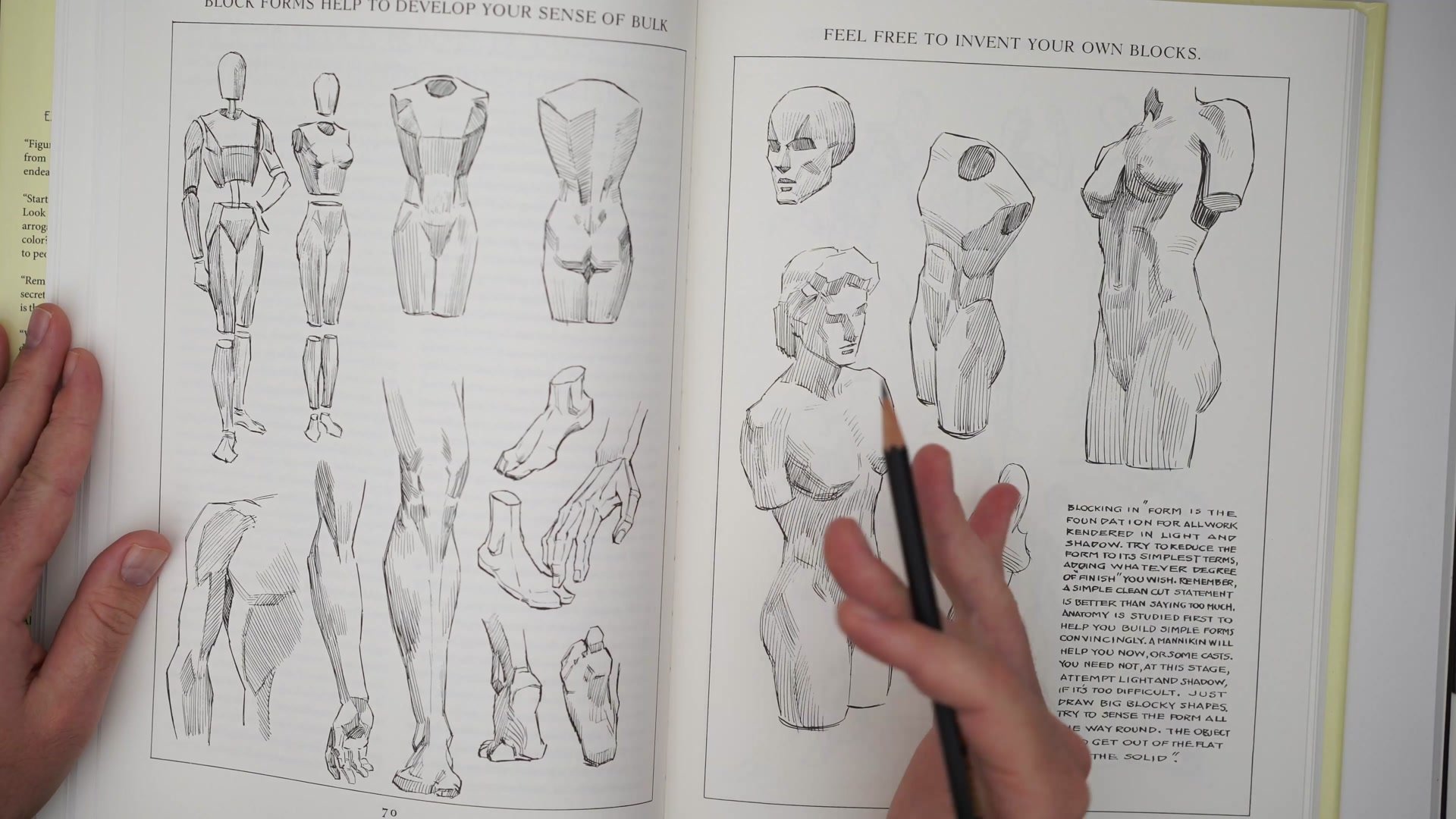
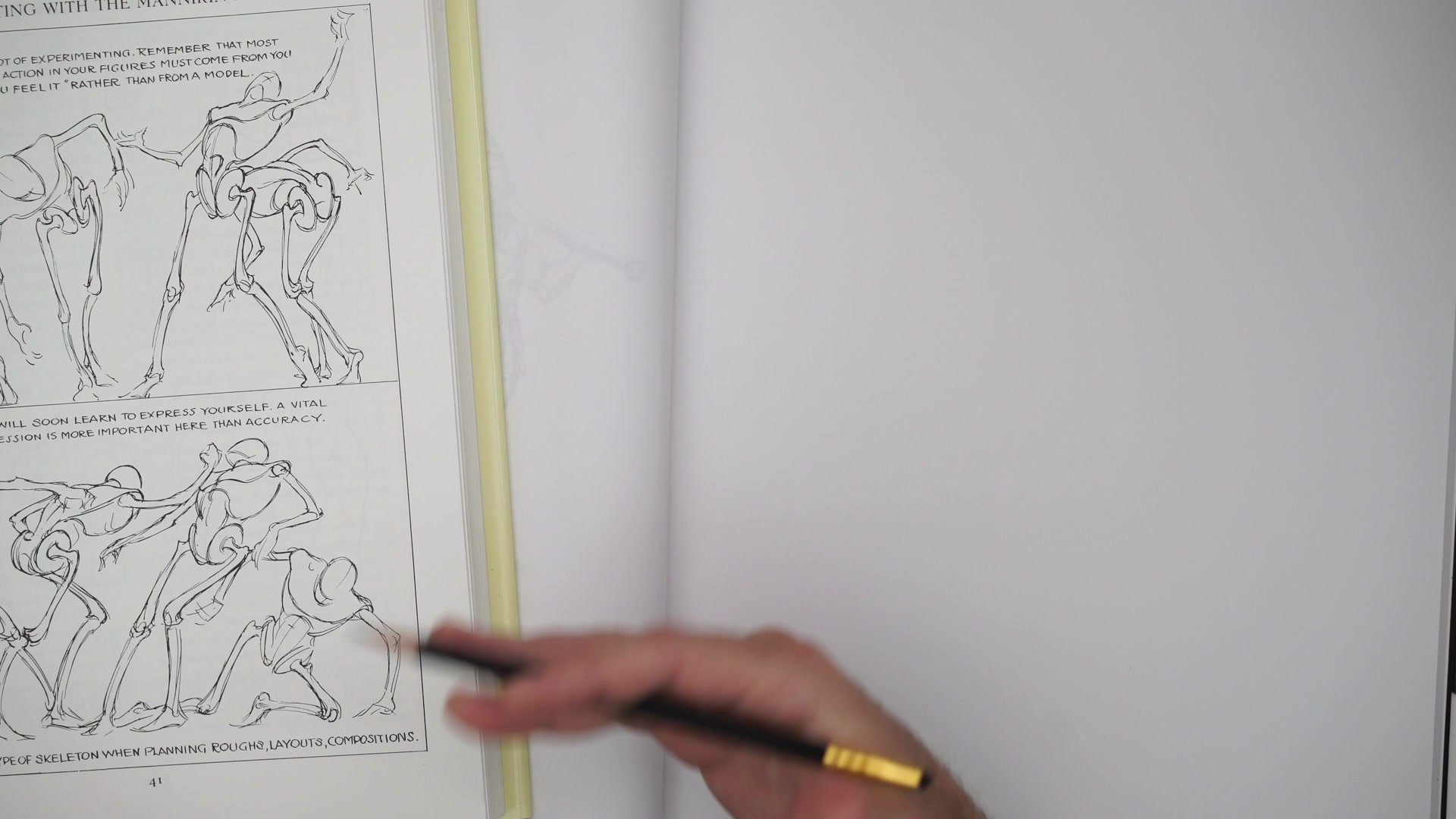
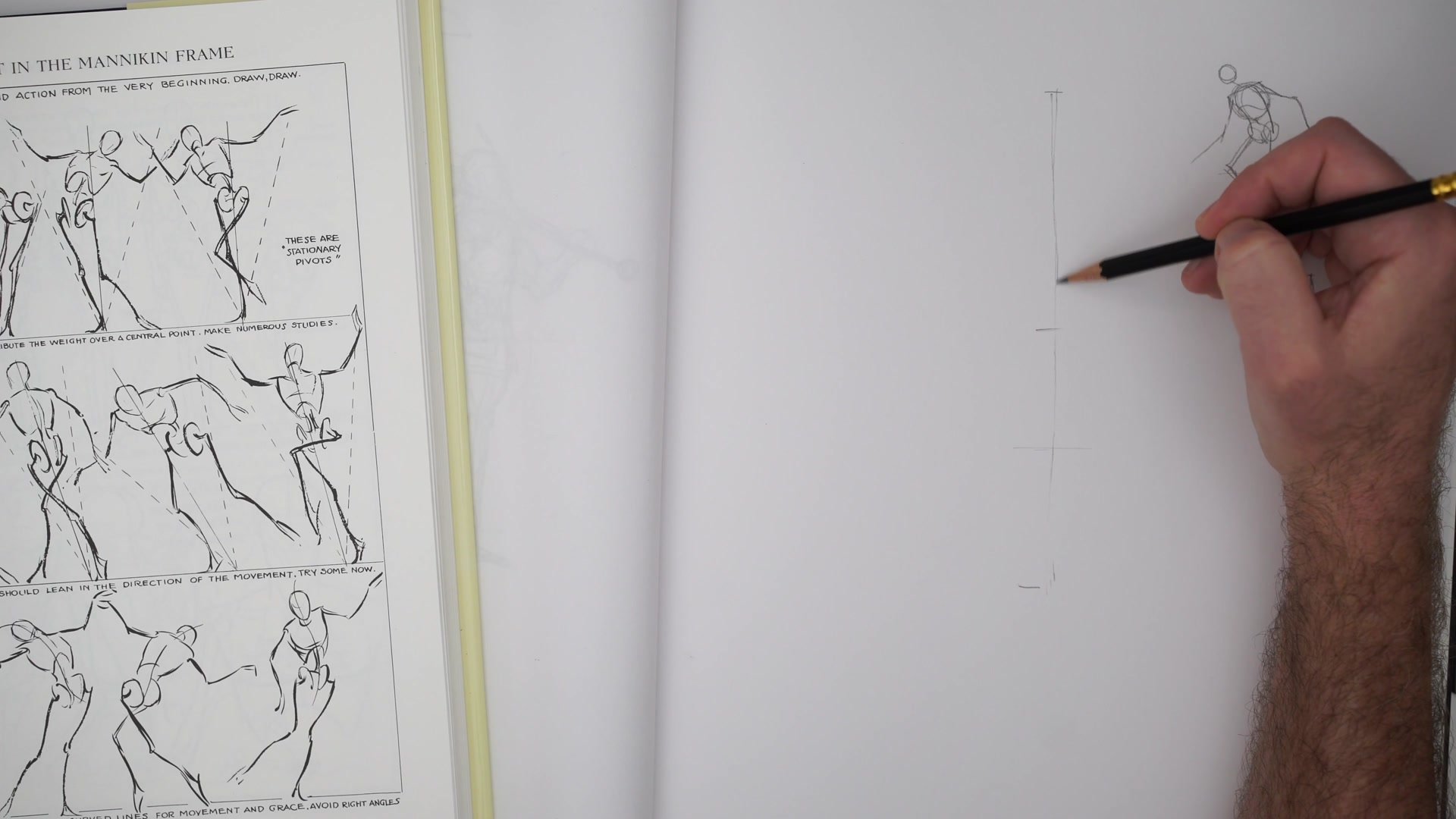
Proportion Controls Everything
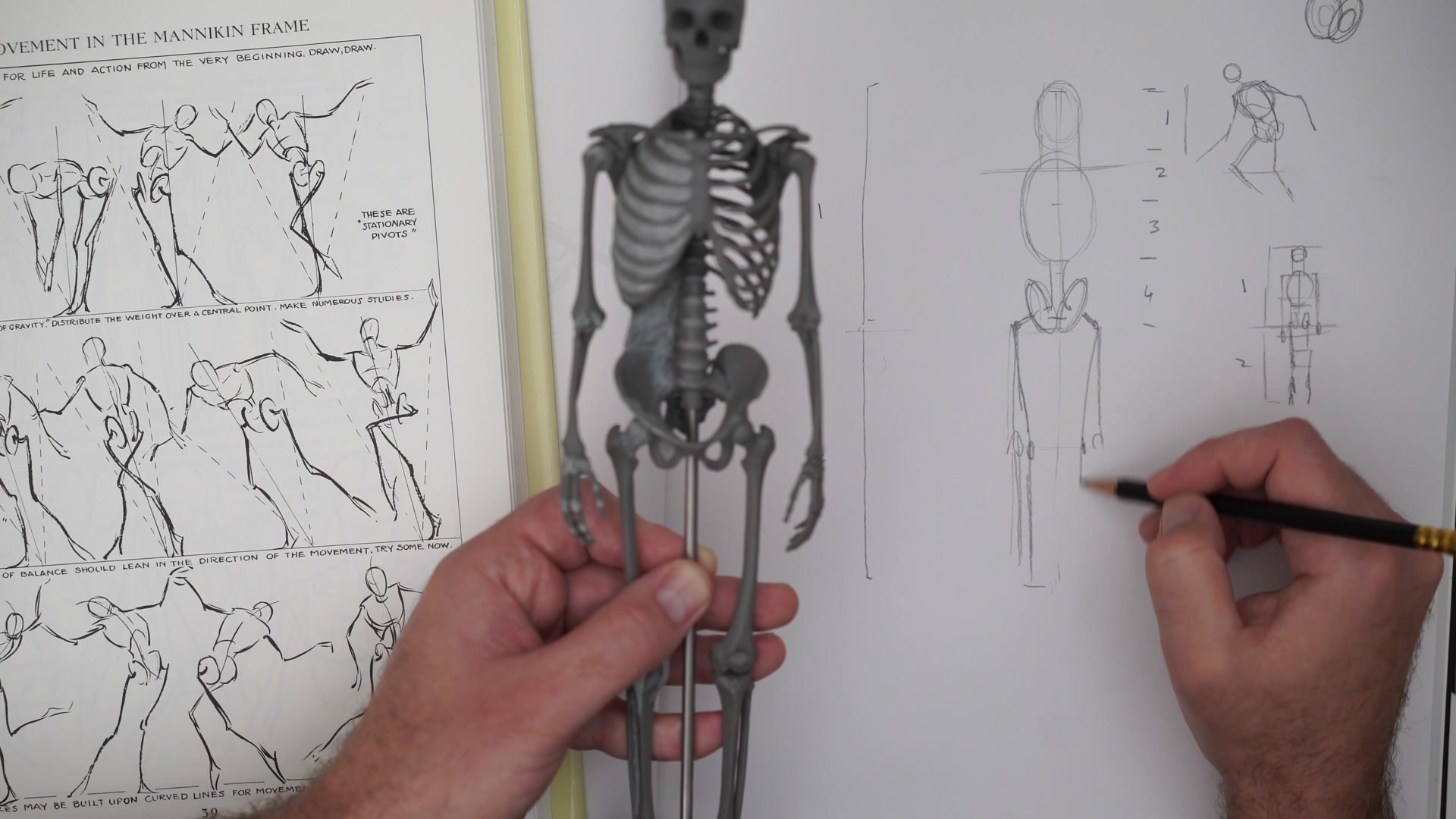
The mannequin works because the skeleton stays stable when it moves. When the shoulder joint rotates, muscles deform dramatically, but the bone structure underneath barely changes. This makes the skeletal framework a reliable foundation for posing figures quickly without worrying about how muscle groups stretch and compress.
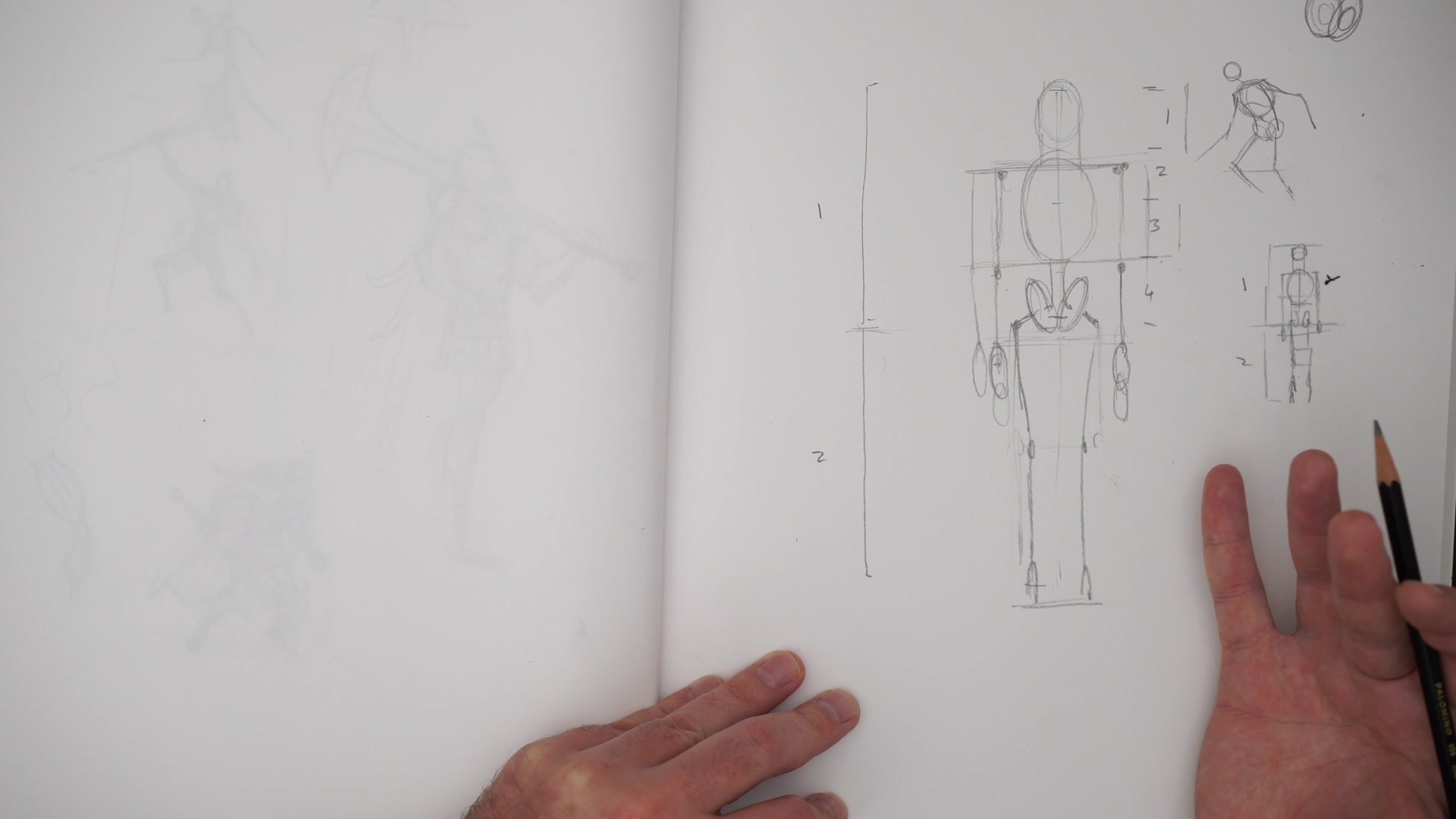
The figure divides into two main sections. Legs form the bottom half. Torso plus head form the top half, with the halfway point sitting at the pelvis. The top half then splits into four equal sections: head occupies the first, rib cage takes the middle two. Specific landmarks make this practical. The bottom of the rib cage lines up with the navel and the elbows. Three landmarks, one horizontal line. Hands end about one hand's breadth above the knees. Understanding these relationships means being able to start a drawing from anywhere and maintain accuracy, which is what proportion knowledge actually provides.
Proportional Framework
Building Muscle Over Structure
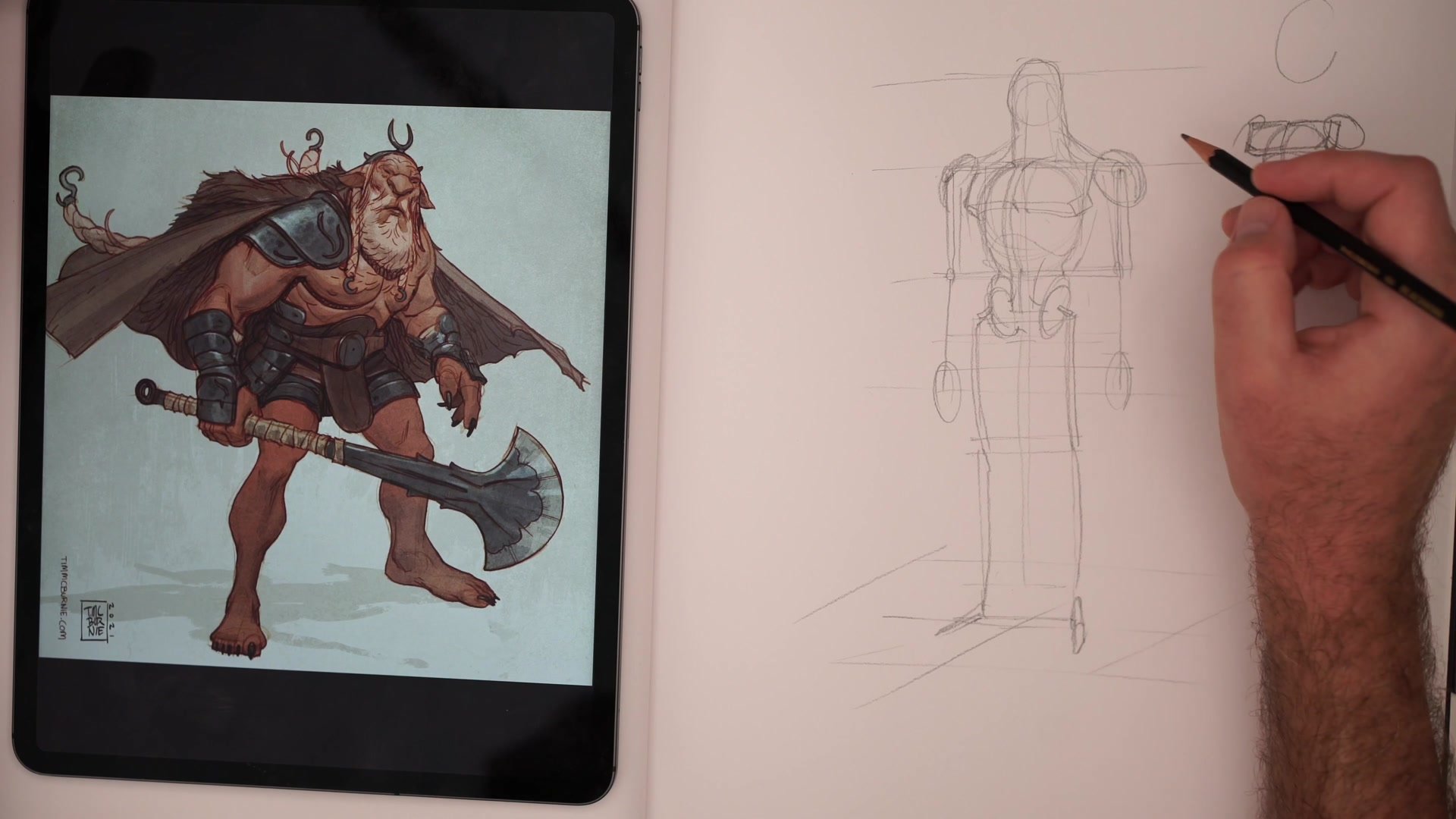
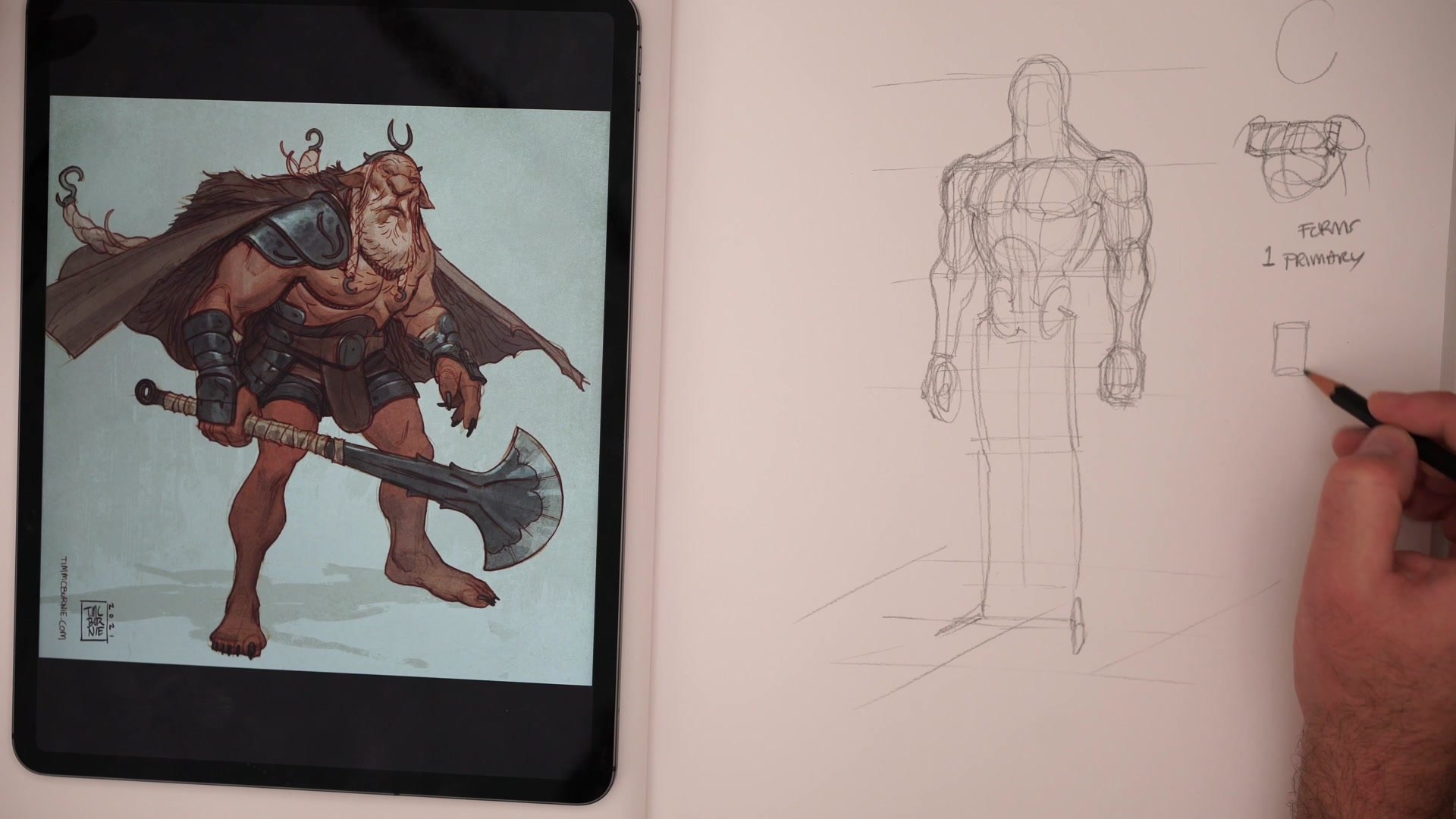
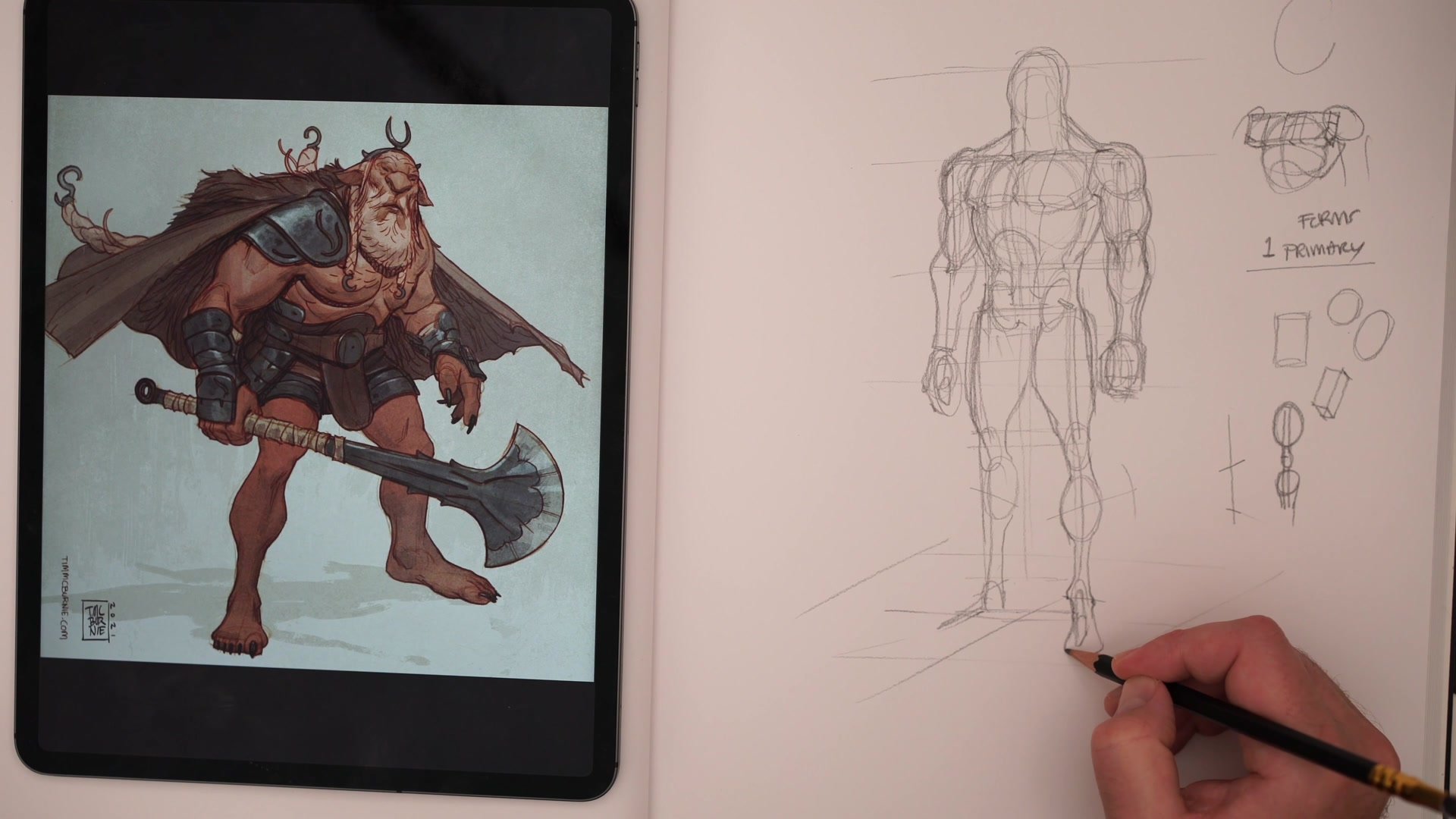
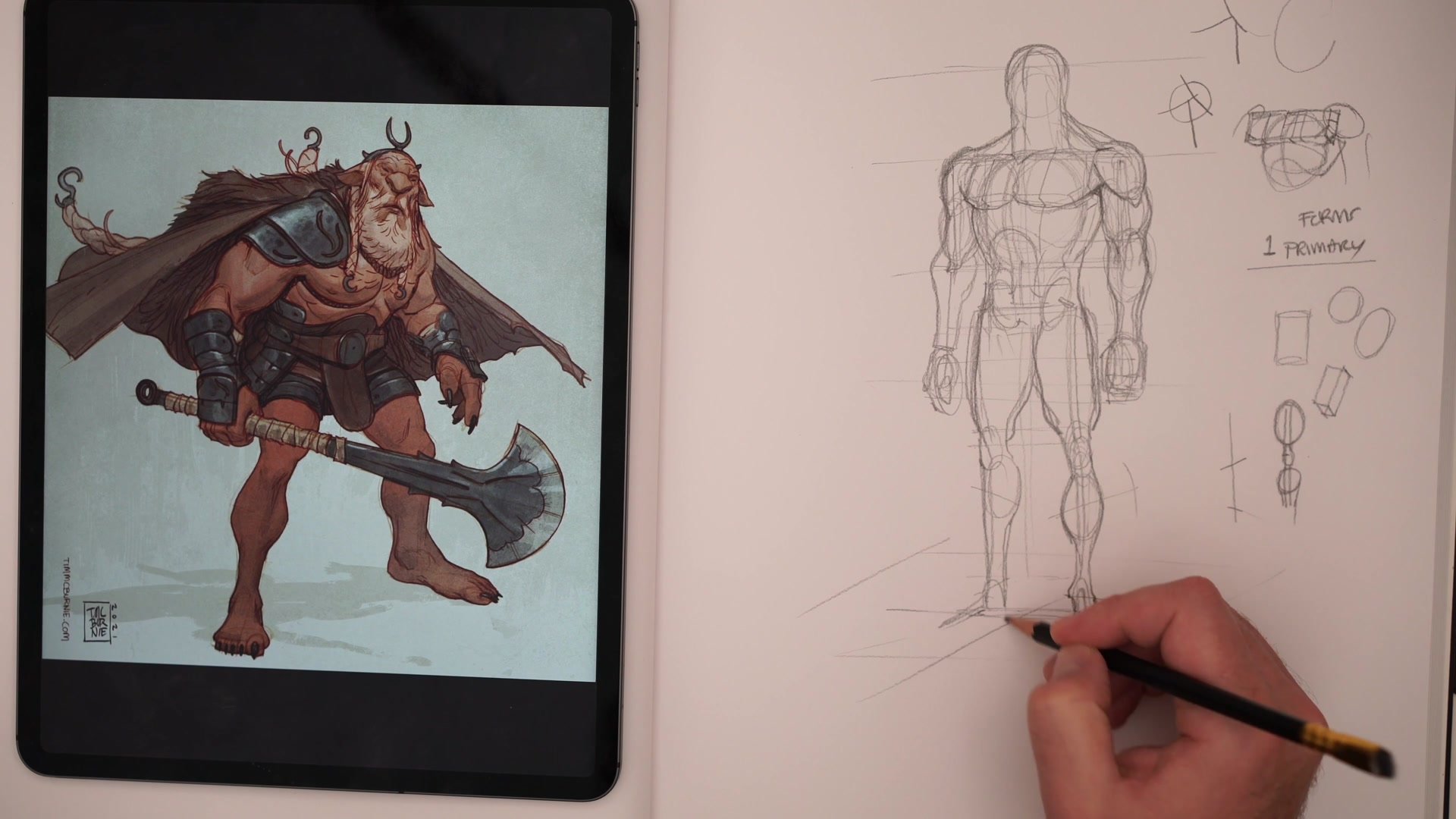
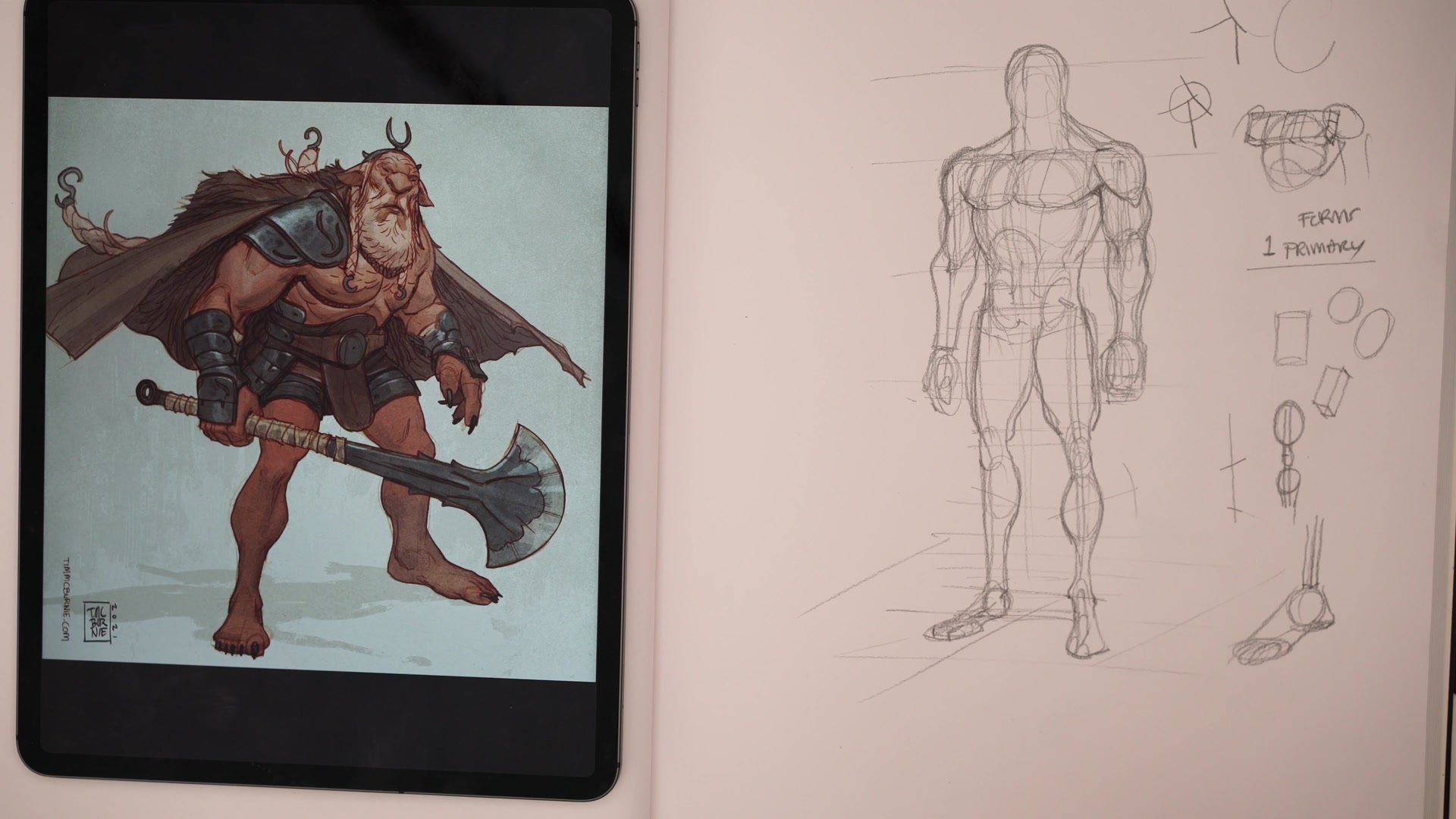
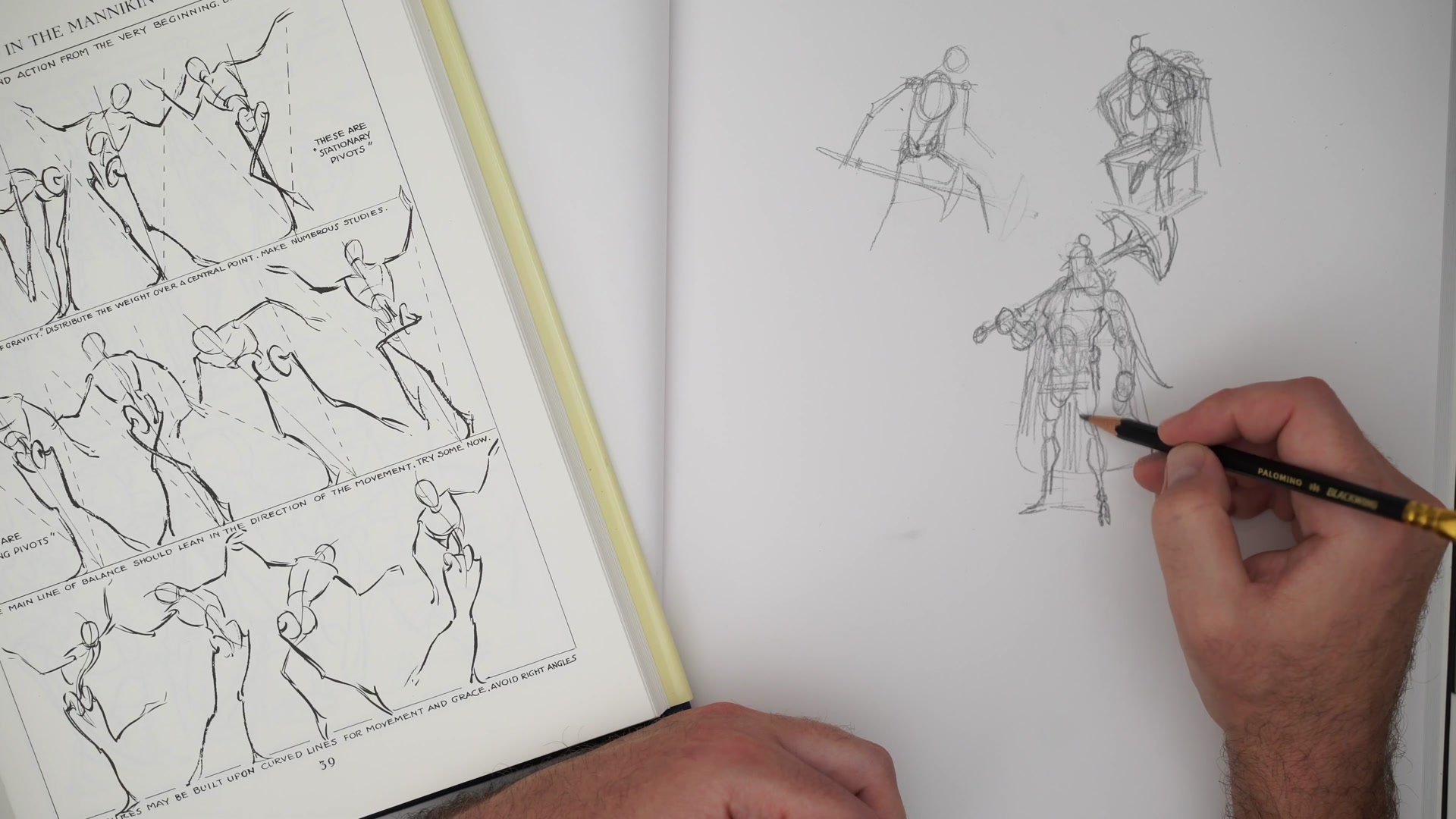
Once the skeletal mannequin is set, the most common mistake is jumping to details too early. A beautifully rendered deltoid that is fundamentally the wrong size cannot be saved by anatomical accuracy. Primary forms must be correct first. Think of the torso as egg-shaped, pectoral muscles as large blocky masses, deltoids as football-sized shapes at the shoulders. These are the big containers that define overall structure.
Two approaches work for building forms. The constructive method treats them as geometric solids: cylinders for limbs, boxes for torso, spheres for joints. The organic method masses shapes more fluidly, thinking about flow and connection. Both work. Practical anatomical relationships then clarify how forms connect. The pectoral muscle tucks underneath the deltoid. The bicep inserts beneath both. The inside calf apex sits higher than the outside. These passed-down anatomical shortcuts make construction faster without requiring medical-grade knowledge.
Primary Form Construction
Posing and Application
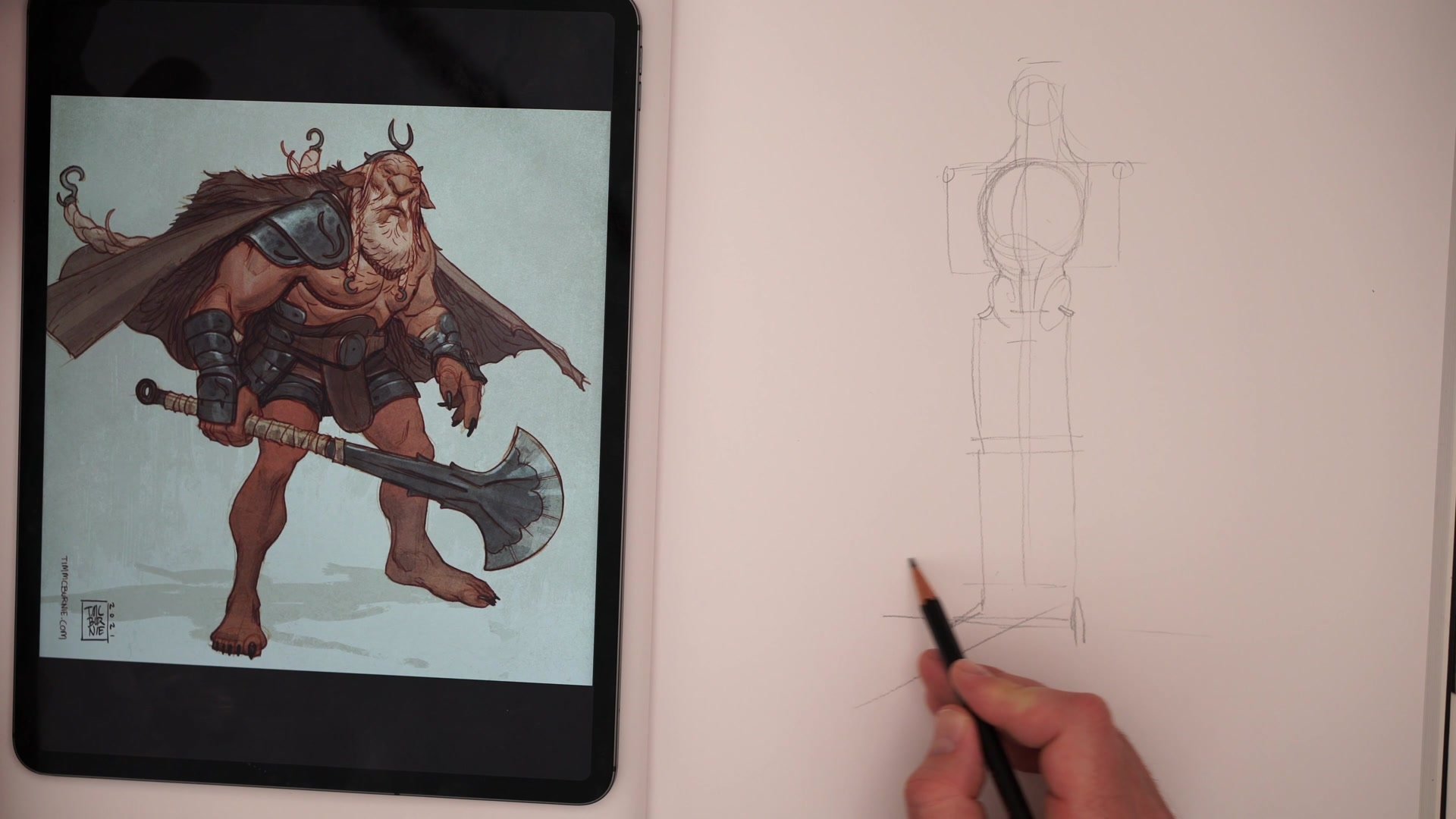
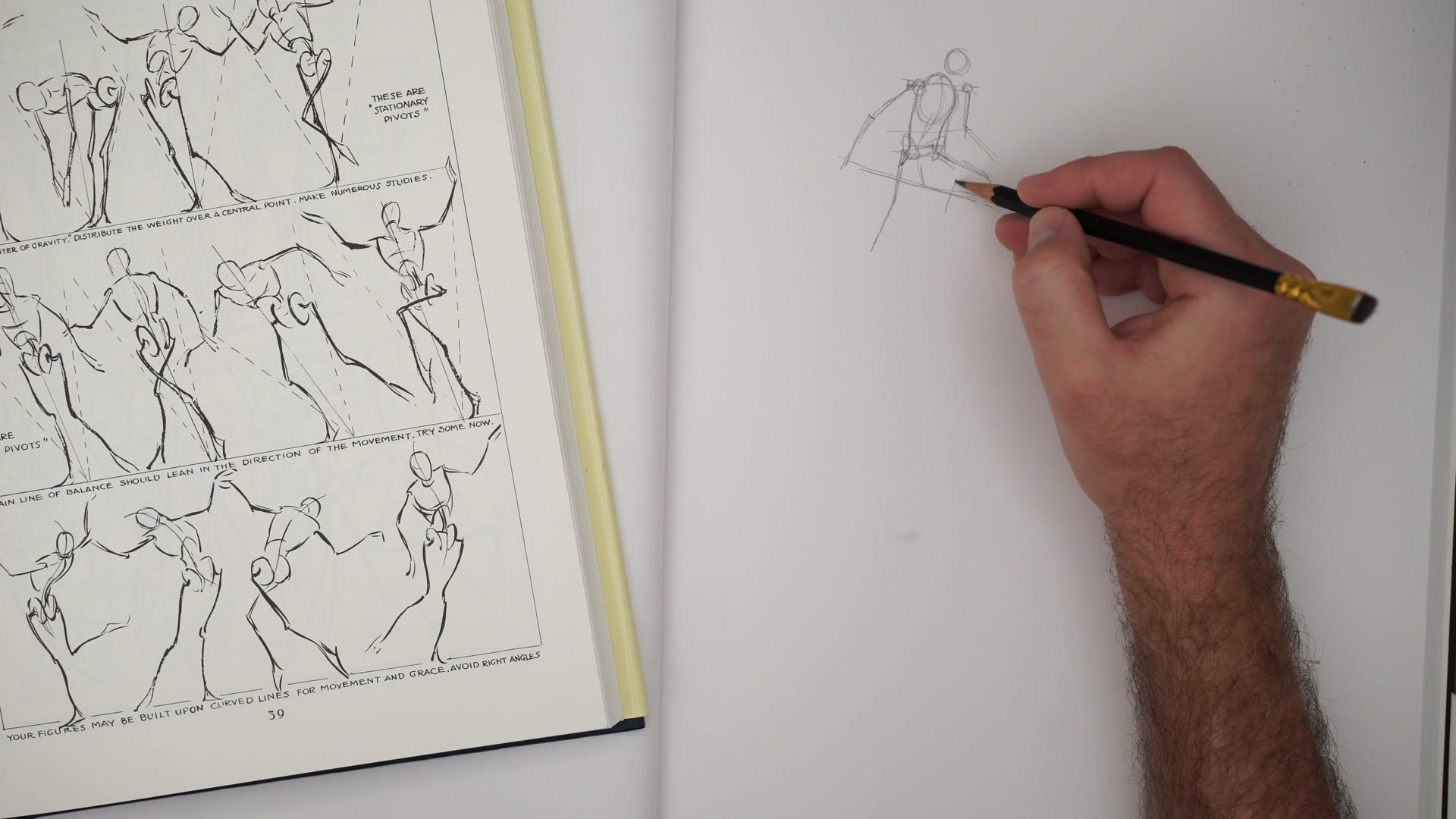
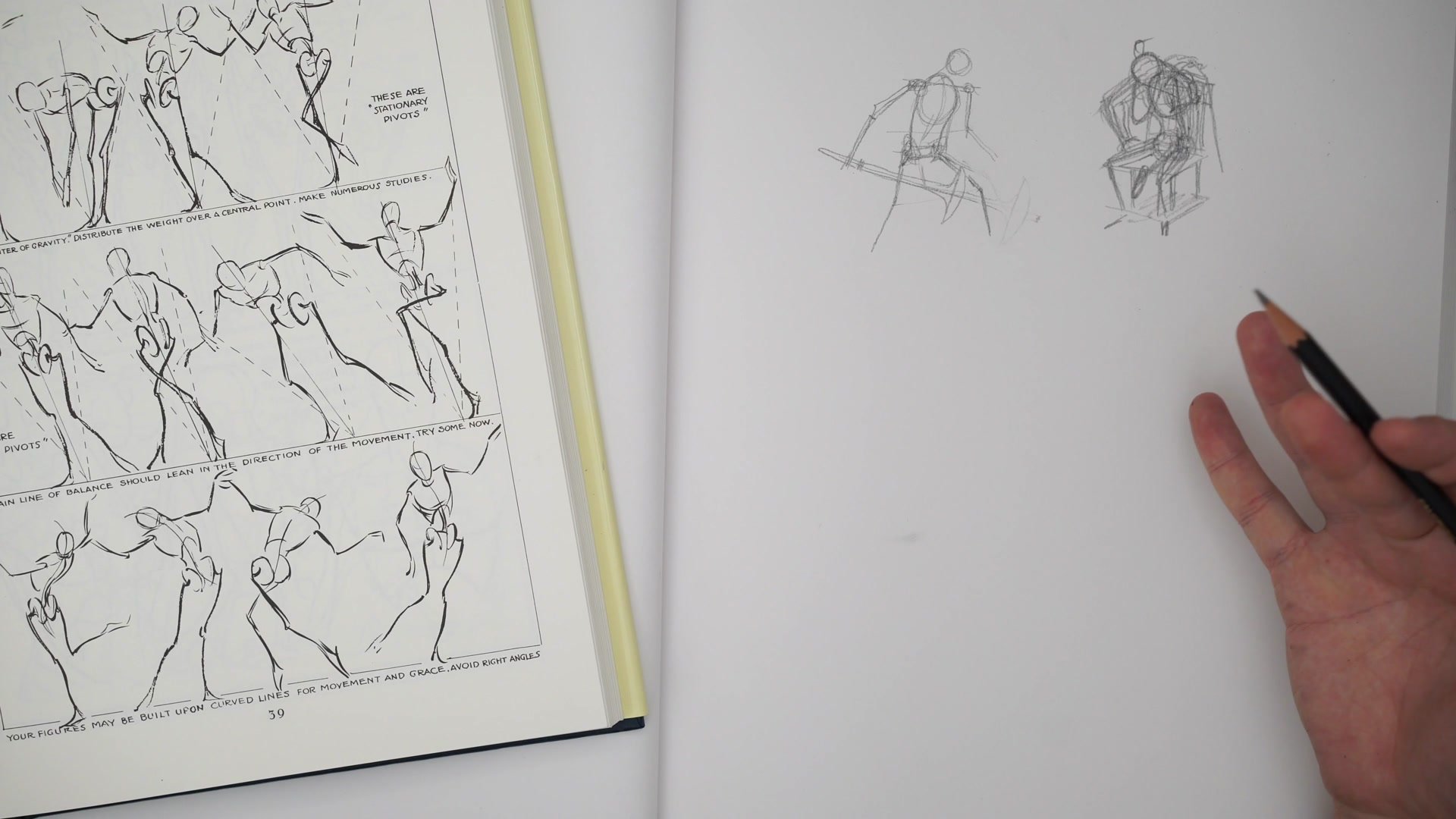
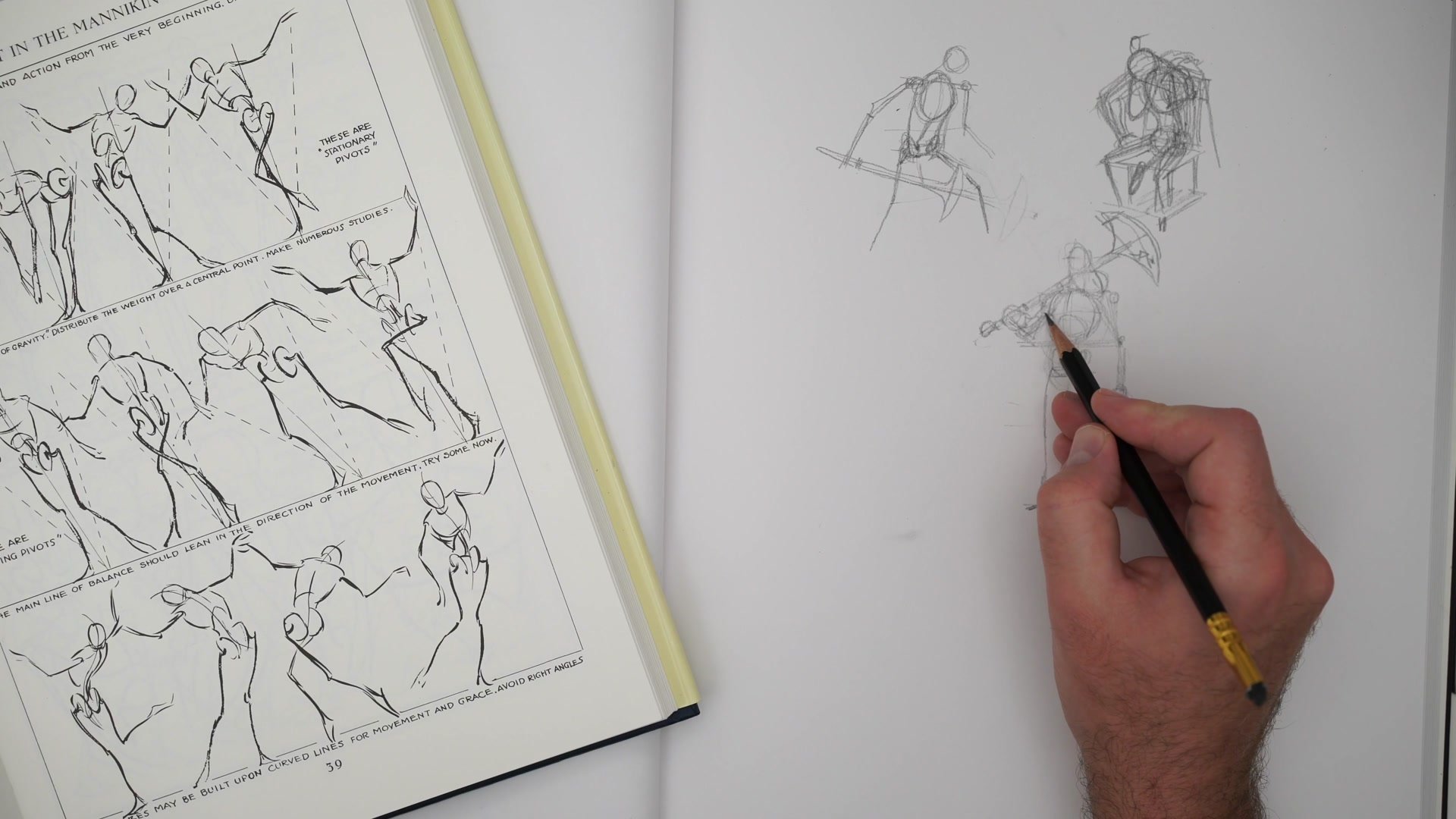
The mannequin's real value shows up when posing the figure. Starting with the torso often works well because it anchors everything else, but there is no rule. The stick figure phase looks crude, and that is where gesture and motion get established. Getting the pose right at stick figure stage makes everything after easier. Fighting to fix proportion while rendering anatomy creates unnecessary friction.
For the Lion Warrior demonstration, the mannequin gets modified slightly for heroic proportions, then multiple poses get explored using quick stick figures alongside Loomis reference pages. A sitting pose, a triumphant weapon-raised stance, and action variations all use the same proportional framework. Center line becomes critical in three-quarter views, tracking torso rotation. The process naturally mixes blocking, massing, and intuitive drawing as skill develops. Structured practice builds the foundation that eventually makes intuitive drawing possible.
Posing and Refinement
Key Principles
Proportion Before Anatomy: If basic proportions are wrong, nothing else matters. Arms too long or legs too short cannot be fixed by beautiful rendering. The mannequin framework must be correct before any muscle building begins.
Primary Forms First: Block big shapes before adding detail. Cylinders for limbs, egg shapes for torso, spheres for joints. Most drawing problems trace back to wrong primary form sizes, not missing anatomical detail.
Pose First, Build Second: The skeletal stick figure establishes gesture and motion. Only after the pose works structurally does full anatomy rendering make sense. This separation prevents compounding errors.
Foundation Enables Exaggeration: Street Fighter art works because those Capcom artists understand realistic proportion deeply enough to exaggerate systematically. The same principle applies to any stylized approach.
Practice This
Draw the Mannequin Ten Times: Front view only. Divide the figure in half at the pelvis. Divide the top half into four equal sections. Mark where head ends, rib cage sits, and elbows align with navel. Focus purely on proportion with no muscle detail.
Five Simple Poses as Stick Figures: Standing, sitting, reaching upward, triumphant stance with wide legs, action pose. Check that proportional relationships stay correct as the figure moves. Halfway point stays at pelvis. Elbows still align with navel area.
Add Primary Forms to Your Best Pose: Cylinders for limbs. Egg shape for torso. Spheres for joints. No anatomical detail yet. This layered approach produces consistent results when drawing from imagination.