Lovecraftian Wizardry Character Designs
Summary
Lovecraftian Character Design Process
This session covers nearly an hour of real-time character design sketching, developing two Lovecraftian wizard characters from initial rough block-ins through to detailed concept sketches. Using Blackwing pencils on Strathmore 400 series drawing paper, the process moves through proportional construction, Loomis method head placement, and iterative refinement as the dark fantasy design language takes shape.
The session opens with a brief look at inspiring artwork from ArtStation before moving to the drawing table. The design prompt centers on visualizing magic as something corrupting and Lovecraftian, where characters have paid a physical price for their power. Both characters emerge through loose sketching that prioritizes exploration over polish.
Early Block-In
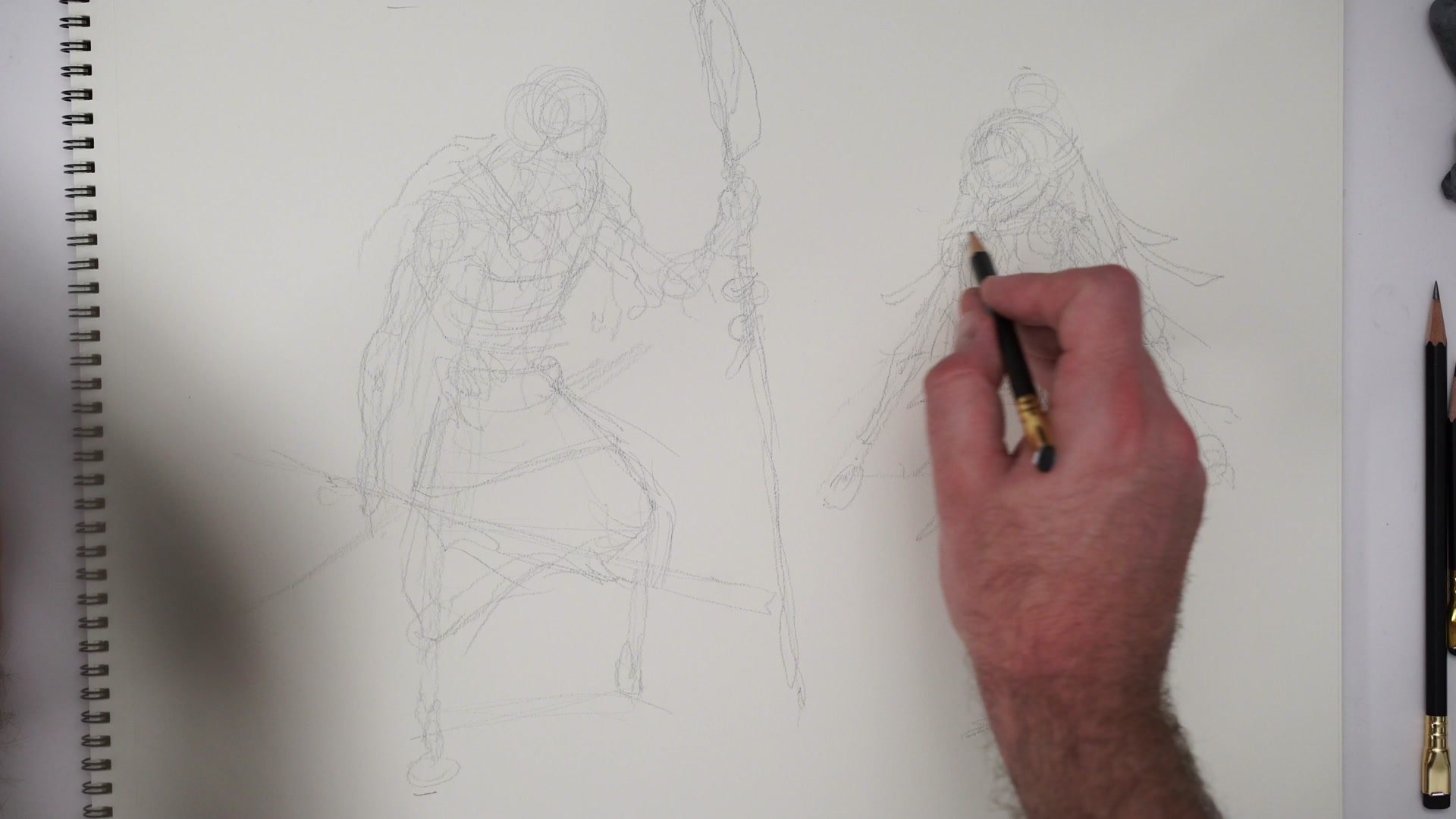
Rough Construction
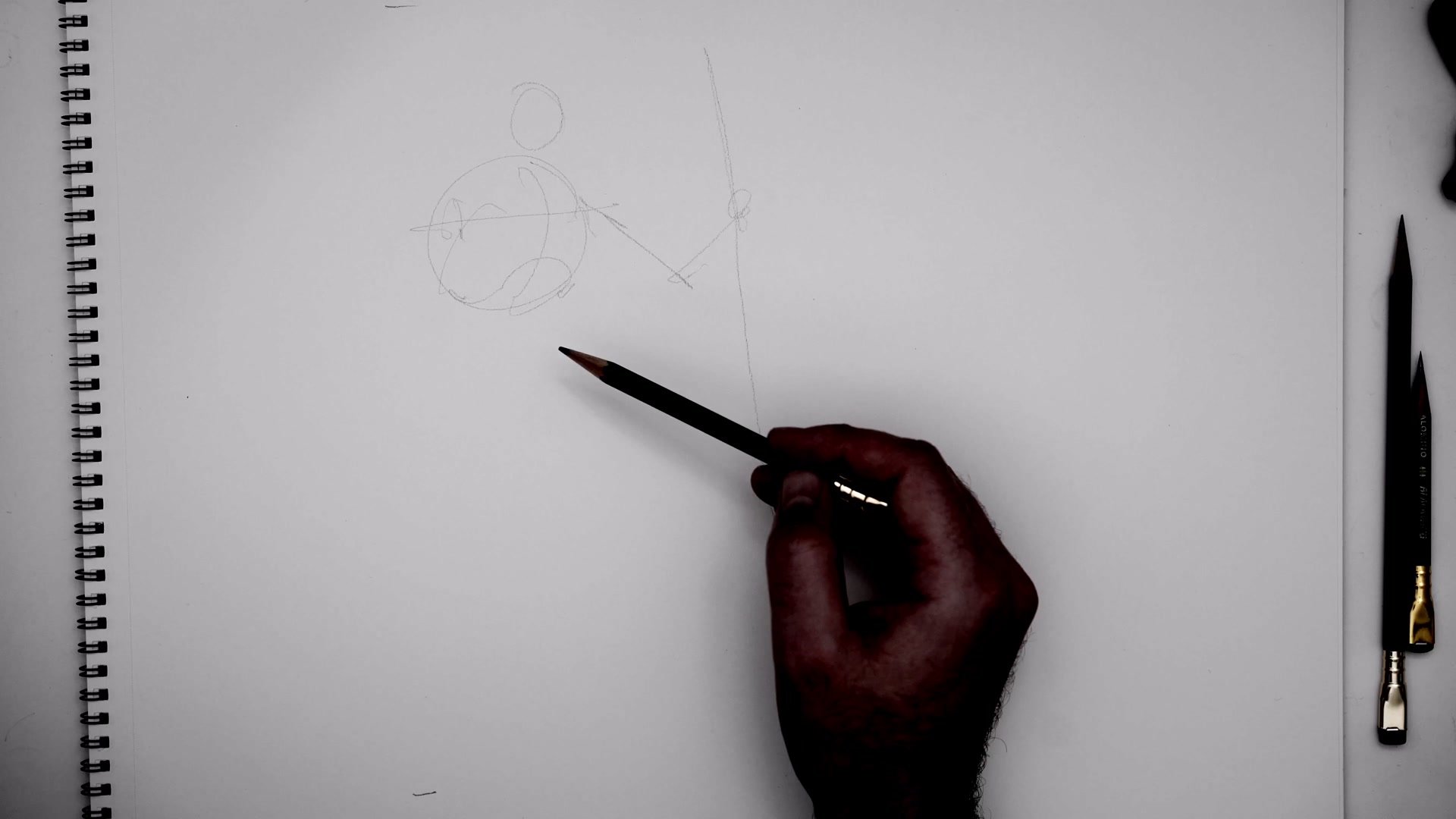
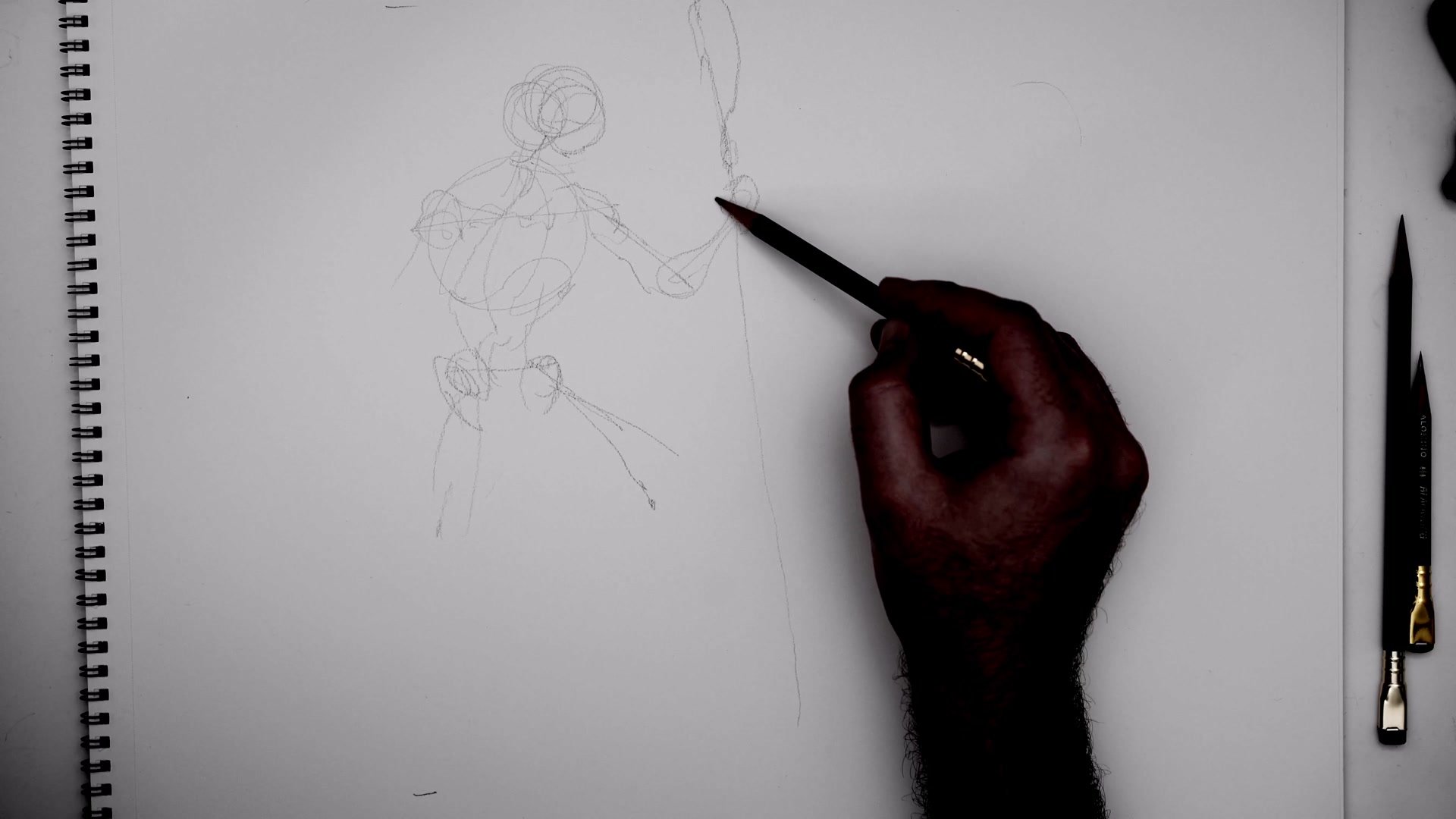
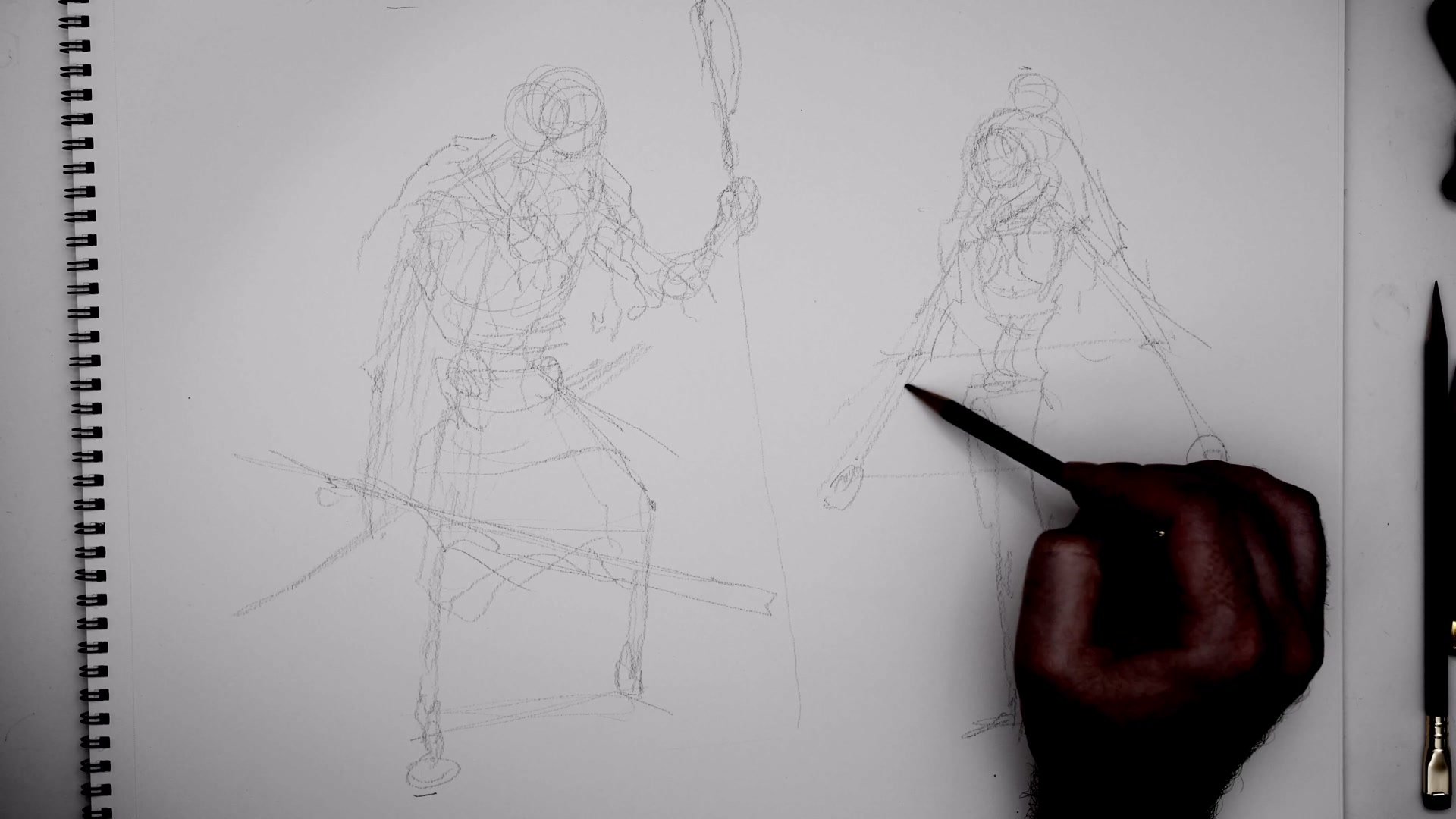
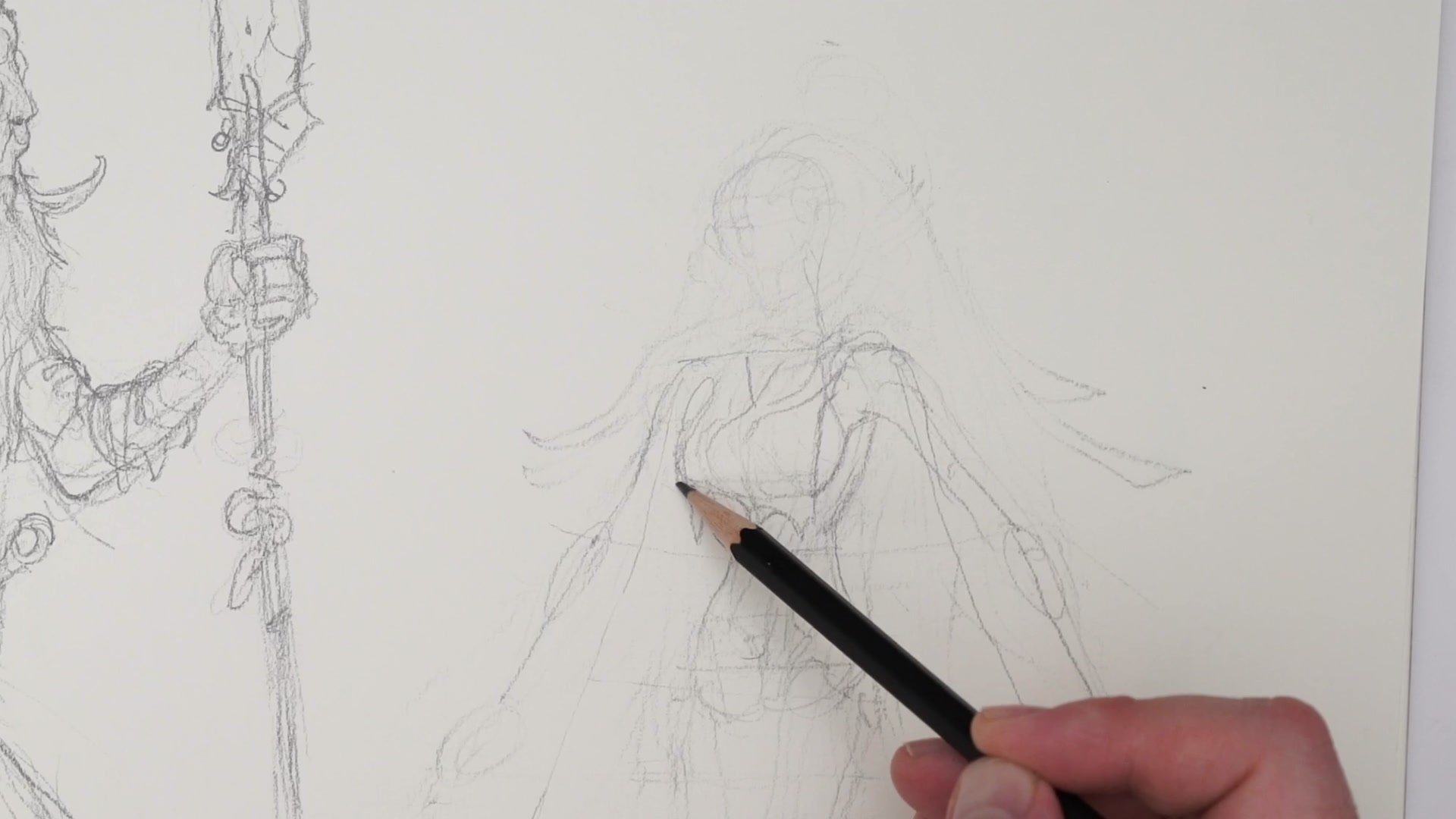
The initial phase moves fast and light, establishing basic proportional landmarks for both characters side by side. The Loomis mannequin method provides structural checkpoints throughout, finding the head, ribcage, pelvis, and limb positions before committing to any detail. Working this light means the pencil barely digs into the paper, making it easy to lift marks with a kneadable eraser and redirect the drawing without fighting previous lines.
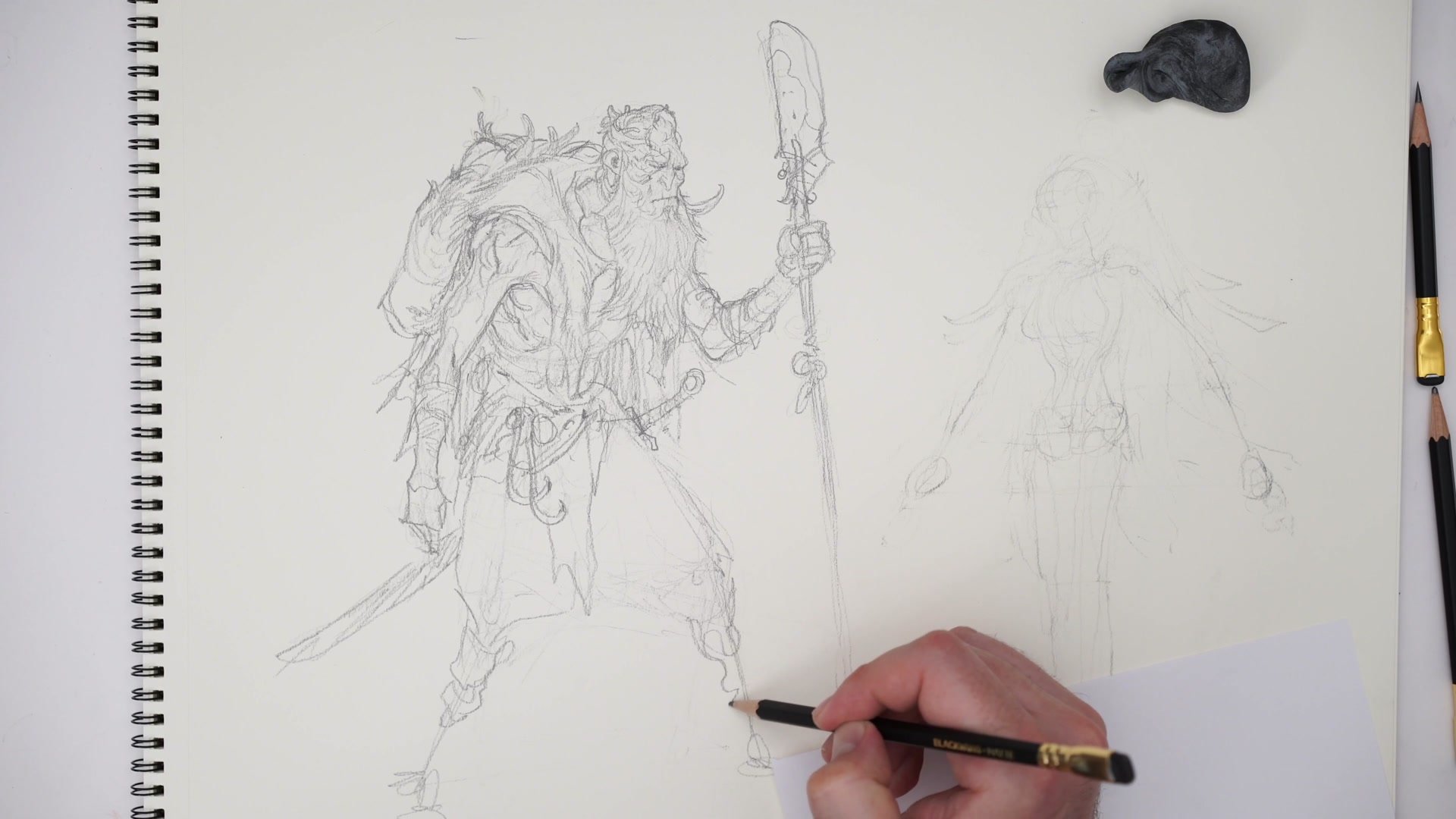
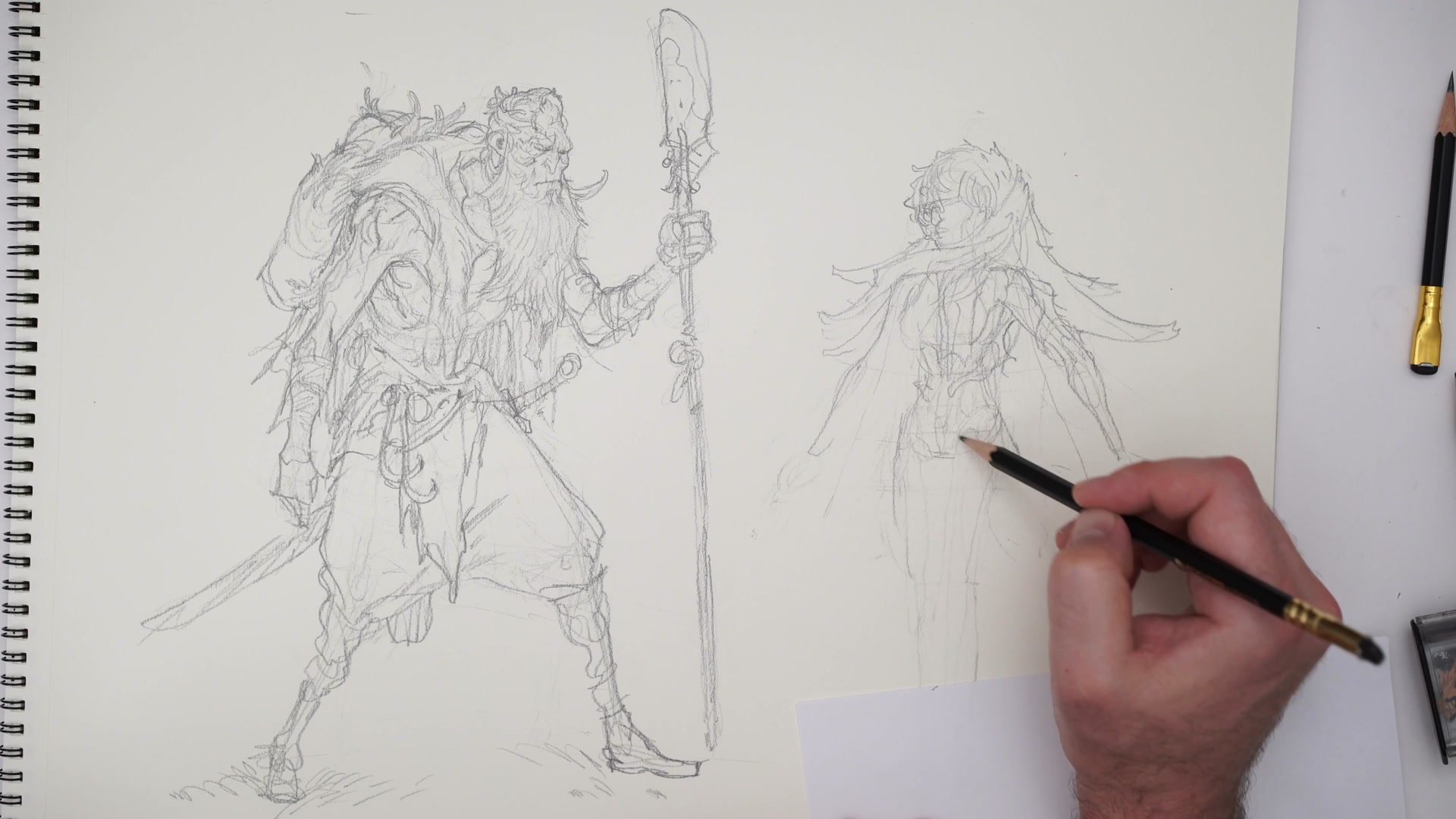
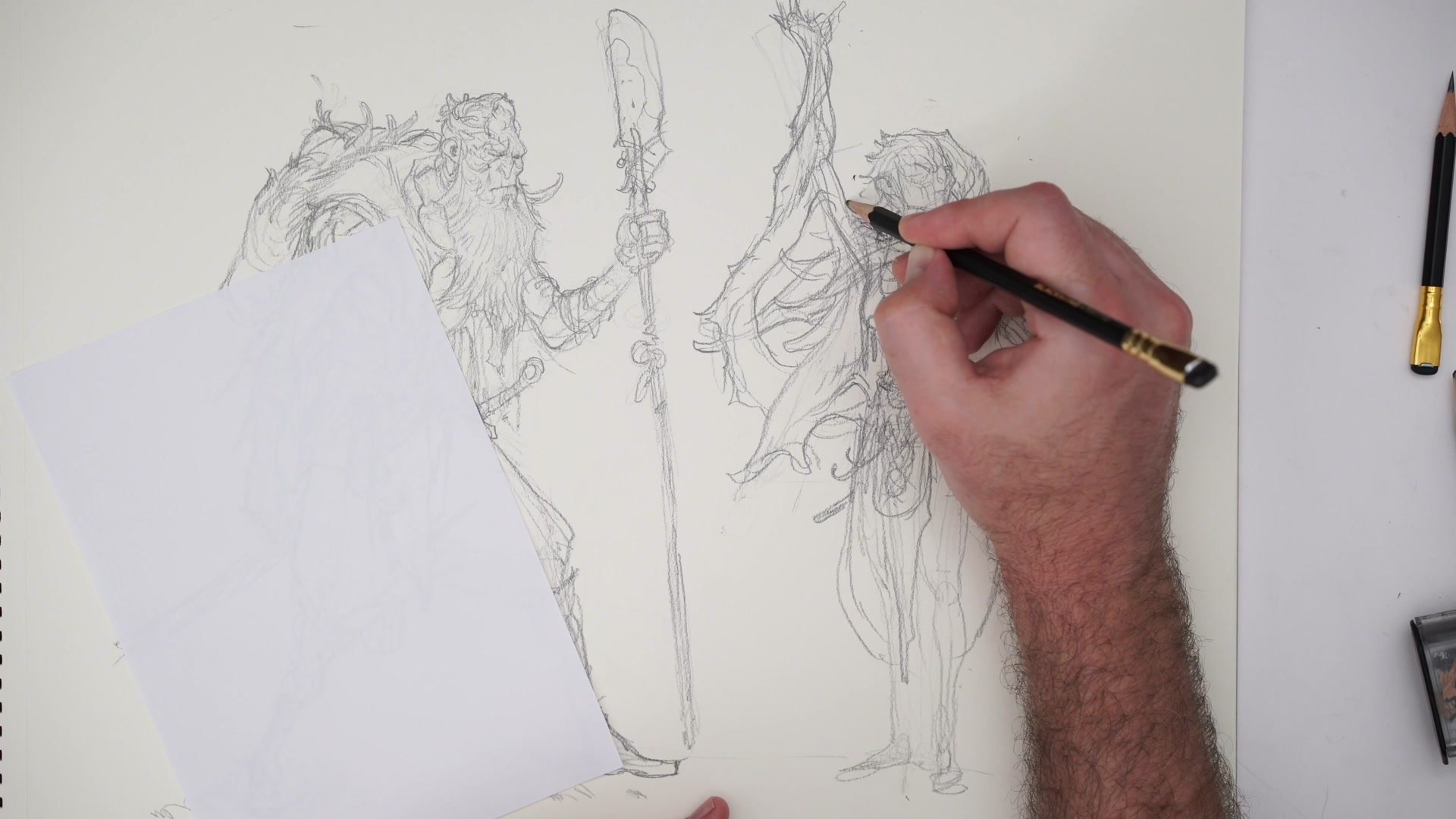
Two characters are blocked in simultaneously, an older male warrior-mage on the left and a smaller female character on the right. Getting both on the page early helps establish their relationship and relative scale. The proportional checking happens from above the drawing, stepping back to verify center lines, foot placement, and overall gesture before pushing into detail work.
Character Development
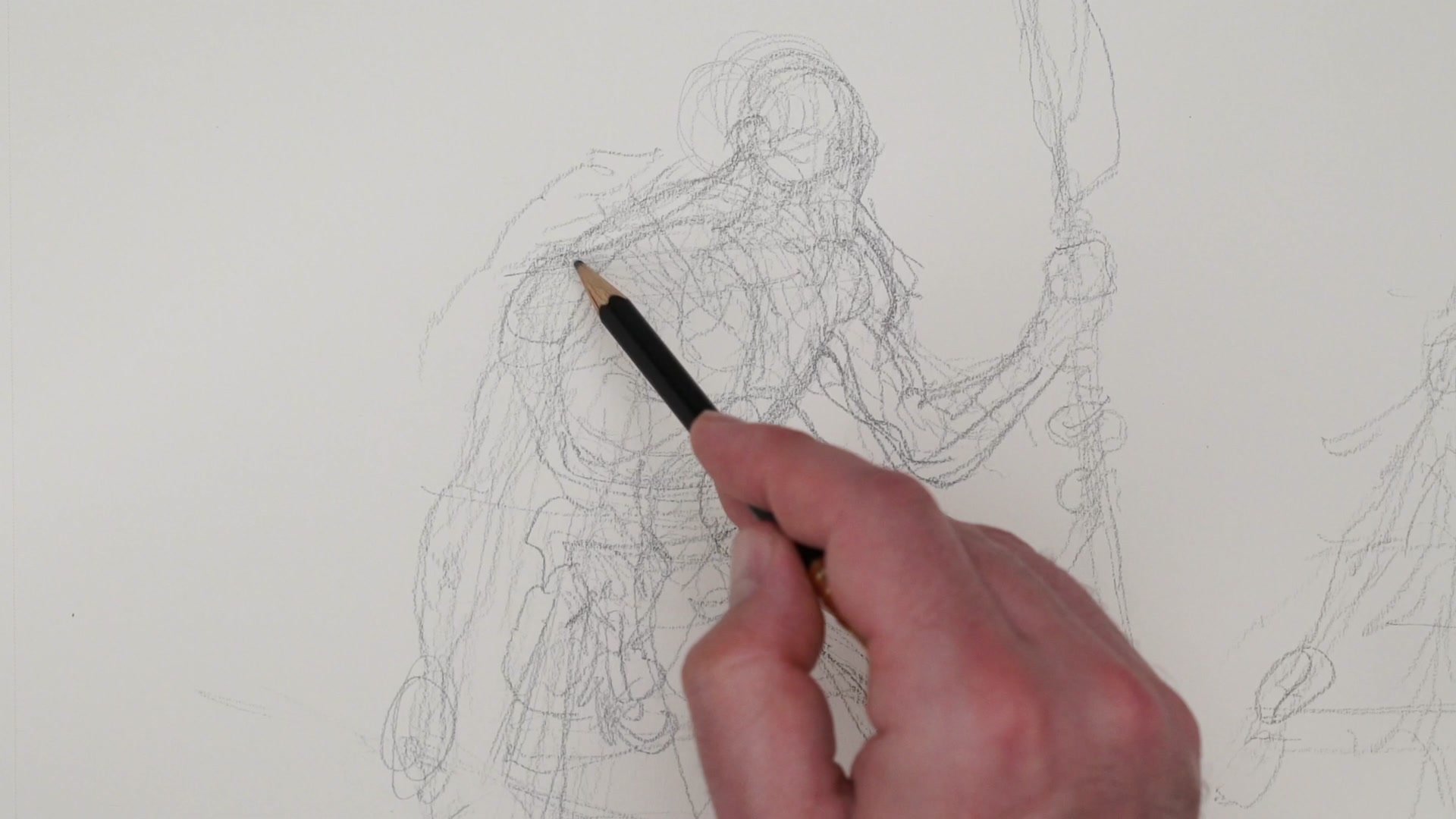
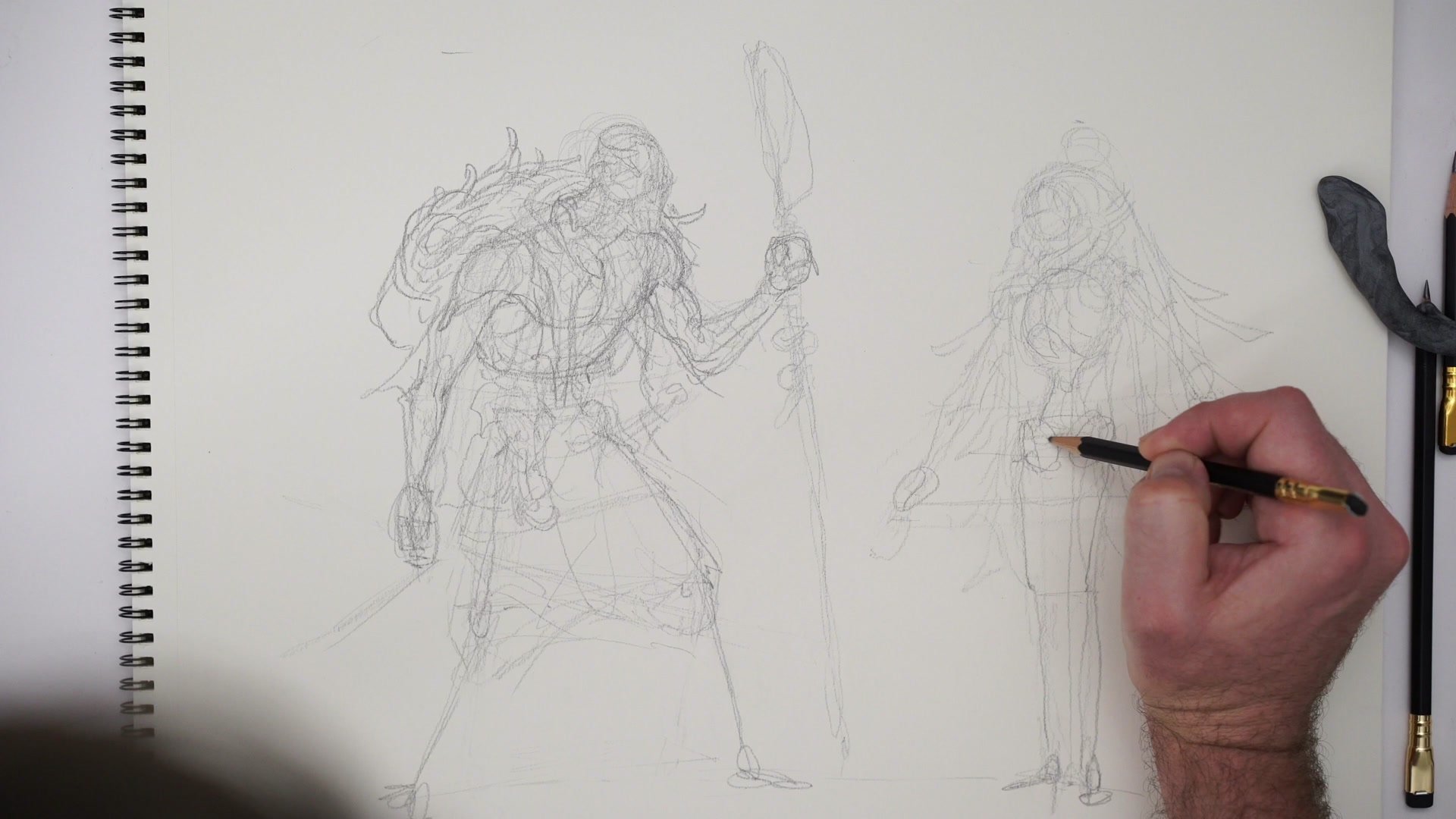
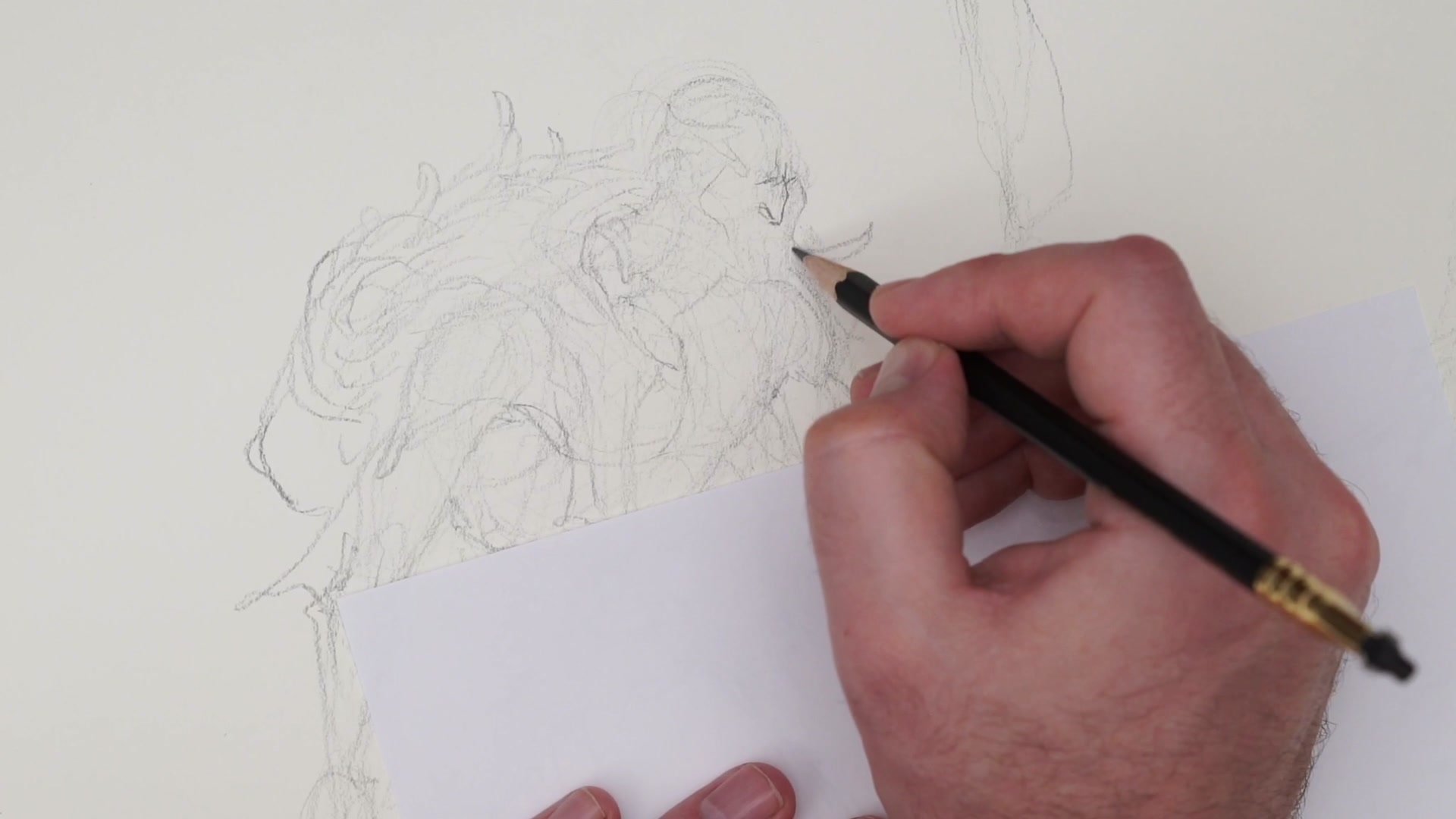
Creature Design Language
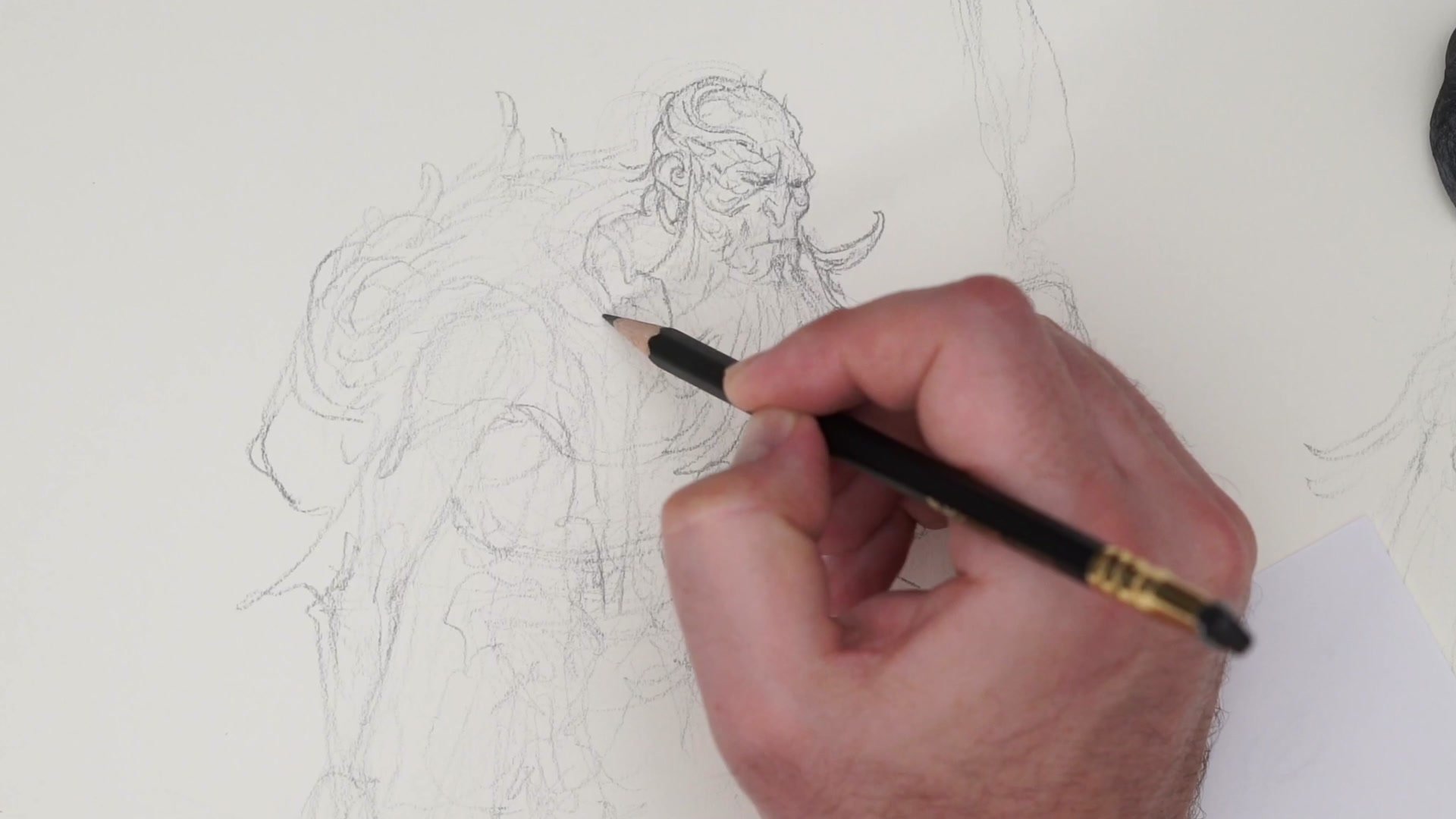
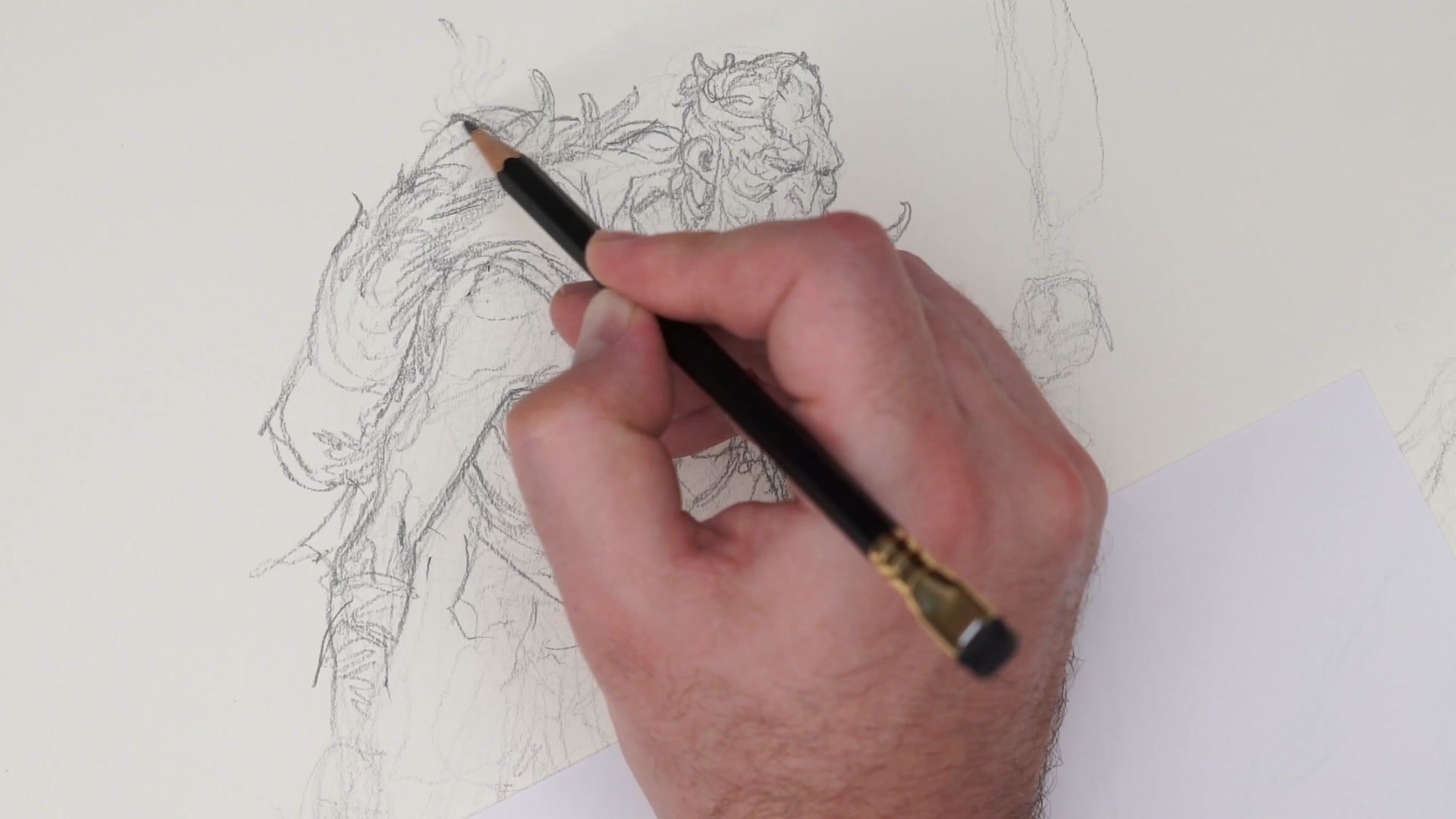
The Lovecraftian elements emerge through iterative exploration rather than pre-planned design. Tentacle forms grow from the male character's back and shoulders, creating ambiguity about whether these are part of the character, parasitic growths, or something worn. This deliberate uncertainty is central to the Cthulhu aesthetic, where the visuals resist clean definition.
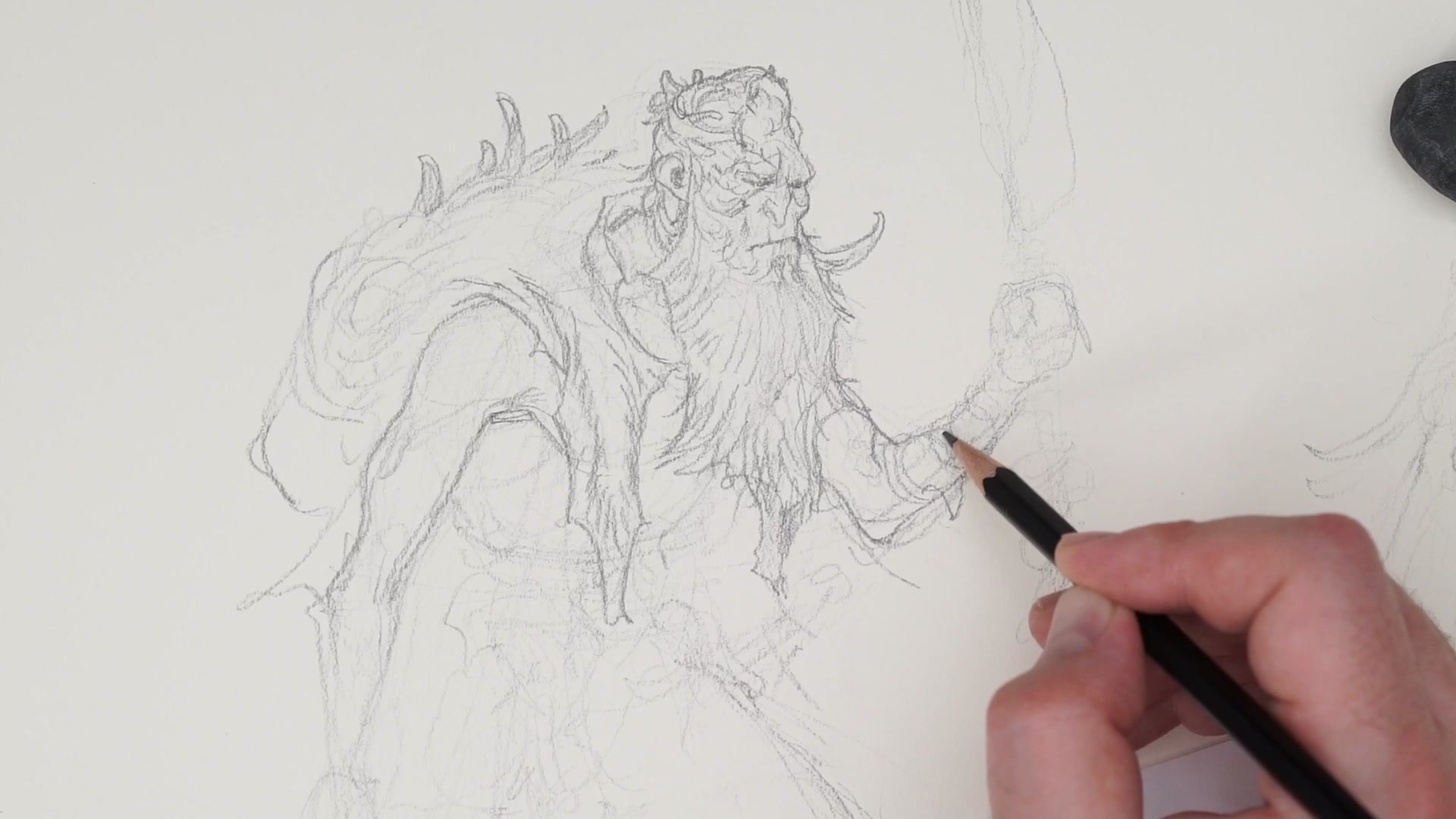
The design process involves thinking about what creepiness actually means visually, then pushing past the first idea to find something worse. Spines, hooks, and organic tentacle shapes wrap around the figure, using overlapping forms to suggest depth and mass. The face receives multiple passes, each attempt trying to sell the idea of a drawn, aged warrior who has physically decayed through contact with dark power. A hollowed stomach and exposed anatomy reinforce the sense of physical cost.
Detail and Refinement
Iteration Over Polish
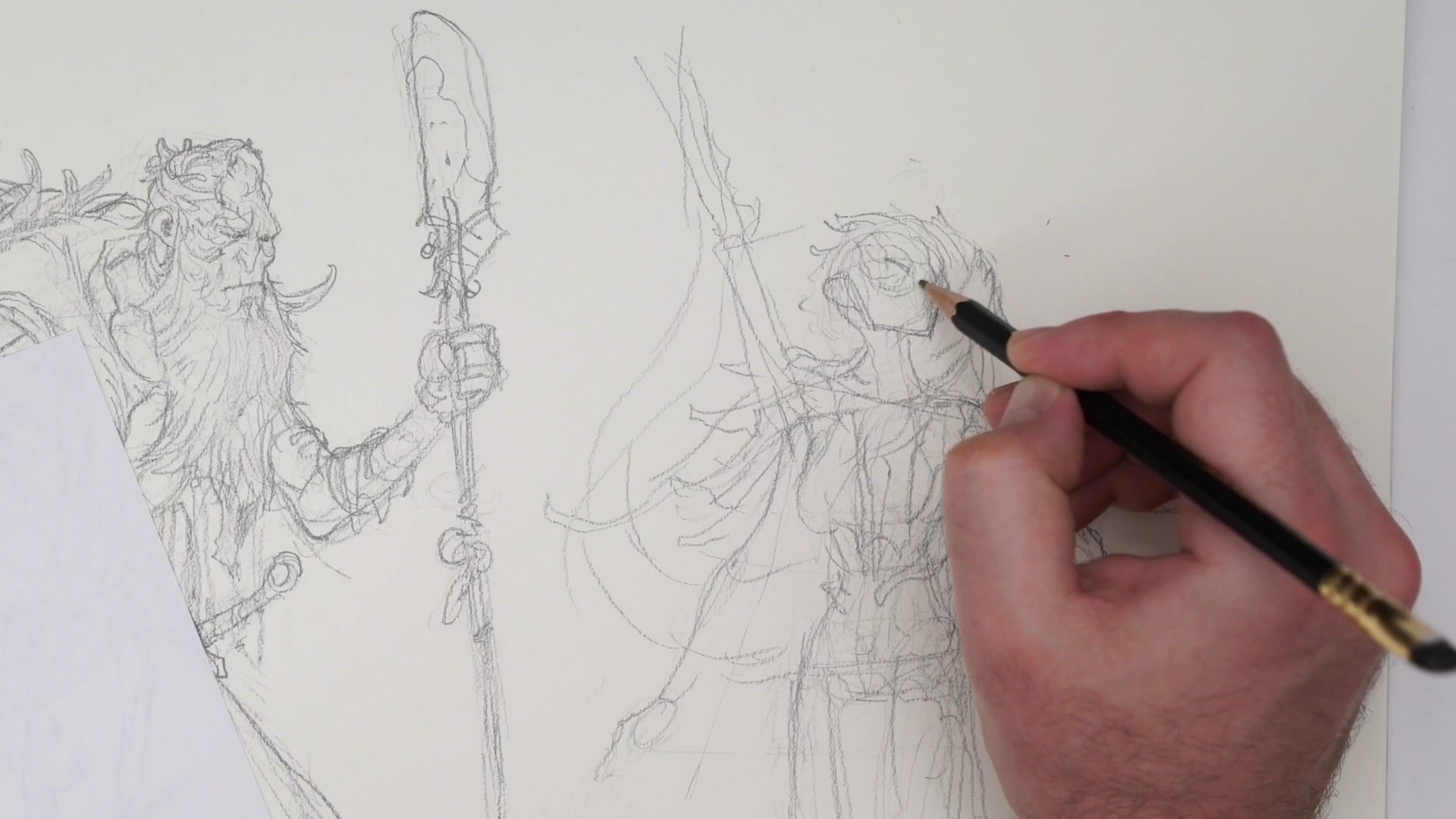
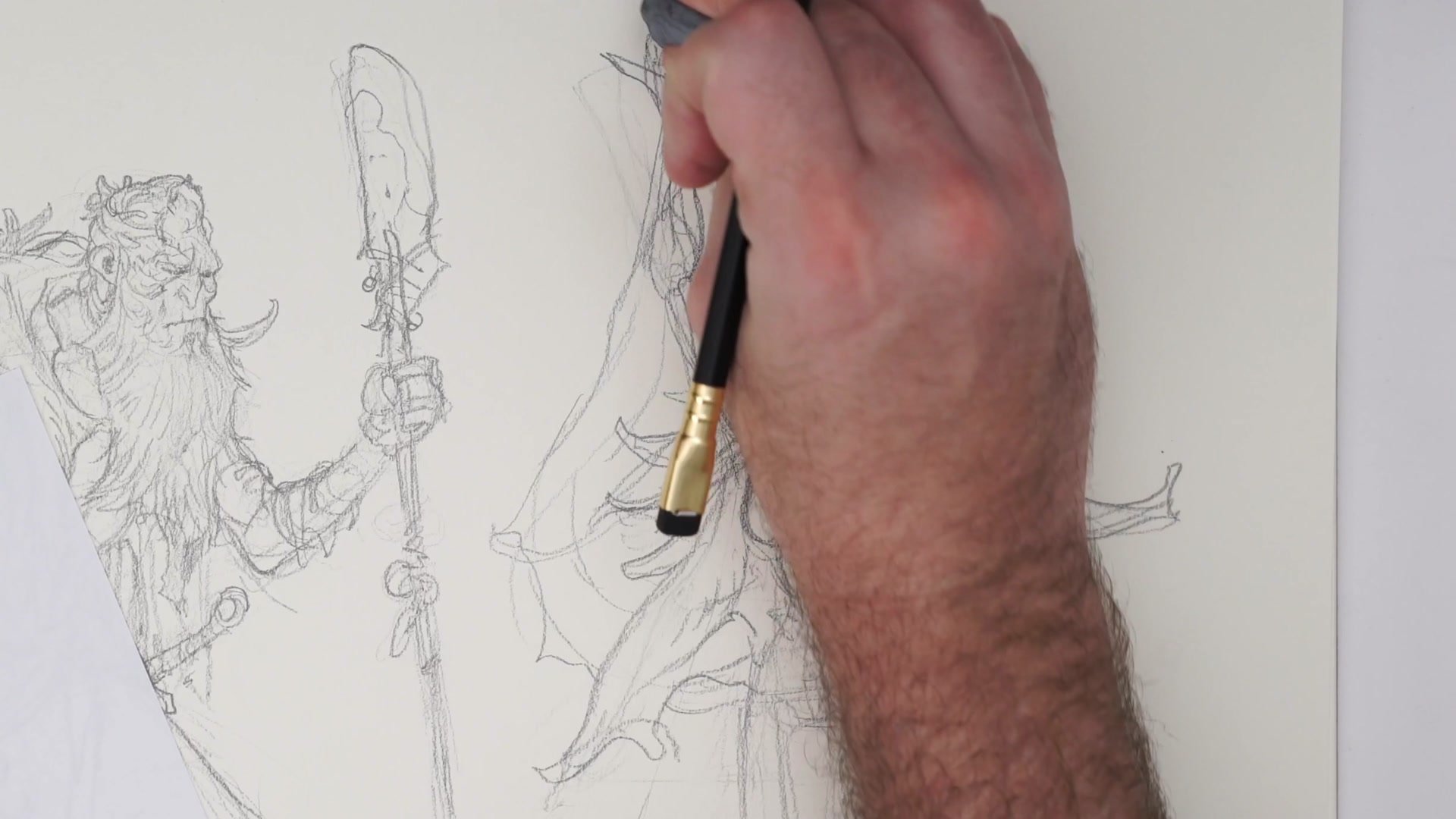
Rather than cleaning up one drawing to completion, the session demonstrates the value of rough exploration. The male character receives progressively darker and more defined pencil work, building up detail through layers of sketchy marks rather than precise single lines. The female character remains lighter, with tentacle elements beginning to merge with her arms and a different silhouette emerging through a cloak and tattered clothing.
The session makes clear that these are concept sketches, not finished illustrations. Hands and feet get gestural placeholder treatment because at this stage, the design questions matter more than rendering quality. Functional design problems, like how tentacles connect to human anatomy, are flagged for later resolution rather than solved in the moment. The goal is discovering what ideas are worth pursuing, not proving they can work mechanically.
Final Designs
Key Techniques
Light Initial Block-In: Starting with barely visible construction lines makes the kneadable eraser effective and prevents the drawing from becoming overworked before the design direction is established.
Loomis Checkpoints: Using the Loomis mannequin method throughout provides reliable proportional landmarks when redrawing or adjusting character poses during the design process.
Ambiguity as Design Tool: Leaving creature elements deliberately unclear, not fully defining whether tentacles are parasitic, worn, or biological, creates the unsettling quality that defines Lovecraftian aesthetics.
Exploration Over Finish: Working two characters simultaneously at sketch level generates more useful design ideas than polishing a single character to completion.
Try This Exercise
Pick a Design Prompt: Choose a simple character archetype, like a warrior or mage, and add a single corrupting element to explore. Think about what physical cost magic might have on the body.
Sketch Two Variations: Place two rough characters side by side in your sketchbook. Keep the initial pass as light as possible, focusing on gesture and proportion before any detail.
Push the Creepiness: Once the basic forms exist, iterate on the dark elements. If your first pass feels too safe, ask what would be worse, what would make it more unsettling, and sketch another version.