Master the Loomis Method - Drawing Orcs
Summary
Modifying the Loomis Method for Monsters
The Loomis method is typically taught as a system for constructing realistic human heads. But the real power of the method lies in understanding that every proportion within it can be modified. Drawing orcs, monsters, and fantasy creatures using the same structural framework builds foundational skills while keeping practice engaging.
The challenge most artists face is bridging the gap between textbook head construction and drawing the characters they actually want to create. This video demonstrates how the Loomis construction works as a flexible system by breaking the skull into three modifiable components: the brain case, the jaw structure, and the mound of the teeth. Understanding these elements in human anatomy first makes modifications for monster characters systematic rather than guesswork.
Reference and Setup
Three Components to Modify
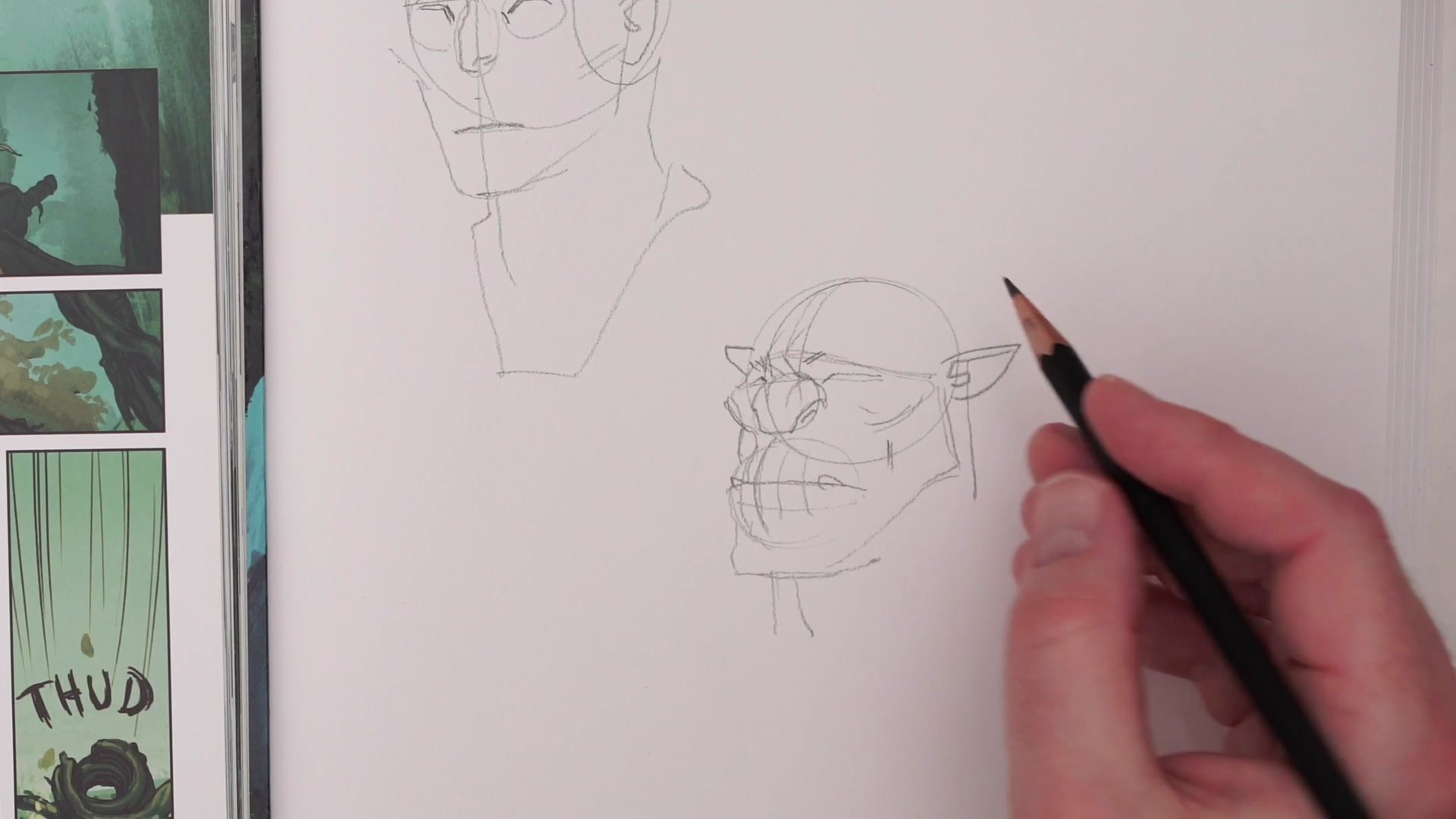
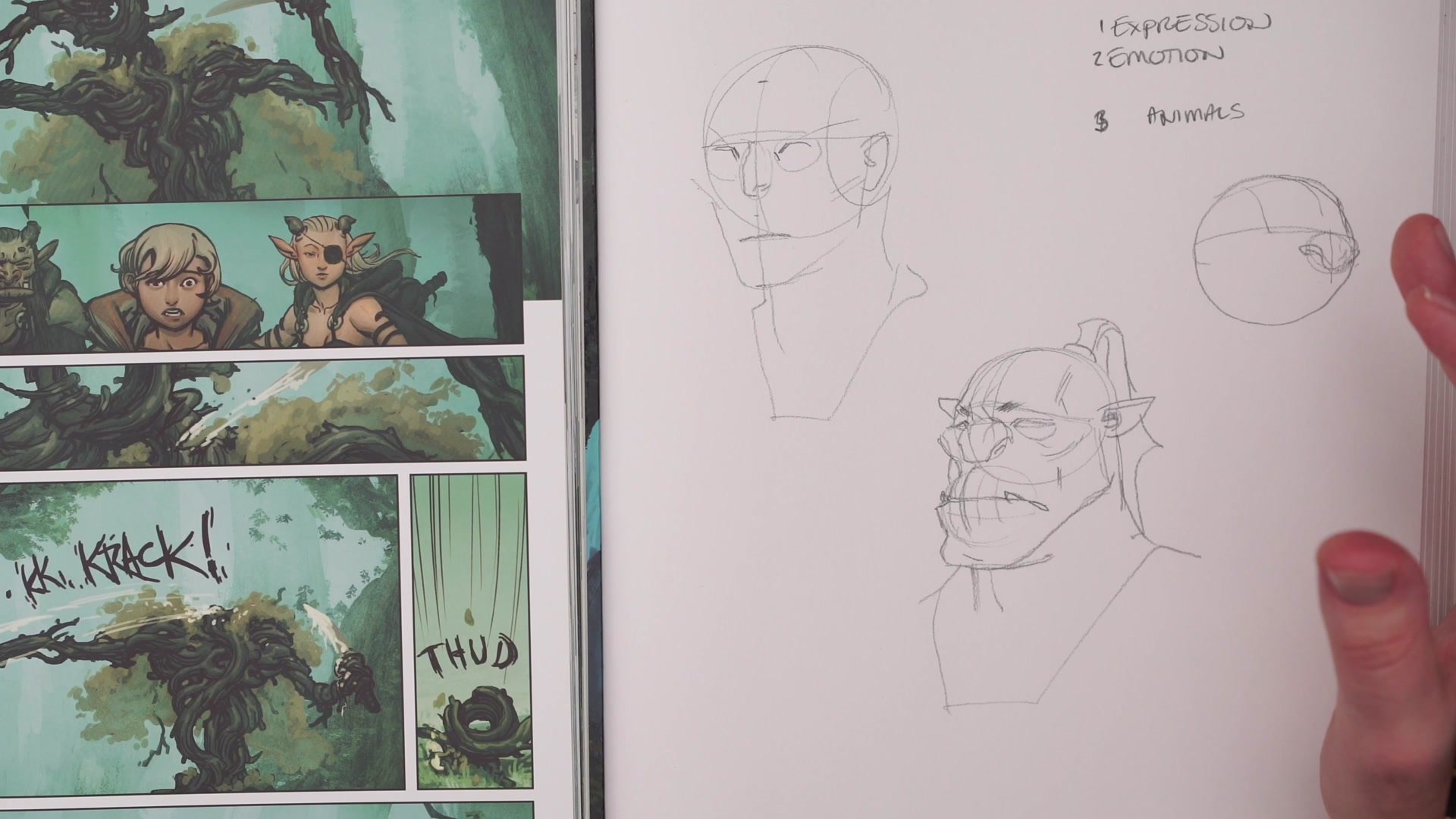
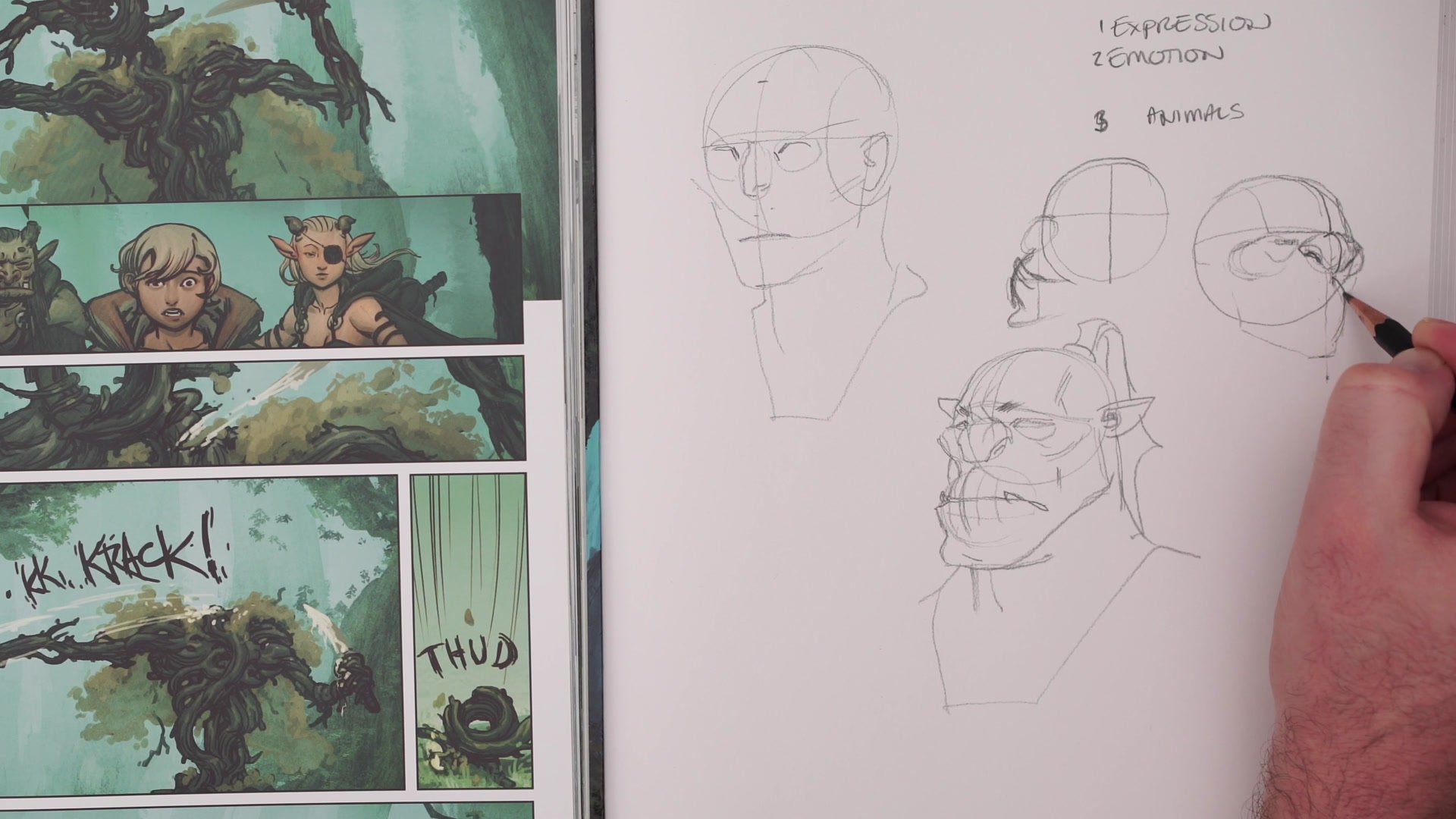
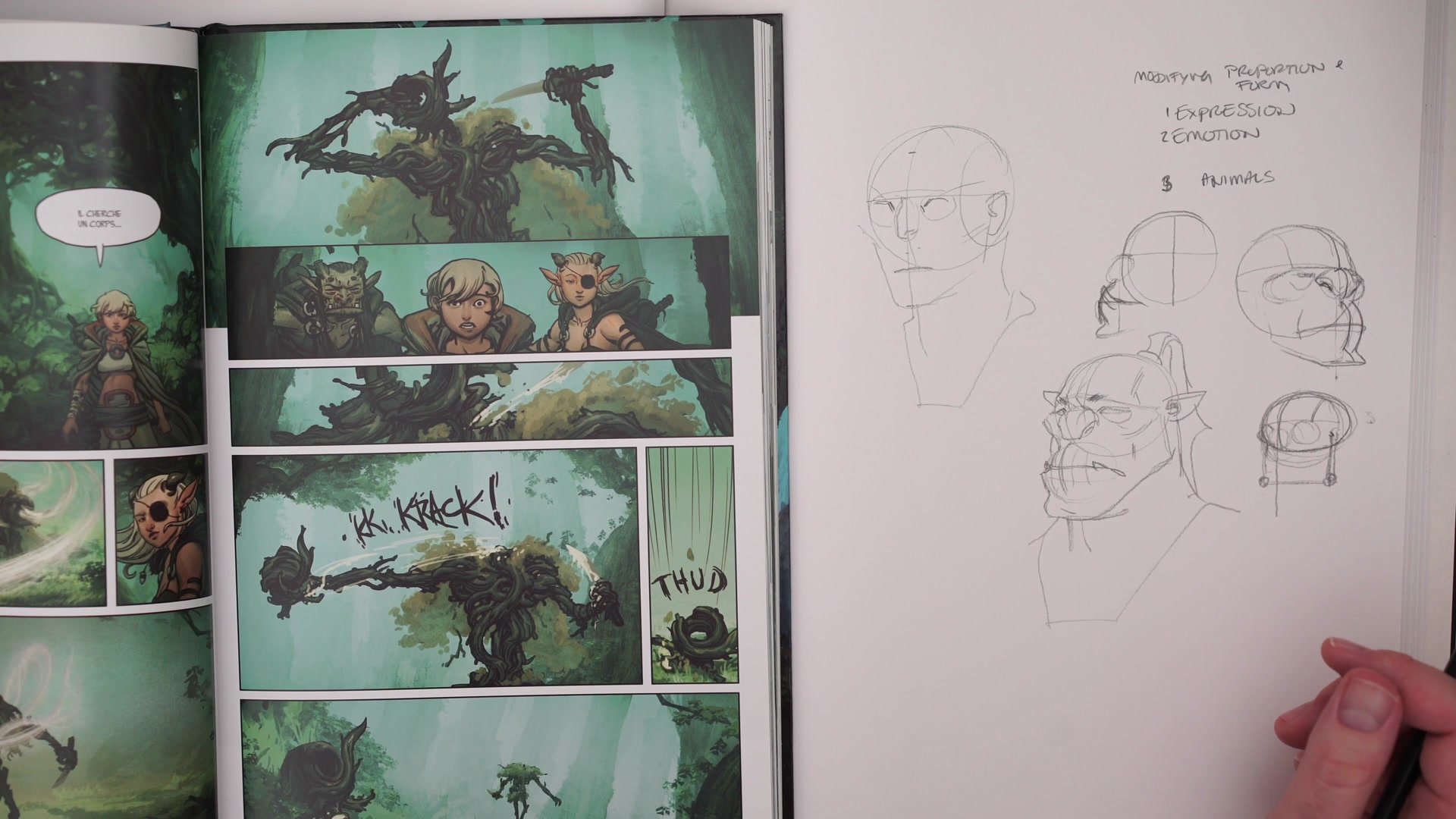
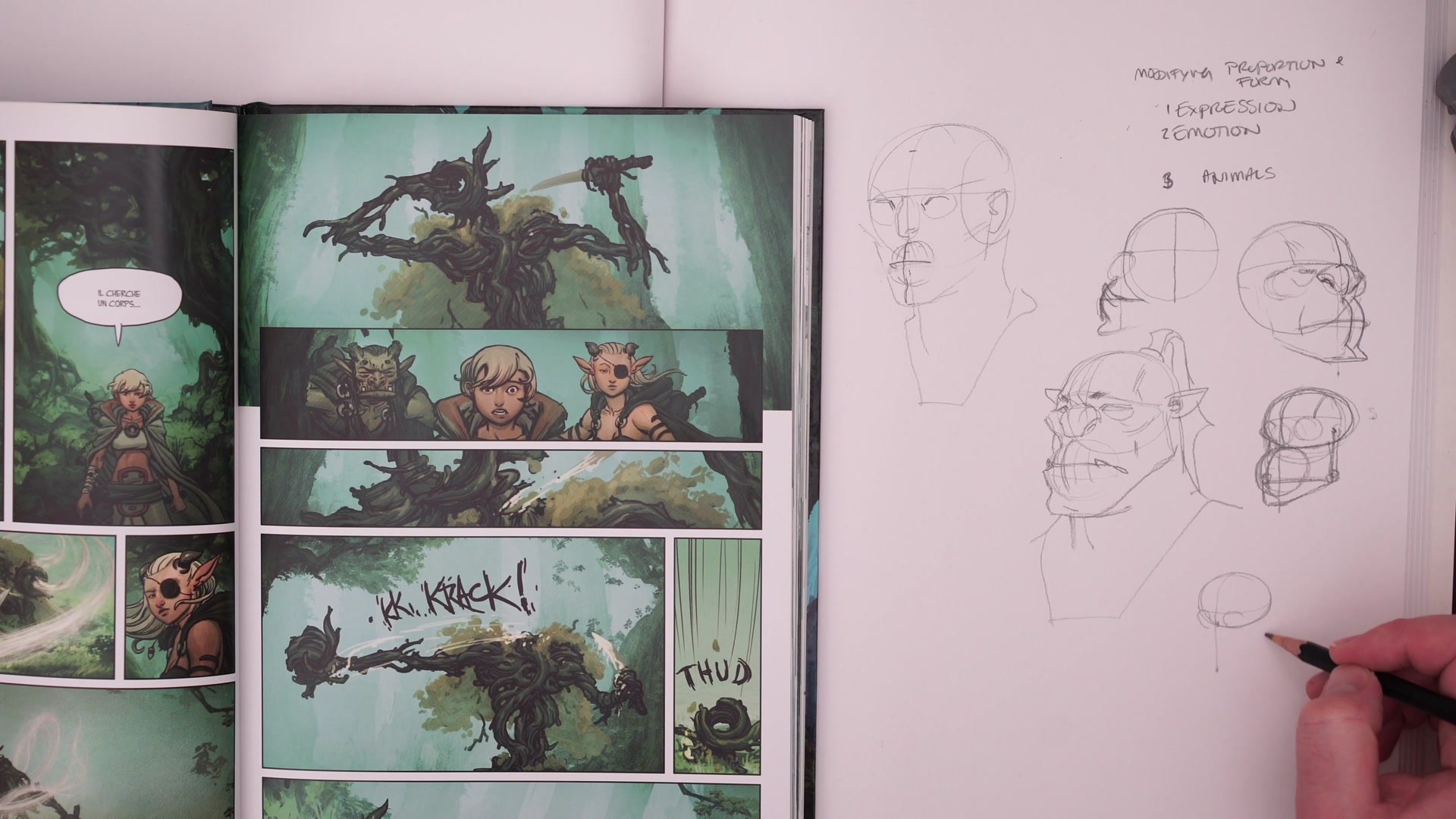
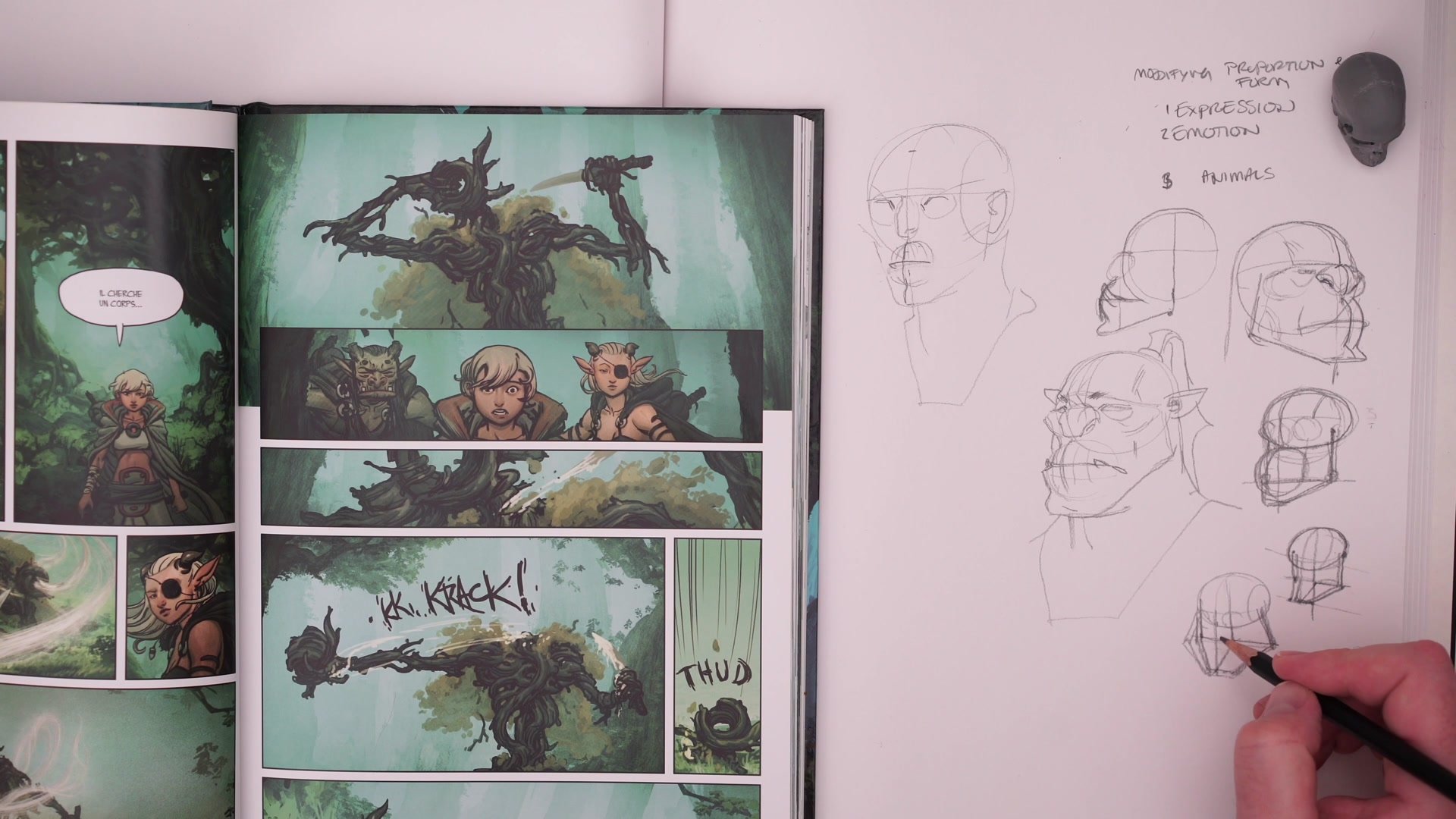
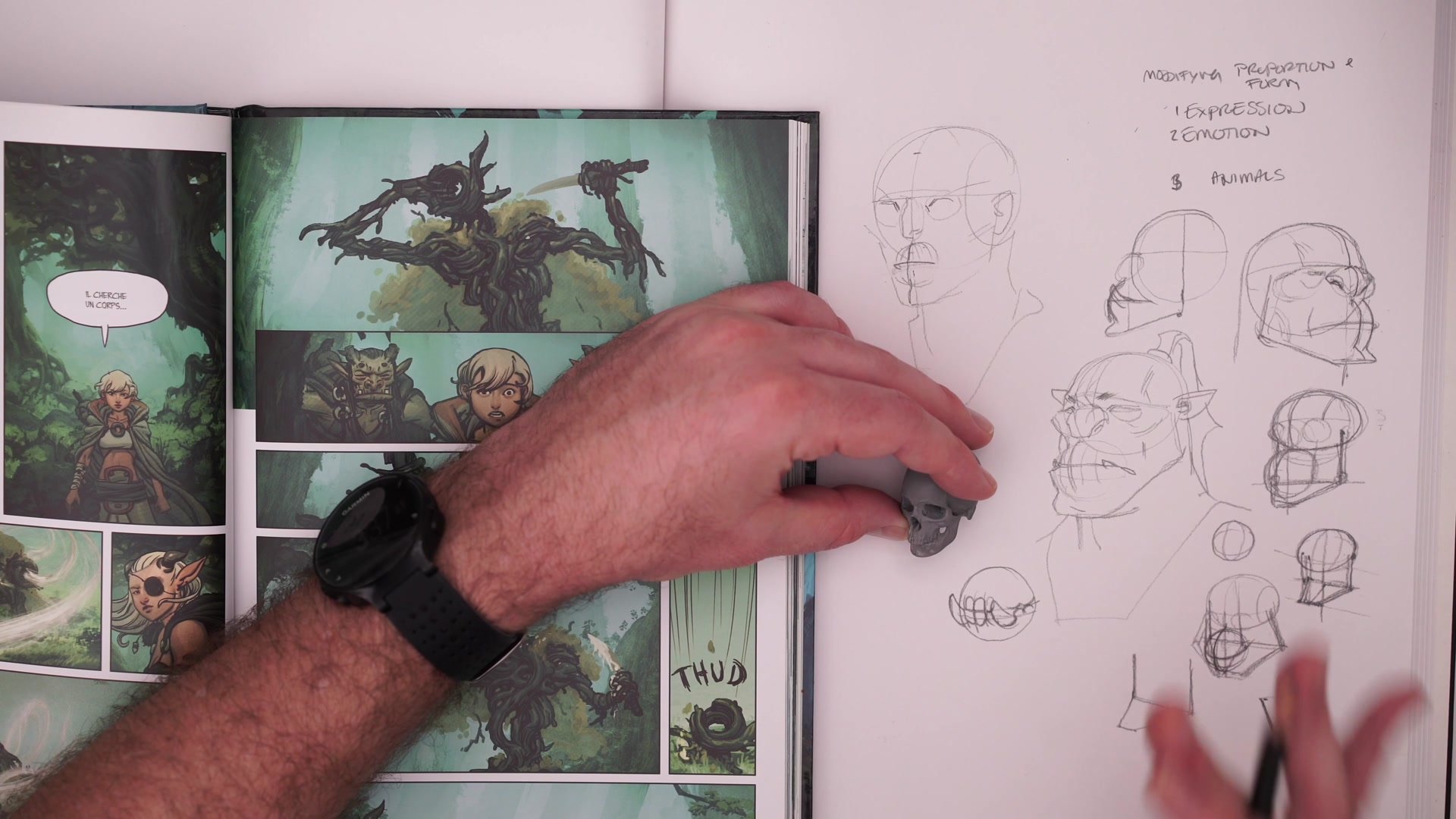
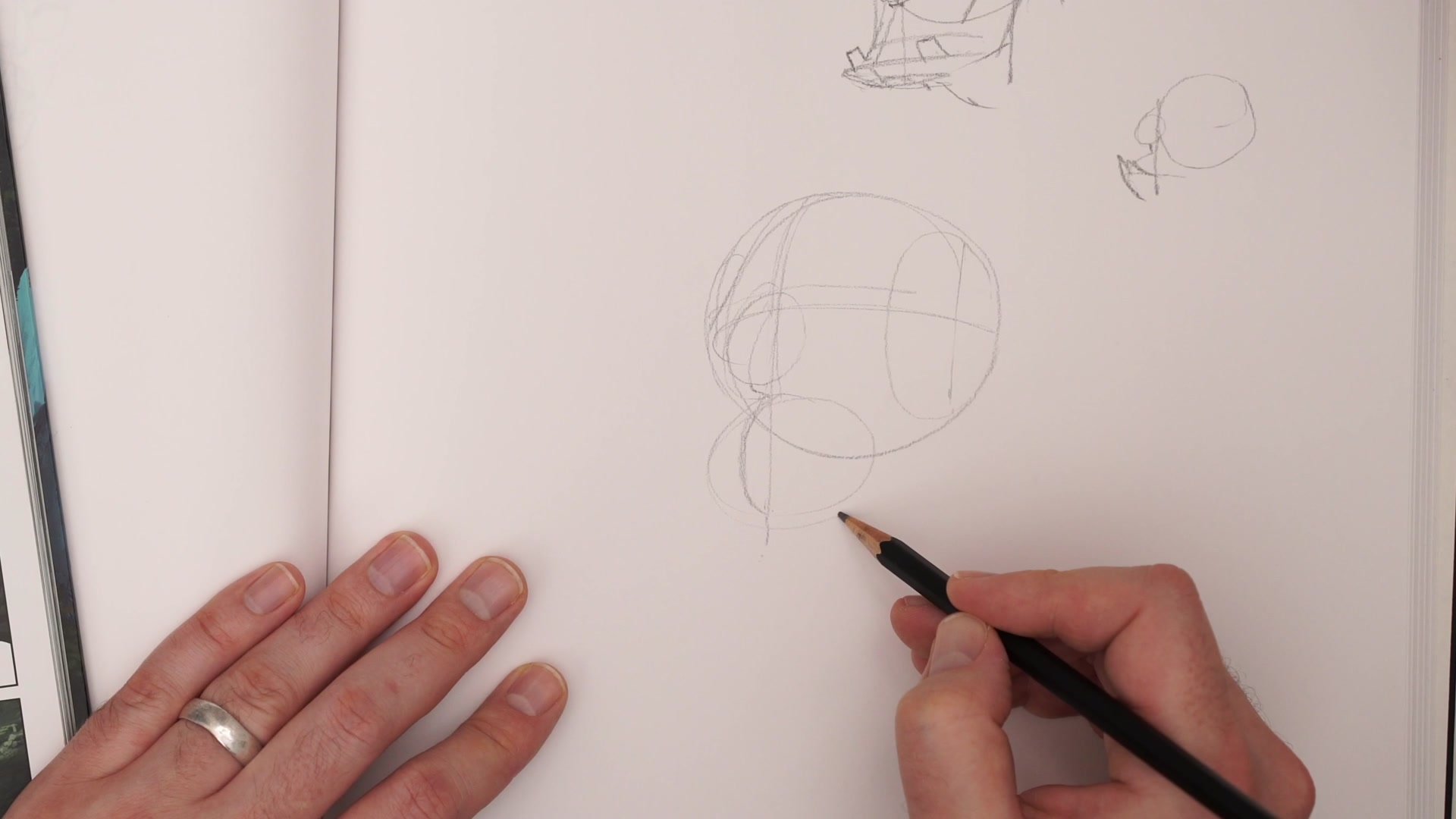
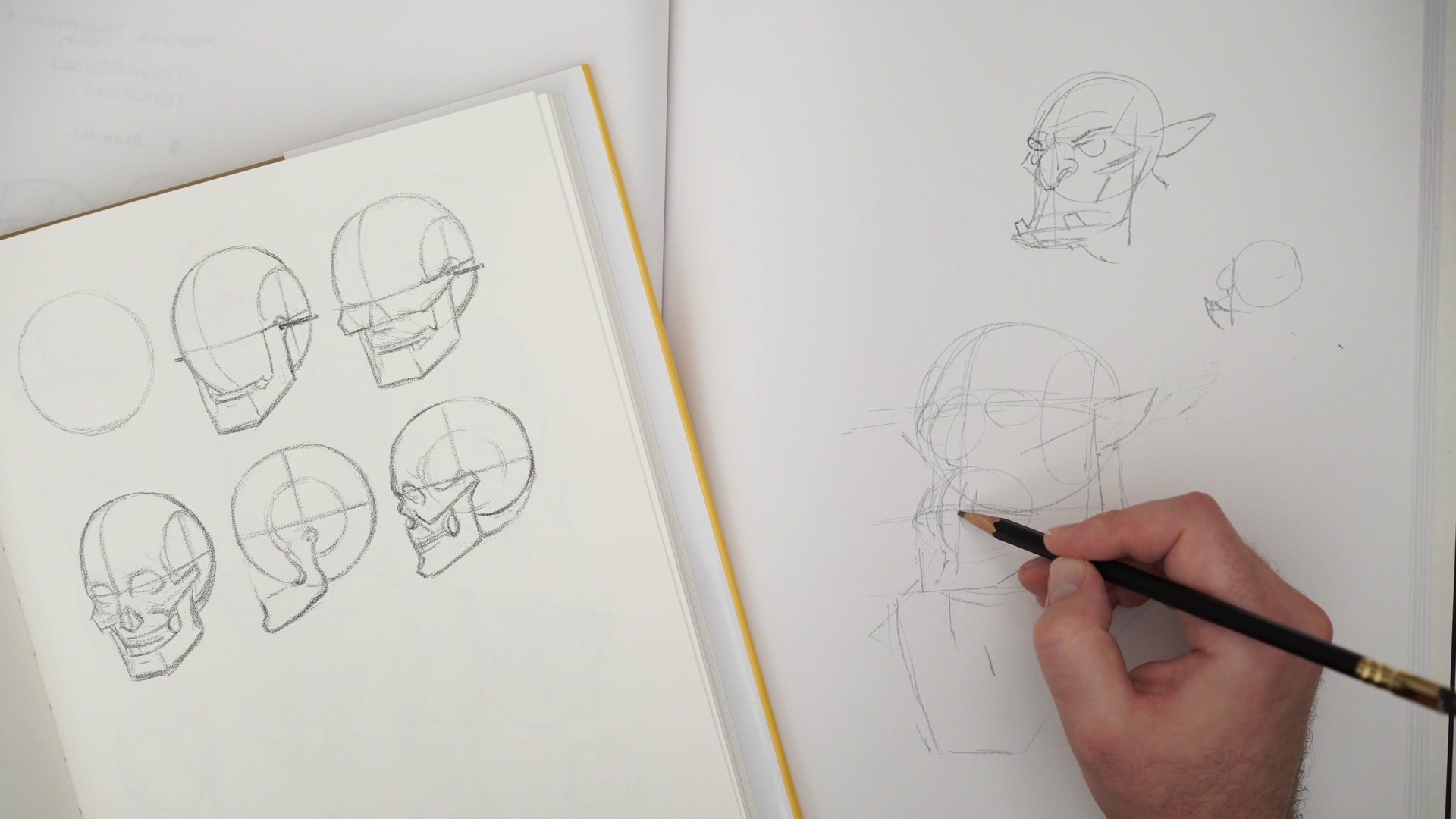
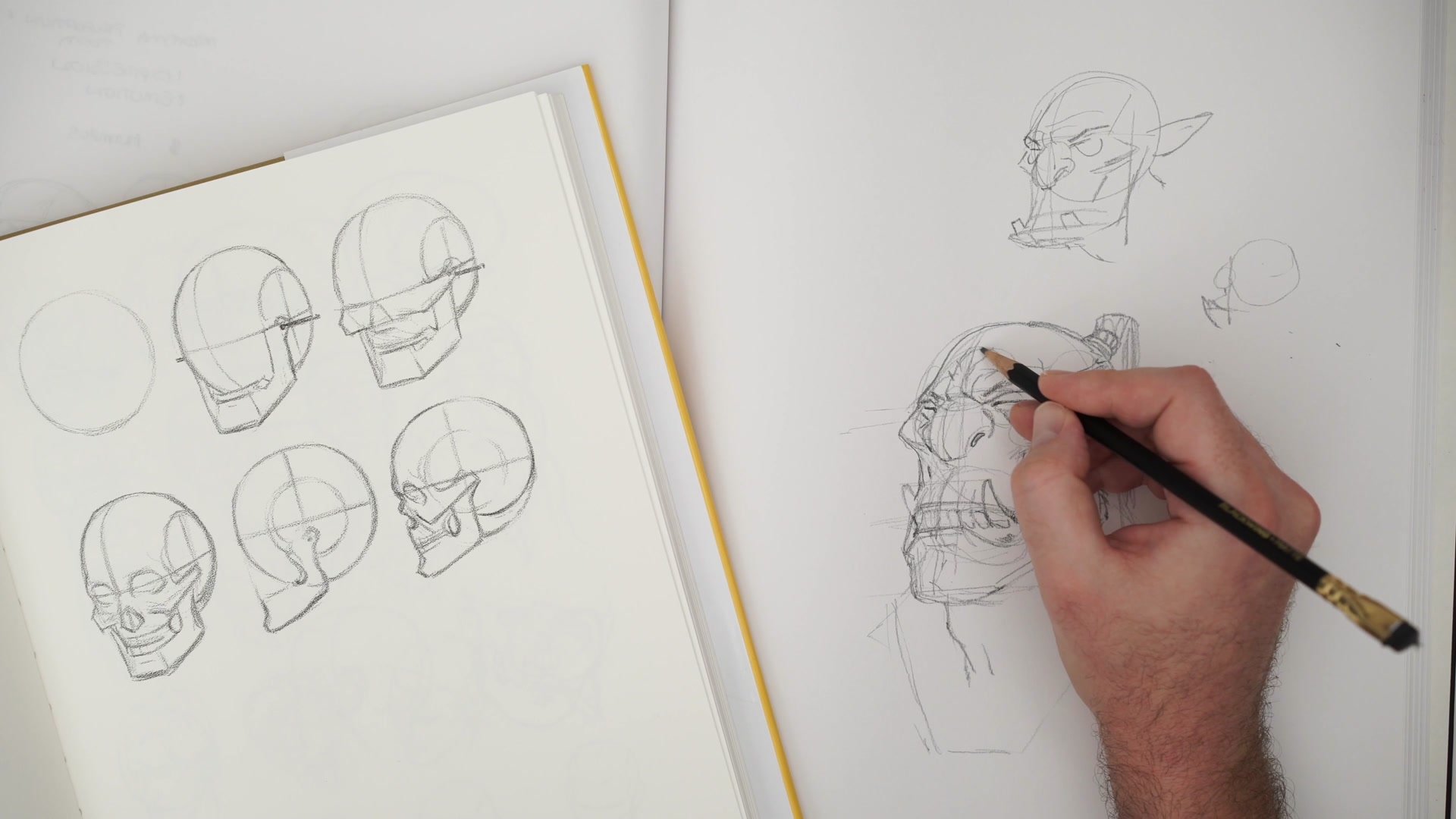
From a structural standpoint, the skull breaks down into three major components that matter for modification. The brain case is the sphere containing the skull, which can be any shape or size. The jaw comes down from the side with a specific pivot point and front edge. Then there is a large spherical mound where the upper teeth sit, which is the key area that changes profile dramatically between human and monster characters.
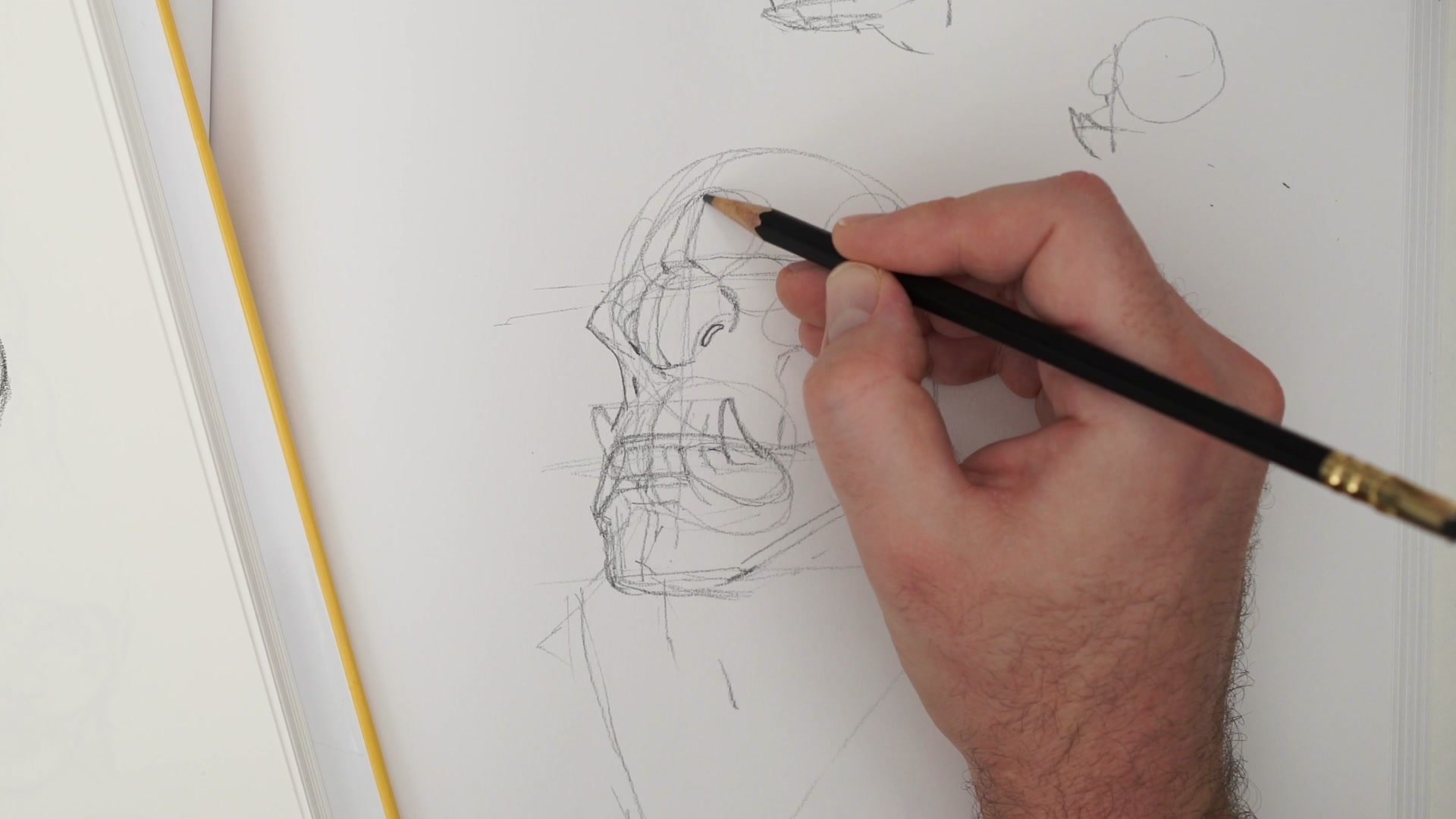
For a standard human profile, the line drops relatively straight down from the nose. For an orc or monster, that line pushes forward dramatically to accommodate much larger teeth and jaw structure. Many fantasy monster characters mix human features with ape or monkey characteristics because that combination creates a feeling of something more primitive and animalistic. The design language of an orc draws heavily on this primate connection, which is why it resonates as both familiar and threatening.
Skull Construction
Hard-Coding Expression
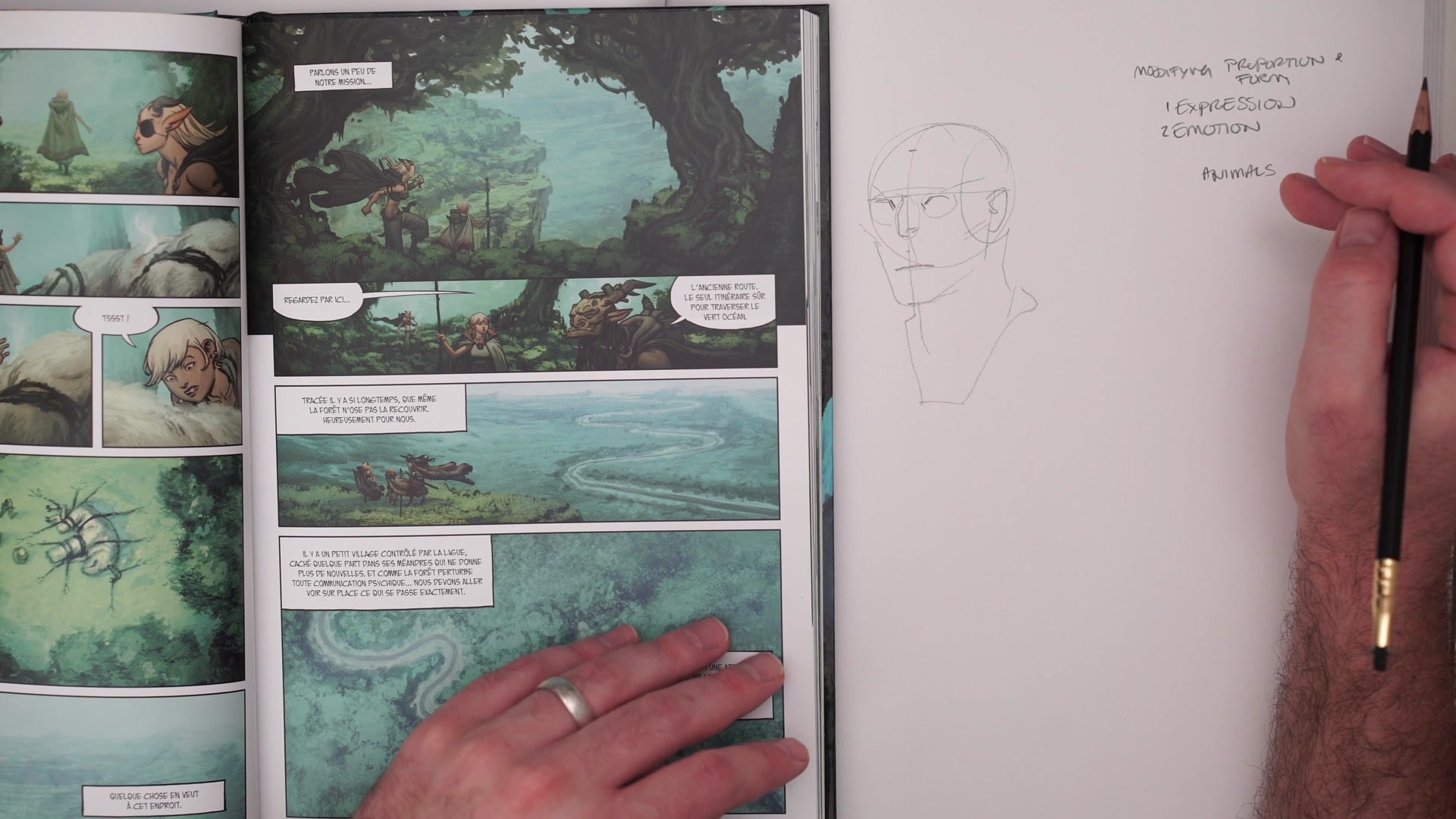
Monster character design goes beyond simple proportion changes. What makes these characters feel fierce or threatening is that expression and emotion get built directly into the structural design. Compressing the forehead creates a permanent frown. Flaring the nostrils, which humans associate with anger and aggression, adds intensity regardless of the character's actual expression. Enlarging the cheekbones gives a sense of protection around the eyes, reinforcing that aggressive quality.
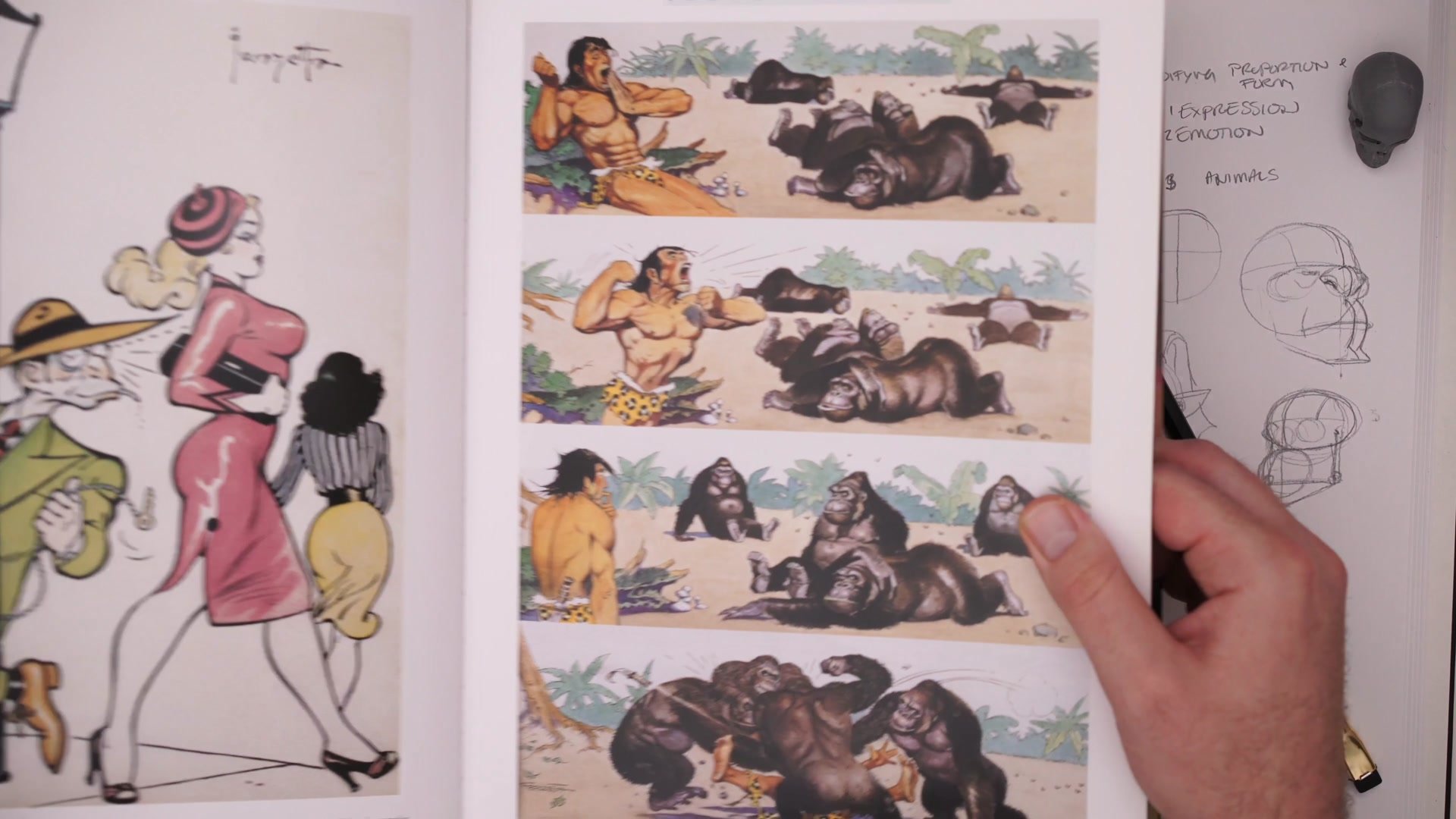
This is why characters like orcs are challenging to animate with a wide emotional range. Their design hard-codes specific emotions into the anatomy itself. From a drawing practice perspective, this exploration of extreme expression is valuable because pushing forms to their limits teaches control over subtle variations. Artists who understand caricature, like Frank Frazetta, bring more life to their realistic work precisely because they have explored how far forms can be pushed.
Expression and Form
Foundation Through Entertainment
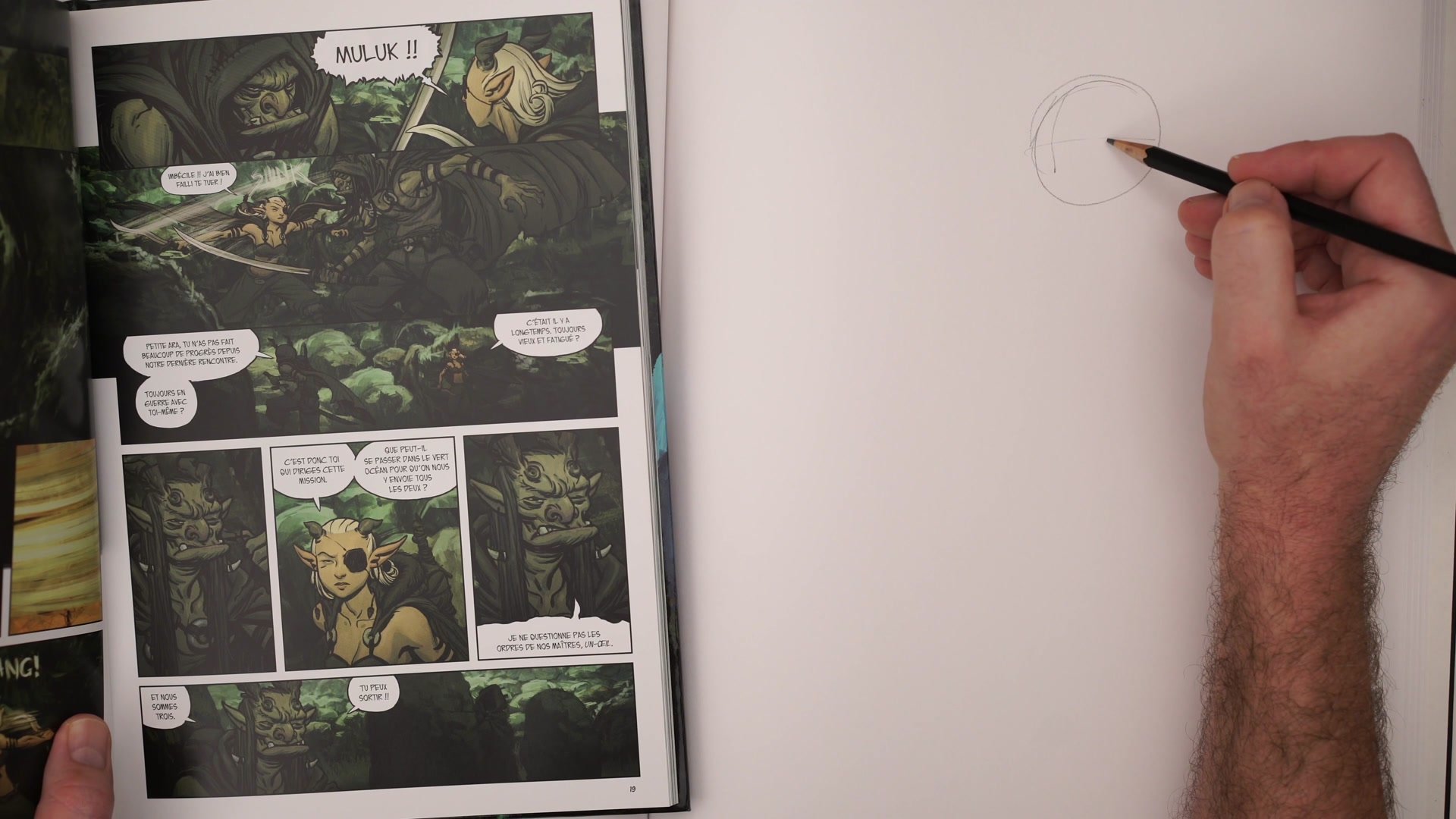
The separate skills of learning to draw, learning to design, and executing finished work are often conflated. Trying to tackle all three simultaneously without each skill working independently becomes frustrating. When practicing structural construction, using existing character designs as a baseline removes the design burden and allows focus on the drawing fundamentals.
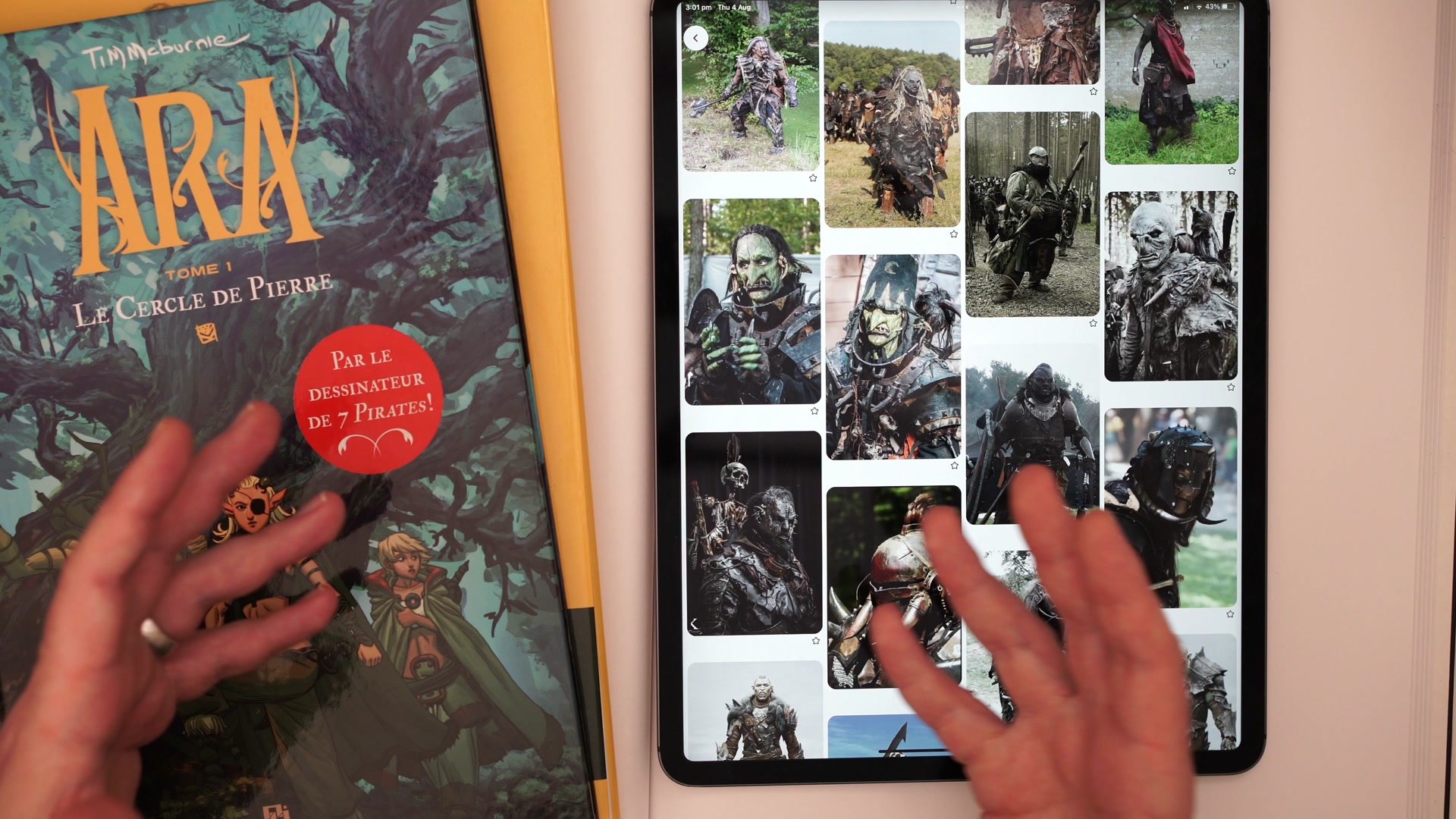
Pick Warcraft orcs or Tolkien-style creatures that already work as designs, then practice constructing them. The goal is learning to draw well using subjects that keep practice sustainable. Drawing the mound of the mouth as a spherical form, wrapping teeth around it in perspective, finding the jaw lines on both sides of the head: these are the same structural considerations as drawing a human head, just with different proportions. The technical skills of form drawing, proportion, construction, and skull anatomy develop through solving real problems in service of creating art worth making.
Final Construction
Key Principles
Flexible Proportions: The Loomis method is a system of modifiable proportions, not a fixed template. The sphere, jaw, teeth, and brow can all be enlarged, reduced, or repositioned for any character type.
Three Skull Components: Brain case, jaw structure, and mound of teeth are the three elements to modify when creating creatures. Understanding them in human anatomy first makes monster modifications systematic.
Exaggeration Builds Subtlety: Pushing forms to extremes teaches control over subtle variations. Artists who explore caricature and exaggeration bring more life to realistic work because they understand the full range of each form.
Separate Drawing from Design: When practicing construction, use existing character designs as a baseline. Focus on structural drawing skills without the added burden of inventing new designs simultaneously.
Try This Exercise
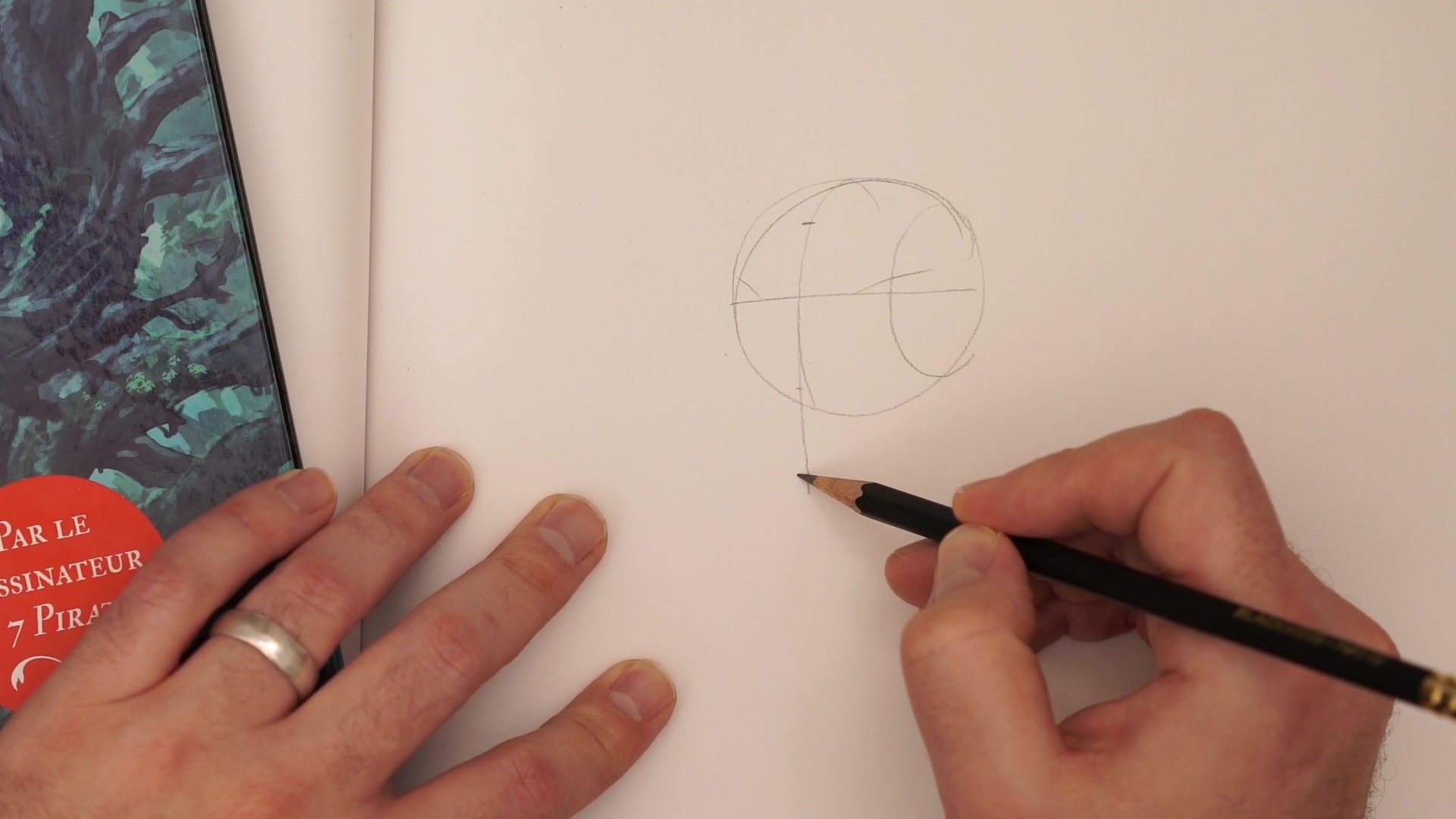
Start with Standard Construction: Draw a basic Loomis head with sphere, center line, and standard proportions for a human face.
Modify One Element: Pick just one component to exaggerate. Make the jaw twice as large, push the teeth section forward dramatically, or enlarge the brow ridge. Keep everything else at normal proportions.
Test Multiple Angles: Draw the same modification from different angles to check if the construction holds in perspective. Can the features wrap correctly around the exaggerated forms? Once one variable is explored thoroughly, pick a different element and repeat.