Bridging the Gap Between Theory and Practice
Summary
Applying Fundamentals to Character Drawing
Art education typically teaches gesture, structure, and perspective as isolated exercises disconnected from the characters artists actually want to draw. Perspective boxes, gesture figure sessions, and academic form construction rarely connect back to the goblins, dragons, and creatures that sparked the motivation to learn in the first place. The result is a knowledge gap where concepts make sense intellectually but feel impossible to implement when drawing from imagination.
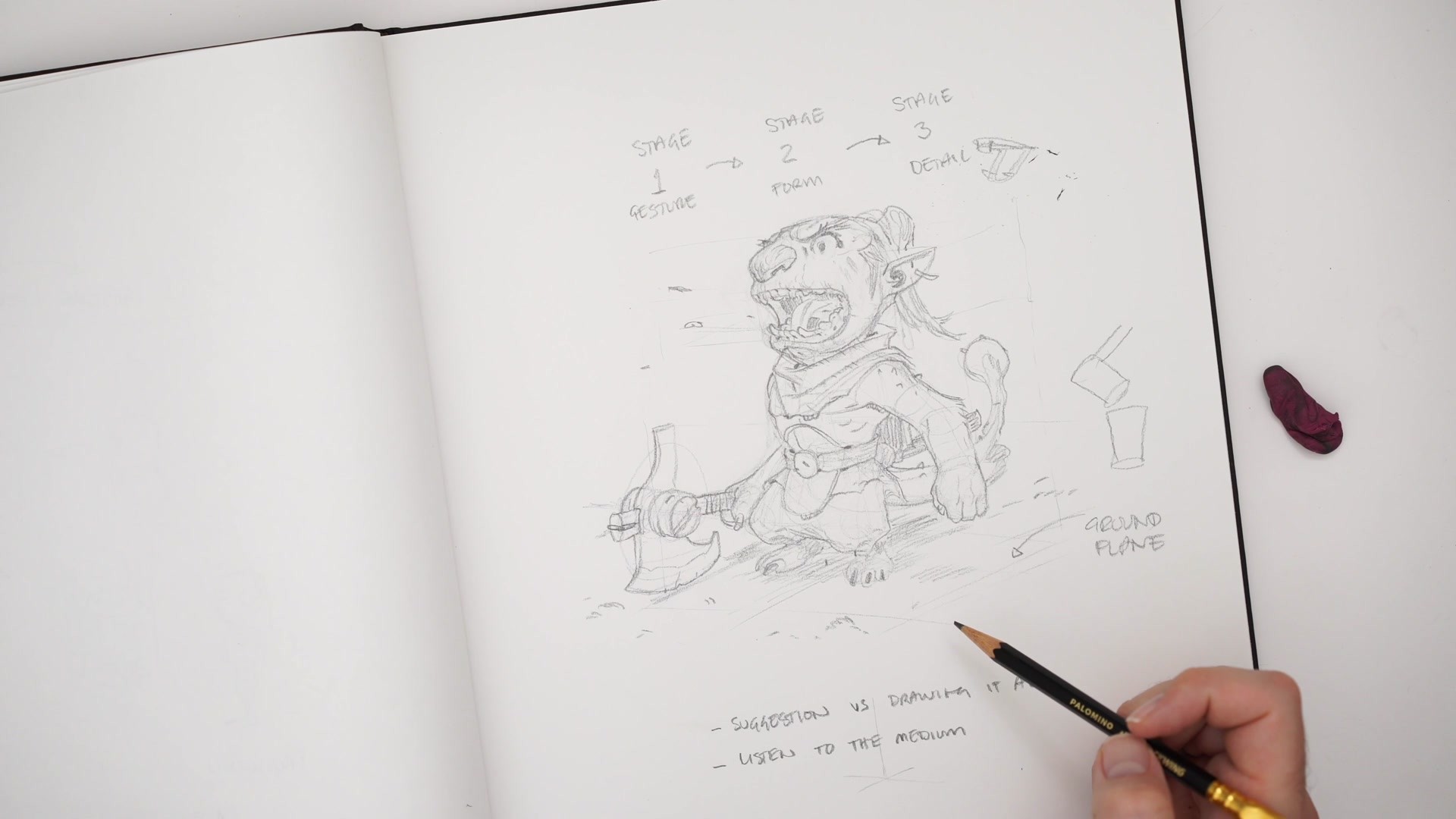
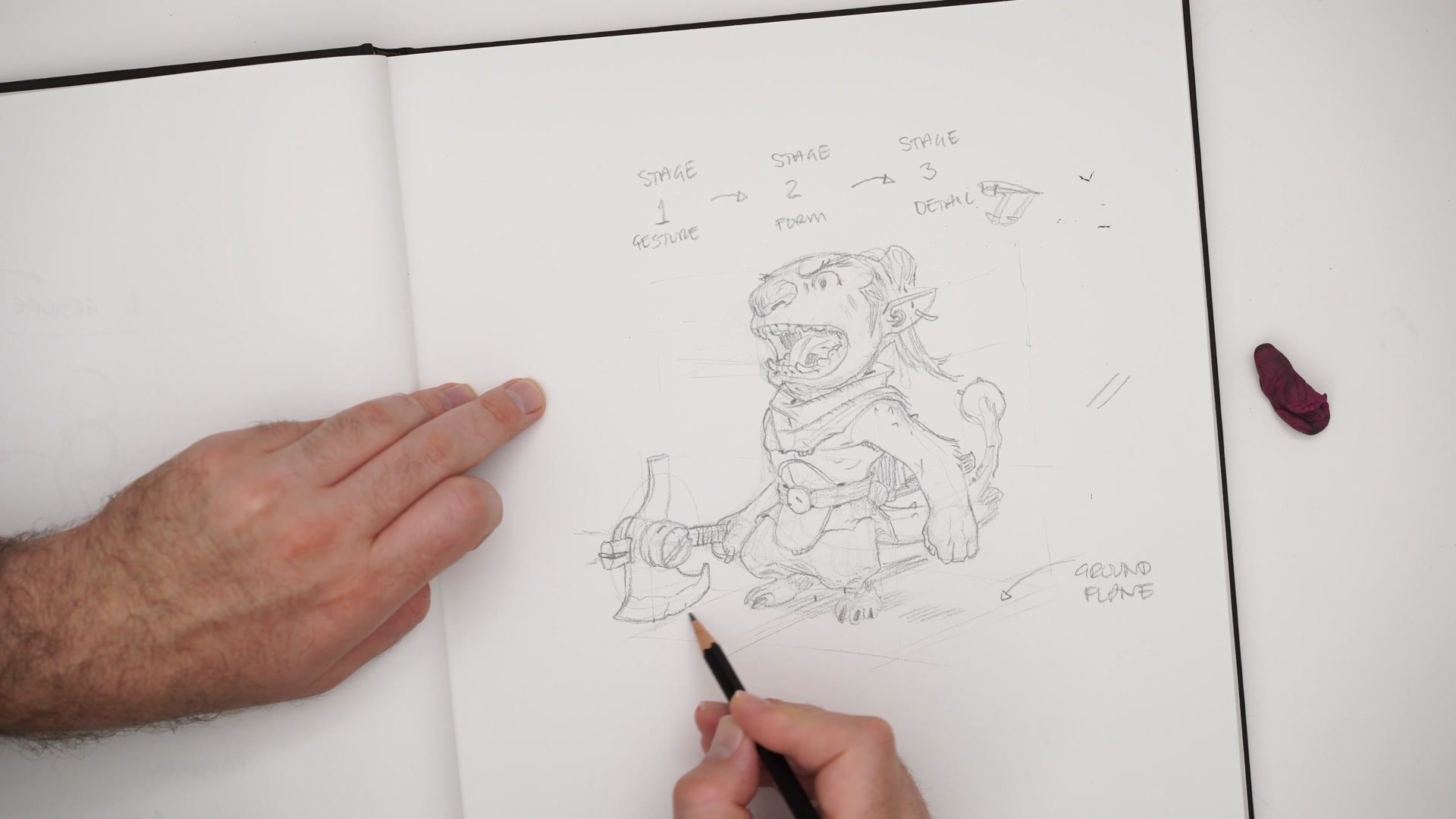
This demonstration bridges that gap by teaching the three-stage construction process through drawing an actual goblin character in pencil. Gesture and perspective work together to establish spatial placement, structural construction overlays dimensional believability onto loose sketches, and selective detail application brings surface personality without overworking the drawing. The fundamentals become practical tools rather than abstract exercises.
Gesture and Perspective Together
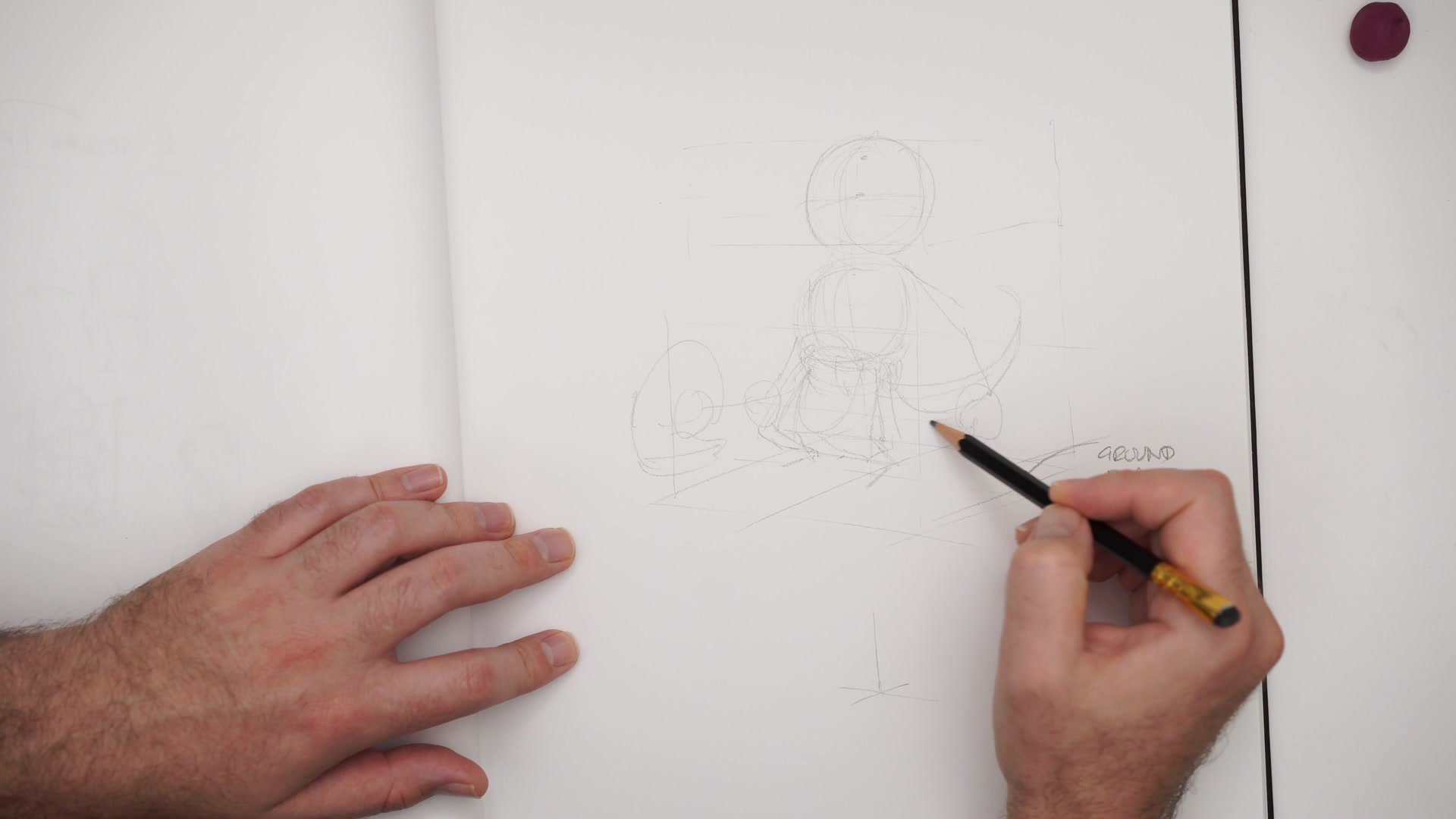
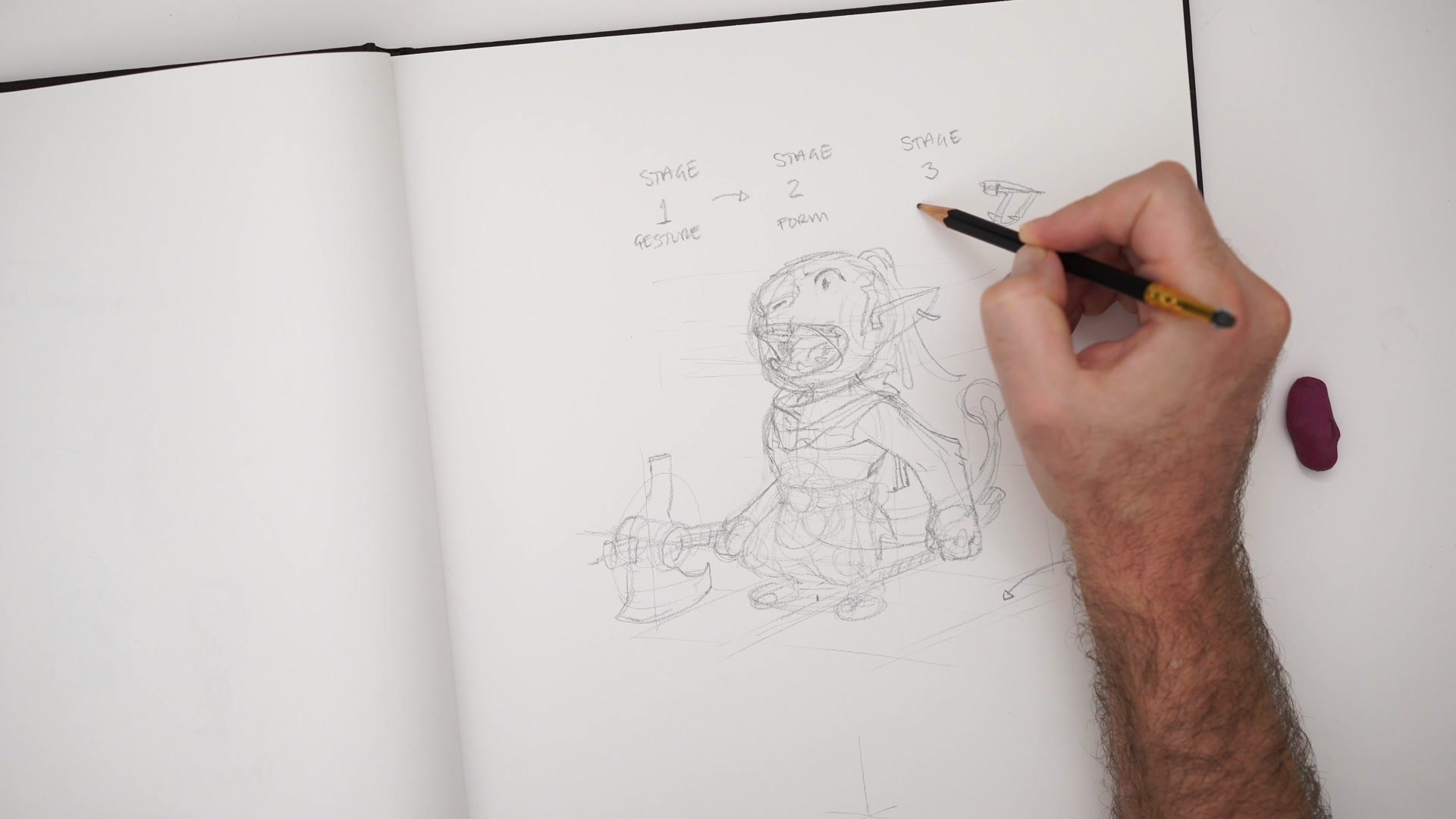
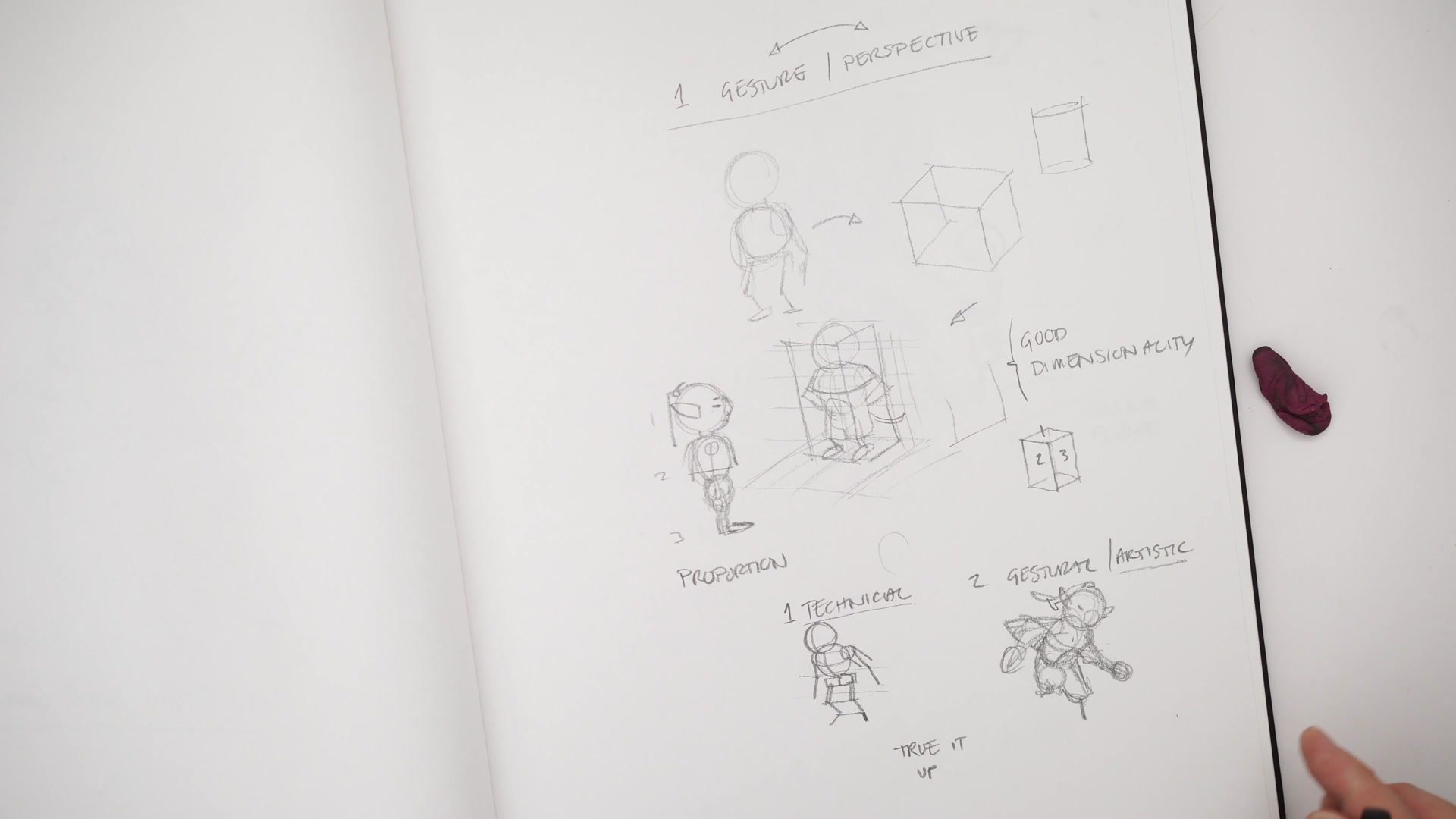
The first stage combines gesture with perspective awareness rather than treating them as separate concepts. Breaking the character down into major forms -- head, torso, arms, legs -- and positioning them in three-dimensional space establishes both the emotional attitude of the pose and the spatial logic that makes it believable. A simple cross on the ground plane sets most of the perspective needed without elaborate technical constructions.
The key distinction here is between technical posing and gestural posing. Technical mannequin work focuses on getting everything lined up and accurate, building the foundational understanding of how forms sit in space. Gestural posing lets the pencil fly with more artistic feeling, prioritizing emotion and movement over precision. Both approaches are necessary. The more foundational principles get internalized through technical practice, the less they need to be consciously applied -- they become sublimated and automated within the drawing process. Early gestural sketches will be less accurate, but subsequent structural overlays can true things up progressively.
Structural Overlay
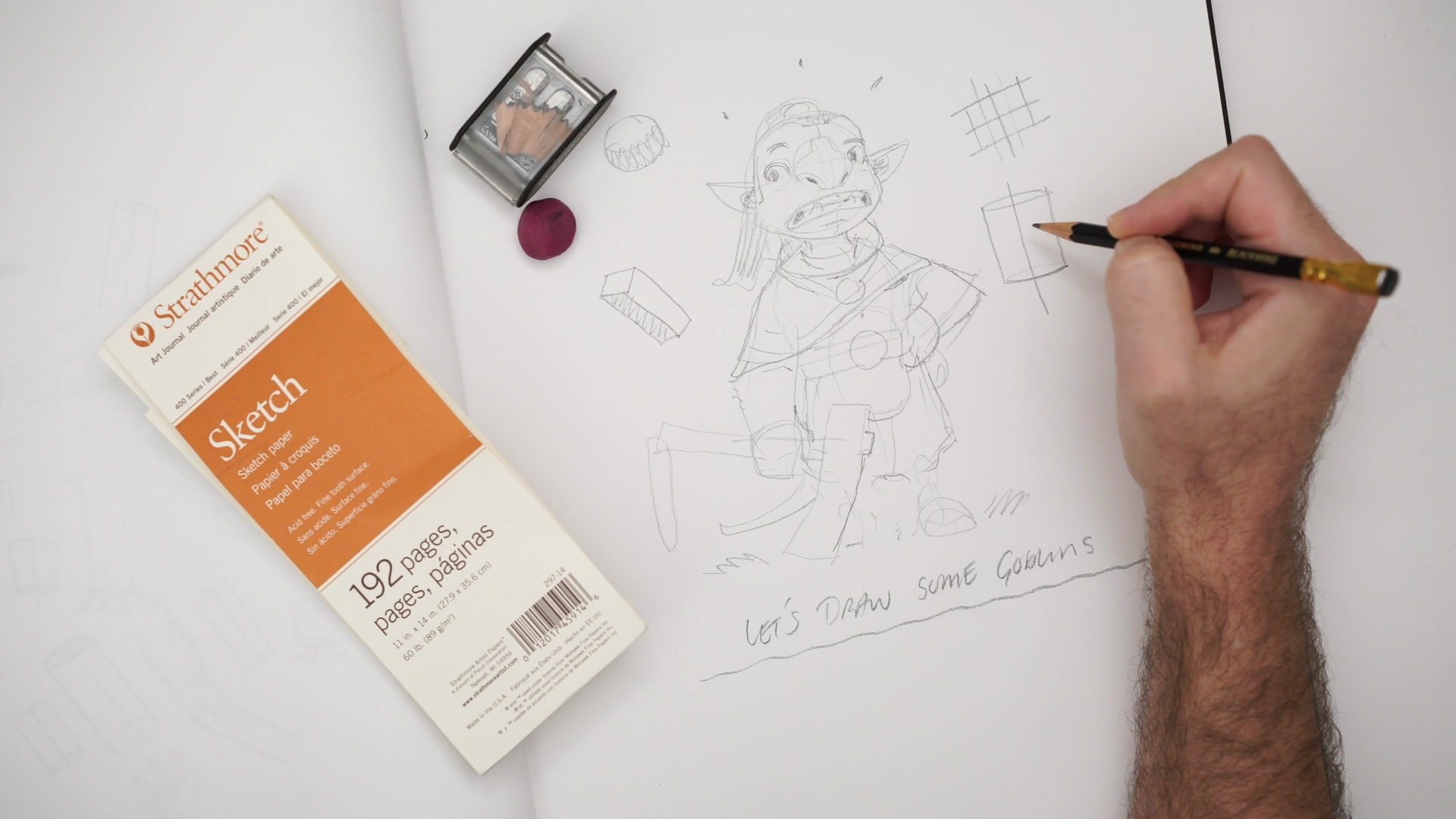
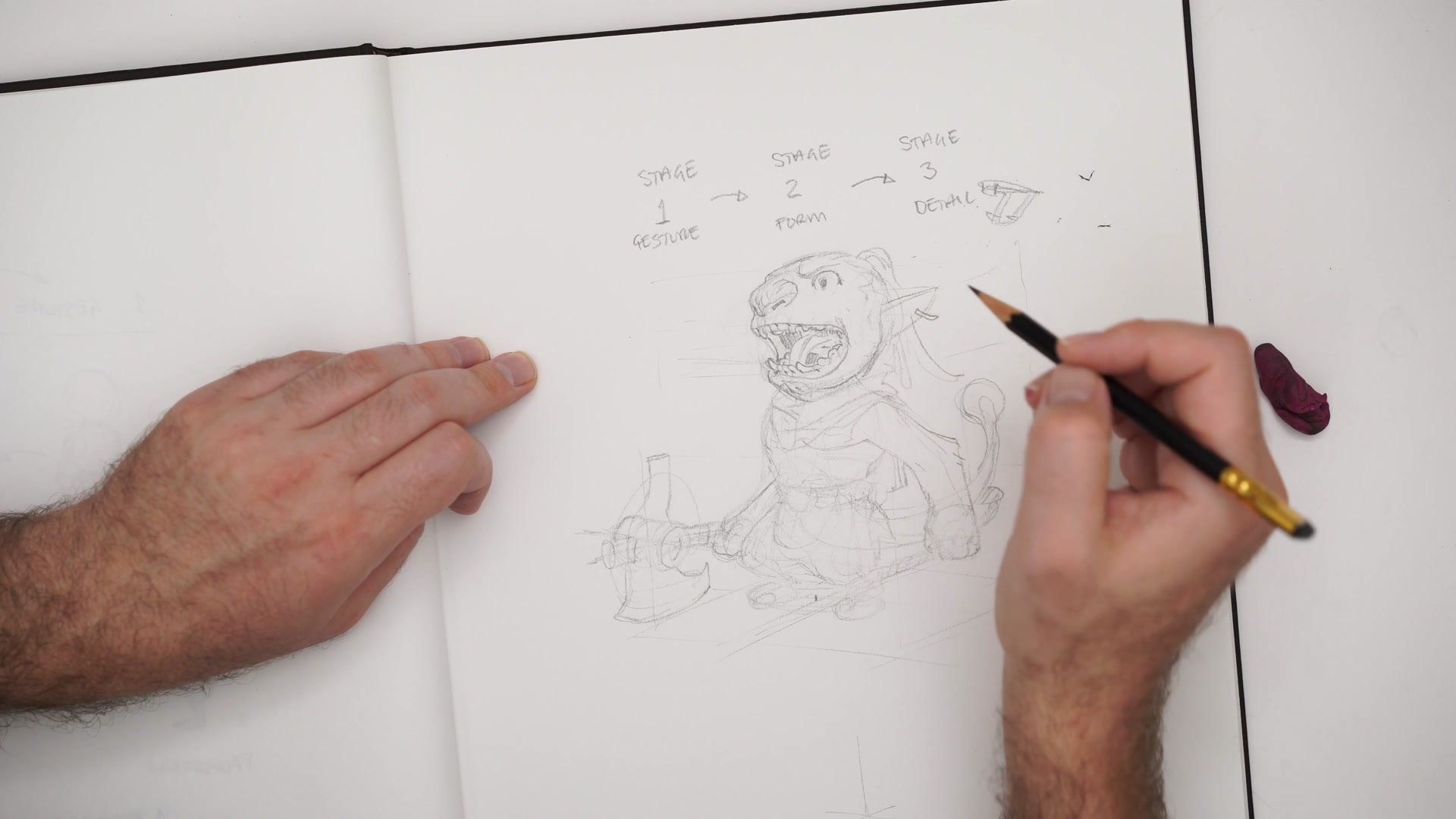
The second stage transitions from gesture into form and structure. This is where cylinders, boxes, and ellipse logic get applied to the loose gestural foundation, making the character feel dimensionally convincing. The critical balance involves maintaining the gestural spirit while reinforcing it with construction principles. Structure serves the gesture rather than replacing it.
Drawing through forms and visualizing hidden construction makes characters feel solid. When constructing cylindrical forms like weapon handles or limbs, tracing the center line and drawing ellipses along it creates convincing dimensional rotation. The Loomis method applies to goblin heads the same way it applies to human ones -- center lines, brow lines, and carving off the side planes establish structural anchors that keep proportions consistent even on cartoony designs. Constantly checking spatial relationships between forms and the ground plane prevents the character from floating in undefined space.
Detail Through Suggestion
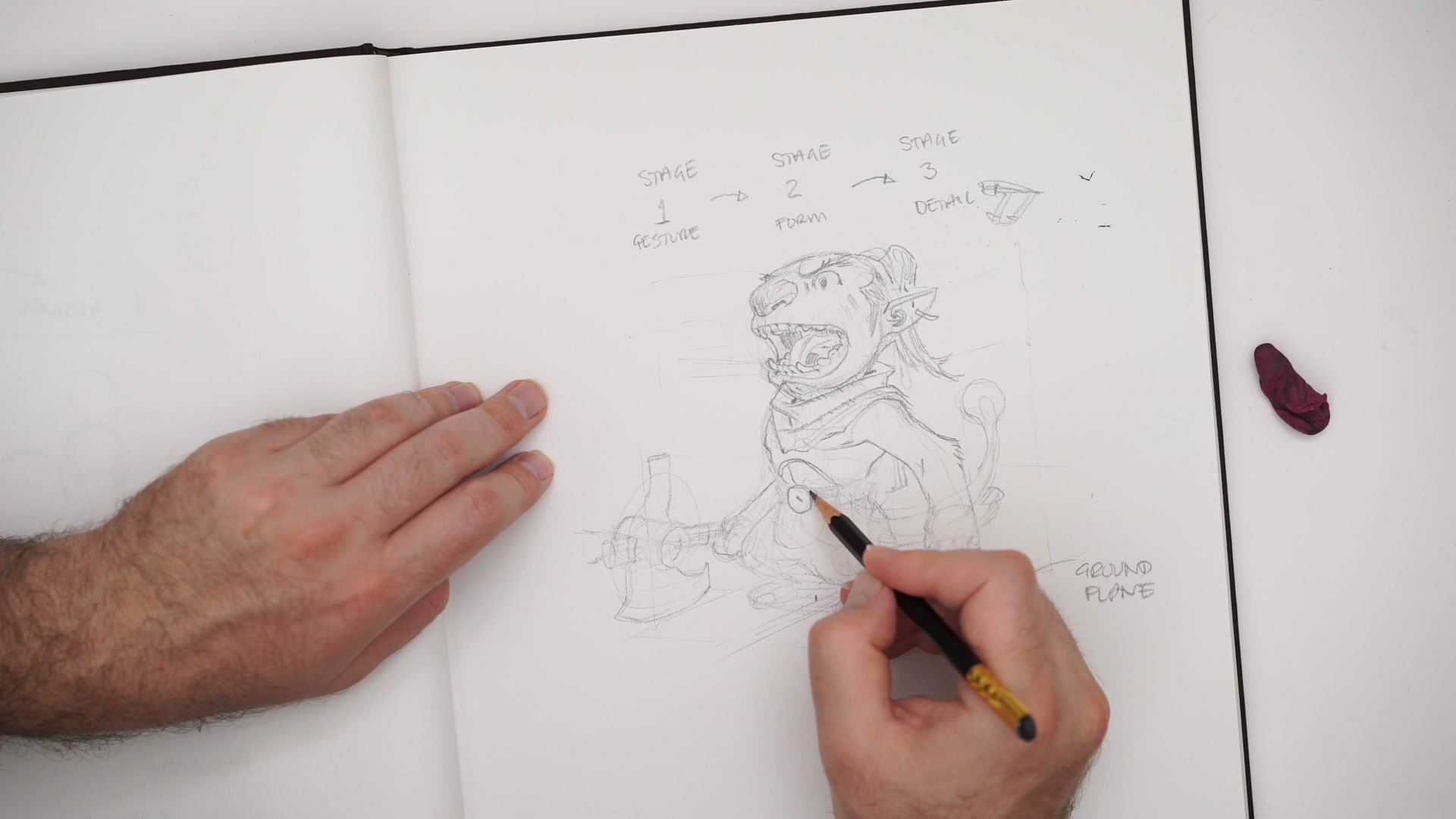
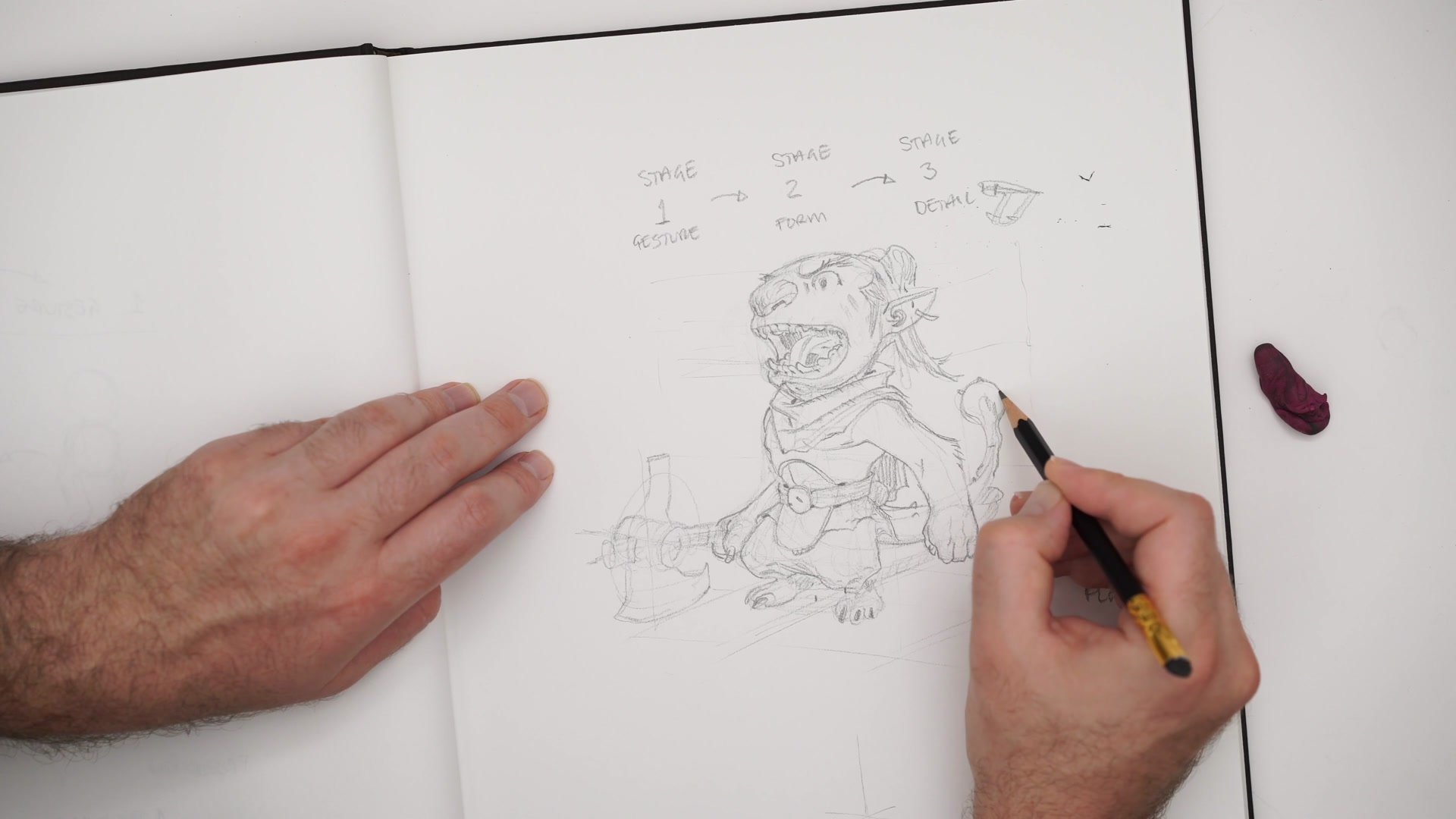
The final stage adds detail, texture, and surface quality over the structural foundation, but the most important principle here is suggestion versus complete rendering. Pencil excels at implying detail through selective mark-making rather than exhaustive shading. Rotating the pencil tip creates different line qualities -- broad flat strokes for soft areas, sharp edges for notches and fine detail. Knowing when to suggest and when to fully render is where personal style develops over time.
Working front to back when adding detail helps manage visual clarity. Starting with foreground elements and layering backward prevents confusion about which forms overlap. The medium itself dictates possibilities -- pencil on sketch paper has a limited number of passes before the surface degrades, so every mark needs to count. The selective approach to detail, choosing where to focus attention and what to leave to viewer imagination, accumulates into the stylistic decisions that define an individual drawing voice.
Key Principles
Gesture and Perspective Together: Placing character forms in three-dimensional space combines emotional posing with spatial logic from the very first marks, rather than treating them as separate exercises.
Progressive Construction: Building through distinct stages -- gesture for attitude, structure for dimensional believability, detail for surface personality -- adds complexity gradually while preserving the spontaneity of the initial sketch.
Suggestion Over Rendering: Selective detail application using the natural qualities of the drawing medium creates more engaging results than exhaustively shading every surface, and these choices accumulate into personal style.
Foundational Automation: The more foundational principles get practiced technically, the less they need conscious application. Structure becomes sublimated into the gestural drawing process over time.
Try This
Start with a mannequin: Create a simple stick-figure puppet of any character at roughly correct proportions. Practice posing it technically first, then gesturally, focusing on getting a good one-two-three read on the form where the top or bottom, front or back, and one side are all visible.
Overlay structure: Once the gesture feels right, use a kneadable eraser to knock back the initial marks and overlay structural construction. Draw through the forms, thinking about cylinders, center lines, and how each part connects spatially to the ground plane.
Add selective detail: Sharpen the pencil and choose where to suggest texture and where to fully define forms. Work front to back and experiment with rotating the pencil for different mark qualities. Let the medium guide which details to render and which to leave implied.