Let's Draw Some Goblins - Real Time Sketching
Summary
Drawing Goblins From Imagination
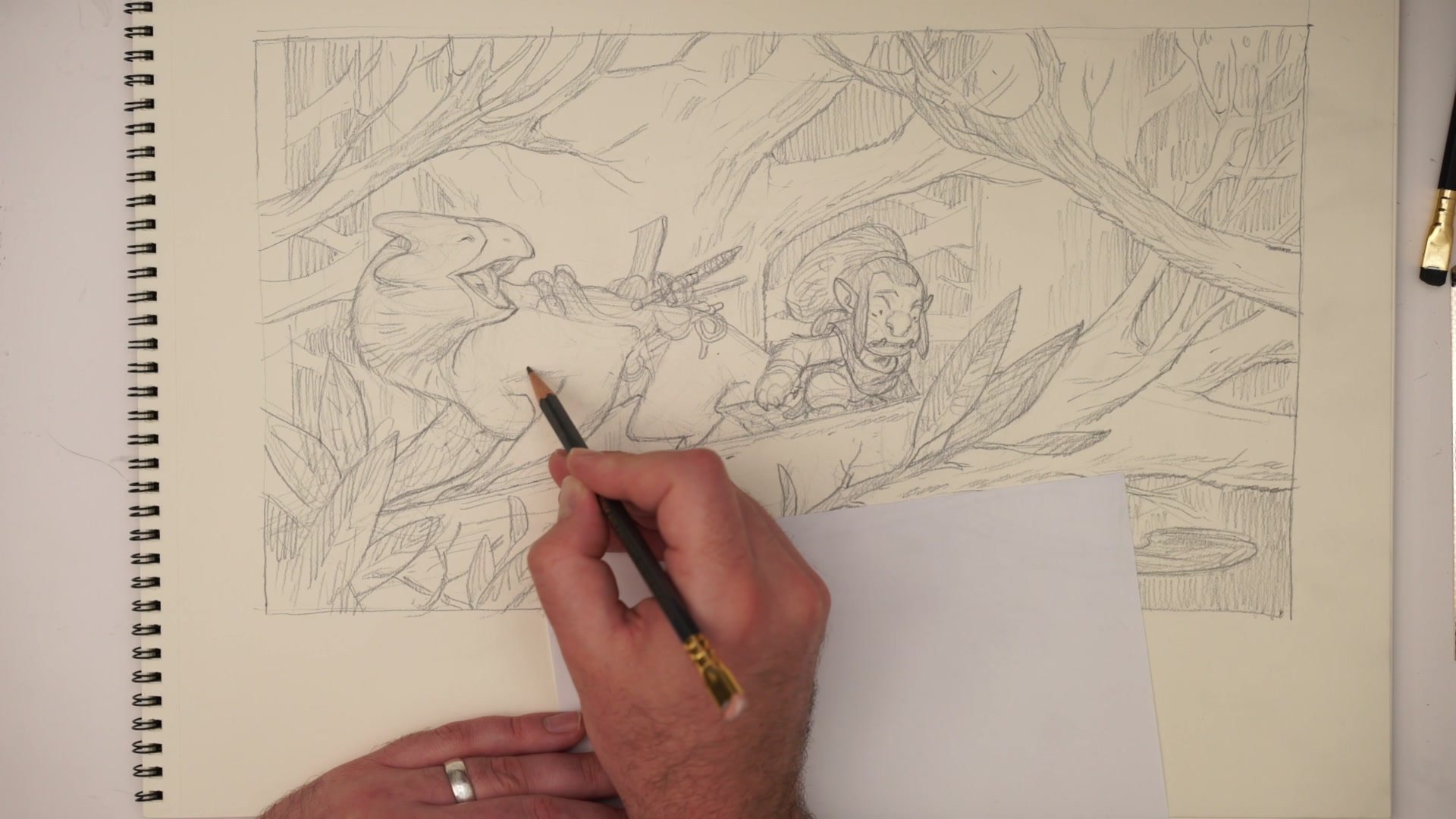
Drawing original creatures from imagination means solving problems in real time. There is no reference to copy, no model sheet to follow. Every decision about the creature's pose, the composition, and the environment has to be worked out on paper through a process of massing, approximation, and constant refinement. This real time pencil sketching session tackles a goblin rider perched on a bird-dragon creature in a forest setting, working through the full process from rough compositional block-in to detailed pencil finish.
The session reveals what actually happens during an extended drawing from imagination. Designs get scrapped and restarted. Construction marks get erased and redrawn. The drawing evolves through multiple passes, each one bringing more clarity to the shapes, the overlaps, and the hierarchy of detail that makes a finished illustration read clearly.
Blocking In The Composition
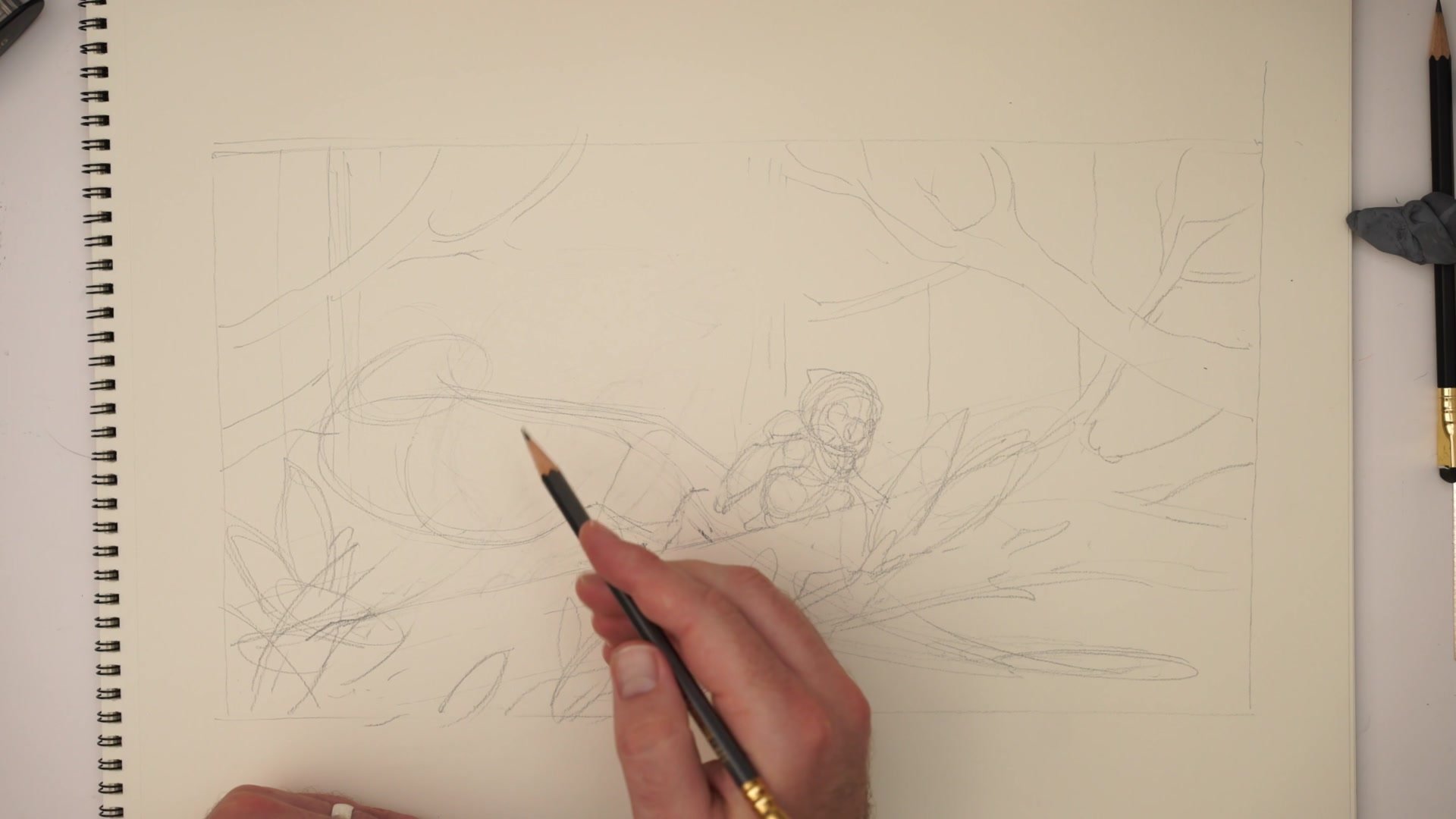
Massing Before Structure
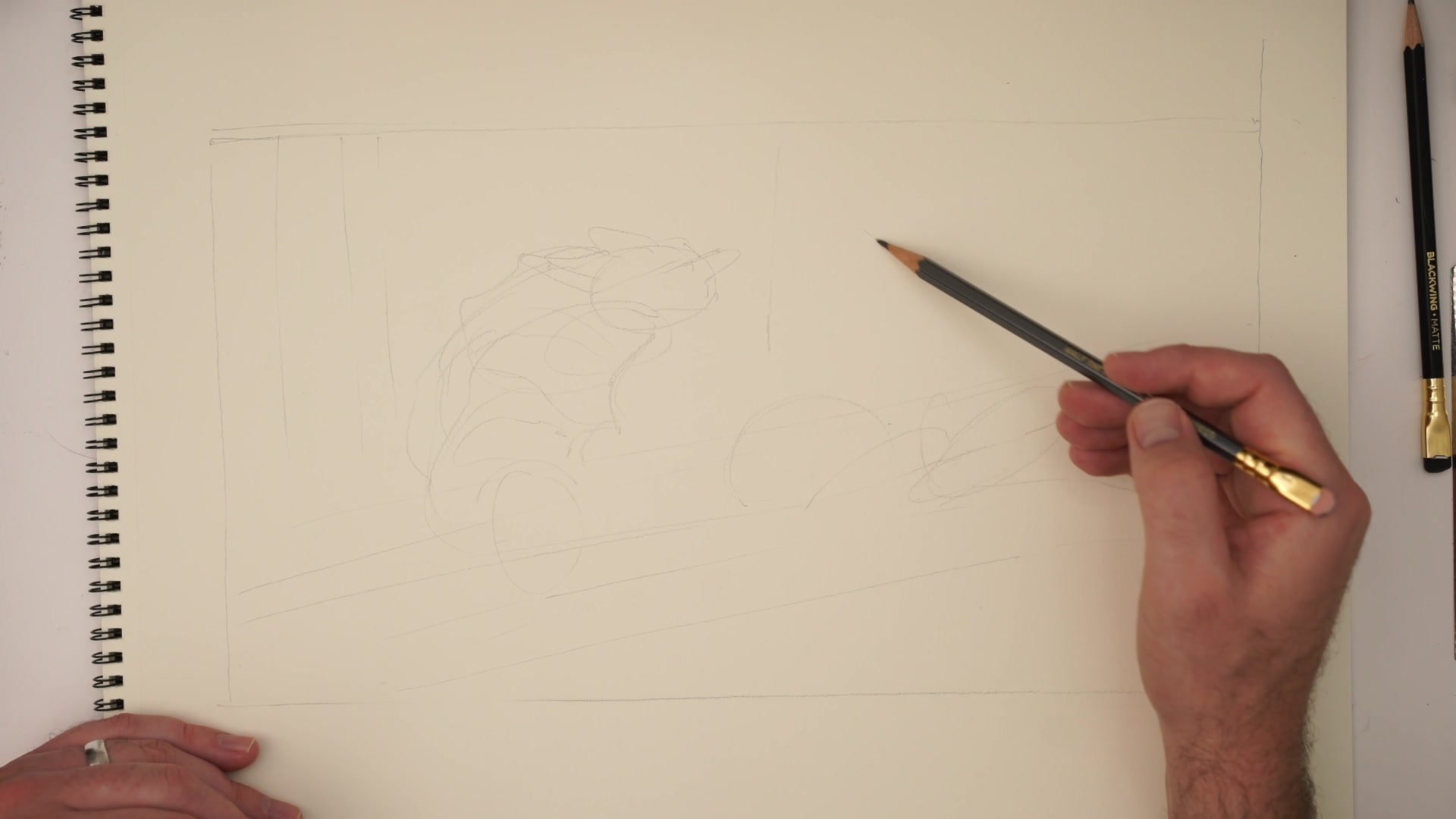
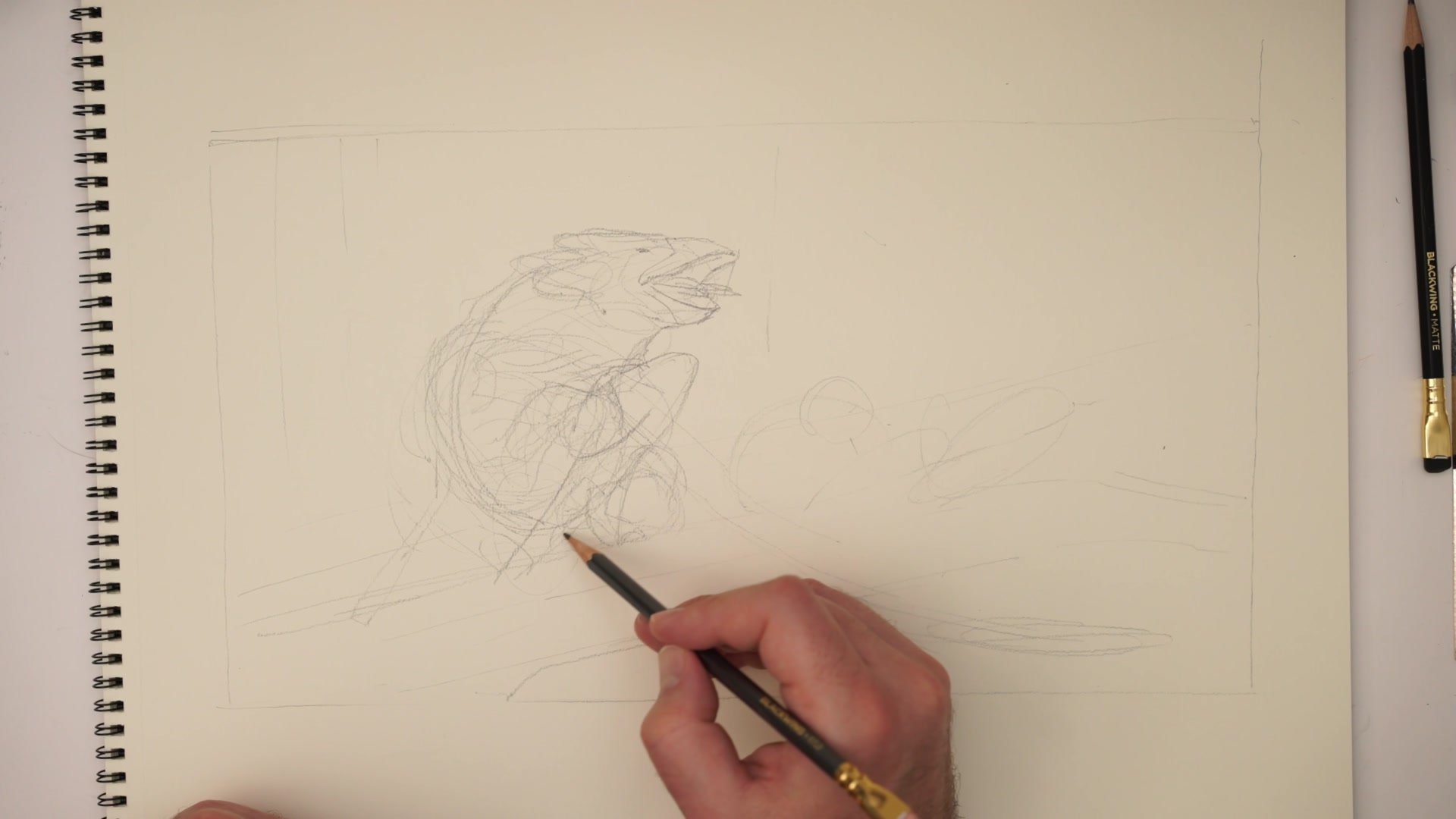
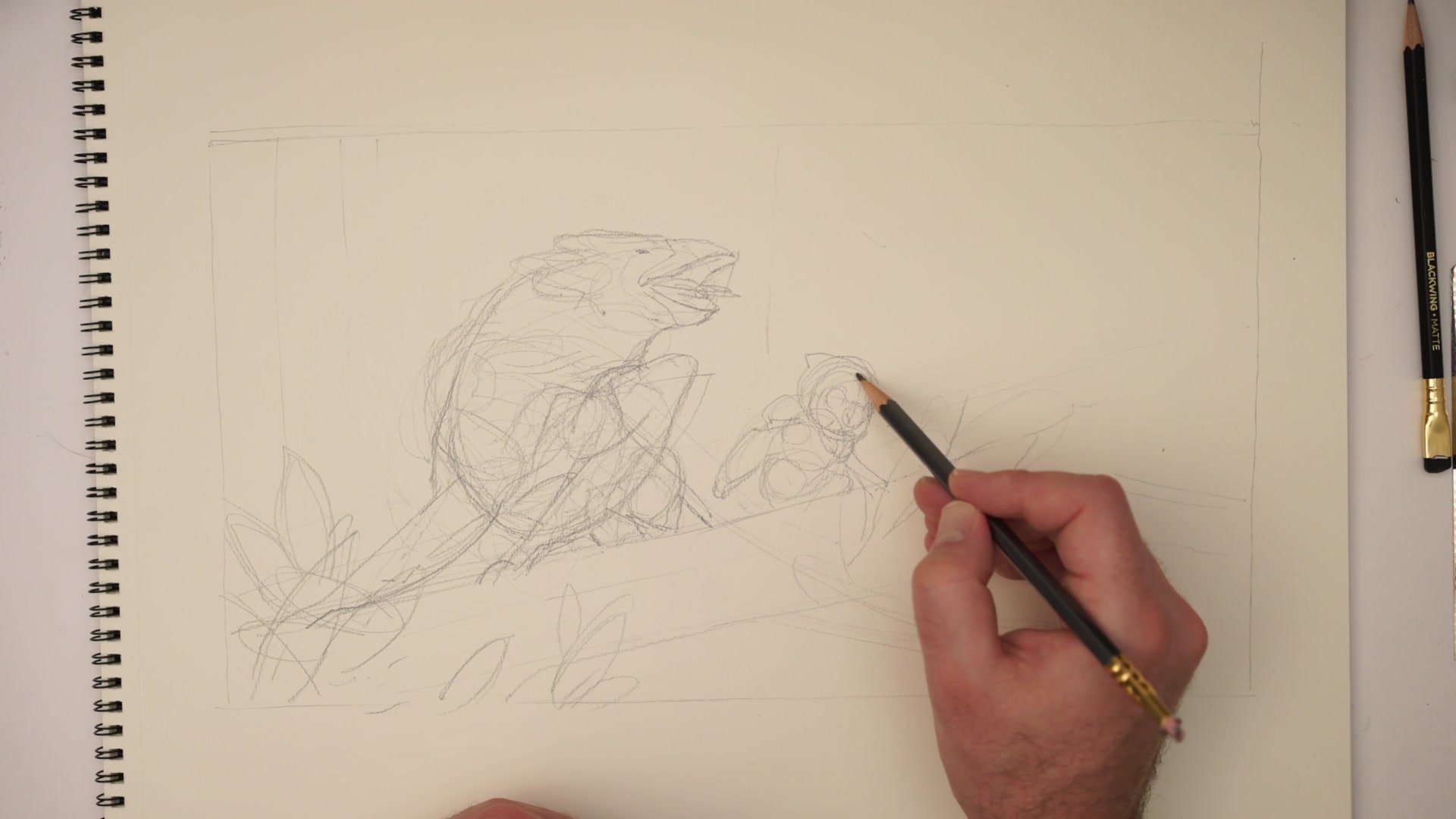
The drawing starts with soft, light pencil marks that establish where things are going to live in the composition. This initial phase is about massing rather than structure. How much space the creature takes up, where the goblin rider sits relative to the branches, where the foreground foliage will create depth. Working light at this stage is critical because everything is going to shift. The thumbnail sketch provides a rough guide, but translating that small drawing to the larger page always requires adjustment.
One of the realities of working with original creature designs is that designs only work from certain angles. When the initial attempt at a more foreshortened pose does not capture the appeal of the creature, the whole thing gets erased and restarted from a different viewing angle. Recognizing when something is not working and having the willingness to scrap it rather than push through is a fundamental part of the process.
Creature Construction
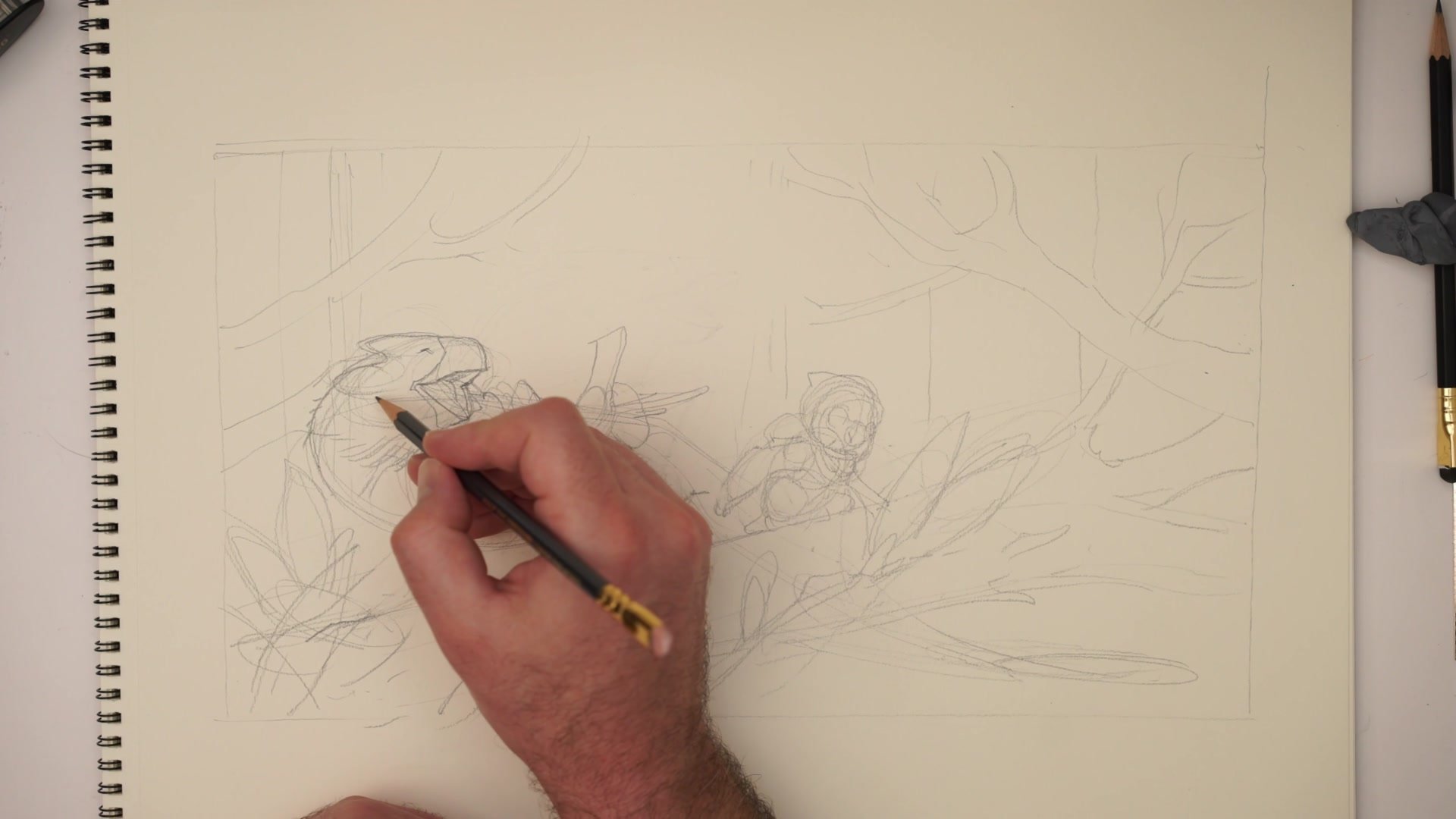
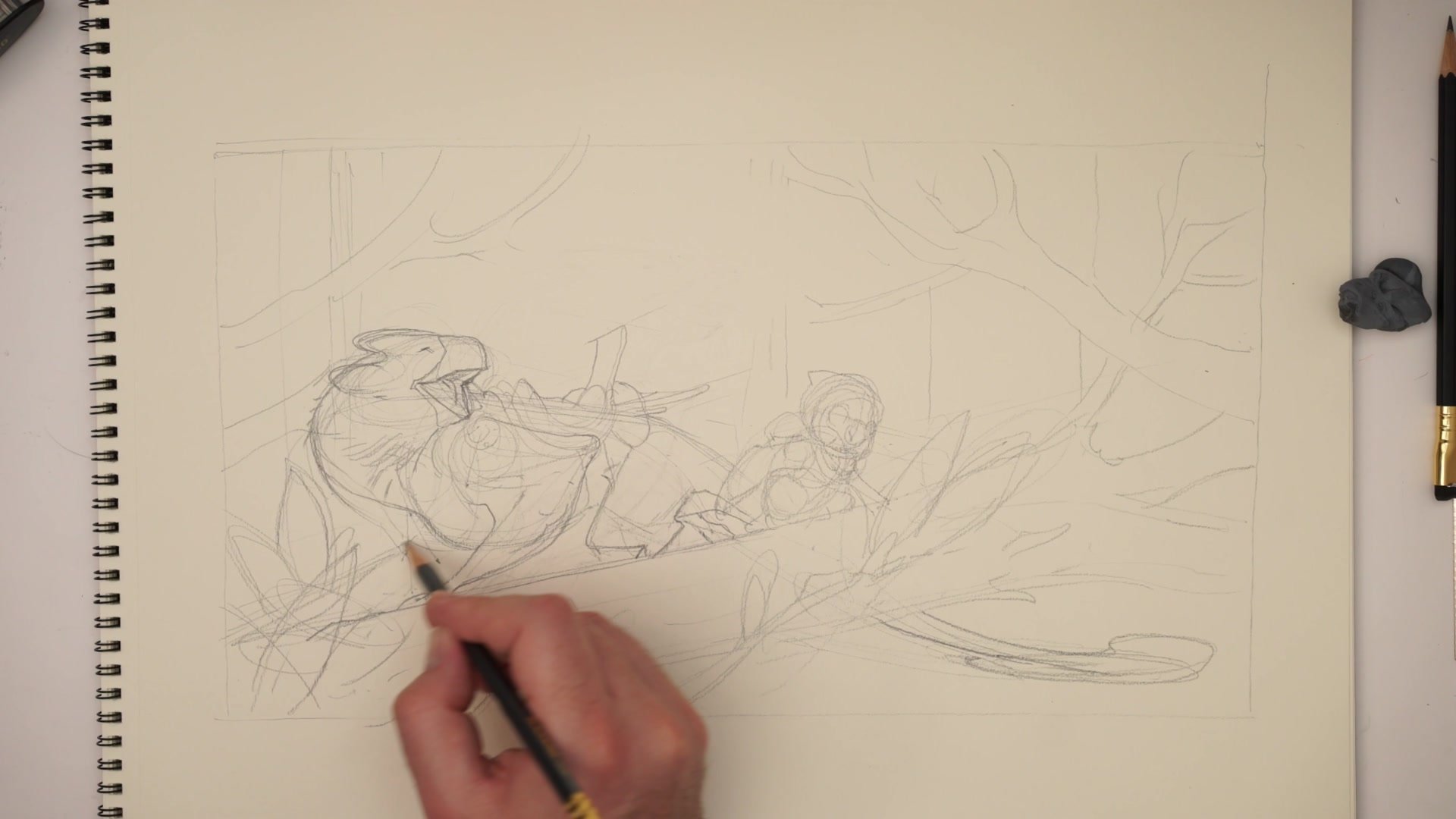
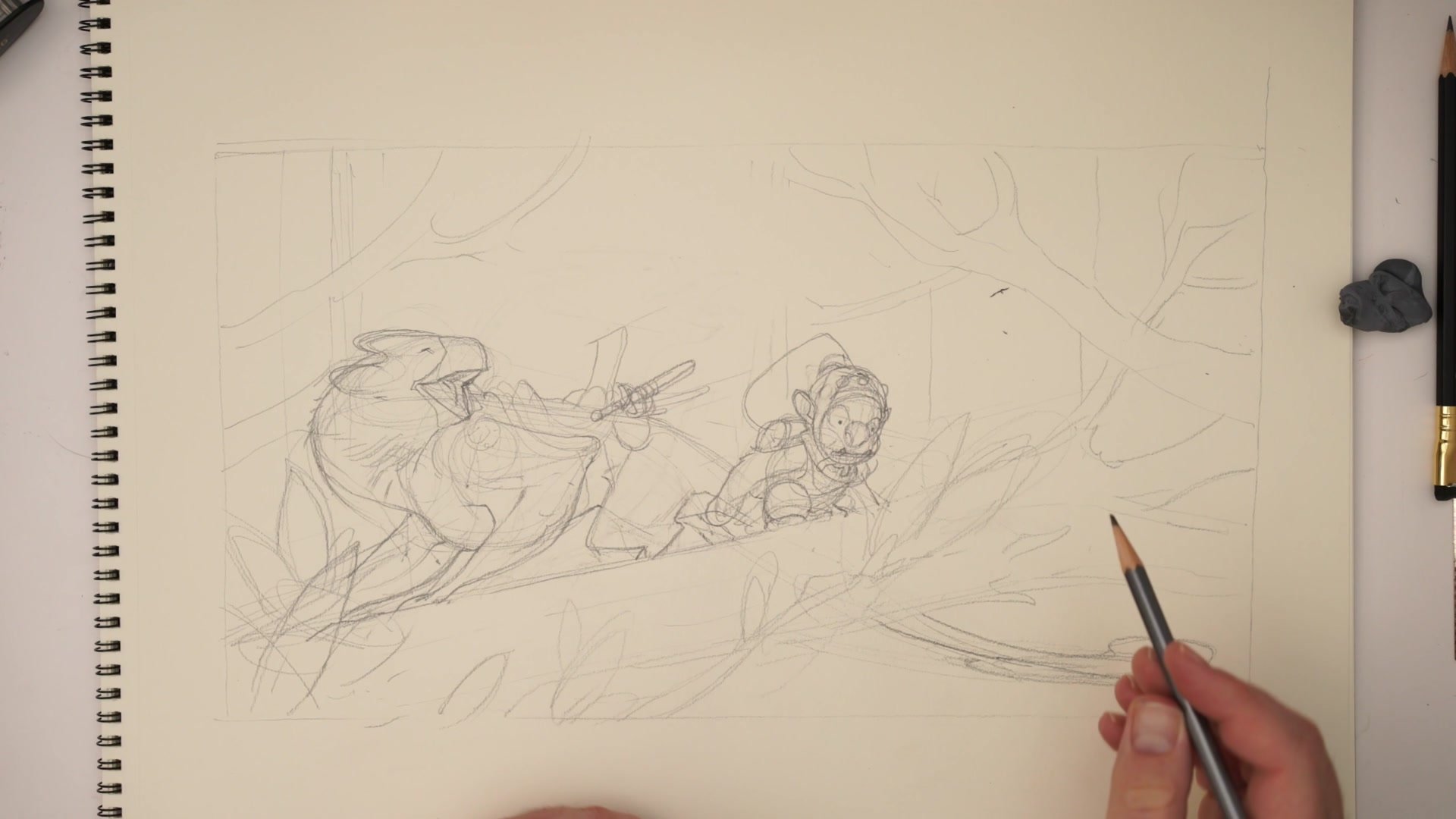
Shape Design and Appeal
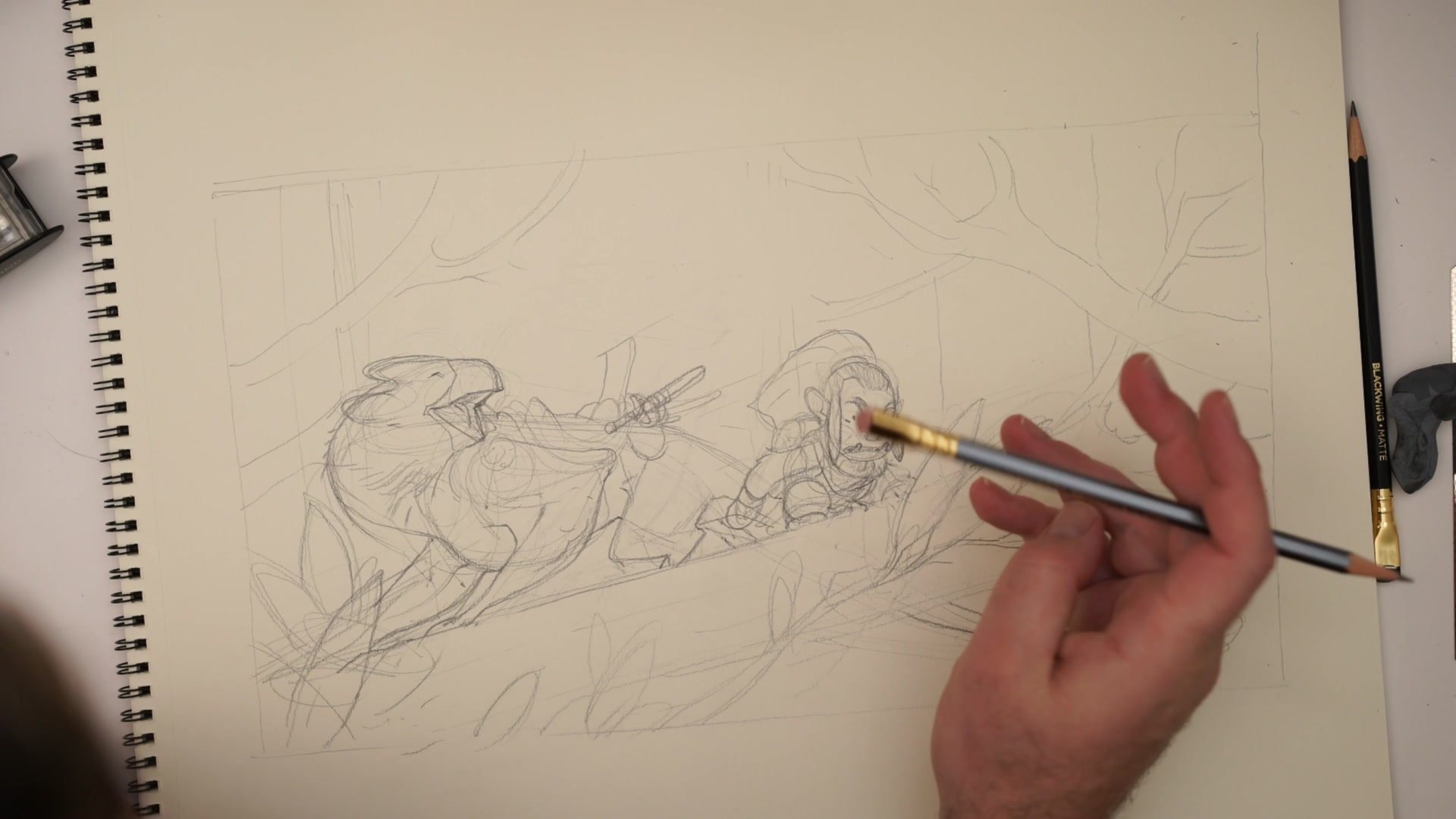
Once the basic creature pose is established, the focus shifts to shape design. The bird-dragon creature uses a mix of straight backs and curved forms, with a dolphin-like beak that creates a permanent smile. These design choices define the creature's personality. Construction at this stage means thinking in triangles and simple geometric relationships to figure out how the head foreshortens, where the center line falls, and how the secondary forms like the furry mane and webbed tail connect to the primary mass.
The freedom of working in comics and illustration rather than animation means shape design can be prioritized over structural accuracy. There is no need to make sure a design rotates perfectly in three dimensions. Each drawing can push the shapes for maximum appeal, which is one of the real advantages illustration holds over other visual mediums.
Environment and Detail
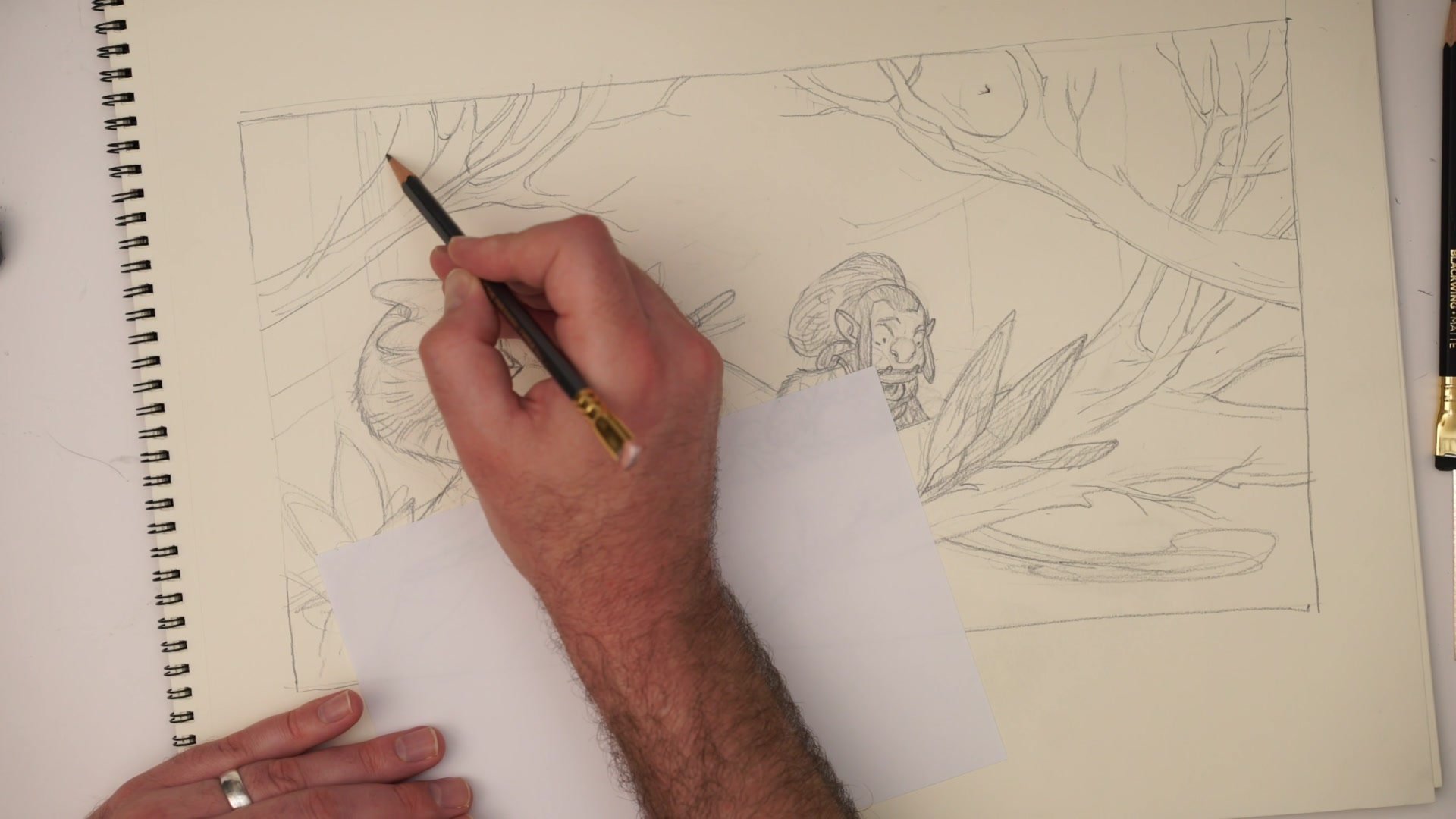
Hierarchy of Detail
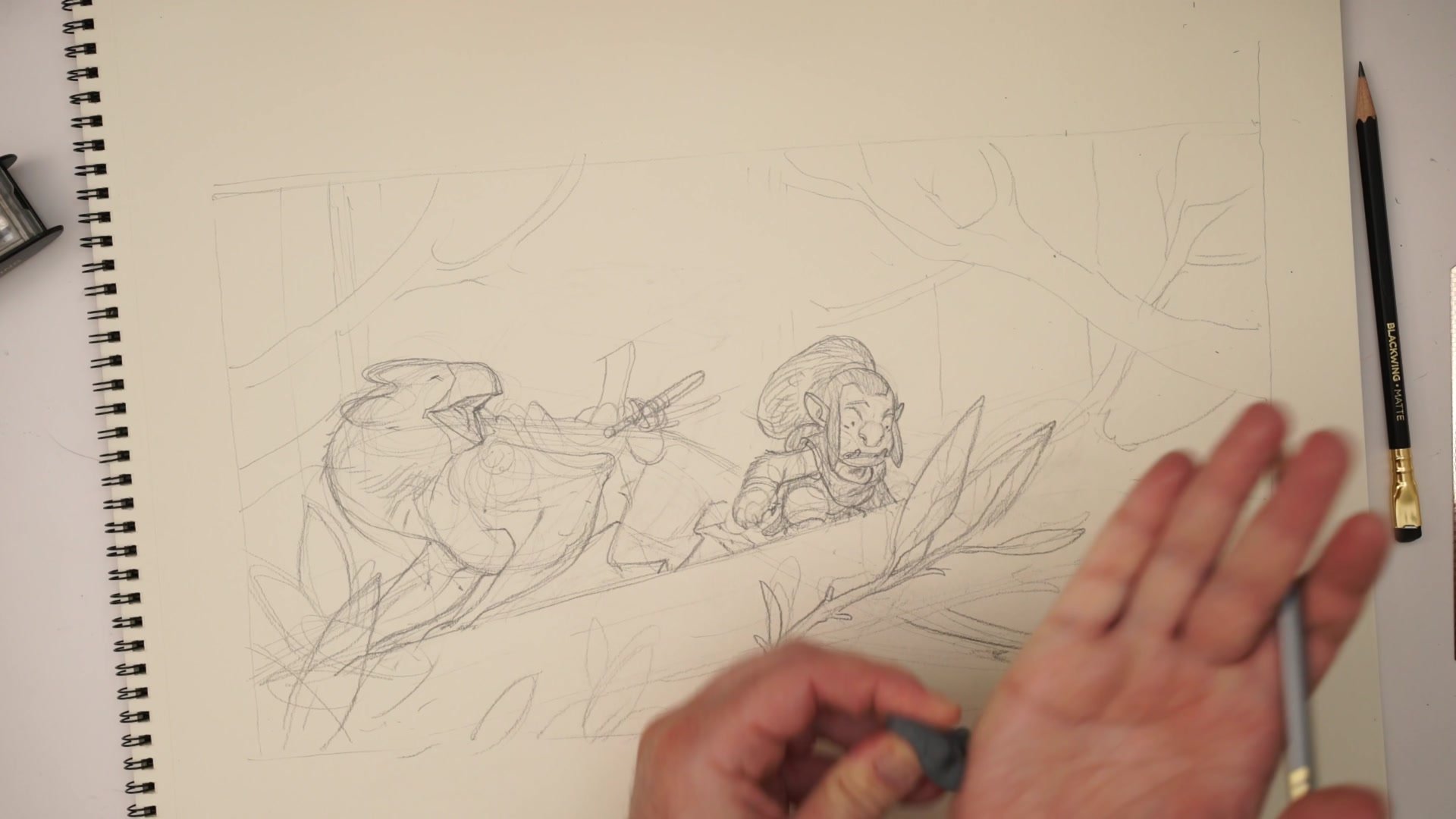
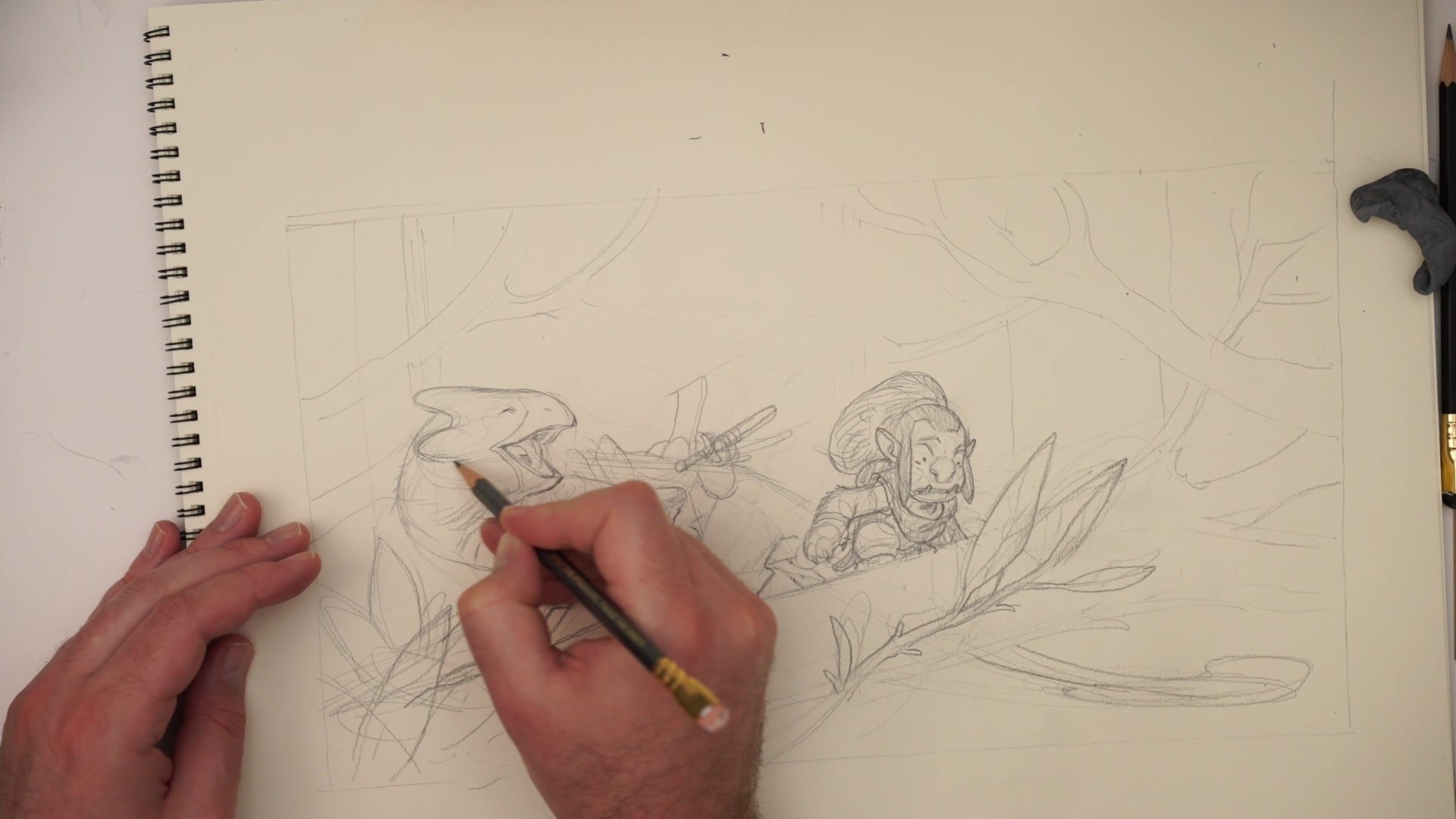
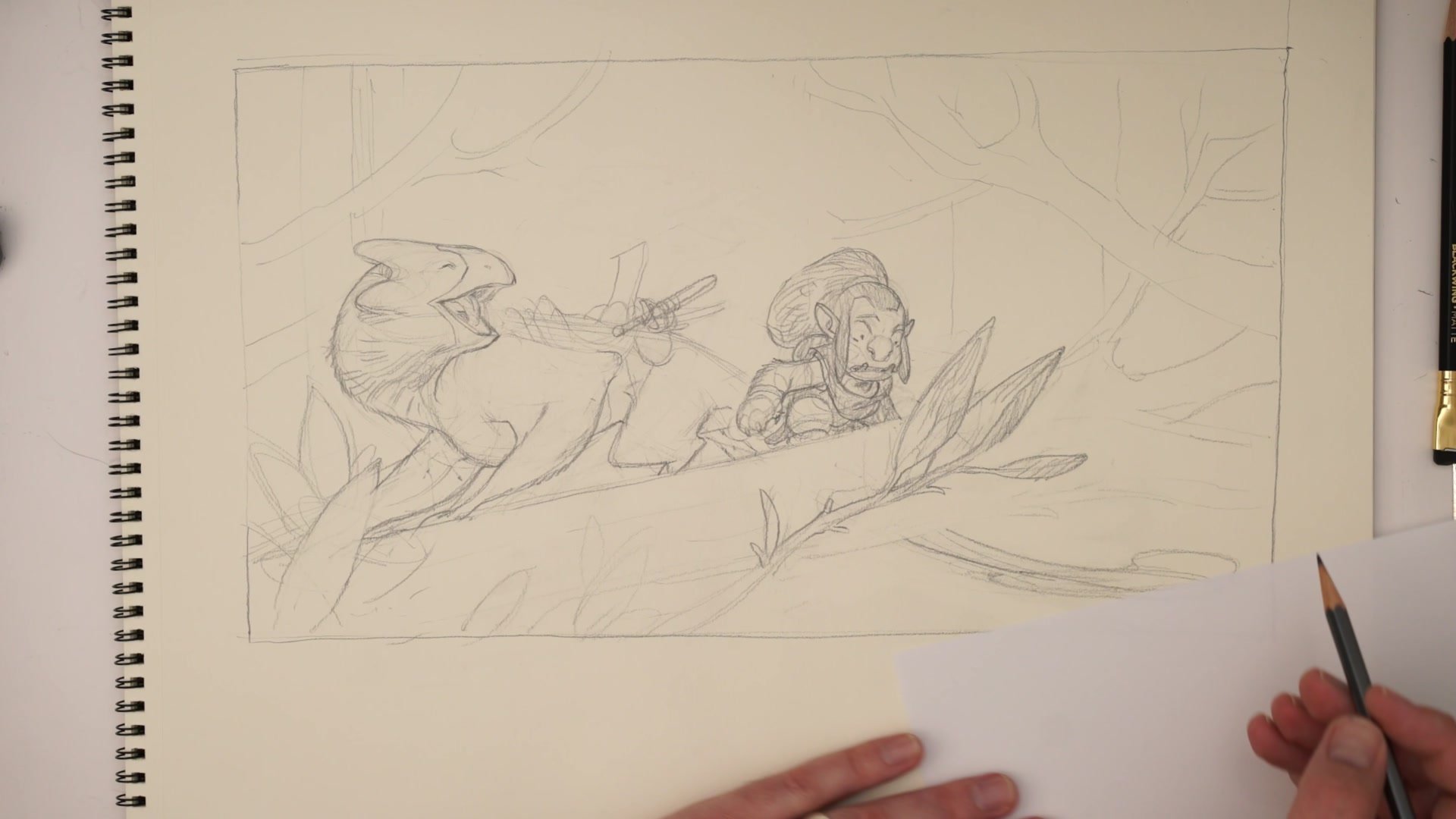
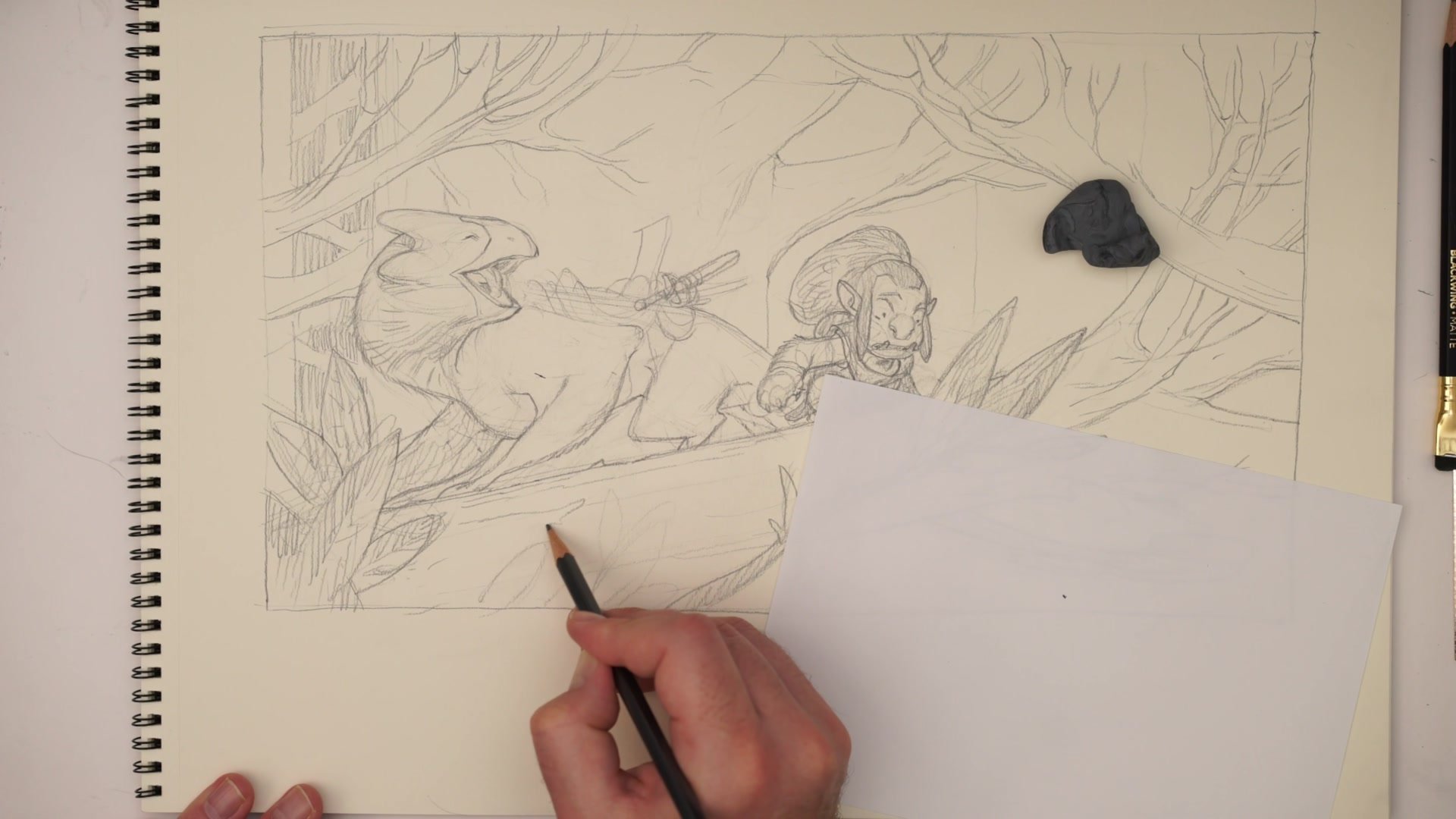
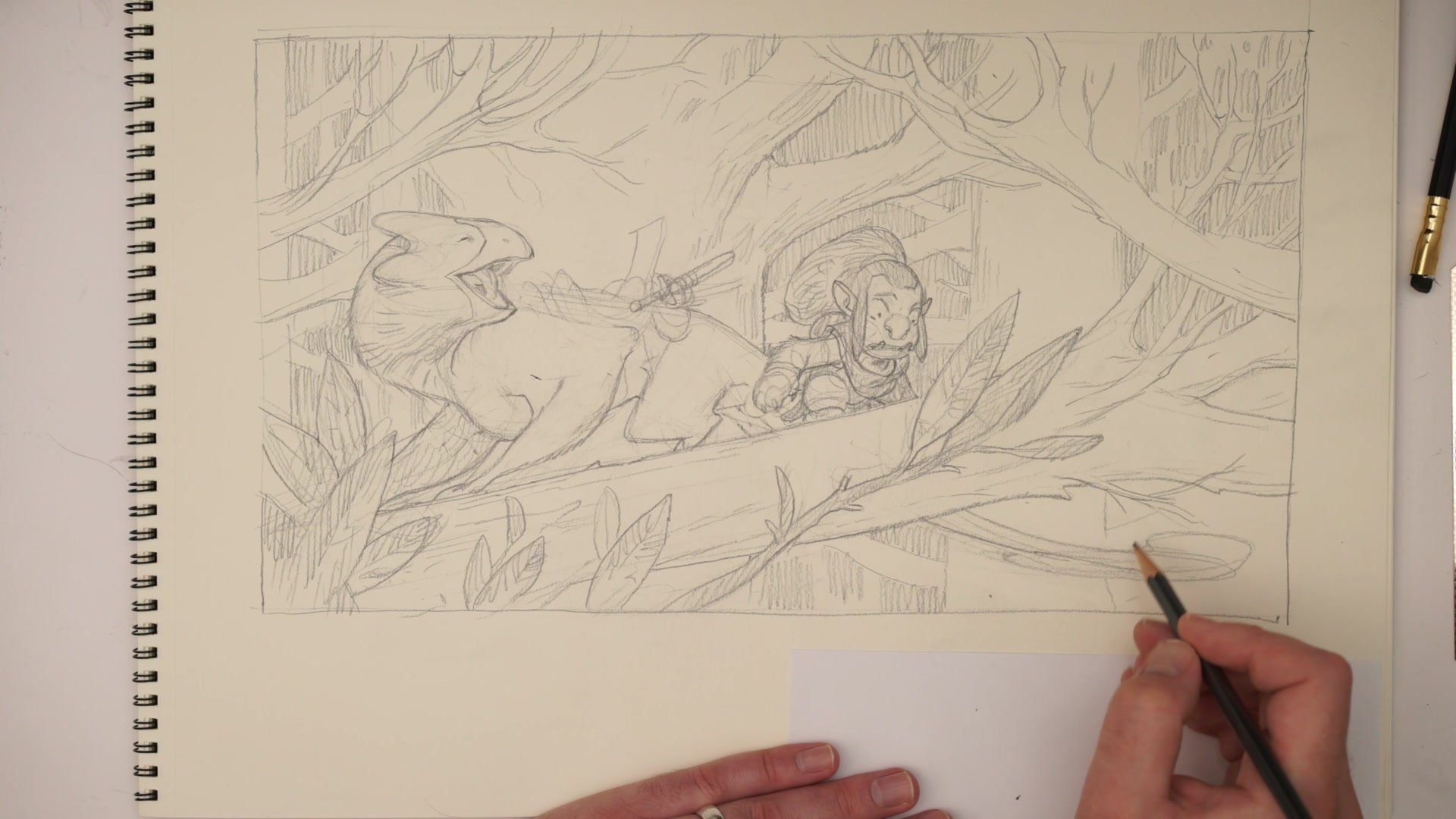
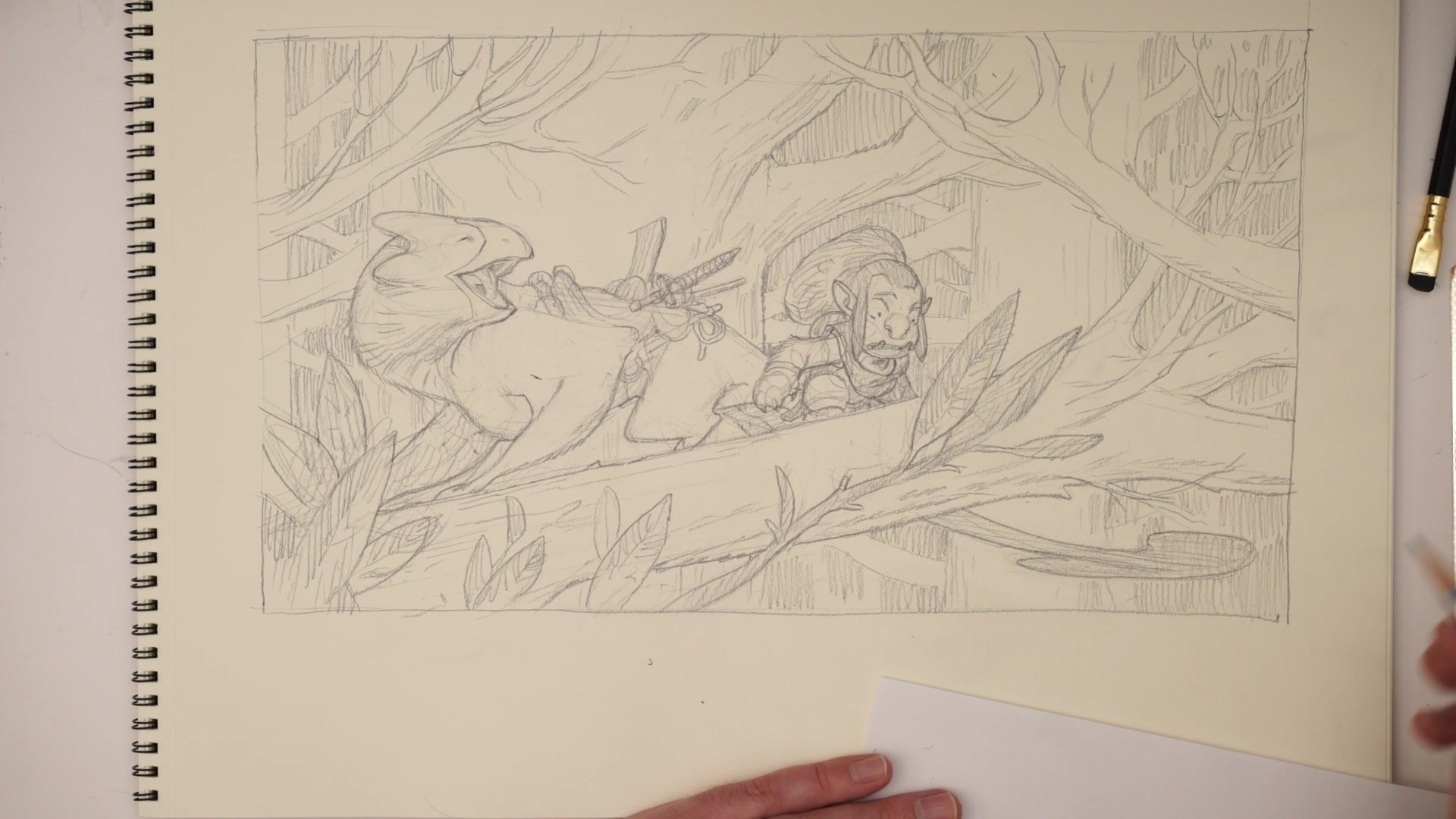
As the characters solidify, attention turns to the environment. Trees, branches, and foliage get filled in using a deliberate hierarchy. Detail concentrates around the main characters and story point while background elements fade into suggested tonal shapes. Branches between trees become abstract marks that create the feeling of complexity without demanding the same level of finish as the focal area.
The concept of finding and losing edges becomes essential here. Background elements merge into single shapes through tonal work. Foreground elements get pushed forward with stronger lines and more overlap. The entire finishing process is less about adding detail everywhere and more about refining where detail exists and where the viewer should look. Everything serves the primary read of the goblin character on the creature, hiding in the trees.
Refined Drawing
Key Principles
Massing Before Structure: The initial phase of a drawing from imagination focuses on how much space elements occupy rather than their exact form. Working light and soft allows for constant repositioning before committing.
Design Appeal Over Accuracy: Original creature designs only work from certain angles. Recognizing when a pose does not capture the appeal and being willing to restart is essential to getting a drawing that functions.
Hierarchy of Detail: Finishing a complex scene means concentrating detail around the focal point while letting secondary elements fade into suggested shapes. Finding and losing edges controls where the viewer looks.
Secondary Form as Suggestion: Hinting at details and secondary forms creates a feeling of complexity without requiring full rendering. Knowing where the form would go makes it possible to suggest it convincingly.
Try This
Pick a Subject You Care About: Choose a creature or character design you have been developing. Set up a simple thumbnail composition with a foreground, middle ground, and background element.
Mass Before You Construct: Start with the lightest possible pencil marks. Establish only where things will live and how much space they take up. Resist the urge to draw details early.
Control Your Hierarchy: As you refine, keep asking which element is the most important. Put your best detail work there and let everything else stay subordinate to that focal point.