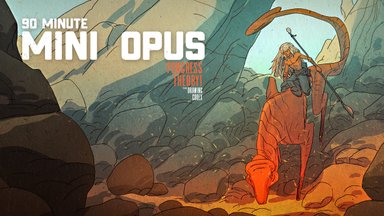
Let's Draw Adventure and Talk About Mighty Artisan
Summary
Fantasy Adventure Drawing Process
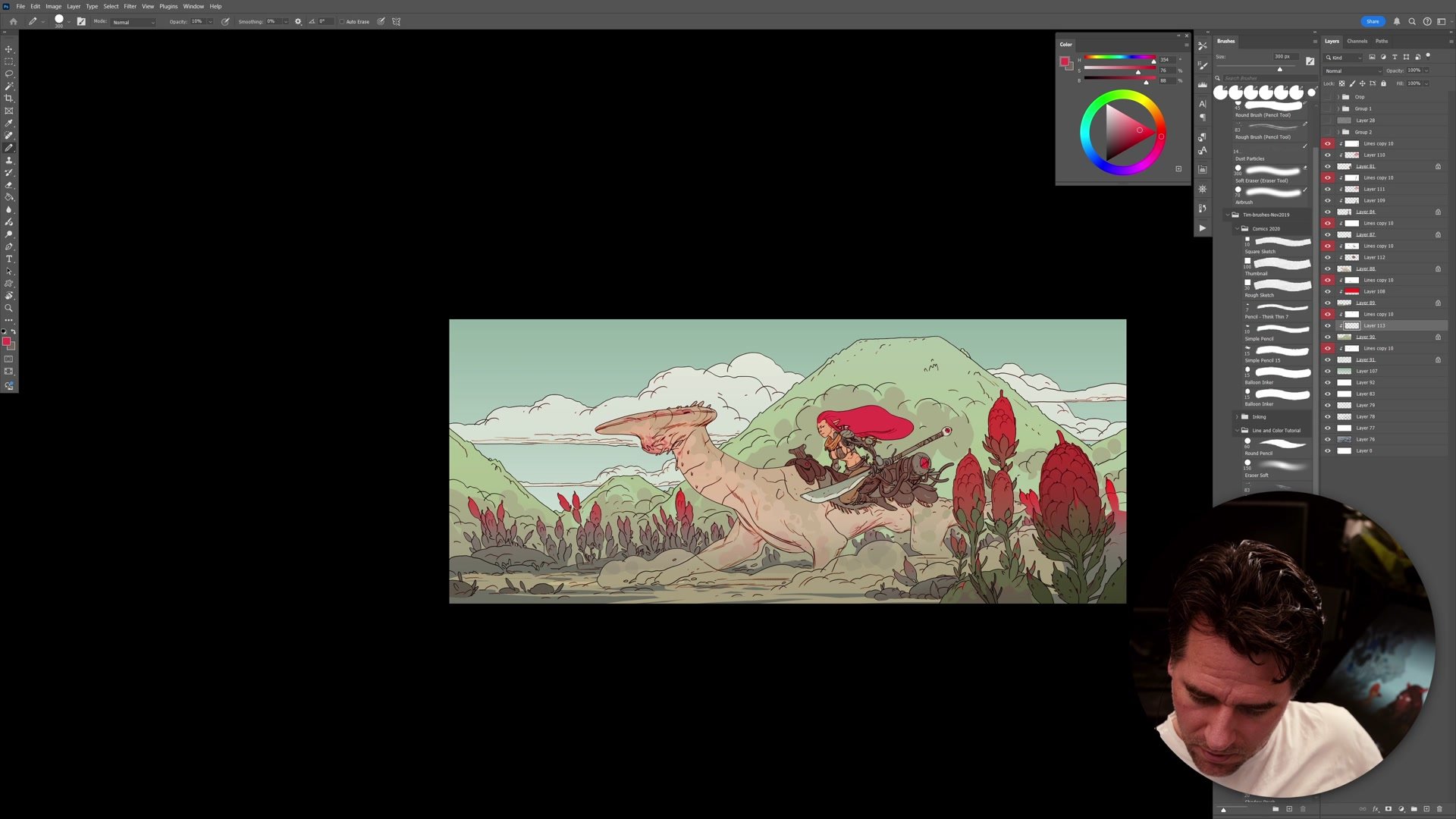
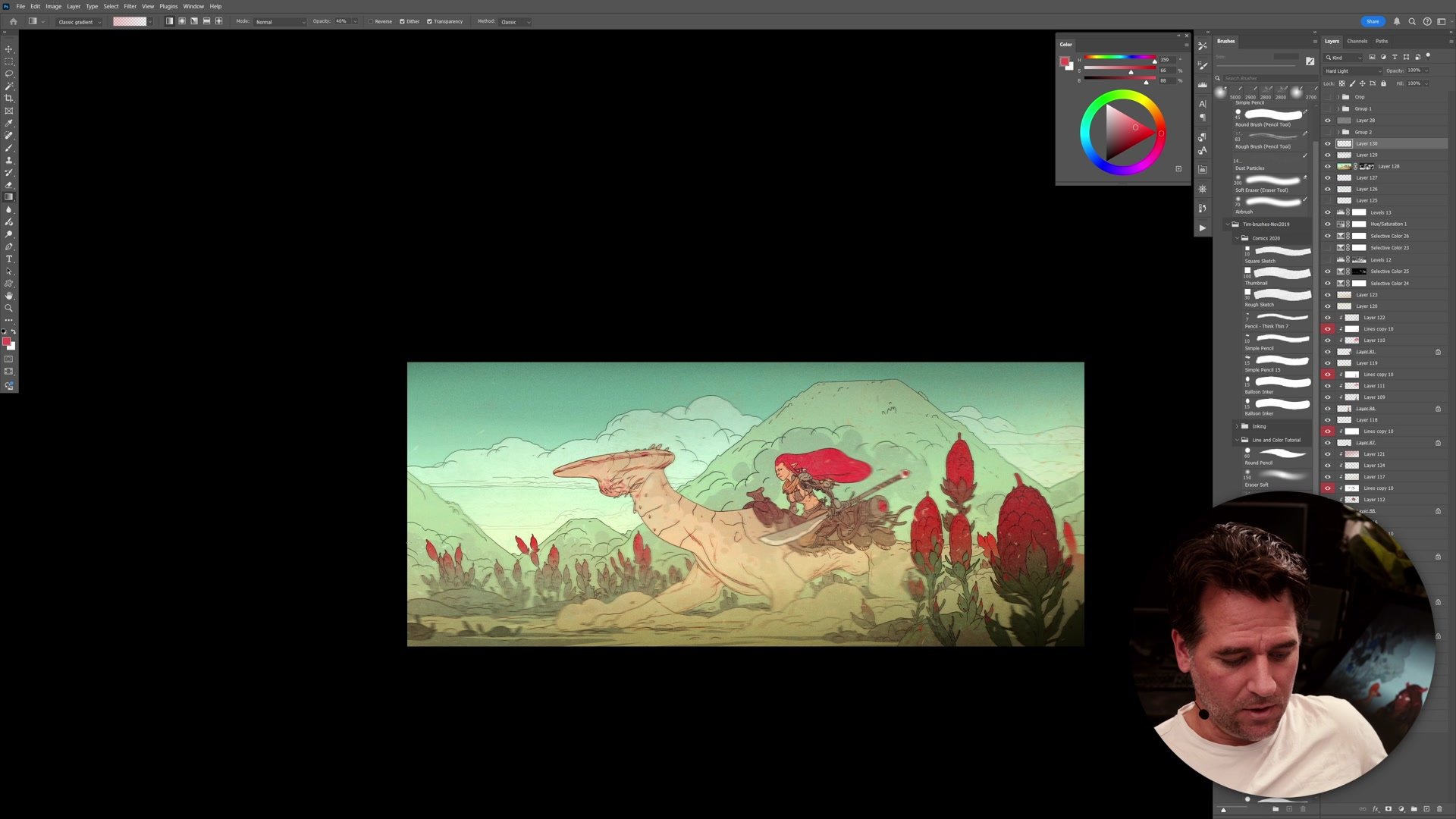
This three-and-a-half hour real-time session follows the creation of a fantasy adventure illustration in Photoshop, from rough thumbnail sketch through construction, inking, flat color, and final color grading. A warrior character riding an alien creature charges through a landscape of strange organic plants and distant alien mountains.
Alongside the drawing process, the session explores the challenges artists face when trying to combine creative ambitions with career and business realities. The discussion covers why stepping away from social media noise can improve creative output, how basic productivity and business understanding can transform an art career, and why community-based learning offers something that algorithm-driven platforms cannot.
Thumbnail to Construction
Building From The Thumbnail
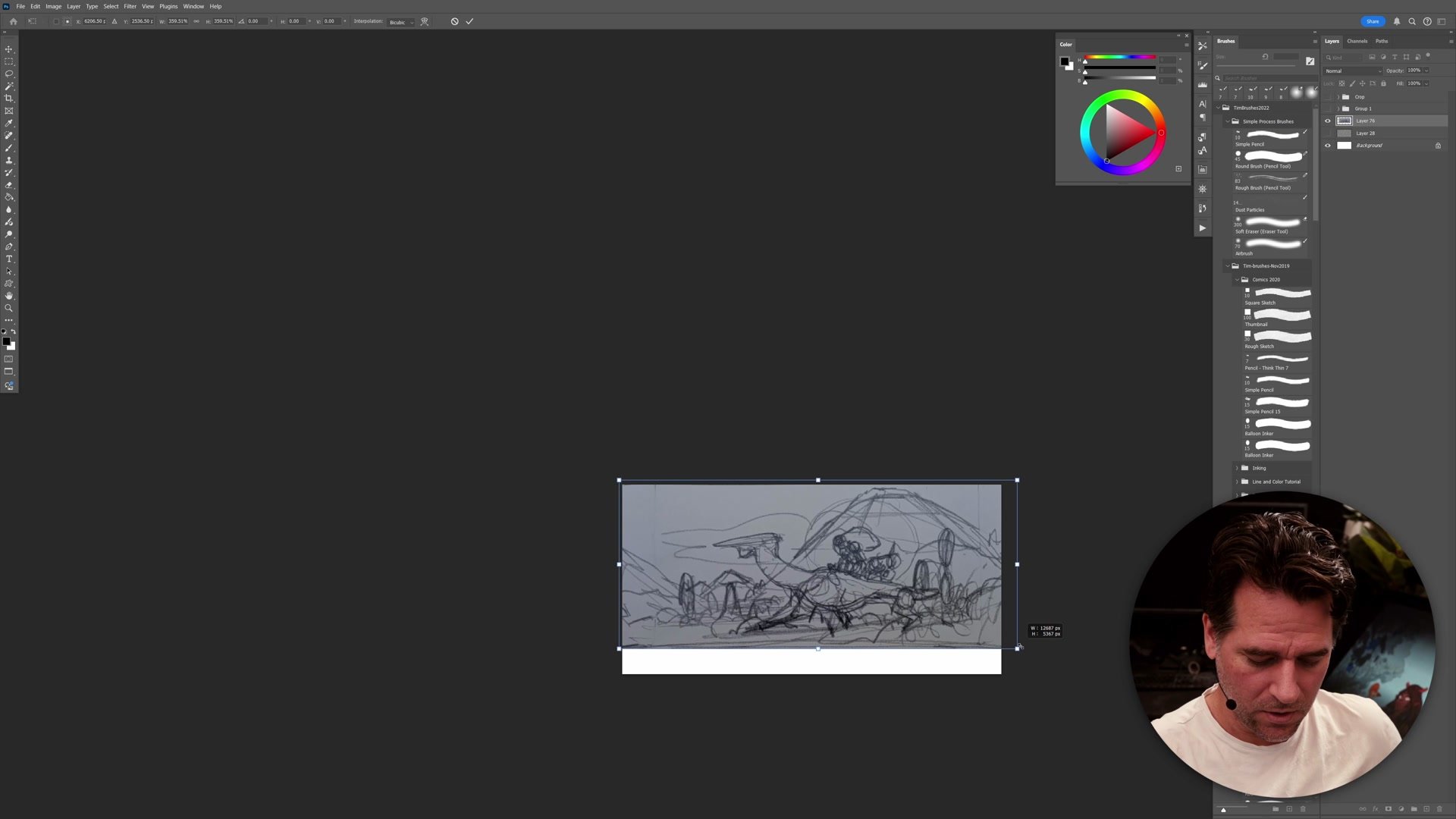
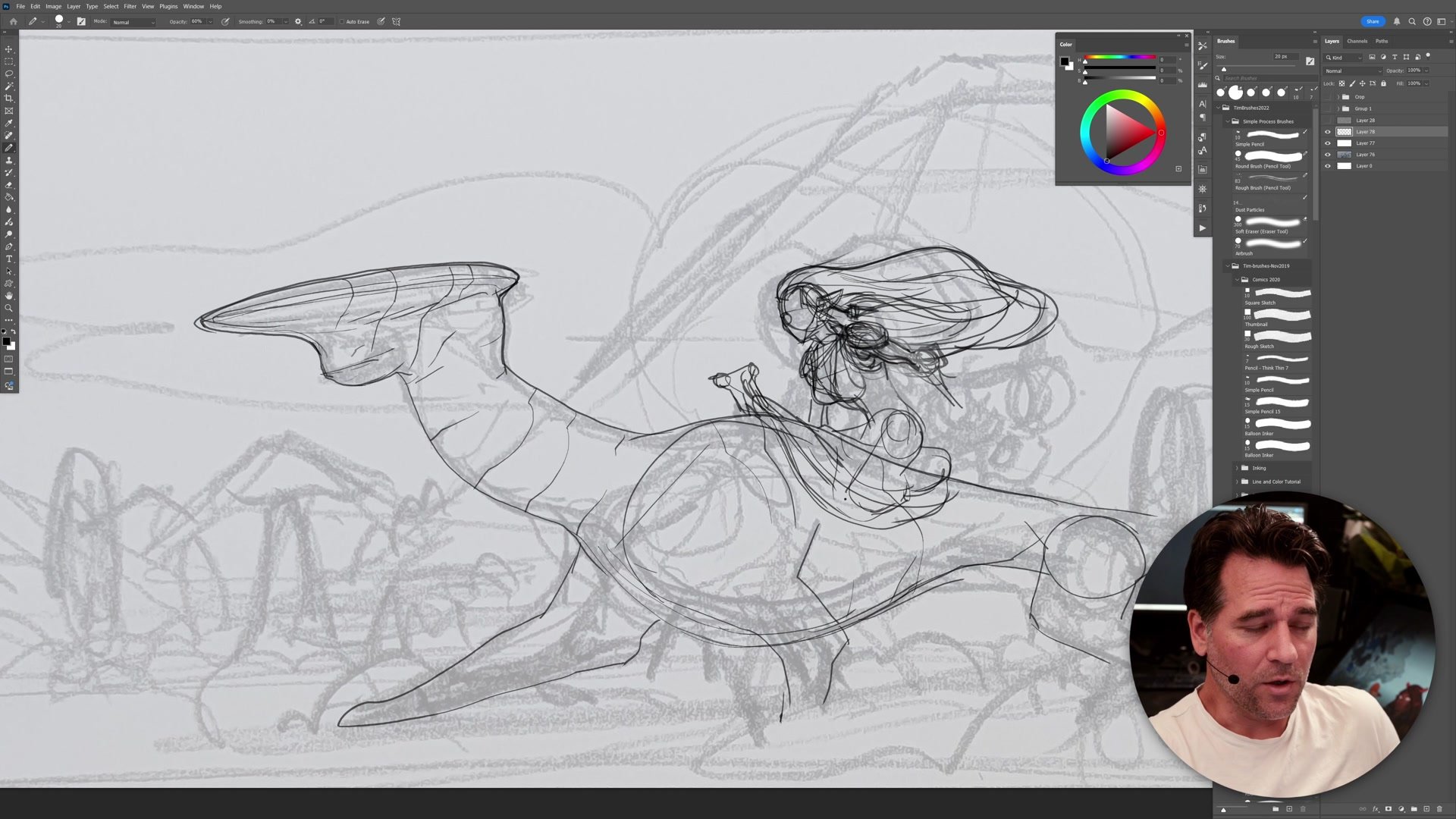
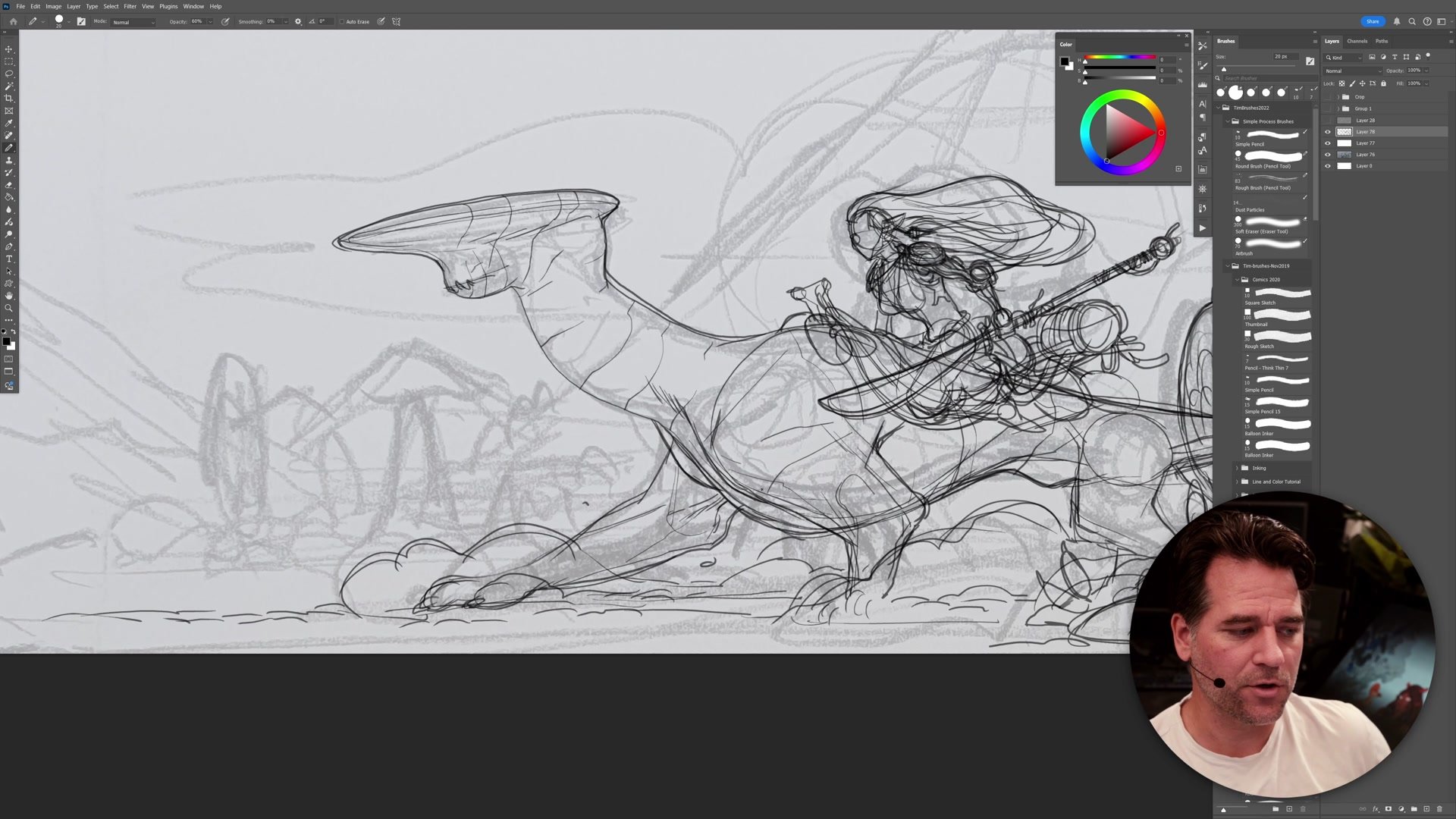
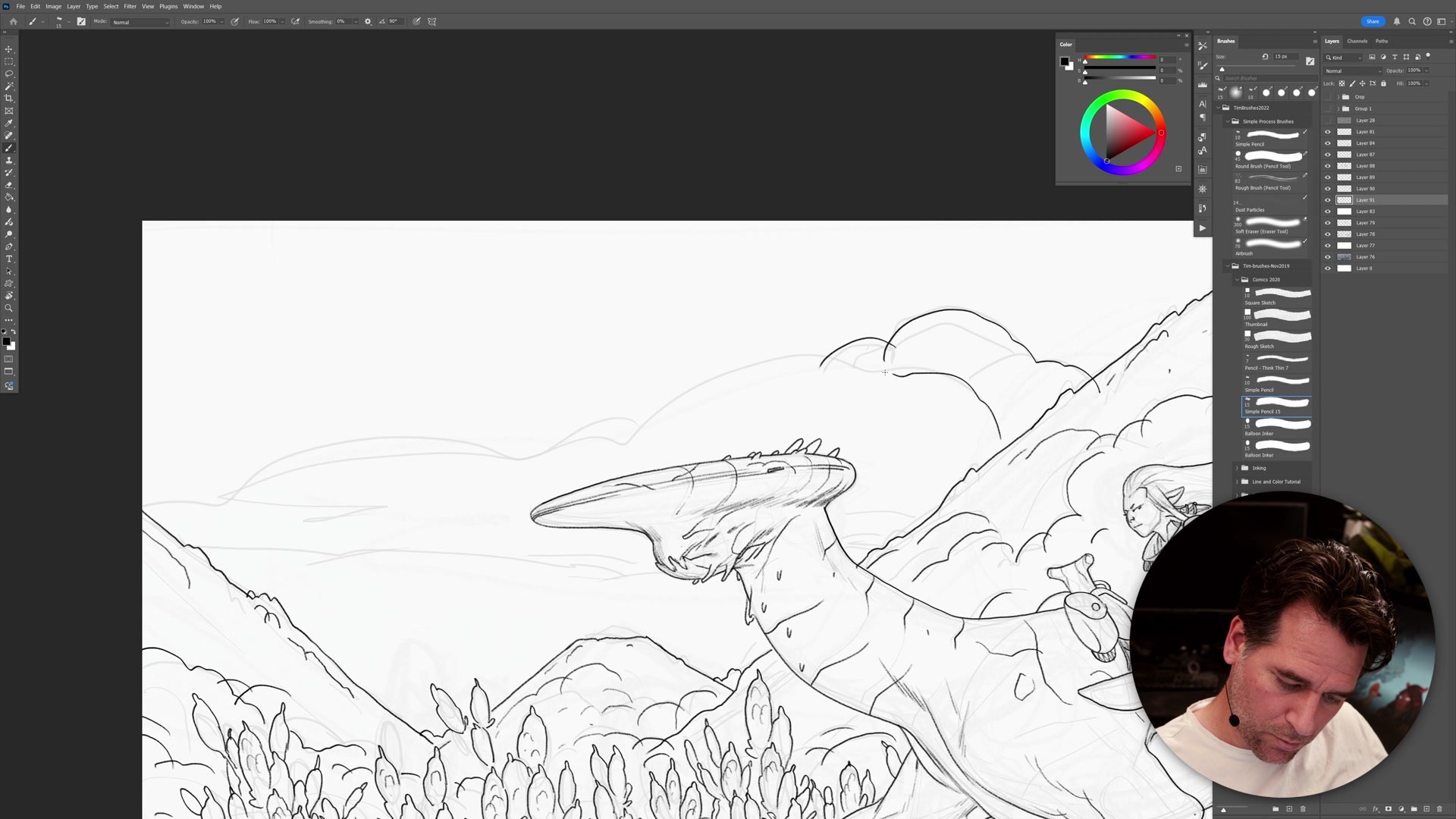
The session begins with a rough pencil thumbnail from a physical sketchbook, imported and scaled up to a large Photoshop canvas. Working with a simple round brush at reduced opacity, the initial construction focuses on establishing the major forms: the alien mount creature, the rider, and the relationship between foreground elements and the background landscape.
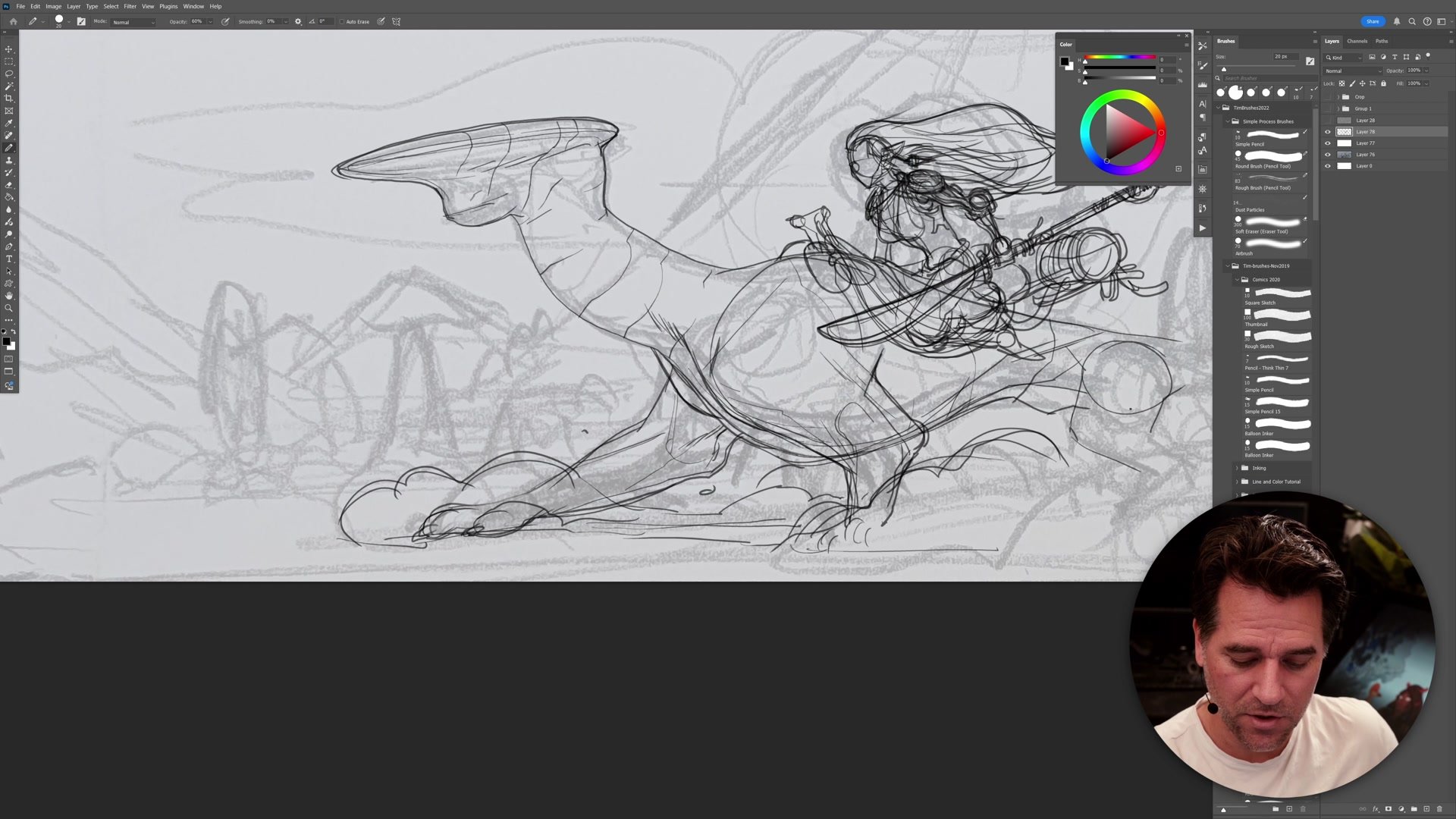
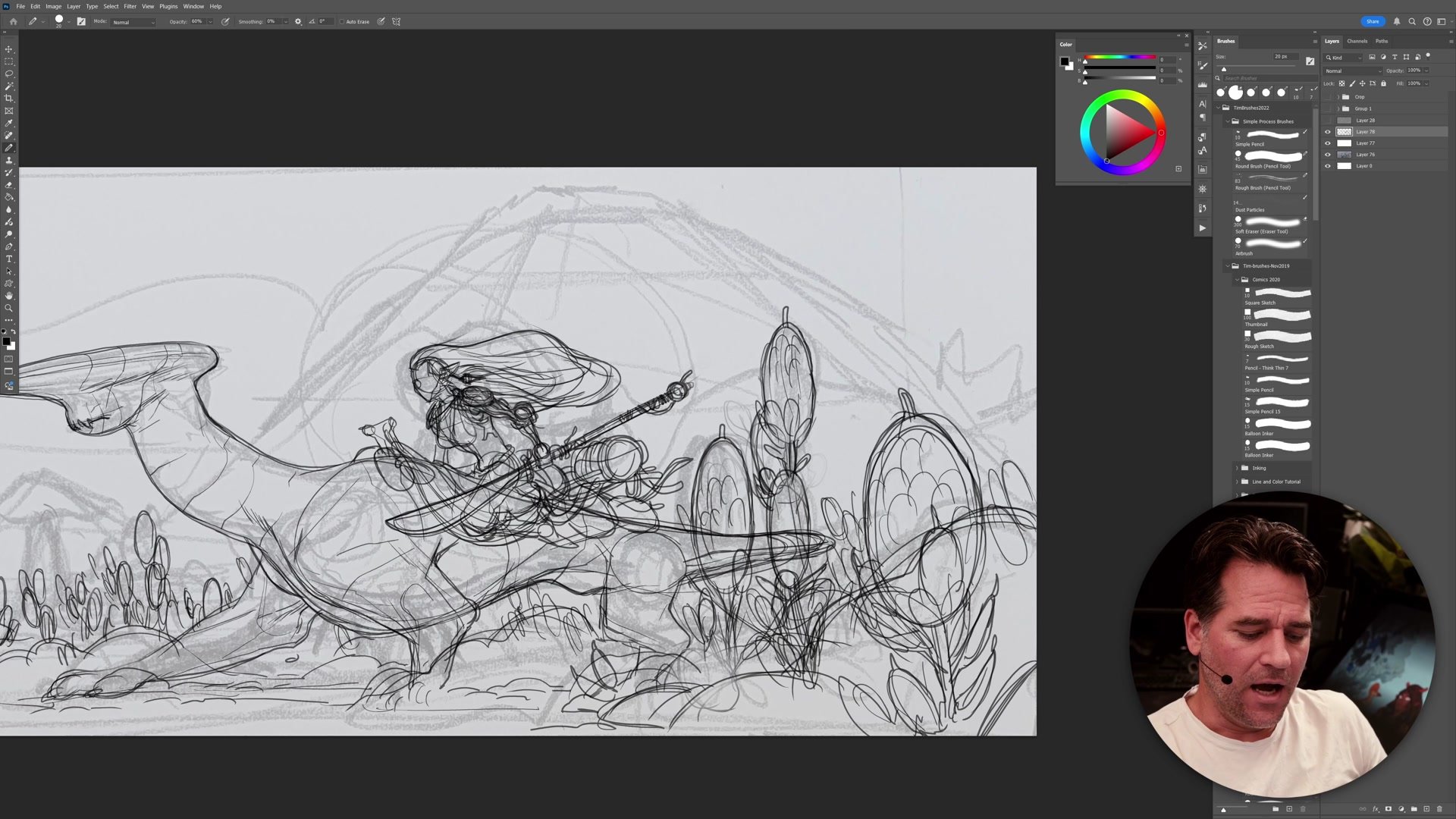
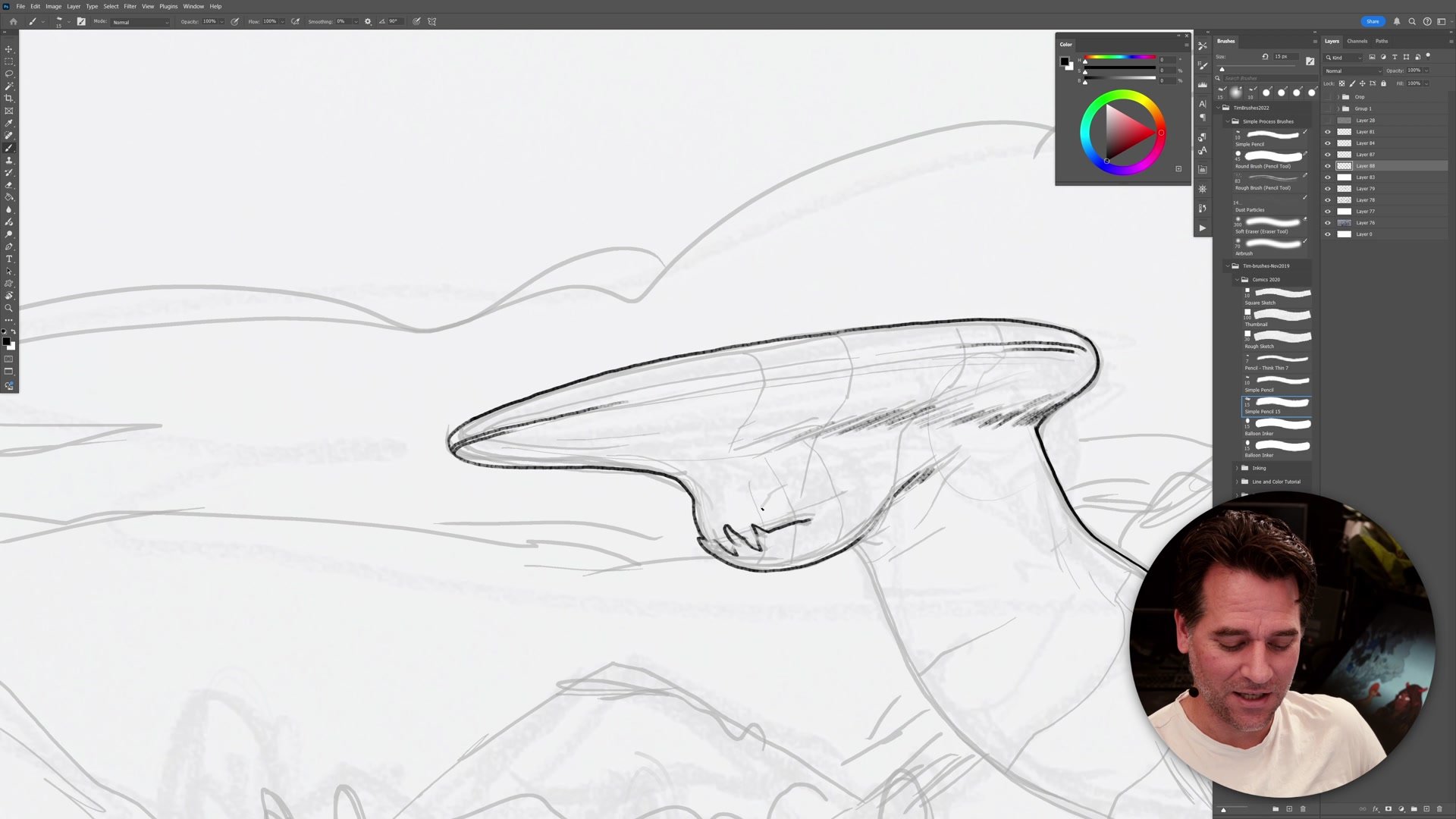
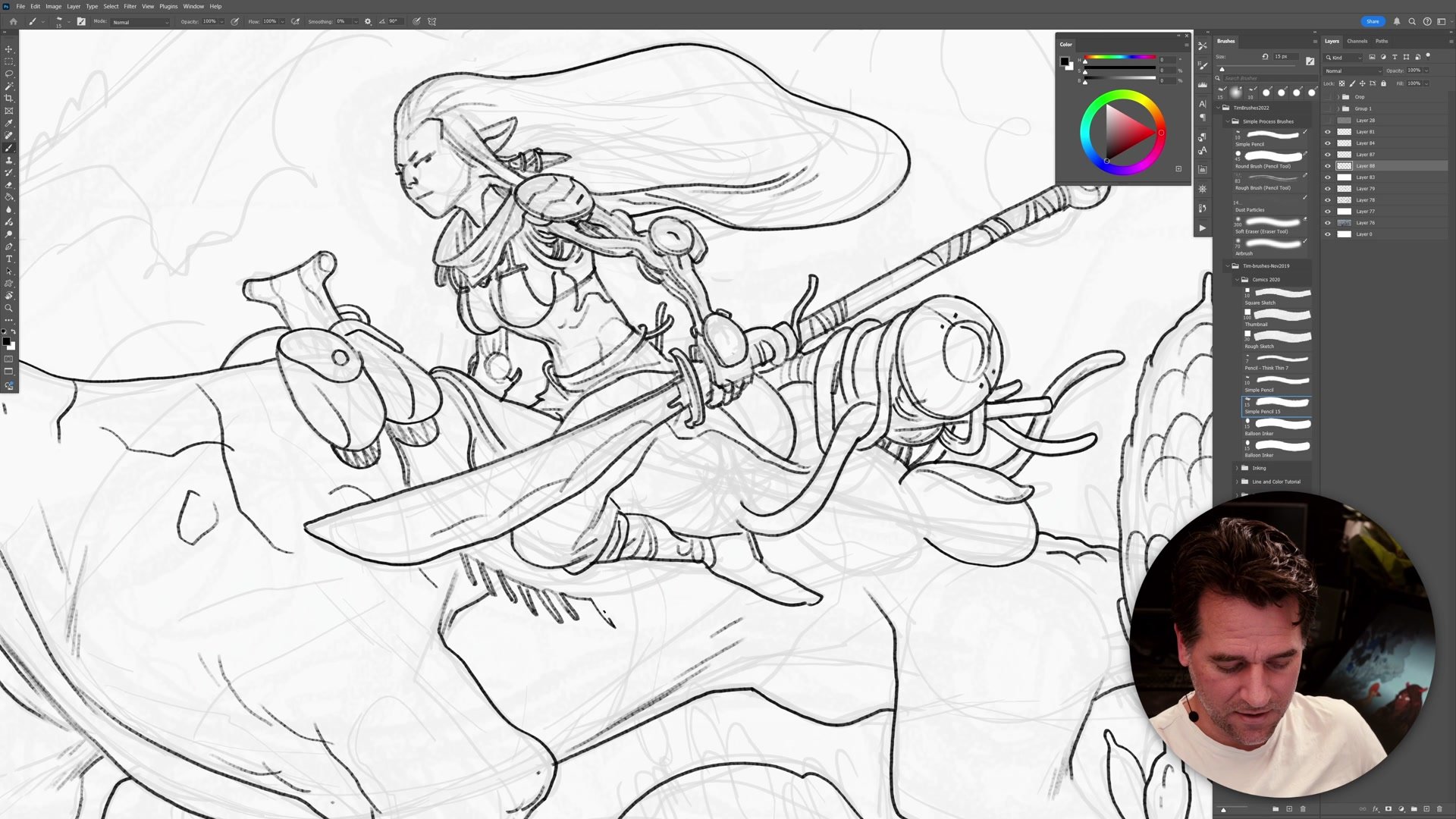
Construction happens across multiple layers, with each major element getting its own layer for flexibility later. The creature design evolves from a rough silhouette into something resembling a large reptilian mount with a distinctive head shape. The rider takes shape as a female warrior with flowing hair, armor details, and a long weapon. The alien plants in the foreground draw from organic references like artichoke and protea flowers, giving the environment a sense of strange biology.
Inking and Line Work
Finished Lines and Inking
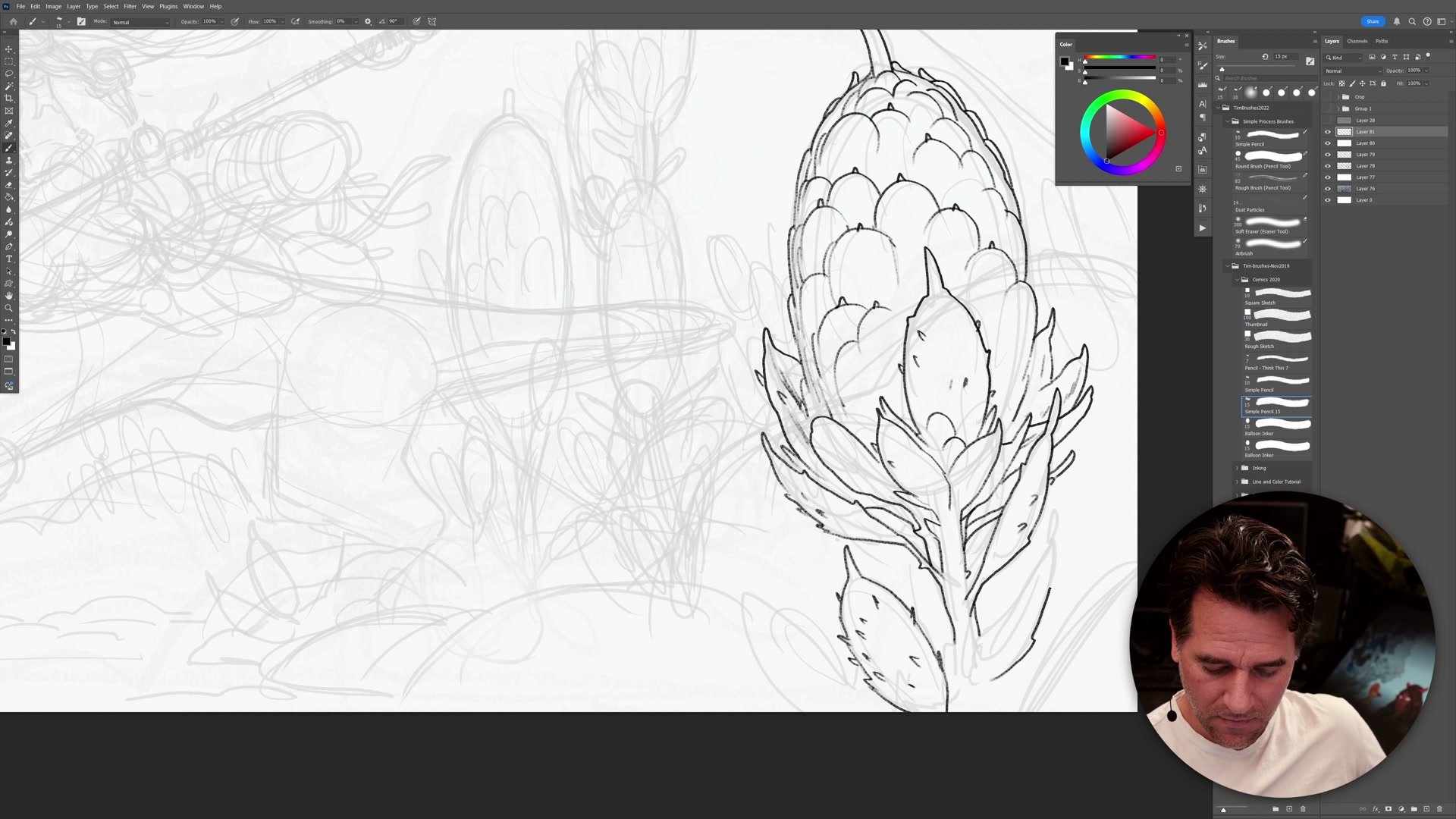
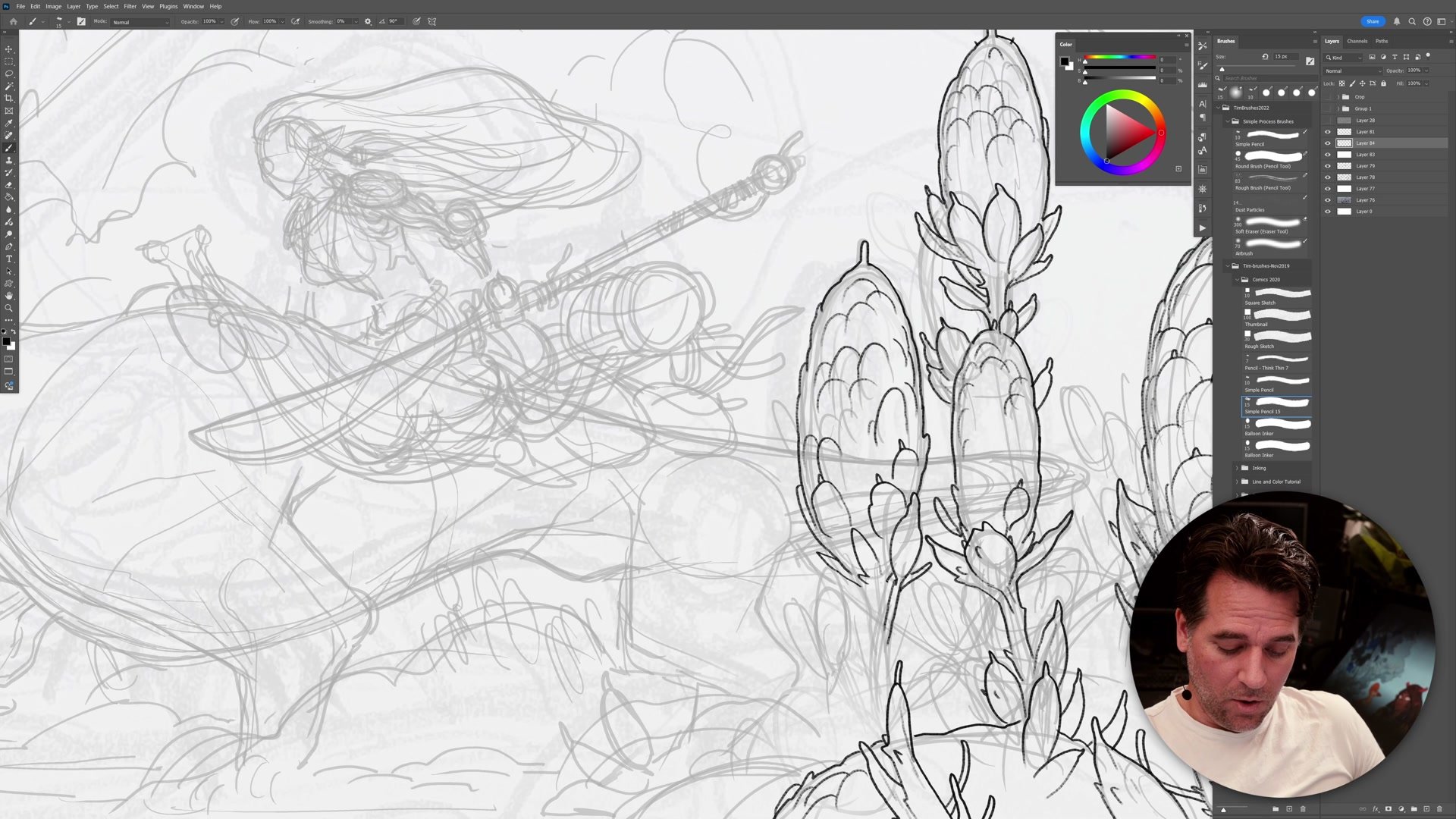
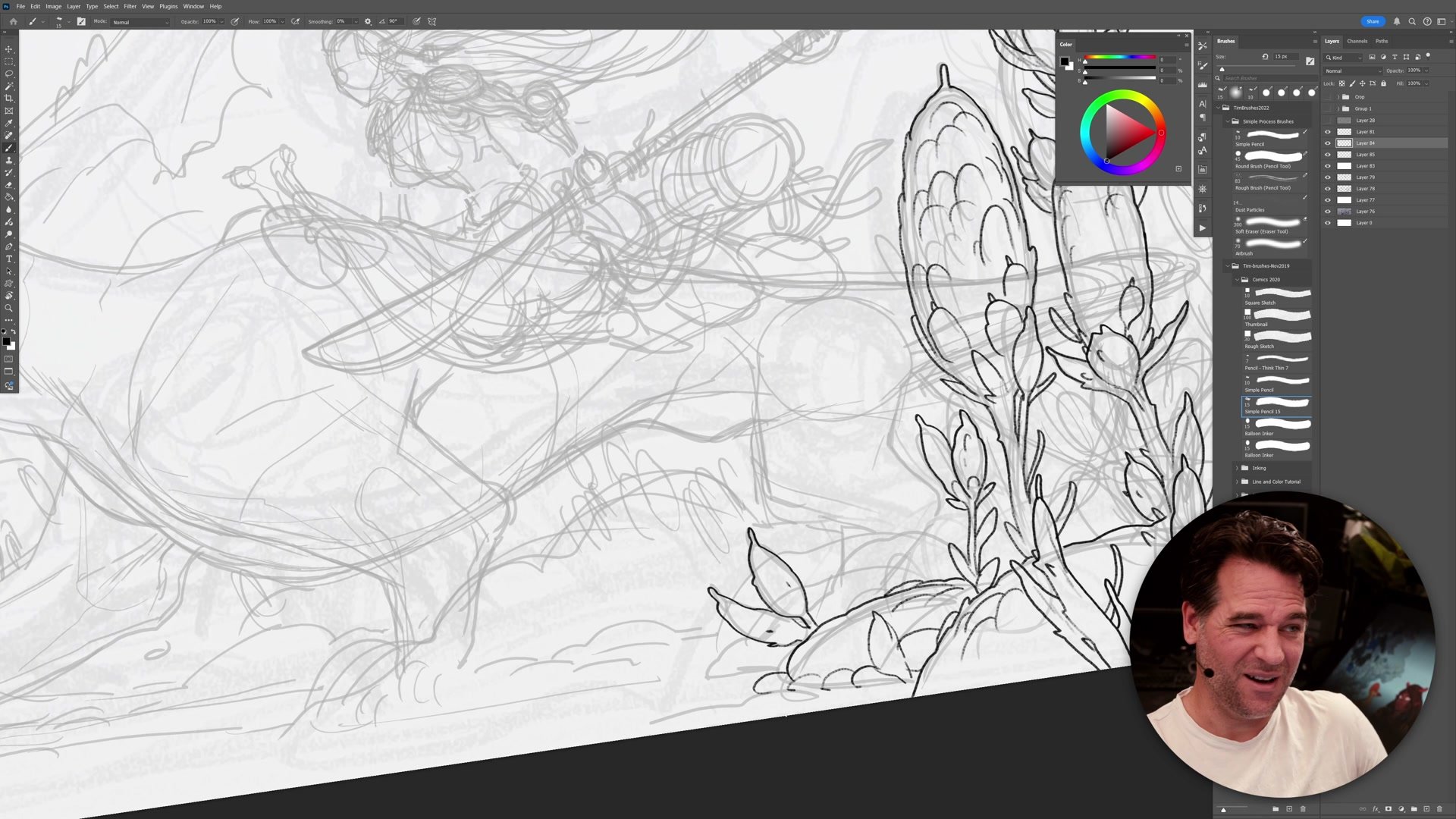
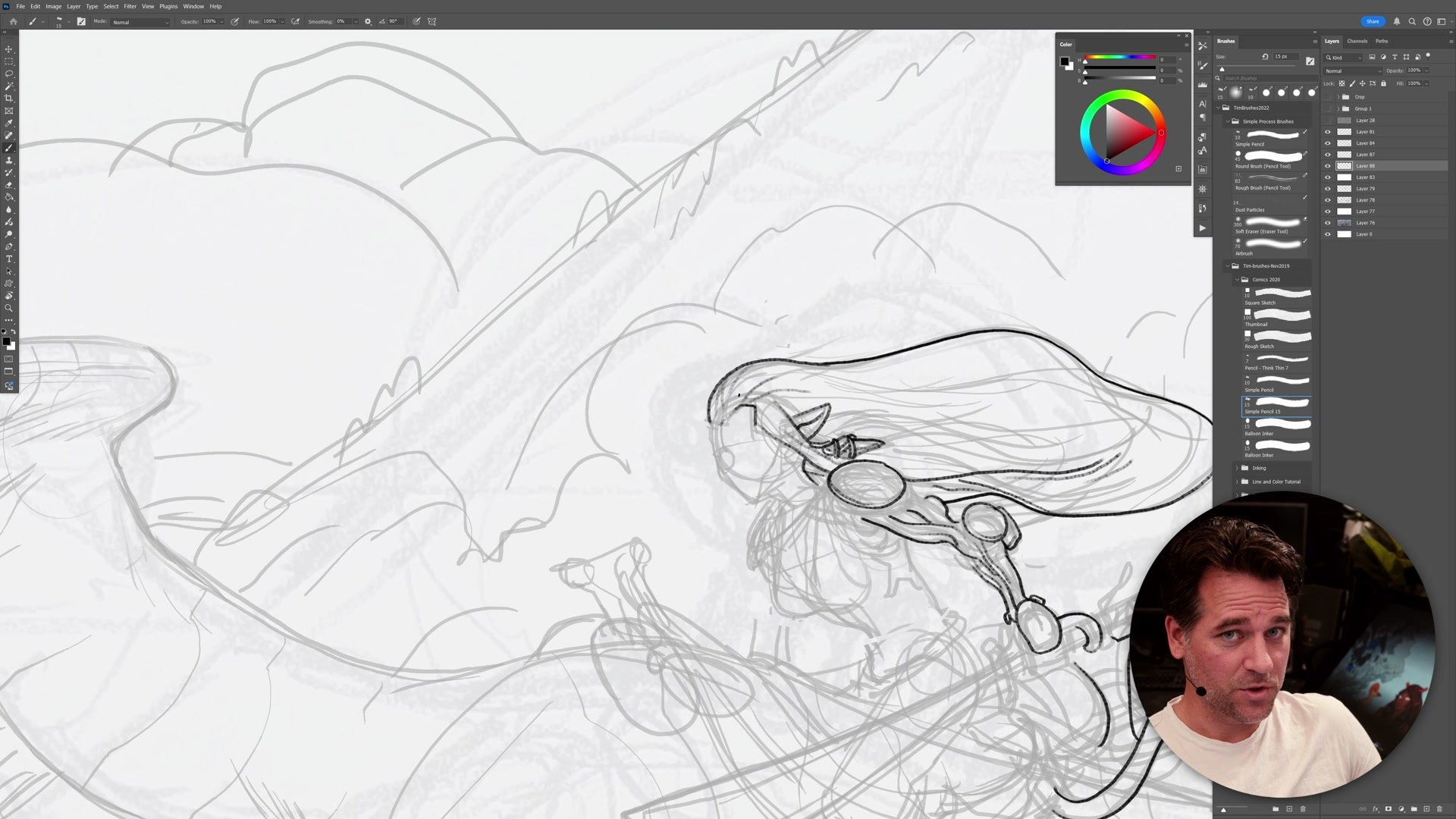
The inking phase moves through each element systematically, starting with the foreground character and creature before addressing the environment. The line work uses a pencil-style brush with varying opacity and pressure sensitivity, building up confident strokes over the loose construction lines.
Detail work on the alien plants becomes a major time investment, with each bulbous organic form requiring careful attention to overlapping shapes and surface texture. The background environment receives lighter, thinner line work to maintain atmospheric depth. Throughout this phase, the discussion turns to how understanding business positioning can transform a career path from struggling freelancer to finding a sustainable niche, and why knowing even basic marketing concepts like positioning can clarify what initially feels like a mysterious black box of career success.
Flatting and Color Blocking
Color and Atmosphere
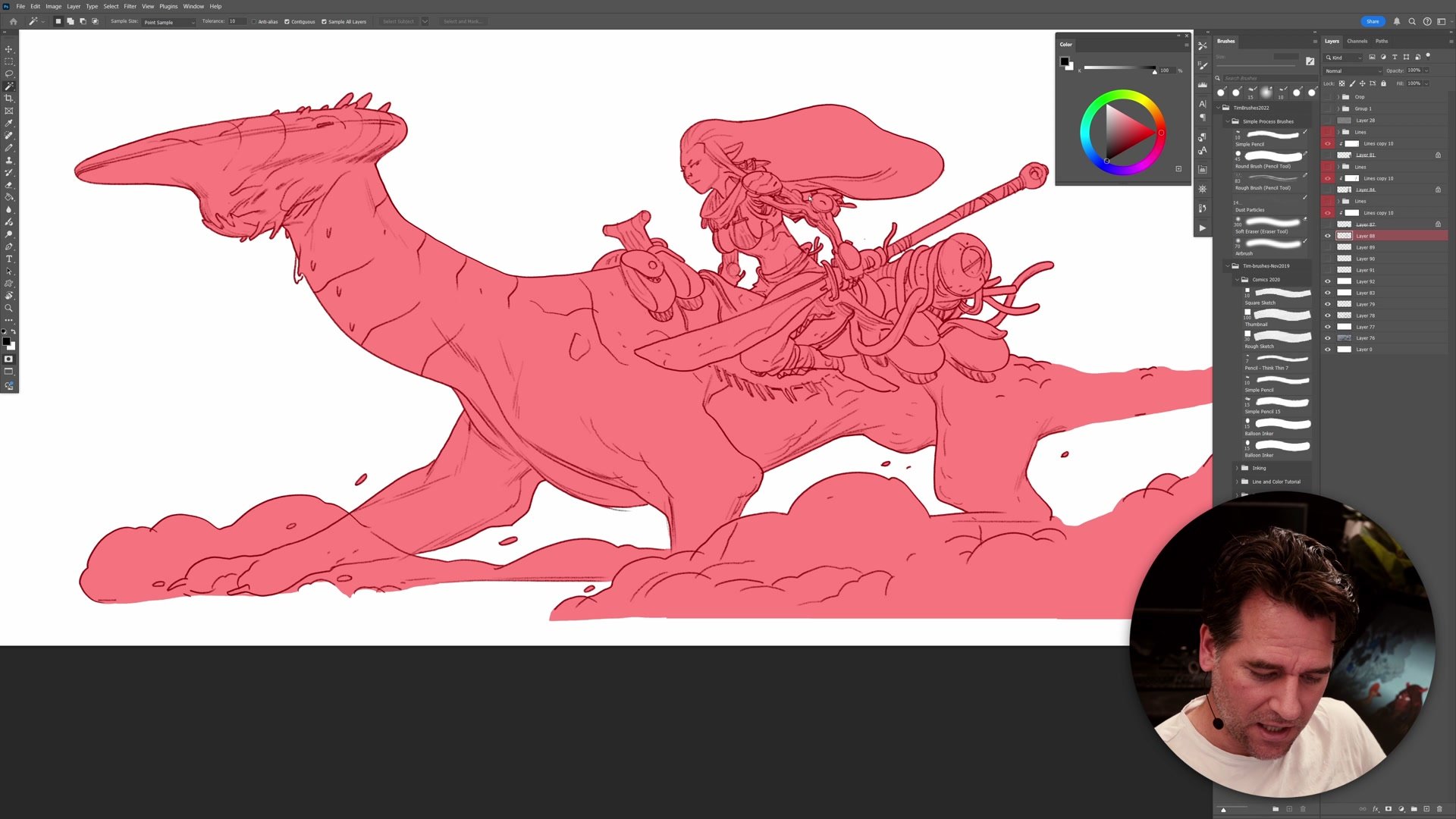
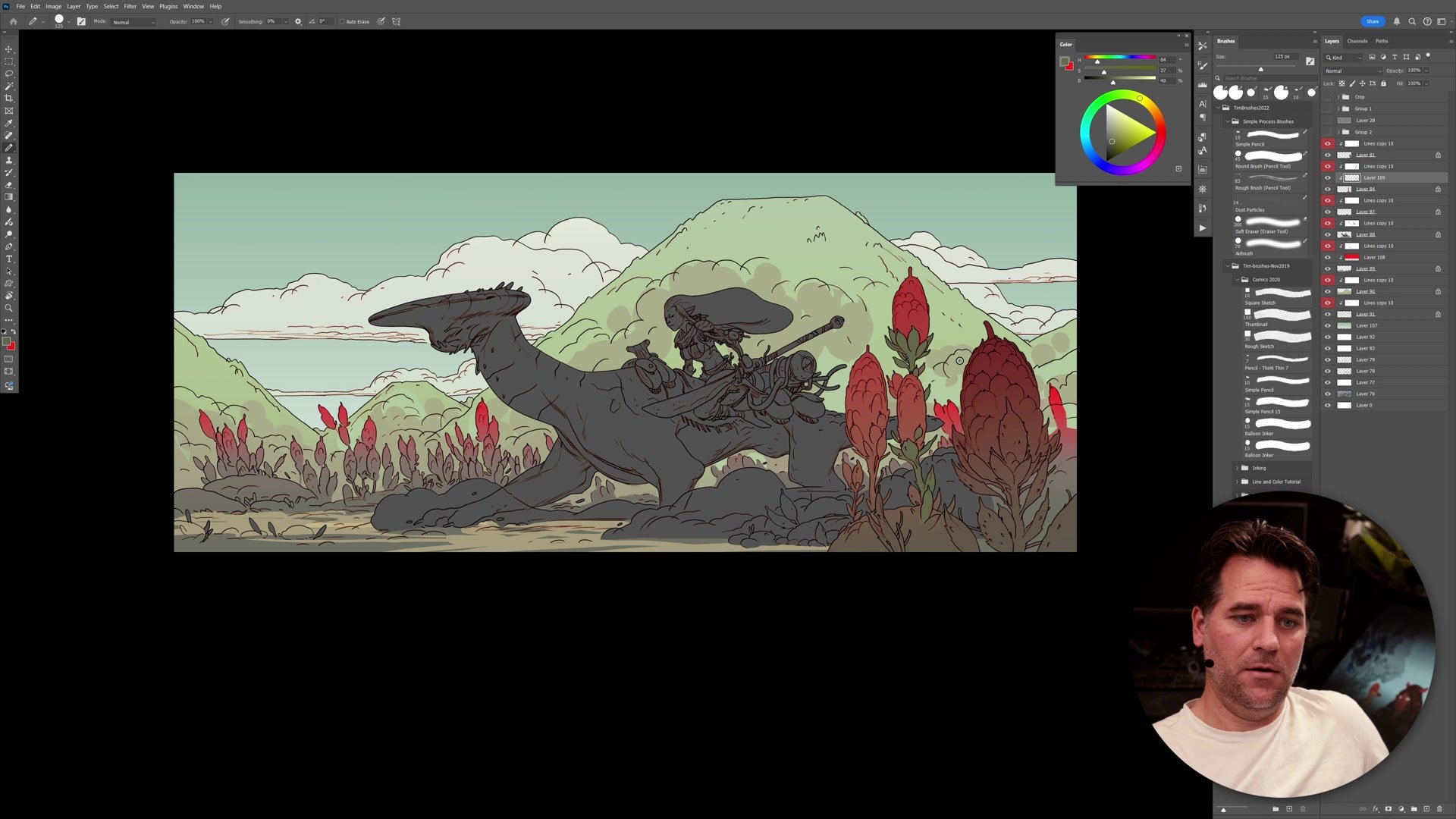
With over two hours invested in construction and lines, the color phase begins under serious time pressure. Flatting uses the magic wand tool and manual selection to isolate major shapes, filling them with base colors that establish the overall palette: muted earth tones for the landscape, warm skin tones for the creature, deep reds for the alien plants, and a striking red cape for the rider.
Color rendering builds on the flats with selective color adjustments and gradient overlays. Atmospheric depth comes from pushing the background toward cooler, lighter values while keeping the foreground warmer and more saturated. The final stages add texture overlays, motion blur on particle elements, and color grading passes that unify everything. The file hits two terabytes, a clear signal that the session has pushed both artist and computer to their limits.
Final Illustration
Key Techniques
Thumbnail First: Starting from a rough physical sketchbook thumbnail provides clear compositional direction before any digital work begins, preventing aimless noodling at high resolution.
Layer Separation Strategy: Placing each major element on its own layer during construction creates flexibility for the color phase, allowing independent adjustments to the creature, rider, plants, and background.
Flatting Under Pressure: Using the magic wand and manual selection for flat color fills establishes the palette quickly, creating a solid foundation that selective color adjustments and gradient overlays can build upon.
Atmospheric Color Grading: Final gradient passes and selective color adjustments unify disparate elements, pushing background values lighter and cooler while keeping foreground elements warm and saturated.