Learning to Draw Zangief from Street Fighter
Summary
Mastering Exaggerated Proportions
Drawing massive characters like Zangief demands more than just making everything bigger. The real challenge is understanding normal human proportions first, then systematically pushing specific relationships to create controlled exaggeration. Without that baseline, there is no way to replicate the process or create other characters that sit believably alongside the extreme ones.
This breakdown uses Loomis-style structural drawing and primary form massing to tackle Zangief from Street Fighter. Rather than copying the Capcom art style, the focus is on learning how to break down any character design into proportional relationships that can be understood, adjusted, and redrawn from imagination.
Reference and Setup
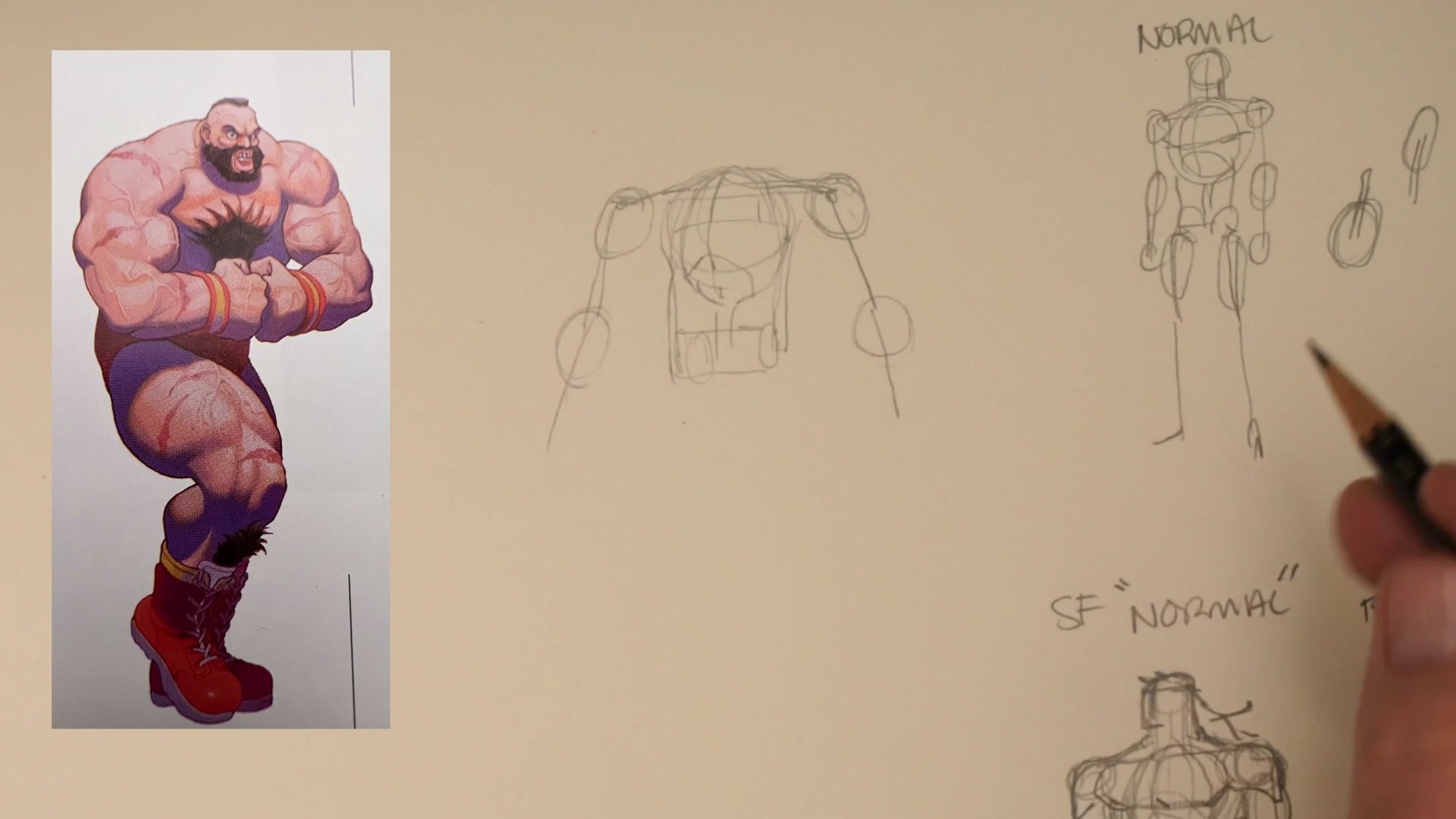
Normal Before Extreme
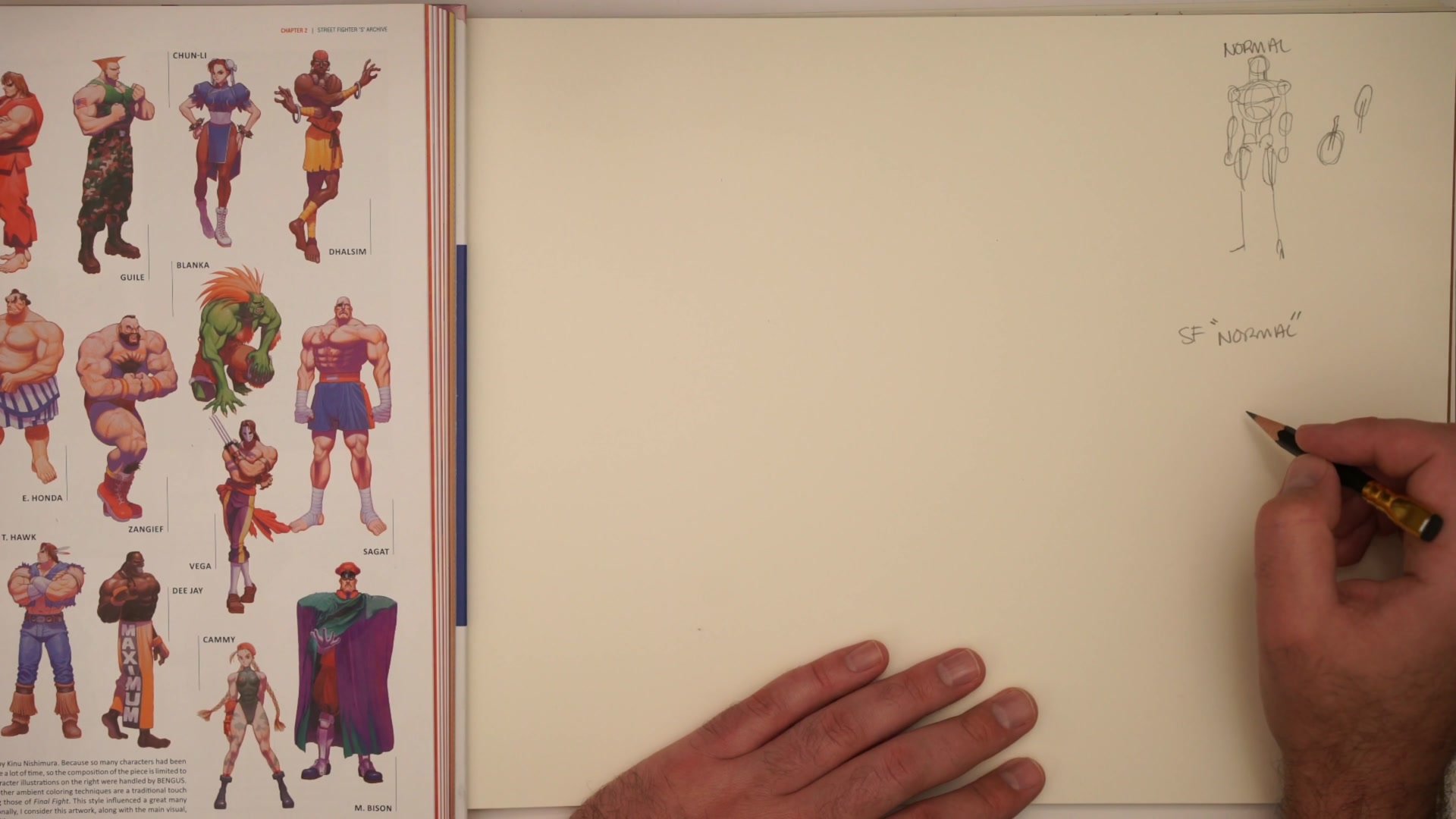
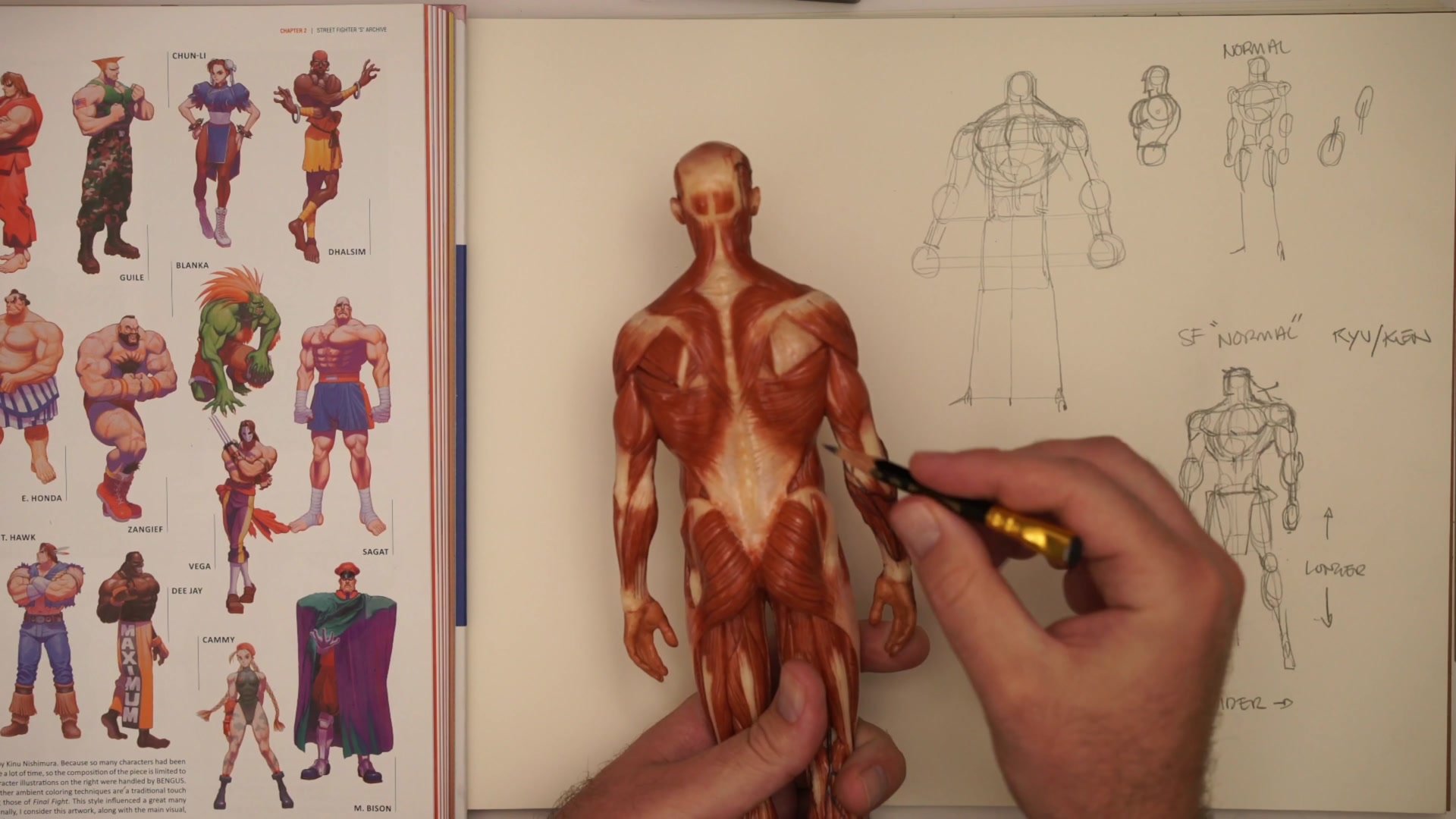
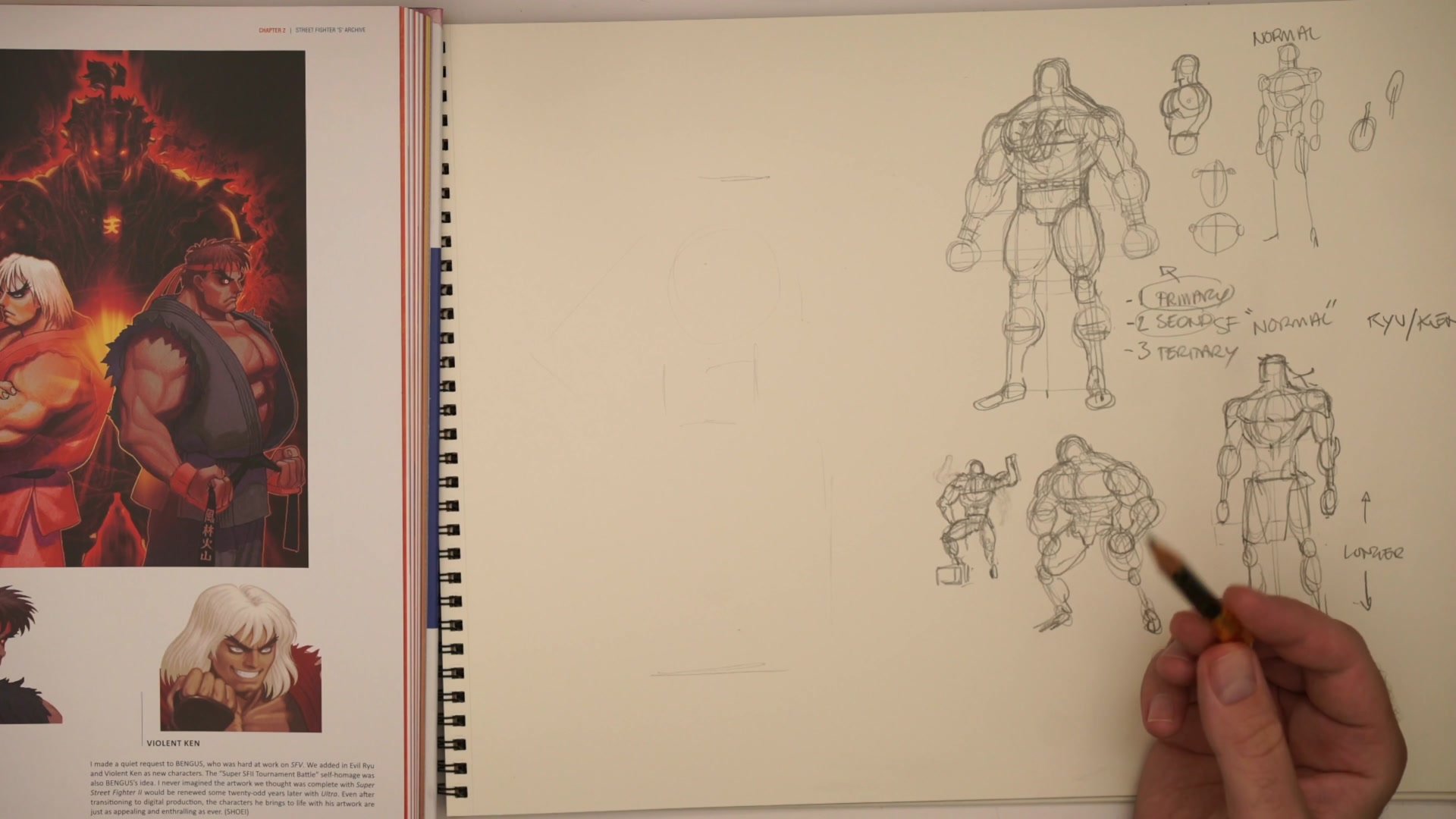
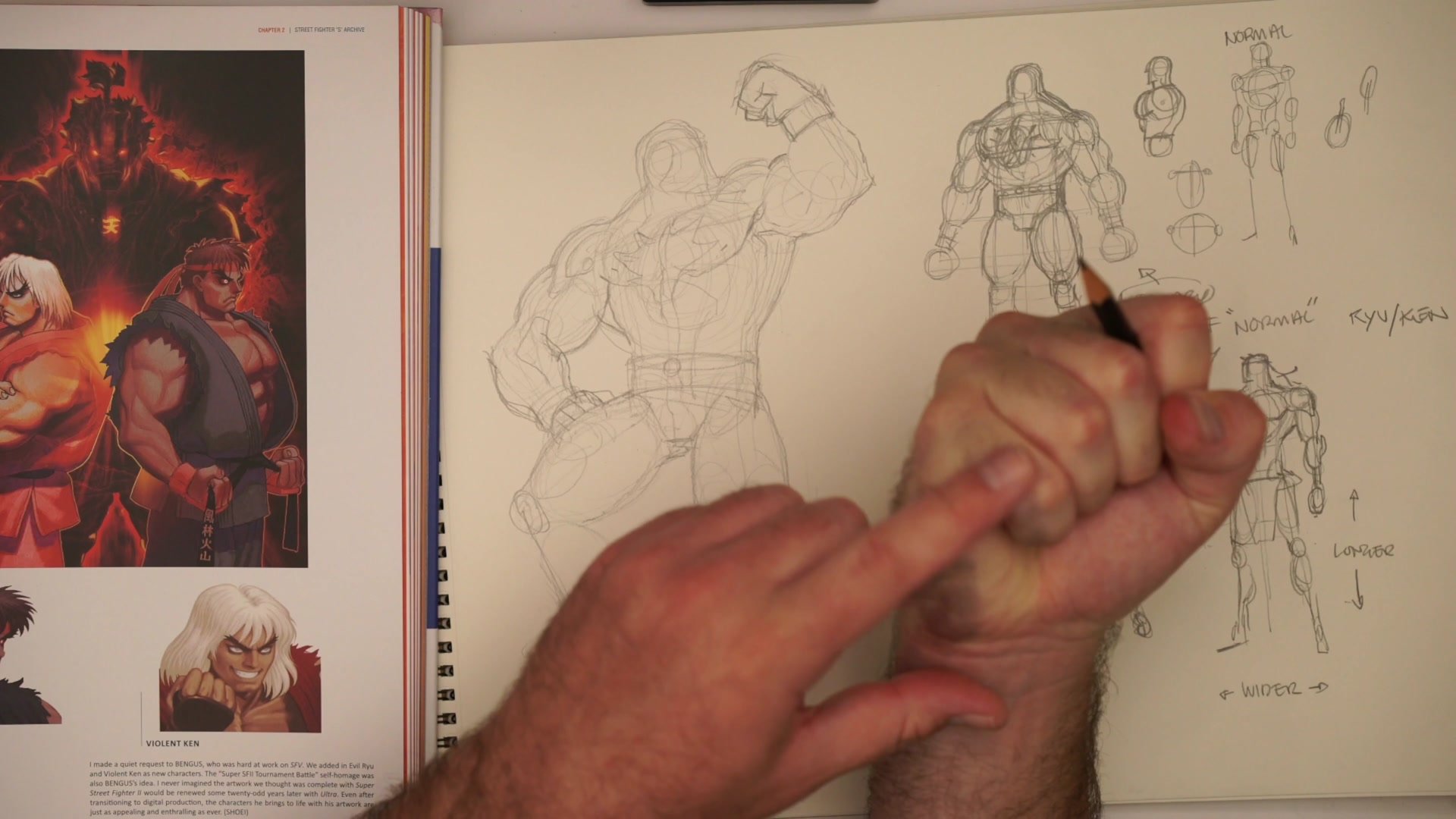
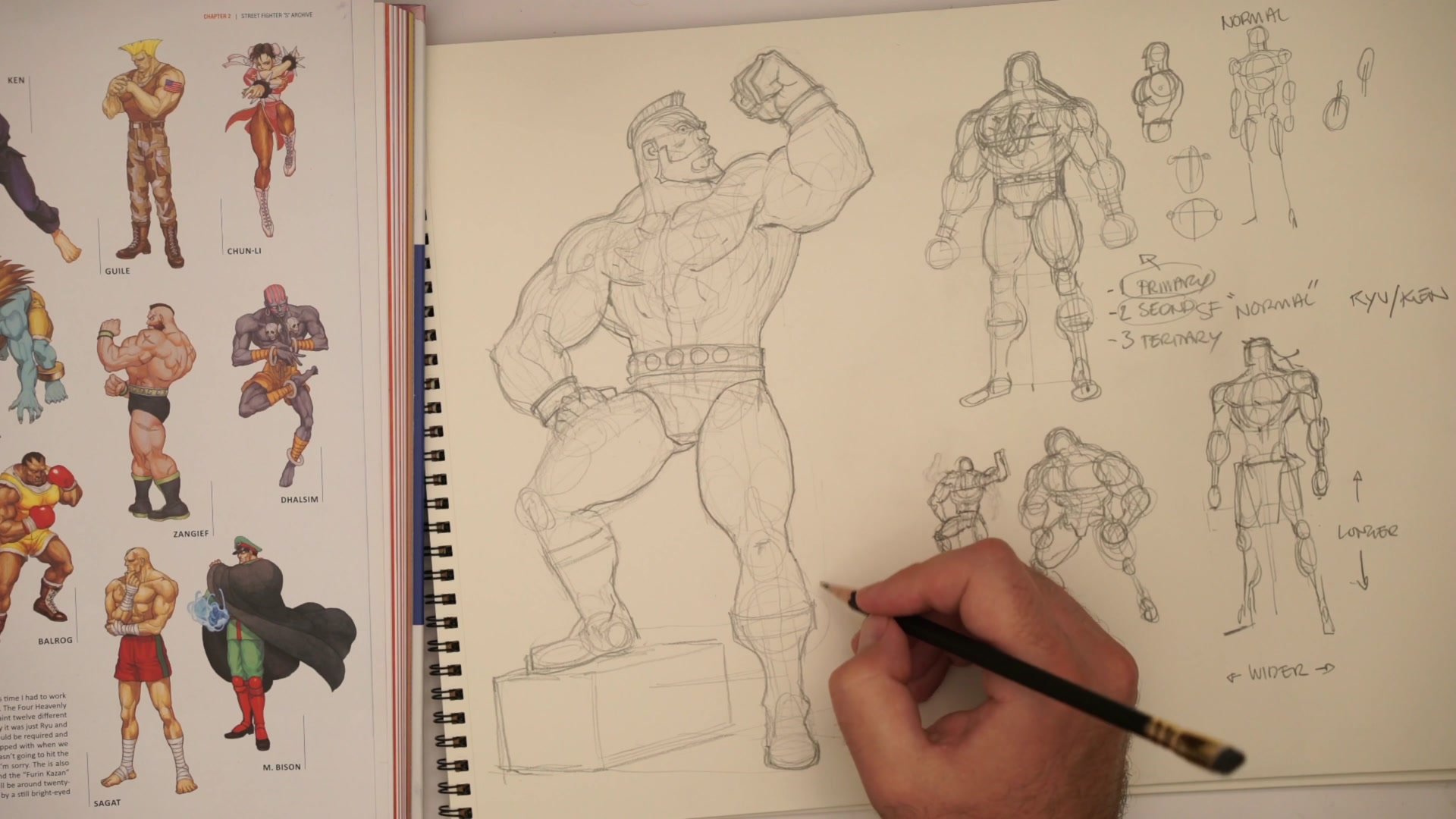
The process begins by establishing what normal proportions actually look like. A standard proportional mannequin gets drawn first, with all the familiar landmarks in place: hands ending one hand-length above the knee, elbows at the navel, standard rib cage and pelvis relationships. Even adding musculature to this normal figure does not get close to where Zangief needs to be.
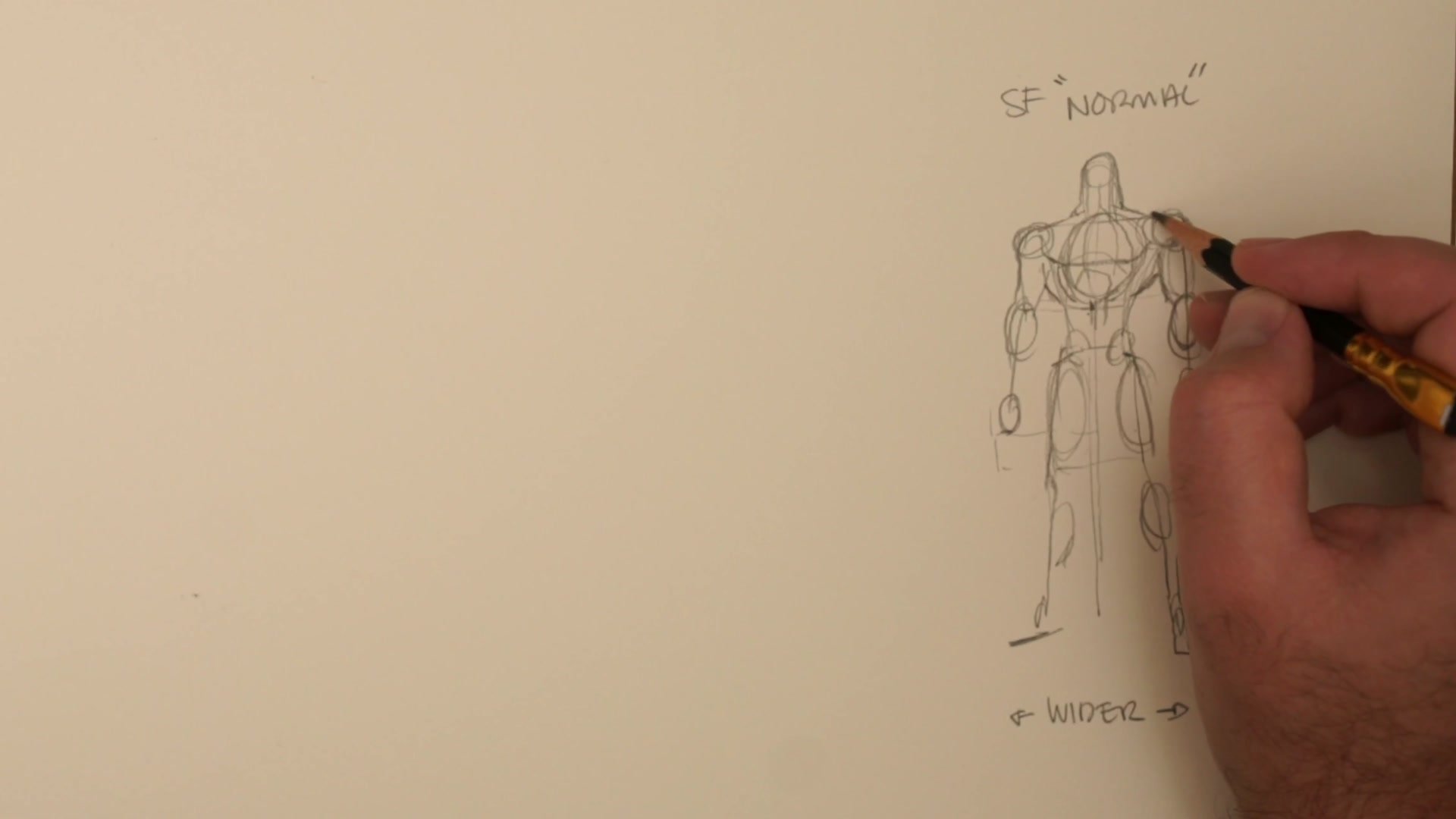
From there, the Street Fighter "normal" gets established. Characters like Ryu and Ken already run with exaggerated heroic proportions, widening the frame, elongating the legs slightly, and pushing the V-shaped taper. This intermediate step is critical because it reveals how far even the baseline characters deviate from realistic anatomy. Understanding this gap is what makes it possible to push Zangief further with intention rather than guesswork.
Proportional Massing
Primary Form Massing
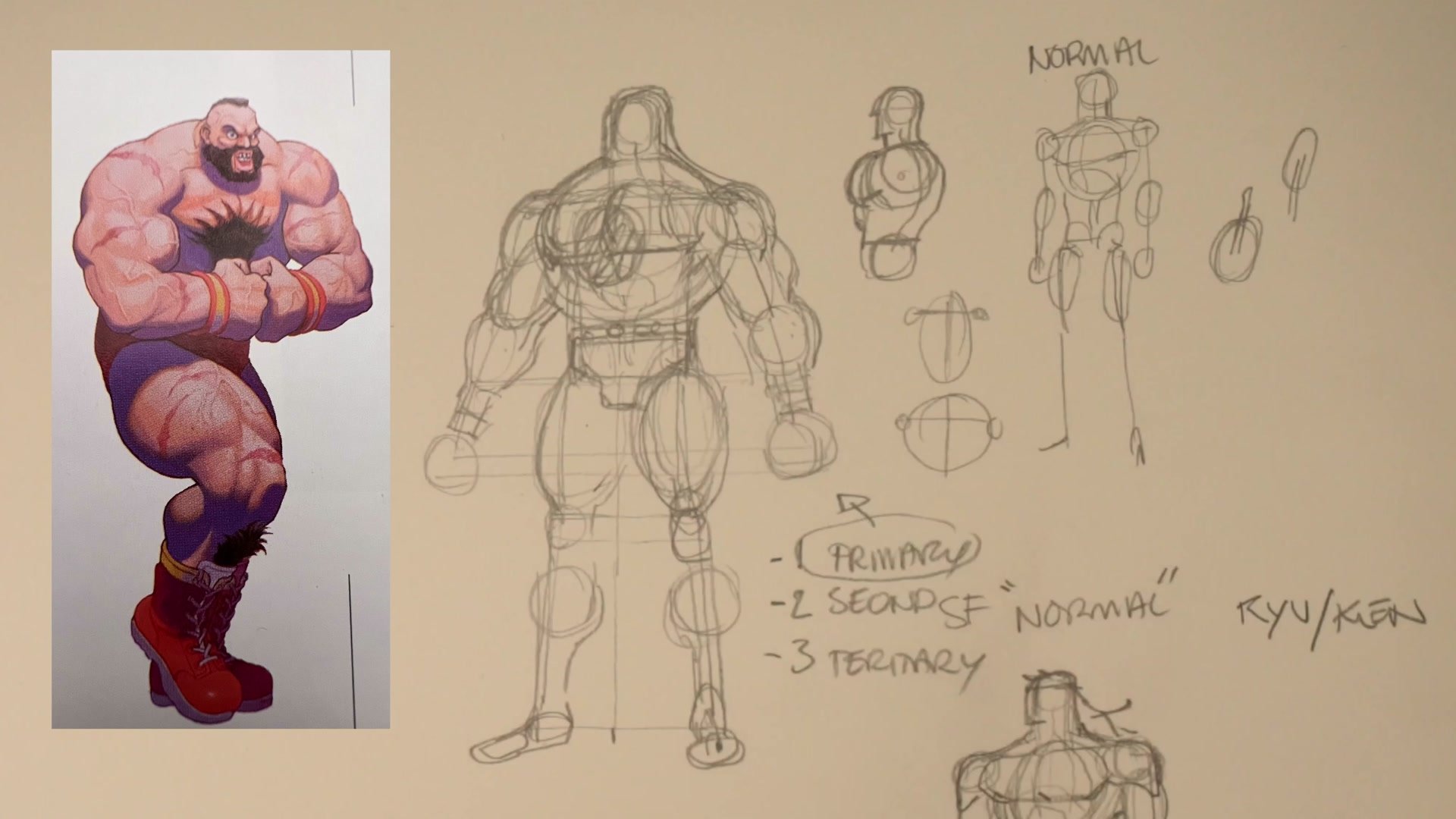
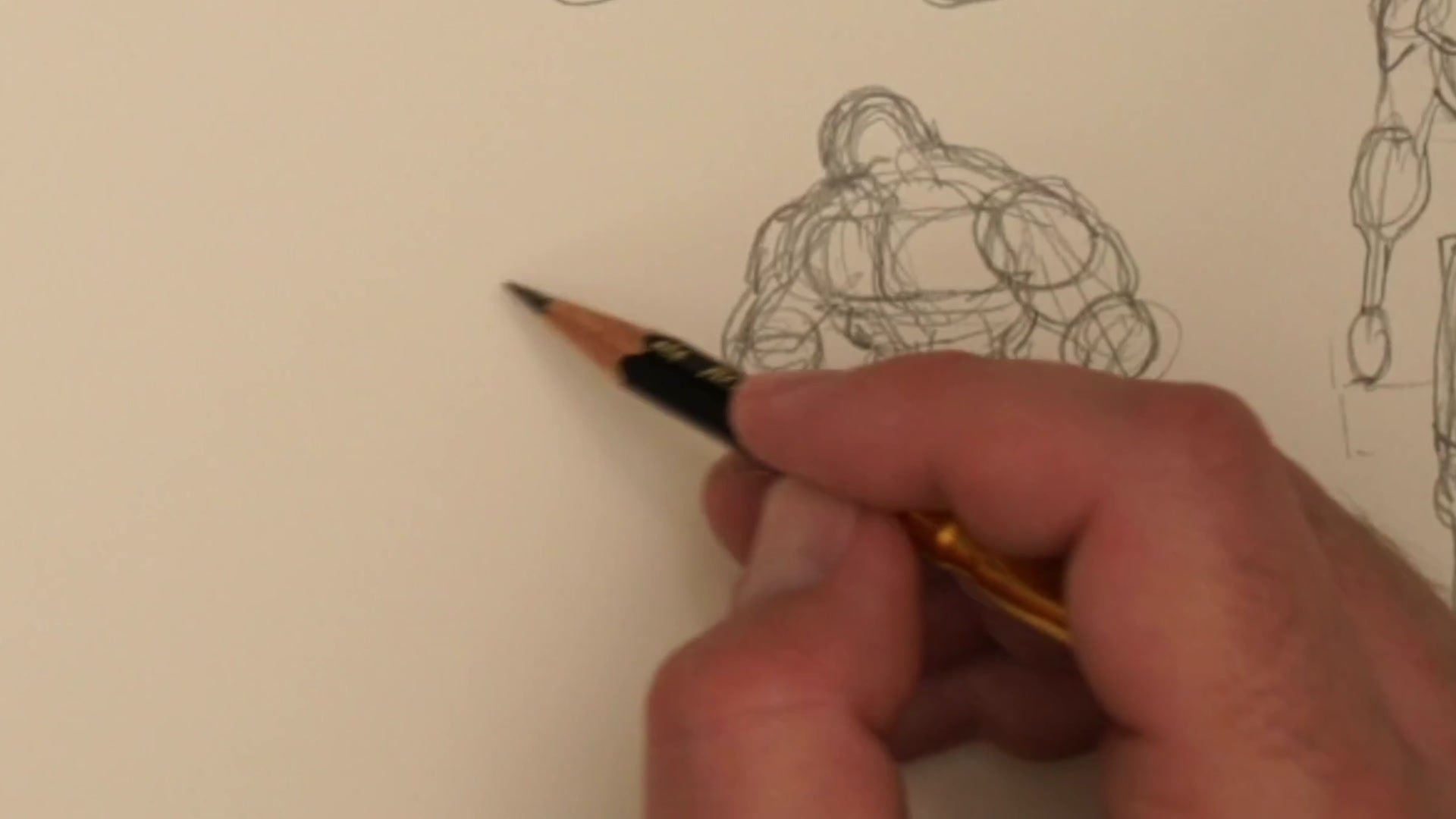
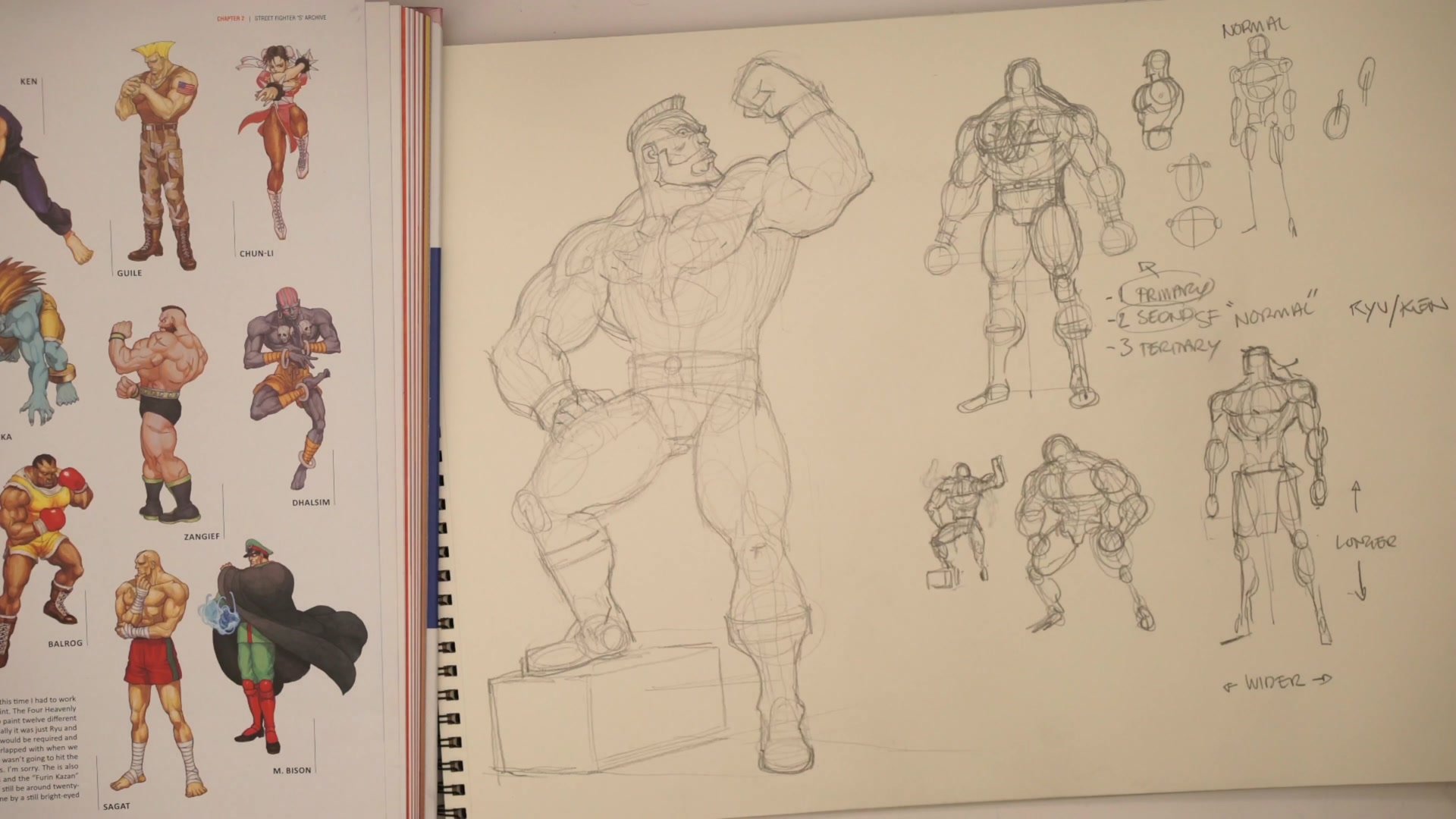
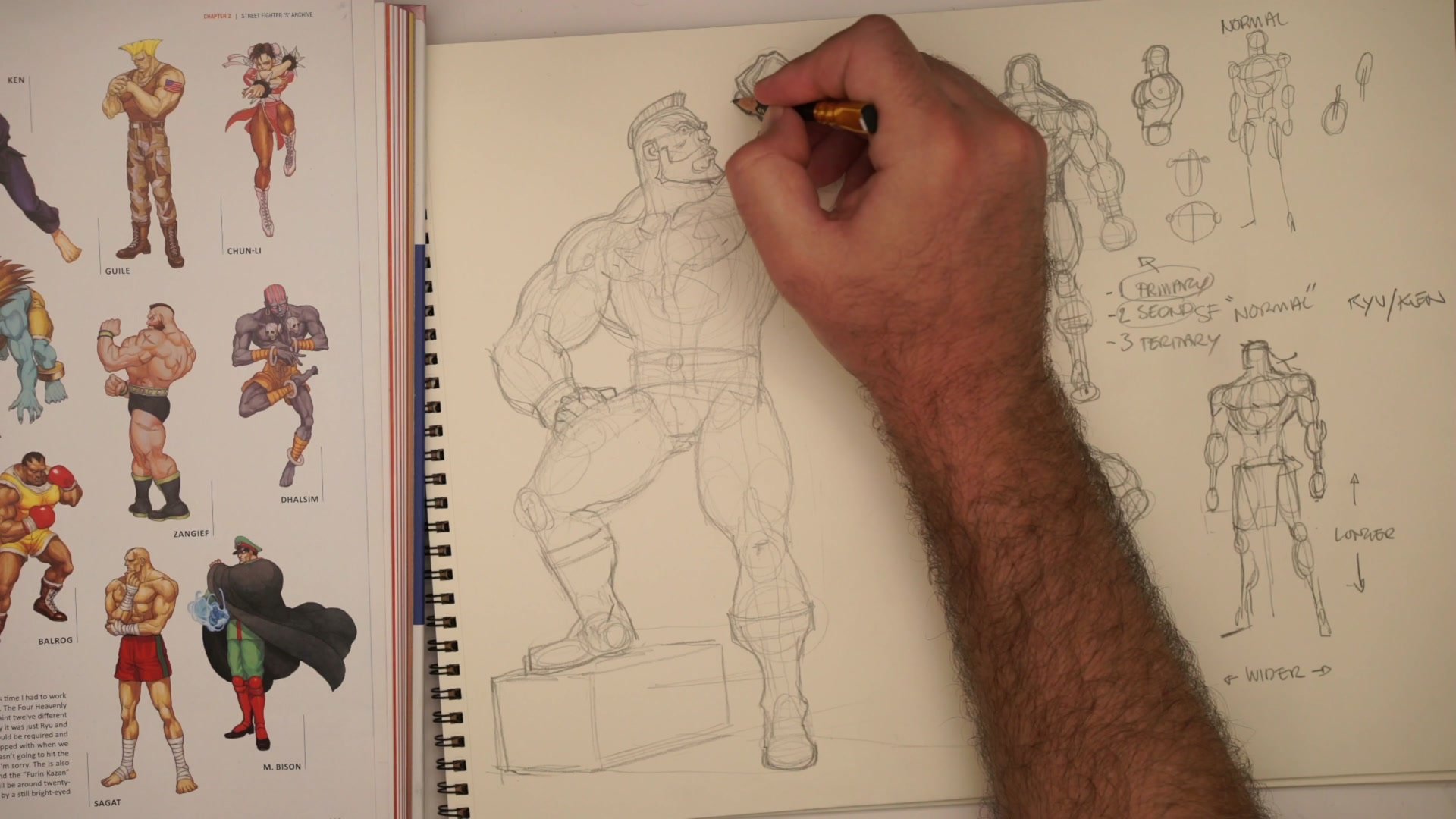
Zangief's construction relies entirely on primary form massing. Instead of jumping straight to muscle anatomy, the approach uses large spheres and ovoids to block in the overall mass. This is where the critical proportional decisions happen. Zangief trades the V-shaped taper of the heroic figure for a square taper with massive hips, enormous shoulders pushed down, and arms that stick out from the body because of sheer muscle volume.
The massing technique prevents the most common mistake when drawing extreme characters: getting locked into muscle-by-muscle construction too early. Placing a giant sphere for the shoulder and committing to its size gives an immediate feel for how big the character needs to be. Working from anatomy first almost always produces a figure that looks too restrained because each individual muscle stays reasonable while the overall impression falls short.
Construction and Pose
Pushing Past Comfortable
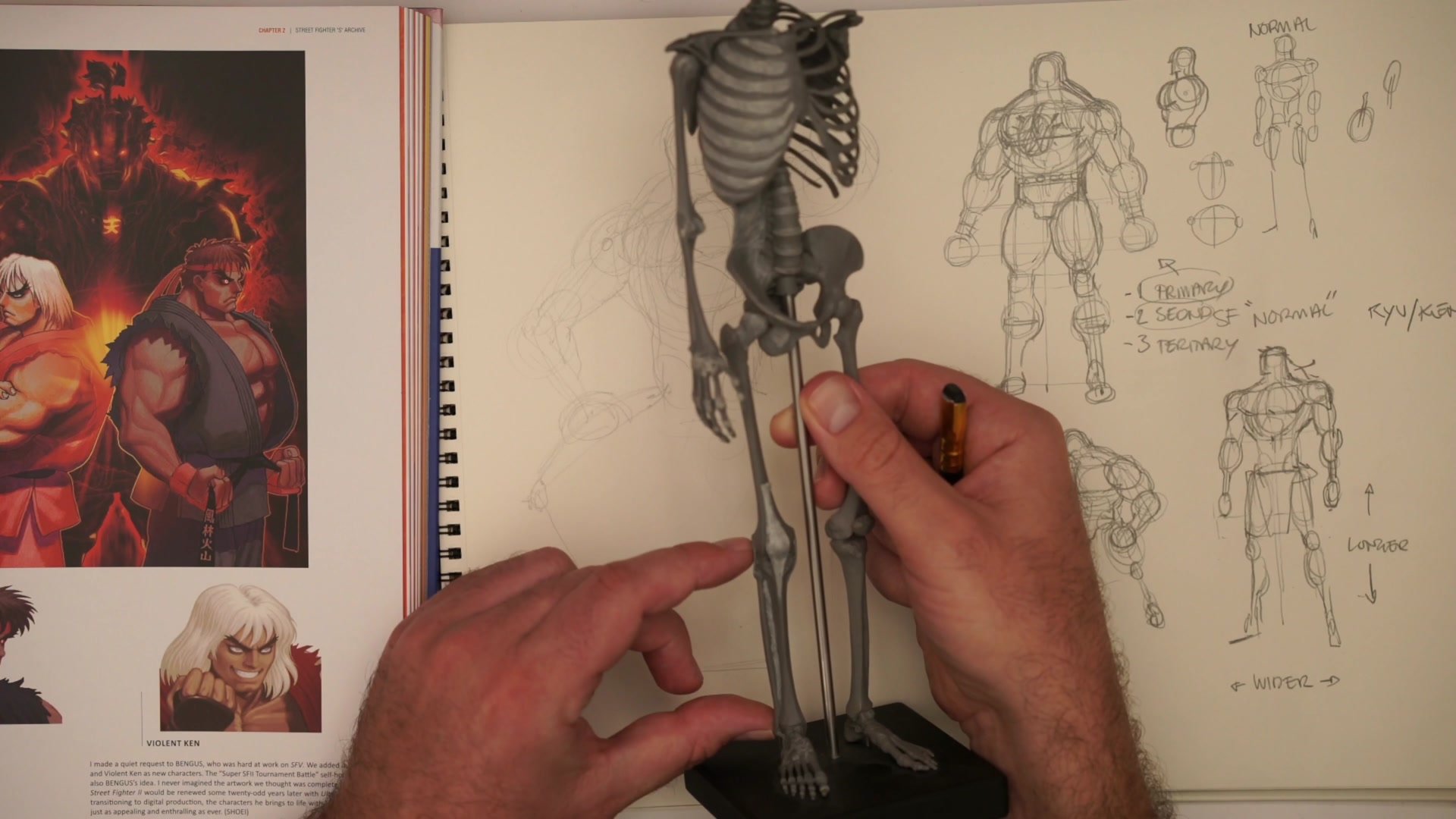
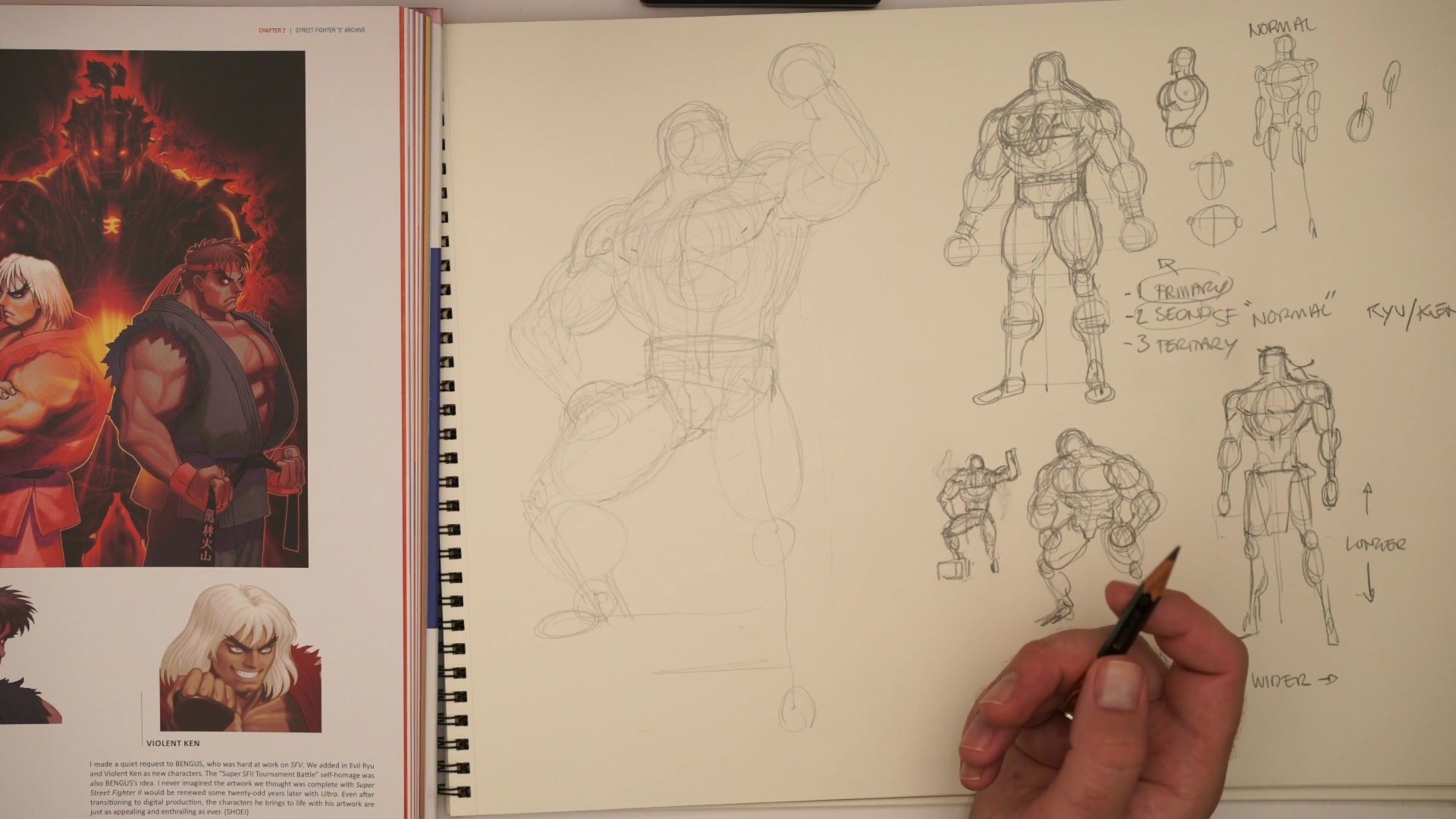
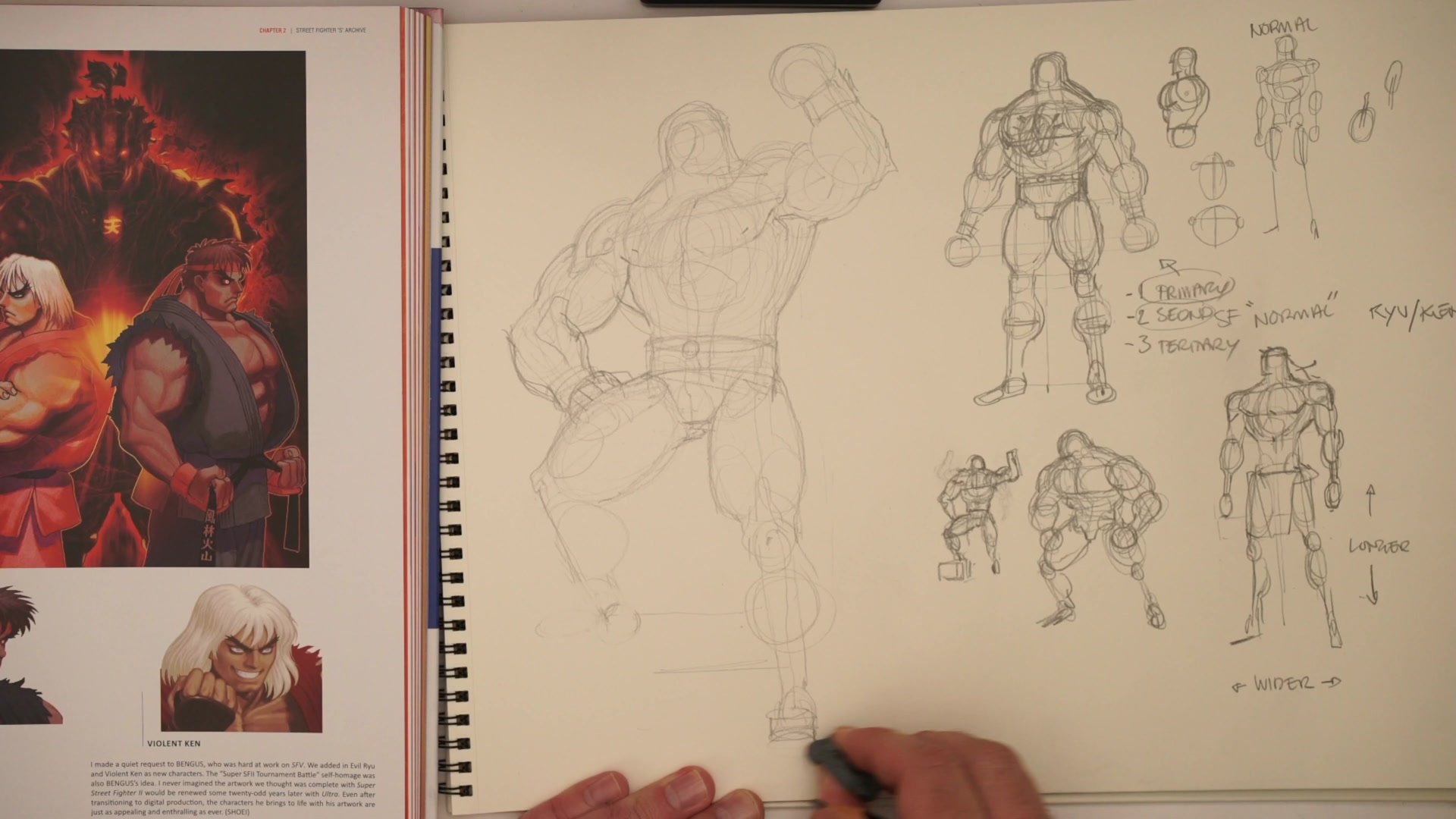
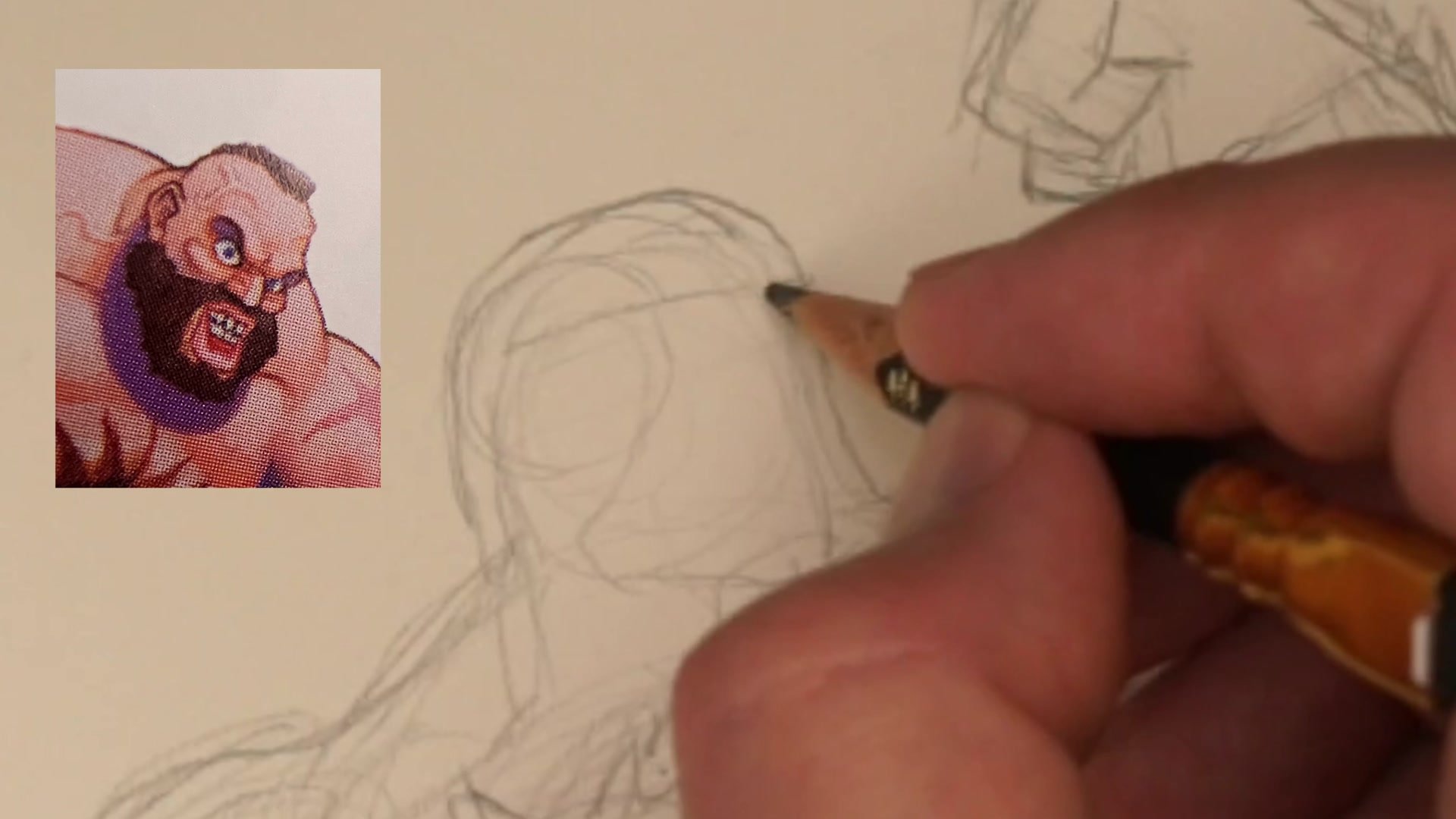
The recurring theme throughout the construction process is that the proportions need to be pushed further than feels comfortable. Every pass reveals that the character is not quite big enough, not quite wide enough, not quite chunky enough. The chest needs to be absurdly large, the traps massive, the head visually small relative to the body. Getting this right requires working iteratively, constantly comparing against the reference and adjusting.
Small pose thumbnails using the mannequin massing approach help explore how the character reads at different angles before committing to a larger drawing. Connection points between limbs get established first because they anchor the pose. The final construction pass adds secondary form, working through hands, facial features, and costume details while maintaining the primary form relationships established in the massing stage.
Final Drawing
Key Principles
Baseline First: Establishing normal human proportions before any exaggeration provides the control needed to push specific relationships intentionally rather than randomly scaling everything up.
Primary Form Massing: Using large spheres and ovoids to block in overall mass before adding muscle detail prevents the figure from looking too restrained. The big shapes set the proportional target.
Square vs V-Taper: Zangief breaks the standard heroic V-shaped taper by using square proportions with massive hips and shoulders. Recognizing these shape language differences is key to capturing different character archetypes.
Push Further: Exaggerated characters almost always need to be pushed further than feels natural. Multiple comparison passes against reference reveal where the drawing is still too conservative.
Practice This
Start Normal: Draw a standard proportional mannequin with all the typical landmarks. Then widen the frame and elongate the legs slightly to create a heroic figure. Compare both side by side.
Mass Before Muscle: Pick an exaggerated character and block in only primary forms using spheres and ovoids. Commit to the size of each mass before adding any anatomical detail.
Compare and Push: Hold your massed figure against reference and identify where proportions are still too conservative. Widen, enlarge, and push until the character reads with the right impact.