Learning To Draw Akuma!
Summary
Structural Drawing Through Stylized Anatomy
Standard anatomy instruction teaches accurate human proportions, but heroic characters like Street Fighter's Akuma require systematic exaggeration that textbooks never explain. The gap between medical-grade anatomy knowledge and the intentional distortions that make characters feel powerful reveals itself the moment artists try to draw characters from their imagination.
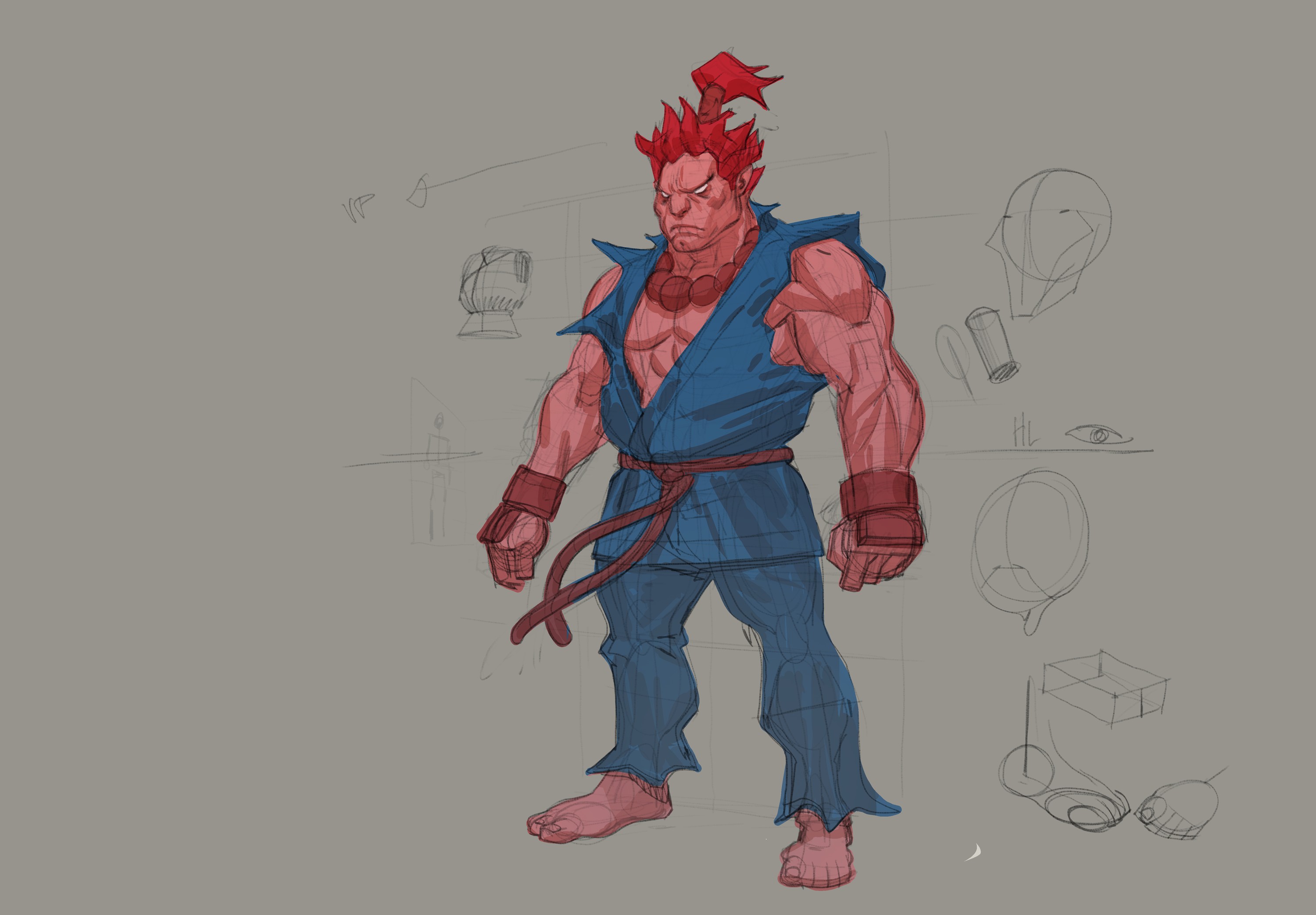
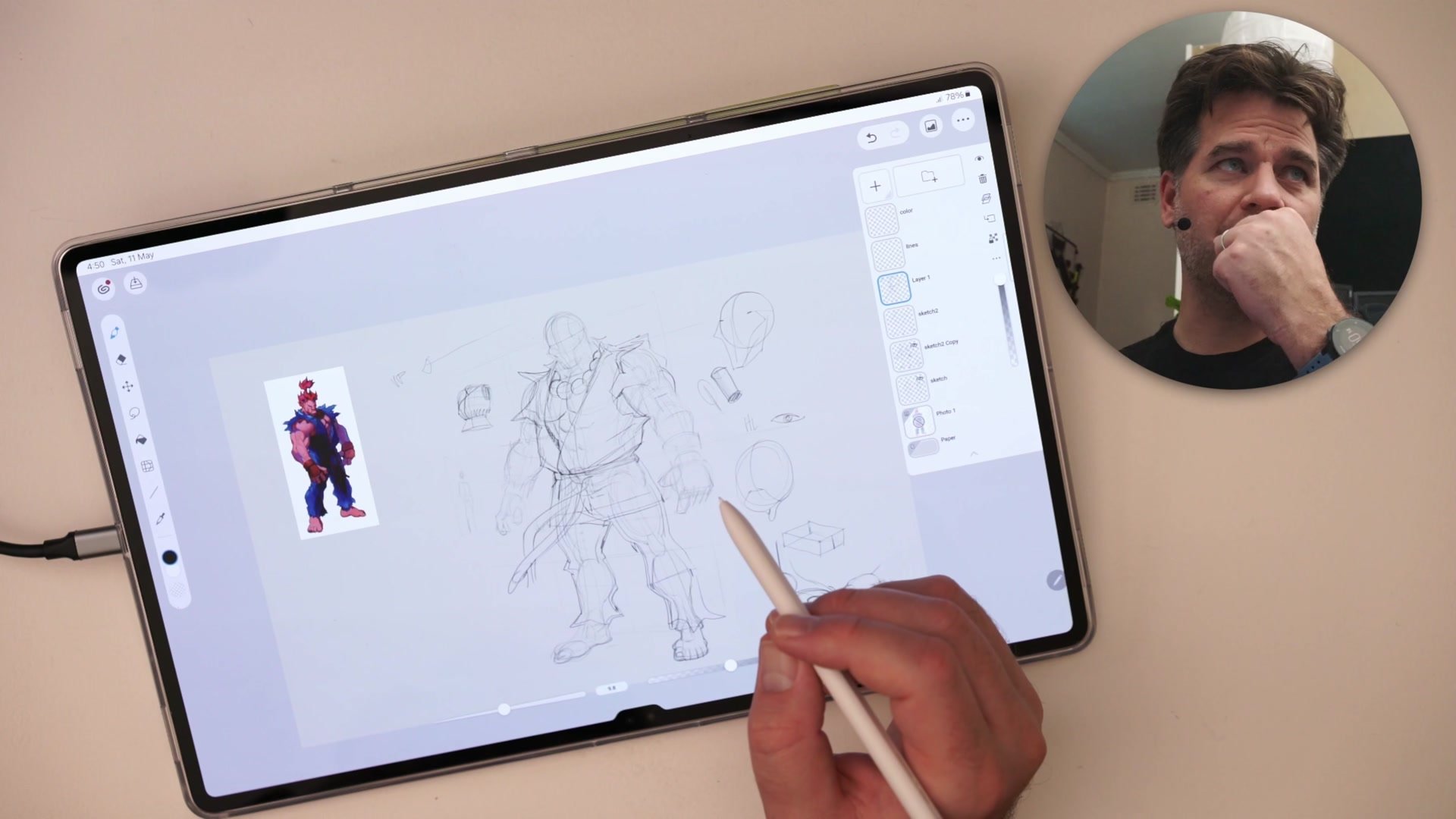
This demonstration uses Akuma as the vehicle for learning how structural drawing fundamentals actually work in practice. Starting from basic proportion systems, through primary form construction using the drumstick method, and finishing with a flat color test that immediately reveals whether forms are structurally sound, the entire process shows how foundational methods connect to making characters that feel powerful and believable.
Proportion Foundation
The Skeleton Stays Consistent
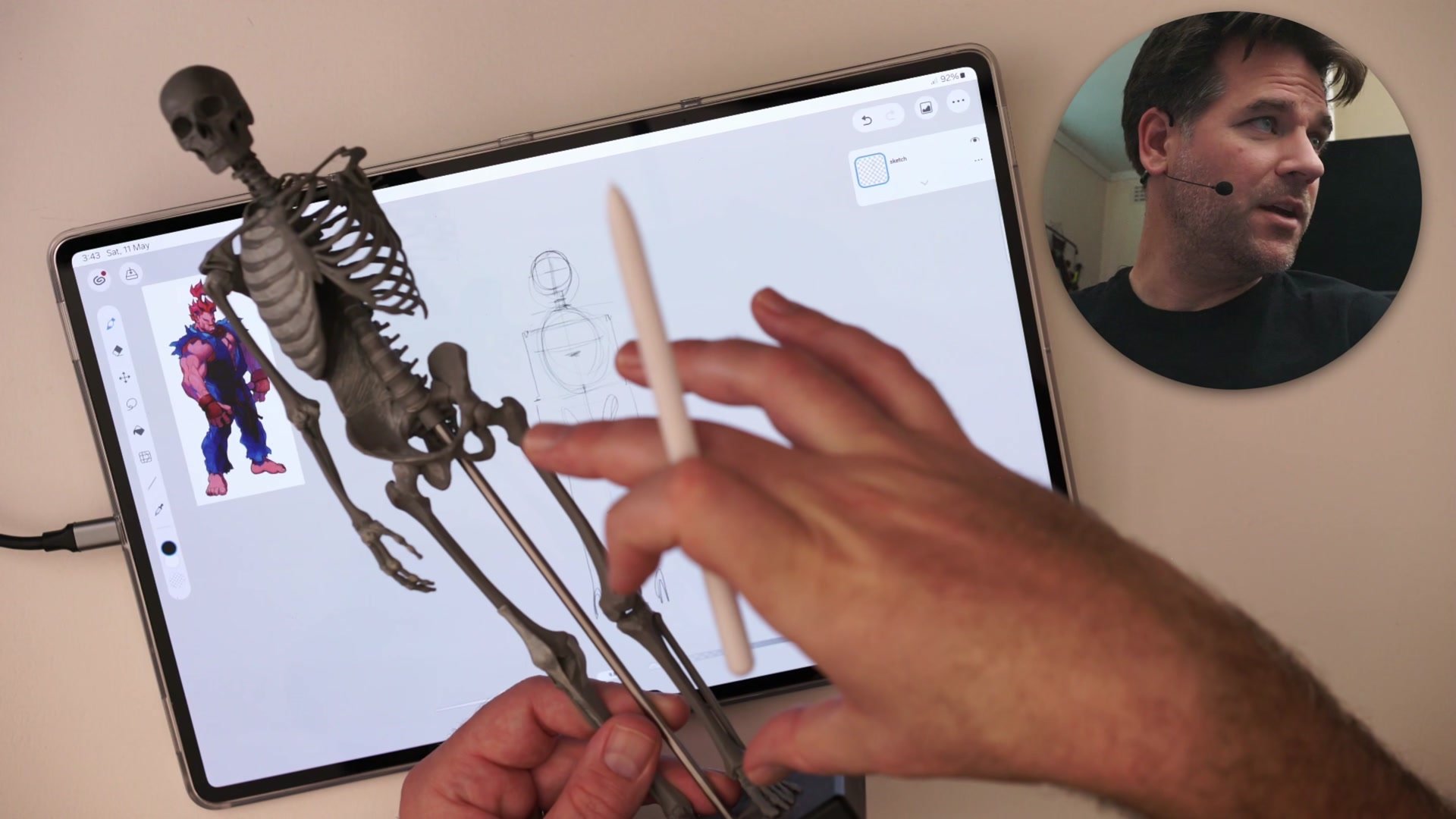
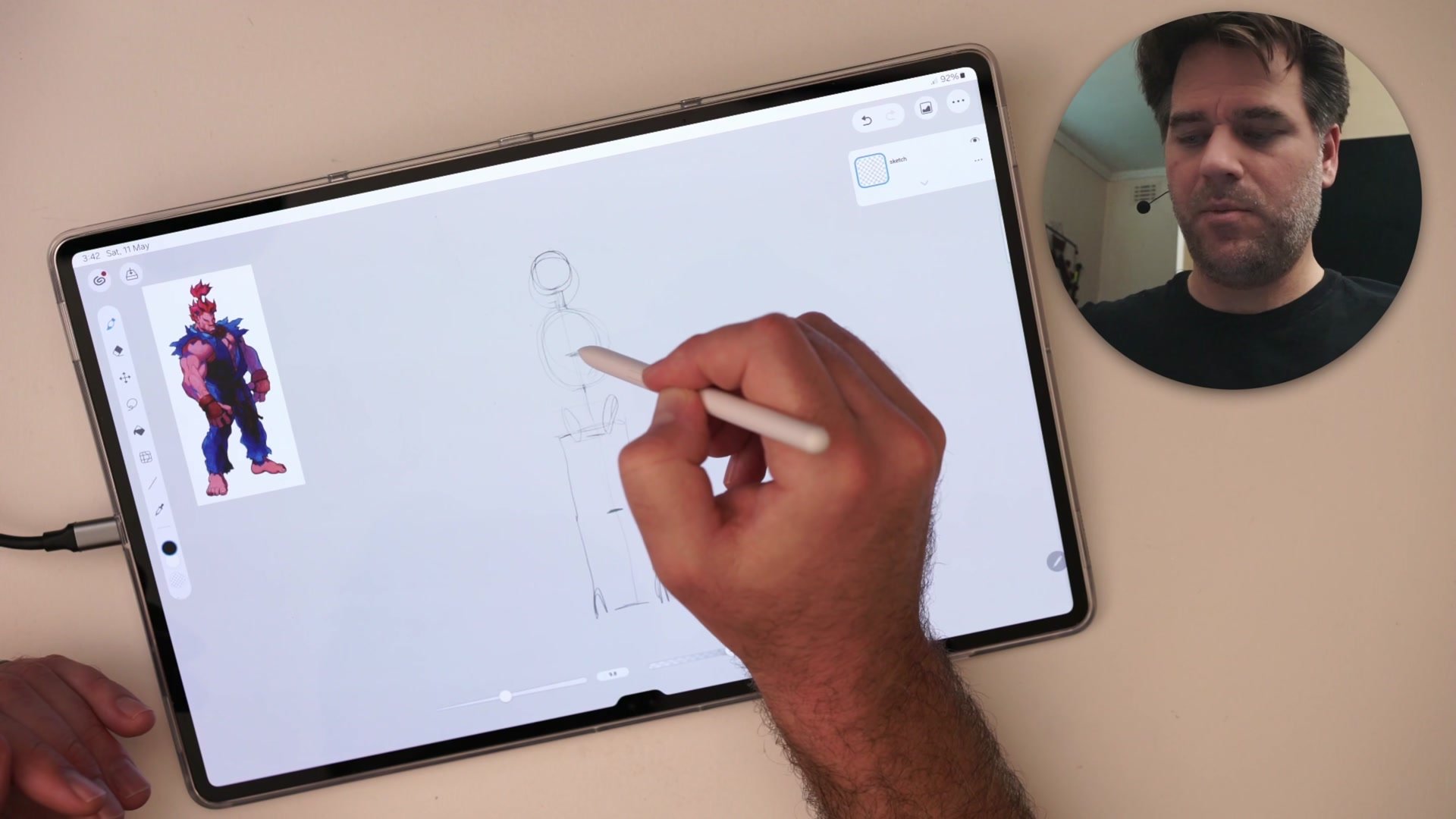
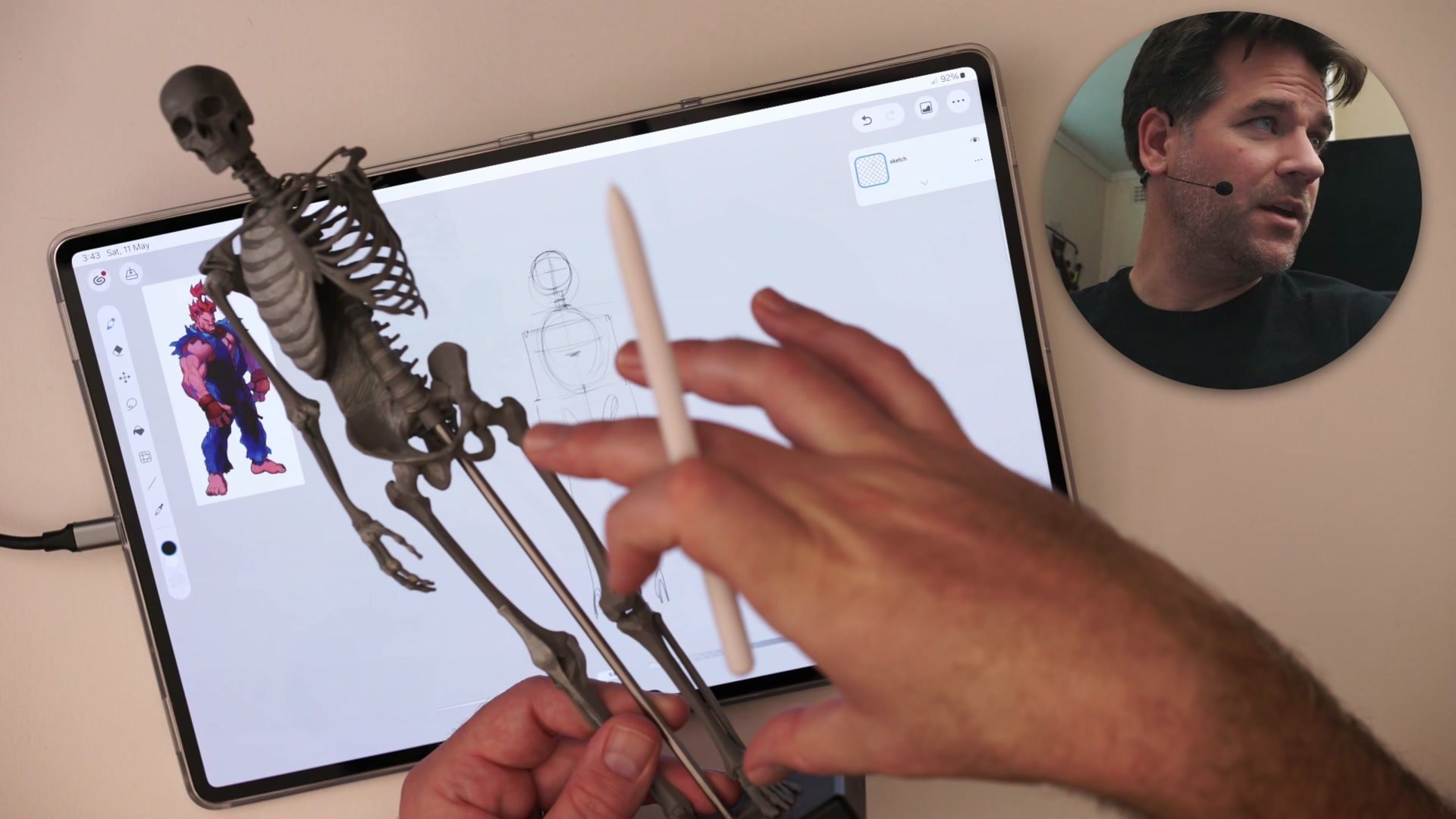
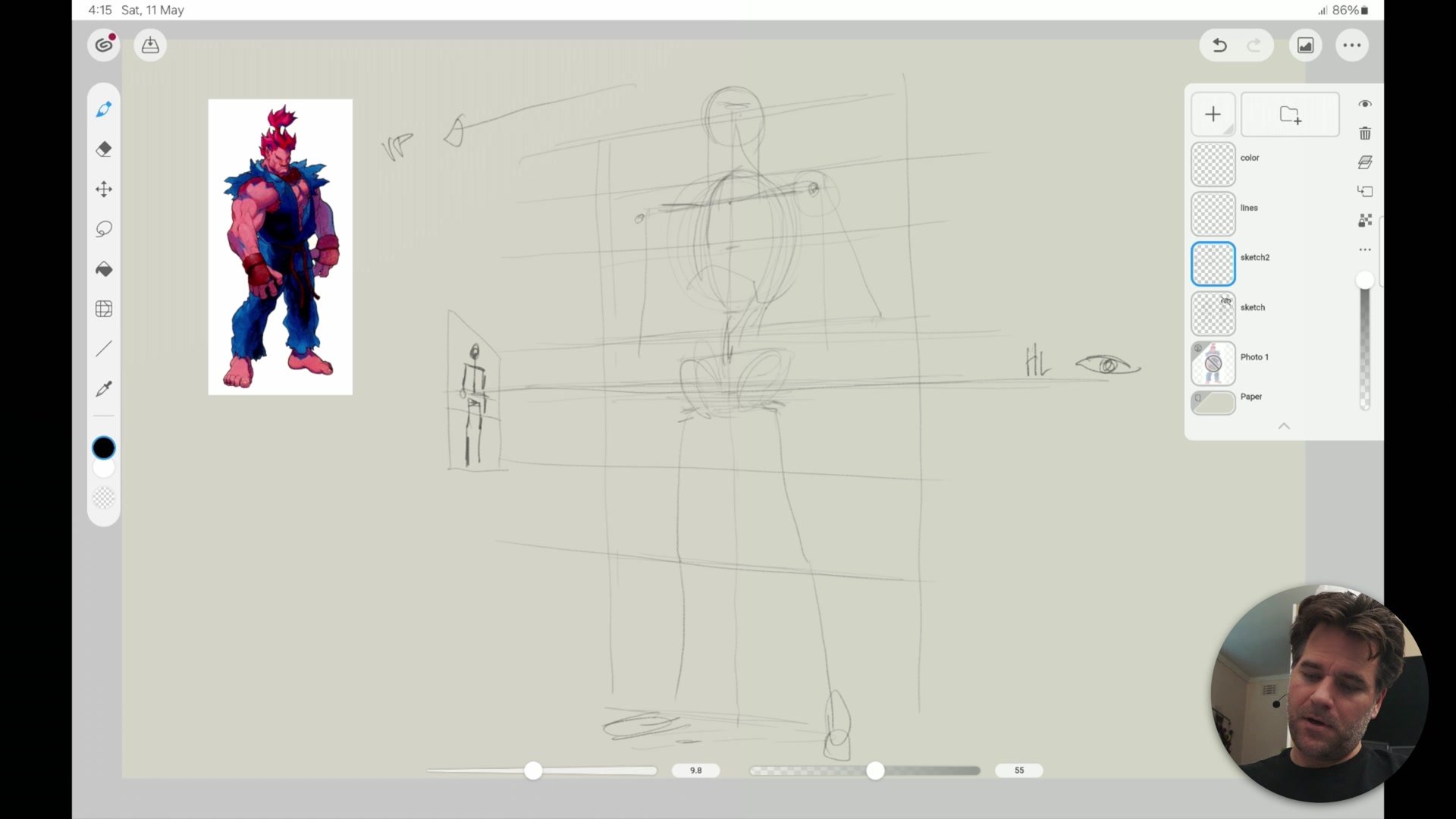
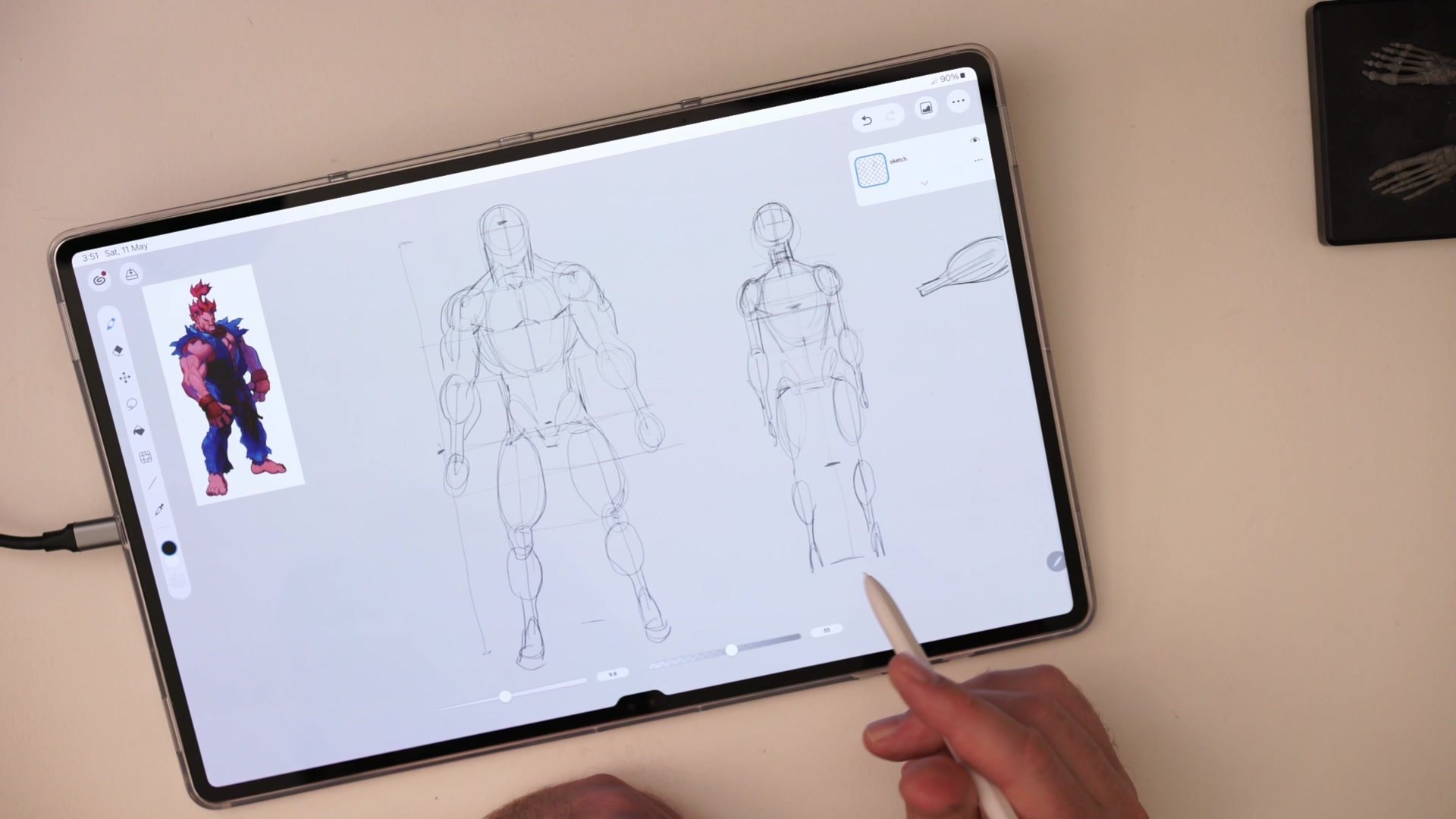
Standard human proportion follows a basic system: the figure divides roughly in half at the pelvis, that upper half divides again at the rib cage, and the head fits in the remaining space. This reflects skeletal structure, which stays consistent even as people dramatically increase muscle mass. The skeleton works as the anchor for stylization because bones maintain their proportional relationships while muscles can be enlarged to any degree.
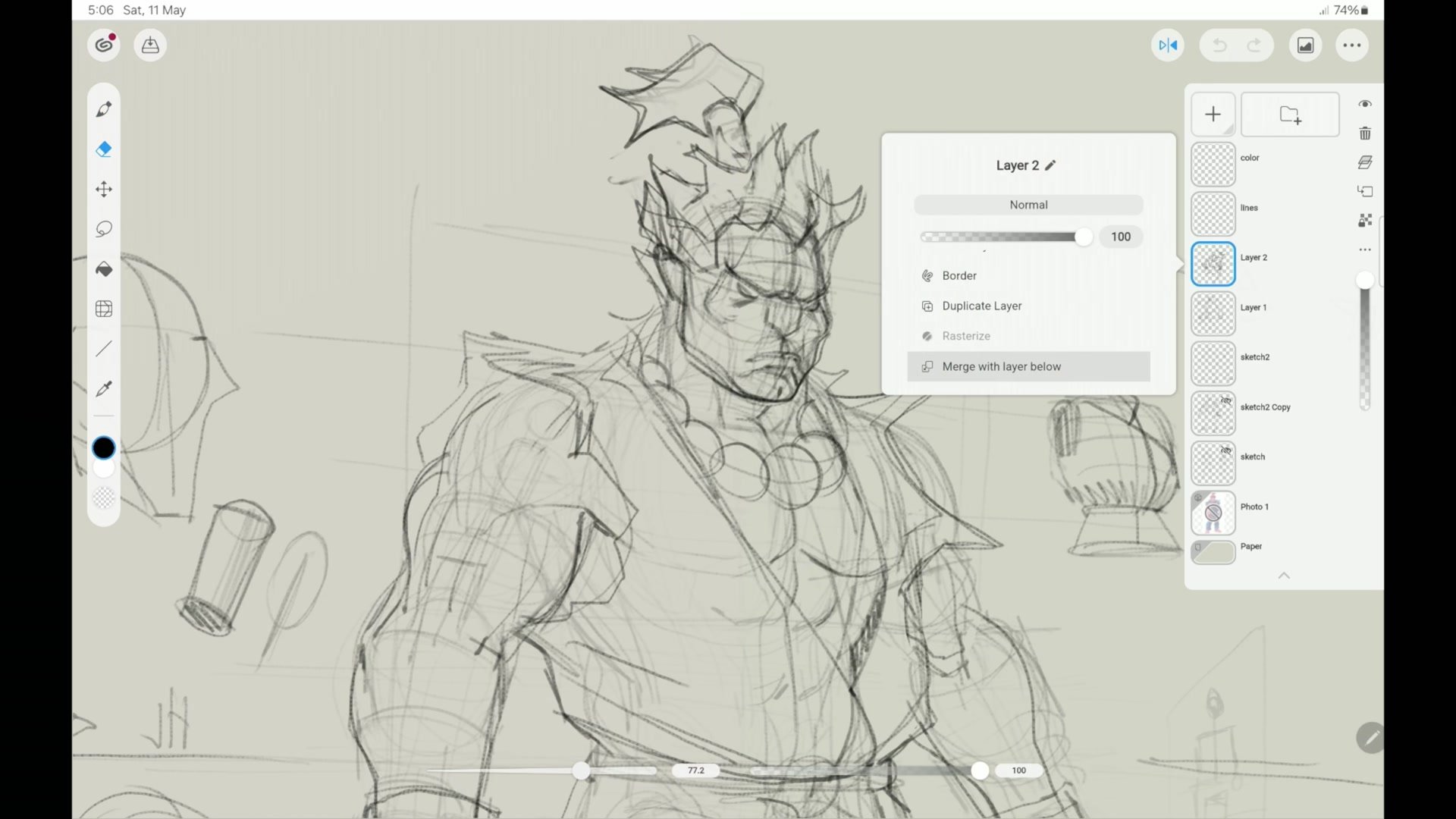
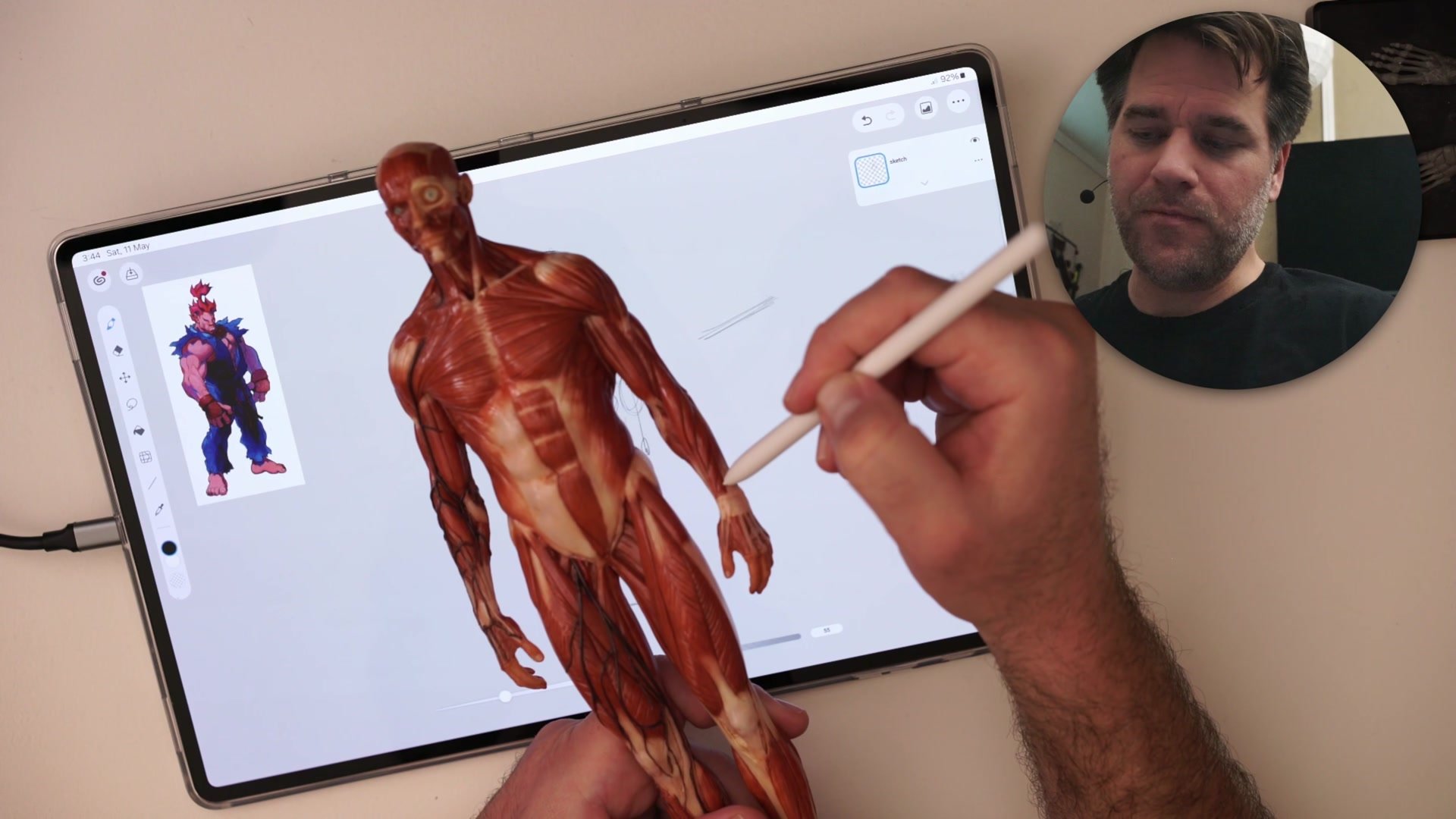
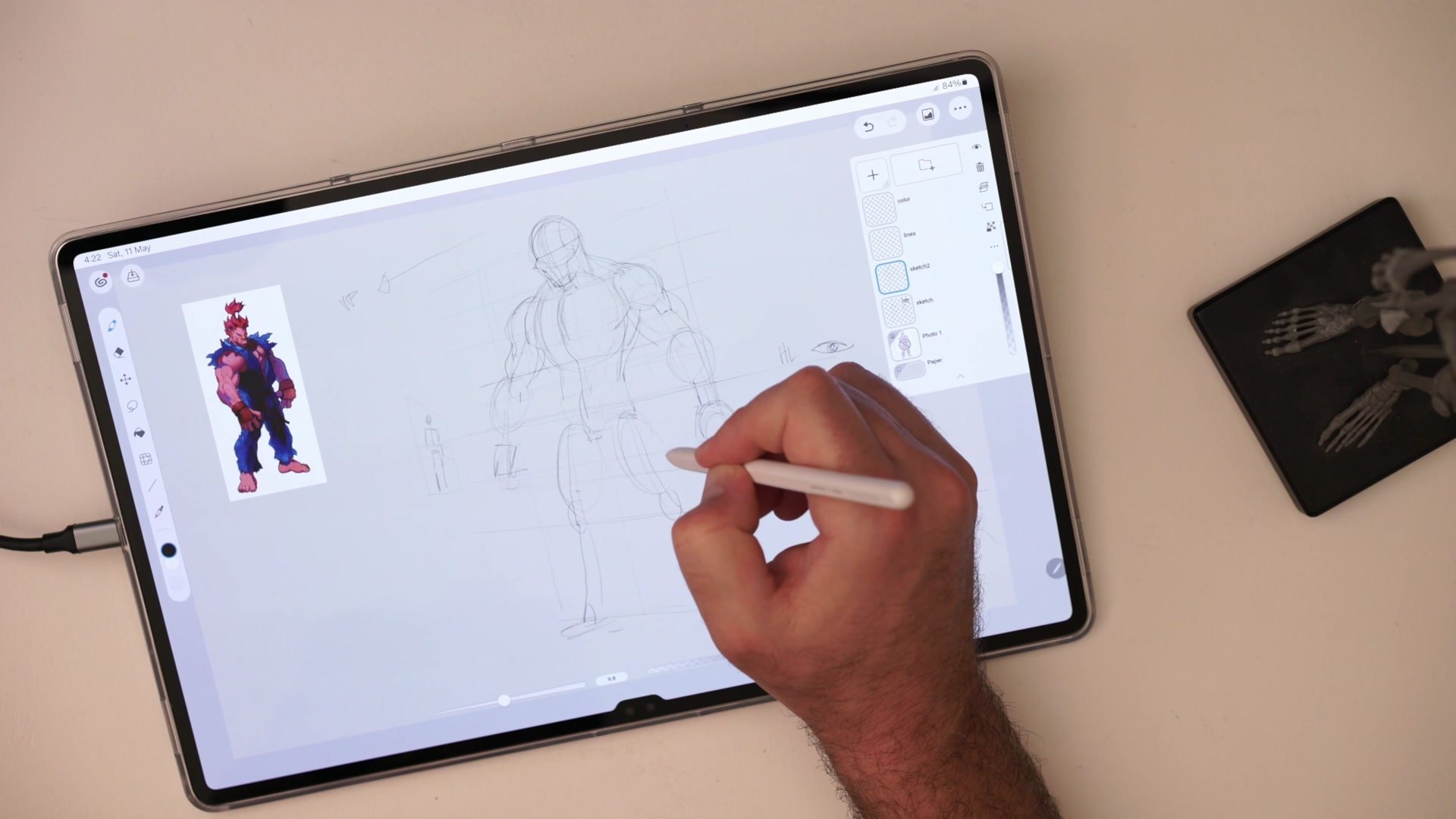
The drumstick method simplifies how muscle attaches to bone. Every limb starts as a bone with a chunk of muscle creating a basic cylindrical form, like a chicken leg. Upper arms, forearms, thighs, calves all begin as simple "bone plus mass" shapes before adding any anatomical detail. Starting with stick figures to establish these proportional relationships before adding mass prevents the unfixable proportion problems that come from rushing to add muscles before the underlying structure exists.
Constructing Akuma
Systematic Exaggeration
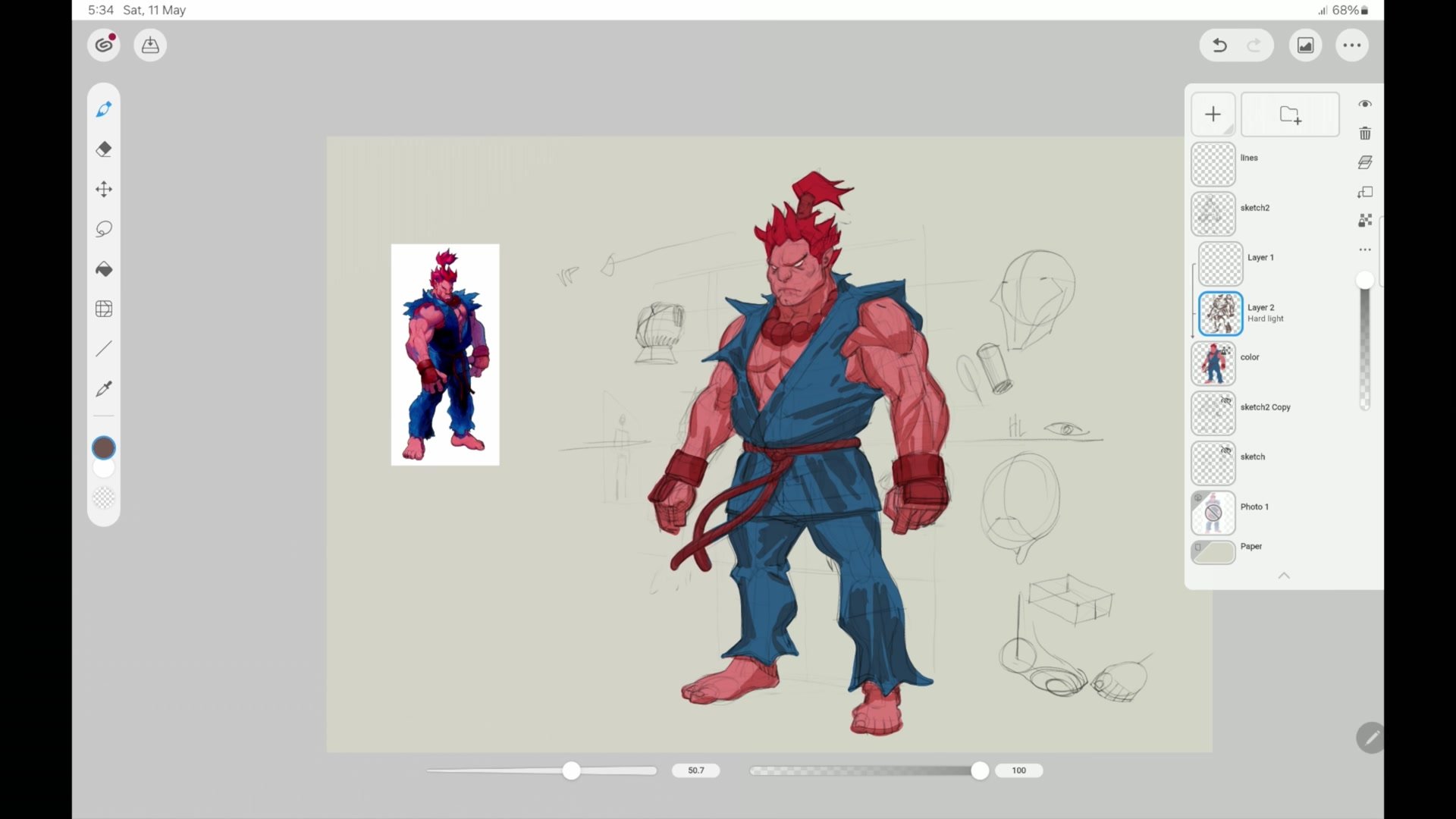
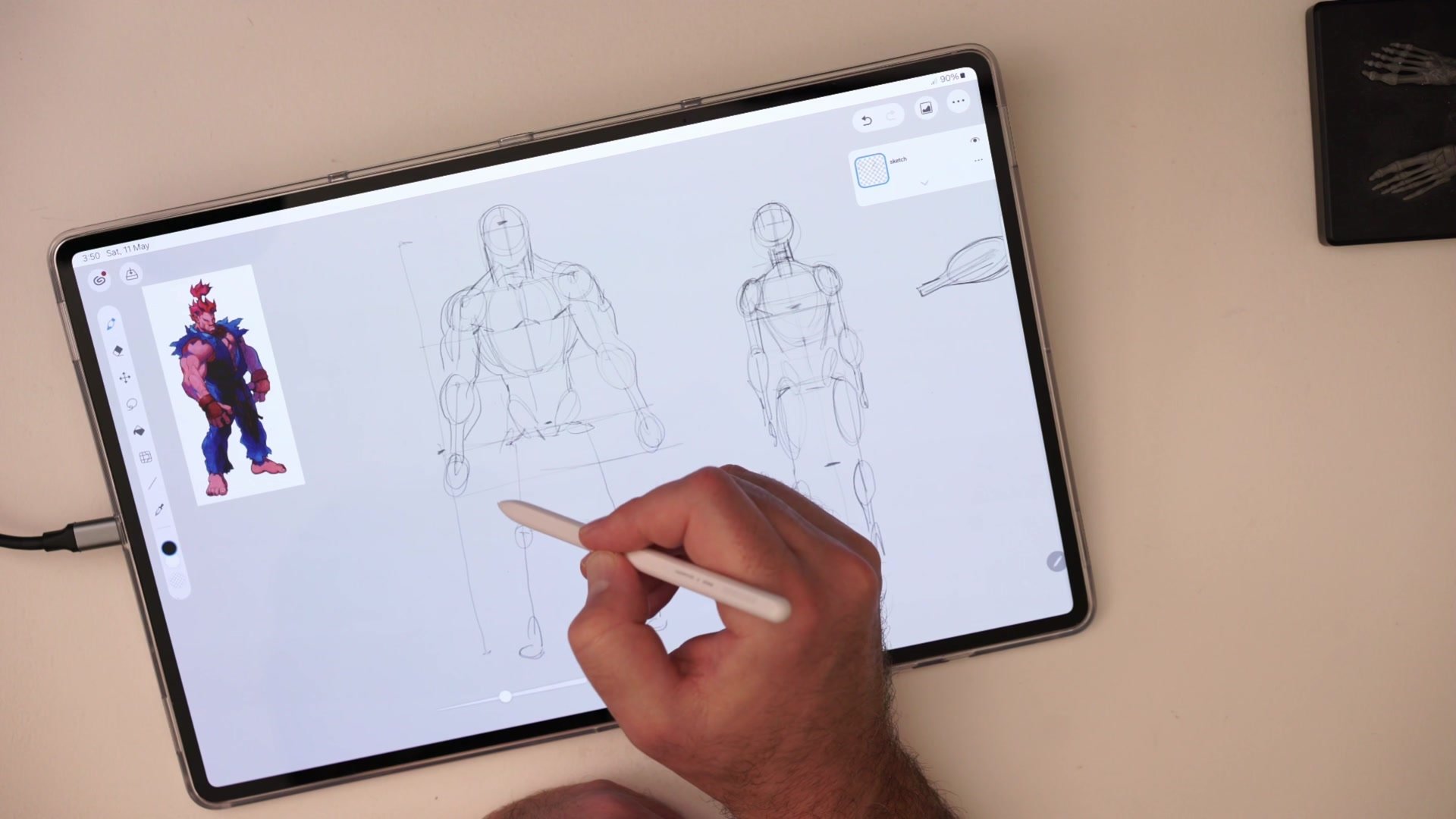
Taking standard proportions into heroic territory requires enlarging specific features with intention. Shoulders shift outward as the shoulder girdle expands with muscle mass. Arms extend longer than anatomically accurate because it serves the design, creating dramatic poses and emphasizing striking range. Hands and feet scale up dramatically because small extremities on a massive frame make the character look less imposing rather than more powerful.
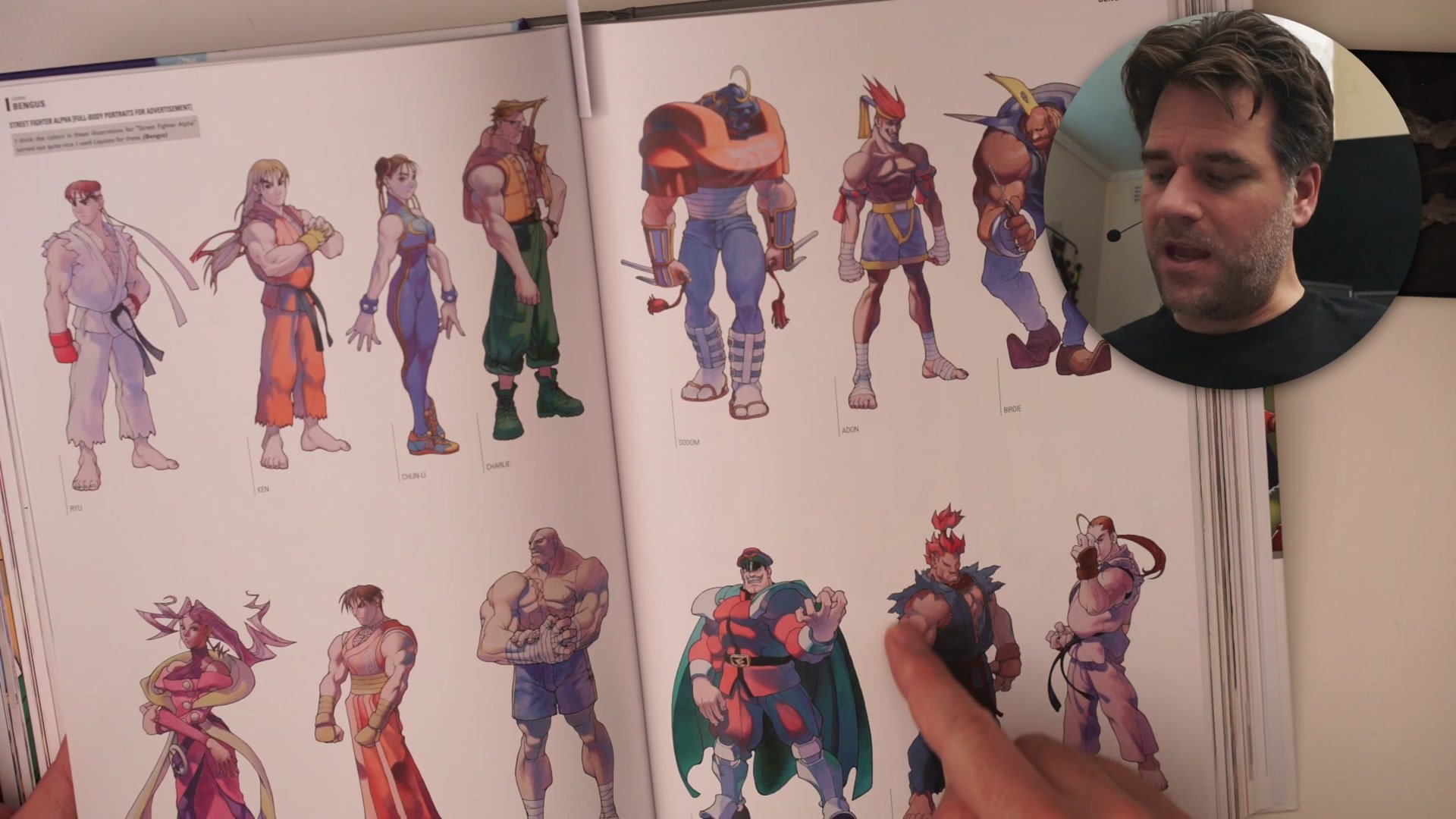
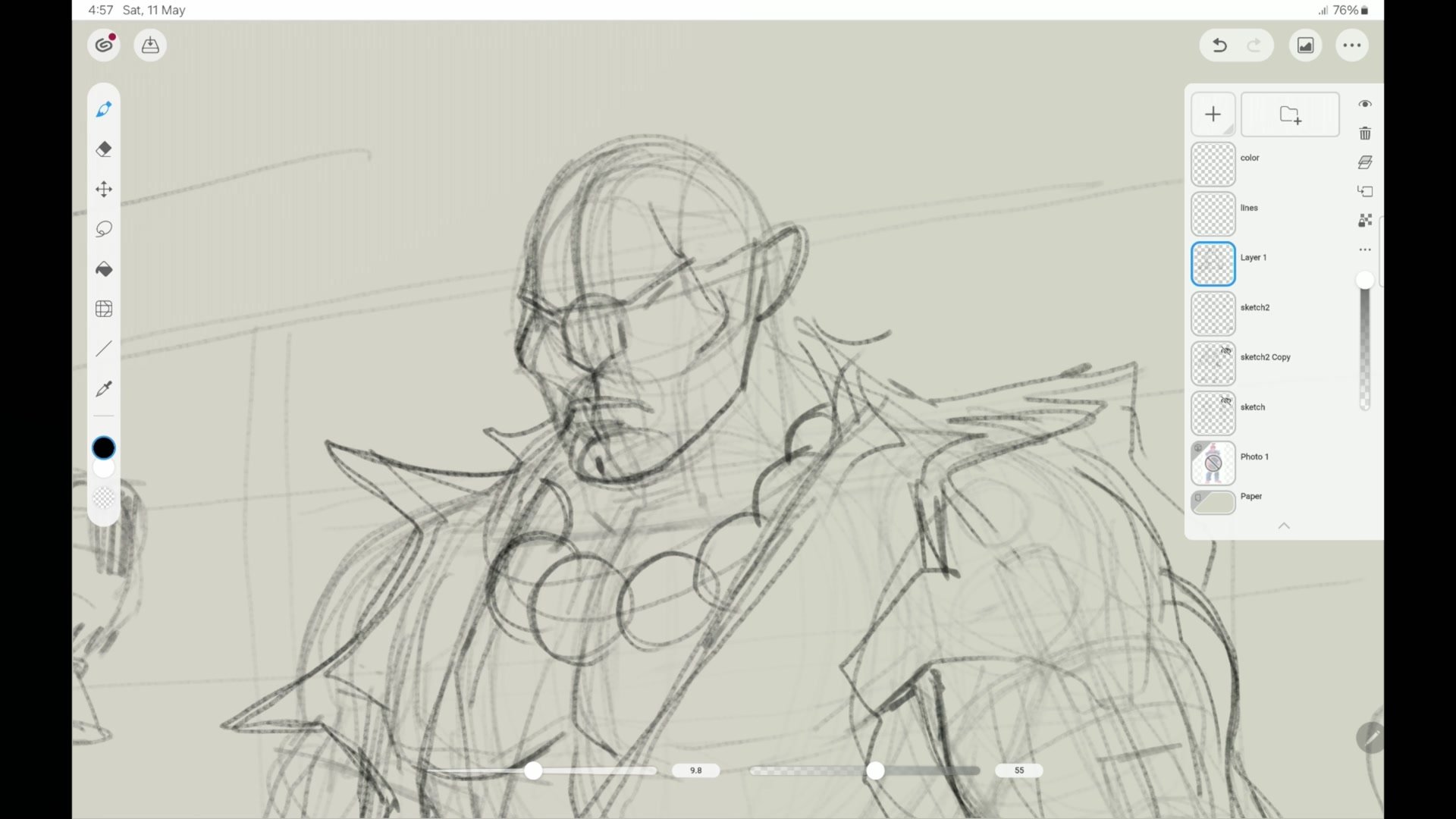
These exaggerations serve character personality and fighting style. Akuma's massive neck, long forearms, and huge hands communicate raw power before any action happens. Learning to read these design decisions in reference art reveals the logic behind professional stylization. The difference between effective character design and amateur attempts comes down to understanding which features to keep grounded and which to push, maintaining internal consistency even while breaking anatomical rules.
Detail and Refinement
The Flat Color Test
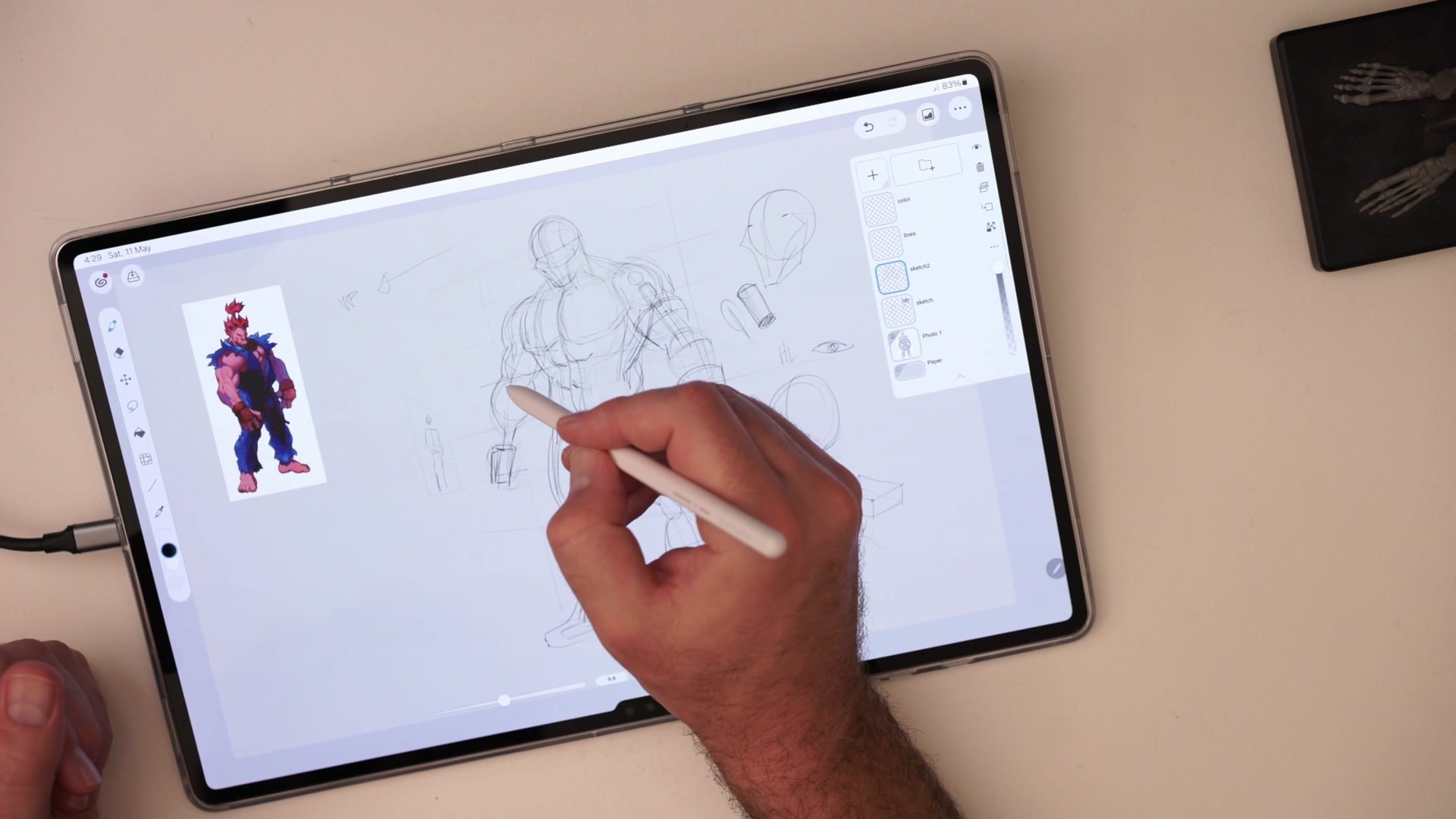
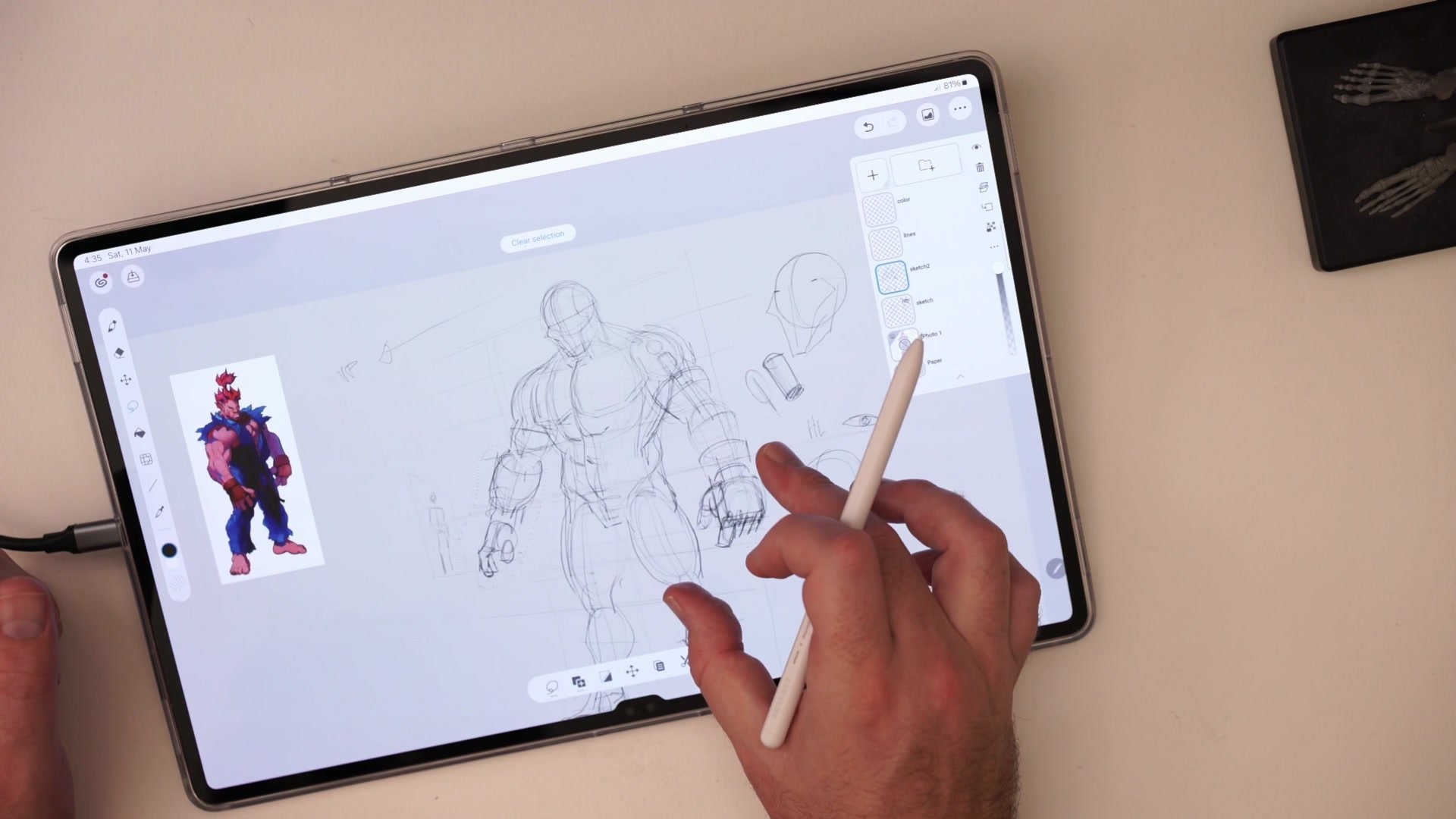
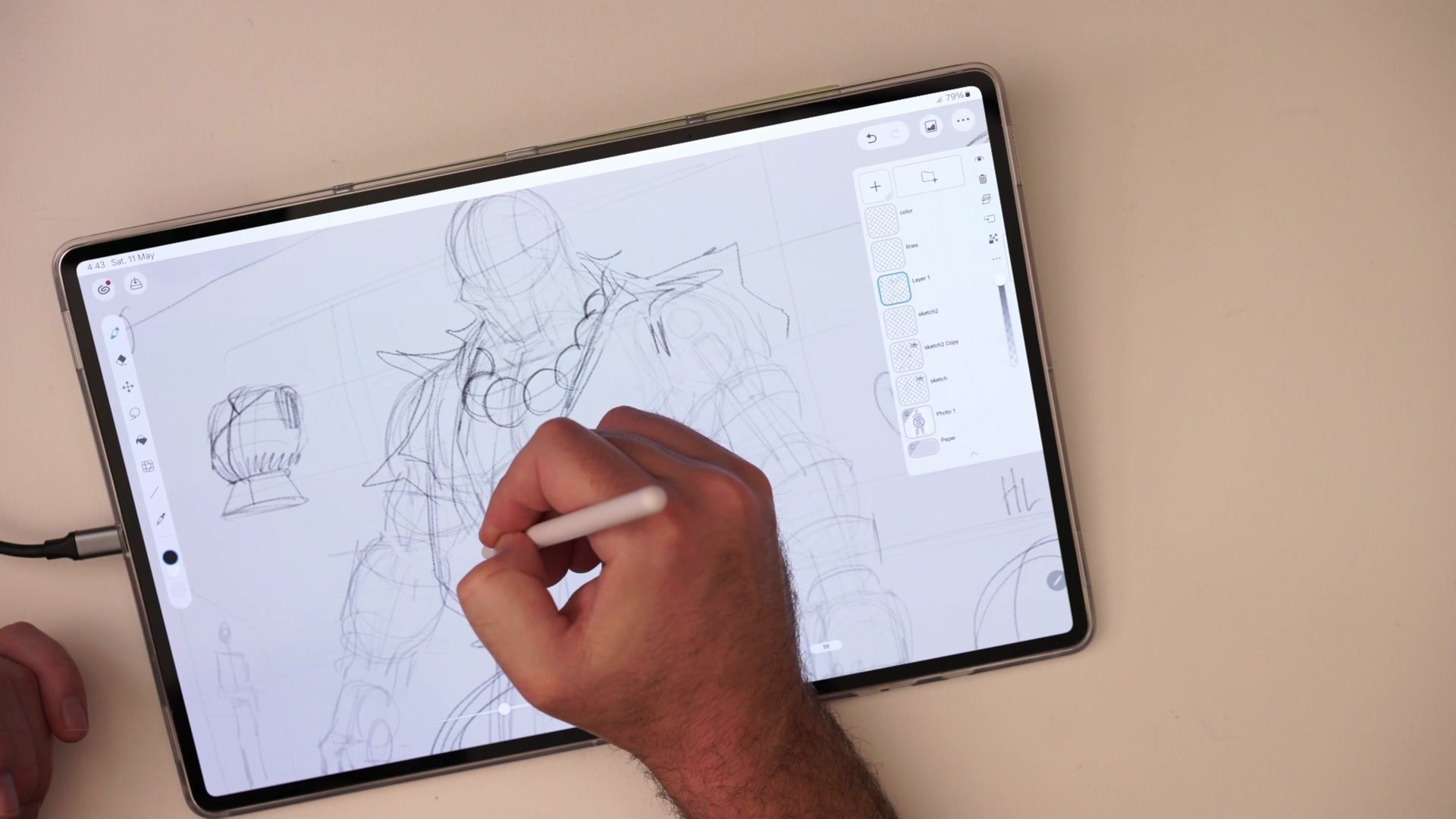
Cylindrical construction transforms flat proportion studies into dimensional forms. Drawing through forms, even where they overlap or hide behind other anatomy, reveals depth relationships that otherwise stay invisible. Center lines running through every form mark symmetry and maintain proportion as structures rotate in space. The more drawing-through happens at this stage, the easier everything becomes later.
Testing structure with flat color is where primary forms prove themselves. Adding one simple shadow pass to cylindrical forms shows immediately whether they read as three-dimensional volumes. What looks like a sketchy mess often becomes readable the moment flat color gets applied. If basic rendering does not make the forms pop, more detailed rendering will not fix the structural problem. This flat color test saves enormous time compared to discovering structural failures after hours of detailed work.
Color and Validation
Key Principles
Skeleton As Anchor: The skeleton stays consistent while muscles get enlarged dramatically. Standard anatomy provides the knowledge to break rules intentionally rather than randomly.
Drumstick Method: Simplify every limb to bone plus mass before worrying about individual muscles. Primary form must be solid before adding secondary detail.
Systematic Exaggeration: Each proportional push serves the character. Wider shoulders, longer arms, and bigger hands maintain internal consistency when the changes follow a logic.
Flat Color Validation: Adding simple flat color to structural drawings immediately reveals whether primary forms work. If basic rendering fails, the issue is structure, not rendering technique.
Draw Through Everything: Drawing cylinders and forms completely, even where hidden, establishes correct three-dimensional positioning and prevents flat-looking construction.
Try This Exercise
Start With Standard Proportions: Draw a basic stick figure with standard human proportions. Establish the halfway point at the pelvis, rib cage at the quarter mark, and head at the top. Get these relationships right before adding any mass.
Map the Exaggeration: Using a reference character, identify where proportions deviate from standard. How much wider are the shoulders? How much bigger are the hands? Use drumstick shapes for major muscle groups and cylinders for limbs, keeping everything at primary form level.
Apply the Flat Color Test: Without refining the lines, add flat color and one simple shadow pass. If the silhouette reads clearly and forms feel three-dimensional with minimal rendering, the structural foundation is solid. If something feels off, the problem lives in primary forms, not lack of detail.