Learning to Draw Chun-Li
Summary
Bridging Academic Anatomy and Character Design
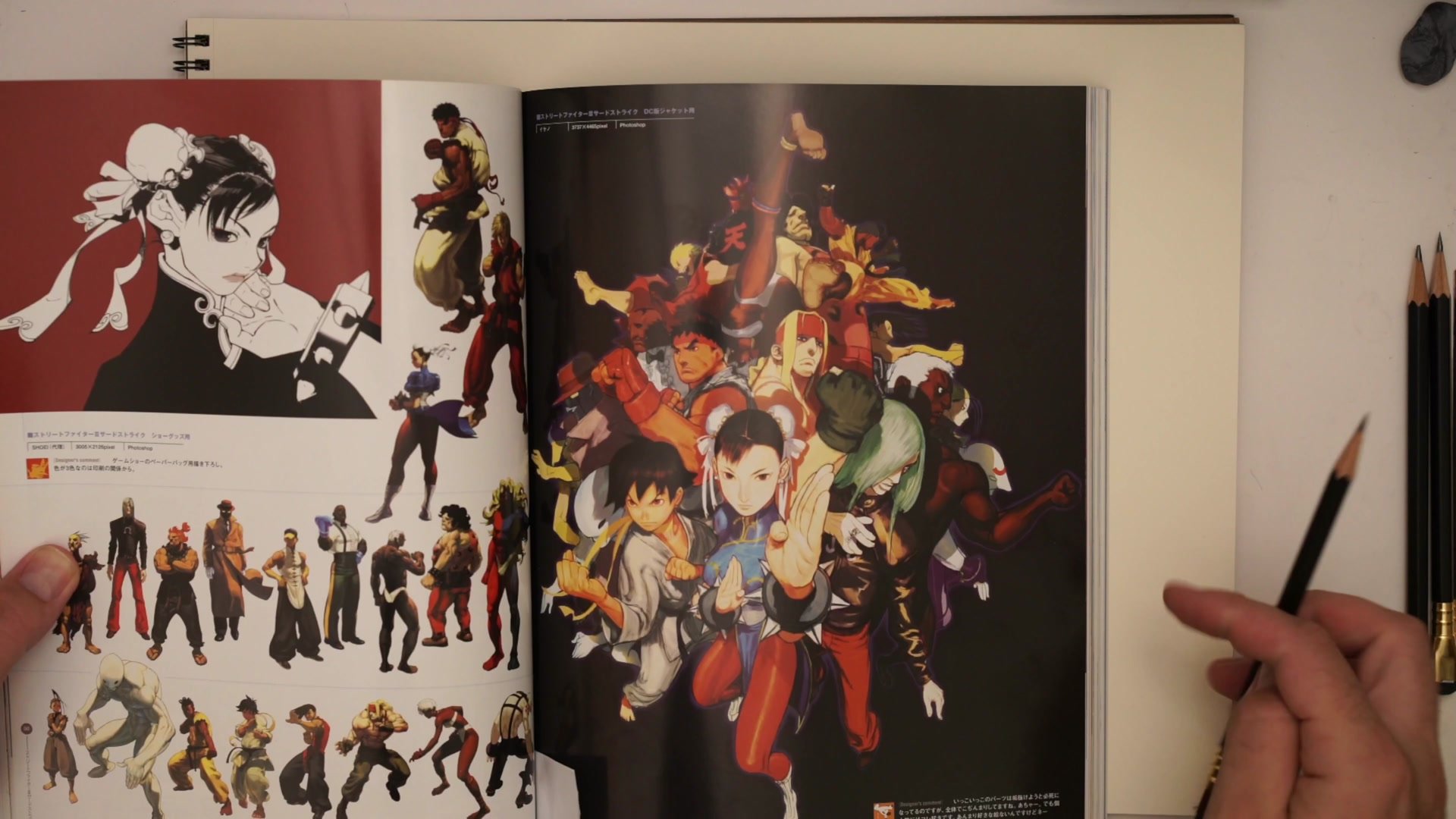
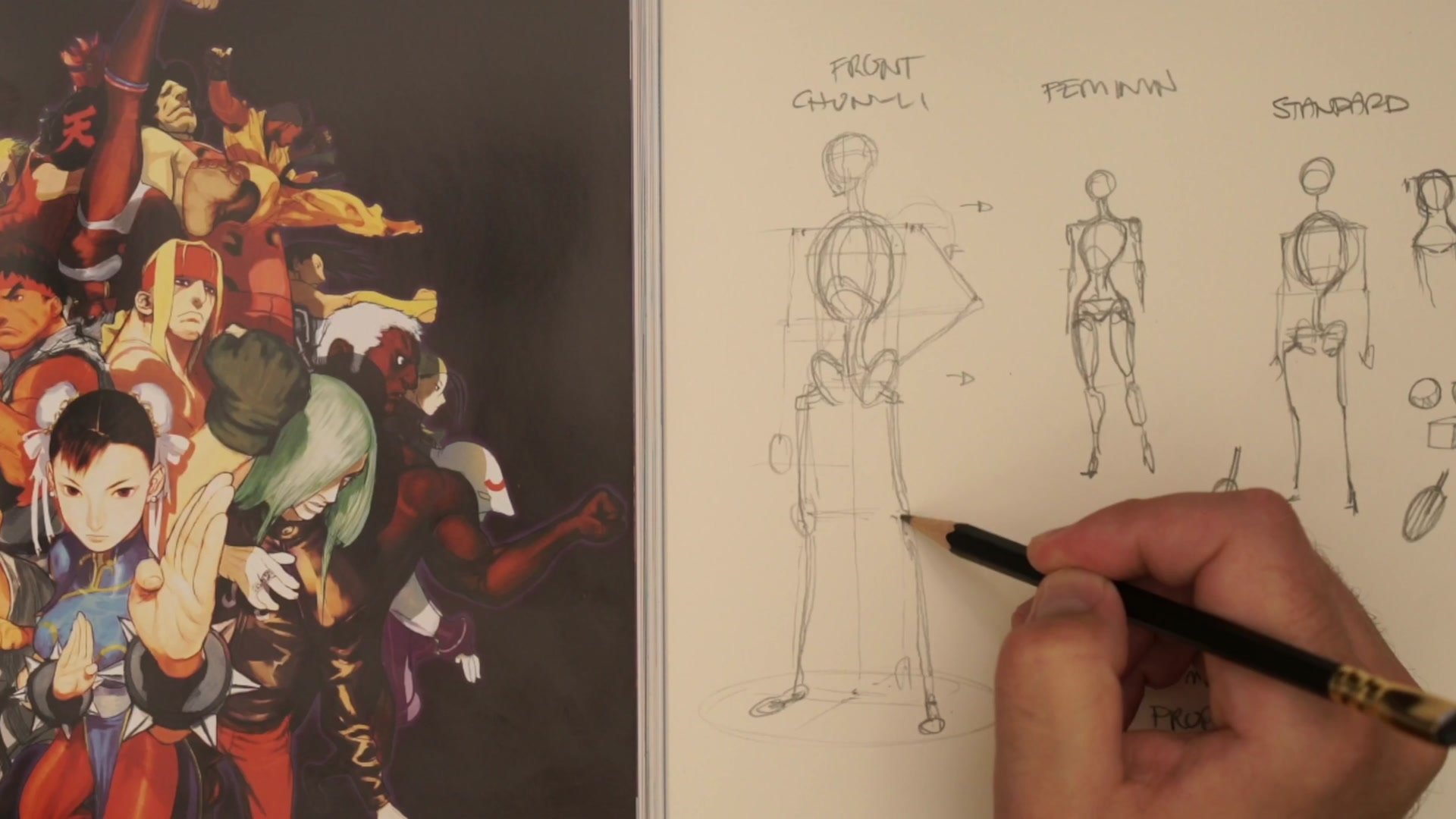
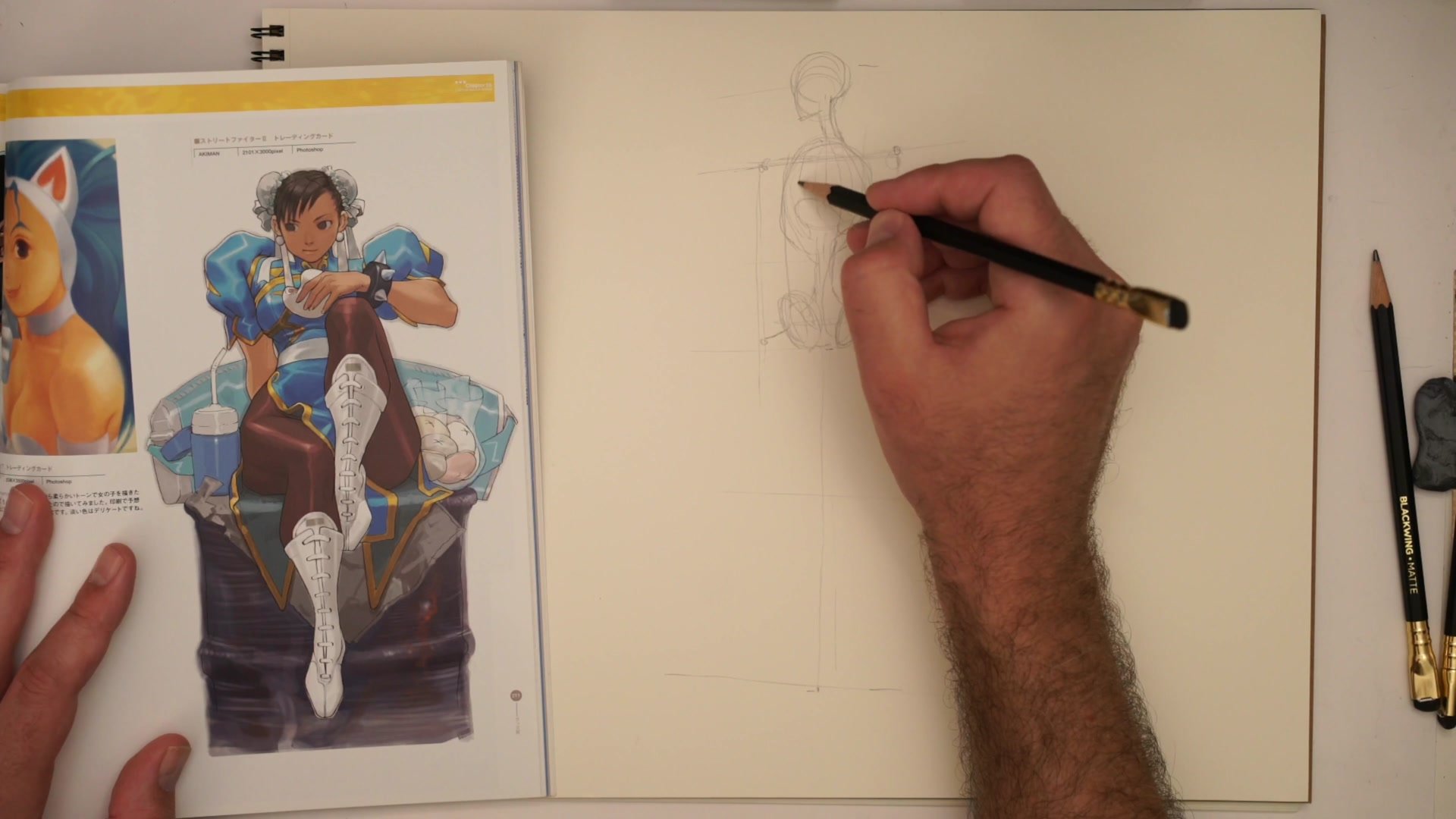
There's a huge amount of information on how to draw standard human anatomy - careful step-by-step construction approaches found in books like Andrew Loomis's Figure Drawing for All It's Worth. These methods work great for creating generic demonstration figures. But something changes when you apply them to actual characters with distinct proportions, personality, and costume details. Academic methods teach "correct" anatomy. Character art needs something more specific: deliberately modifying that foundation to create recognizable designs.
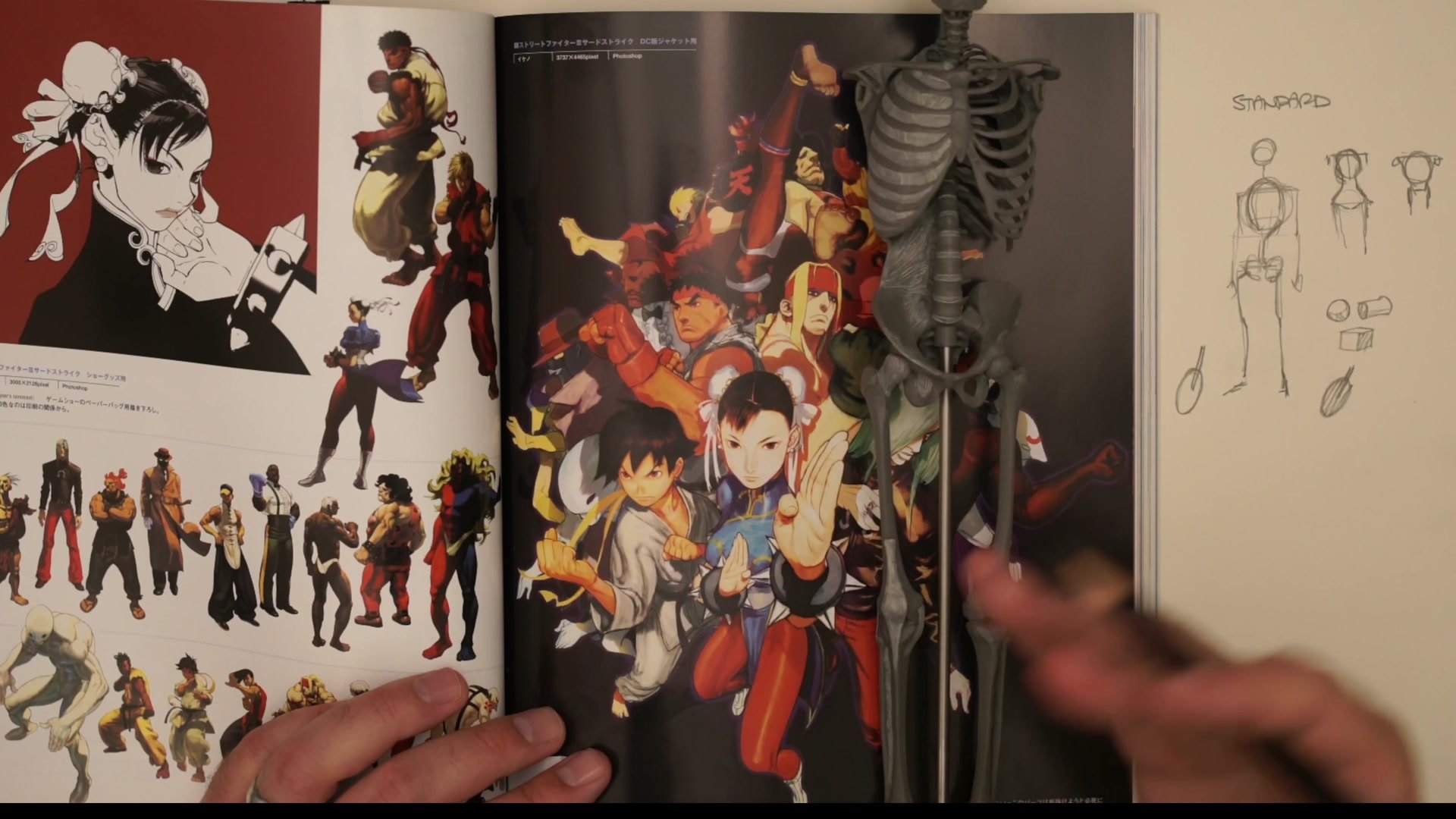
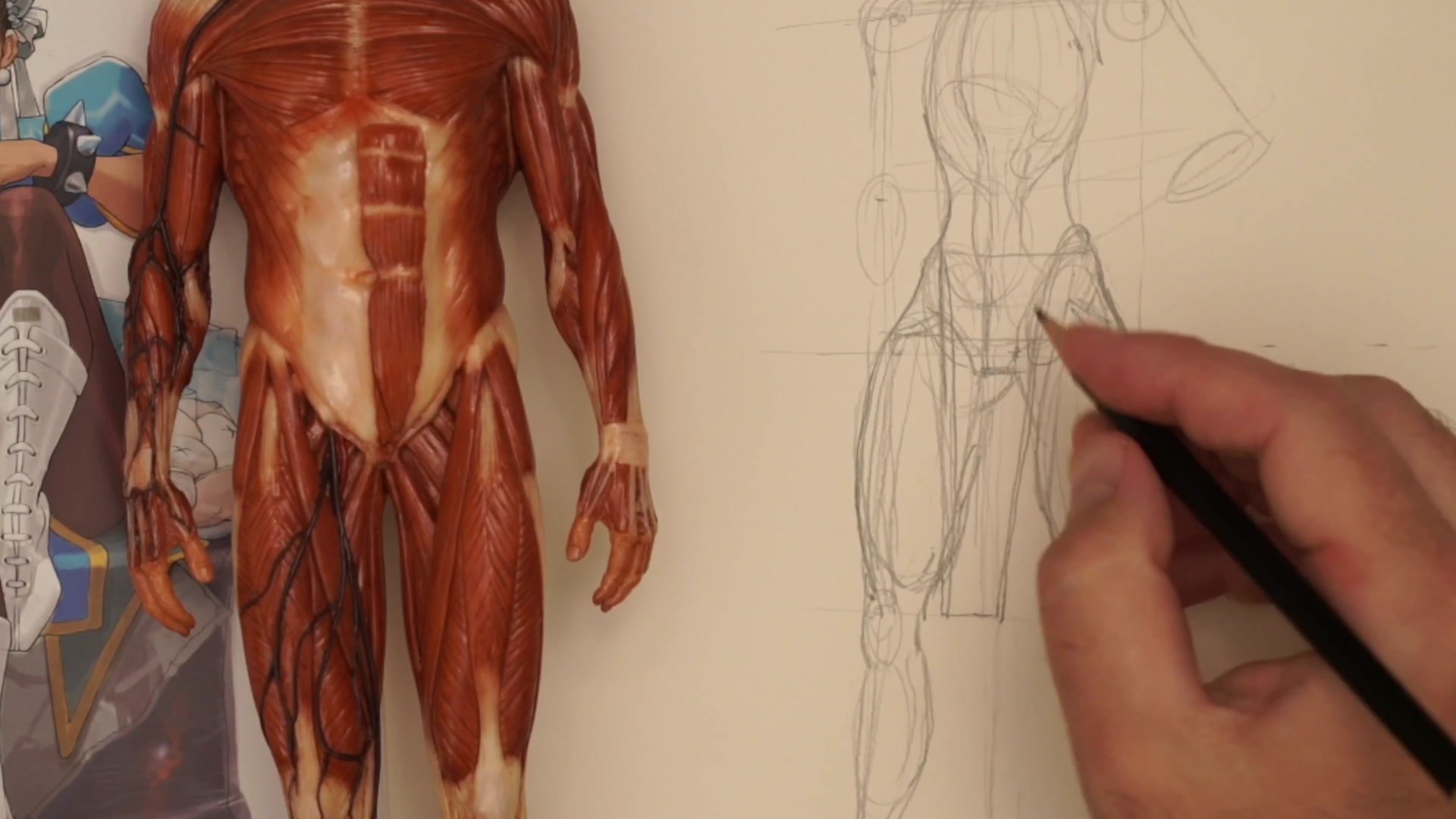
This is one of the biggest challenges when learning to draw - figuring out how structural drawing principles apply to the characters you actually want to create. Constructive anatomy - thinking in primary forms, building mannequins, understanding structure - becomes the tool for controlled modification. When you understand standard structure well enough, you can consciously decide what to change and by how much.
Initial Setup
Primary Forms for Controlled Exaggeration
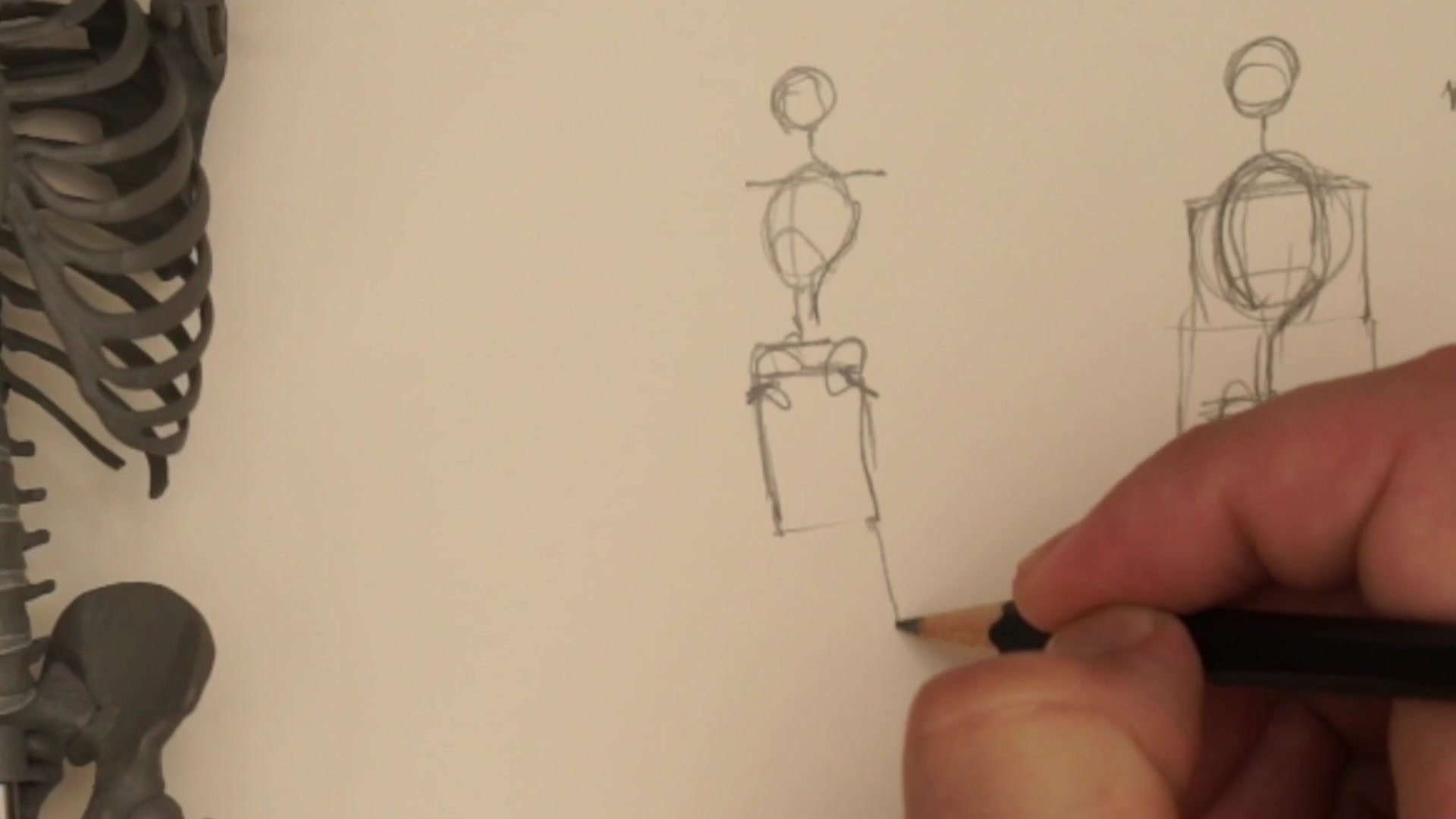
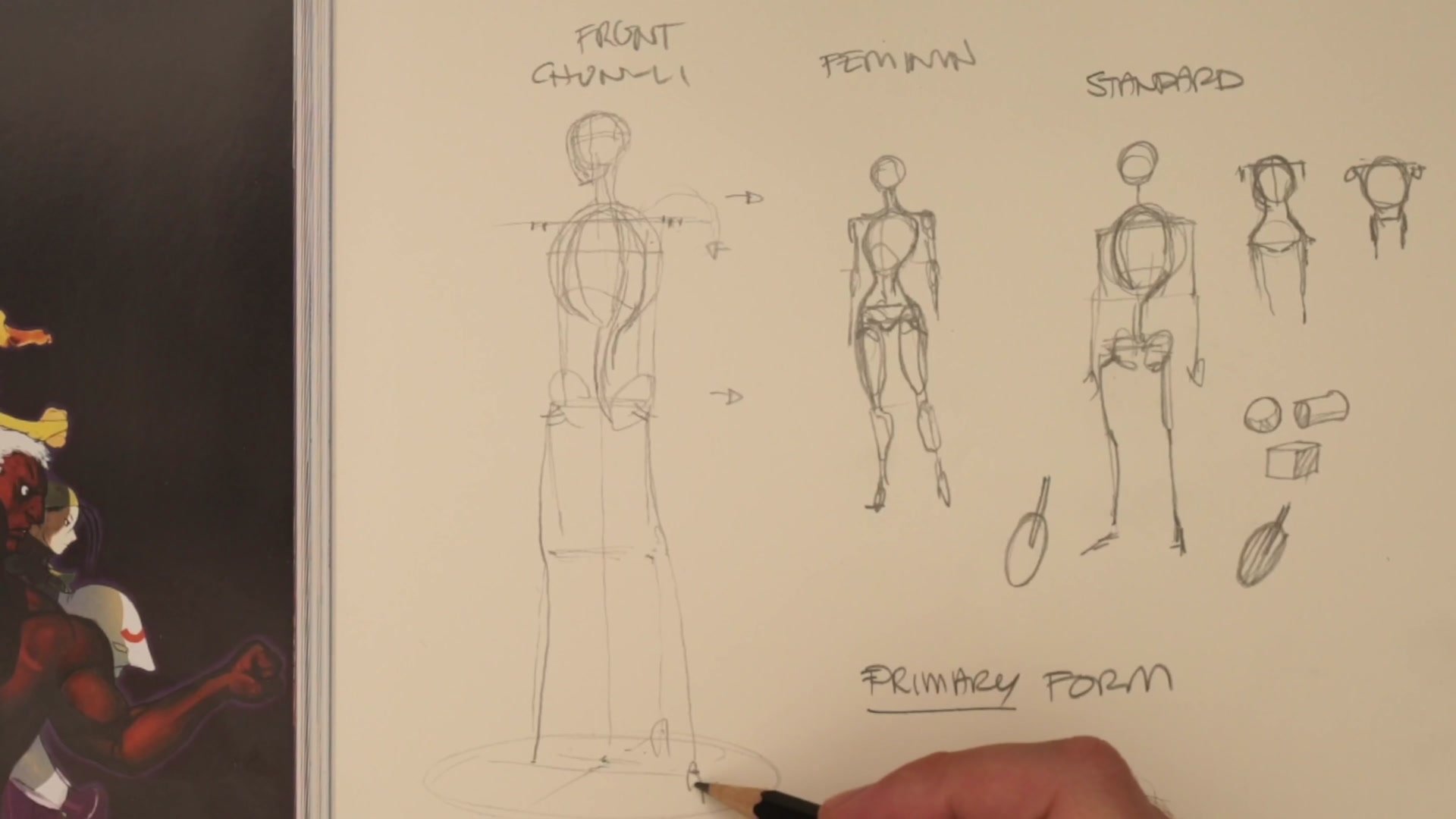
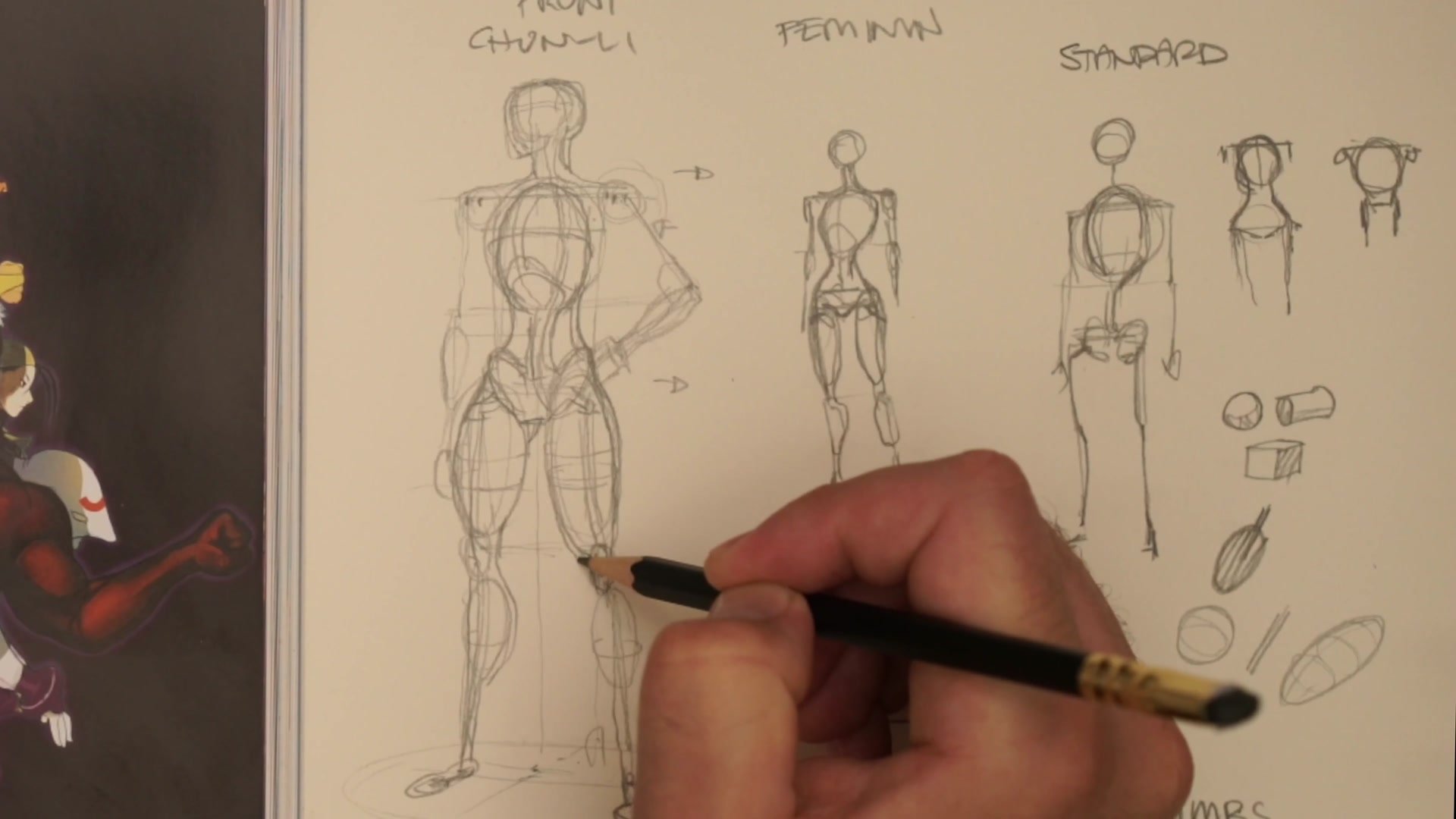
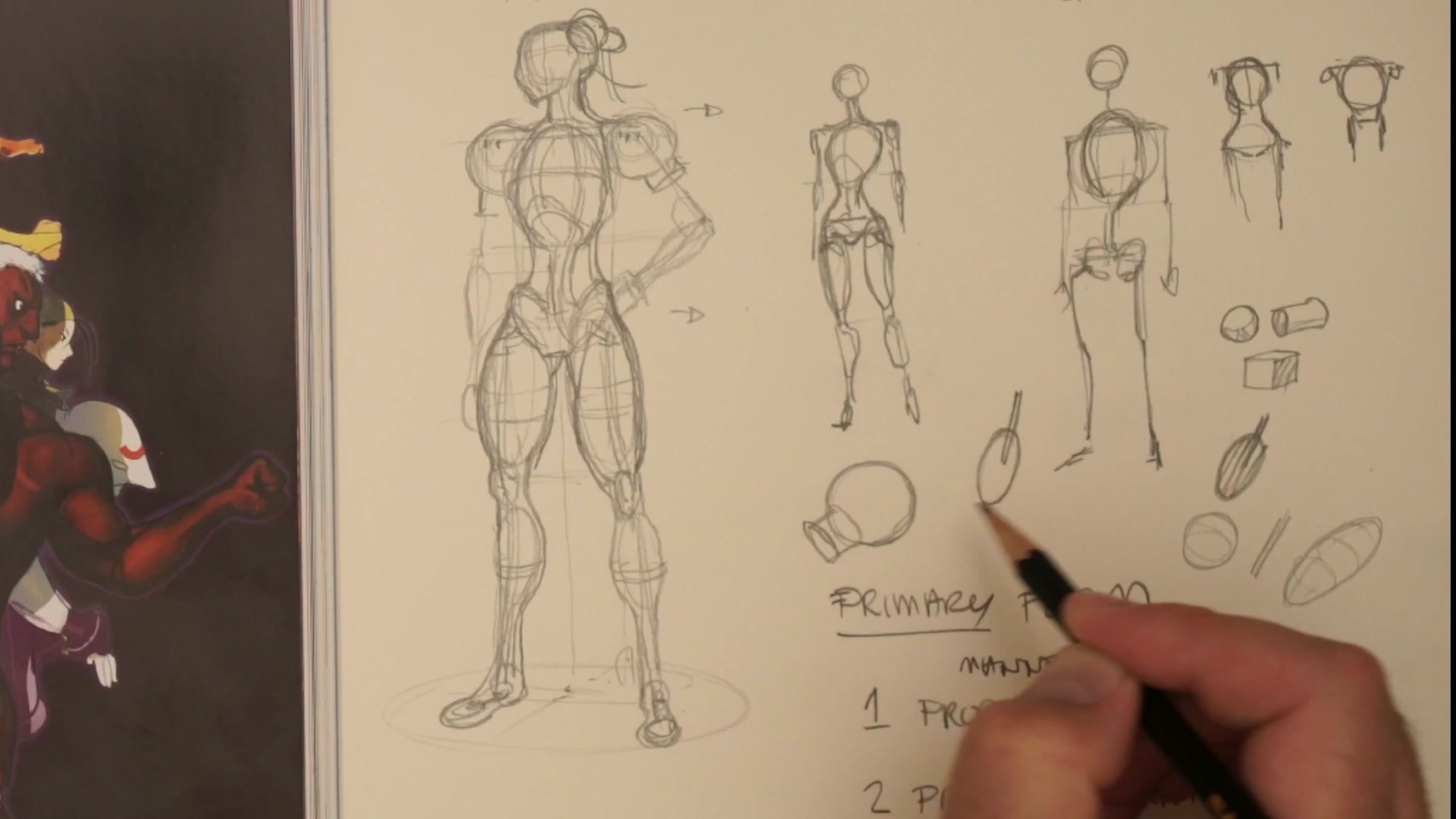
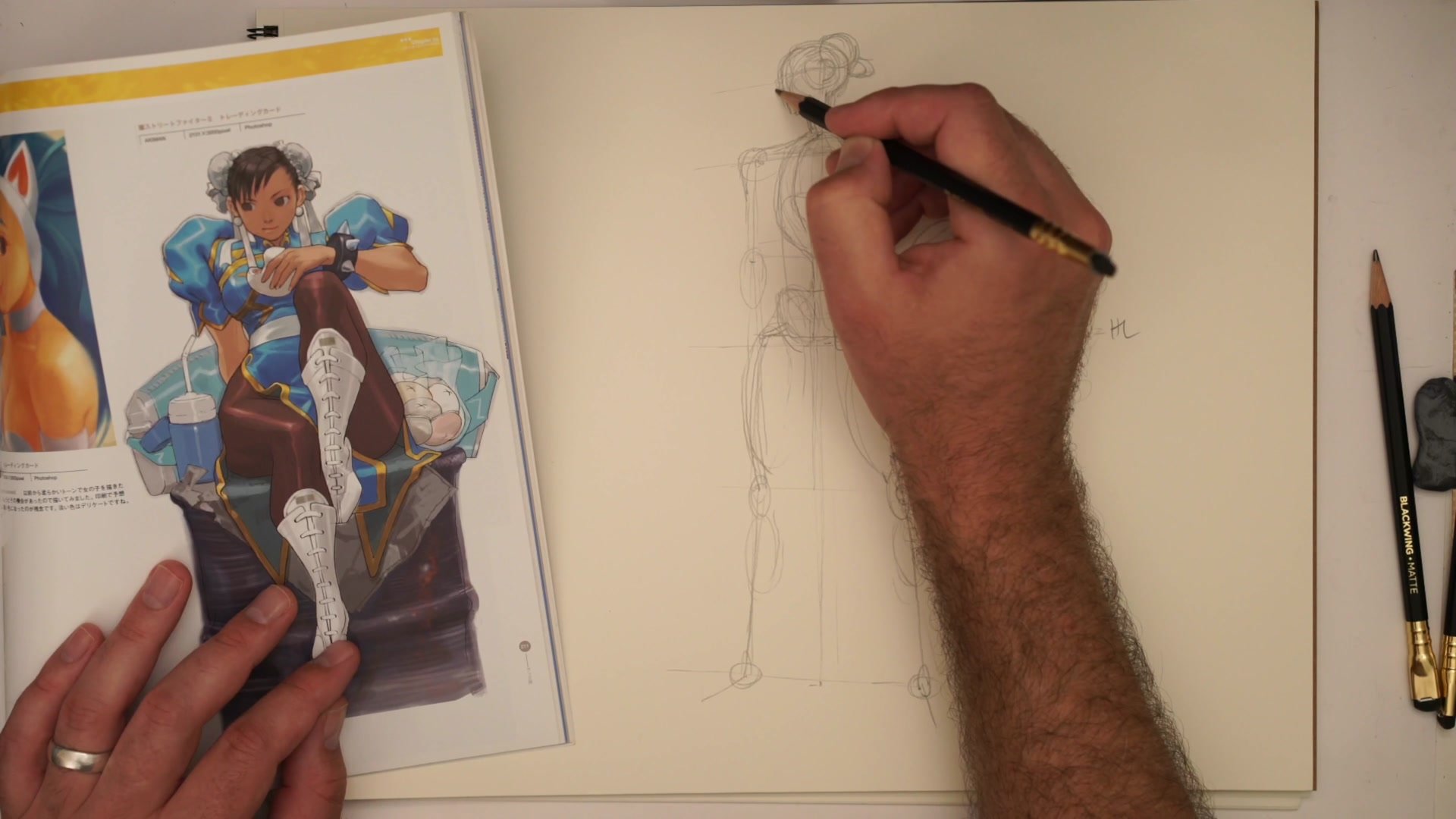
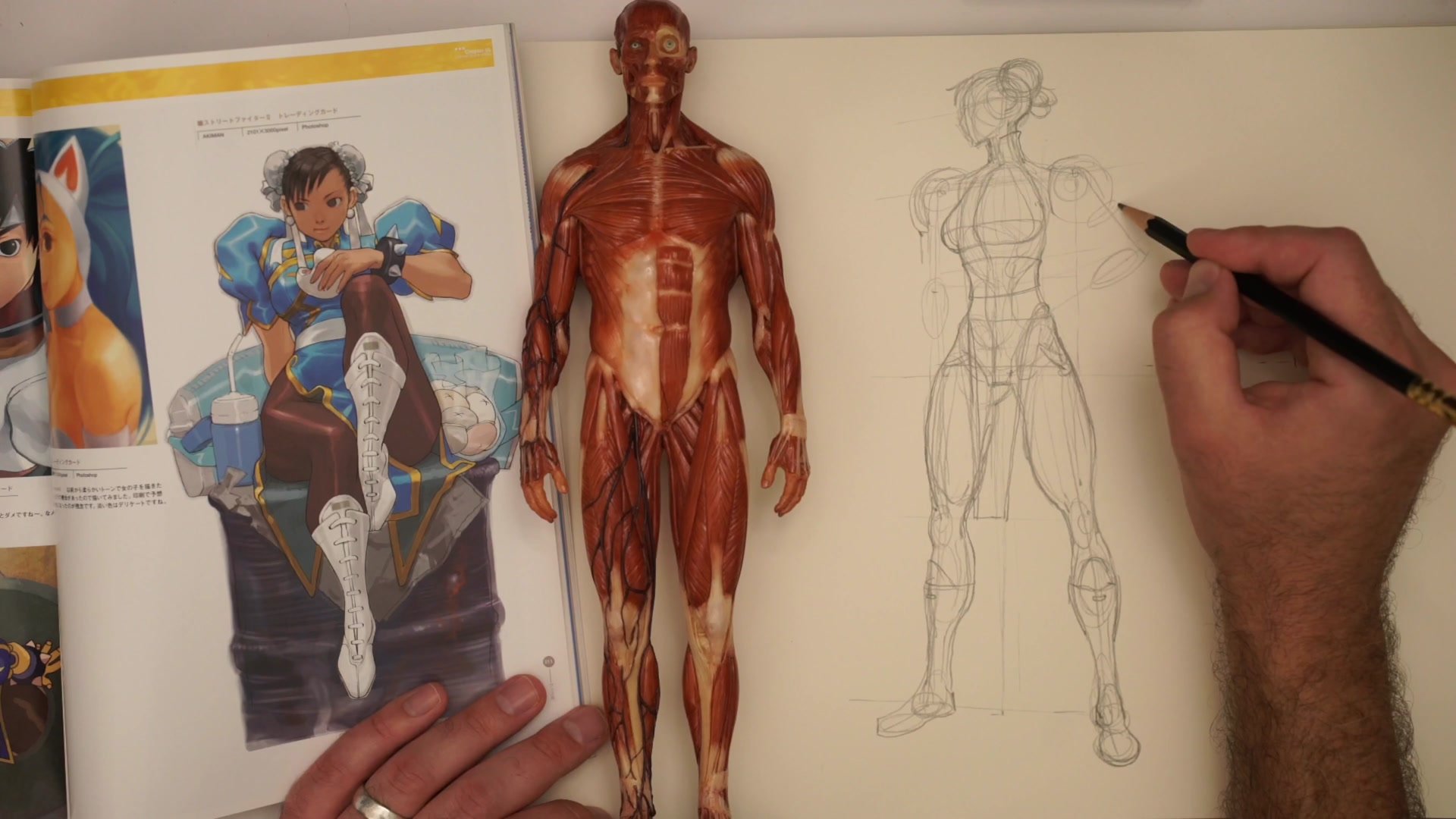
Constructive anatomy breaks complex organic forms down into simple geometric primitives: spheres, cylinders, and rectilinear forms. When dealing with limbs, the "drumstick" approach works well - a stick or line for the bone direction, with spherical or cylindrical masses for muscle groups attaching along that structure. These primary forms are building blocks you can control.
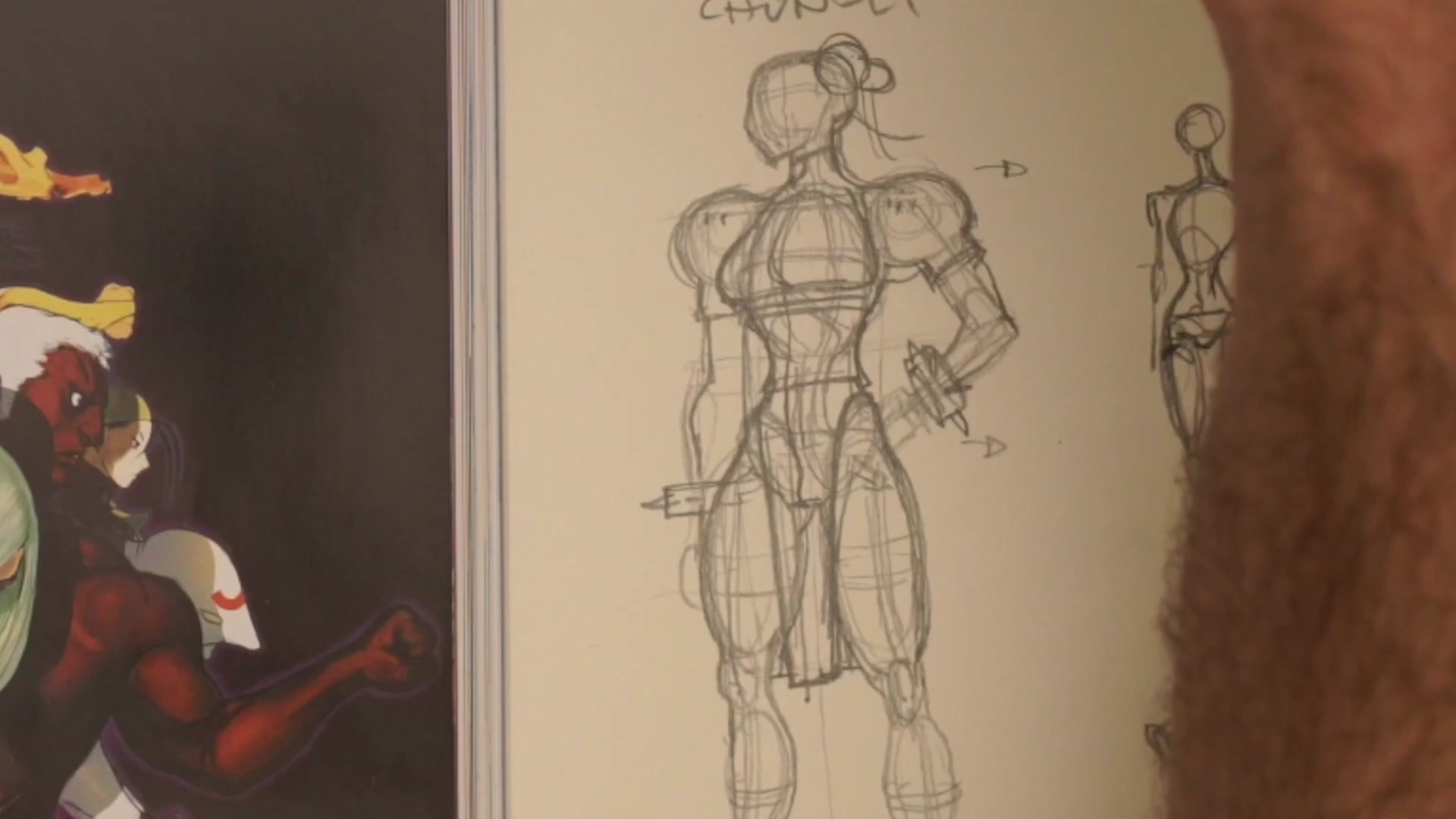
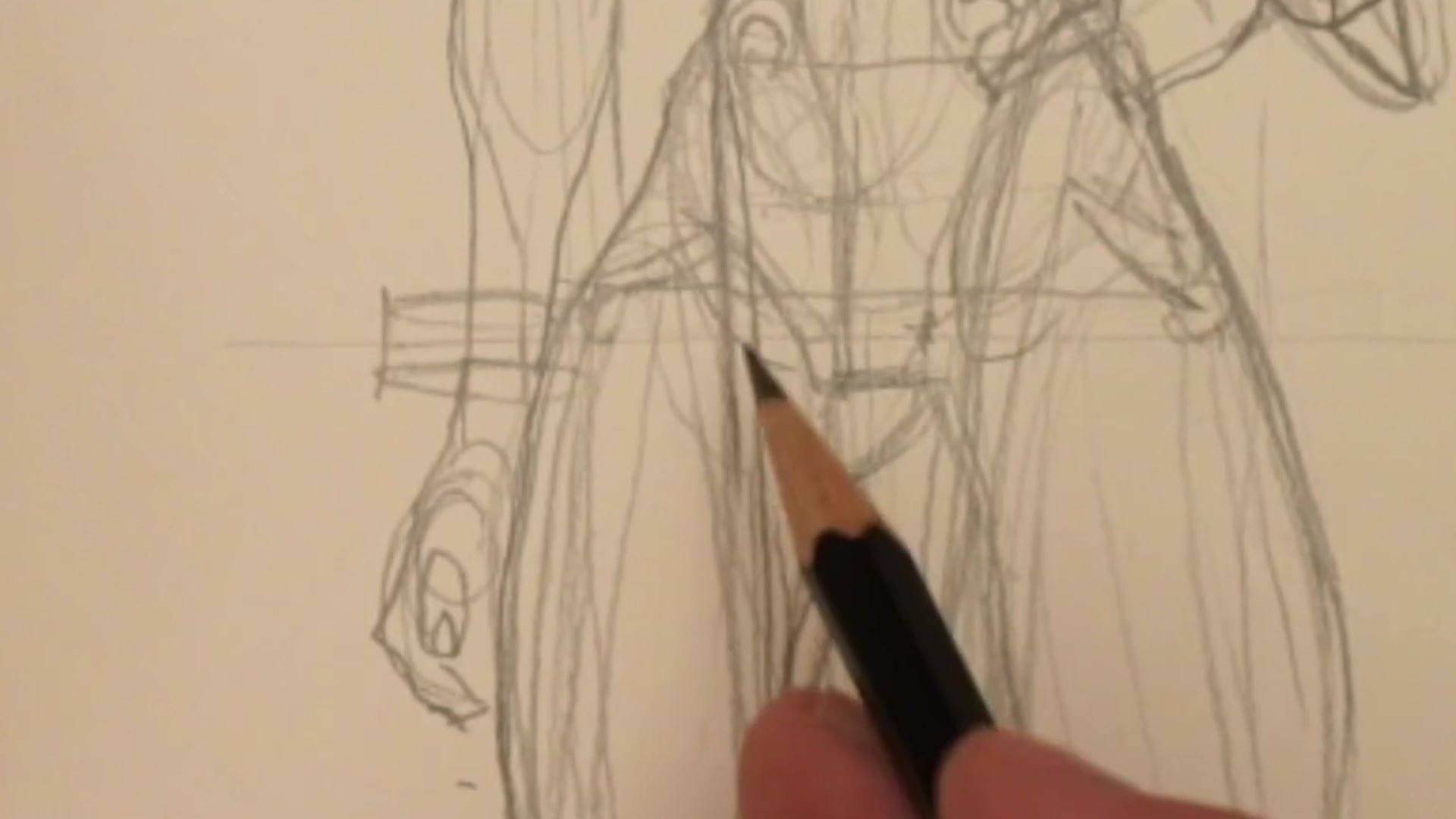
For a character with exaggerated features, you make conscious decisions about which spherical masses to make larger. Chun-Li's thighs get represented as larger cylindrical or spherical forms attached to the basic leg structure. Her calves get similar treatment. By massing these in at the mannequin stage - before adding surface detail or rendering - you check whether the proportions feel right, whether the exaggeration reads correctly. This is where visual analysis and structural drawing combine. You're understanding that character design is built from the same primary forms as realistic anatomy, just with different proportional relationships.
Building the Mannequin
Costume as Structural Elements
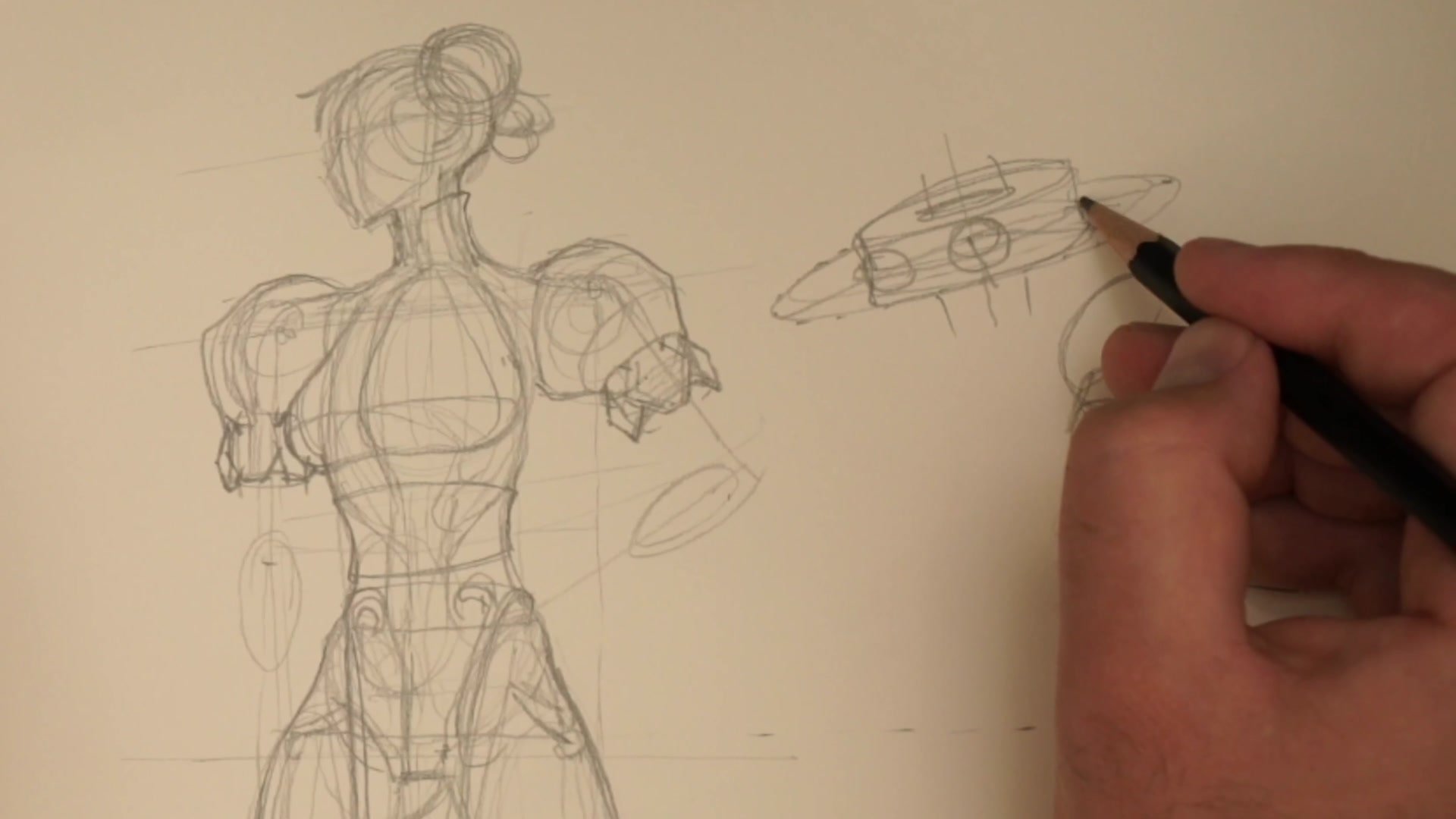
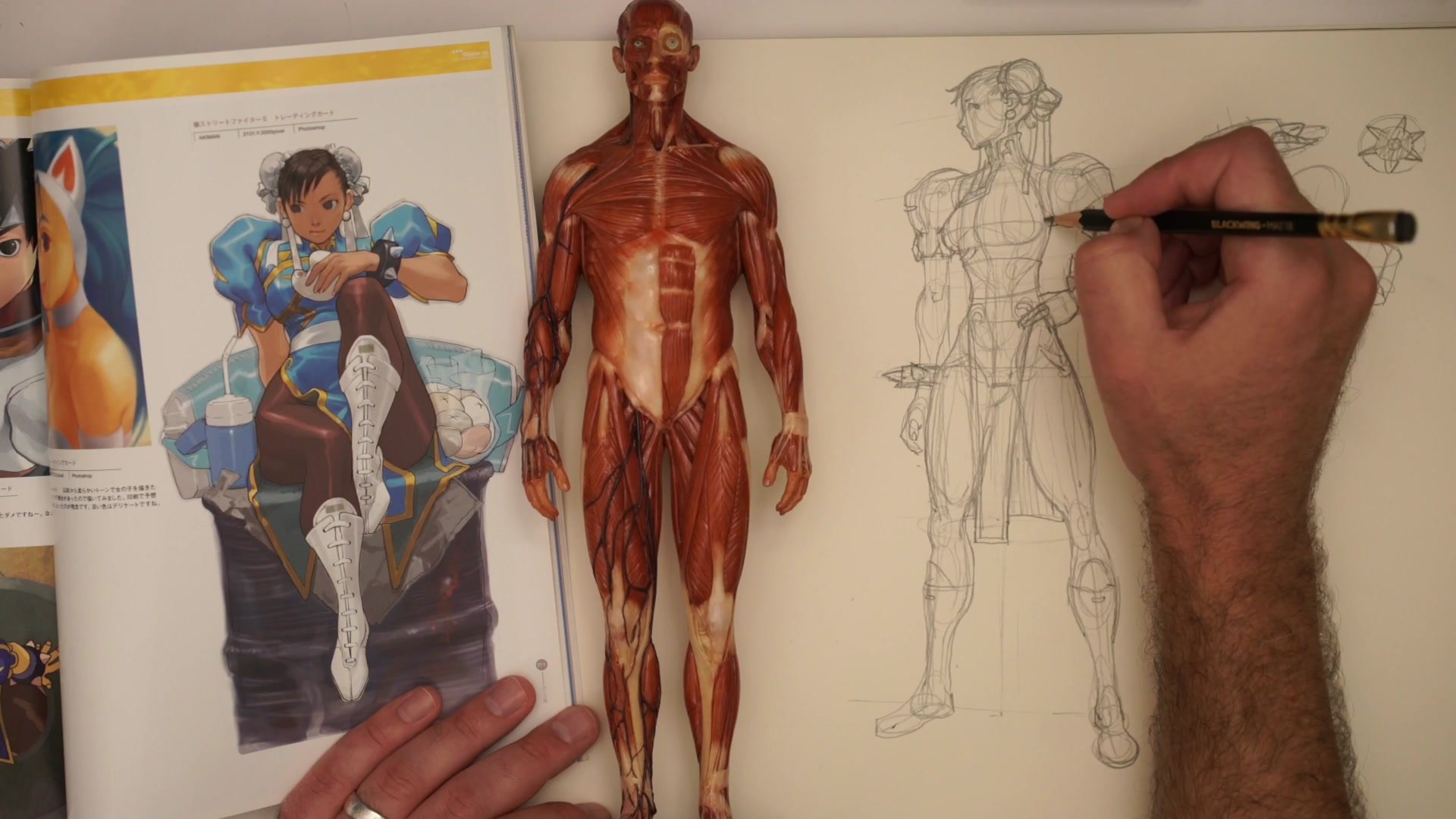
One of the key insights for character work is treating costume elements as part of the structural mannequin, not decorations added afterward. Chun-Li's design includes several major forms that define her visual identity: large spherical hair buns, prominent shoulder pads, a high-cut costume that creates specific separation between torso and thigh, spiked wrist guards. These aren't surface details. They're structural masses that occupy three-dimensional space and need correct placement in perspective.
The hair buns are spheres positioned on either side of the head. The shoulder pads are spherical forms with slight cylindrical extensions. When building the initial mannequin, these get roughed in using the same primary form thinking as the anatomy. By placing these elements at the construction stage, they become integrated into the character's structure rather than feeling pasted on later. Costume elements are three-dimensional objects following the same perspective and form principles as the anatomy underneath.
Adding Detail
Constructive Techniques for Details
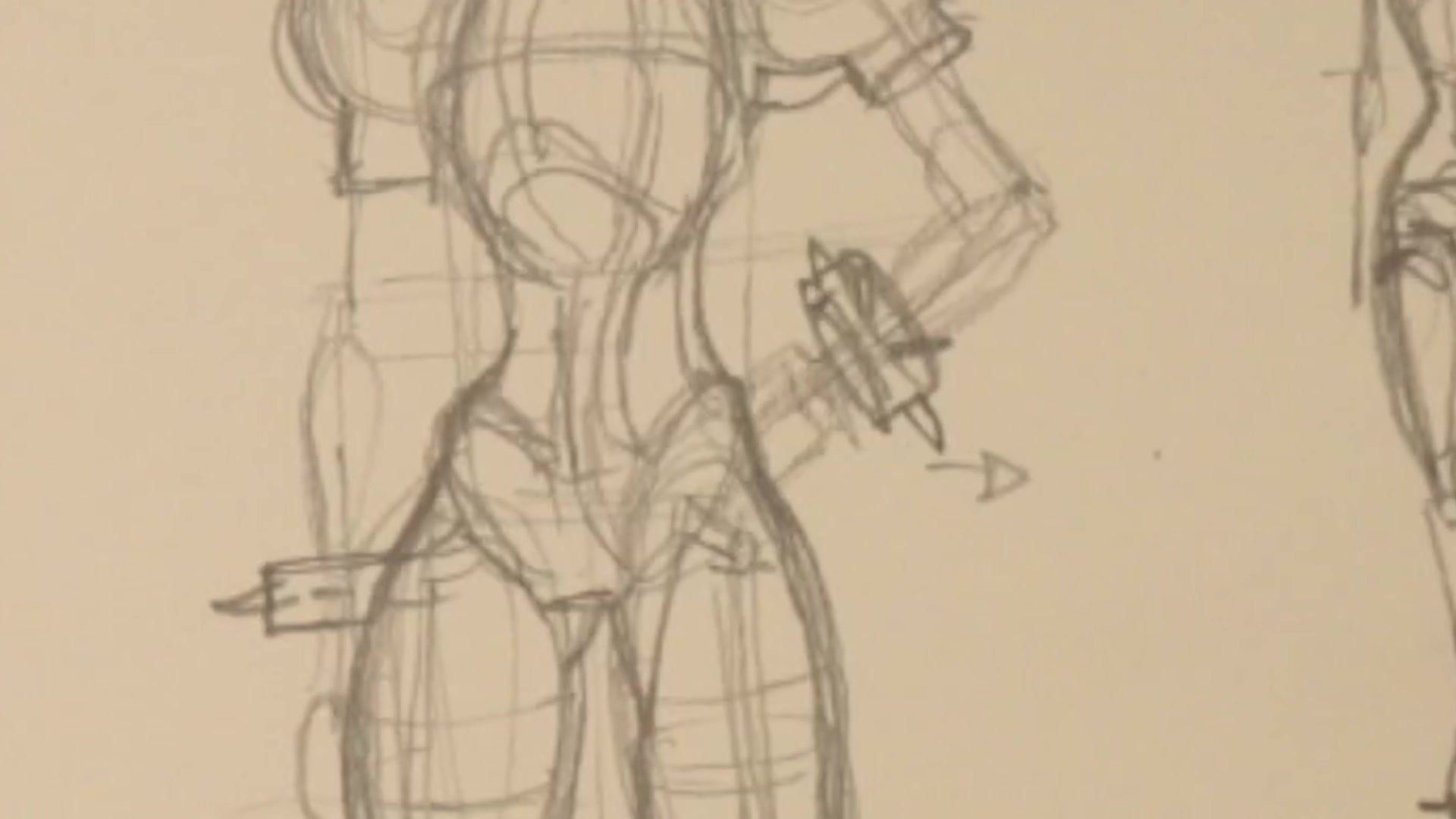
Even small decorative elements use the same constructive drawing principles. The spiked wrist guards on Chun-Li provide a good example. Each guard is a cylinder that wraps around the wrist, with conical spikes projecting outward. To construct this accurately, start by establishing the wrist structure - a cylindrical form with a specific direction in space defined by its minor axis.
Drawing an ellipse around that minor axis establishes the bracelet form. Once the base cylinder is established, add the spikes. A spike is a cone - constructed the same way as cylinders: establish the minor axis, draw an ellipse for the base, then converge lines to the point. For placing multiple spikes evenly around a cylindrical form, construction lines help. Drawing imaginary construction geometry - lines that won't appear in the final drawing but help you place elements accurately in three-dimensional space - is fundamental to constructive drawing.
Final Result
Key Principles
Deliberate Deviation: Character drawing starts with standard anatomical structure, then consciously modifies that baseline. Identify what makes a specific character visually distinct and exaggerate those specific features.
Primary Form Control: Spheres, cylinders, and rectilinear shapes are the key to both anatomical construction and costume design. Mass in the character at the mannequin stage using basic forms to control proportions before adding complexity.
Costume Integration: Treat costume elements as structural masses, not surface decoration. Hair buns, shoulder pads, and accessories get roughed in using the same primary form thinking as anatomy.
Construction Geometry: Use minor axis lines, cross-sections, ellipses, and imaginary construction geometry to place ornamental details consistently in perspective.
Practice This
Visual Analysis First: Pick a character and identify their three to four most distinctive features - anatomical (large thighs, muscular build) or costume-related (distinctive hairstyle, accessories). Write these down before drawing.
Build the Mannequin: Start with a basic stick figure showing standard proportions. Then exaggerate only those specific distinctive features using primary forms - larger spheres for larger masses.
Explore Variations: Draw the same character multiple times, exploring different levels of exaggeration. Keep everything sketchy and focused on structure, not finish. This builds understanding of how the character works structurally.