Keyframe Illustration - These Work When You Run Out Of Ideas
Summary
Draw 20 Ideation Process
This is Part 2 of the Draw 20 thumbnail ideation exercise, a two-and-a-half-hour real-time session working through the second half of twenty keyframe illustrations for a dungeon encounter brief. The first ten thumbnails were completed in Part 1, and this session picks up where the generic ideas have run dry. The challenge now is pushing past familiar compositions to find concepts that are genuinely different, using written brainstorming, environmental storytelling, and camera angle experimentation to generate the remaining ten.
The brief is straightforward: a warrior encountering a large creature in a dungeon. What makes the session valuable is watching the ideation process break down in real time, seeing what happens when the obvious ideas are spent and the harder creative work begins. Strategies like writing down environmental ideas, setting timed drawing sprints, and switching between tight framing and loose exploration are demonstrated as they naturally come up during the session.
Early Process
Written Brainstorming
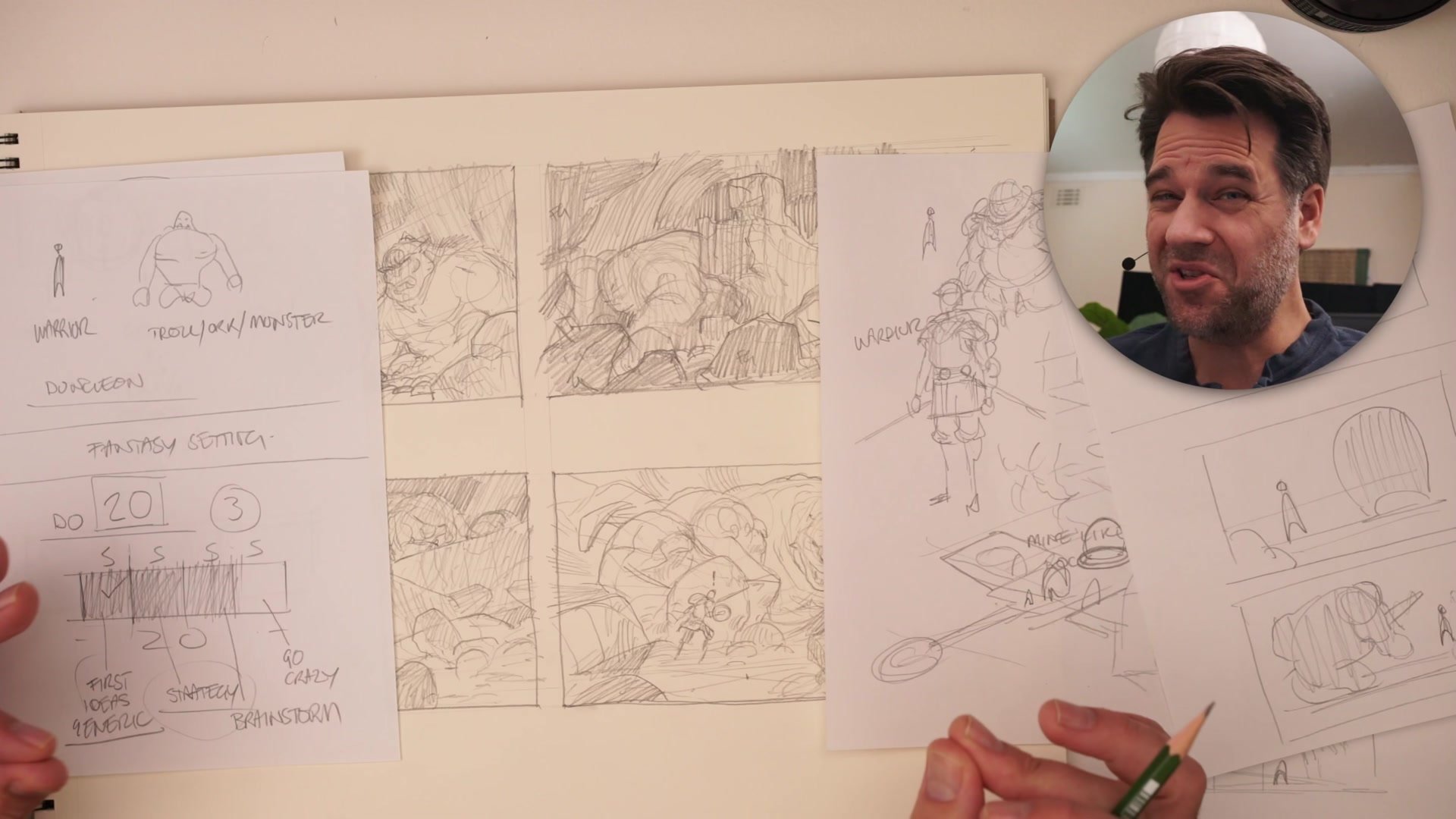
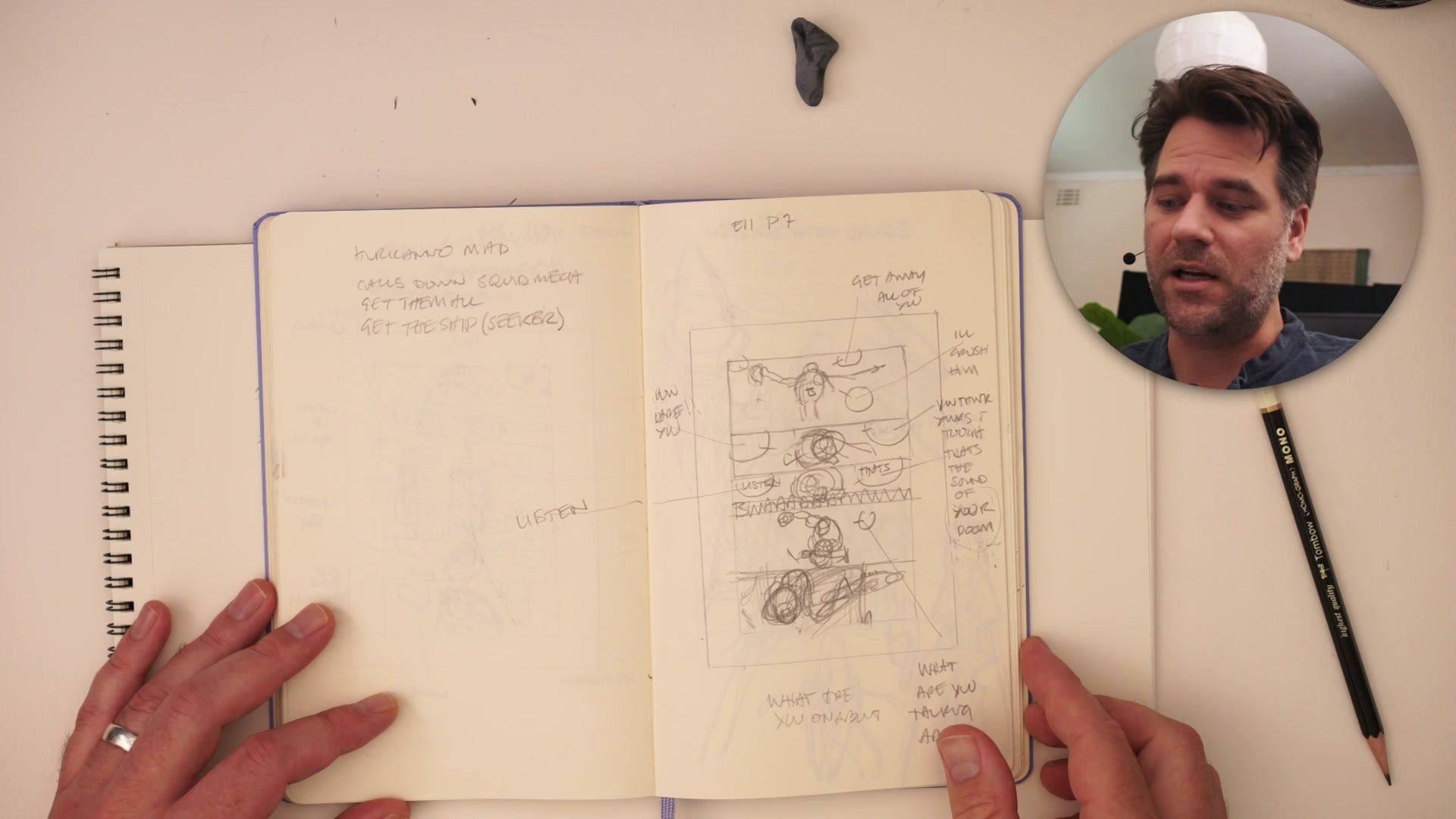
When the easy thumbnail concepts dry up, the session shifts from drawing to writing. Before picking up the pencil again, the approach involves listing out environmental and compositional ideas on paper: character above the creature, fire pit as a central element, lava, spikes, a sense of claustrophobic dungeon space, a special room, the idea of a roof adding tension. These written notes become a menu of options to draw from rather than staring at a blank page hoping for inspiration.
This intellectual brainstorming phase is deliberately separate from the drawing phase. The creative modality shifts from sketching to editing and organizing, thinking through which combinations of elements might produce interesting compositions. The written list also prevents the common problem of grinding through thumbnails and then realizing at the end that several good ideas were never explored because they were forgotten in the heat of drawing.
Development
Thumbnail Clarity
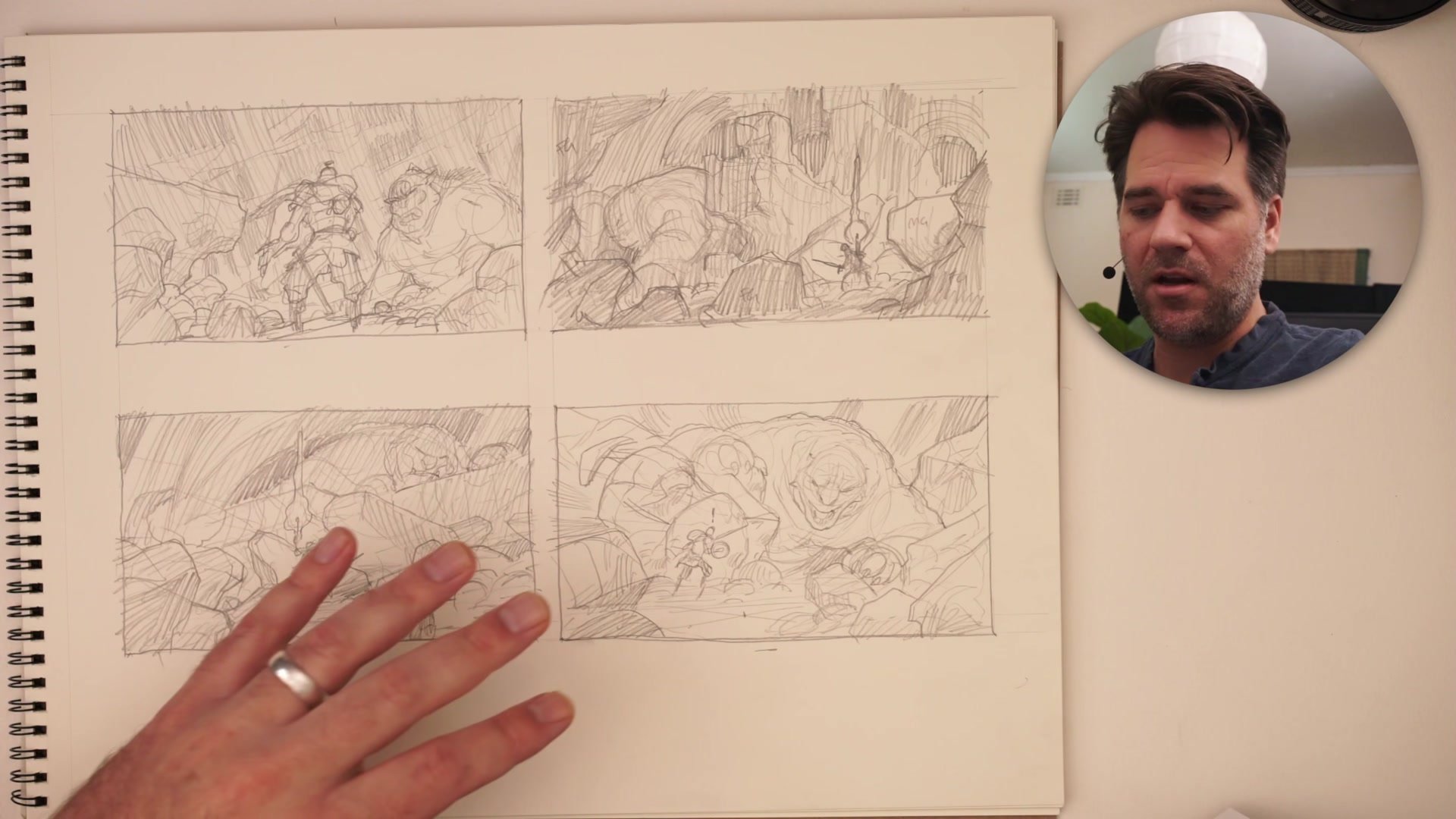
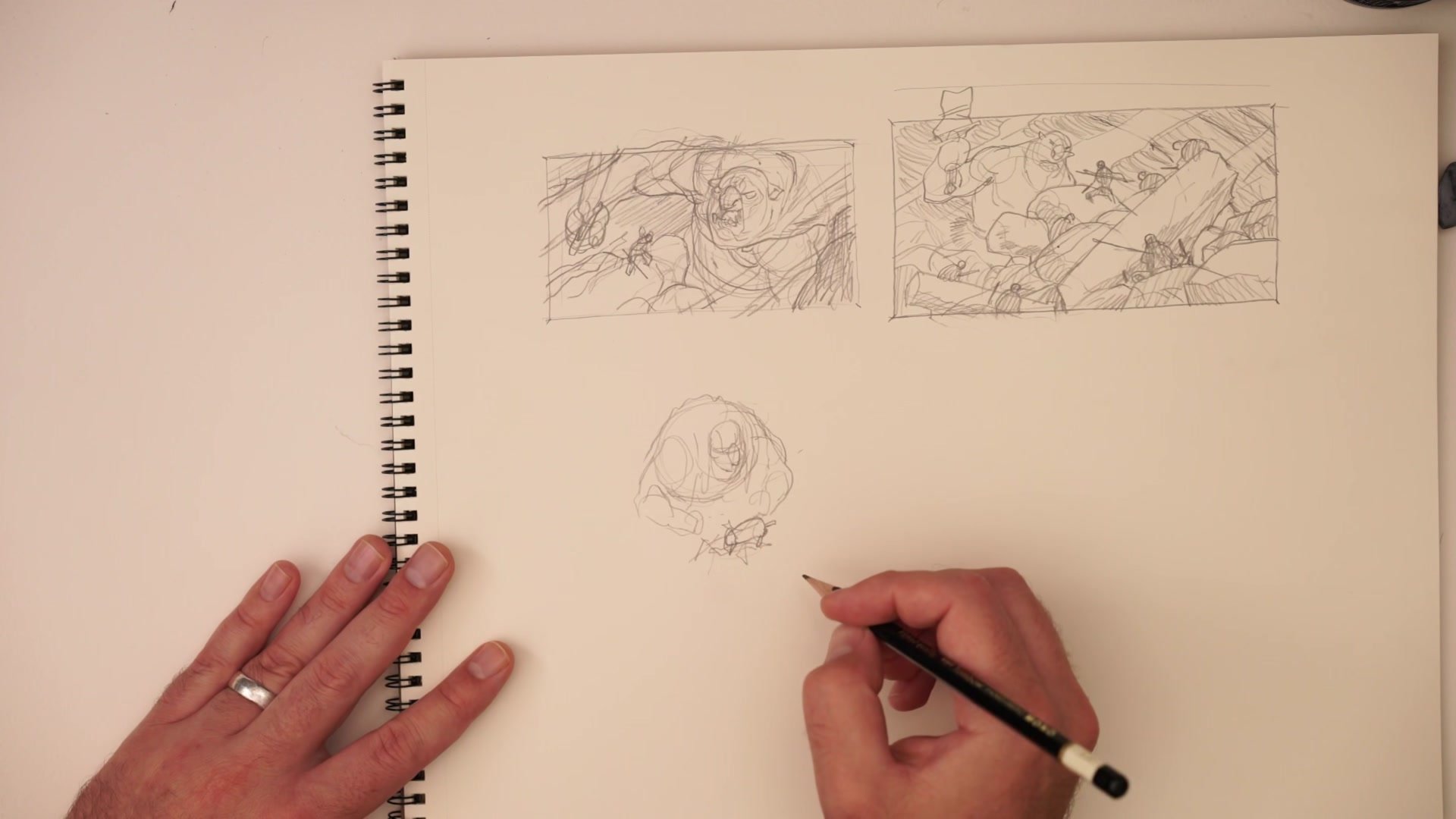
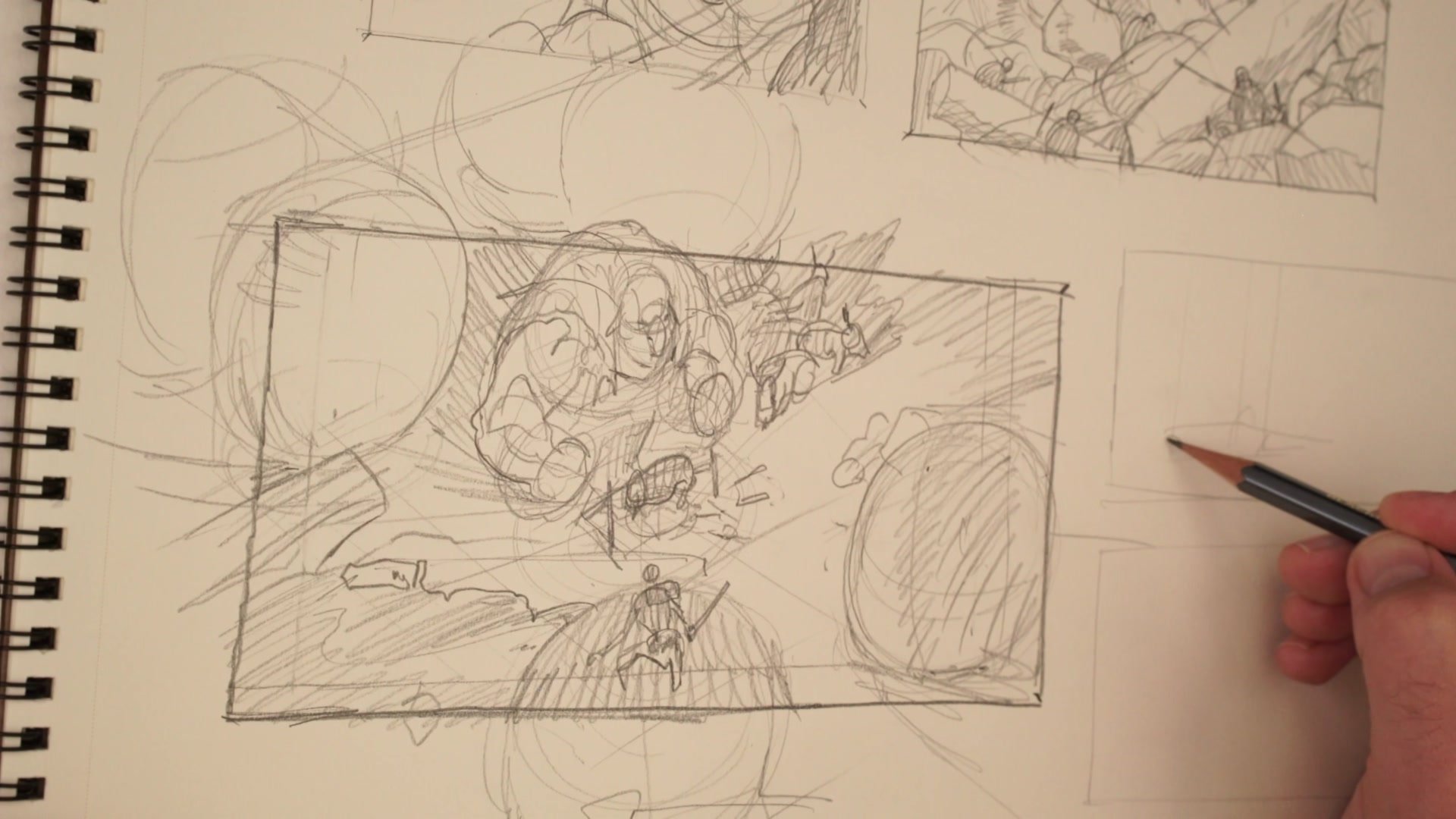
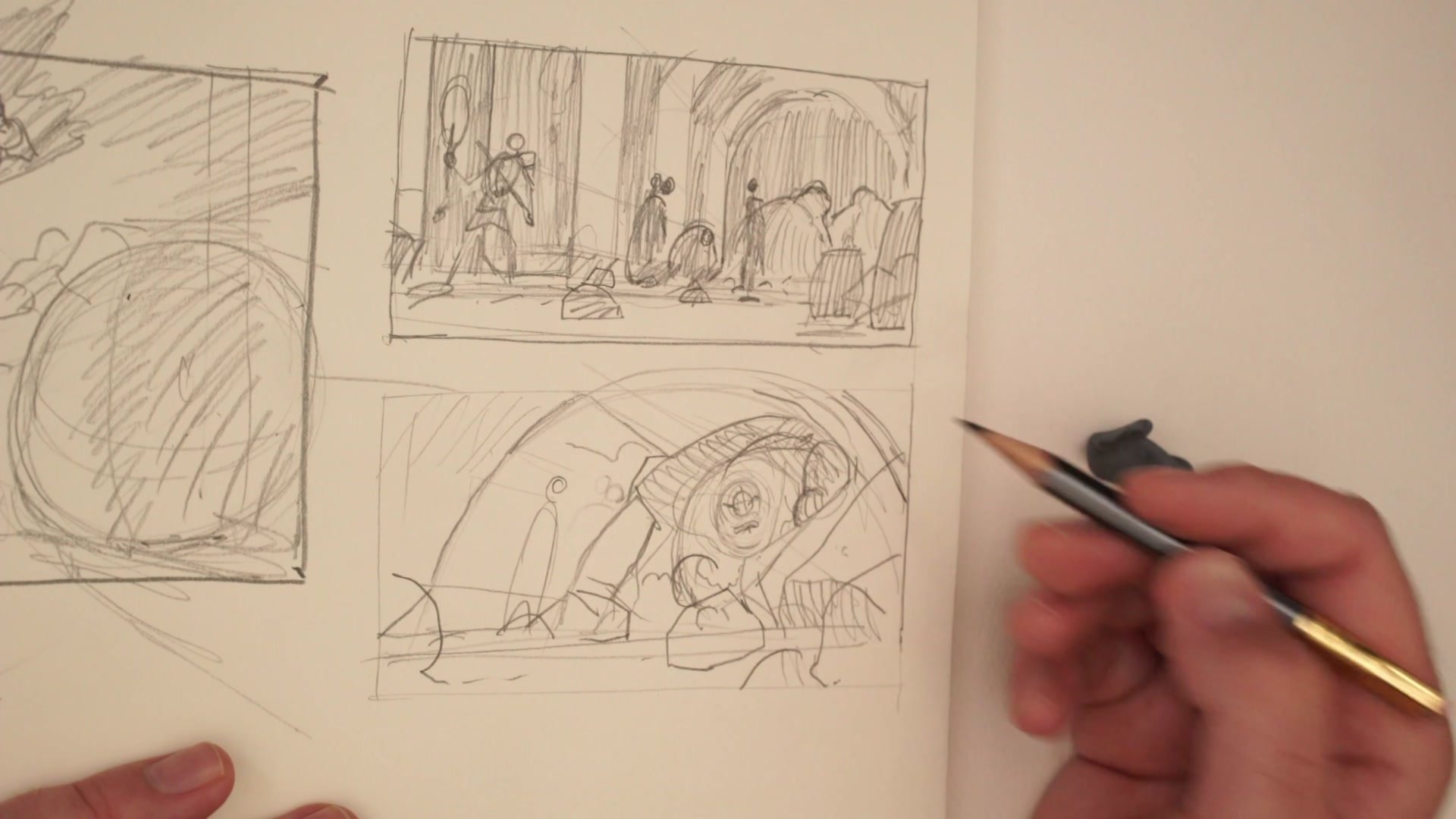
A significant portion of the session addresses why professional thumbnails need to be clear and relatively detailed rather than rough and vague. The reasoning comes from direct experience: when thumbnails are ambiguous, team members who are not artists see different things in them. They approve something they do not fully understand, and the disconnect surfaces only at the final stage when the finished illustration does not match what they imagined. This creates expensive revisions and frustrated teams.
Clear thumbnails give clients creative buy-in. When people are involved in the process and can actually see what each concept proposes, they understand the creative decisions that were made. They see which ideas were explored and why certain directions were chosen over others. The process of including people through clear thumbnail presentations prevents the situation where someone at the executive level sees the final result and asks why a completely different approach was not taken.
Refinement
Pushing Past Familiar Compositions
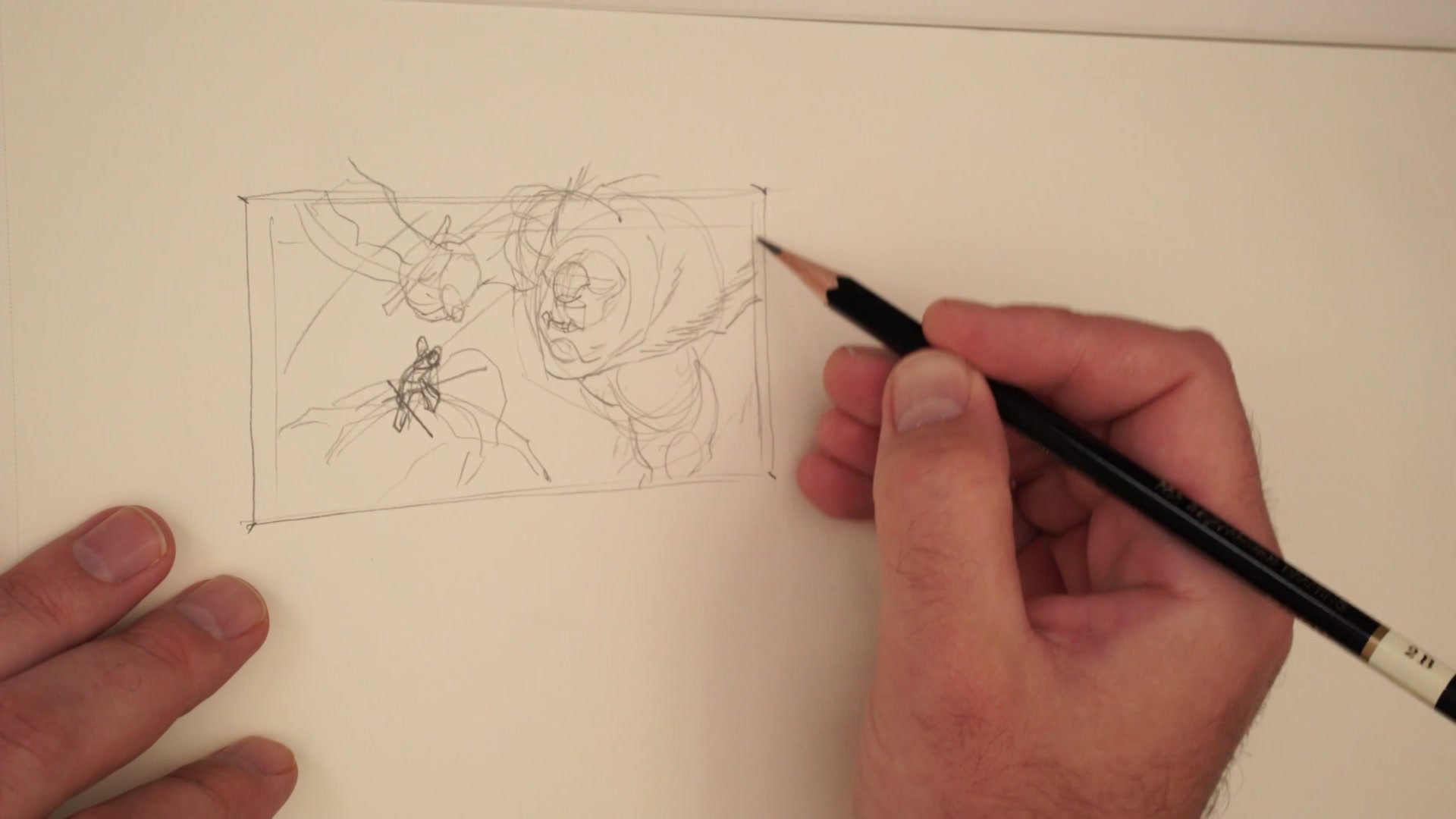
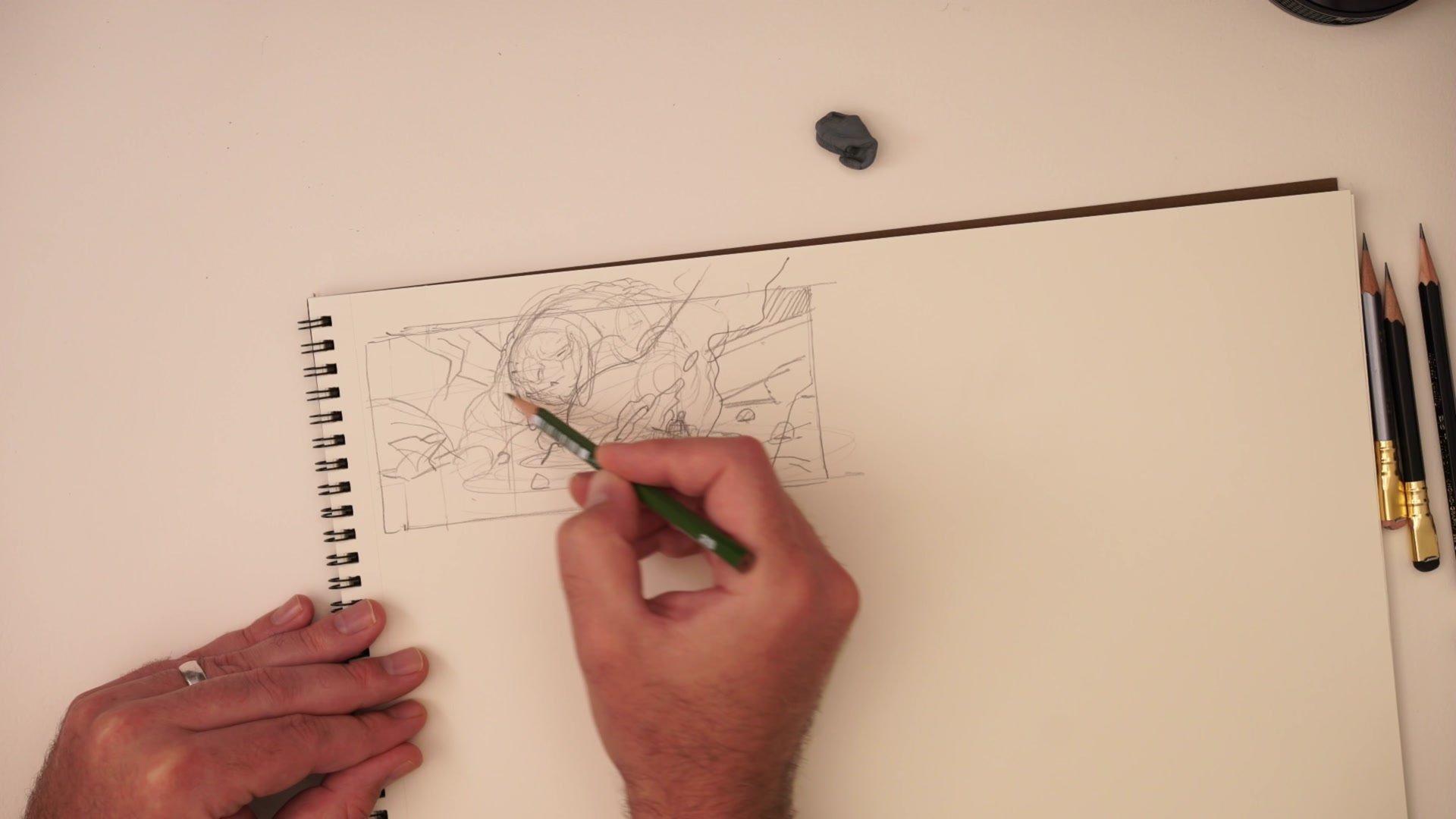
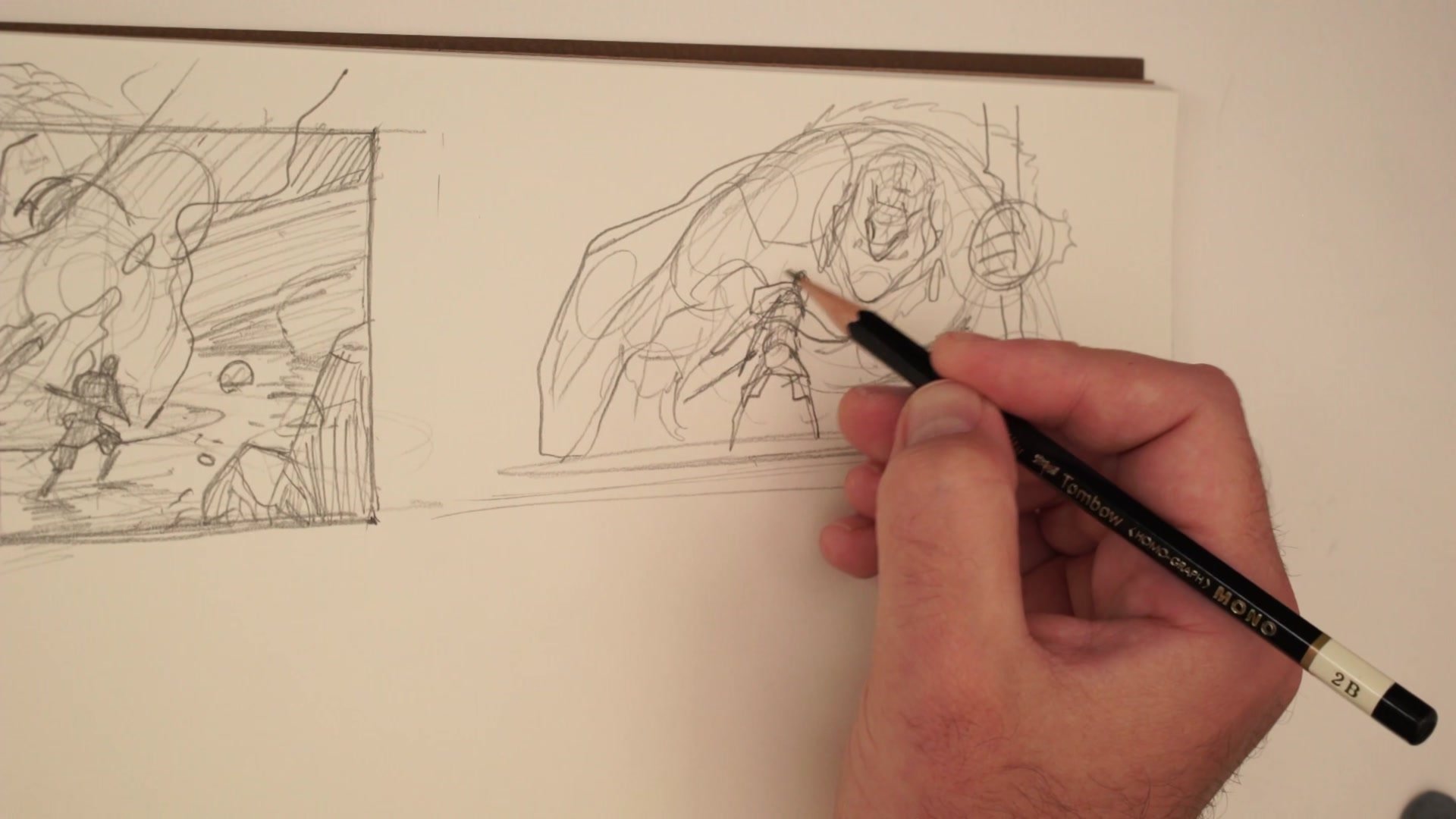
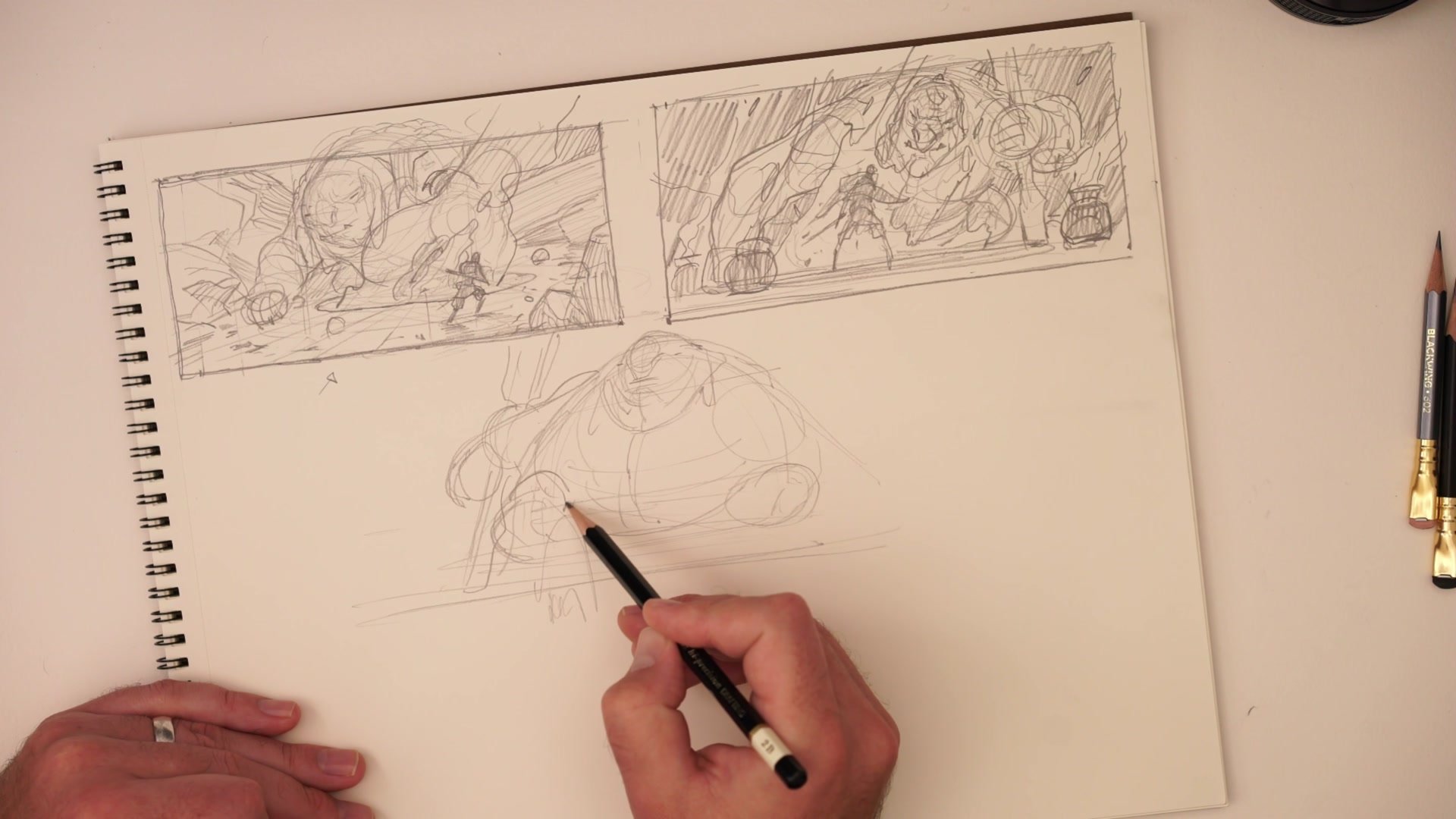
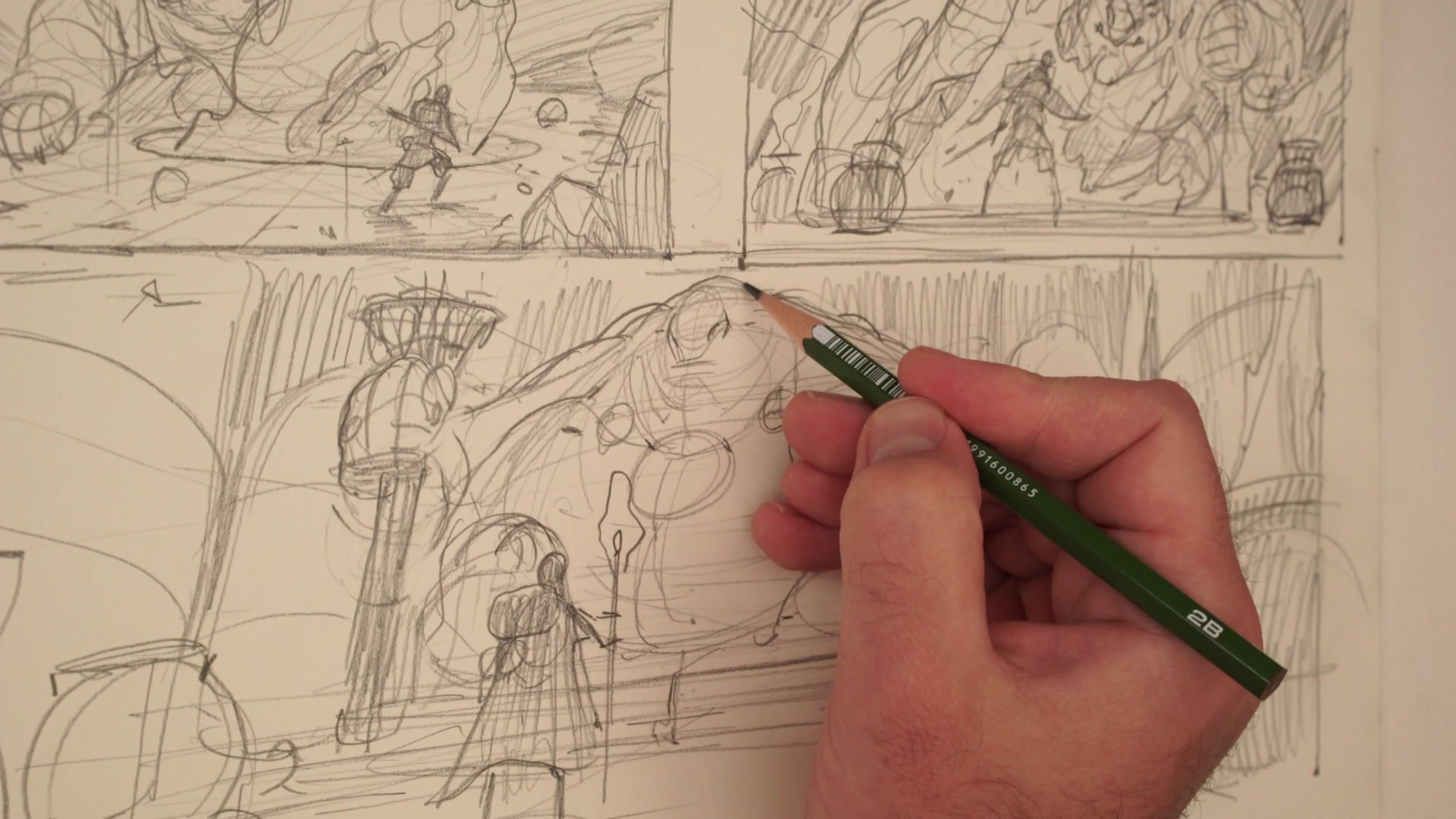
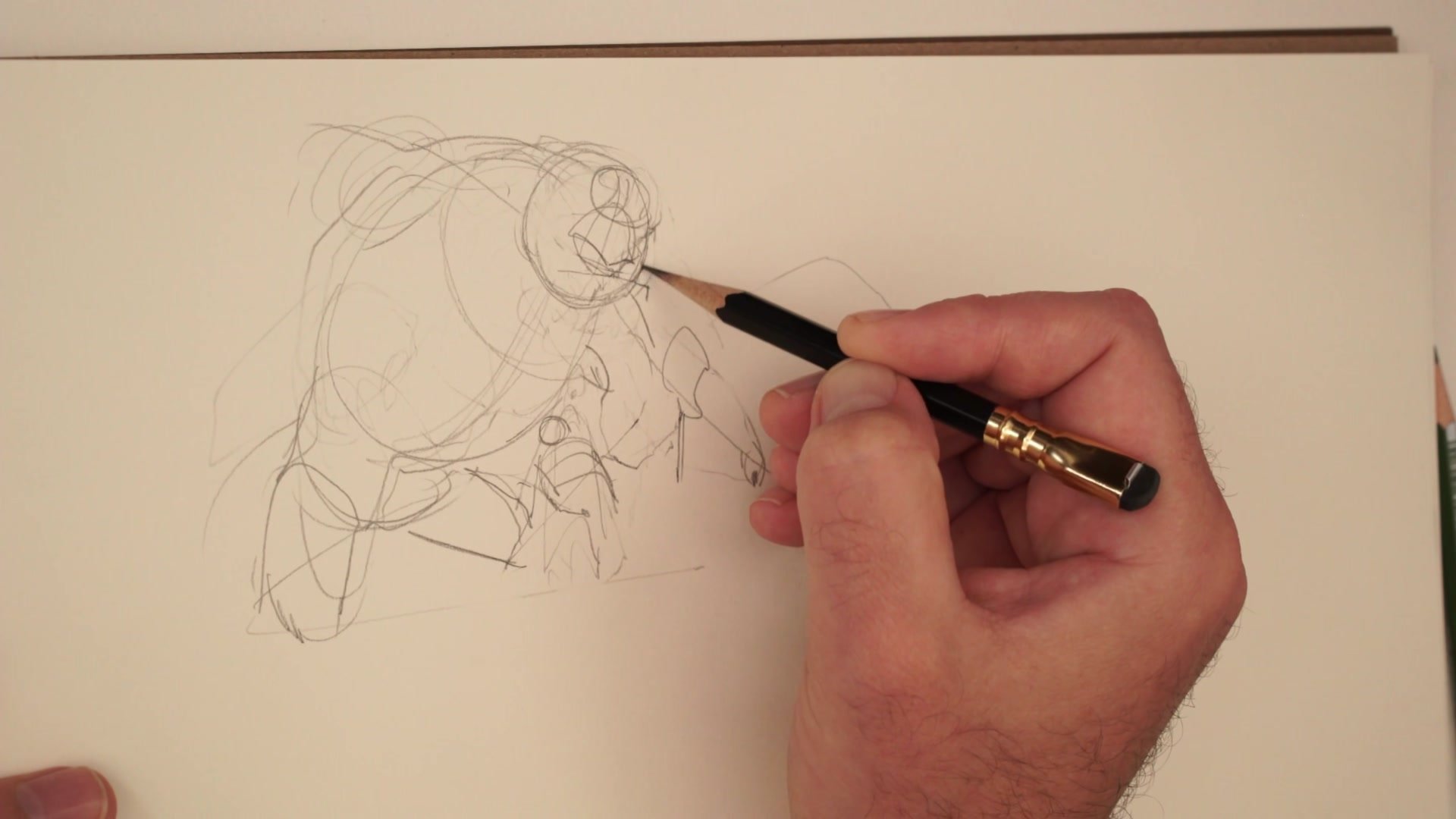
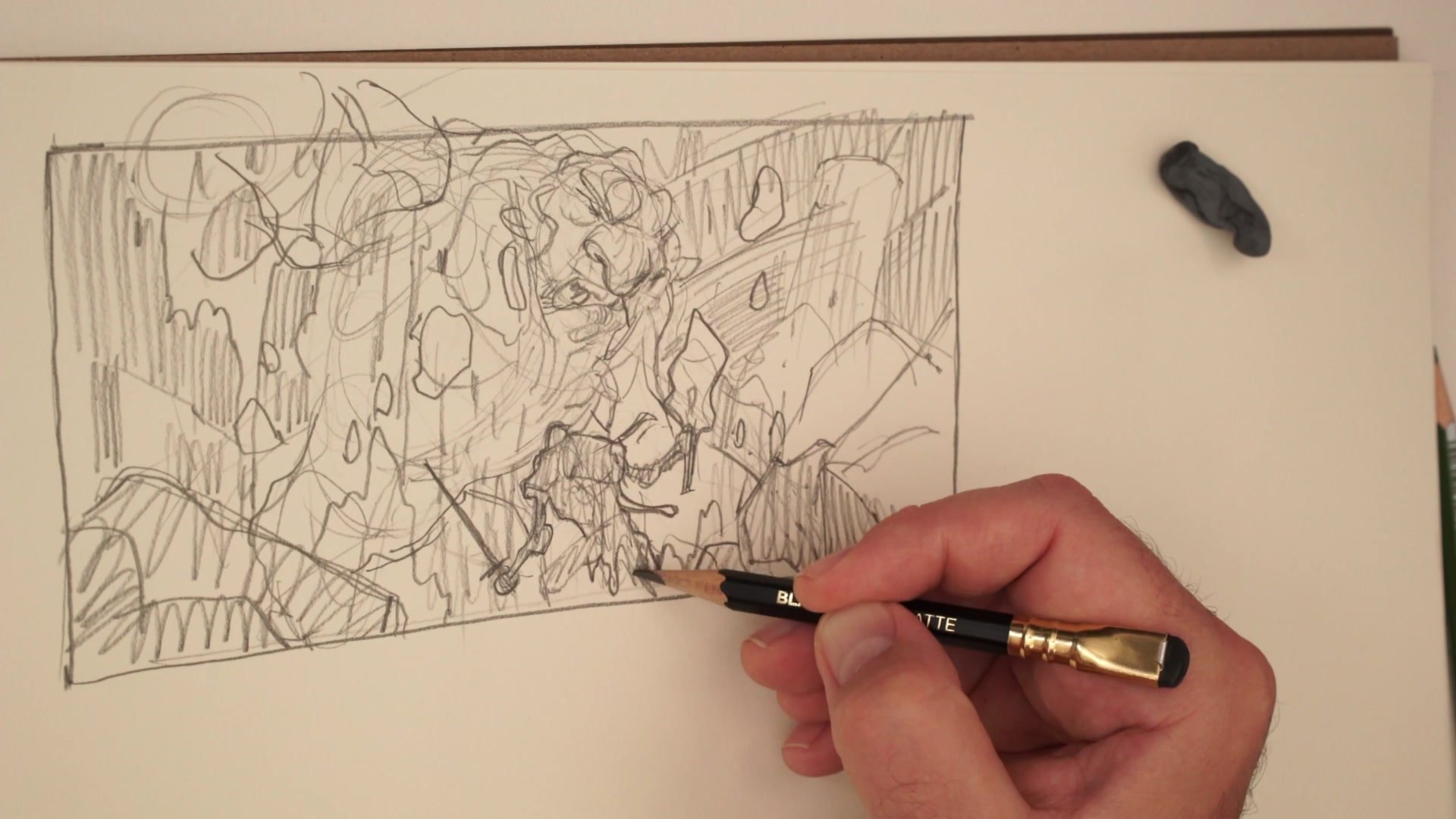
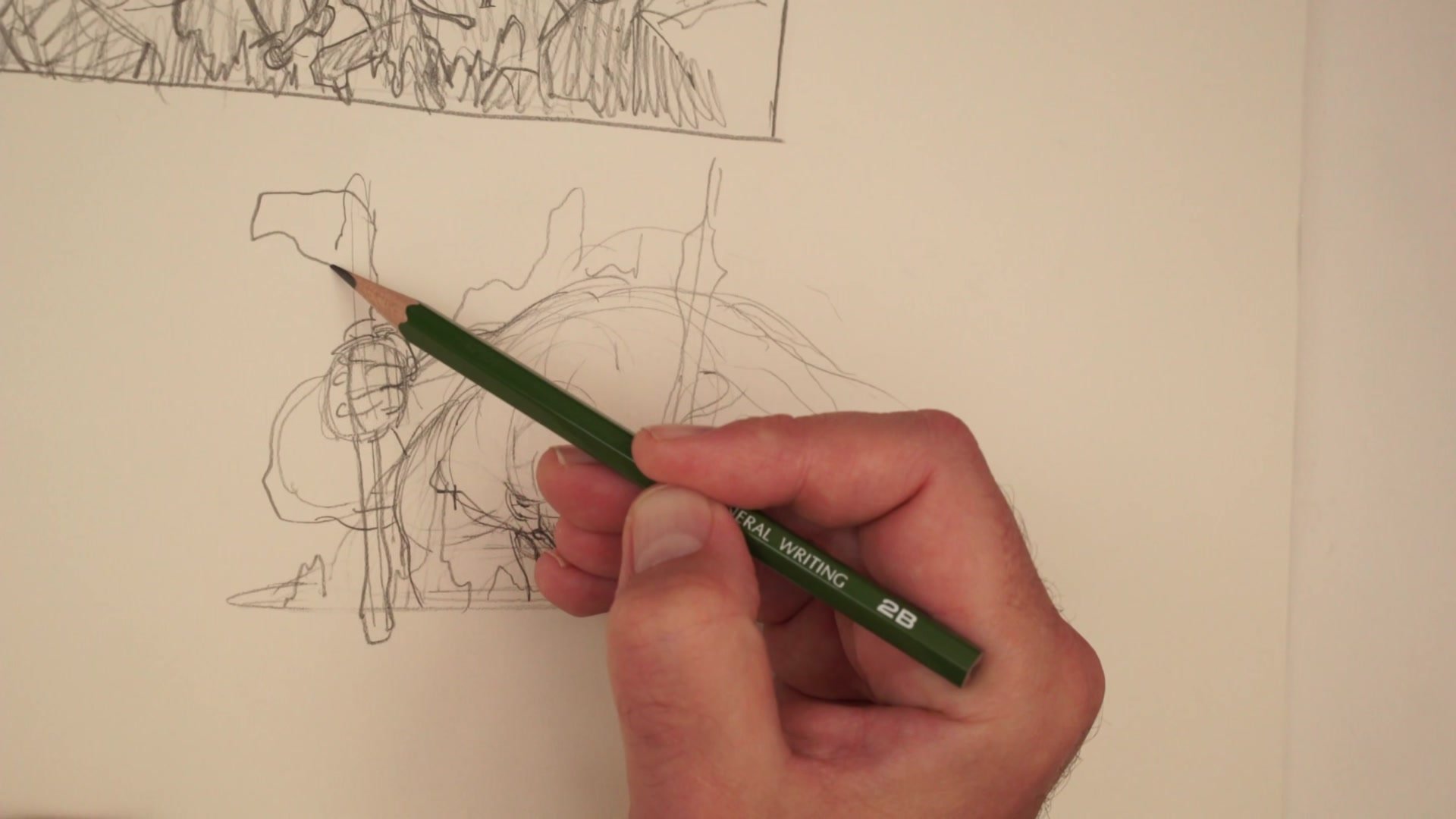
The later thumbnails demonstrate the real difficulty of the Draw 20 exercise. With the obvious warrior-meets-creature compositions exhausted, the session explores fire pits as central compositional elements, overhead camera angles, multiple smaller creatures instead of one large one, characters emerging from environmental features, and ultra-wide cinematic framing. Some of these explorations produce rough, uncertain sketches that would need additional passes to clarify.
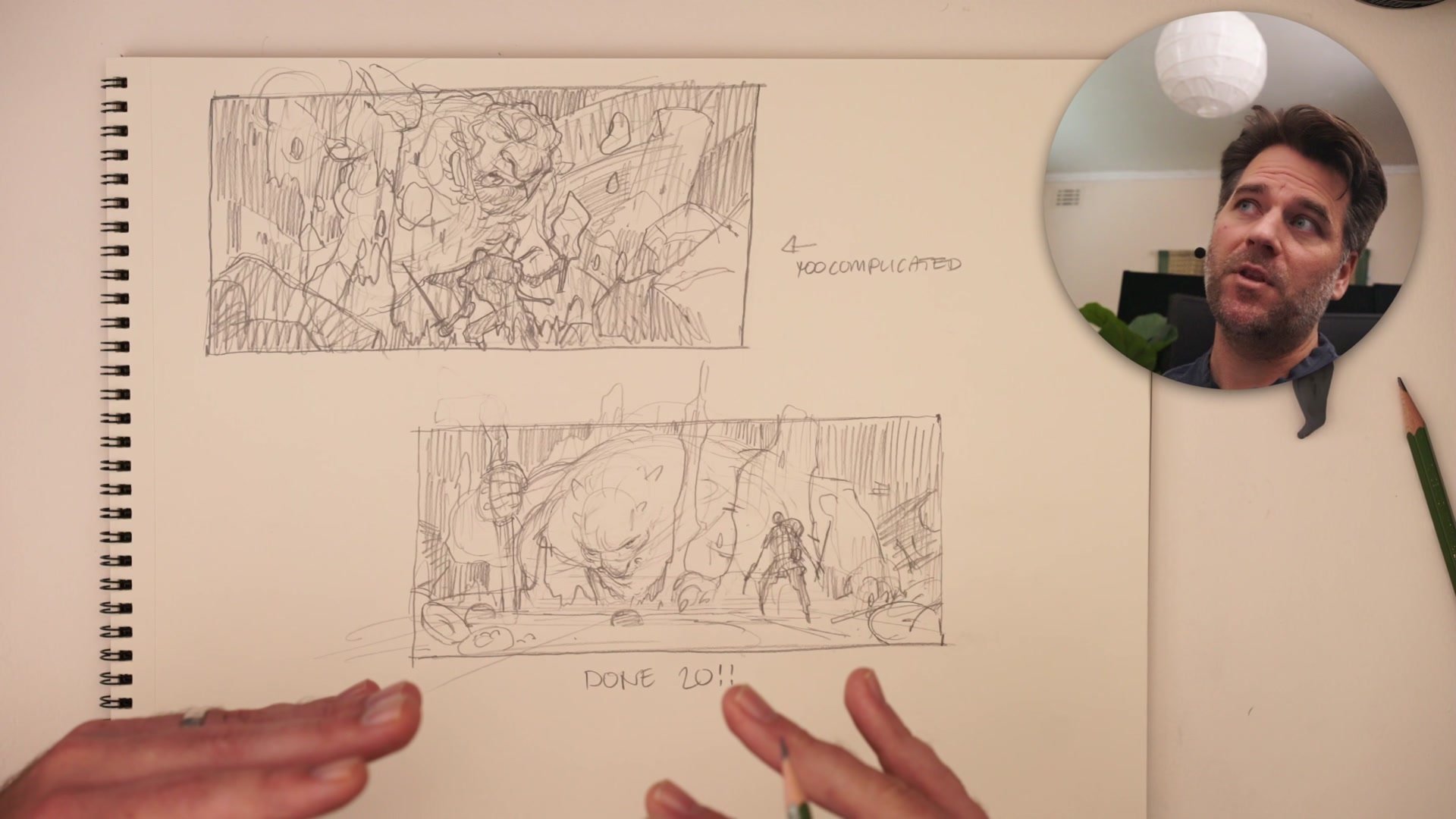
An honest observation that runs through the session is that when an image comes together quickly and reads clearly as a simple sketch, that is a strong indicator of compositional strength. When a thumbnail requires constant fiddling and still does not quite read, the composition itself may be too complicated. This does not mean abandoning complex ideas, but it does signal that more refinement passes would be needed to determine whether the concept actually works. The session closes with all twenty thumbnails complete, acknowledging that this is genuinely a three-to-four-hour exercise that taxes every creative faculty simultaneously.
Final Result
Key Techniques
Written Idea Lists: When drawing stalls, switching to writing down environmental and compositional ideas creates a menu of options to explore. This separates the intellectual brainstorming from the drawing process and prevents good ideas from being forgotten.
Thumbnail Clarity for Clients: Professional thumbnails need to be clear enough that non-artists understand exactly what is proposed. Vague sketches get approved without real understanding, leading to expensive revisions at the final stage when the disconnect surfaces.
Compositional Readability Test: If a thumbnail comes together quickly and reads clearly as a rough sketch, that indicates compositional strength. Constant fiddling that still does not produce clarity suggests the composition itself may be too complex for the concept.
Try This
Pick Up From Part 1: Choose a single brief and commit to drawing twenty thumbnails. Accept that the first ten will come relatively easily and the second ten will require deliberate strategy.
Write Before Drawing: When ideas dry up around thumbnail eight or ten, stop drawing. Write a list of environmental details, camera angles, and narrative moments that have not been explored yet. Use that list as fuel for the remaining sketches.
Set Timed Sprints: Use five-to-six-minute timers per thumbnail to maintain momentum and prevent over-investing in any single sketch. The quantity goal matters more than perfecting individual thumbnails.