How Do You Actually Start An Illustration
Summary
The Starting Problem
One of the biggest challenges in creating illustrations is figuring out how to actually begin. Everyone knows you should do thumbnails and sketches, but the real question goes deeper than that. How do you engage your idea onto the page for the very first time? The mental approach you take at the start fundamentally shapes the entire creative process that follows. There are three distinct strategies that professional artists use at the highest levels, each producing different creative outcomes and different feelings while working. None of them is universally correct. The right choice depends on what kind of artist you are, what kind of project you are tackling, and what kind of creative energy you want to bring to the work.
Understanding these different starting modalities is a huge asset. Without that understanding, it is easy to trip up and encounter real difficulty when pencil first meets page. The way you start is often the way you finish when it comes to creative projects, and the thought process behind what you are doing matters more than any single technique.
The Explorer Modality
Exploring Without a Frame
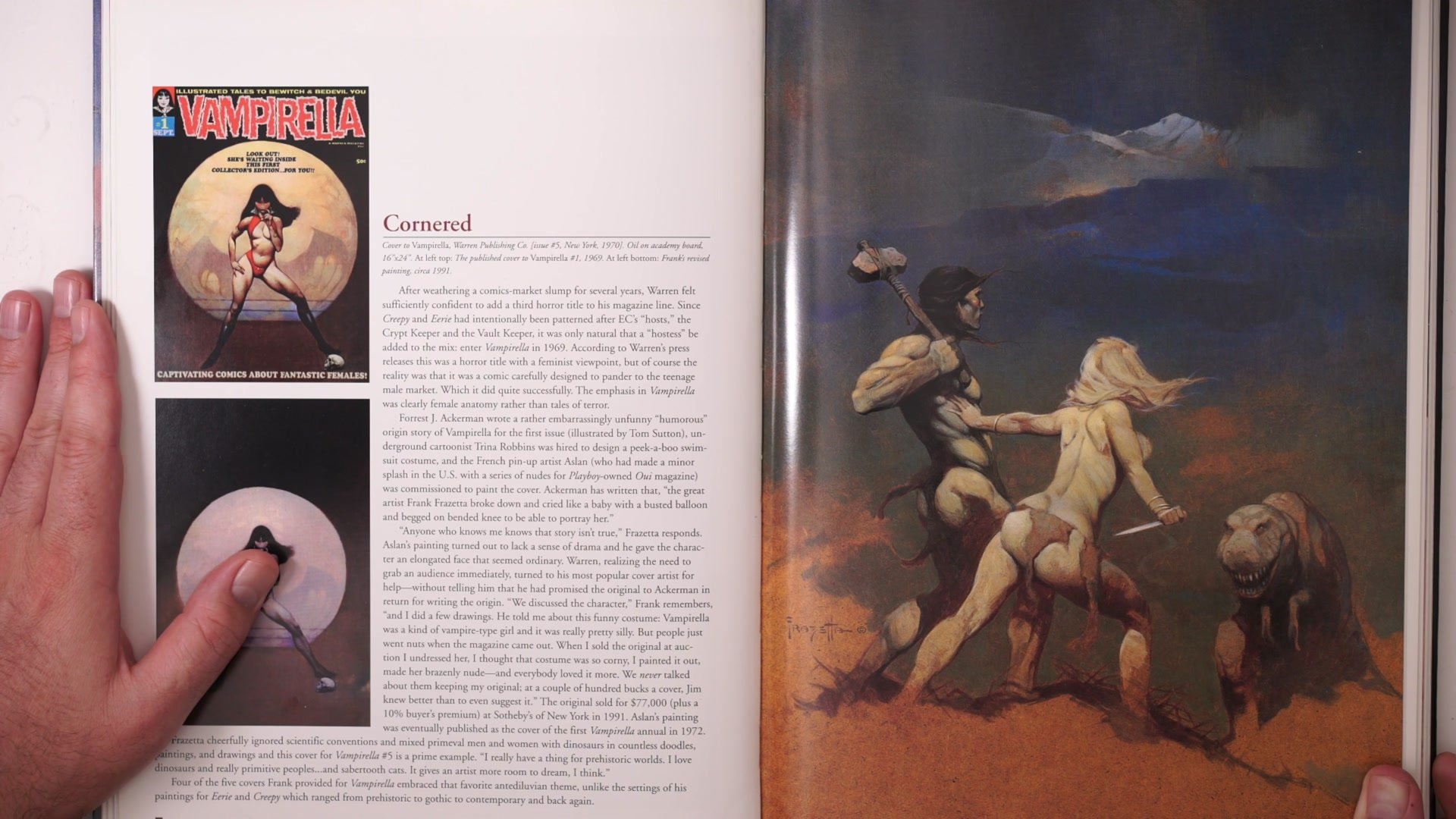
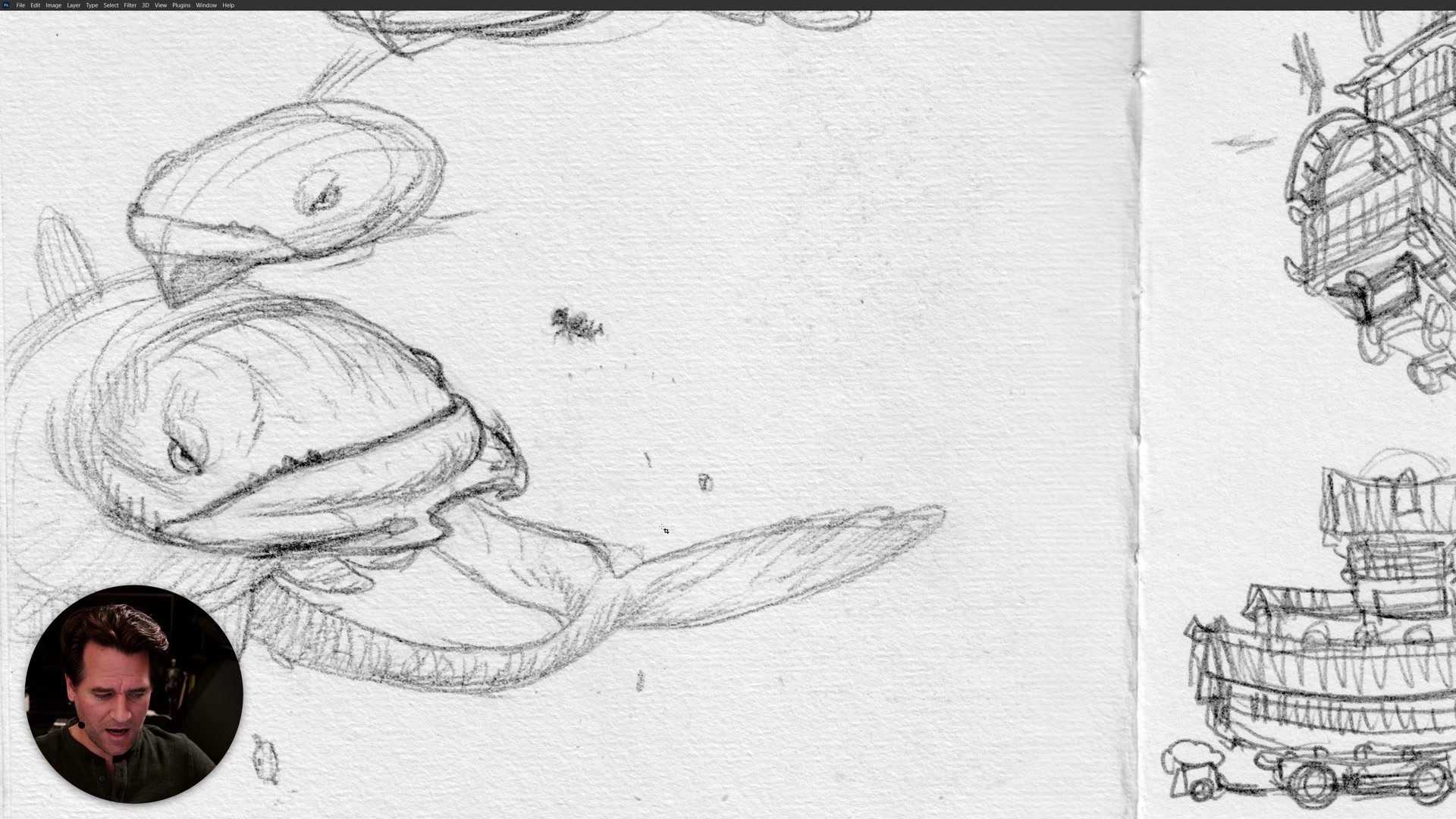
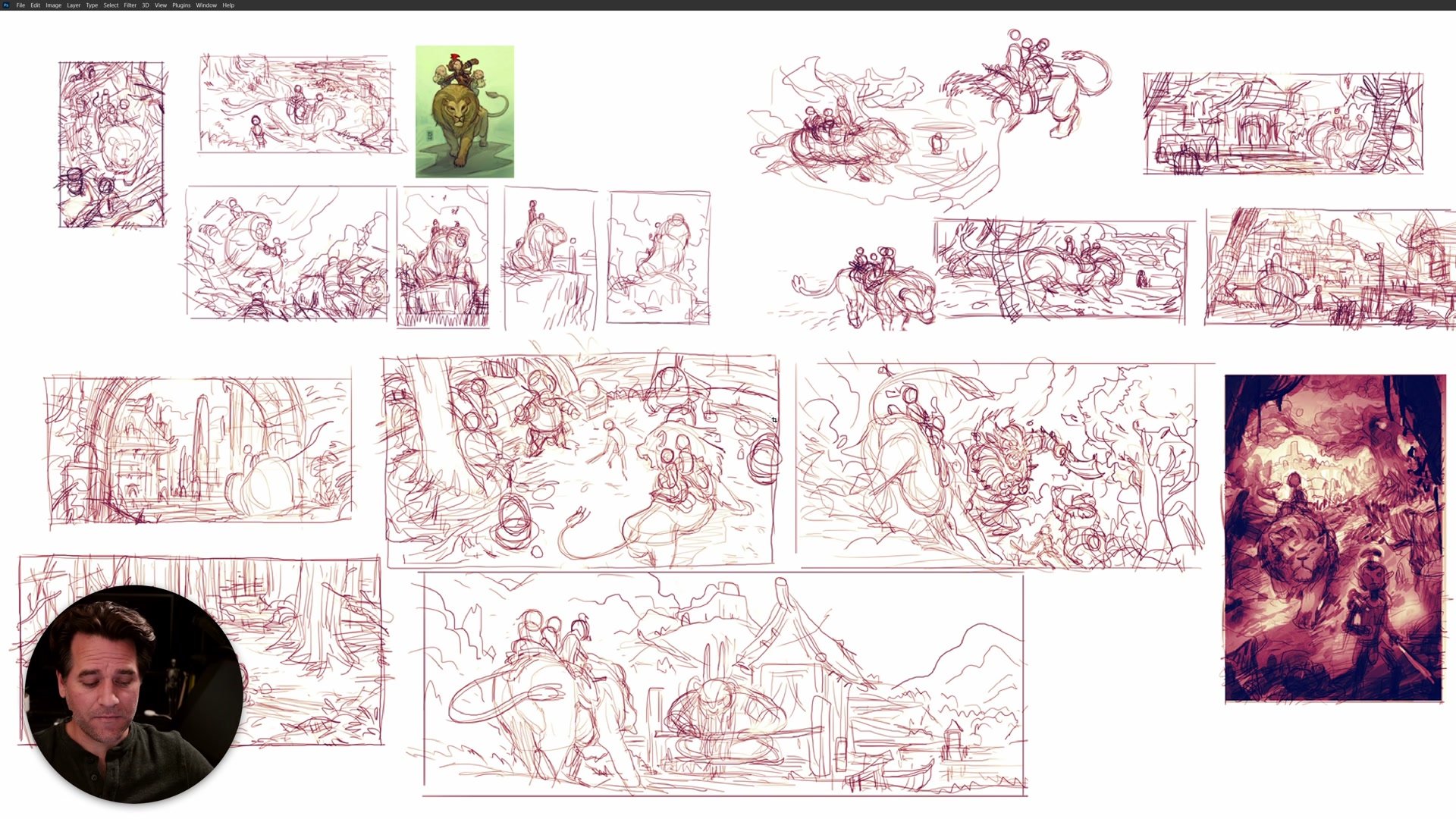
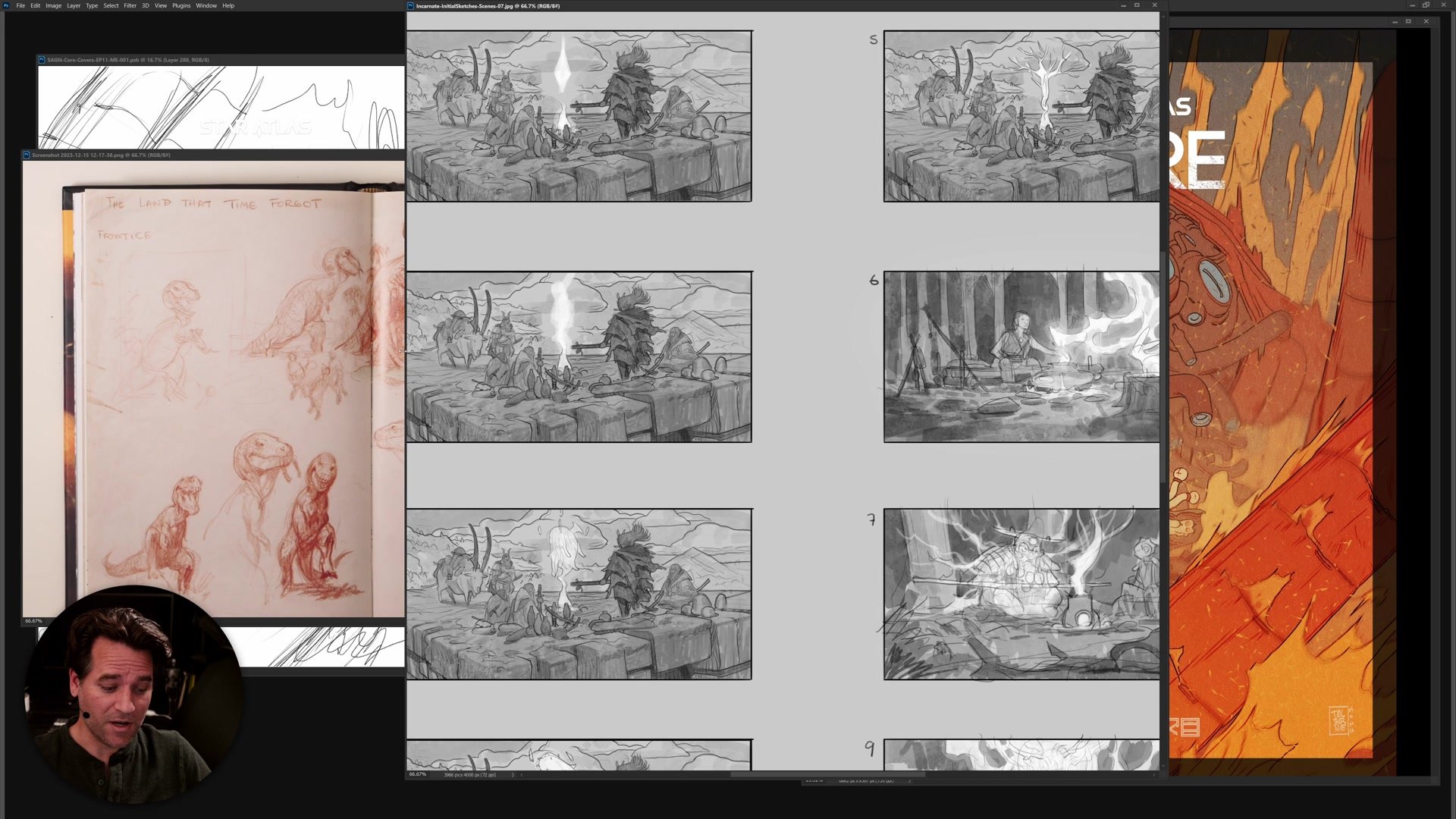
The first strategy is the explorer modality. This is where a large variety of sketches and techniques are used to get at an idea without thinking about the final frame. The goal is open exploration, sifting through concepts and visualizations, sketching to find the right position and feel. Frank Frazetta's work in Rough Work exemplifies this beautifully. He would play around with the same idea repeatedly, trying to perfect it, trying to find the apex moment and whether the feeling and the pose were right.
This is a very natural and primal way of working. It allows for panning for gold, messing around, and having a process that gives the opportunity to explore different ideas and really get to the root of what a story or image should look like. The advantage is that when you do get to executing and producing, you are not second-guessing yourself. You know you have covered all the bases. The disadvantage is that some artists get stuck in this phase and never get out of it, never translating all that creative exploration into finished work.
Architectural Thumbnailing
Thinking Like a Cinematographer
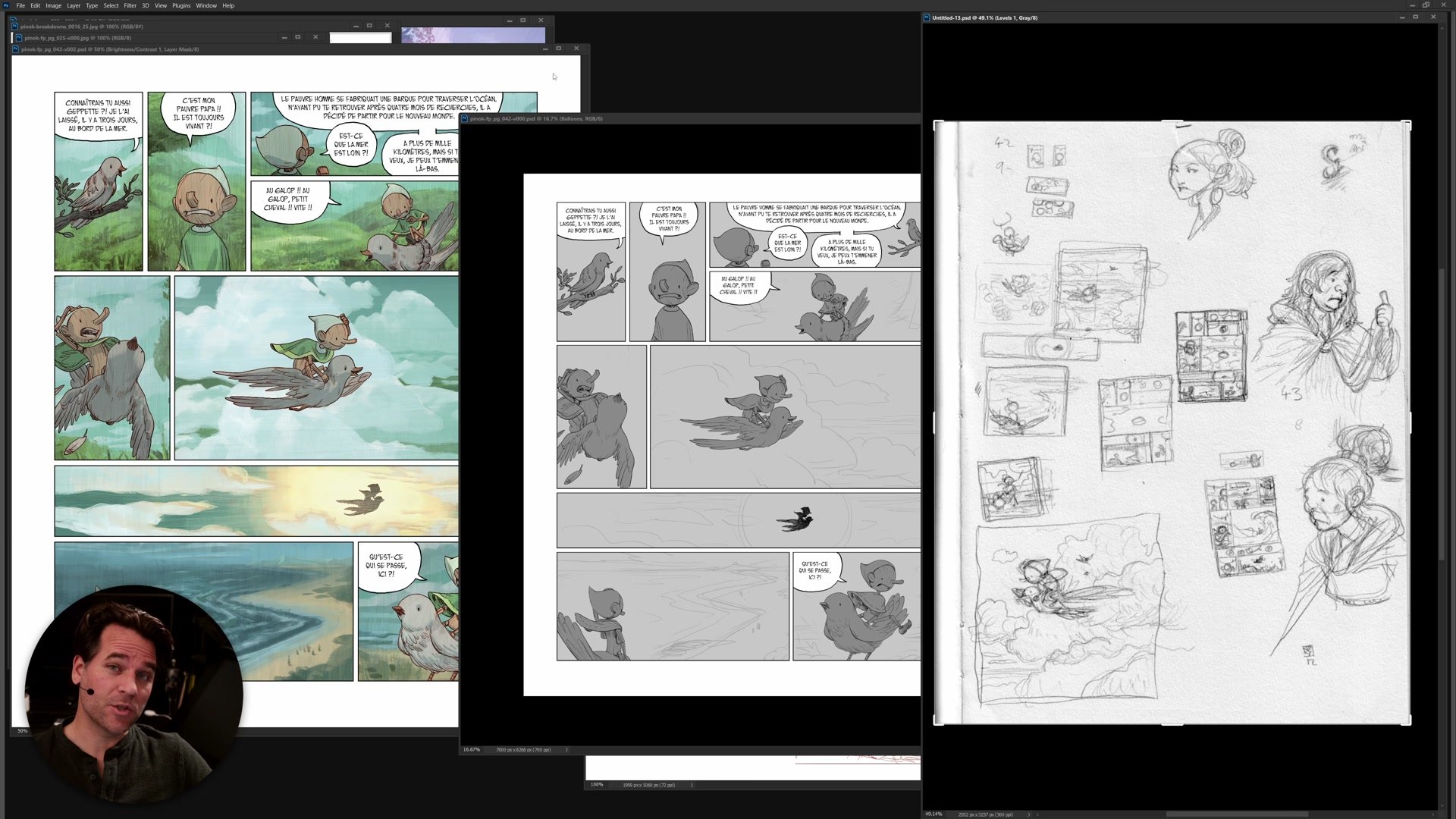
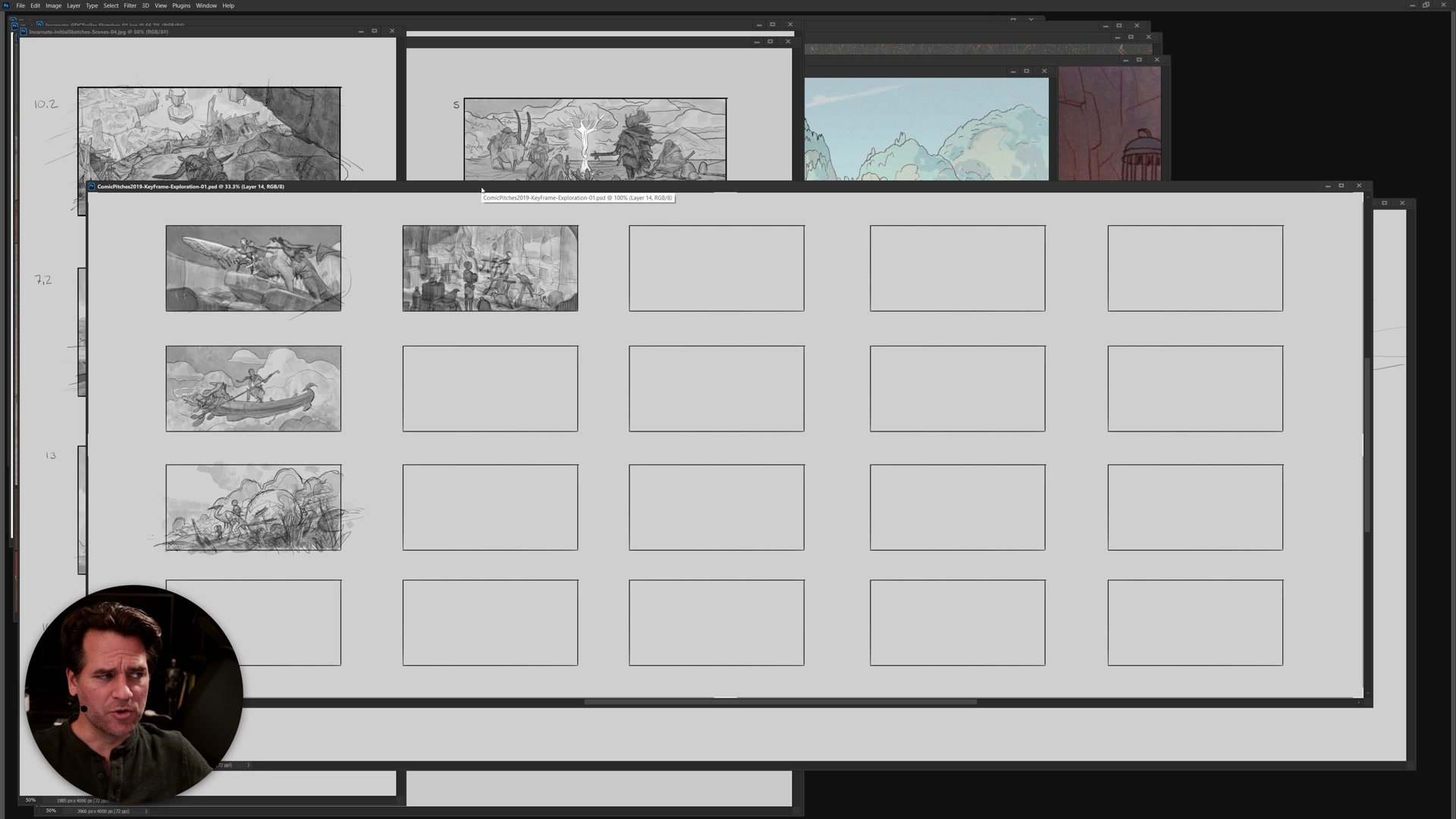
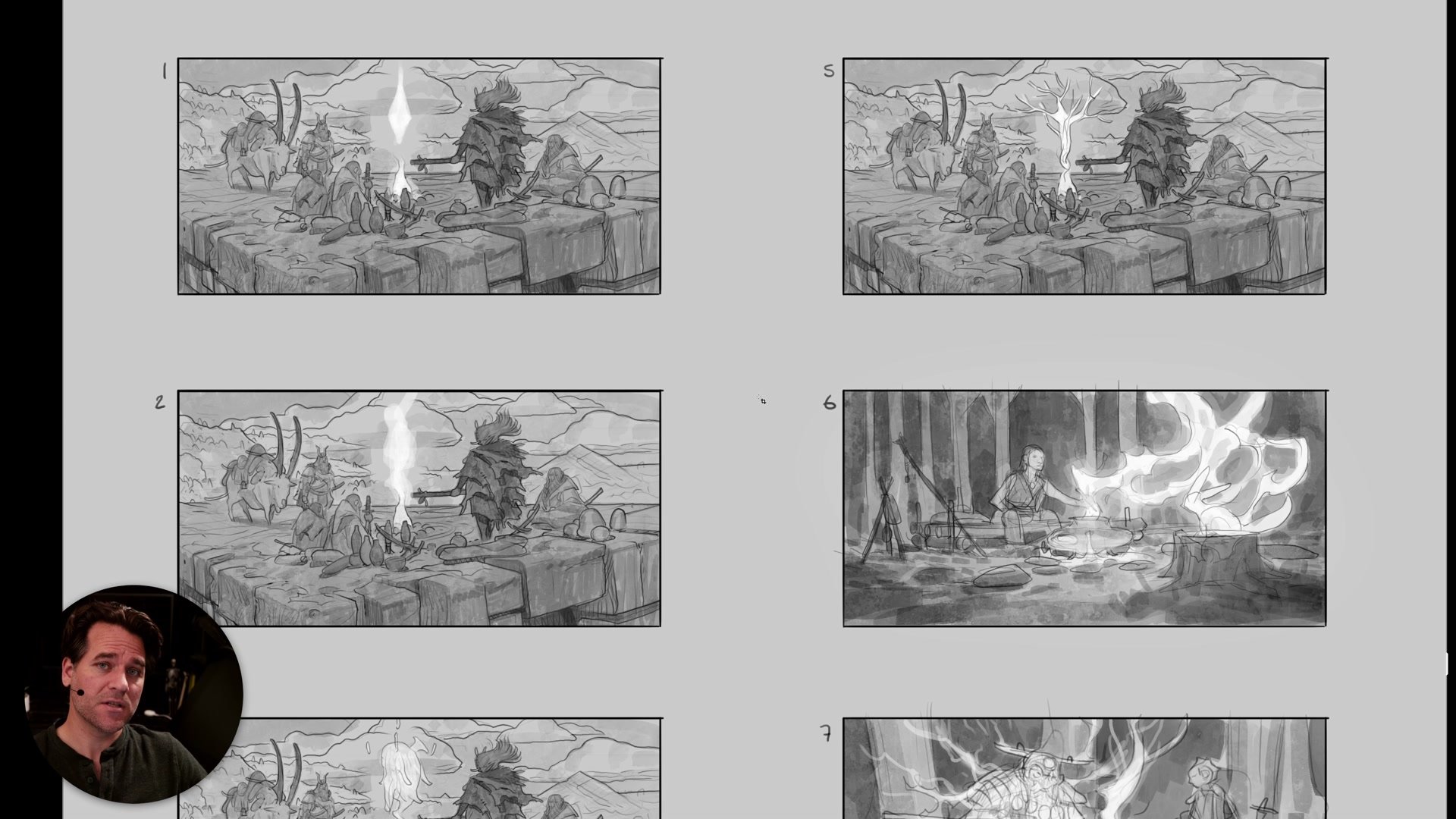
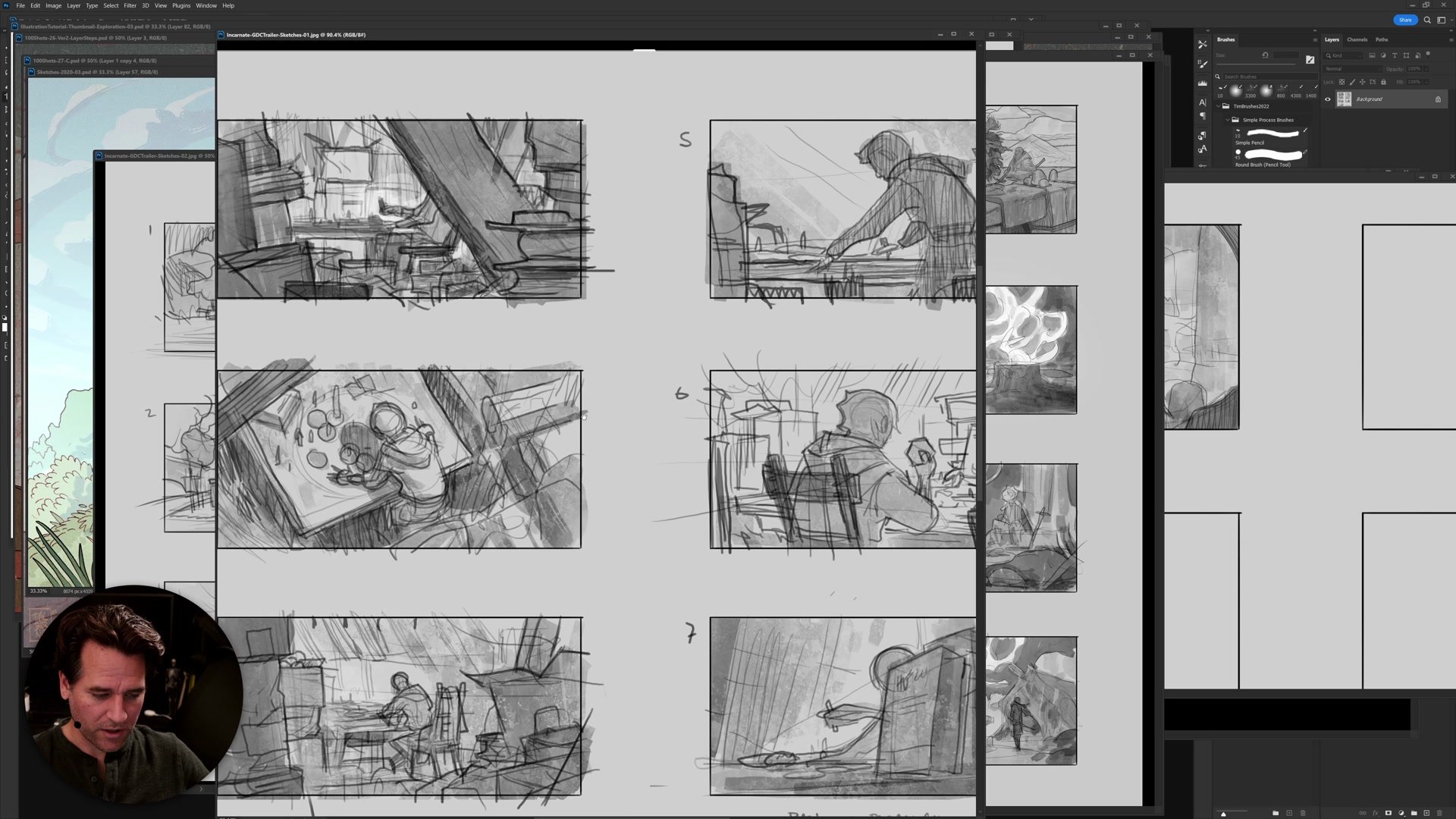
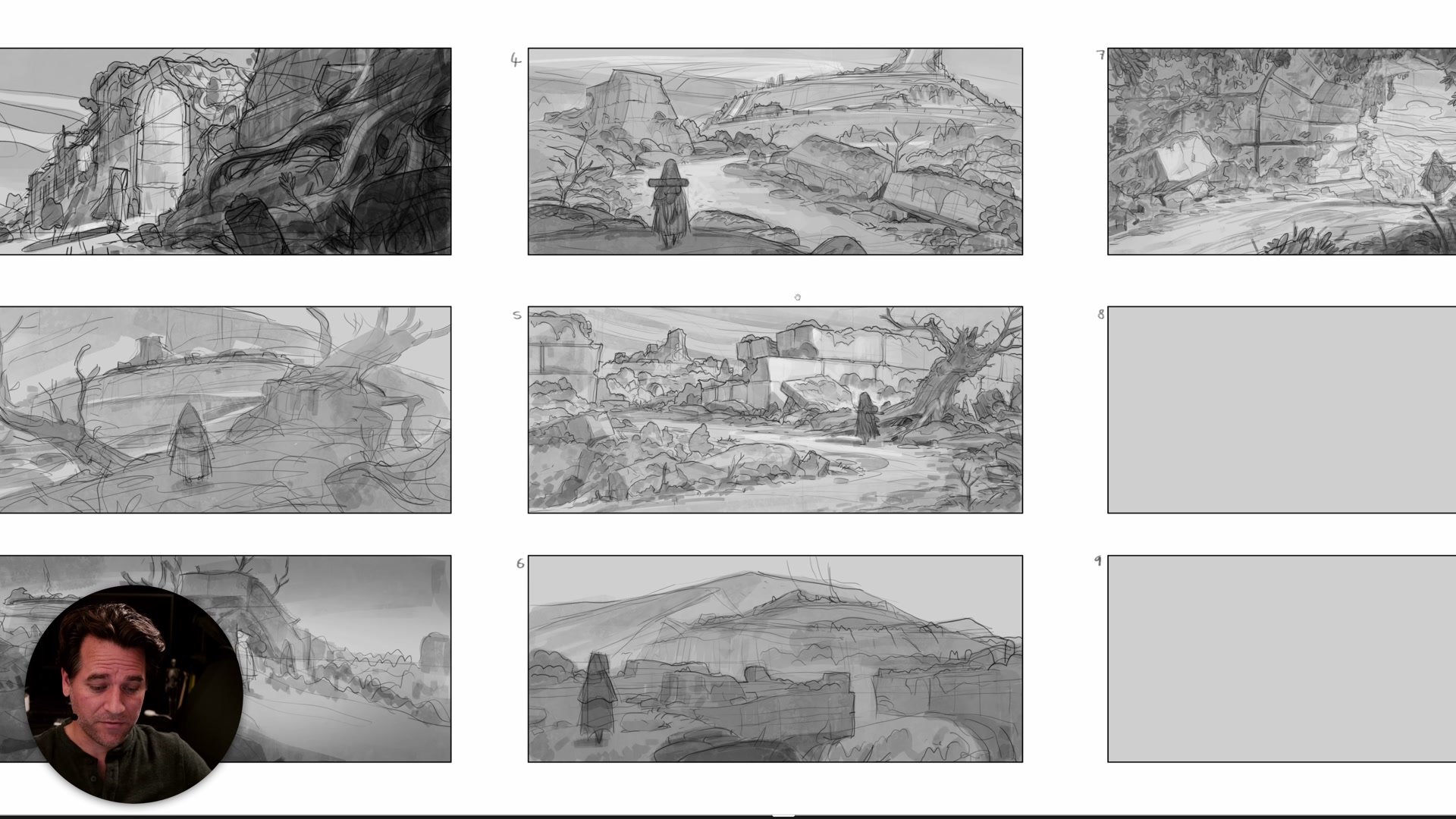
The second strategy is the architectural or technical approach. Here the starting point is the frame itself, thinking like a storyboard artist or cinematographer. Instead of free sketching, the process involves recording ideas as defined images within a consistent format. This methodology comes from concept art, where the brief is often to produce a set number of thumbnails that can be compared against each other as a coherent set.
The key difference is that as a concept artist, creative explorations need to be shareable with a team. A solid thumbnail within a frame is much harder to misinterpret than a loose sketch. This approach develops a strong ability to conceive of simple, reliable compositions quickly. The downside is that it can become formulaic. A lot of concept art falls into this trap, using predictable foreground-middle-ground-background plans that work but lack the last ten percent of illustrative intent and creativity that proper illustrators achieve through deeper exploration.
The Visionary Approach
Working Directly on the Board
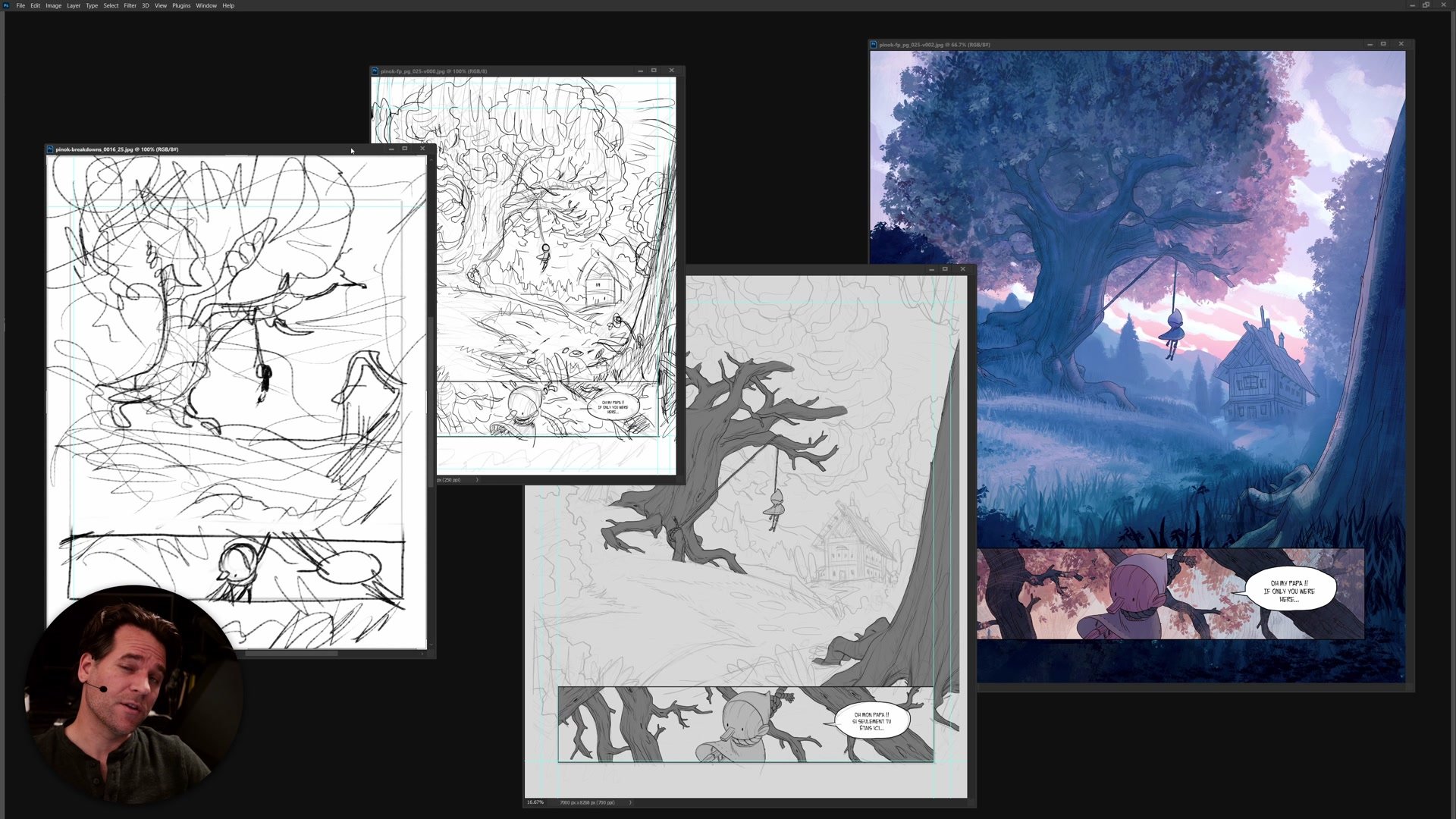
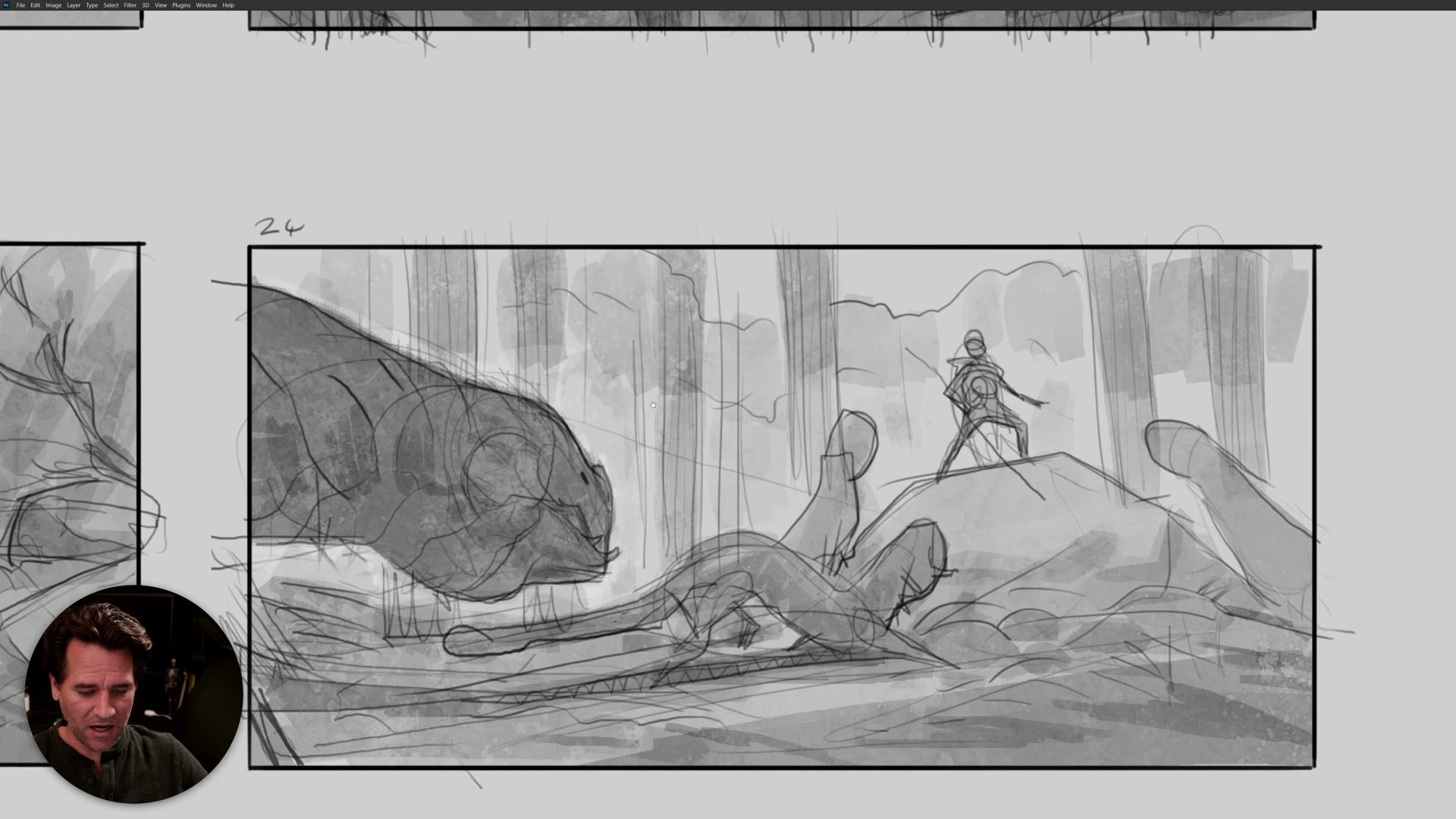
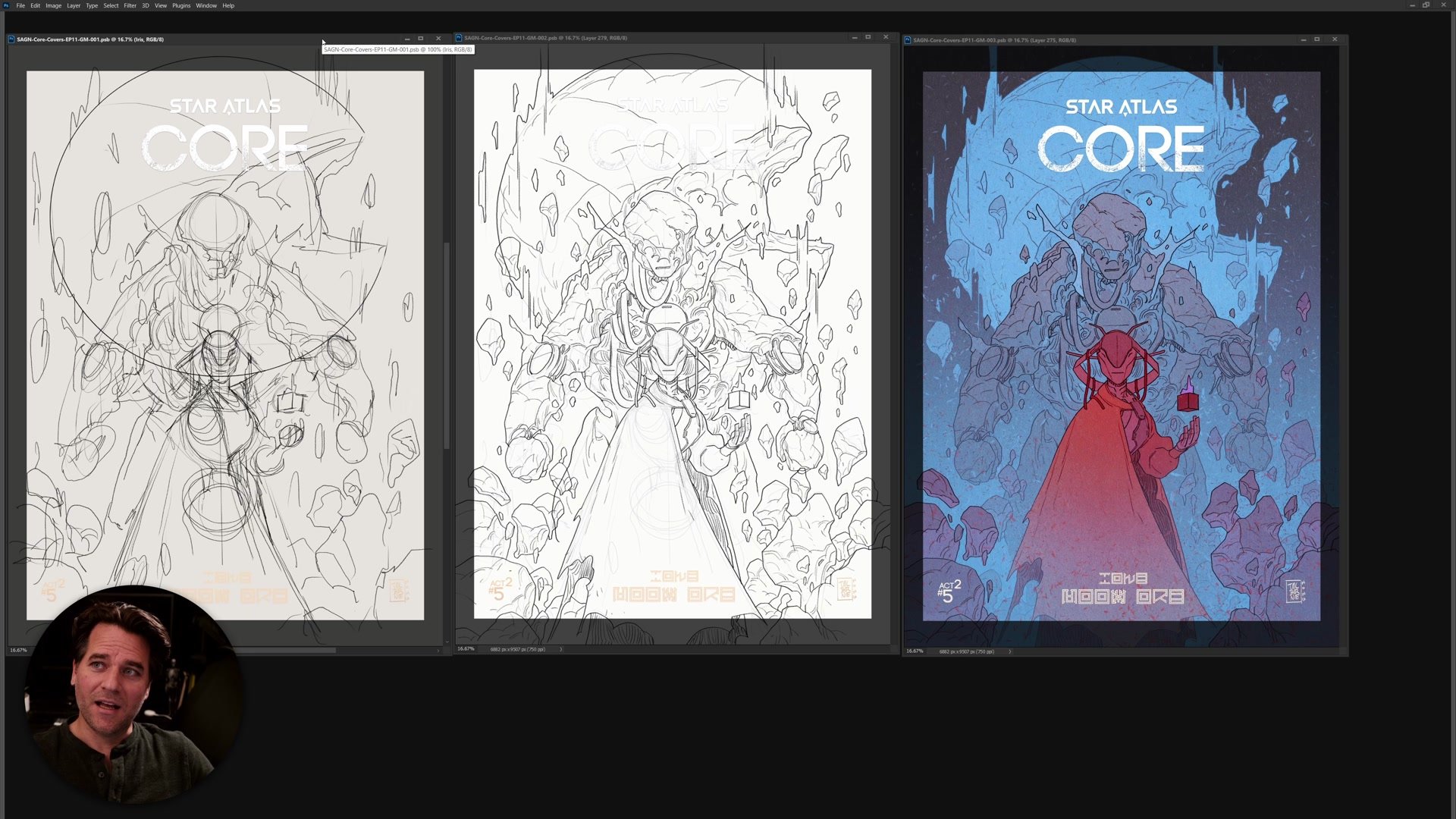
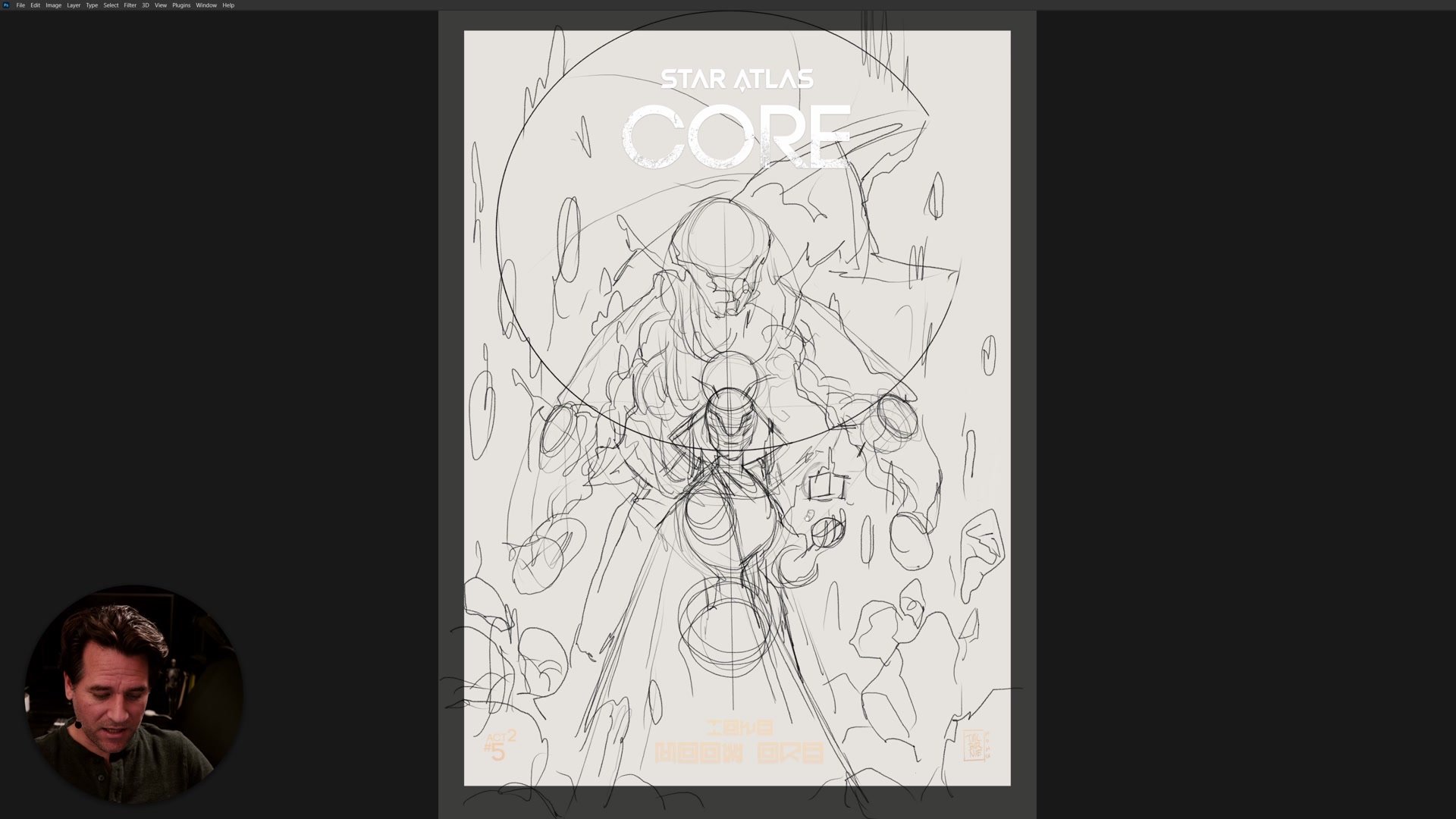
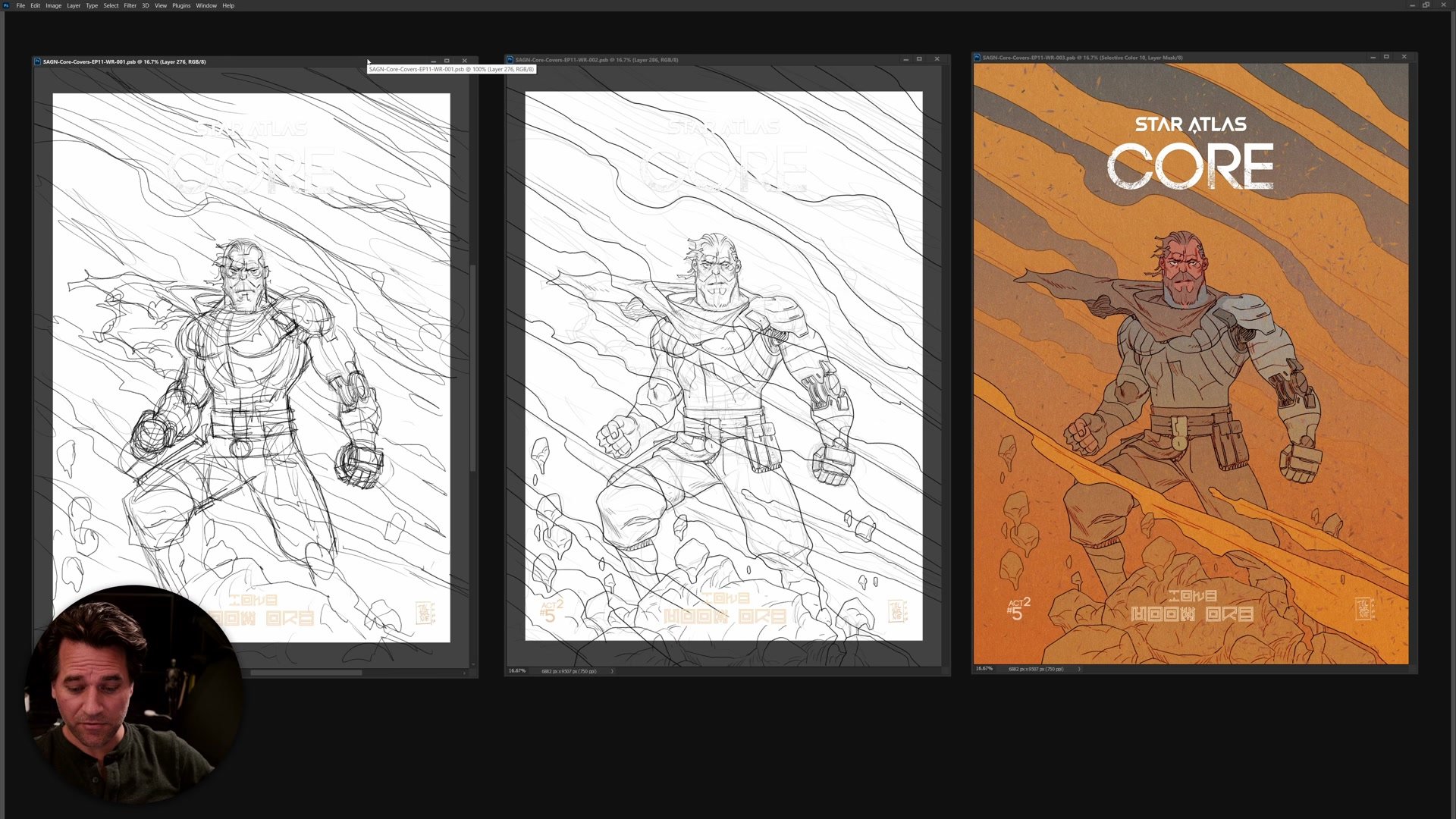
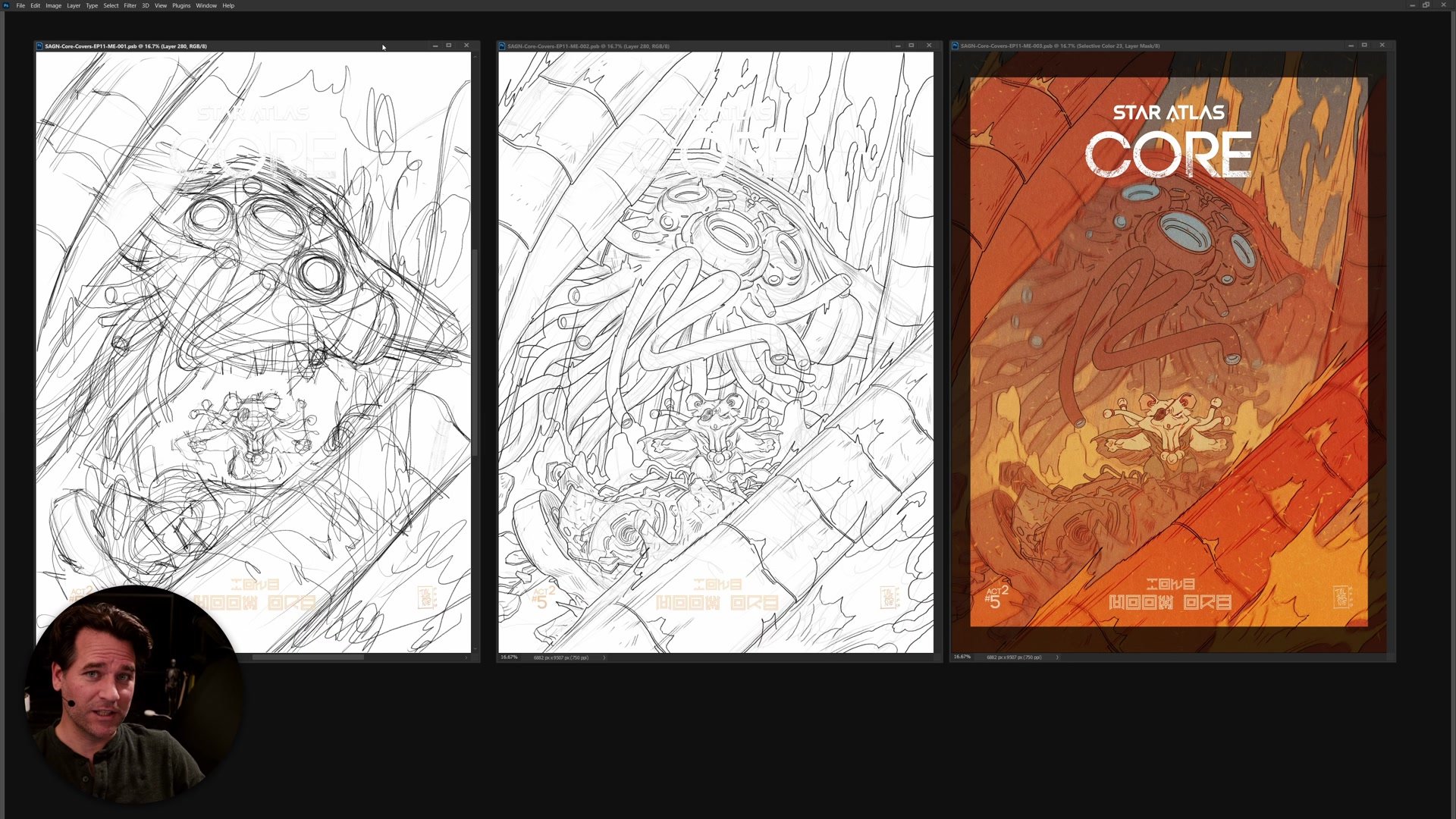
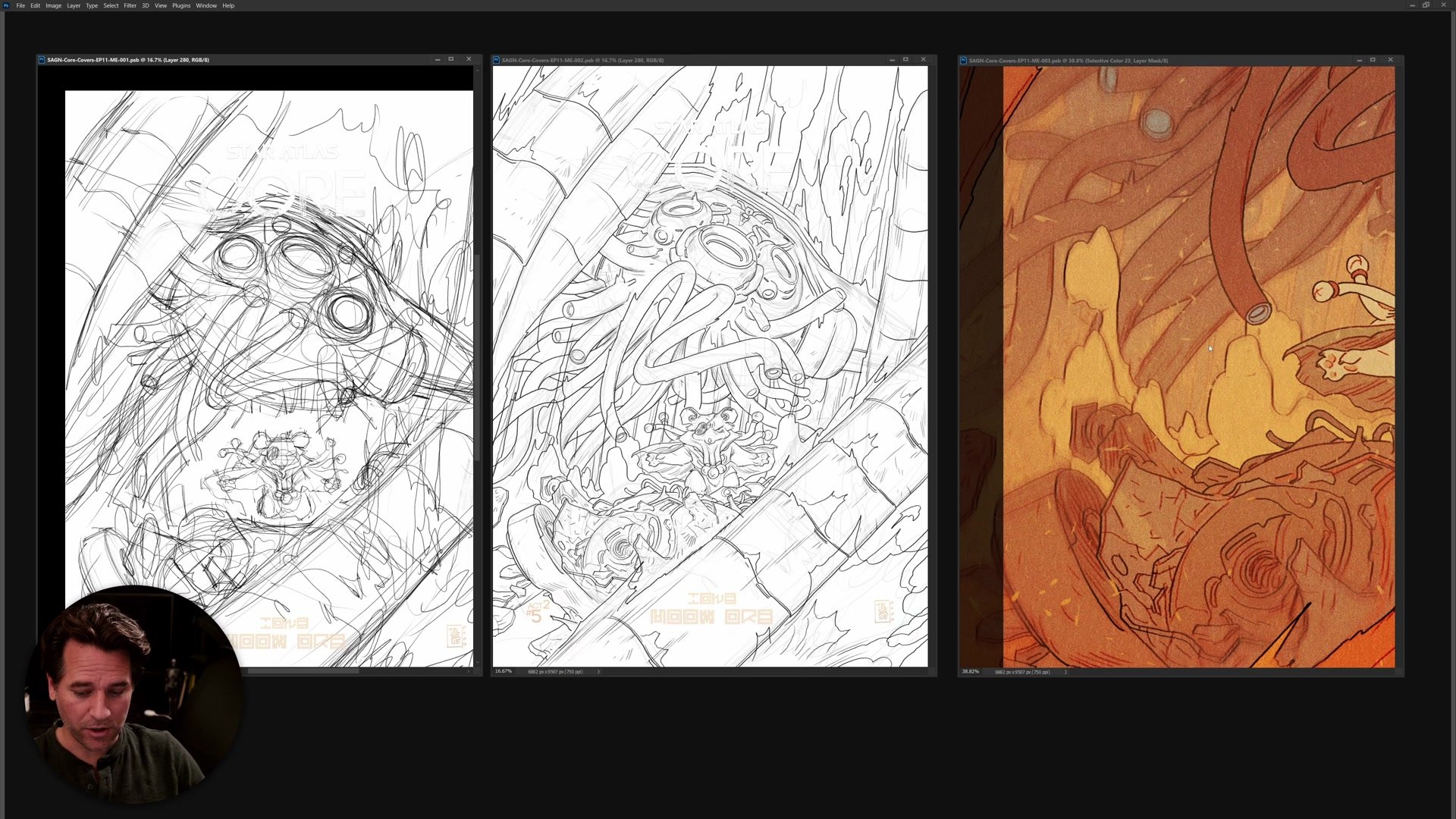
The third strategy is the visionary approach. This comes from artists like John Buscema, who advised that instead of fiddling around with small preparatory work, the thumbnail should be drawn large on the finished artboard and then refined from there. Close your eyes, imagine what you are going to draw, do the sketches in your head, then just go for it. This approach requires a very solid background in process and technique. You need to understand how your layers work, how to achieve specific effects, and how to think through the entire image while executing it.
The energy and focus this creates can be remarkable. There is a productive kind of fear and excitement that pushes you into a state of flow. The late Kim Jung Gi was famous for working this way, creating images directly from imagination with extraordinary results. The obvious risk is that without a plan, the image can completely crash and burn. But even for beginners, the idea of starting a finished image and working through it is very good for developing creative focus and the ability to fix things on the fly.
From Sketch to Finished Work
Key Concepts
Starting Shapes Finishing: The way you begin a creative project is often the way you finish it. The mental approach and intent behind your starting method determines the energy, creativity, and reliability of the final result more than any individual technique.
Each Method Has Trade-offs: The explorer gives maximum creativity but risks never finishing. The architectural approach gives reliable, shareable results but can become formulaic. The visionary approach produces energy and focus but requires advanced skill and willingness to fail.
Match Method to Context: Different projects and different stages of artistic development call for different starting strategies. Understanding all three gives the ability to adapt rather than defaulting to a single approach that may not serve every situation.
Try Each Approach
Start With Exploration: Pick a subject and sketch it freely without any frame or boundary. Do ten to twenty small sketches just trying to find the right pose, mood, or composition. Do not worry about finishing any of them.
Try the Thumbnail Grid: Take the same subject and draw six to eight thumbnails inside defined frames, treating each one as a complete little image. Focus on making each one readable and self-contained, as if you were presenting options to a team.
Go Visionary: Take that same subject one more time and draw it directly at full size on your final working surface. Visualize the finished image before you start, then commit to working through it without going back to thumbnails.