How To Actually Practice Composition As A Beginner
Summary
Bridging Sketching and Illustration
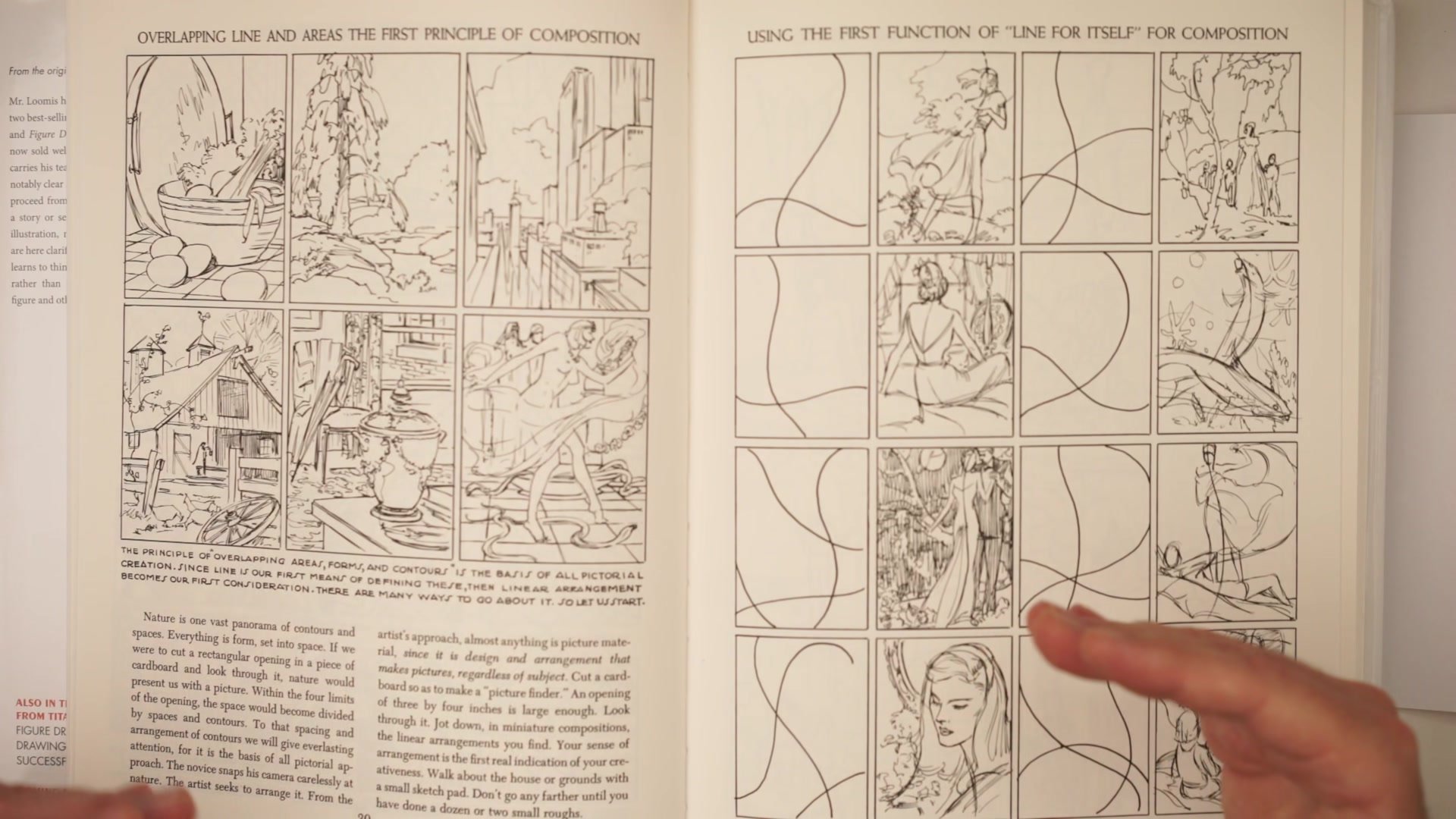
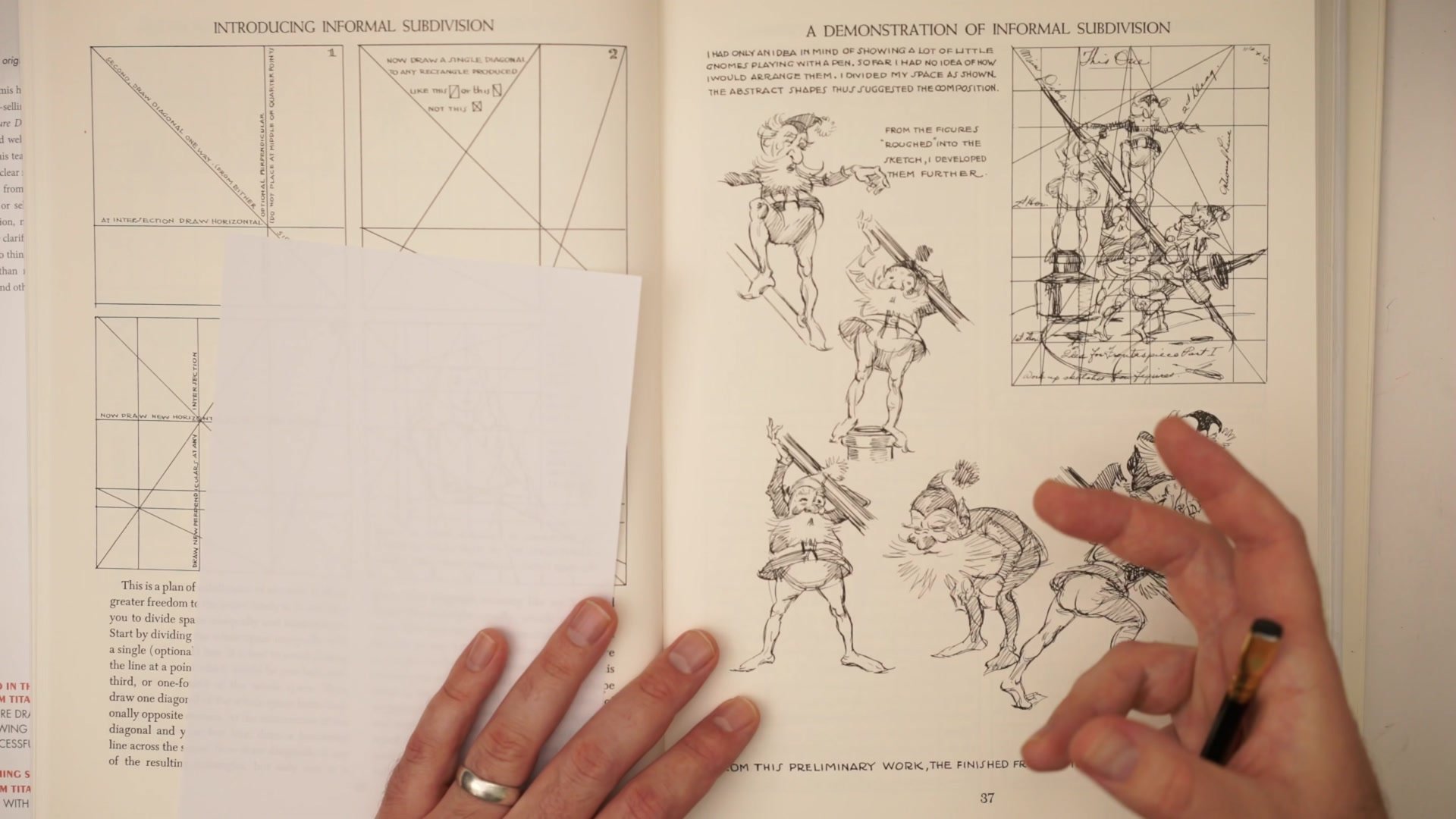
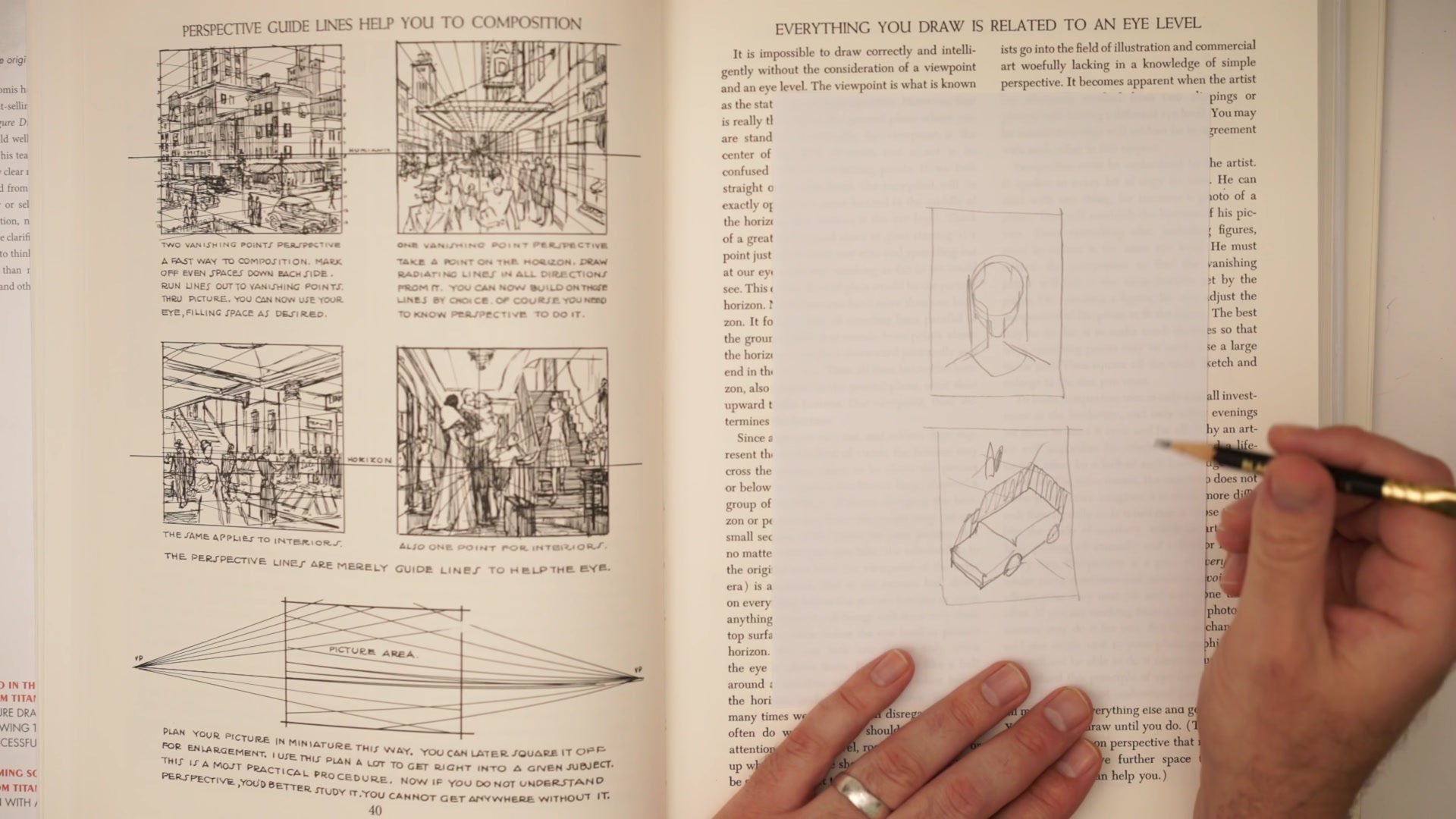
The principles of composition and picture making are time-honoured and well understood. Books like Andrew Loomis's Creative Illustration lay out overlapping shapes, formal and informal subdivision, eye flow, and tonal arrangement in meticulous detail. But knowing what these principles are and knowing how to actually use them in your own work are two very different problems. The gap between casual sketchbook drawing and deliberate illustration comes down to one thing: the picture plane. When there is no frame, there is no composition. There is just drawing. The moment a boundary is set and the question becomes how to fill that space, the work changes entirely.
The challenge for beginners is that most compositional teaching uses complicated multi-figure scenes as examples. That complexity makes it nearly impossible to isolate what the compositional principles are actually doing. What works far better is to practice composition with deliberately simple subjects, controlling the variables so the principles themselves become visible.
Compositional Foundations
The Picture Plane Shift
The fundamental difference between sketching and illustration is the picture plane. In a sketchbook, characters float on the page with no borders and no constraints. That freedom is valuable for learning to draw, but it is a completely different skill from picture making. Illustration begins the moment a frame exists and the question shifts from what to draw to where things go within a defined space.
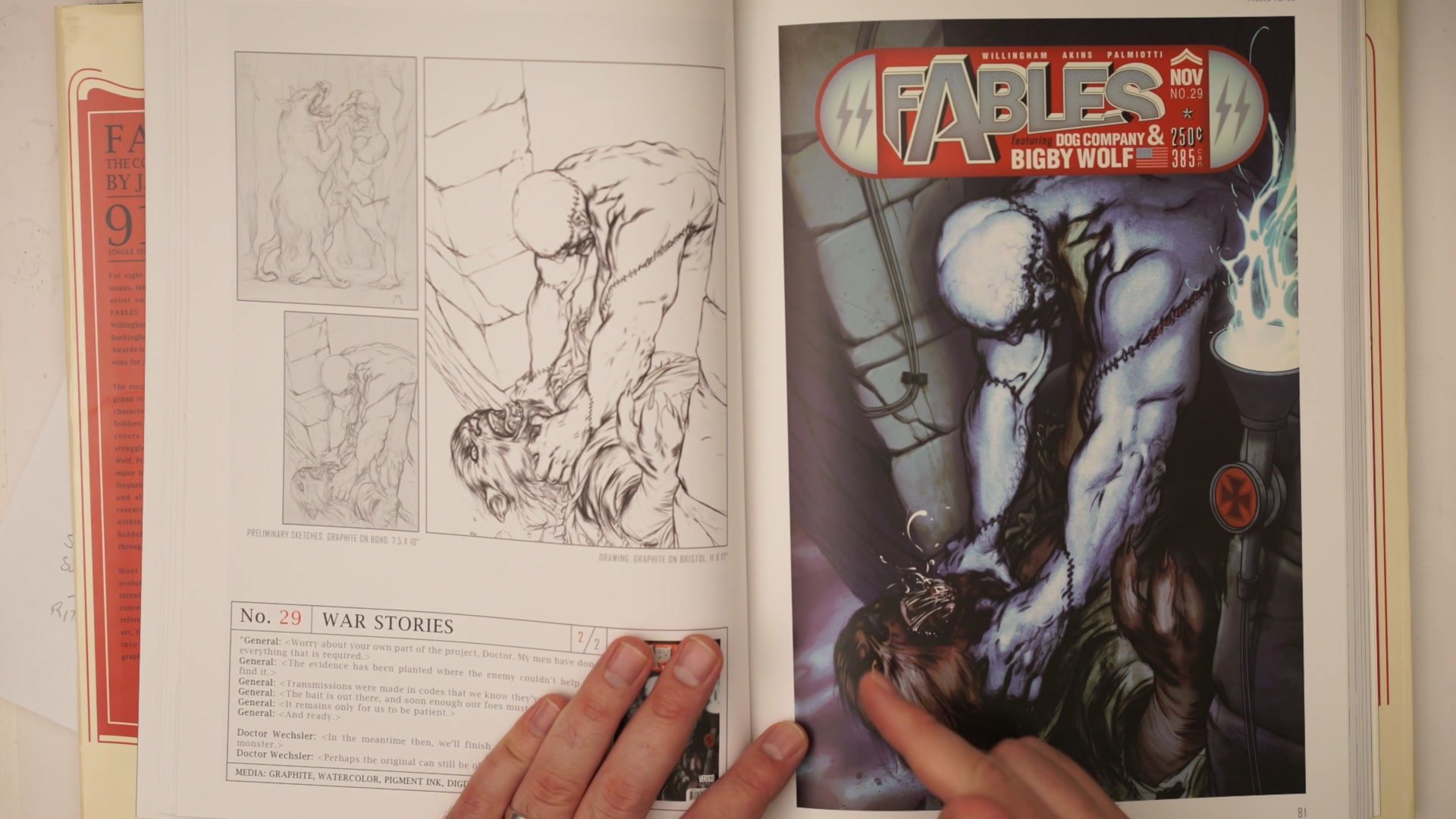
This applies to every format. A cover has text areas and a main image area. A film frame has an aspect ratio. A poster has a hierarchy of elements. Even a simple portrait on a social media feed has edges that must be considered. Understanding the picture plane means thinking about extremities, about how subjects relate to borders, about what empty space communicates. Life drawing trains this naturally because the constant challenge is fitting the figure on the page in a way that feels intentional rather than accidental.
Loomis Principles in Practice
Simple Subjects, Real Learning
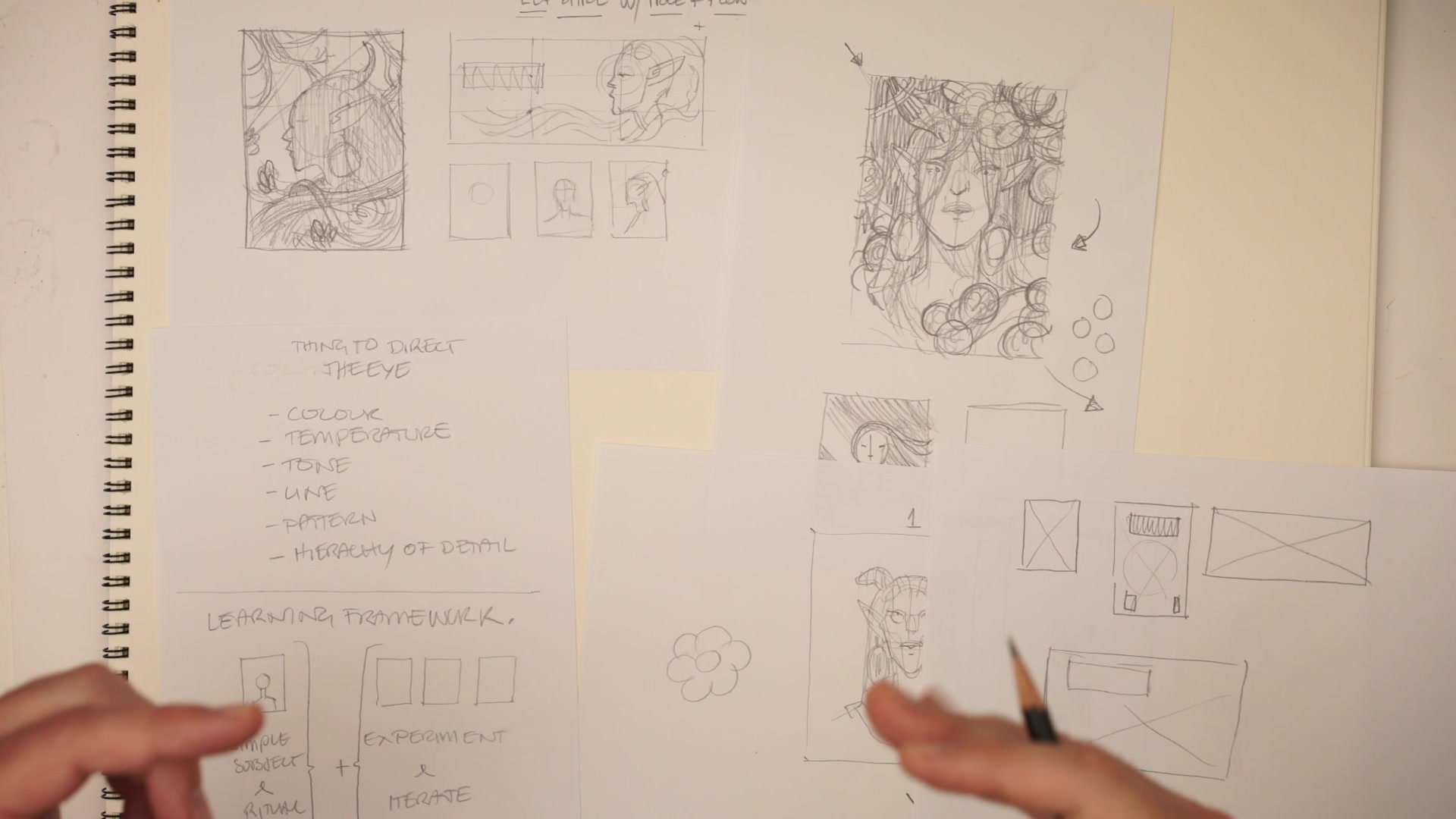
The practical learning framework comes down to picking a simple, comfortable subject and using it repeatedly to explore compositional ideas. The subject could be faces, cars, flowers, anything that can be drawn without heavy cognitive load. The point is to free up mental bandwidth for the actual compositional experimentation. If the subject itself is a struggle, there is no capacity left to think about where it sits in the frame.
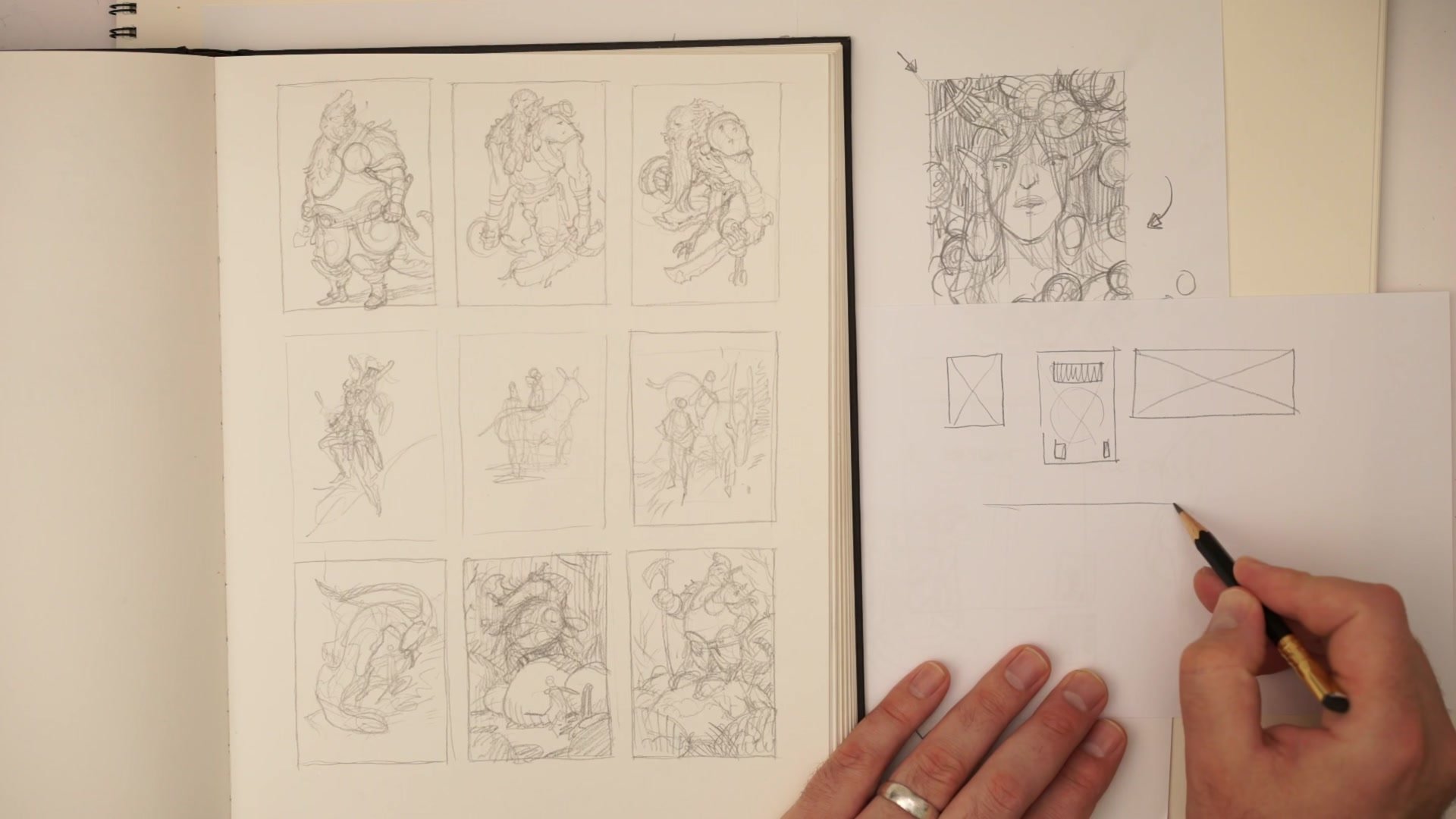
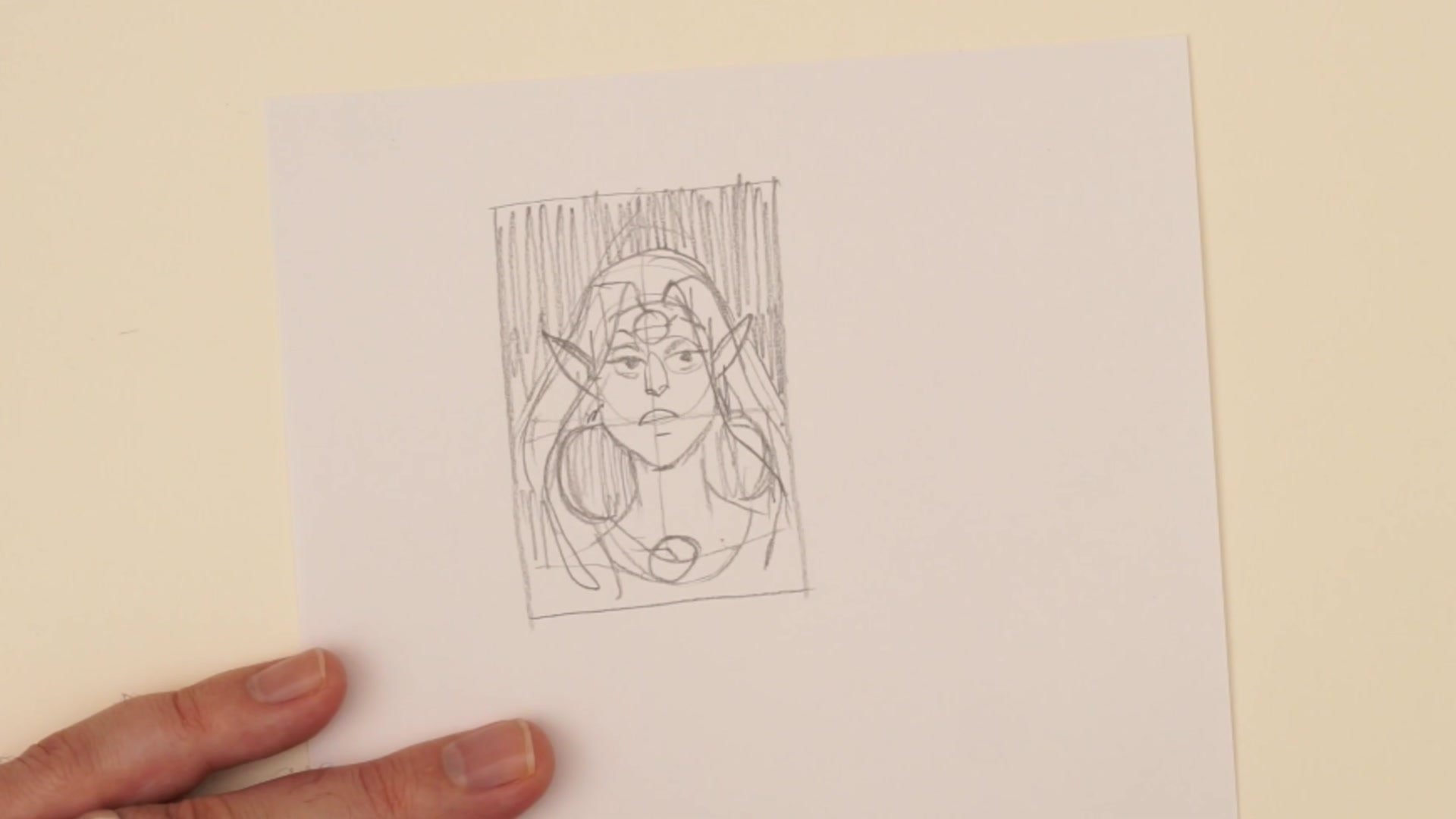
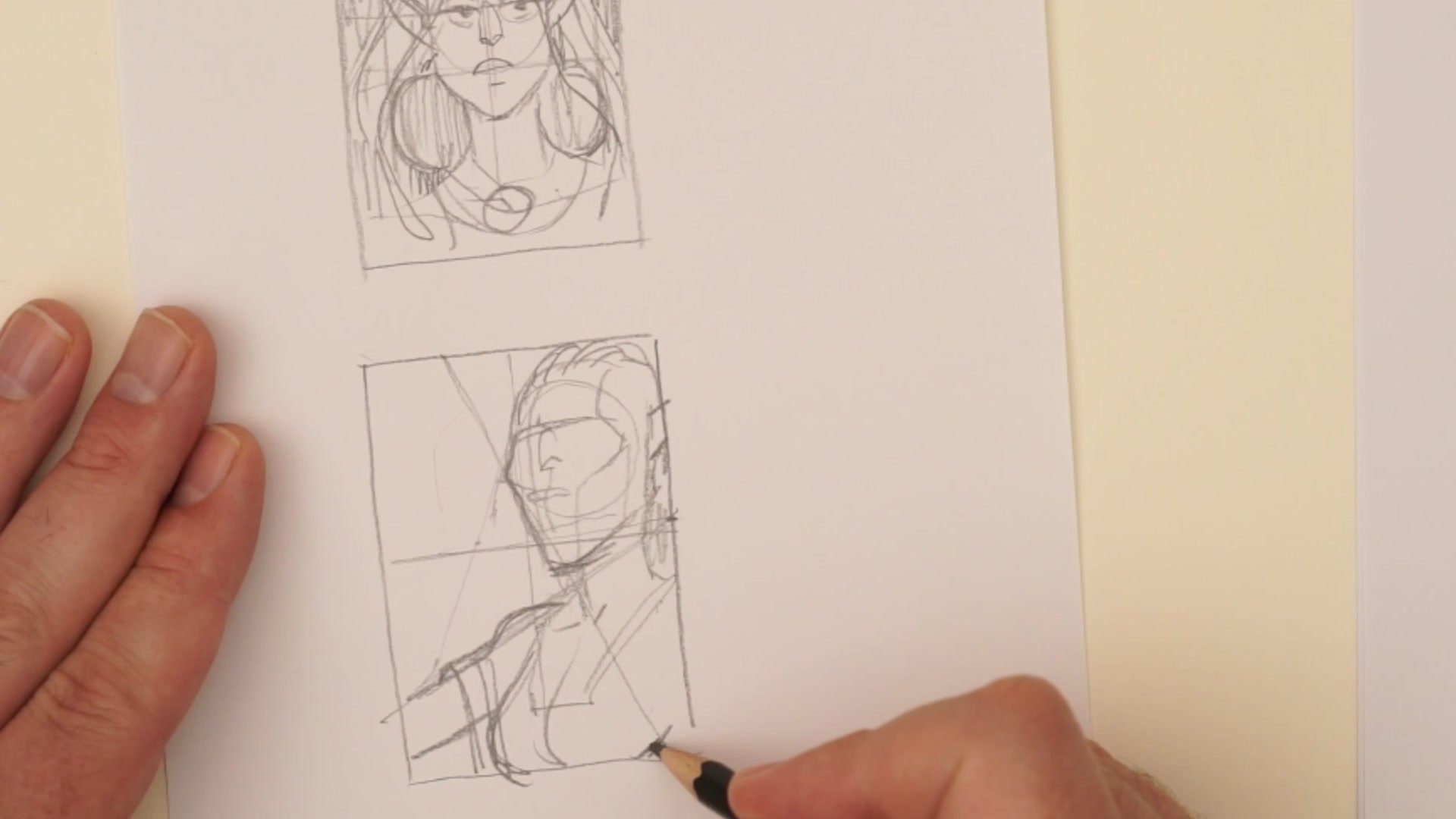
This approach works because it controls variables. With a simple face inside a small thumbnail, the effects of rule of thirds placement, formal versus informal composition, tonal separation, and overlapping foreground elements all become immediately visible. The same principles applied to a complex multi-figure battle scene would be impossible to isolate. Simple subjects also reveal something important: illustrative sophistication does not require drawing complexity. Many artists with enormous followings draw nothing more than simple portraits. What makes the work compelling is how it fills the picture plane.
Thumbnail Demonstrations
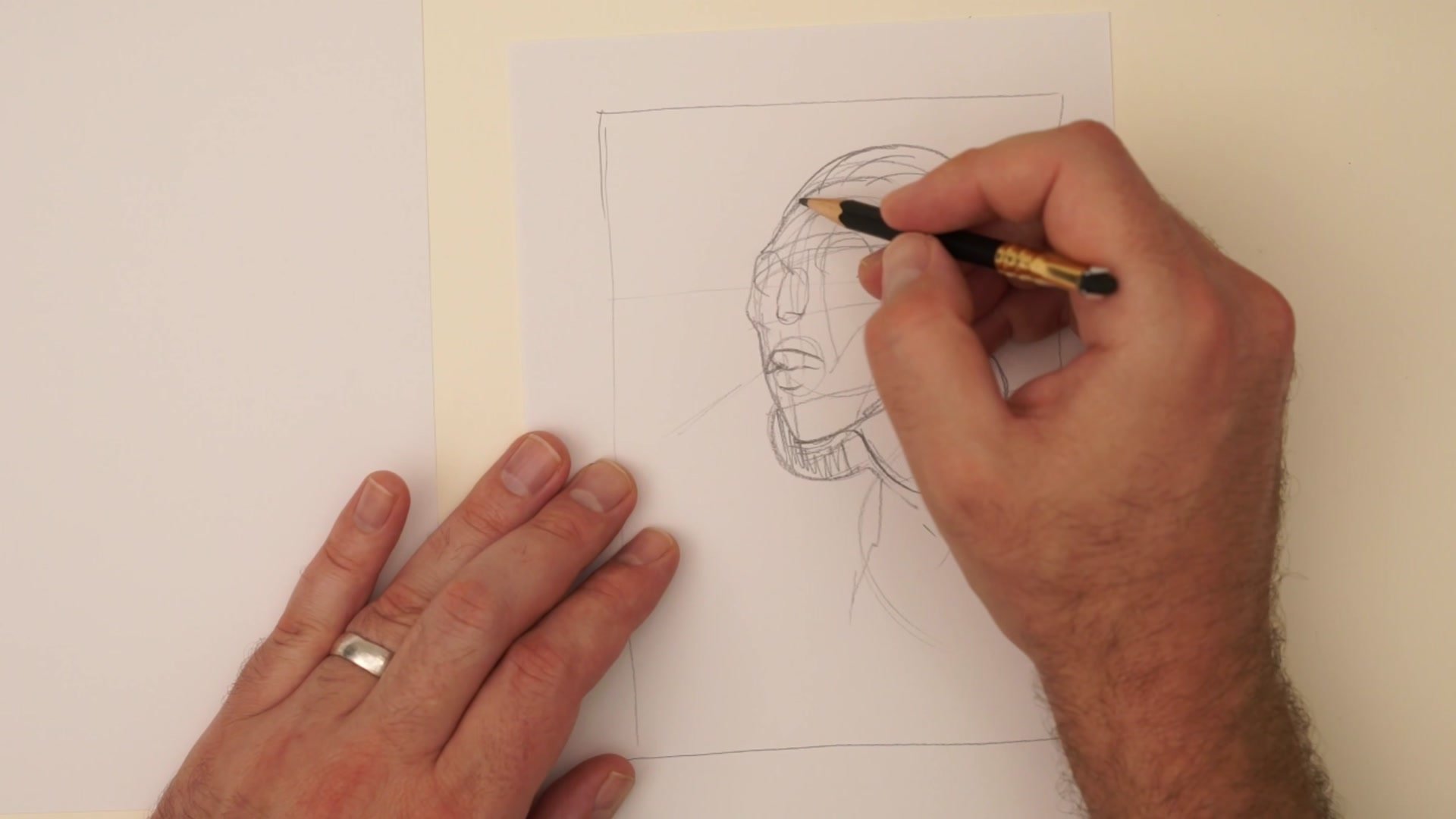
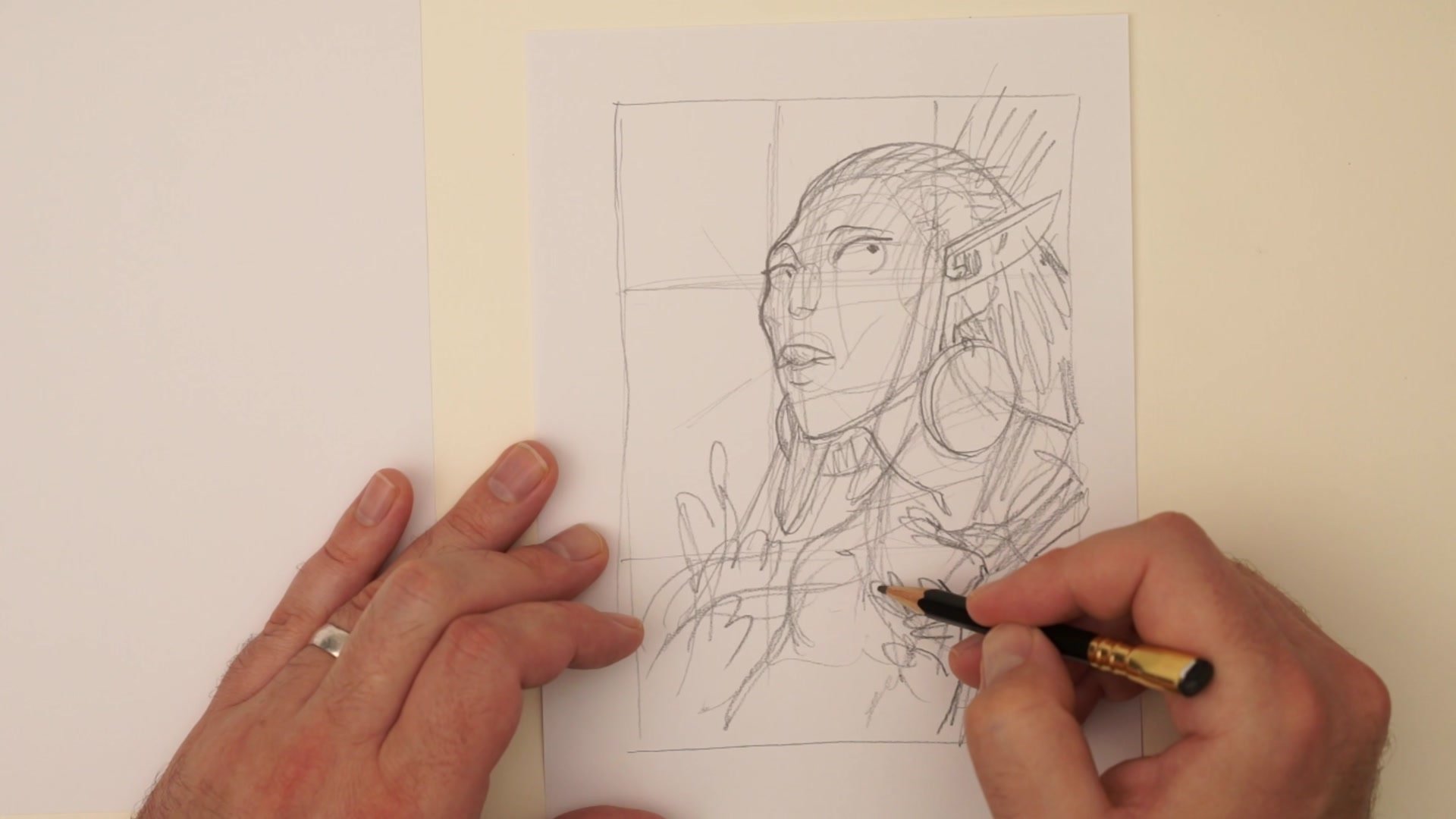
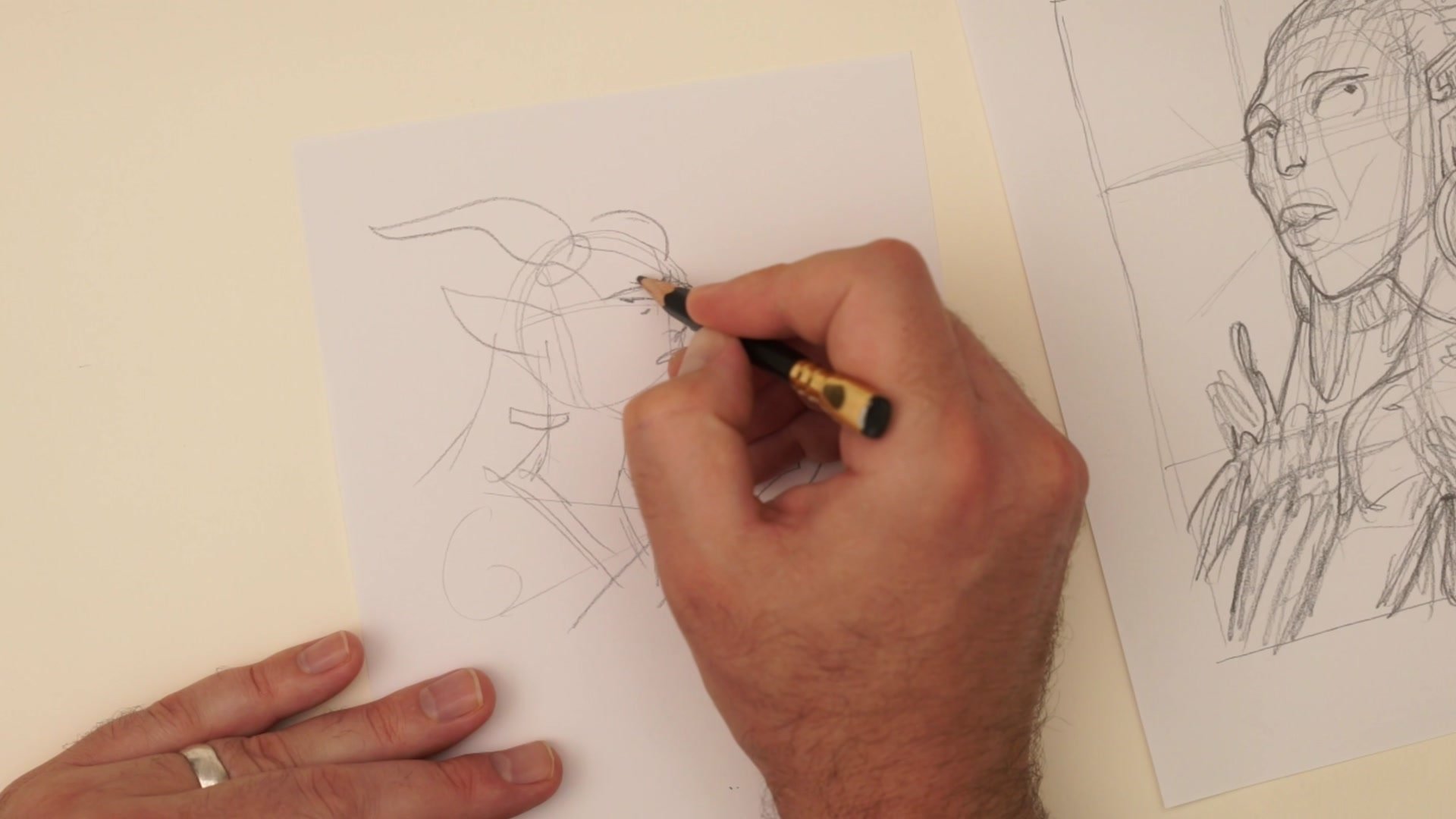
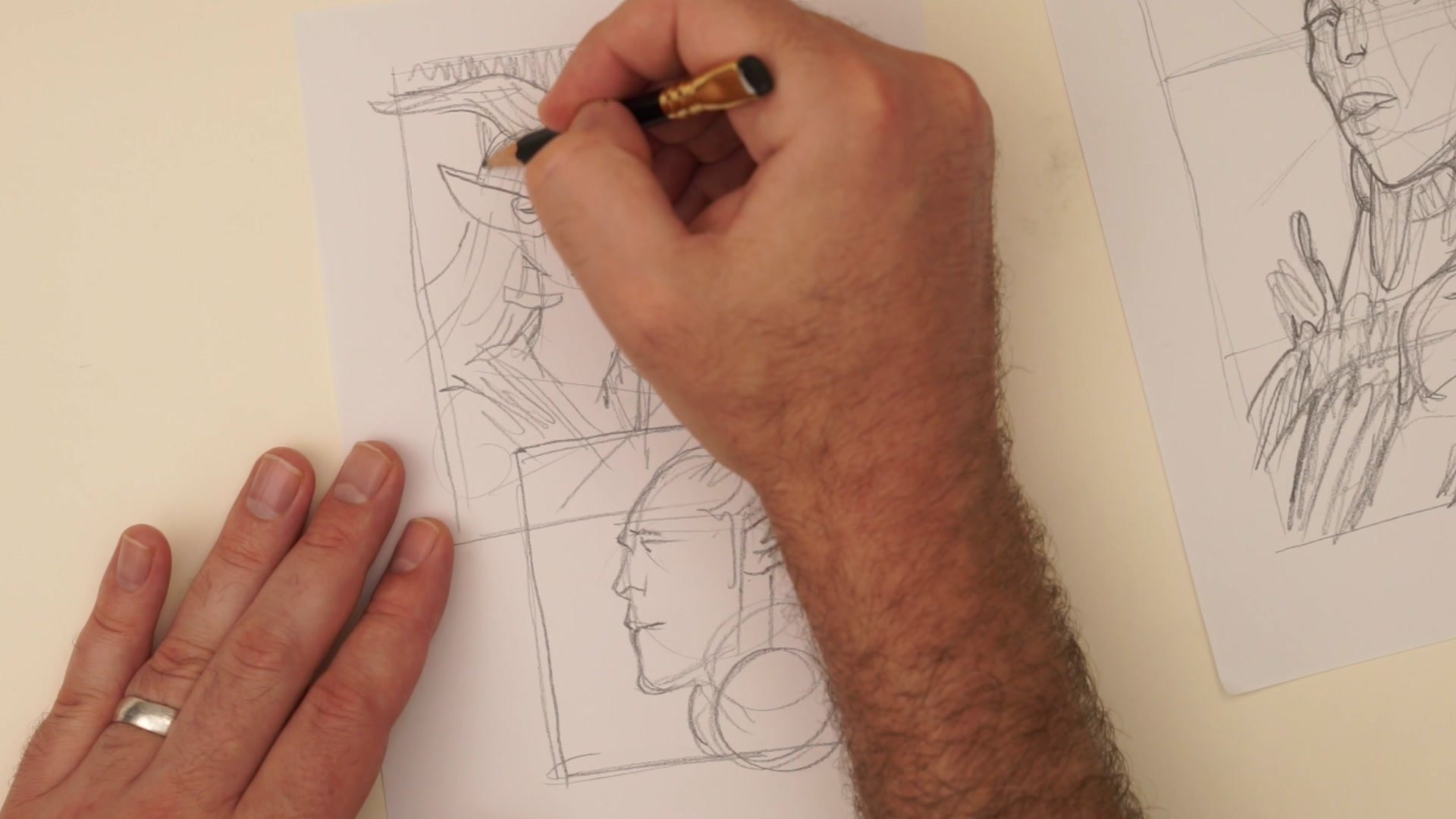
The Flow of Thumbnailing
One of the most important realities about thumbnailing is that it takes genuine time to get into the flow of it. The first few thumbnails in any session tend to be repetitive or flat. The quality comes from volume and from getting into a mental state where ideas start flowing naturally. Doing one thumbnail and stopping is almost guaranteed to produce nothing interesting. The aim is to do ten, twenty, or more in a sitting, letting the subject evolve and the compositional ideas emerge through iteration.
Working small also matters. Thumbnailing is a skill unto itself, separate from drawing well at full scale. It demands a different kind of thinking, more abstract, more concerned with shape relationships and tonal patterns than with rendering or detail. The willingness to hack away, to erase, to restart, and to be genuinely brutal with ideas that are not working is what makes the process productive. Nobody ever needs to see these early explorations. Their purpose is building the muscle of thinking like an illustrator and a storyteller.
Key Concepts
Picture Plane Awareness: The difference between sketching and illustration is the frame. Without a defined picture plane, there is no composition. Setting boundaries and thinking about how subjects relate to those boundaries is the foundational shift toward picture making.
Simple Subjects Unlock Principles: Practising composition with deliberately simple, comfortable subjects allows the compositional principles to be isolated and understood. Complex scenes obscure what the principles are actually doing.
Volume Creates Flow: Thumbnailing quality comes from quantity. Getting into the flow requires doing many thumbnails in a session. The first few will always be repetitive or flat, and that is part of the process.
Presentation Over Raw Skill: Illustrative sophistication often comes from how work is presented within the picture plane rather than from raw drawing ability. Artists who understand composition can make simple subjects feel compelling.
Try This Exercise
Pick a Simple Subject: Choose something comfortable that requires minimal cognitive load to draw. Faces, cars, animals, or objects all work. The simpler the better, because the focus is on composition, not drawing difficulty.
Draw 10-20 Small Thumbnails: Set up small picture planes on a page and fill each one with the same subject arranged differently. Experiment with placement, tonal values, overlapping elements, foreground and background relationships, and different aspect ratios.
Apply One Principle Per Pass: Pick a specific compositional idea from Loomis or any reference, such as rule of thirds, formal subdivision, or tonal separation, and deliberately try to apply it across several thumbnails. See how it changes the feel of even the simplest subject.