Forest Dweller Real Time Sketching Tutorial
Summary
Forest Dweller Warm-Up Sketch
This Art Ritual session covers the full process of a warm-up sketch from blank page to finished drawing. The subject is a fantasy forest dweller character, a warrior figure standing on a mossy branch with small companion creatures, drawn entirely from imagination using thumbnail reference sketches. The session runs over an hour on Fabriano Artistico 300 GSM watercolor paper using Blackwing pencils.
The warm-up sketch serves a specific purpose beyond loosening up. It keys the eye into the type of work that needs to happen during the rest of the day, blending fun with practical challenge. The drawing moves through distinct phases: gestural blocking, structural construction, erasing back, and then building up detail and tonal hierarchy with a darker pencil.
Blocking and Construction
Thumbnail to Full Page
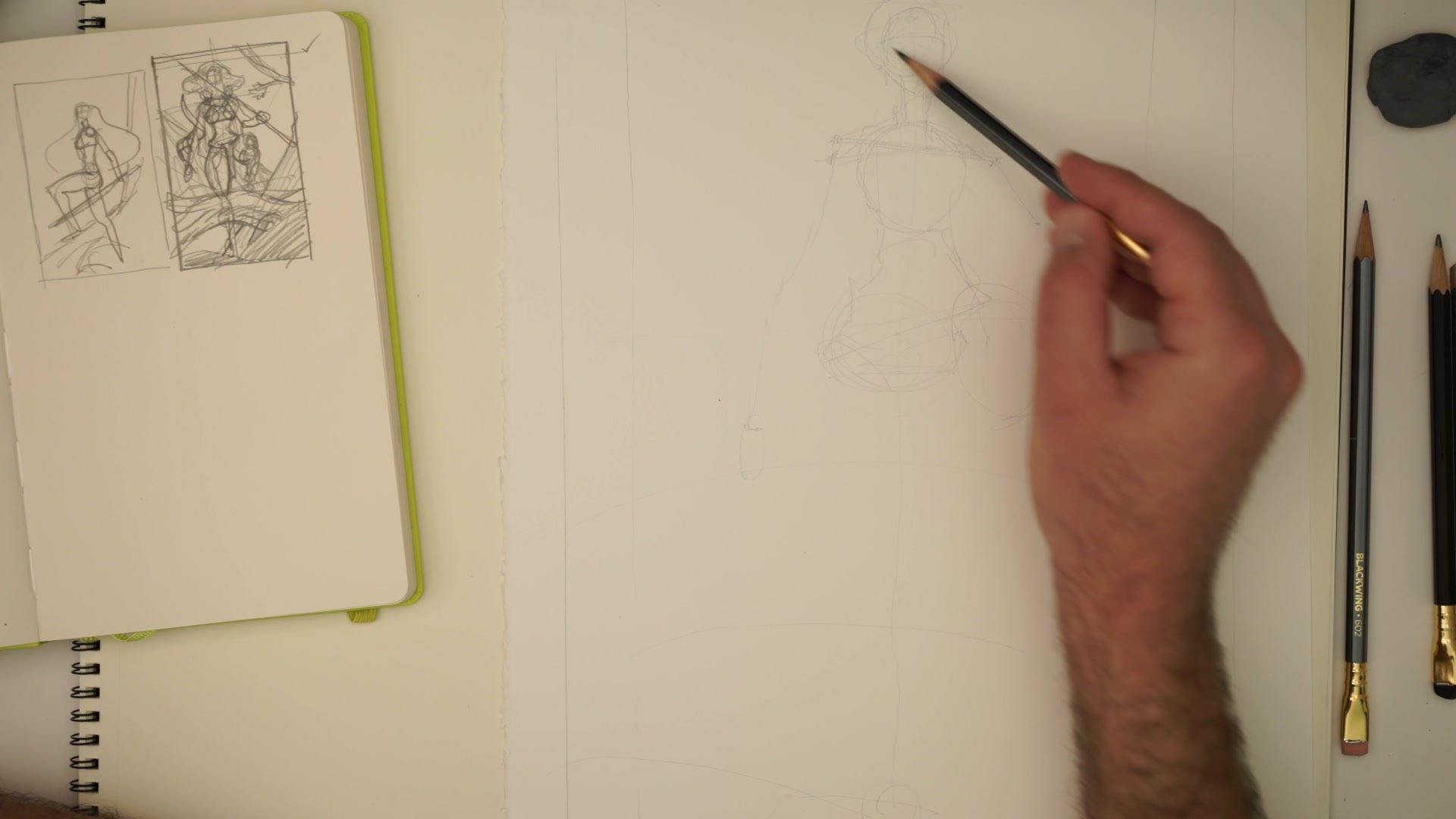
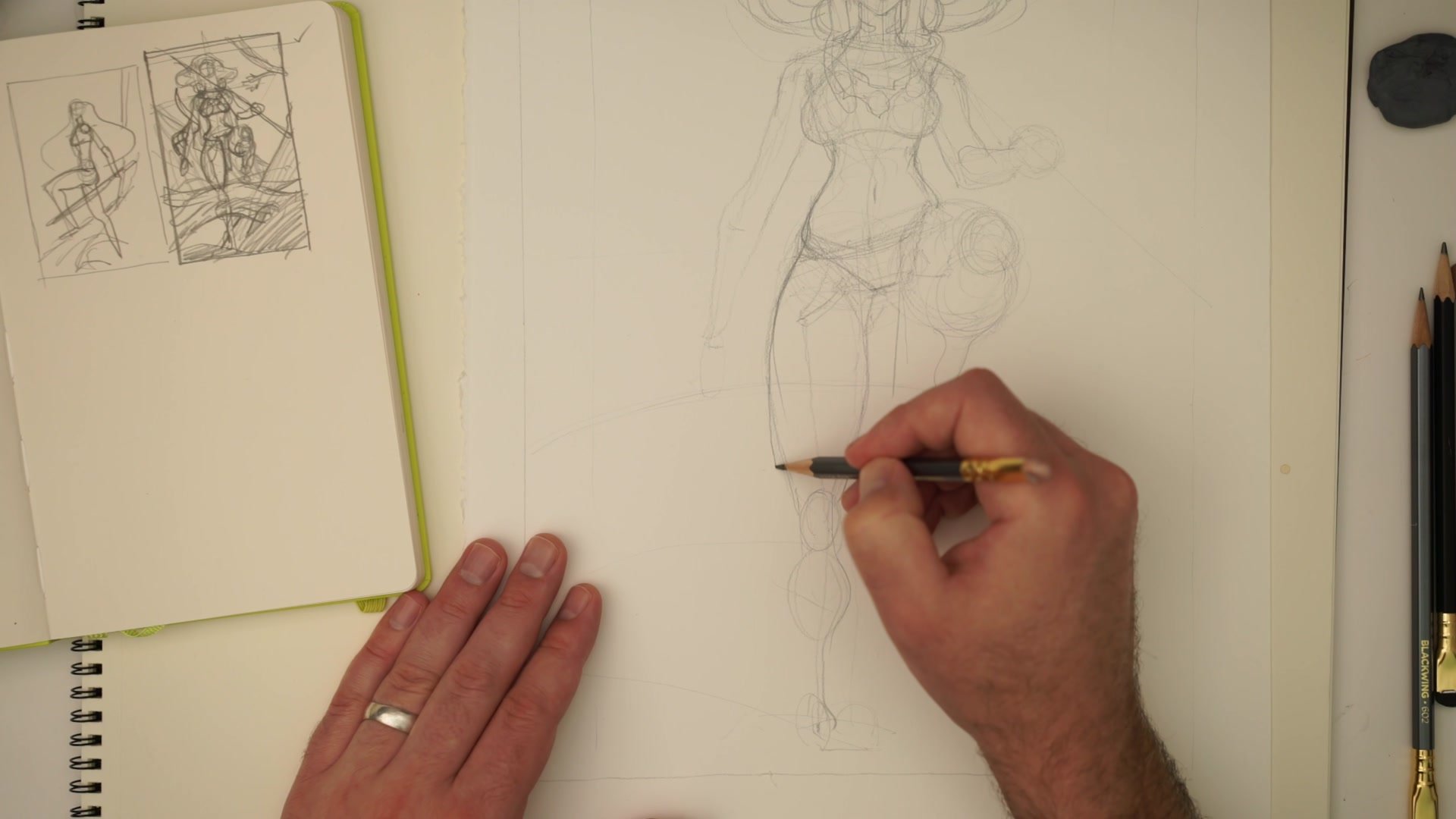
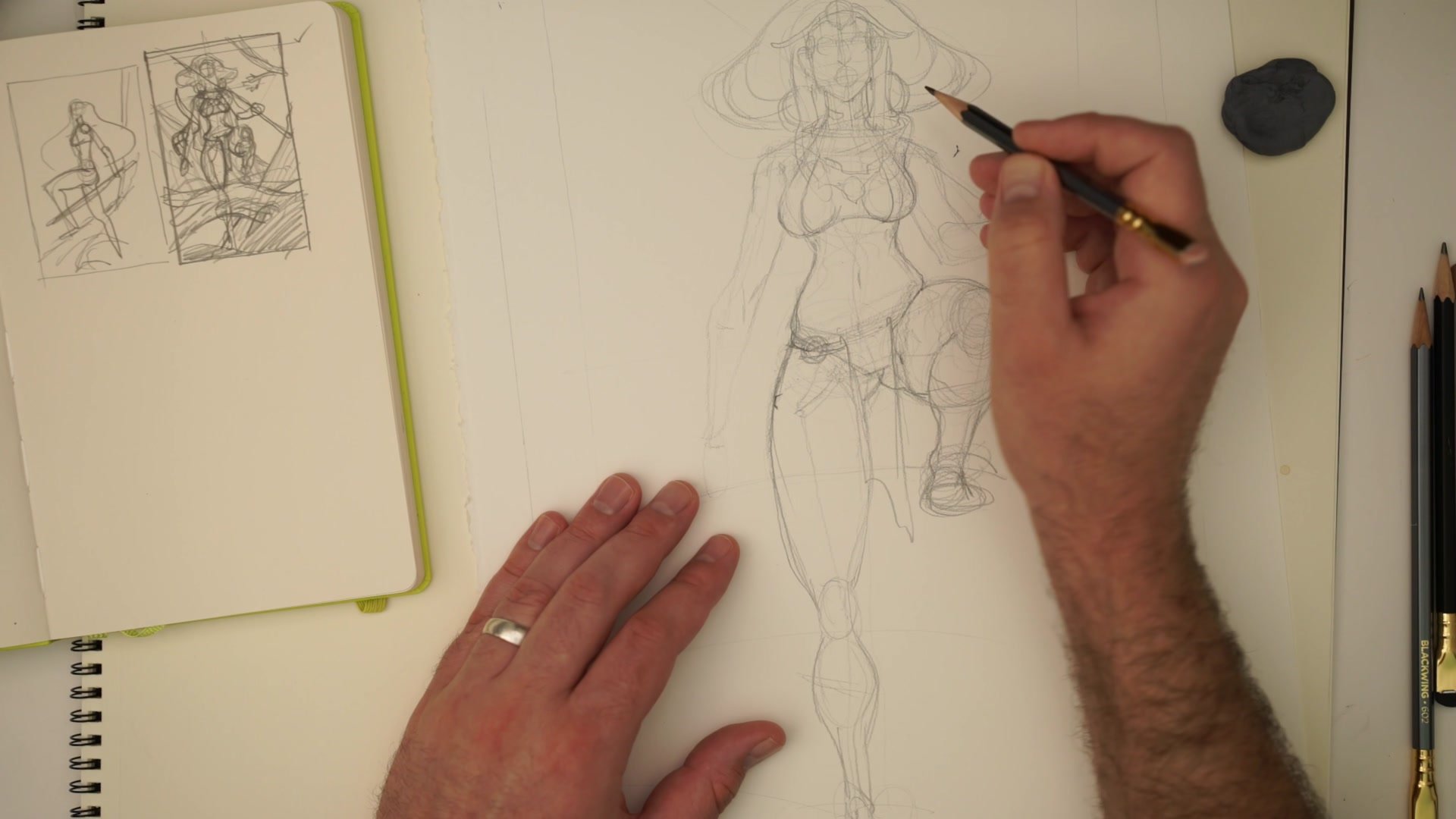
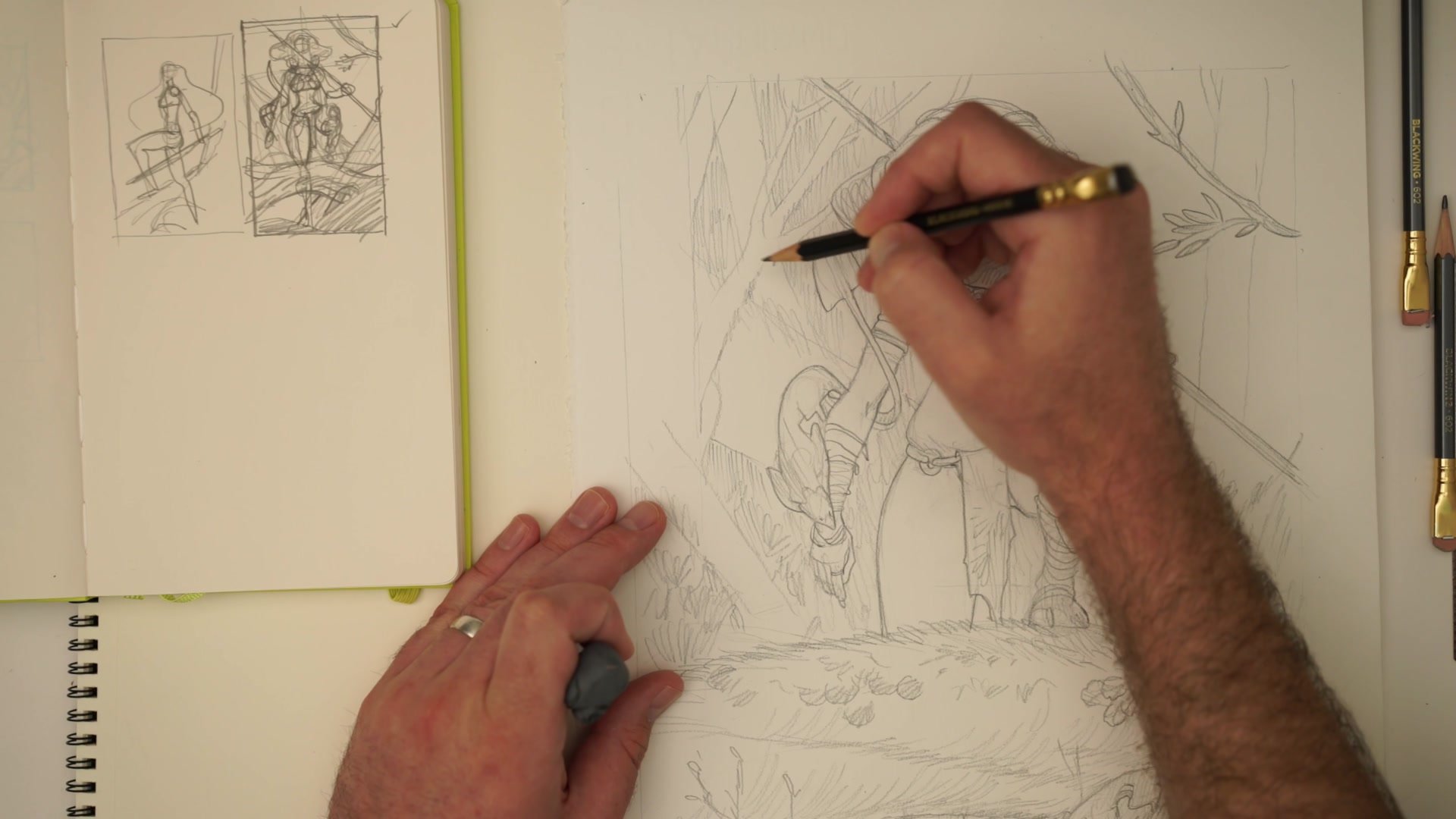
The process begins with small thumbnail sketches in a Moleskine-style sketchbook, used as a map for the larger drawing. The first marks are deliberately light, barely visible, using the Blackwing 602. This stage is about placement rather than anatomy: figuring out where the head sits, finding the halfway point for the pelvis, establishing the hip tilt and contrapposto. The question that drives this phase is whether the thumbnail was a good map or whether it will lead the drawing astray.
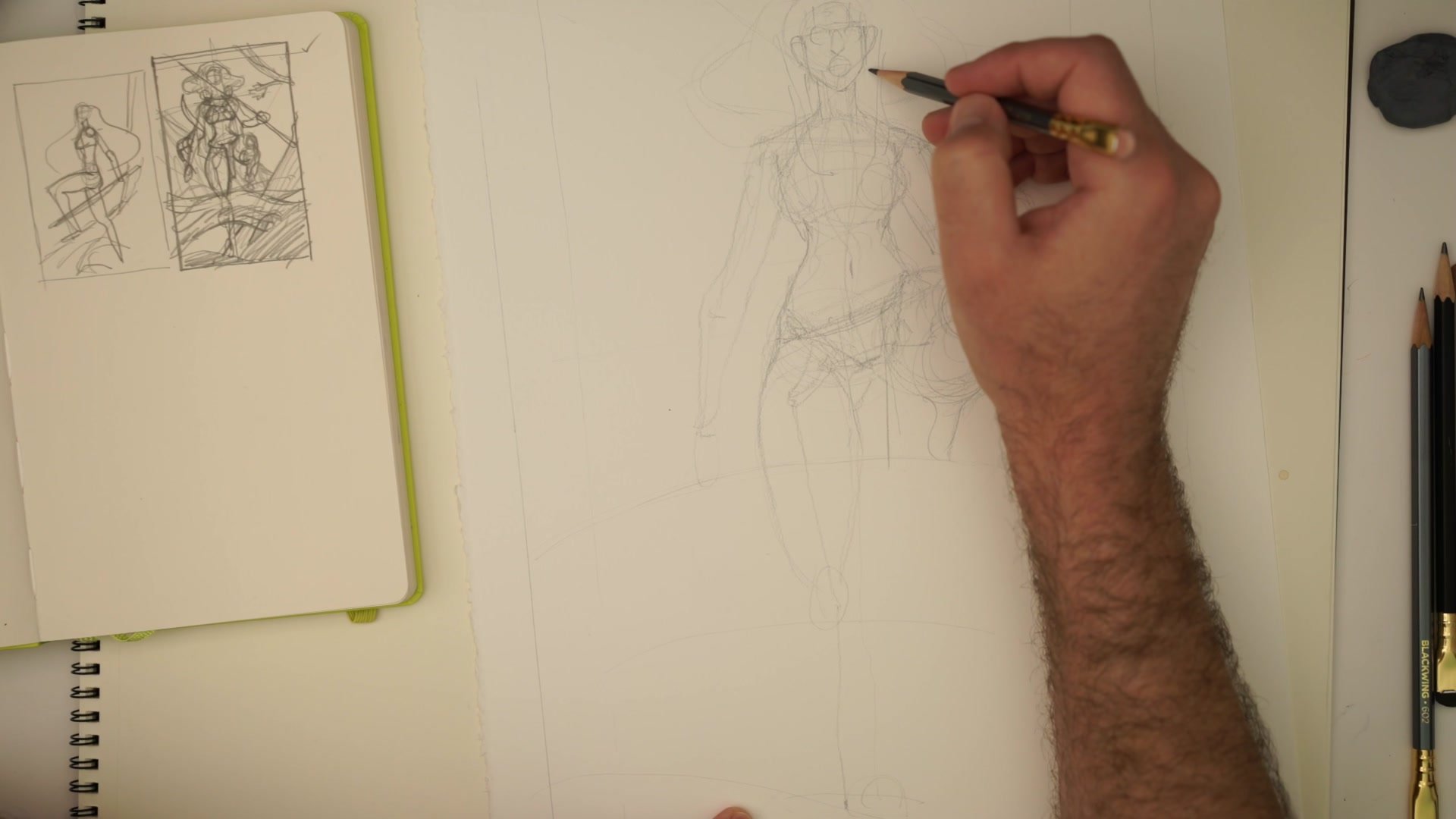
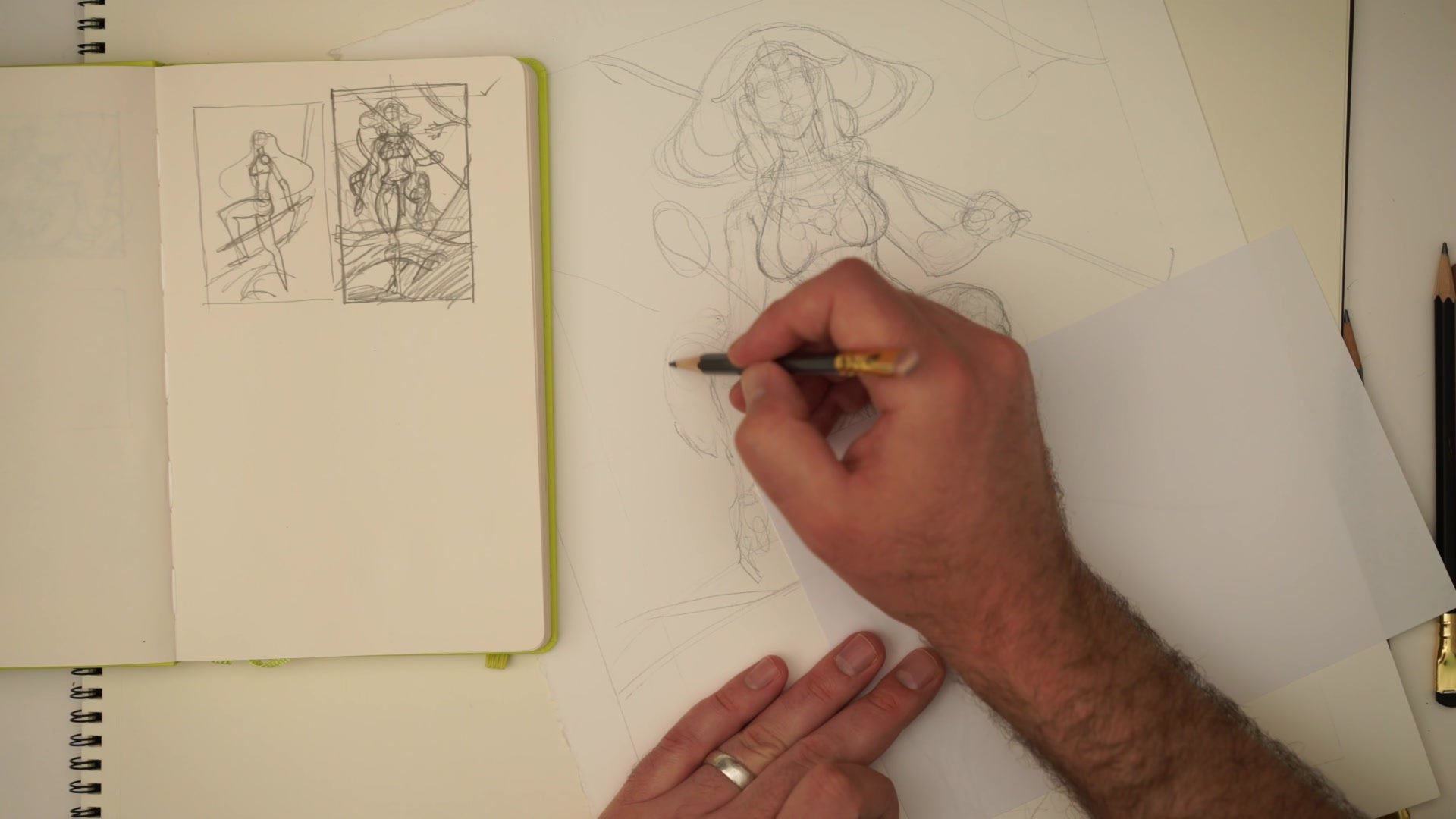
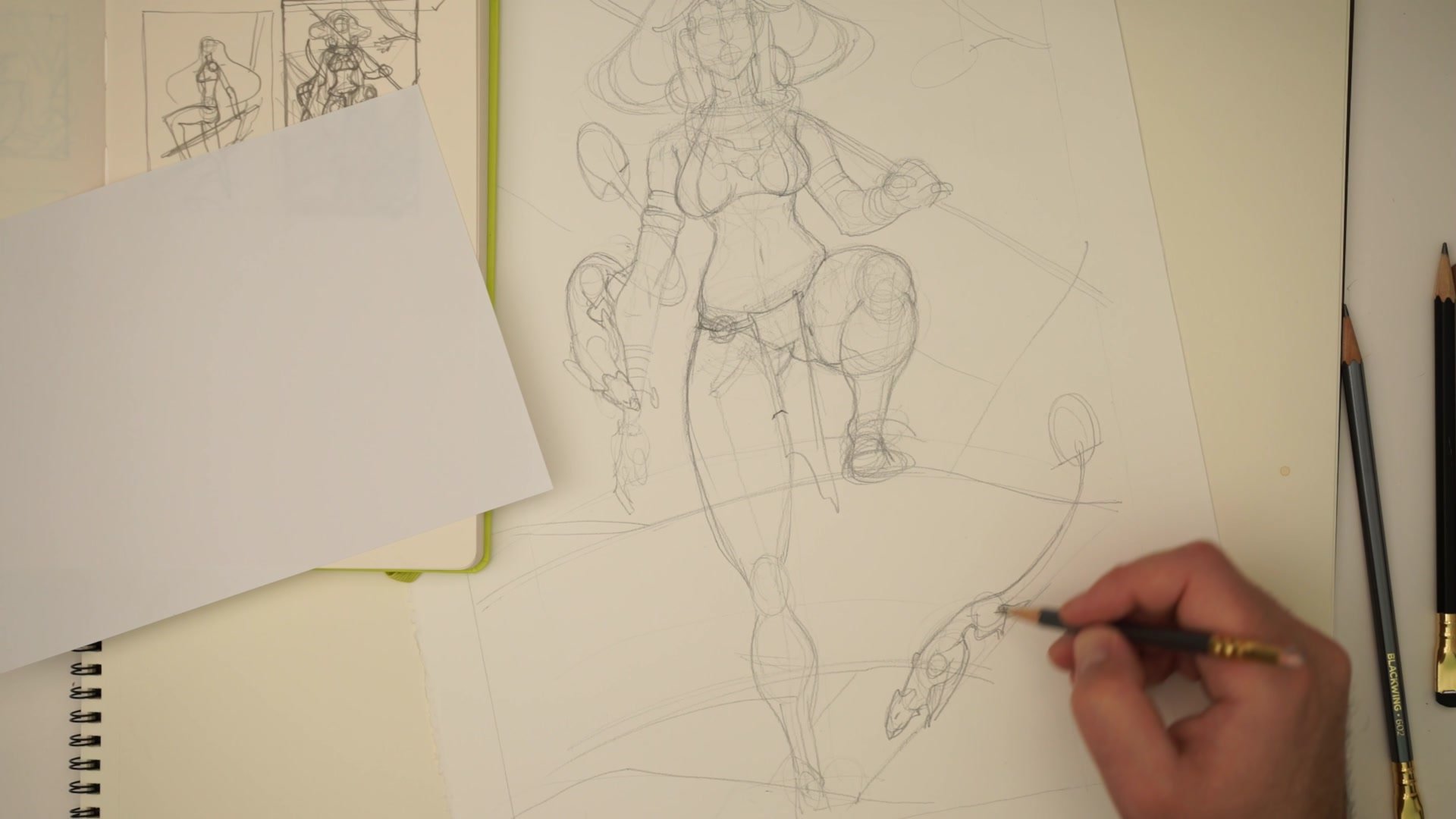
From there, construction builds through a mix of massing shapes, thinking about the skeleton, and using flow lines to connect forms. These are simple points and lines that run around the figure, not anatomical in themselves, but designed to make sure everything fits together structurally. The good quality watercolor paper allows aggressive reworking, so messiness at this stage is acceptable.
Figure Development
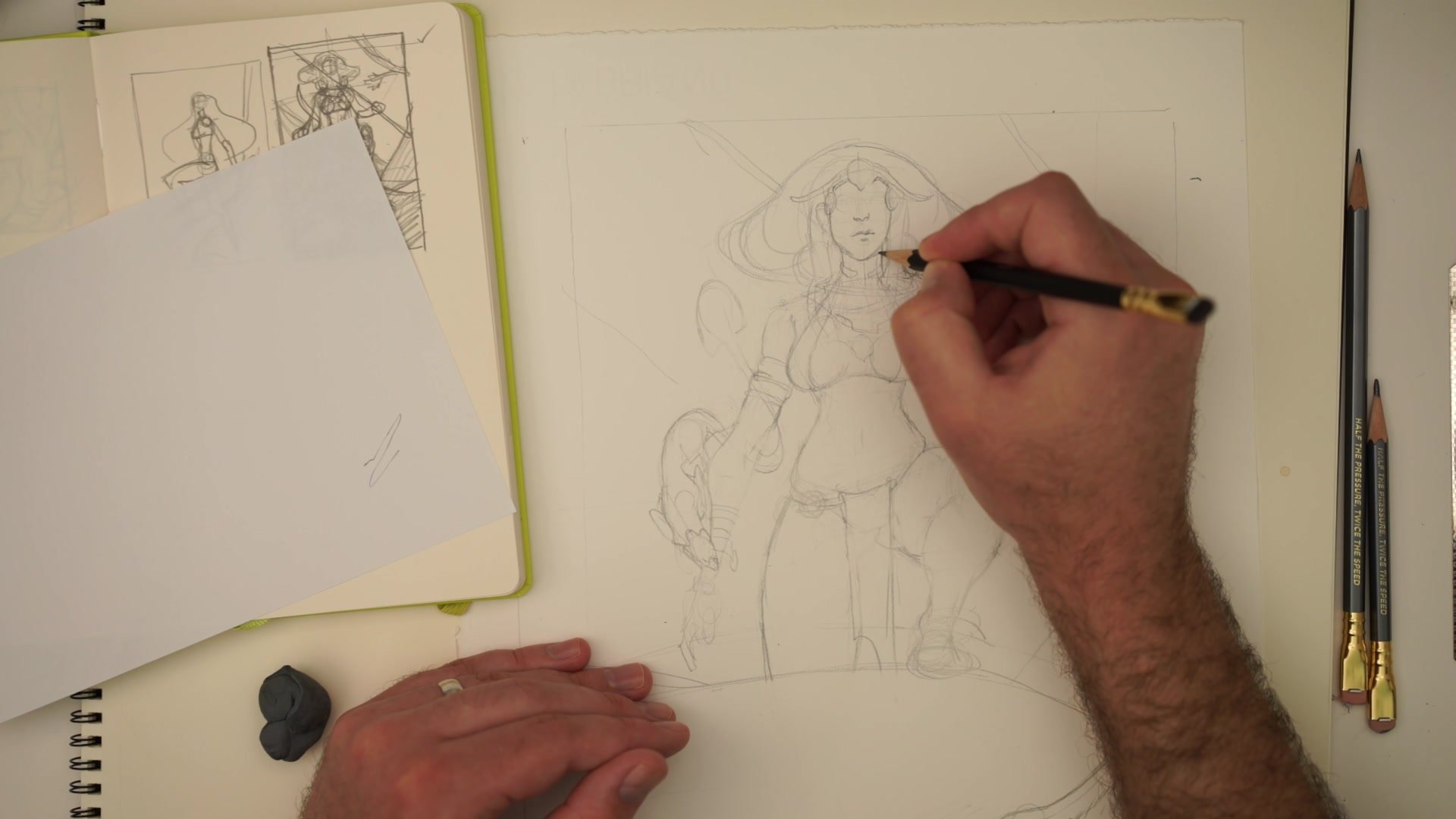
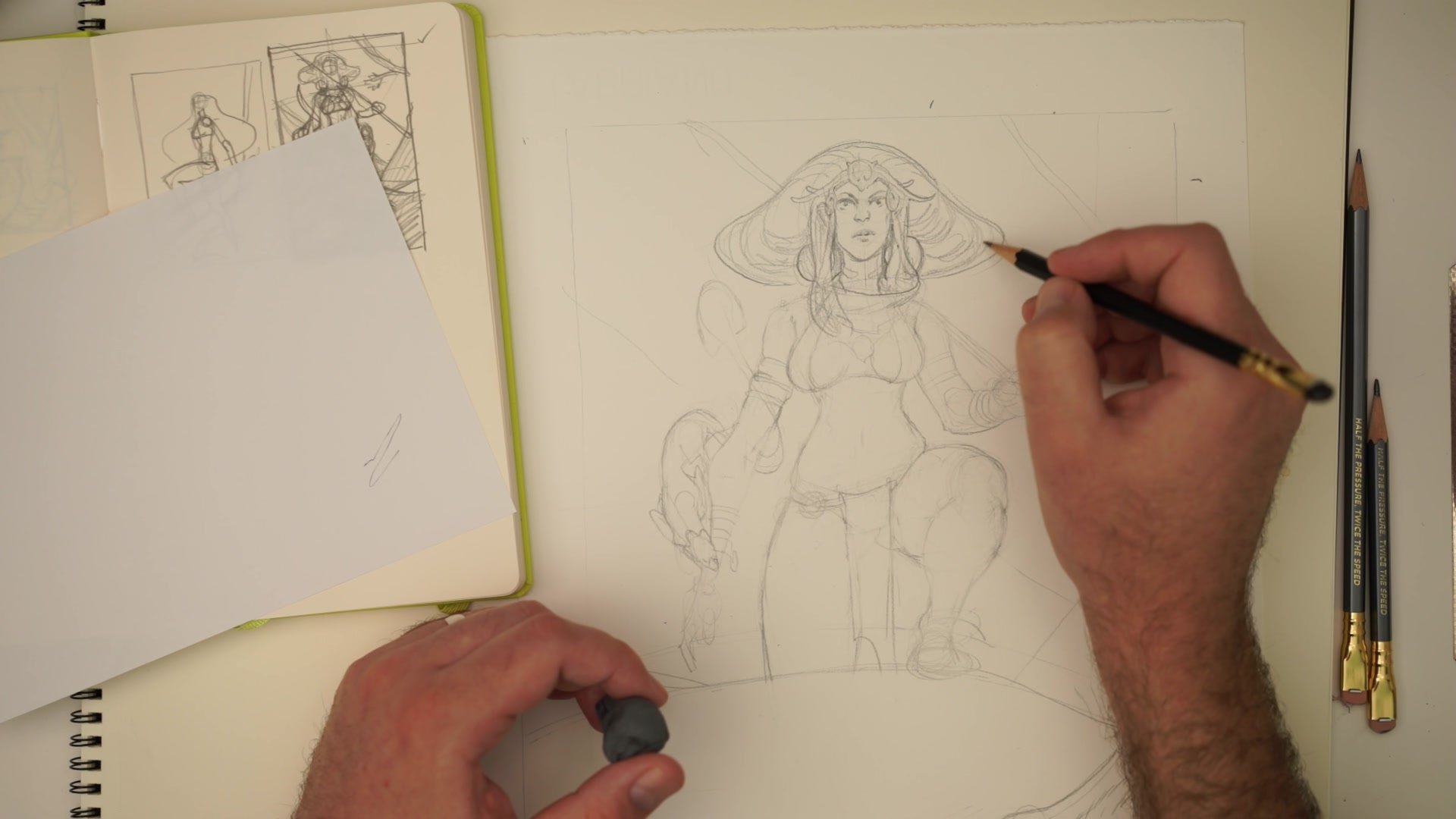
The Erasing Phase
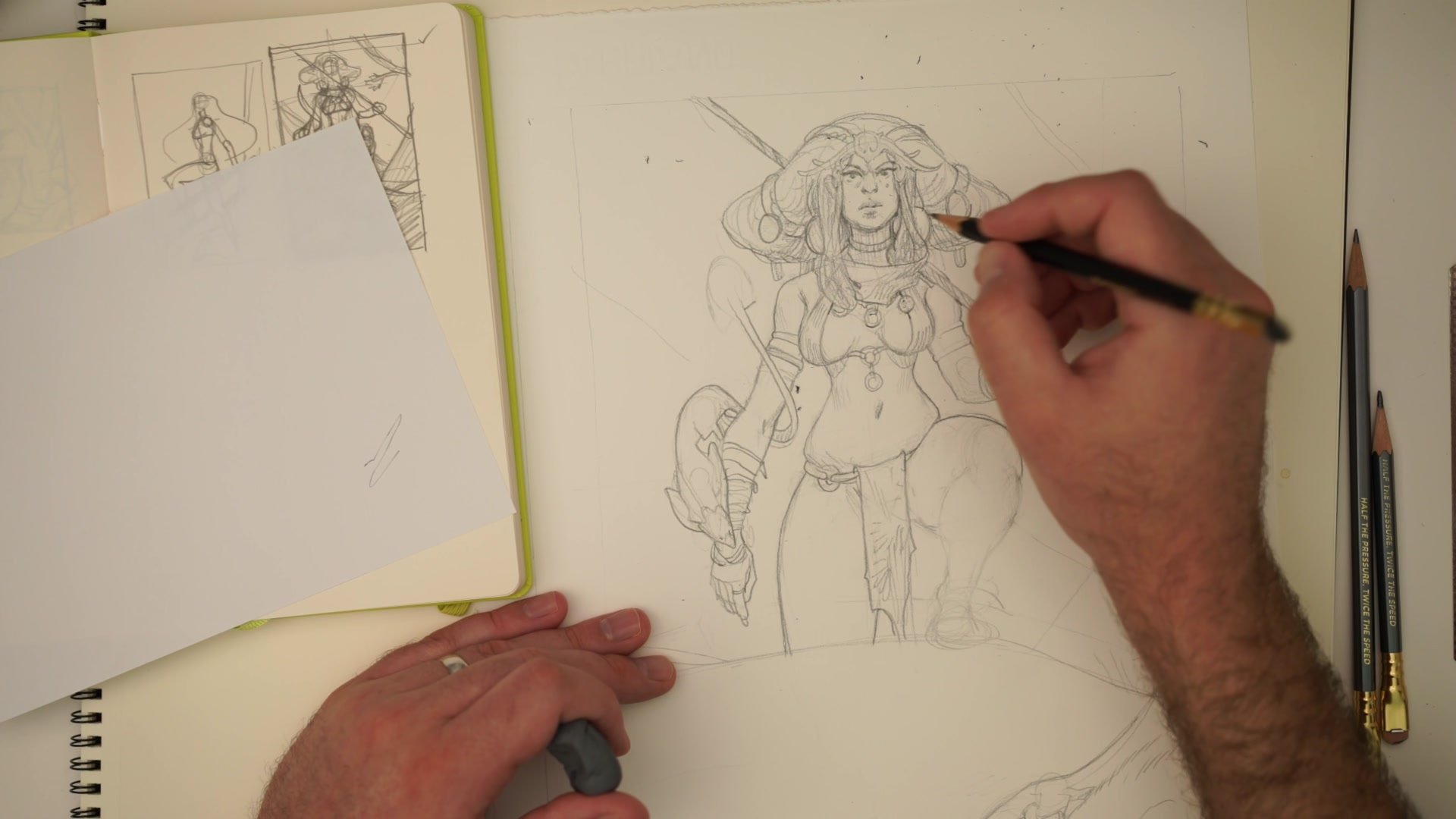
Once the rough construction reaches a workable state, the kneadable eraser becomes the primary tool. The goal is to pull back the construction lines, removing the skeleton and structural scaffolding while leaving just enough anatomy visible to guide the next pass. This transition from light pencil construction to clean page prepares the drawing for the darker Blackwing Matte pencil.
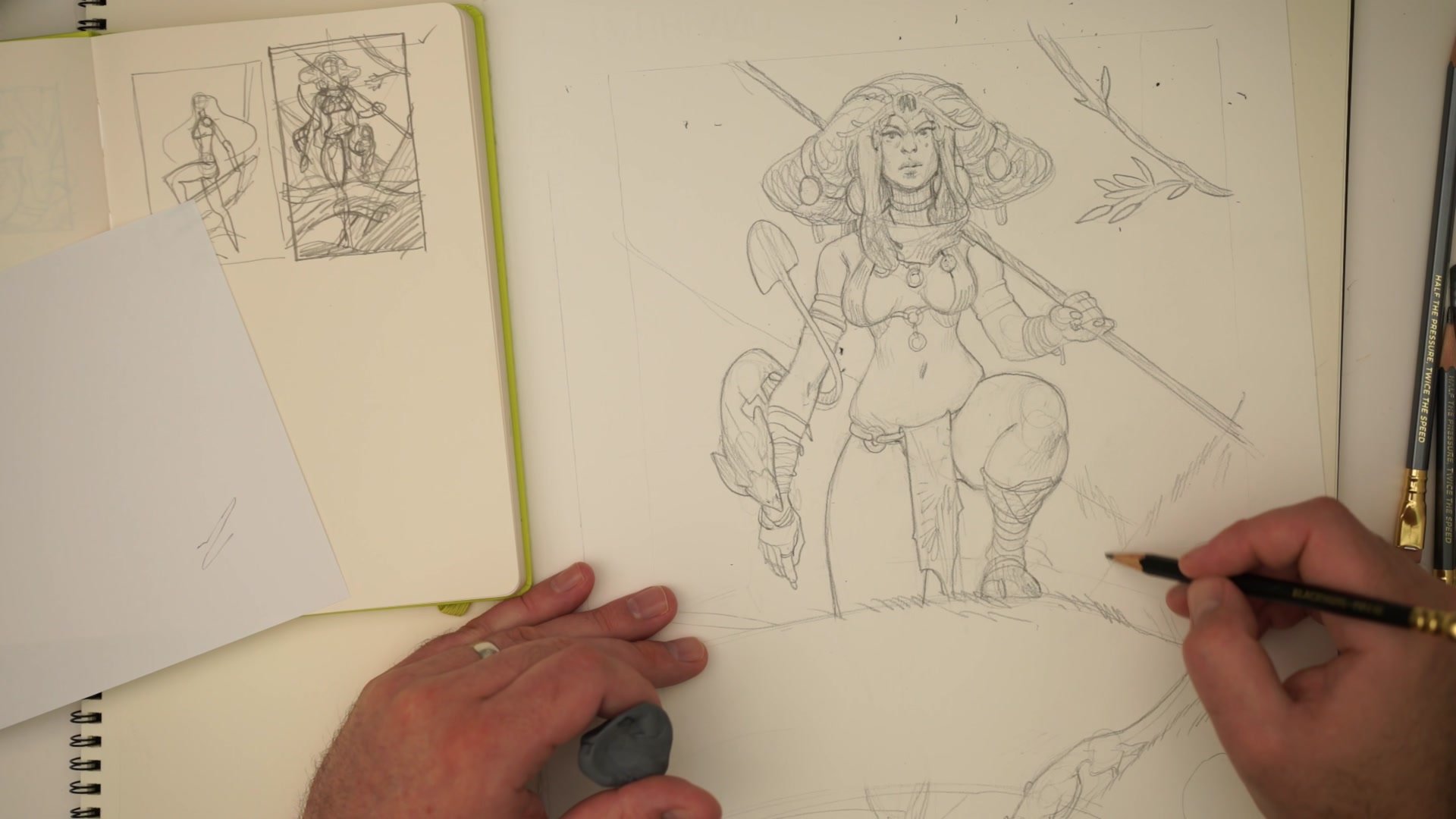
Switching pencils marks a shift in intent. The Matte Blackwing goes significantly darker and offers a wider tonal range. The first marks with the new pencil go into the face and head area, despite the acknowledged risk of starting with fine details on a freshly sharpened point. The session reveals honest struggle with the face, working through symmetry problems and what happens when pushing too hard for accuracy at the expense of character and charm.
Detail and Refinement
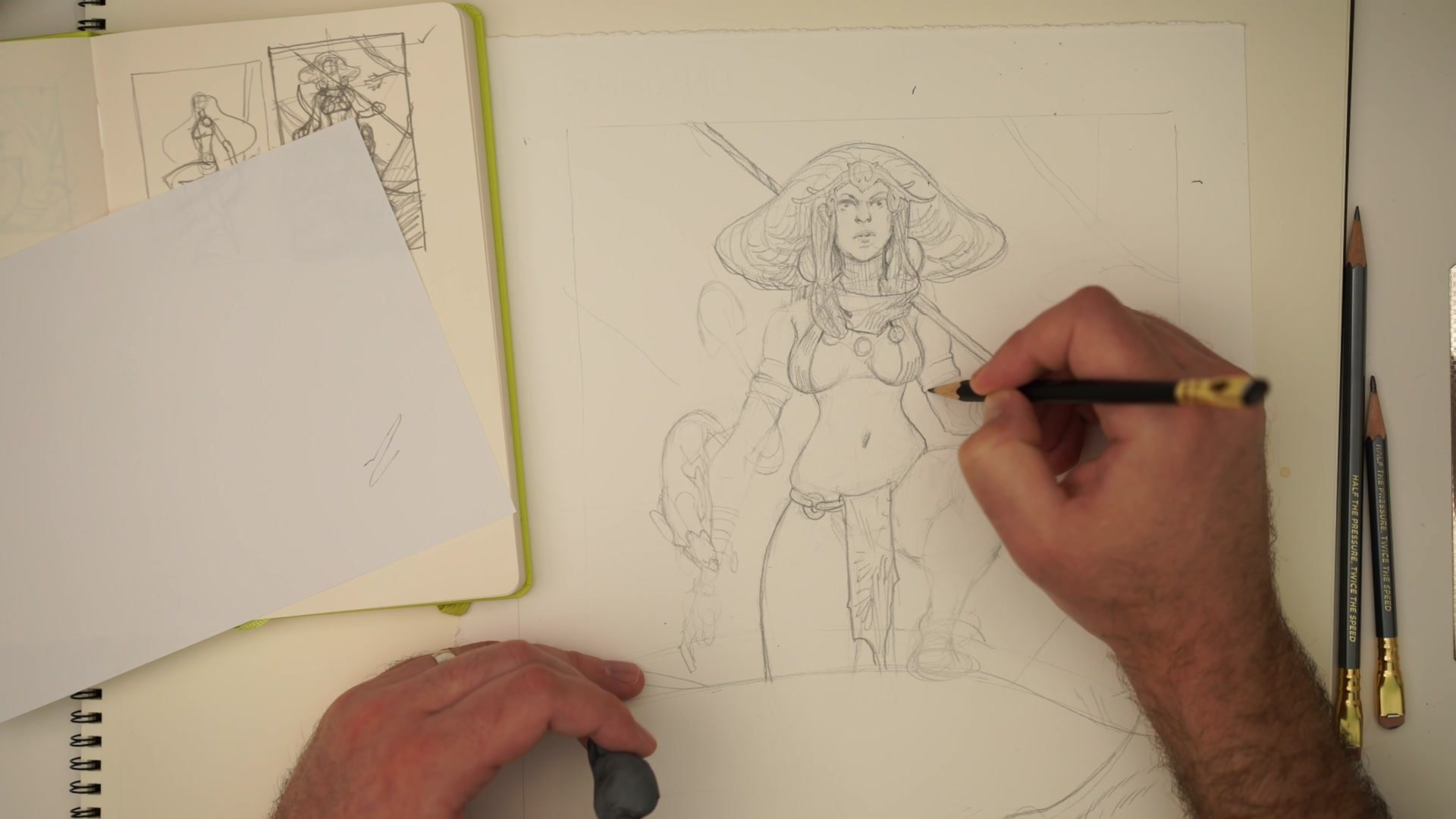
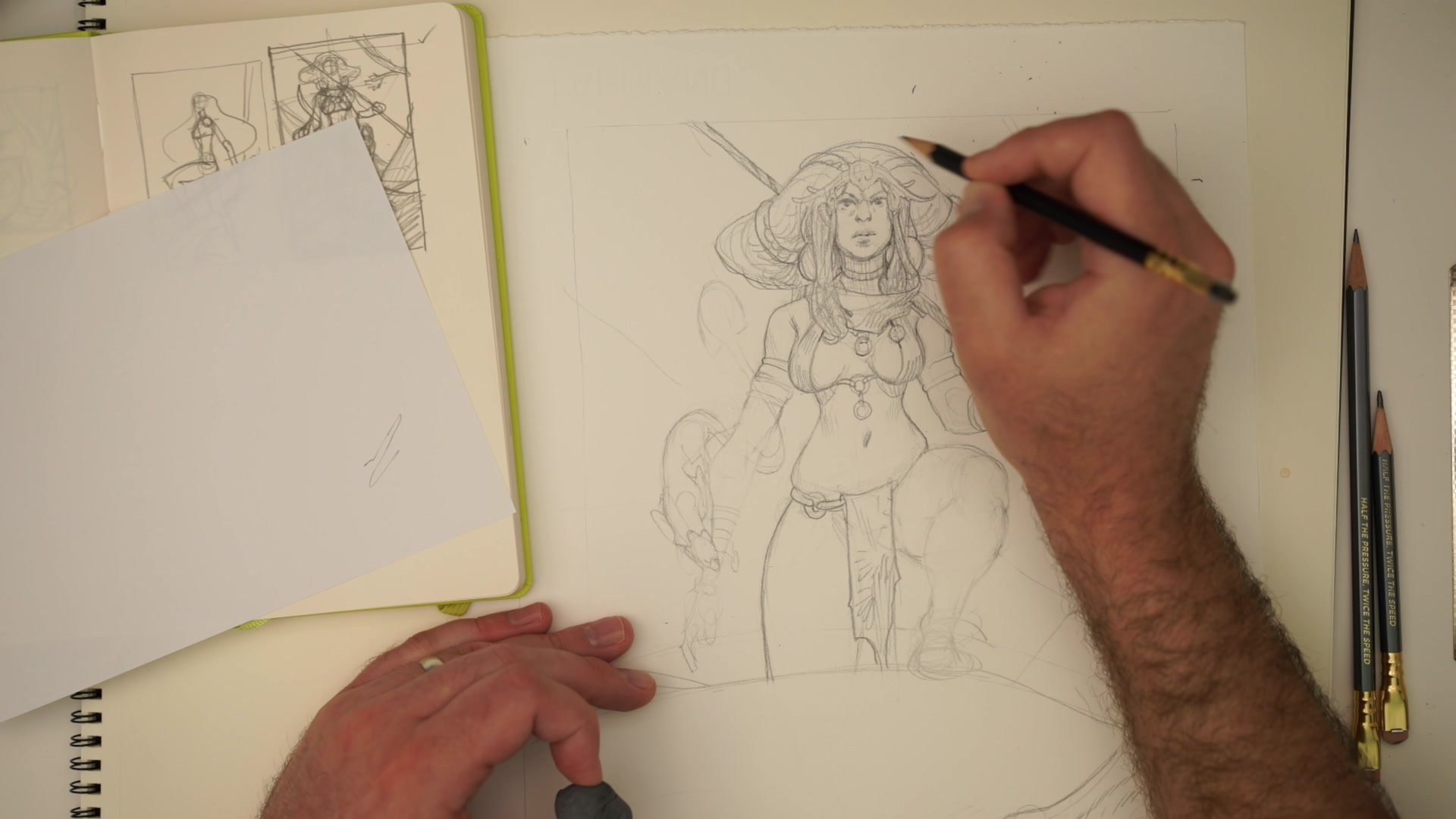
Tonal Hierarchy and Environment
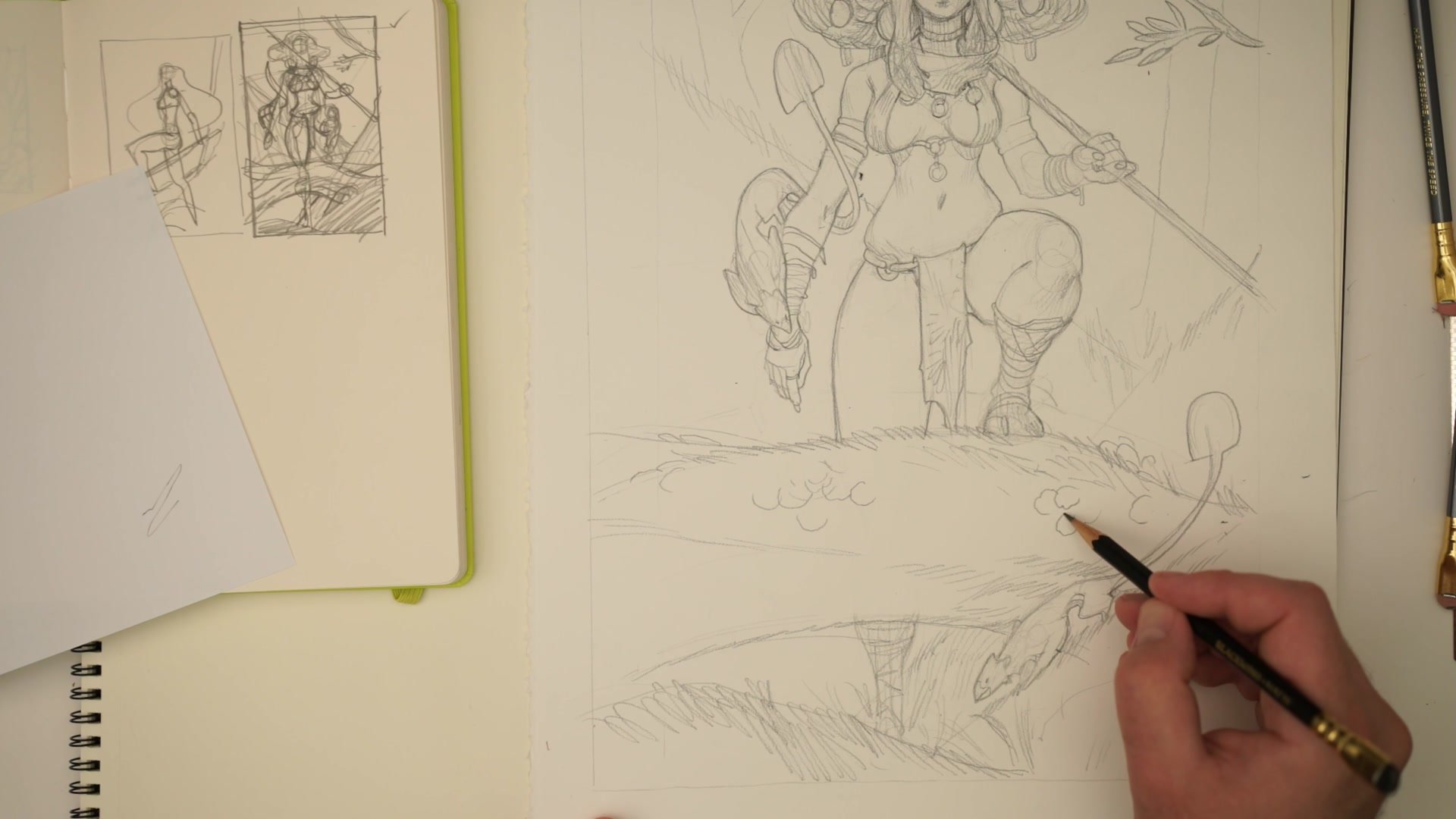
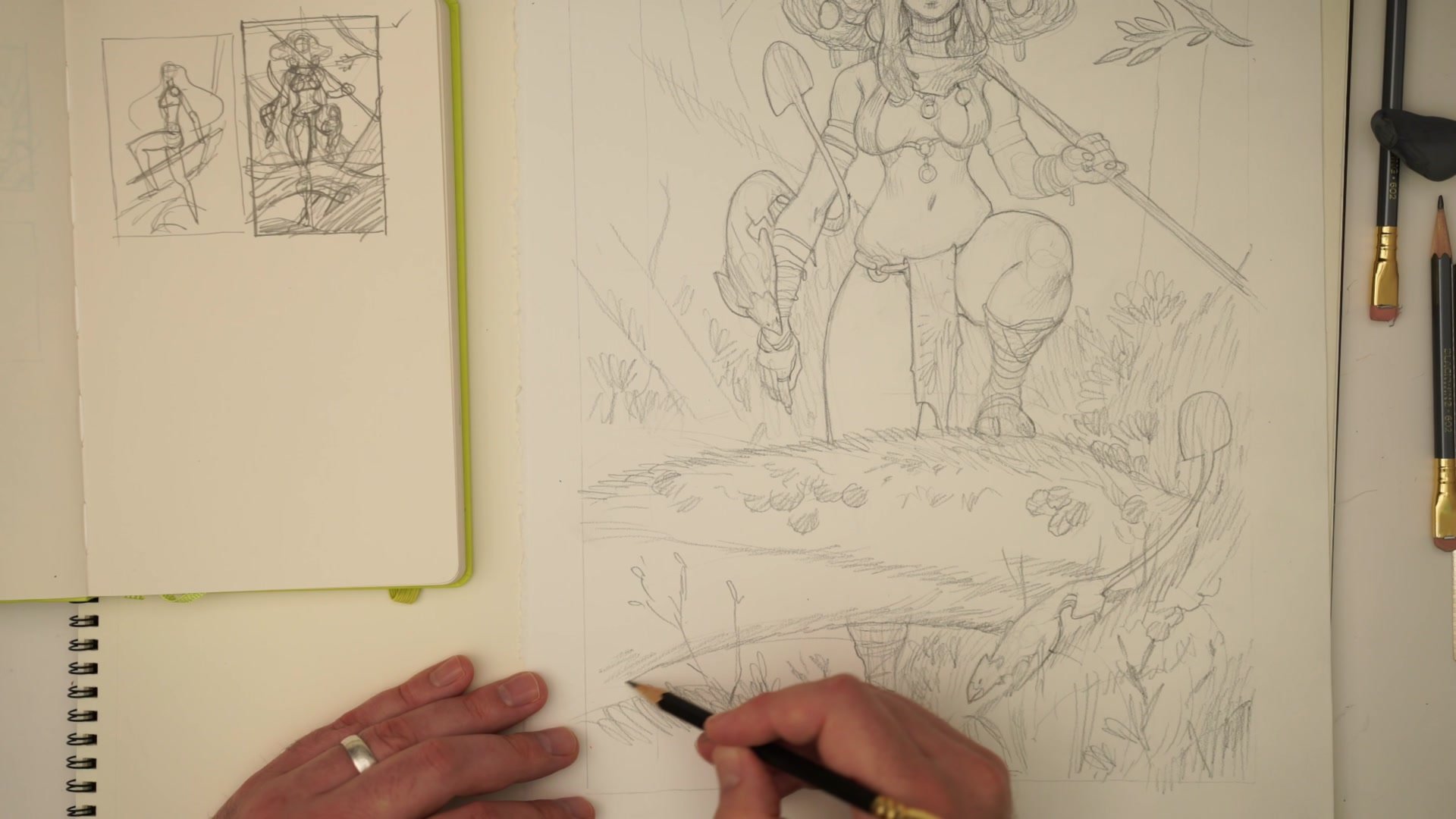
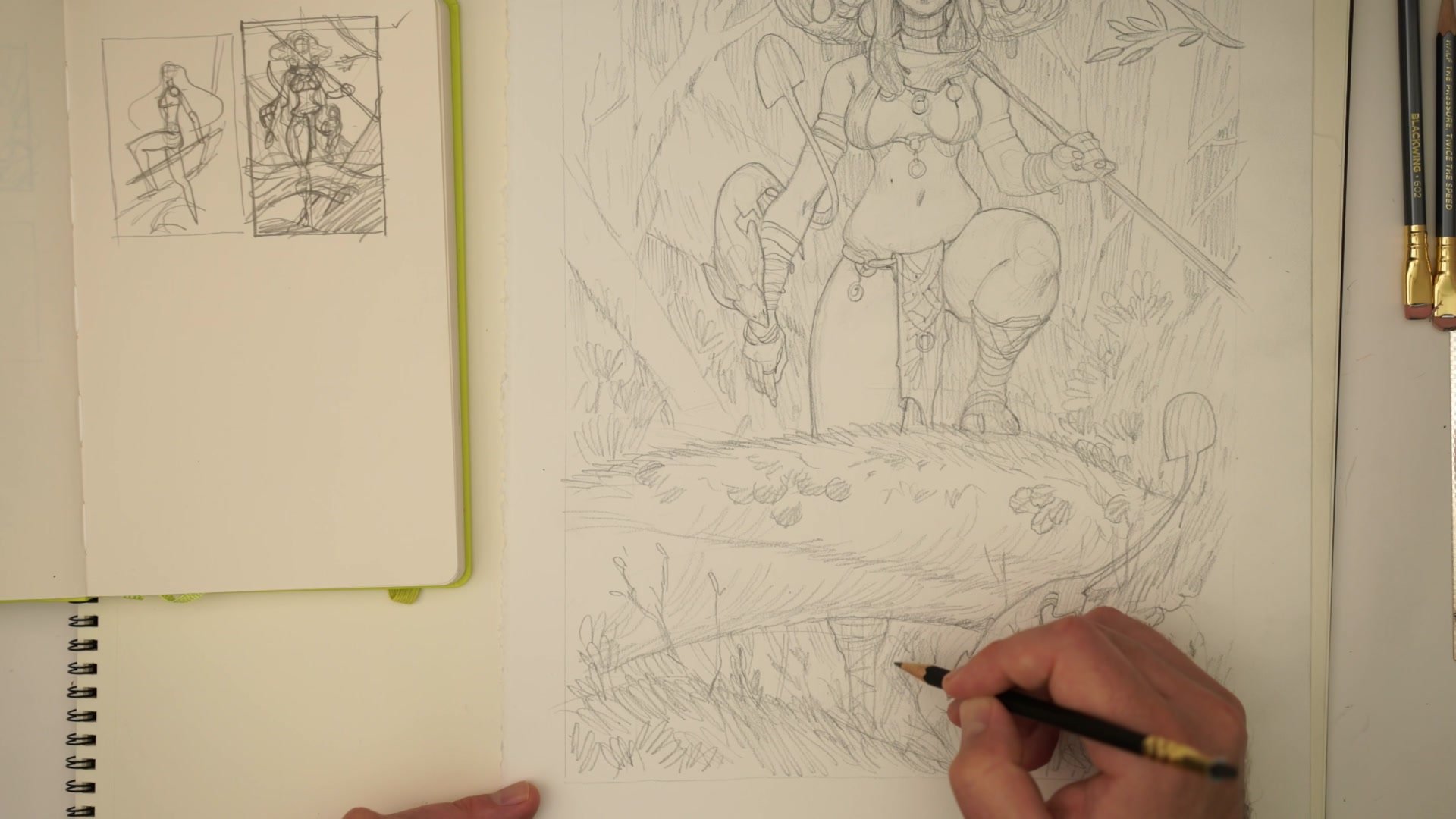
The final phase of the sketch focuses on balancing the hierarchy of detail across the entire image. The main character holds primary focus while environmental elements, including fallen tree branches, foliage, and background shapes, are treated with increasingly suggestive mark-making. Pattern becomes the dominant strategy here rather than rendered form: tonal marks that describe grass, bark, and branches without committing to precise depiction.
Managing overlaps is critical for creating depth. Building structures that go behind and in front of each other creates that sense of space even in a rough sketch. Bad tangents get identified and broken up. The foreground gets more specific marks while the background fades into looser tonal patterns. Keeping plenty of white space on the page preserves the option to add color later, a practical consideration that prevents over-rendering the pencil work.
Final Drawing
Key Techniques
Light to Dark Pencil Strategy: Starting with the lighter Blackwing 602 for construction then switching to the Matte for final detail creates natural separation between phases and prevents over-committing early.
Erasing as Drawing: Using the kneadable eraser to remove construction is essentially drawing in white, clearing the page to accept the next level of mark-making without losing the placement work underneath.
Pattern Over Rendering: Background and environmental elements rely on pattern differentiation rather than rendered form. Different directional marks for grass, bark, and foliage create visual variety without demanding focused attention.
Detail Hierarchy Management: Primary focus stays on the main character while peripheral elements deliberately lose edges and specificity, preventing secondary elements from stealing the show.
Try This Warm-Up
Set Up a Challenge: Do thumbnail sketches first, then pick one to develop as a larger warm-up drawing. Choose something slightly beyond comfortable to create a genuine drawing problem to solve.
Use Two Pencil Grades: Start with a lighter pencil for construction and blocking, then switch to a darker one for the detail pass. This forces you to work through the erasing phase and commit to your construction.
Limit to One Hour: Keep the warm-up sketch to about an hour. The goal is not a finished piece but to get warmed up, fluid, and ready for the real work of the day.