Fantasy Character Sketching - Real Time Fully Narrated
Summary
Fantasy Character Sketching
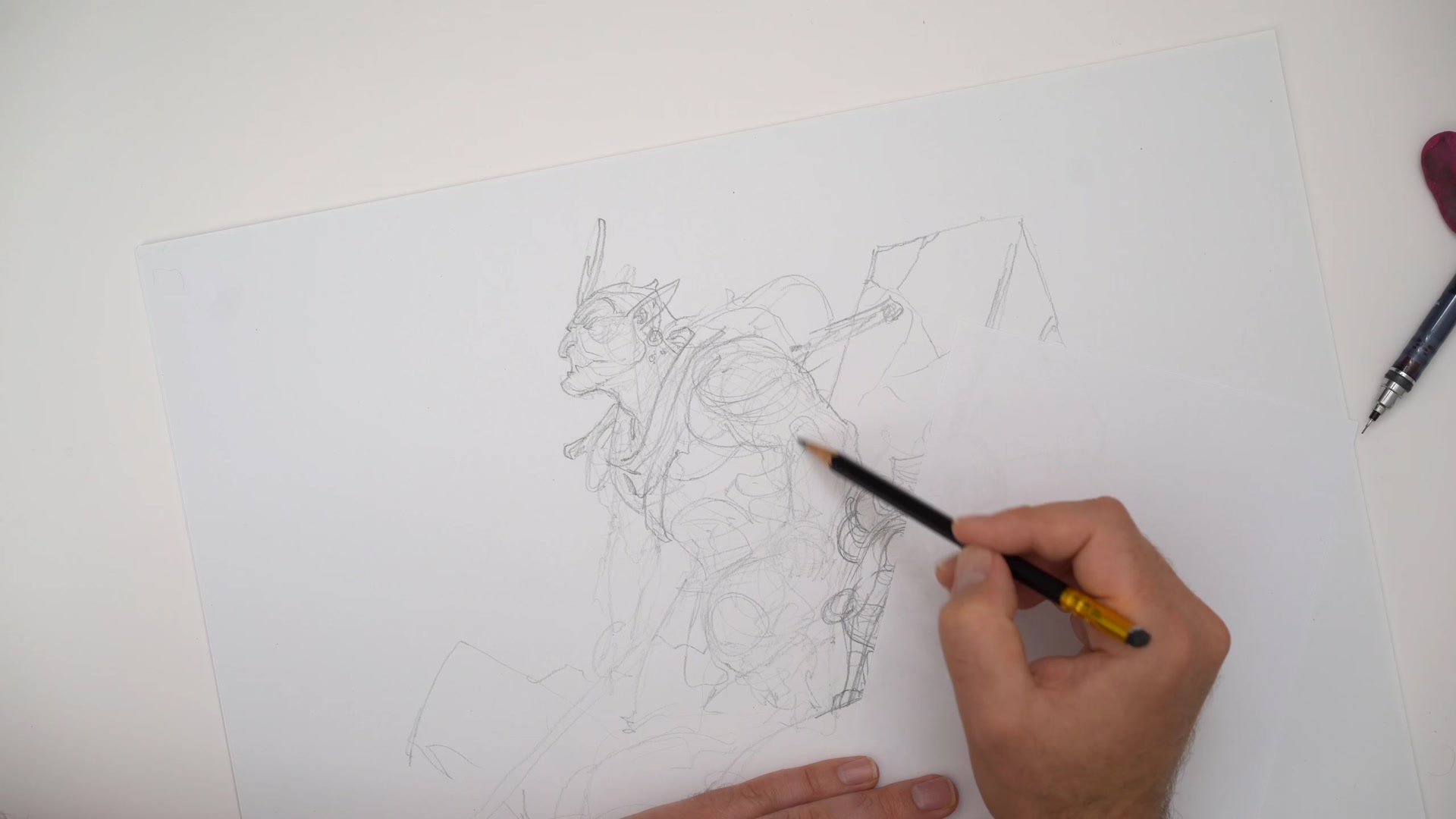
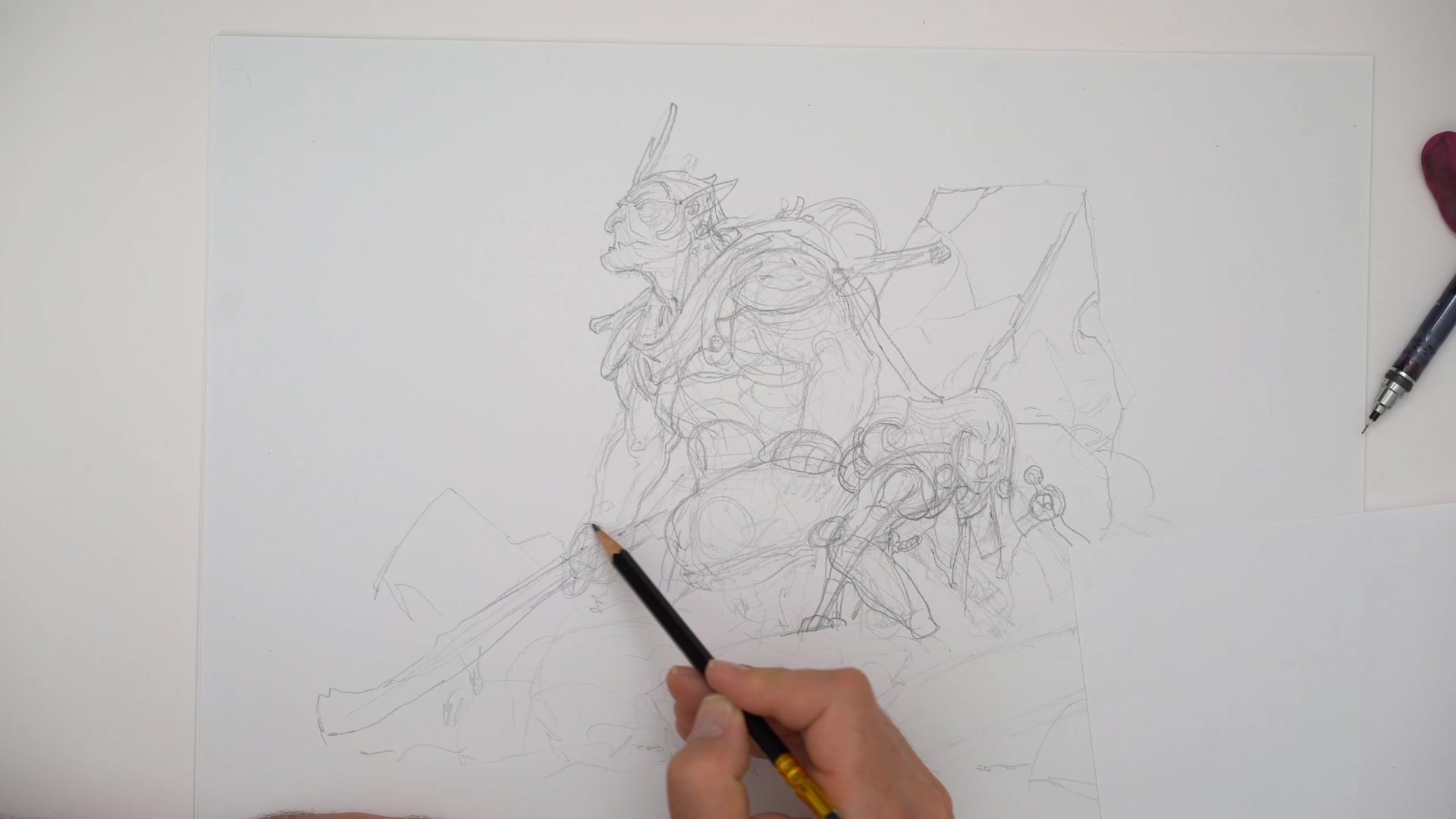
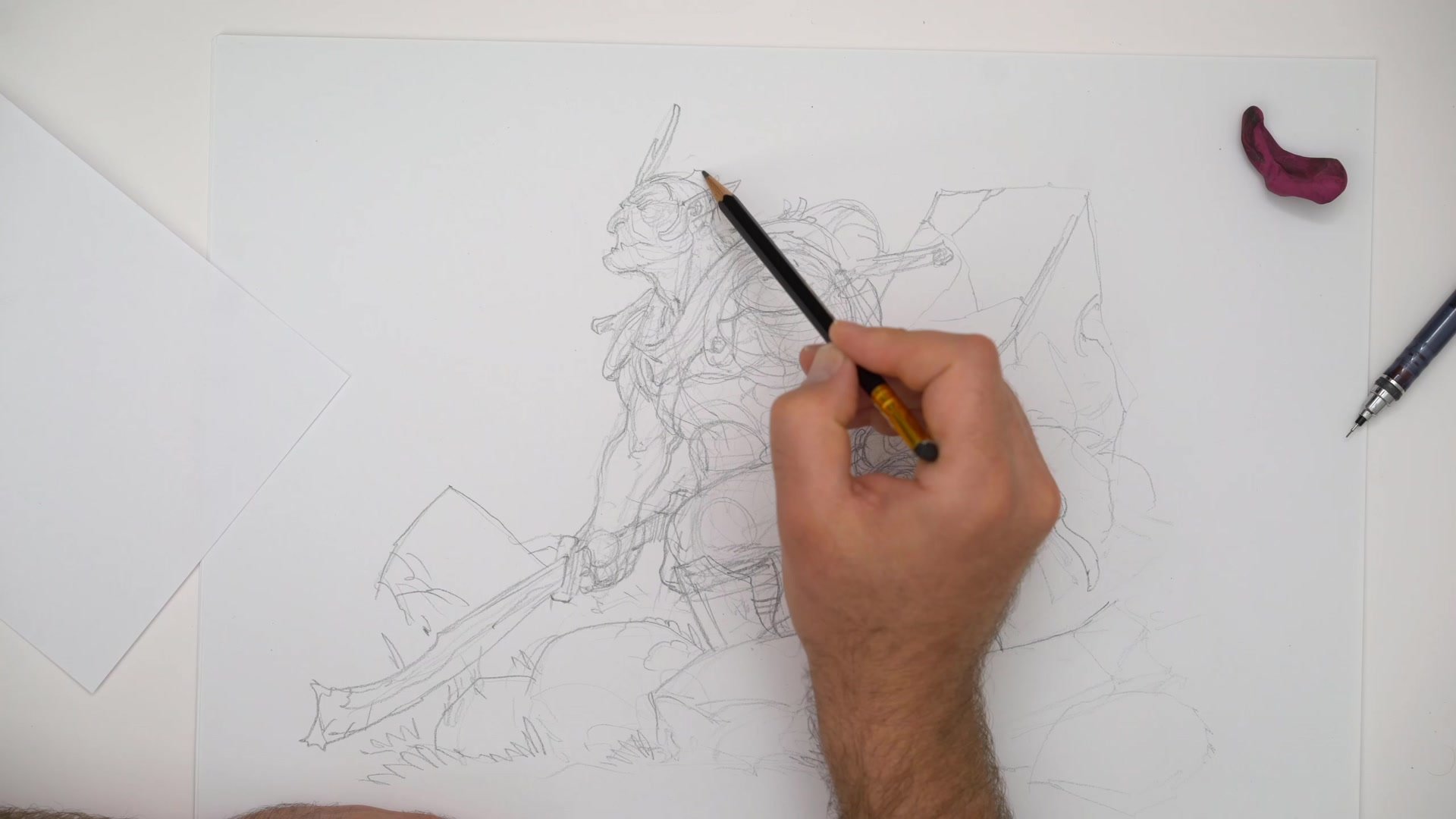
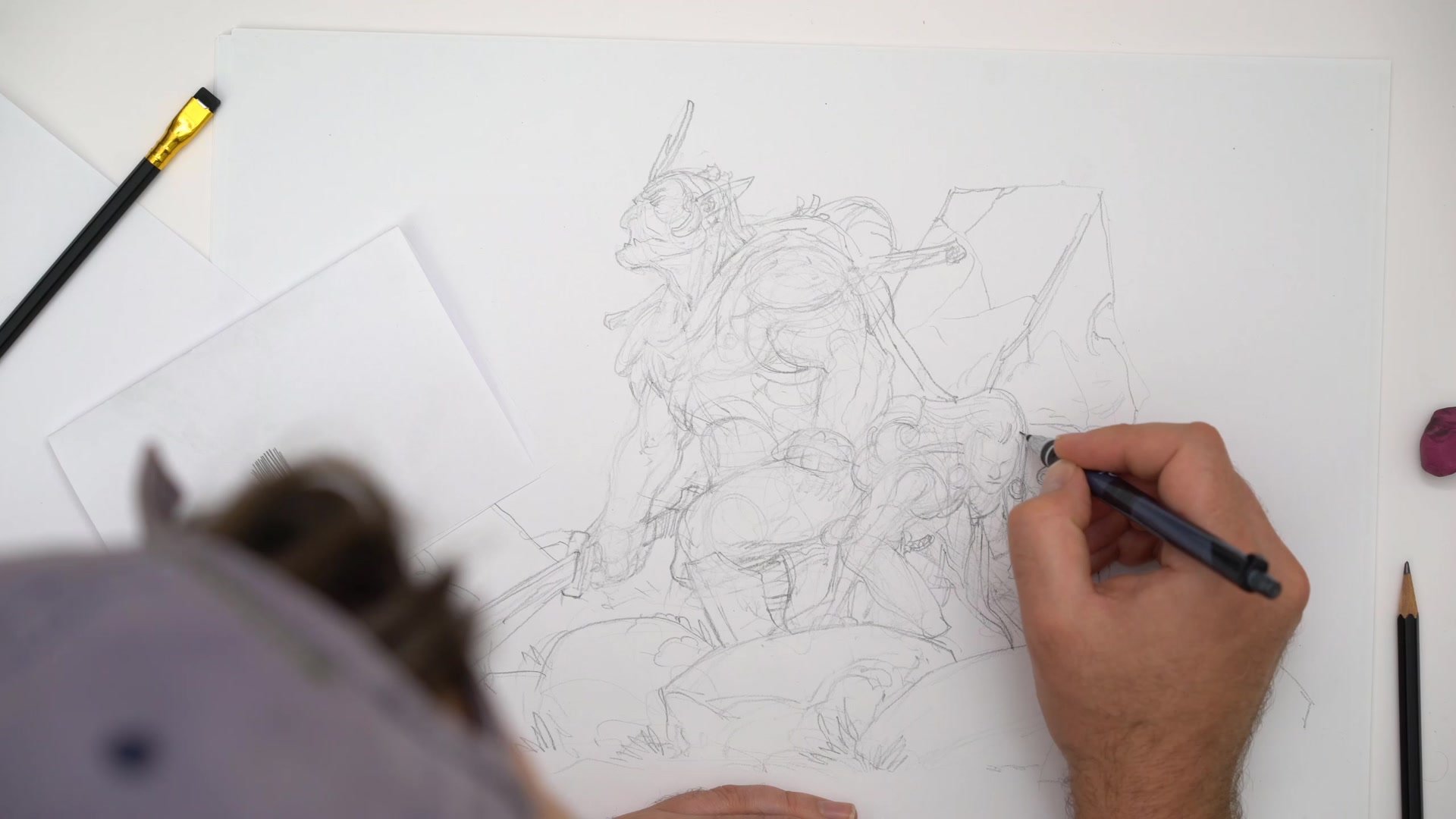
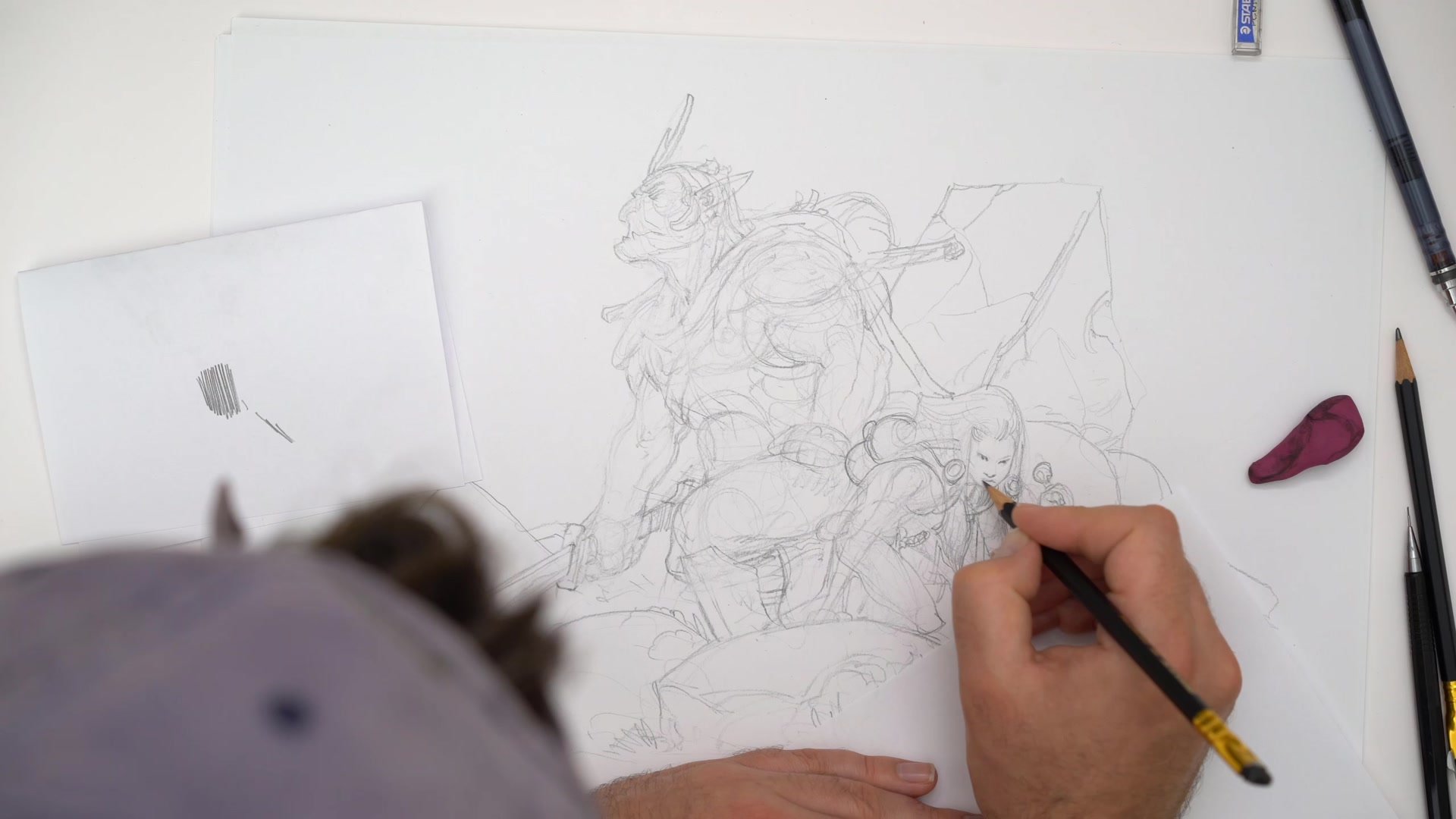
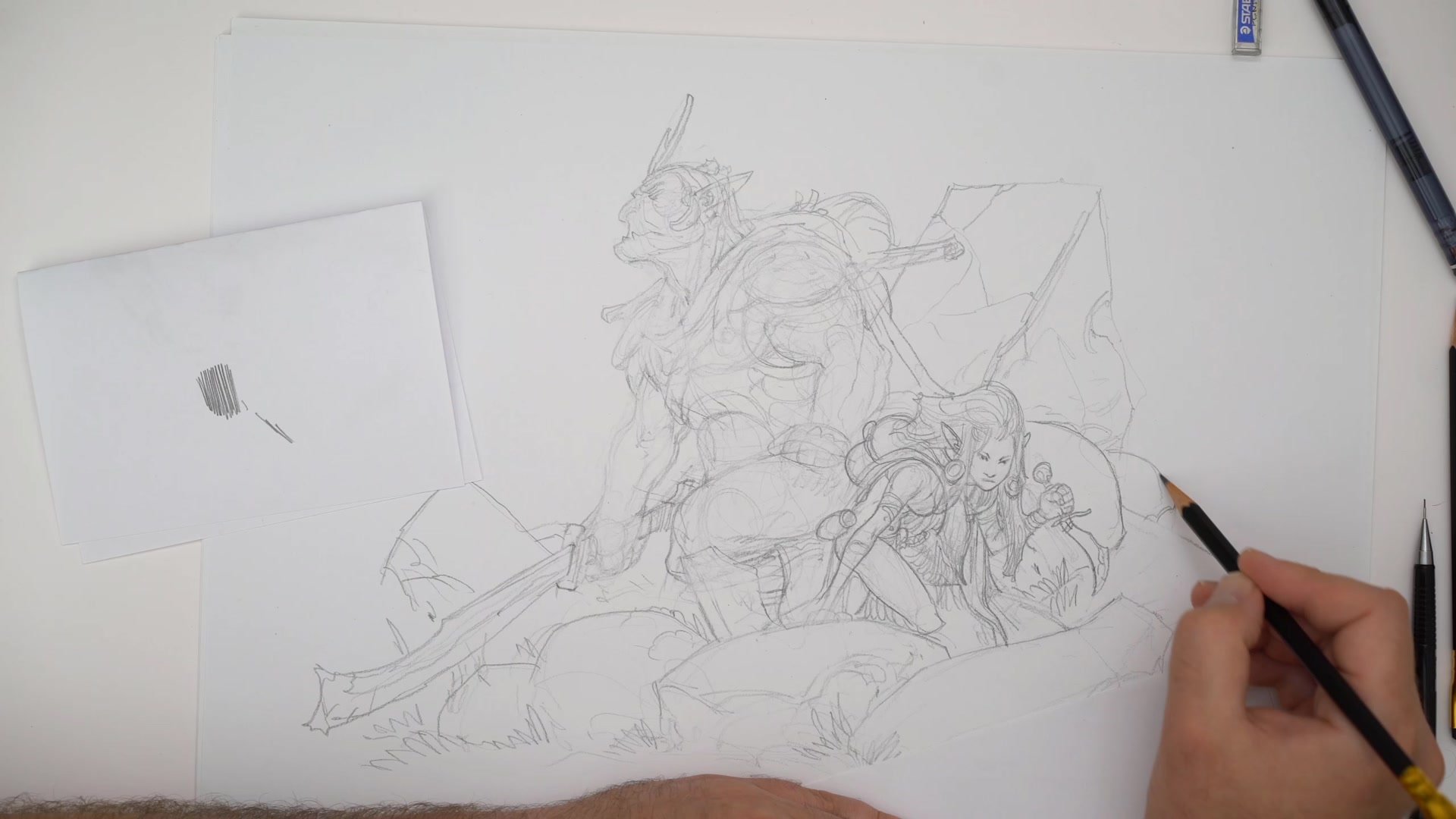
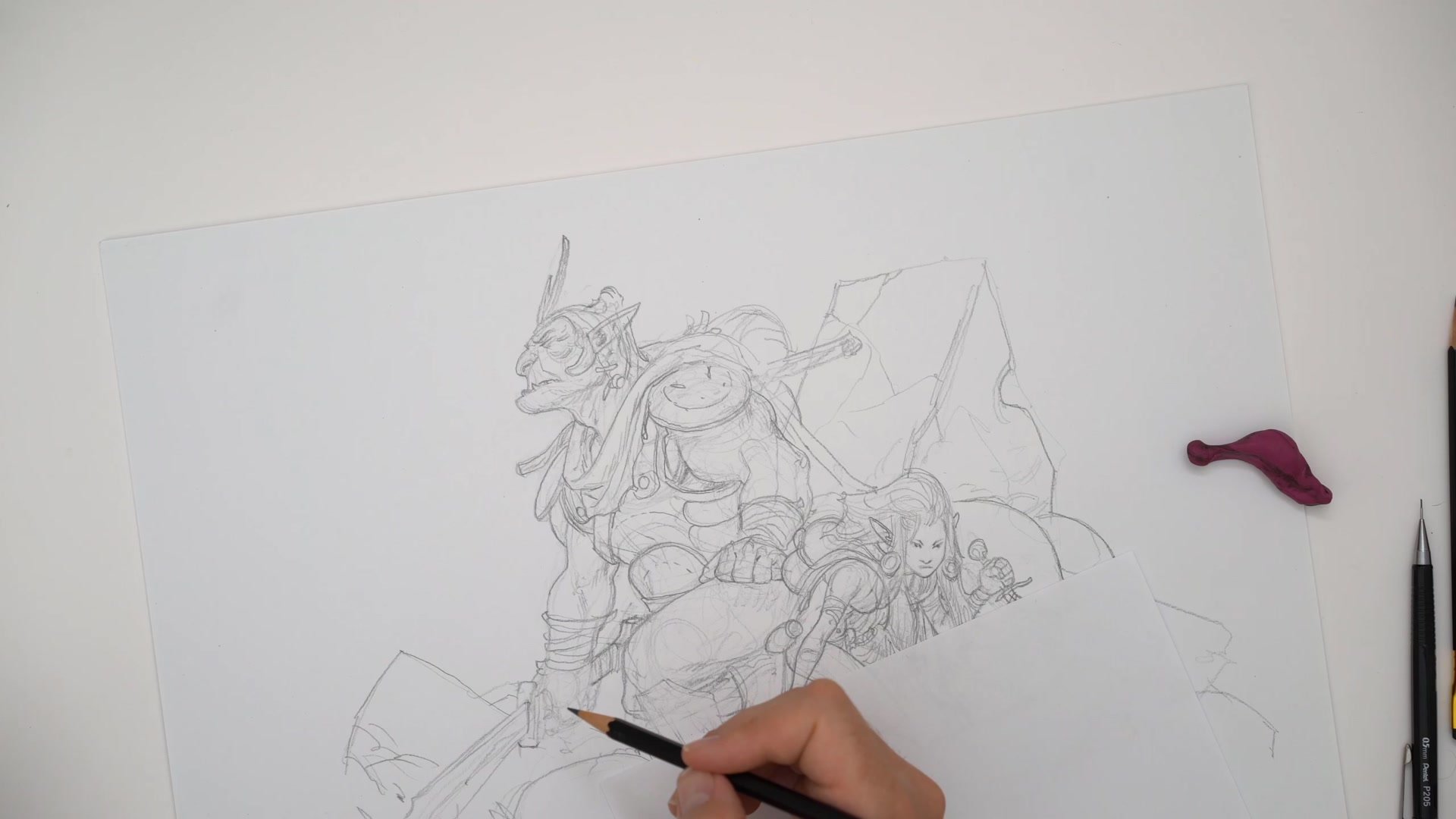
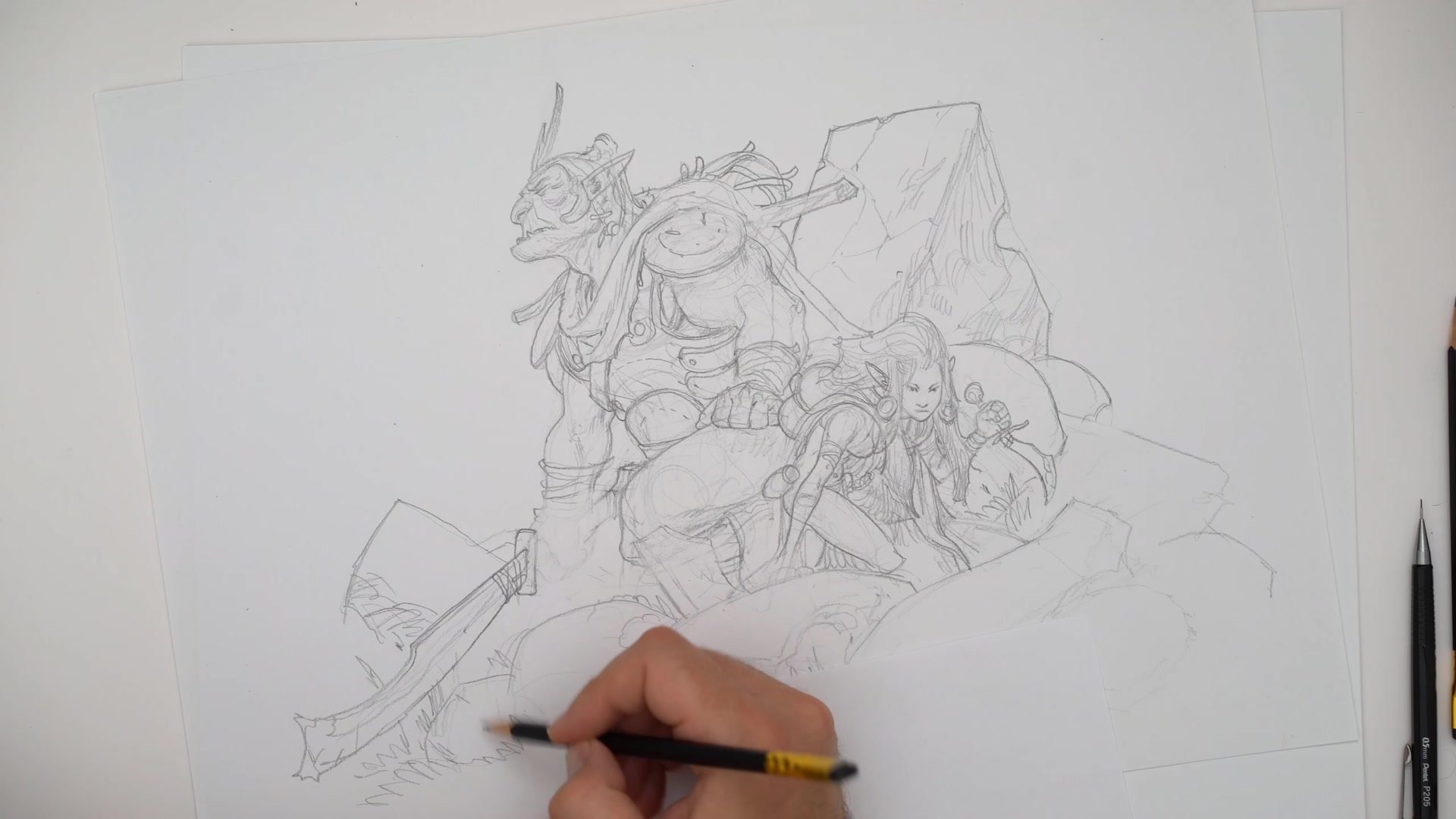
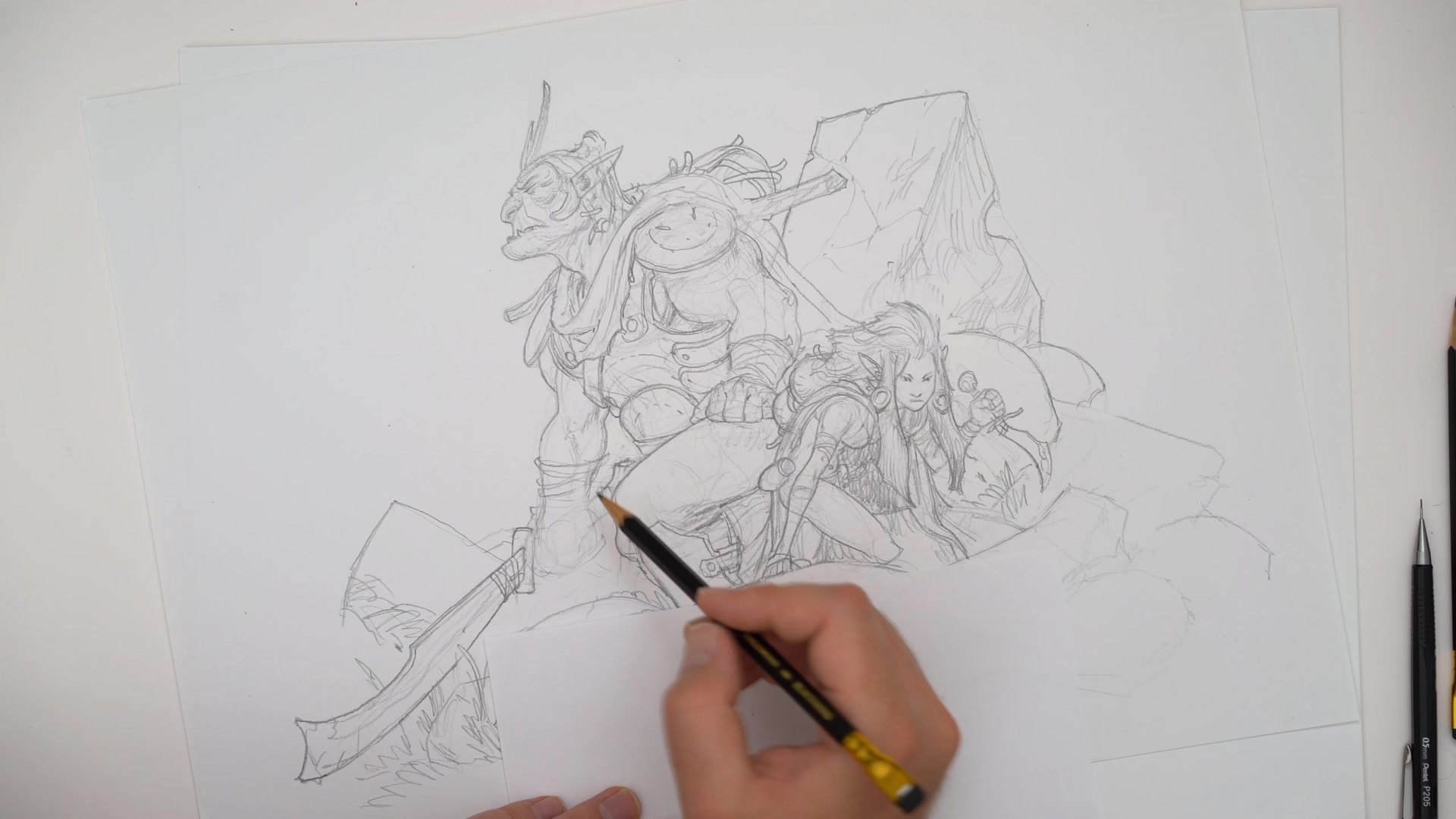
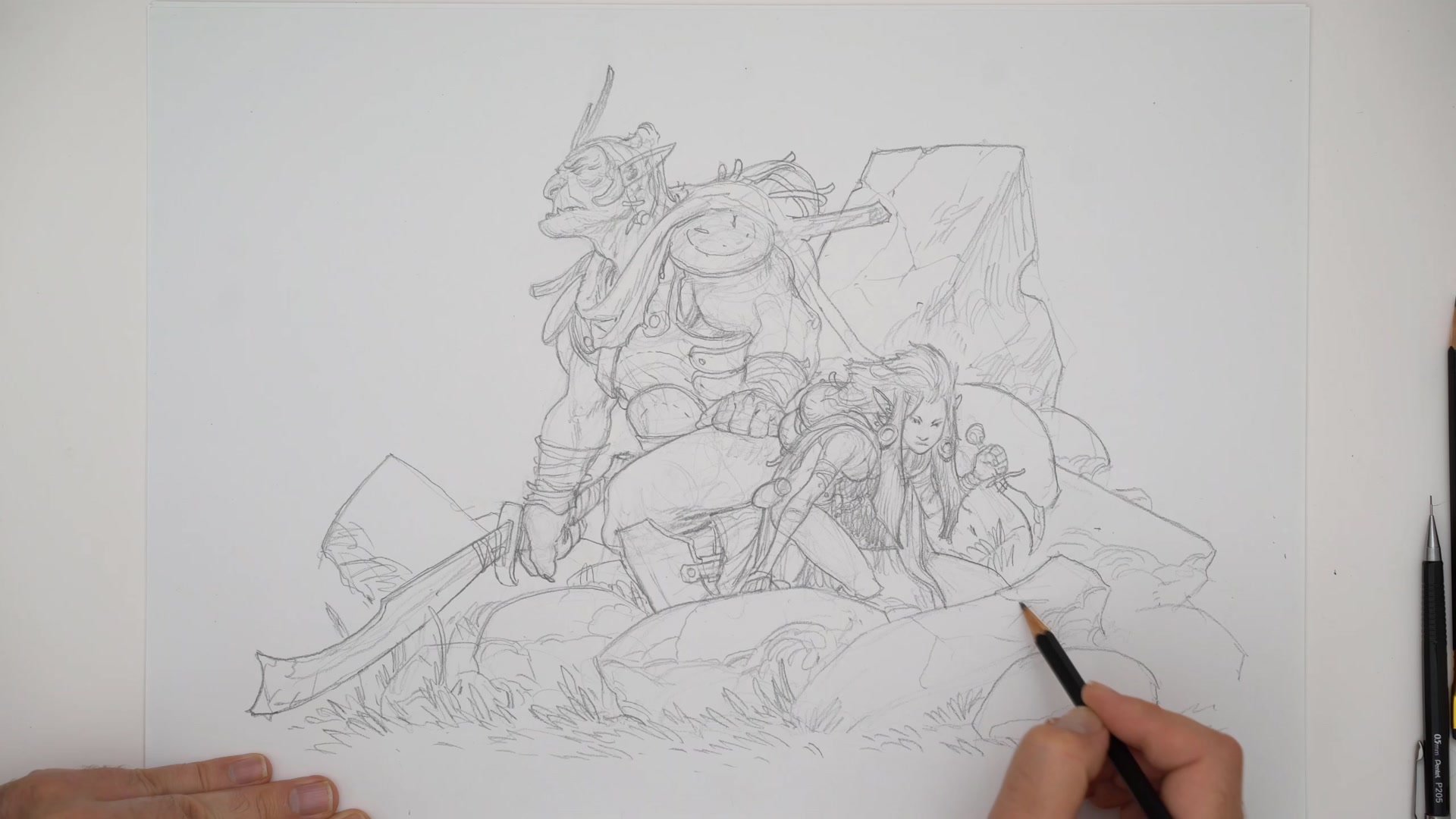
This real-time sketching session covers a full 72-minute process of creating a multi-character fantasy vignette with pencil on copy paper. The drawing features an orc-like warrior with a massive sword alongside a smaller female character, both seated among rocks in a fantasy landscape. The entire session is unedited and fully narrated, showing every decision from the first gestural stick figures through to the final refined sketch.
The focus throughout is on building a regular sketching practice and understanding what can realistically be accomplished in a single session. Rather than aiming for a polished piece, this demo embraces the sketchbook mentality where the process matters more than perfection.
Early Blocking
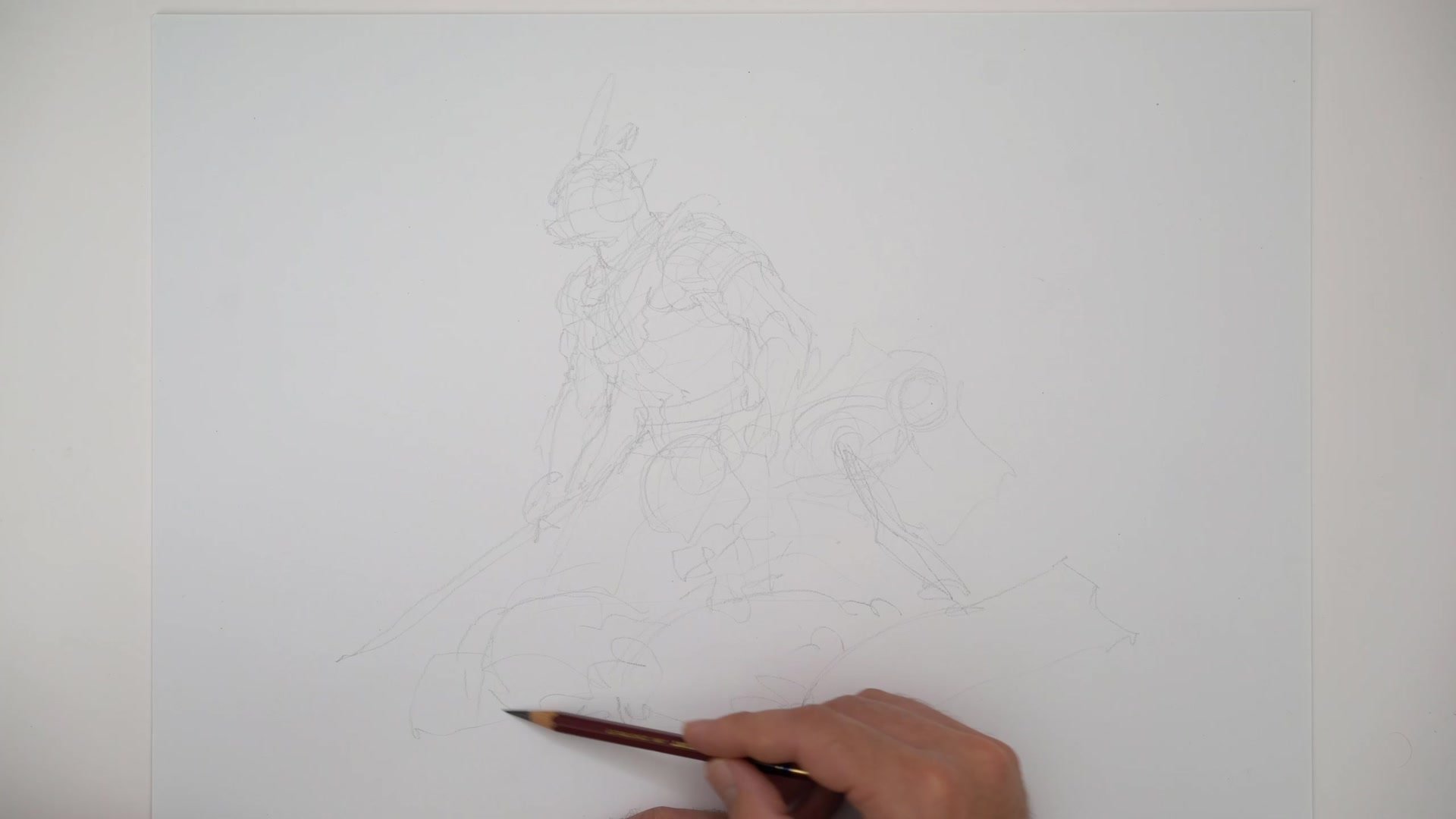
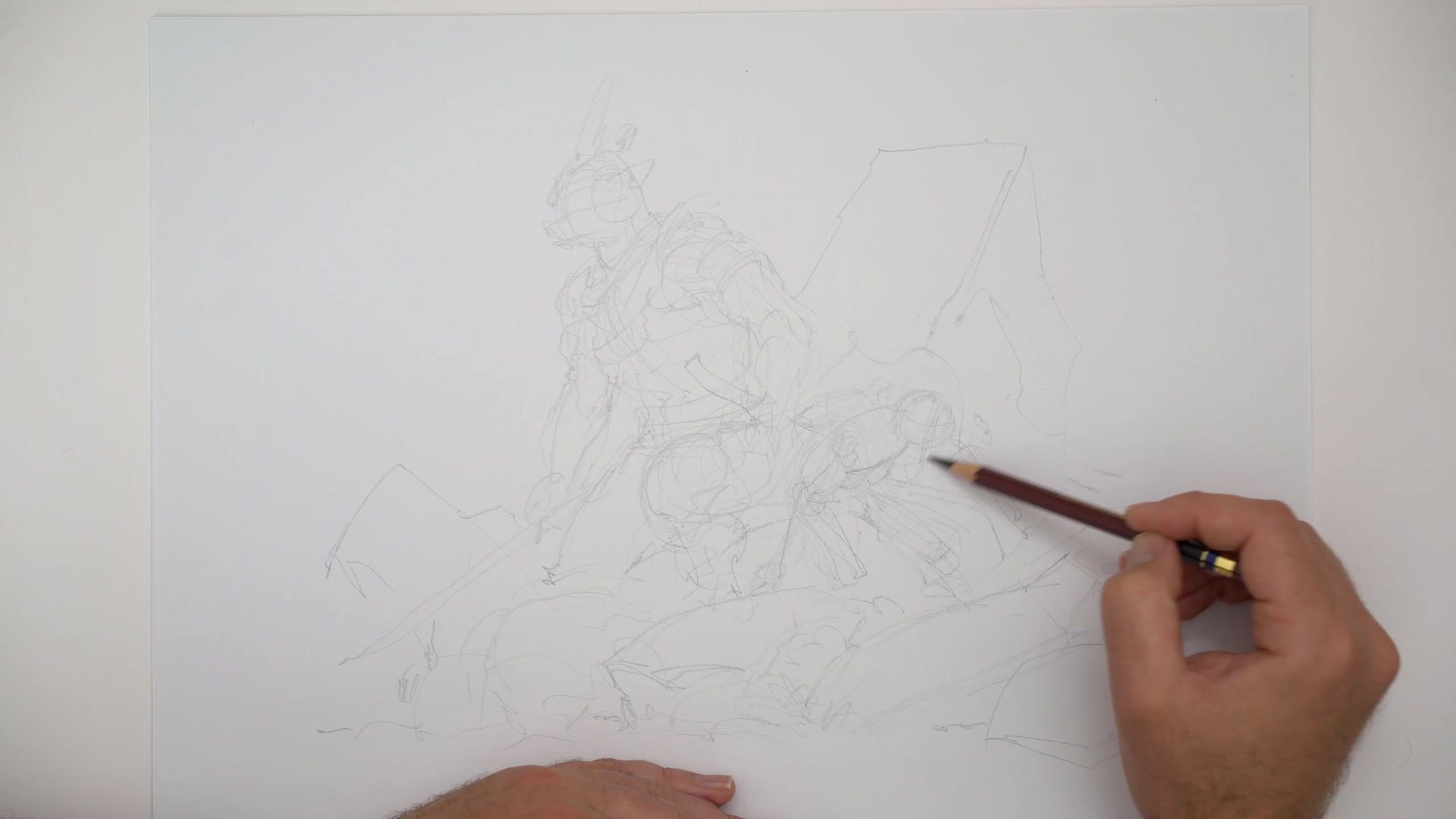
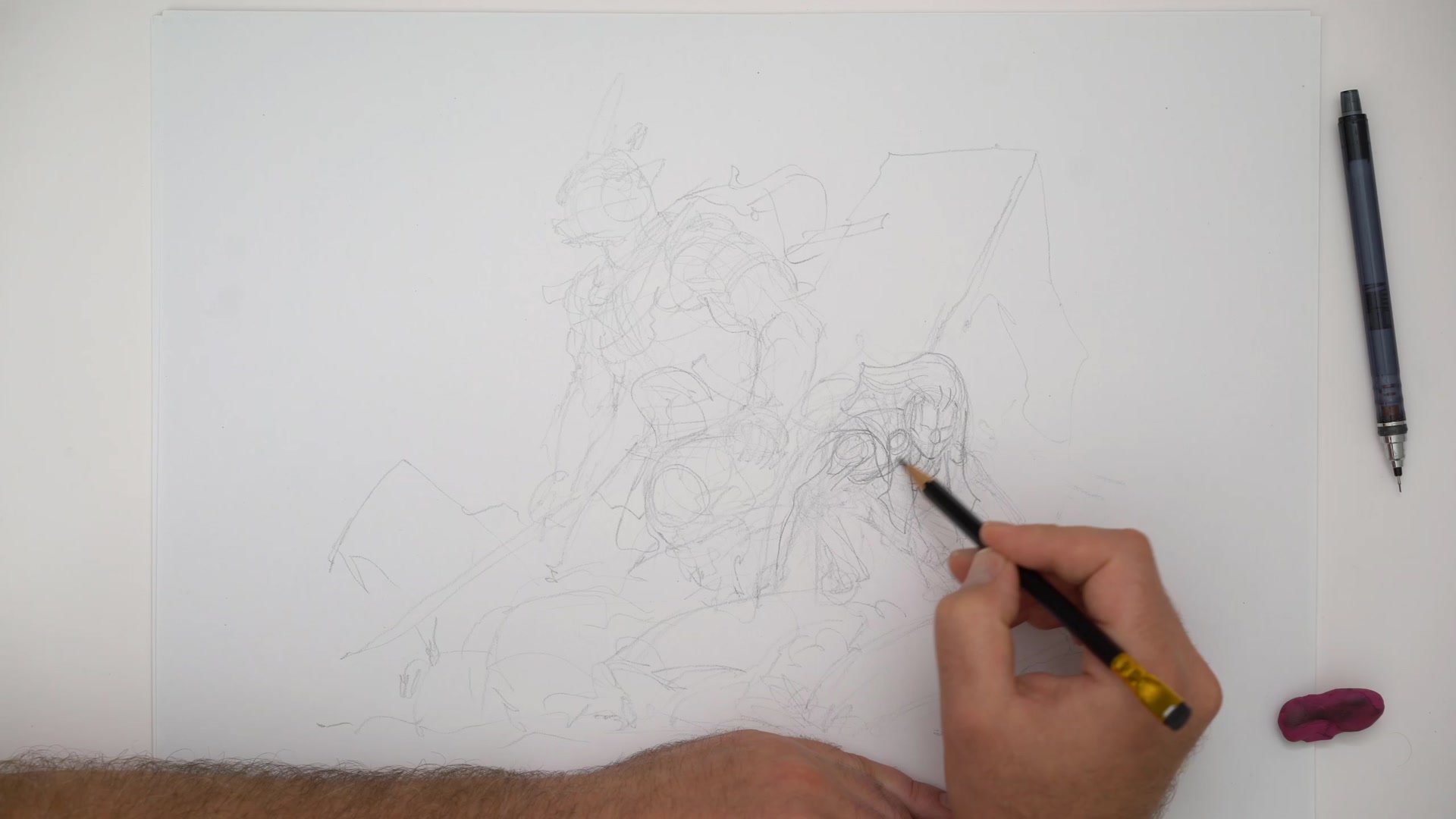
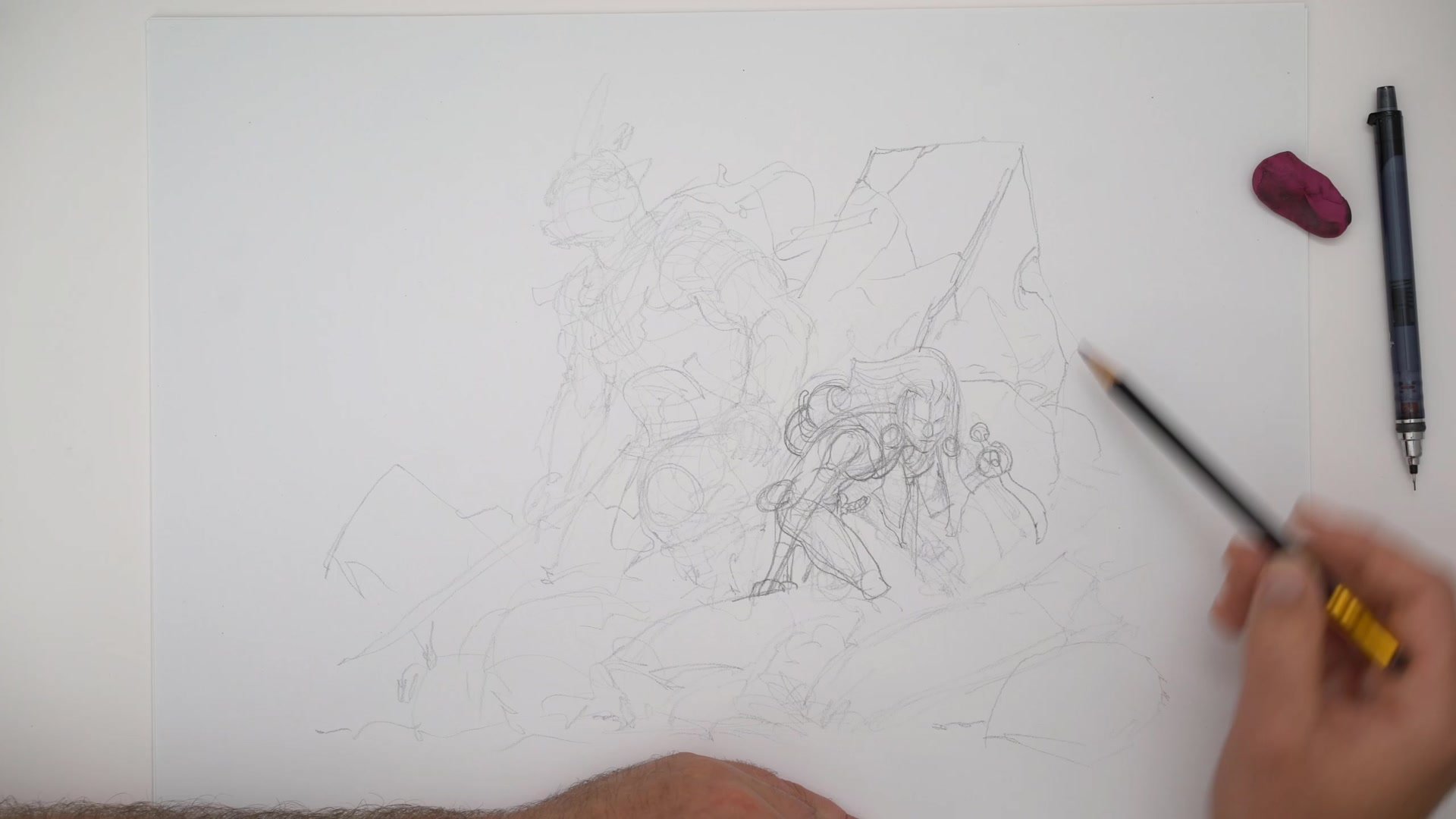
Gestural Rough-In
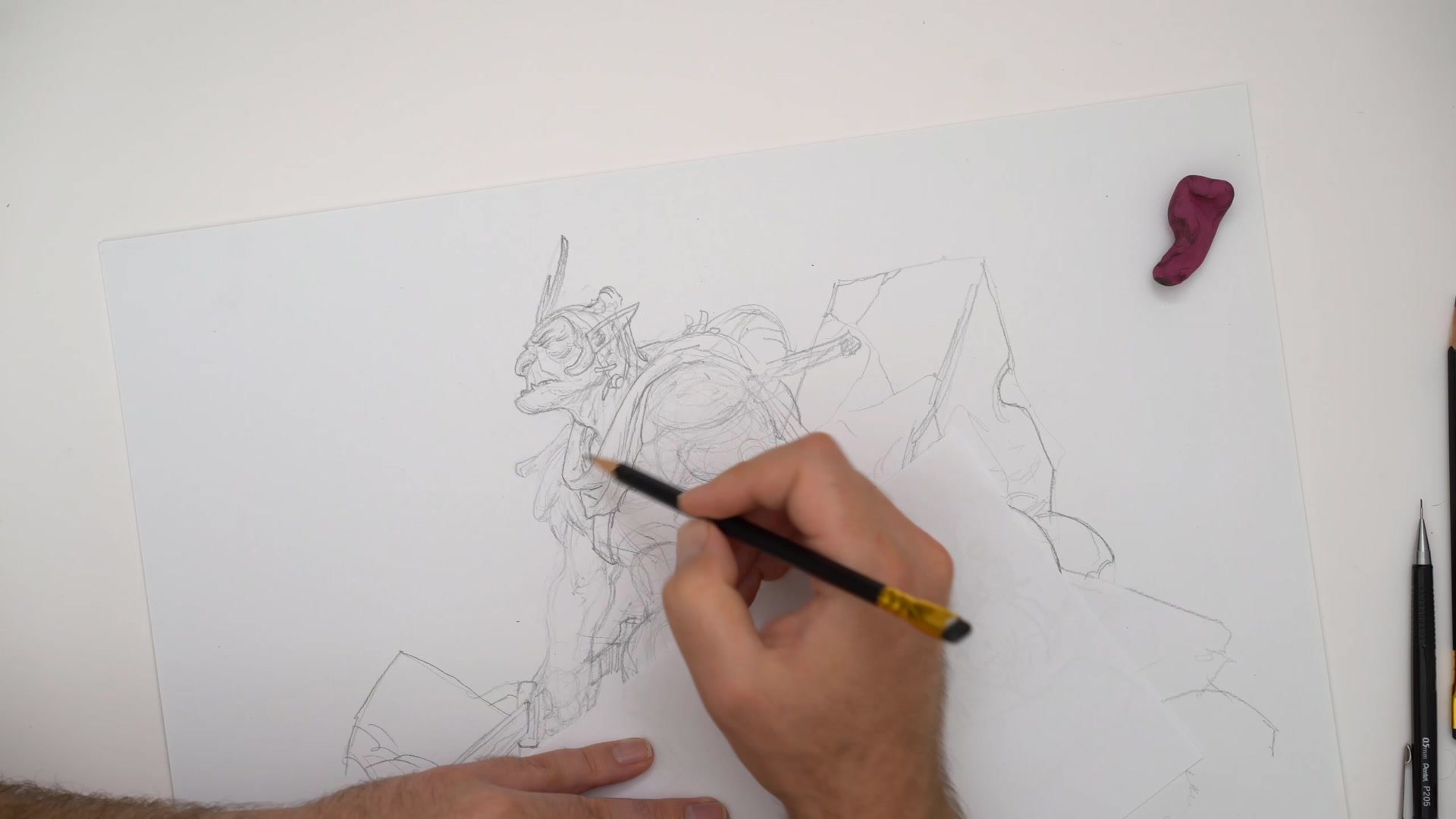
The session begins with loose stick-figure-level blocking, establishing character poses and a low horizon line. Working with a 4B pencil on copy paper, the approach prioritizes drawing familiar subjects first to get into the zone before pushing into more challenging territory. The initial pass is deliberately loose and gestural, focusing on overall silhouette and character placement rather than any detail.
A key principle at this stage is accepting that the rough pass will look messy. The plan involves multiple passes: a gestural rough, a kneadable eraser knockback, and then a more structural redraw. This layered approach allows the drawing to develop naturally without committing too early to specific forms. Copy paper gets used specifically because it keeps expectations low and encourages a looser, more experimental mindset.
Structural Development
Proportion and Structure
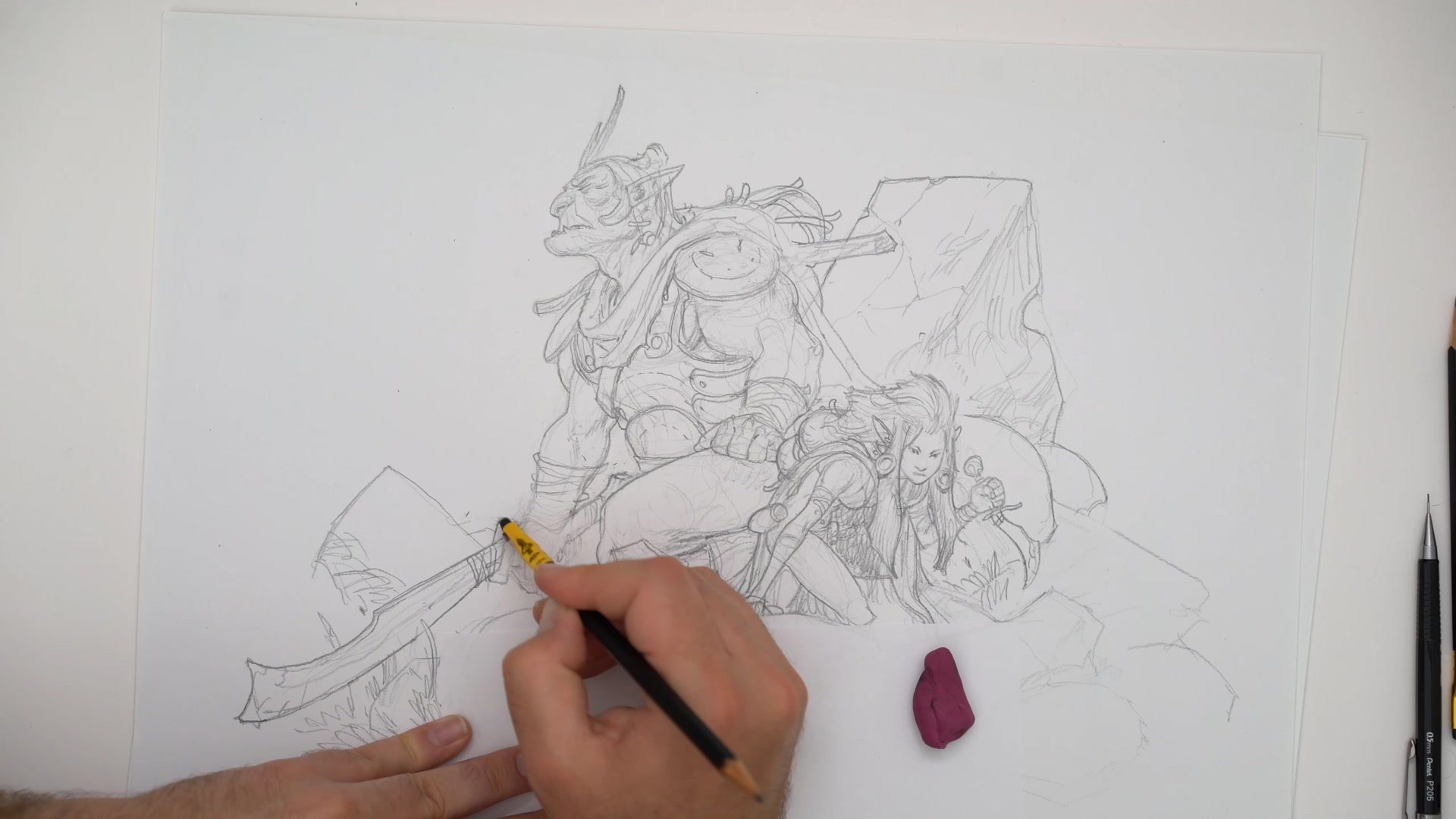
Once the initial gestures are established, the kneadable eraser comes in to gently dab back the underlying sketch marks. The erasing is selective, targeting areas with heavy draw-through and construction lines while leaving enough of the original marks to guide the next pass. Areas that need a complete redraw get erased more aggressively, while sections that are working get left mostly intact.
The structural pass focuses on proportional relationships between forms. Rather than always starting with a sphere and building linearly, the approach uses known proportional markers to gauge where things should be. If the jaw position is known, the cheekbone can be placed relative to it. This non-linear thinking about construction means any starting point can anchor the rest of the proportions, making the process more flexible and forgiving.
Refinement and Detail
Managing Tangents and Hands
A recurring challenge throughout the session is managing tangents and problem areas, particularly with hands and weapons. When the hand holding the sword creates an awkward overlap, the strategy is to move on to other areas rather than grinding away at the problem. Working on rocks, environment details, and other character elements provides productive alternatives while the brain processes the tricky area in the background.
Hand placement and weapon angles prove to be the most reworked elements. The approach involves accepting that some areas will need multiple attempts and using the kneadable eraser to knock back failed attempts before trying again. The key insight is optimizing for clarity over anatomical perfection, making sure intersections and overlaps read clearly to the viewer even if the underlying anatomy is somewhat fabricated.
Final Result
Key Techniques
Multi-Pass Sketching: Working in layers from gestural rough to structural pass to refined detail, using a kneadable eraser between passes to lighten the underlying sketch without fully erasing it.
Non-Linear Construction: Using known proportional landmarks to gauge where other elements should be, rather than always building in a fixed linear sequence from sphere to detail.
Strategic Avoidance: Moving to easier elements like rocks and environment when a difficult area like hands stalls out, allowing the problem to process subconsciously before returning to it.
Managing Sketch Time: Understanding what can realistically be achieved in a set time frame and adjusting scope accordingly. A one-hour session allows for a multi-character vignette, while half an hour might only support a single character.
Try This
Set a Timer: Pick a time frame that feels manageable for a single sketching session, whether that is 30 minutes or an hour, and commit to finishing within it.
Start With Comfort: Begin each session by drawing subjects that are already familiar to get into the zone before attempting anything challenging.
Embrace the Rough: Use cheap paper like copy paper to lower the stakes, and focus on the multi-pass approach rather than trying to get everything right on the first attempt.