Escape The Thumbnail Tracing Trap
Summary
The Thumbnail Trap
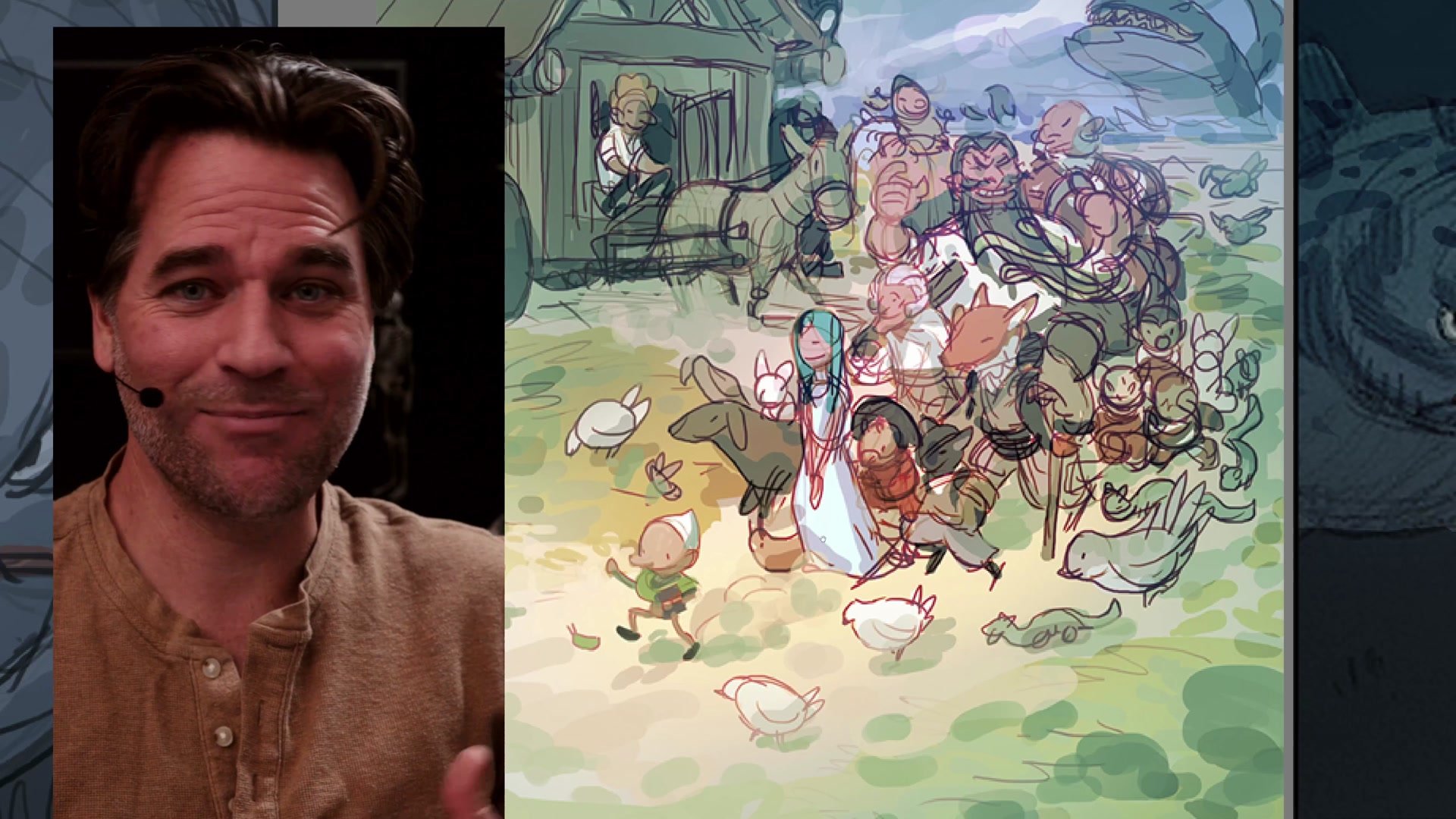
One of the most common traps in illustration is falling in love with the energy of a thumbnail or sketch and then assuming that energy must be preserved at all costs in the finished image. This creates a backwards-looking creative process where the artist is always trying to hold on to something from an earlier stage rather than moving the drawing forward.
Thumbnails are planning tools. They capture decisions about composition, tonal layout, gesture, and the big picture. They are disposable by design, meant to put the artist in a creative mindset for thinking broadly without getting attached to any single drawing. The sketchiness that makes thumbnails feel alive is a byproduct of working small and loose, not a quality that needs to be transferred directly into the final piece. Understanding what actually transitions from one stage to the next is the key to escaping this trap and developing a reliable illustration process.
Thumbnails vs Finished Work
What Thumbnails Actually Capture
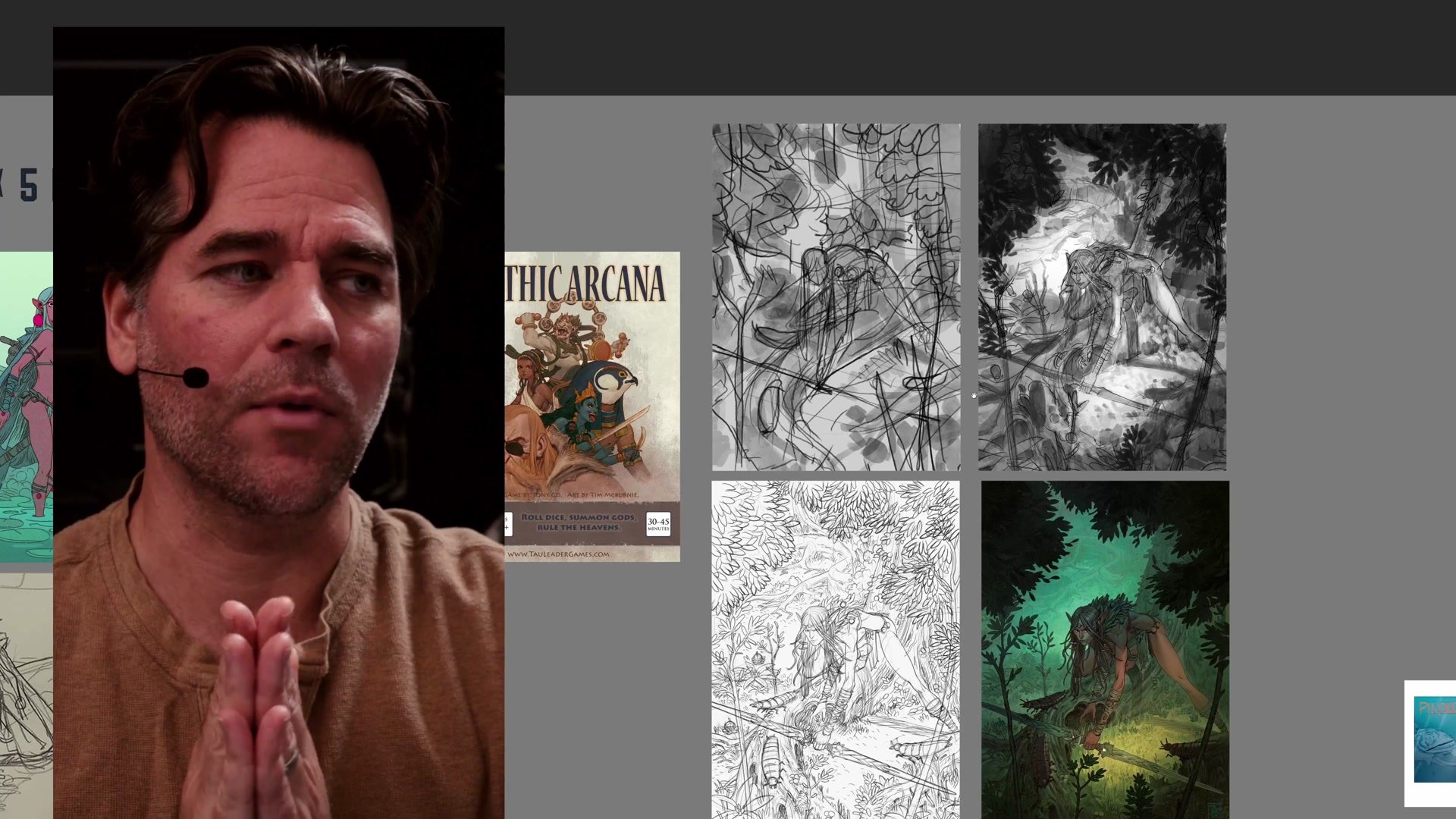
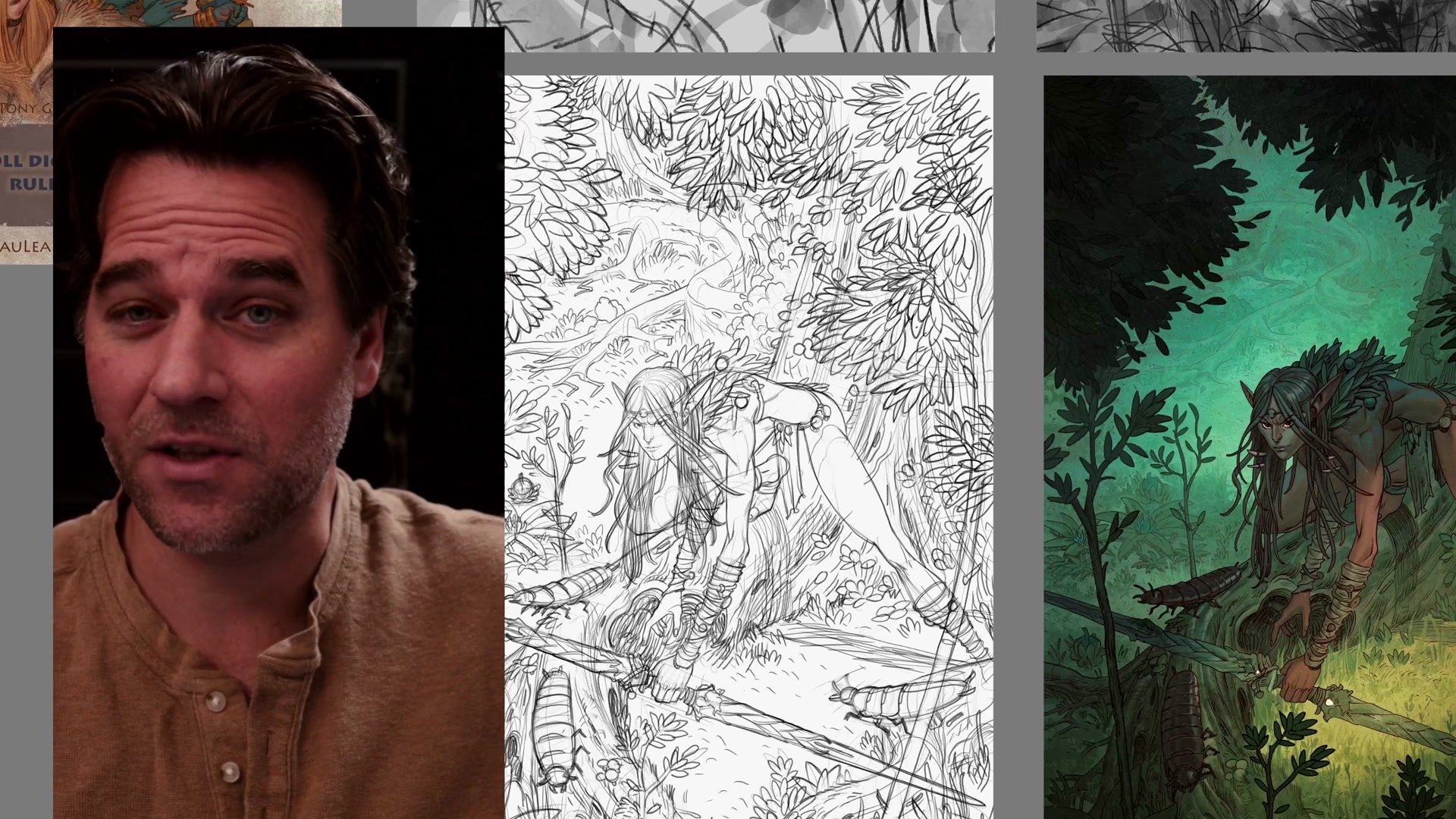
No one will ever see the thumbnails. The only thing that matters is the finished image, and everything in a thumbnail will disappear into the ether once the final illustration exists. What thumbnails actually capture is a plan. They record the decisions being made about where things go, how the tonal layout works, and what the big shape language looks like. The creative mindset of thumbnailing is about being disposable, doing another one if something does not work, and thinking about the big picture without getting precious.
The same applies to sketches and roughs. The looseness and flow of a sketching session puts the artist in a frame where mistakes are welcome, experimentation happens naturally, and gesture emerges from that freedom. But the question remains: which of those lines will actually move forward? What gets refined, and what gets left behind? The energy that makes a sketch feel spontaneous comes from the process of sketching, not from the individual lines themselves.
Reconstruction In Practice
Translation Not Tracing
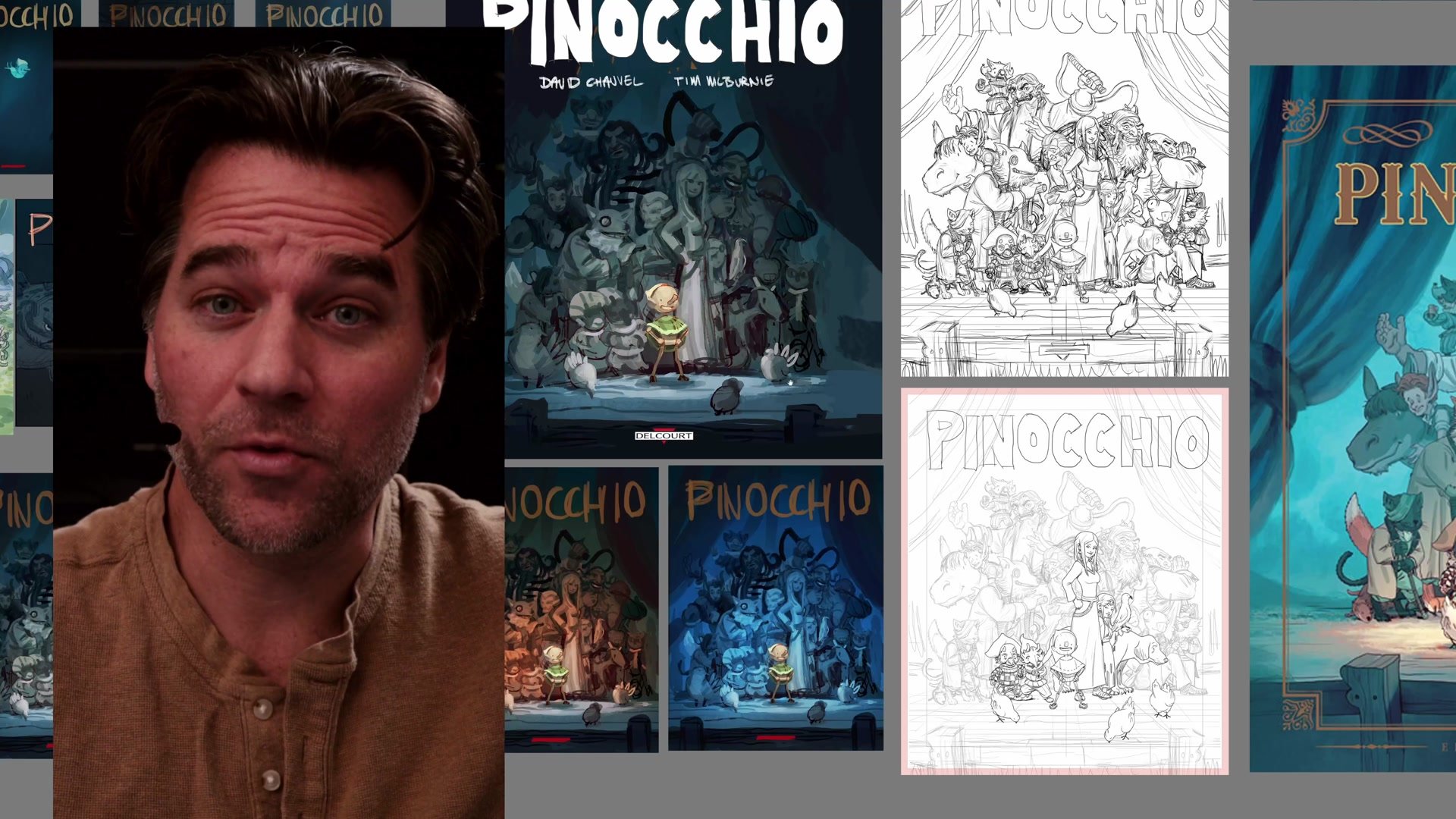
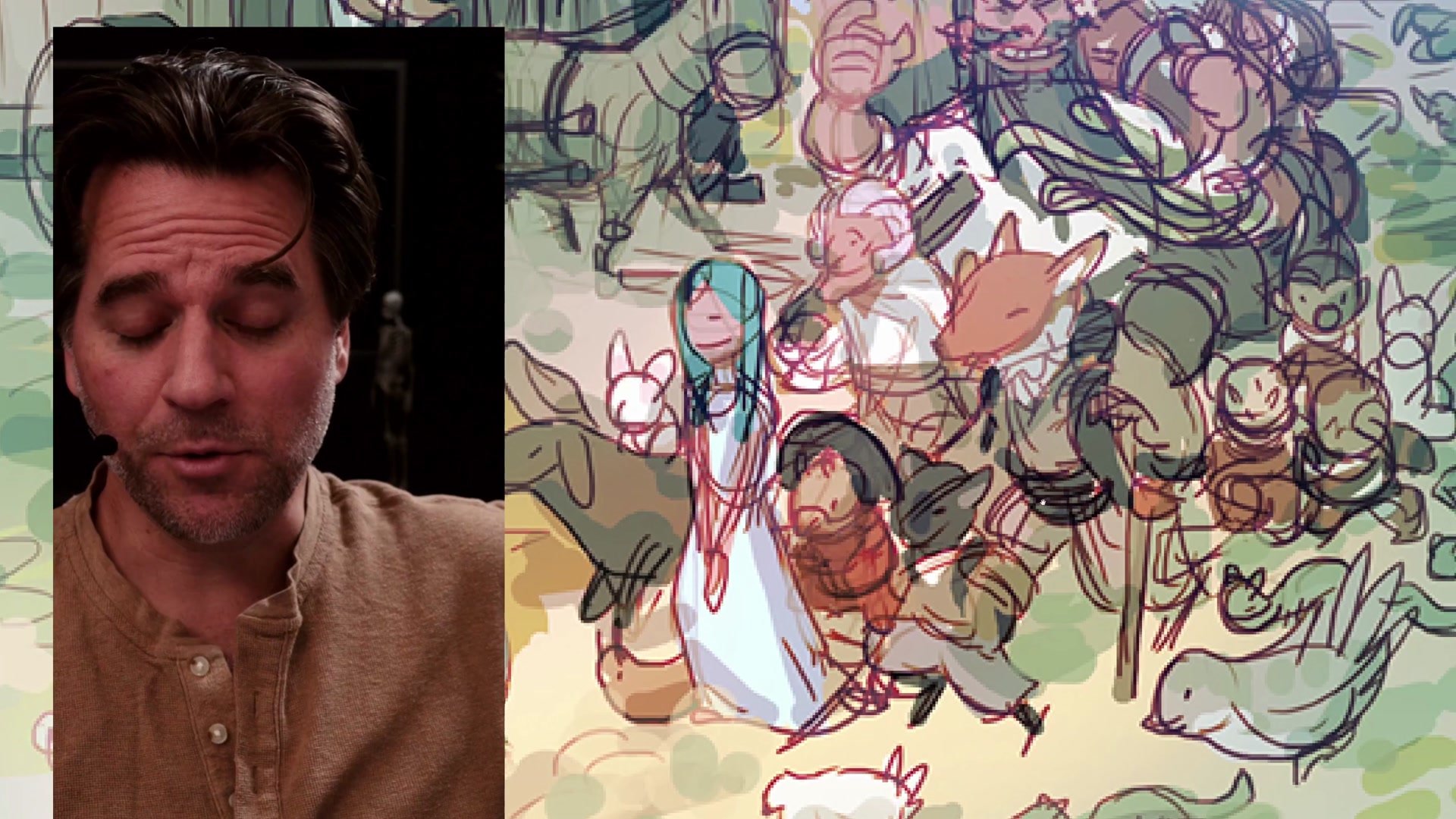
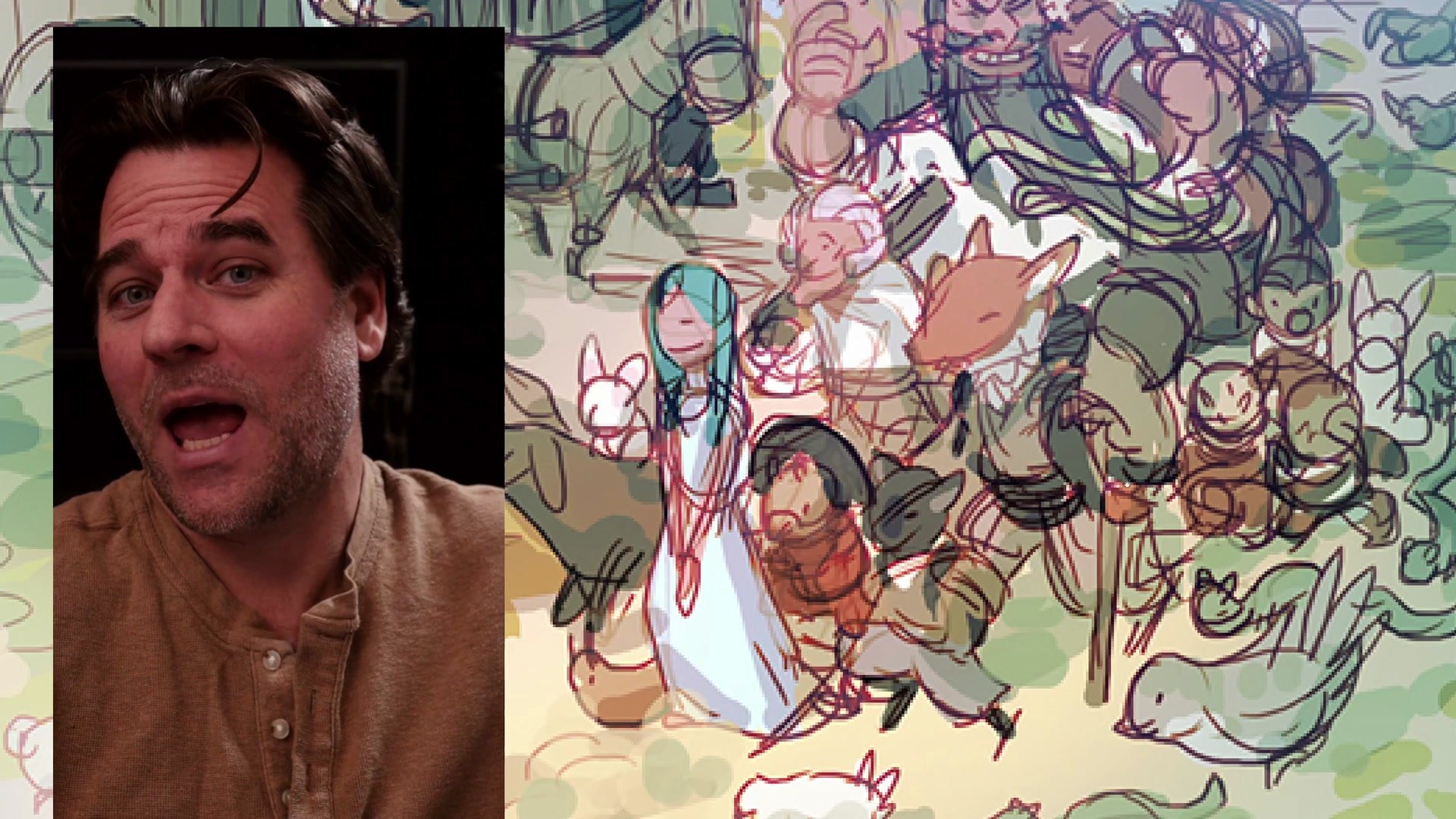
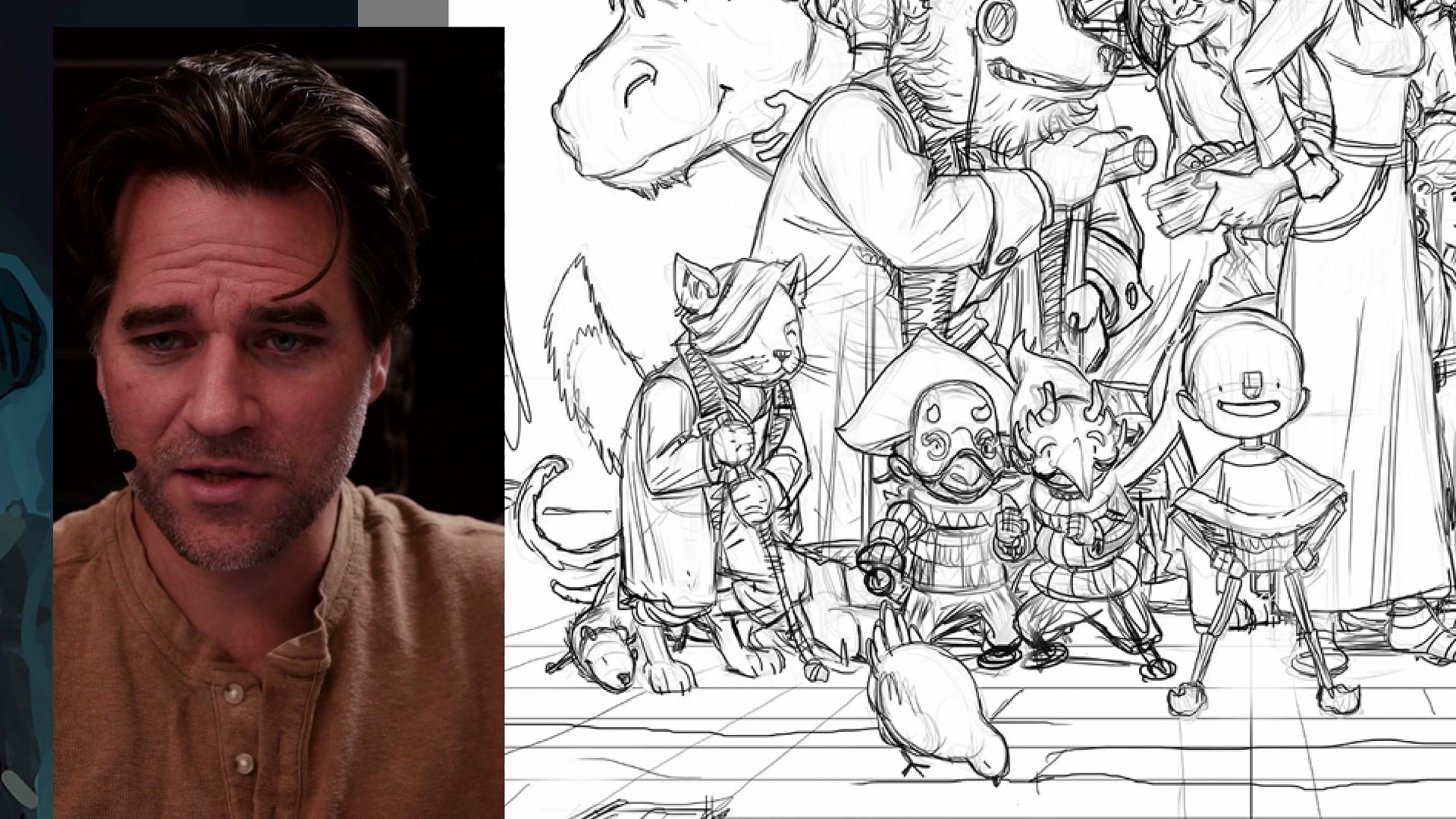
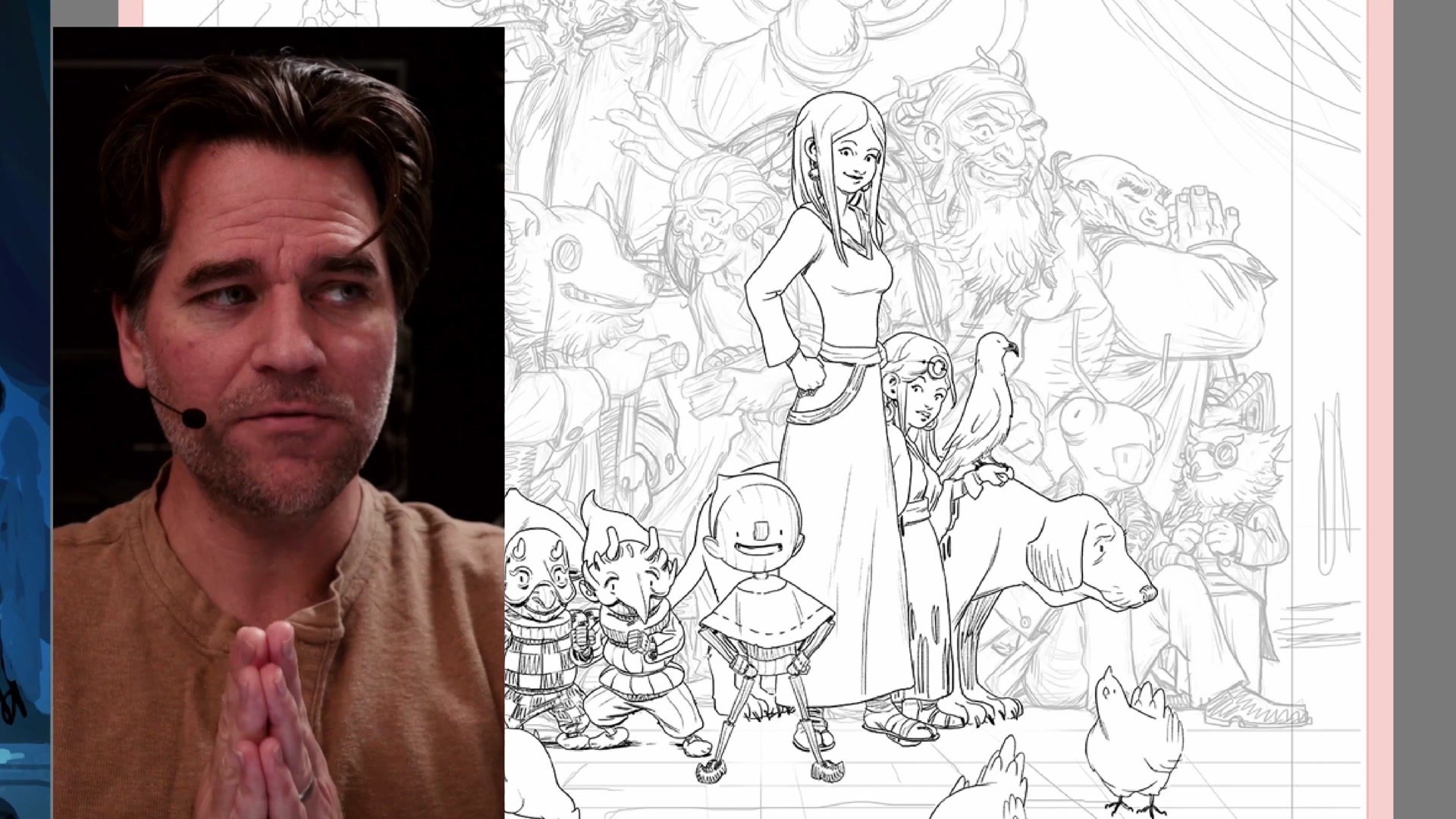
The real danger of tracing thumbnails is that it keeps the artist looking backwards. When too much attention goes to preserving looseness or holding on to interesting shapes from a small drawing, the creative process tightens up. That is the opposite of what needs to happen. Moving a drawing forward requires reconstruction, not reproduction. A small thumbnail chicken cannot simply be traced and enlarged to become a finished illustration chicken. The wings, feathers, feet, and structure all need to be thought through and redrawn with more fidelity.
What makes a great artist's finished work feel loose and spontaneous is not that they slavishly preserved the energy of the thumbnail. They developed the ability to create finished work that also feels spontaneous. The more solid the underlying drawing, the easier it becomes to add flourish and emotion at the finish line. Each stage of the process, from thumbnail to rough to finish, is a matter of redrawing and reimagining the previous stage in a way that supports what comes next.
Key Concepts
Thumbnails Are Plans: They capture compositional decisions and big-picture thinking, not finished drawing quality. Their value is in the process of making them, not in the specific lines they contain.
Tracing Looks Backward: Trying to preserve thumbnail energy by copying it keeps the artist anchored to something that was never meant to be permanent, preventing forward creative momentum.
Translation Builds Skill: Each stage of the process is an opportunity to redraw and reimagine. Building the muscle of translating gesture and feeling into progressively more finished work is what separates polished illustration from enlarged sketches.
Try This Exercise
Throw Away The Thumbnail: After creating a thumbnail, take a quick look at it, then set it aside entirely. Do a very rough version from memory based on what you saw, then work forward from that new starting point without referencing the original.
Focus On The Current Drawing: Practice being present with the drawing in front of you right now. Instead of checking back against the thumbnail, ask what the current drawing needs to become the best version of itself.
Rebuild One Element: Pick one element from a thumbnail, such as a character or prop, and completely reconstruct it at full size. Think about structure, secondary form, and detail that the thumbnail could never contain, while keeping the original gesture and feeling as inspiration.