Master Character Proportion - Zelda
Summary
Constructive Anatomy for Any Proportion
Drawing figures with standard human proportions is challenging enough. Drawing characters with vastly different builds - elongated torsos, massive upper bodies, tiny legs, compressed features - compounds the difficulty because most instruction never addresses extreme proportional variation.
Constructive anatomy solves this. Using Zelda: Breath of the Wild's Goron and Zora characters as subjects, this demonstration shows how skeletal foundations and simple shape blocking transfer to any character proportion. The method stays identical regardless of how extreme the stylization gets: establish the skeleton, block primary forms, then add secondary detail. Understanding where bones would sit, how the spine extends or compresses, and where the pelvis divides upper from lower body makes proportion systematic rather than guesswork.
Reference and Proportional Analysis
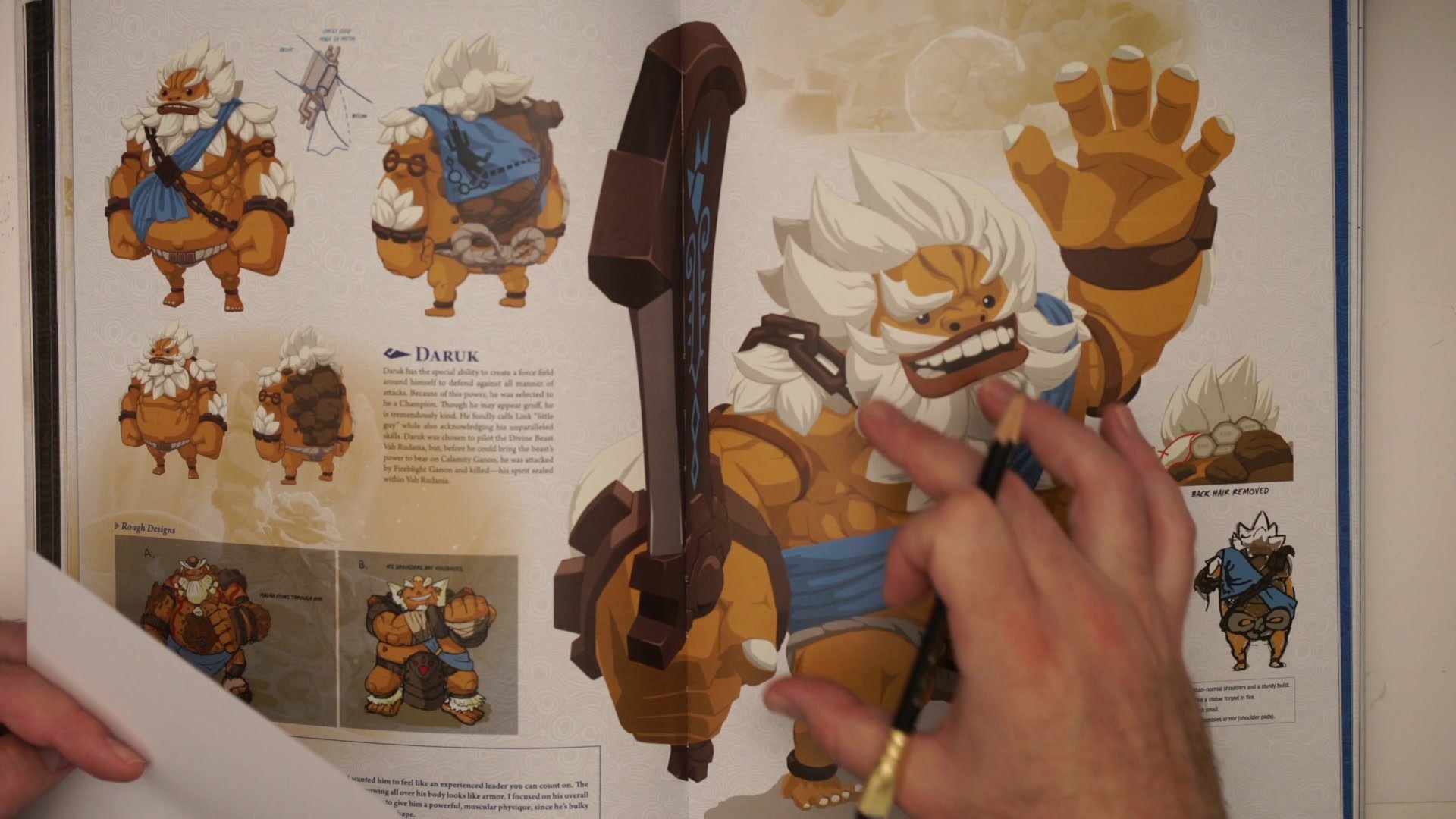
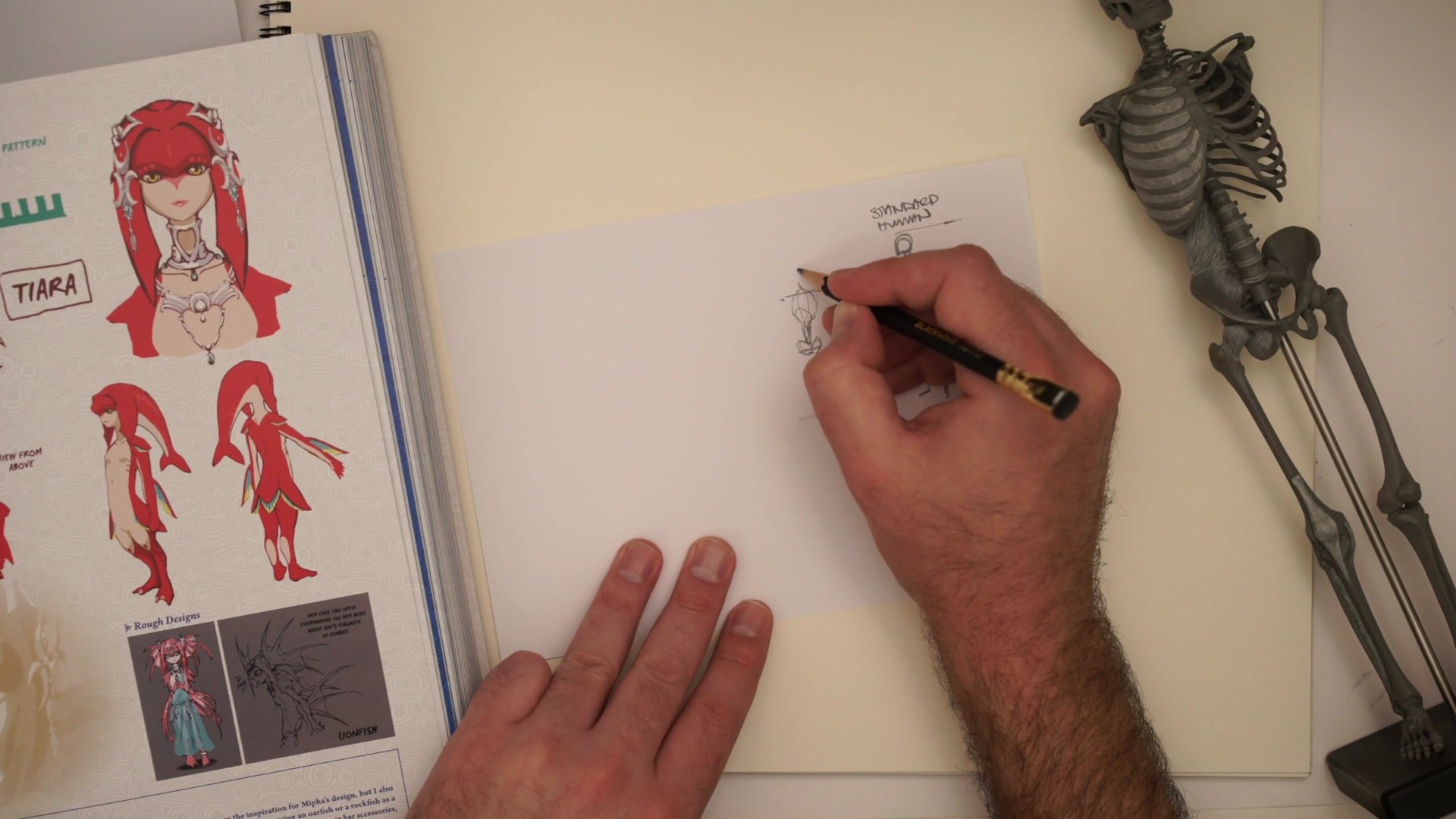
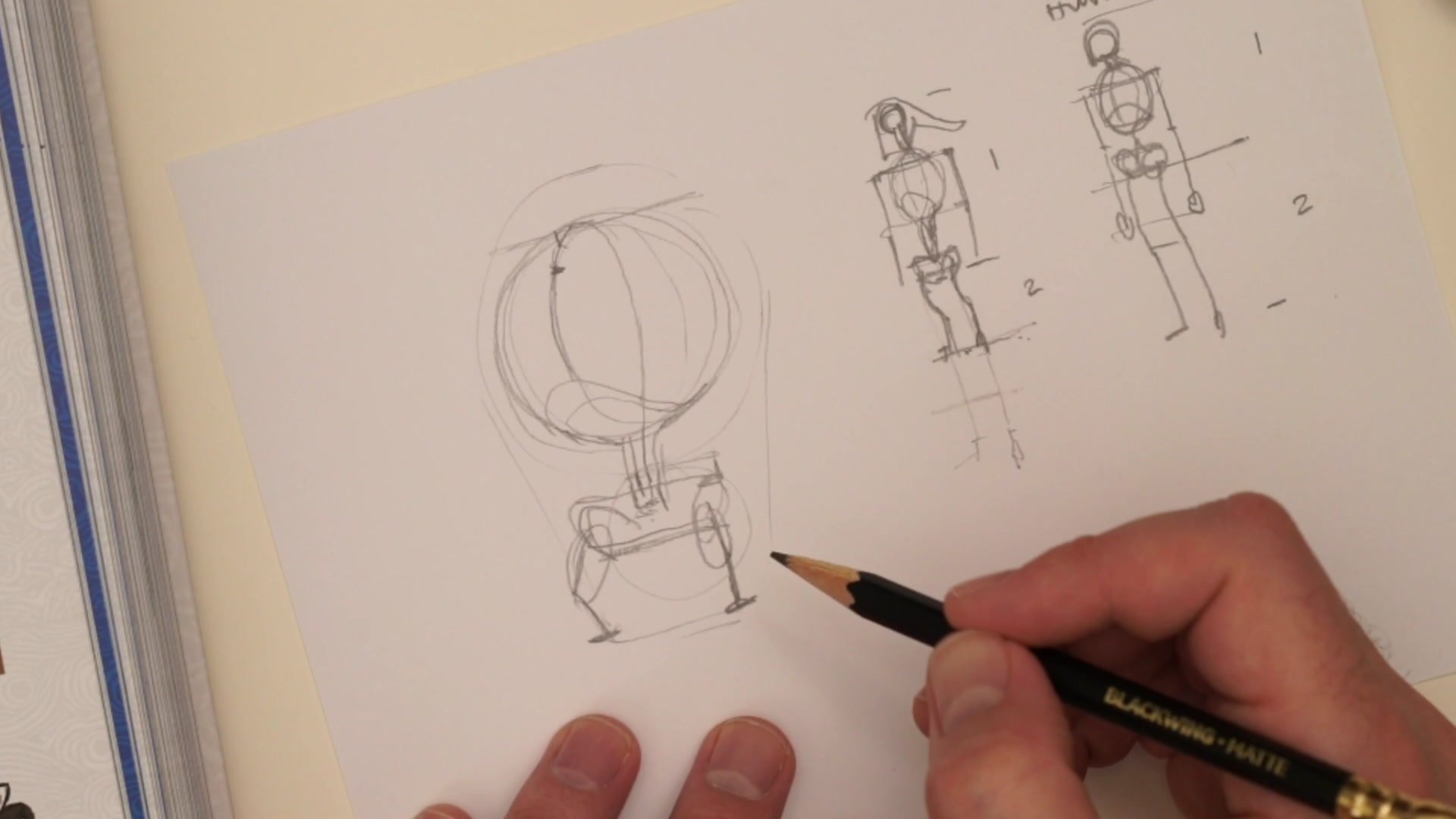
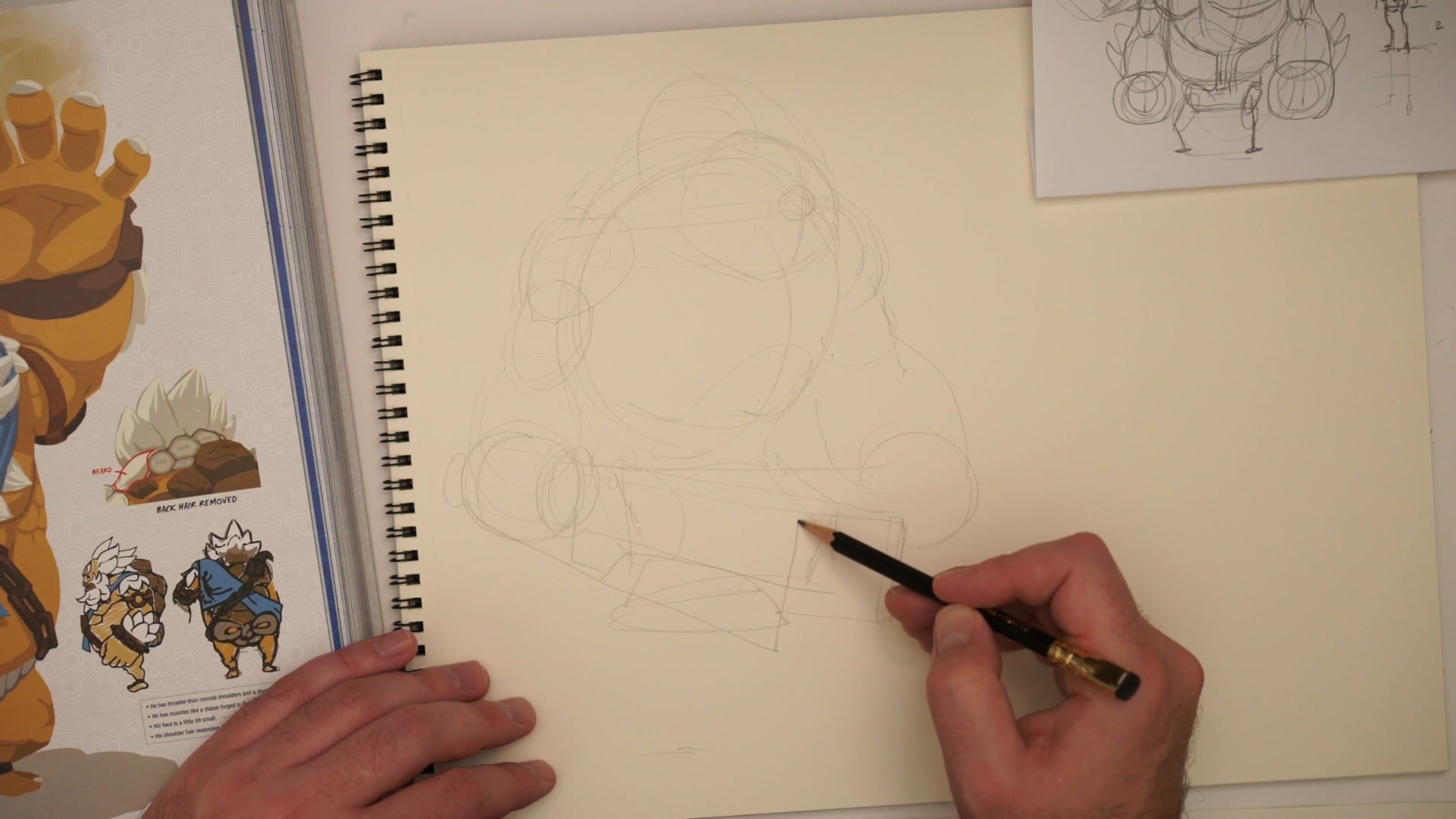
Skeletal Foundations First
Every character proportion starts with the skeleton underneath. For a standard human figure, a clear division exists at the bottom of the pelvis - this creates the relationship between upper and lower body. The spine connects ribcage to pelvis. Shoulders sit at a predictable width. Limbs follow proportional logic.
With stylized characters, these skeletal principles still apply - they just get pushed in specific directions. The Zora characters have an elongated spine, creating more distance between ribcage and pelvis. The neck extends significantly. For the Goron characters, the torso expands in all directions while the spine compresses vertically. The pelvis sits closer to the ribcage, the shoulders stay relatively small, and the forearms become enormous. Roughing in where the skeleton would be - drawing through forms even when they will be hidden - prevents proportion errors from compounding as detail gets added.
Blocking the Goron
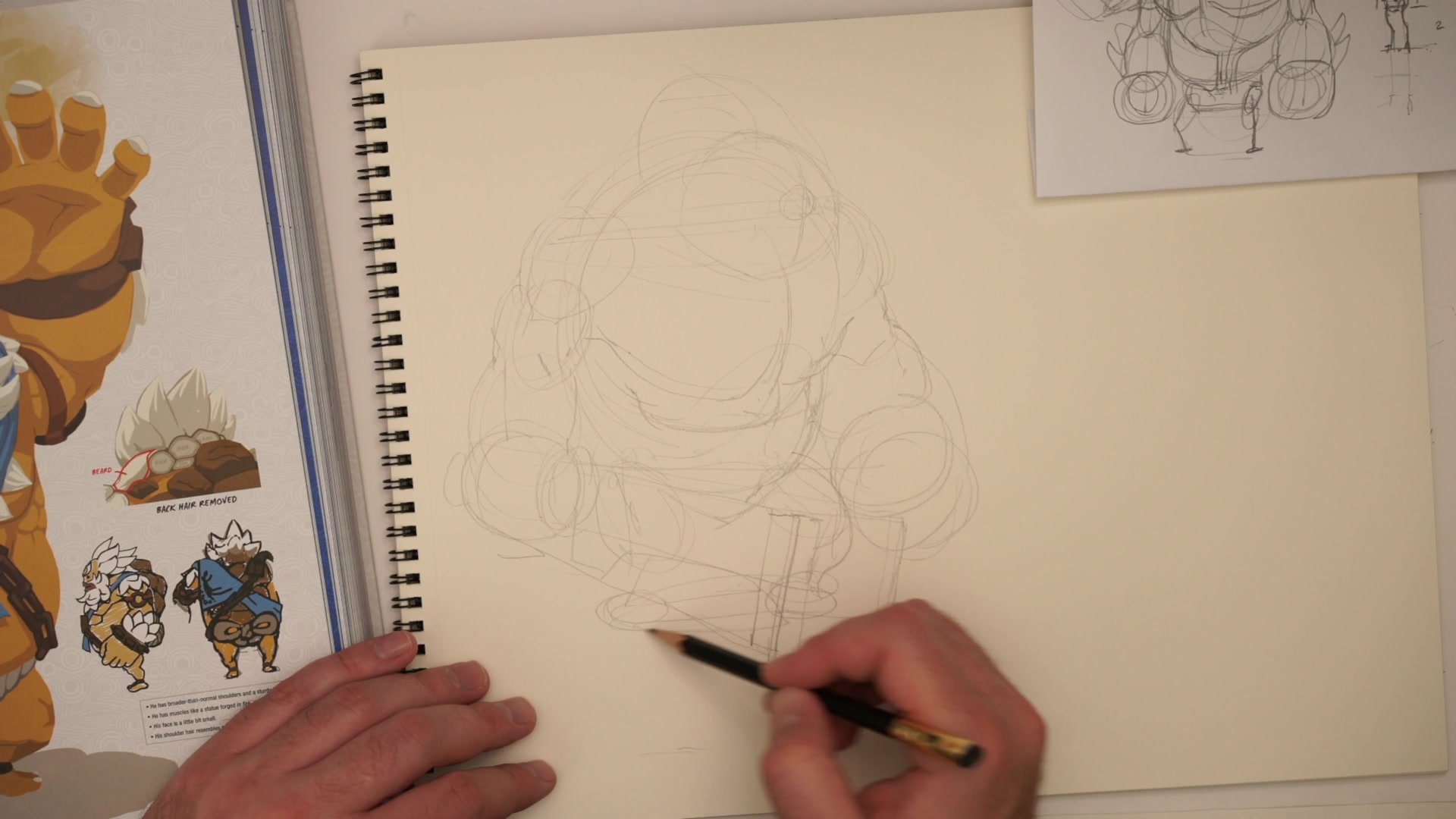
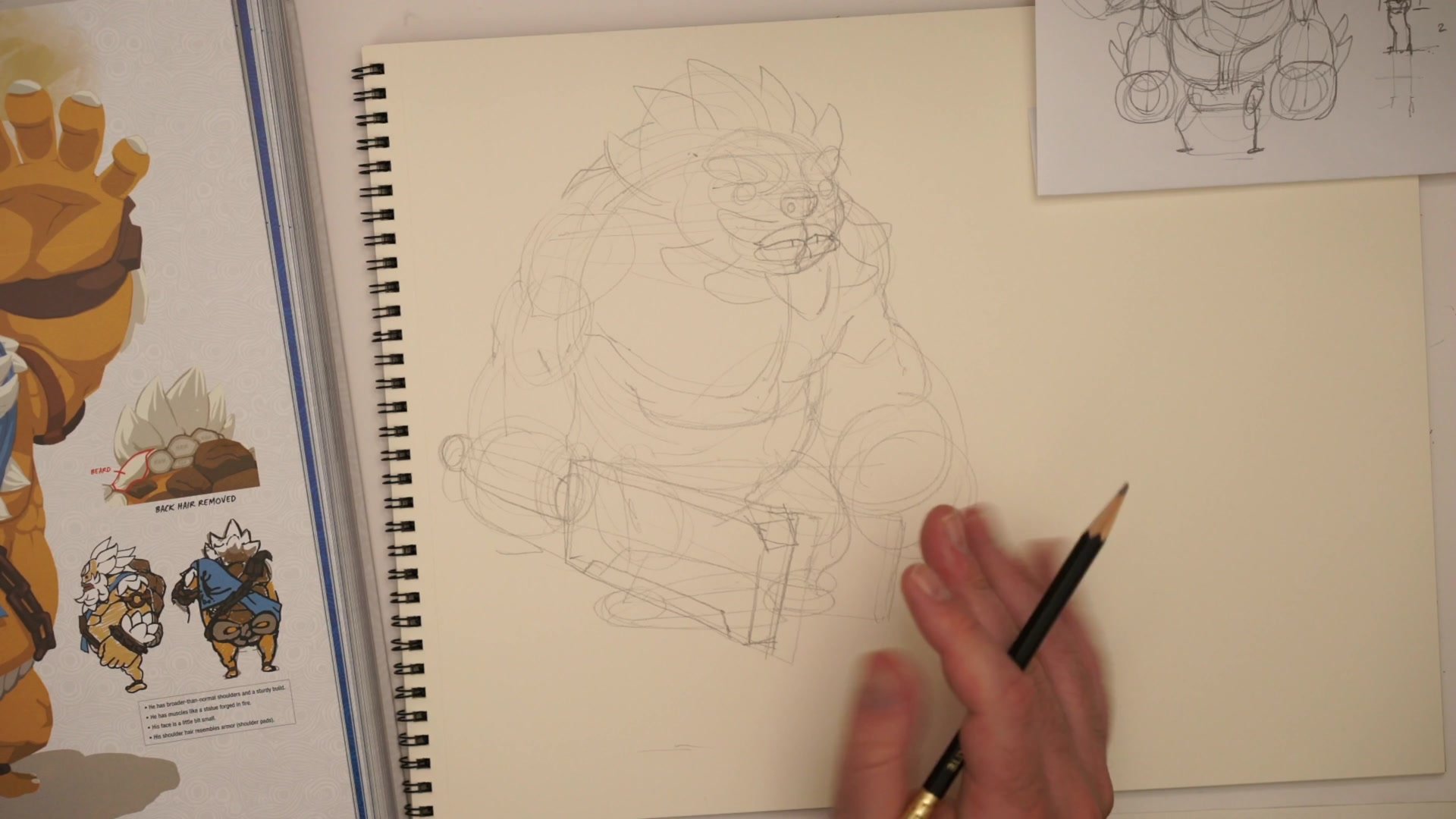
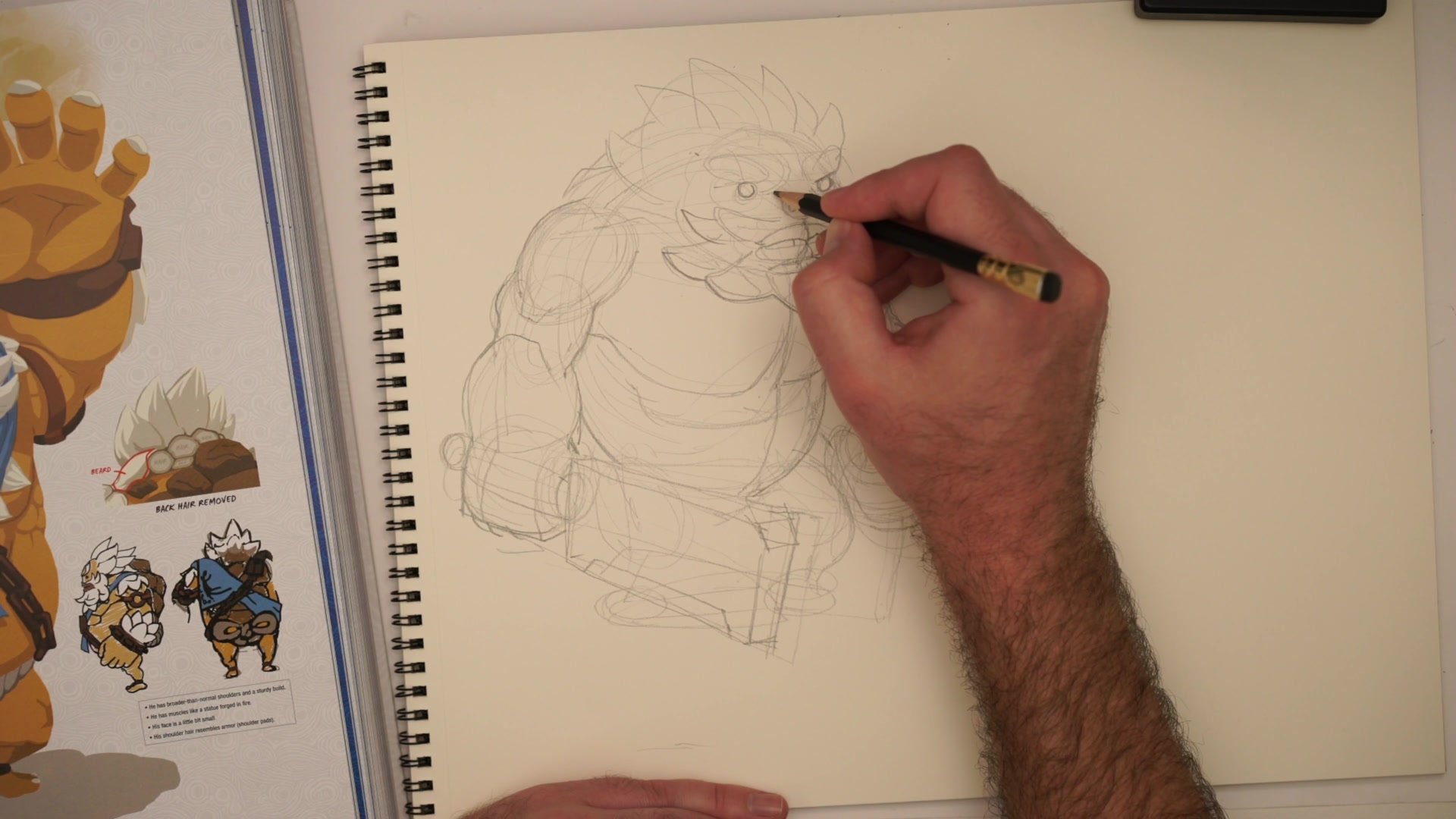
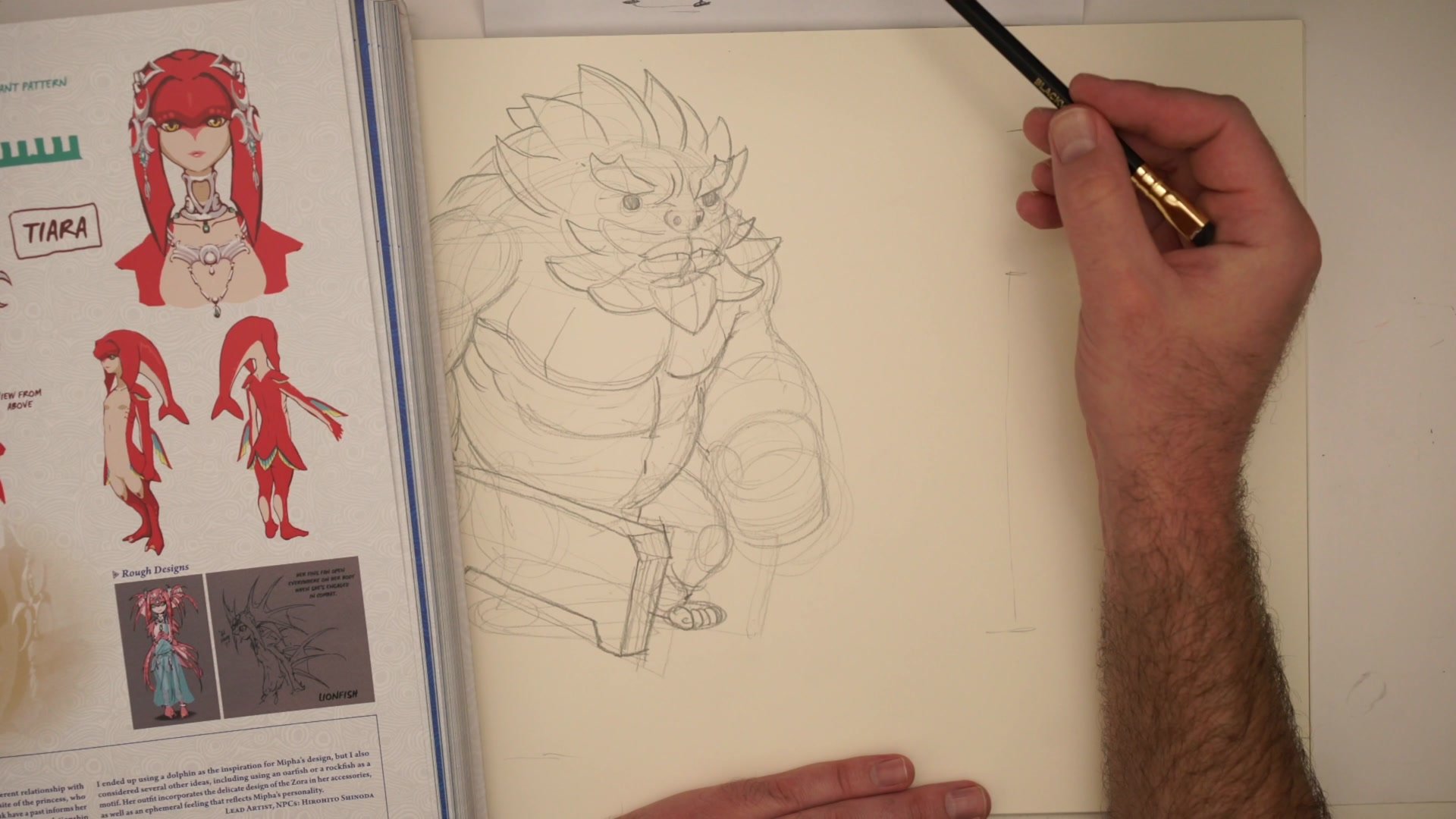
Primary Forms Before Detail
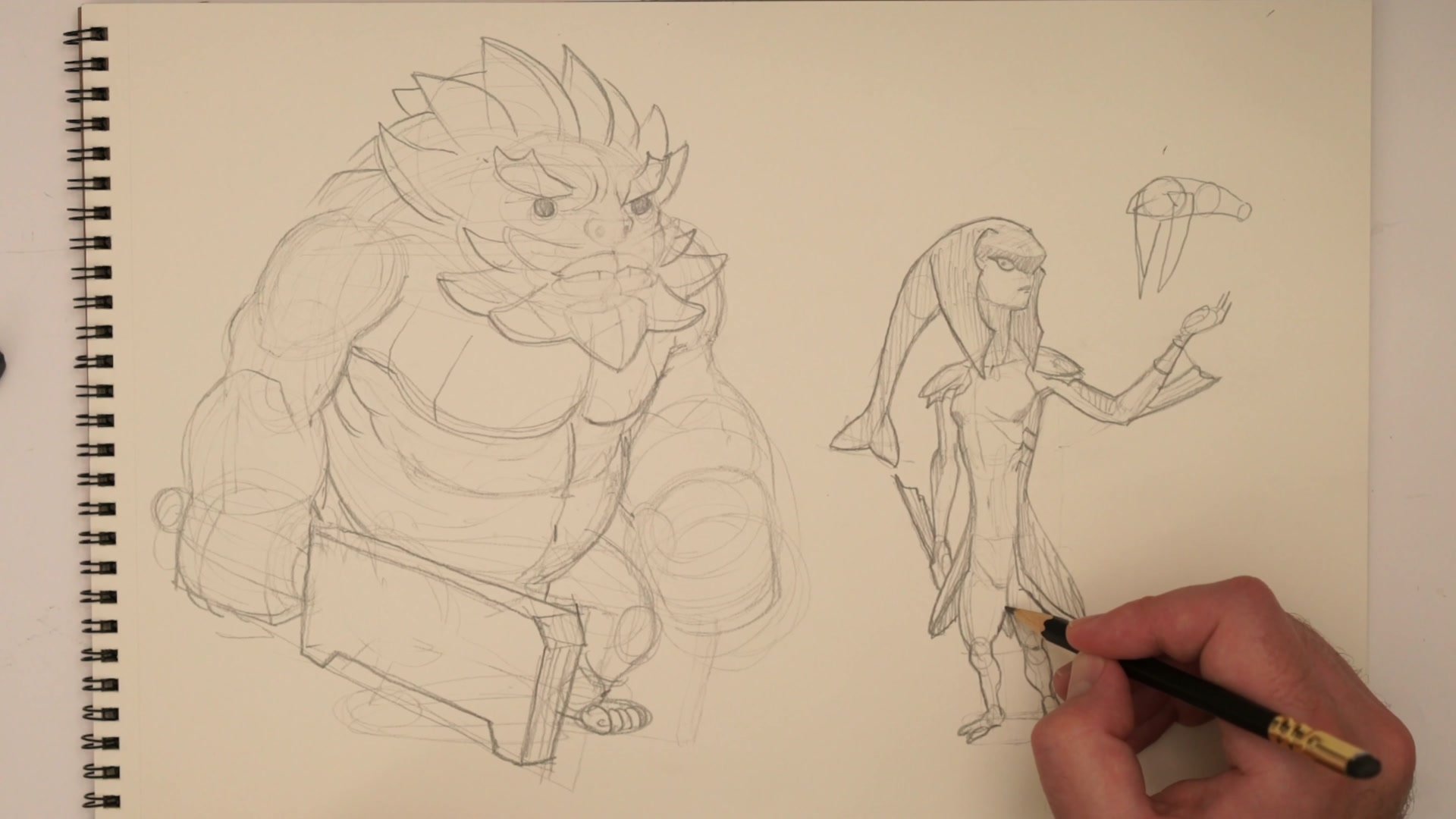
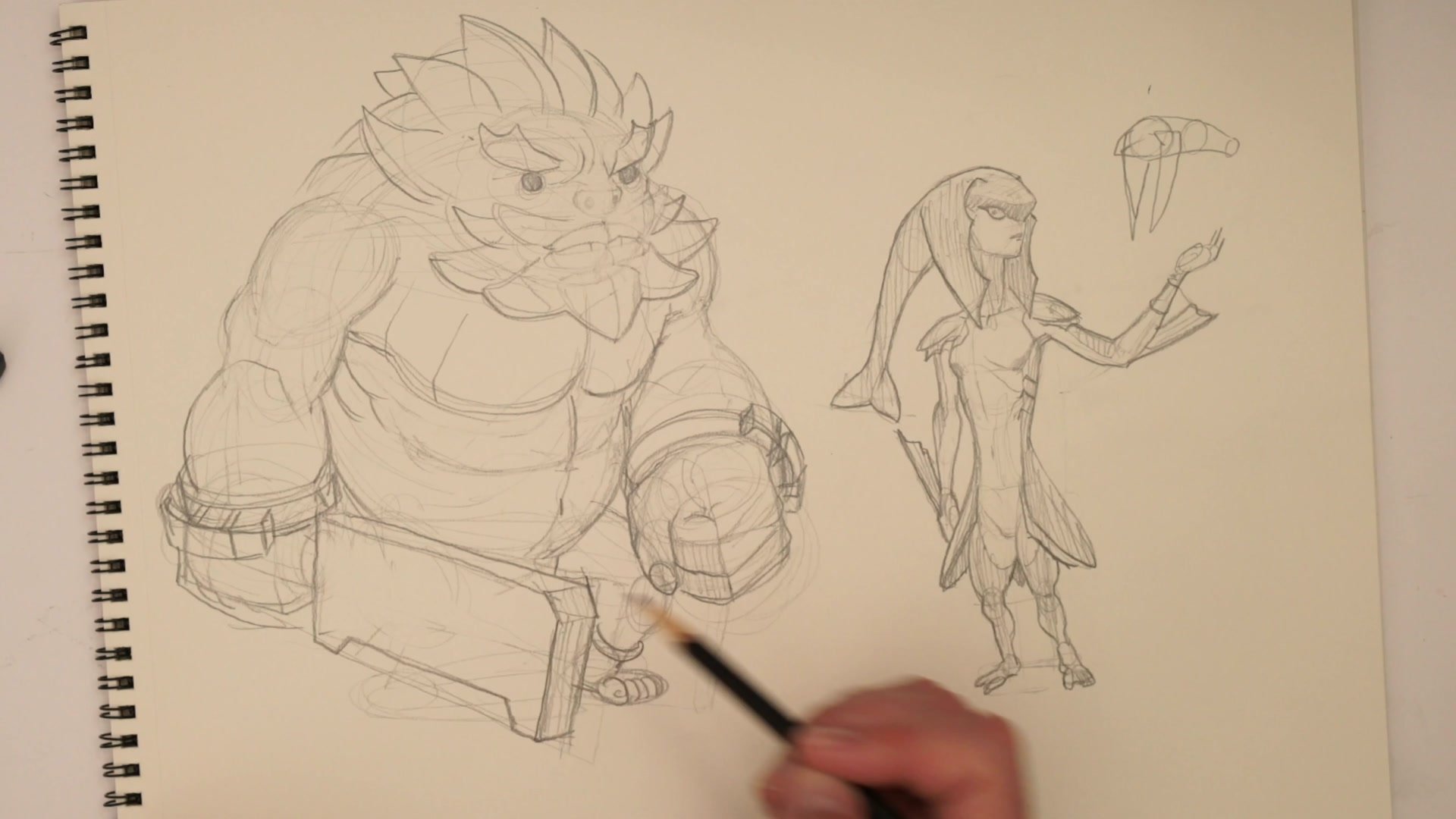
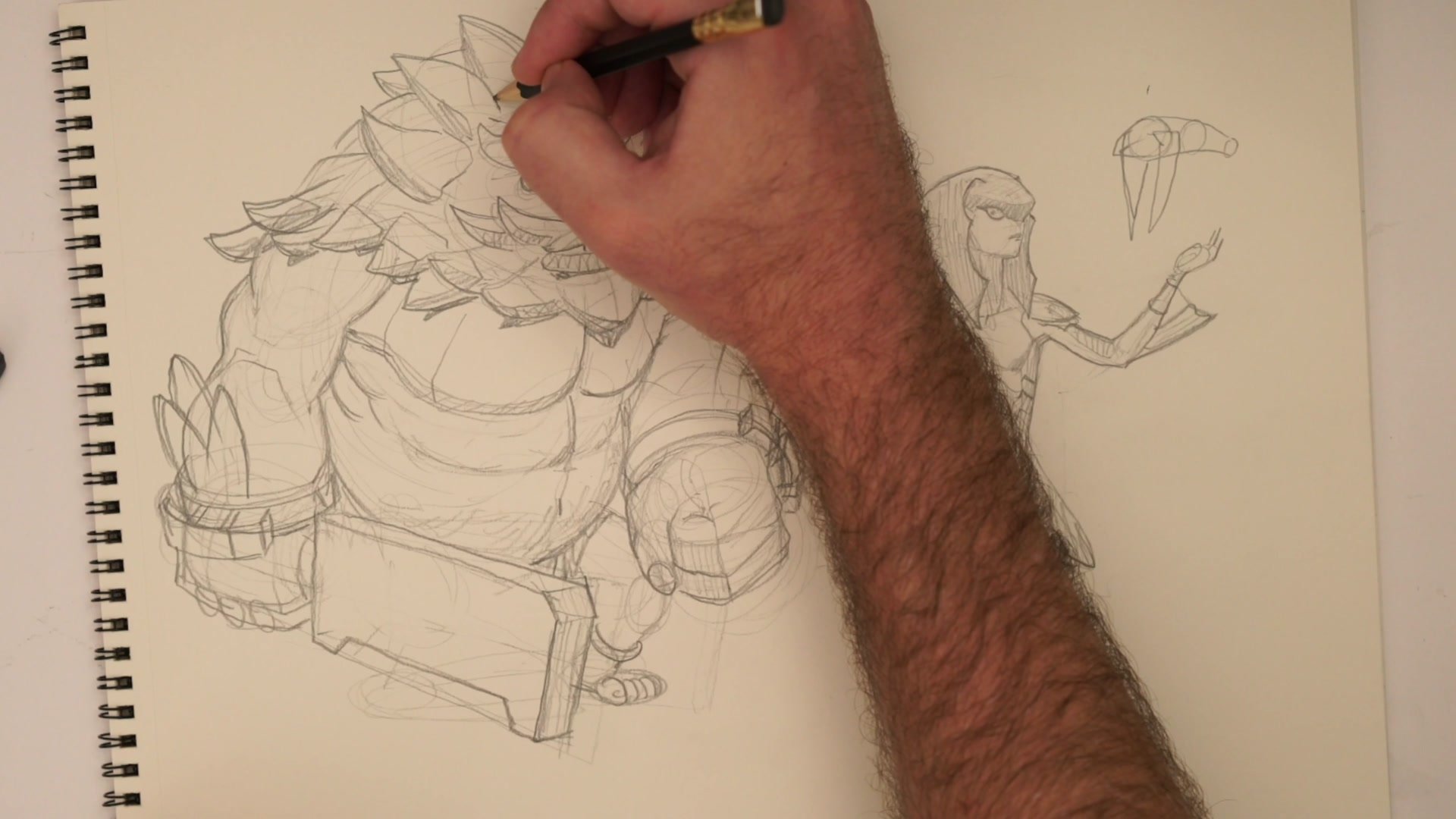
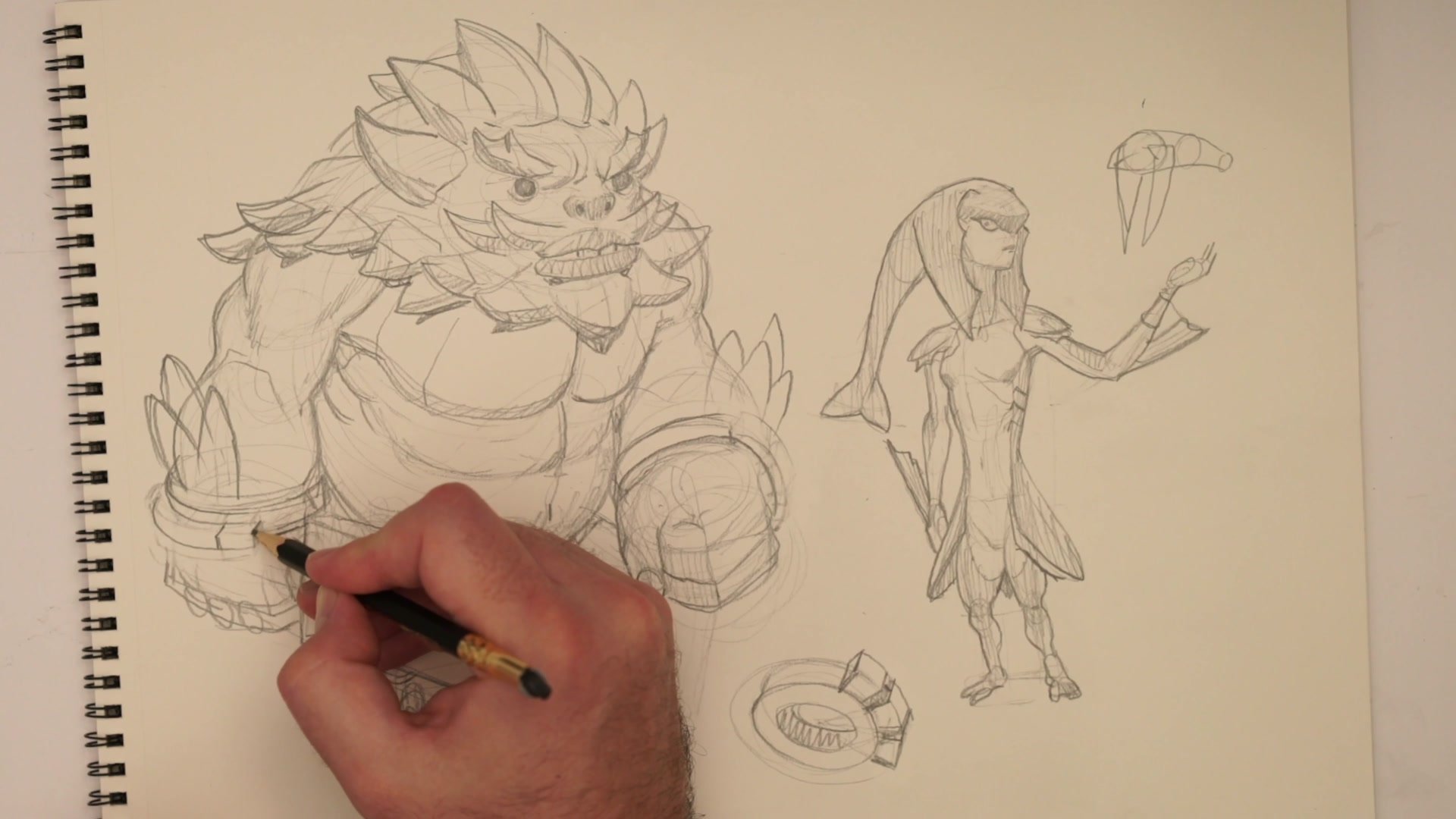
The mannequin approach means thinking in simple shapes first. Spheres for joints and major masses. Cylinders for limbs. Simple wedges for hands and feet. This structural framework keeps proportion consistent as detail gets layered on top. For the Goron, the massive torso gets blocked as expanded spherical volumes with a compressed spine. The head attaches with almost no neck, sitting forward on the torso. The relatively small shoulders contrast with enormous forearms that extend down past the knees.
Going through this blocking pass reveals how far the proportions actually push. The hands are bigger than expected. The legs are shorter and wider apart than they first appear. Understanding what makes this character type work requires measuring these relationships against the standard human baseline - the upper-to-lower body division, shoulder width relative to torso, limb length ratios. Without this analytical pass, the exaggerations that define the character get timidly underplayed.
Constructing the Zora
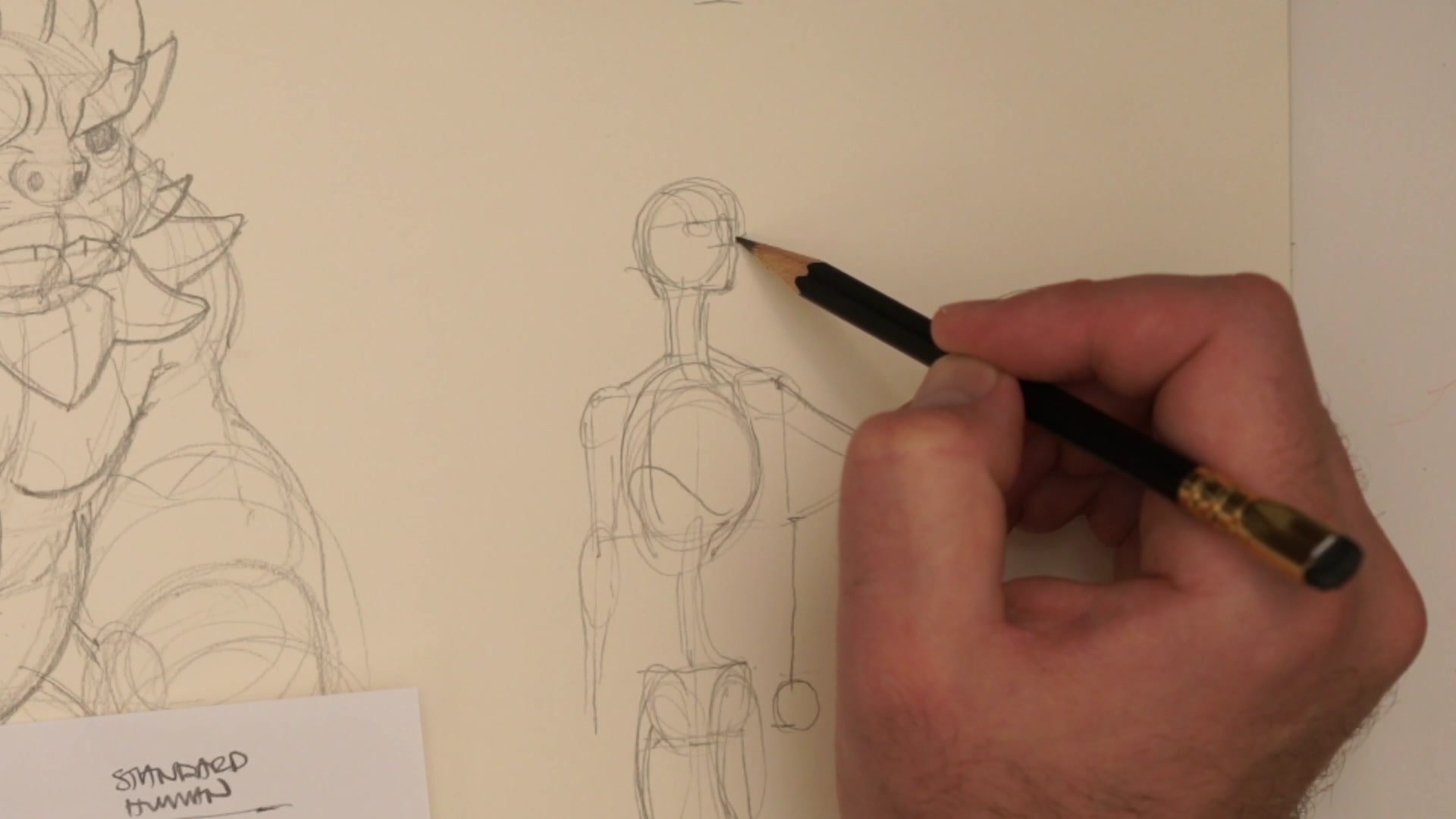
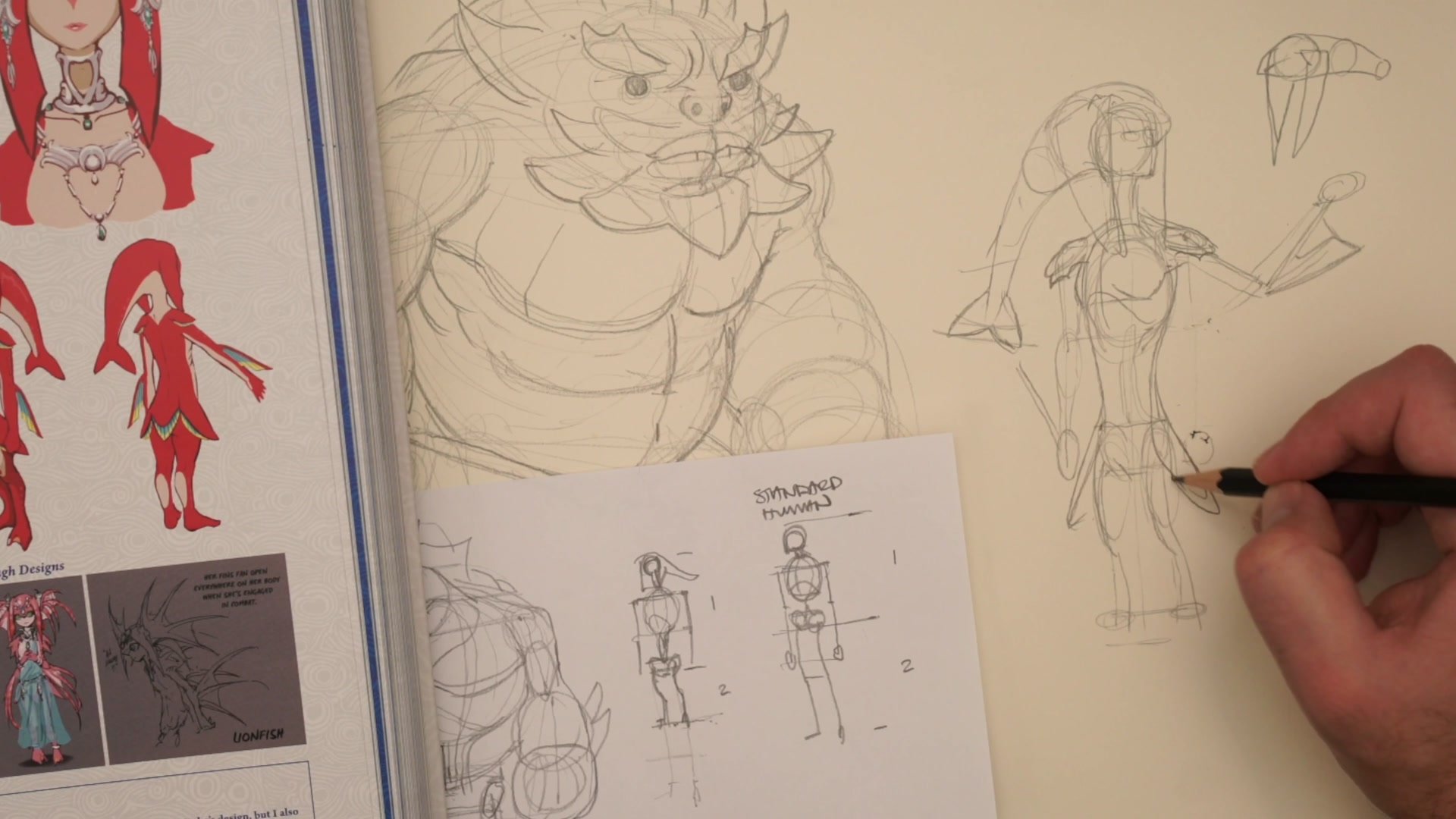
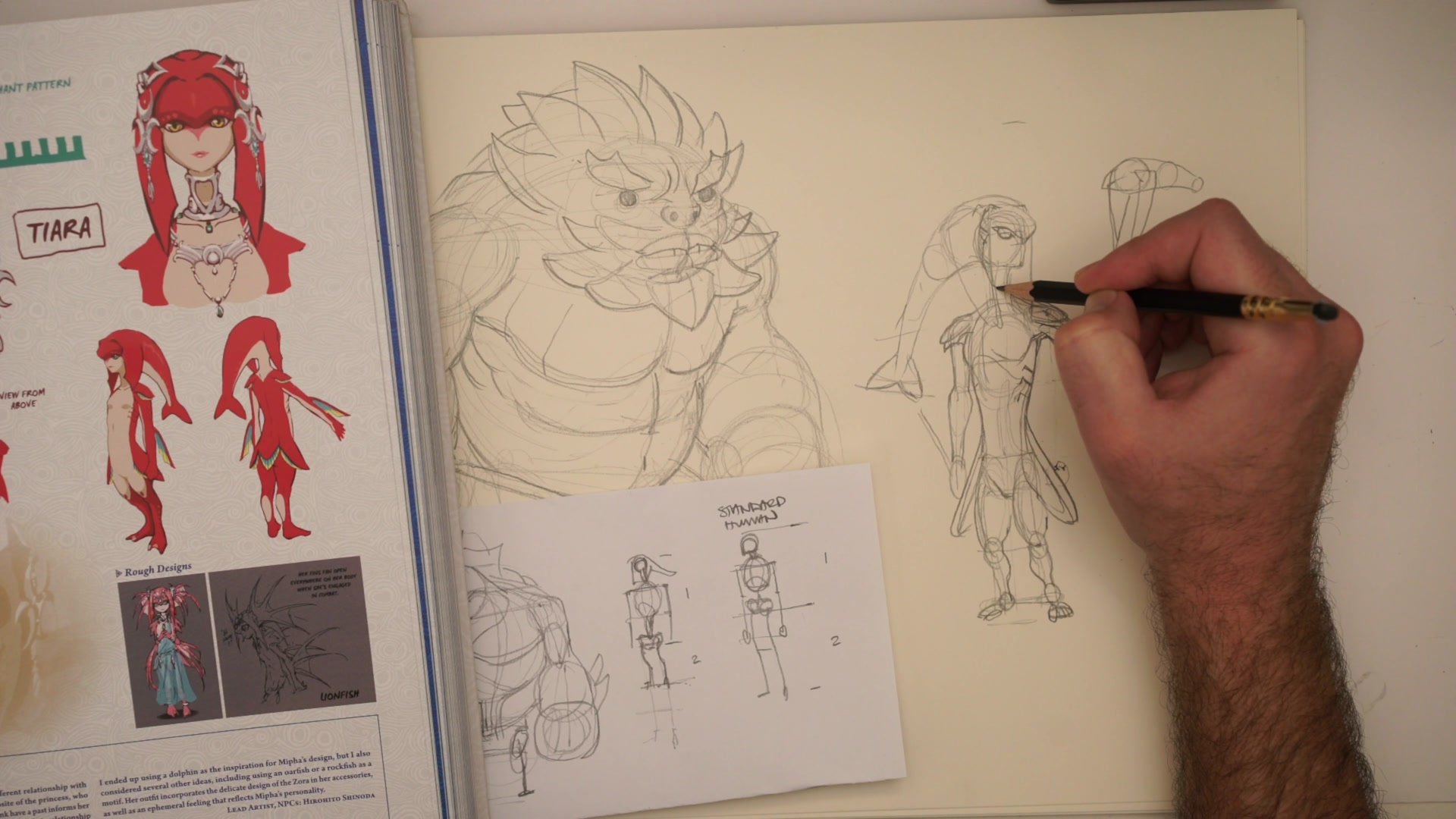
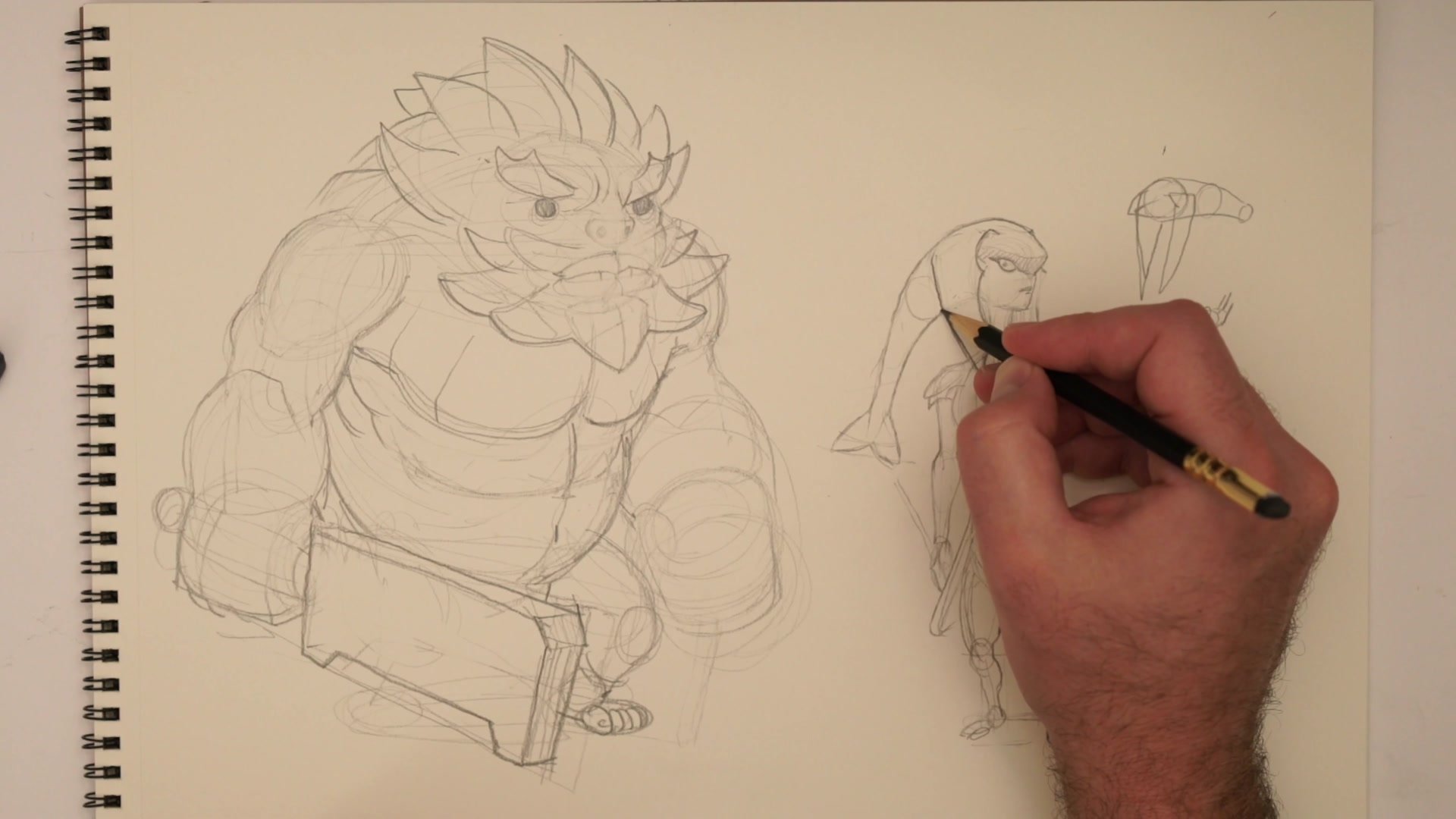
Extreme Stylization Requires Bold Exaggeration
The Zora construction demonstrates the opposite proportional direction from the Goron. The elongated spine creates a taller, more graceful silhouette. The neck extends considerably. Shoulders remain narrow while limbs maintain closer-to-standard proportions. What changes dramatically is the torso length - that vertical stretch between ribcage and pelvis. The fish-head design replaces the nose area and extends backward almost as large as the skull itself, rationalized as a cone or tapering cylinder off the back of the head sphere.
Both character types still follow skeletal logic. The construction process stays identical: block in the skeletal structure with simple lines and circles, identify where the upper-lower body division falls, add primary forms as simple volumes, then layer secondary details. The design additions - fin-like shoulder elements, decorative fish features - serve both aesthetic and practical purposes, helping characters read clearly in-game while creating visual interest that extends beyond the anatomical base.
Refinement and Cleanup
Key Principles
Skeleton First, Always: Roughing in the skeletal structure before any detail prevents proportion errors from compounding. Know where the ribcage sits, how the spine runs, where the pelvis angles - then build everything on top.
Measure Against the Baseline: Compare every stylized proportion to the standard human figure. Identify where the upper-lower body division falls, how shoulder width relates to the torso, how limb lengths compare. This reveals exactly how far each element pushes from standard proportion.
Bold Exaggeration Over Subtle Tweaks: Timid proportional changes fail to register in character design. The Goron's massive forearms and tiny legs are extreme exaggerations, not gentle adjustments. Confident exaggeration creates clear visual identity.
Draw Through Forms: Even when elements will be hidden behind costume, hair, or other characters, drawing through maintains structural accuracy. This invisible work is what makes the visible drawing hold together.
Practice This
Choose Two Extremes: Pick two characters with vastly different proportions from games, comics, or animation. Focus purely on skeletal blocking - simple lines and circles only.
Find the Division Point: For each character, identify where the bottom of the pelvis falls. Measure the spine length compared to standard human proportion. Note shoulder width relative to the overall torso.
Compare Side by Side: Draw both skeletal frameworks on the same page. Add one layer of secondary form - major muscle groups or basic shapes. Seeing how the same construction approach creates completely different silhouettes is what makes the method click.