The Secret to Drawing Teeth
Summary
Mastering Suggestion
One of the most important concepts in drawing is suggestion -- the ability to hint at full detail with only a few deliberate marks. The common advice for drawing teeth is simply "don't draw them, just leave it white." While that can work, it skips over a much bigger principle that applies to all drawing. To suggest something convincingly, you first need to understand exactly what is there underneath.
This video uses teeth as a window into that concept. Teeth are one of the trickiest subjects early on because outlining every tooth creates a flat, lifeless look. Through pencil demonstrations of lines, overlapping forms, rendered eggs, and full teeth studies, the actual mechanics of suggestion become clear -- and they apply far beyond the mouth.
The Basics of Suggestion
Understand Form to Suggest It
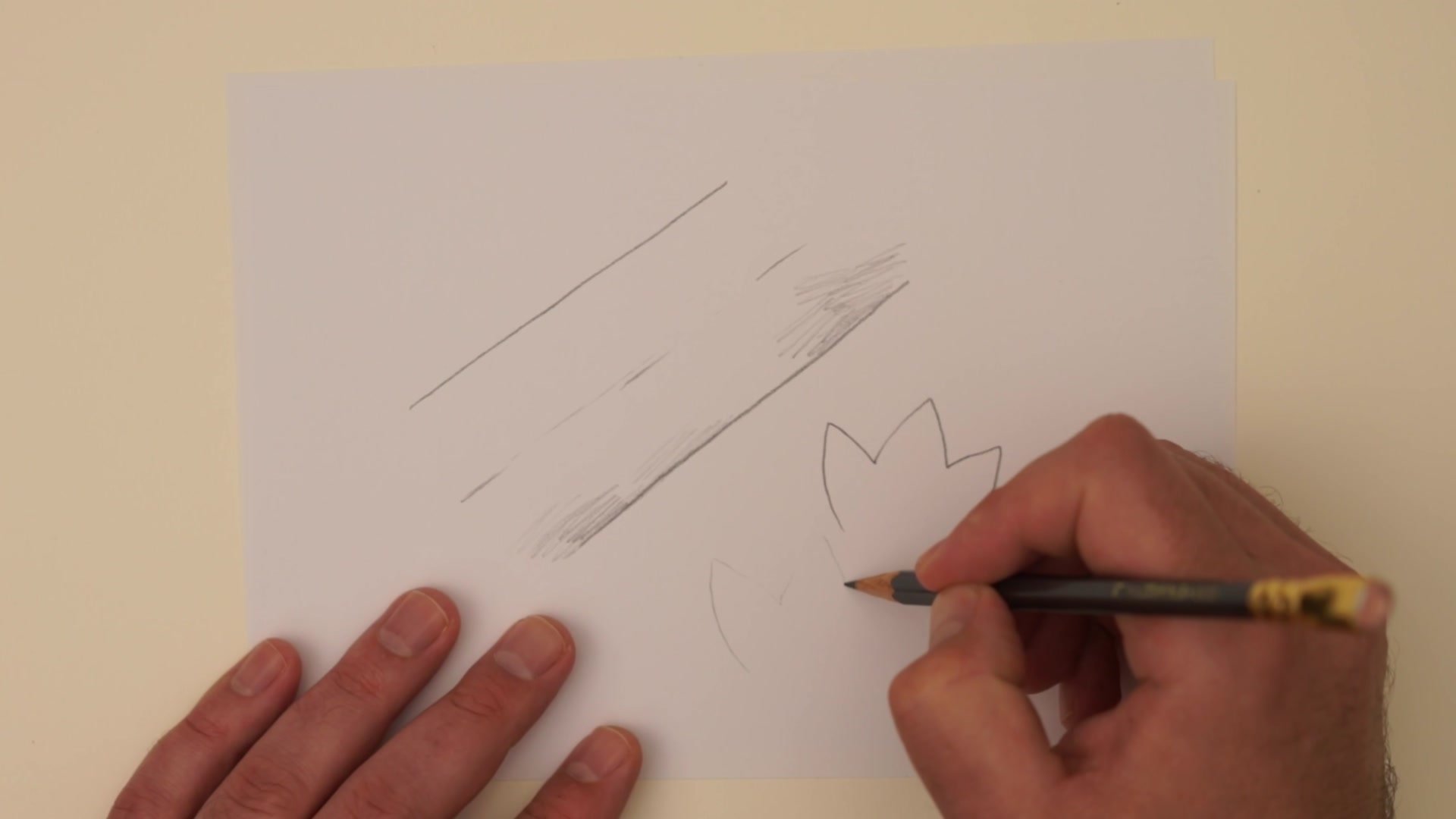
The fundamental paradox of suggestion is that loose, sketchy drawing requires more knowledge than tight rendering. To place just a few marks that imply a complete line, you need to know exactly where that line would be if fully drawn. A partial line works because humans are excellent at pattern recognition -- we fill in what is missing based on the information provided.
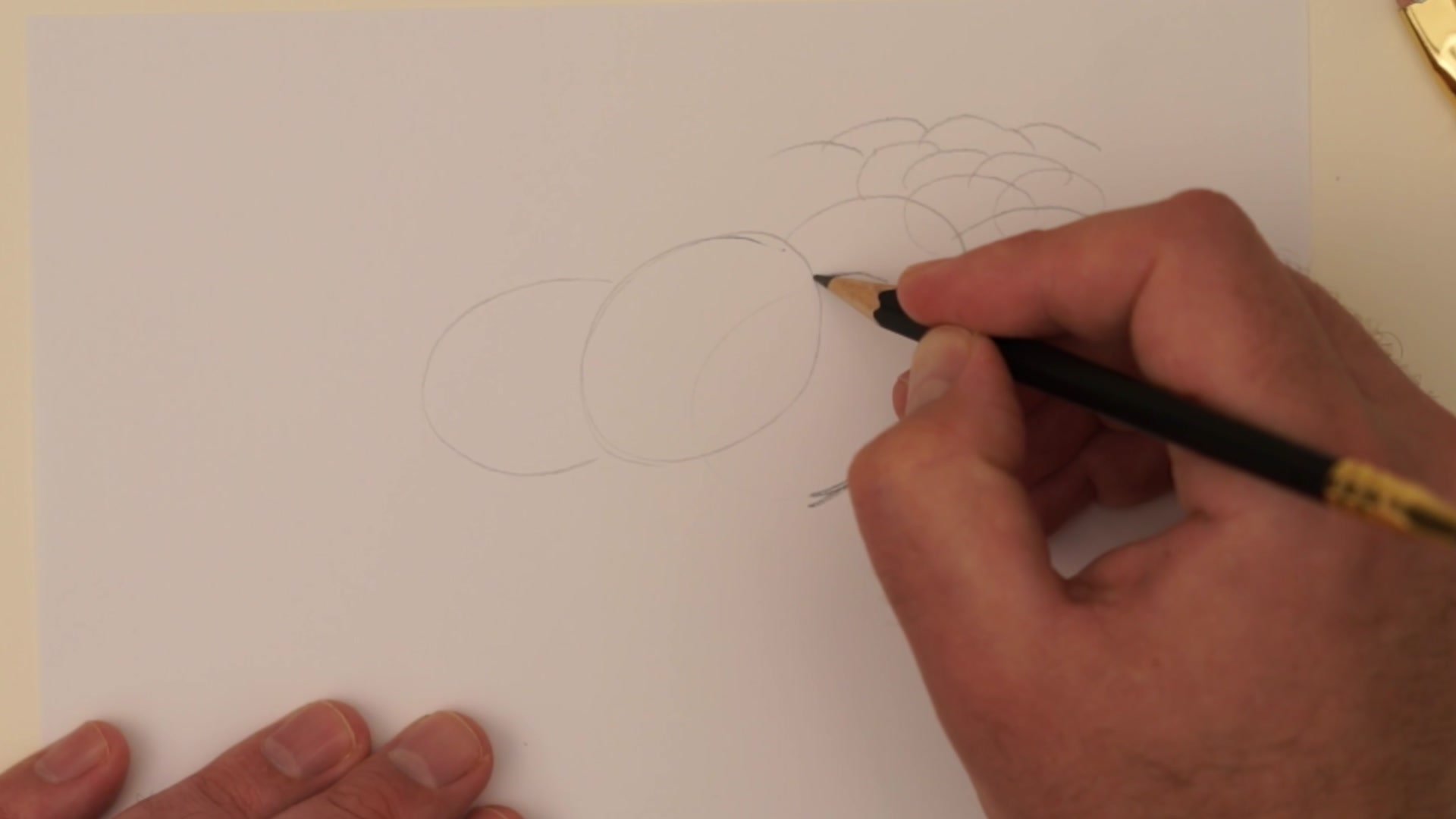
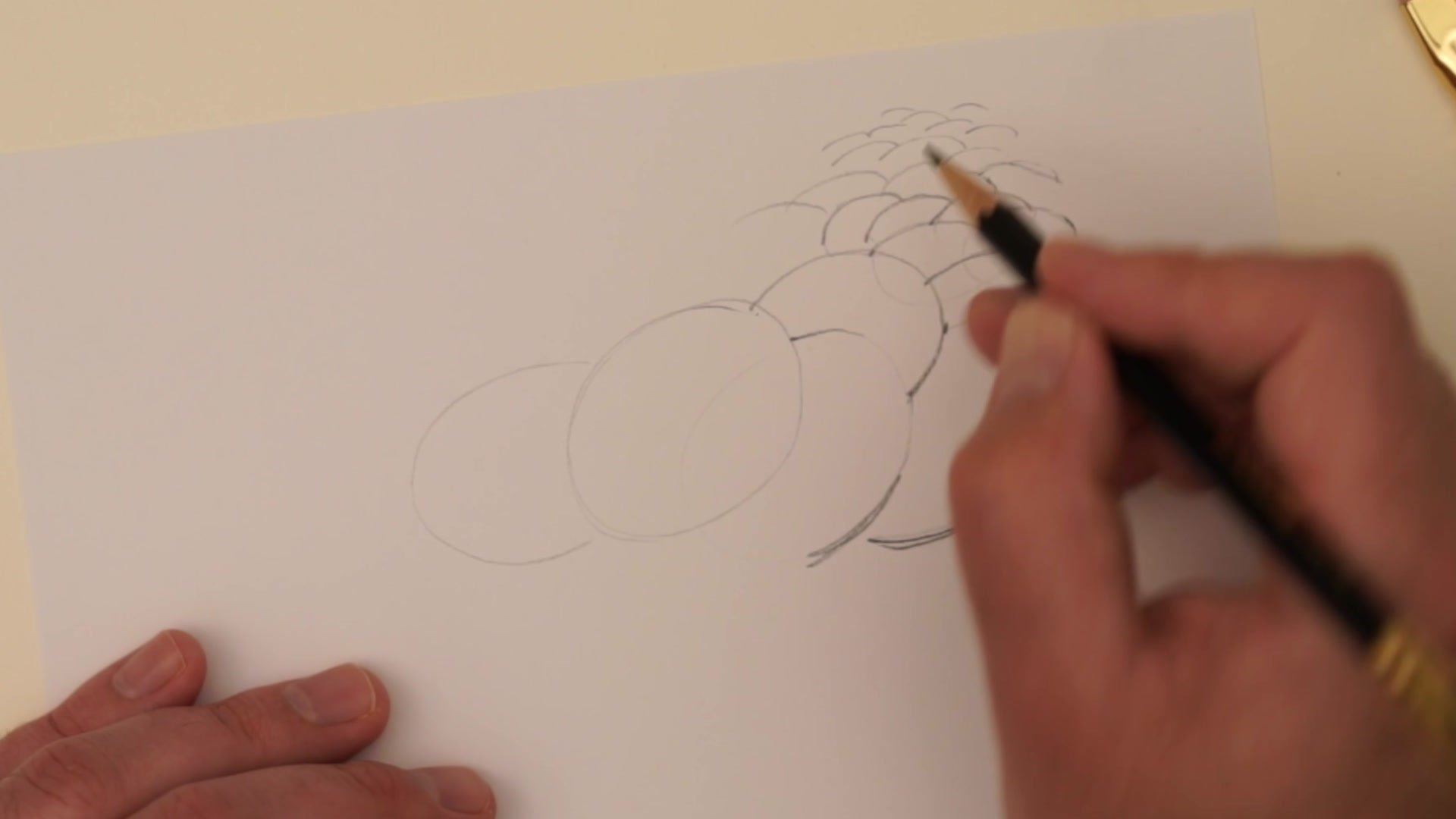
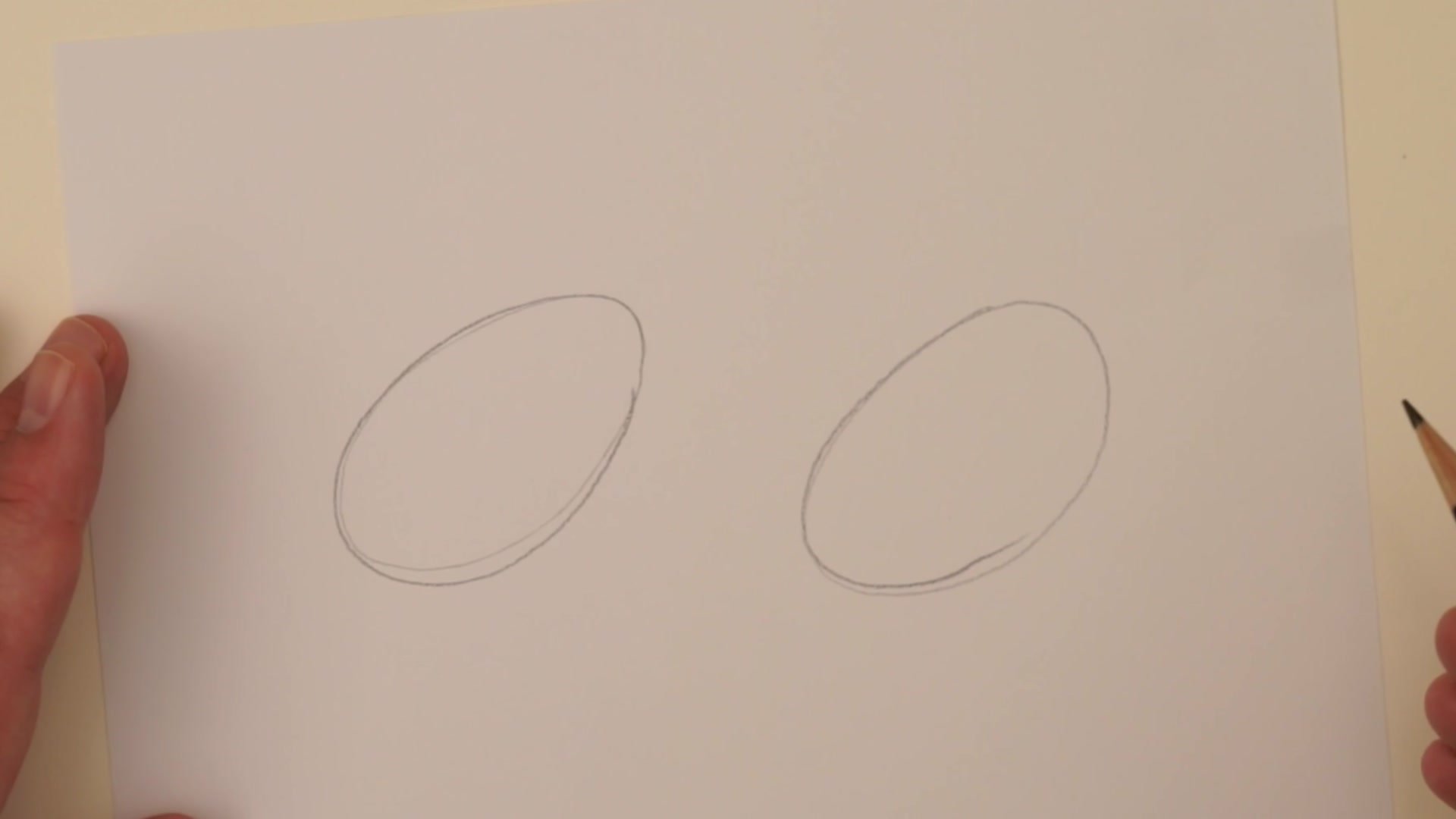
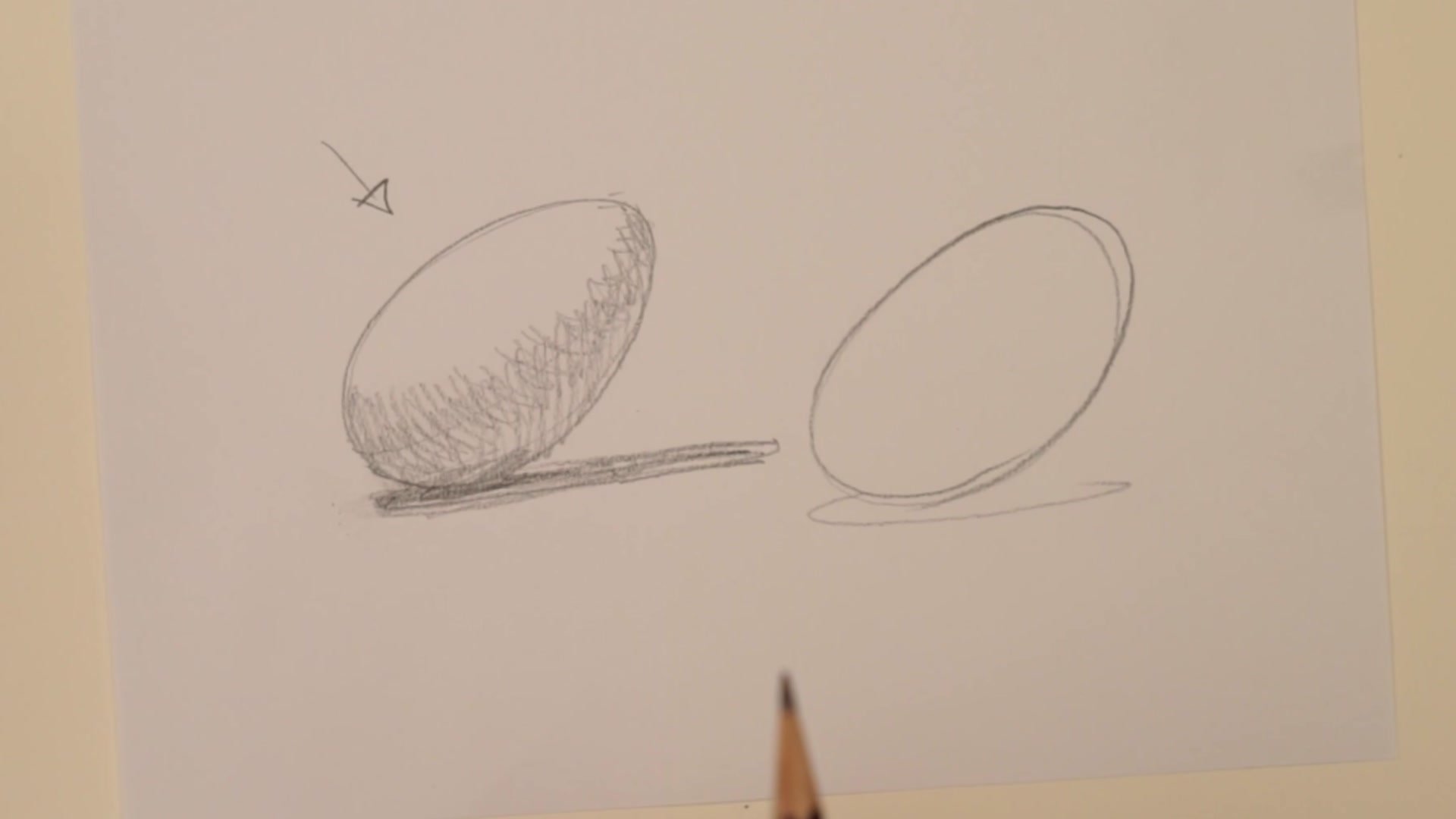
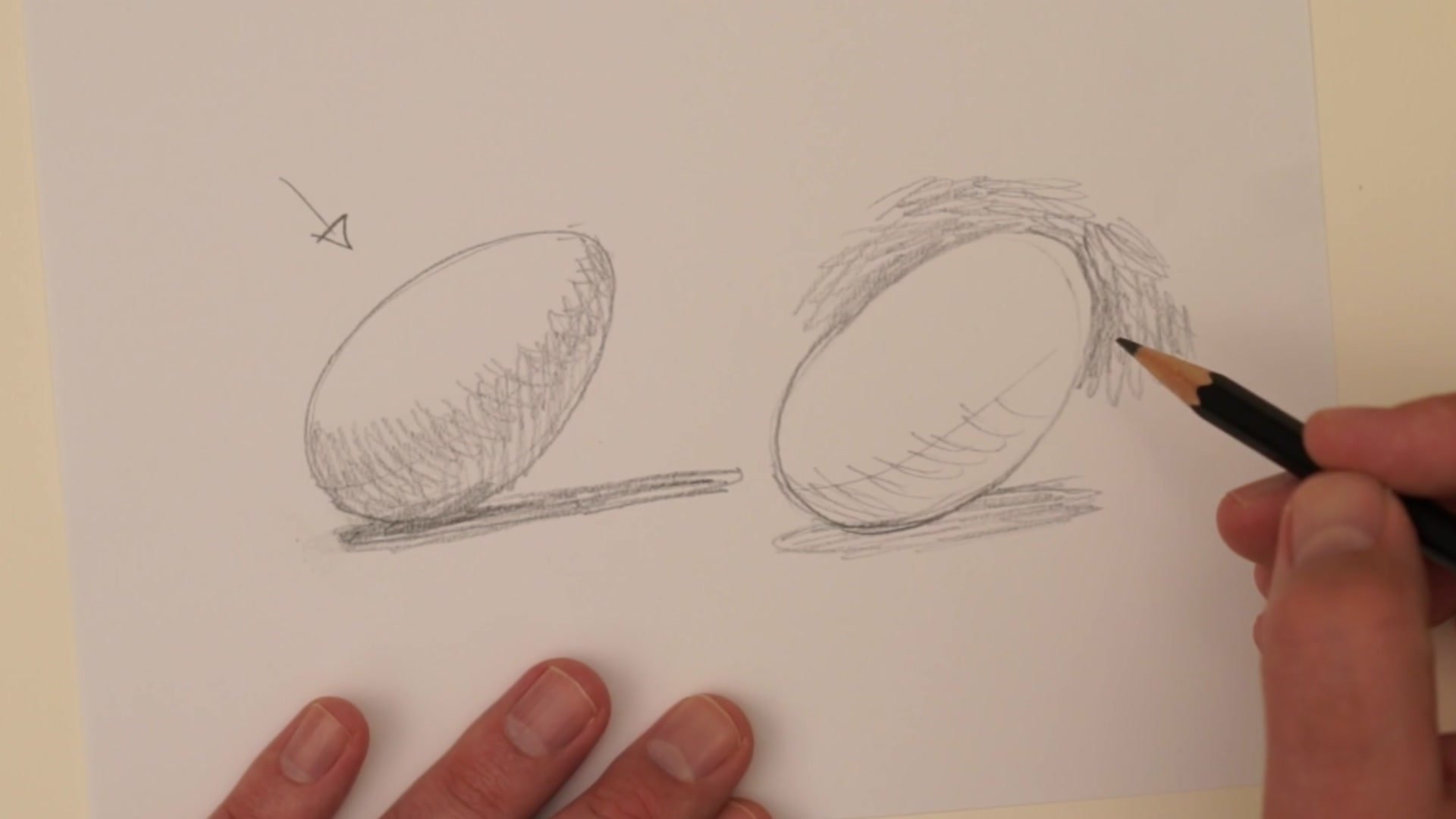
This same principle applies to overlapping forms. Drawing every outline flattens depth, but selectively emphasizing shadow edges and ambient occlusion -- the dark areas where forms press together -- creates convincing three-dimensionality with less rendering. The rendered egg demonstration makes this concrete: one version shows full shadow rendering, while another suggests the same form by rendering the background behind it instead. Both communicate the same volume, but through completely different choices about what to actually put on paper.
Form and Shadow Studies
Applying Suggestion to Teeth
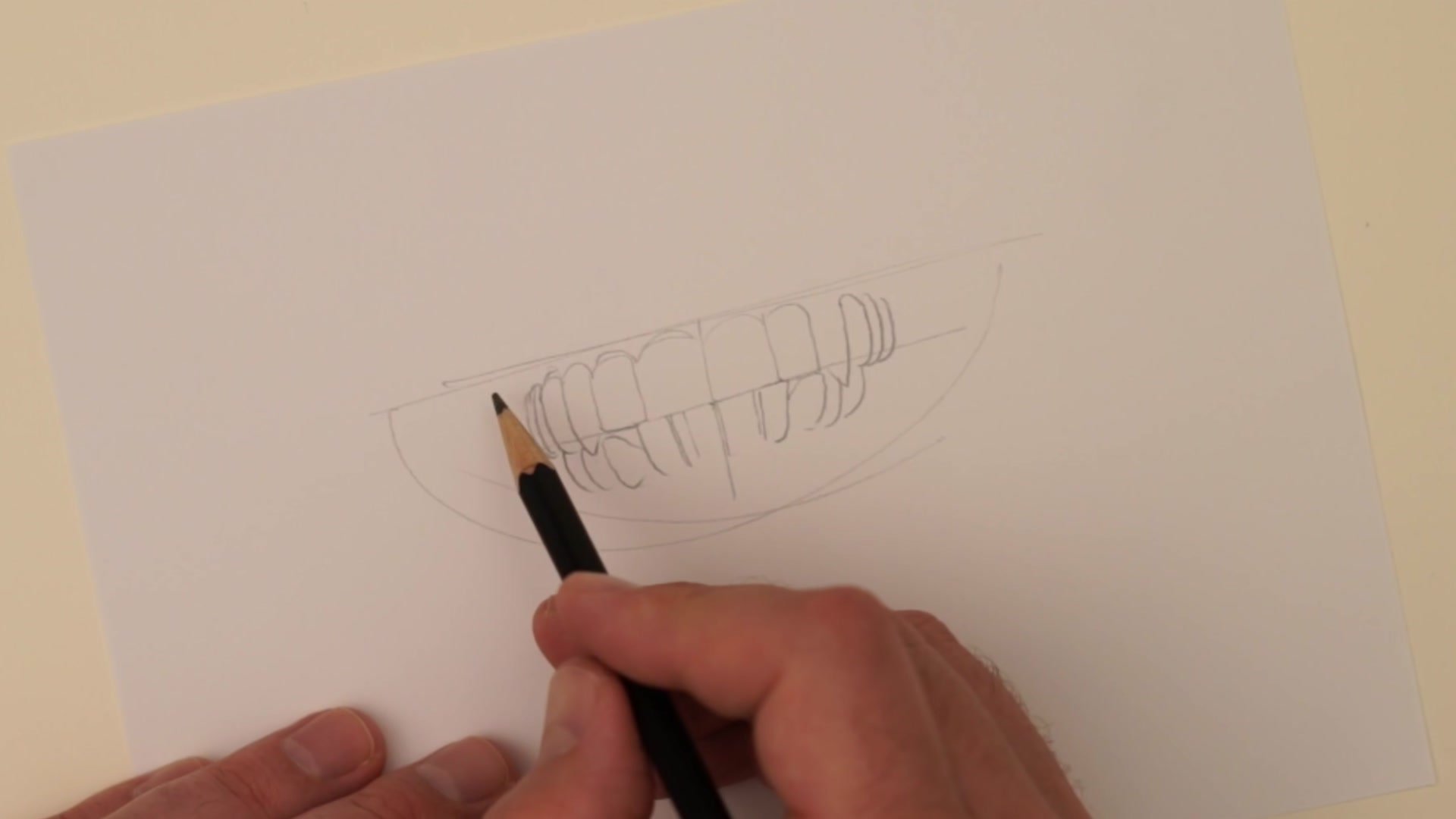
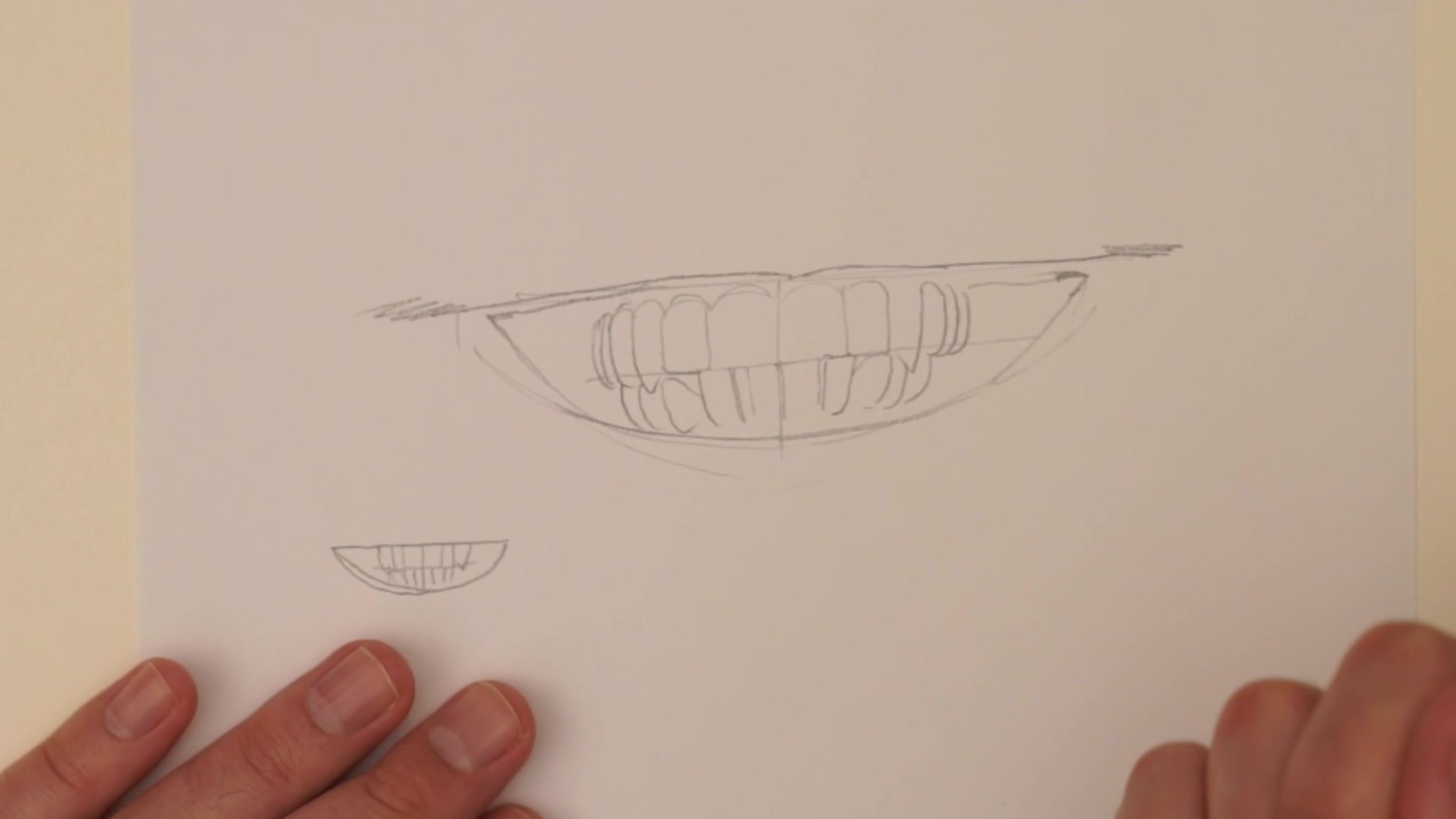
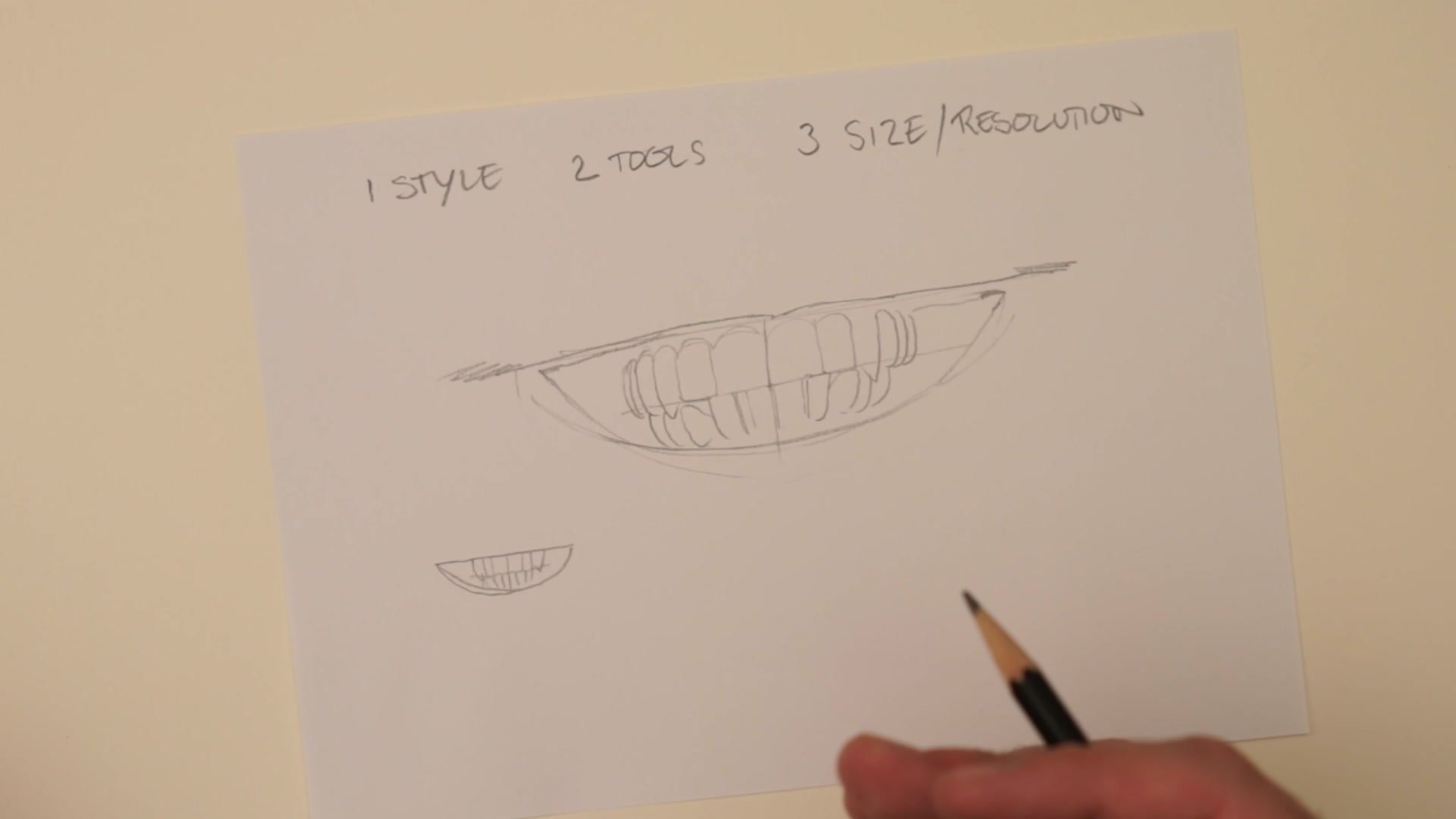
Teeth present a perfect testing ground because the anatomy is specific and repeating. The incisors, canines, and premolars all have distinct shapes, and understanding where each sits matters. But drawing every line between every tooth creates that dreaded look where it seems like something is stuck between them.
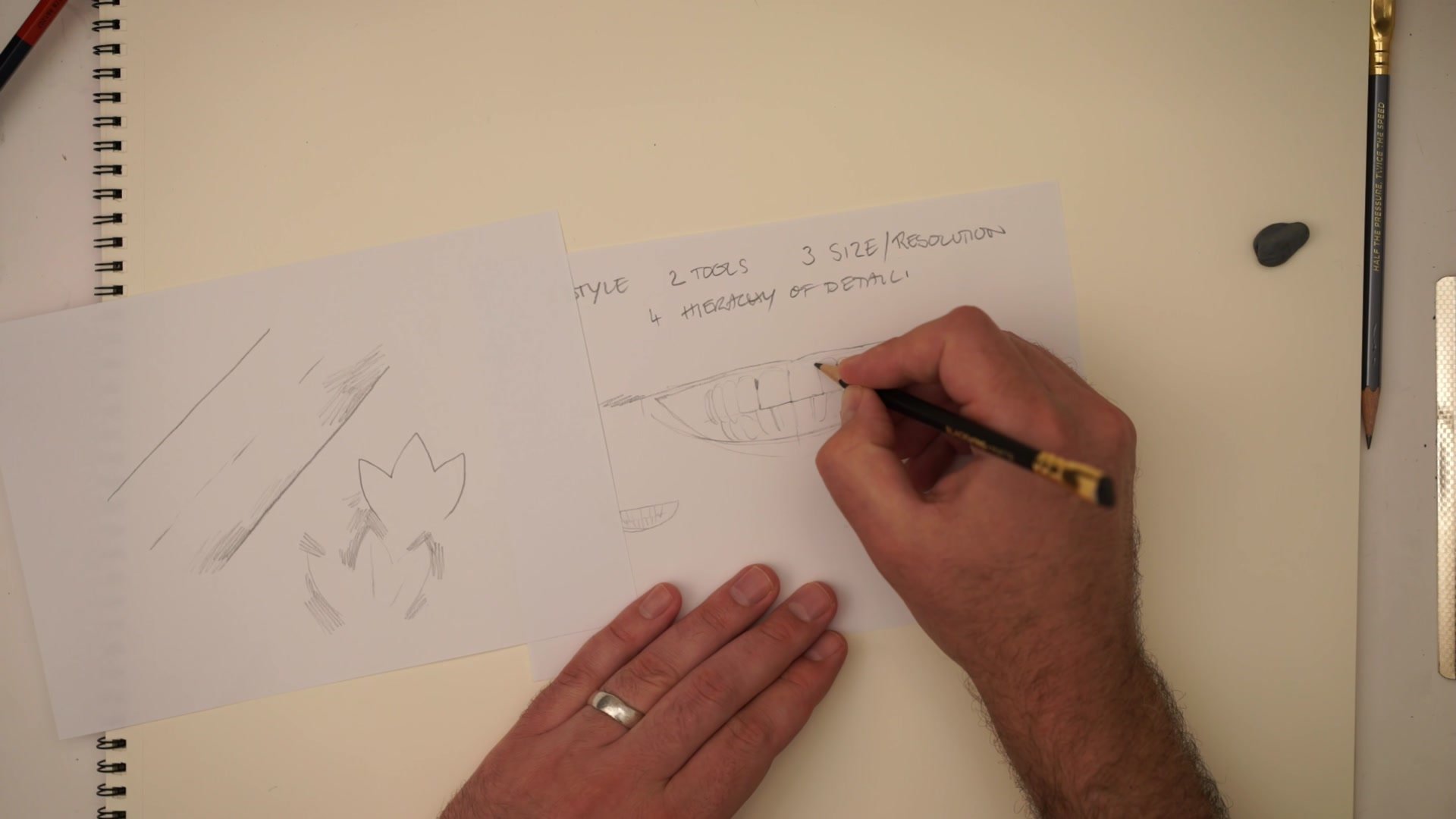
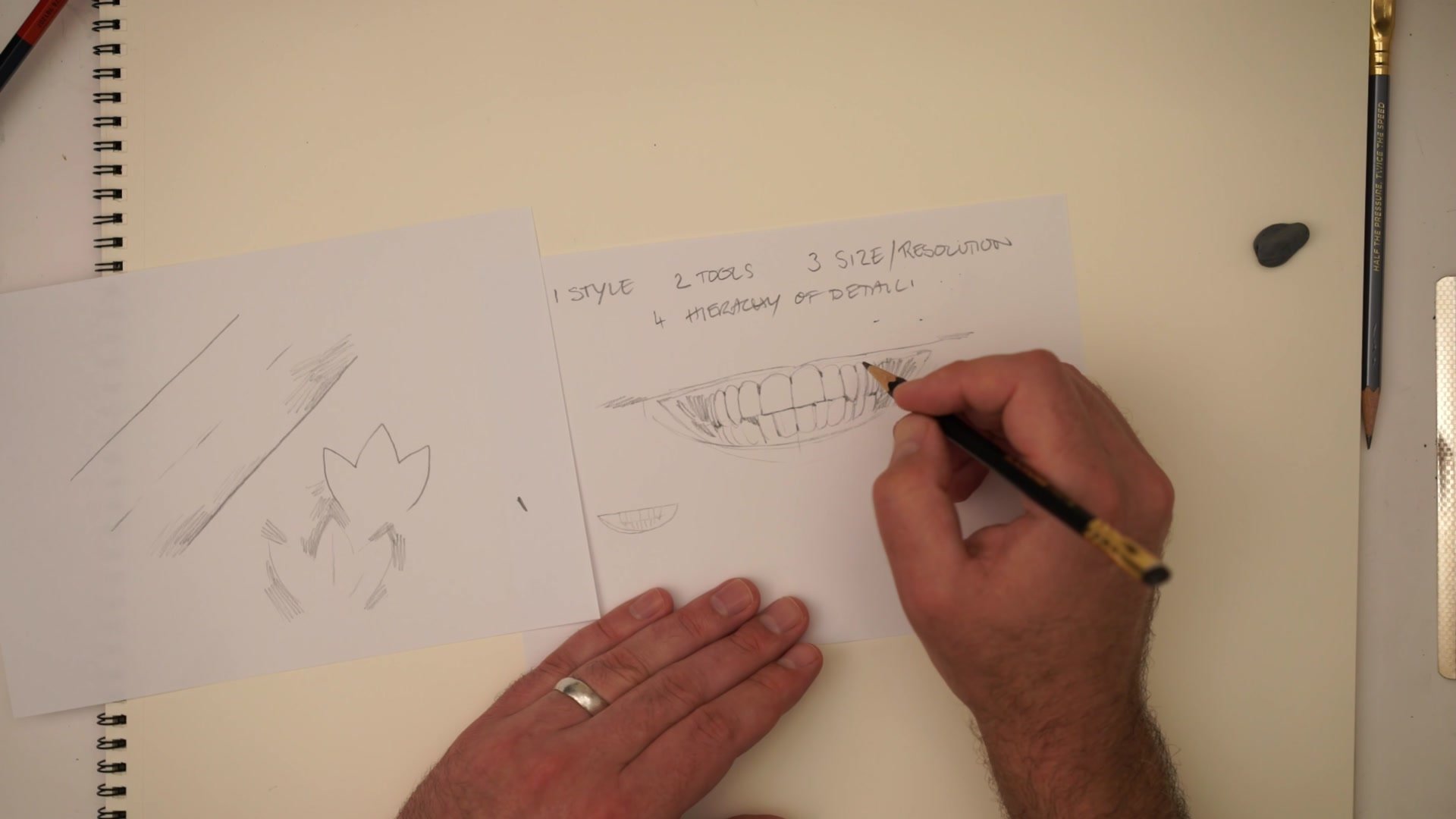
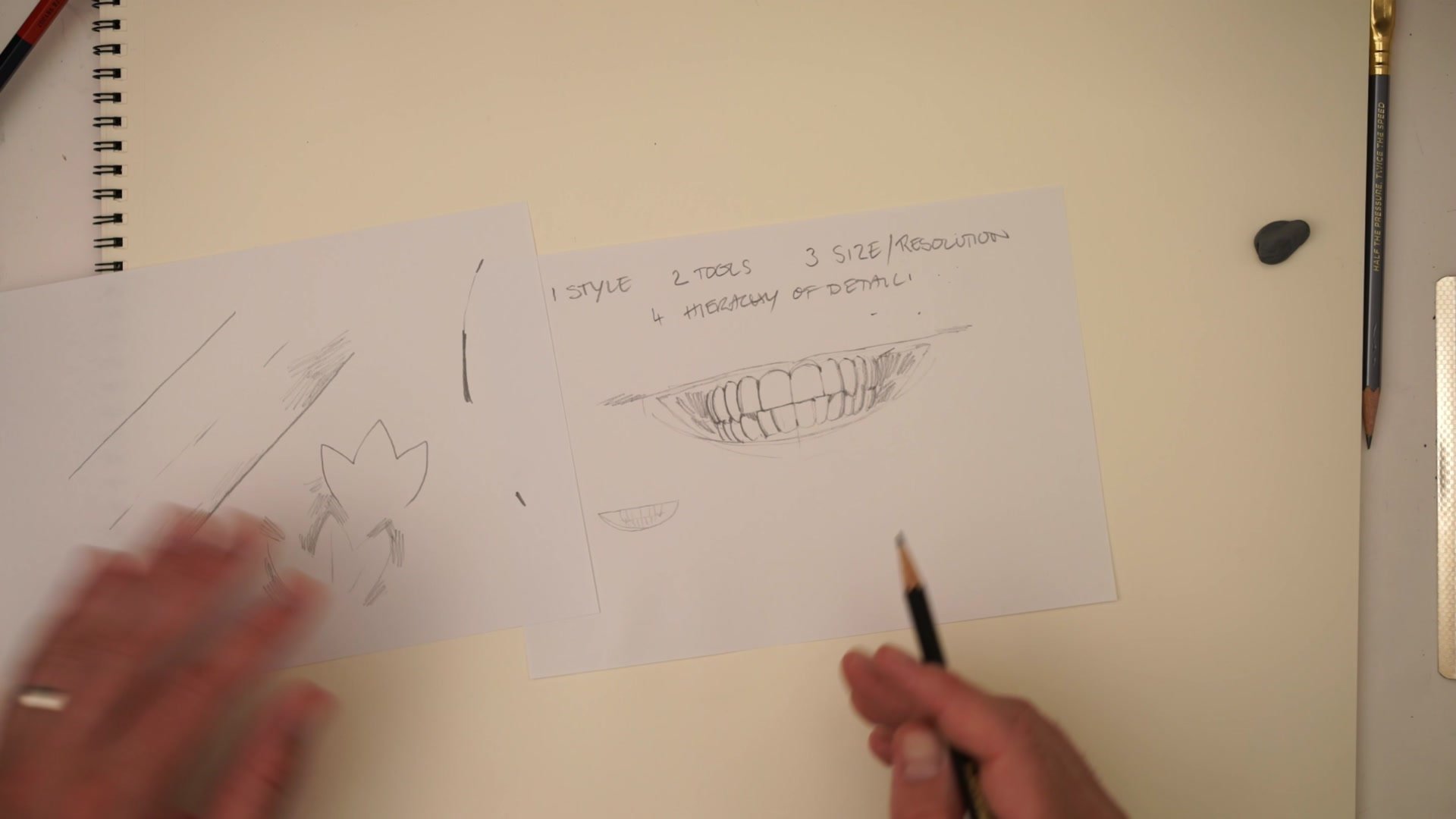
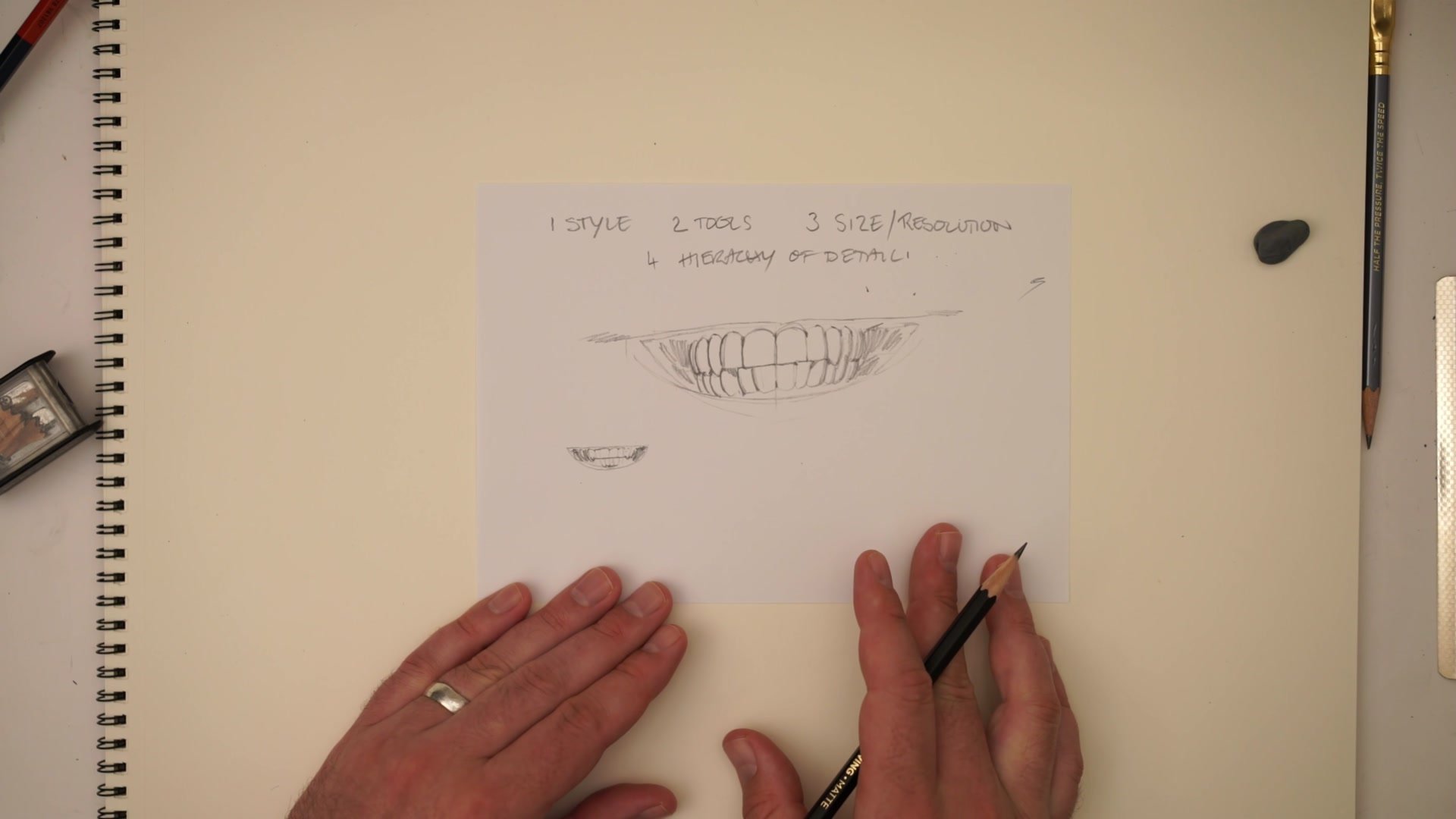
The key is focusing on ambient occlusion -- the darkest lines appear where teeth meet the gums, where the canines create deeper shadows, and where the gap between upper and lower teeth is most defined. Instead of outlining each tooth, the suggestion approach places emphasis on these shadow shapes and lets the white of the paper do the work of defining tooth surfaces. Four factors determine how much detail to include: your style, your tools, the size of the drawing, and the hierarchy of detail within the overall piece.
Teeth Anatomy and Rendering
Style Determines Simplification
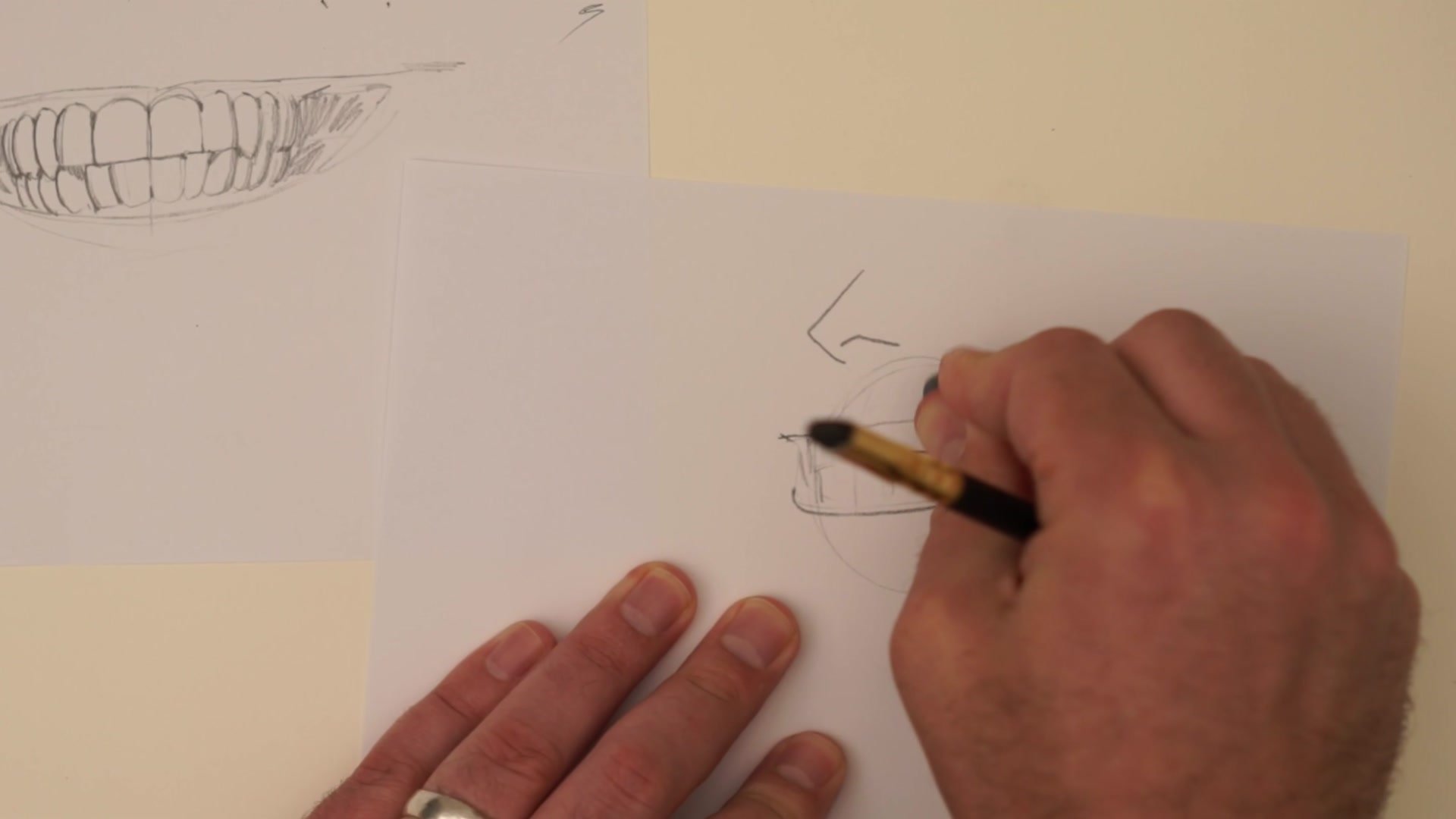
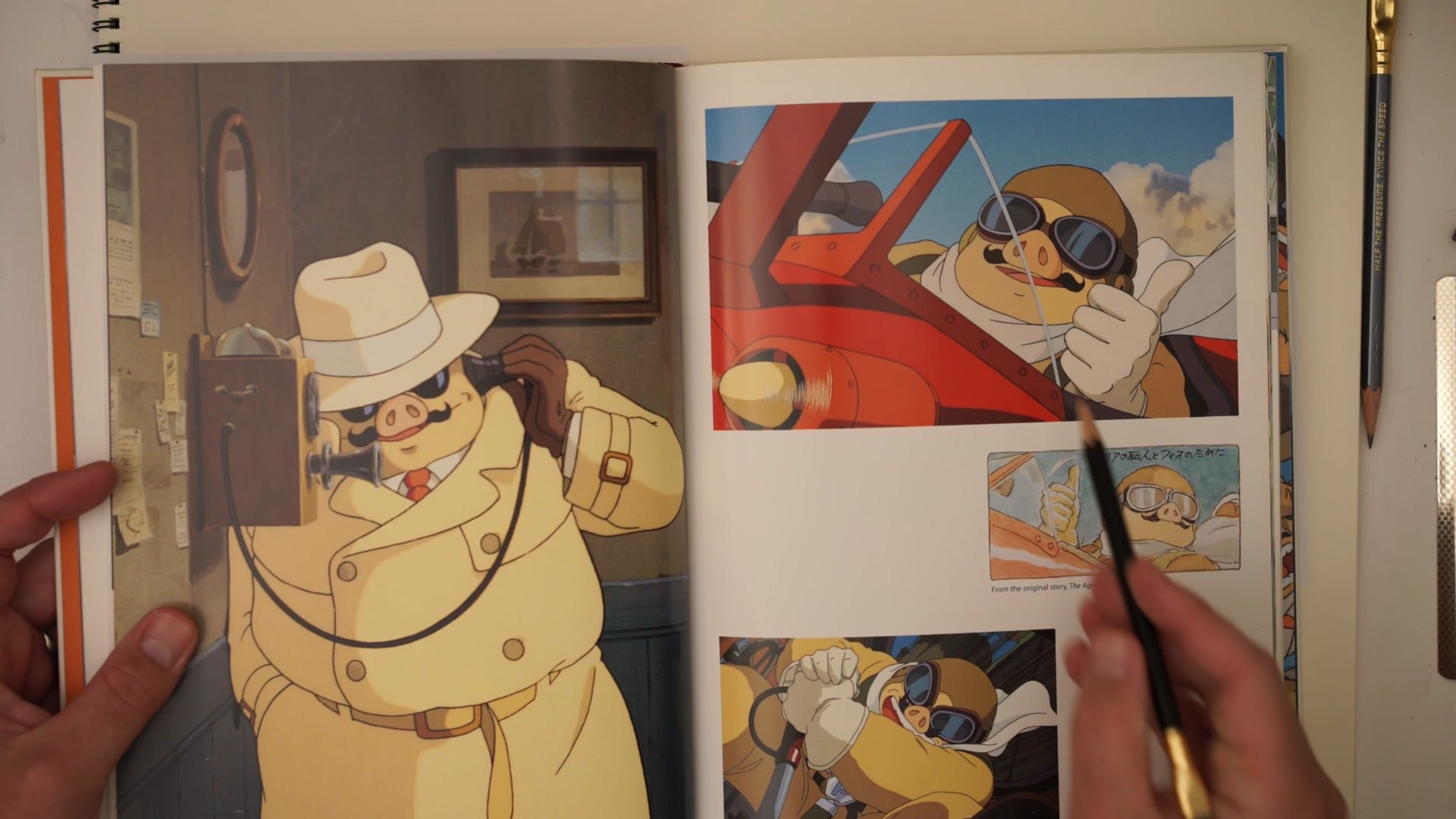
How far suggestion goes depends entirely on style. In a detailed comic book rendering, shadow shapes under the gums and between canines carry most of the information while front teeth remain largely open white shapes. In manga, teeth often simplify to just the mouth line, a canine mark, and a white void. Looking at Hayao Miyazaki's sketches for Porco Rosso, the teeth get even simpler -- sometimes reduced to a single shape within the mouth opening.
None of these approaches is more correct than another. The principle remains the same across all of them: understand the full anatomy so you can make informed choices about what to leave out. A highly stylized face with abstract features needs equally stylized teeth. Rendering every tooth detail on a cartoon face breaks the hierarchy of detail. The level of suggestion must match the visual language of the rest of the drawing.
Style Variations
Key Principles
Suggestion Requires Knowledge: Drawing loosely and suggestively requires understanding the full underlying structure. You selectively omit detail, which means knowing what is there to omit.
Ambient Occlusion Drives Depth: The darkest marks belong where forms press together -- gum lines, tooth gaps, crevices. These shadow shapes do more work than outlines.
Hierarchy of Detail: How much you suggest depends on style, tools, drawing size, and where teeth sit in the overall composition. Front and center gets more detail; periphery gets less.
Style Matches Simplification: The level of tooth detail must match the rest of the drawing. Abstract faces need abstract teeth. Rendering them differently breaks visual consistency.
Practice This
Draw the Full Structure: Start by drawing a complete set of teeth with all anatomy visible -- incisors, canines, premolars, gums, and lips. Understand the forms before simplifying.
Selectively Remove Lines: On a second pass, erase or lighten everything except the shadow shapes -- ambient occlusion lines, gum shadows, and canine emphasis. See how much structure remains from suggestion alone.
Match Your Style: Try the same teeth at three different style levels -- detailed rendering, simplified comic, and minimal manga. Notice how each style demands a different amount of suggestion.