Drawing Fantasy Characters with Head Construction
Summary
Applying the Loomis Method to Fantasy
Head construction gets taught as a rigid system of spheres and proportion lines, but that approach falls apart the moment artists try to draw anything beyond a generic human face. Fantasy characters like elves, orcs, and horned warriors demand modified proportions, unusual features, and stylised anatomy that textbook instruction rarely addresses.
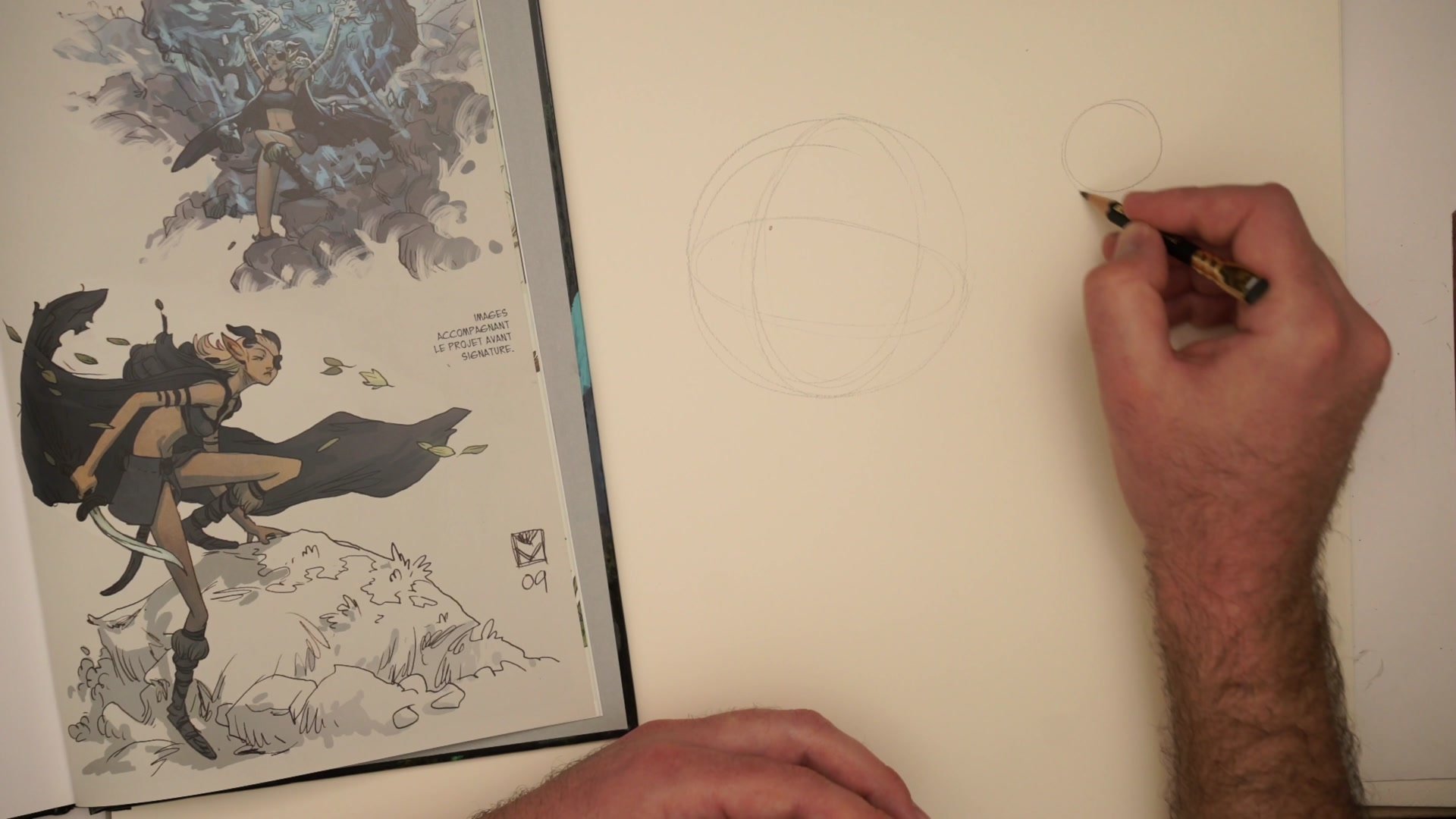
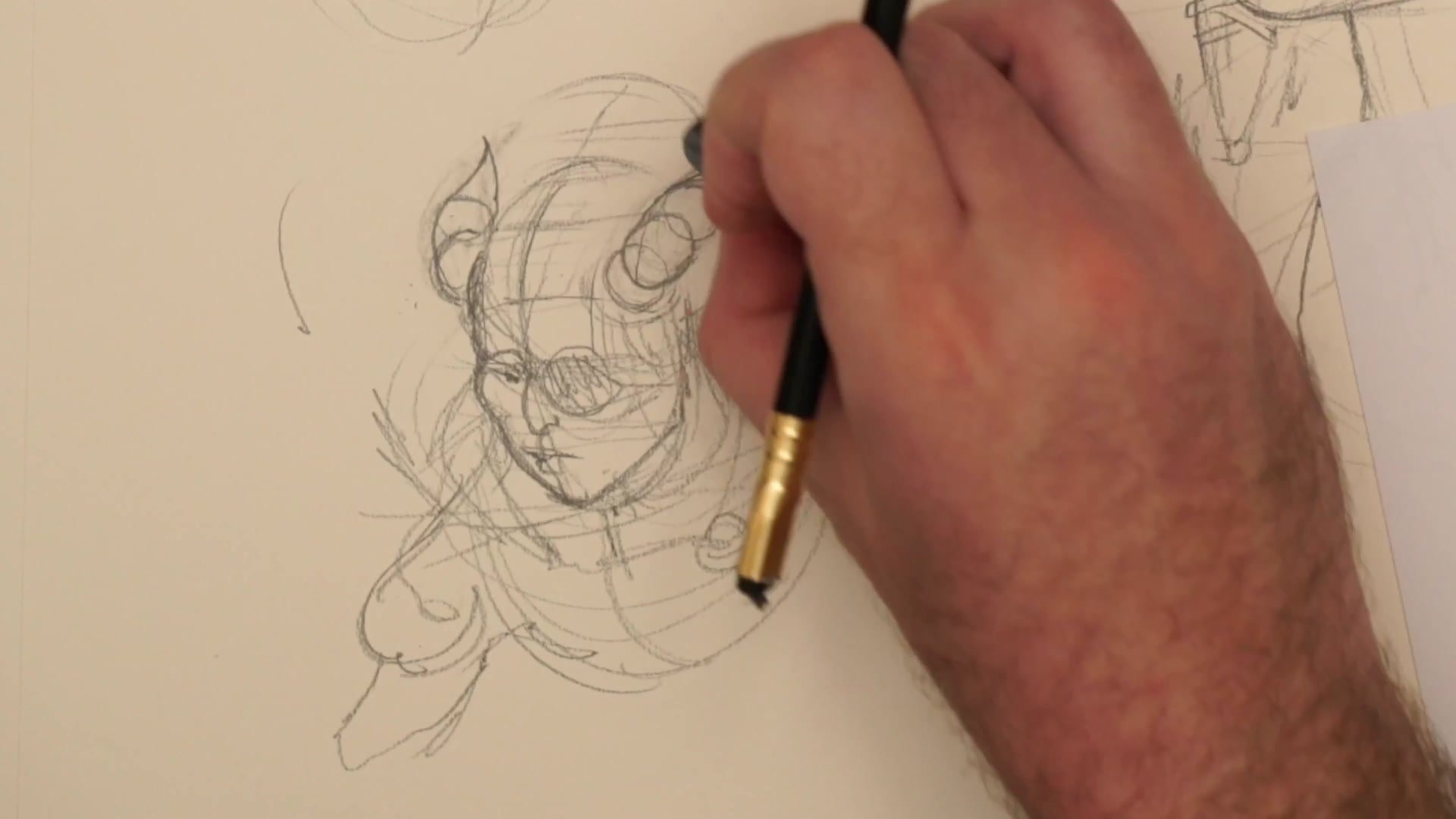
This demonstration tackles that gap by applying Loomis method principles to an original fantasy elf character complete with horns, pointed ears, and an eye patch. Rather than treating construction as a formula, the focus is on understanding the underlying principles of constructive anatomy well enough to modify proportions, position non-human features in three-dimensional space, and maintain character consistency across multiple drawings.
Reference and Initial Setup
Directionality Before Detail
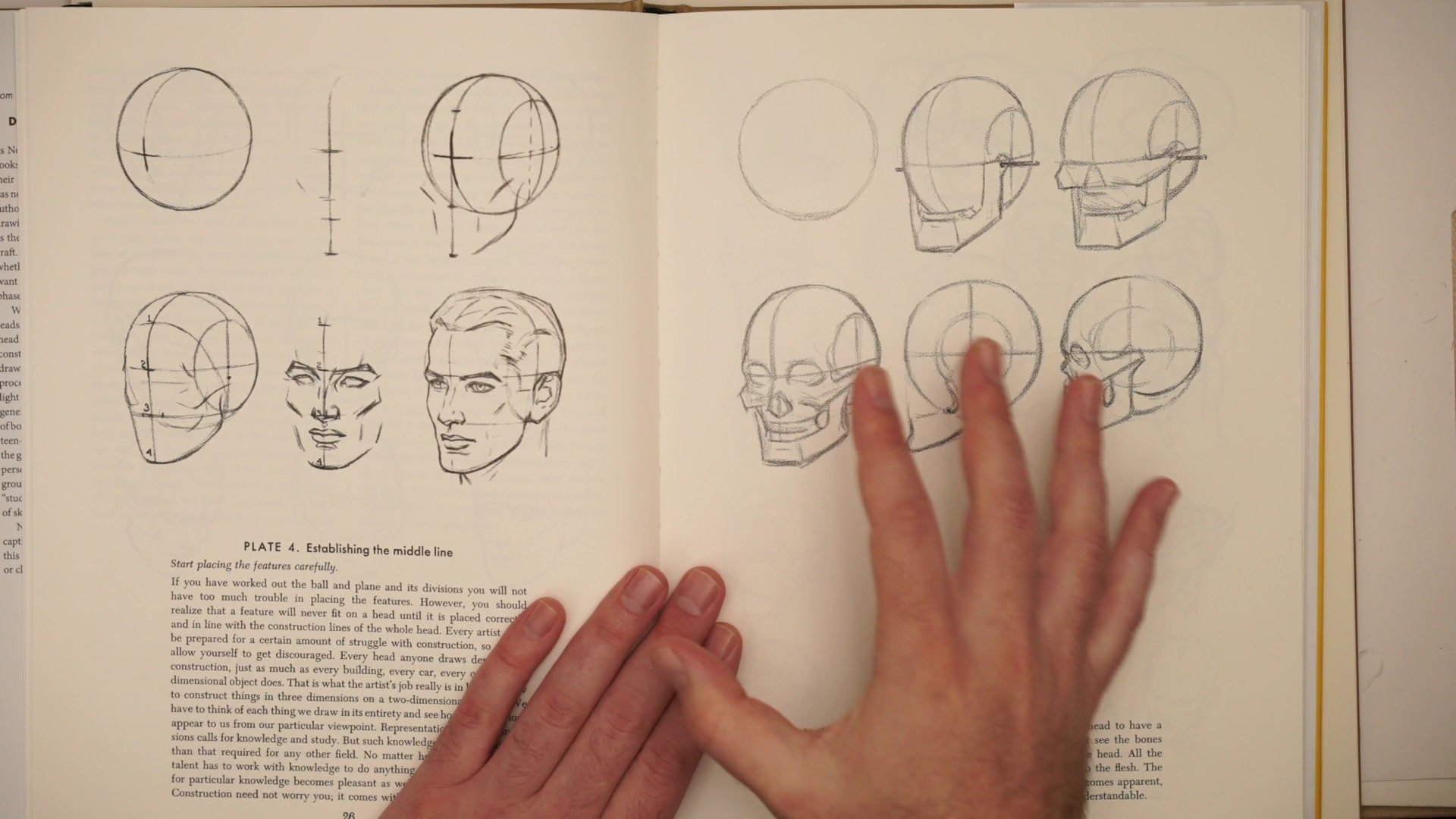
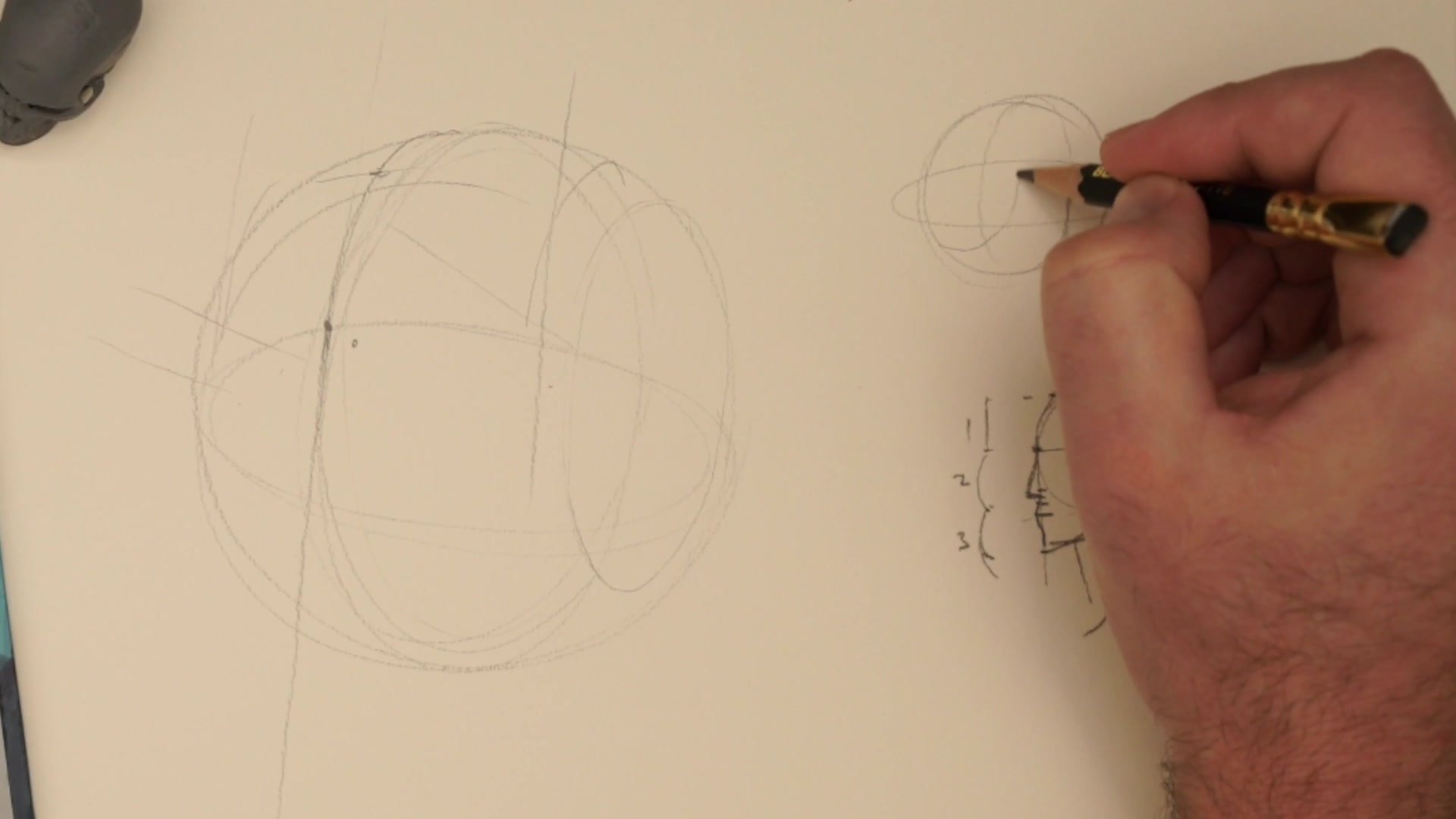
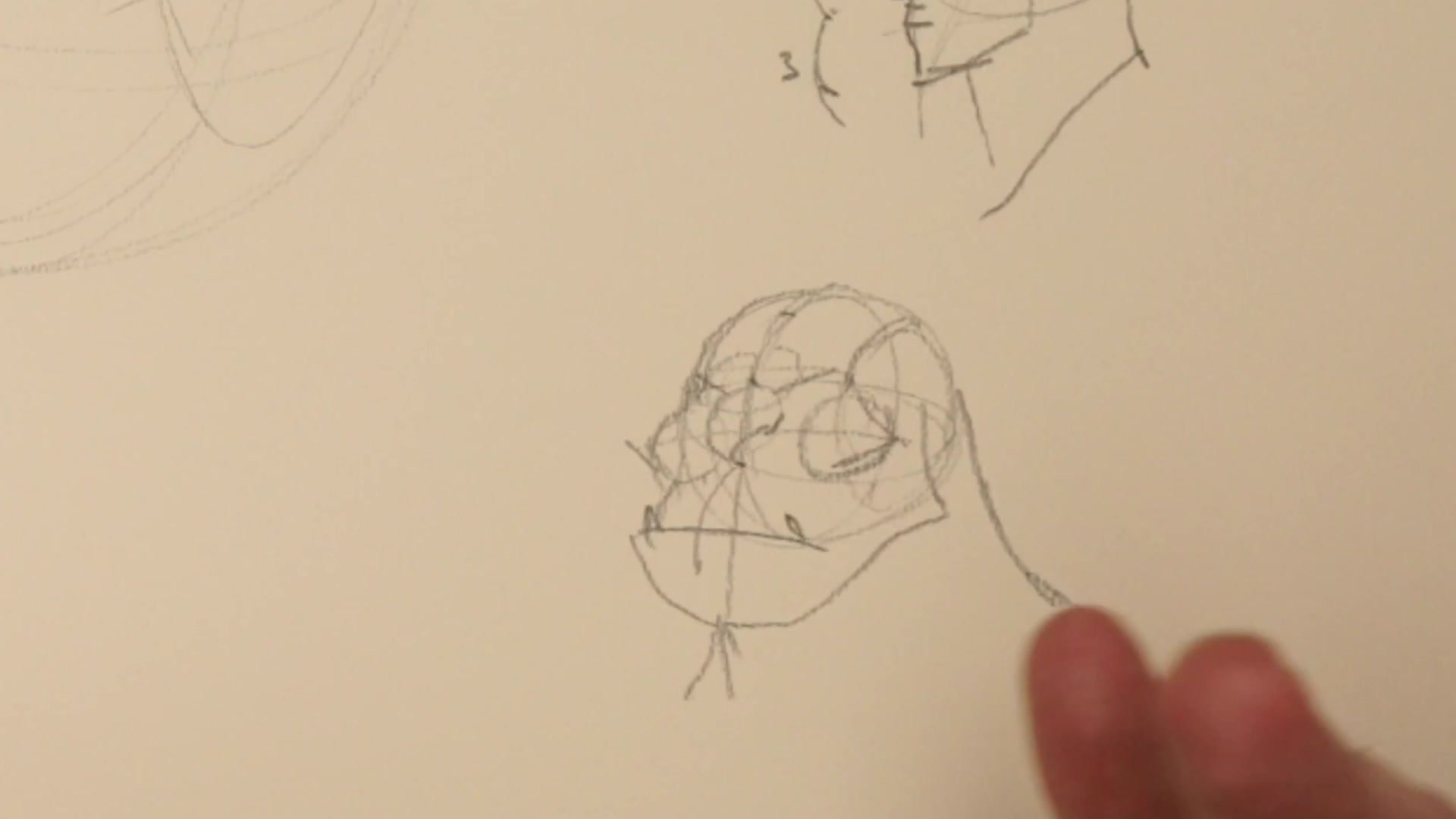
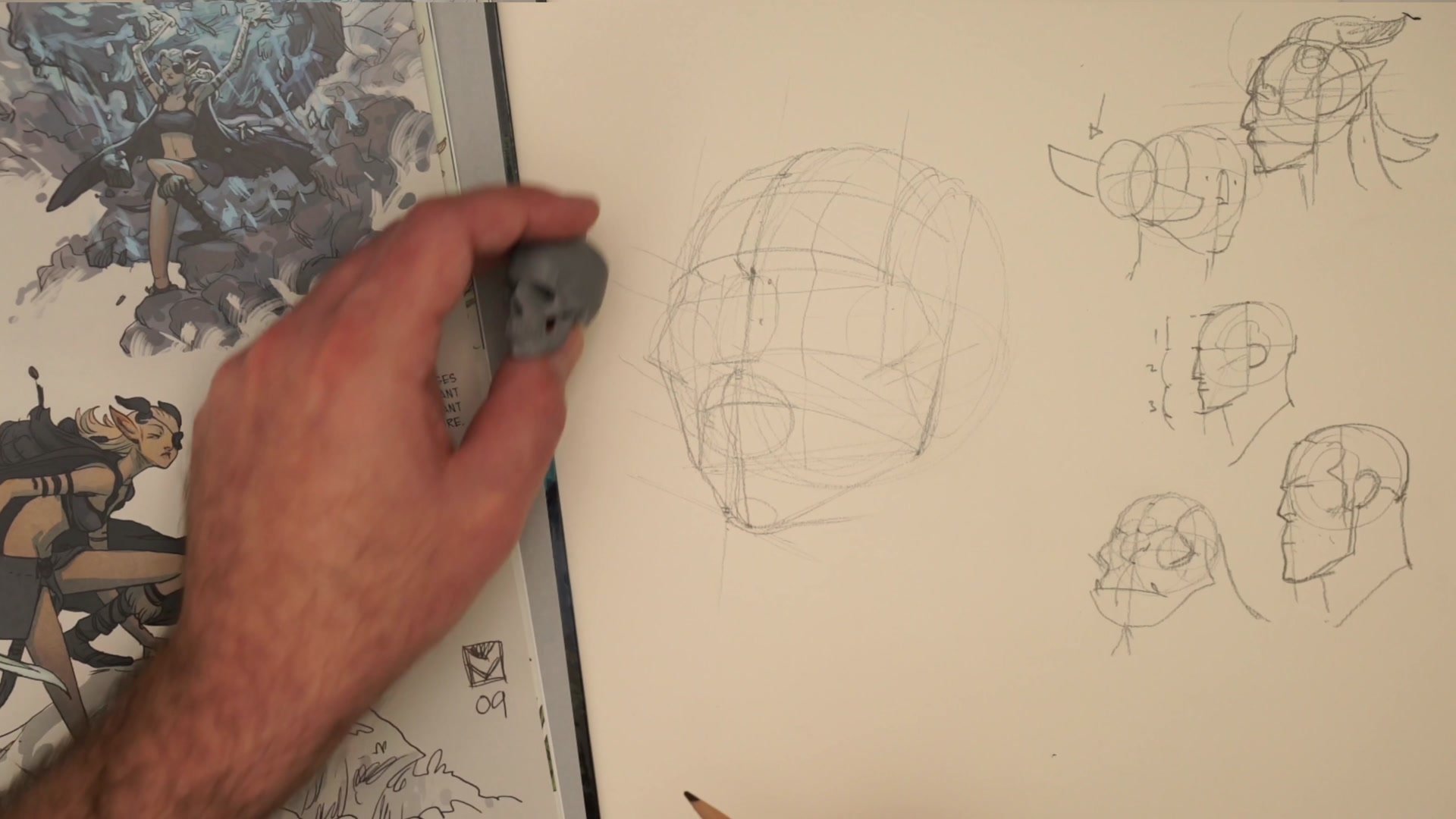
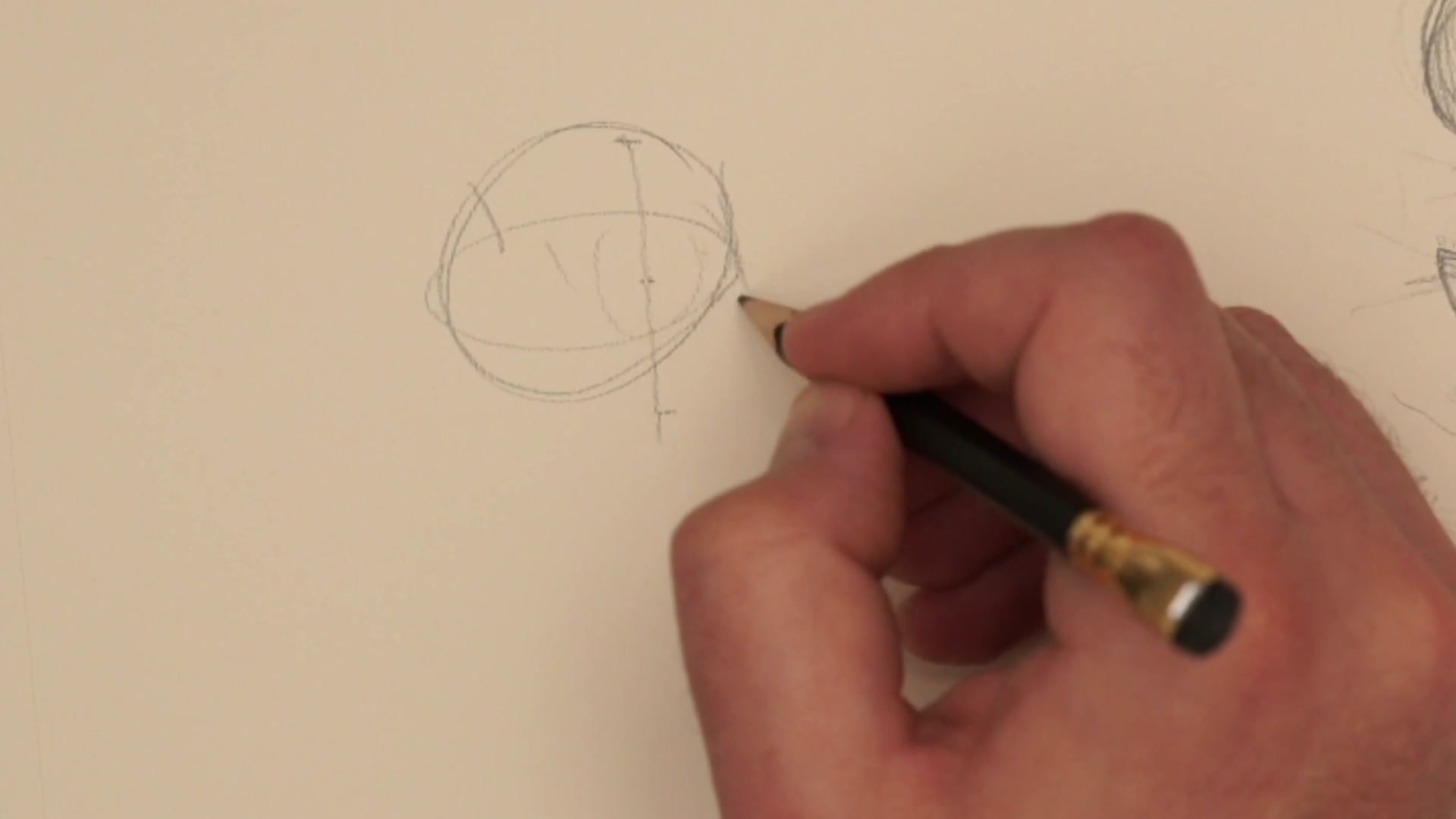
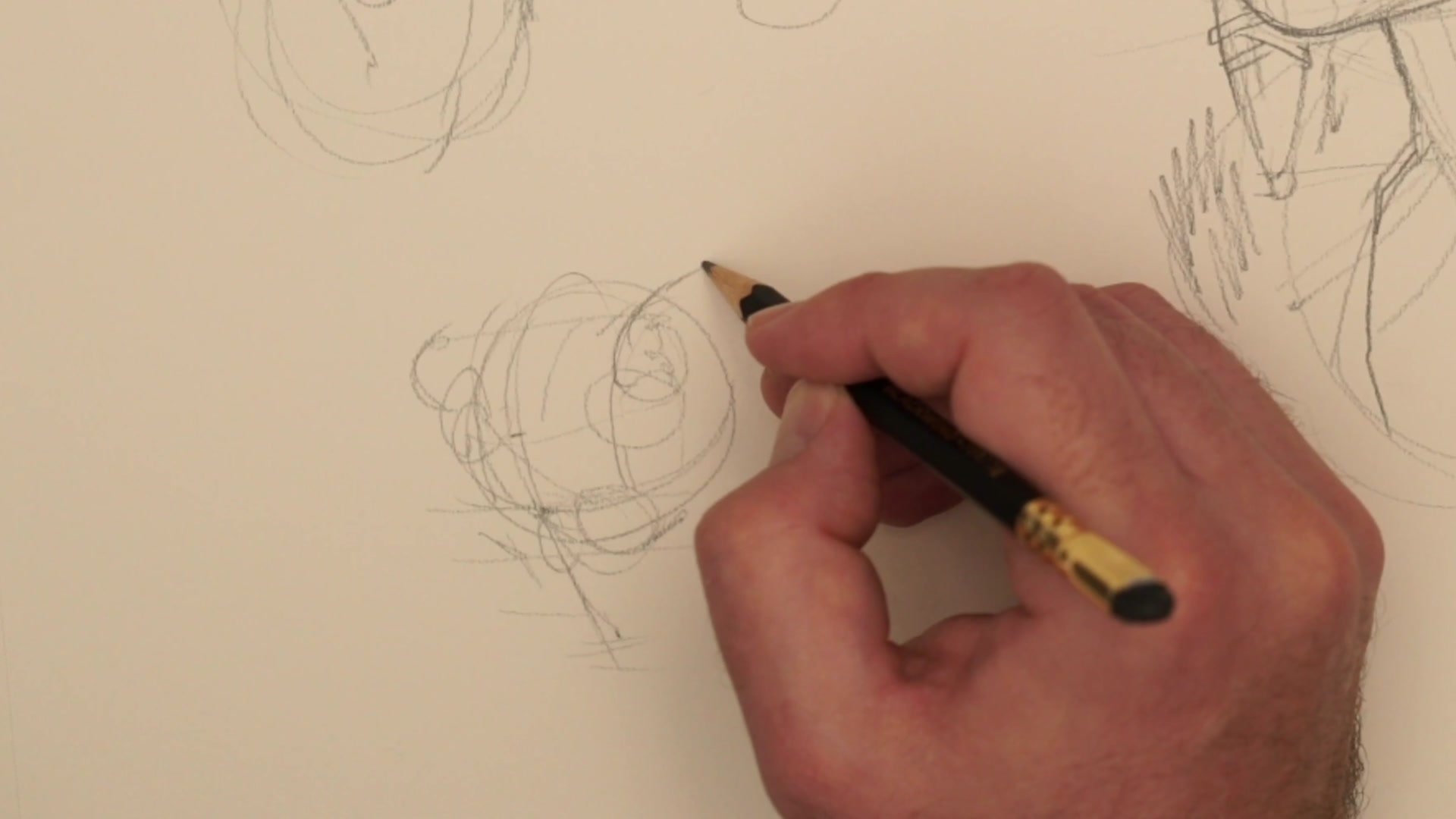
The first principle of the Loomis method, as applied here, is finding the directionality of the face before anything else. The sphere establishes dimensionality, and the center line defines where the face is pointing in space. That single decision about where the center line falls between the eyes becomes the anchor for every proportion that follows.
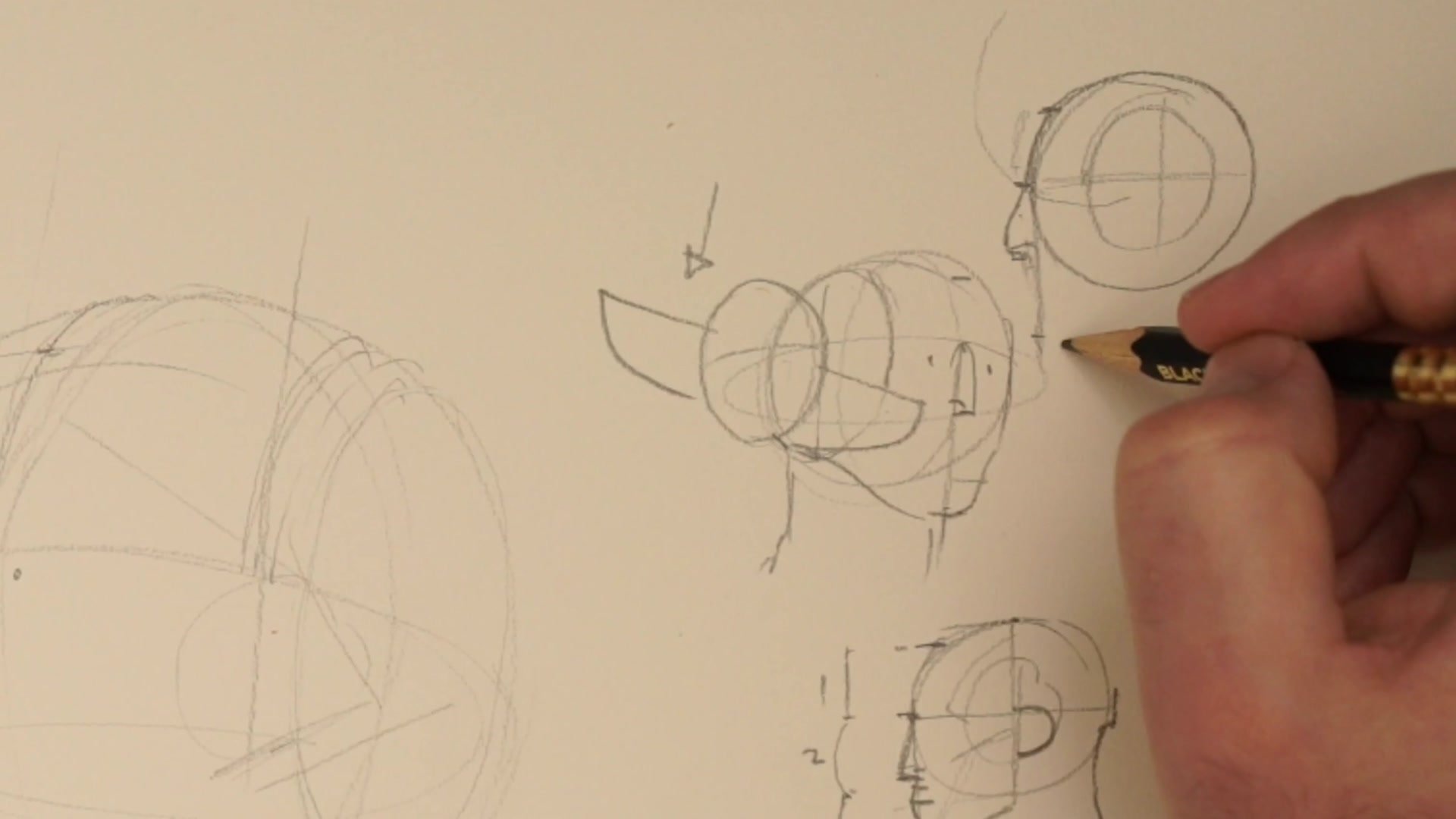
From that center point, three equal proportions are mapped downward to find the hairline, brow, nose, and chin. But the critical insight is that these proportions are not fixed. Stylistic choices change them significantly. A longer chin gives more room for mouth expression in comic work. A softer, receded chin creates a different character type entirely. The Loomis framework provides the scaffold, but the artist decides the proportions that define the character.
Proportion and Construction
Constructing Non-Human Features
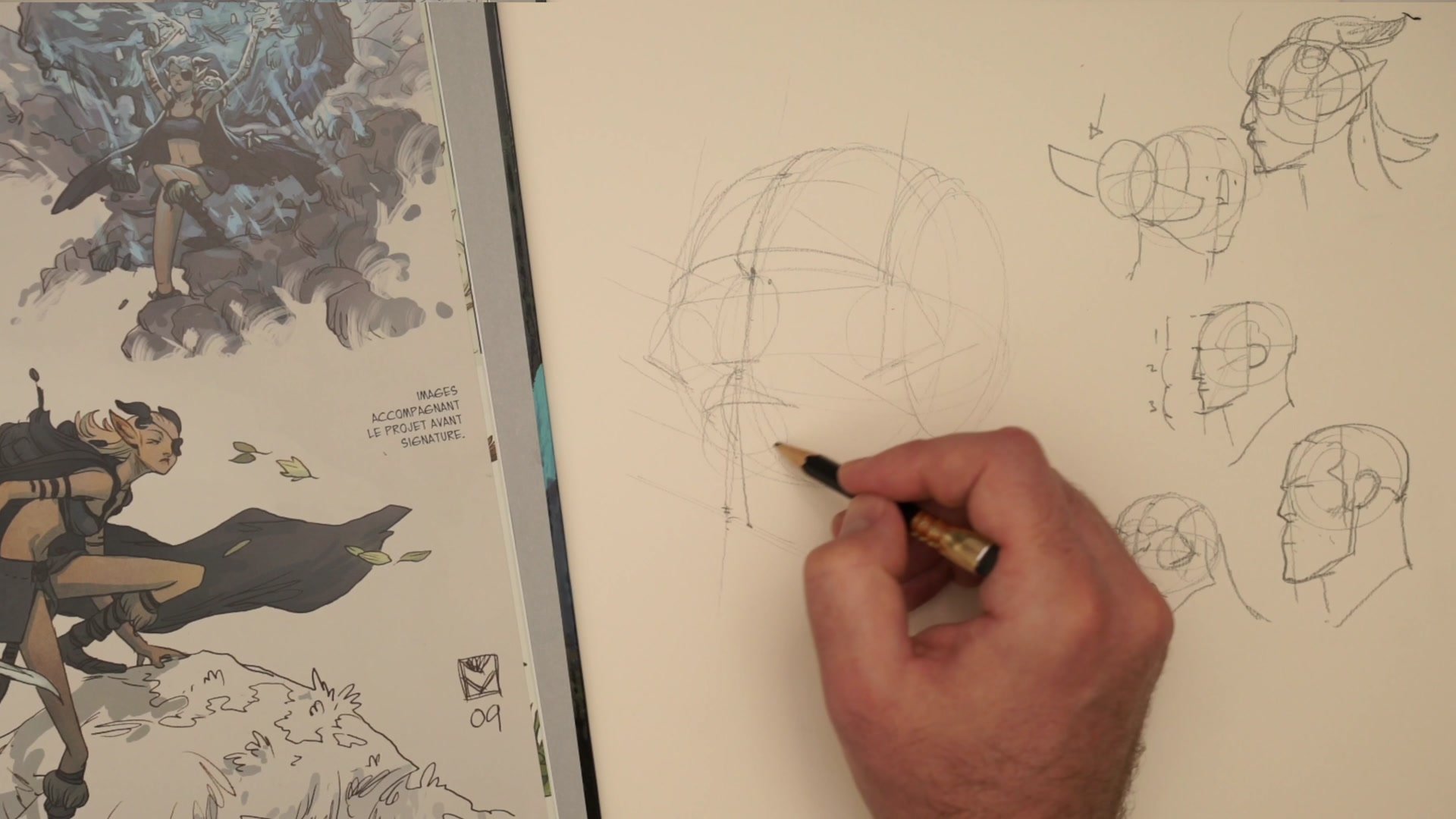
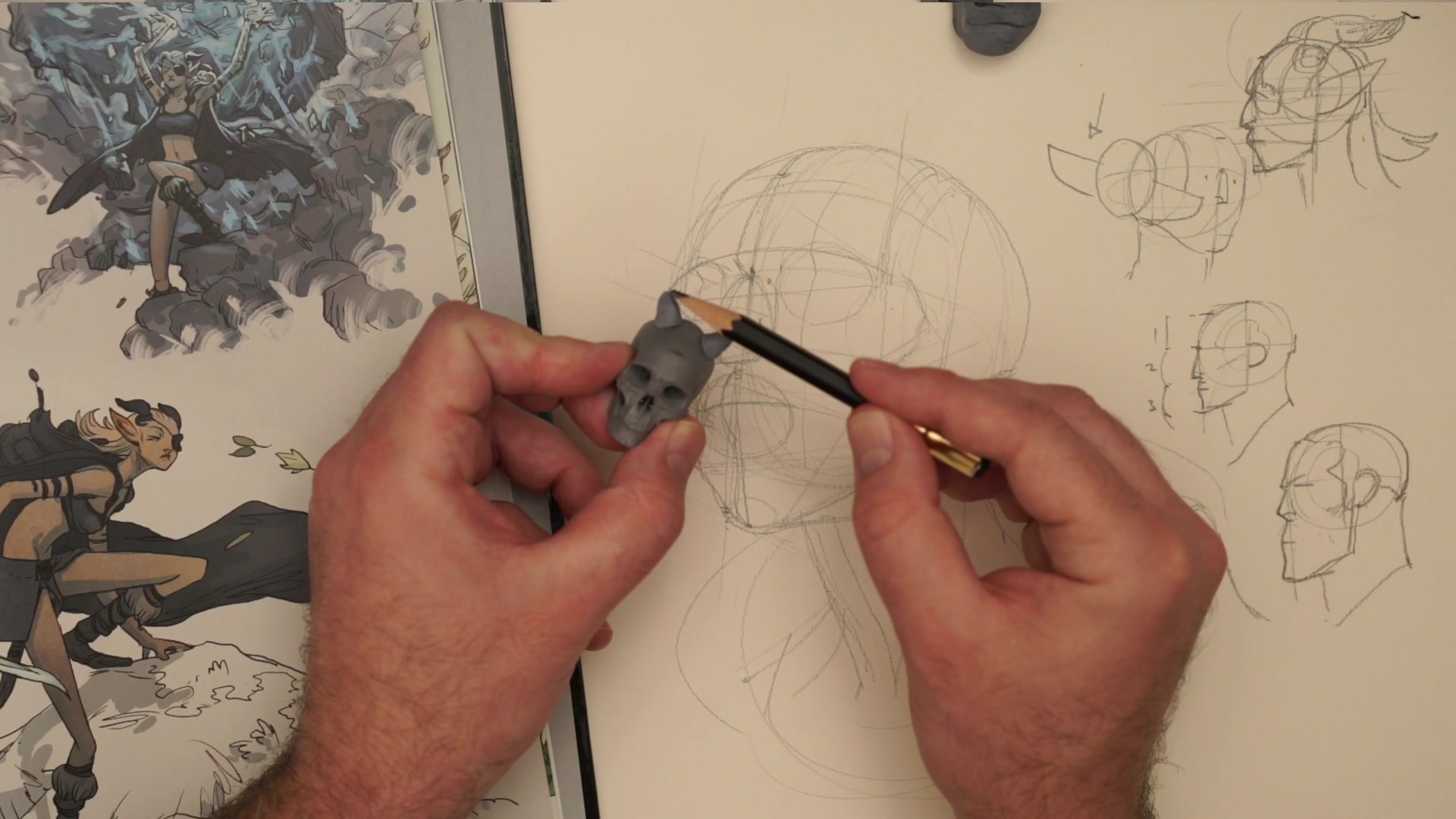
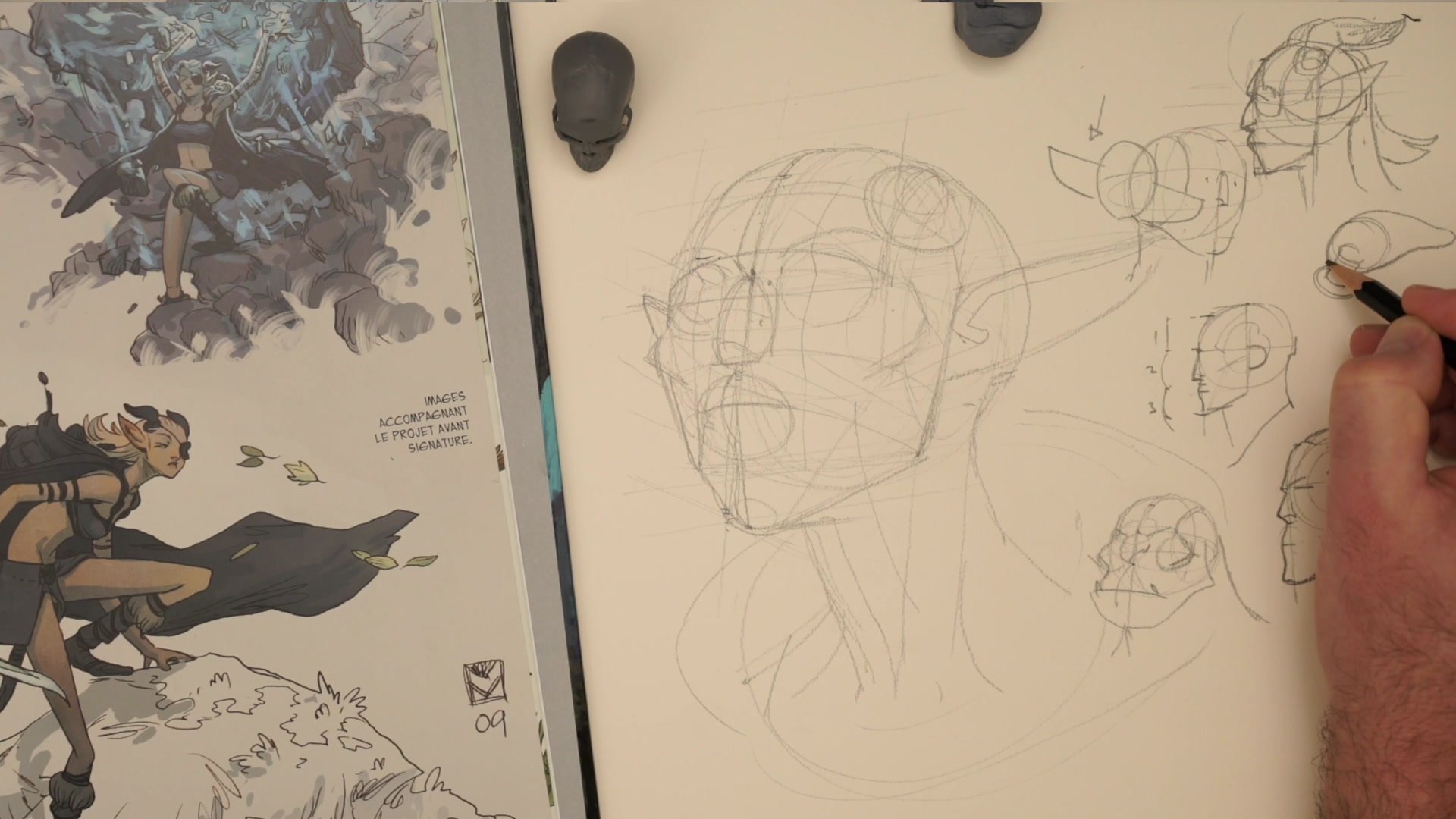
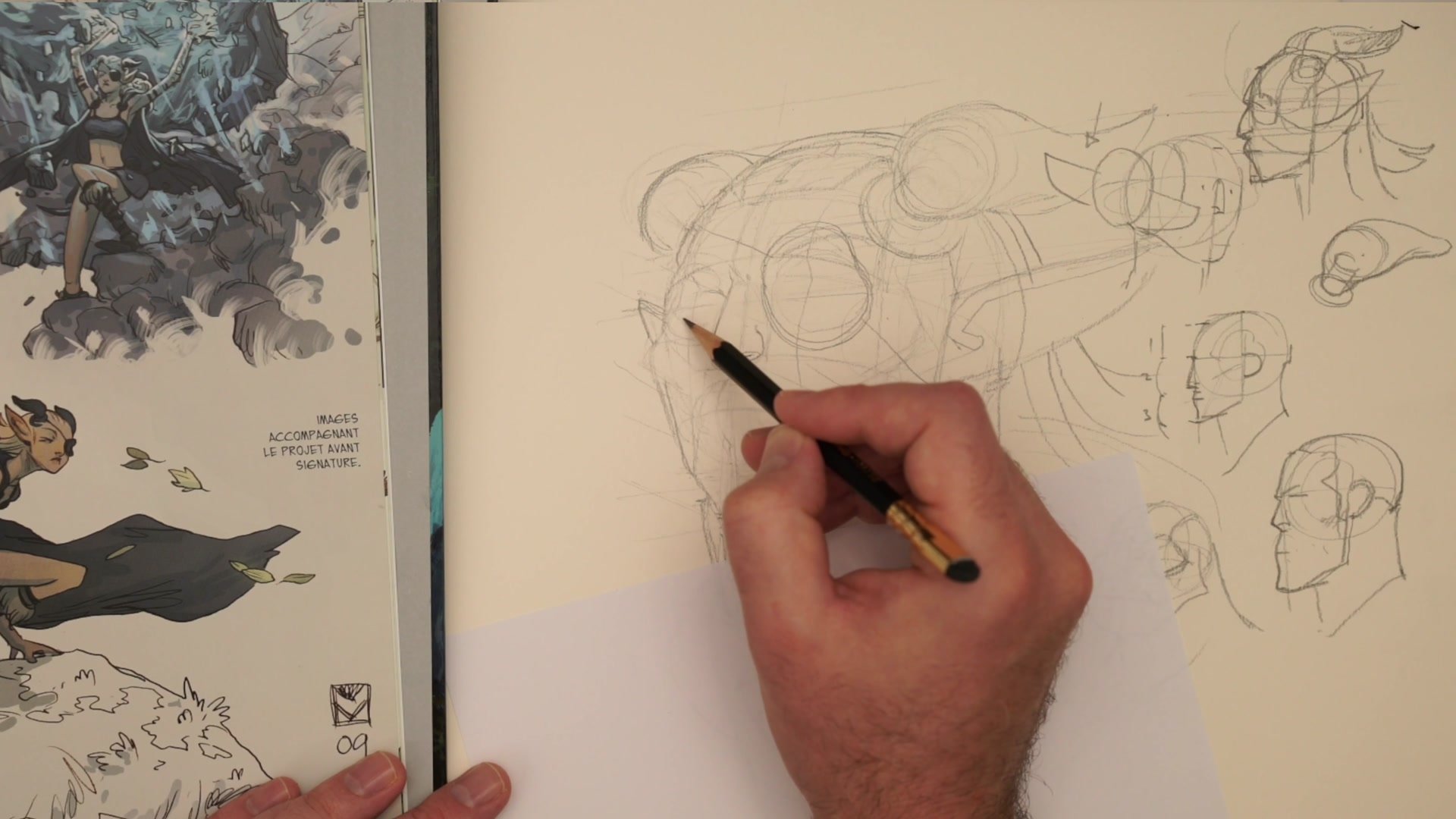
Fantasy features like horns and pointed ears require the same constructive thinking applied to standard facial anatomy. Horns connect to the skull at specific points that need to track dimensionally. Drawing them means breaking them into simple forms: a circle where they attach, a cylinder that rises from it, a sphere at the joint, and the horn extending from there. Transferring these shapes from one side of the head to the other uses the same line-alignment principles that position eyes and ears.
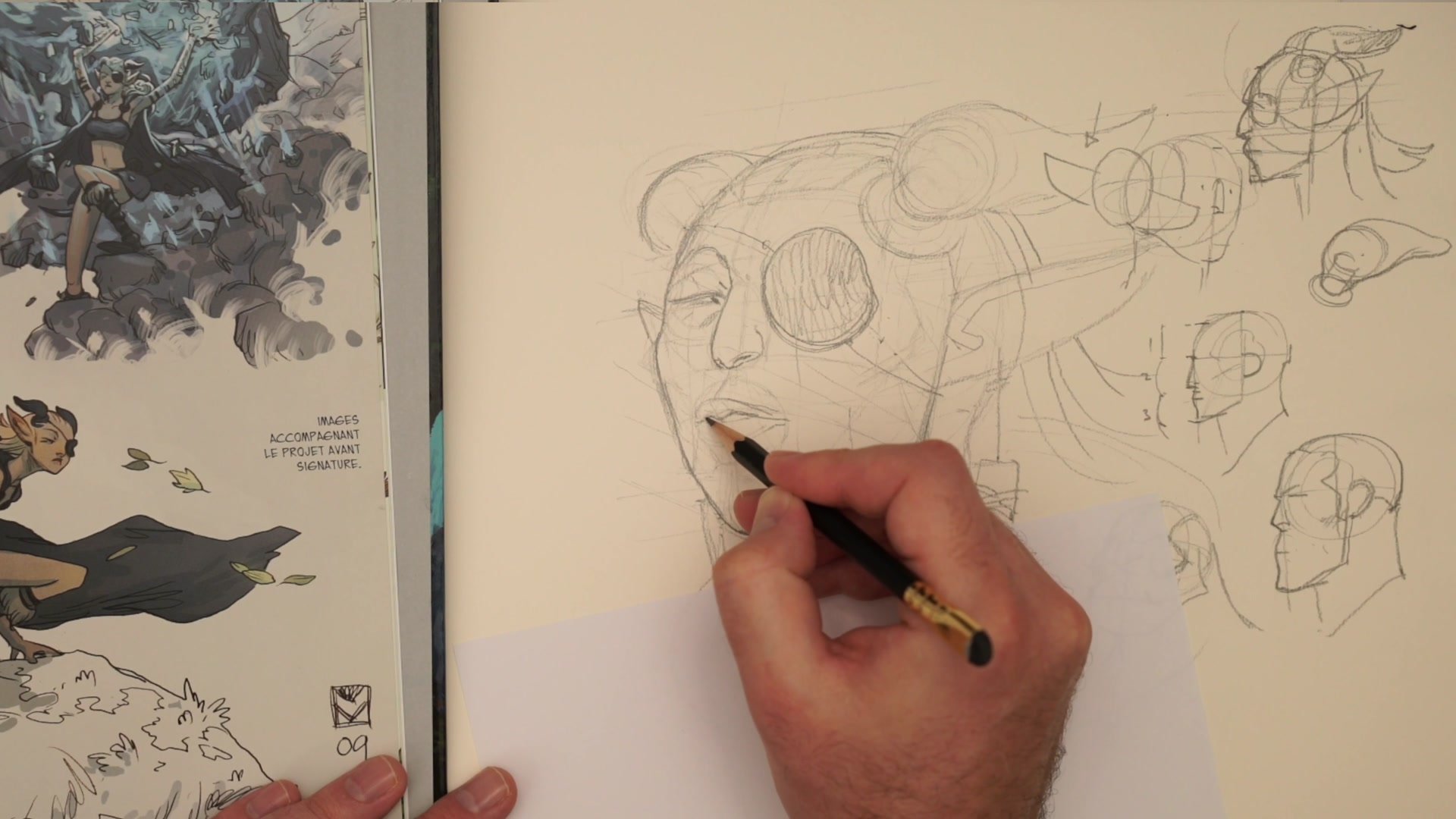
Elf ears present a similar challenge. The key is using existing construction lines on the face to determine where the ear tips align in space. Making sure both ear tips line up with each other, and that the construction wraps around the three-dimensional form of the head, prevents the common problem of features that look pasted on rather than growing from the skull.
Refinement and Detail
Structure Then Character
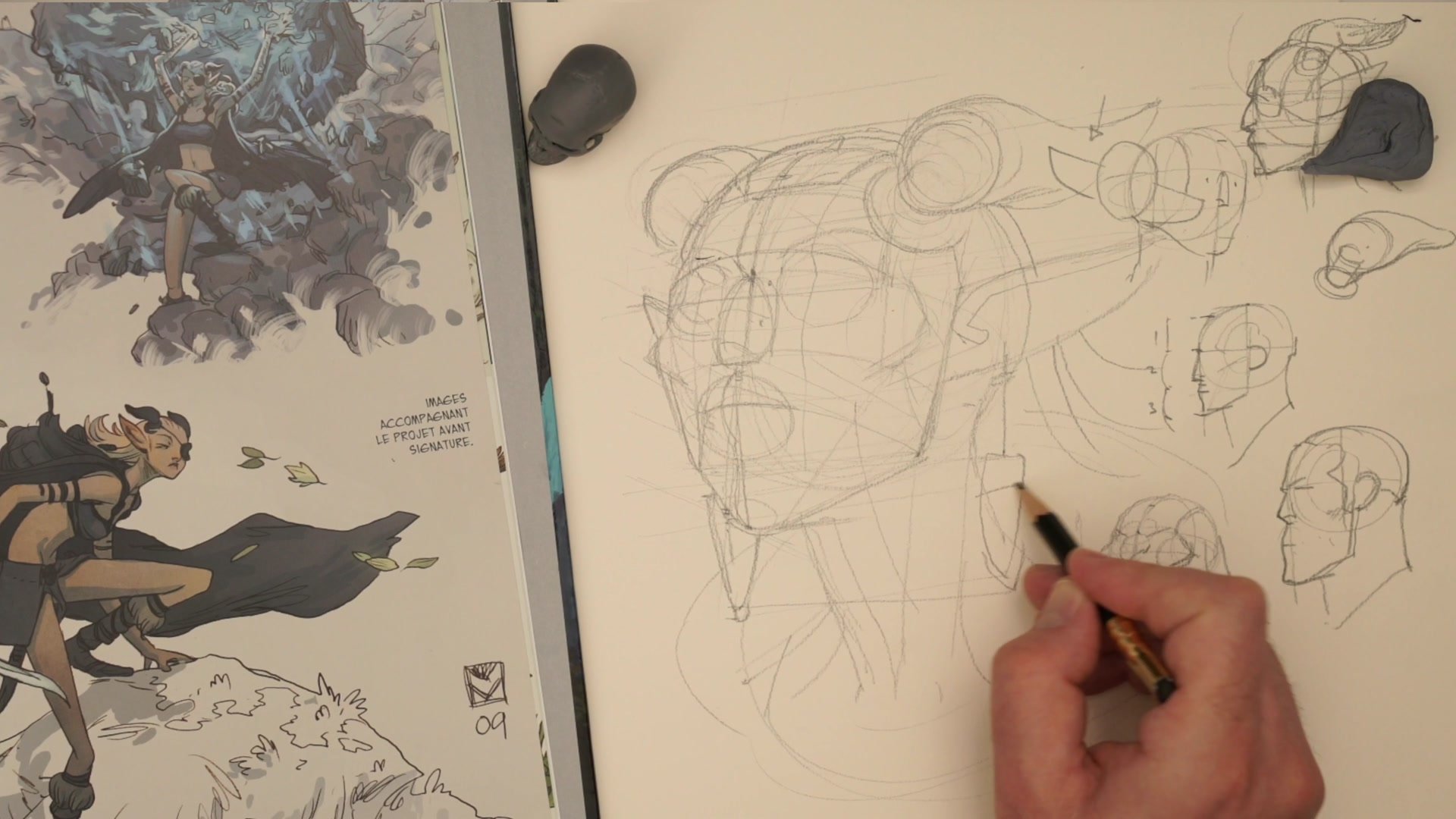
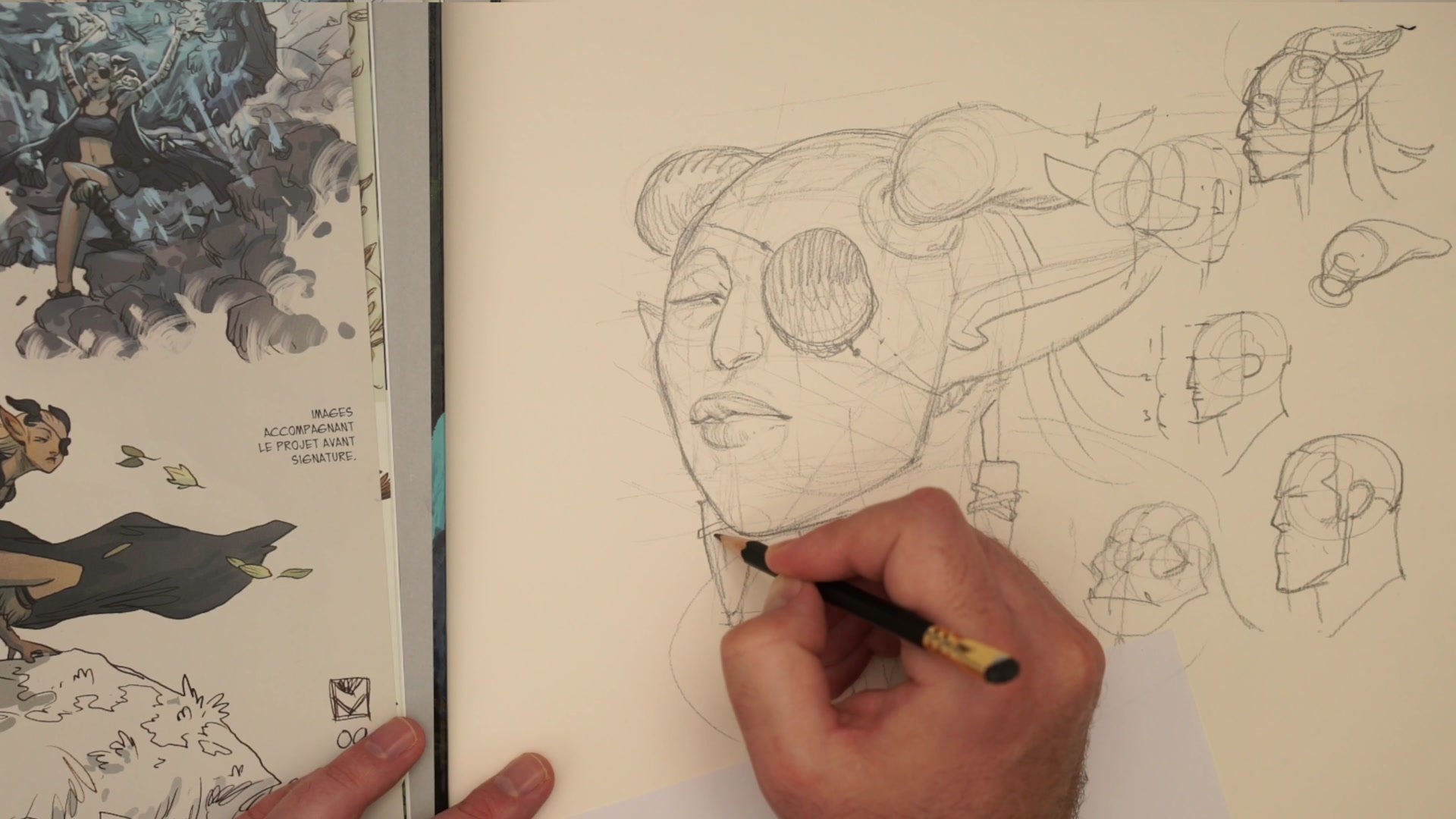
A major challenge with construction drawing is that the structural phase never looks like the finished character. Construction lines create a mechanical-looking scaffold that can be discouraging. The drawing only starts to feel like the character once finished lines, expressions, and details are layered over that structure.
Understanding this two-phase reality changes how construction fits into a workflow. Starting loose and gestural captures character and emotion first, then construction principles true up the proportions. Or starting structural and adding character through refinement. Either direction works because the underlying constructive anatomy knowledge makes it possible to persist confidently through the ugly phase. Before learning construction, redrawing was just guesswork. After, each revision becomes constructive, moving steadily toward the intended result rather than hoping something will click.
Gestural Sketches
Key Principles
Directionality First: The center line and brow point establish where the face is pointing in space. Everything else builds from this single dimensional decision.
Proportions Are Yours to Set: The Loomis framework provides the scaffold, but chin length, nose position, and cheekbone width are stylistic choices that define the character.
Fantasy Features Need Construction: Horns, pointed ears, and non-human elements use the same line-alignment and dimensional tracking as standard facial anatomy.
Construction Enables Confidence: Structural knowledge turns the redrawing process from guesswork into constructive revision, allowing persistence through the rough stages of any drawing.
Practice This
Choose a Character: Pick a fantasy character with non-standard facial features such as horns, unusual ears, or exaggerated proportions.
Build the Scaffold: Start with the Loomis sphere and center line, then set custom proportions that match the character type rather than defaulting to standard human ratios.
Add Fantasy Elements: Use simple forms like cylinders and spheres to construct horns or ears, and align them dimensionally using the construction lines already on the face.