Learning to Draw The Zora
Summary
Constructive Anatomy for Fantasy Characters
Constructive anatomy is typically taught using standard human heads. Spheres, brow lines, proportional divisions. The Loomis method works, but most instruction never shows what happens when the subject has a fish for a head. The Zora from Zelda: Breath of the Wild present exactly this challenge. They combine recognizable human proportions with fish anatomy that replaces and extends familiar landmarks.
This is where construction drawing proves its real value. The same structural principles that map a human skull apply to the Zora because a human skull is still underneath the design. Finding that base structure, establishing center lines, and building dimensional forms from primary shapes transfers directly from textbook exercises to fantasy characters. The method adapts because it is built on geometry and spatial relationships, not on specific anatomy.
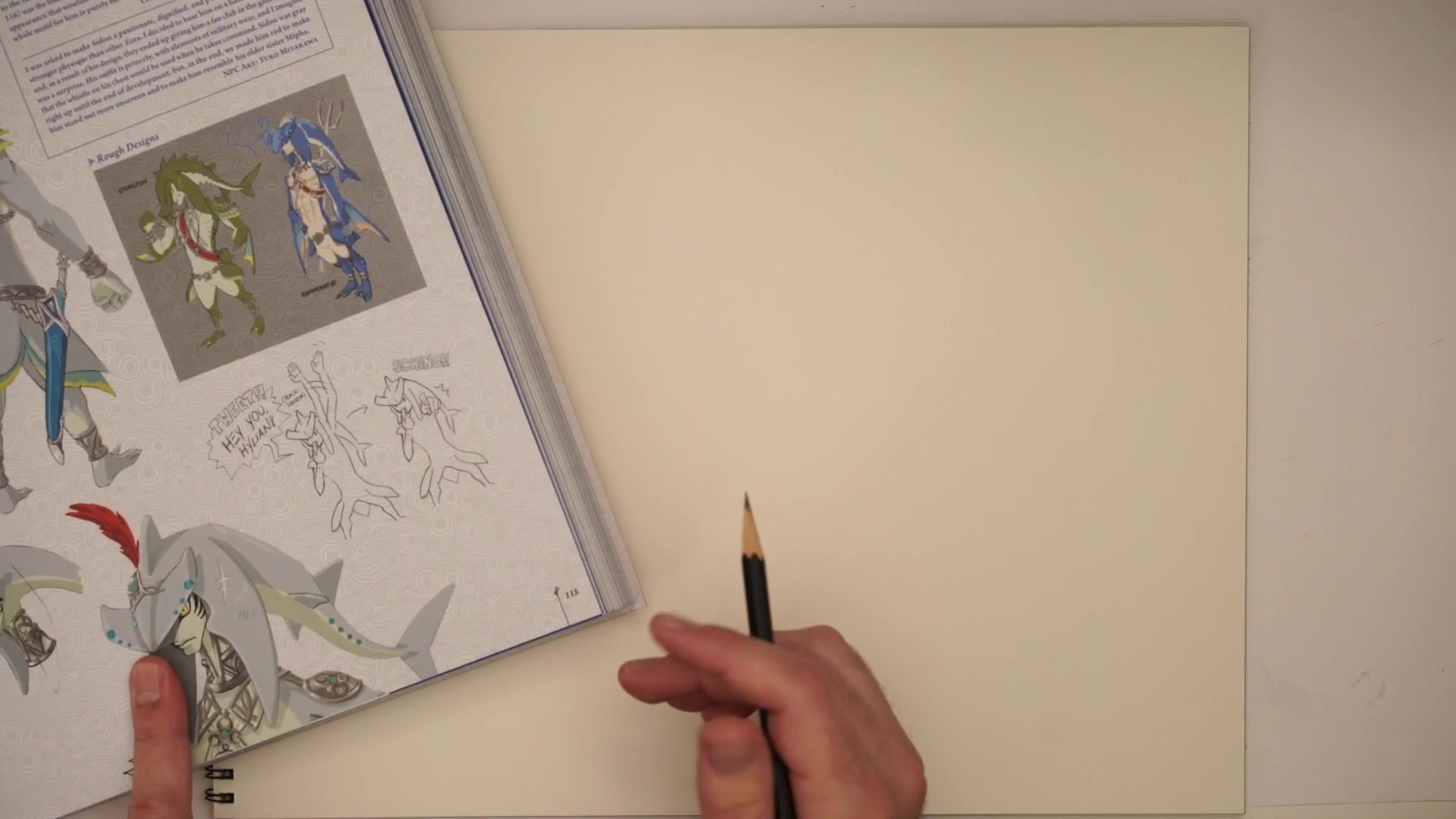
Reference and Initial Setup
Finding the Human Structure
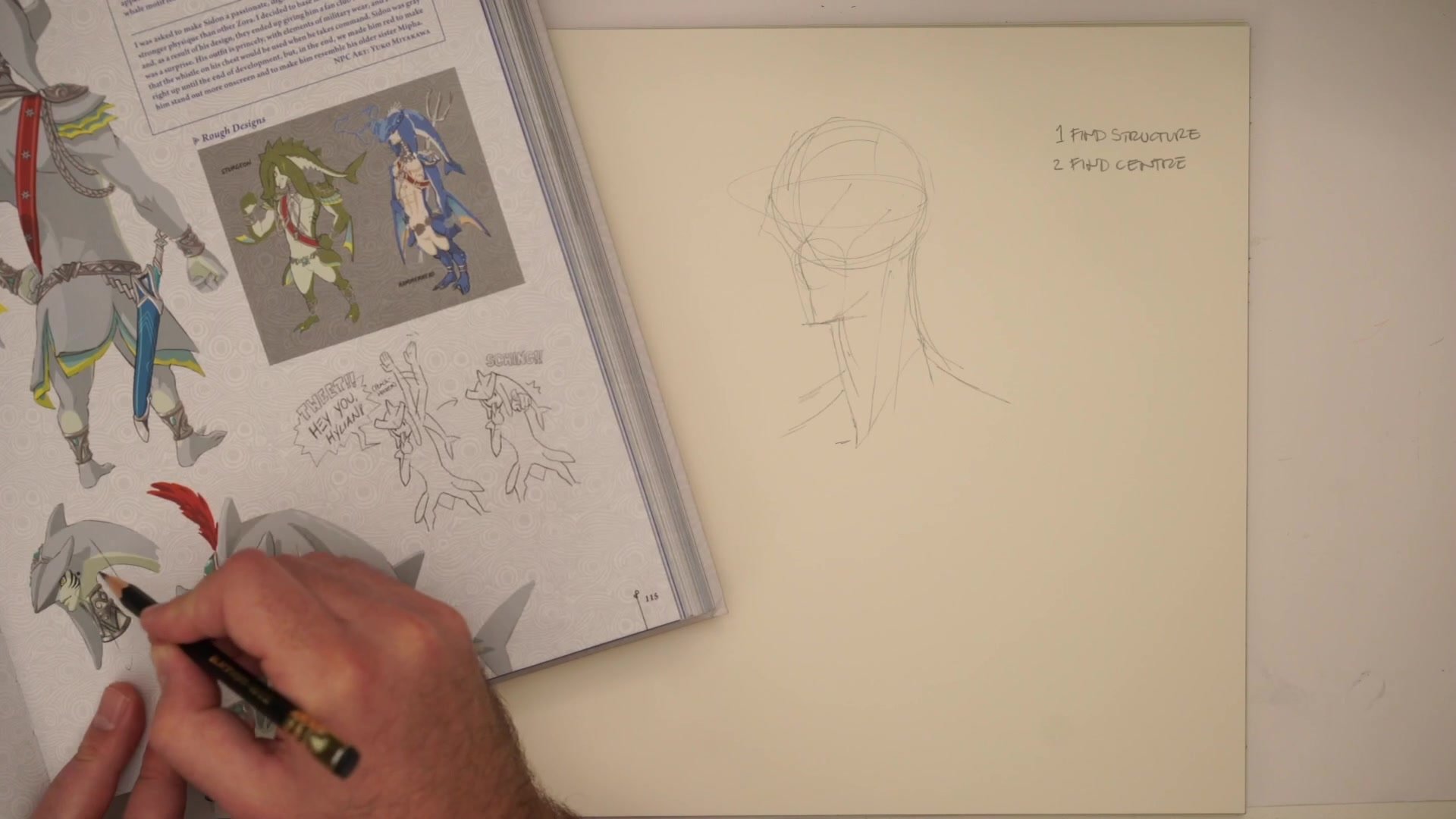
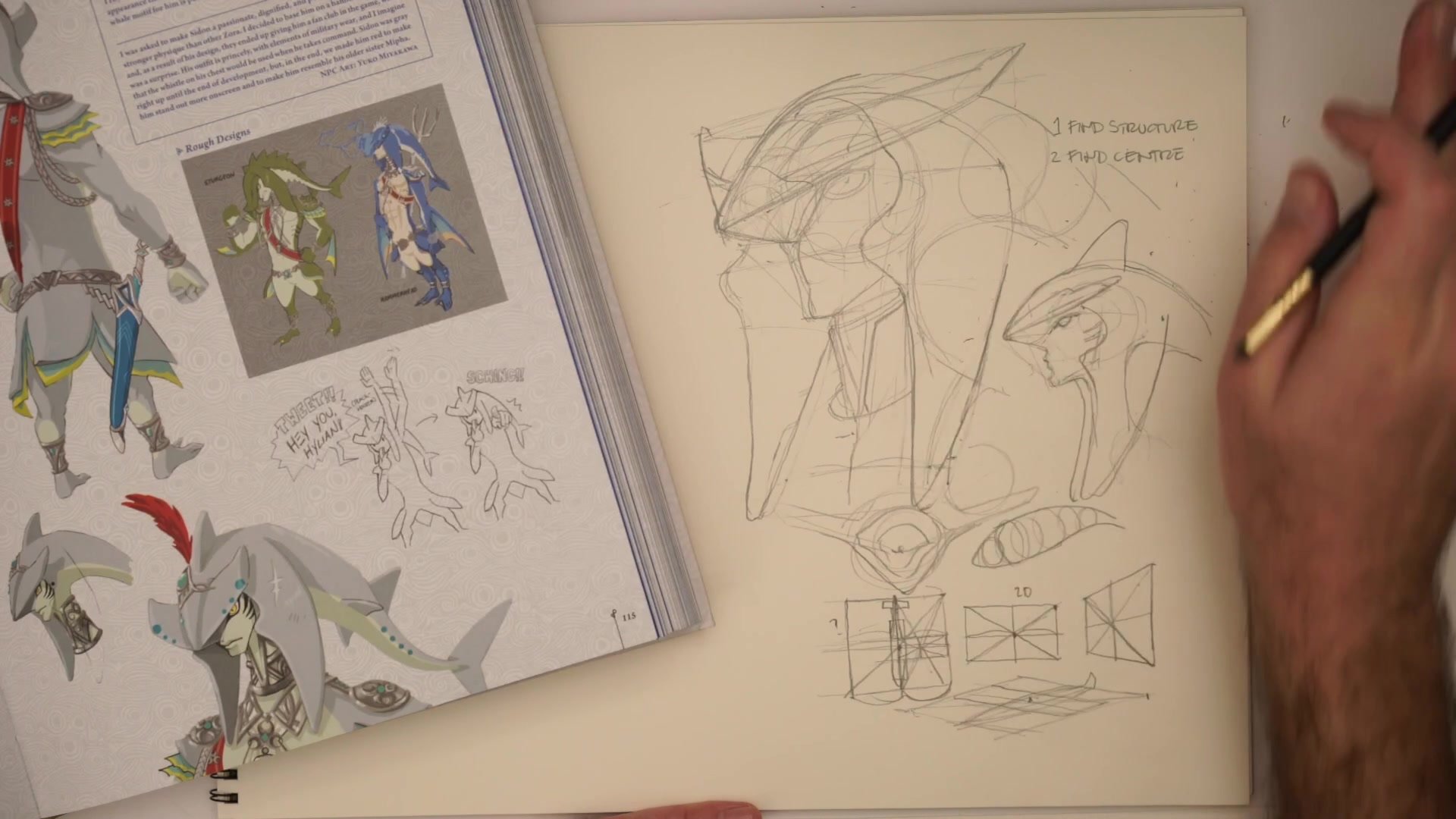
The Zora design starts with recognizable human anatomy. Despite the fish head, there is still a skull underneath. The proportions reveal where human structure remains and where modifications begin. The neck stretches almost one full head length from chin to clavicle, much longer than typical human proportions. This elongation creates that regal bearing specific to the character.
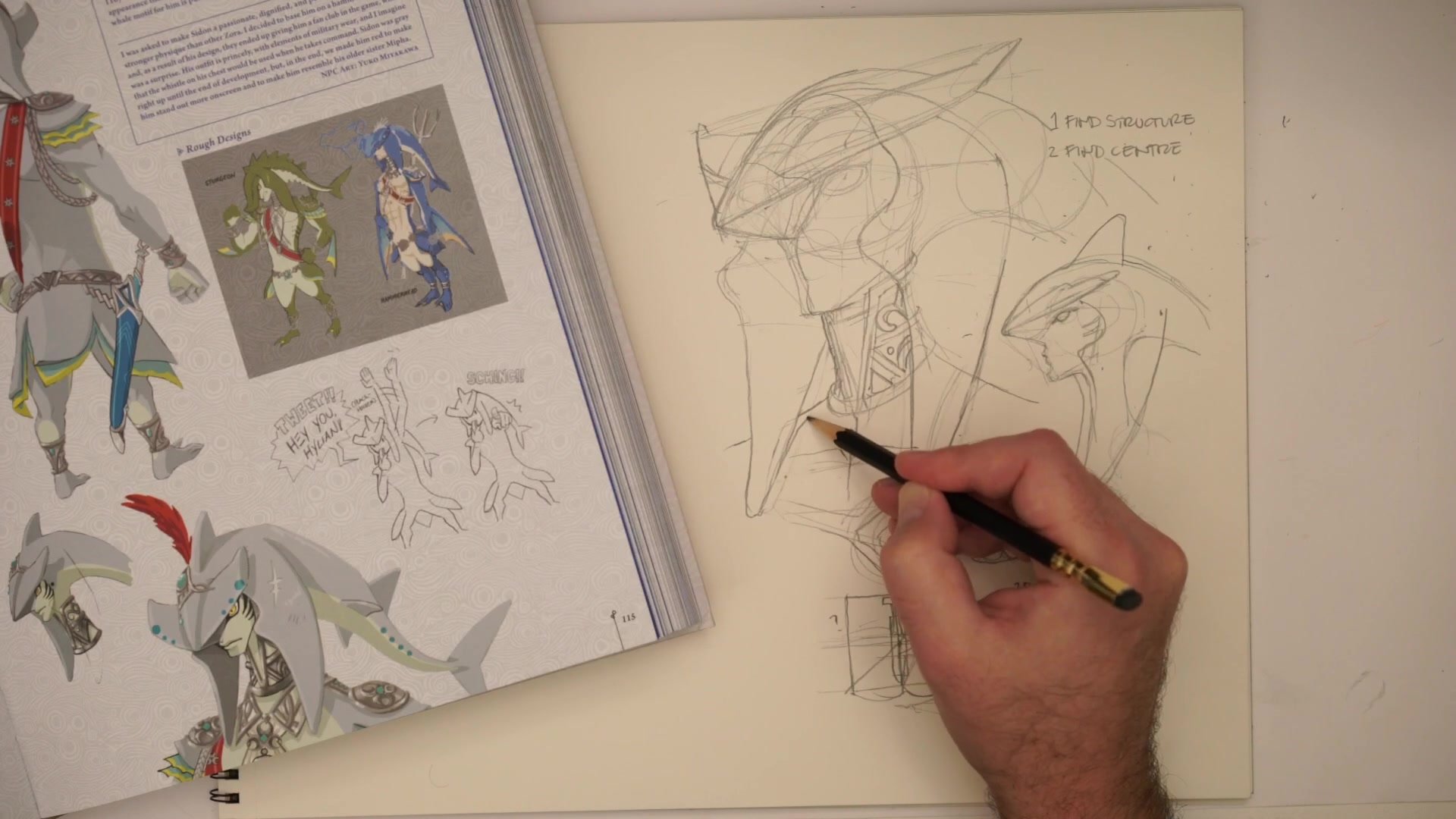
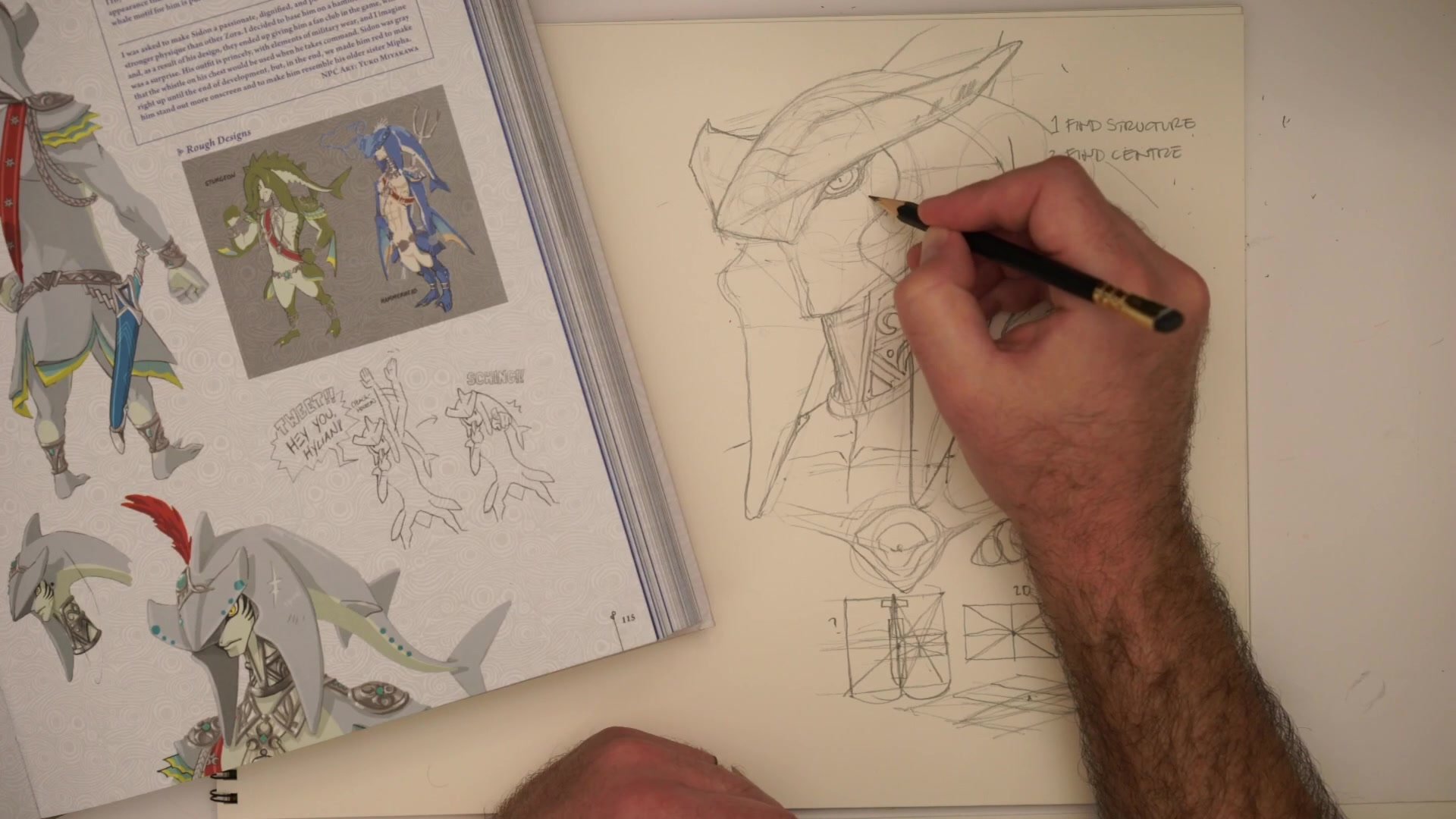
The face retains standard division points. Where a nose would start, the fish protrusion begins instead. The mouth area keeps that characteristic mound with slightly stylized, manga-influenced lips. The eyes sit roughly where human eyes would, just below the brow line. These landmarks provide the construction framework. What remains human helps navigate what changes. Construction begins conventionally, establishing where the skull sits and finding the center line, then the fantasy modifications build logically from that base.
Head Construction and Side Analysis
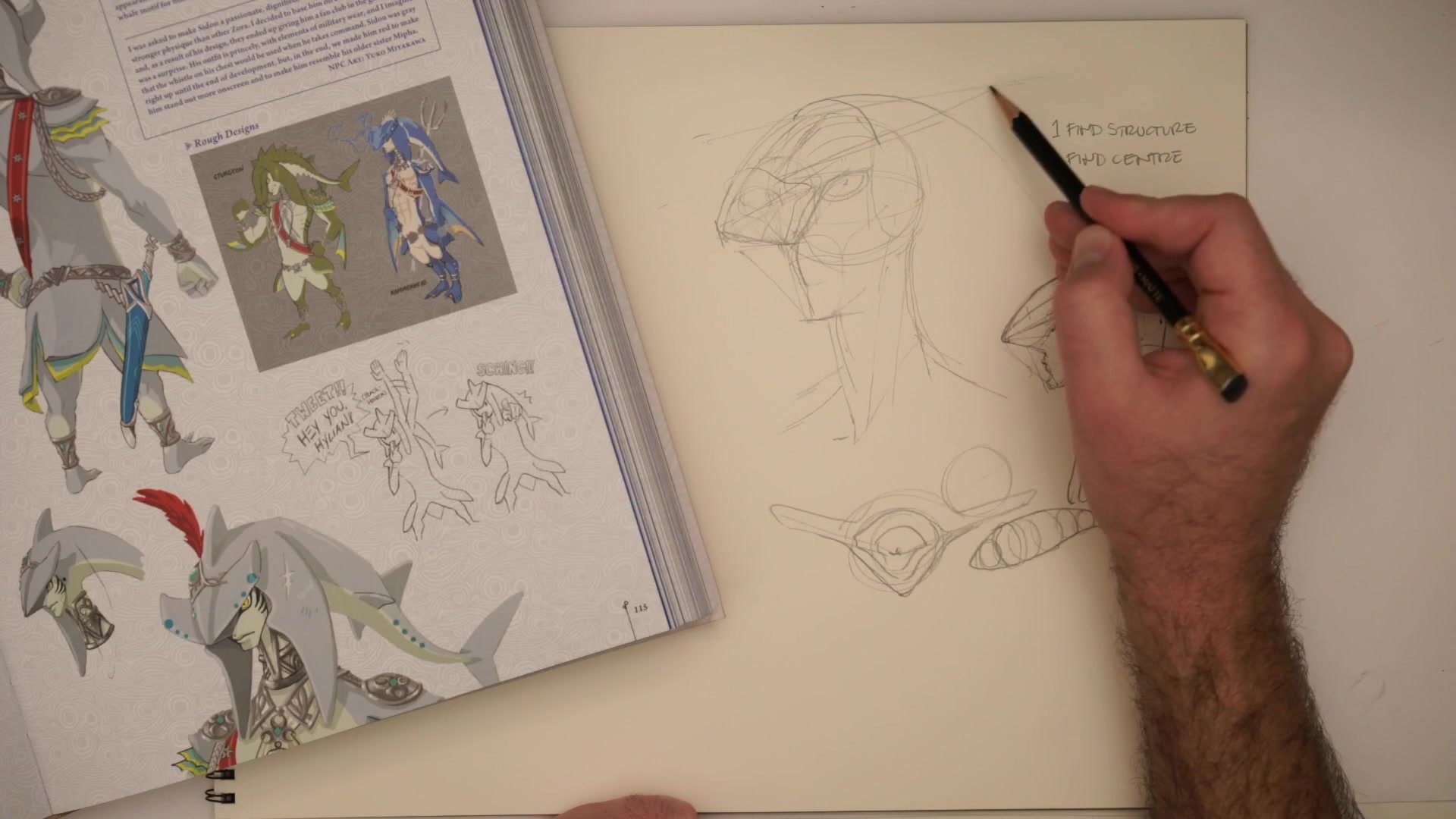
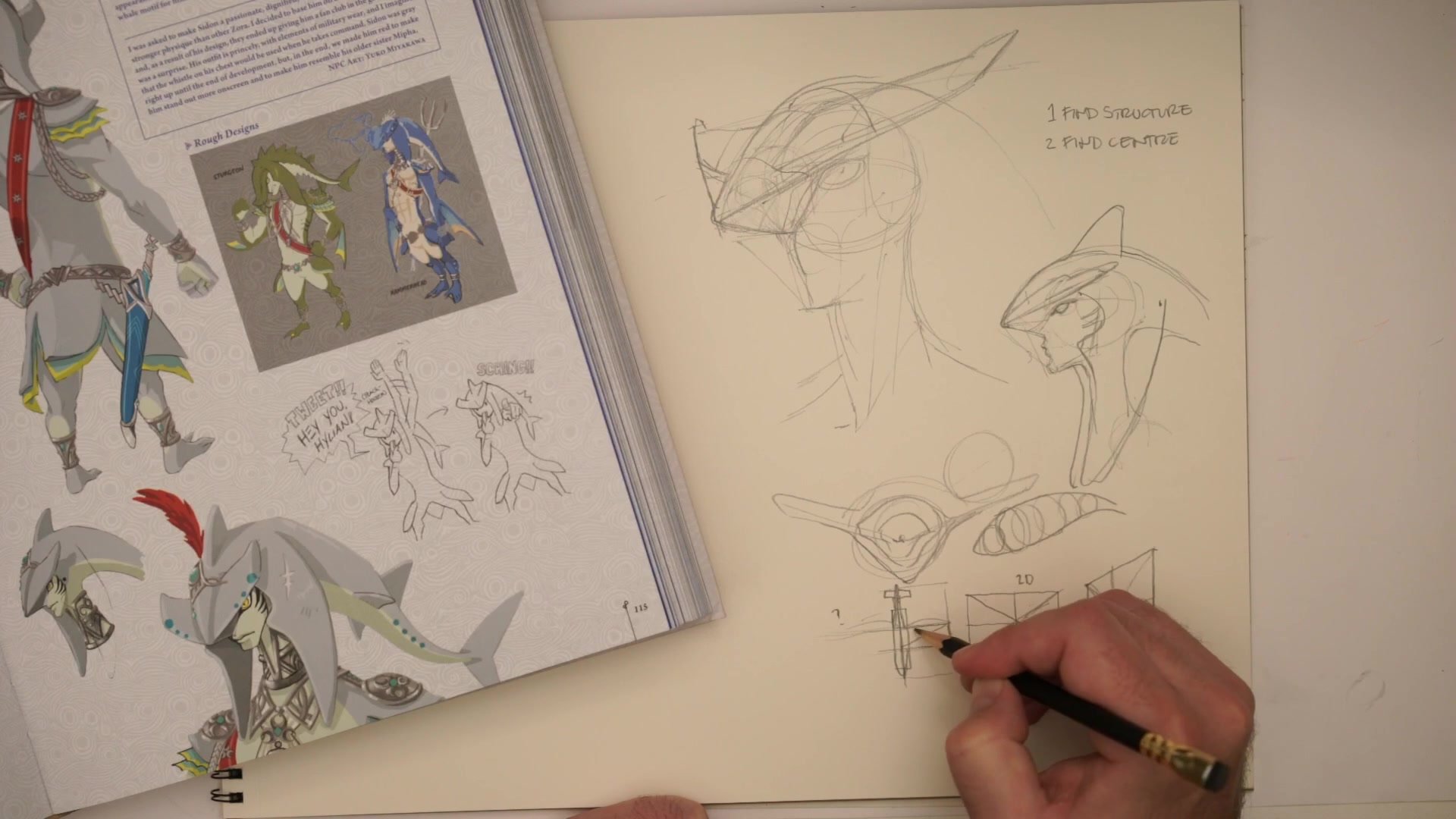
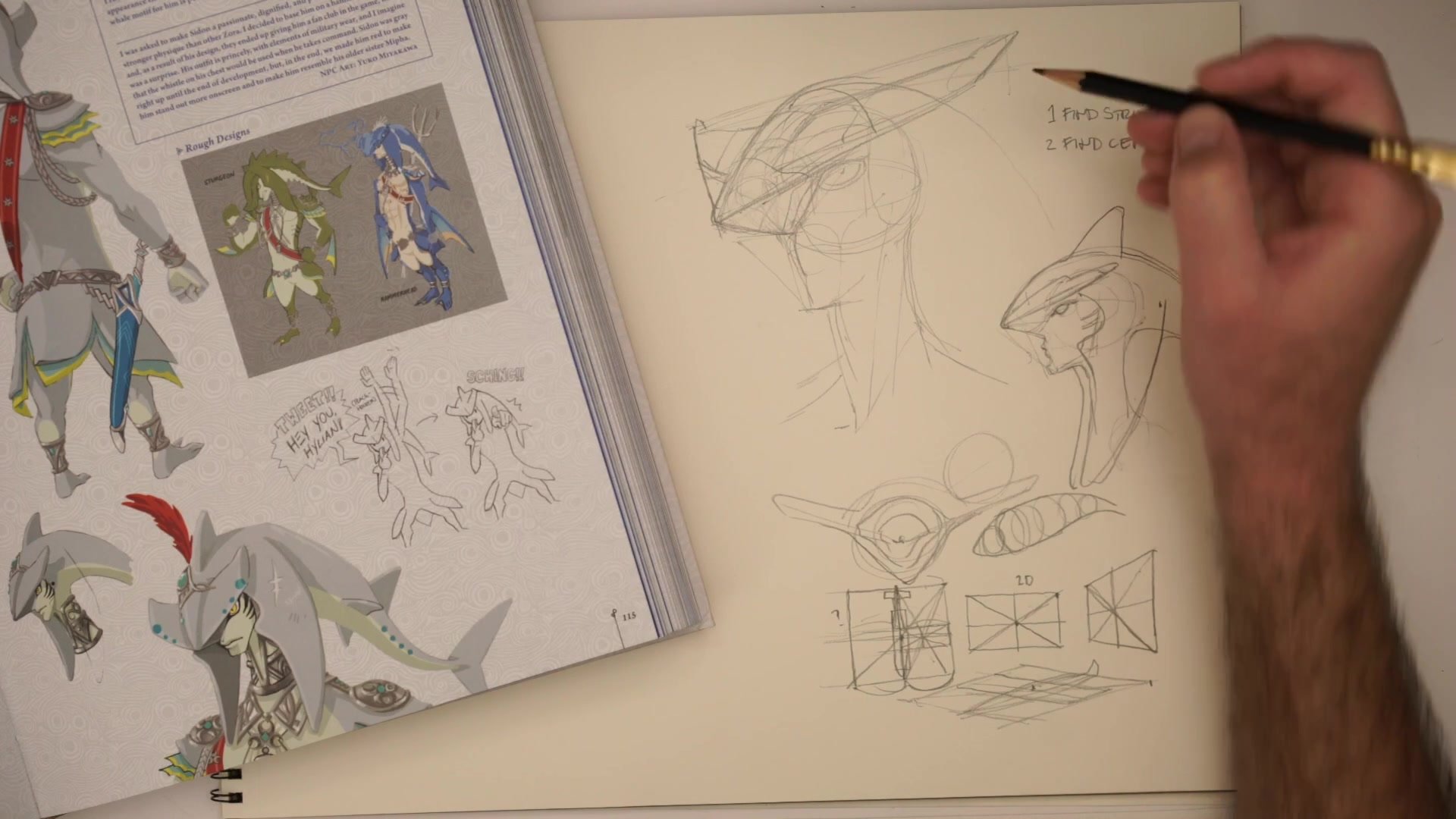
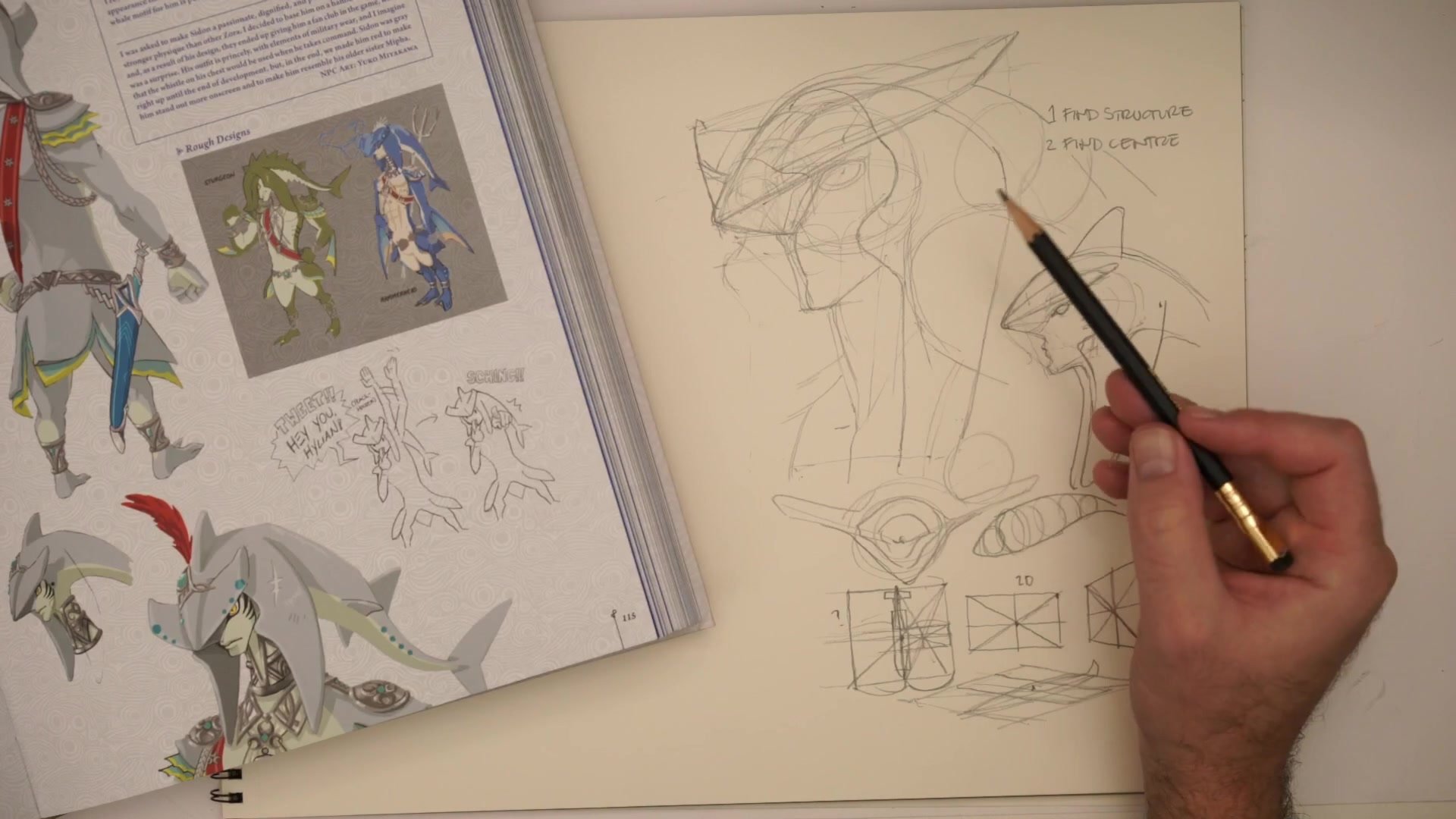
Building Forms Dimensionally
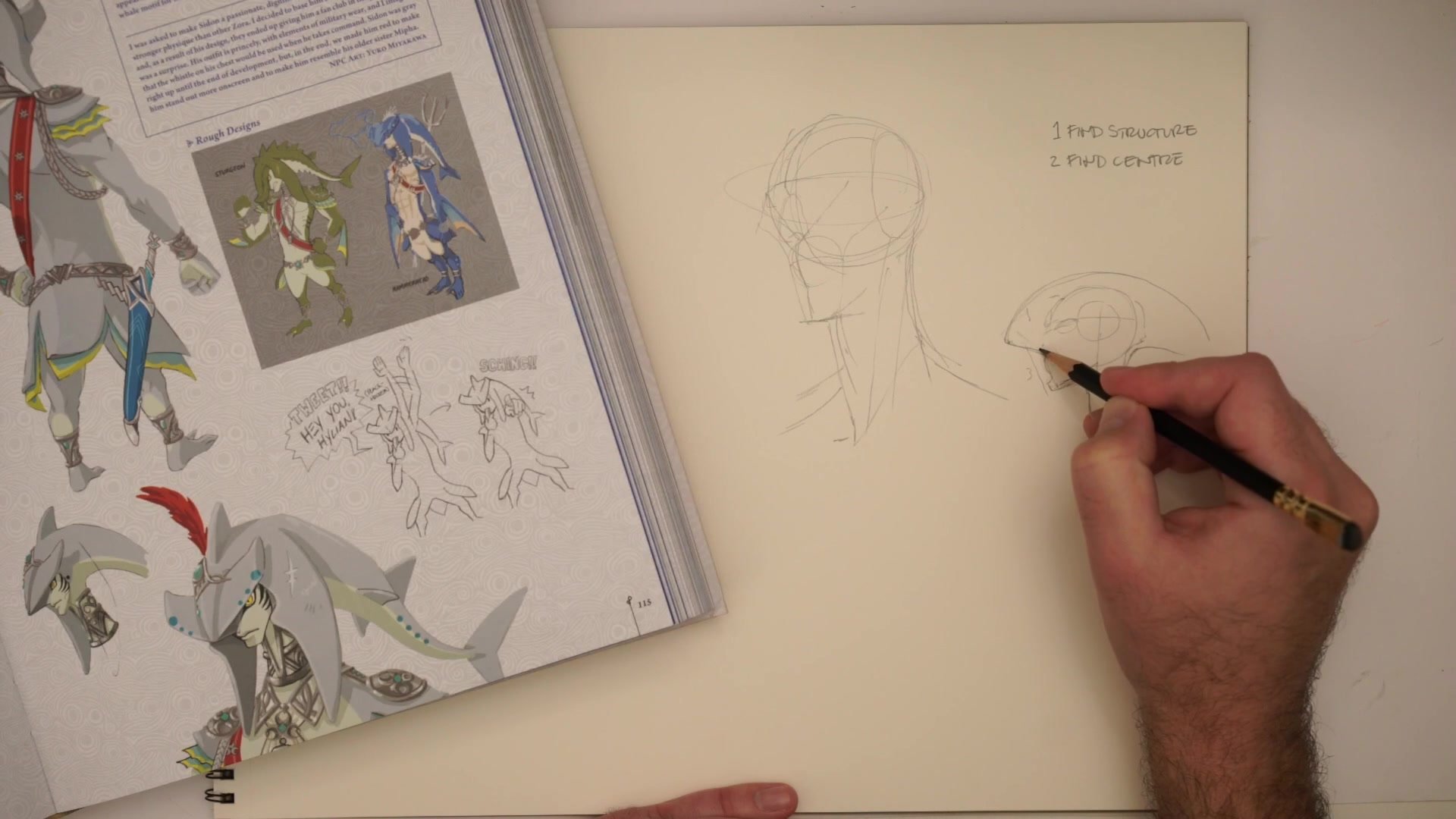
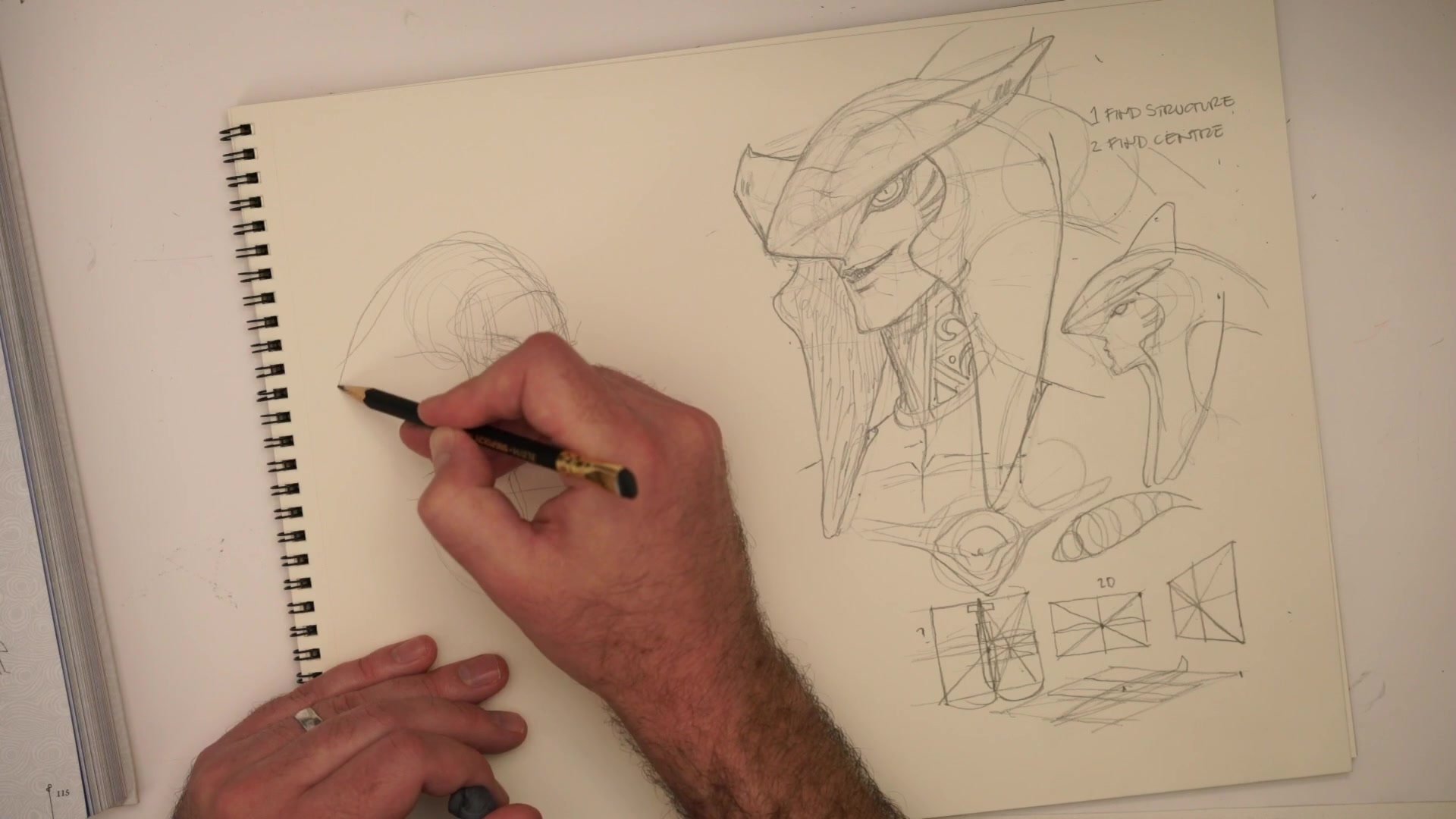
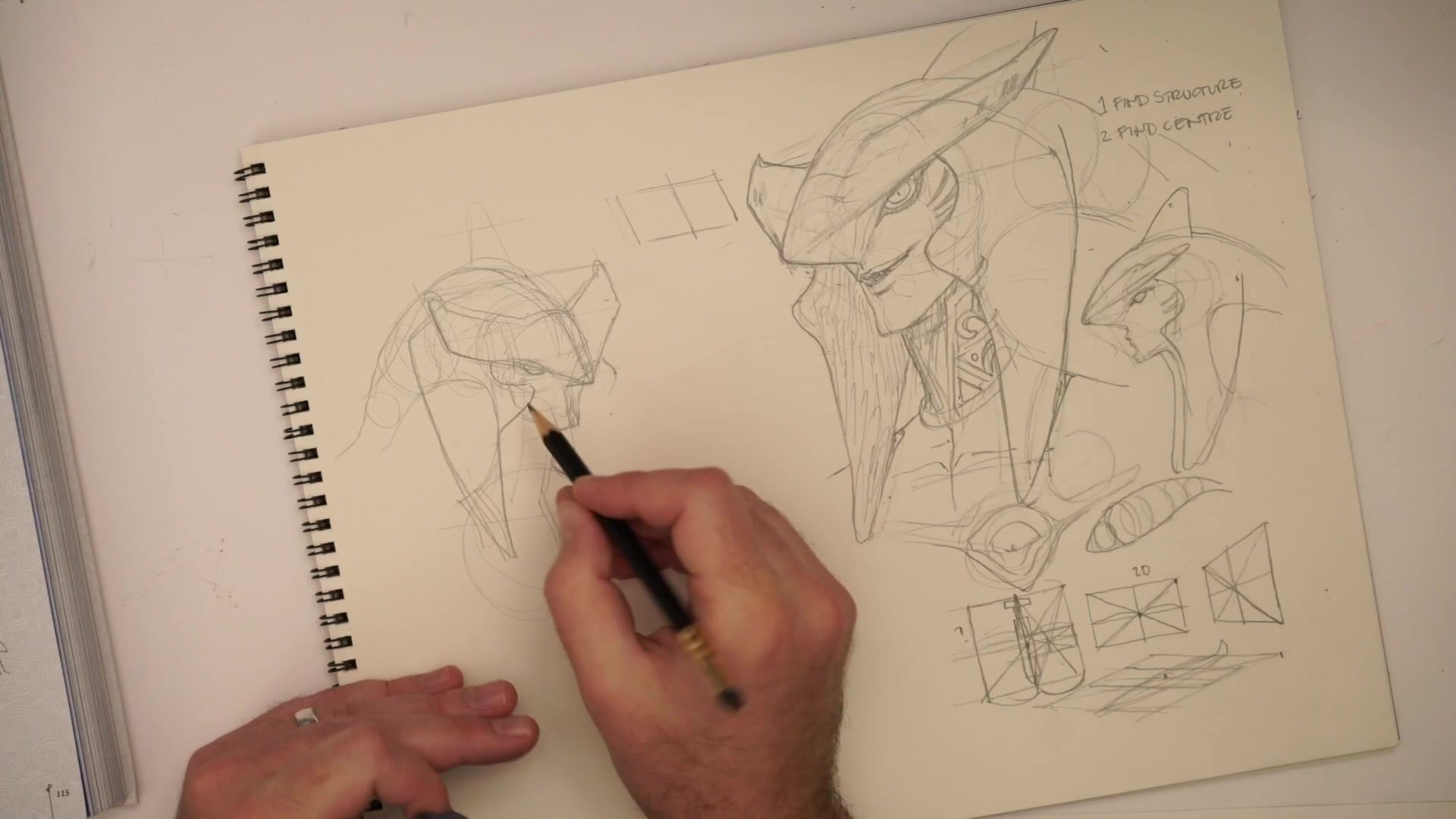
The fish head extension works like a cylinder projecting forward from the skull, with hammerhead-like protrusions on the sides. Thinking of these elements as airplane wings provides a useful starting mental model. Simple shapes that can be measured and replicated in space using straight-line relationships between points.
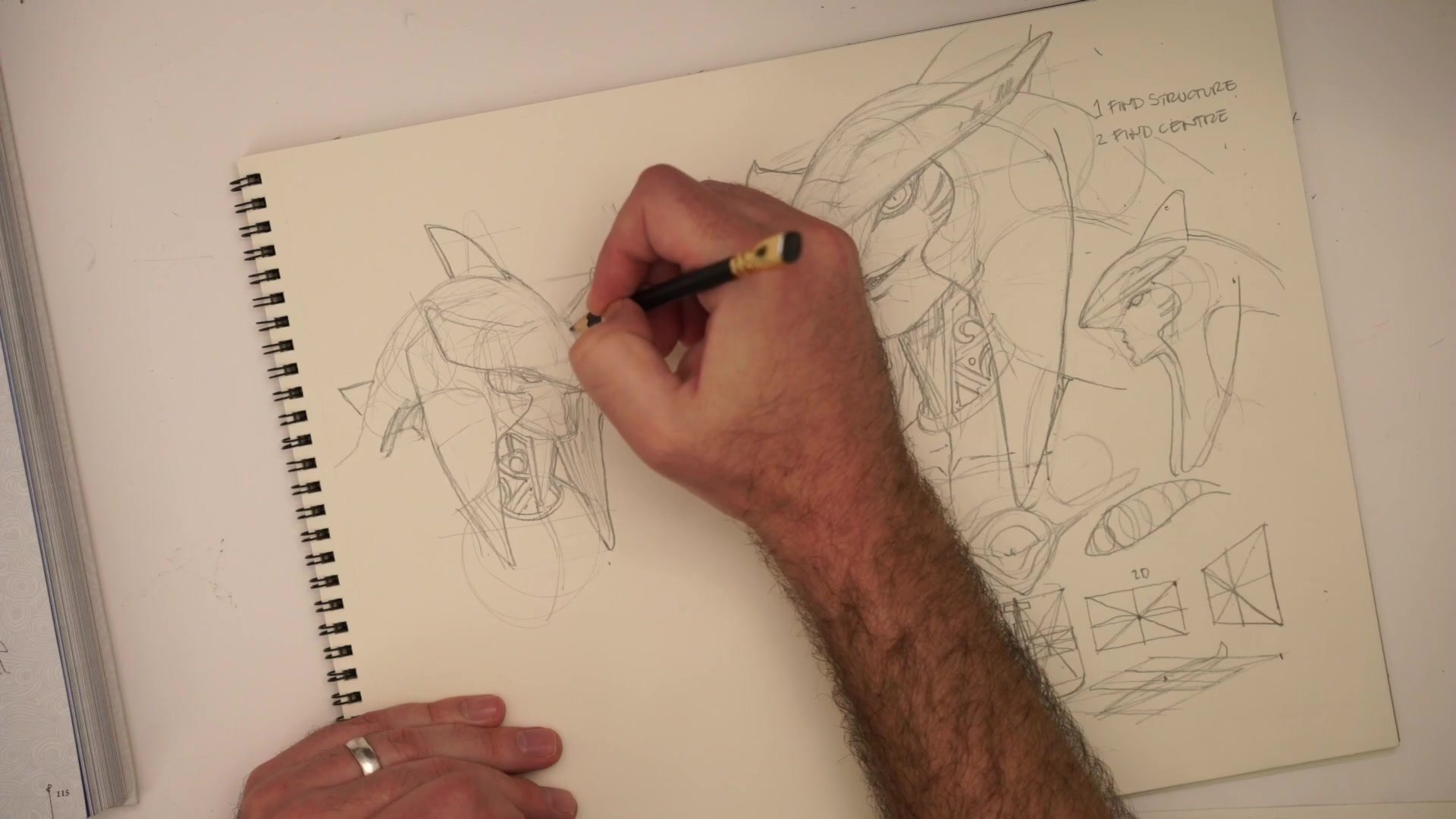
If something can be measured in two dimensions with straight lines, those same measurements transfer to three dimensions. Finding where a fin attaches on one side, where it touches the chest, allows projecting that spatial measurement across to locate the opposite side. The center line becomes critical for this process. Every asymmetric feature orients to it: the fish mouth, side fins, chest decorations, necklace elements. Tracking center lines through the form reveals where features sit even from difficult angles. This guesstimation process, tracking a few spatial relationships mentally while feeling out the form, becomes more accurate with each construction exercise completed.
Dimensional Construction and Detail
Construction Builds Intuition
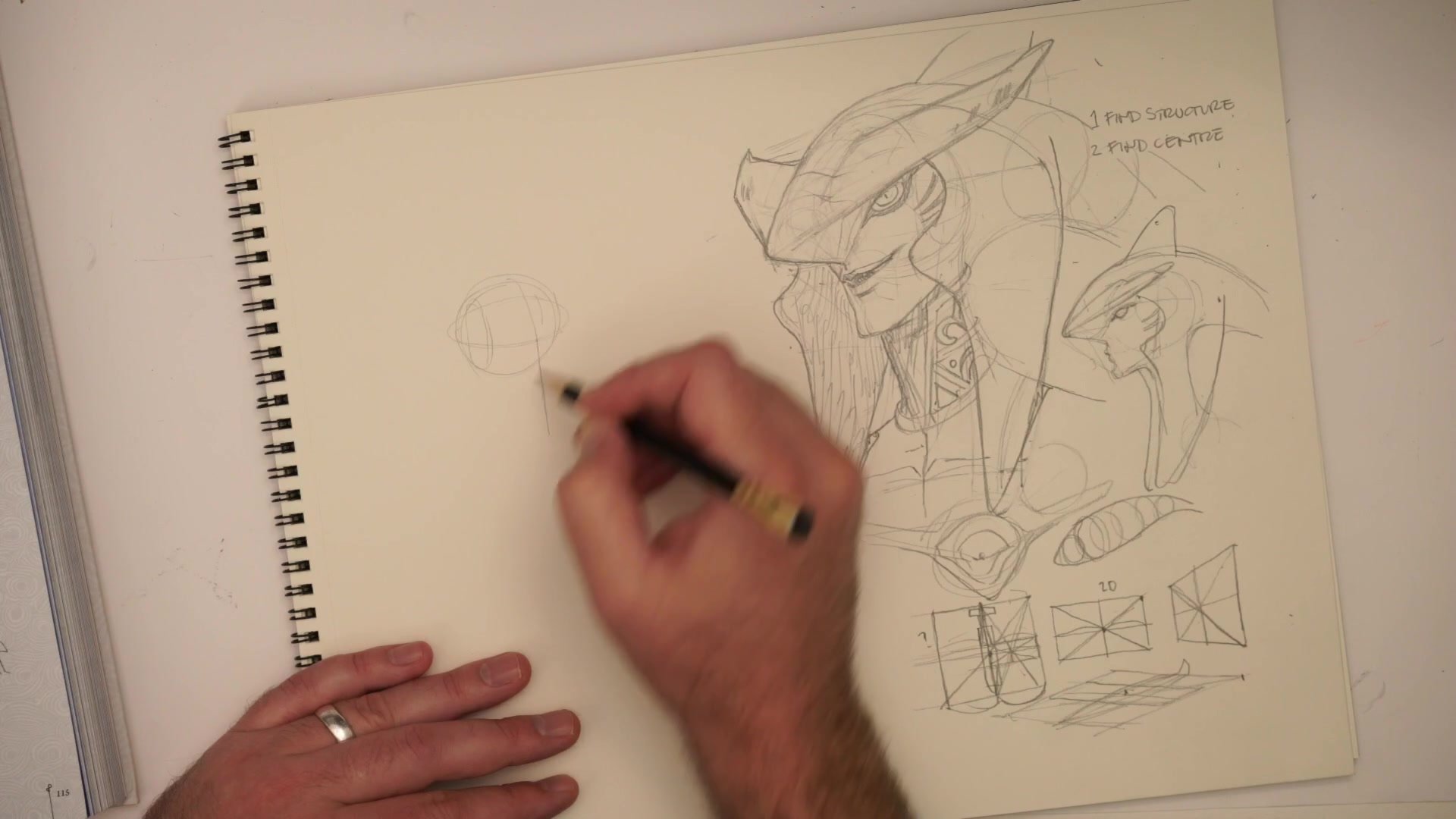
The counterintuitive truth about constructive anatomy is that the goal is to eventually not need it. The deliberate technical work of drawing through forms, measuring spatial relationships, and repeating exercises develops an internal model that takes over during actual drawing. What starts as careful measurement evolves into educated guesstimation.
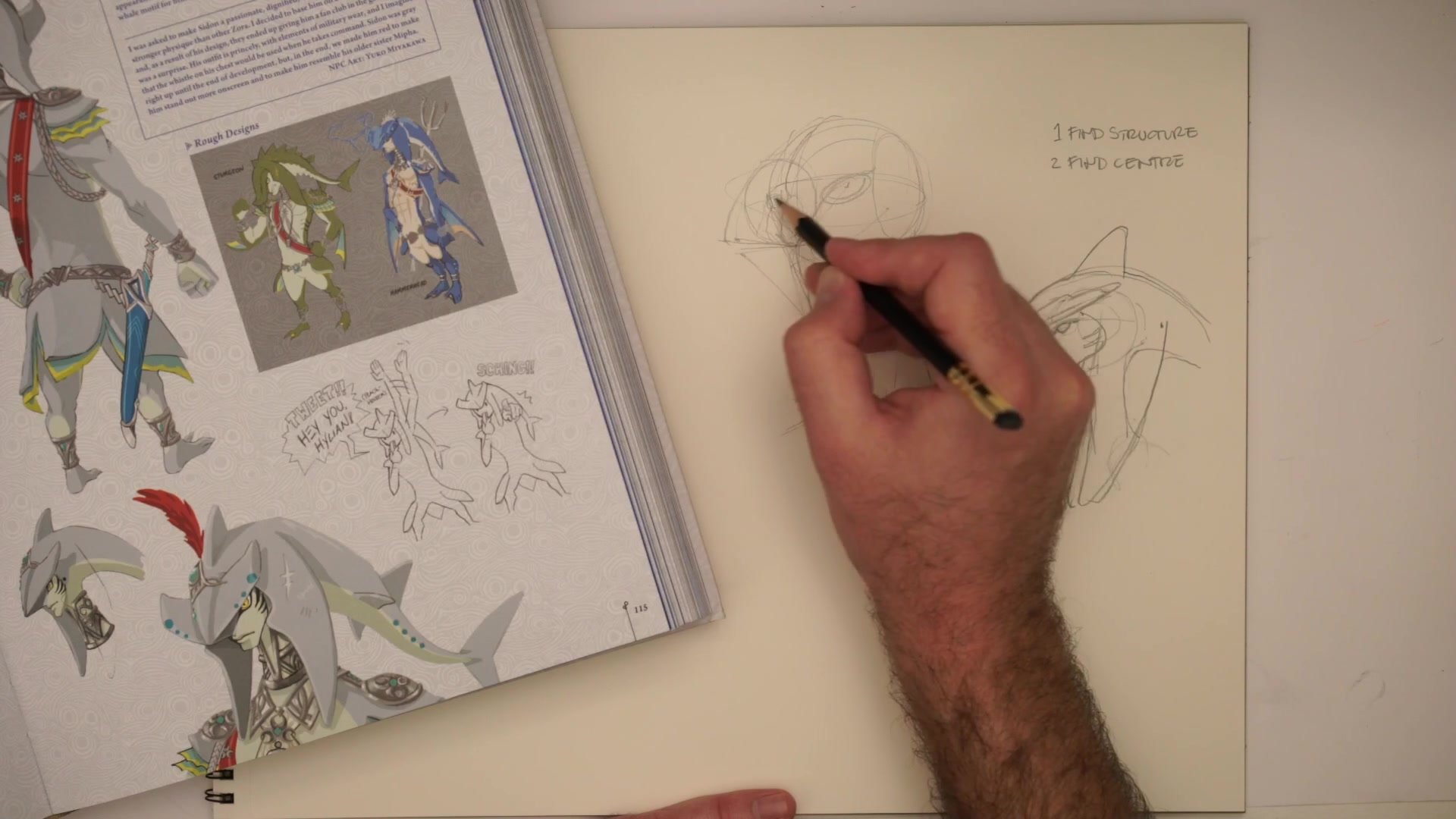
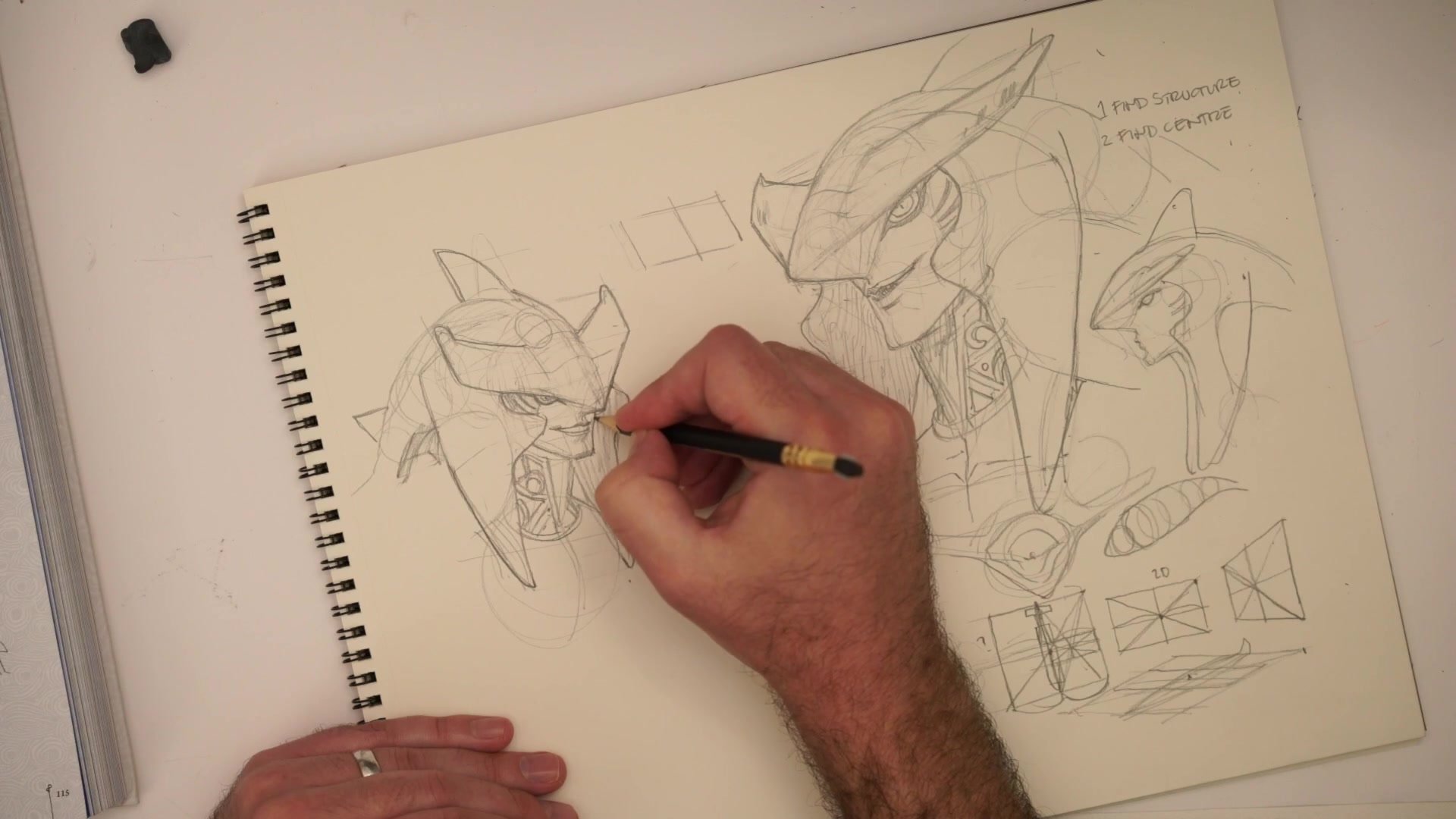
The second half of this demonstration shows this transition in practice. The same Zora construction is attempted from a different angle with increasing speed, using fewer construction lines each time. Finding center, roughing in primary masses, guesstimating where structural elements fall in space. The process becomes a mix of feeling out the form and adding structure where needed. Small structural choices in the design, the elongated neck, the high placement of chest fins, the specific proportions of the fish head, create the distinctive presence that makes the character work. Understanding these choices through construction reveals what structural elements matter in original work.
Quick Sketches from Multiple Angles
Key Principles
Find Structure First: Locate the human skull underneath the stylized design before attempting any fantasy modifications. The standard Loomis construction provides the base framework even for fish-headed characters.
Center Line Drives Everything: The center line determines placement of all asymmetric features across the form. Track it through curves and around structural elements to maintain dimensional accuracy.
Measure in 2D, Transfer to 3D: If spatial relationships can be measured with straight lines in two dimensions, those same lines work for replicating distances in three-dimensional construction.
Guesstimation Is the Goal: Deliberate construction practice builds the spatial understanding that eventually becomes intuitive. The boring technical work creates the foundation for confident freehand drawing.
Practice This
Pick a Stylized Character: Choose any character from games, animation, or comics with non-human anatomy. Identify the human structure that remains underneath the design modifications.
Construct from Reference: Draw the character focusing on center lines and structural landmarks rather than surface details. Map where the skull sits, where the spine connects, what proportions are recognizable.
Attempt a New Angle: Using only the construction understanding built from the reference angle, attempt drawing the character from a different viewpoint. This tests whether spatial relationships have been internalized.