Draw With Me - Elf Girl Warm-Up Sketch
Summary
Warm-Up Sketching Session
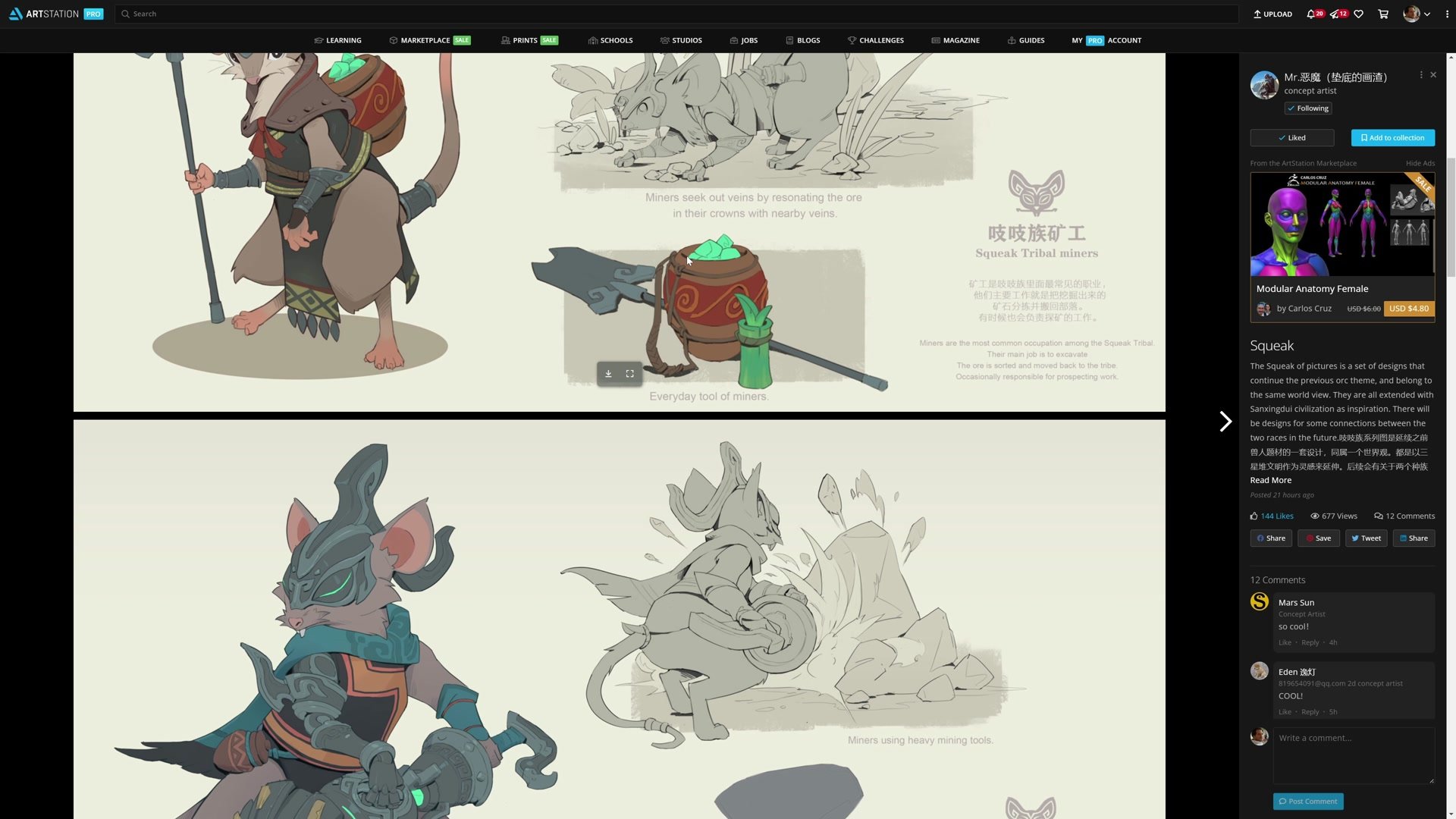
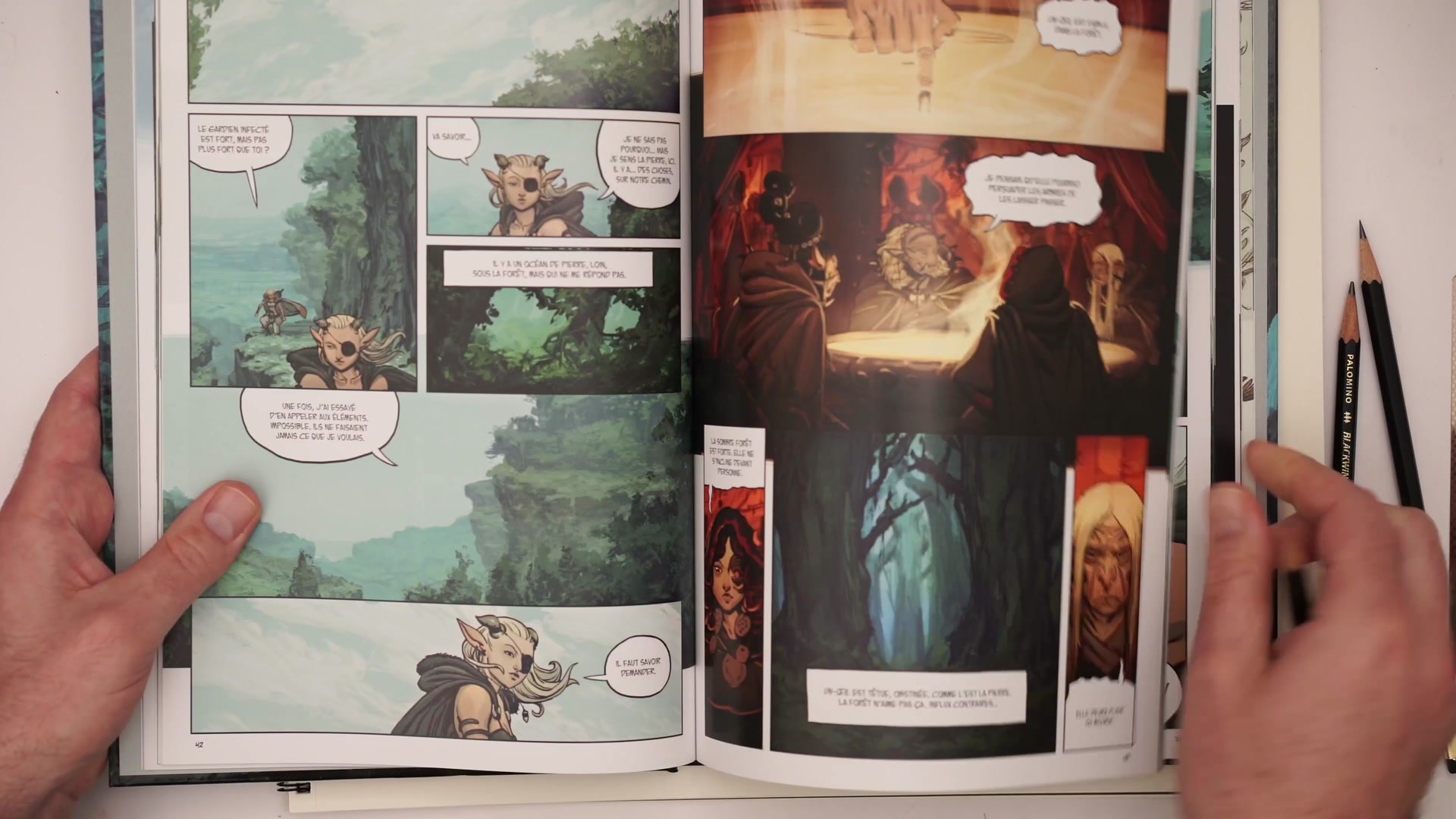
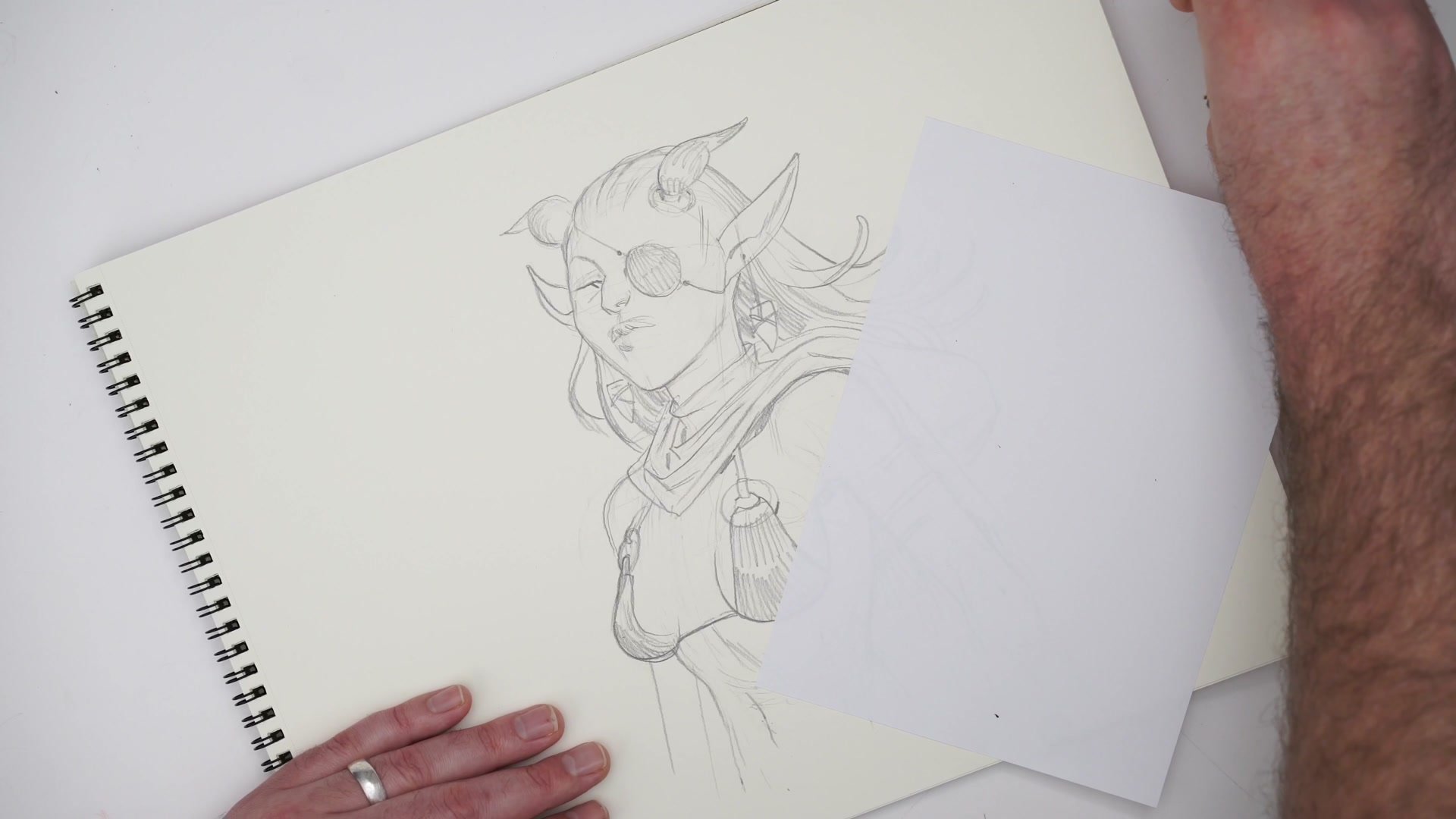
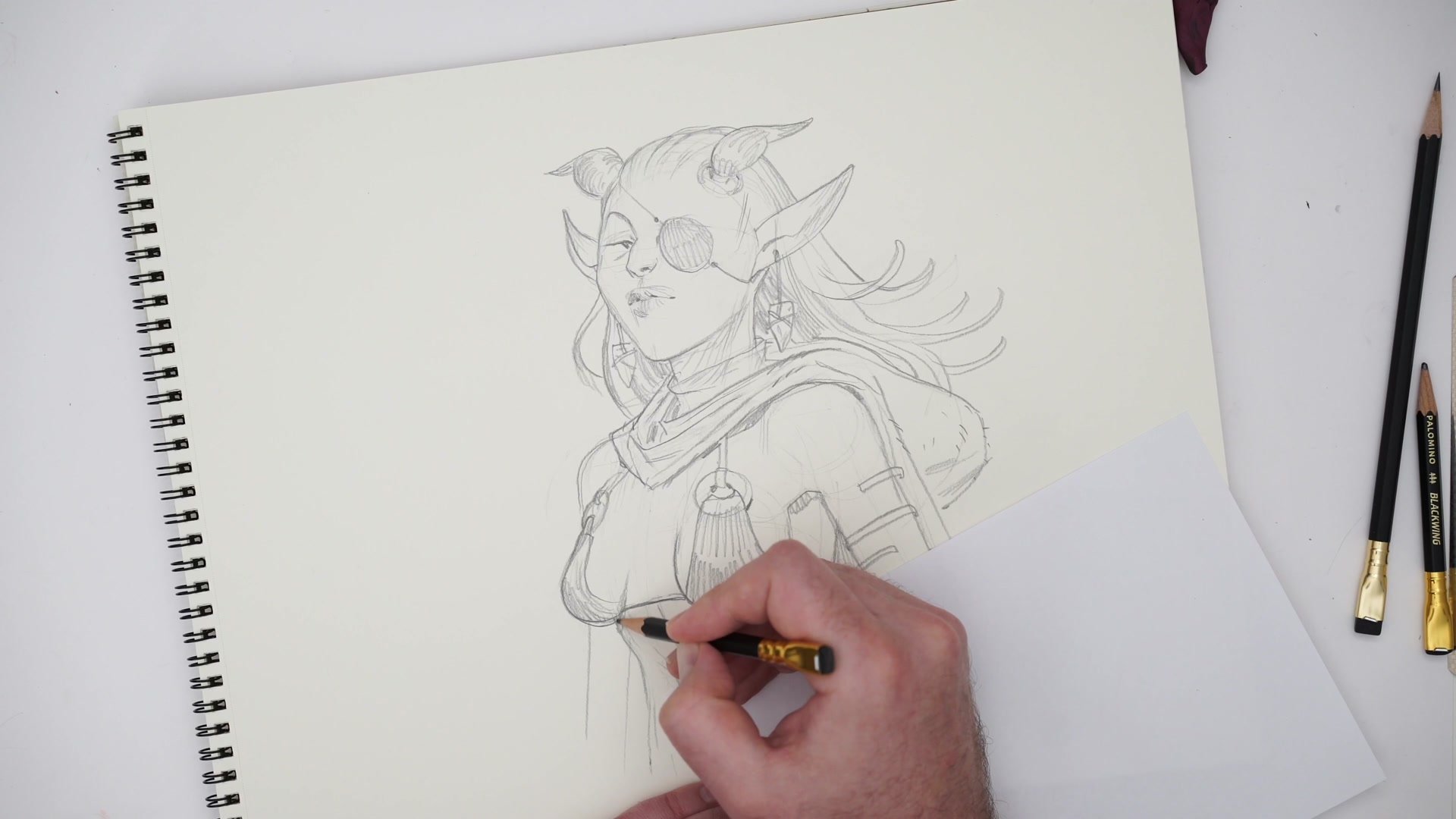
This session captures a real warm-up sketching routine, starting with a look at inspiring artwork found on ArtStation that morning and then moving to the drawing table for a traditional pencil sketch. The subject is an elf girl character from a previously published comic, revisited here as a character redesign exercise using a modified Loomis method for head construction.
The session covers the full arc of a warm-up drawing, from the initial rough-in through construction, erasing, refining, and adding tonal anchors. Along the way, the discussion touches on paper choice, pencil types, the challenge of maintaining character consistency across a comic series, and knowing when to stop fiddling with a sketch.
Art Inspiration and Early Marks
Construction and Character
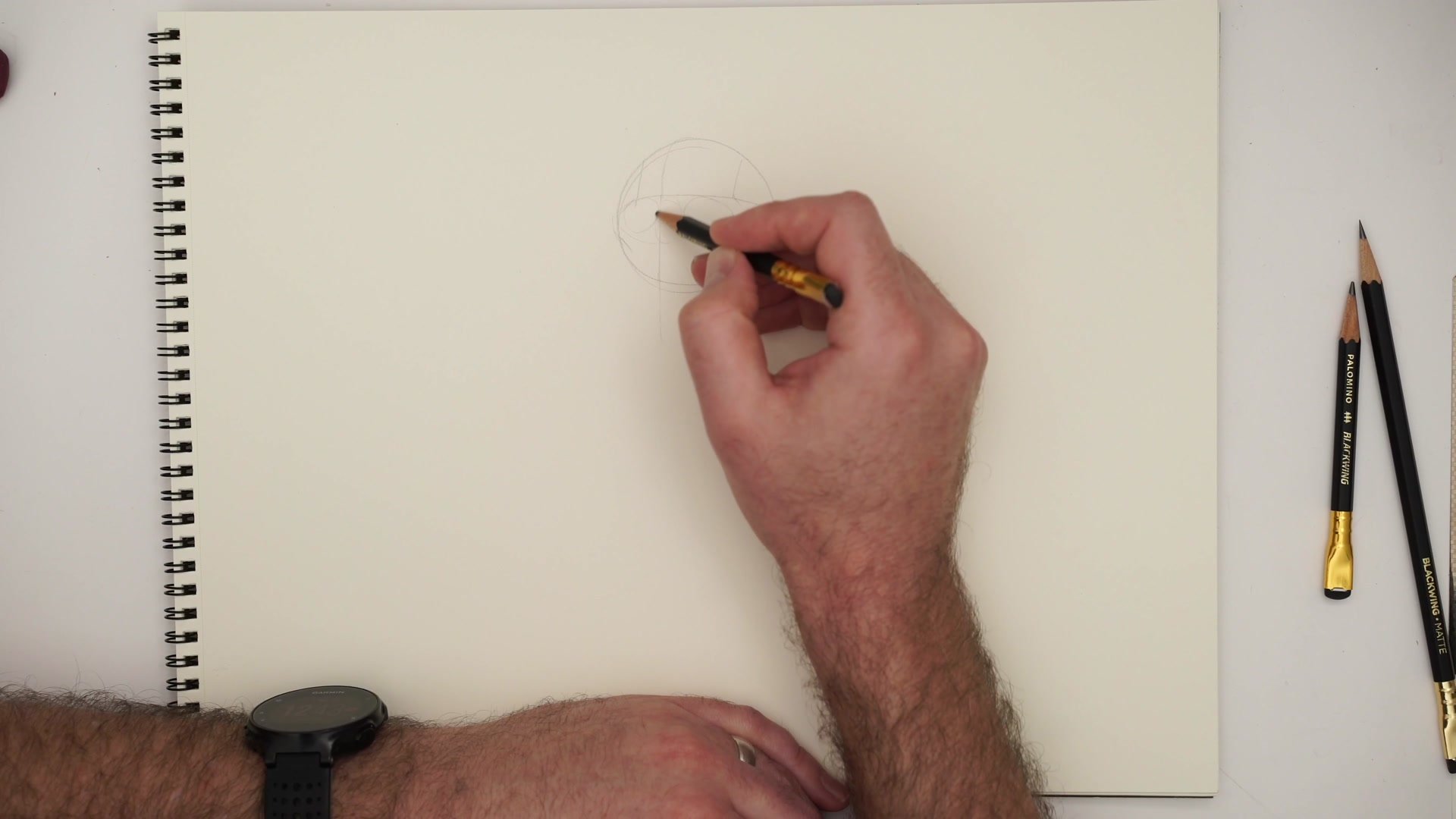
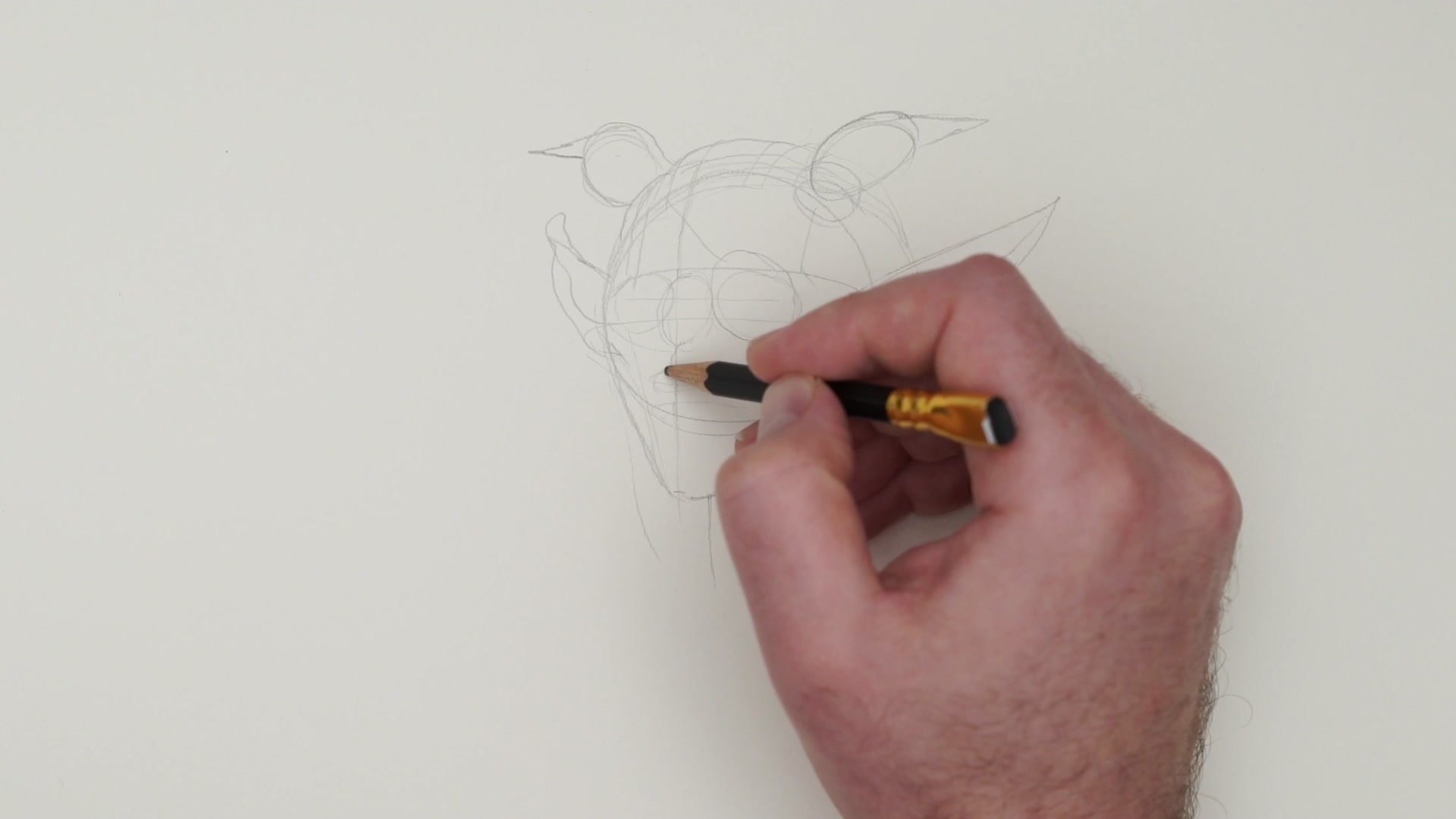
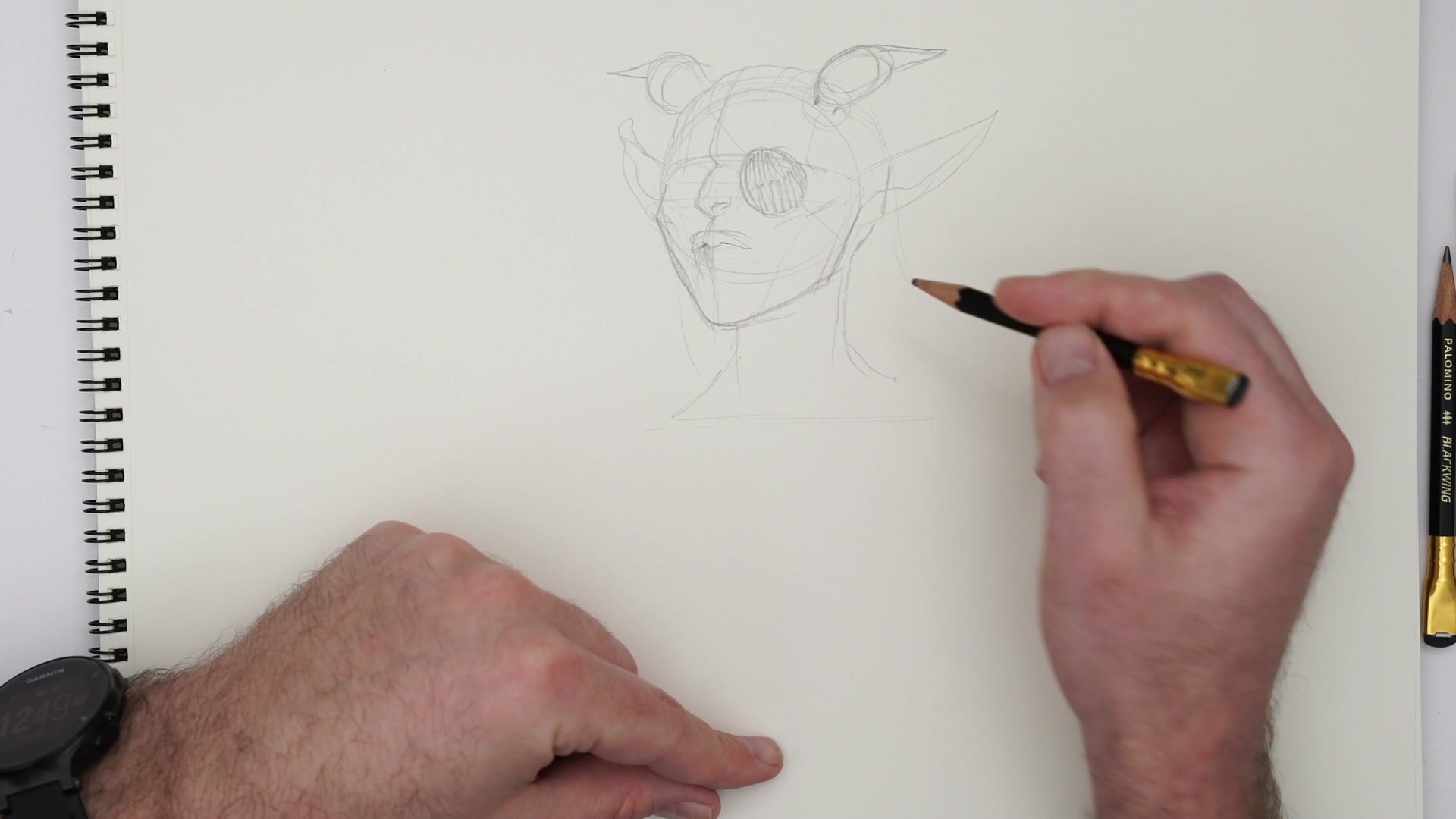
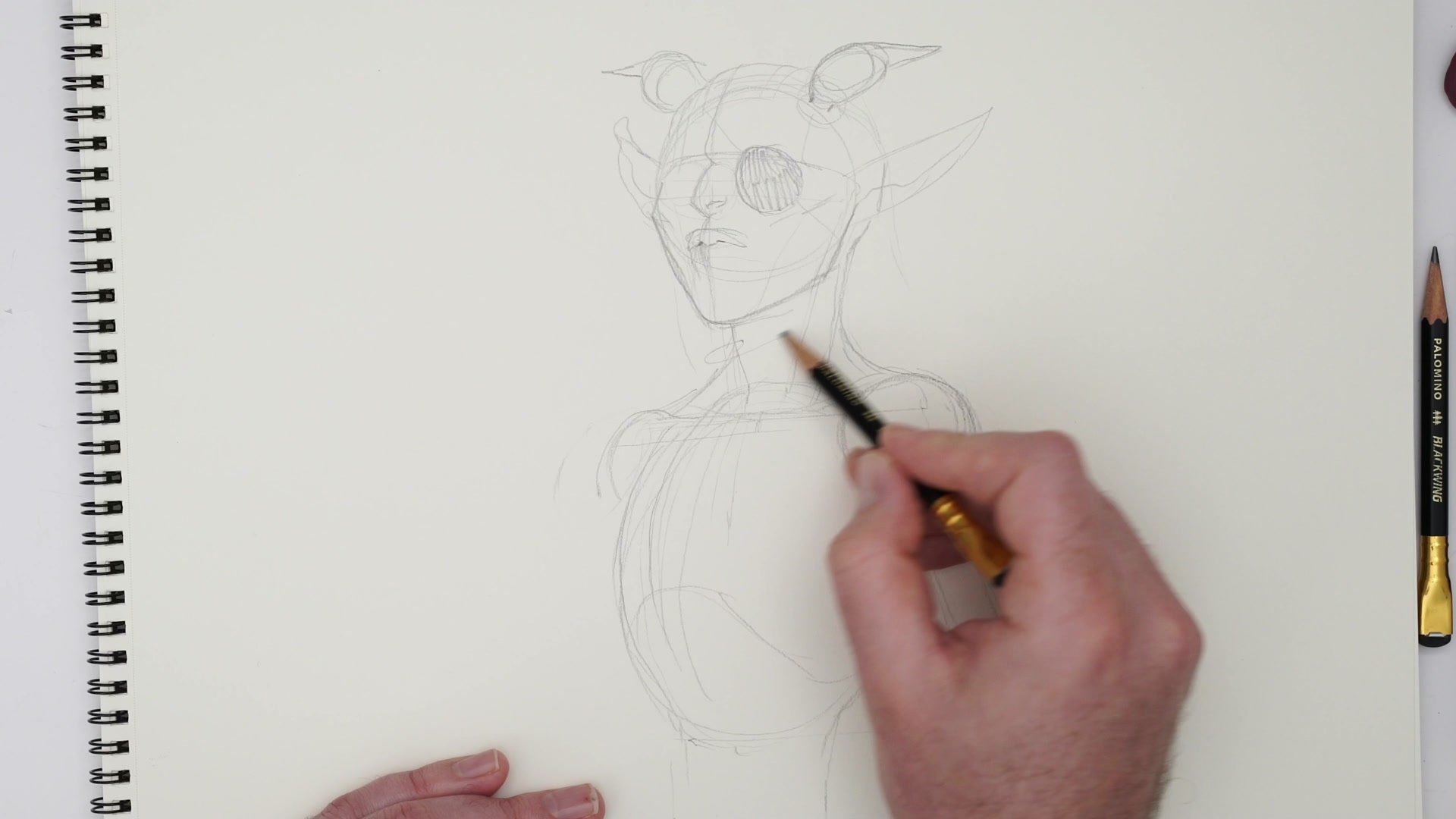
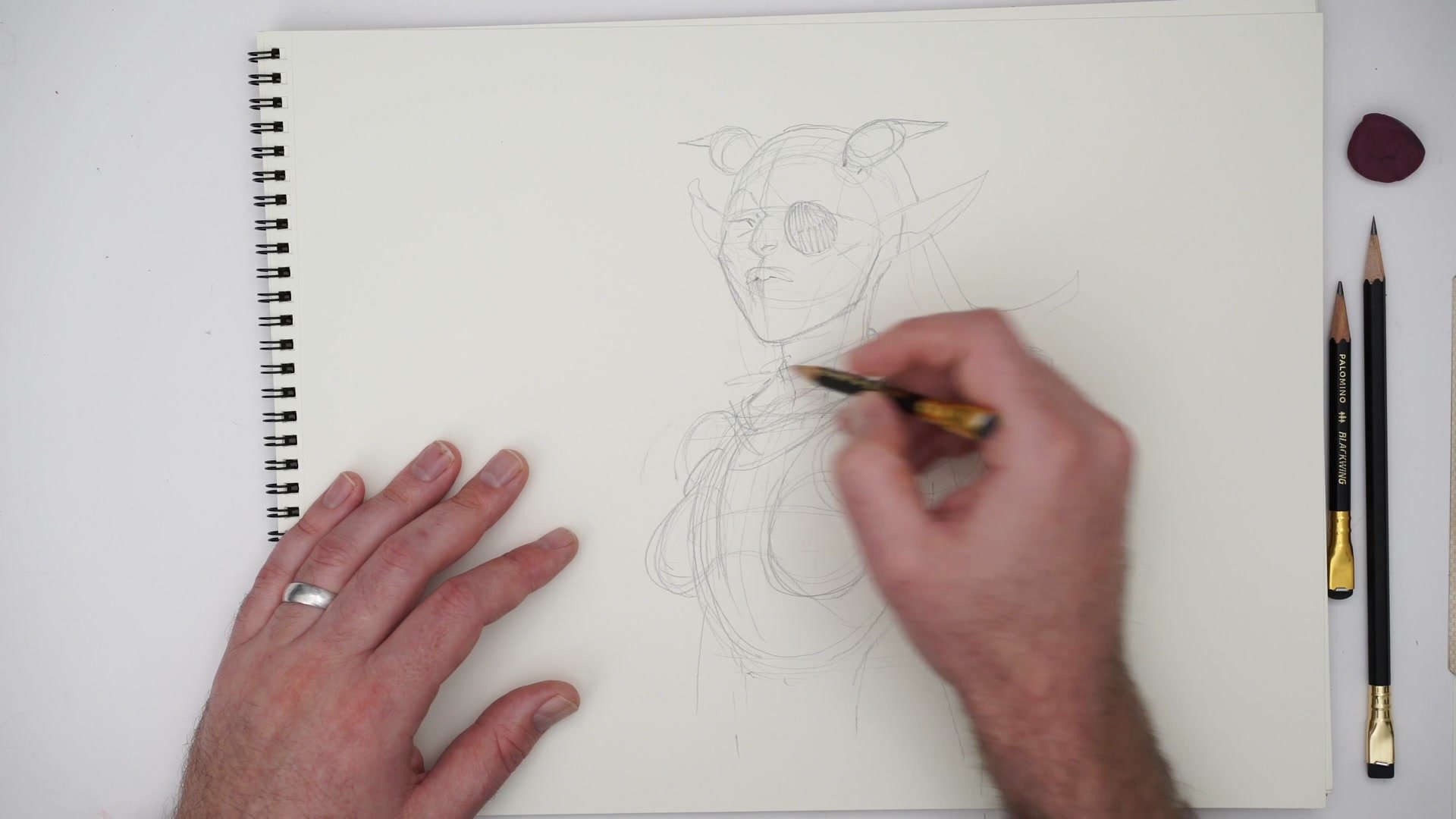
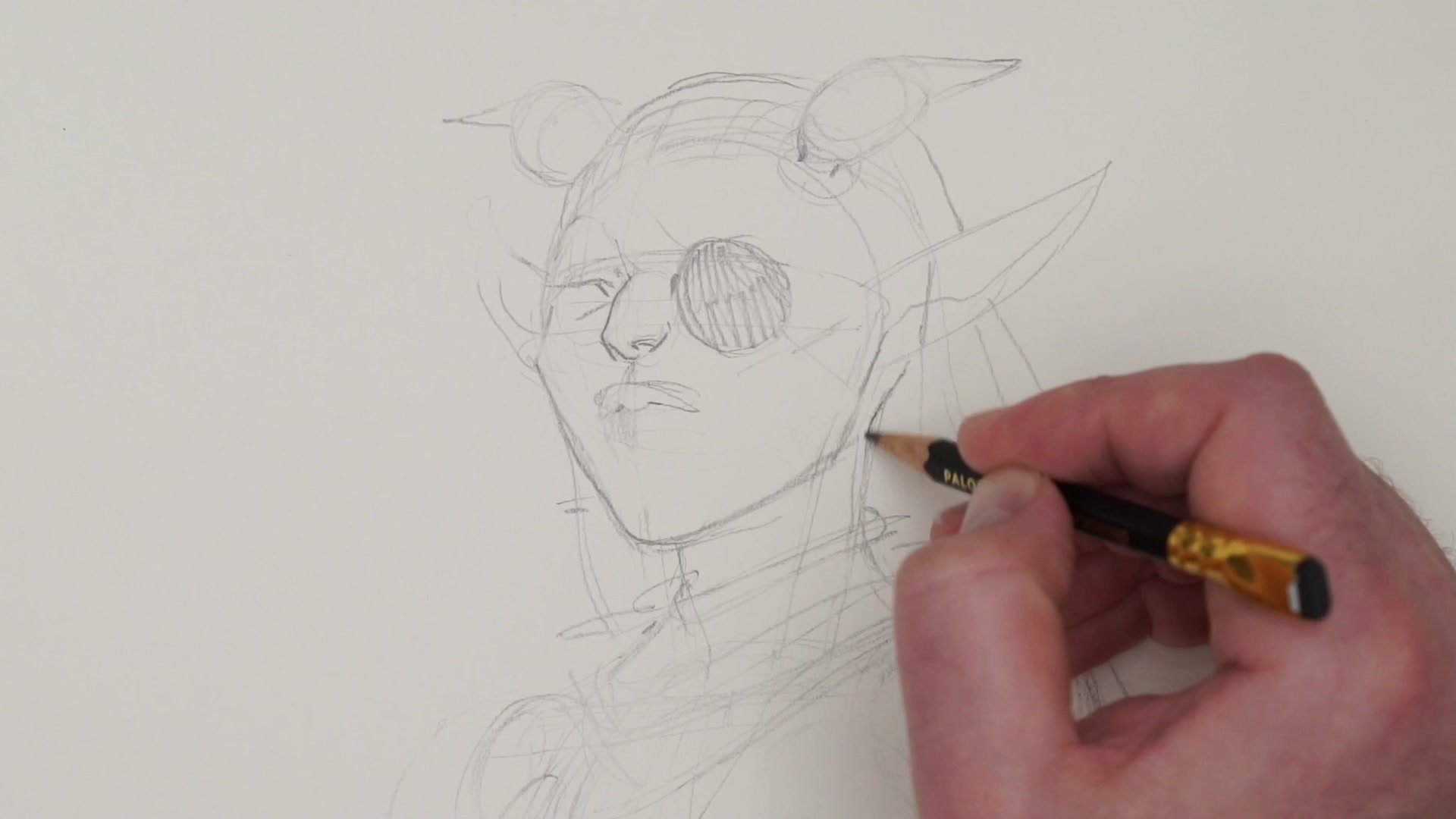
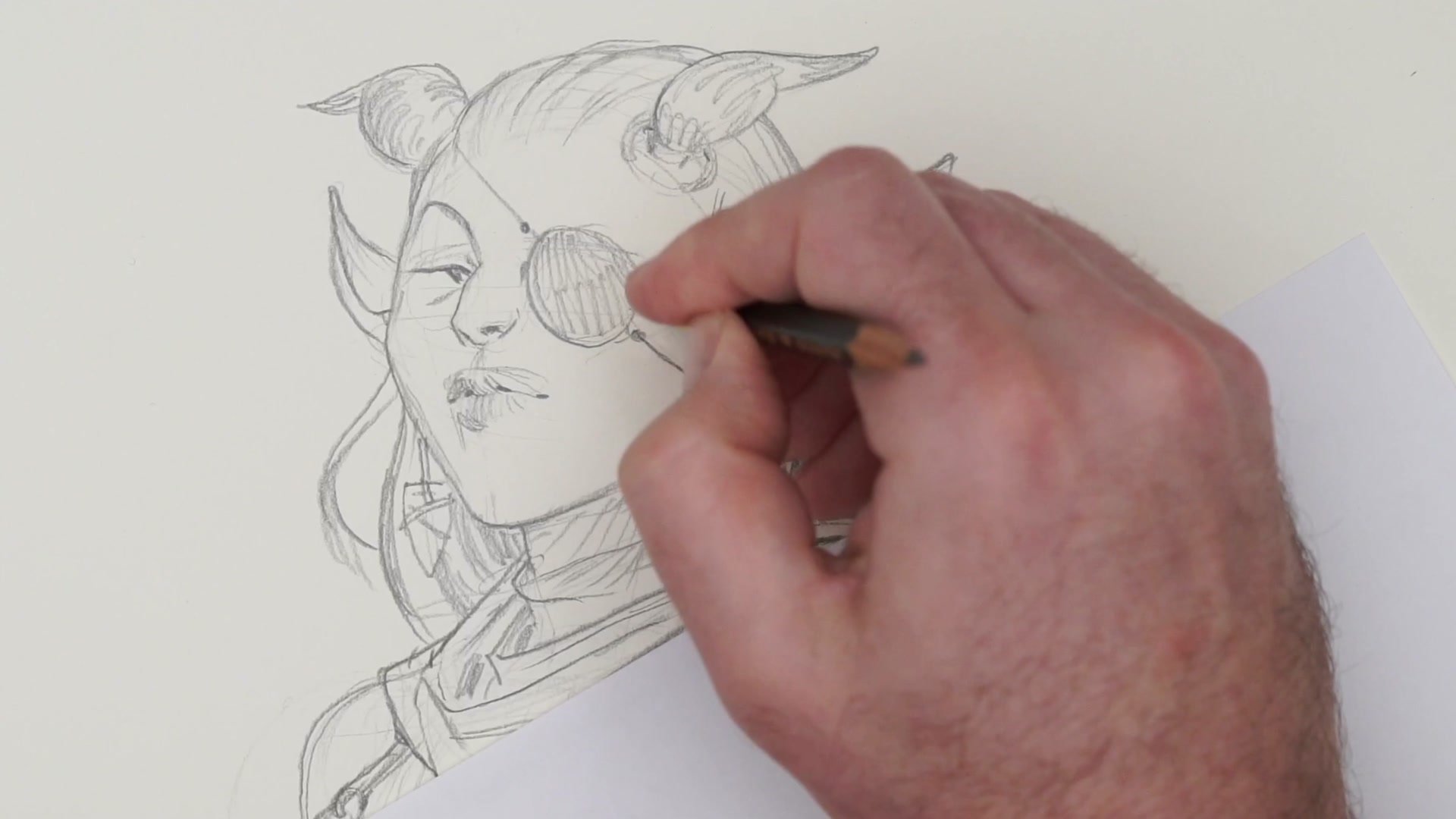
The drawing begins with a modified Loomis method for the head, establishing the cranial sphere and jaw structure before placing the horns, eye patch, and pointed ears. Center lines play a critical role here, especially when working out a slight three-quarter angle with the shoulder coming toward the viewer, introducing foreshortening into the upper body.
A significant portion of the session involves referencing the original published character and noticing how the design drifted over the course of drawing an entire book. Keeping a character consistent across dozens of pages is a genuine challenge, and this warm-up becomes an opportunity to think about what made the original design work, including the higher lip placement, the proportions of the forehead relative to the horns, and the overall attitude of the pose.
Building the Character
Paper, Pencils, and Erasing
The tools here are deliberately simple: Blackwing pencils on Strathmore 400 series smooth drawing paper. The smooth paper is chosen specifically because it handles erasing well, unlike rougher sketch paper where repeated erasing destroys the surface. This matters because warm-up sketches involve a lot of back-and-forth, laying down construction lines, erasing them partially, and then refining.
The discussion around paper limitations is practical. On cheaper paper, there is a finite number of erase cycles before the surface degrades, and that creates psychological pressure. Knowing the paper can handle reworking removes that anxiety and allows the sketching to stay loose. Different pencil sharpness levels are used throughout, with blunter tips for broad massing and sharper ones for detail passes.
Refining the Sketch
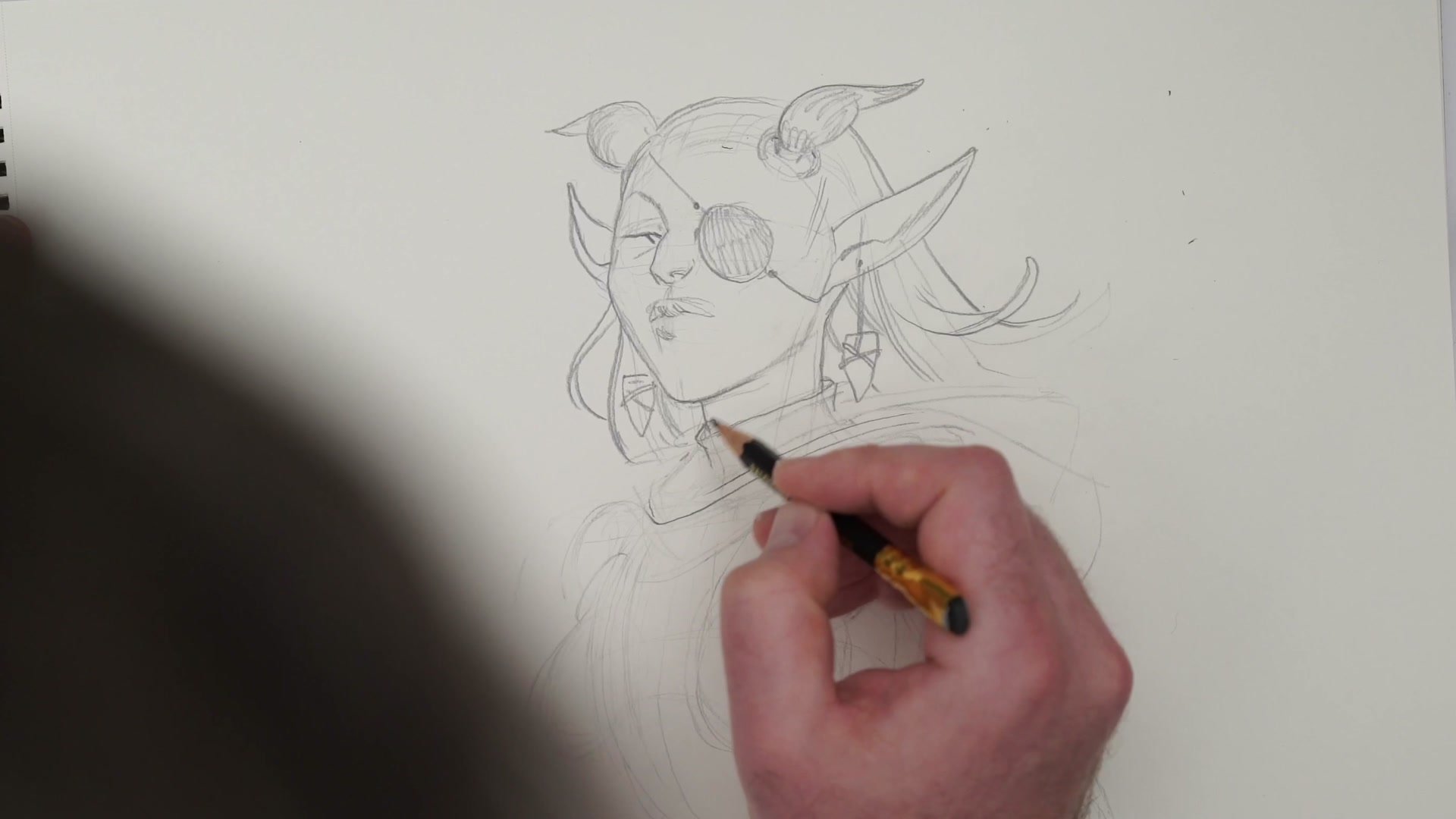
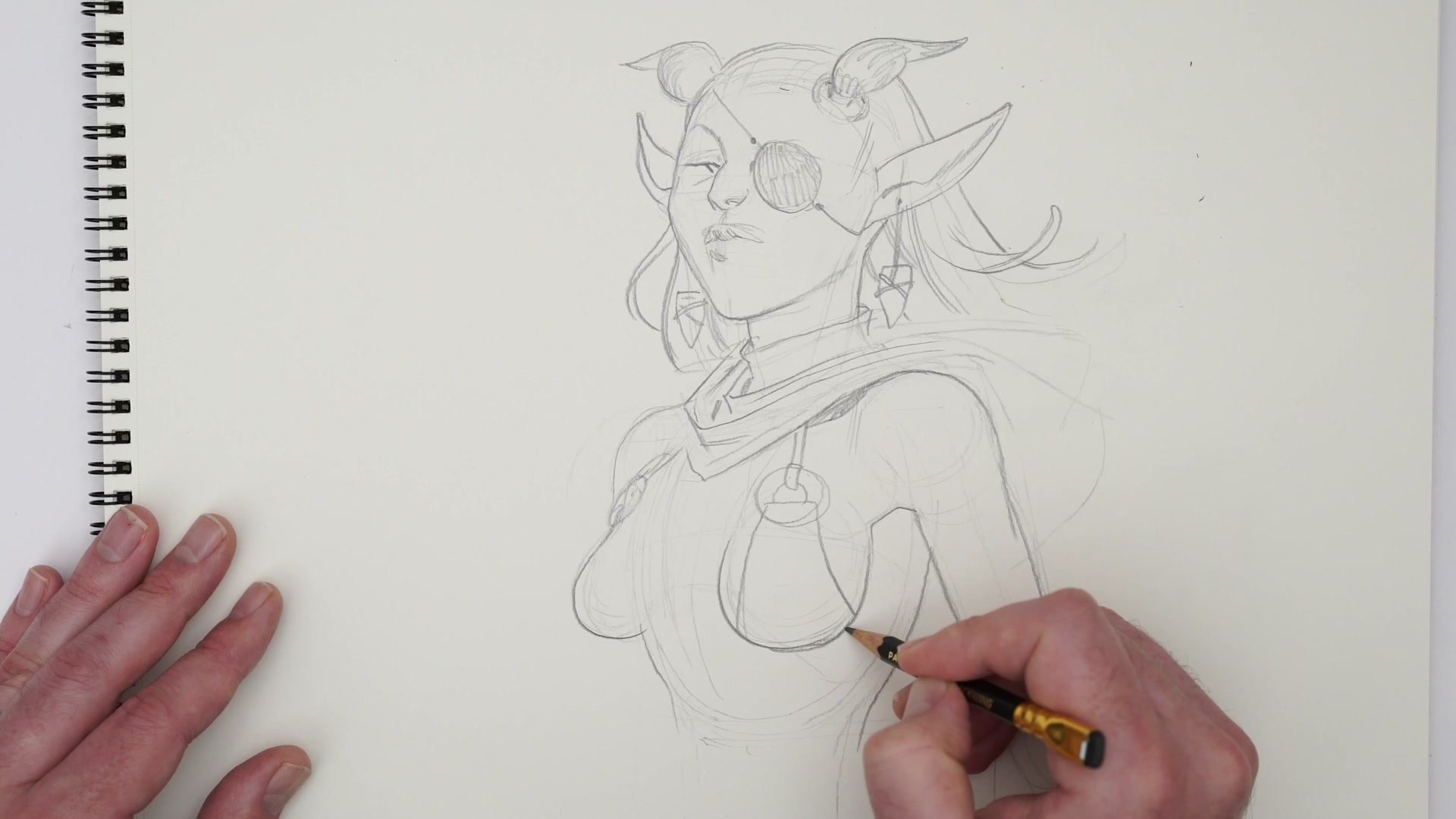
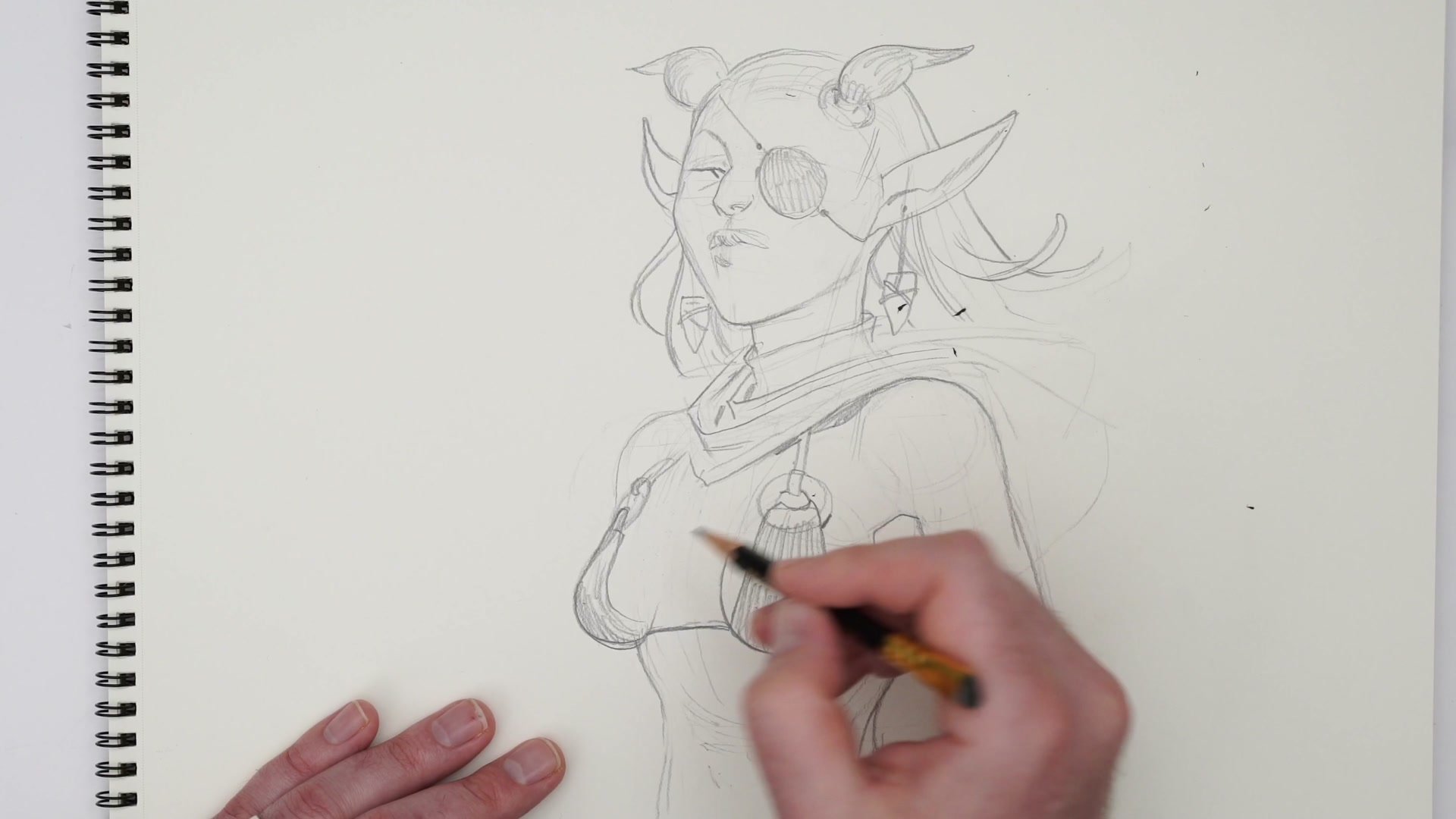
Anchoring and Finishing
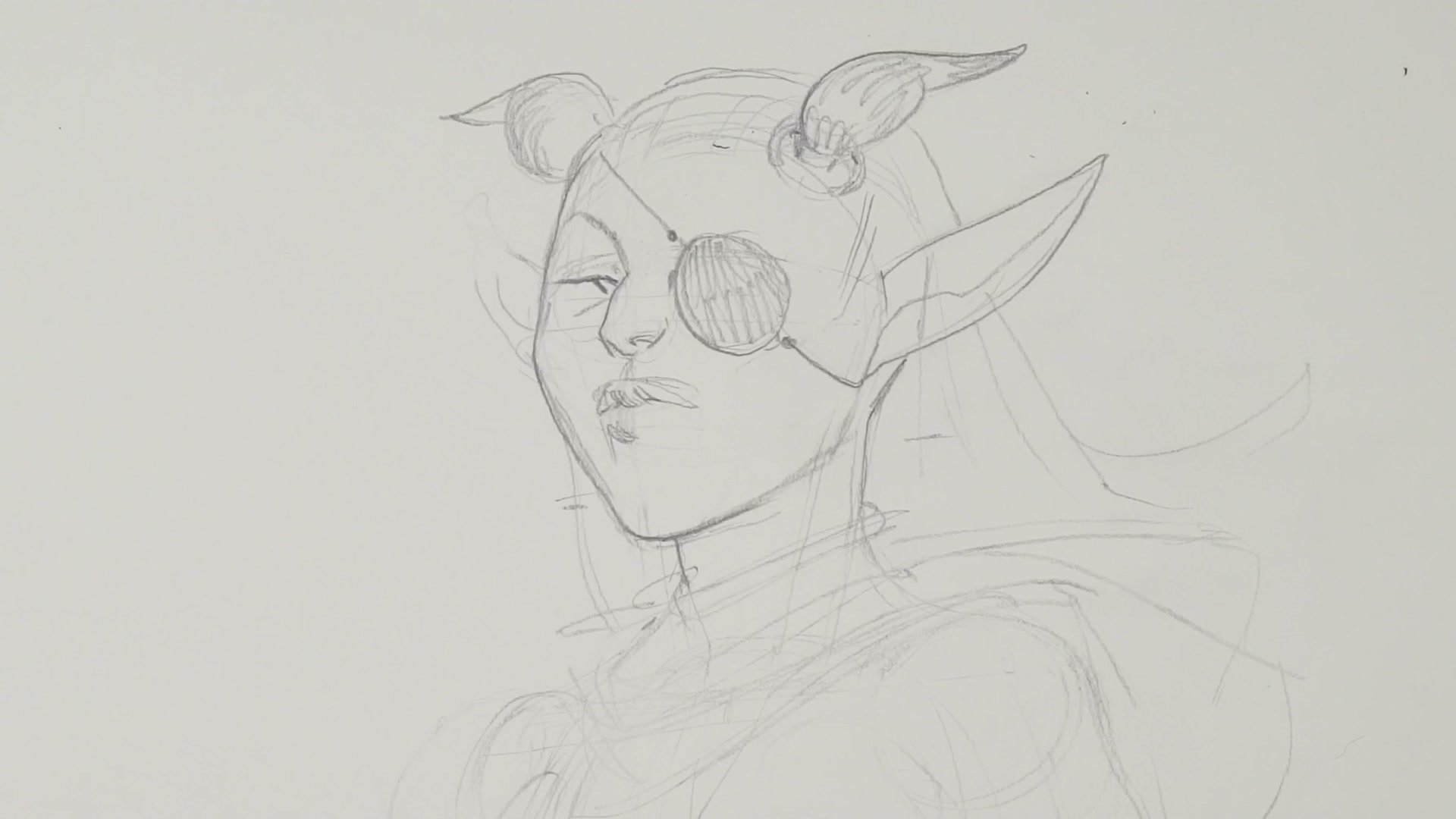
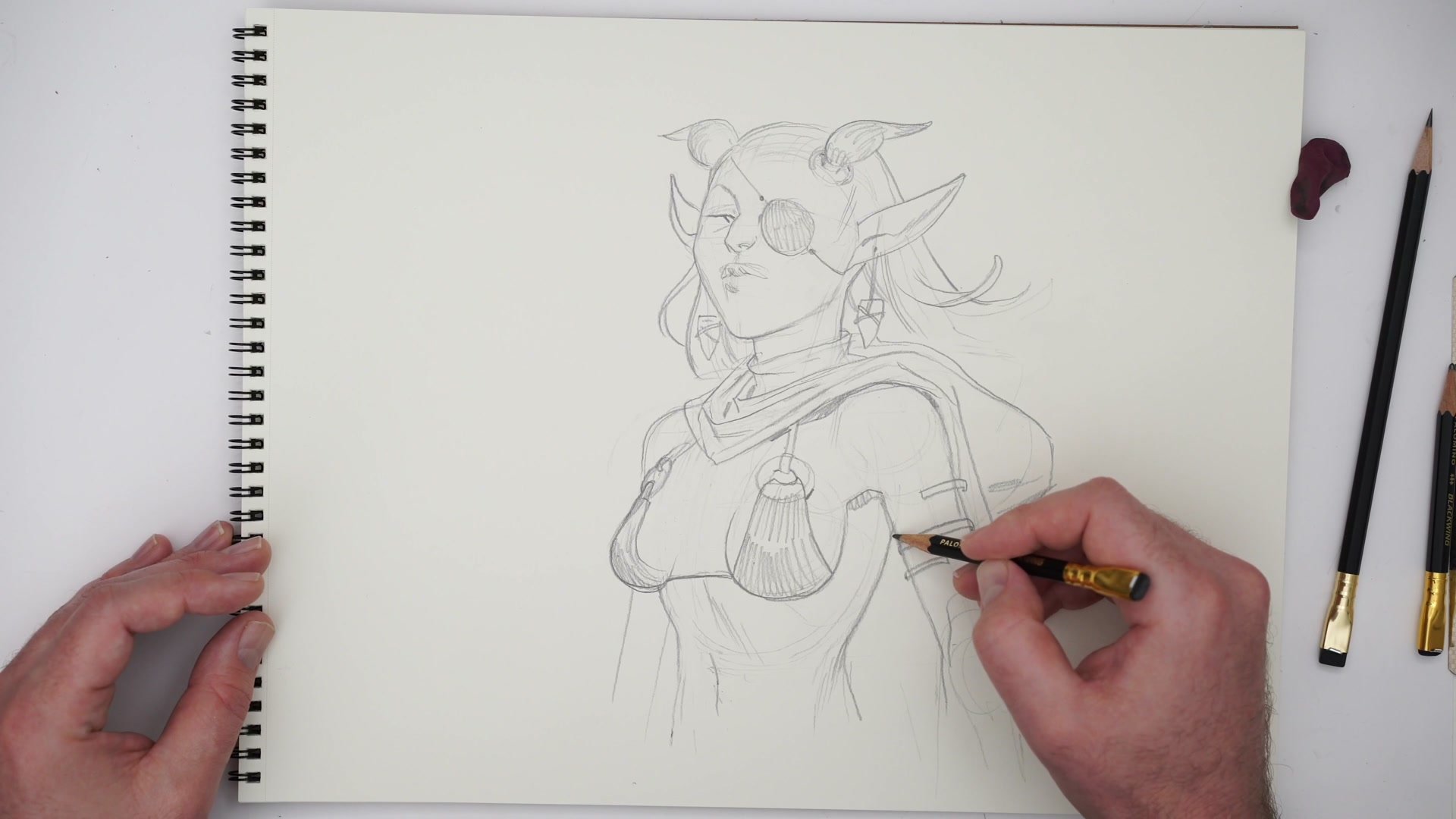
Rather than rendering everything evenly, the finishing approach involves anchoring shadows at specific points and letting them trail off. This technique of indicating rather than fully drawing tonal areas creates a sketchy, atmospheric quality that suits the medium. Shadows are placed at connection points like where the hair meets the cloak, under the eye patch, and along the costume edges.
The session also covers the importance of viewing angle. Standing up to look straight down at a large drawing pad eliminates the perspective distortion that comes from drawing at an angle while seated. Knowing when to stop is addressed directly. Once the fiddling starts producing more mistakes than improvements, that is the signal to move on to a new drawing rather than overworking the current one.
Final Details
Key Techniques
Modified Loomis Method: The head construction starts with a cranial sphere and jaw, placing features along center lines before adding character-specific details like horns and ears.
Progressive Erasing: Construction lines are erased in stages rather than all at once, keeping structural reference visible while refining the drawing gradually.
Shadow Anchoring: Tonal values are indicated by anchoring shadow marks at key points and letting them fade, rather than filling in complete shadow shapes.
Paper Selection Matters: Smooth drawing paper handles repeated erasing without degrading, removing the pressure of limited correction cycles that rougher paper creates.
Try This Warm-Up
Start Familiar: Begin each warm-up session by drawing a character or subject already well known, using a consistent construction method like a modified Loomis approach.
Vary Your Pencils: Use a blunter pencil for the initial rough-in and massing, then switch to a sharper one for detail passes and line refinement.
Anchor Your Shadows: Instead of fully rendering tonal areas, place shadow marks at key connection points and let them trail off to maintain a sketchy quality.