Draw With Me - Elf Girl Portrait and Thumbnailing
Summary
Elf Girl Portrait Process
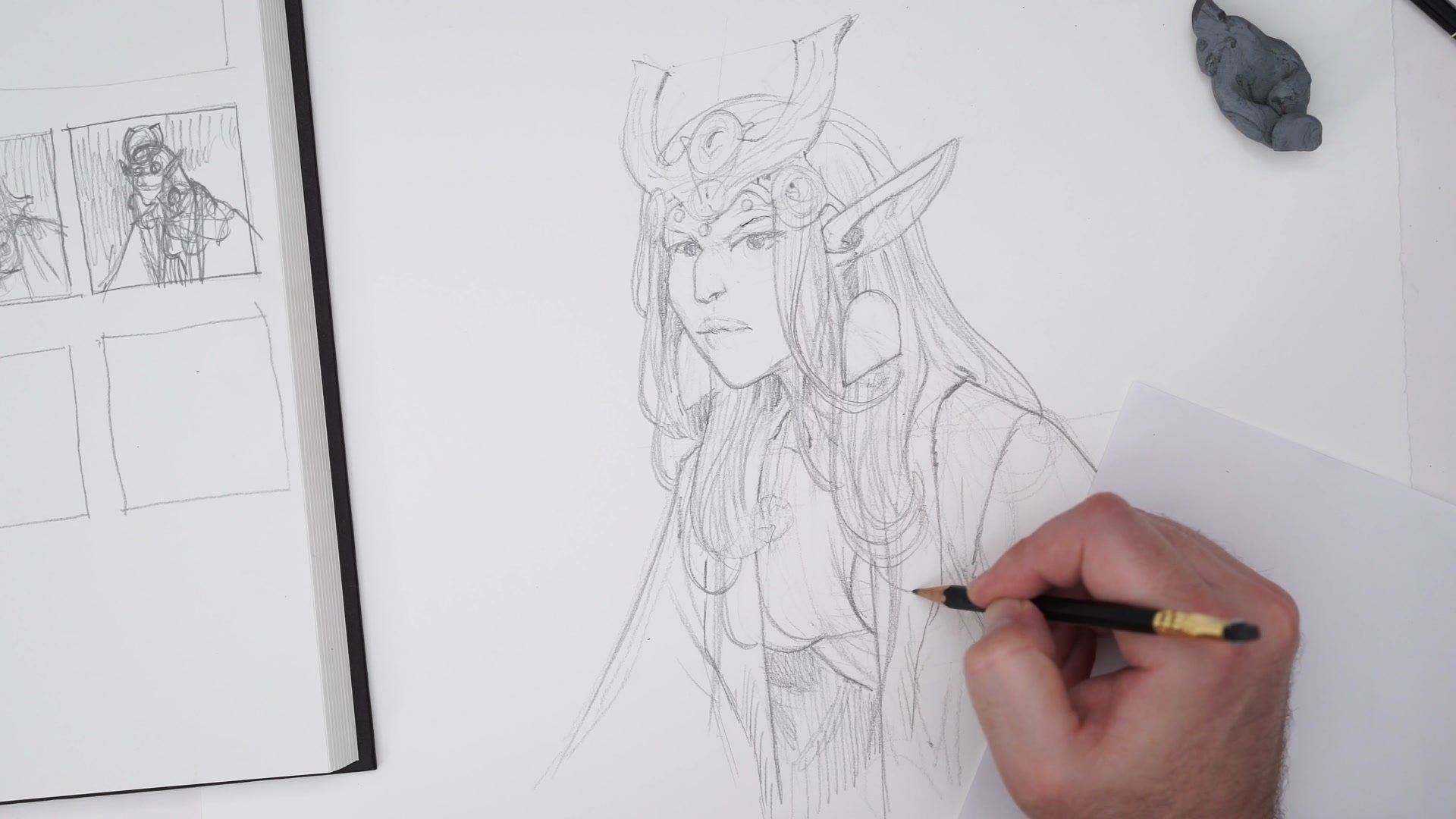
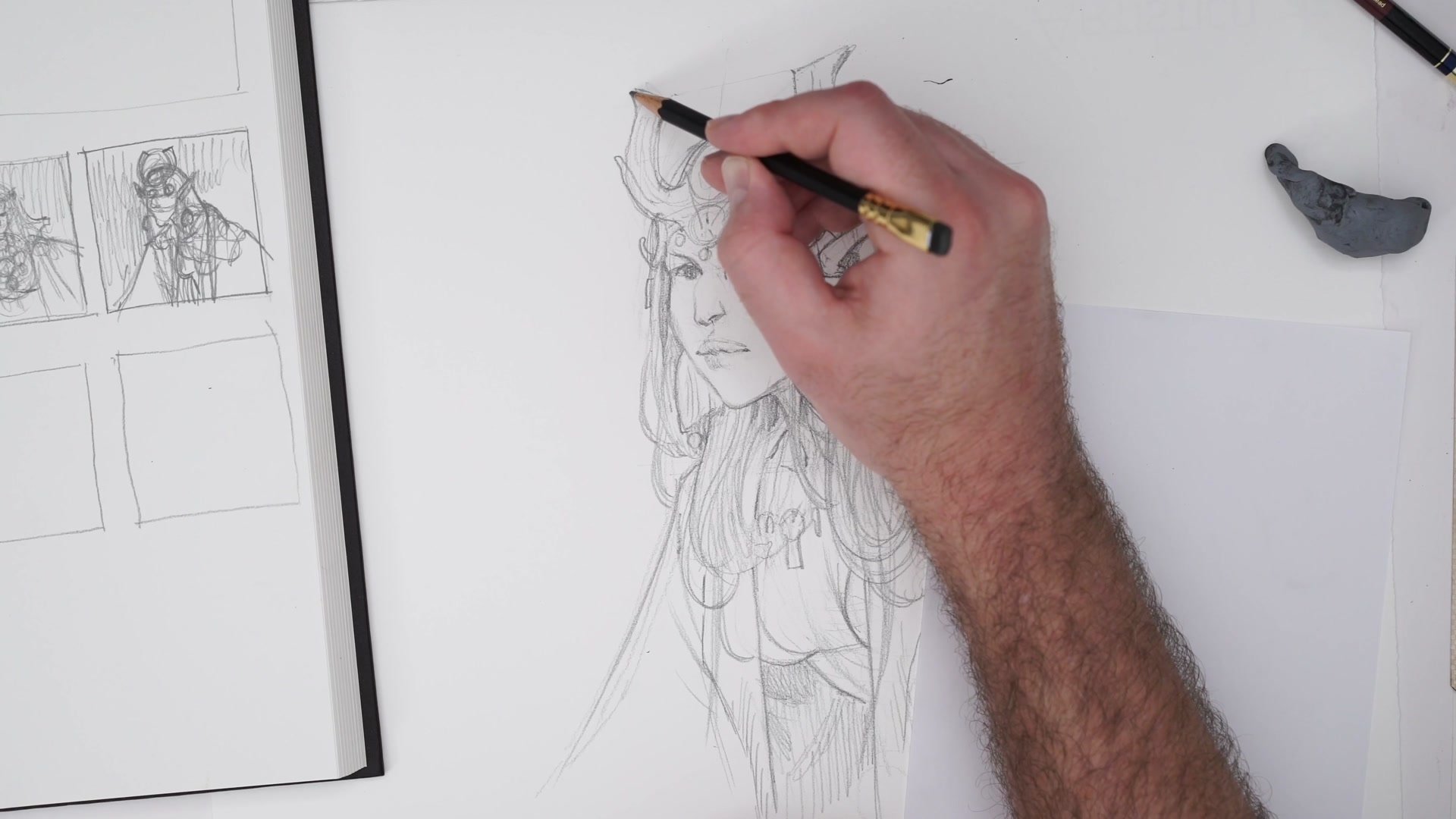
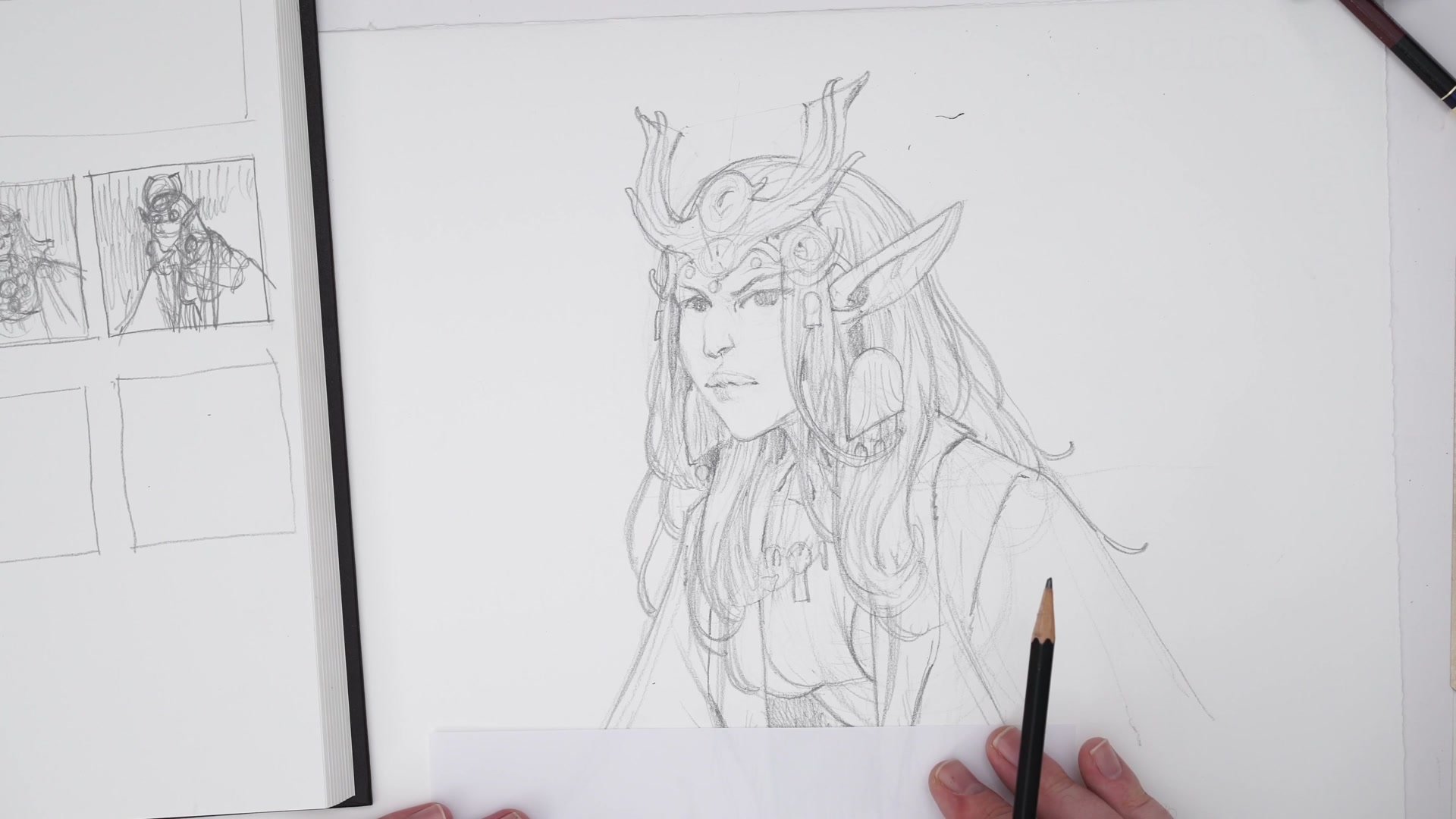
This hour-long sketching session covers the full journey from thumbnail exploration to a refined pencil portrait of an elf girl character. The session begins with a review of inspiring artwork on ArtStation, moves into a discussion of how thumbnailing works as a daily creative practice, and then transitions into the main drawing on watercolor paper using Blackwing pencils.
Throughout the session, the focus shifts between two connected disciplines: generating ideas through small thumbnail sketches and executing a single idea into a more polished drawing. The commentary covers structural construction, head and torso placement, the role of center lines, and the ongoing refinement decisions that define a professional sketching workflow.
Thumbnails and Early Planning
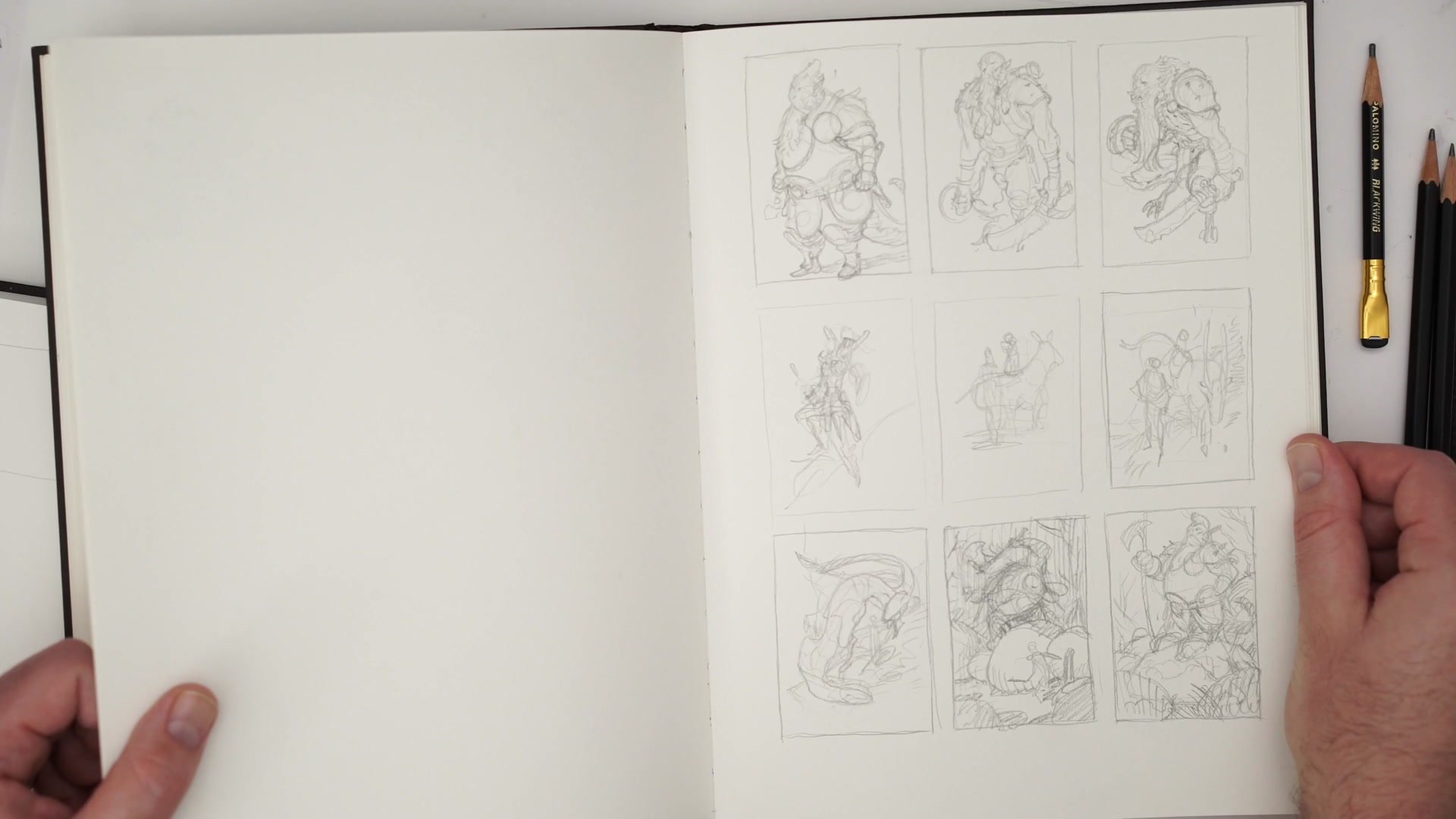
Thumbnailing as Practice
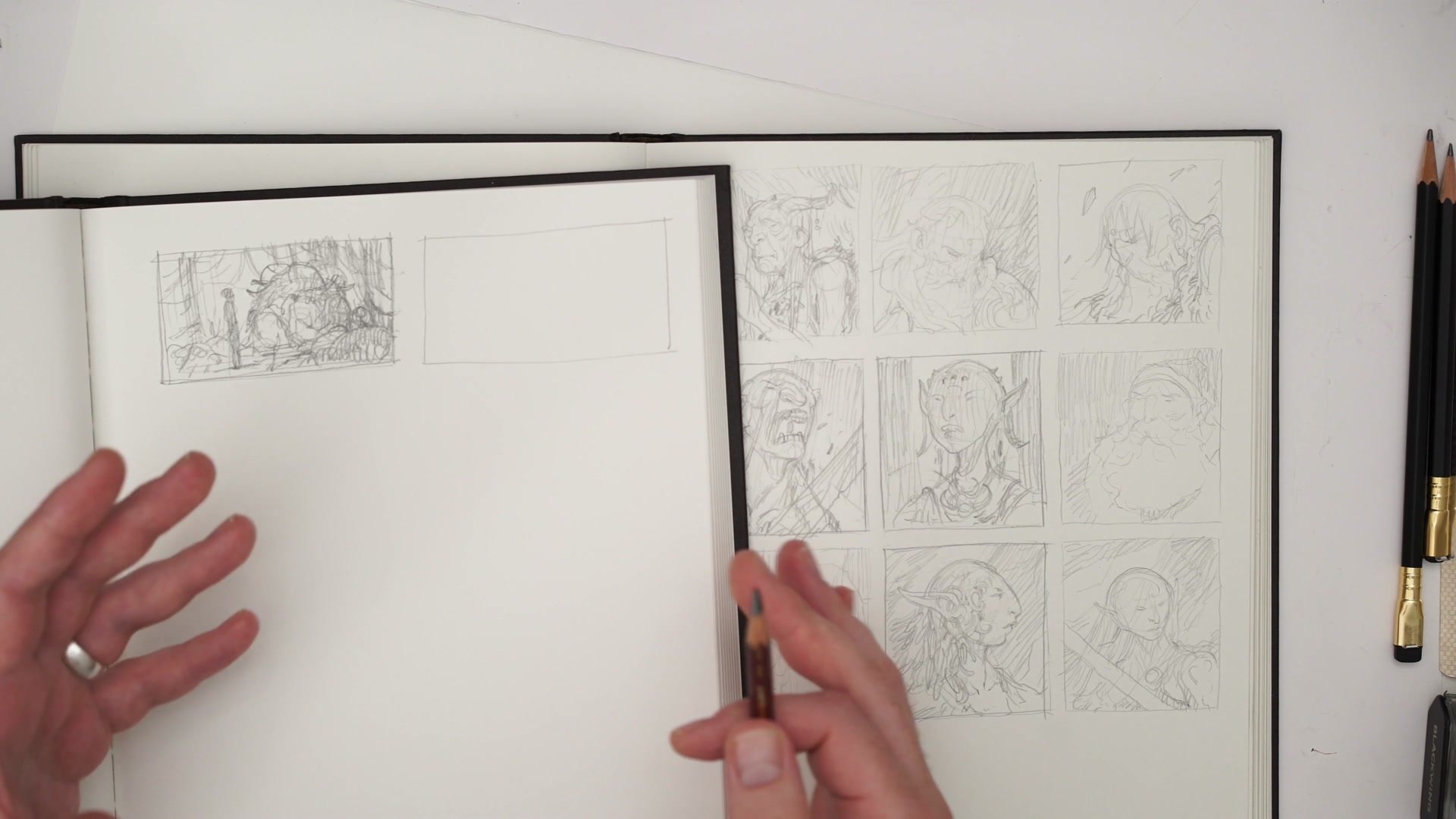
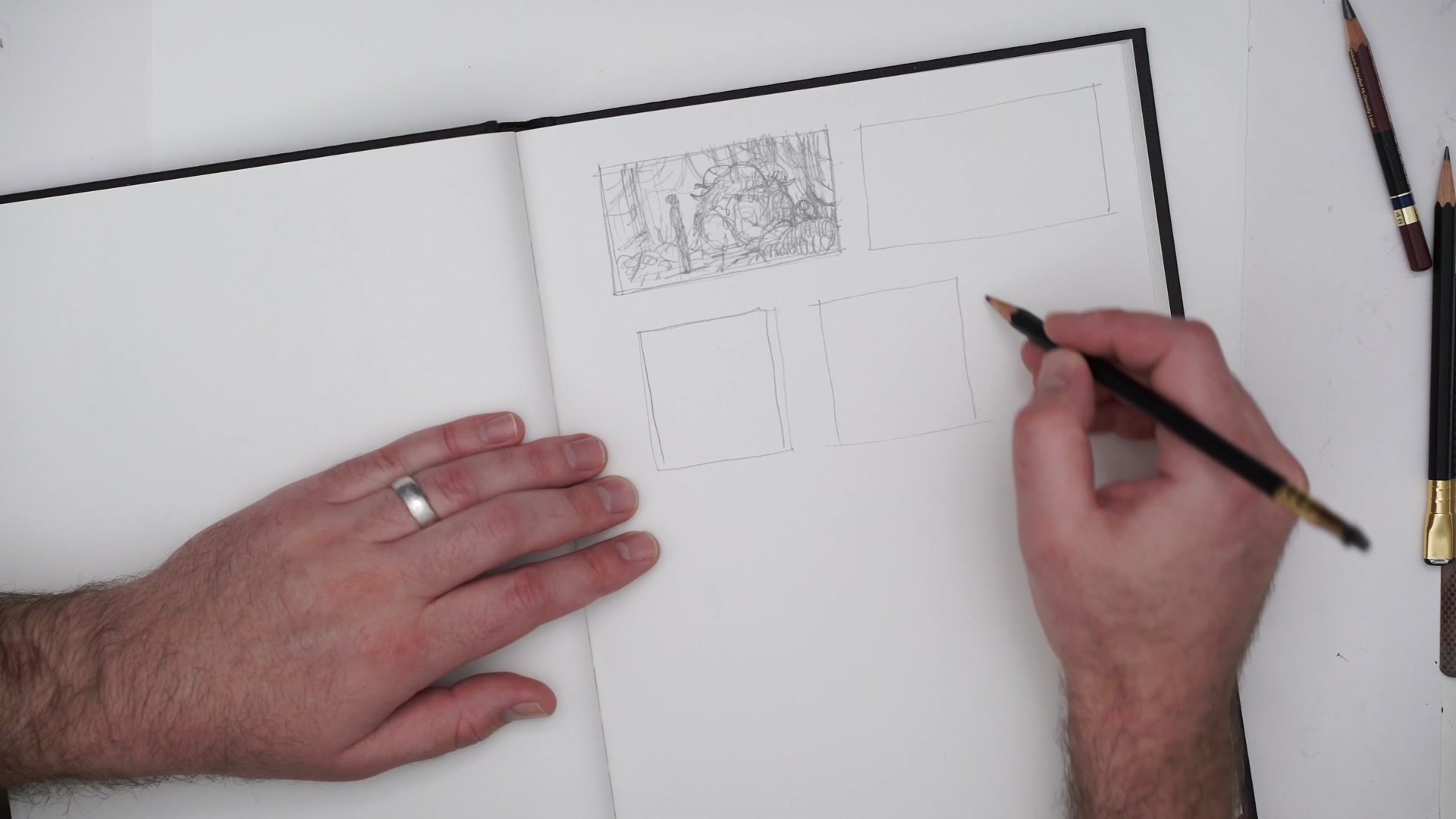
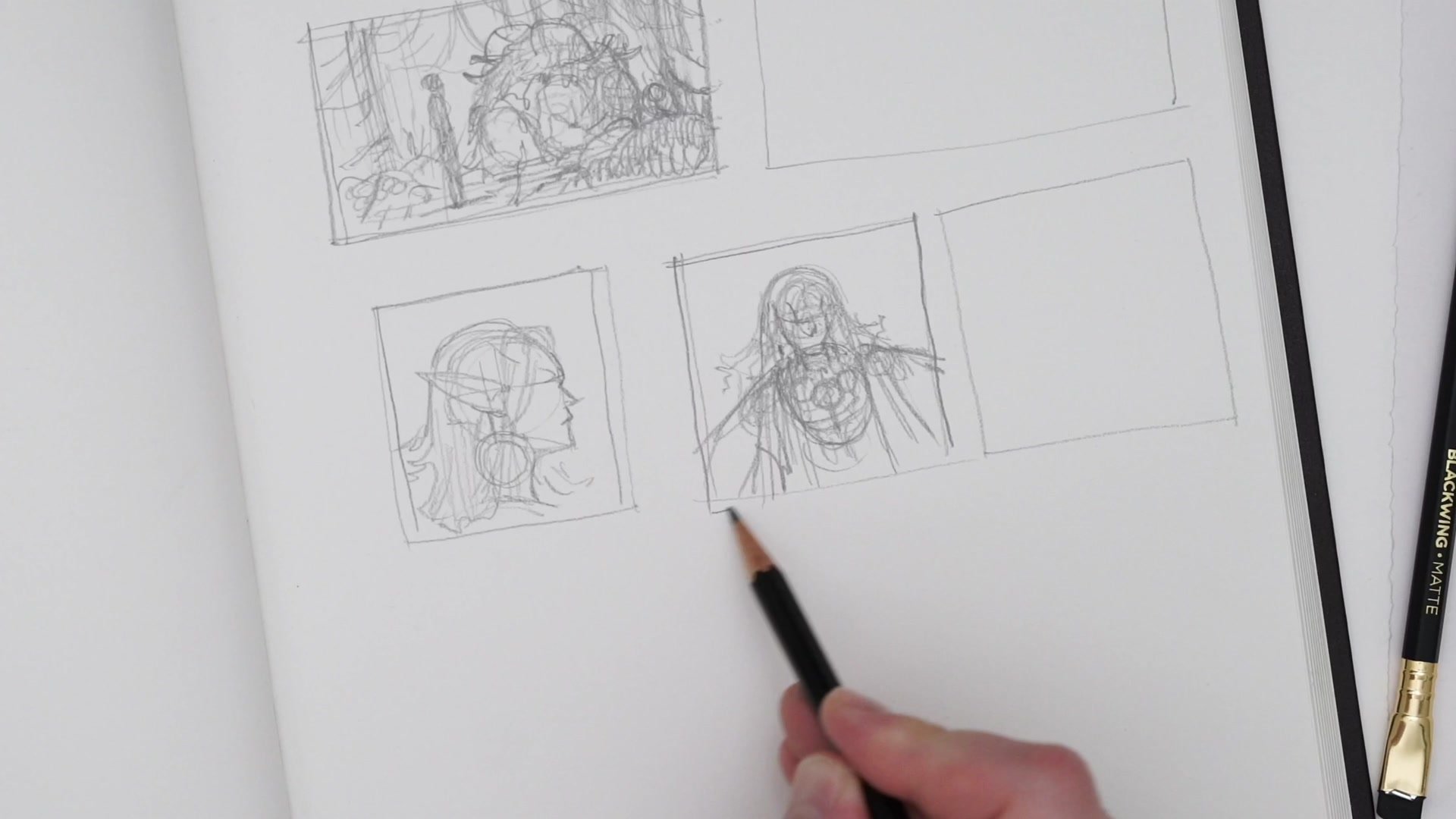
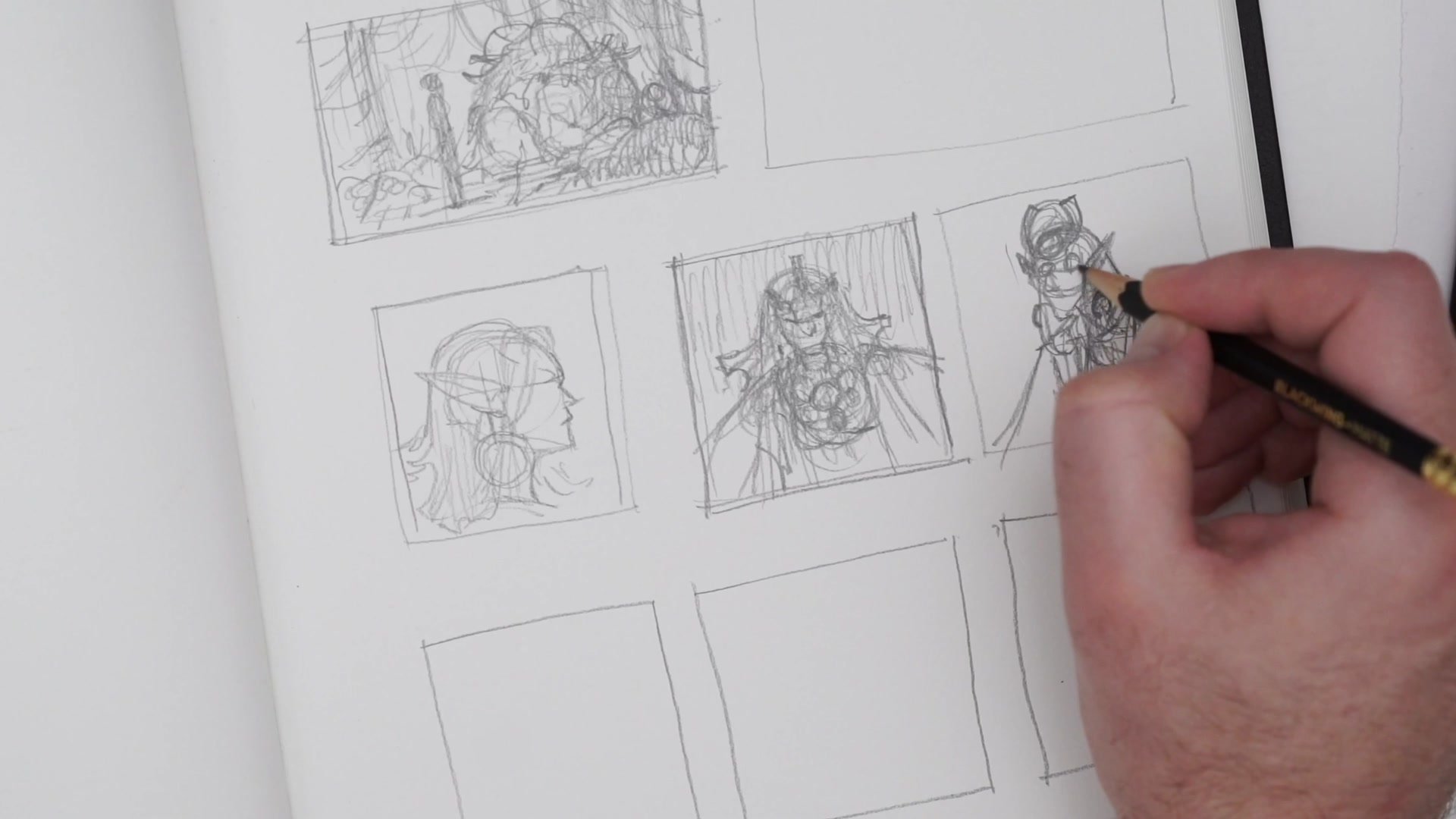
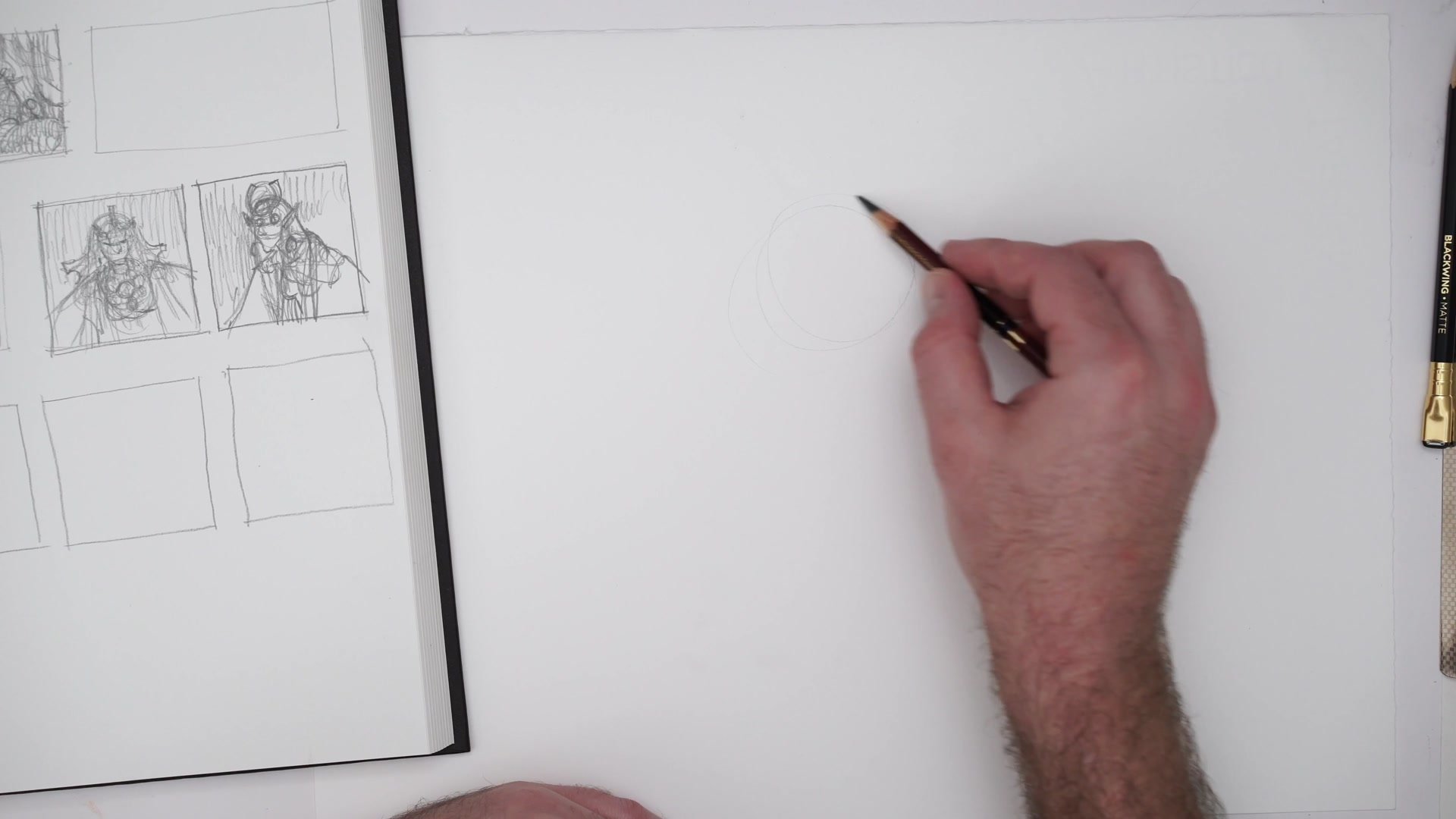
The session opens with a look at existing thumbnail pages in the sketchbook, showing how small compositional sketches become the basis for larger drawings. The approach separates idea generation from structural execution, recognizing that these use different mental modes. Thumbnailing happens when the energy is right for ideas, and the resulting sketches become a library to draw from later.
This separation is deliberate. When sitting down to draw, the pull toward structure and anatomy can overwhelm the creative exploration phase. By keeping a collection of thumbnails ready, the decision of what to draw is already made, and the session can focus entirely on execution and craft. The thumbnails shown range from simple character portraits to more complex scene compositions, including work for the Pinocchio comic project.
Structural Construction
Building the Portrait
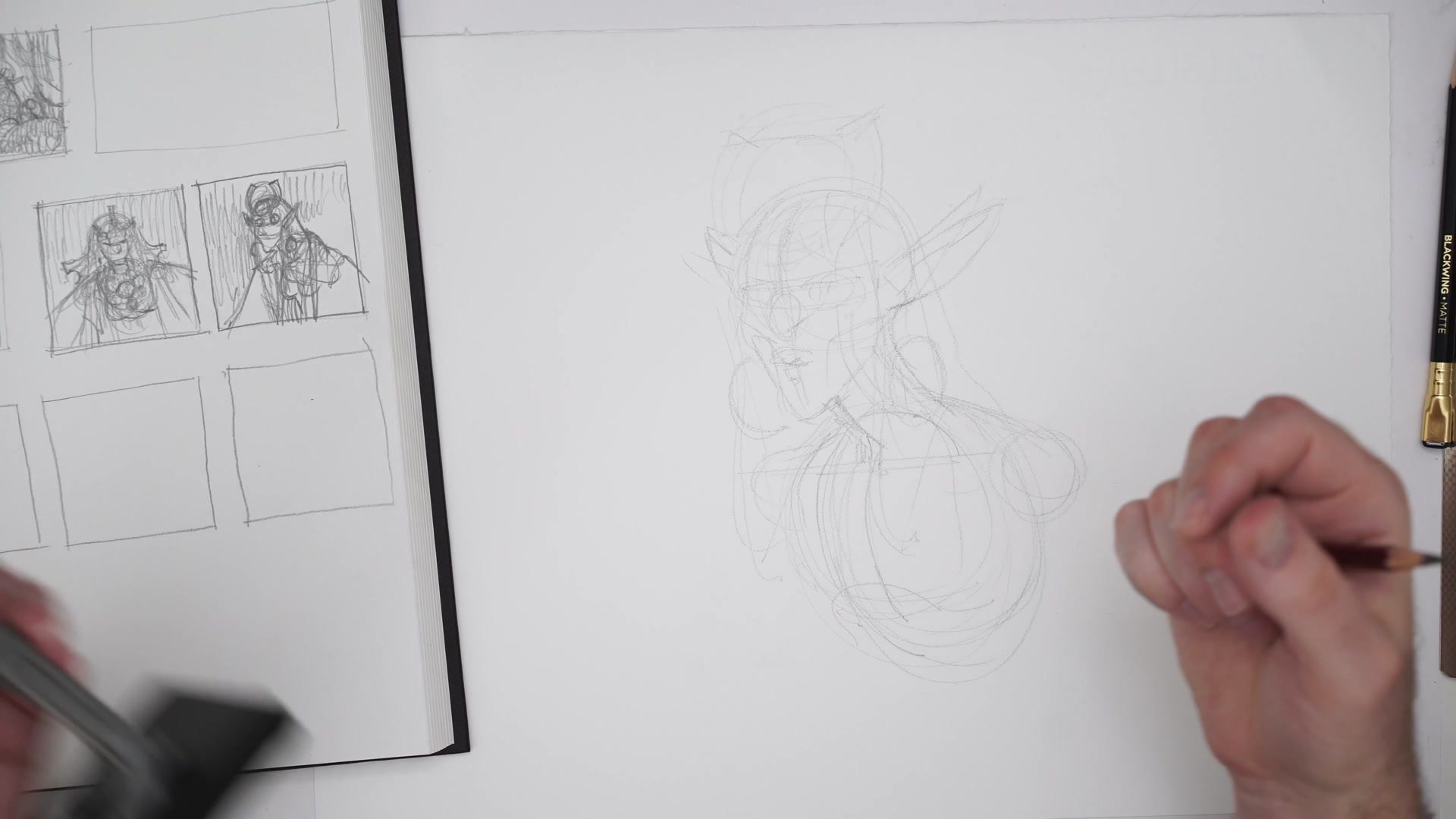
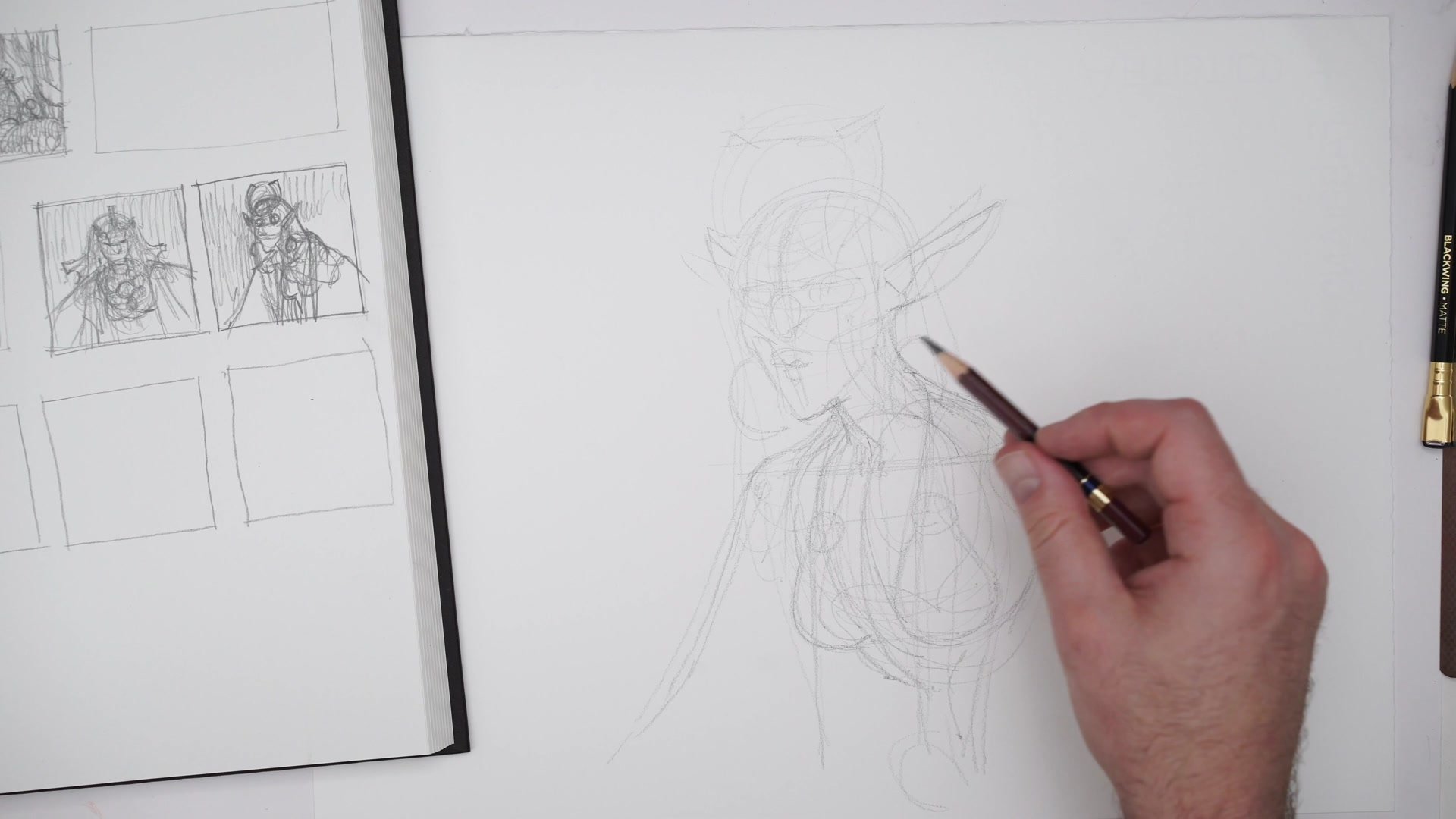
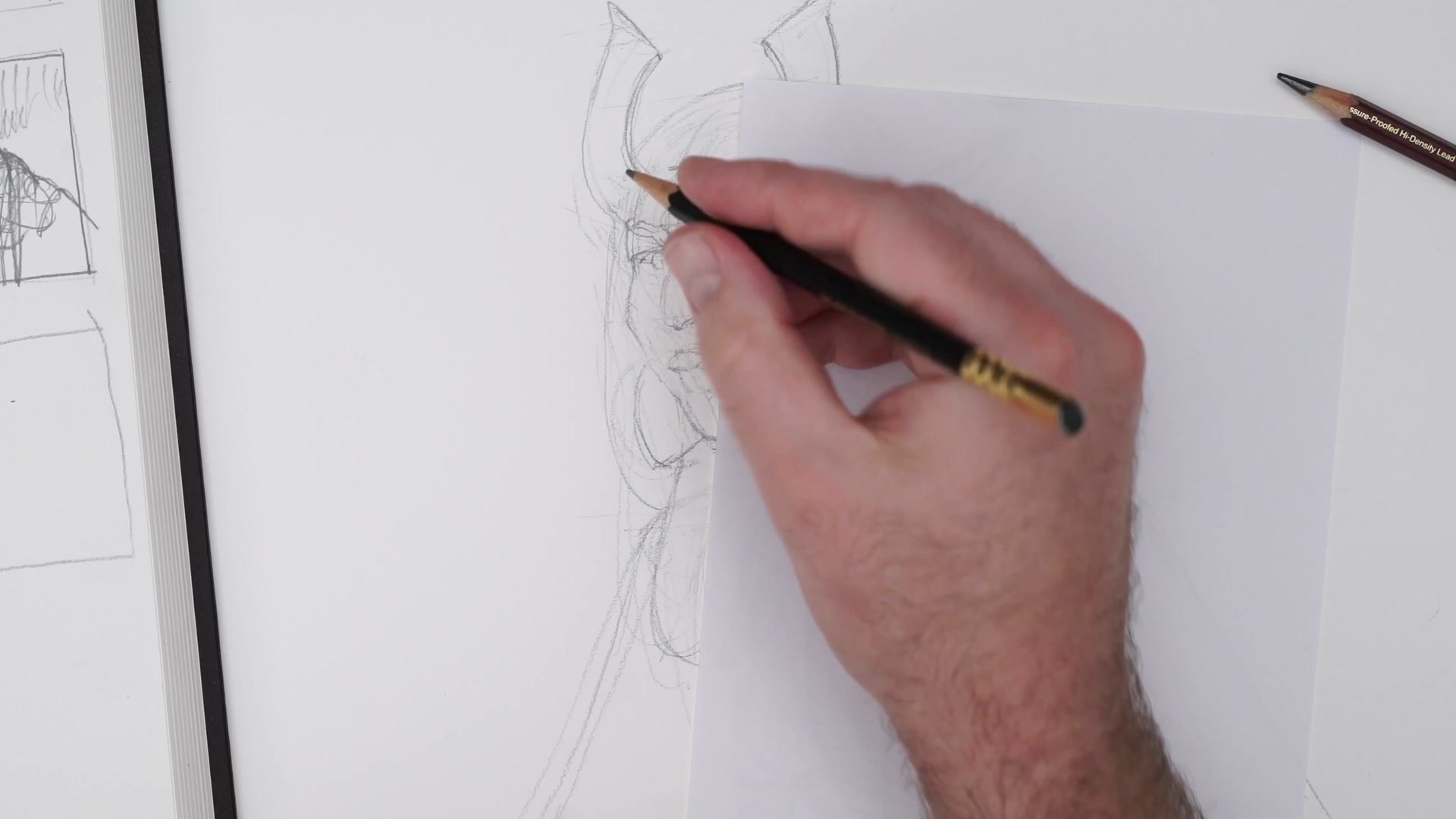
The main drawing begins with a loose placement of the head and torso, thinking about the viewing angle and how the spine connects the two masses. A recurring issue in portrait drawing is getting the neck and head-to-torso connection wrong, so this gets particular attention through center line visualization and skeletal reference points.
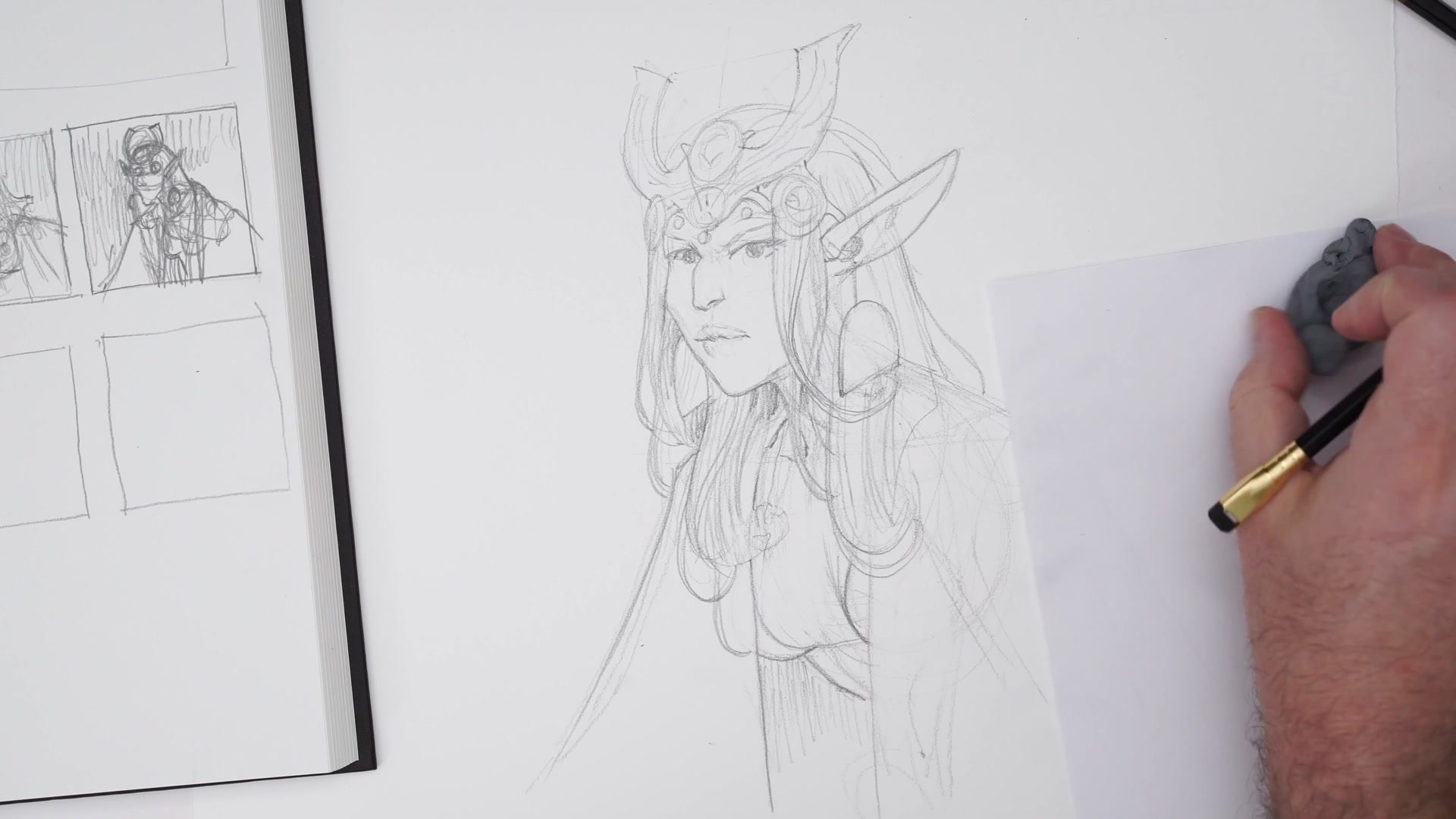
The construction phase uses a large pencil for visibility, blocking in the major forms before switching to refinement. The portrait deliberately hides complexity in the lower body with a kimono-style cloak, a practical decision about where to invest drawing time. The focus stays on the face, headdress, and the structural relationship between head placement and shoulder line.
Refinement and Detail
Iterative Refinement
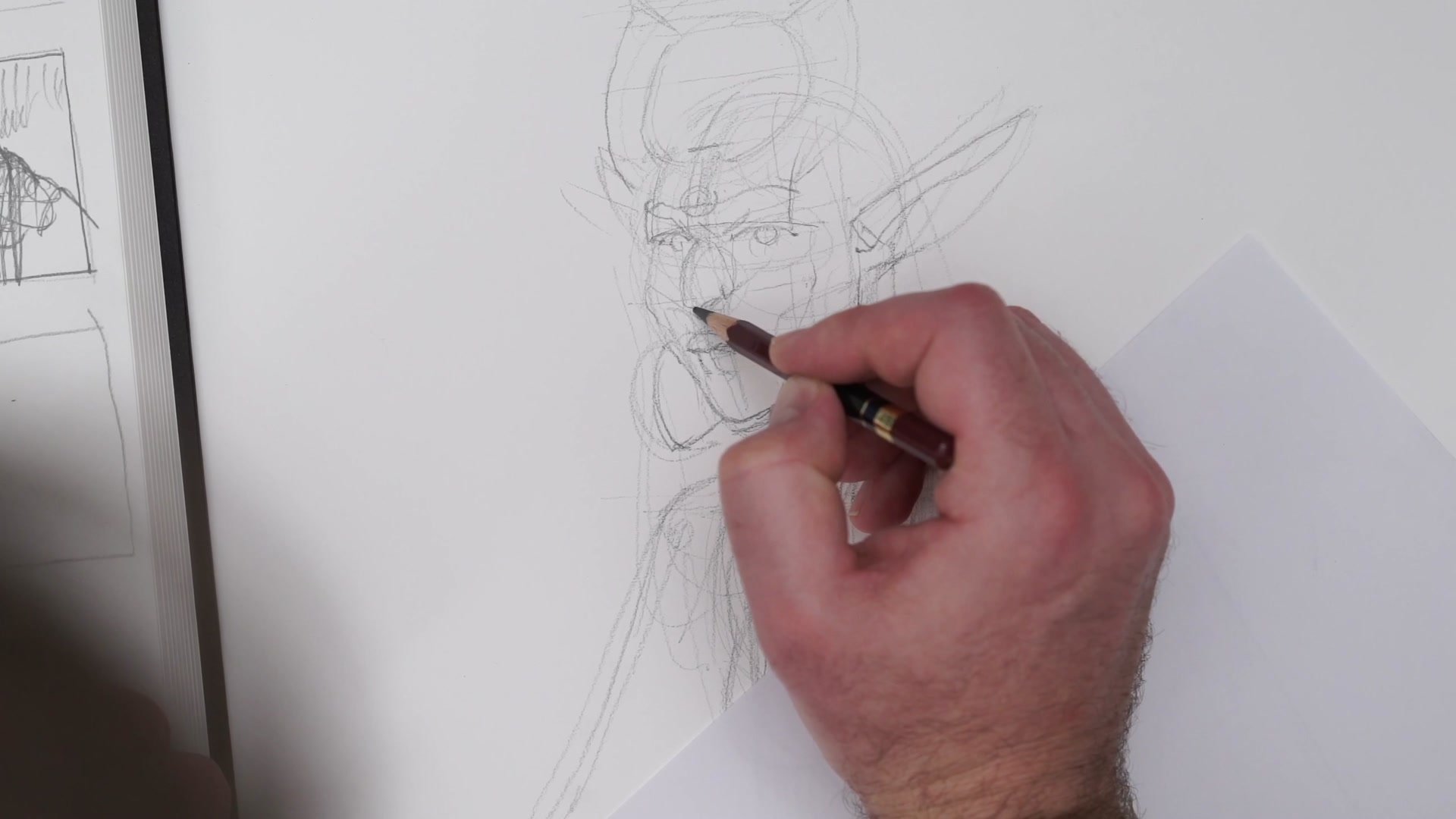
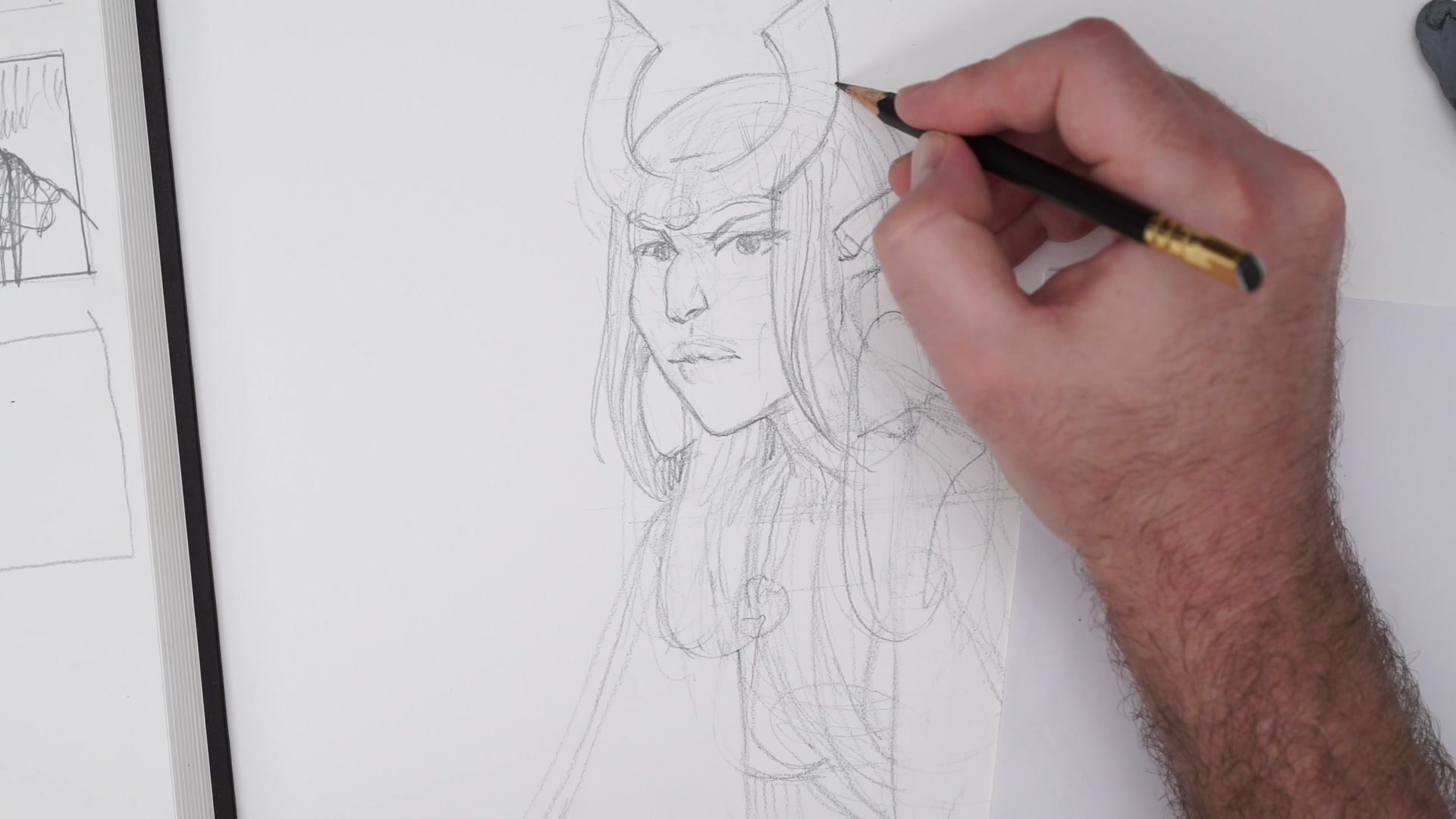
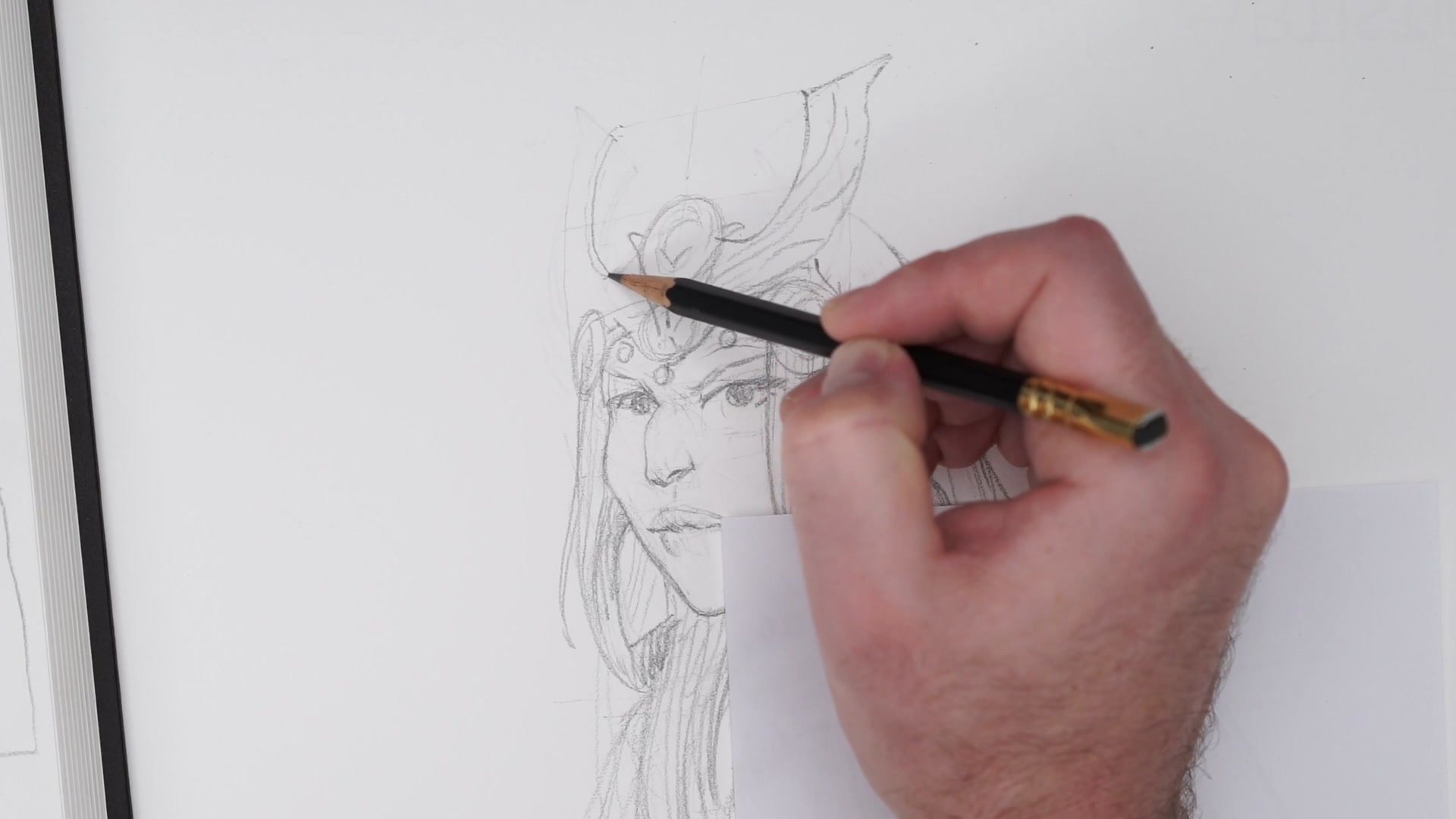
The refinement phase involves periodically standing back to check proportions and center line accuracy from a distance. This physical step away from the drawing changes the strokes and muscles being used, which helps break habitual mark-making patterns. The eyes, nose, and facial features go through multiple passes of sketching and erasing, building confidence in the placement before committing to darker lines.
The headdress design evolves during drawing, with the headpiece elements being mirrored using negative space observation rather than strict measurement. Hair presents an ongoing challenge, with art nouveau-inspired flowing lines competing against the more structured sketch lines of the face. The final phase involves balancing detail density across the portrait and recognizing when further refinement becomes diminishing returns.
Final Drawing
Key Techniques
Thumbnail Separation: Keeping idea generation and structural execution as separate phases prevents the analytical drawing mind from suppressing creative exploration.
Center Line and Spine Visualization: Imagining where the spinal column connects inside the skull helps place the neck correctly relative to the head and torso.
Strategic Complexity Hiding: Deciding early what to hide with clothing or cropping lets the drawing time focus on the areas that matter most to the image.
Standing Back to Check: Physically stepping away from the drawing changes perspective and muscle engagement, revealing proportion errors that are invisible up close.
Knowing When to Stop: Recognizing when further refinement is not improving the drawing, and that starting a new piece with better planning is more productive than endlessly fussing.
Try This Exercise
Step 1: Fill a sketchbook page with small thumbnail boxes and sketch quick character or scene ideas without worrying about structure or anatomy.
Step 2: Pick one thumbnail that feels promising and redraw it larger on a separate sheet, this time focusing on structural construction and proportion.
Step 3: Compare the energy of the thumbnail against the execution of the larger drawing, and note where the translation worked and where it lost something.