Learn To Draw Heroic Figures
Summary
Constructive Anatomy for Heroic Figures
Drawing muscular characters from different angles feels like an impossible mountain. The goal seems to be mastering every body type from every perspective, which creates a paralysing sense of overwhelm. The Loomis method and constructive anatomy offer a systematic approach, but most instruction teaches these tools as rigid academic exercises disconnected from the art people actually want to create.
This video teaches constructive anatomy through the active drawing of heroic figures. Starting with box construction to build spatial thinking, moving through the mannequin method for proportional planning, and layering muscle mass on top of that framework. Crucially, it examines how professional artists like Gil Kane and Masamune Shirow use anatomy differently depending on what their work demands, revealing that building a focused personal repertoire matters more than universal mastery.
Tools and Setup
Boxes, Spines, and Spatial Thinking
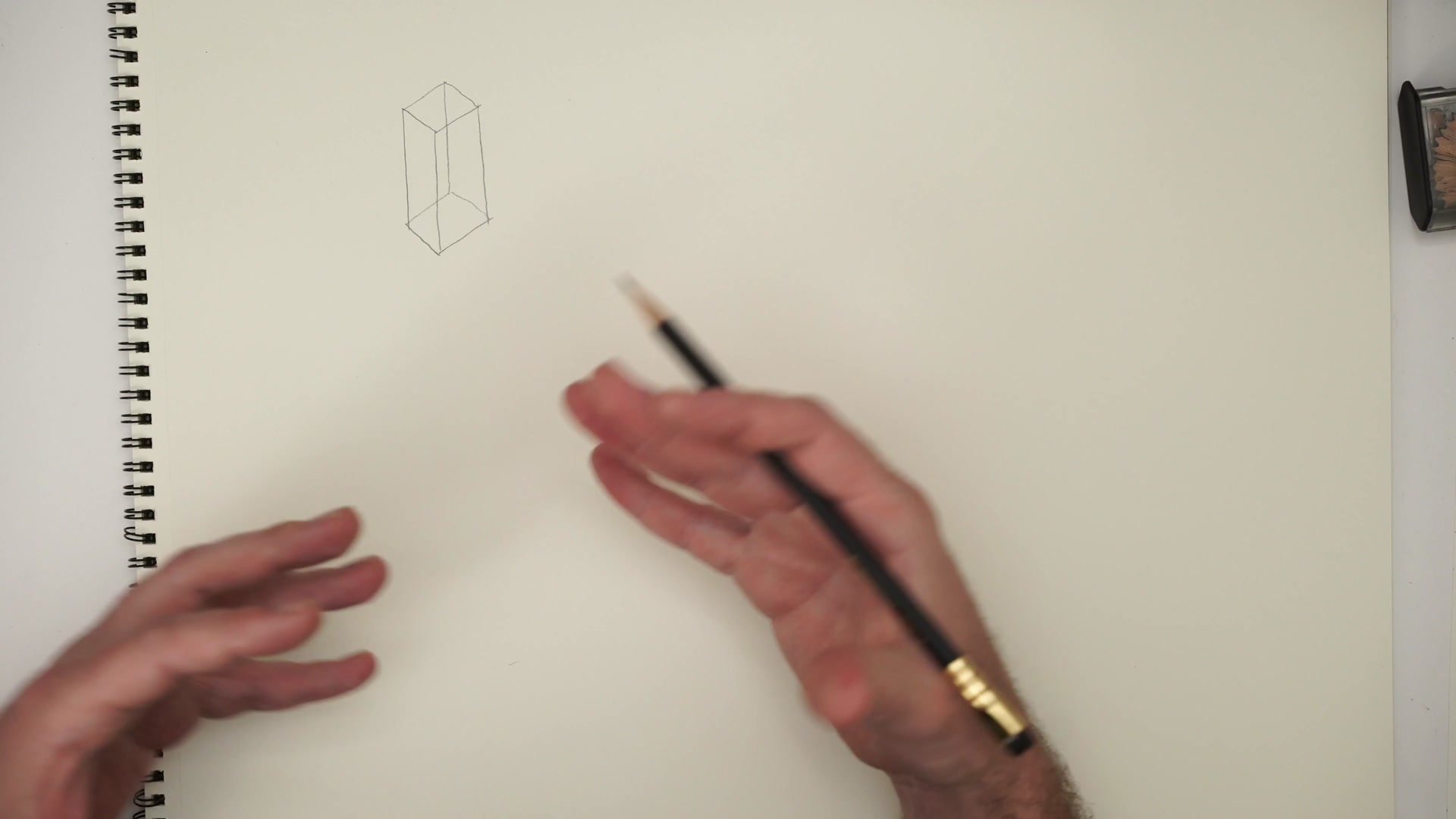
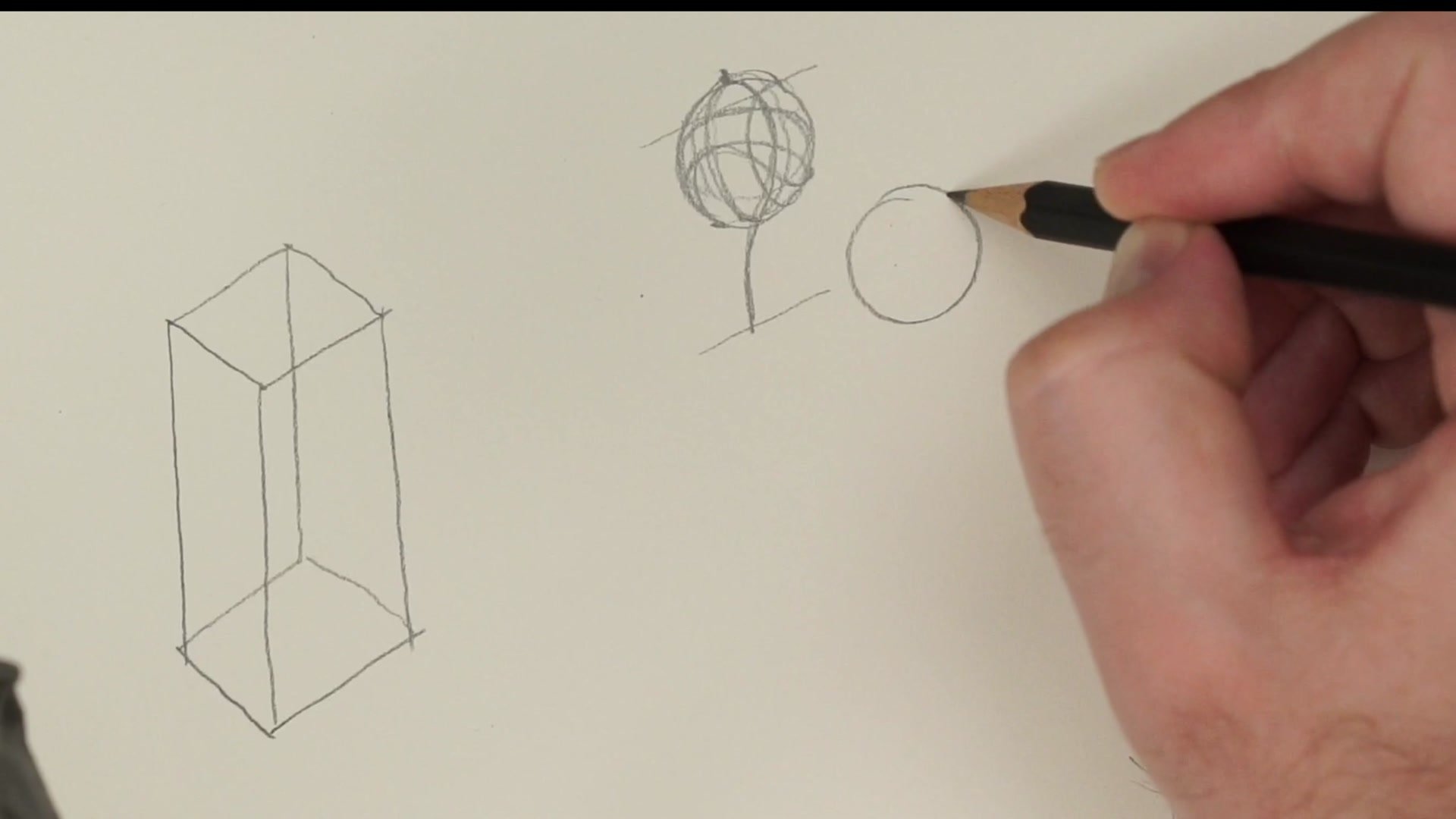
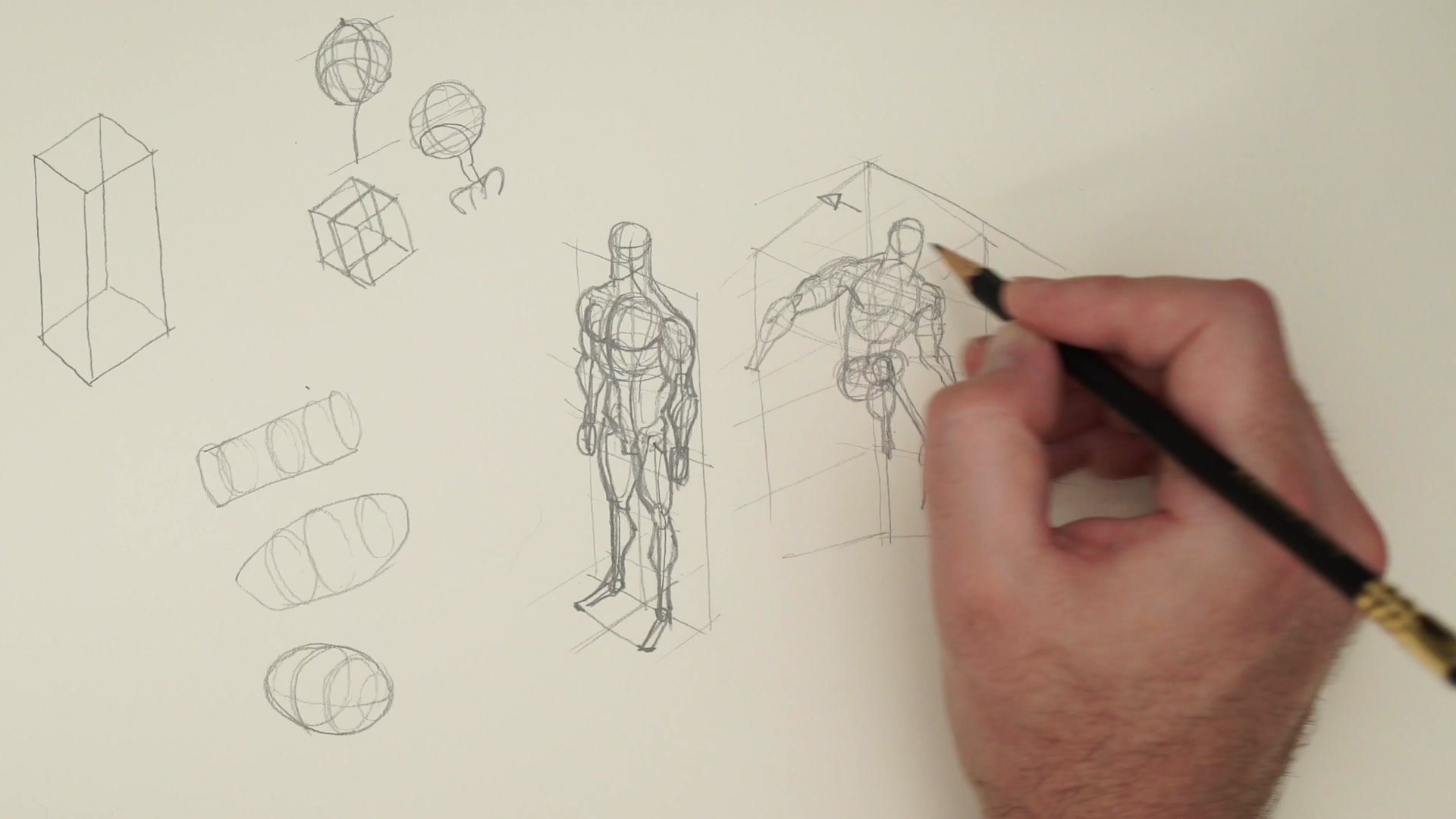
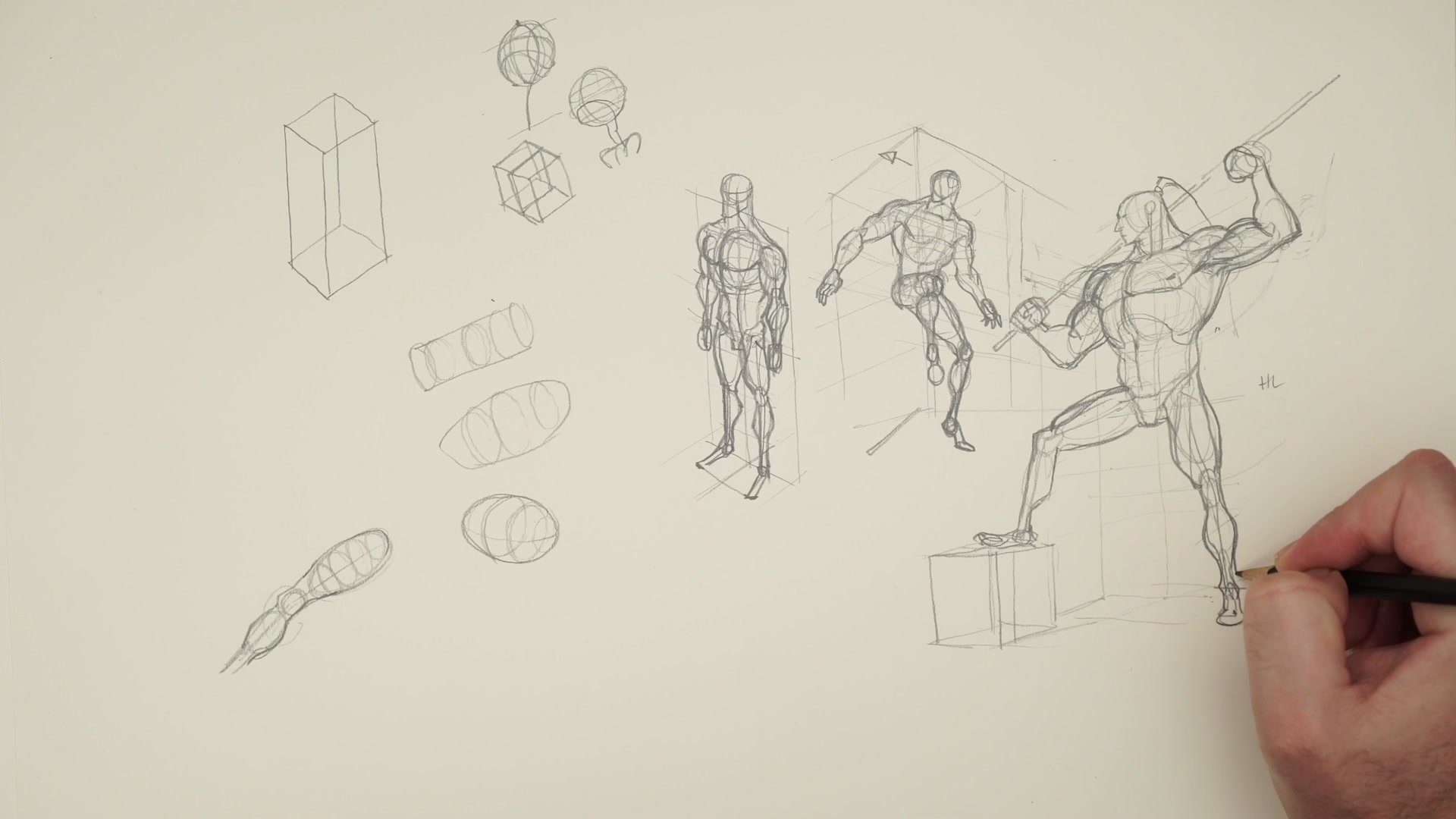
The foundation of drawing figures from different angles starts with drawing boxes. Not for hours, but as a short daily practice: ten minutes of boxes drawn from obviously different viewpoints, above, below, three-quarter. This exercise builds the spatial thinking that everything else depends on.
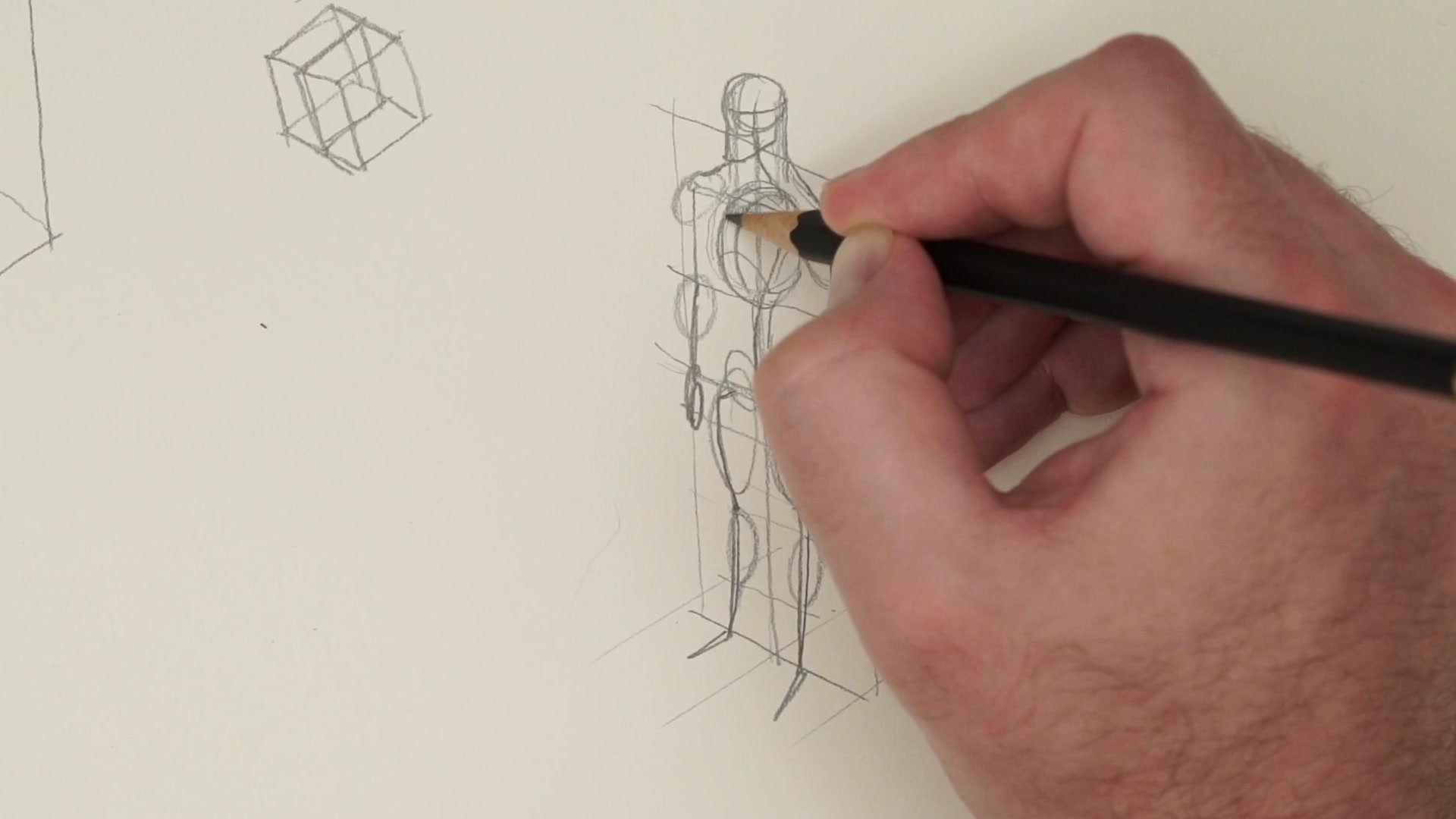
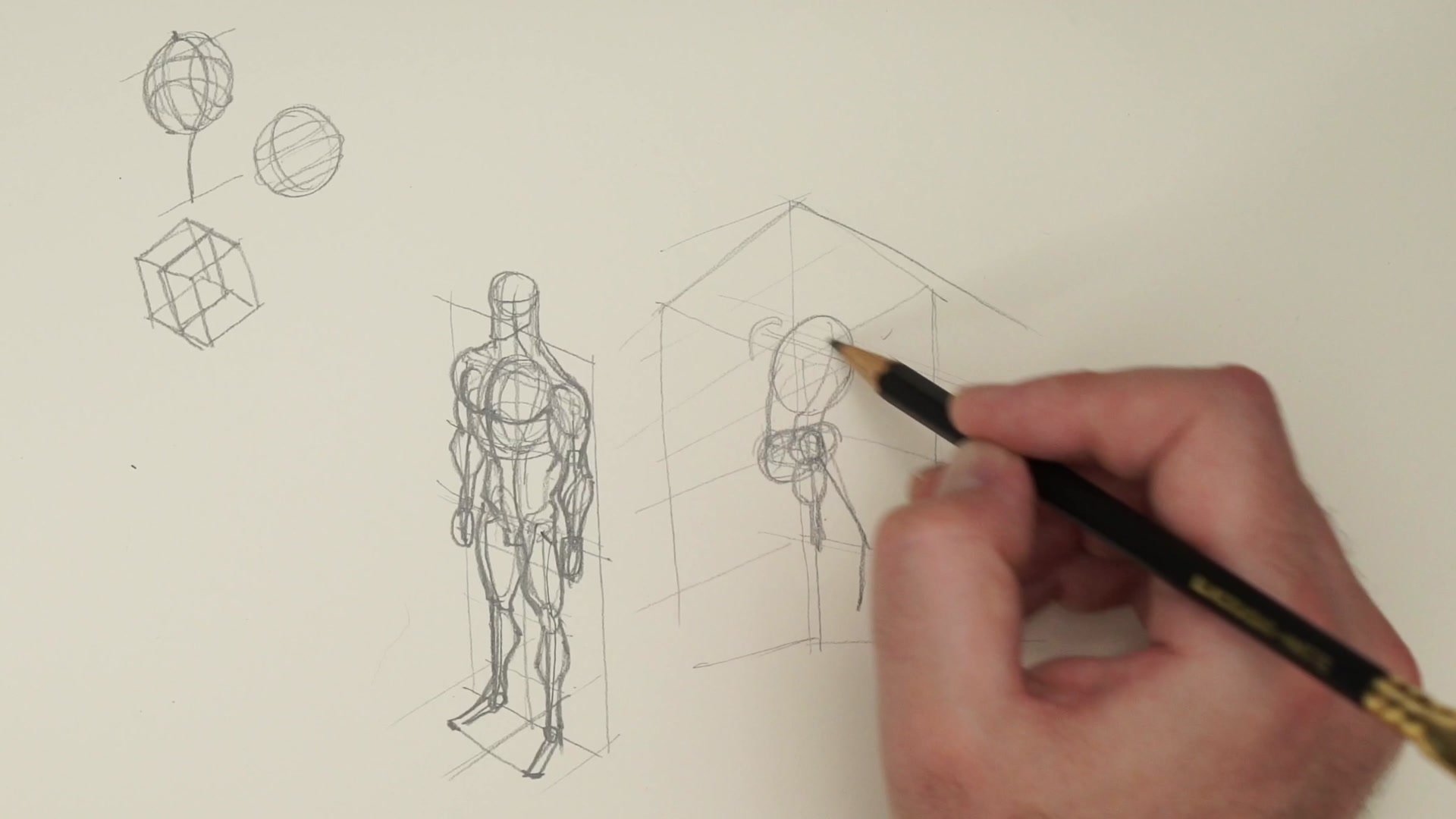
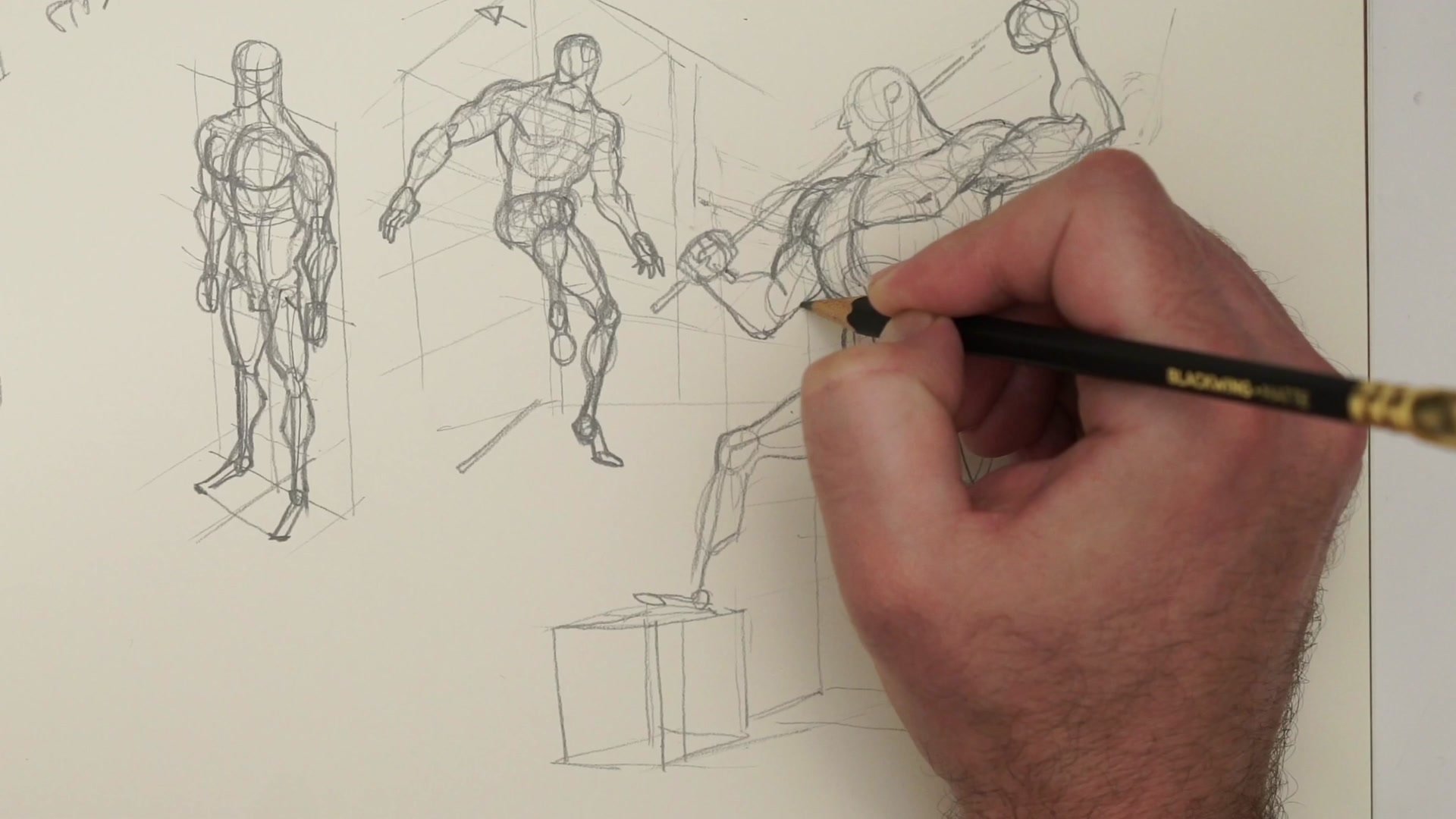
From boxes, the focus shifts to visualising the spine as a curve wrapping around a cylinder. Think of the torso from above or below, with that center line moving through space. Drawing contour lines on spheres and cylinders, like mapping a grid onto geometry, develops the ability to see where forms sit in three dimensions. The mannequin itself is rough: proportional markers for head, ribcage, pelvis, shoulders, elbows, knees. Simple masses that establish the plan before any detail work begins. This proportional skeleton is the Loomis method in its most practical form, a way to get an idea on the page early rather than a rigid sequence of steps.
Mannequin Construction
Adding Mass and Muscle
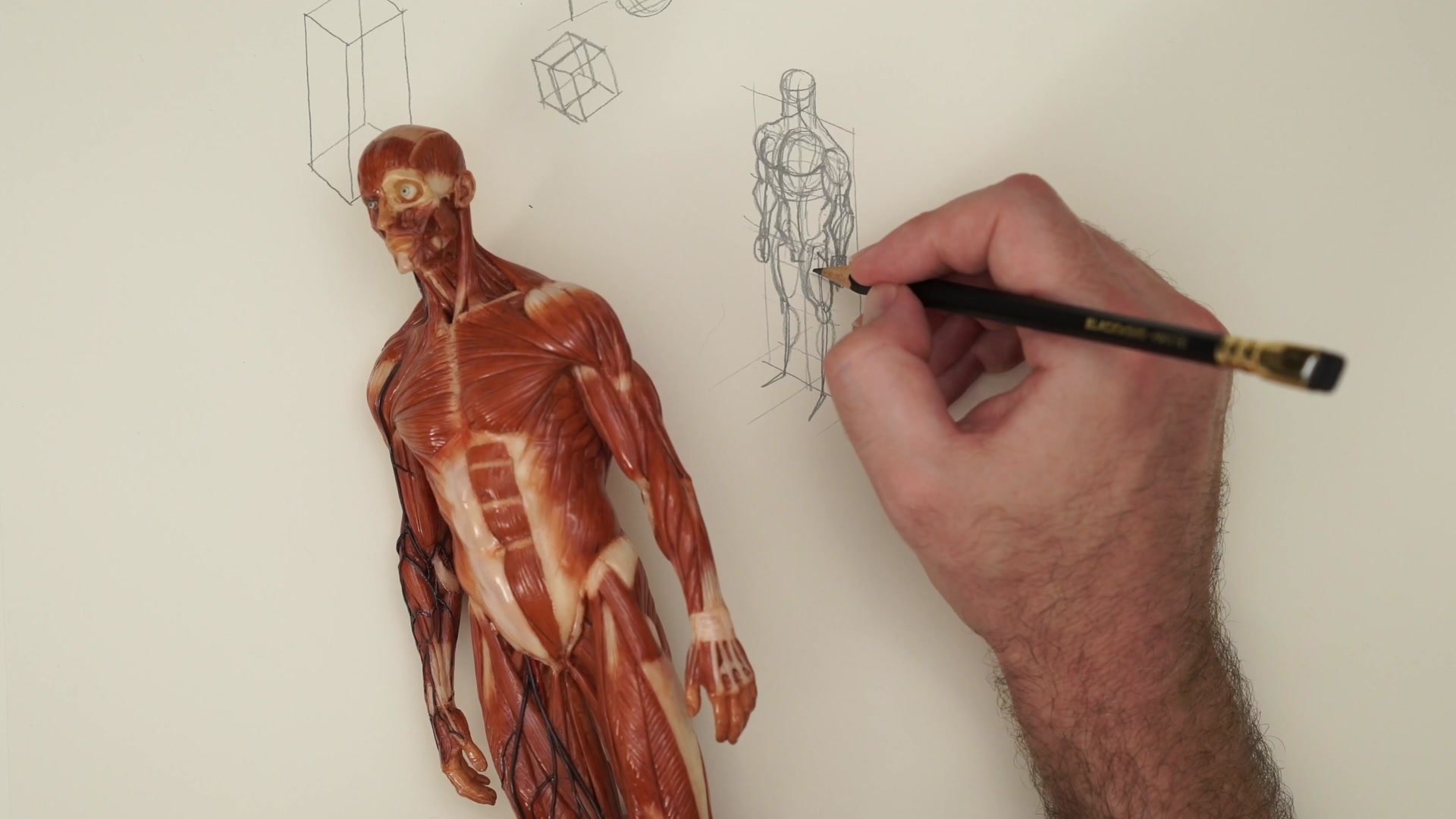
Once the mannequin establishes proportion, heroic bulk comes from understanding how muscles wrap around constructed forms. The deltoid sits on top of the pectoral. The bicep tucks underneath. These masses build on the proportional skeleton according to how the character needs to look, not how a medical textbook arranges them.
The real working process mixes construction with direct drawing. Sometimes the form goes in by eye. Sometimes it breaks down into individual muscle groups when something looks wrong. When stuck, go back to construction. When flowing, trust the hand. Reference helps enormously here: anatomical models, other artists' interpretations, whatever makes the placement click. The exaggeration is styled to taste. Bigger shoulders, thicker forearms, enlarged thighs. The mannequin provides the framework and the muscle masses get pushed until they feel right for the intended style.
Building Multiple Figures
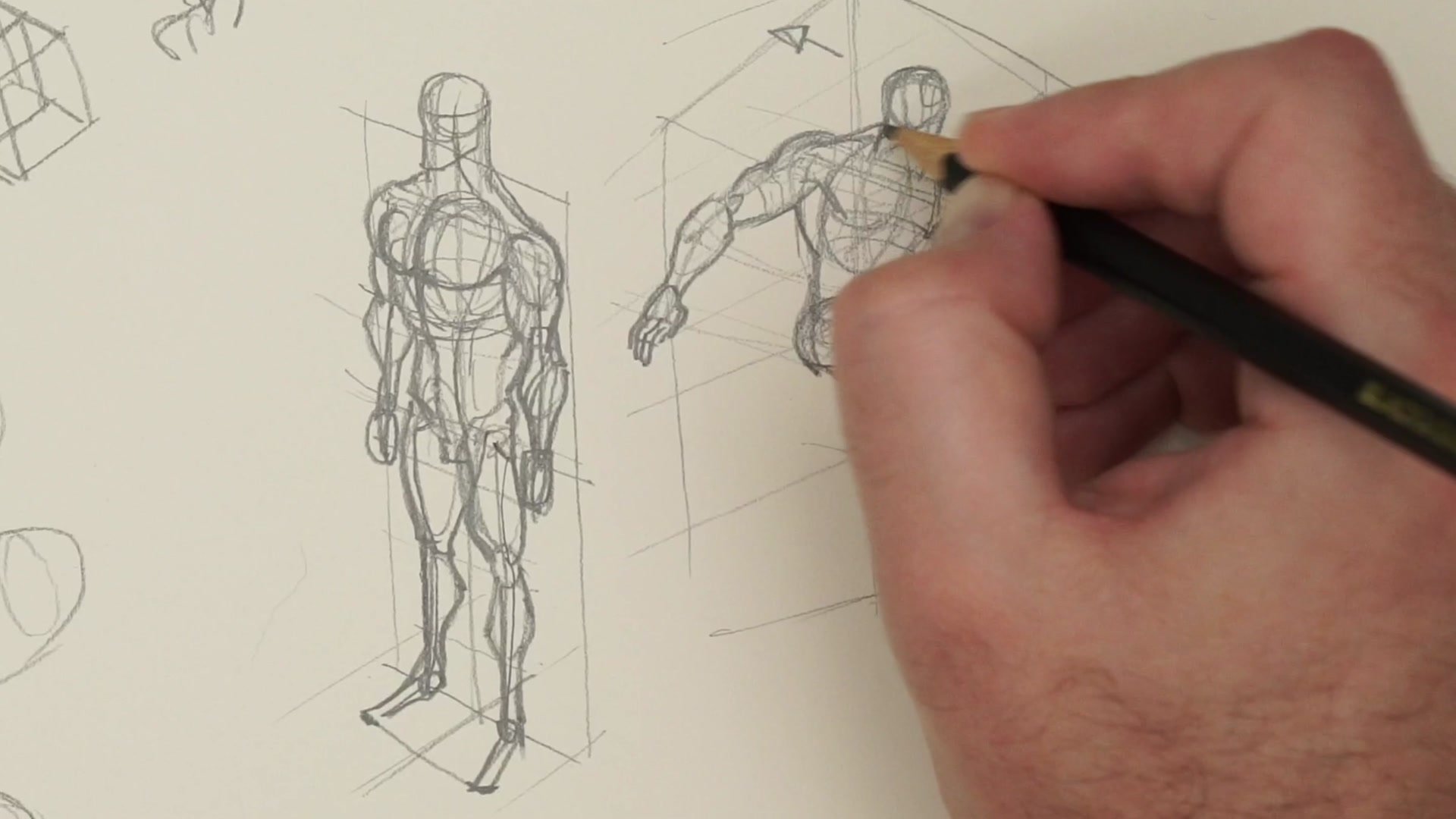
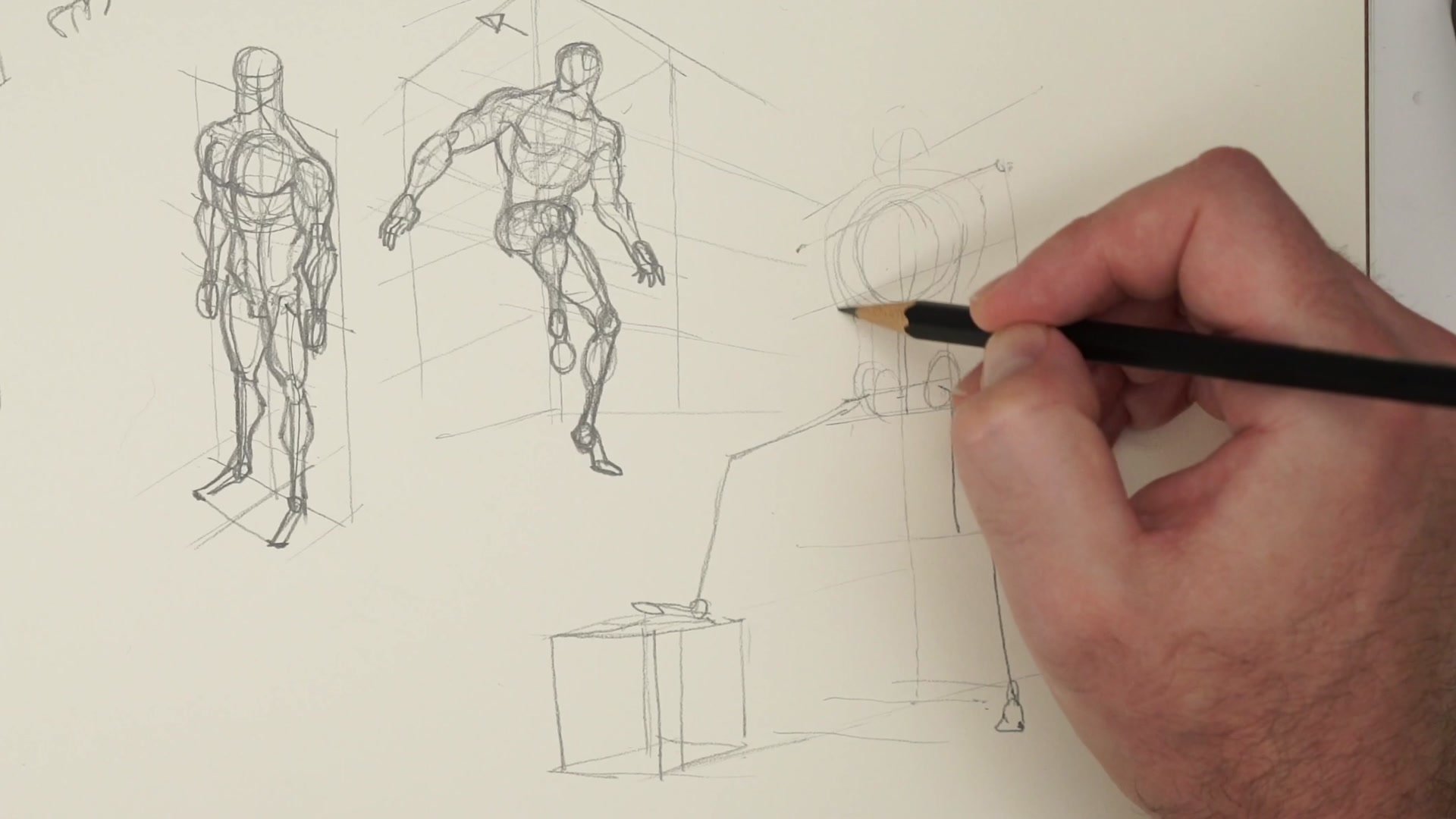
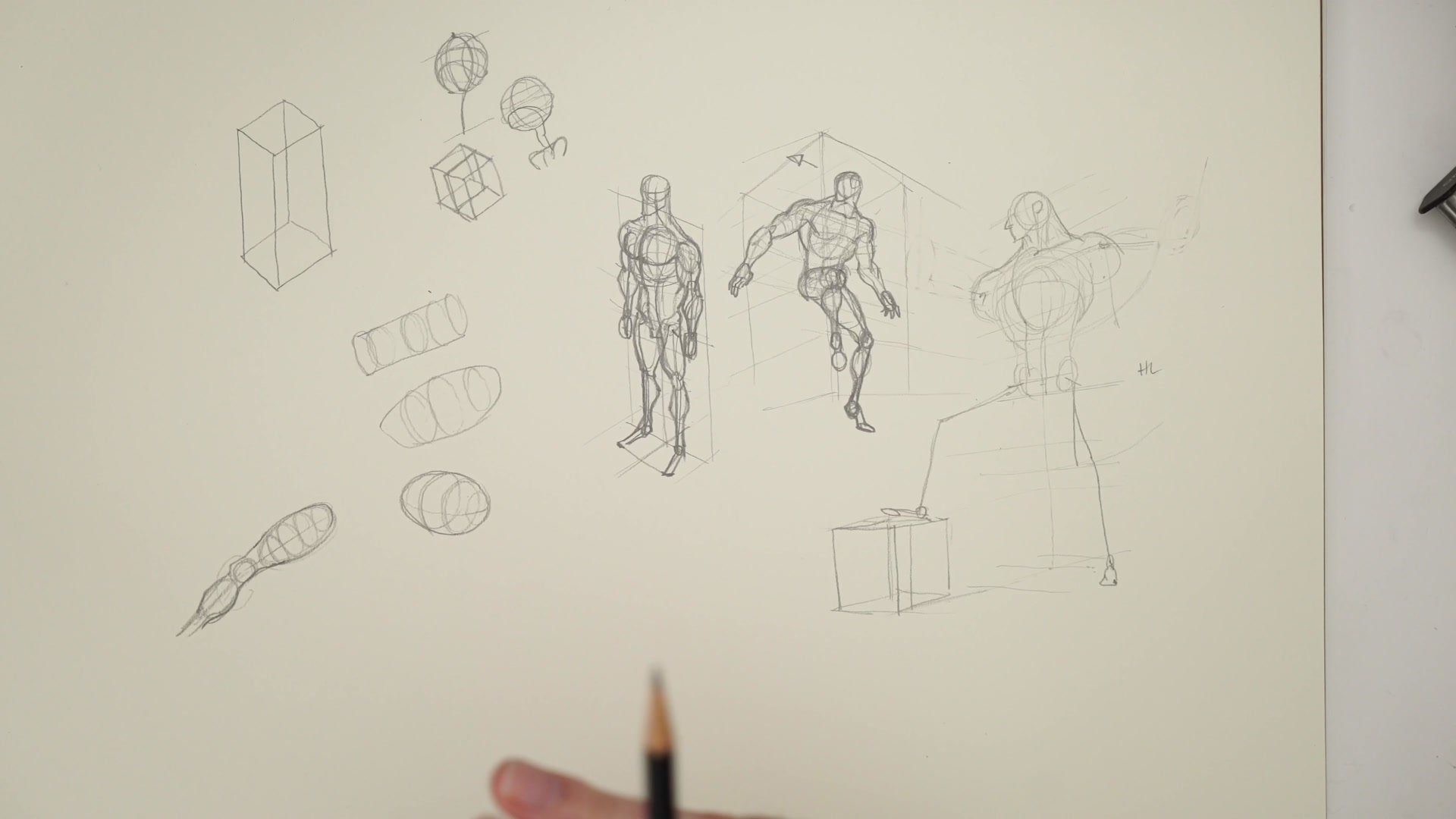
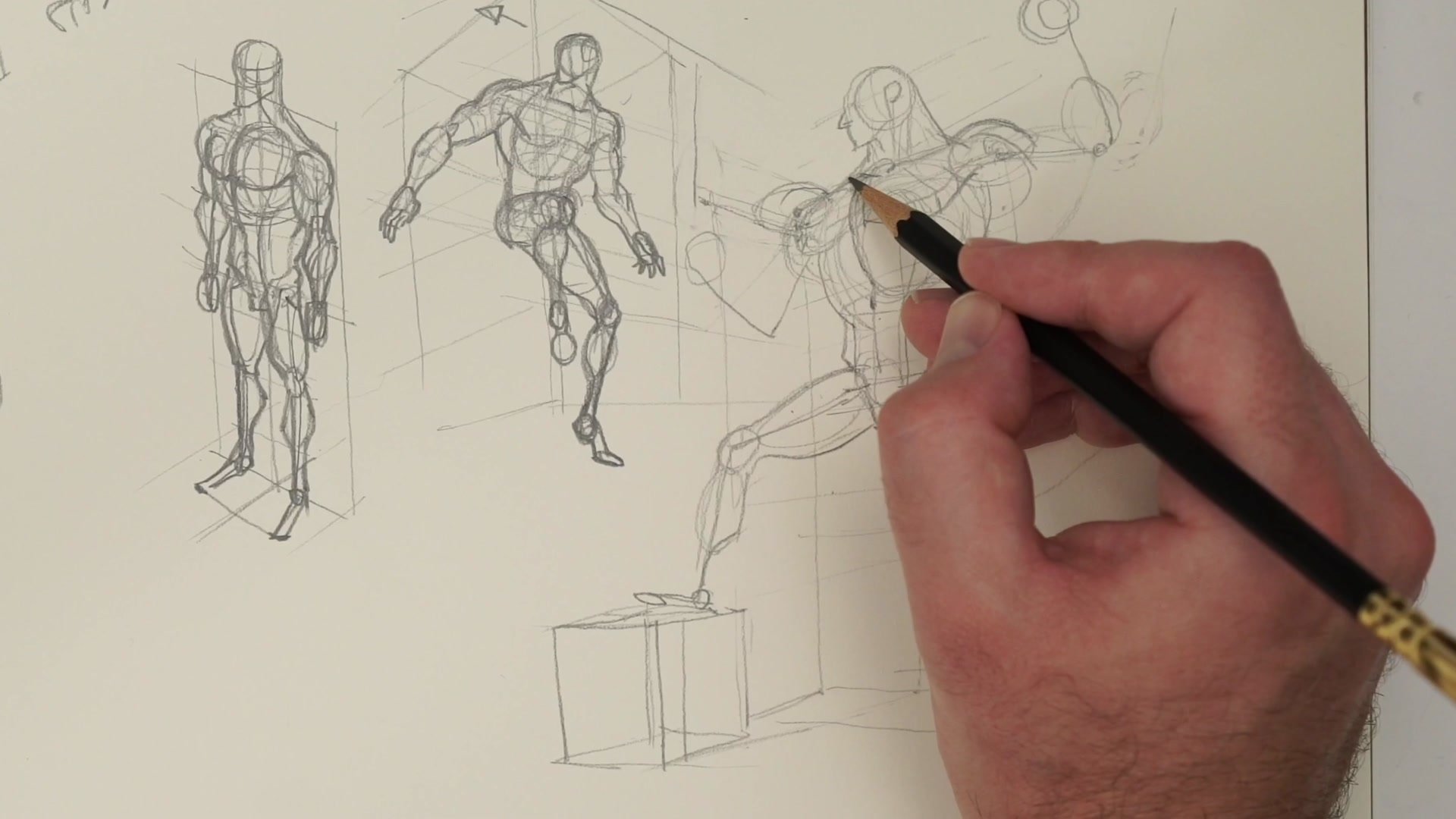
Repertoire Over Universal Mastery
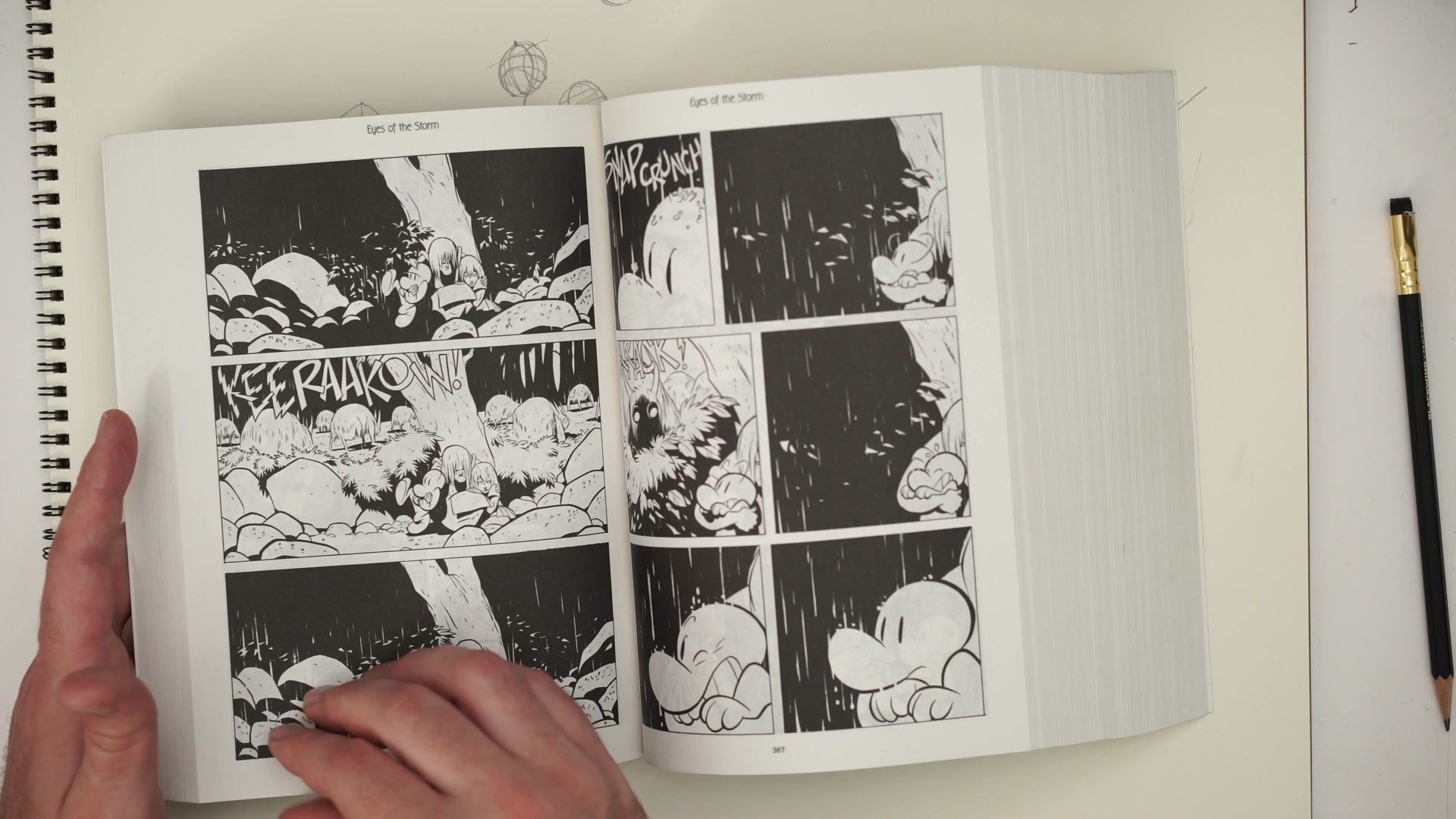
Even master artists work within limits. Close examination of favourites reveals something encouraging: their abilities are more focused than they appear. Everyone has a repertoire of poses they use repeatedly, angles they favour, and character types they have mastered. This is not a limitation, it is how professional work actually happens.
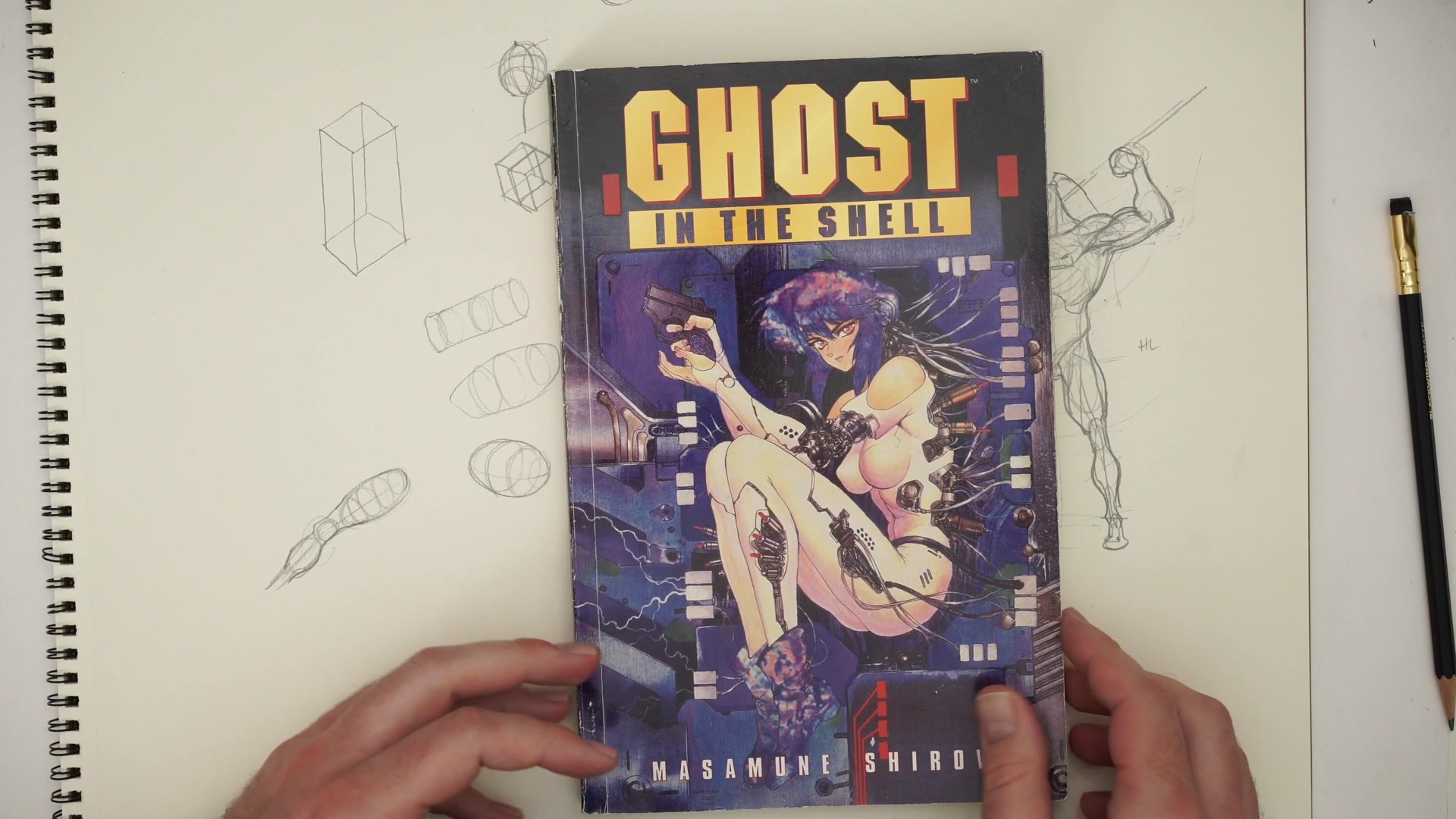
Gil Kane drew one body type from extreme dynamic angles with incredible anatomical knowledge. Masamune Shirow drew characters from many angles with simpler anatomy, focusing instead on world-building and environments. Neither approach is lesser. The type of art determines how anatomy gets used. The Loomis method and constructive anatomy serve as problem-solving tools for building this personal repertoire. They help artists figure things out when drawing subjects that matter, rather than requiring memorisation of every possible configuration.
Artist Analysis
Key Principles
Mannequin First: Start with the proportional skeleton to get the idea on the page early. Construction is a planning tool, not a rigid procedure that replaces sketching.
Mix Construction and Intuition: Use constructive anatomy when stuck, trust direct drawing when flowing. The working process blends both approaches depending on what the moment requires.
Study Artist Implementation: Look at how favourite artists actually use anatomy. Notice which poses they repeat, which details they emphasise, and which they skip entirely. This reveals what is genuinely needed.
Repertoire Over Universality: Building a focused set of poses and angles that serve the work being created matters more than attempting to master every body type from every perspective.
Practice This
Daily Box Drawing: Spend ten minutes drawing boxes from extreme angles, obviously from above, below, and rotated. The boxes do not need to be perfect, they need to show clearly different viewpoints.
Mannequin Figures: Start with a stick figure showing the spine's curve in space. Add basic masses for torso, shoulders, and limbs. Focus on visualising where forms sit in three dimensions.
Add Muscle Mass: Layer heroic bulk onto the mannequin framework using reference when stuck. Draw the same heroic figure type repeatedly to build the visual library through repetition.