Draw Fantasy and Practice What You Actually Want to Do
Summary
Practice What You Actually Want to Do
Artists spend countless hours on anatomy studies, construction exercises, and fundamentals drills, then discover a gap when they try to create actual finished work. The skills built in isolation do not automatically transfer to the multi-step process of making a real illustration. Drawing a face at study scale is a different skill from drawing that same face inside a comic panel at half the size, surrounded by other elements competing for attention.
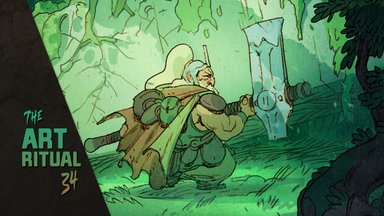
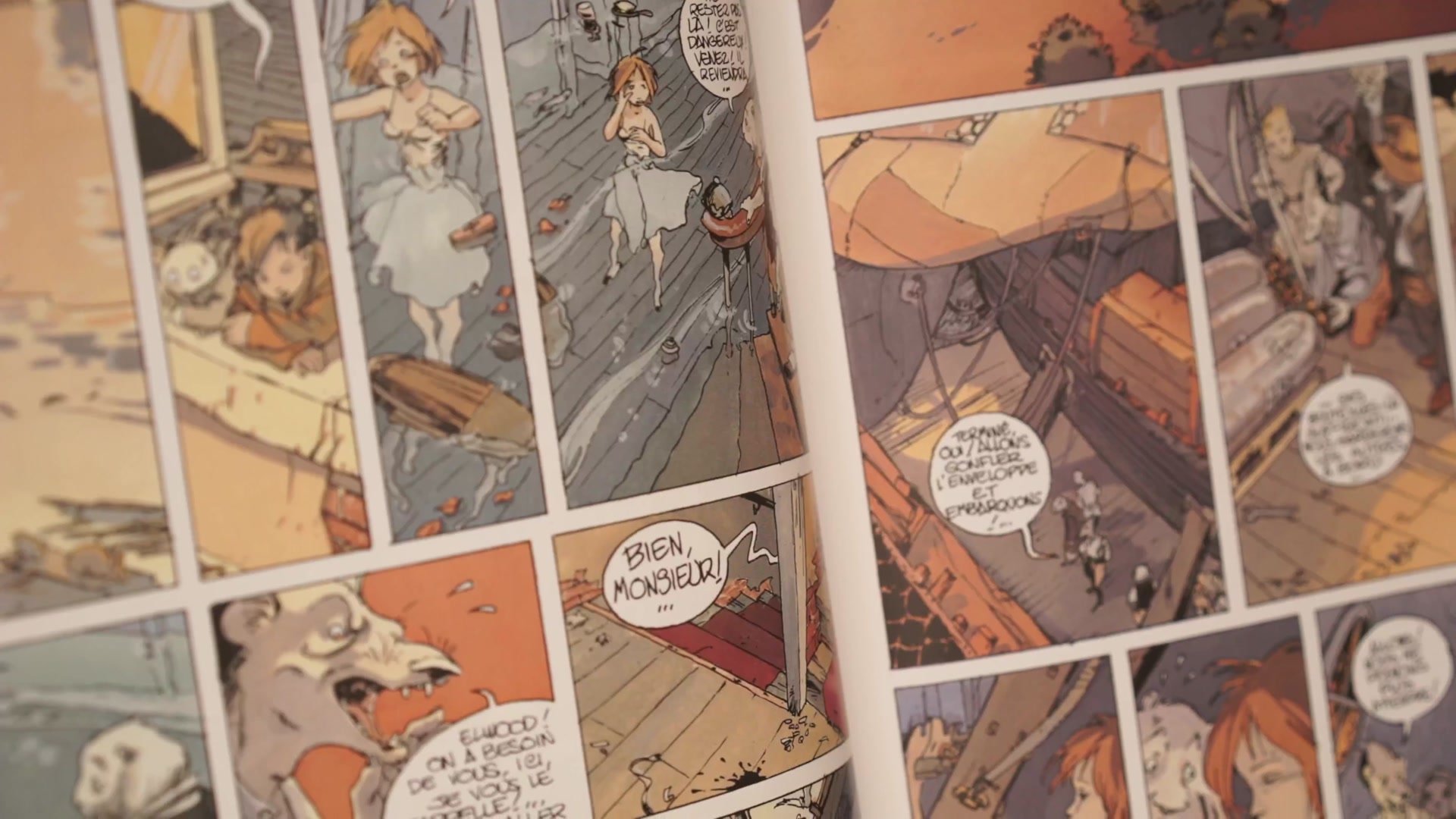
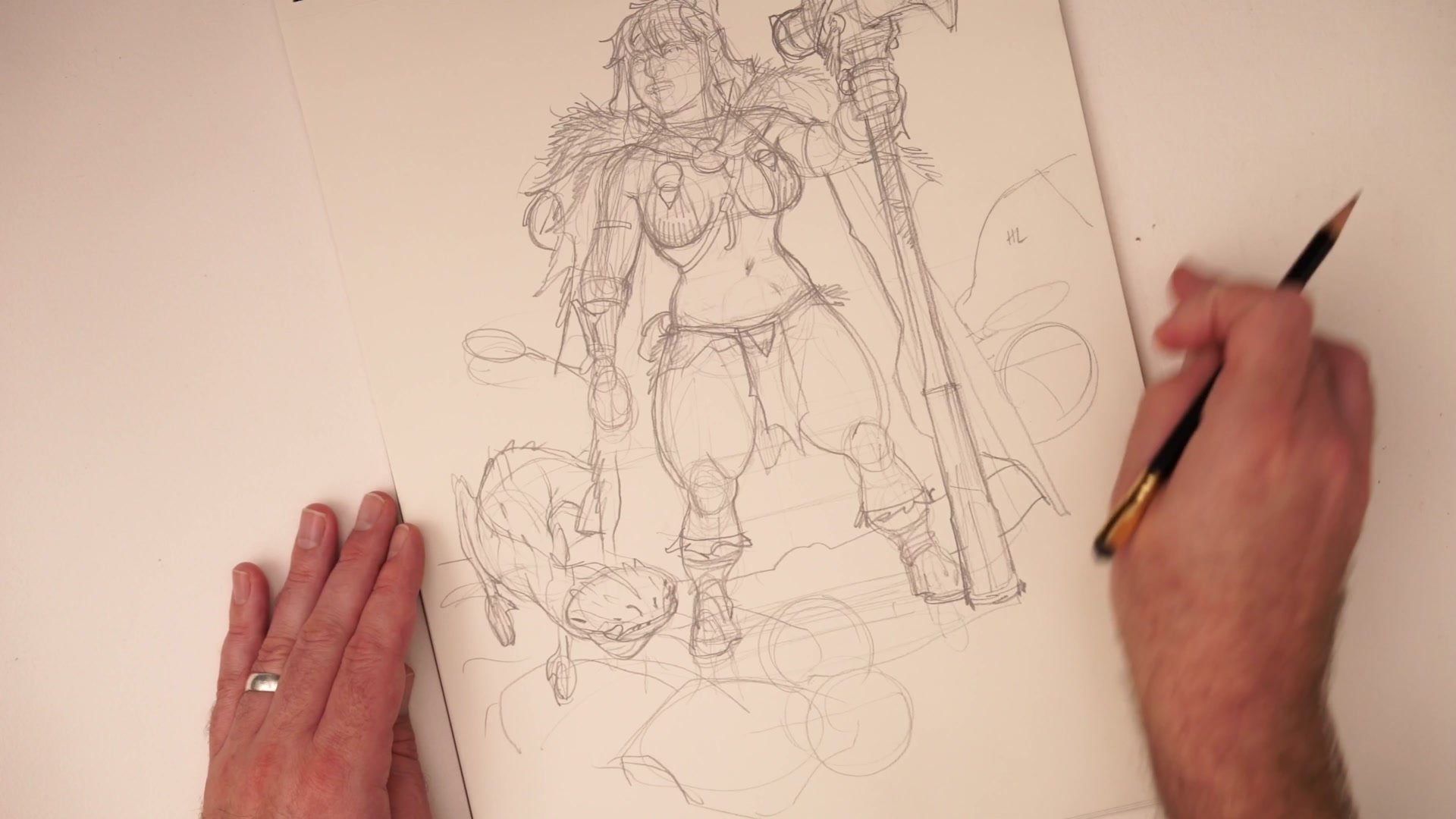
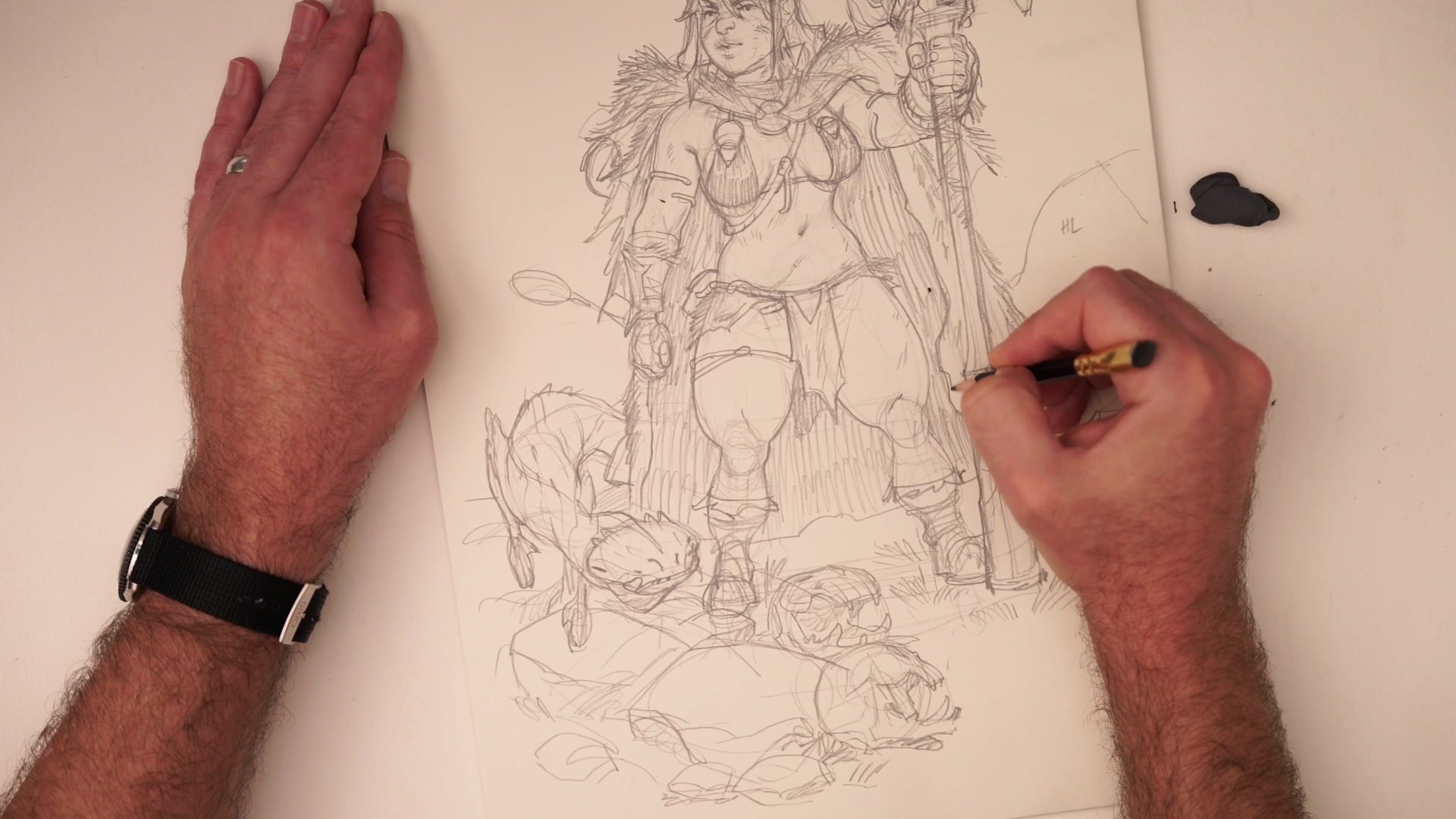
This session walks through the complete process of creating a fantasy dwarf warrior illustration, from thumbnail through construction to final sketch, while exploring why practicing your entire illustration process matters as much as studying individual fundamentals. Claire Wendling's Les Lumieres de l'Amalou provides the inspiration before pencil hits paper.
Art Book and Thumbnail
The Thumbnail Transfer Problem
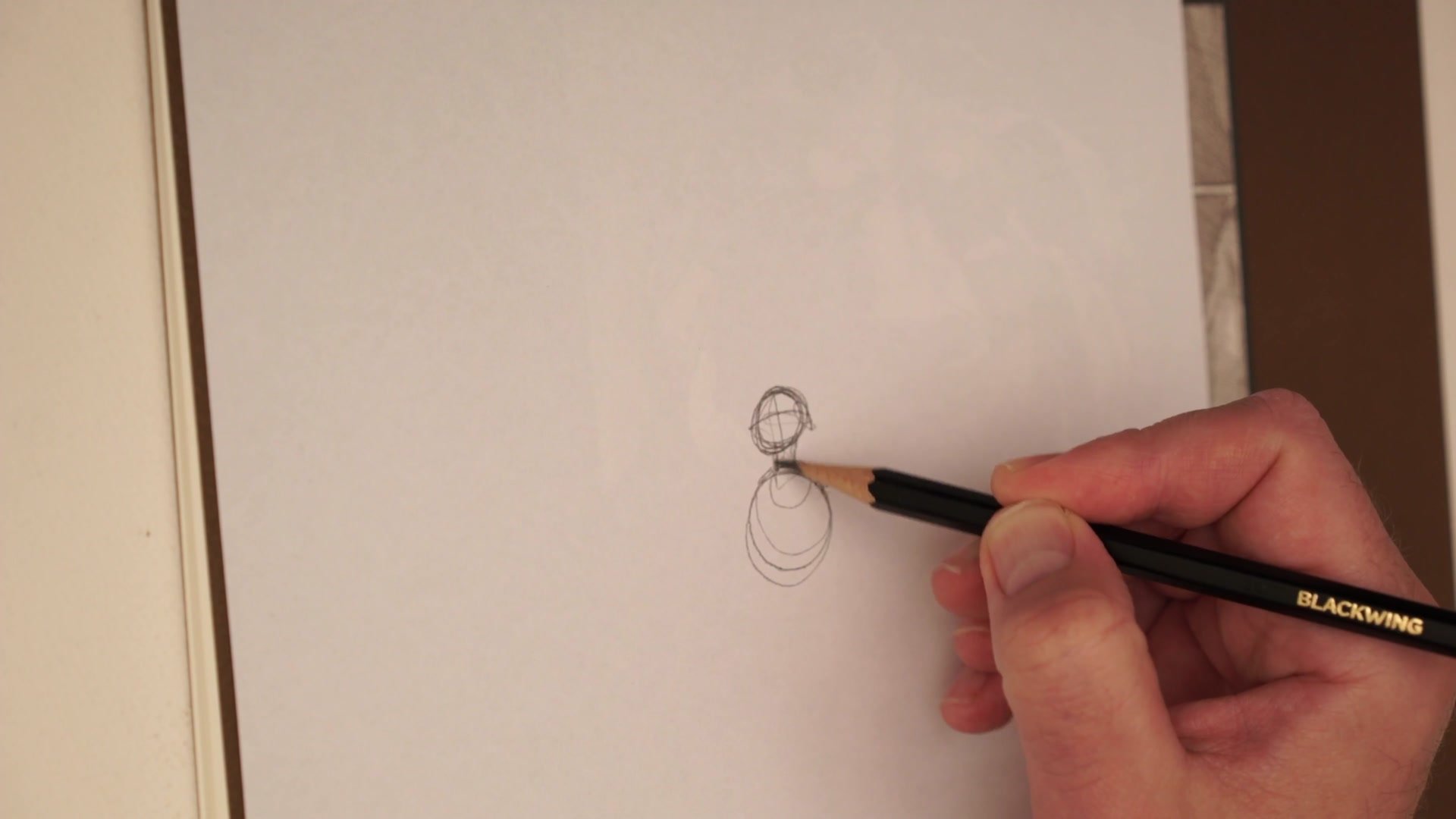
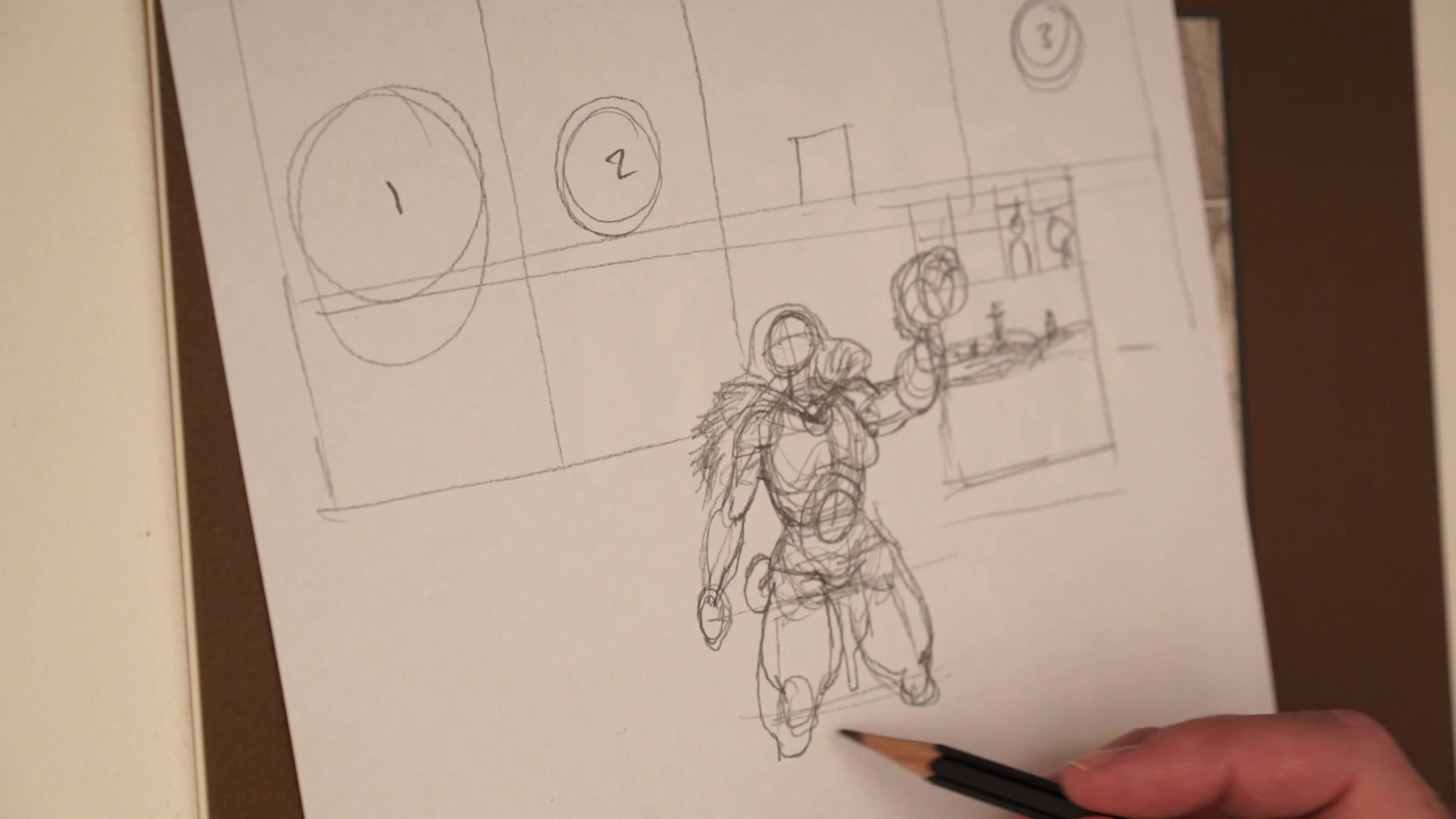
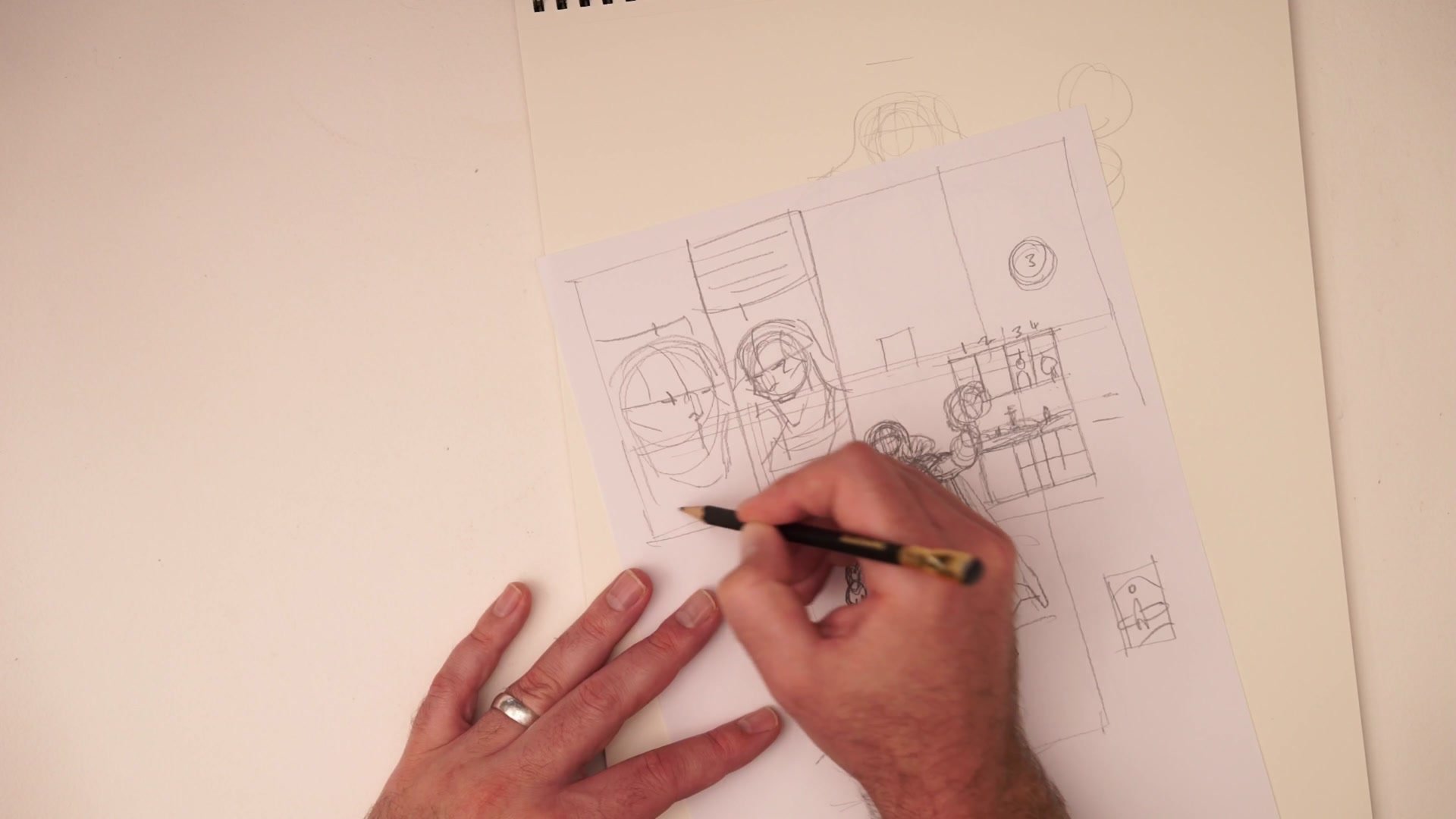
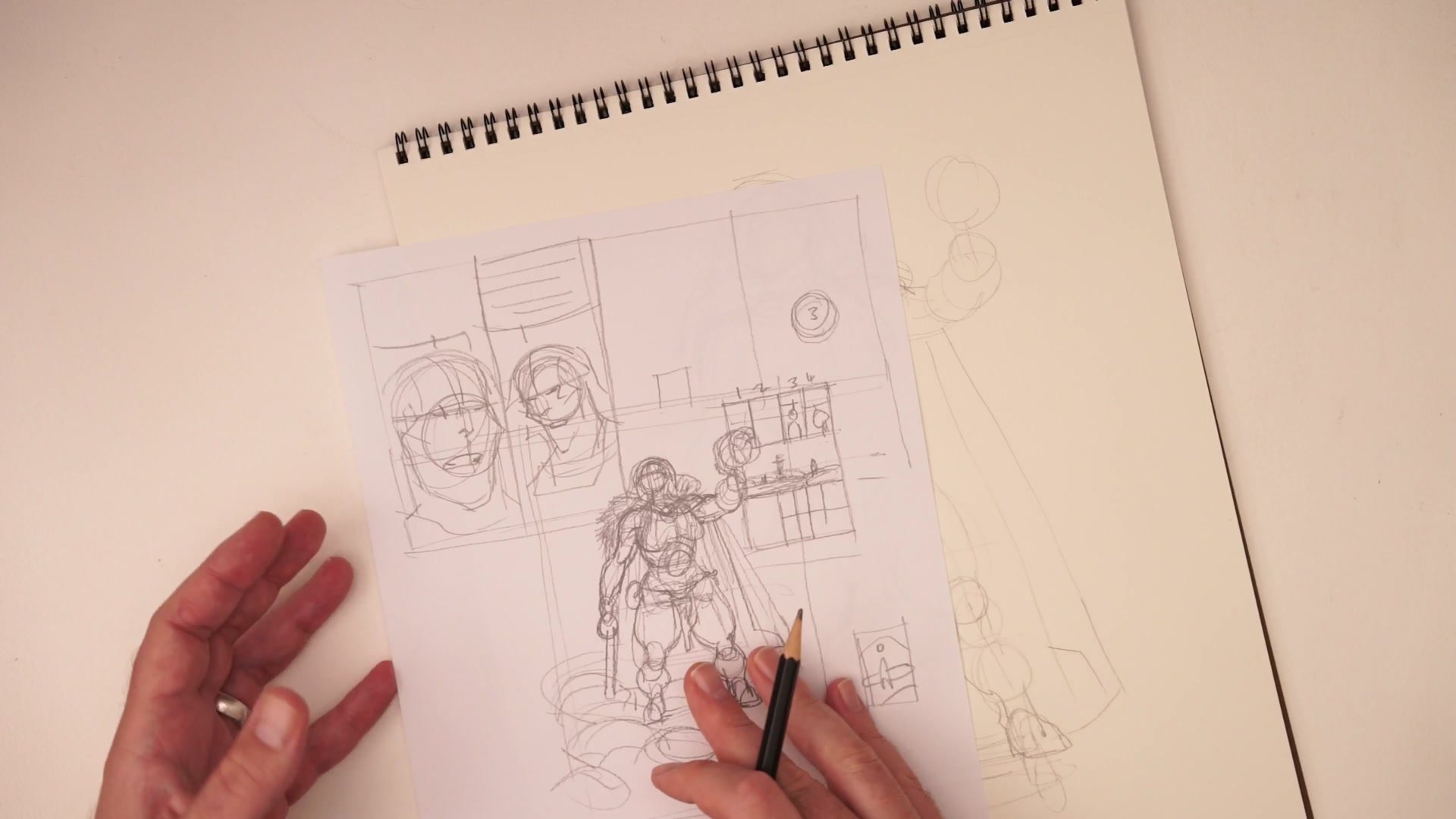
Creating a thumbnail is one skill. Transferring that thumbnail to a larger drawing is an entirely different one. Many artists develop the ability to sketch small, expressive thumbnails but then struggle when scaling up because they have never practiced the specific act of translating a small plan into a bigger construction drawing. The proportions shift, the muscle memory does not match, and the energy of the original sketch gets lost somewhere in the process.
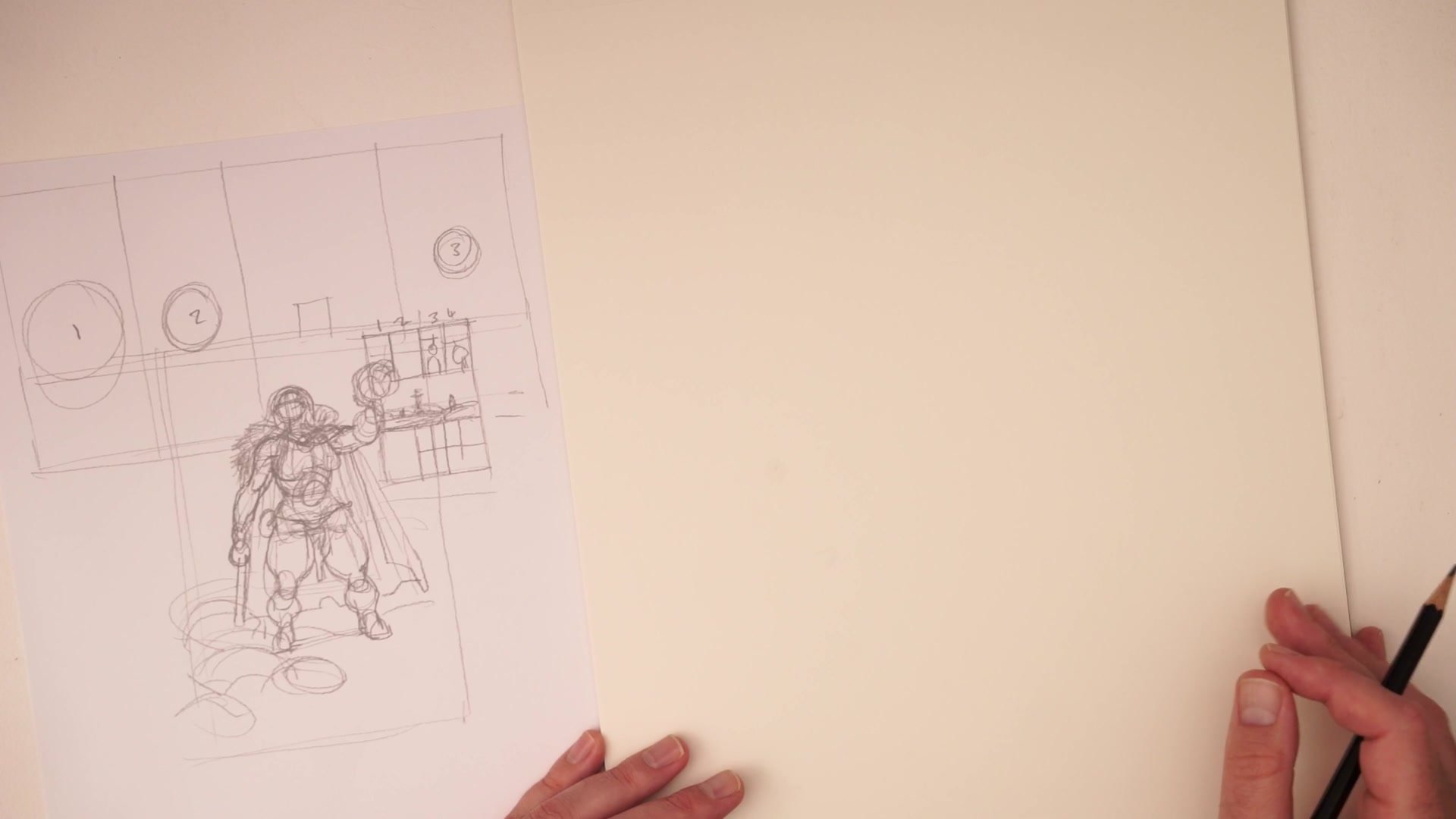
The solution is not better technical knowledge but more repetition of the actual transfer step. Redrawing the thumbnail at a larger scale, rather than tracing or projecting, builds the bridge between planning and execution. Each step in the process, from tiny thumbnail to rough construction to refined drawing, is its own micro-skill that needs dedicated practice. The more familiar each transition becomes, the less mental bandwidth it consumes, leaving room to think about character, expression, and storytelling.
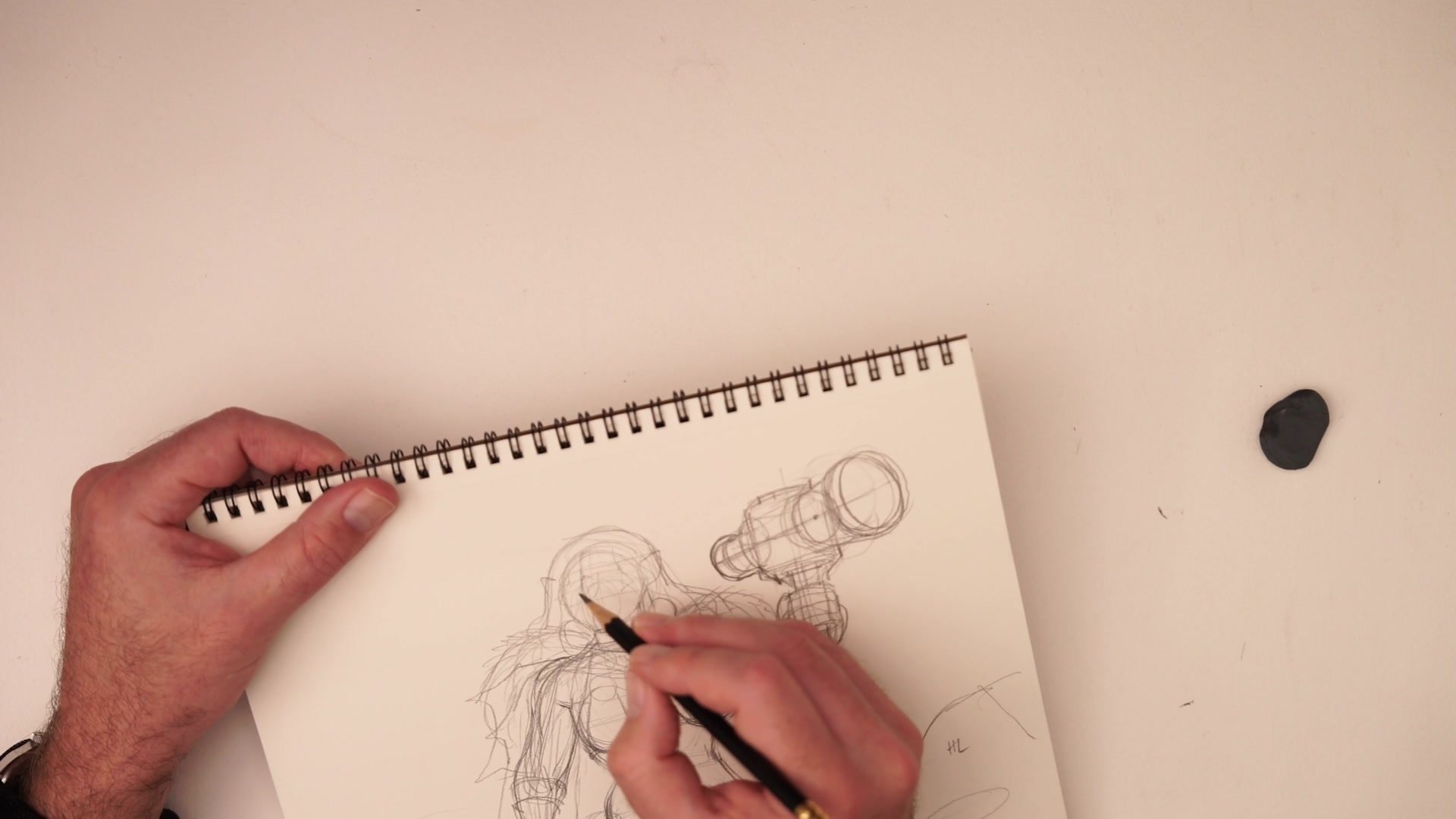
Construction Drawing
Muscle Memory at Every Scale
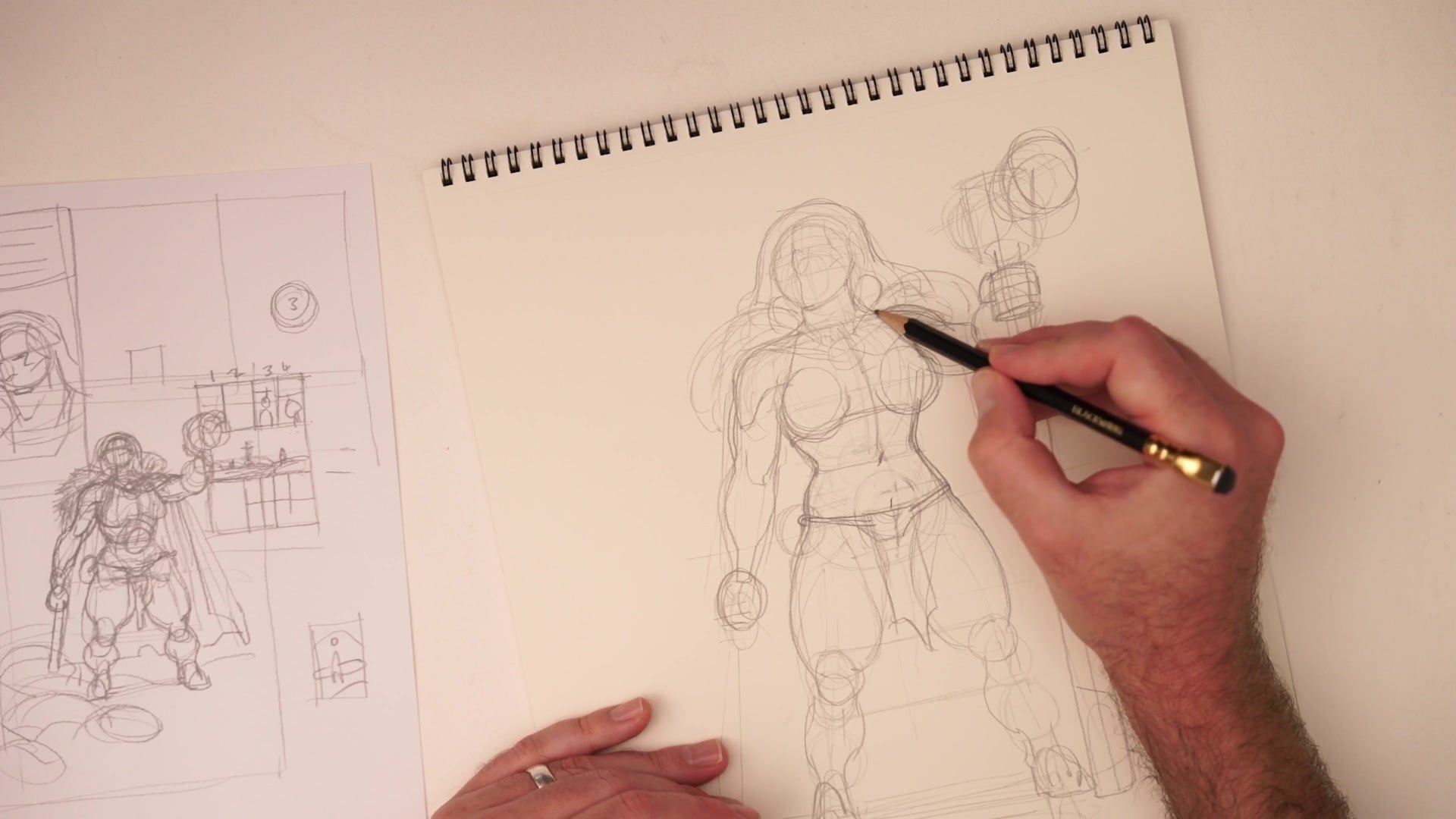
Drawing a character at sketchbook scale feels completely different from drawing that same character inside a panel layout. Even small changes in size throw off artists who have not specifically practiced at that scale. The hand moves differently, the proportions read differently, and the level of detail that works at one size falls apart at another. This is not a knowledge problem. It is a repetition problem.
Building muscle memory for each scale and each step of the process is what separates studying from making. When the basics become automatic at the scale you actually work at, the mind is free to focus on what matters: the emotion, the gesture, the storytelling. Without that automation, every drawing becomes a struggle against the mechanics rather than an exploration of the subject. The fundamentals are not a hazing ritual to complete before being allowed to create. They are tools to integrate directly into the work.
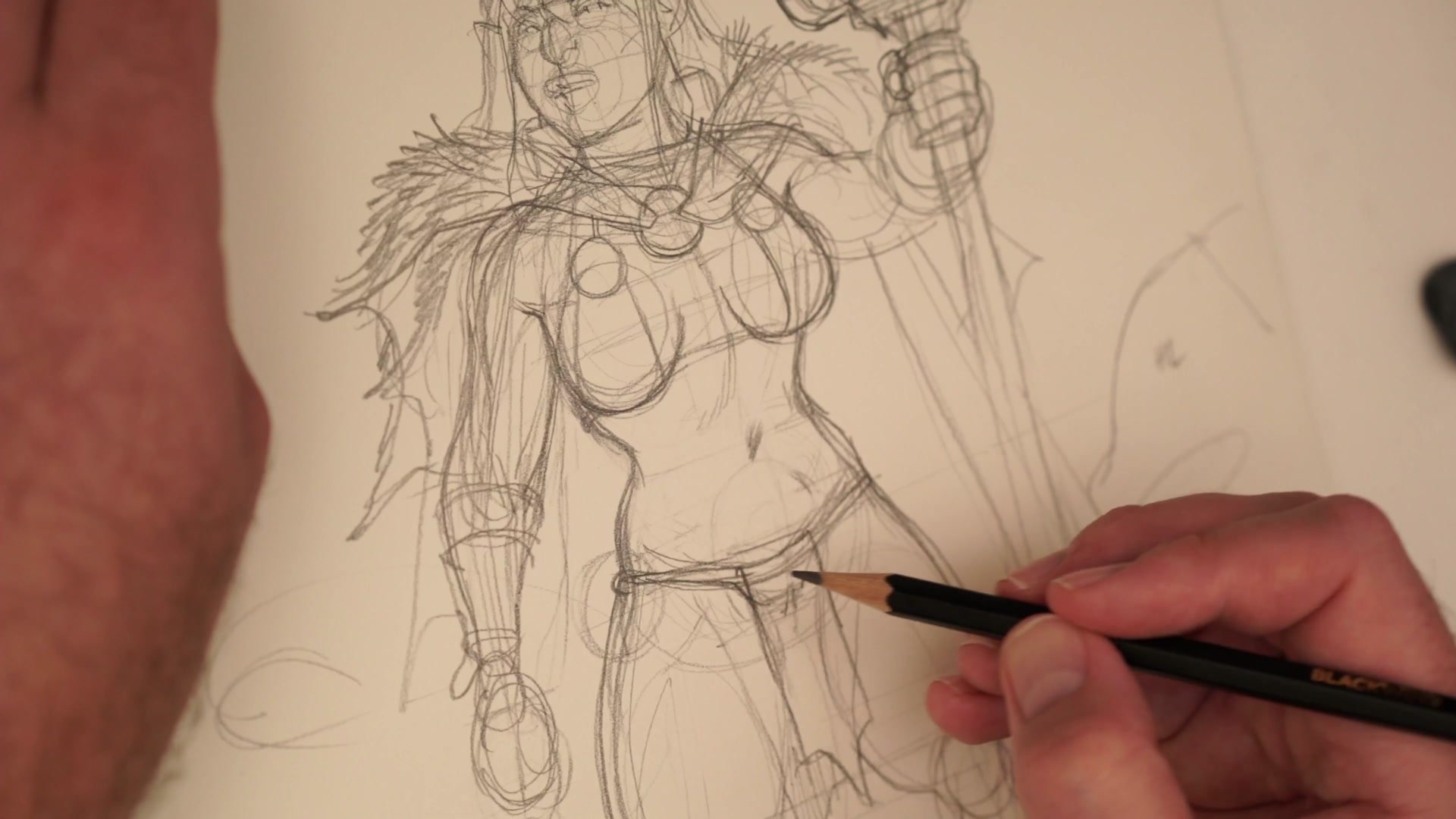
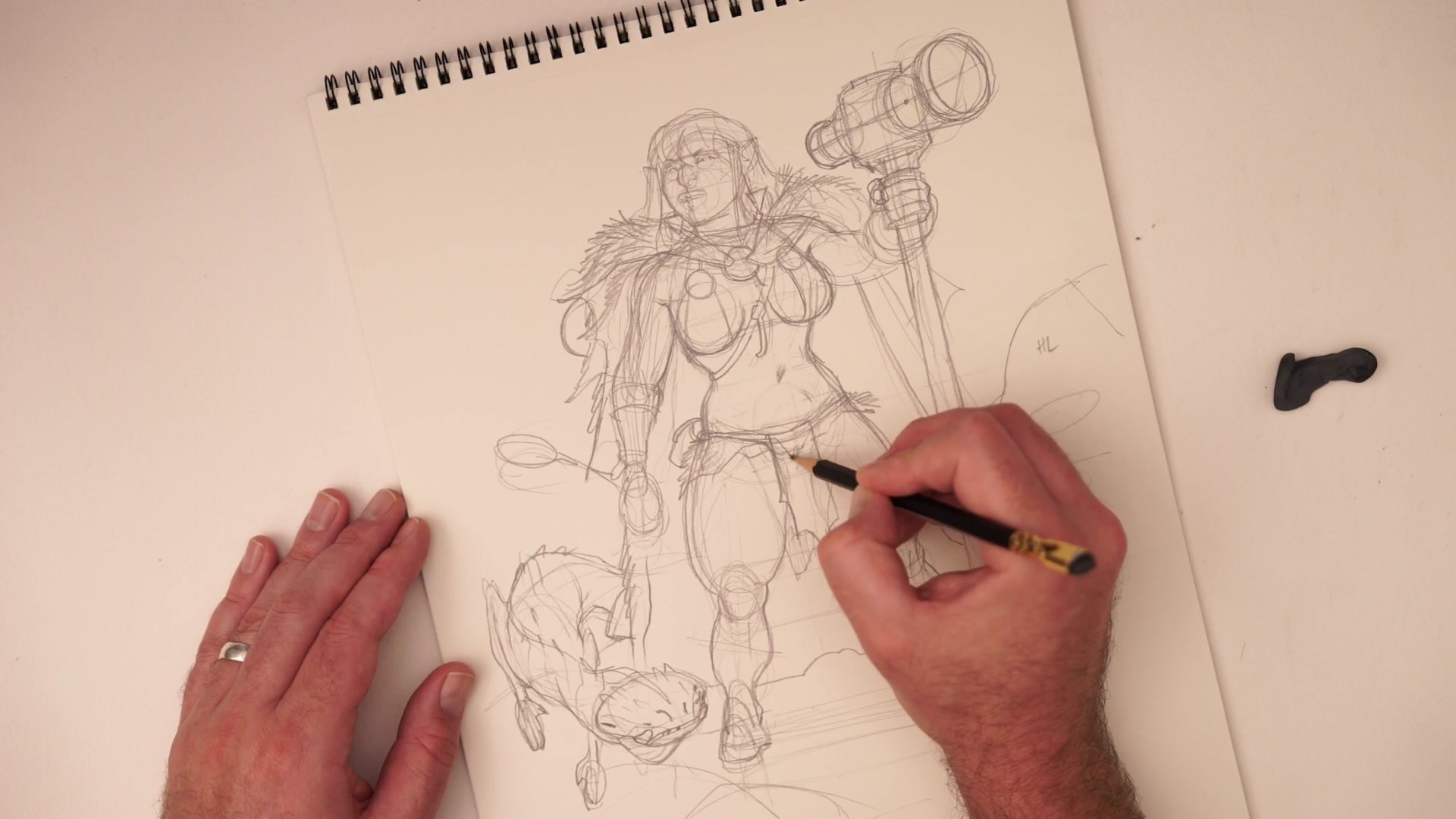
Refining the Figure
Process Over Polish
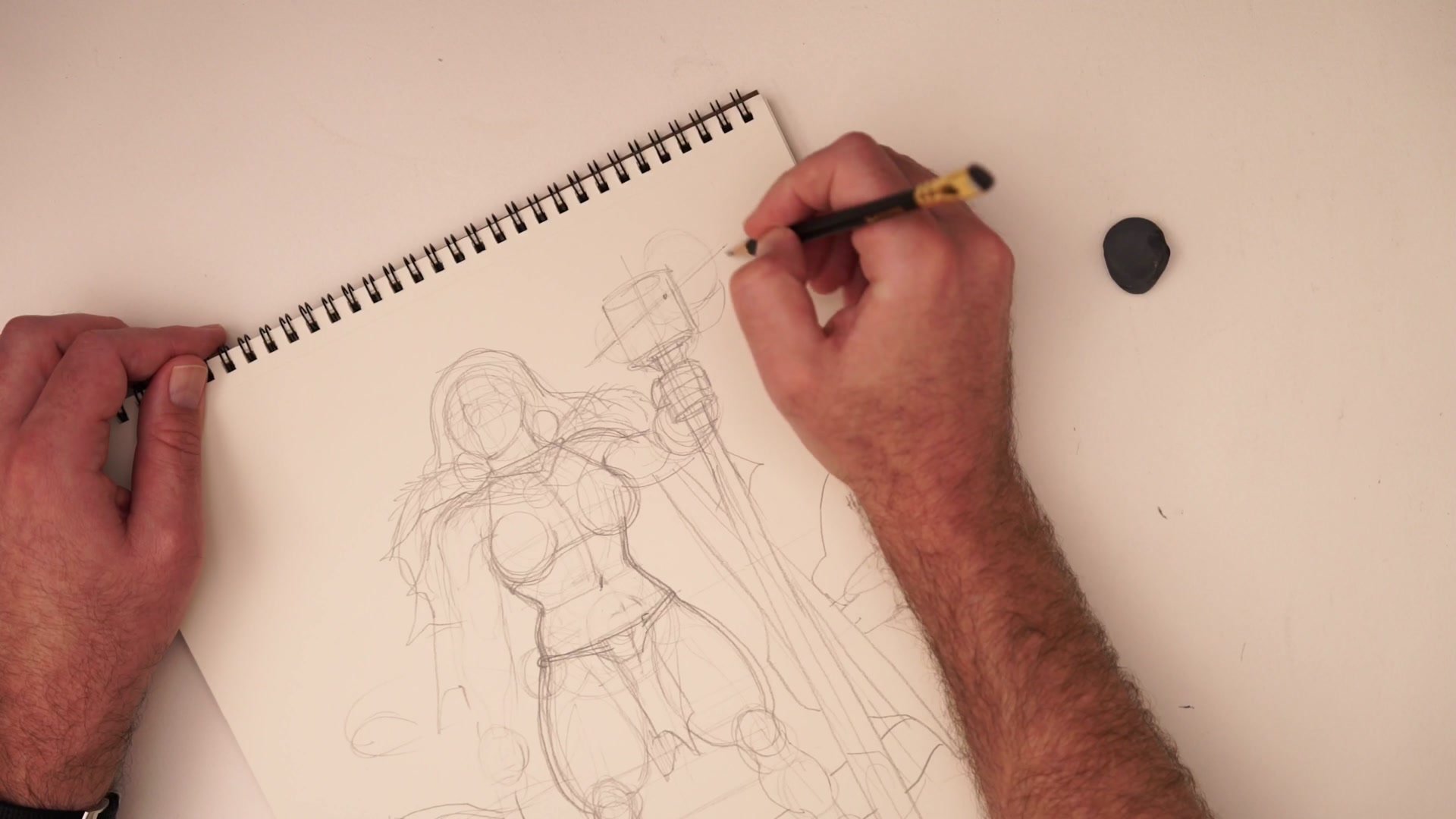
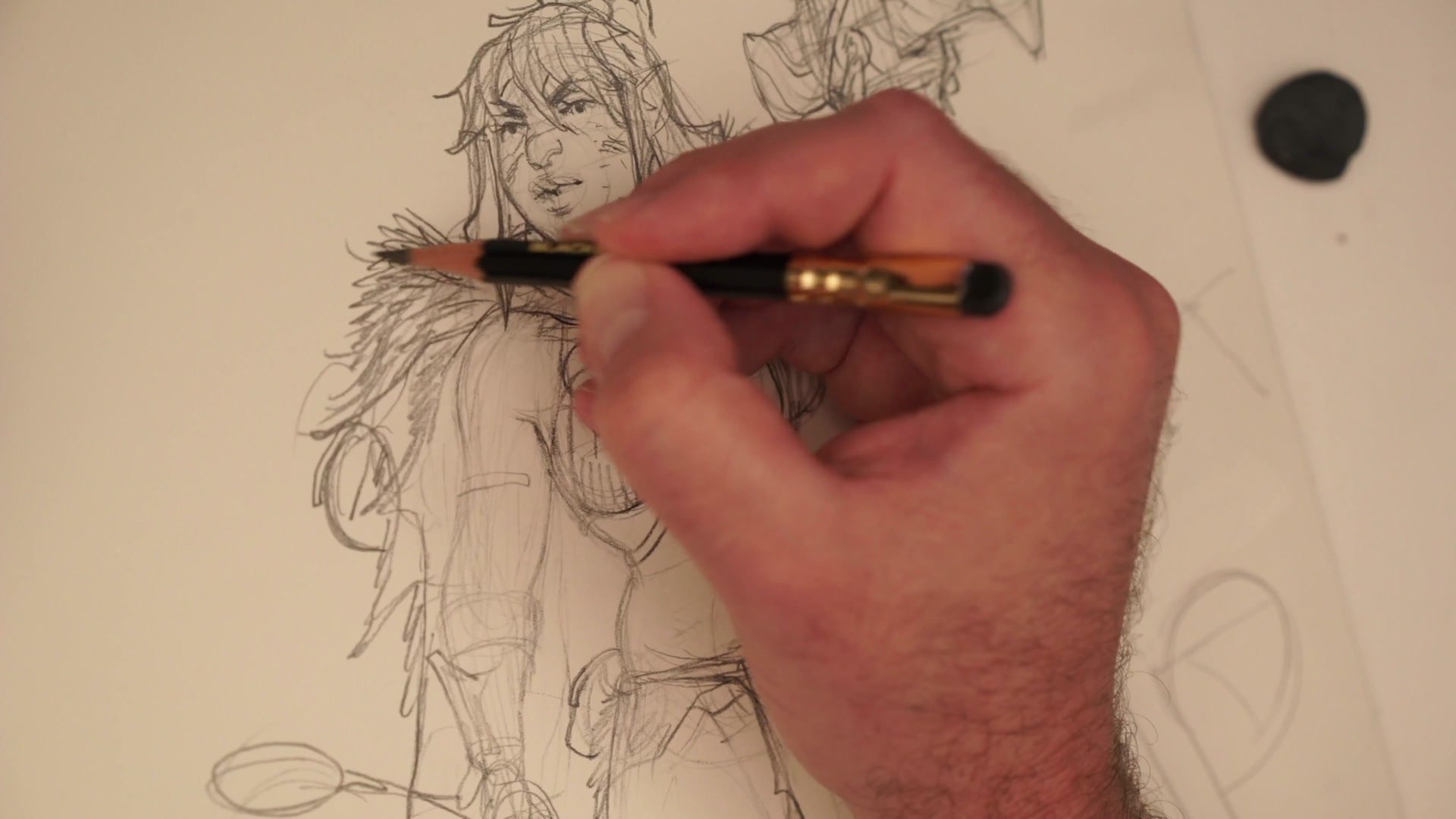
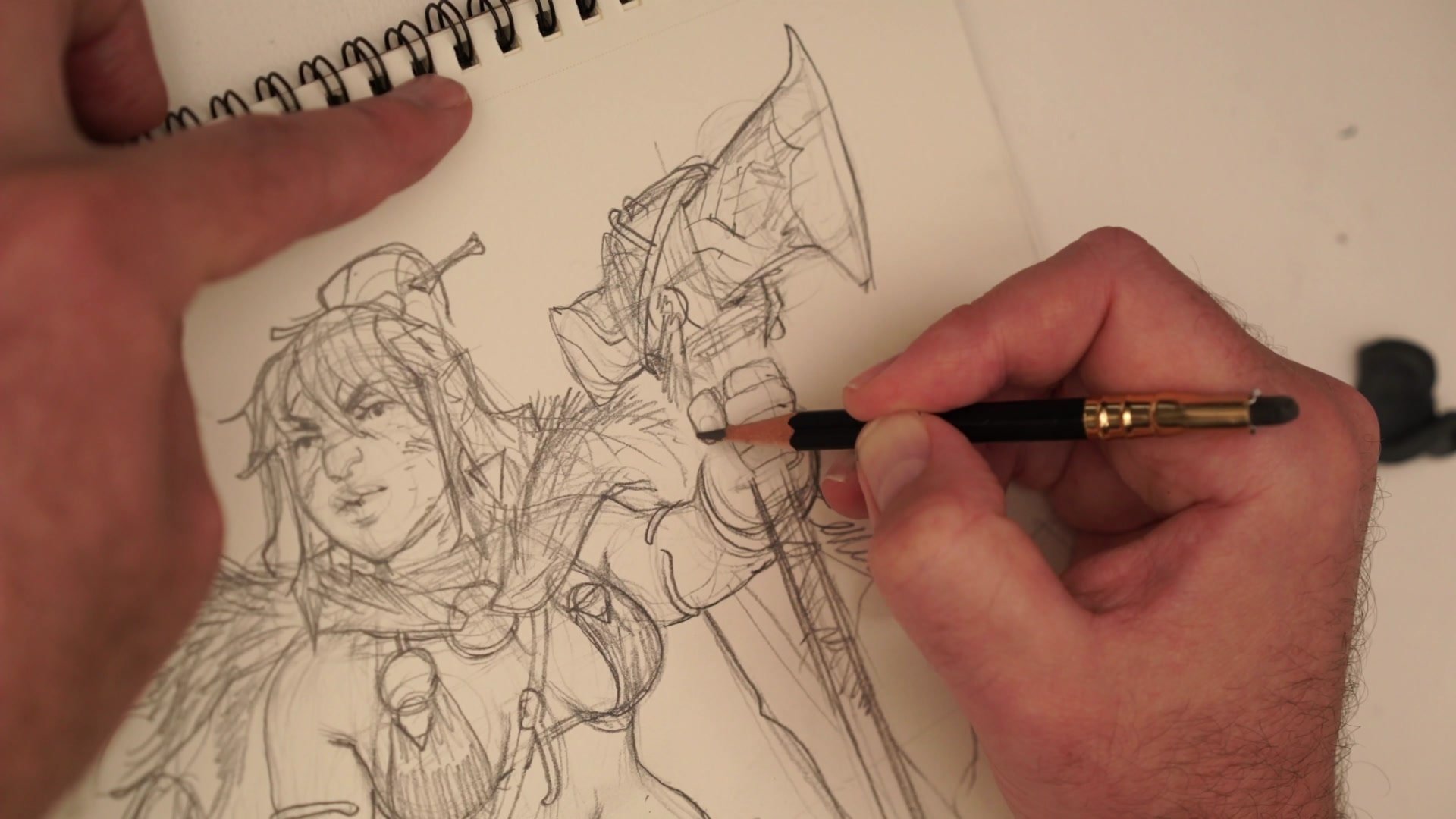
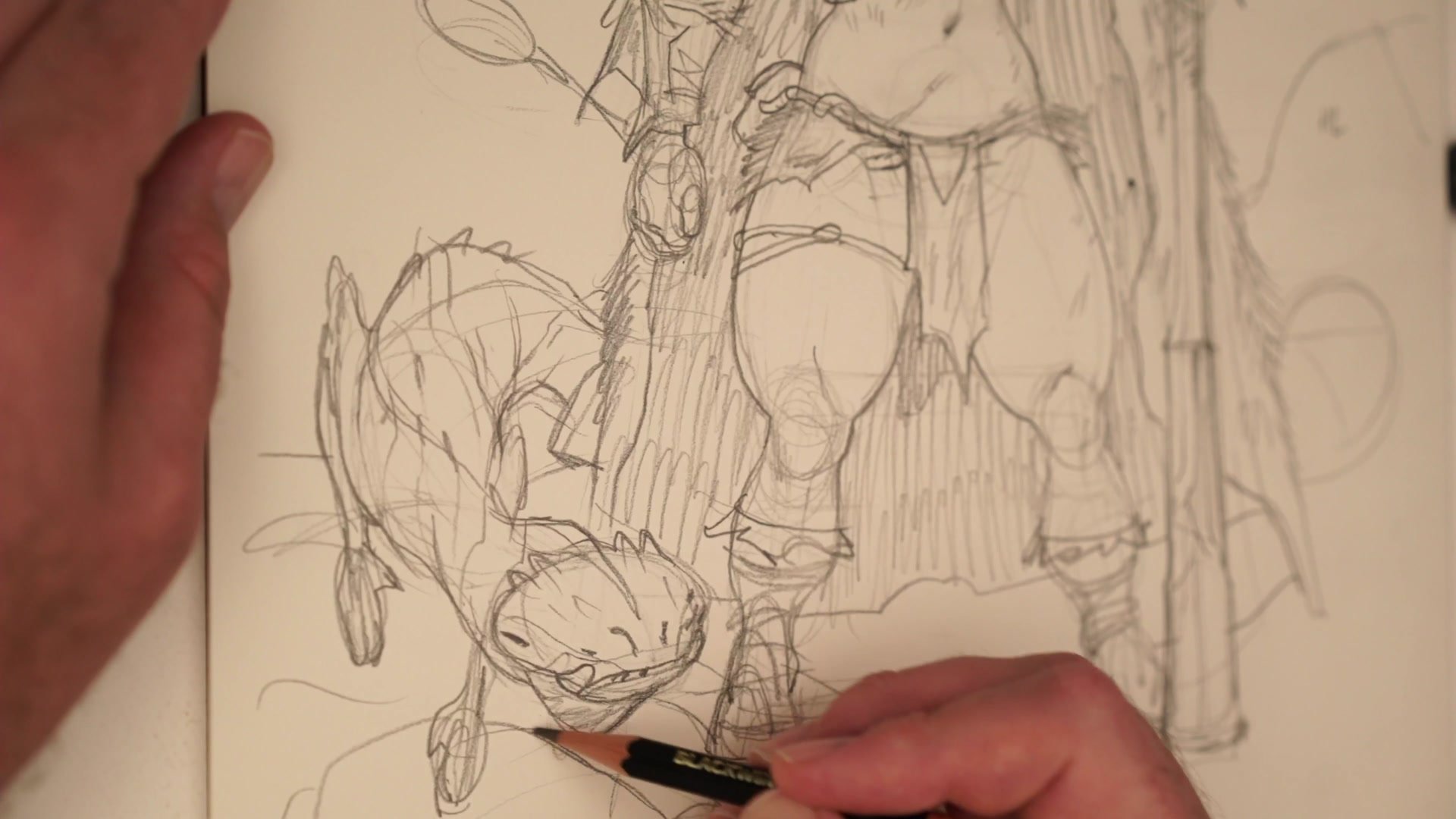
Every illustration process has an ugly phase where construction lines pile up and nothing looks finished. Artists who have not practiced working through this phase panic and abandon drawings too early, or they over-polish individual sections before the whole composition is resolved. Knowing when a structural pass is complete enough to move forward is a skill that only develops through doing it repeatedly on drawings that matter.
The same principle applies to knowing how much anatomy to show. A detailed deltoid study is useful knowledge, but in a finished illustration, less anatomical detail often reads better than more. Understanding what to simplify and what to emphasize comes from practicing the complete process of taking a drawing from rough to refined, not from doing more isolated anatomy studies. Practicing the process of caring about a drawing and pushing it toward completion builds different skills than practicing technique in a vacuum.
Final Sketch
Key Principles
Practice the Actual Process: Studying fundamentals in isolation builds knowledge, but practicing the full illustration process from thumbnail to finish builds the muscle memory needed to apply that knowledge under real conditions.
Scale Changes Everything: Drawing a face at one size is a different skill from drawing it at another. Practice at the specific scales your actual work demands rather than defaulting to one comfortable size.
Ugly Phases Are Normal: Every structured drawing process has a messy construction phase. Familiarity with this phase through repetition builds the confidence to push through rather than abandon the drawing.
Integration Over Isolation: Fundamentals are tools to weave into real work, not prerequisites to complete before being allowed to create. Start integrating them into actual illustrations as early as possible.
Try This
Step 1: Draw a small thumbnail of a character that interests you, keeping it roughly the size of a postage stamp. Focus on the overall shape and gesture, not details.
Step 2: Transfer that thumbnail onto a larger page by redrawing it freehand at two to three times the size. Do not trace or project. Notice where the translation breaks down and where your muscle memory gaps are.
Step 3: Take the larger construction through one more refinement pass, adding character details and expression. Pay attention to which steps in the process feel automatic and which still require conscious effort.