Learning to Draw Cammy
Summary
Character Construction Through Baseline Modification
Constructive anatomy is typically taught as an academic exercise separated from the characters artists actually want to draw. The result is a gap between textbook anatomy and entertainment art. Every character design is really a set of modifications from baseline human proportions. When those modifications are identified before the first mark hits paper and applied through the mannequin phase, character anatomy becomes repeatable rather than dependent on constant reference checking.
This demonstration applies the Loomis-based stick figure methodology to Cammy from Street Fighter, showing how to analyze what makes a character's proportions unique, build those modifications into initial construction, and incorporate costume elements as essential structure rather than afterthought detail.
Establishing the Baseline
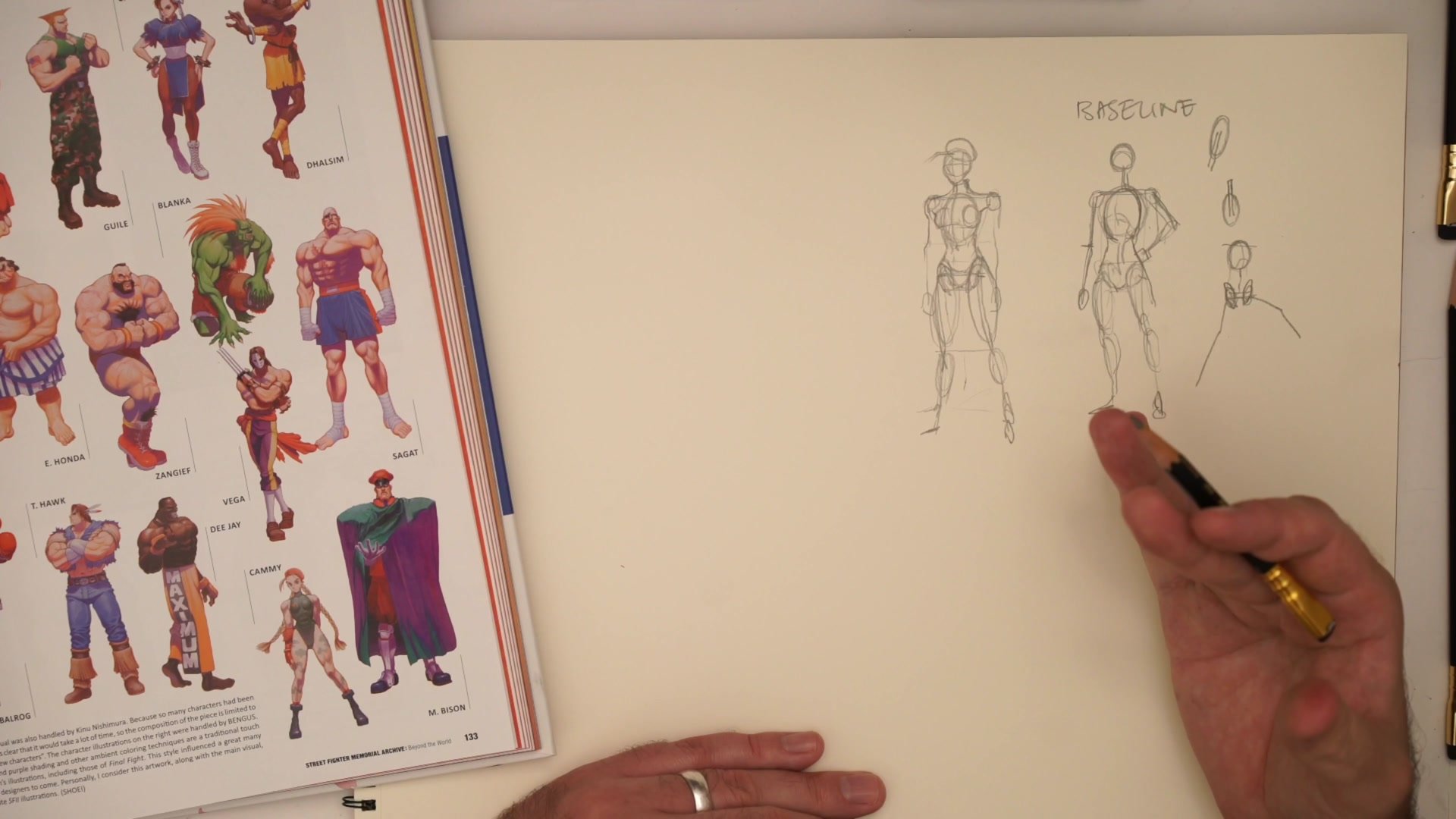
Baseline Proportions and Relativity
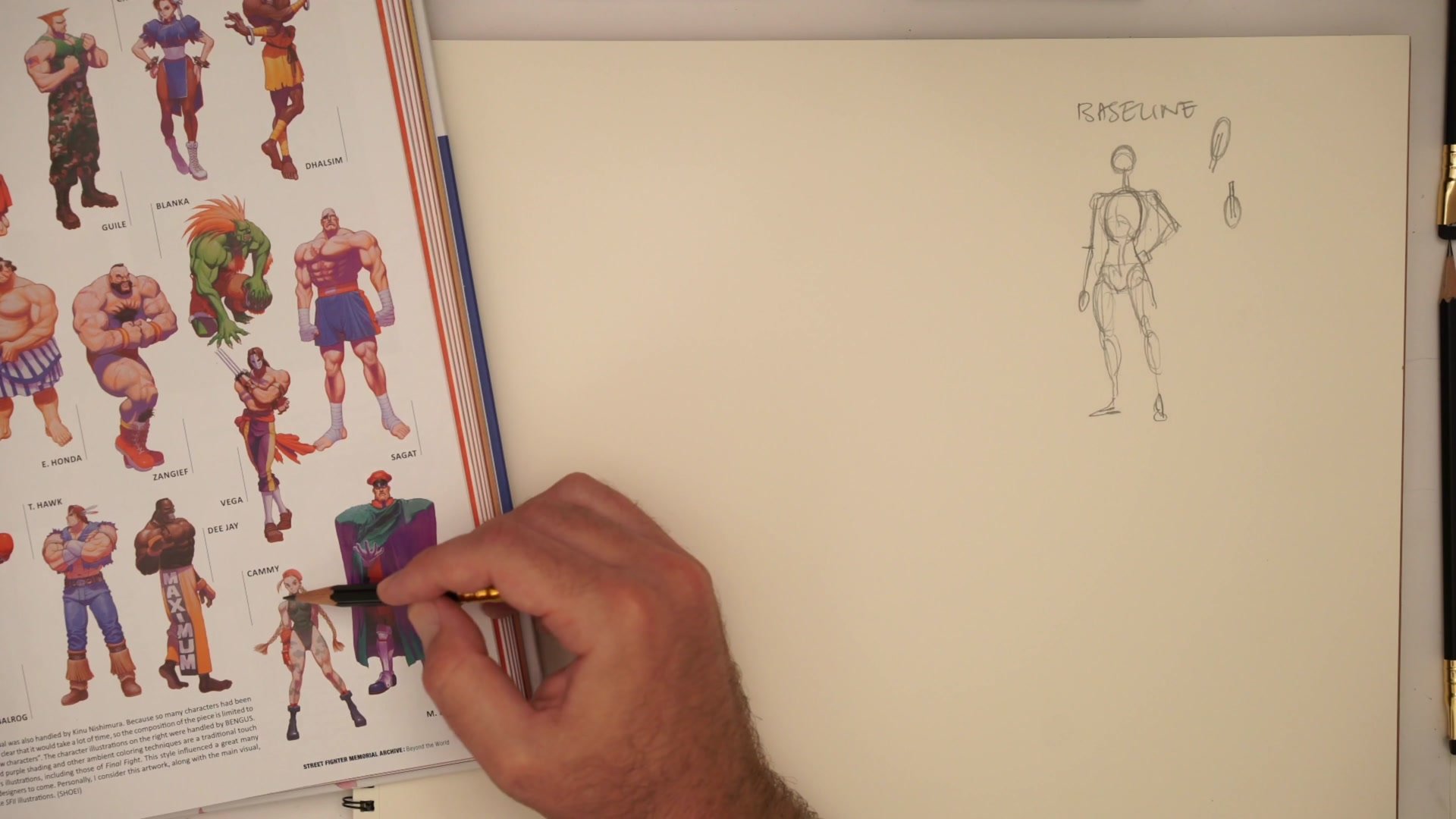
Every character exists in relationship to a baseline, and that baseline shifts depending on the visual world. In Street Fighter, Ken and Ryu establish the standard male proportions. Zangief and Sagat read as massive because they deviate upward from that same baseline. Even smaller characters are muscular relative to that reference point. Everything is about relativity.
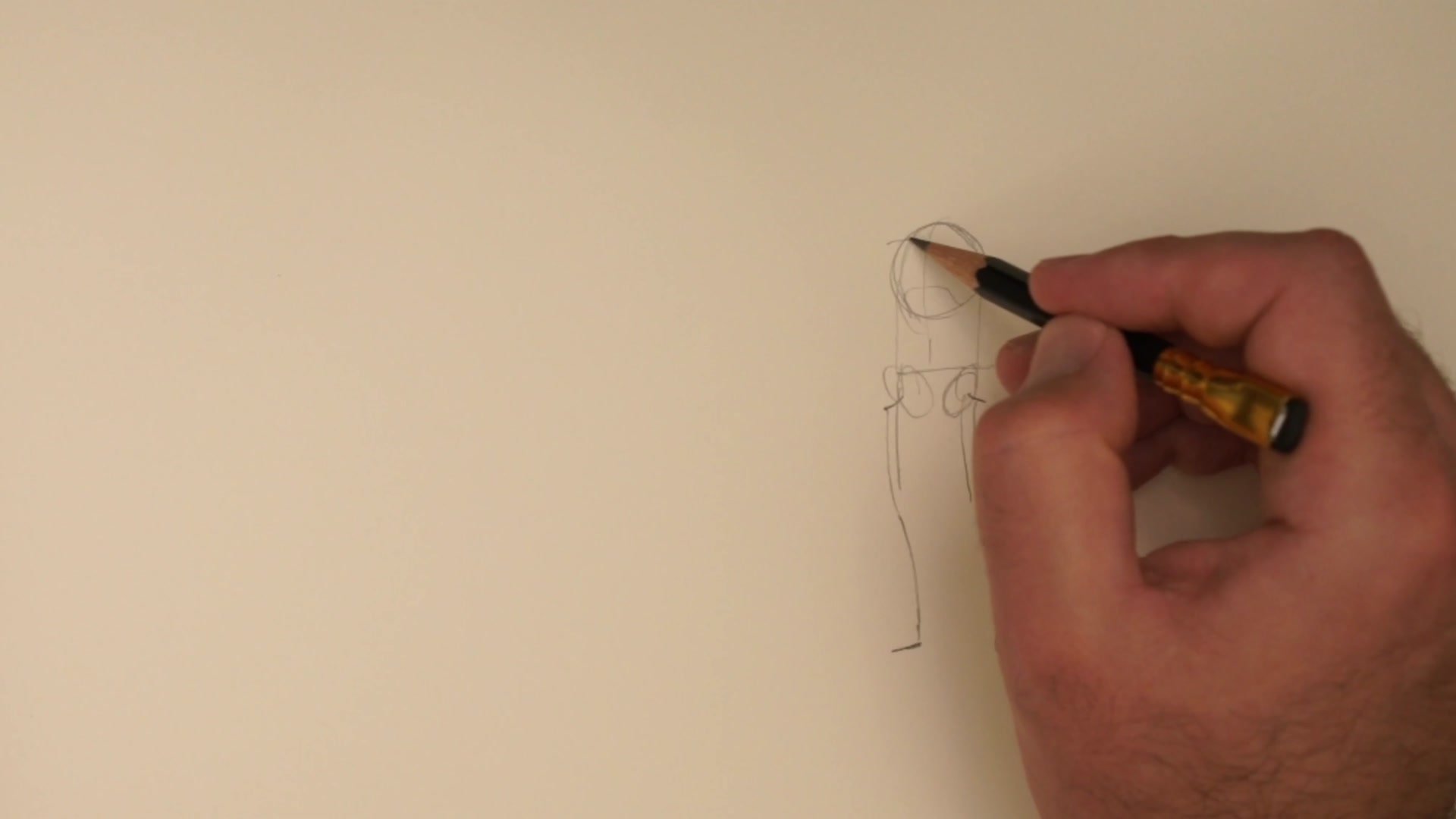
For individual artists, this baseline becomes part of personal style. What standard proportions look like in your own work defines the foundation that all character variety builds from. The drumstick methodology blocks in baseline anatomy quickly, treating each limb as a bone with a major mass of muscle attached. This simple framework creates a foundation for character-specific modifications without getting lost in anatomical detail too early.
Identifying Modifications
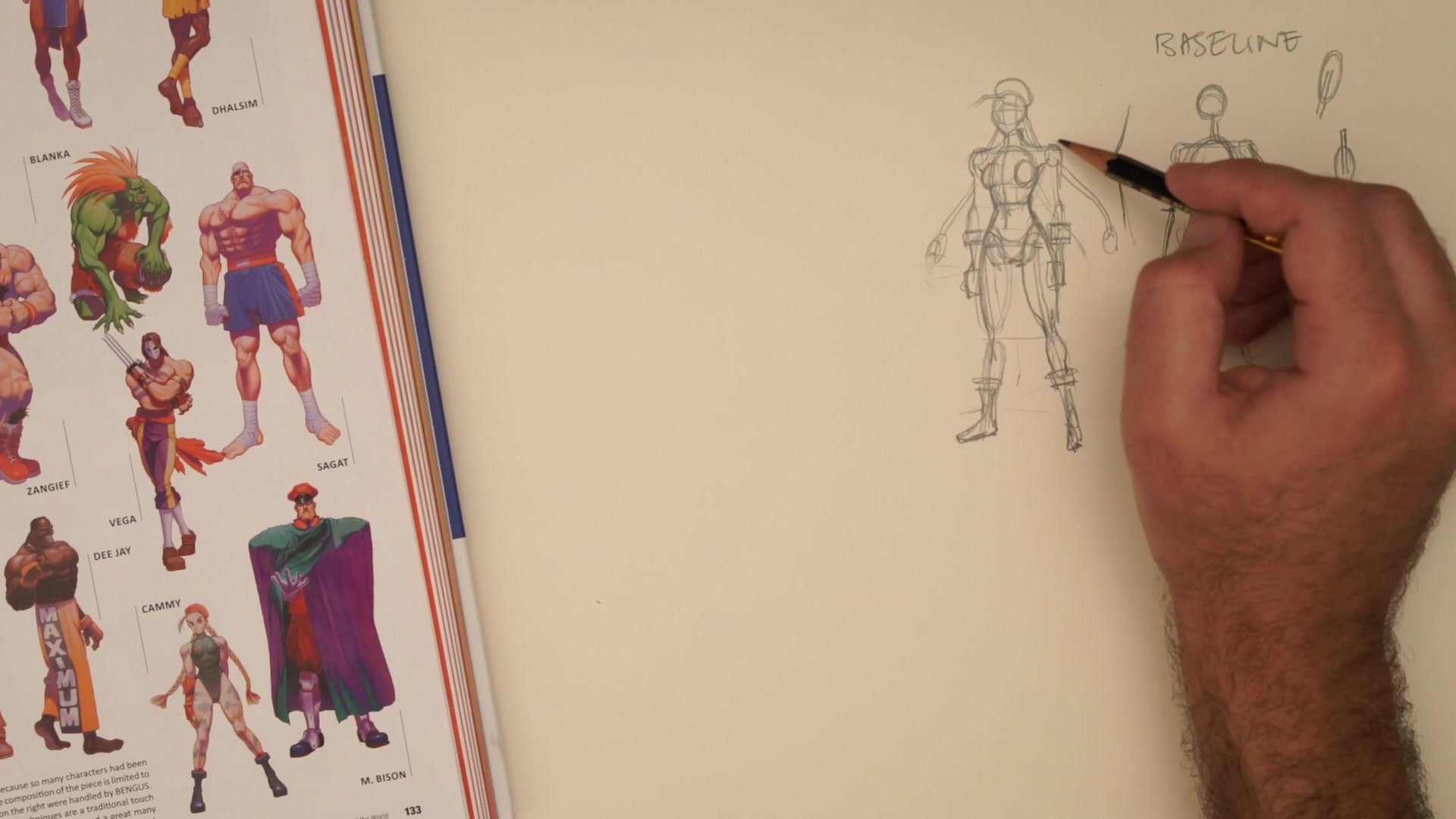
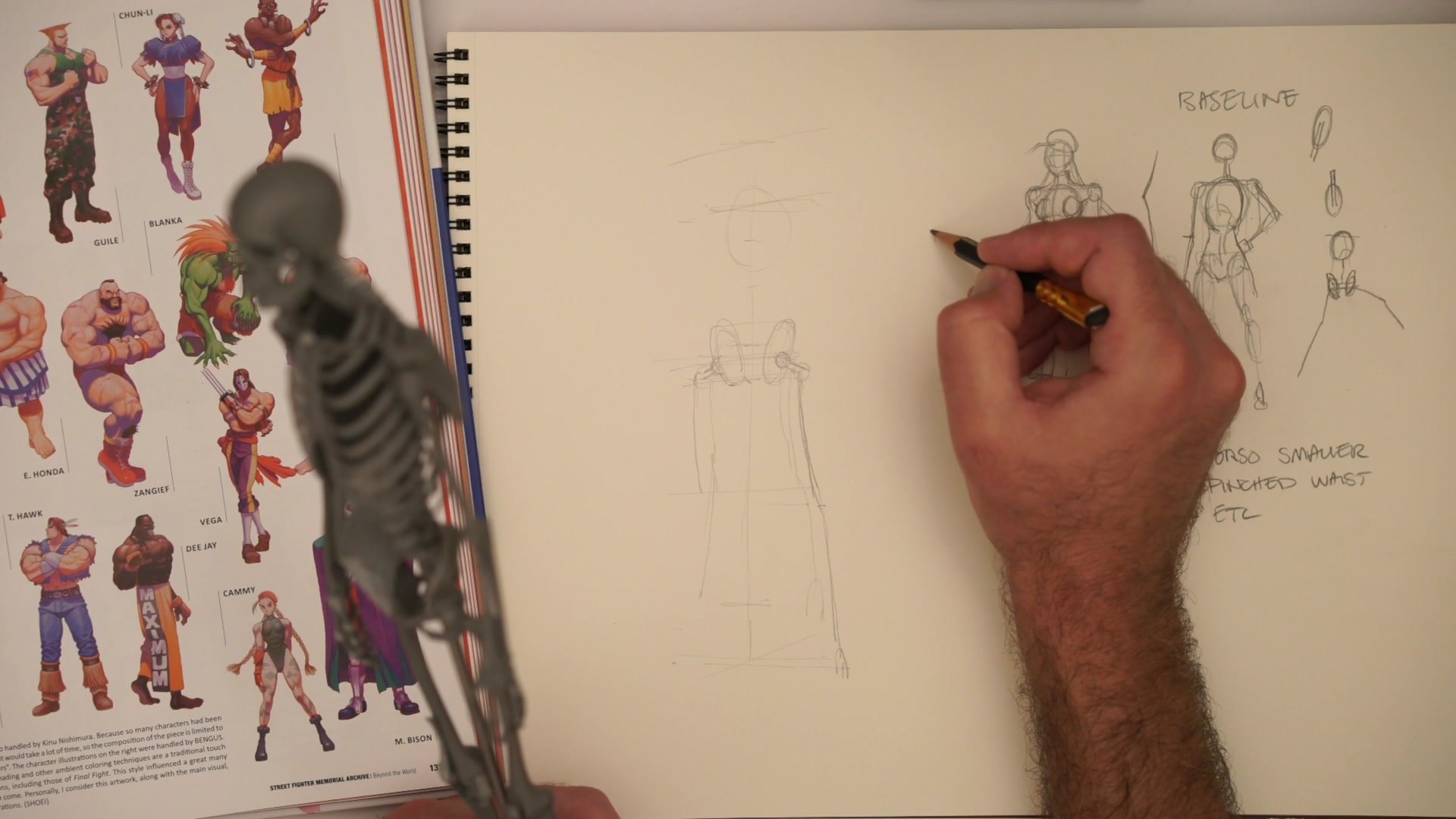
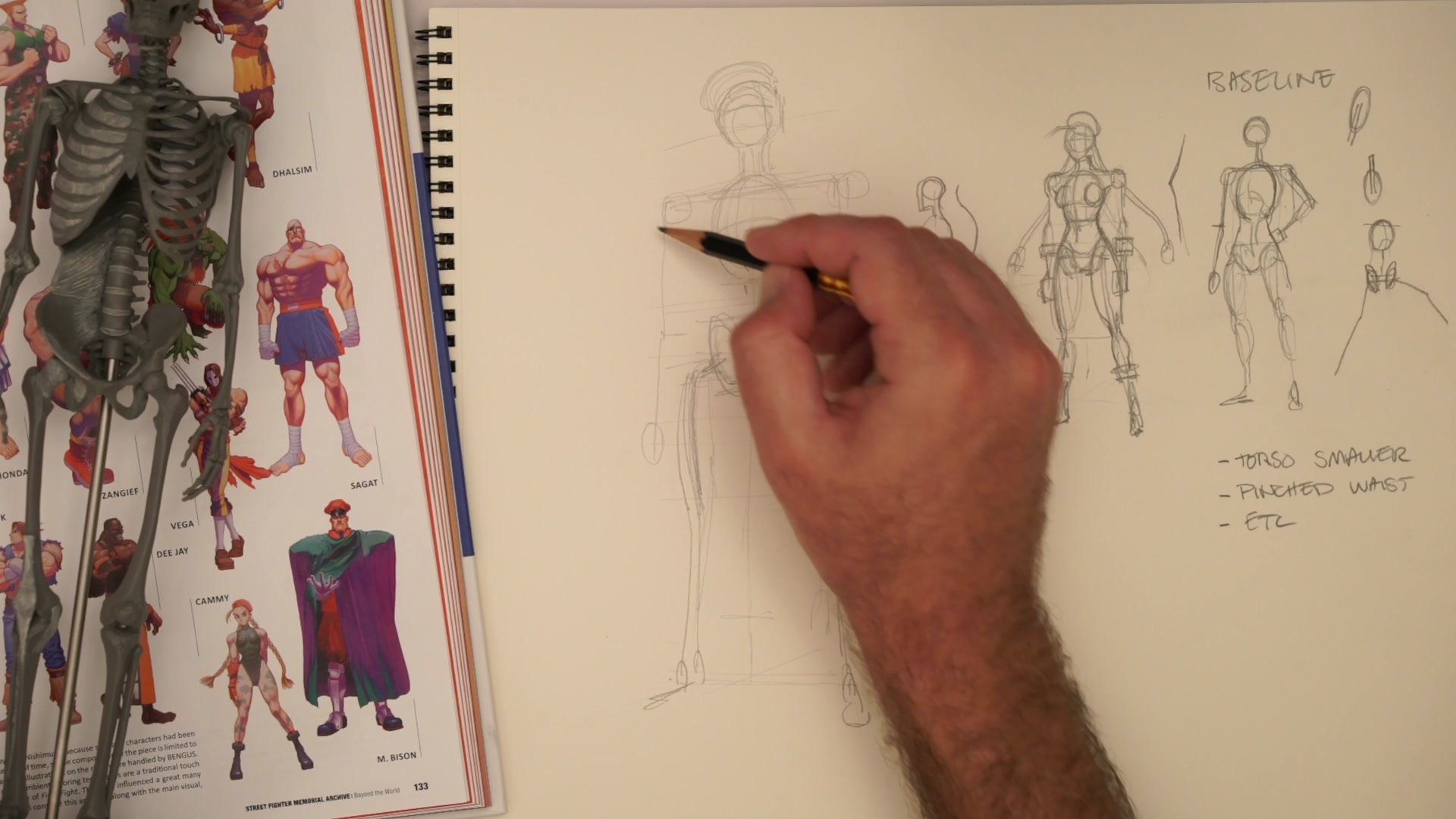
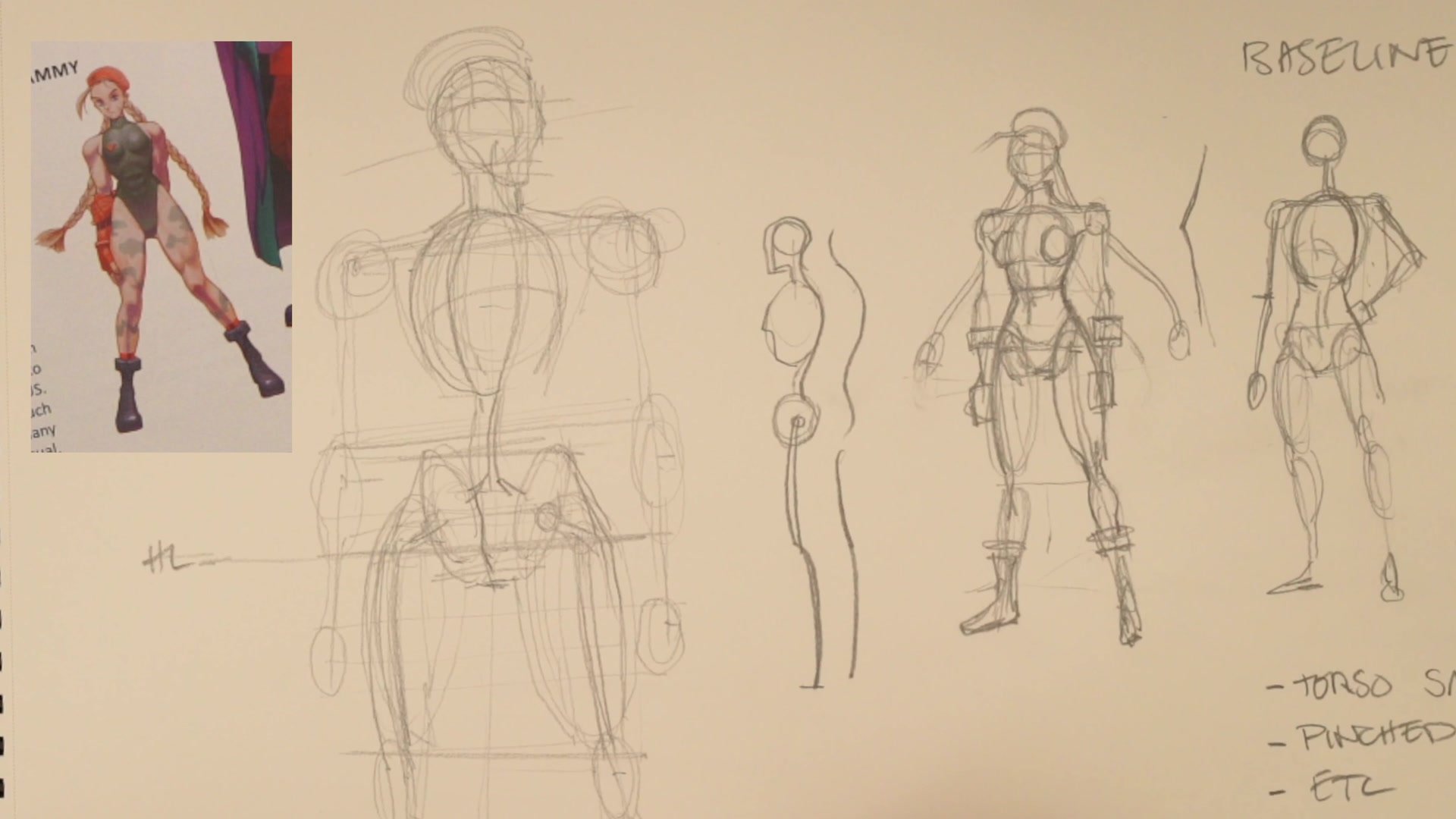
Character-Specific Modifications
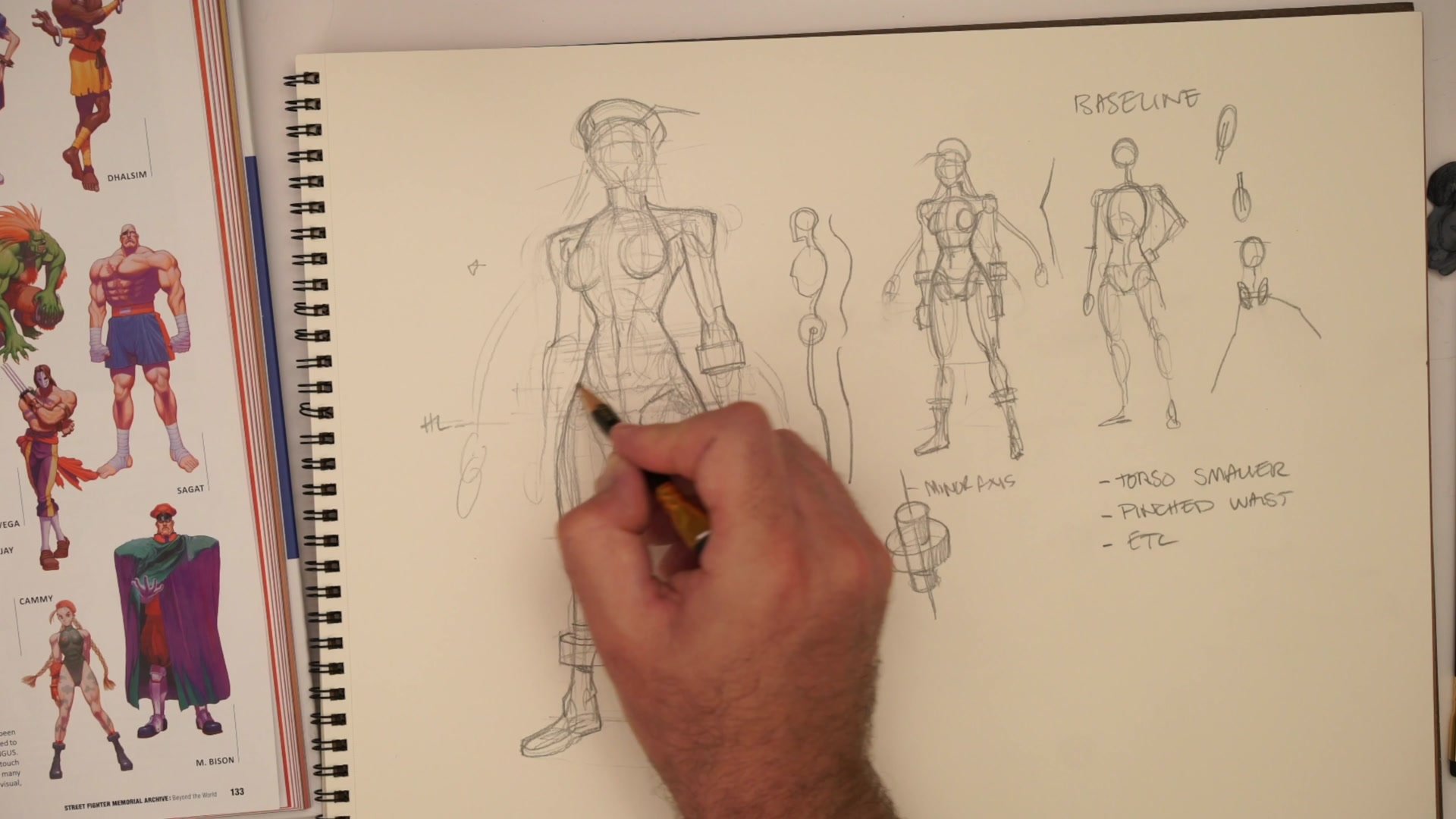
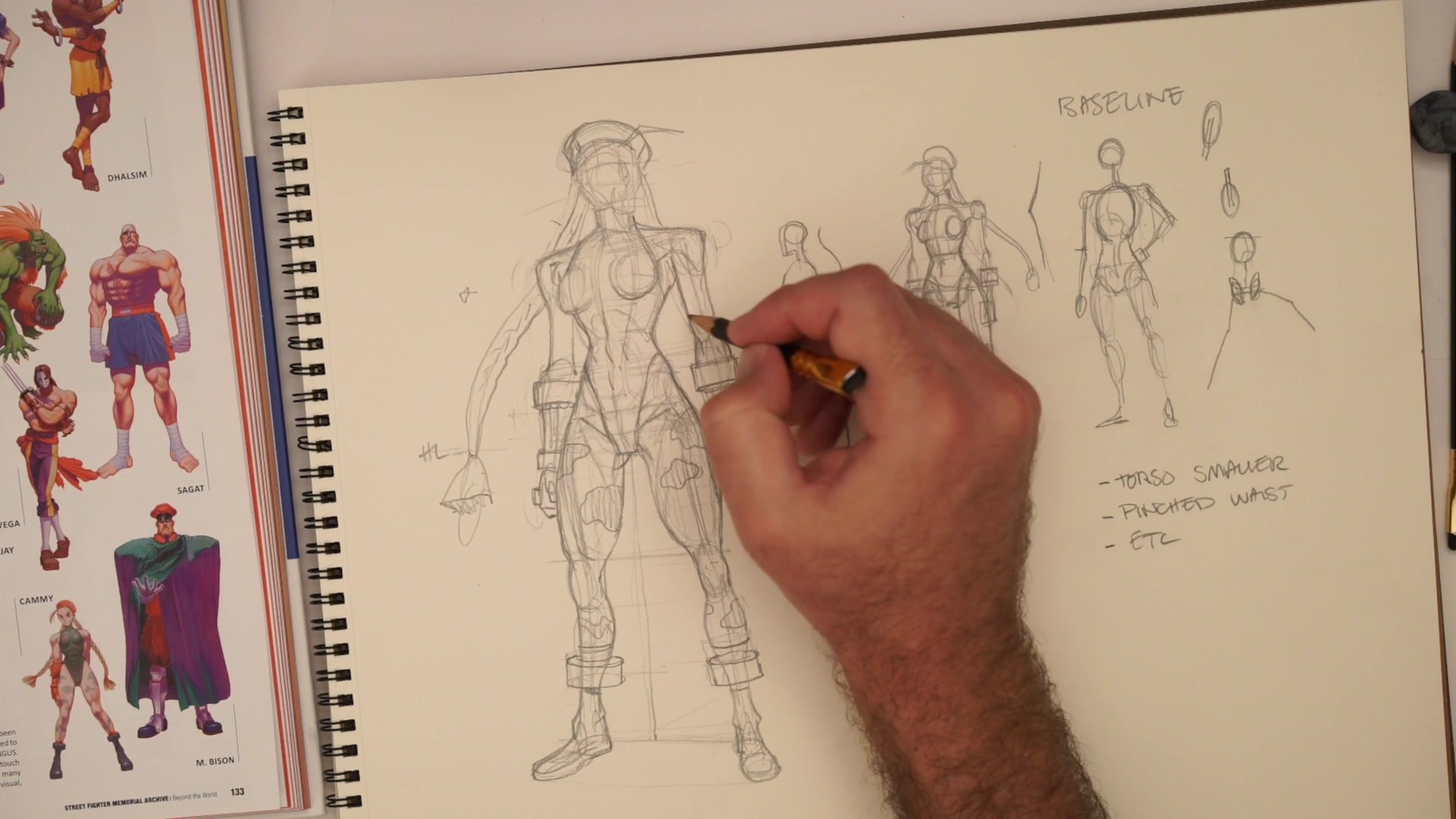
The analytical phase separates copying from understanding. Before drawing, identify what makes this specific character different from baseline anatomy. For Cammy, the modifications include a noticeably smaller torso relative to shoulder width, longer legs, high hip placement creating a distinct waistline, and smaller chest proportions that reinforce her athletic look. Each modification is a specific design choice.
Making a checklist of these adjustments before drawing means the first marks already incorporate character-specific proportions. A slightly smaller rib cage, legs extended a bit longer, hips positioned higher on the torso. Each adjustment is minor individually, but together they create a distinct character. Comparing characters within the same visual universe, like Cammy against Chun-Li, helps identify what is truly unique to each design and makes those differences repeatable.
Building the Mannequin
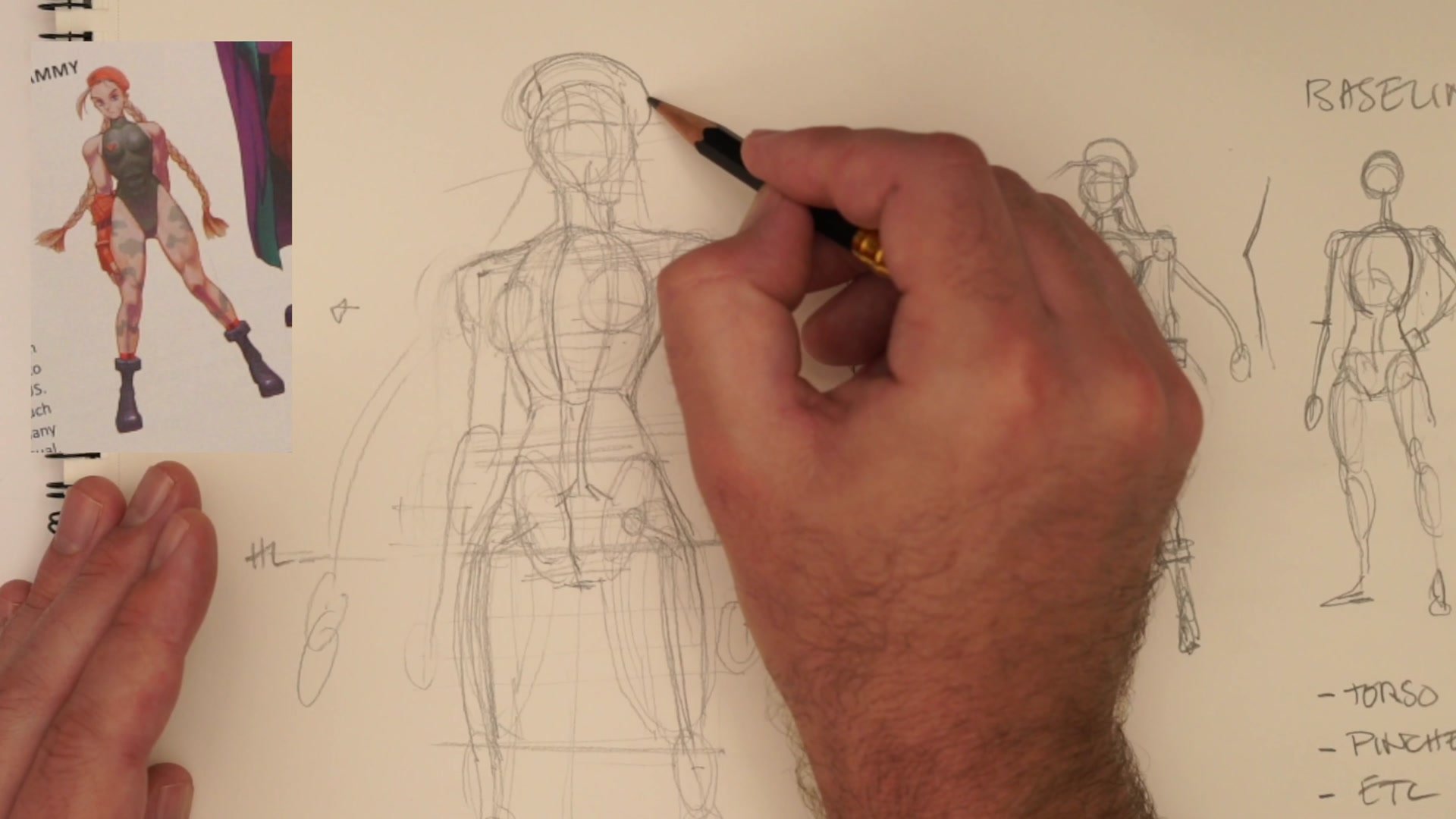
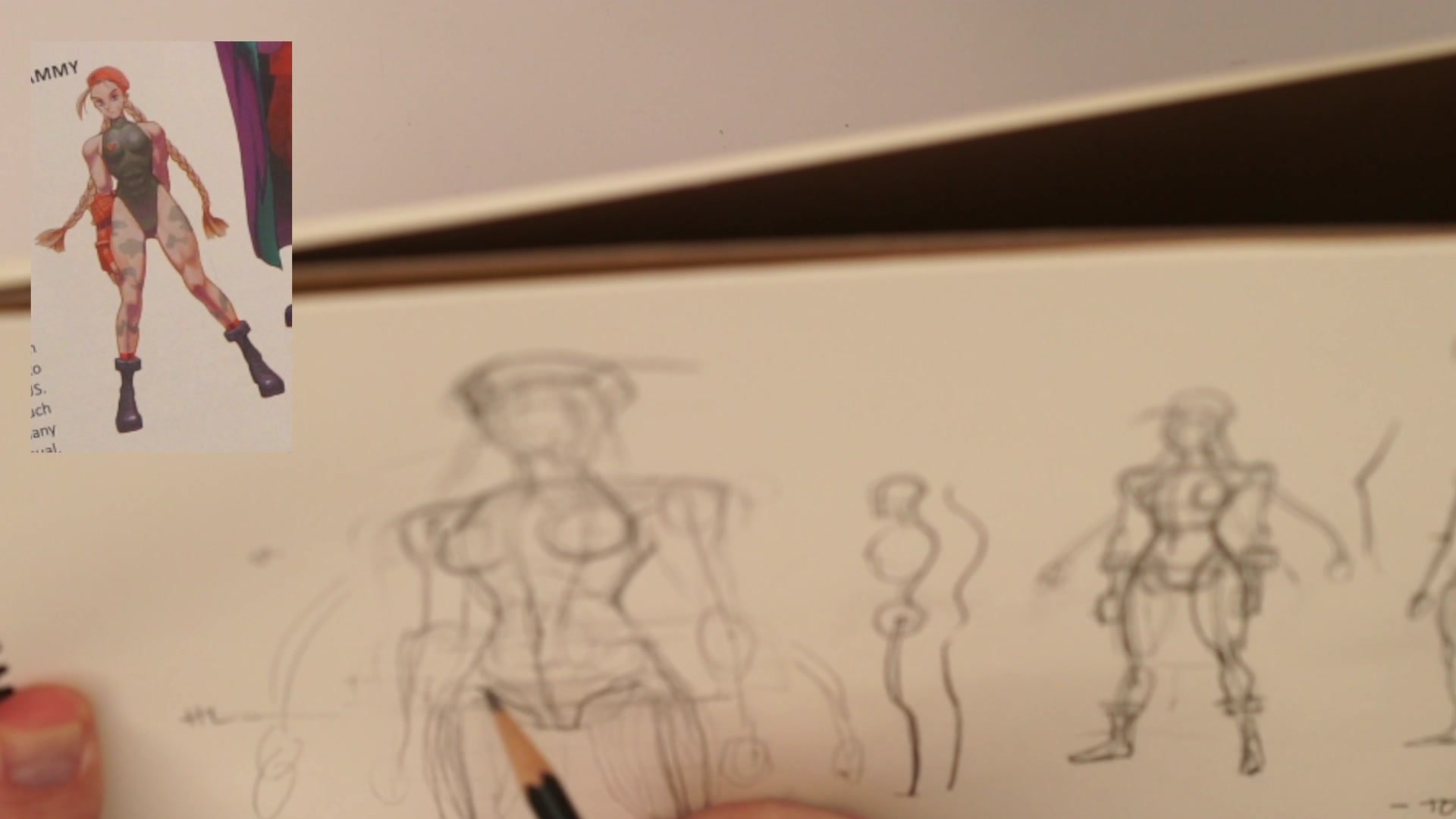
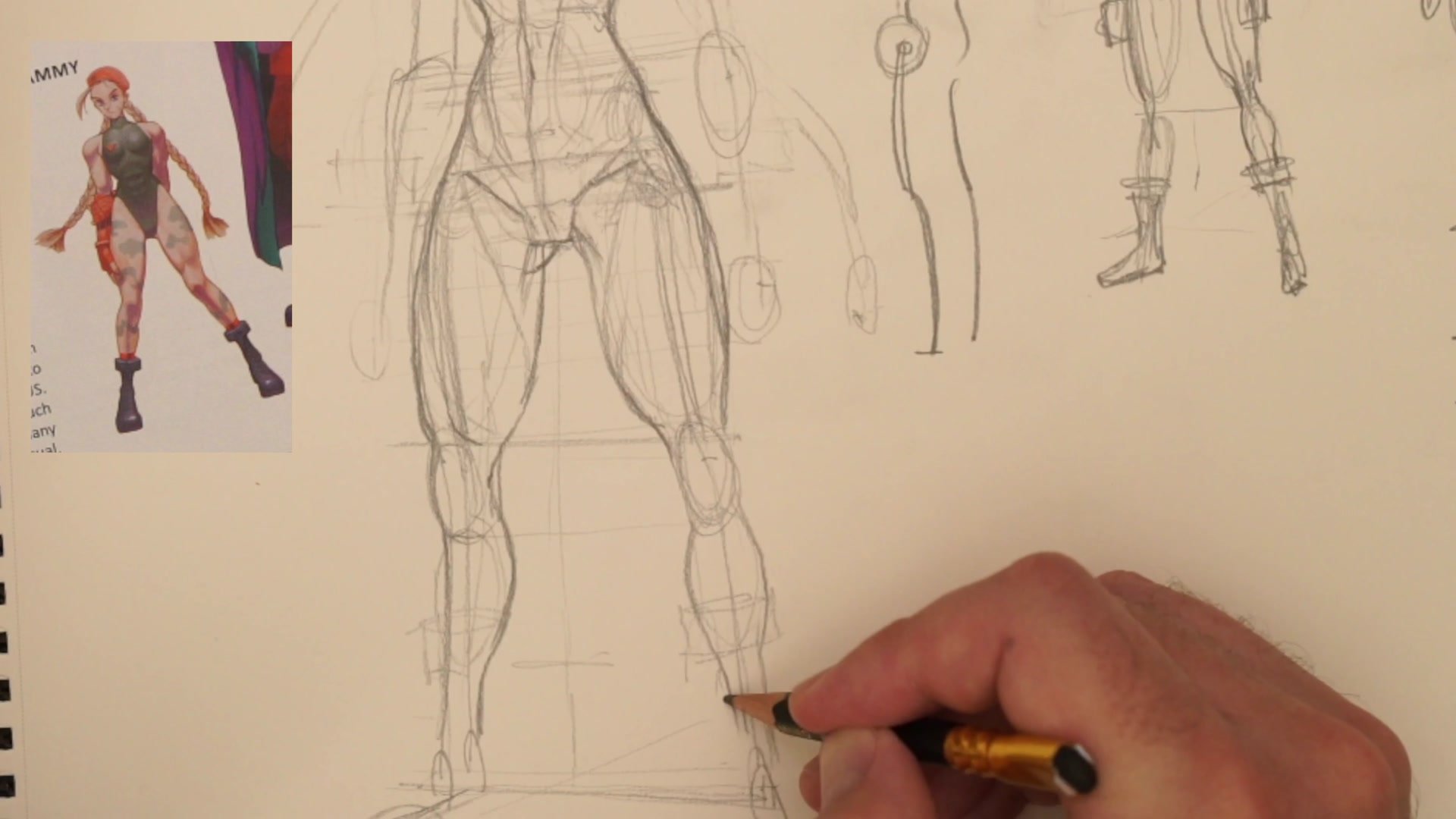
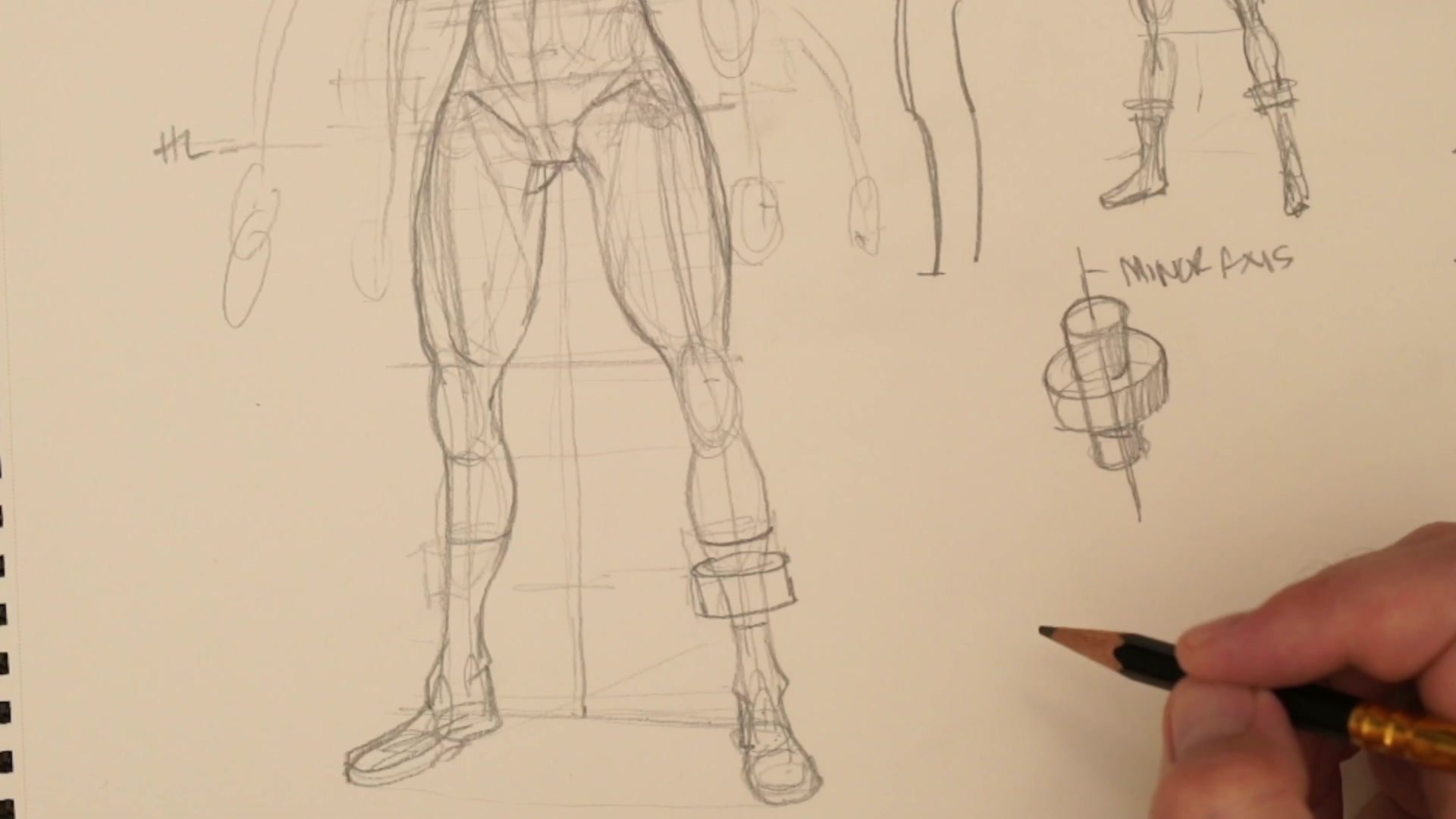
Mannequin Phase as Strategic Planning
The mannequin phase is not about detail. It is about planning with character-specific elements built in from the beginning. Proportional modifications get applied immediately to the stick figure. If the character has a small torso, make the rib cage smaller in the initial construction. If the legs are longer, extend them from the first marks.
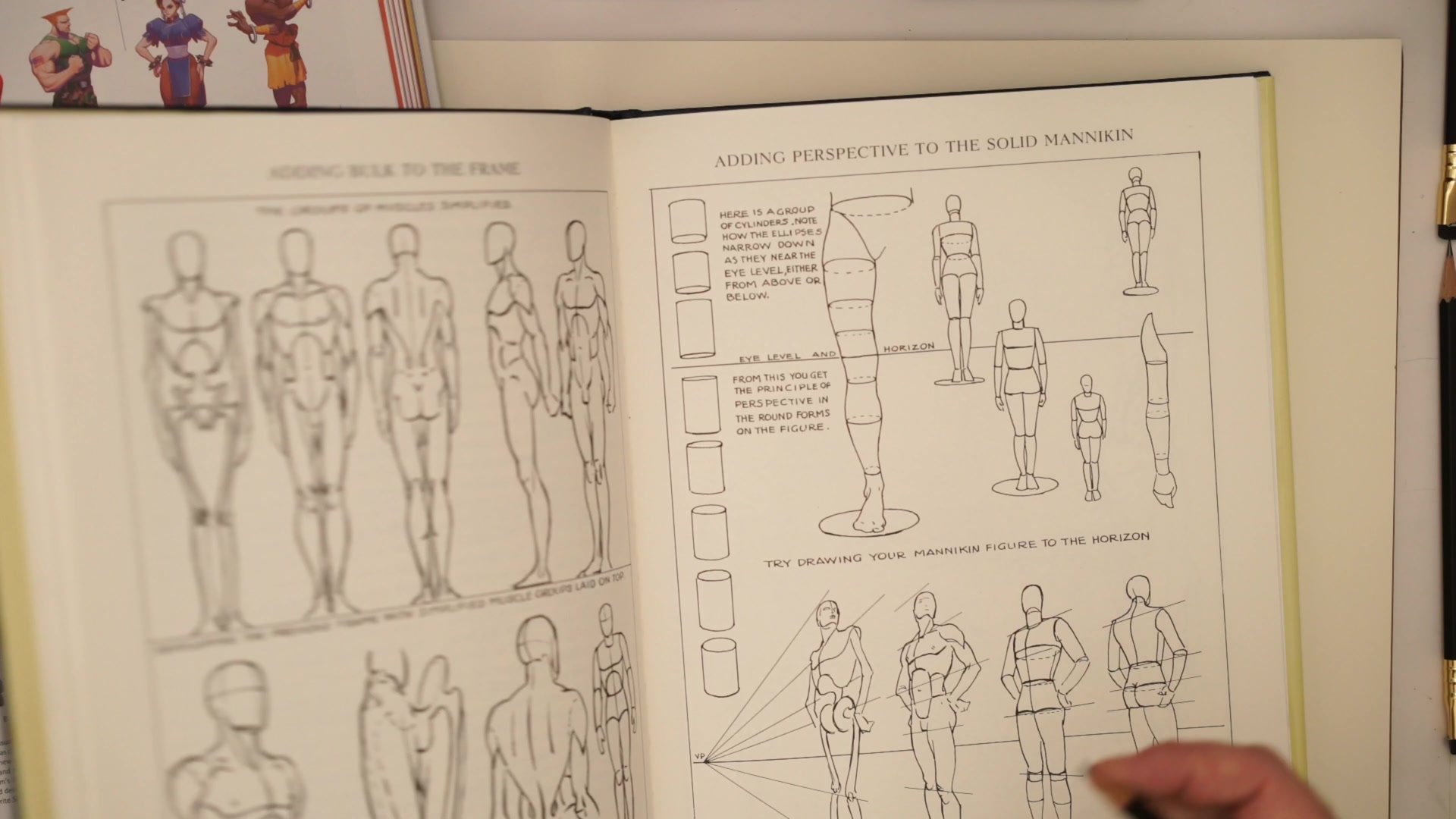
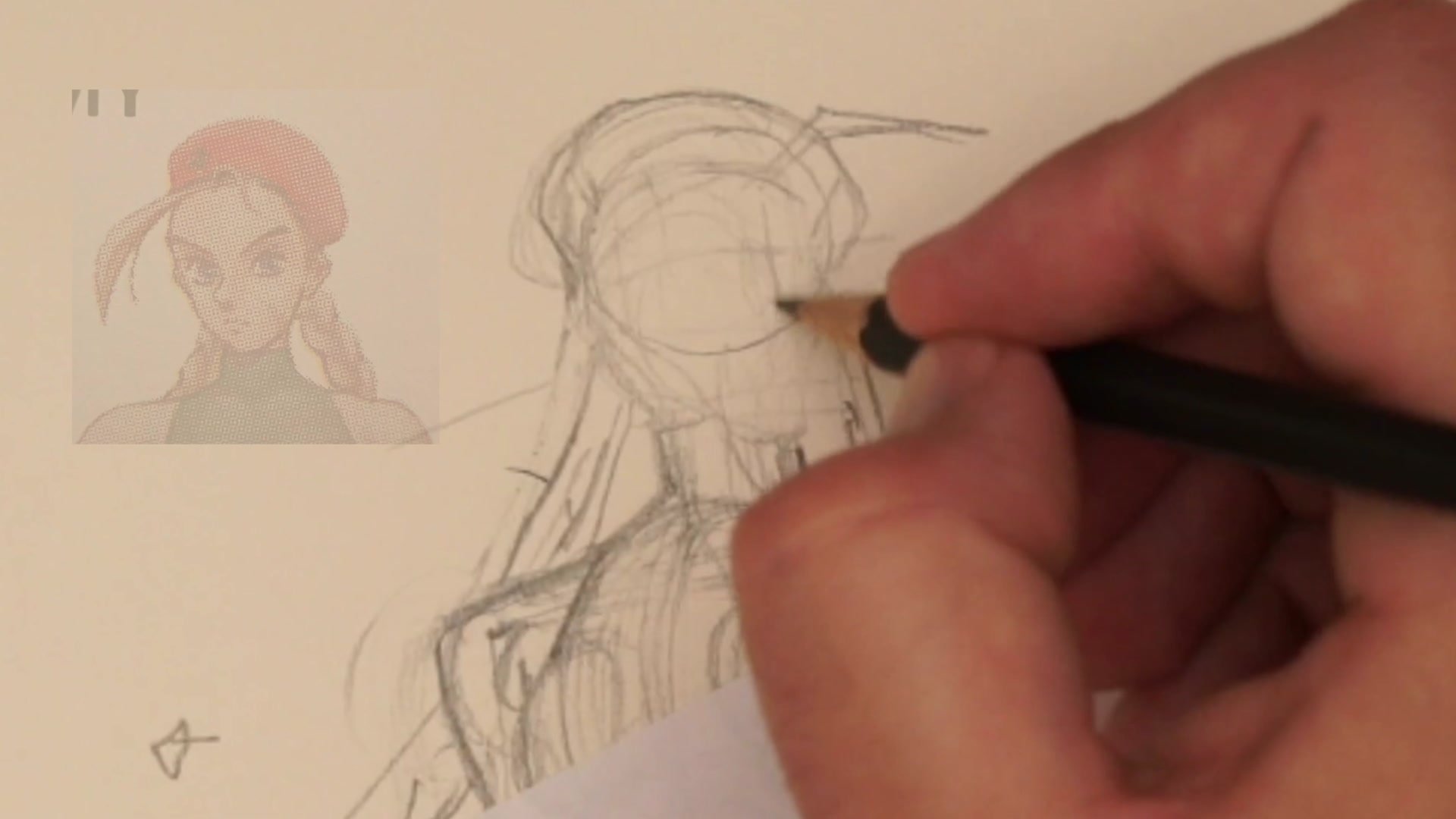
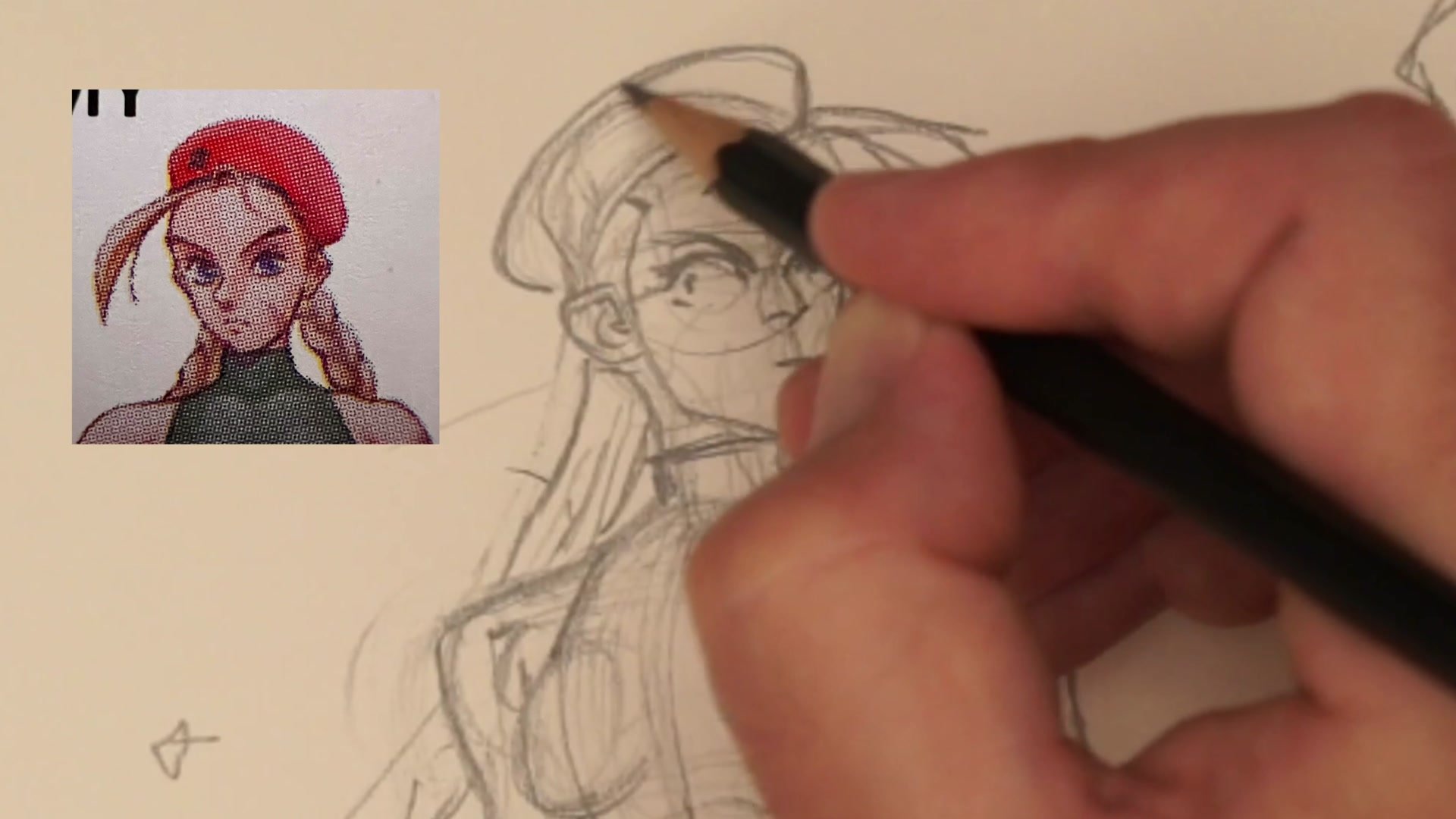
Costume elements belong in the mannequin because they define character recognition even in simplified form. The beret, the combat boots, the distinctive hair braids are essential structure. Boots break down into cylindrical primary forms: a tapering lower leg cylinder topped by a non-tapering boot cylinder, tracked by the minor axis for consistent perspective. Checking the work by tilting or rotating the drawing reveals proportion issues while they are still easy to fix. The S-curve adds energy to the figure, though subtlety matters for anything approaching realistic proportions.
Refinement and Detail
Key Principles
Baseline Creates Context: Without establishing what standard proportions look like in your visual world, character modifications lack context and designs feel accidentally inconsistent rather than intentionally varied.
Analyze Before Drawing: Identifying character-specific modifications as a checklist before the first mark means proportional changes get built into construction rather than adjusted after generic anatomy is already laid down.
Costume Is Structure: Signature accessories, distinctive hair, and characteristic clothing belong in the mannequin phase because they define character recognition even in simplified form.
Primary Forms for Everything: Costume details follow the same construction logic as anatomy. Break boots, gloves, and accessories into cylinders and spheres, track their minor axes, and construct them systematically from any angle.
Try This
Draw Your Baseline: Start with a standard figure using whatever proportions feel natural for your style. This is your personal baseline for character variety.
Make a Modification List: Study a character you have never drawn before. Write down specific proportional changes: is the torso larger or smaller, are the shoulders wider or narrower, are the legs longer or shorter, where are the hips positioned.
Build Modified Mannequin: Create a second mannequin drawing applying those specific modifications from the first stick figure marks. Include major costume elements in the mannequin. Check your work by tilting the page to verify proportions.