Draw Aliens With The Loomis Method
Summary
Applying the Loomis Method to Alien Anatomy
The Loomis Method is one of the most widely taught approaches to head construction, but most instruction focuses exclusively on standard human proportions. What happens when the project demands characters with completely different anatomy? Drawing aliens, monsters, and non-human races for professional comics means adapting these foundational construction techniques to serve designs that break every rule of normal proportion.
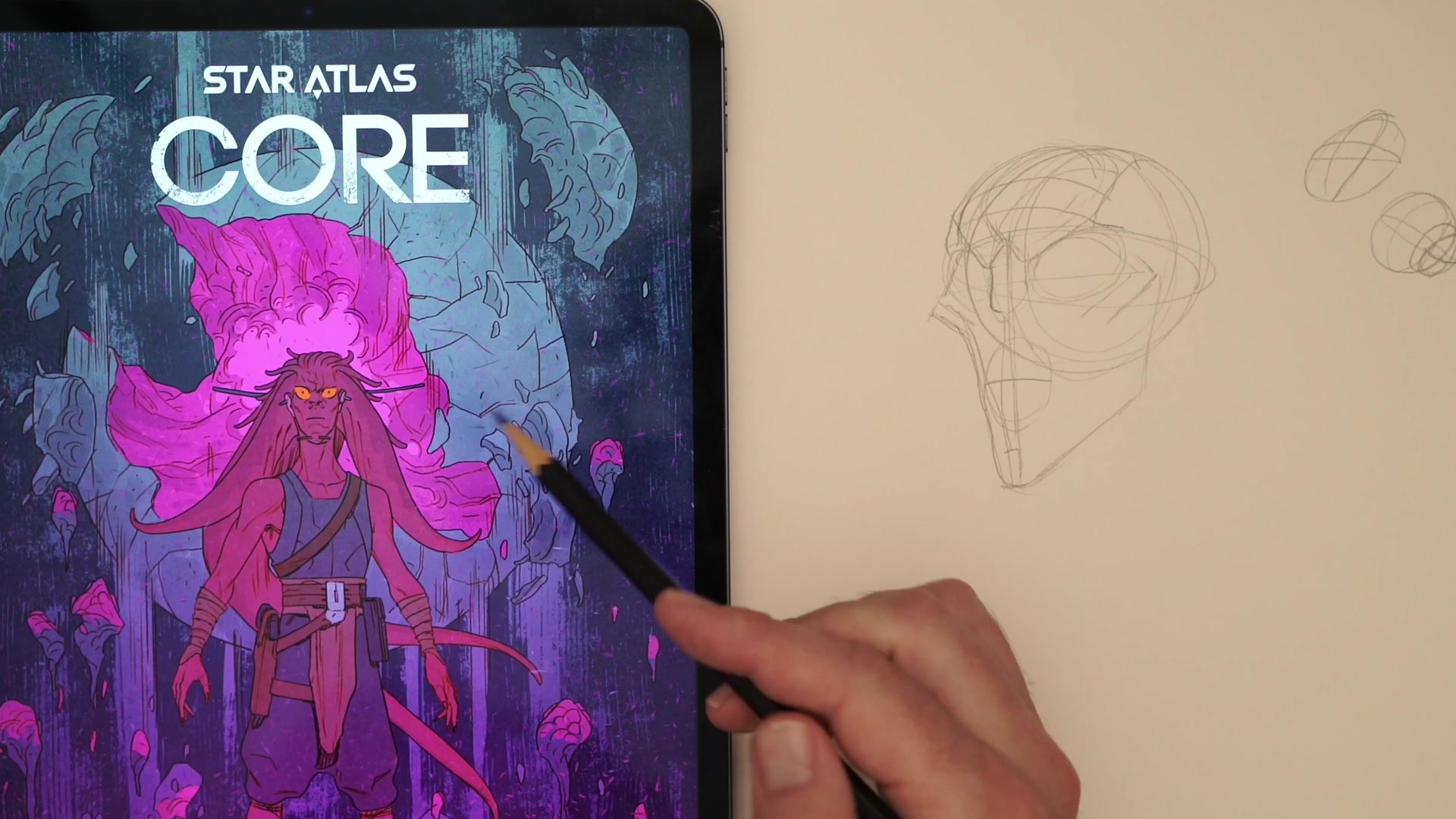
This video demonstrates how the same sphere-based construction from Drawing the Head and Hands becomes the starting point for building alien heads with oversized eyes, extended foreheads, tentacles, and elongated jawlines. The key insight is that Loomis construction works not because it replicates realism, but because it provides a repeatable structural framework that can be modified to fit any anatomy.
Reference and Setup
Starting With Standard Construction
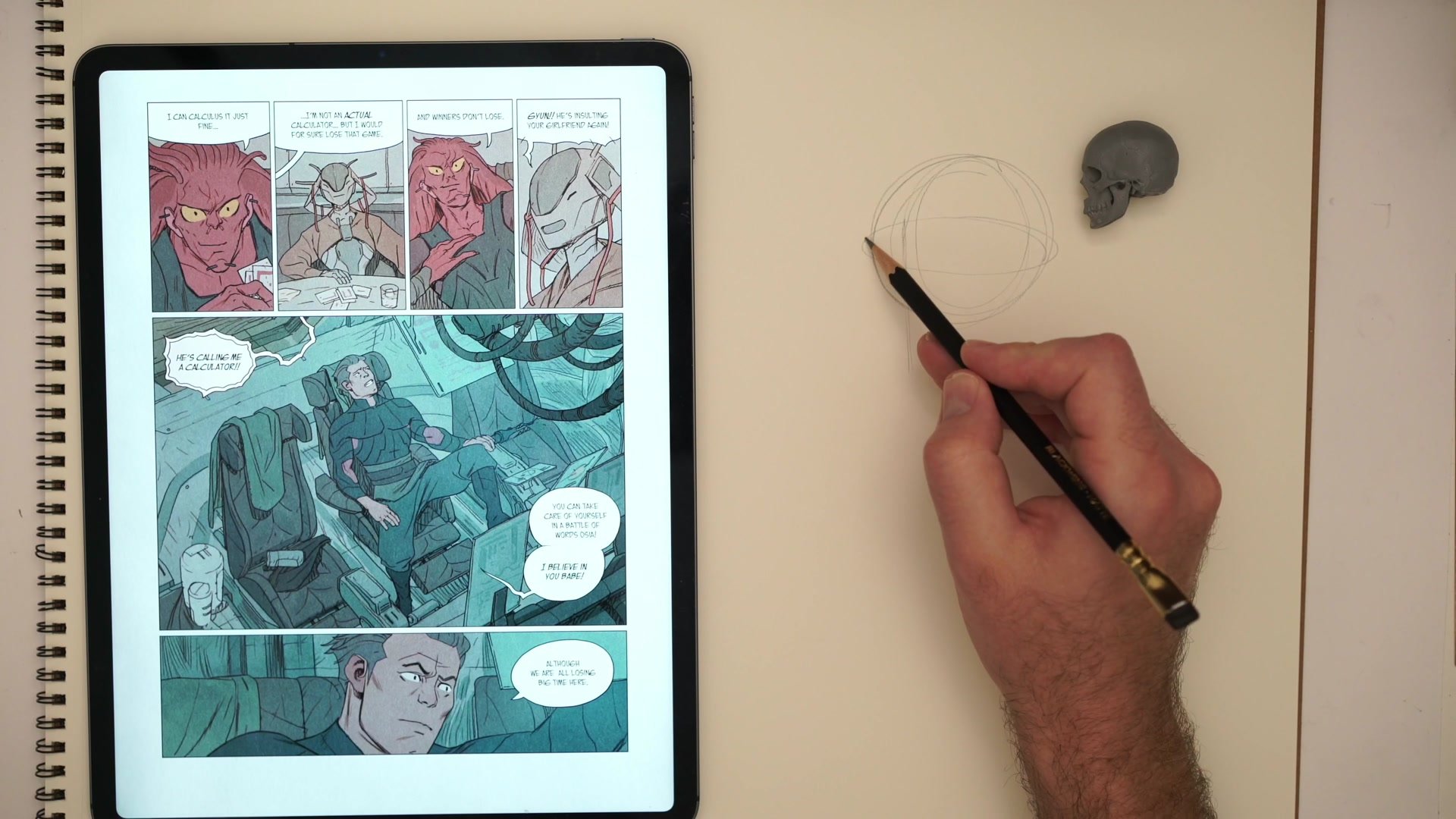
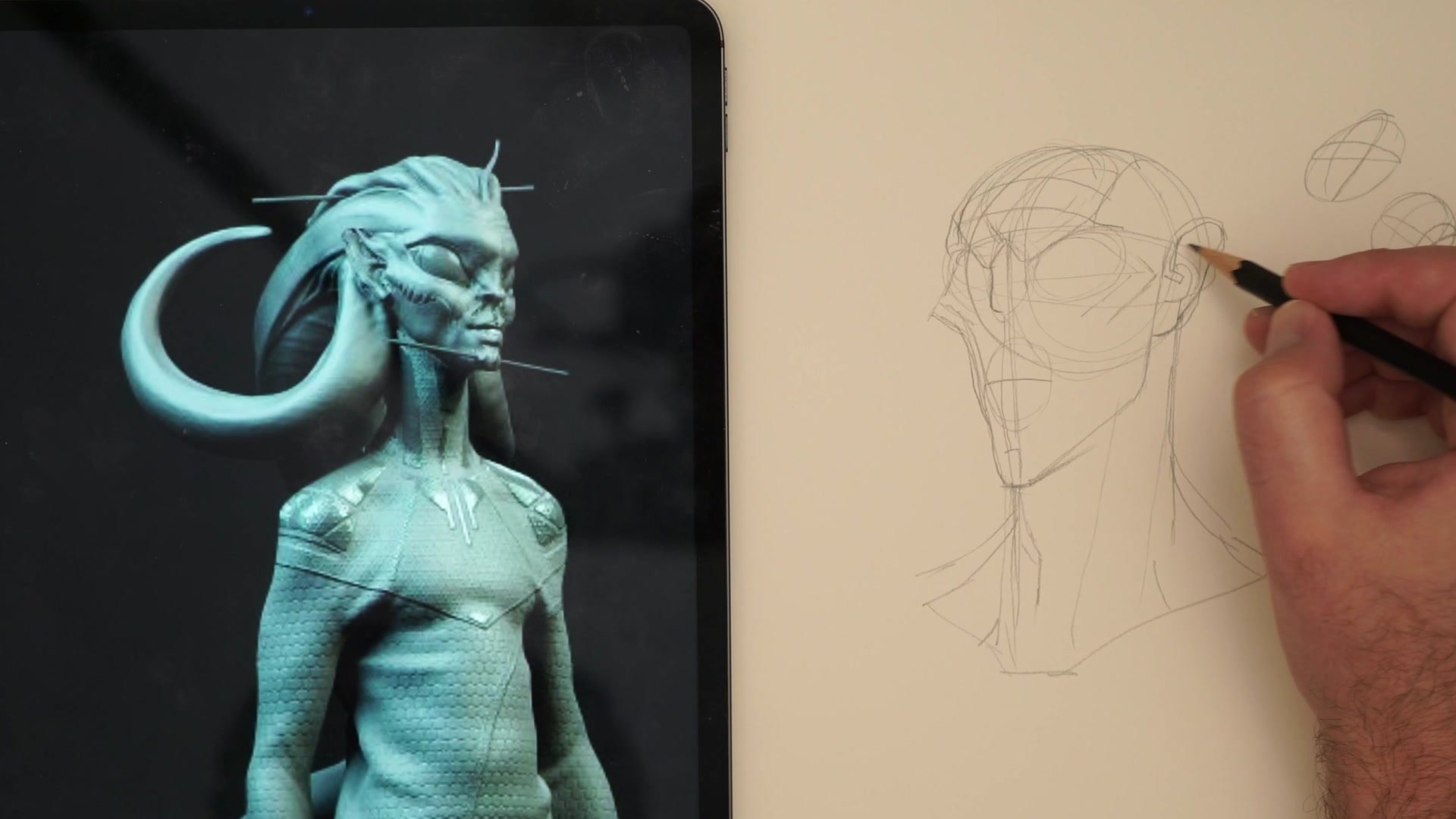
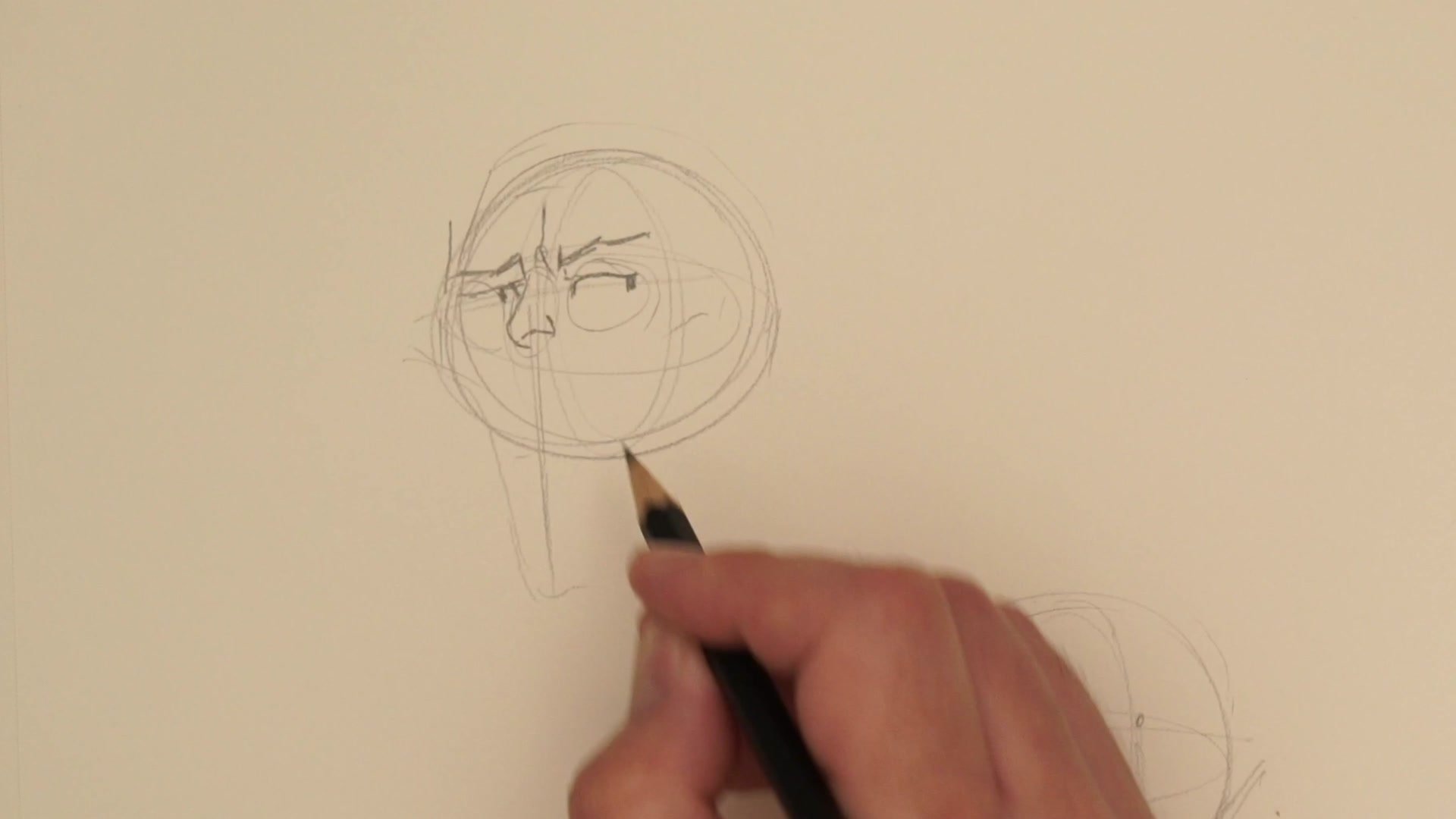
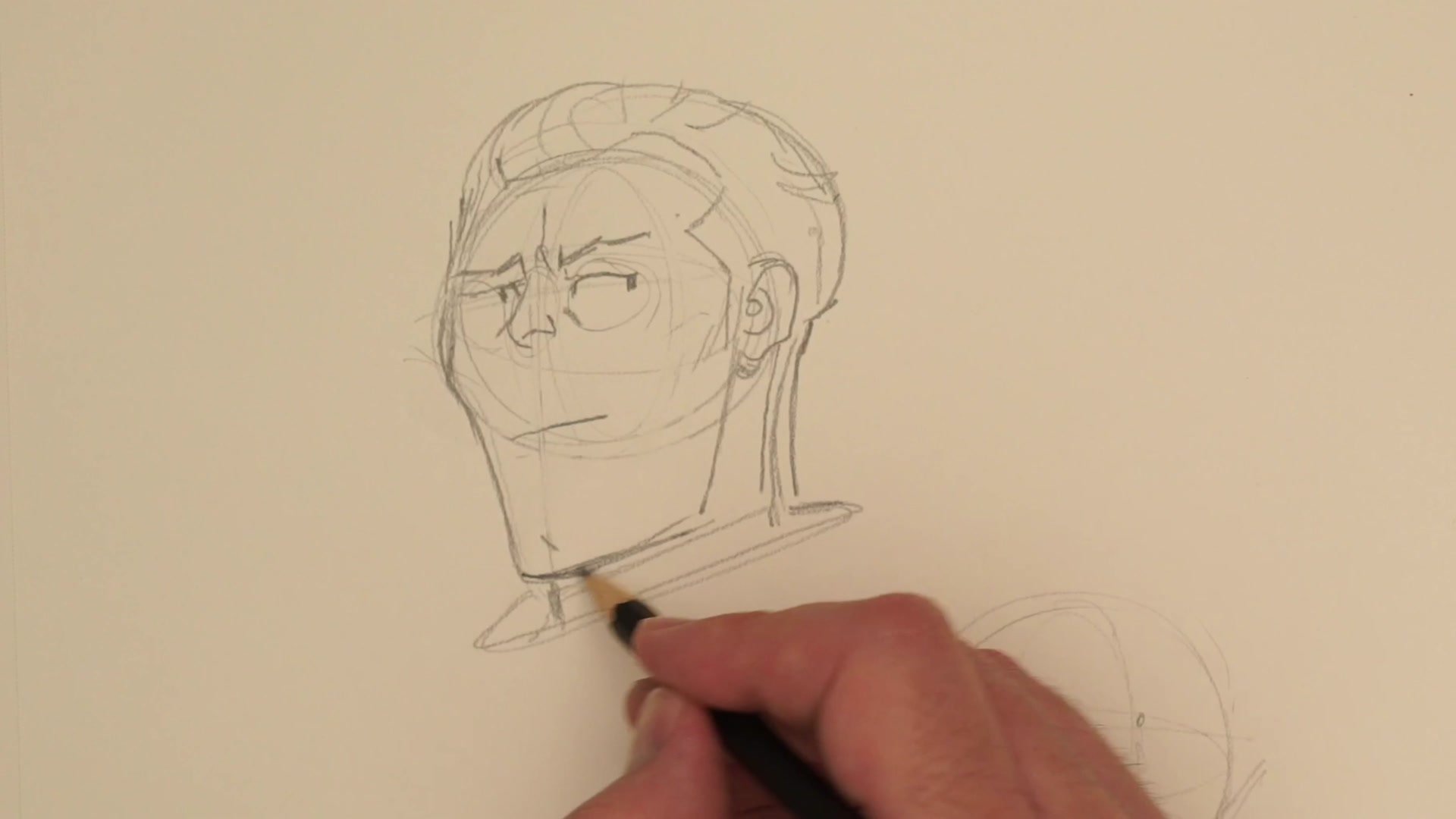
The process begins exactly where any Loomis construction starts: finding the main sphere of the head and establishing dimensionality within it. The center line drops down, and the basic proportional structure gets blocked in. This is the critical foundation, because it provides a structure that can be remembered and repeated across hundreds of comic pages.
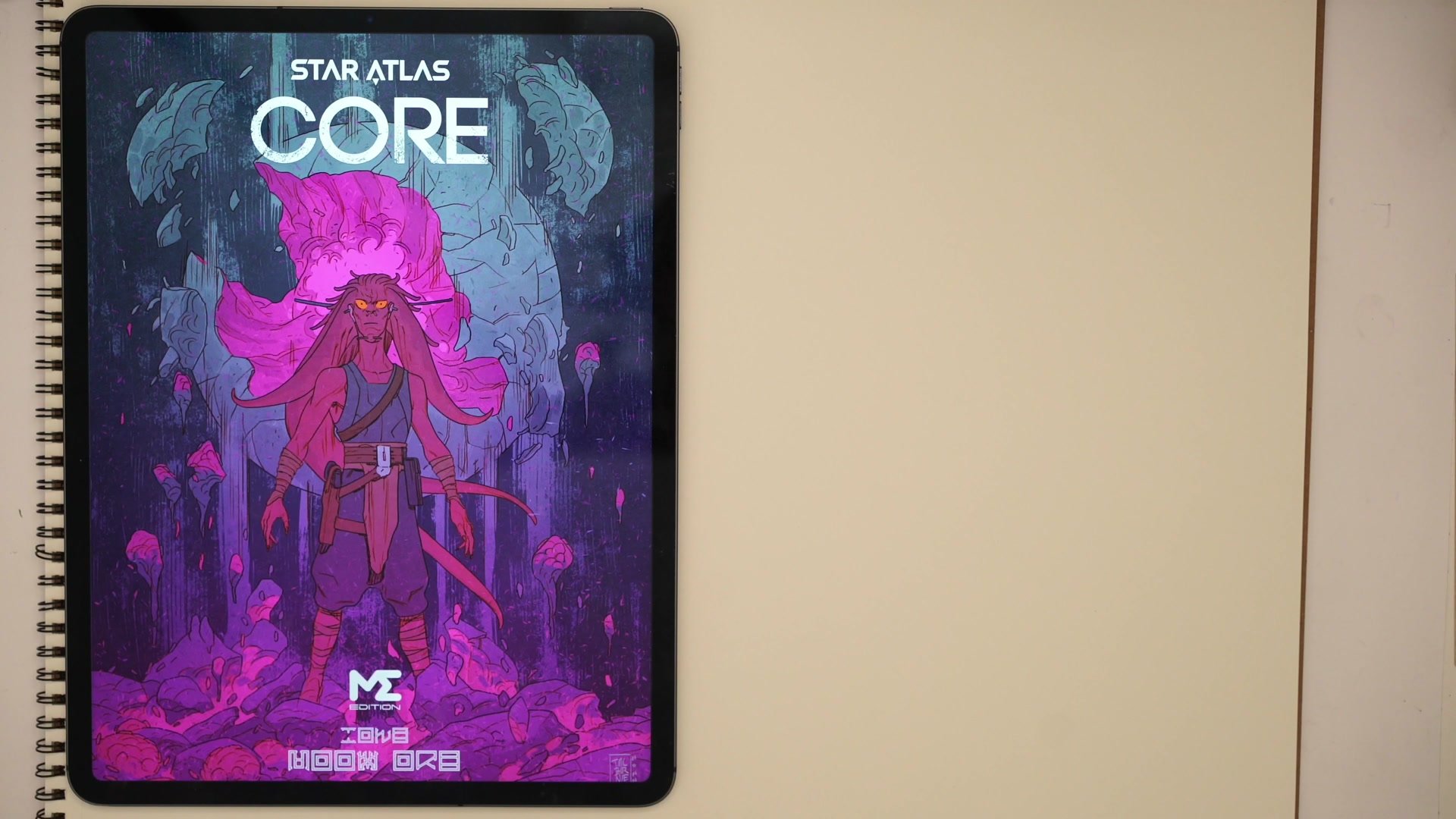
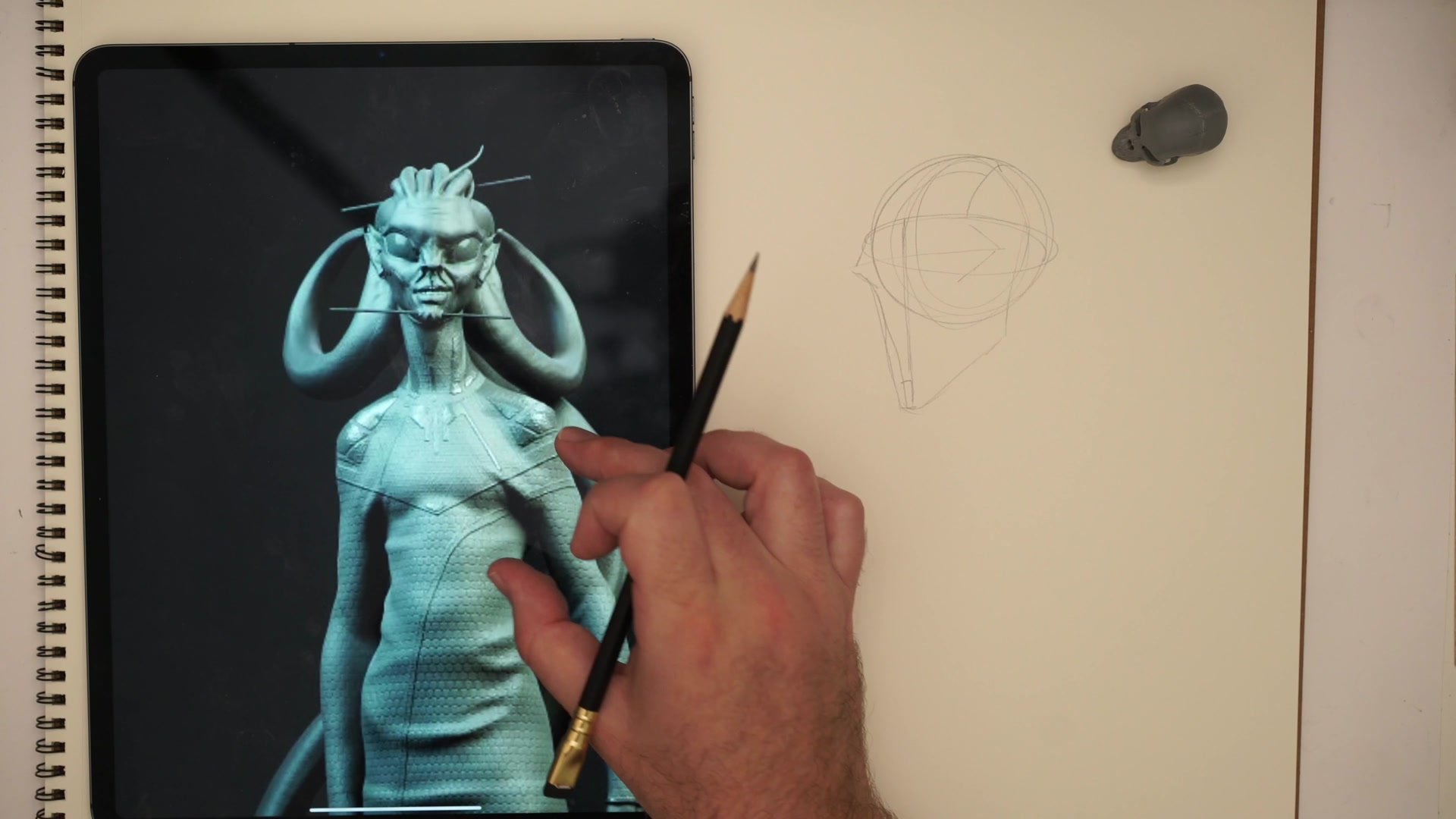
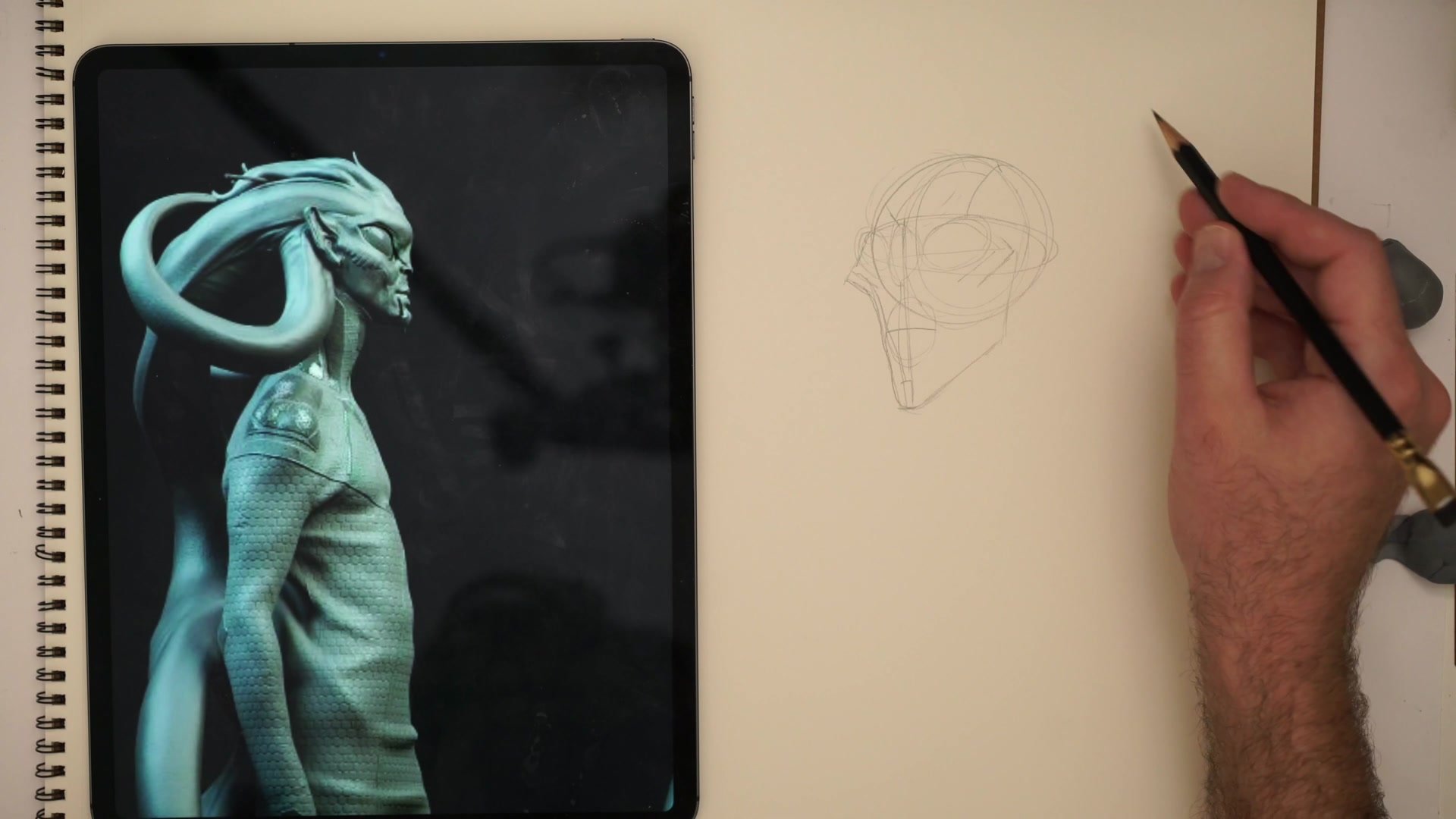
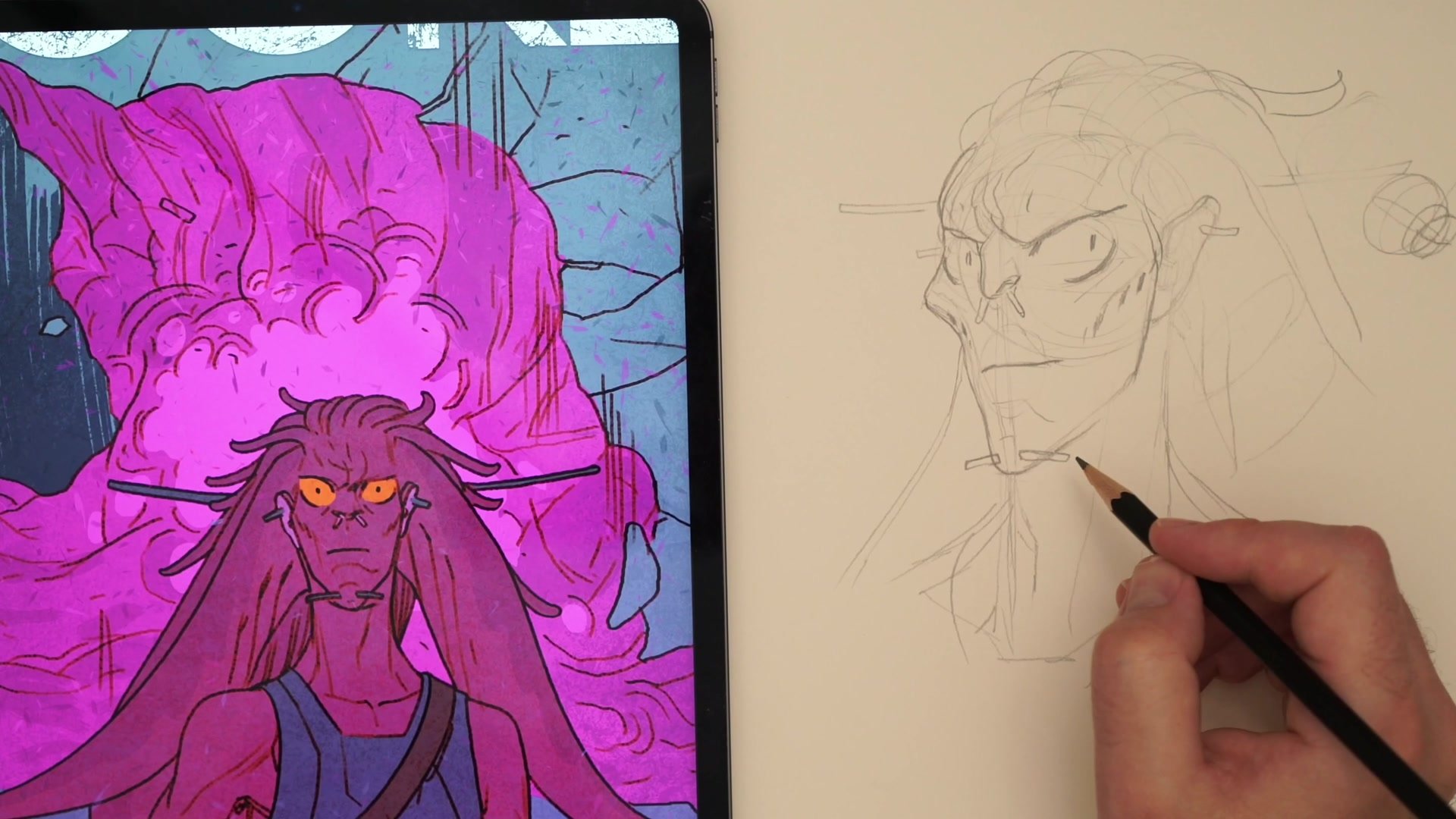
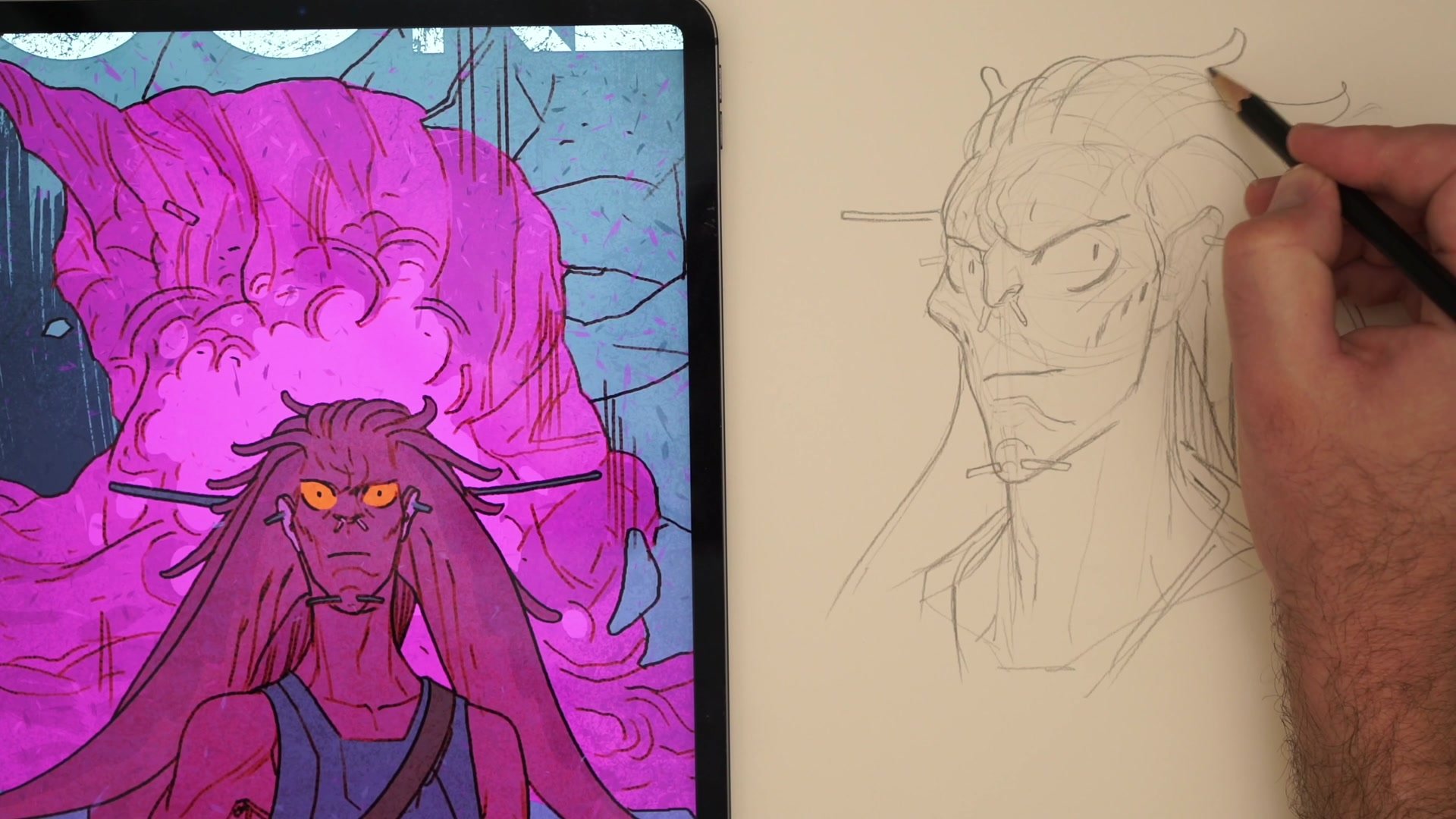
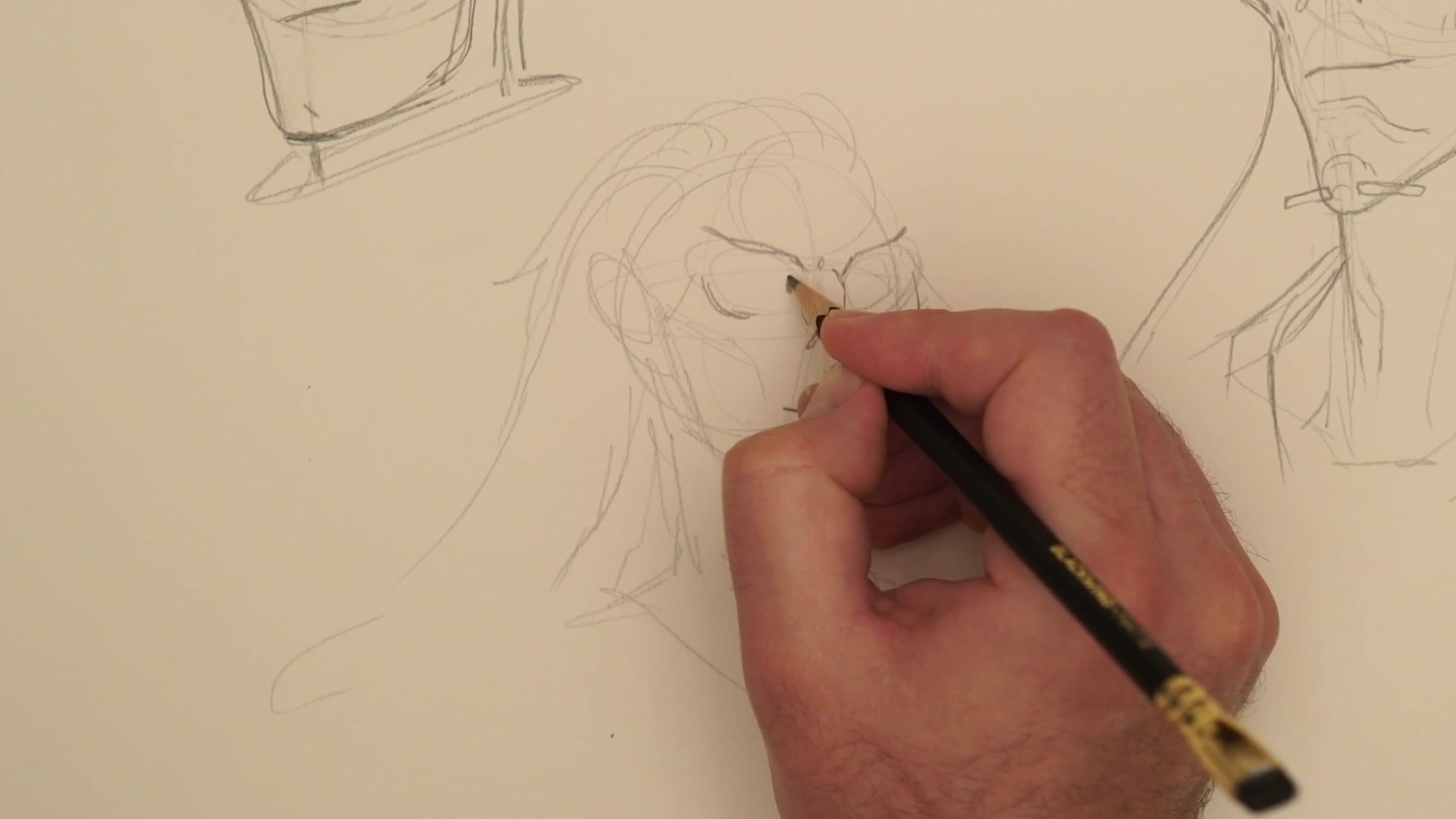
From that standard construction, the proportional modifications specific to the character design get layered on. In this case, the alien character Moda from the Star Atlas: CORE comic has a significantly extended jawline, compressed nose-to-chin proportion, massively oversized eyes that push the cheekbones outward, and a protruding forehead mass. Each of these changes is treated as an addition to the base construction rather than a replacement of it. The forehead extension, for example, is visualized as an extra slab of form being placed on top of the sphere, similar to how the Loomis method already chops off the side of the sphere for the temporal area.
Alien Construction
Building Non-Human Features
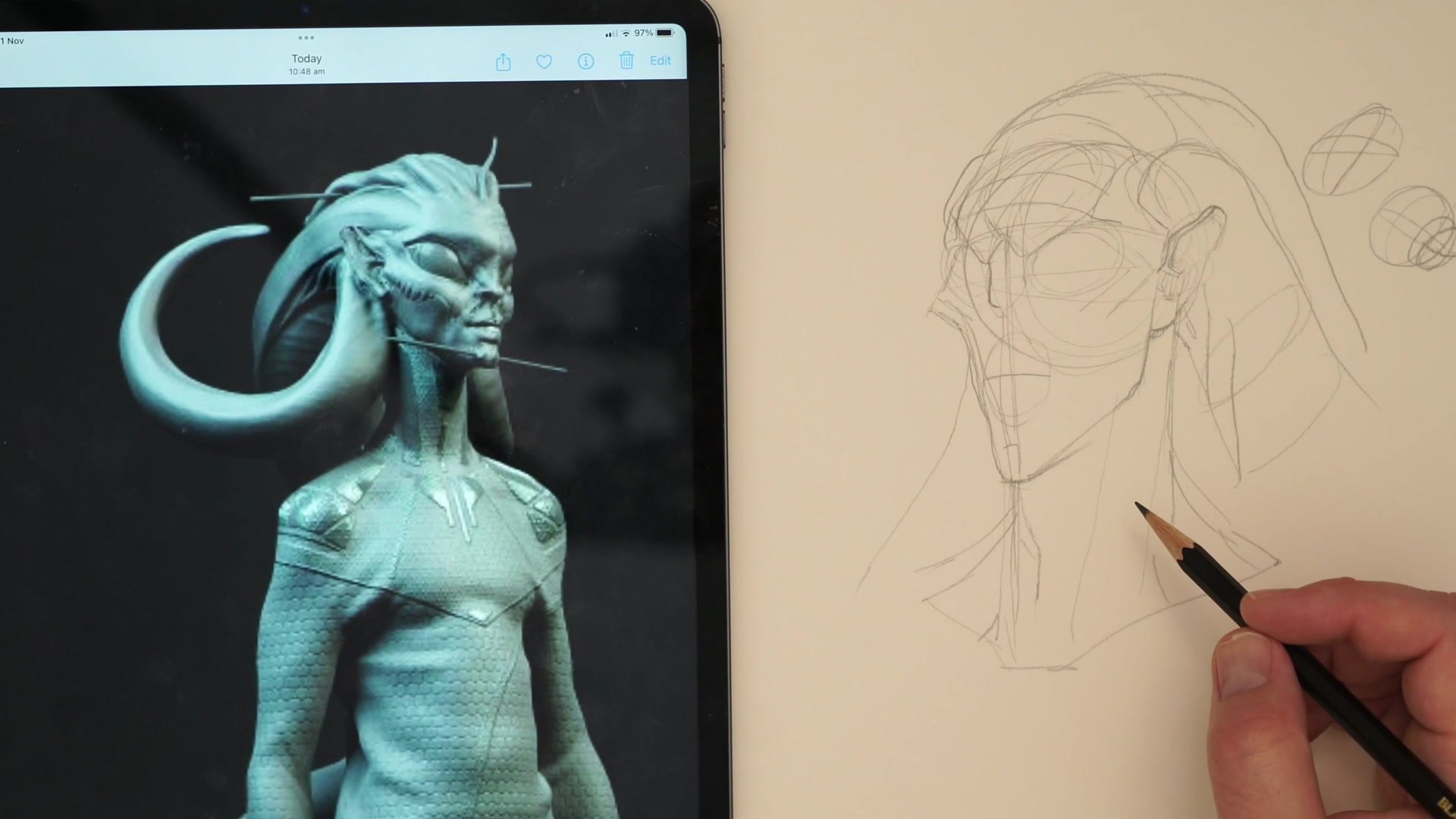
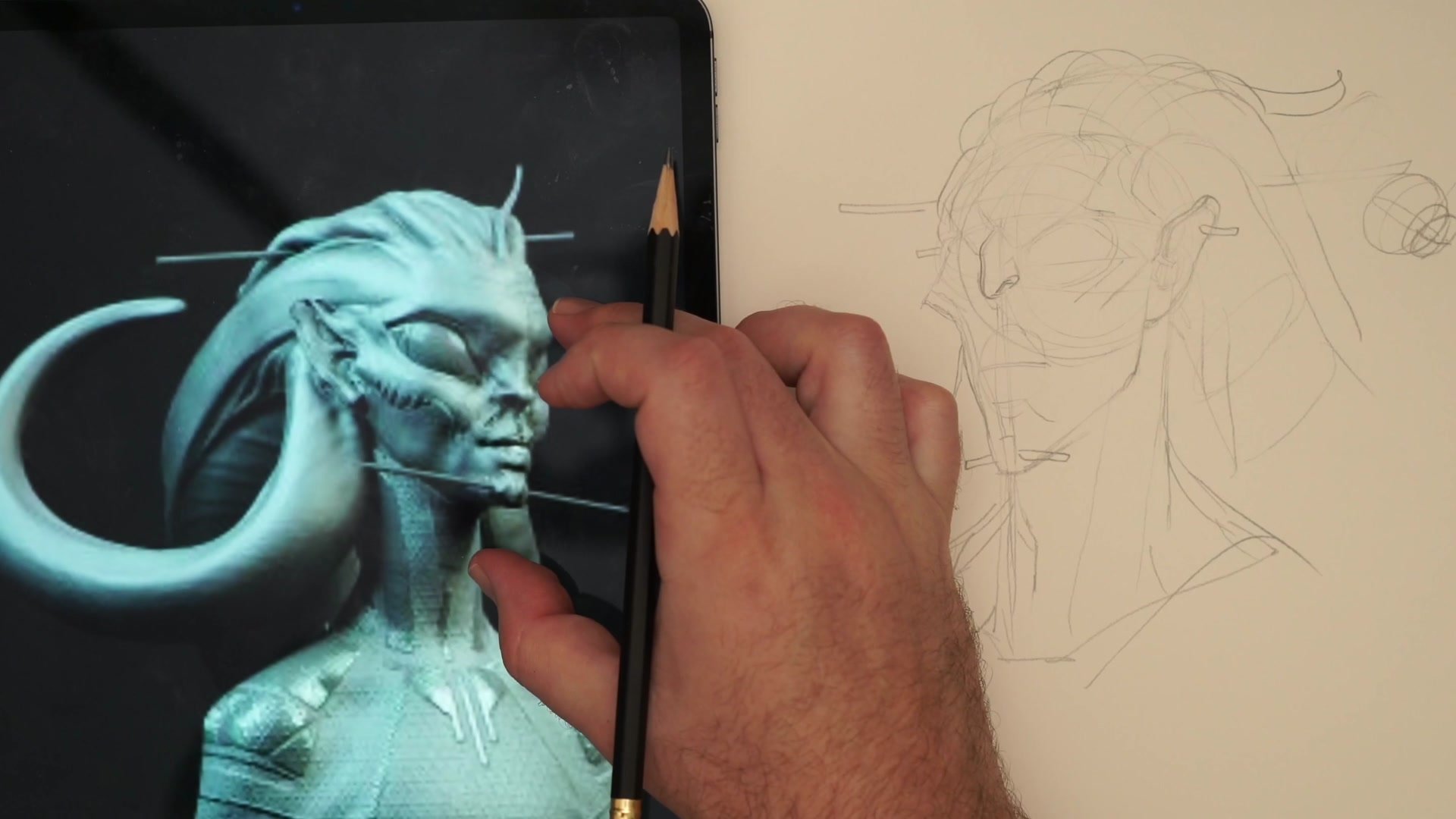
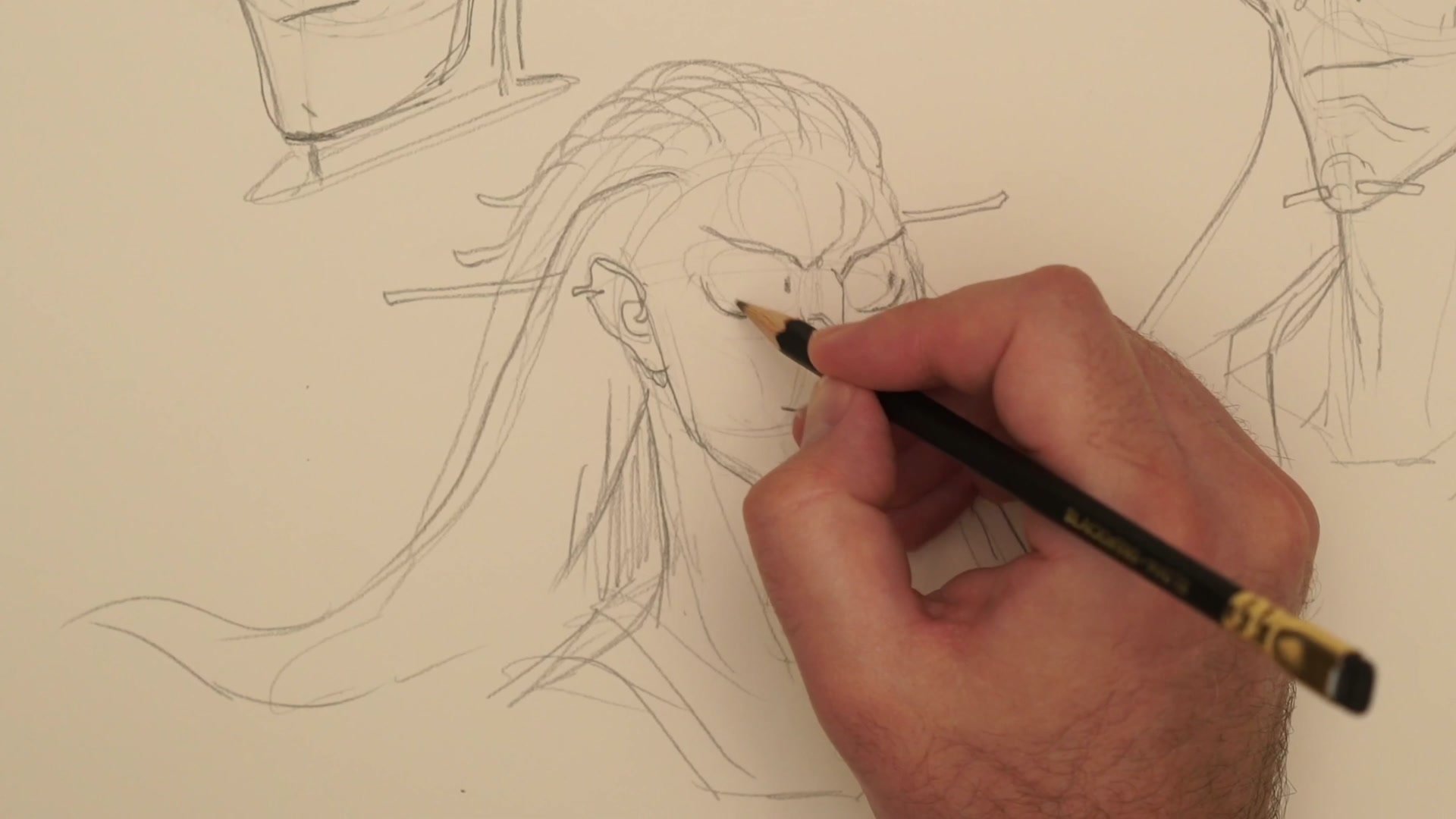
Once the modified proportional block-in is established, the next challenge is translating those construction forms into stylized line work. The large eye sockets define where the cheekbones extend, the forehead mass blends structurally into the nose area, and additional anatomical details like tentacles, ear modifications, and body piercings get placed using the same three-dimensional thinking that drives the initial construction.
Understanding form in three dimensions matters here even more than with standard anatomy. Tentacles need to read as going somewhere in space. The forehead protrusion needs to feel like it wraps around the skull. These are essentially the same form-drawing skills used in the toilet roll exercise or any basic construction practice, just applied to anatomy that does not exist in any reference book. The construction gives systematic control over features that would otherwise be guesswork every time the character needs to be redrawn.
Refinement and Comparison
Human vs Alien Side by Side
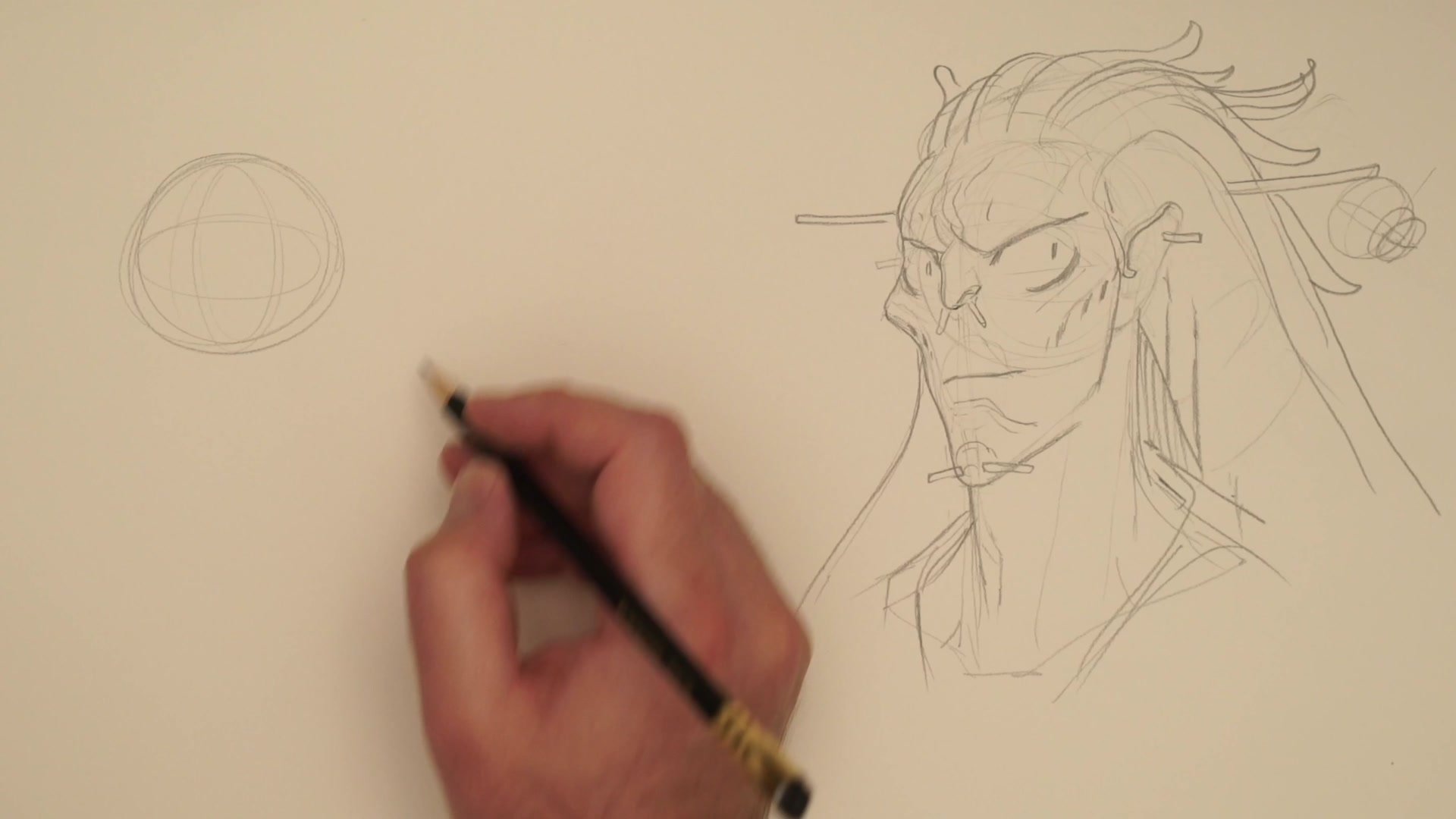
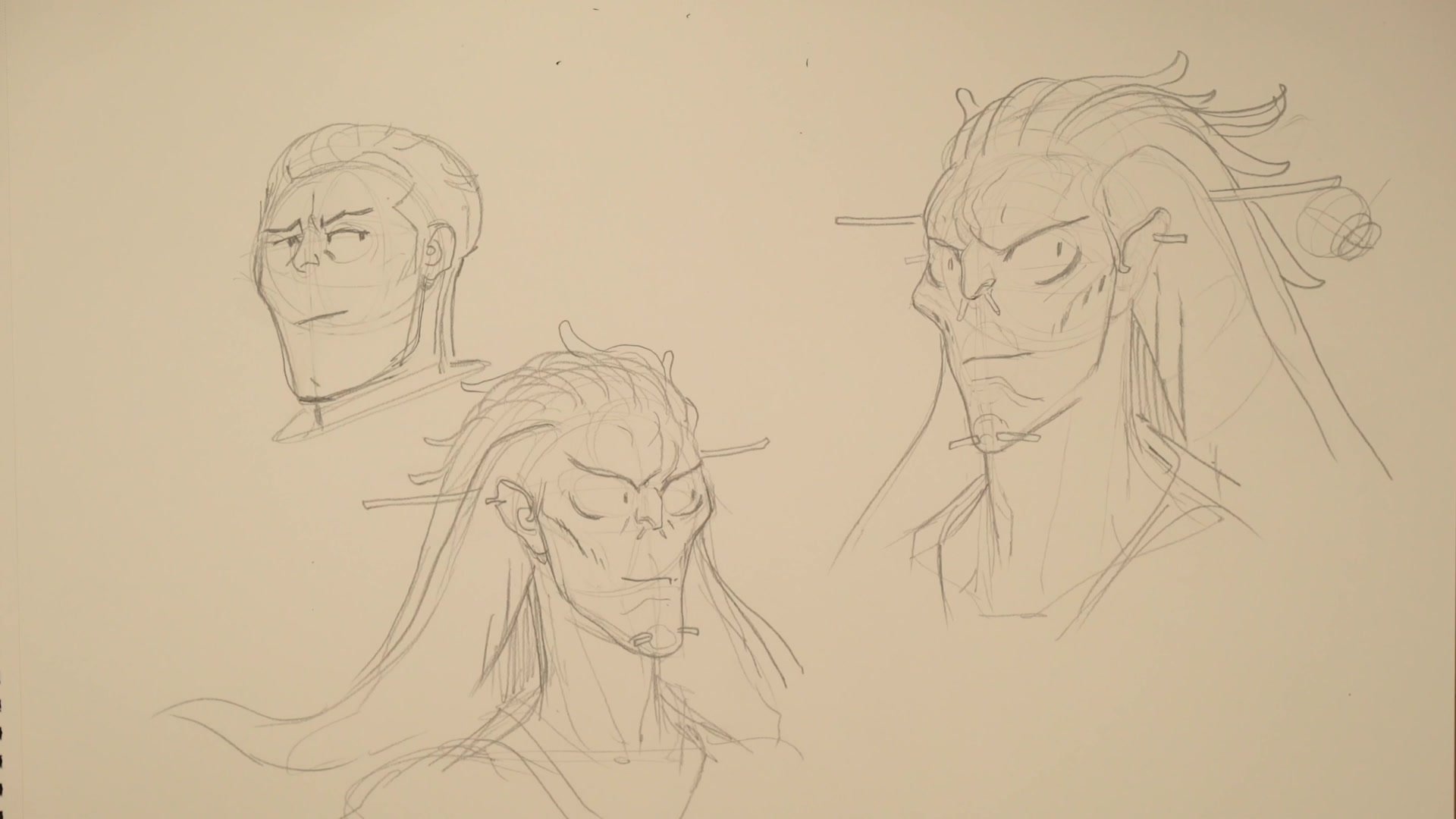
To demonstrate how the same method serves both human and non-human characters, the video builds a standard stylized human head alongside the alien construction. The same Loomis sphere, the same center line, the same proportional block-in. The human version uses a slightly exaggerated long jaw for the comic book style, with features built out from the nose to maintain structural consistency.
The comparison reveals something important about how working artists actually use constructive anatomy: not slavishly following textbook proportions, but adapting the structural framework to whatever the project demands. The construction is a tool for maintaining character consistency across many drawings, not a rigid system. Once the basic structural approach is internalized, switching between human and alien anatomy becomes a matter of adjusting proportions rather than starting from scratch each time.
Final Drawings
Key Principles
Construction as Framework: The Loomis Method sphere construction works for alien anatomy because it provides a repeatable structural starting point that can be modified with different proportions and additional form elements.
Proportional Modifications: Each non-human feature is treated as an addition to the base construction. Oversized eyes push cheekbones outward, forehead mass adds a new form element on top of the sphere, and elongated jawlines extend the standard chin proportion.
Three-Dimensional Thinking: Non-human features like tentacles and forehead protrusions require the same form-drawing skills as standard anatomy. Understanding where forms go in three dimensions makes alien designs feel solid rather than flat.
Adaptation Over Replication: Working artists use constructive anatomy as a flexible tool, not a rigid system. The same method serves both human and non-human characters by adjusting proportions while keeping the structural framework intact.
Practice This
Start Standard: Block in a standard Loomis head construction with the sphere, center line, and proportional divisions exactly as taught in Drawing the Head and Hands.
Modify Proportions: Choose one anatomical change, like oversized eyes or an extended forehead, and add it to the existing construction as a form element rather than redrawing from scratch.
Compare Both: Draw the standard human version and the modified version side by side using the same starting construction, to see how the framework adapts to different designs.