Design Dwarves and the Secret Sketches Behind Every Drawing
Summary
Designing a Dwarven Mage
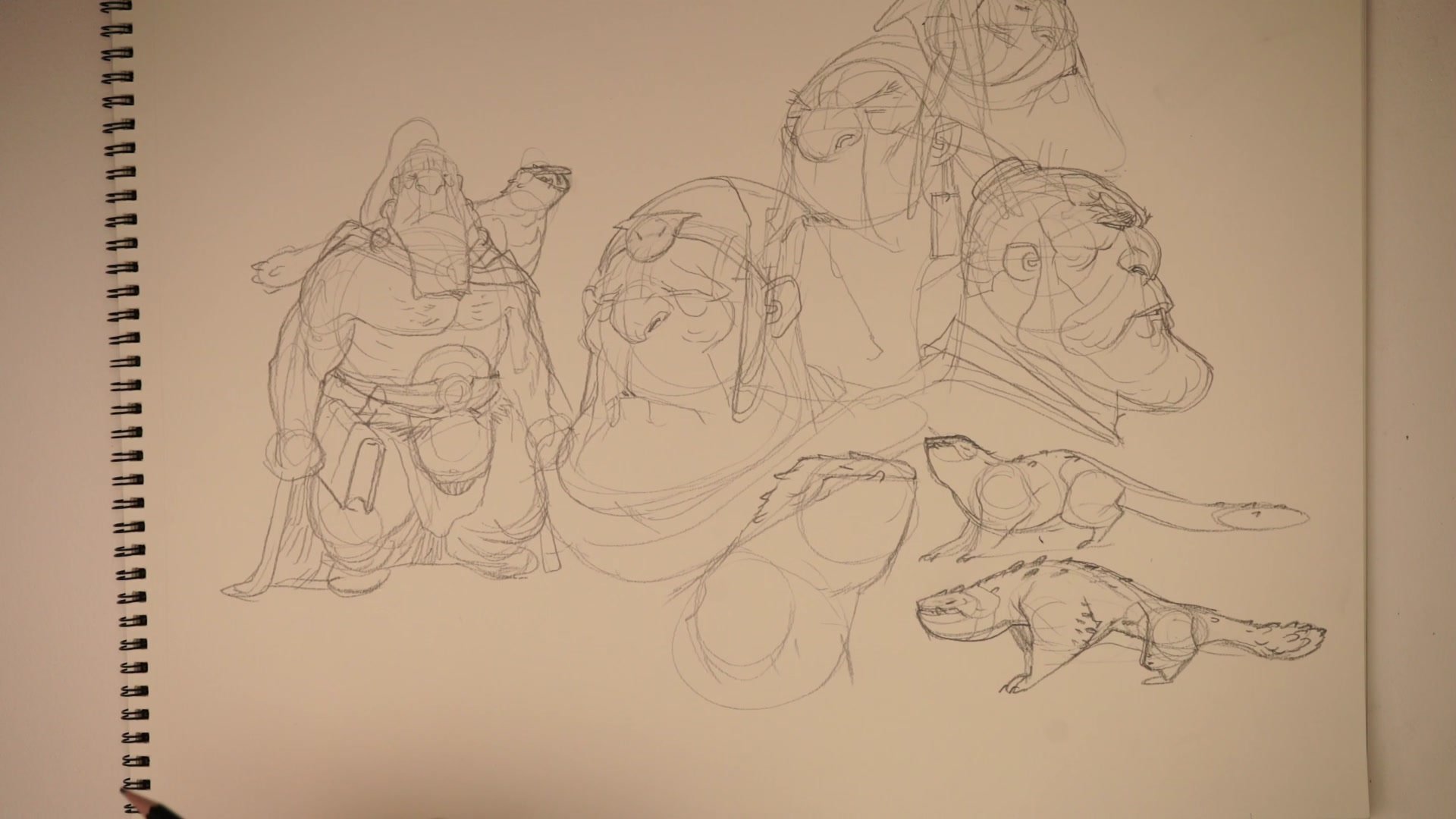
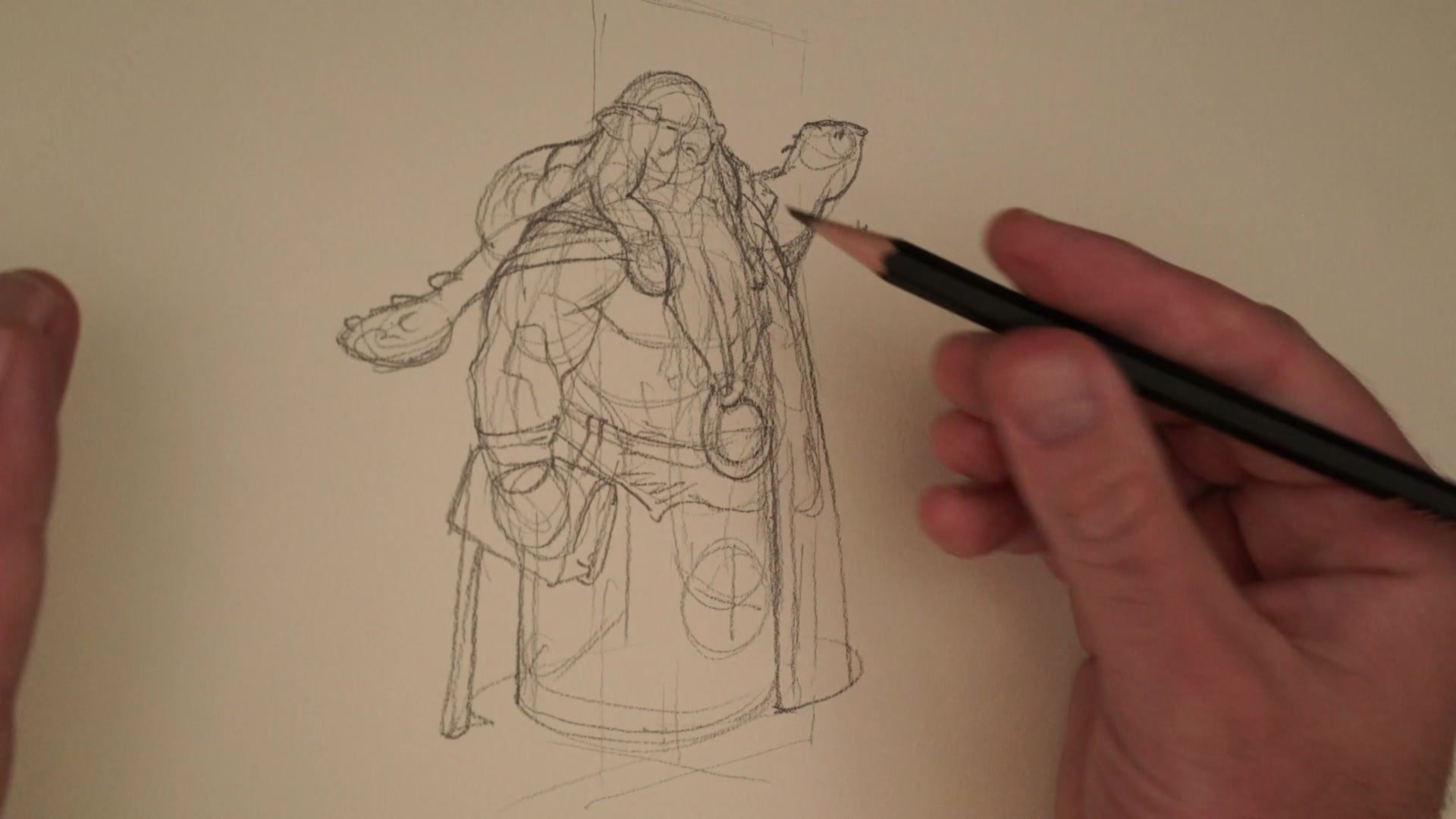
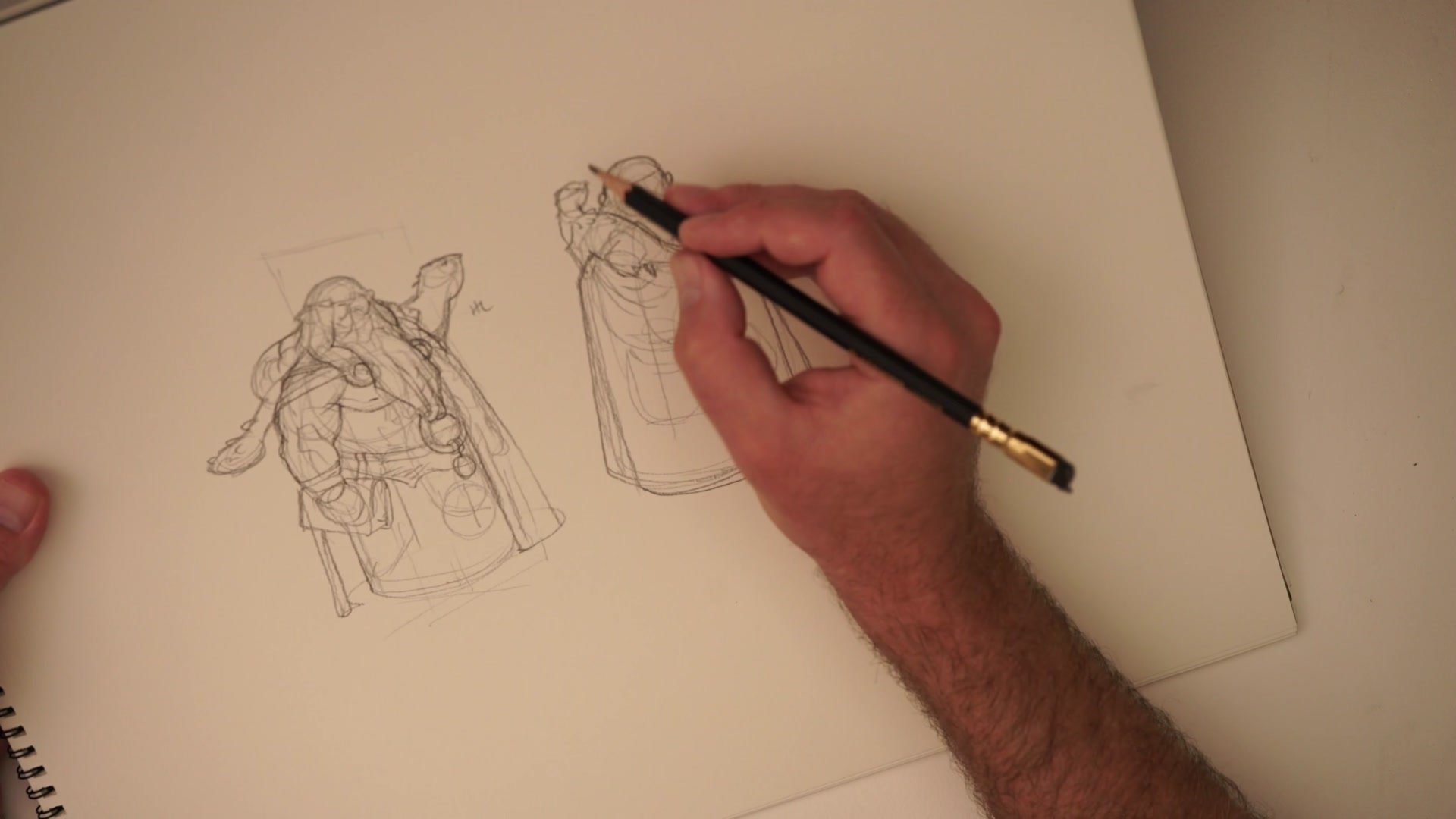
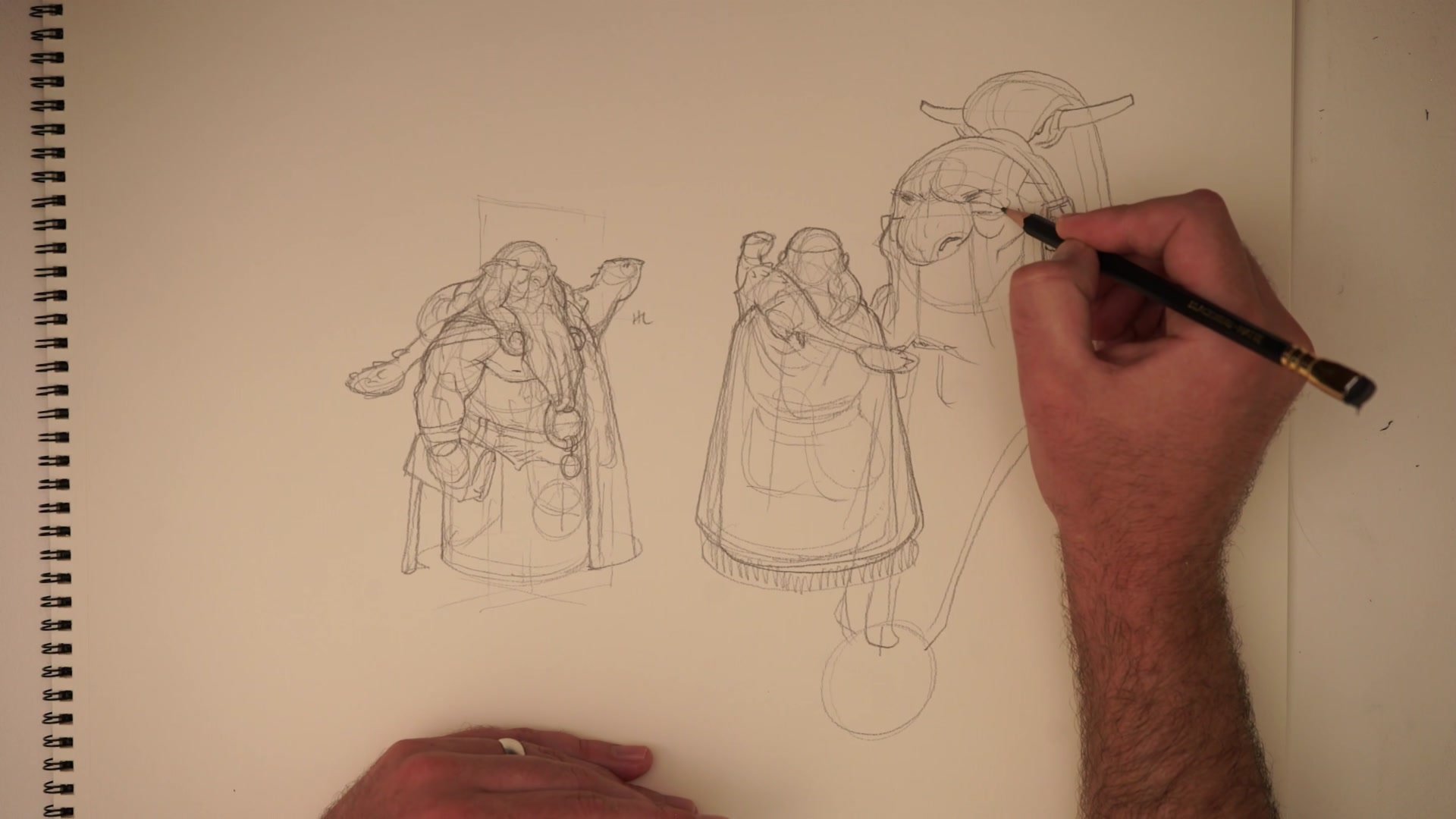
This real-time sketching session follows a cozy fantasy character design challenge: creating a dwarven mage with a lizard familiar. Across two sketchbook pages, the design moves from rough head studies and body silhouettes to more resolved full-body concepts, all drawn traditionally with pencil on paper. Along the way, the session explores Andrew Loomis's lesser-known book "I'd Love to Draw," examining the preparatory sketches and hidden rough work that went into his famous instruction books.
The deeper conversation running through the session tackles a critical idea for developing artists: the messy, ugly stages of creation that professionals routinely hide. From art influencer culture to live demos and how-to books, there are always preparatory drawings behind the drawings we see, and understanding this changes how we approach our own process.
Loomis Book Review
The Hidden Sketches
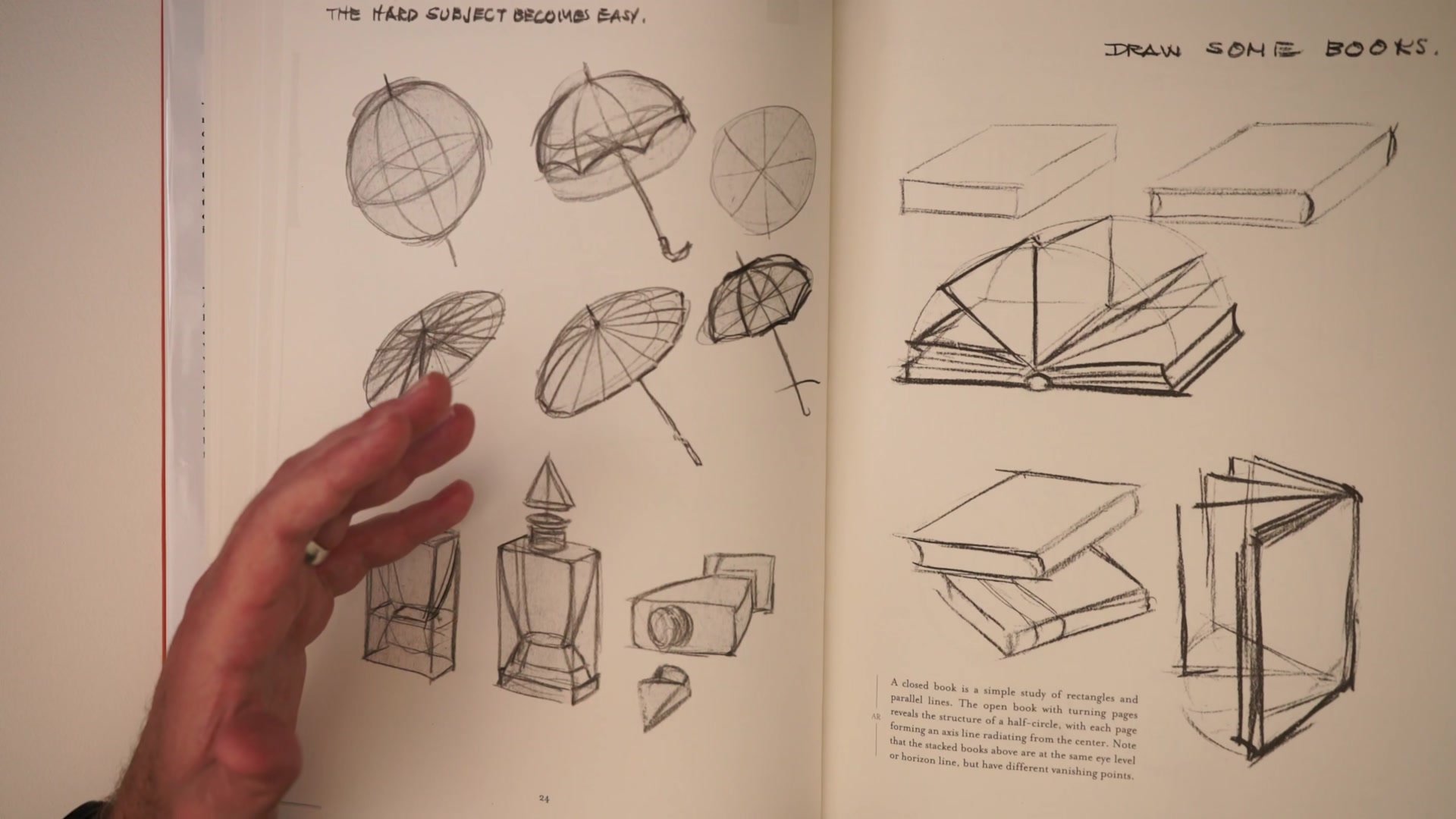
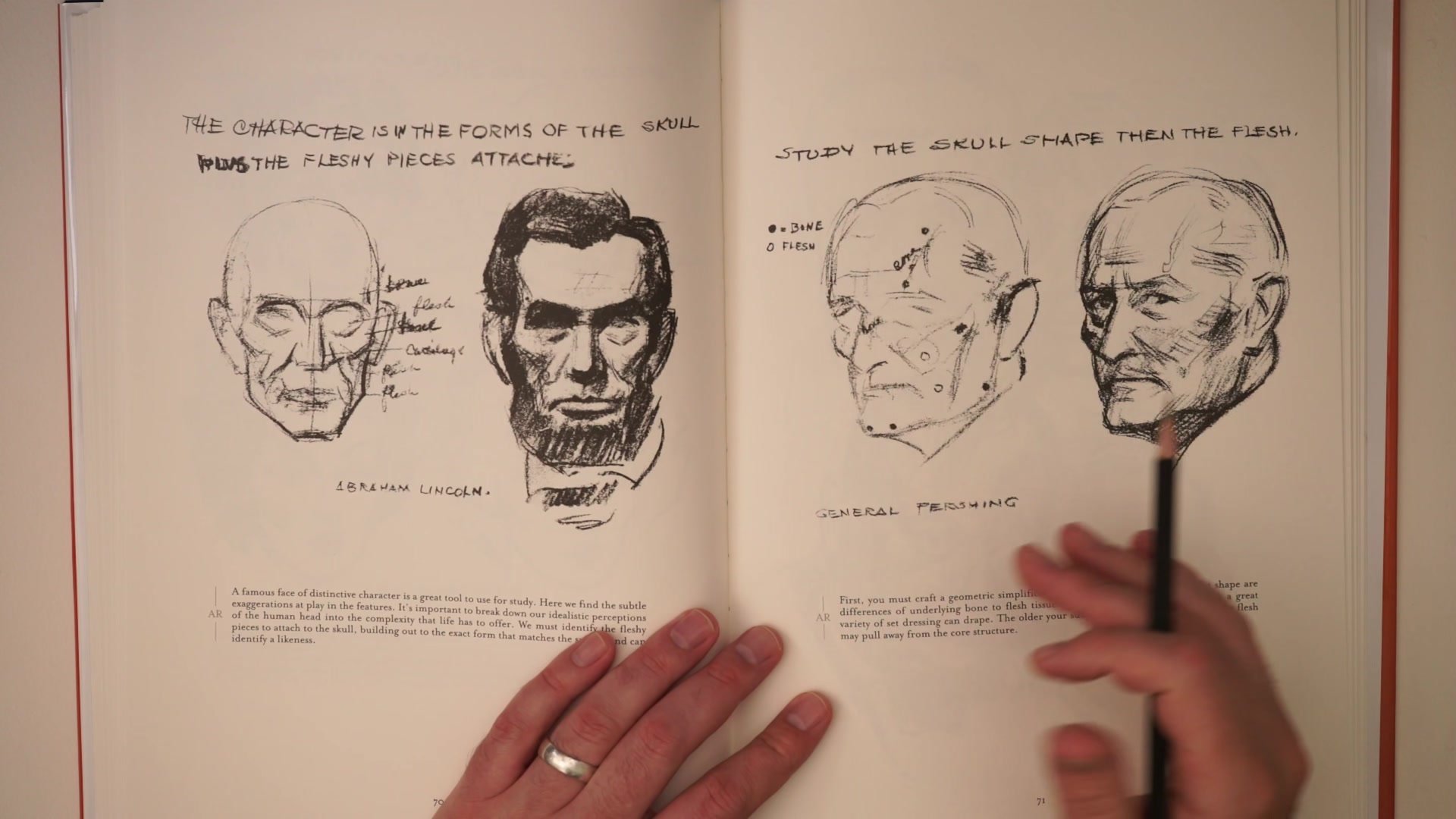
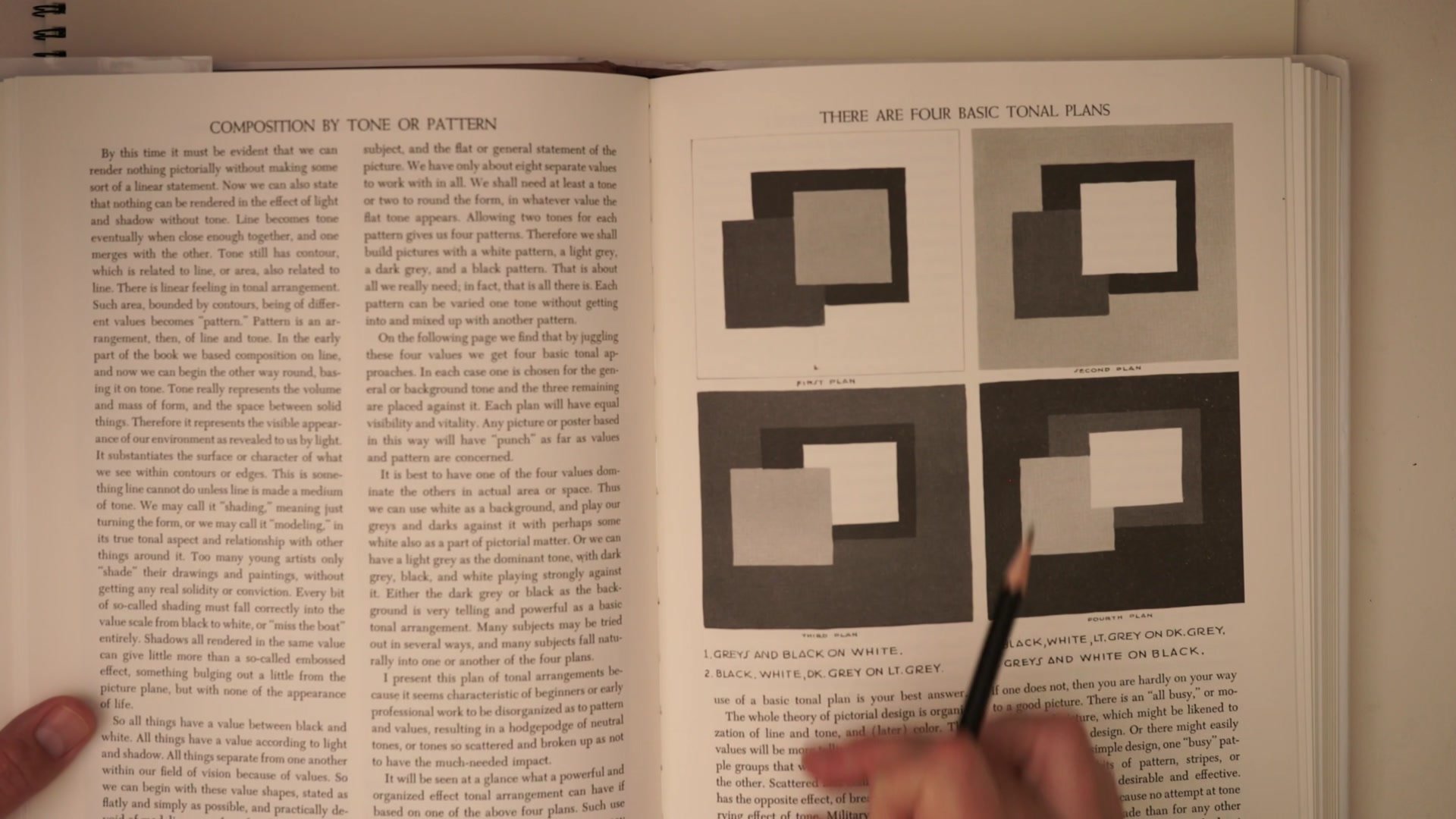
The session opens with a look through Andrew Loomis's "I'd Love to Draw," a retrospective collection of his rougher preparatory work. These are the drawings that came before the polished pages in "Creative Illustration" and "Figure Drawing for All It's Worth." Even an artist as accomplished as Loomis produced overworked sketches, messy perspective explorations, and compositional layouts that had to be figured out through iteration. The physical paste-up process of producing books in that era required significant planning, and these preparatory drawings reveal how much thought went into presentations that appear effortless.
This links directly to a broader reality about art education: most instructional content is itself a finished product. The demos, the step-by-step breakdowns, even the sketches chosen for how-to books are curated to put the best foot forward. The chaos of real creation is deliberately smoothed out to make ideas clear and digestible.
Character Head Studies
Planning and Ideation
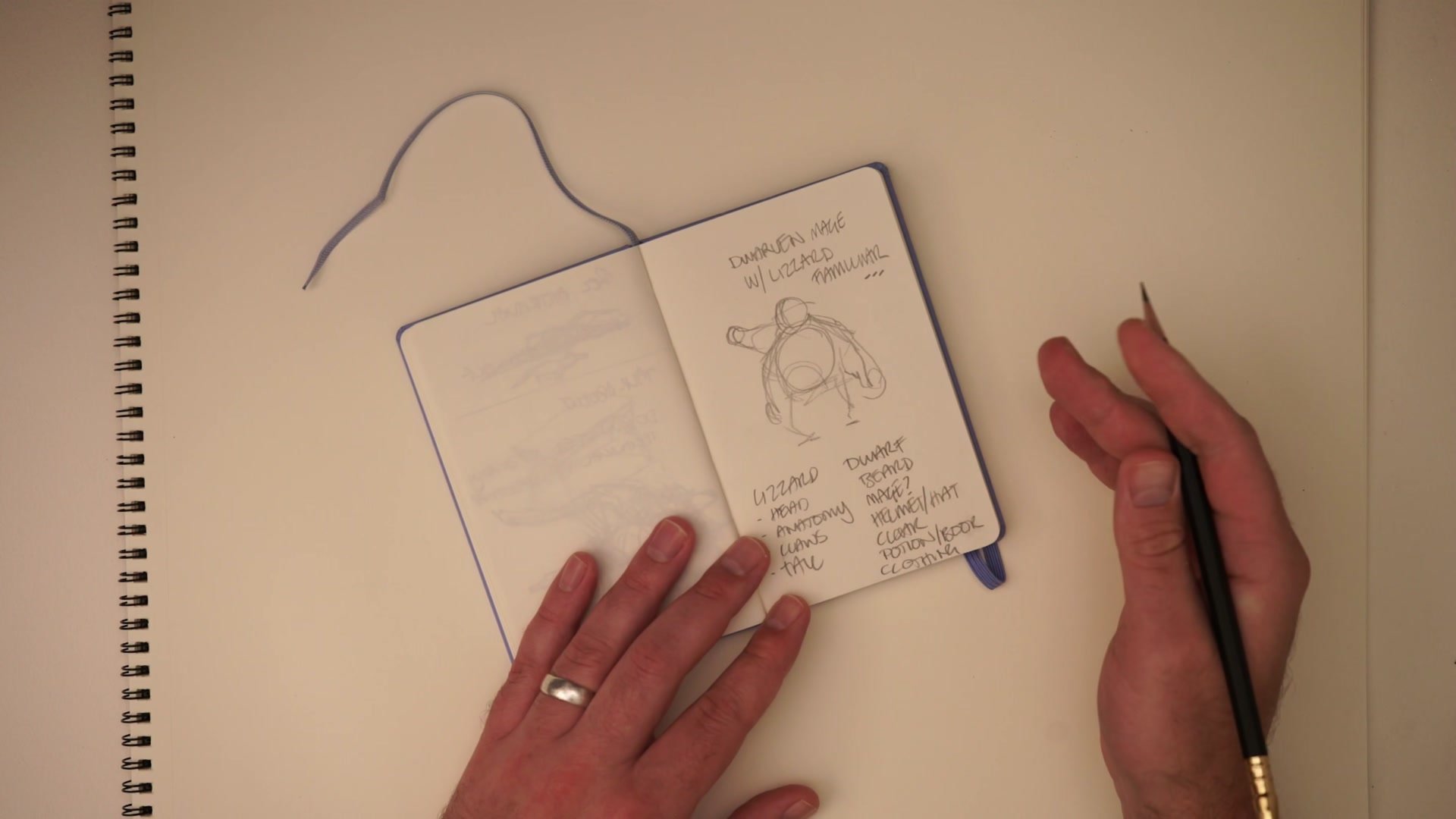
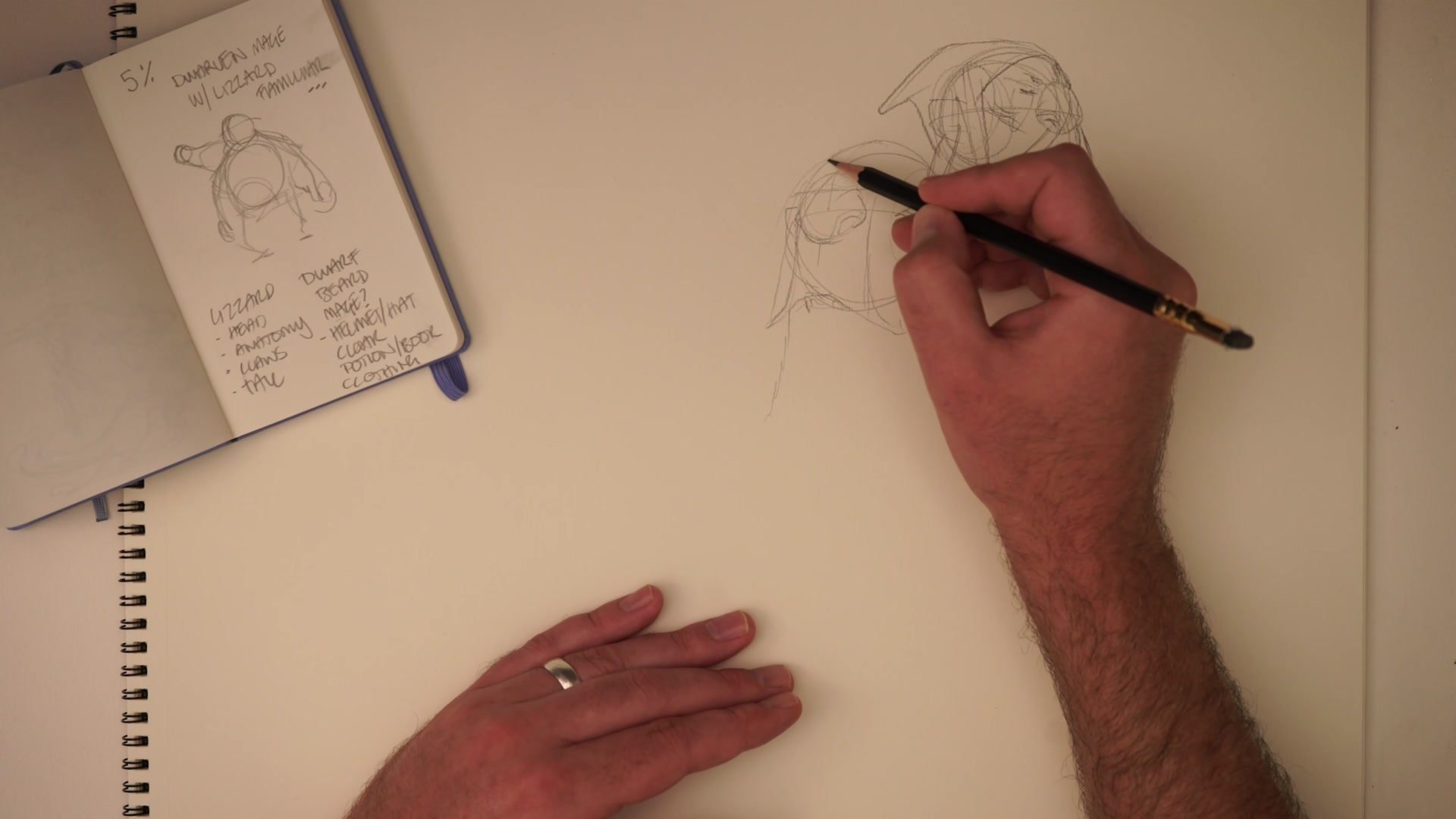
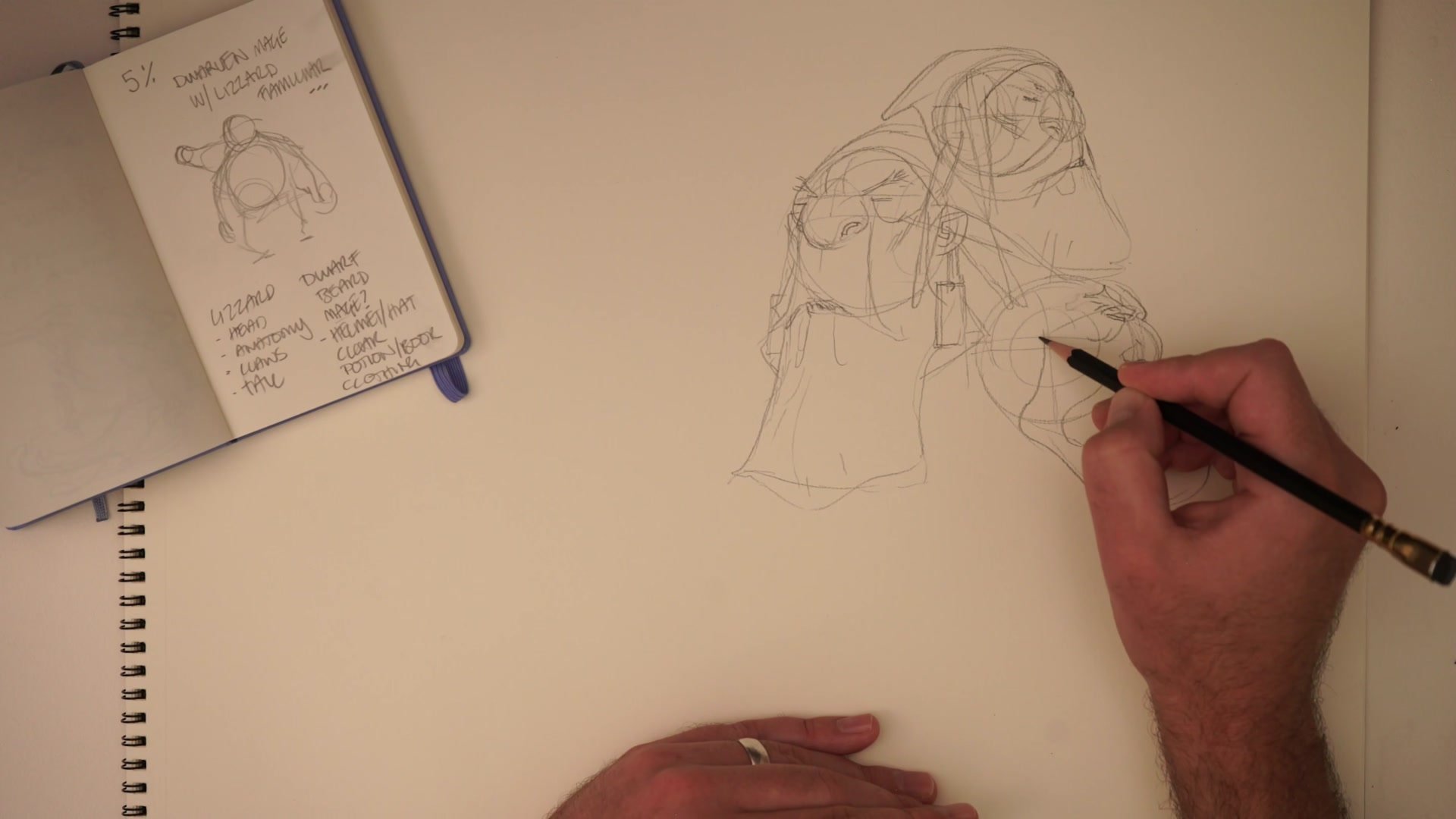
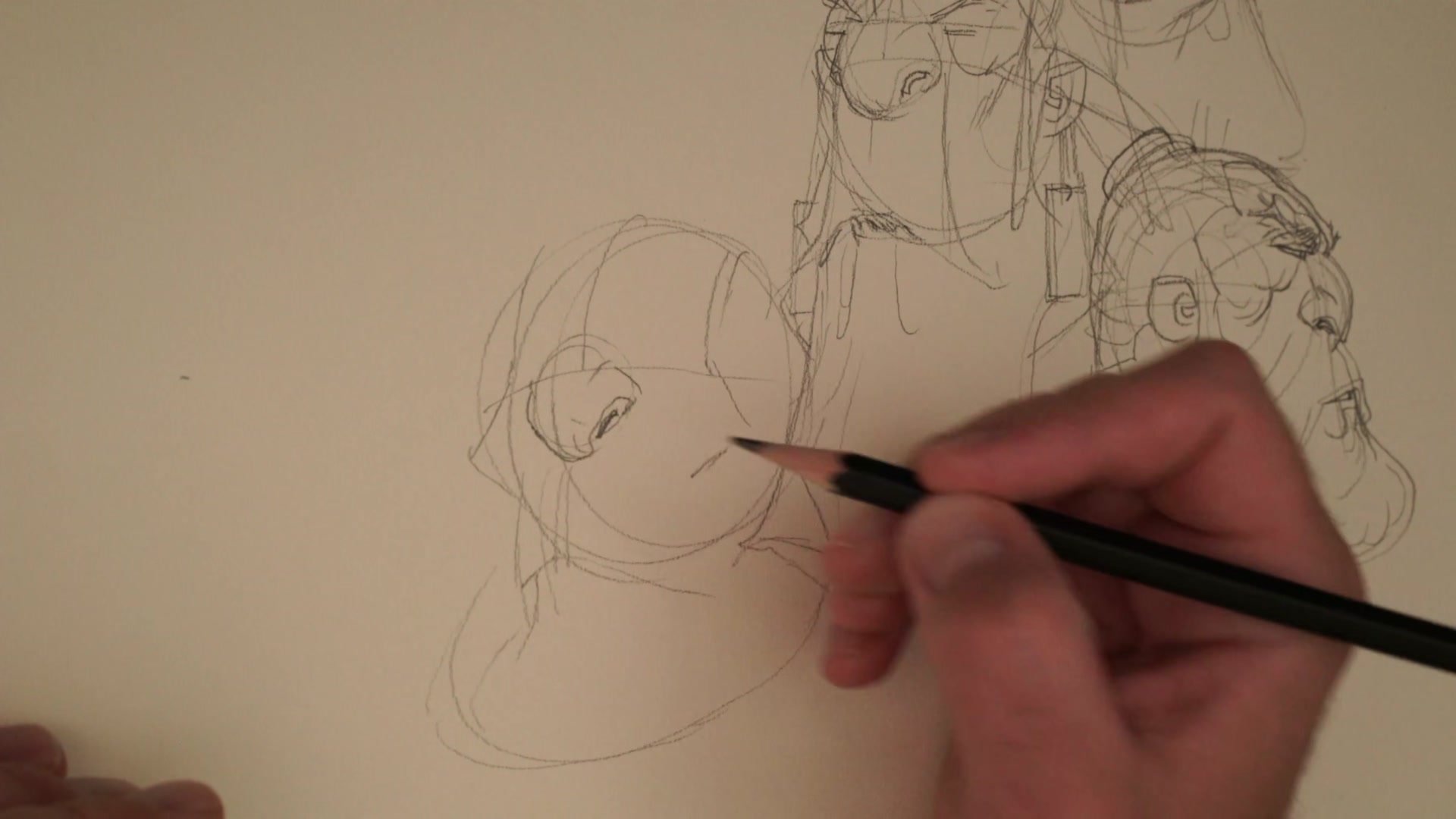
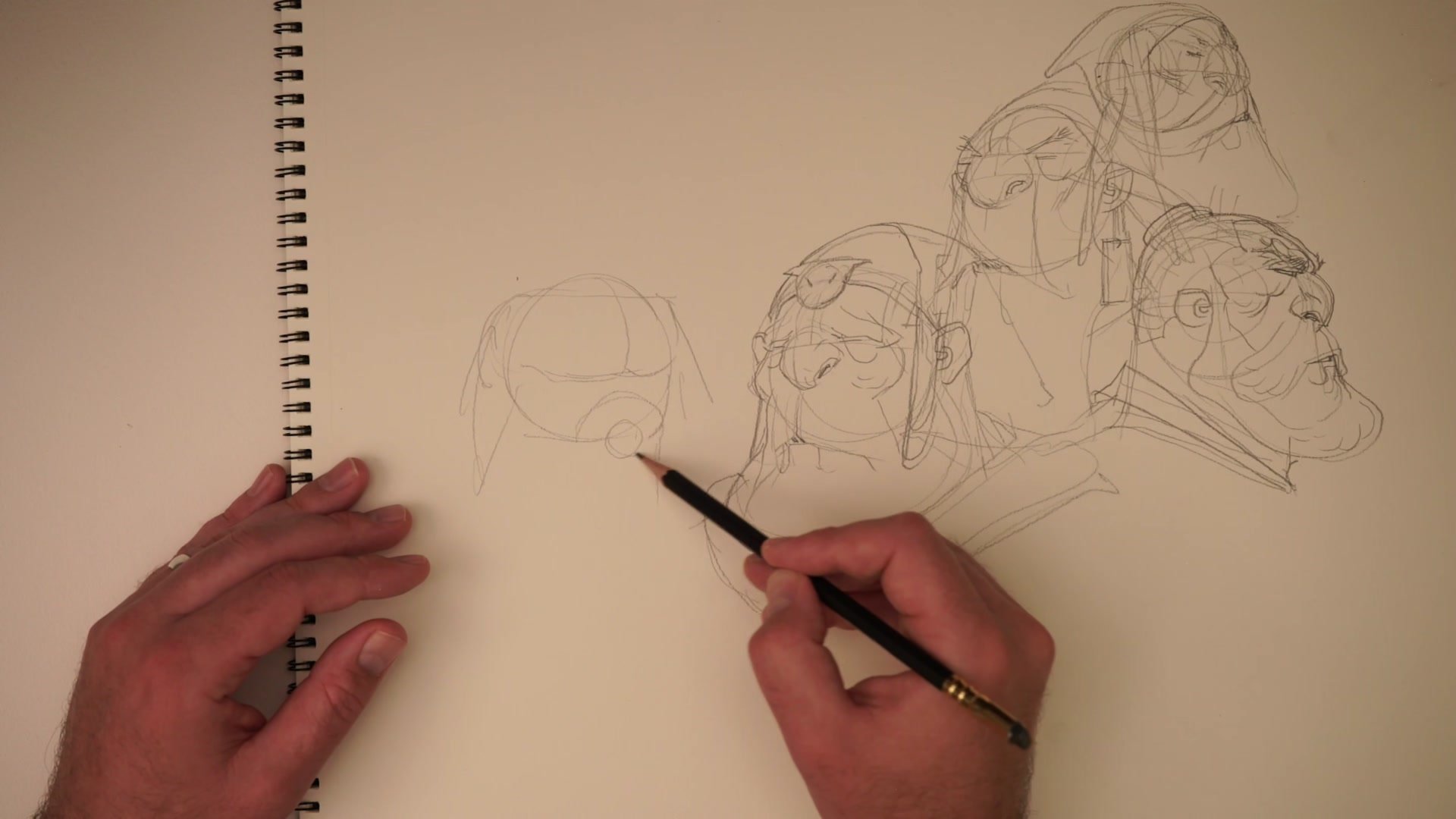
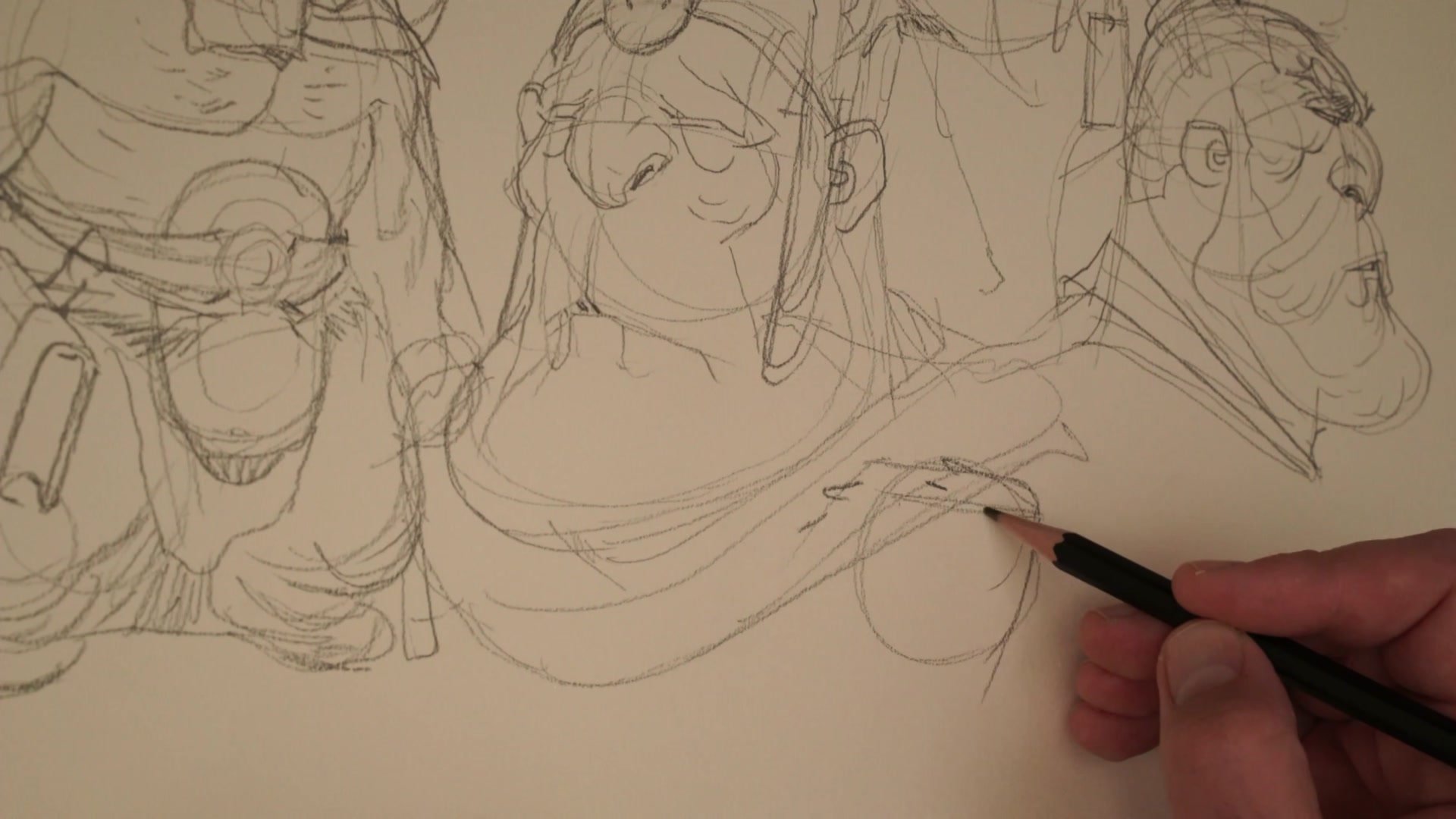
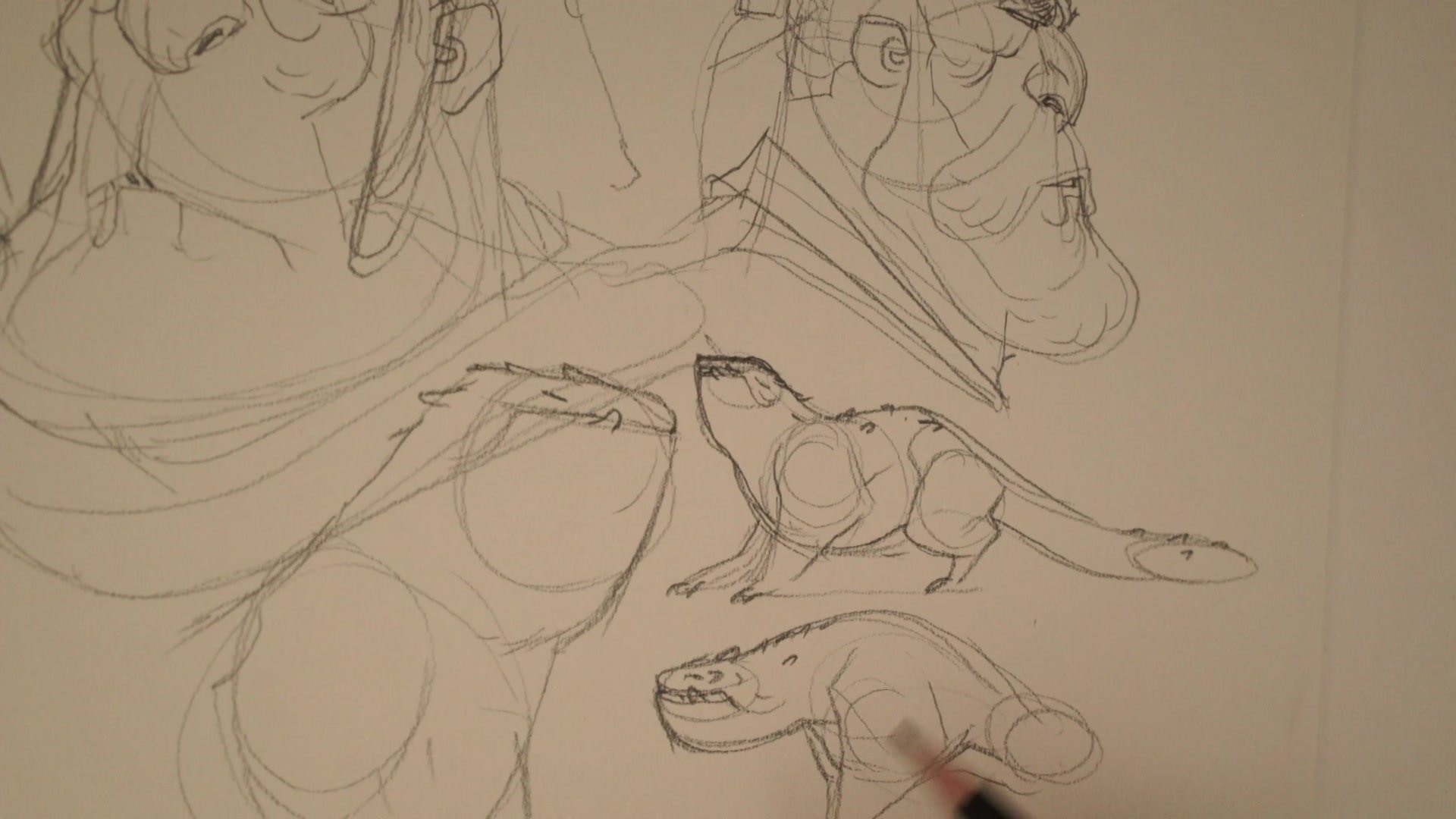
The dwarven mage design starts with a small notebook plan listing key elements: lizard anatomy features like head, claws, and tail alongside dwarf design elements like beard, mage hat, cloak, and potions. This five-percent planning approach, spending about five percent of session time on a simple written plan, provides focus without over-constraining the creative exploration. The sketching then moves to loose head studies, experimenting with different beard styles, ear shapes, goggle designs, and hat silhouettes before attempting full-body poses.
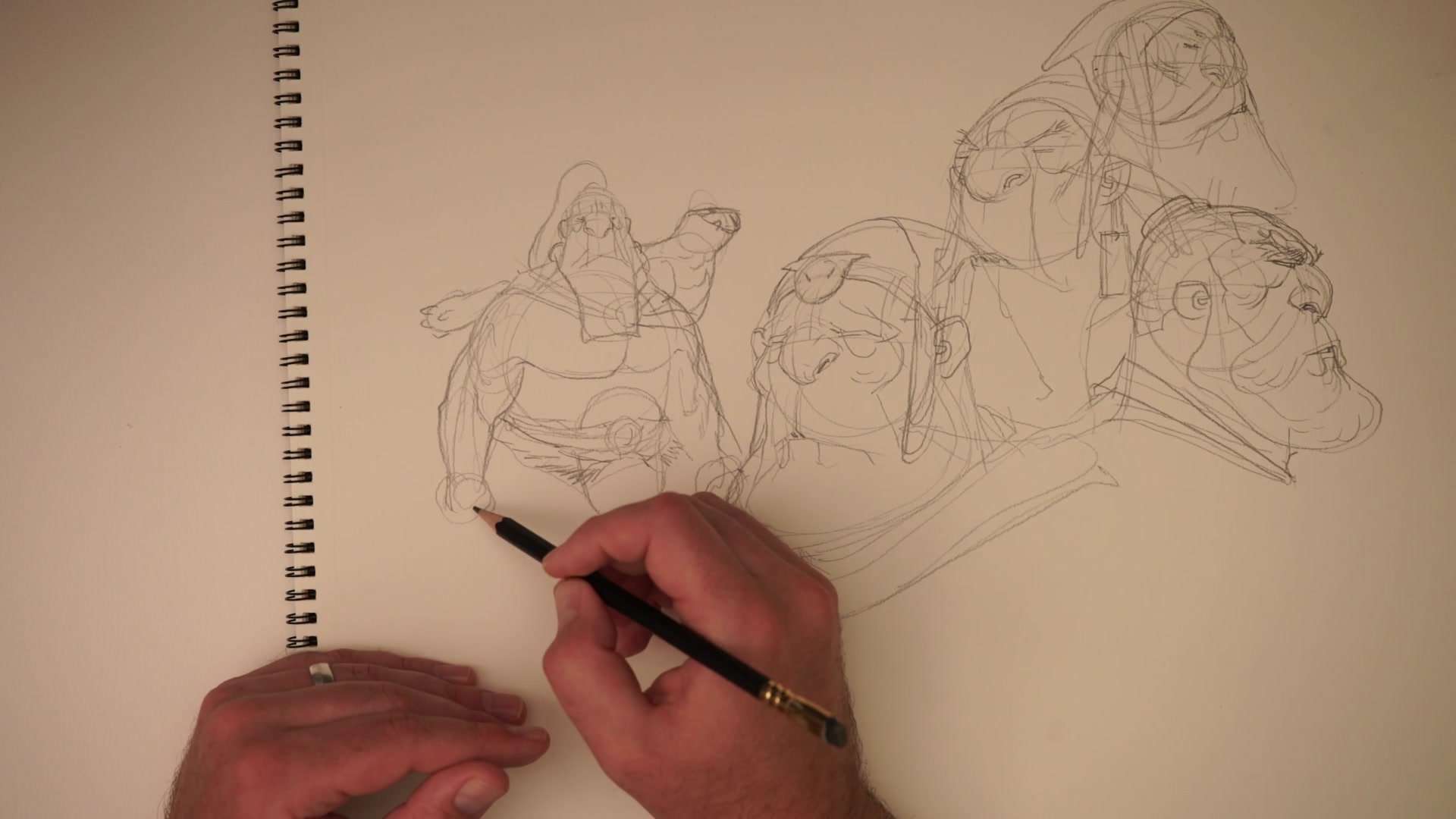
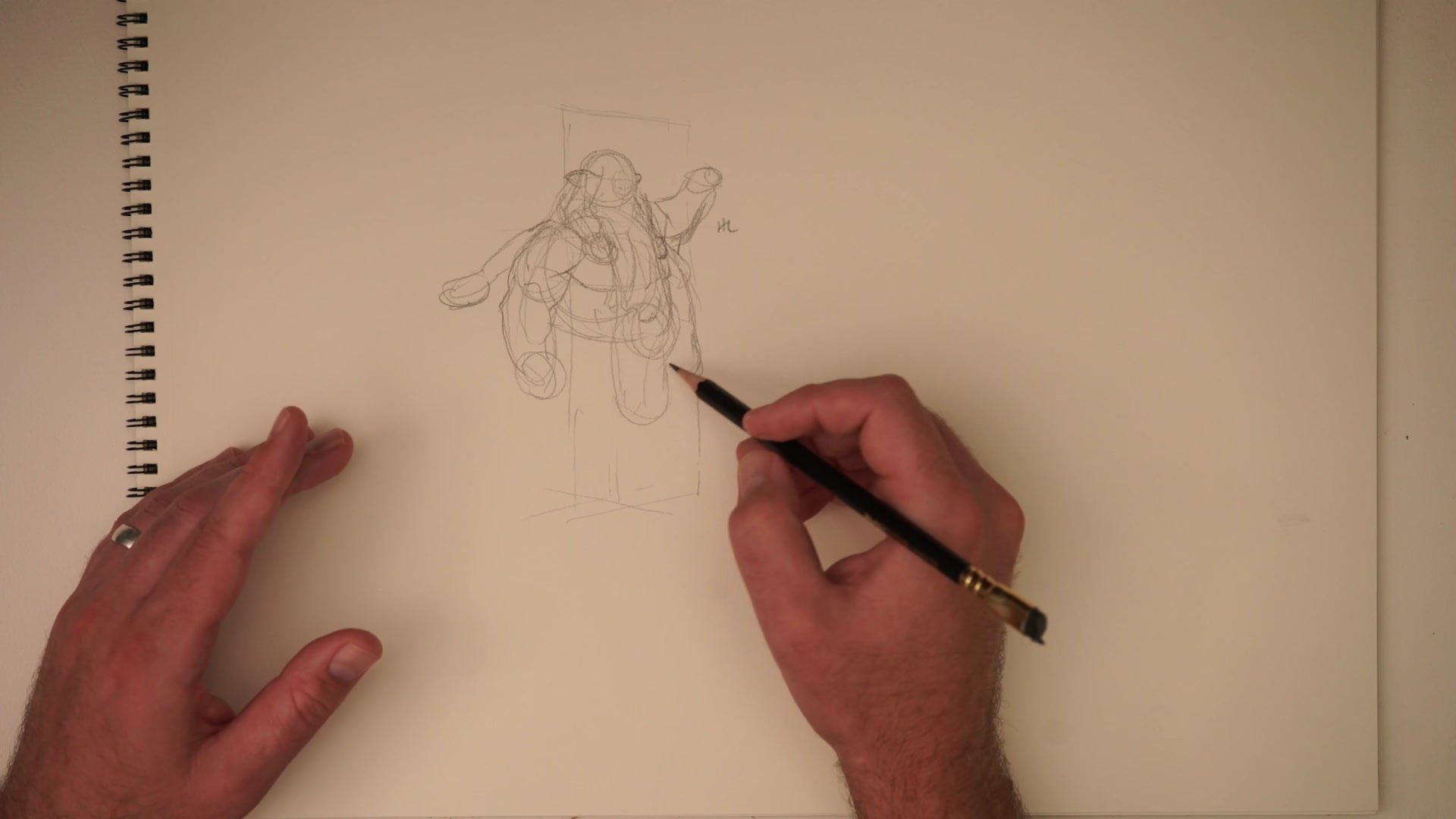
The session demonstrates how having a space to draw fast and fail quickly keeps the ideation phase productive and enjoyable. Multiple dwarf head variations fill the page alongside lizard creature studies, none of them precious, all of them feeding the developing design. The full-body sketches that follow incorporate elements discovered during these rapid studies.
Full Character Designs
Embracing Messy Process
As the dwarven mage designs develop across the second page into more resolved full-body poses with cloaks, staffs, and the lizard familiar, the session circles back to why artists hide their failures and what that costs us. Professionally, putting your best foot forward is genuinely important, showing ugly work to clients creates anxiety regardless of track record. But the danger comes when artists skip the messy stages entirely, when everything must look polished from the start, creativity gets tamed and safe.
Two phases are identified as commonly missing from how artists present their process: the initial ugly sketching phase and the structural construction phase. Both are visually unimpressive and hard to make entertaining, yet both are where the real creative problem-solving happens. The session itself serves as a counter-example, showing exactly how rough and iterative character design actually looks in practice over seventy minutes of honest drawing.
Design Iterations
Key Insights
Hidden Preparatory Work: Even master artists like Andrew Loomis produced messy, overworked sketches before the polished pages in their instruction books. Every finished piece has invisible stages behind it.
The Five Percent Plan: Spending roughly five percent of your session time writing a simple plan with key design elements to hit keeps ideation focused without killing spontaneity.
Failure as Process: Having a dedicated space in your workflow where ugly drawings and failed ideas are expected, even encouraged, prevents the creative timidity that comes from always needing to look polished.
Two Missing Phases: The rough sketching phase and the construction phase are the stages most commonly hidden or skipped in art education and social media, yet they are where genuine creative work happens.
Try This Exercise
Pick a Design Prompt: Choose a character concept with at least two elements to design, such as a fantasy character paired with a creature companion or specific equipment.
Write a Five Percent Plan: Before drawing, spend a few minutes listing the key features and design elements you need to hit for each component of the design.
Fill a Full Page Messy: Sketch rapidly without erasing. Explore head variations, body silhouettes, and detail studies. Aim for quantity and variety rather than any single polished result.