Consistent Characters Through Iconography and Symbolism
Summary
The Character Consistency Challenge
One of the hardest things about creating an extended artistic project like a comic book is maintaining consistent characters. Designing a character and drawing them once or twice is one thing, but making sure that character looks and feels the same across dozens of pages is something else entirely. The common assumption is that consistency comes purely from getting better at drawing, from improving structural accuracy and anatomical understanding. And while developing craft absolutely matters, it is not the only path to consistency, and often it is not even the most effective one.
What makes a bigger difference, especially for artists working in stylized approaches, is understanding the role of iconography and symbolism in character design. Iconography refers to the simplified, recognizable shapes that define a character when reduced to their most basic visual elements. Symbolism refers to the visual cues that communicate personality, age, temperament, and role. Together, these tools allow characters to remain distinct and readable even at small sizes, rough angles, or early stages of craft development.
Building Jim Hawkins
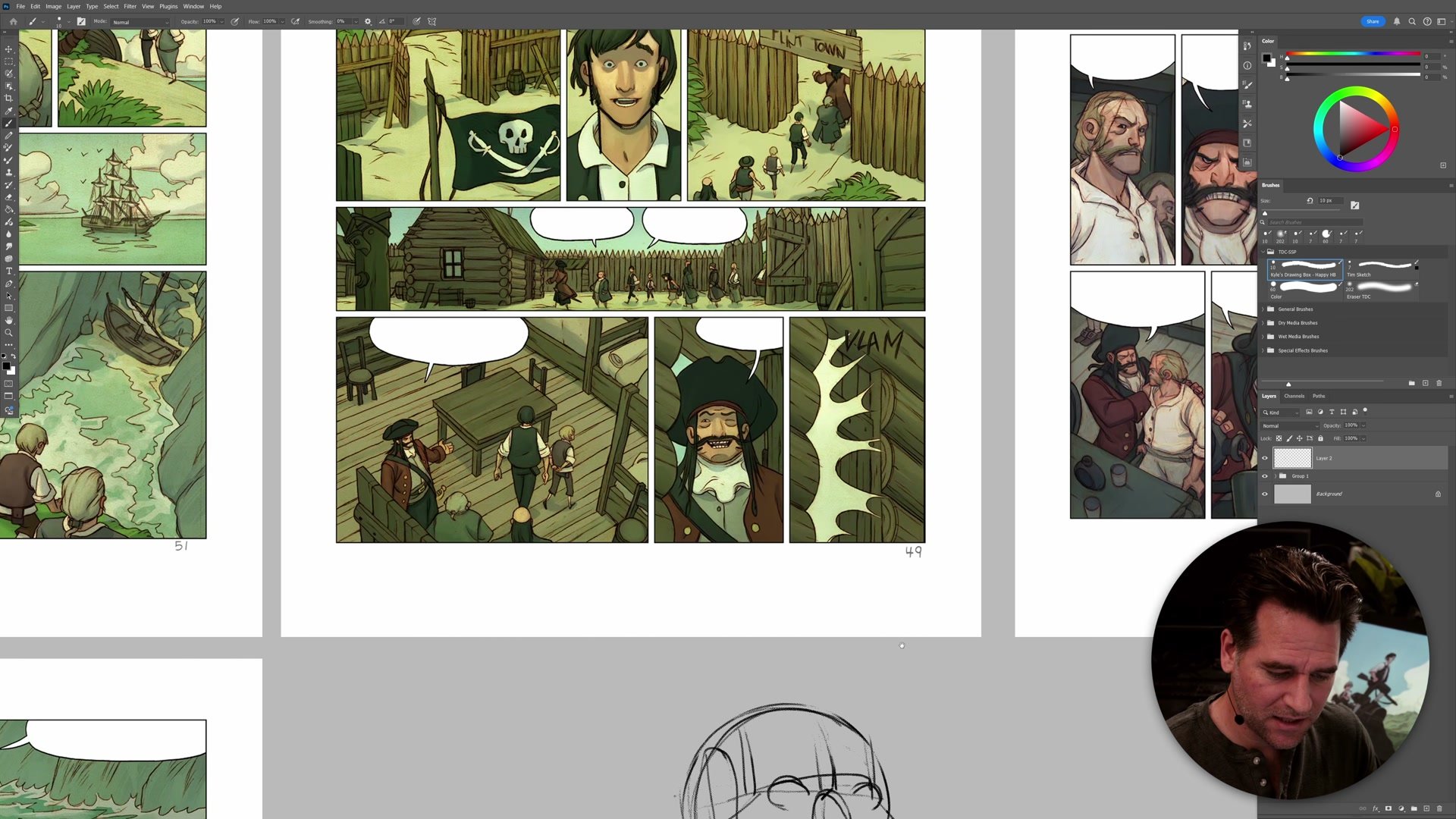
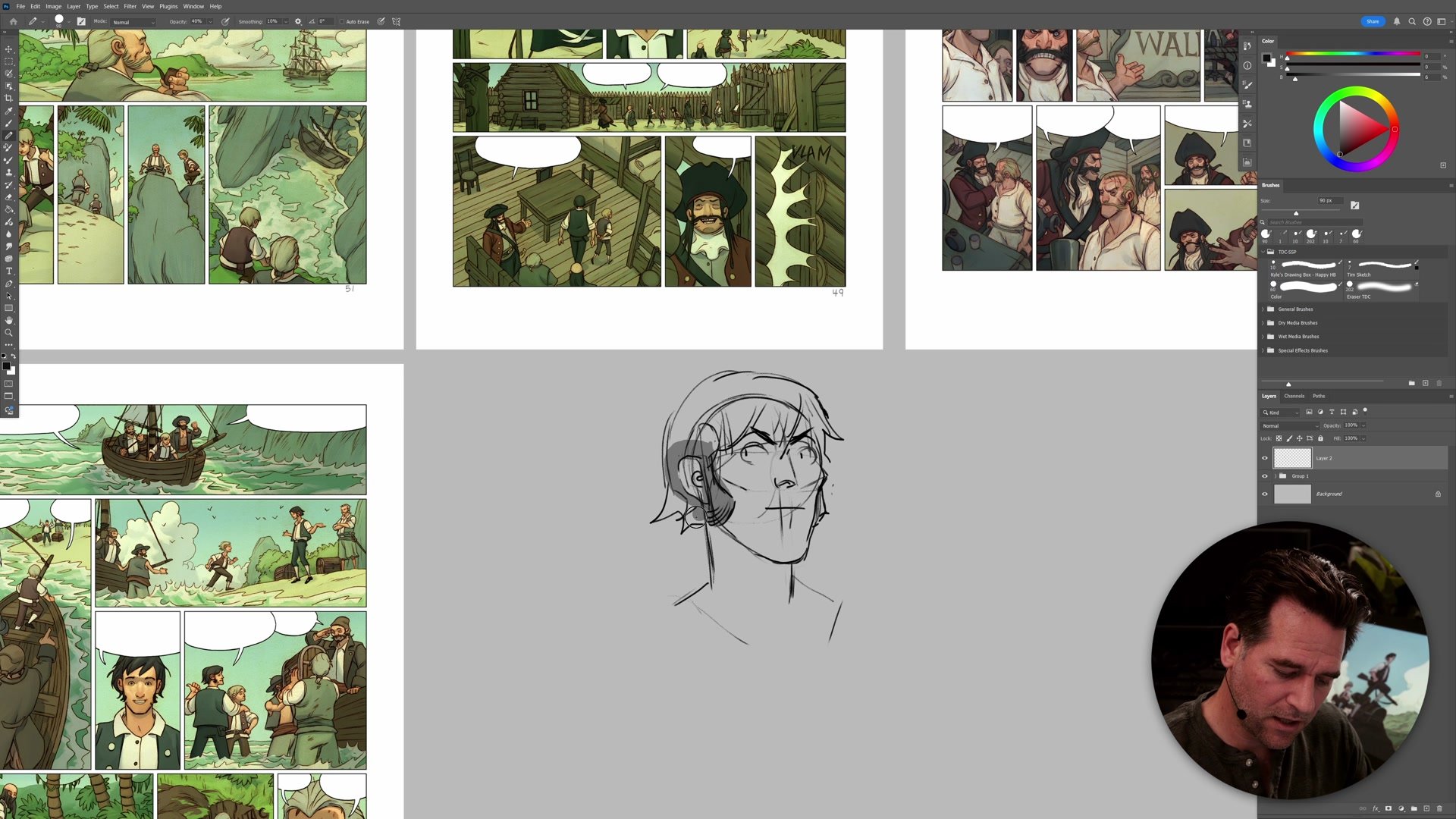
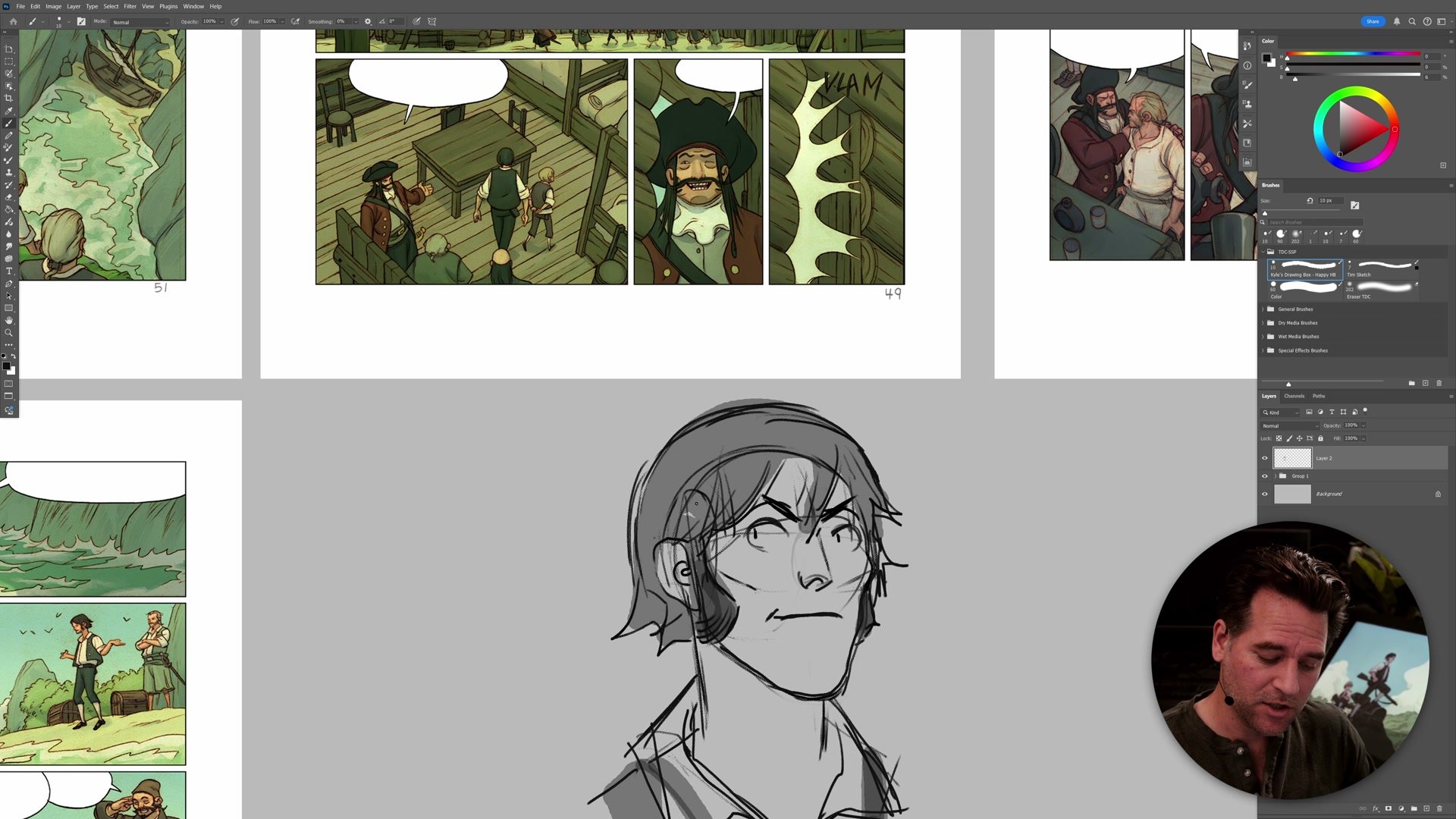
Form Versus Iconic Elements
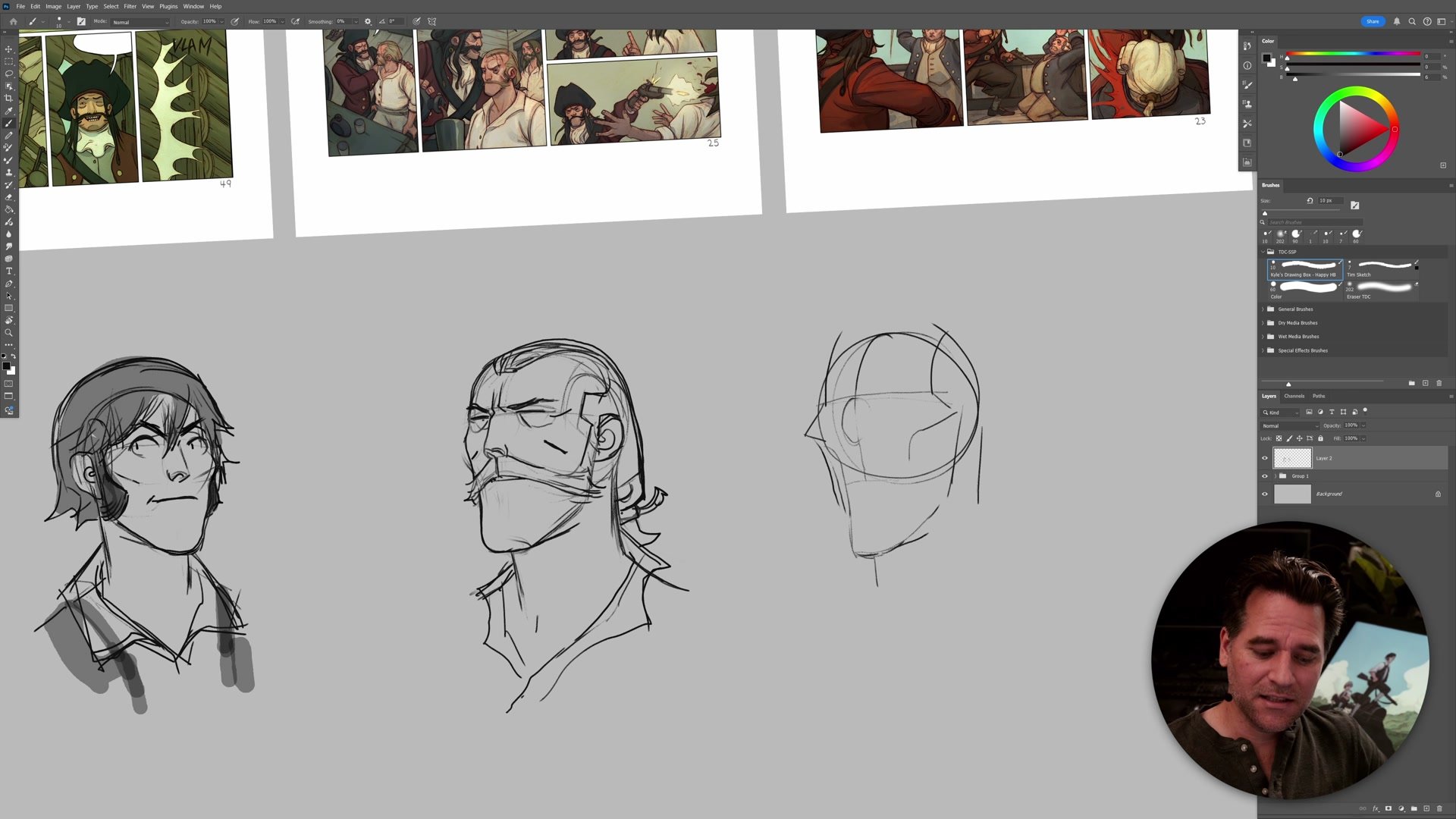
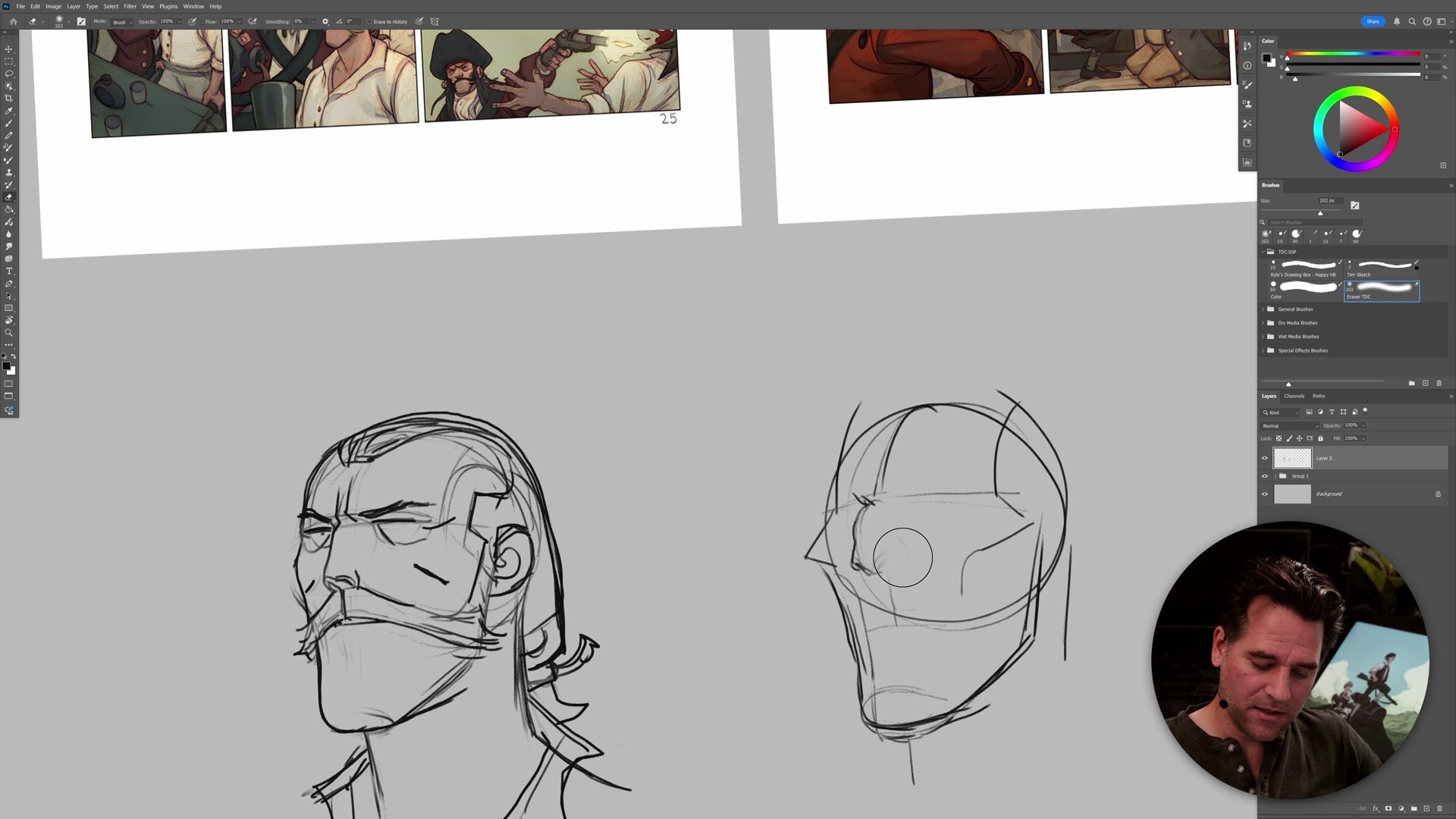
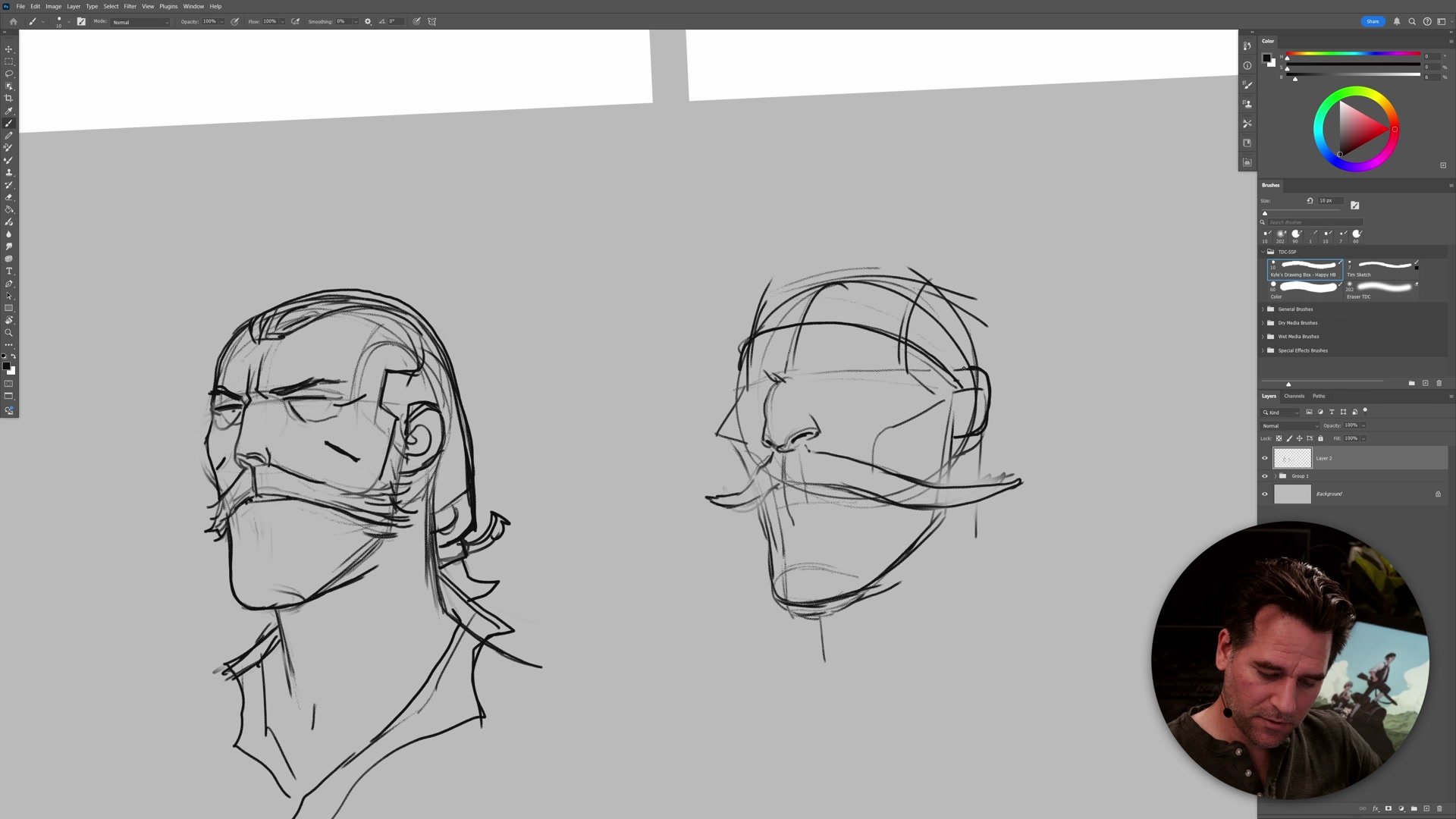
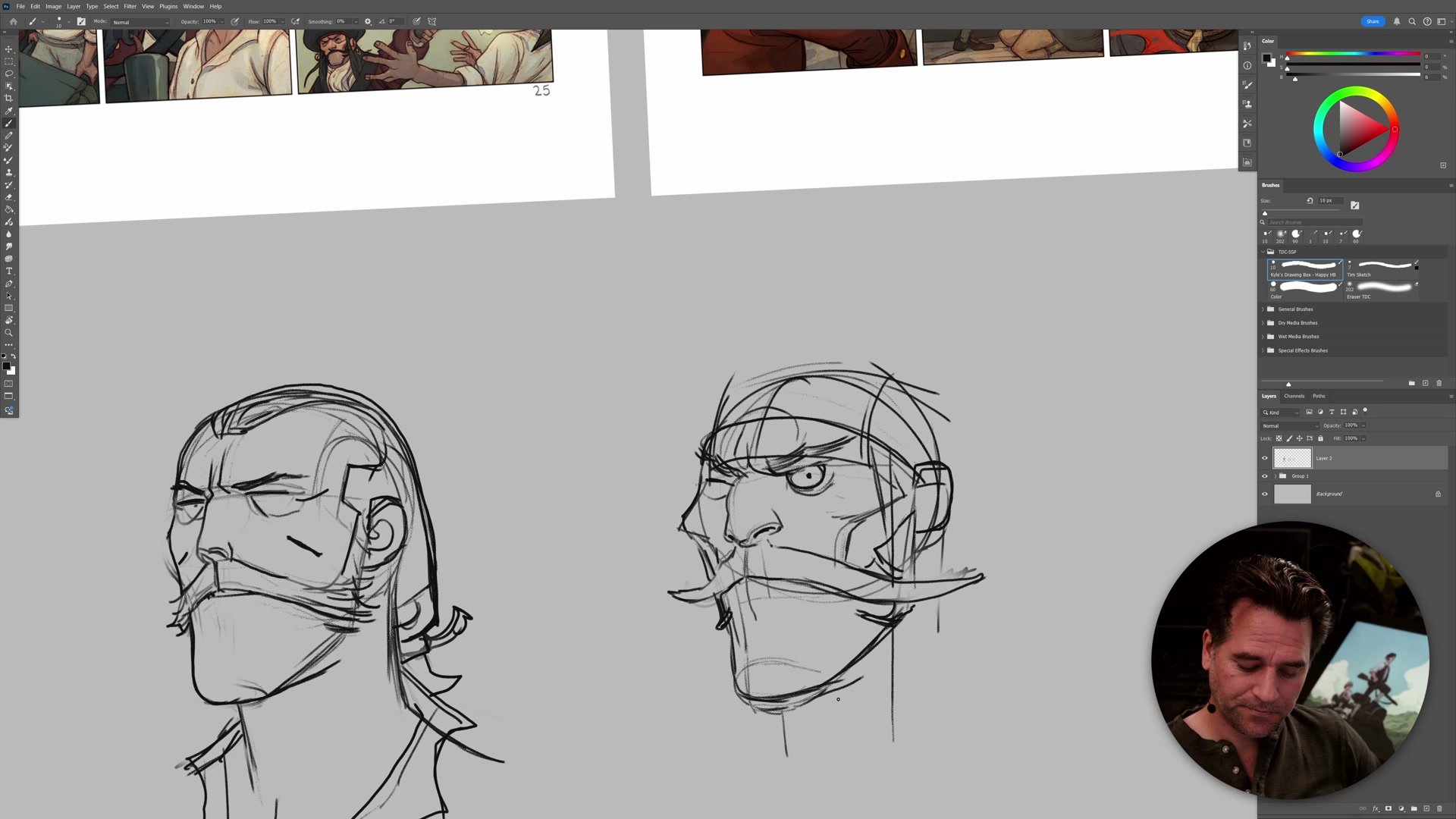
Structural drawing, things like getting the nose position right relative to the brow, building accurate jaw shapes, constructing dimensional heads, is a necessary foundation. But in practice, especially with stylized art, structural accuracy alone rarely makes two similar characters feel distinct from each other. When three male characters of roughly the same build need to coexist in a story, structural drawing will get them close, but not over the line.
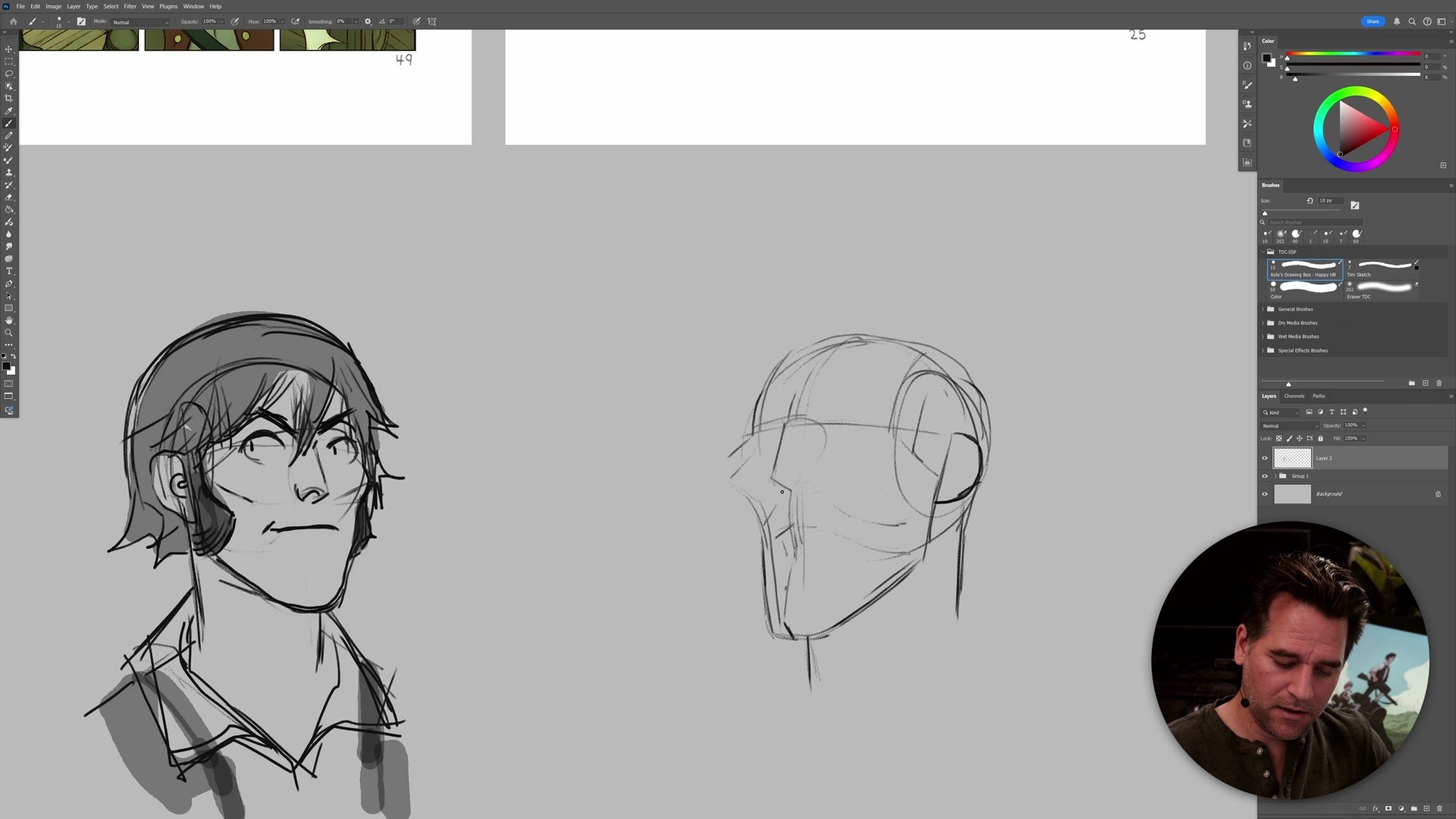
What actually separates characters is their iconic elements. These are the visual shorthand marks that remain recognizable even when the drawing is small or rough. The shape of a hairline, the presence or absence of sideburns, the angle of eyebrows, the proportional width of a jaw. These elements function like a logo for the character. If you zoom out far enough that structural subtlety disappears, the iconic elements are what still identify who is who. Thinking of each character as having a simplified icon, almost like a silhouette or symbol, helps prioritize which design elements matter most for consistency.
Designing Gray
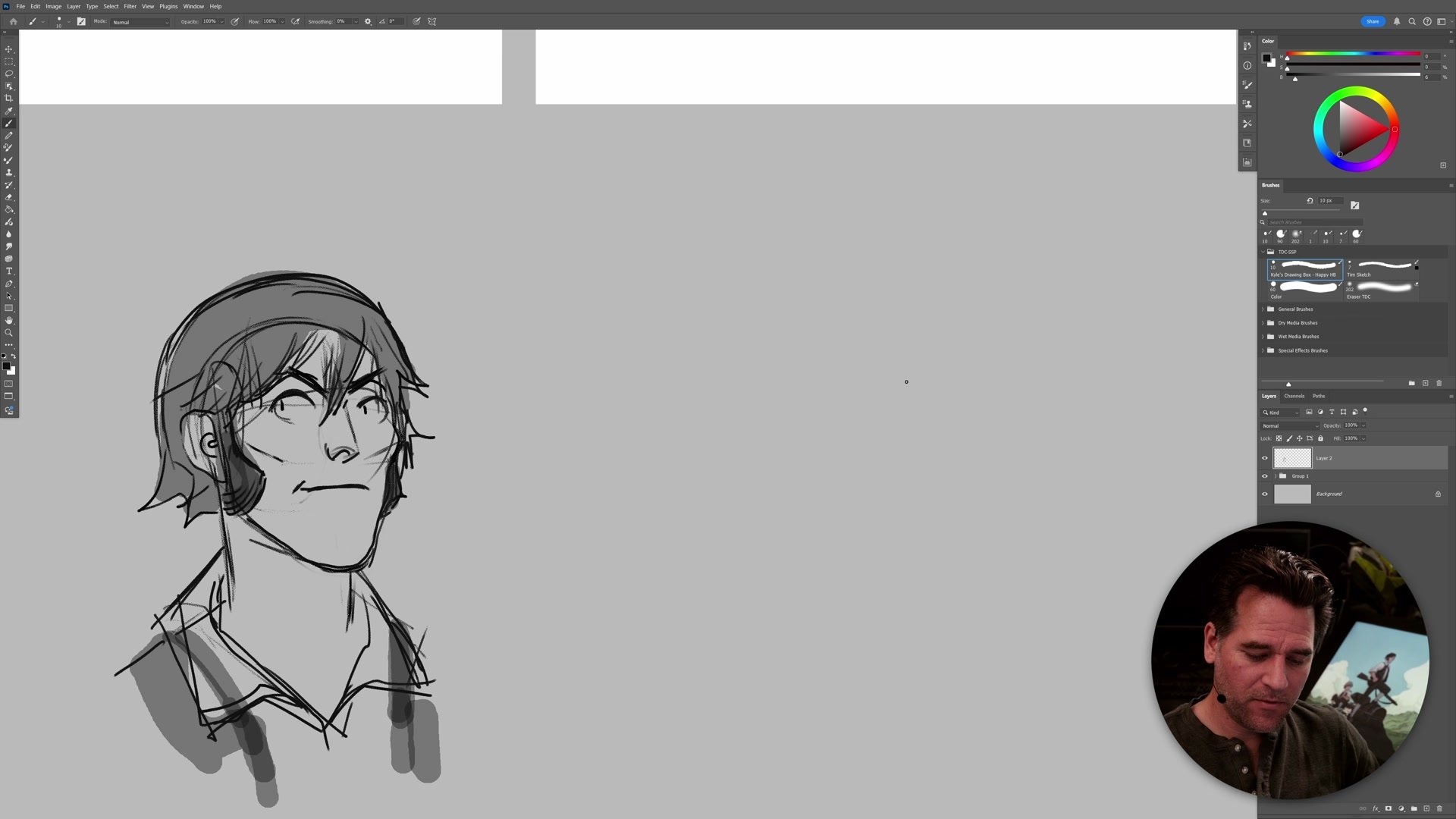
Symbolism Tells the Story
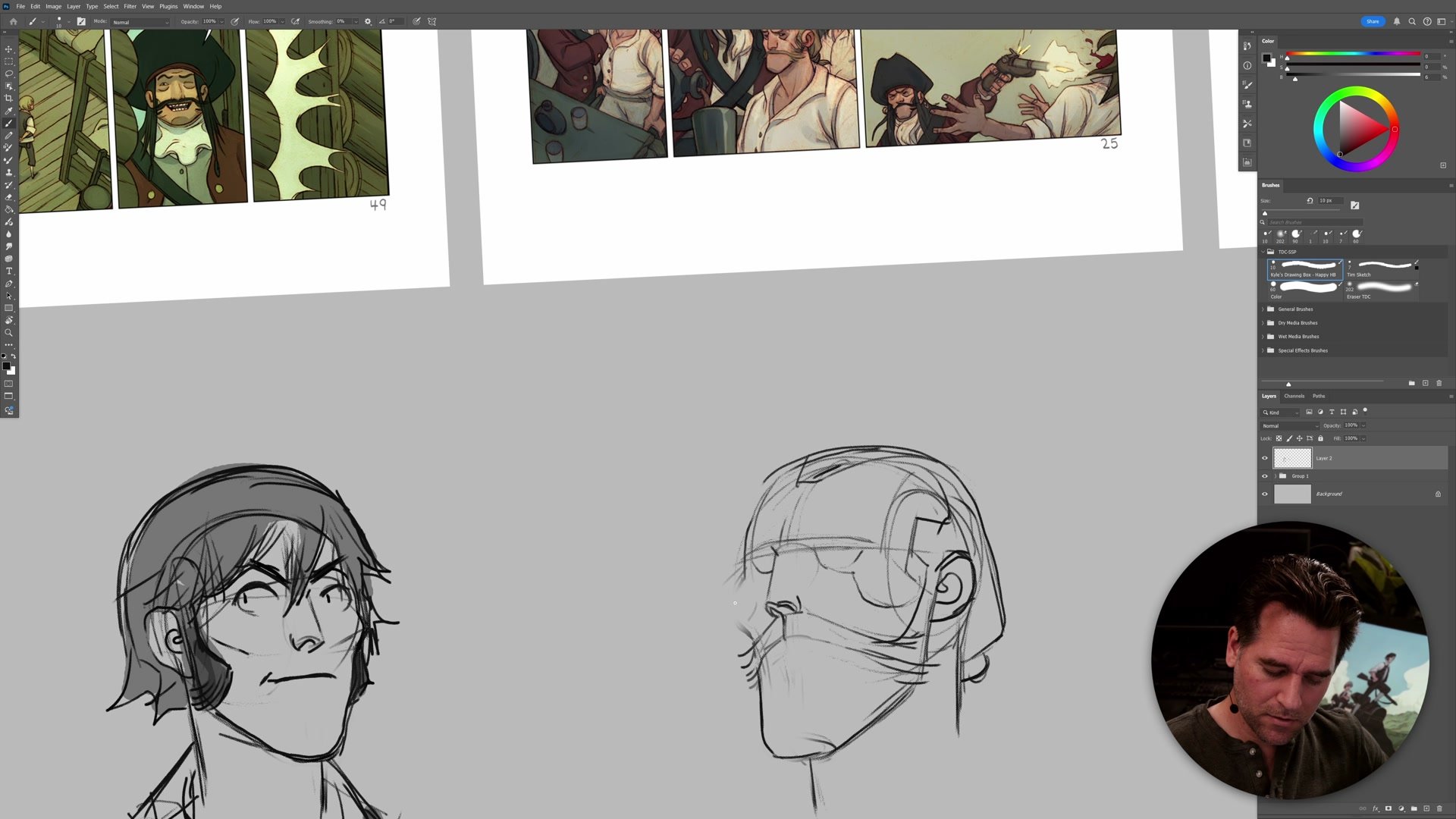
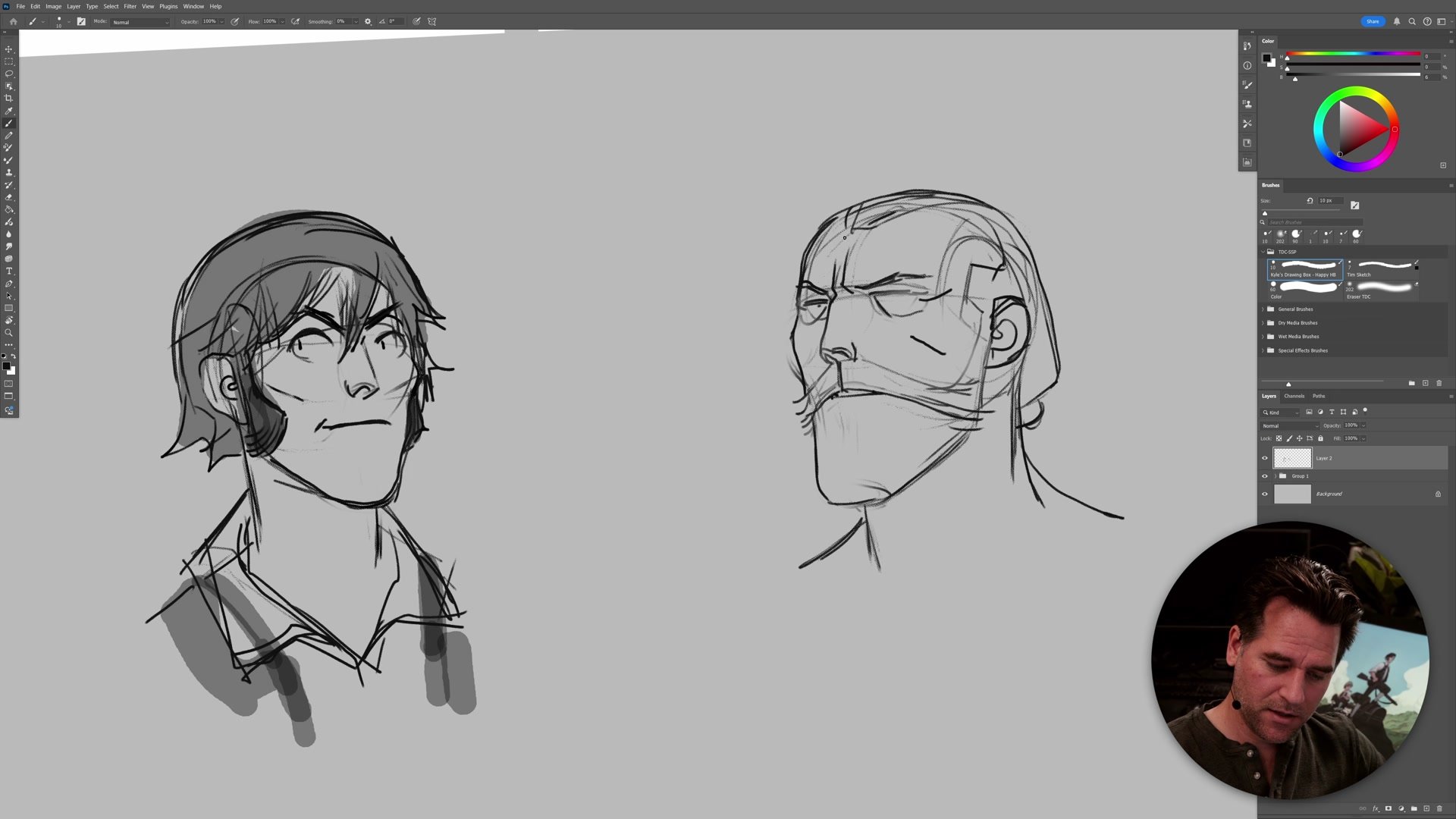
Where iconography defines the shapes, symbolism defines the meaning behind those shapes. A character who is permanently frowning with tight, focused brow lines communicates stoicism and discipline. A character with one eye wider than the other, an open mouth showing teeth, and chaotic brow marks communicates instability and aggression. These symbolic choices carry character personality regardless of how accurately the structural drawing is executed.
This is also where costume and accessories play a critical role. Film costume designers solve the exact same problem: when two actors look similar, it is the clothing, props, and hairstyles that separate them visually. A pirate hat, a specific type of mustache, a particular jacket silhouette can do more for character distinction than refined facial construction. Understanding that consistency lives in these symbolic and iconic layers, not just in structural accuracy, is what allows artists to create believable, memorable characters even while their core drawing skills are still developing.
Constructing Captain Jeckide
Building Your Iconic Language
The practical takeaway is that character design needs a deliberate process of identifying and formalizing iconic elements. This means going beyond general construction and asking specific questions: What exact shape are the sideburns? What is the silhouette of the hair? What marks define the character's default expression? These decisions become a checklist that applies every time the character is redrawn.
This process often reveals itself over time. Drawing a character across many pages naturally exposes which marks actually matter. Sometimes adding one small line, a specific crease under the eyes, a particular curl in the hair, is what suddenly makes a drawing feel like the right character. Capturing and codifying those discoveries is the work. It is also worth noting that this can be refined continuously. Early pages of a project may not have every iconic element locked down, but as the character crystallizes through practice, earlier work can be revisited and corrected. The iconographic approach works alongside craft development, not as a replacement for it.
Key Concepts
Iconography Over Pure Structure: Getting characters consistent is less about perfect structural accuracy and more about identifying the simplified, recognizable shapes that define each character at any size or angle.
Symbolism Carries Personality: Visual cues like expression lines, hairstyle shapes, and costume elements communicate character traits and make similar archetypes feel distinctly different from each other.
Formalize Your Discoveries: The marks that make a character feel right often emerge through practice. Deliberately identifying and codifying those iconic elements creates a repeatable system for consistency.
Try This Exercise
Pick Two Similar Characters: Choose two characters from your own project who share a similar archetype, age, or build and are at risk of looking too alike.
Draw Them Side by Side: Using basic Loomis-style construction, draw both characters next to each other and identify where the structural differences alone are not enough to distinguish them.
Define Three Iconic Elements Each: For each character, write down three specific iconic marks such as hairline shape, default expression lines, or facial hair style, and redraw both characters making sure those marks are present and distinct.