Chun-Li Action Pose Drawing
Summary
Action Poses Through Construction
Drawing a dynamic action pose requires balancing two competing priorities: structural accuracy and two-dimensional graphic composition. Constructive anatomy methods from Andrew Loomis provide the tools to build solid figures, but pushing too hard on structure alone produces stiff, lifeless drawings. The real challenge is learning when to prioritize the dynamic movement of the frame over the technical correctness of the form.
This demonstration applies Loomis-based figure construction to Chun-Li in a splash screen action pose, working through the full process from stick figure mannequin to refined drawing. The approach reveals how professional illustrators navigate the constant tension between getting the anatomy right and making the composition feel explosive and dynamic.
Reference and Initial Setup
Skeleton First, Then Primary Forms
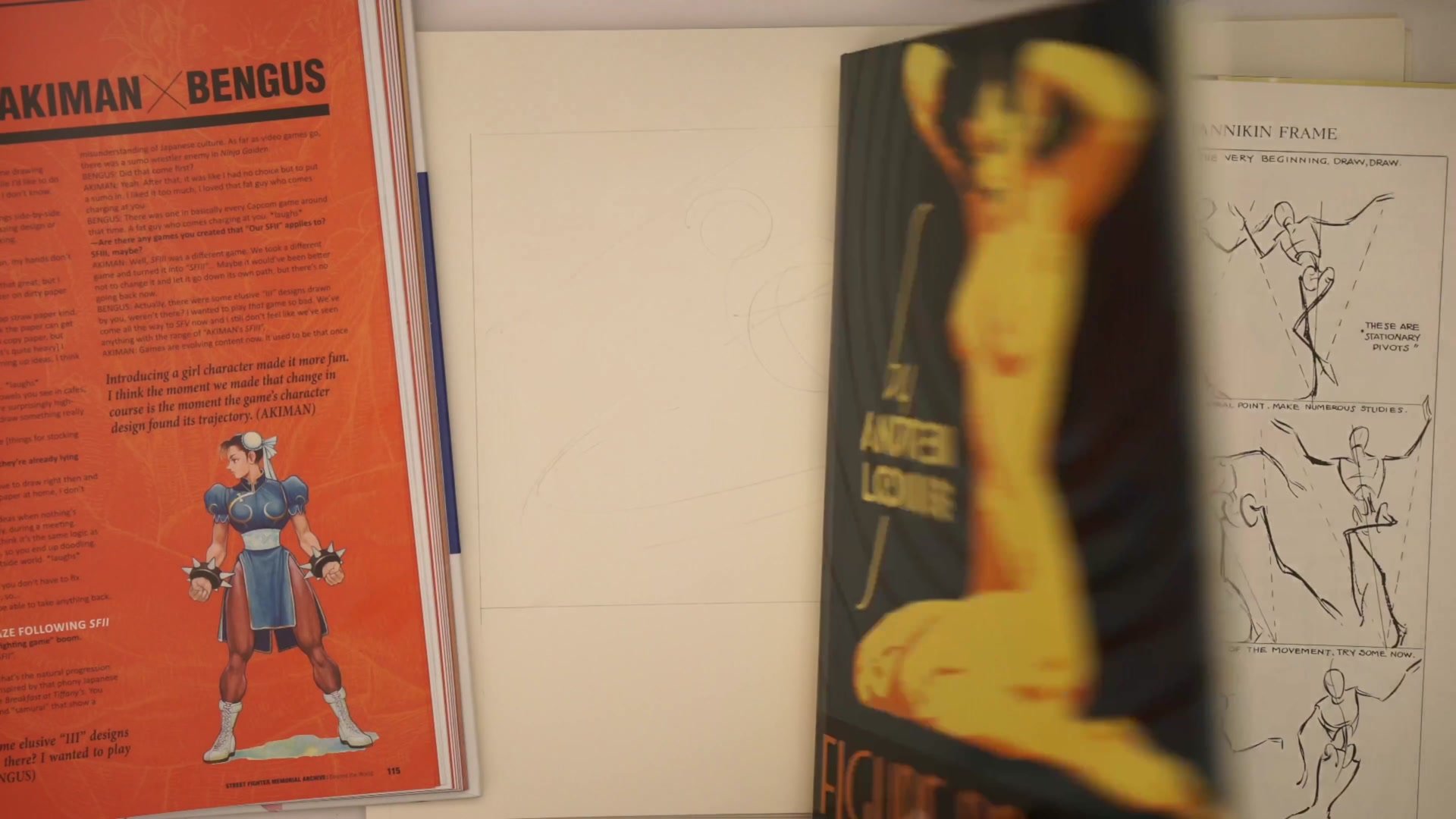
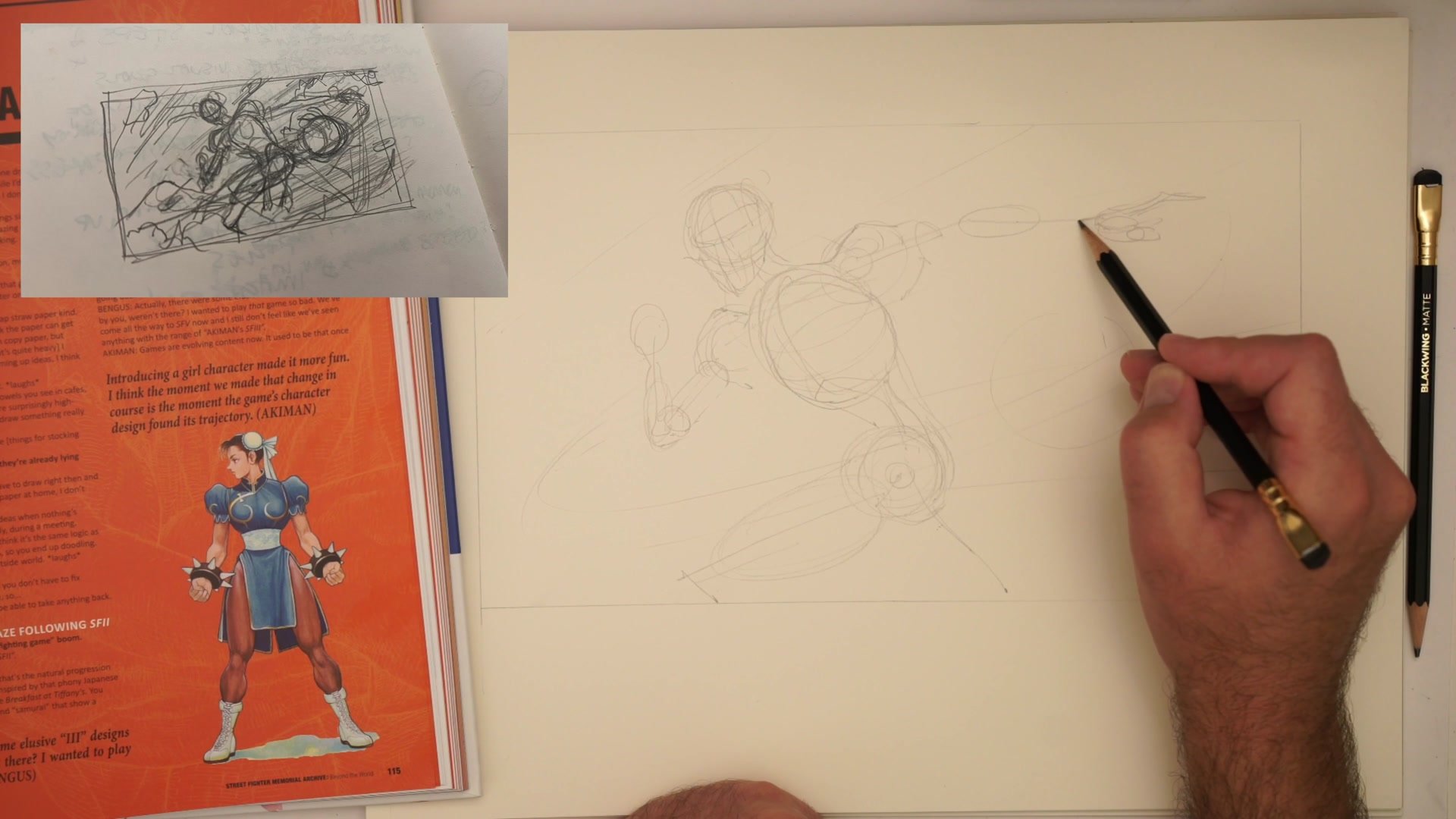
The process begins with a mannequin-style stick figure, exactly as described in Loomis's figure drawing books. The skeleton establishes the pose, the gesture, and the overall composition before any anatomy gets added. Starting light on the paper is critical here because it preserves the ability to rework and adjust without committing too early.
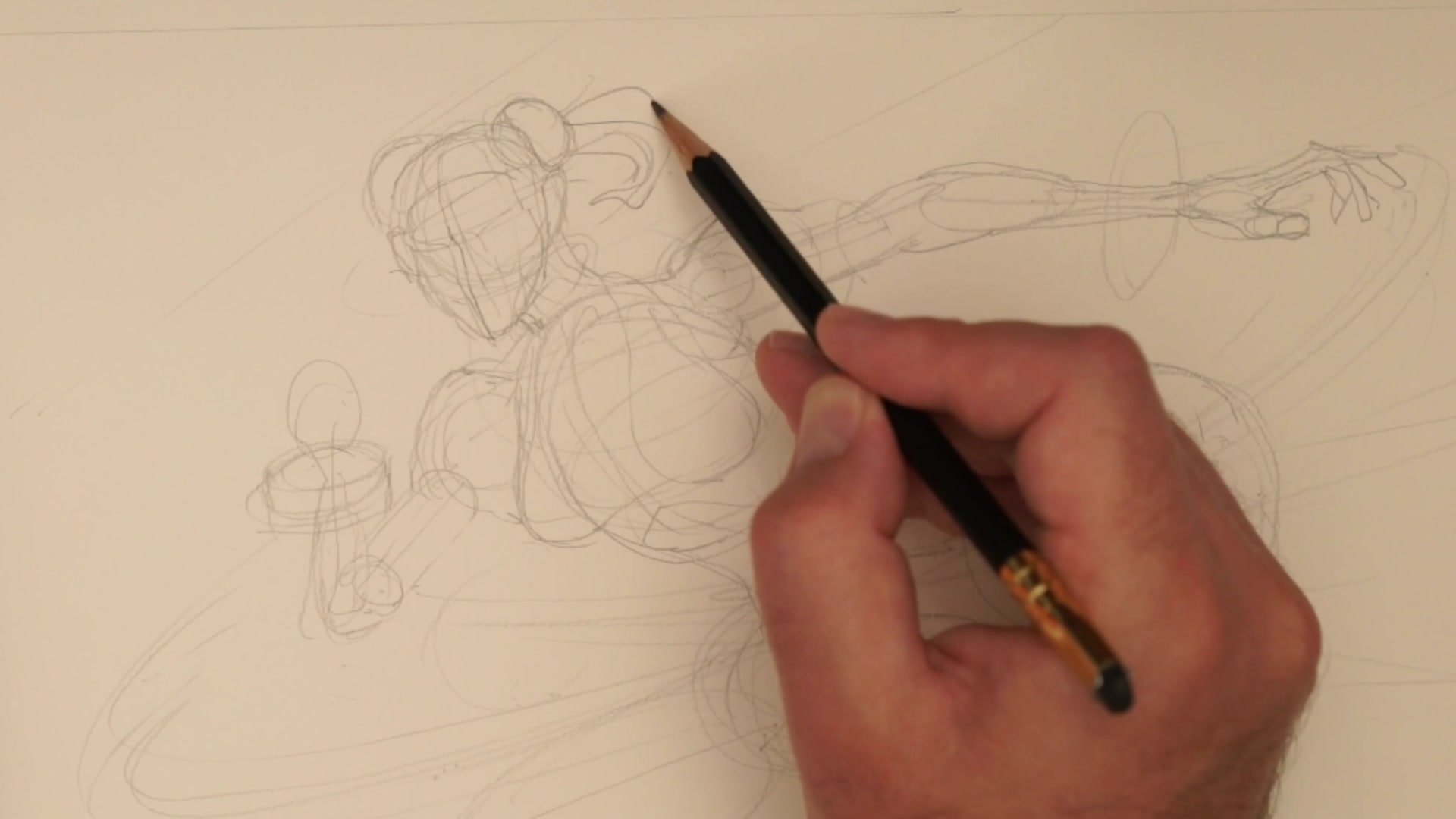
Primary forms come next: simple cylinders and spheres that represent the major masses of the body. Toilet roll logic drives this phase, where every limb and joint gets treated as a basic cylindrical form with a clear directional orientation. The torso twist is a fundamental decision point because Chun-Li's pose requires her upper body to face one direction while her legs drive the other way, creating the rotational energy that sells the action.
Building the Figure
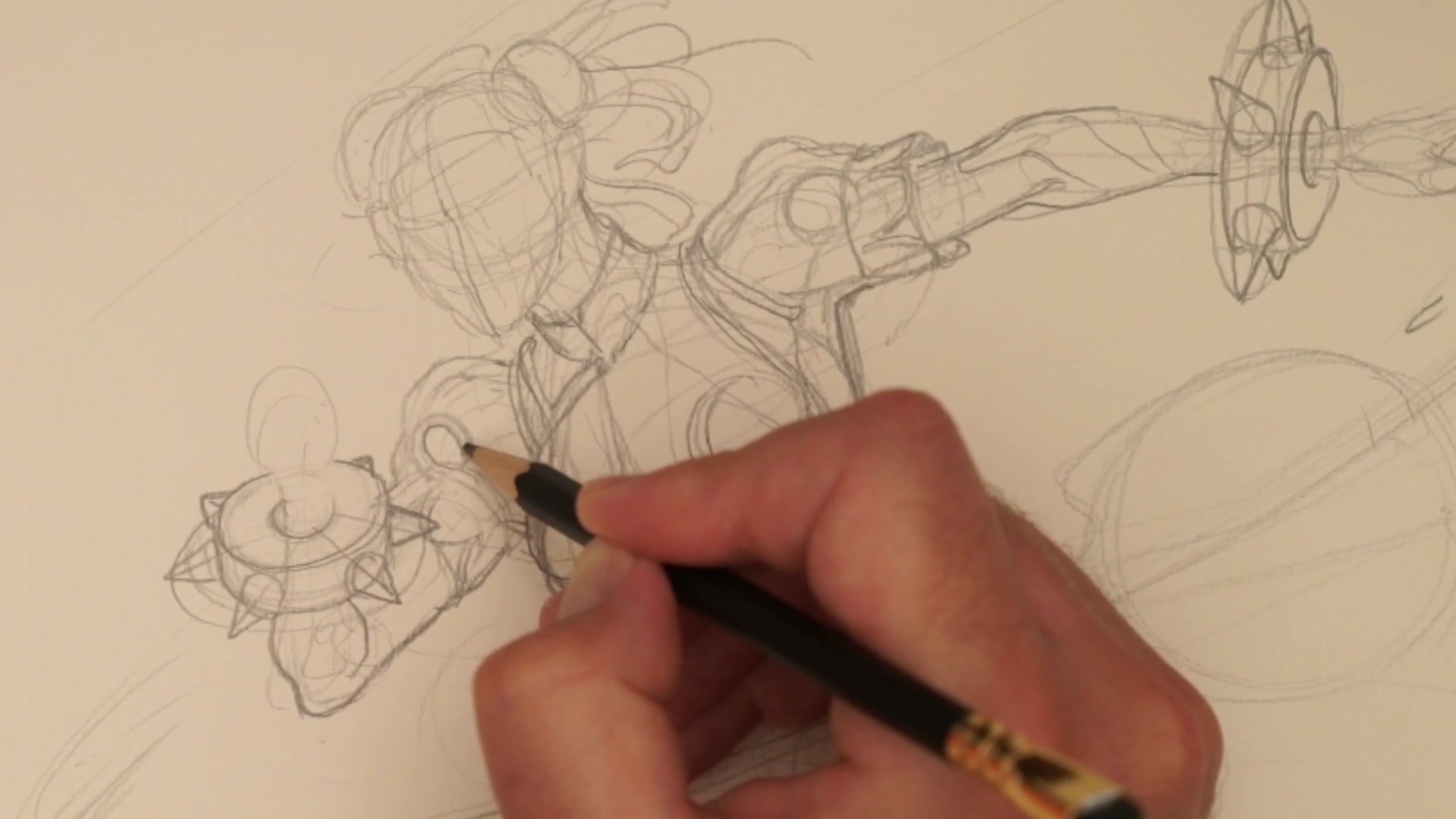
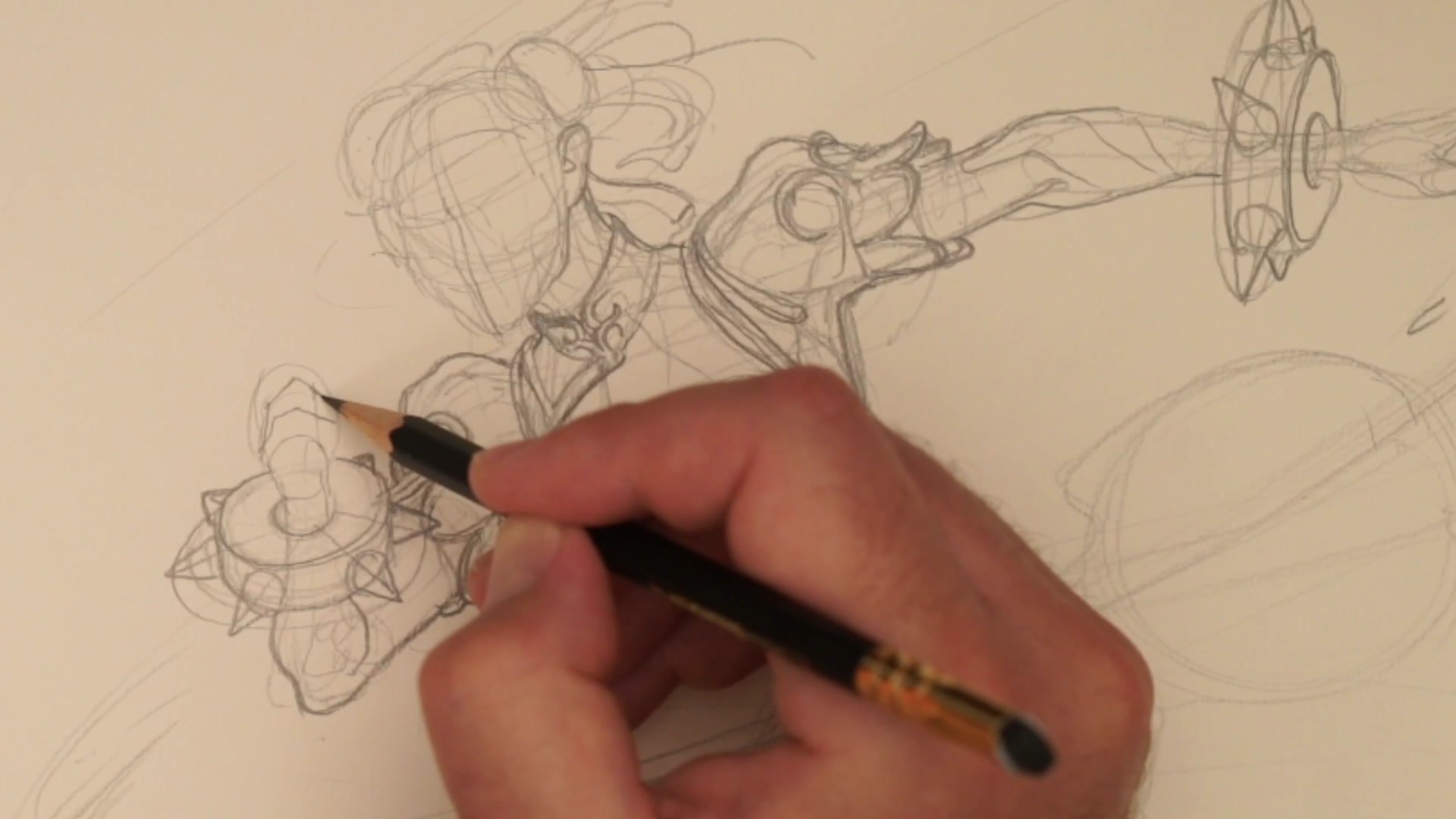
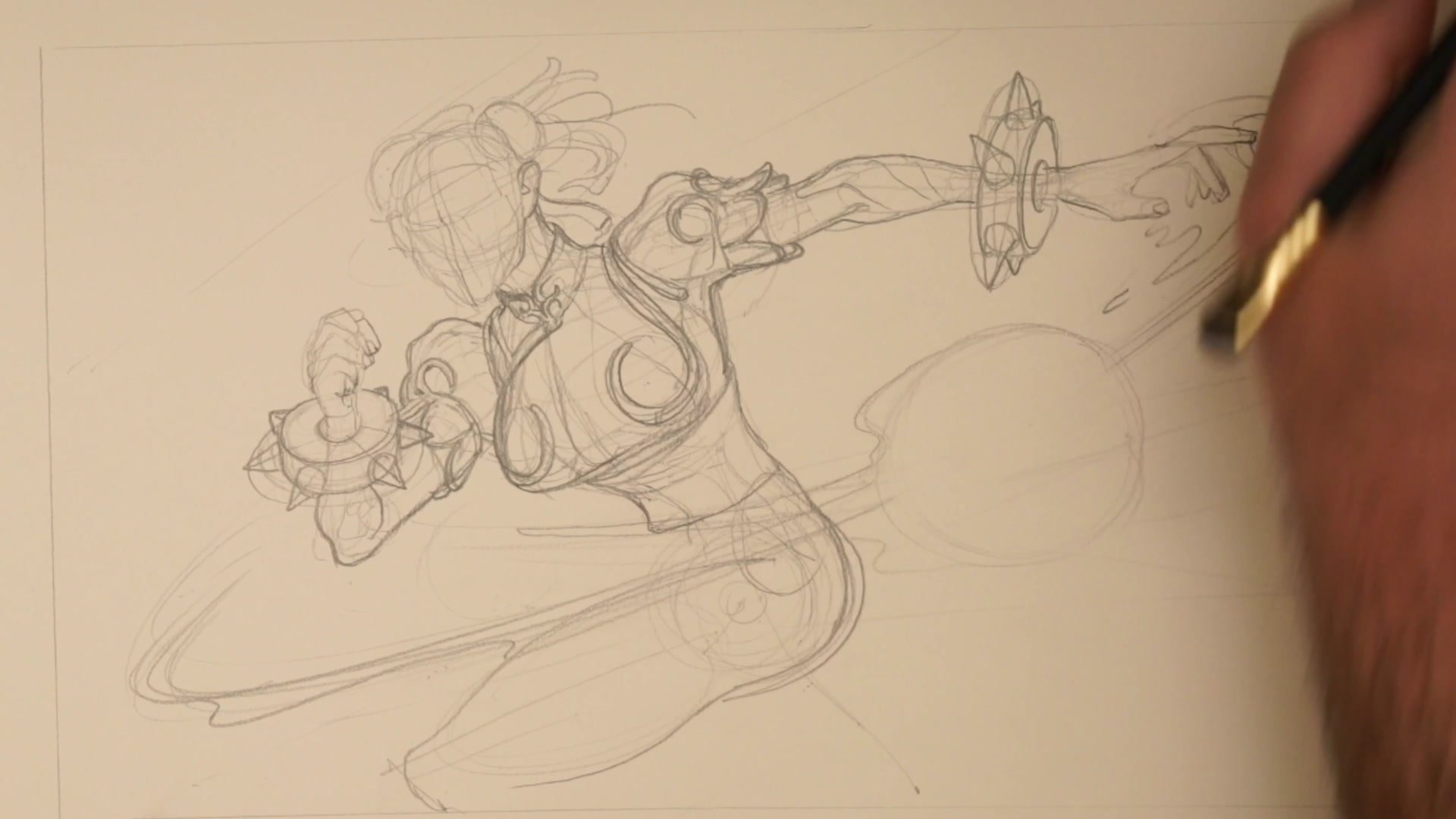
Secondary Forms and Character Detail
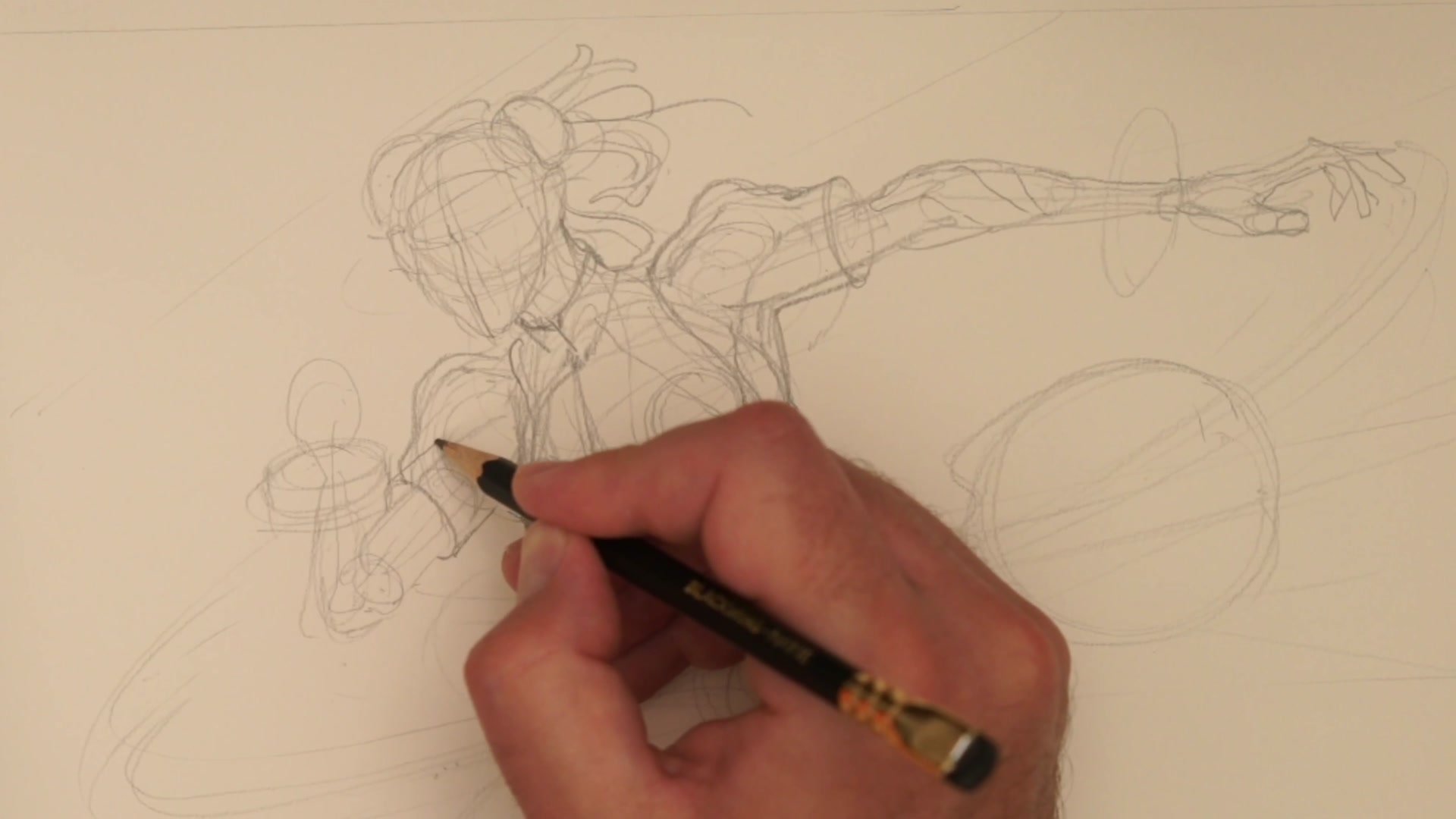
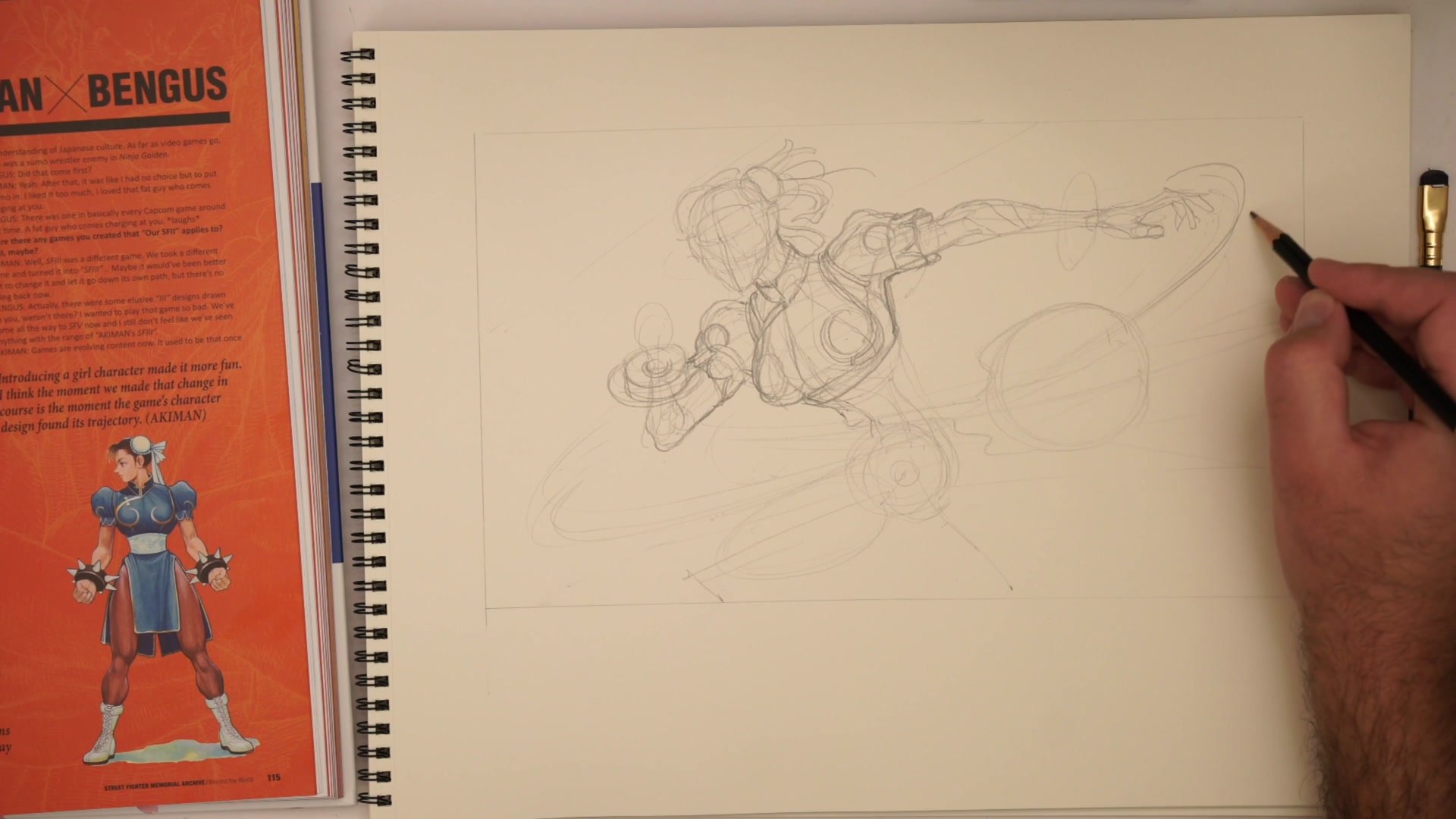
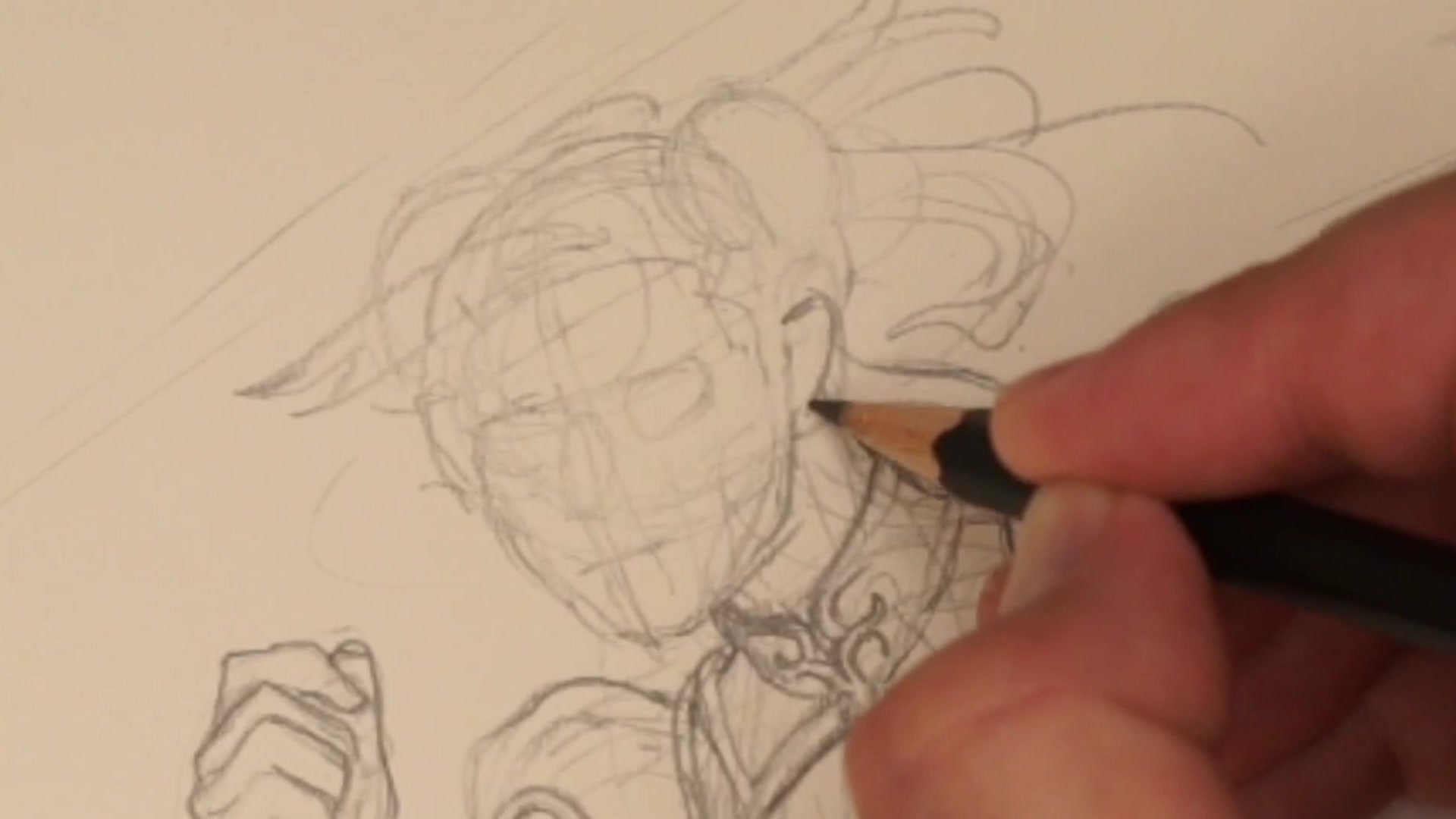
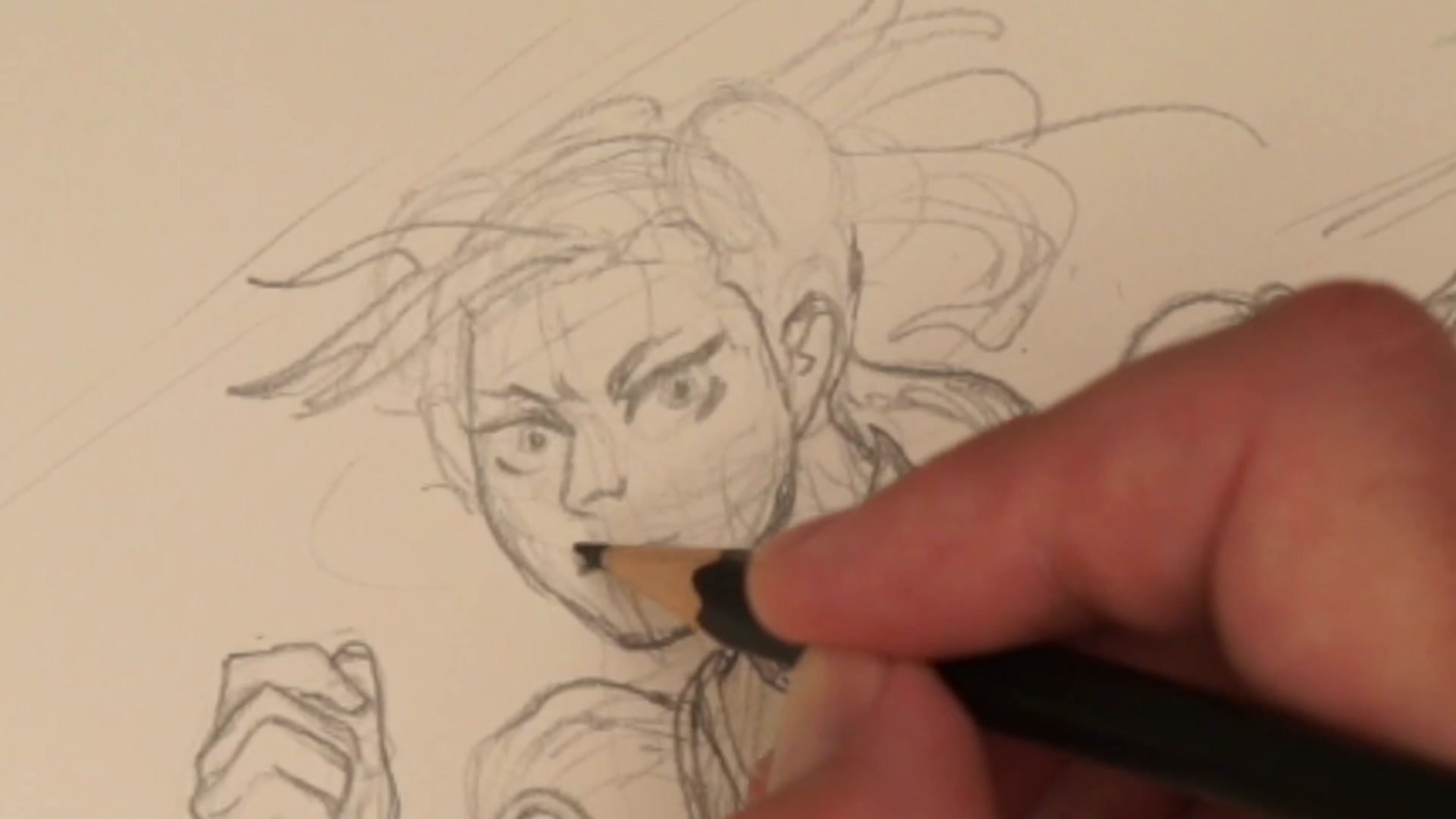
Once the primary forms feel right, secondary construction begins: the anatomy underneath the costume, the musculature, and the character-specific design elements. Drawing through the forms, even the ones hidden by clothing, helps sell the three-dimensionality. Rib cage structure, pelvic anatomy, and the connection between the two all inform where the costume sits and how it wraps around the body.
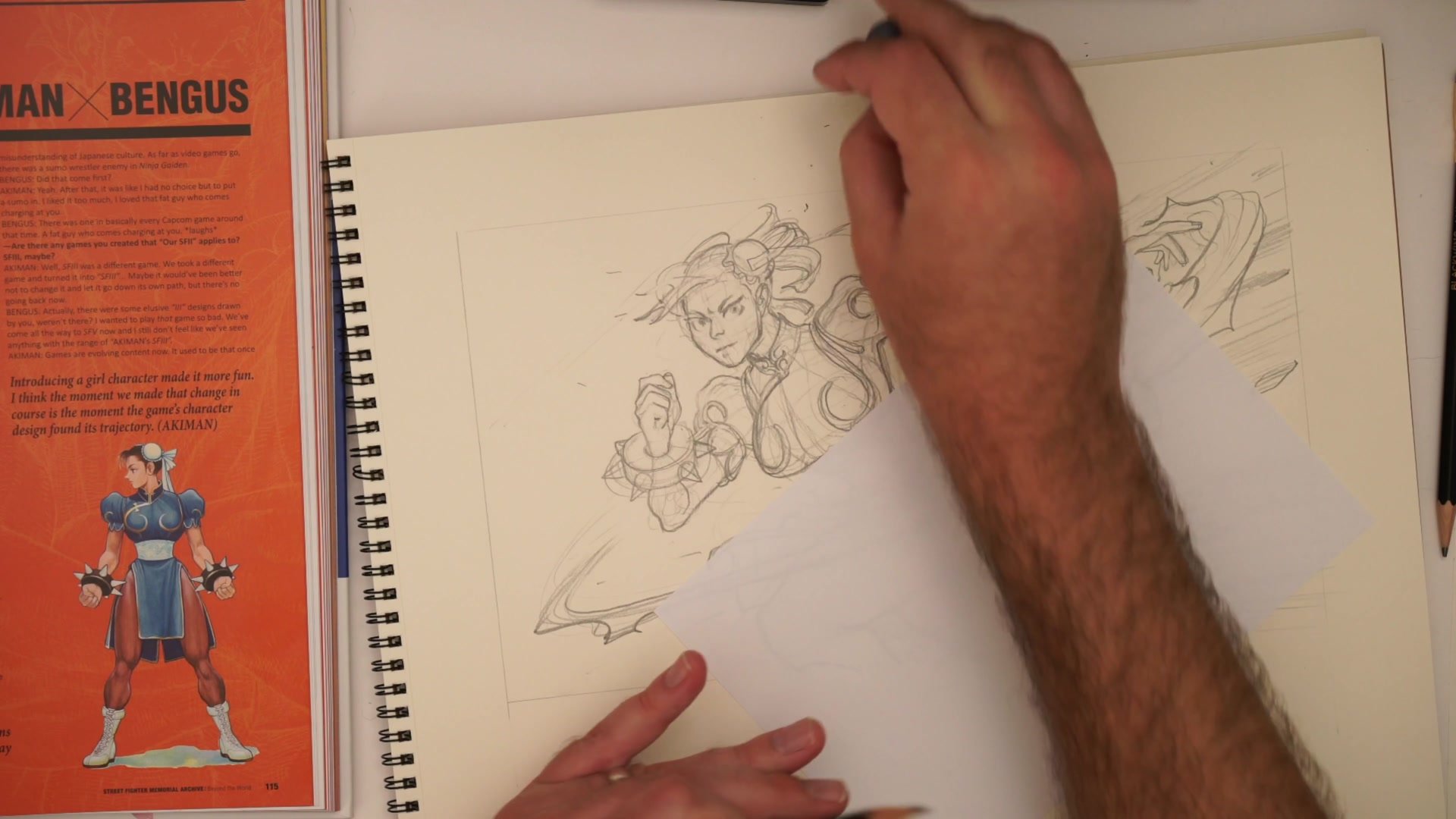
Chun-Li's iconic costume elements -- the spike bracelets, the distinctive hair buns, the high-cut outfit -- all require building construction cylinders and then wrapping the details around them. A common professional reality surfaces here: character proportions in official designs often require exaggeration far beyond what feels natural. Getting the chunky thighs right, making the spike bracelets large enough, scaling the hair elements correctly -- these are exactly the kinds of notes that come back in professional art reviews.
Refining the Drawing
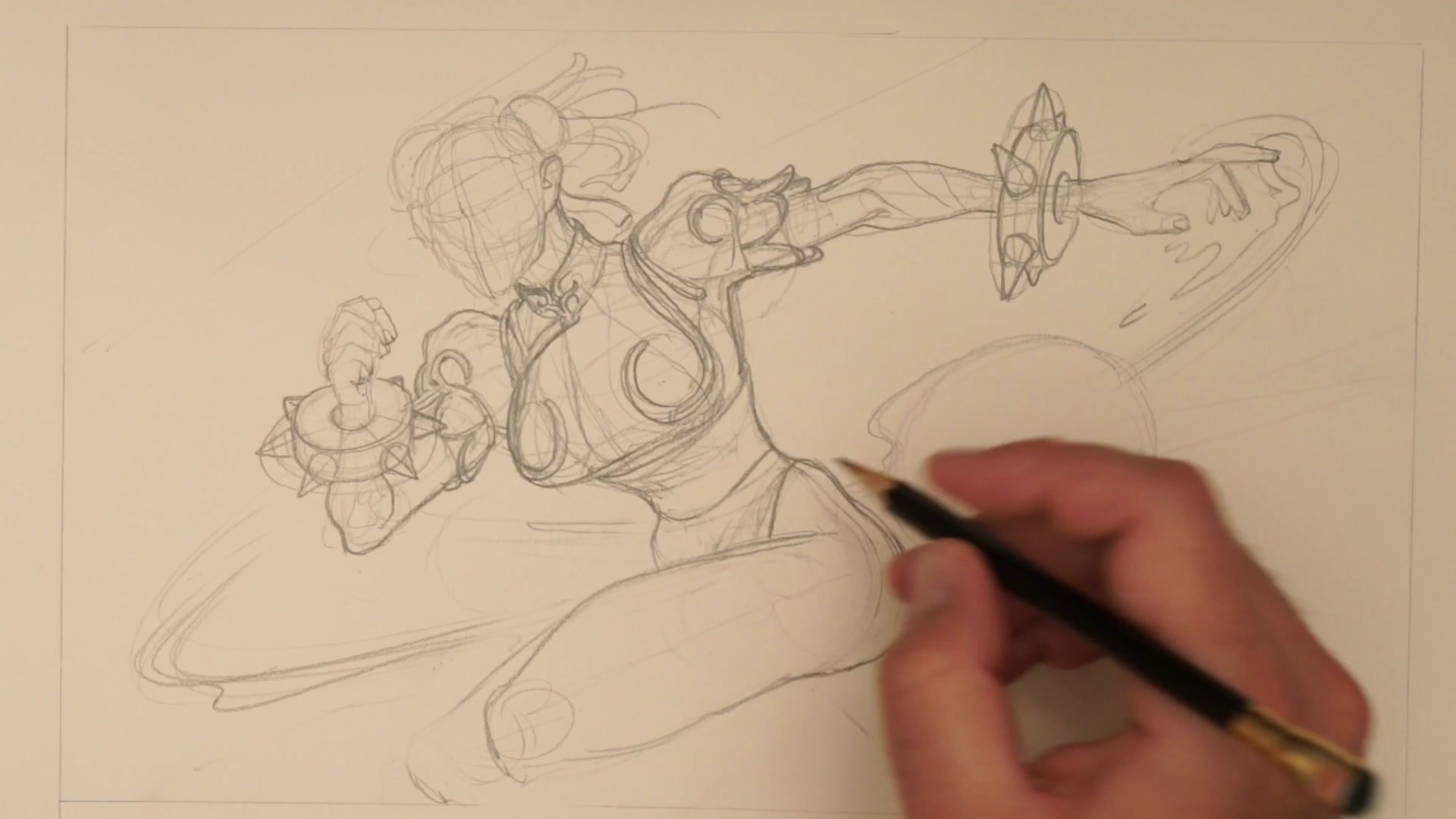
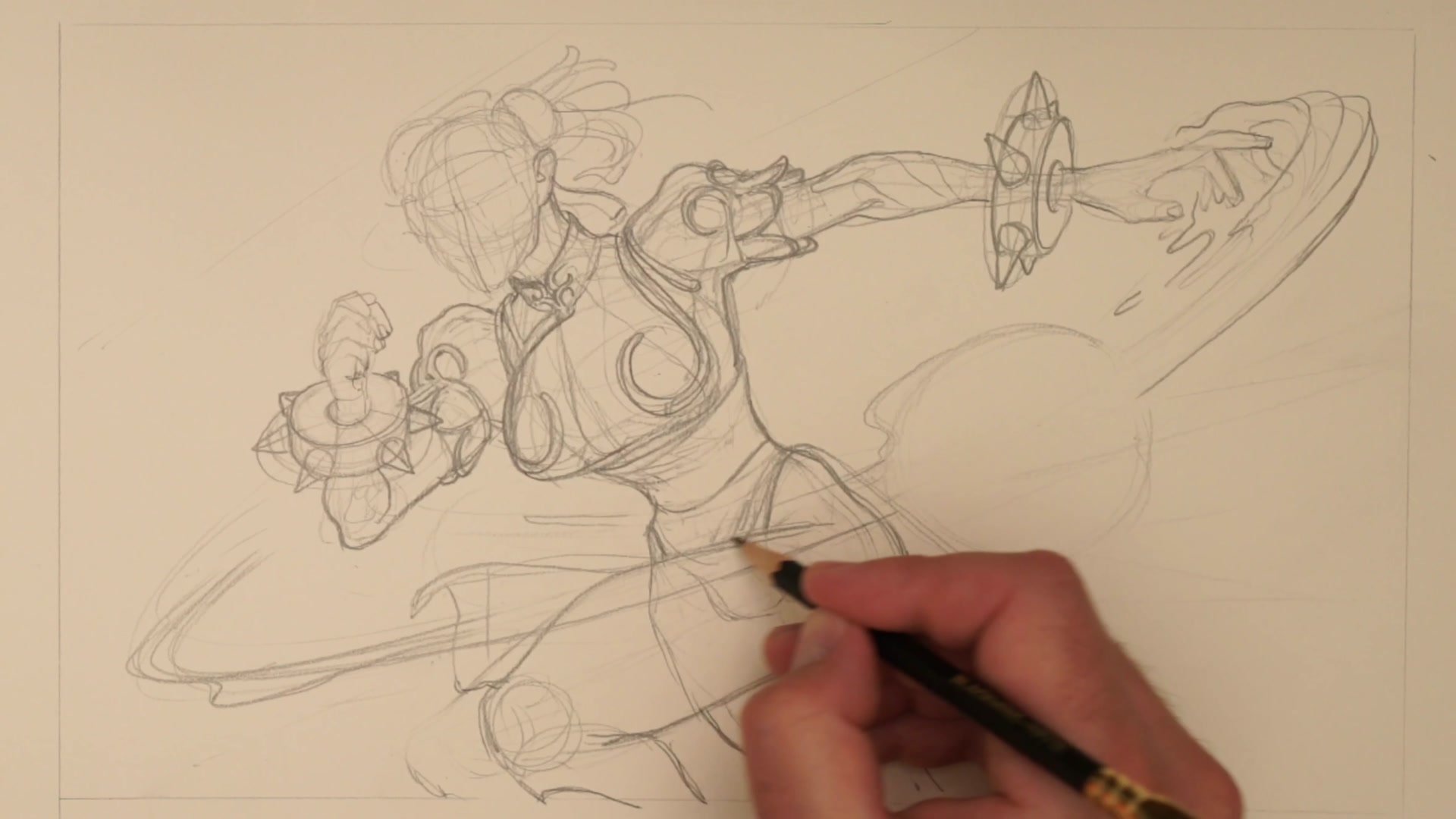
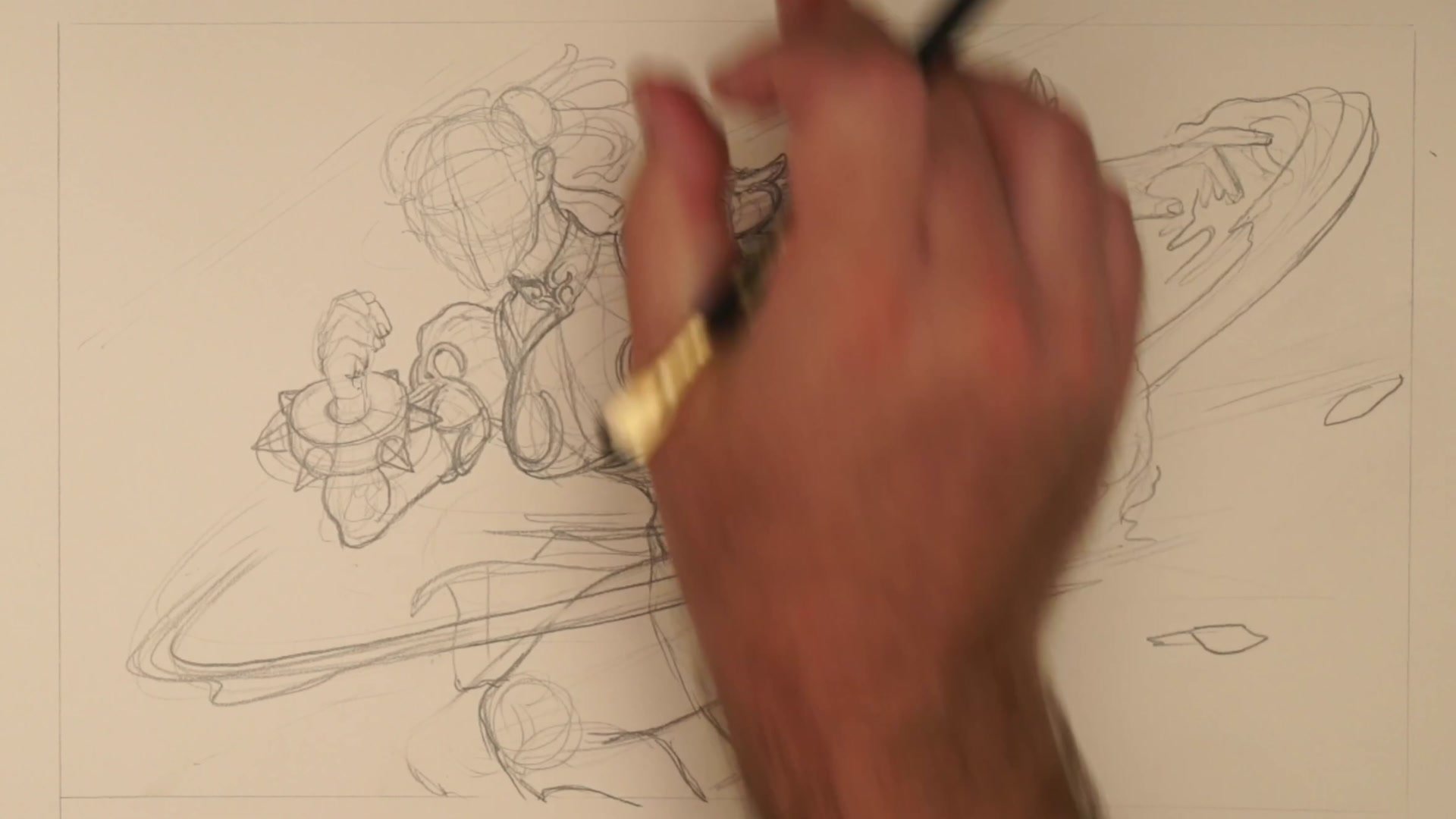
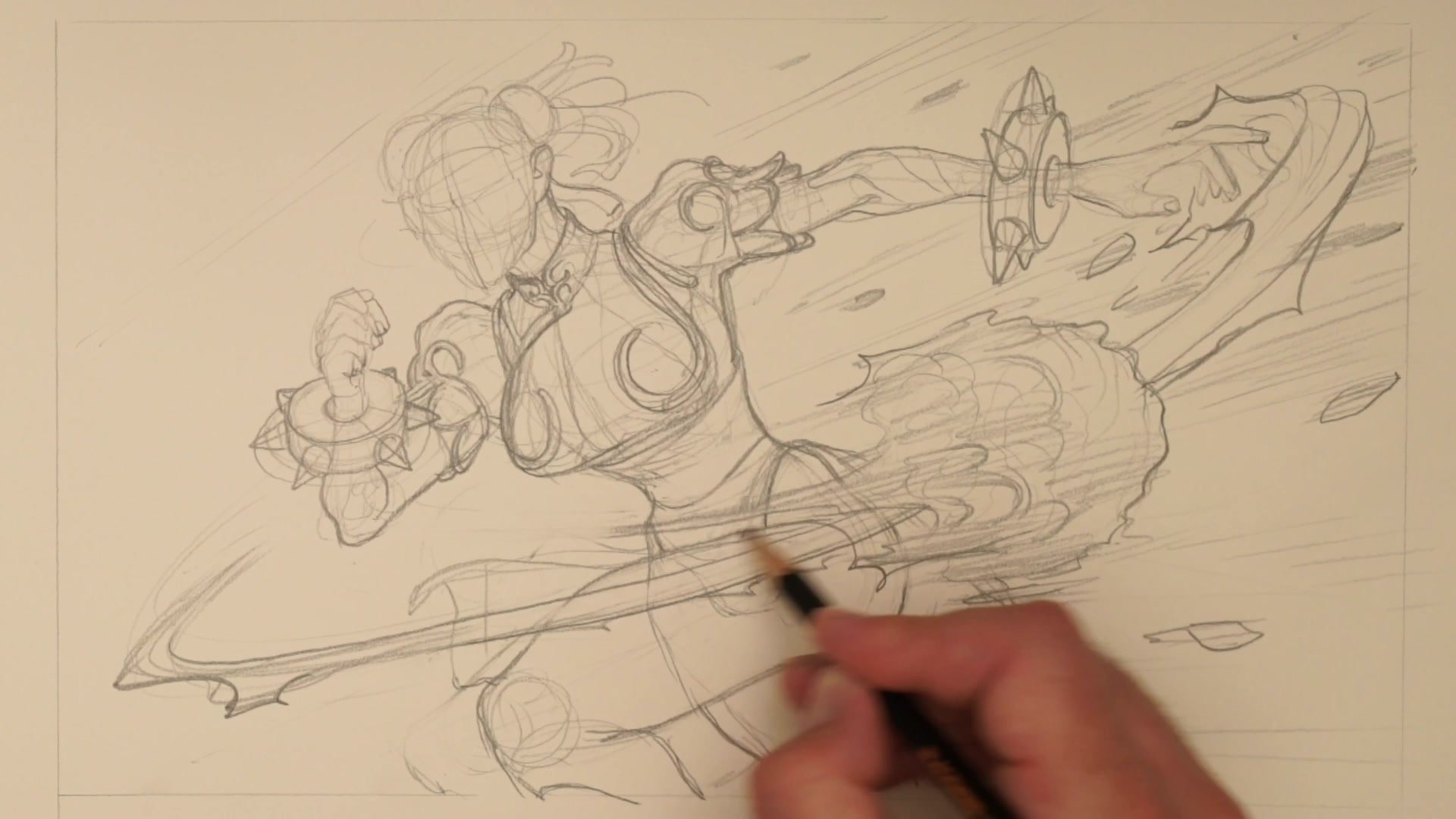
Composition Over Perfection
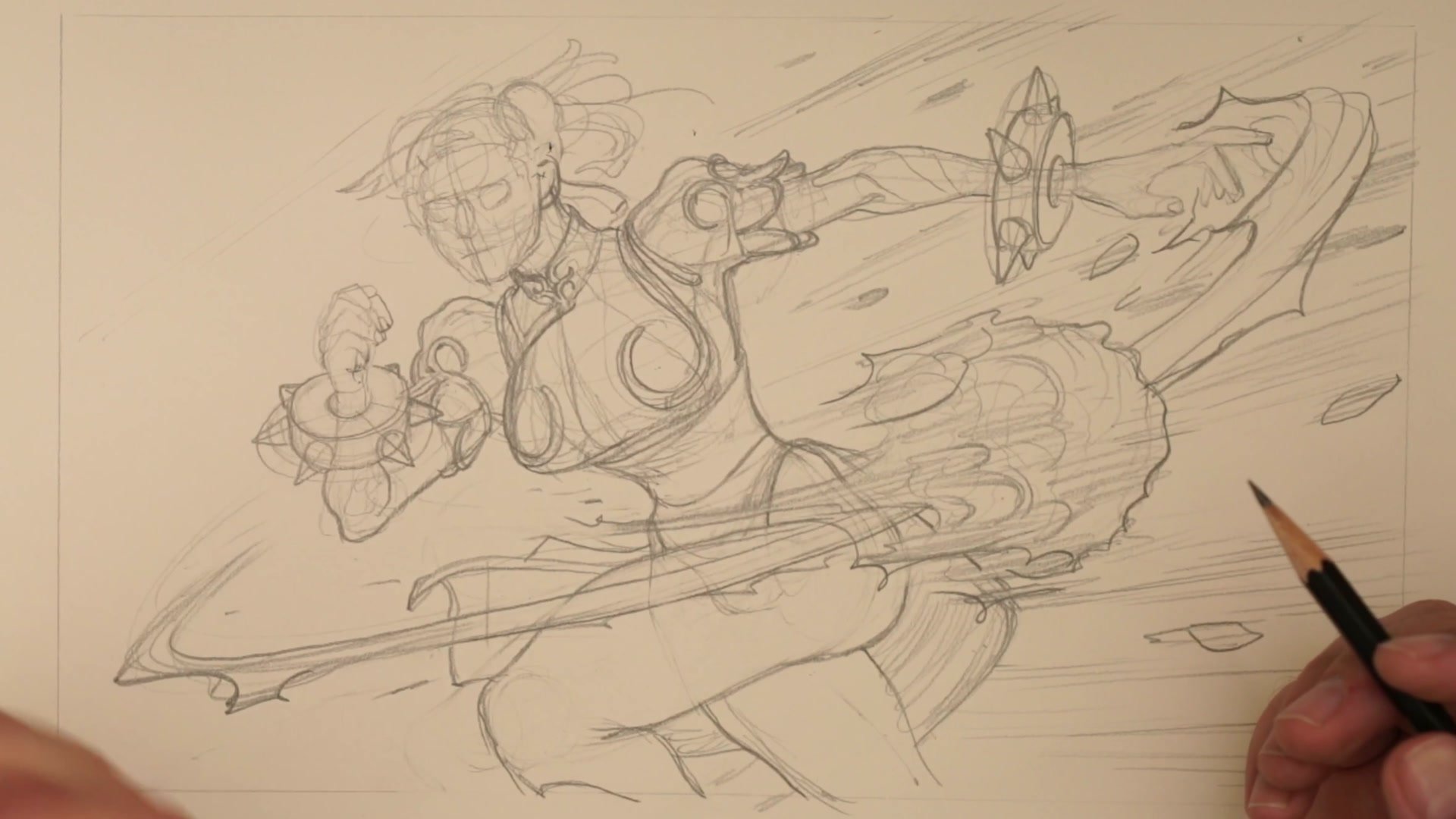
The final phase shifts focus from anatomy to dynamic composition. Speed lines radiating outward from the fireball action create directional energy. Debris and additional graphic elements reinforce the sense of movement. This is where the drawing lives or dies as splash screen art, and it has almost nothing to do with how correct the anatomy is.
Working with pencil rather than digital forces commitment to decisions. There is no undo, no moving layers around, no easy fixes. That constraint builds better drawing skills because it demands getting things right the first time. The trade-off is clear: digital allows professional-level revision, but traditional pencil drawing trains the kind of decisive mark-making that makes the rest of the process faster.
Final Drawing
Key Principles
Skeleton Before Structure: Establishing the pose with a mannequin stick figure first keeps the gesture dynamic. Adding construction too early produces stiff drawings that prioritize accuracy over energy.
Composition Trumps Anatomy: For action poses and splash screen art, two-dimensional graphic composition matters more than three-dimensional structural correctness. Diagonals, speed lines, and movement sell the action.
Draw Through Everything: Even forms hidden by costume should be constructed underneath. This approach ensures the clothing wraps convincingly around the body and maintains dimensional logic.
Exaggerate to Character Scale: Official character designs almost always require bigger, chunkier, more exaggerated proportions than feel natural. What looks right on the reference often needs to be pushed further in the drawing.
Practice This
Pick a Dynamic Reference: Choose a character with a clear action pose from a fighting game, comic, or anime. Find reference art to study alongside.
Block the Mannequin First: Spend time on just the stick figure skeleton, focusing on the gesture and the compositional energy of the frame before adding any anatomy.
Build Up in Passes: Add primary forms, then secondary anatomy, then costume details. Resist the urge to finish any one area before the whole figure has its basic forms in place.