The Essential Role of Character Design Lineups
Summary
The Business of Character Design
Many artists assume that becoming a great character designer means becoming a great artist first. The logic seems obvious: better drawing skills produce better characters. But the reality of professional character design work tells a very different story. The actual day-to-day work of a concept designer in games, animation, or film is less about rendering beautiful standalone characters and more about organizing a visual world so that audiences can understand it instinctively.
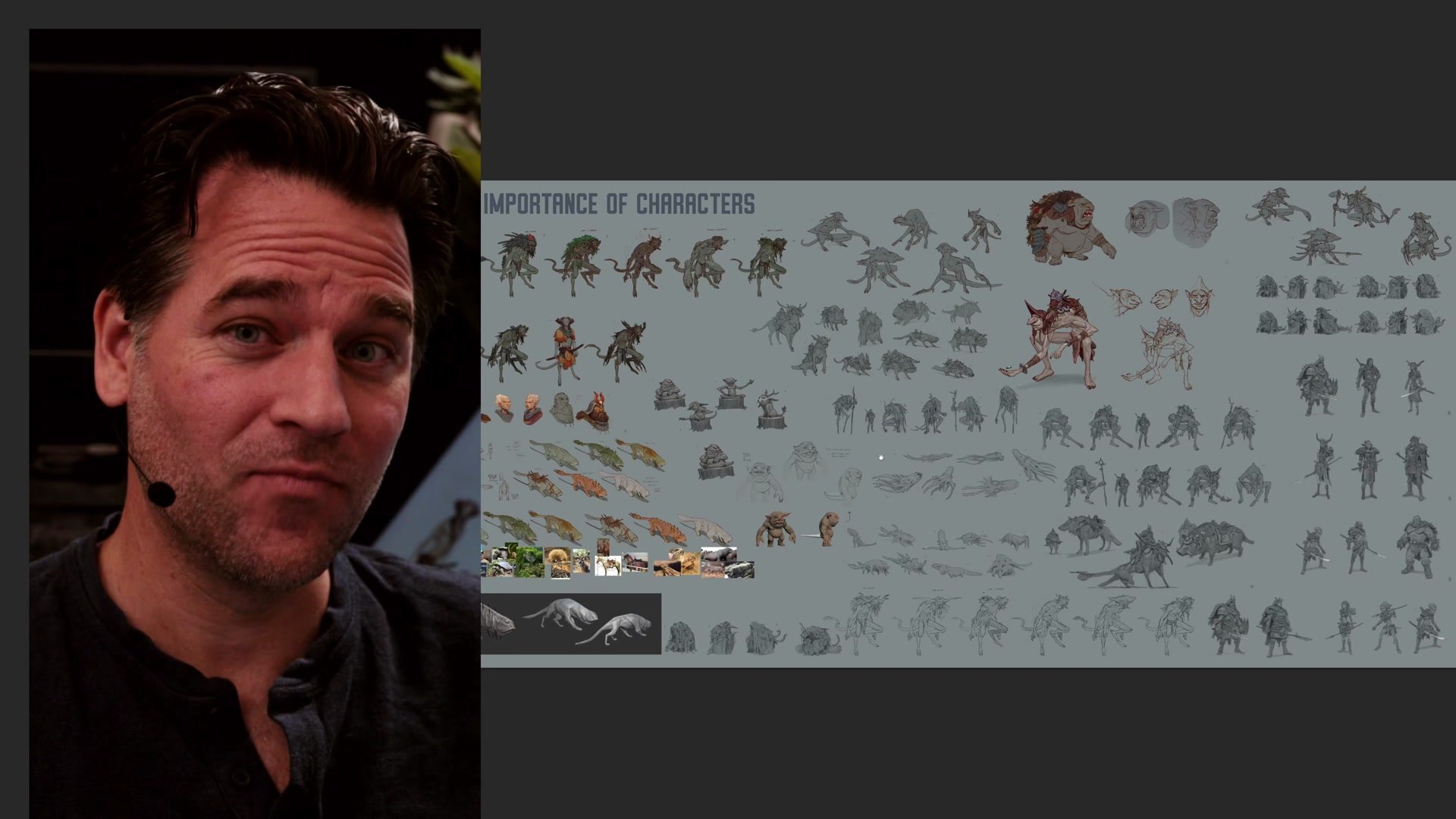
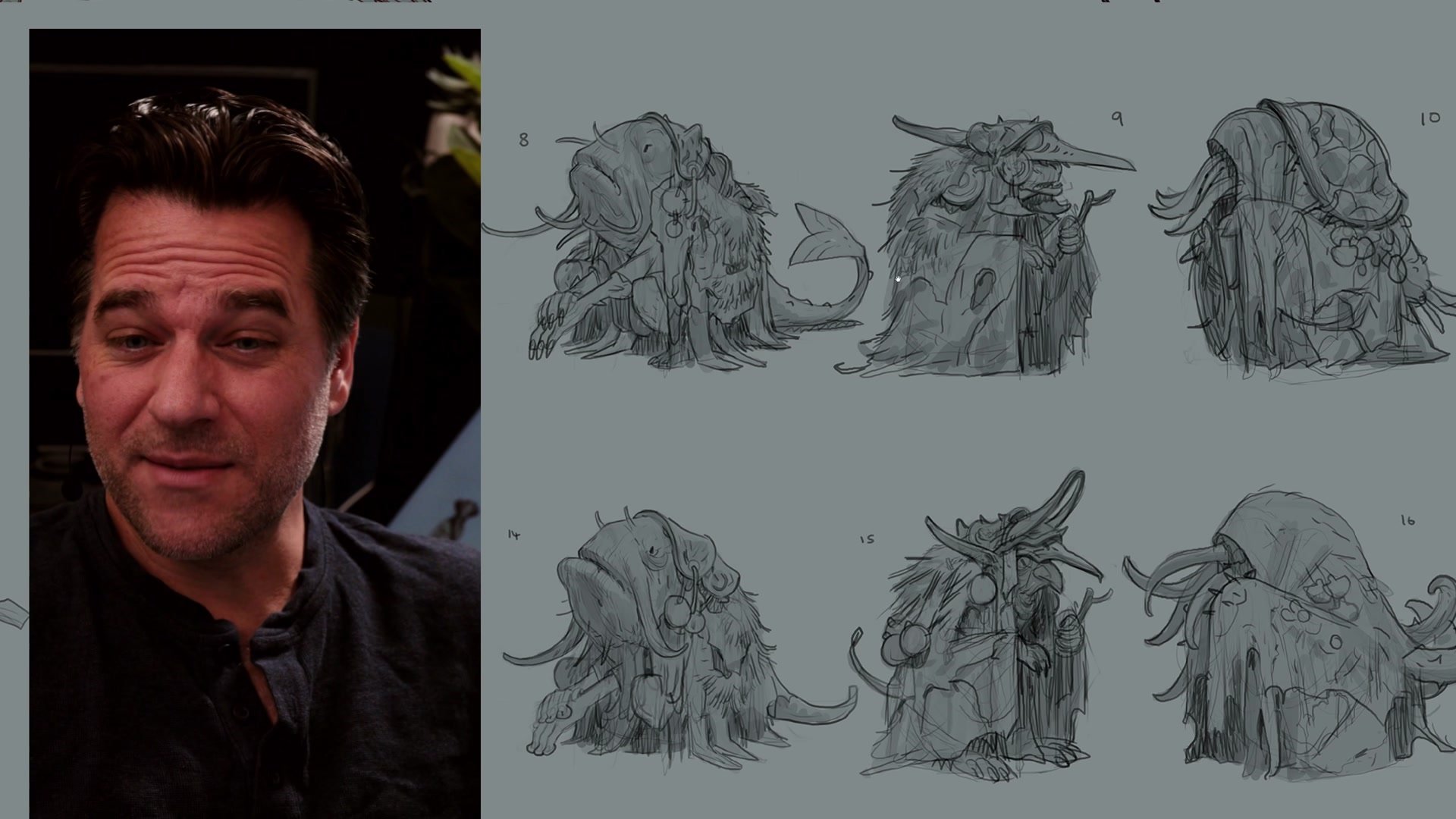
Character design lineups are one of the most important practical tools in this process. A lineup is simply a series of character designs placed side by side, but what it reveals is far more significant than any individual design. Lineups expose whether characters are sufficiently differentiated, whether the visual design language is consistent, and whether the world being built actually makes sense when everything is seen together. This is the work that happens behind closed doors on professional projects, and it is fundamentally different from the polished pitch art that ends up in art books.
Design Sheets and Lineup Exploration
Design Versus Drawing
One of the most common misconceptions about concept art is that the job is primarily about drawing really well. In reality, the work is about design, which is a distinct skillset. A character can be beautifully rendered, have incredible shape design, use perfect colour theory, and still be completely wrong for the project. It can be wrong because it looks too similar to another character in the cast, or because its visual design language conflicts with the world that has been established.
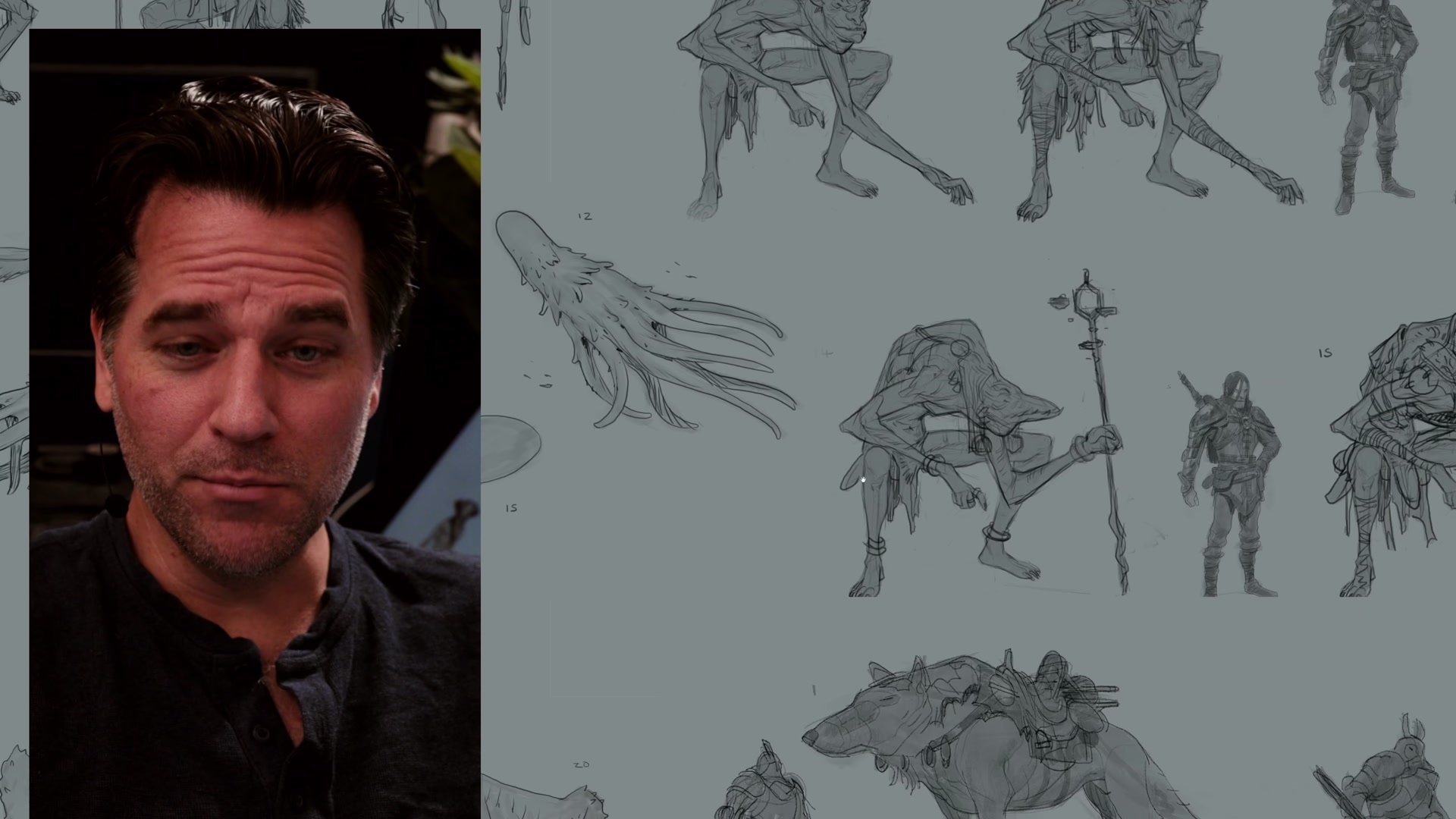
This is where lineups become essential. When characters are placed next to each other in the same pose, on the same baseline, all the drawing flourishes are stripped away and what remains is the actual design. Can these characters be told apart from silhouette alone? Do the visual hierarchies read correctly? Does the merchant character look different enough from the enemy characters? These are the questions that lineups answer, and they are far more valuable to a production team than any single polished illustration. Professional designers who understand this often have longer and more stable careers than artists who focus purely on rendering quality.
Differentiation and Biome Variations
Building Worlds Through Variation
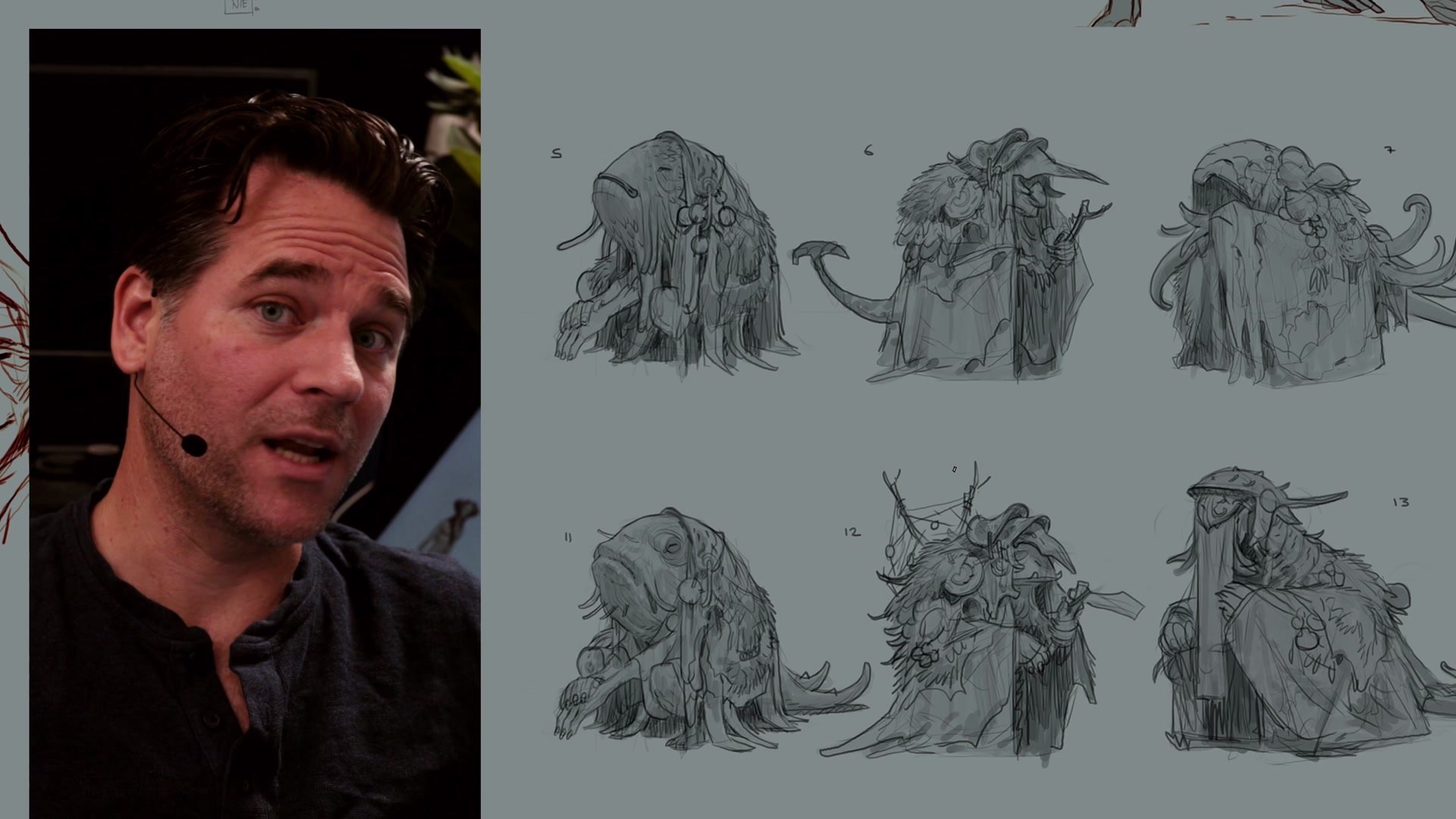
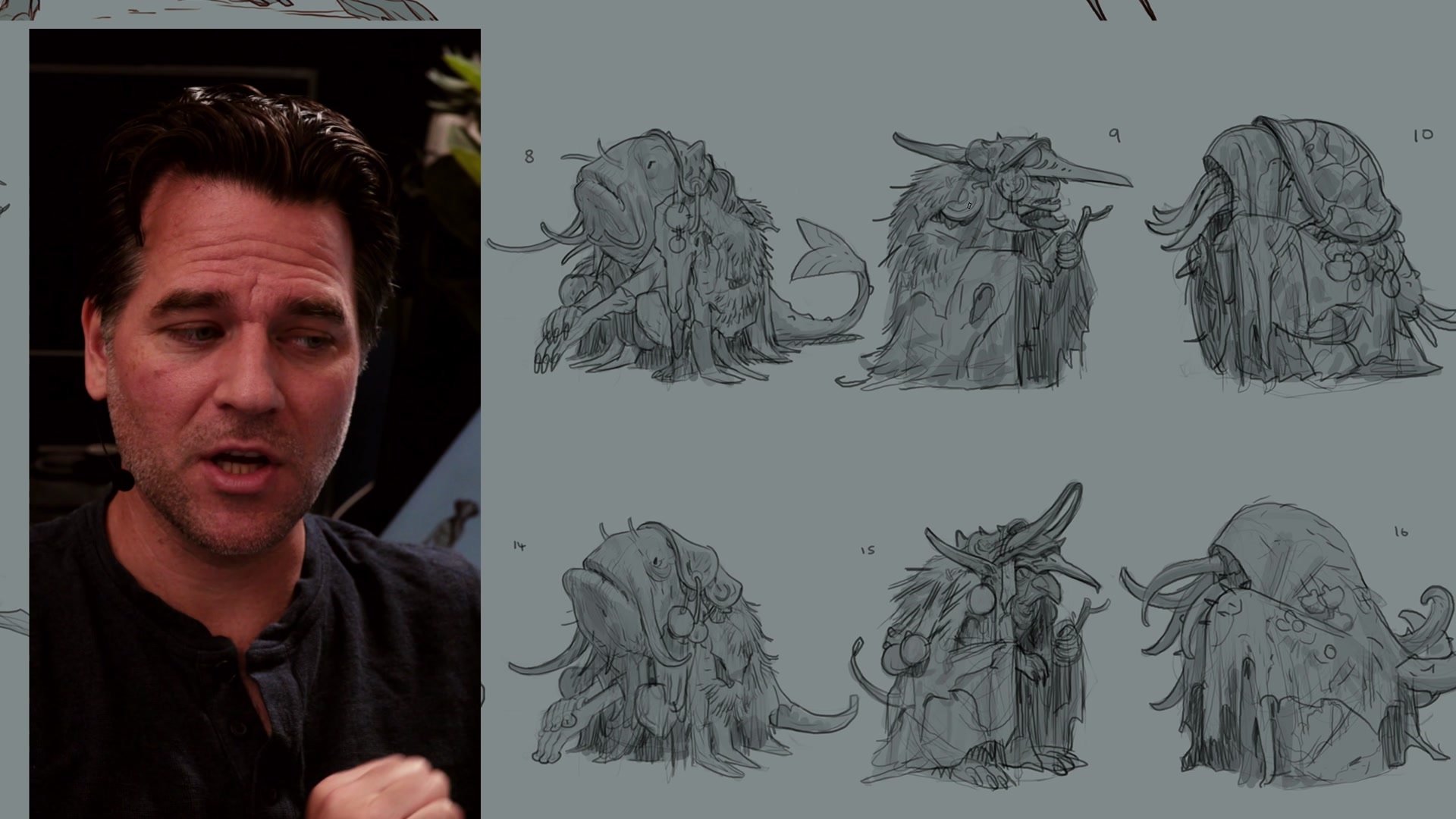
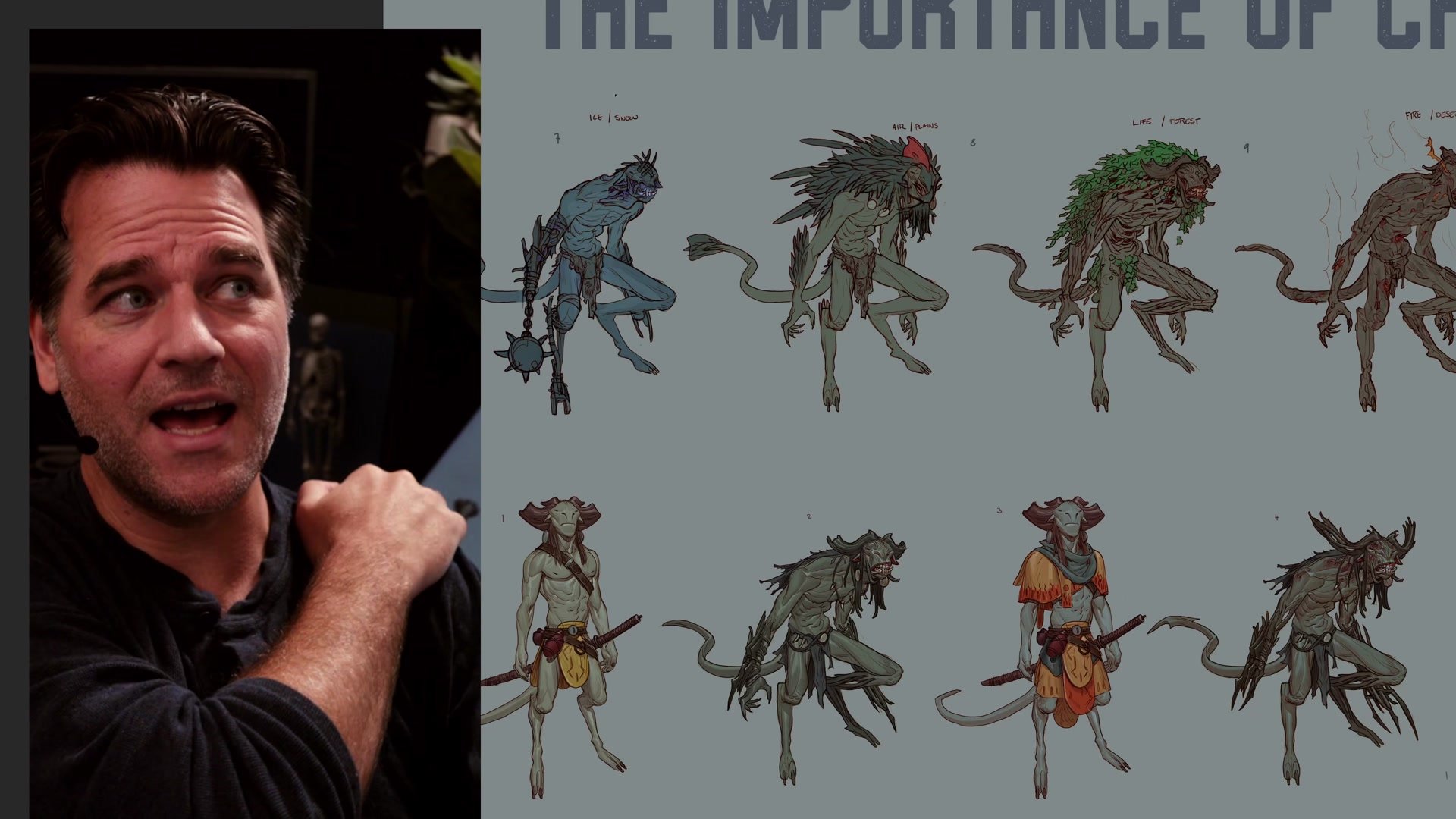
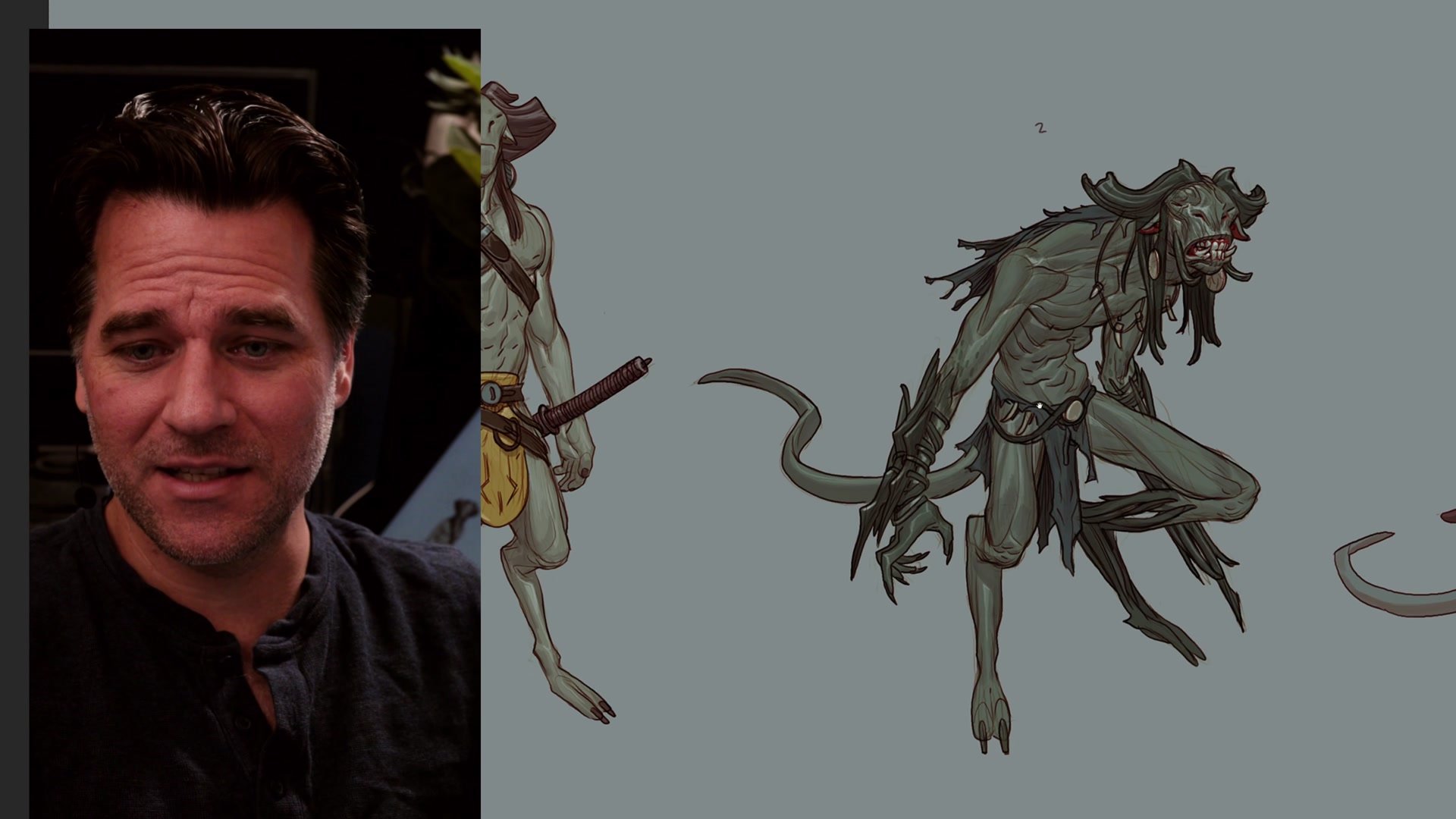
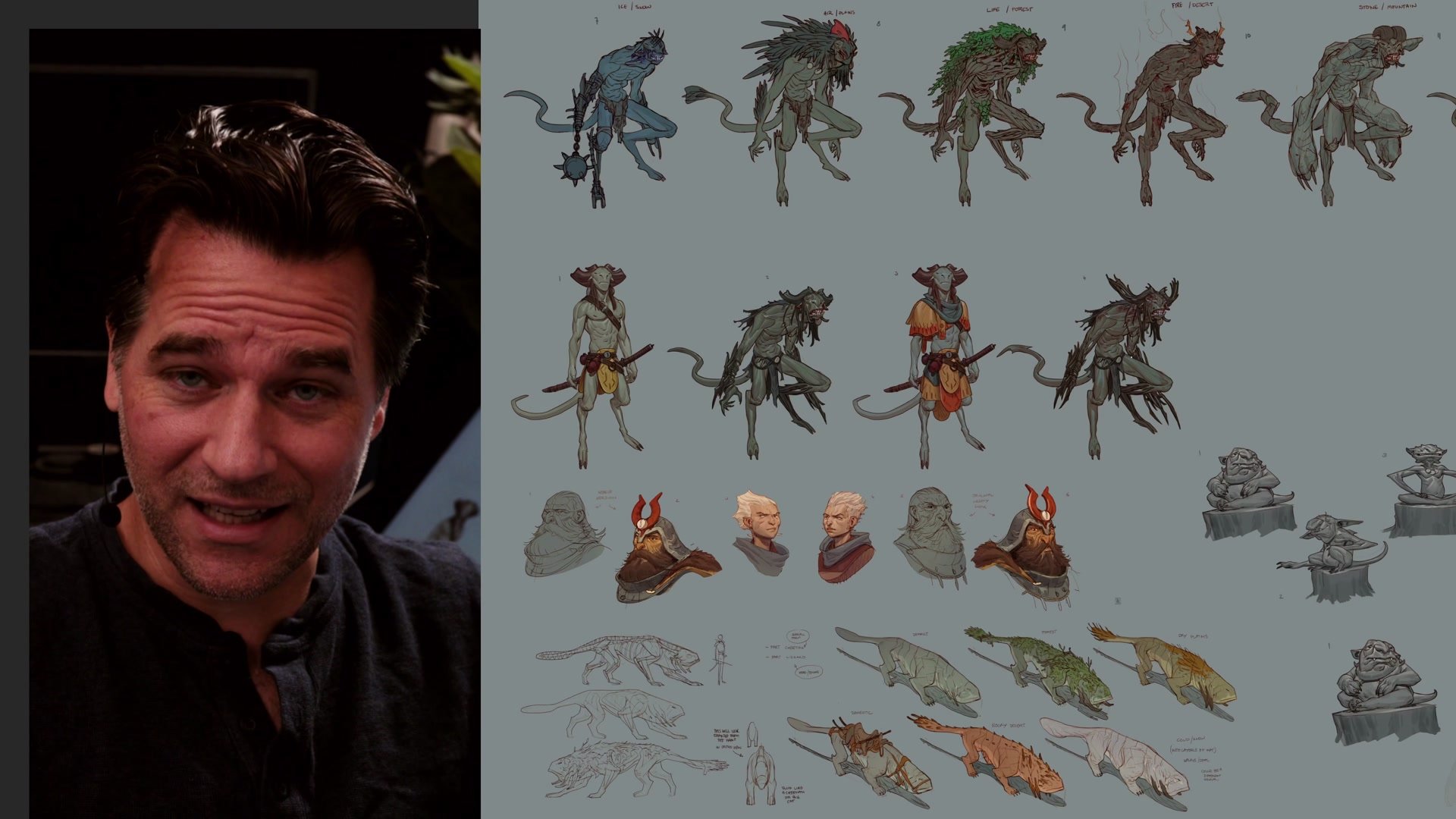
The real power of the lineup emerges when it is used as a generative design tool rather than just a presentation format. By taking a single base character and creating systematic variations, entire factions, biomes, or narrative arcs can be prototyped quickly and cheaply. A civilized version of a creature can be compared directly to its corrupted counterpart. Environmental themes like forest, desert, or mountain can be layered onto the same base model to see how far the visual language can stretch while maintaining cohesion.
This approach serves the viewer's experience directly. When a player enters a game world and can immediately sense that the creatures in a forest biome feel different from those in a desert biome, but still recognizably part of the same species, the world feels cohesive and logical. That sense of internal consistency is what makes fictional worlds feel real and worth investing time in. And it is built not through individual masterpiece drawings, but through the unglamorous work of copying a base design, modifying it, lining it up against other versions, and making sure the differences read clearly at every scale. The lineup is where that clarity gets built.
Key Concepts
Design Is Not Drawing: Professional character design is fundamentally about organizing visual information so audiences can understand a world. Strong drawing skills help, but the ability to create clear visual hierarchies and consistent design language across a cast of characters is what actually drives the work.
Good Designs Can Be Wrong: A character can be excellently crafted by every artistic measure and still fail the project because it conflicts with other characters, duplicates visual signals, or breaks the coherence of the world. Lineups are the tool that catches these problems before they reach production.
Lineups Are Generative Tools: Beyond just presenting finished designs, lineups function as a design method. By placing variations side by side, designers can prototype entire visual systems, test how far a concept can stretch, and build the kind of differentiation that makes fictional worlds feel logical and immersive.
Try This
Create a Base Character: Draw a simple character in a neutral standing pose. Keep it fairly loose and sketchy rather than rendered, because the goal is design exploration, not finished art.
Generate Variations: Copy that base character several times and modify each copy. Change clothing, silhouette details, accessories, or proportions. Try creating a civilized version and a corrupted version, or apply different environmental themes to the same base.
Line Them Up and Compare: Place all your variations side by side and zoom out. Check whether each version reads as distinct from silhouette alone. Ask whether the differences between them tell a story about who these characters are and where they come from in the world.