Master the Center Line - Drawing Orcs
Summary
The Center Line Solution
Most artists learn to place facial features as symbols on a flat plane and wonder why their characters look like cardboard cutouts. The center line gets mentioned in construction tutorials, but its real power is rarely explained. The center line is literally the profile of a character. That invisible line running down the front of a face contains the same dimensional information visible from the side view. Understanding this connection transforms character construction from guesswork into a logical system.
Orcs and fantasy characters with exaggerated features make perfect teaching vehicles for this concept. Their jutting jaws, massive tusks, and prominent brows simply cannot exist without solid center line construction, forcing dimensional thinking in ways that subtle human features never demand.
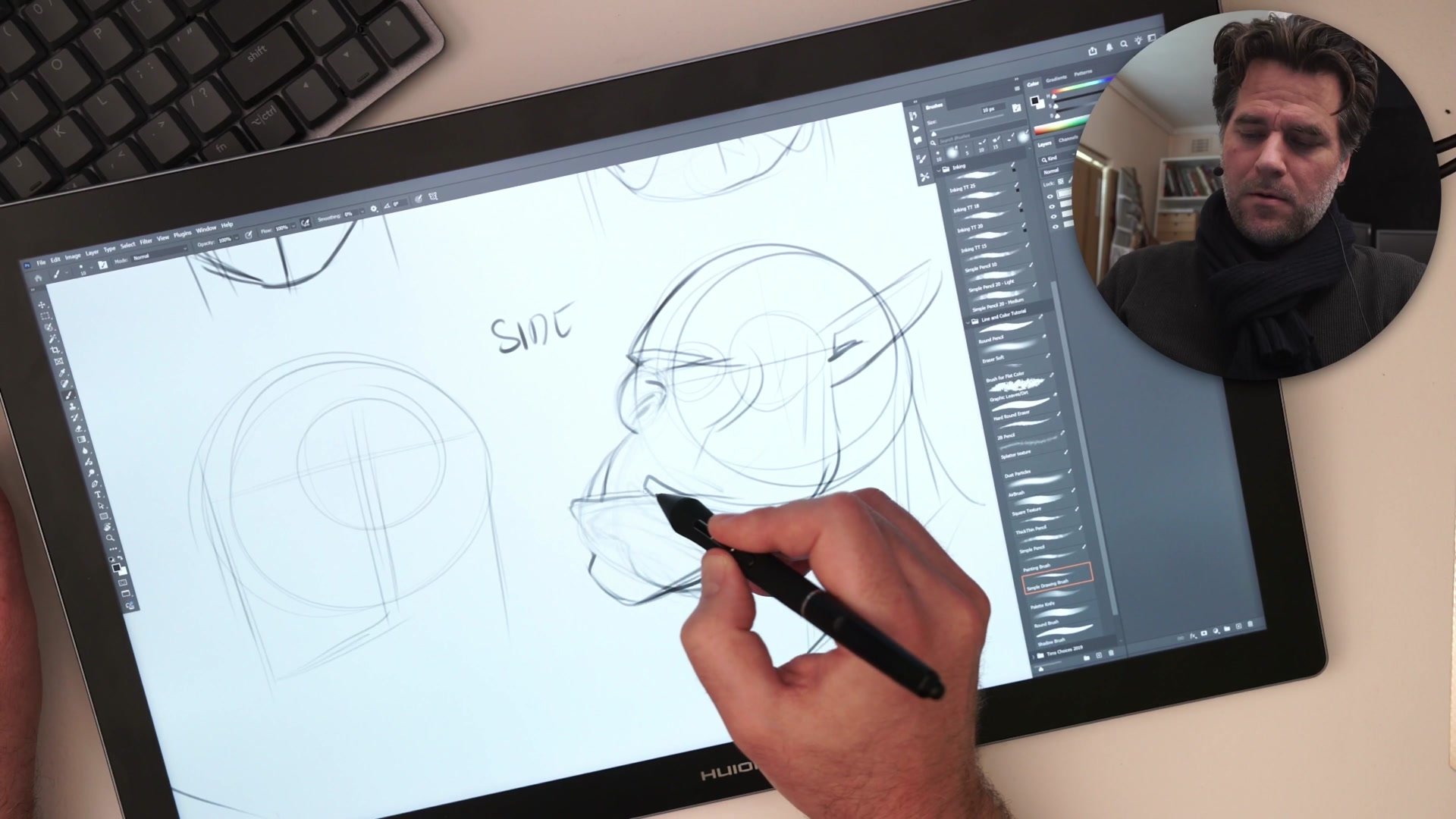
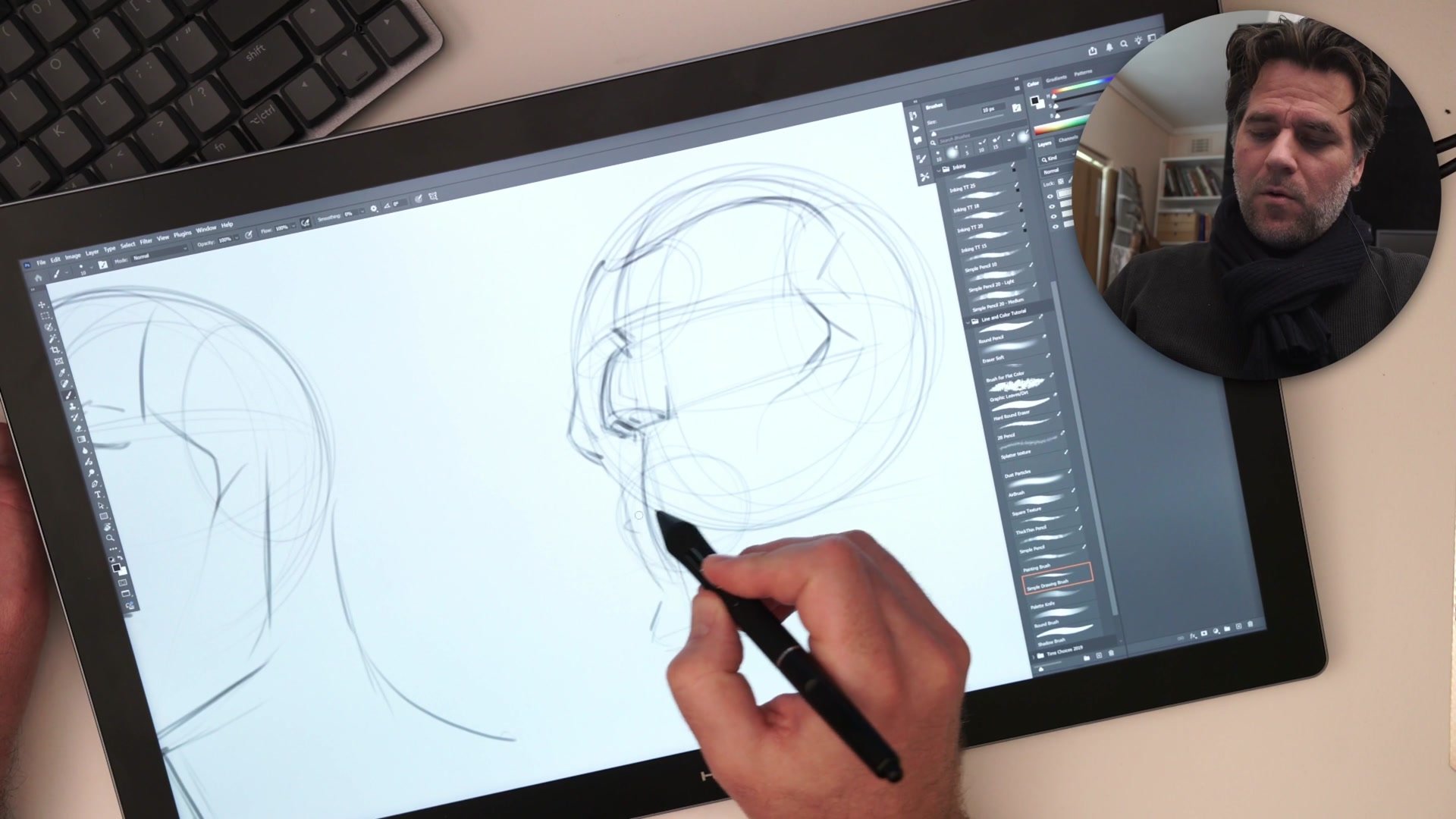
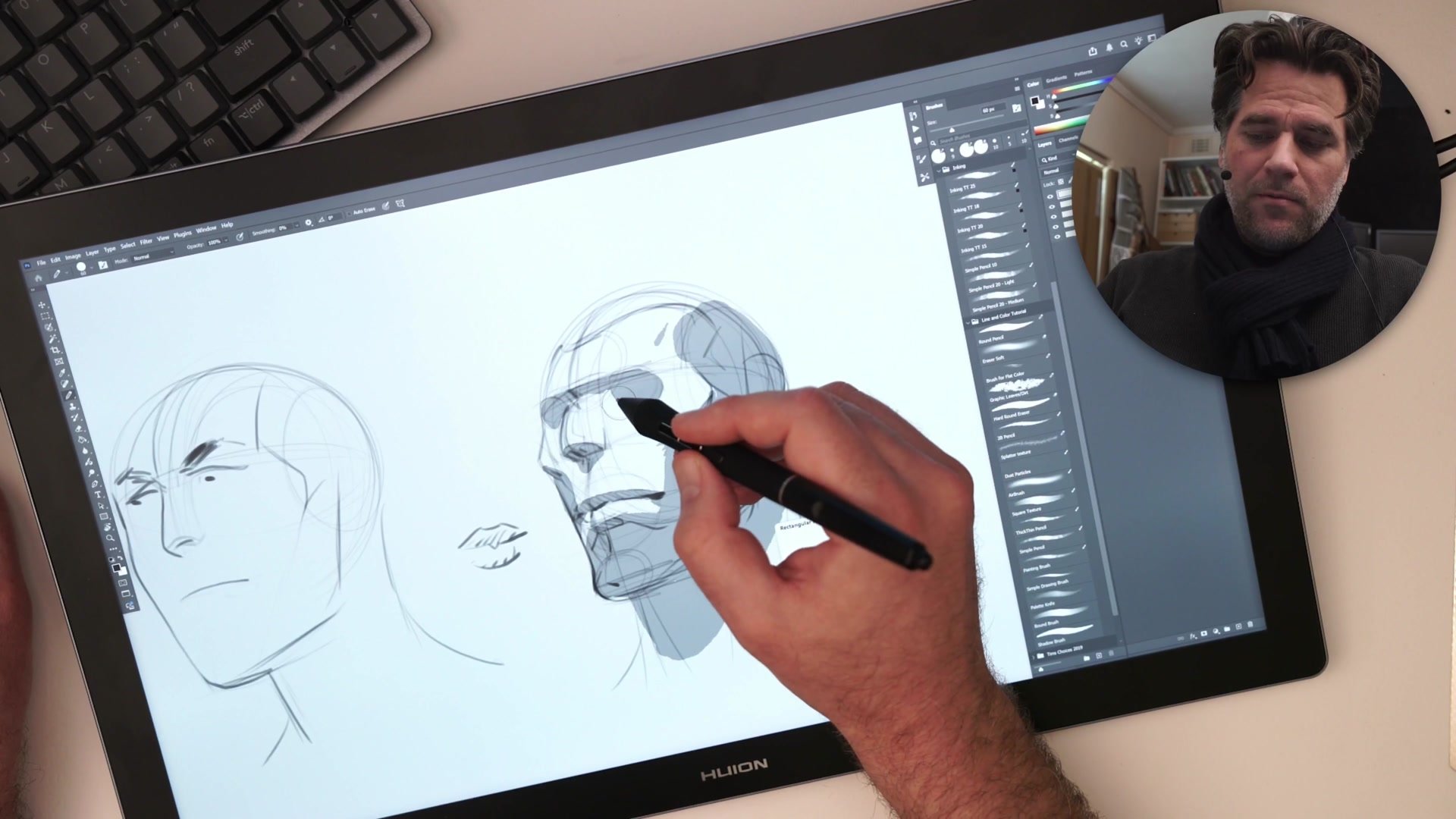
Profile Equals Center Line
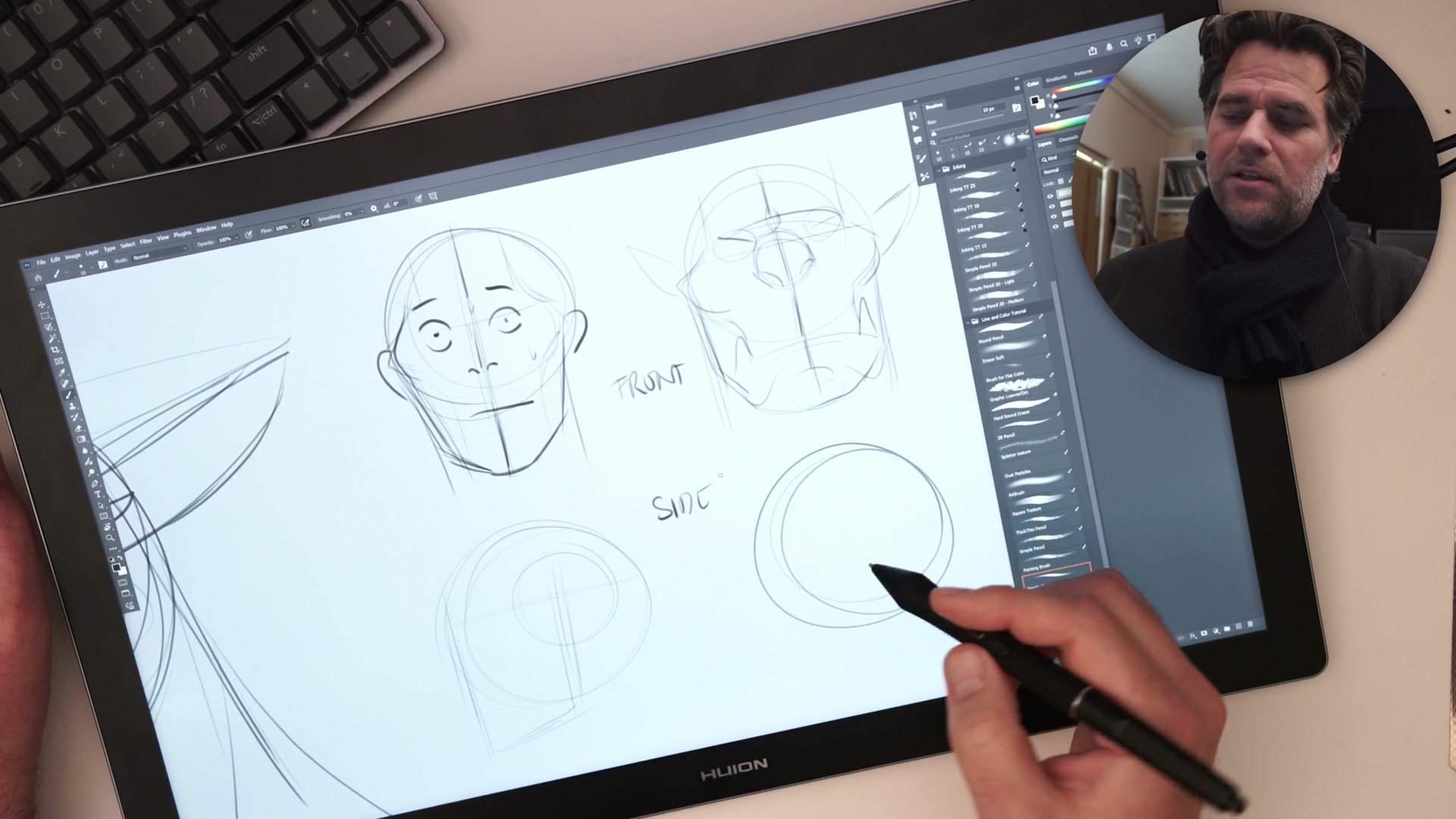
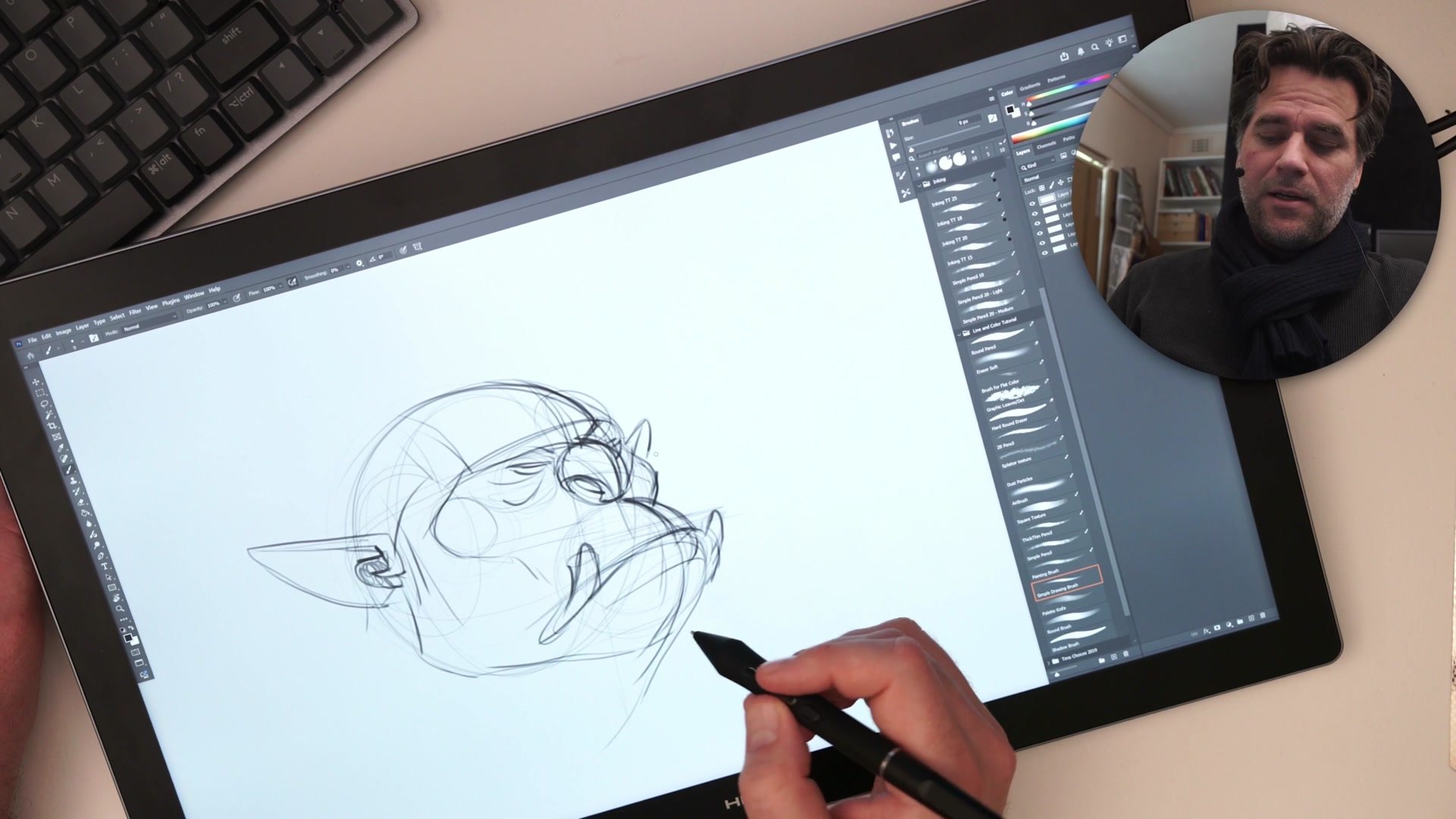
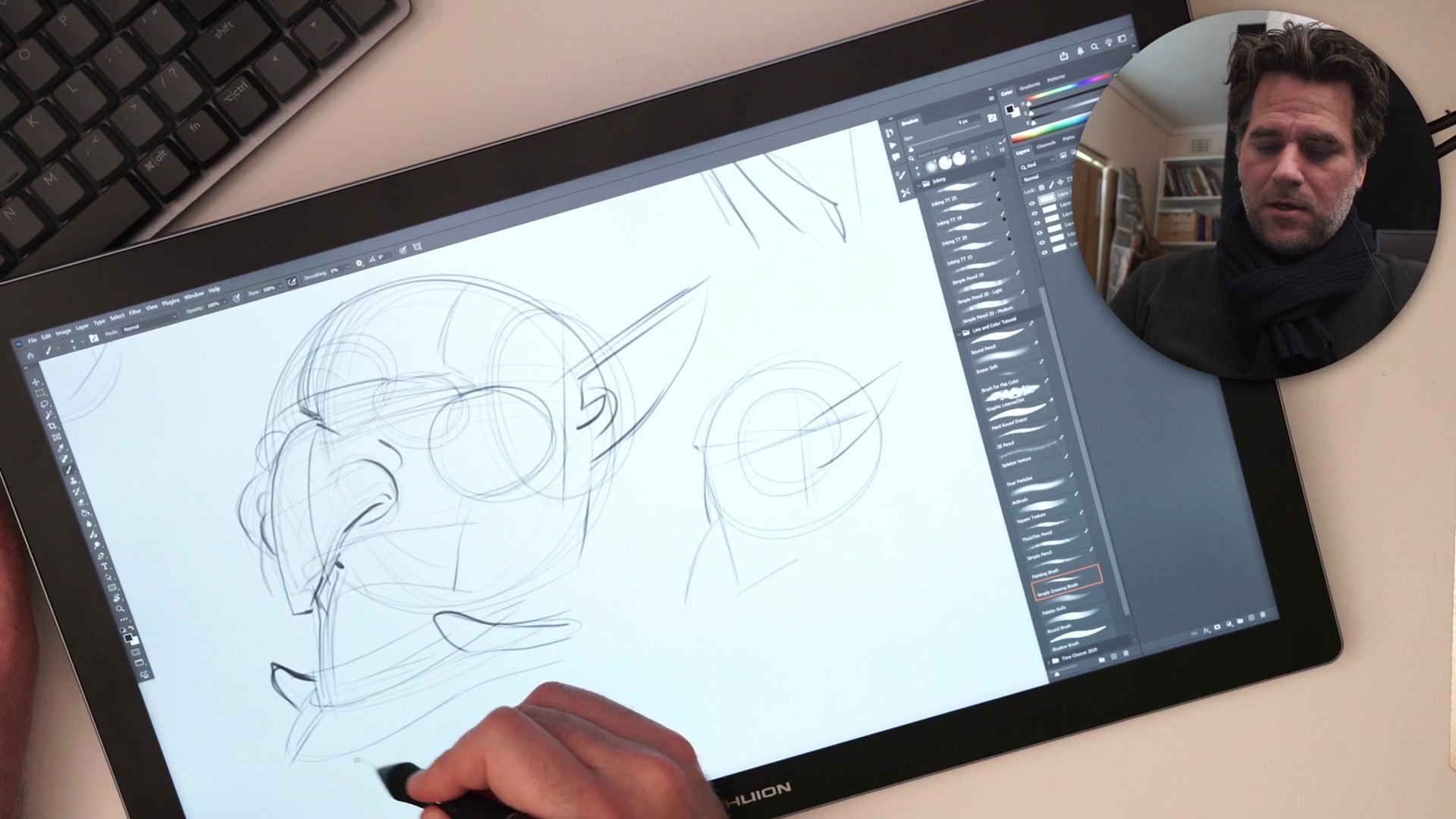
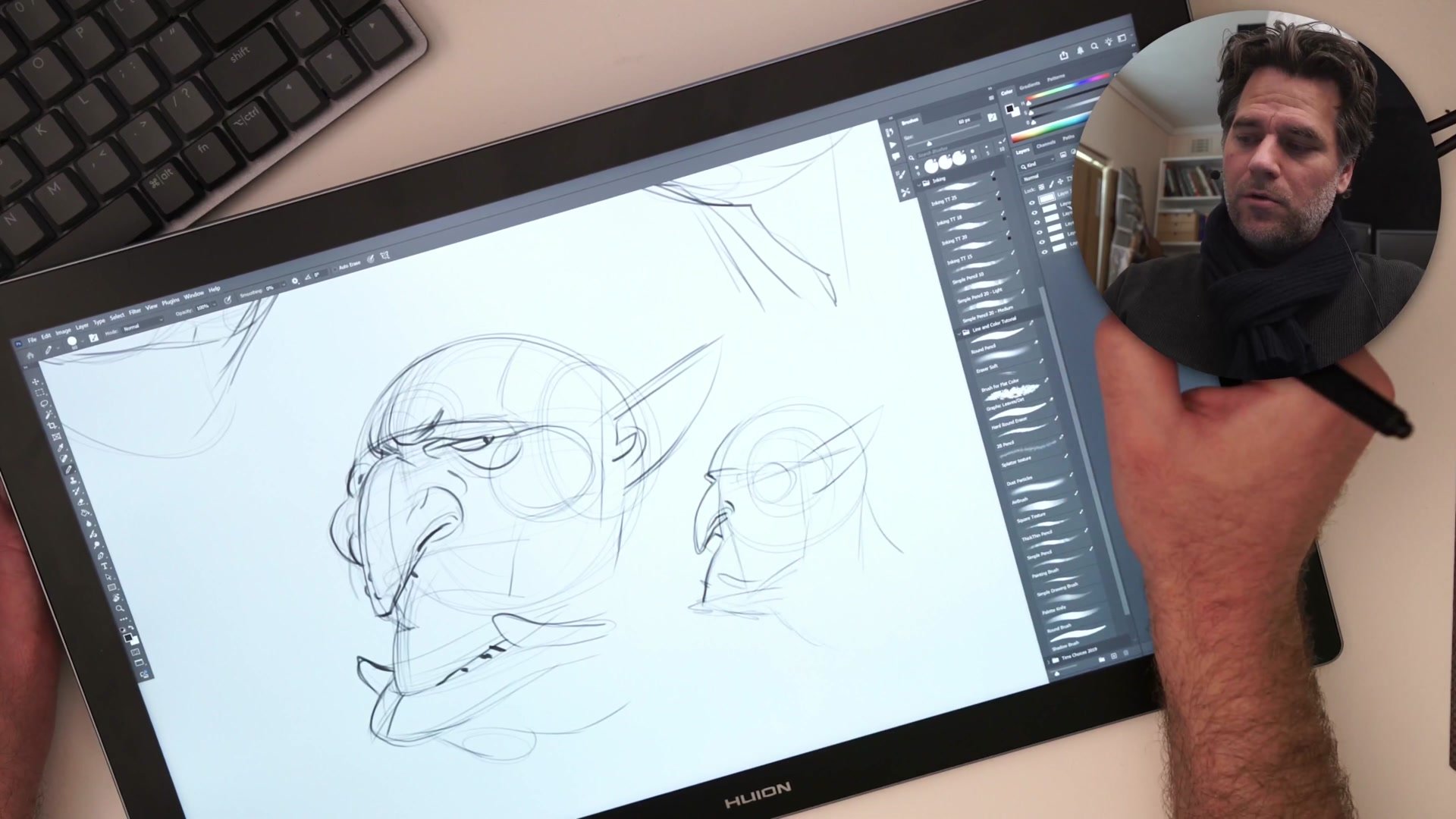
The breakthrough that changes everything is recognizing that the center line drawn down the middle of a front-facing head represents the exact same information as the profile view from the side. These are not two separate skills. From the front, the center line shows where the nose projects forward, how the lips curve out, where the chin sits in space, and how the forehead angles. From the side, those same relationships appear as the actual profile shape. The center line is the profile collapsed into a single line tracking how the face moves in and out of space.
This connection means profile thinking solves front-view problems directly. Struggling to place an orc's massive tusk convincingly in a front view? Thinking about how far that tusk projects in profile gives the answer. A character's nose looks flat from the front? Understanding its profile projection reveals exactly how to fix it. Most artists treat these as separate drawing skills when they are actually the same structural understanding viewed from different angles.
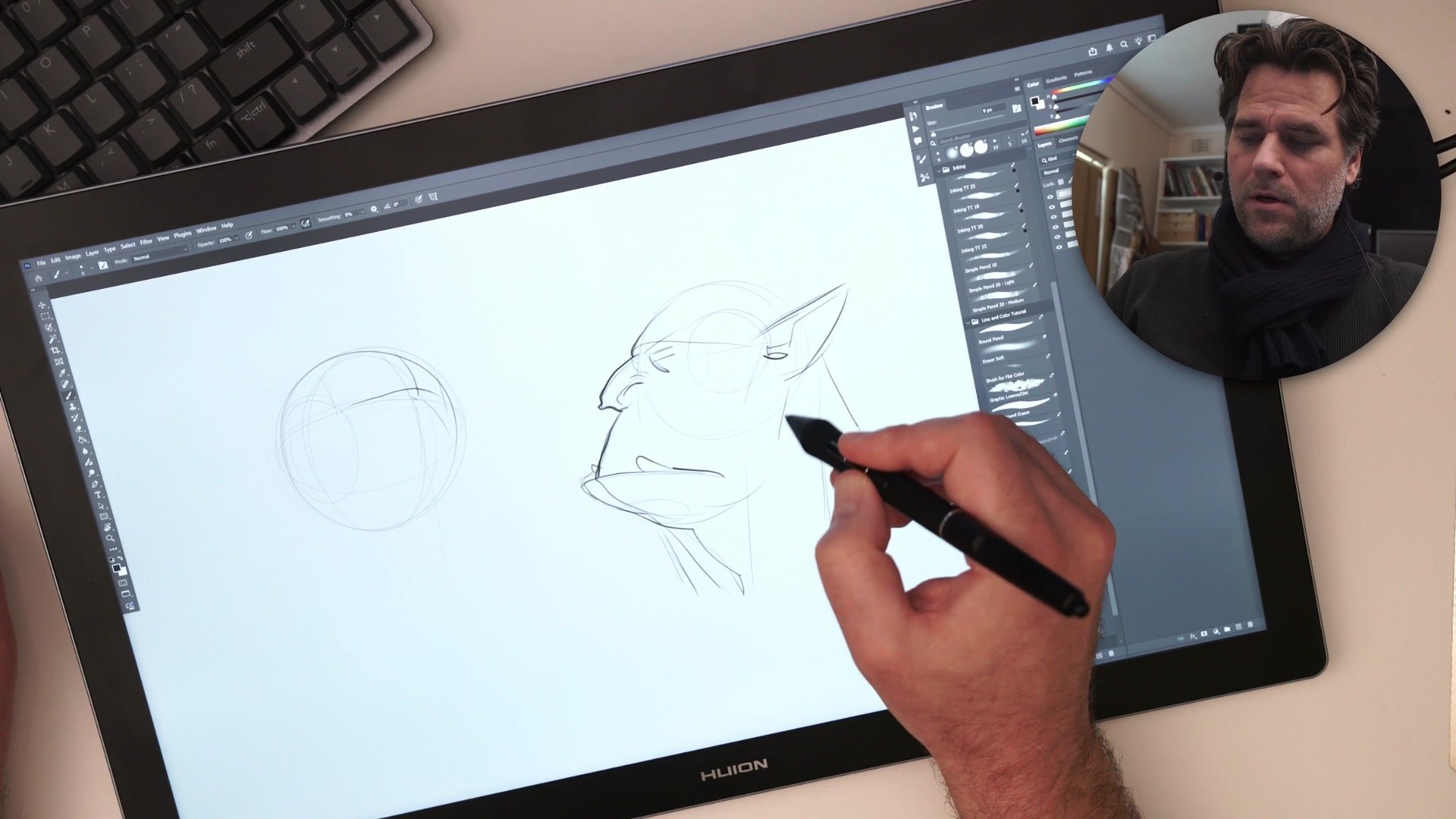
Building From Center Out
The danger with typical construction approaches is stopping too early. Placing a Loomis sphere and sketching in features might produce a decent-looking face, but without building outward from the center line, the result lacks real dimensional structure. Every feature needs to connect to the underlying framework. The nose is not a symbol placed in the middle of a face. It is a projection from the facial structure mapped by the center line. The mouth wraps around the dimensional form of the jaw. The brow ridge creates actual depth that casts real shadows.
This matters enormously when features become extreme. An orc's jutting jaw might project significantly forward, and the center line maps exactly how much. Those massive tusks must emerge from specific points on the jaw structure and follow convincing curves. Without tracking the center line through every projecting and receding surface, these features look randomly stuck on rather than growing from solid anatomy.
Construction Enables Rendering
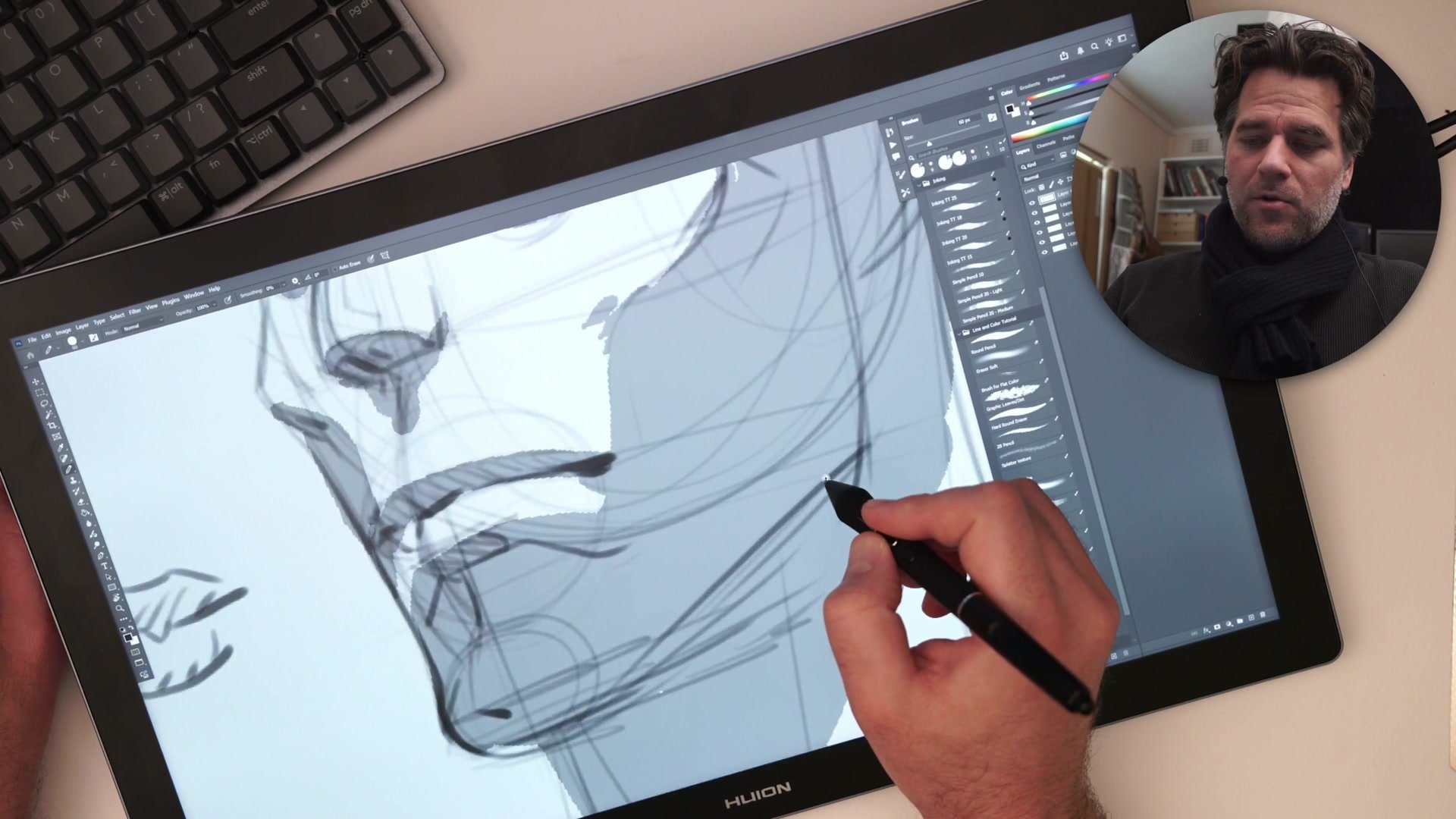
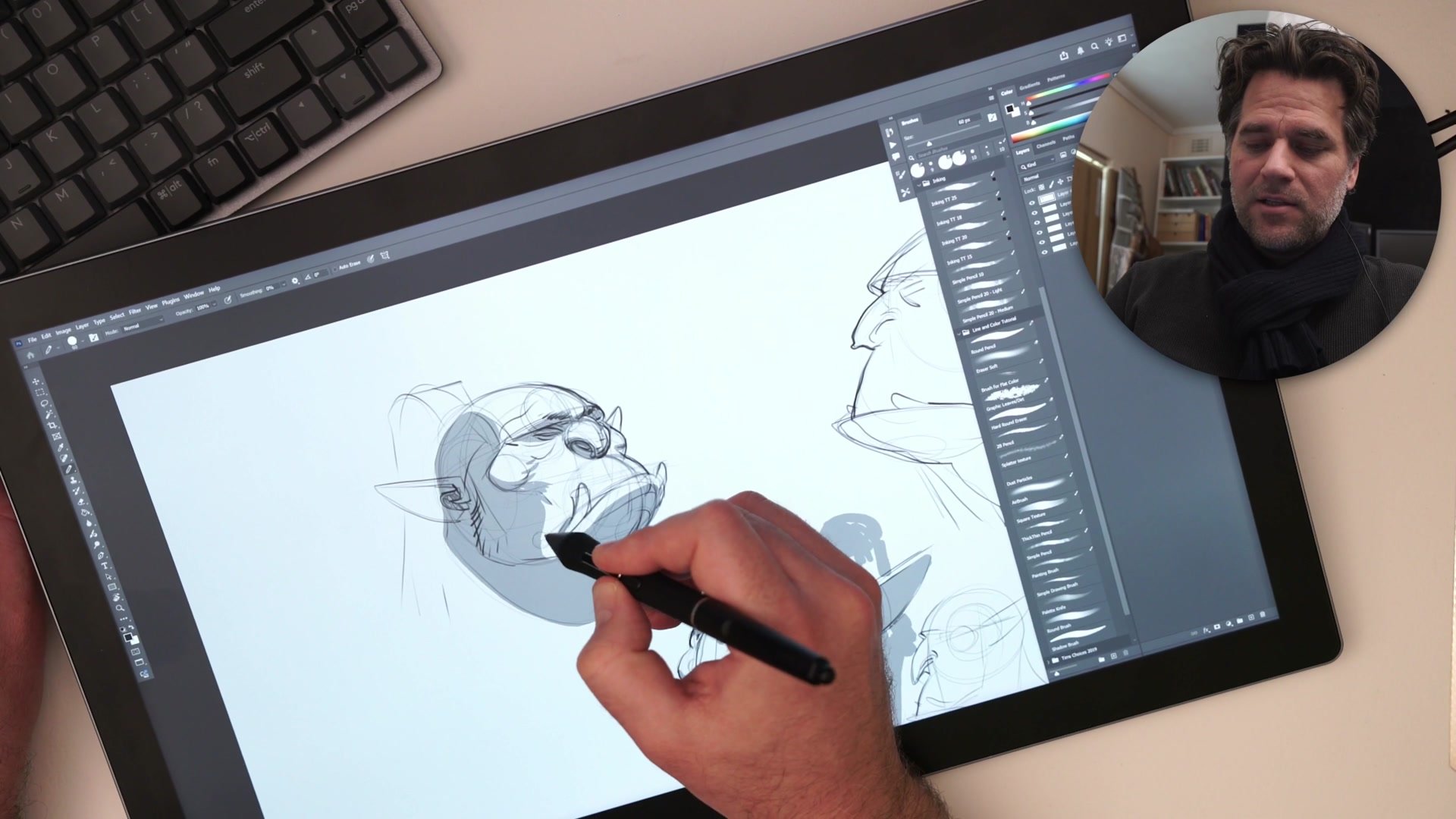
One of the biggest payoffs of solid center line construction is that rendering transforms from guesswork into logical problem-solving. When the dimensional structure is understood, placing shadows becomes a matter of following constructed forms rather than copying lighting patterns from other drawings. A properly constructed brow ridge automatically creates shadow on the eye sockets below. A correctly built tusk projection determines exactly how it affects the lighting on the surrounding face.
Without this dimensional foundation, rendering relies on generic formulas about where shadows "usually" go. With proper construction, every rendering decision flows naturally from the forms that have been built. Even a simple pencil tool adding basic shadow patterns produces convincing dimensionality when the underlying construction is solid. This same principle applies far beyond faces. Any symmetrical form with dimensional depth benefits from center line thinking, whether constructing vehicles, creatures, or architectural elements.
Key Concepts
Center Line Is the Profile: The line drawn down the front of a face contains the same dimensional information as the side view. Understanding this connection turns construction from symbol placement into dimensional form building.
Build Outward From Center: Every feature must connect to the center line framework. The nose projects, the jaw juts, the brow recedes. Tracking these relationships prevents the flat, symbolic look that plagues character drawings.
Construction Makes Rendering Logical: When dimensional structure is solid, shadows fall where forms dictate rather than where guesswork suggests. Even simple shading produces convincing results on properly constructed characters.
Exaggeration Teaches Faster: Fantasy characters with extreme features force dimensional thinking in ways subtle human anatomy does not. Master an orc's jutting jaw, and a human chin becomes straightforward.
Profile-to-Front Exercise
Draw the Profile First: Sketch an orc or exaggerated character in profile, clearly establishing the projections of nose, jaw, brow, and any tusks. Push the forms and make them interesting.
Construct the Front View: Using that profile information, build the same character from the front. Track the center line to translate every dimensional relationship between the two views.
Add Simple Shadows: With just a basic brush, place shadow where constructed forms dictate. Notice how the dimensional foundation makes rendering decisions obvious rather than uncertain.