Ogre Hunting - Real Time Sketchbook Session
Summary
Fantasy Sketchbook Session
This session follows the complete process of drawing a fantasy elf warrior climbing up a boulder field, working from a small thumbnail sketch to a detailed pencil drawing on Strathmore 400 series medium surface paper. The tools are simple - a Blackwing matte pencil, a kneadable eraser, and a two-stage sharpener - but the decisions about composition, anatomy, and hierarchy of detail are where the real learning happens.
The subject features a complex top-down perspective with a heavily twisted torso, a climbing pose, and a vignette-style composition that fades from detailed character work into more abstract environmental shapes. The session runs just under an hour and covers the full arc from initial blocking to refined detail work.
Thumbnail Transfer
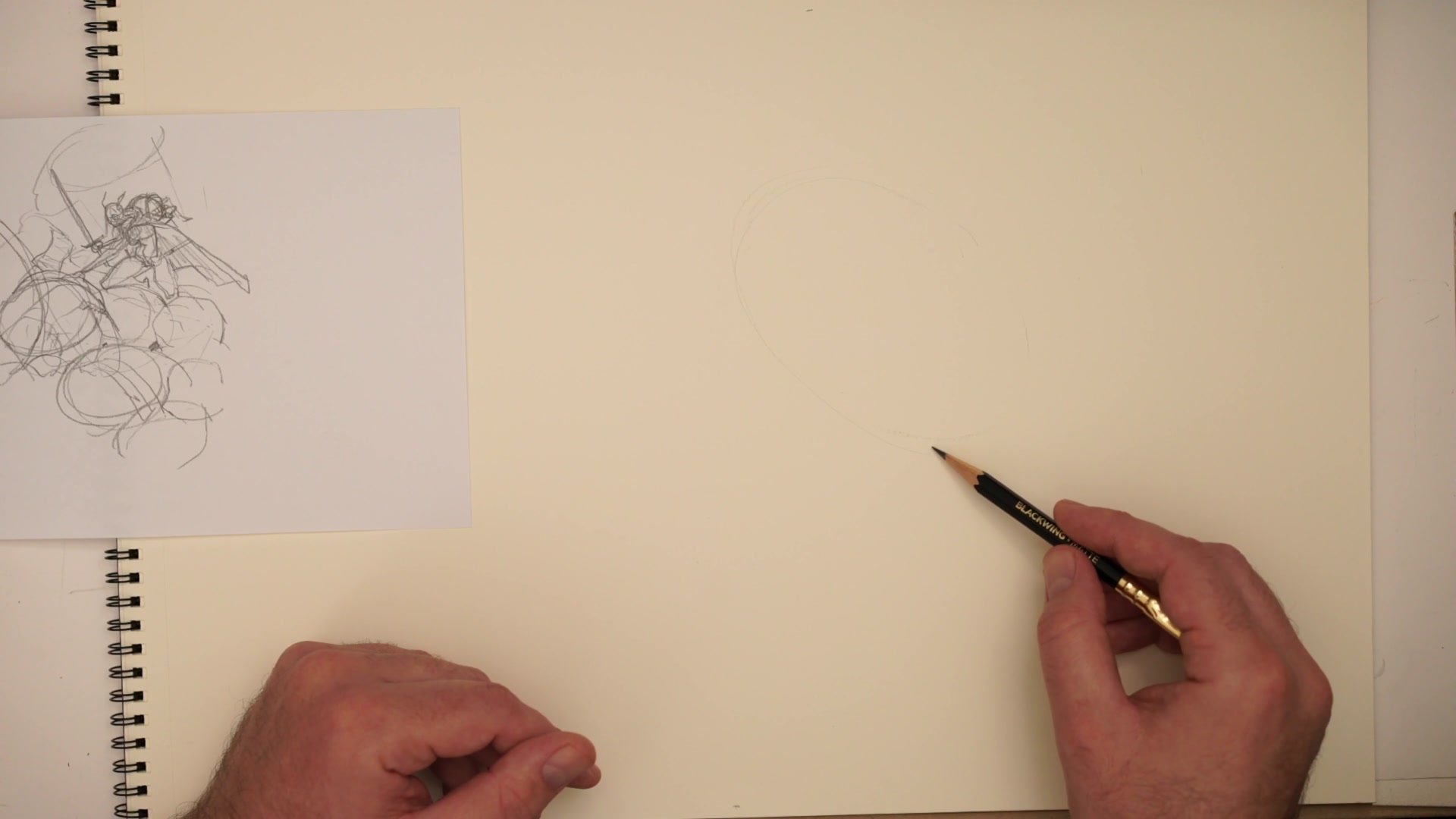
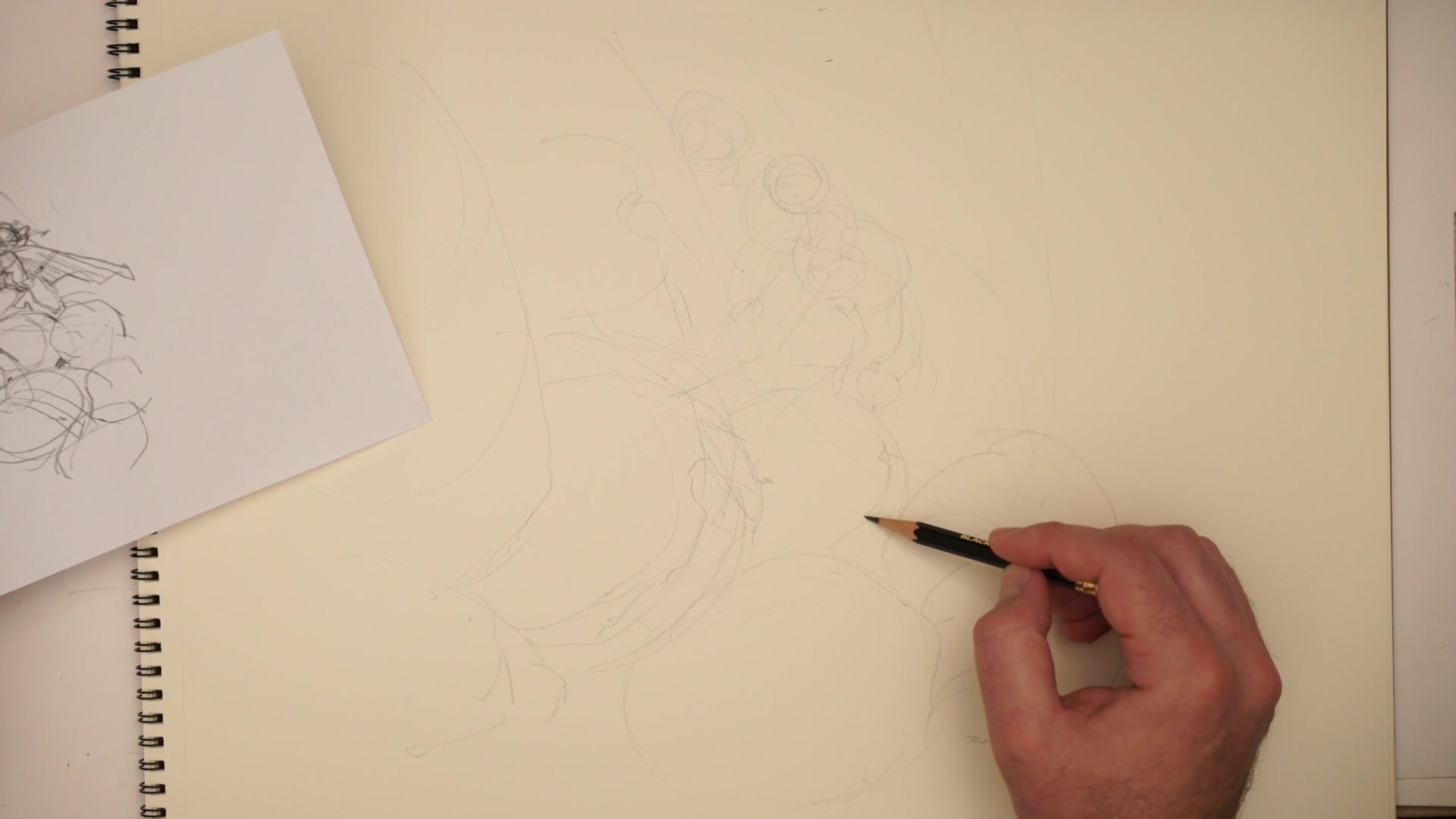
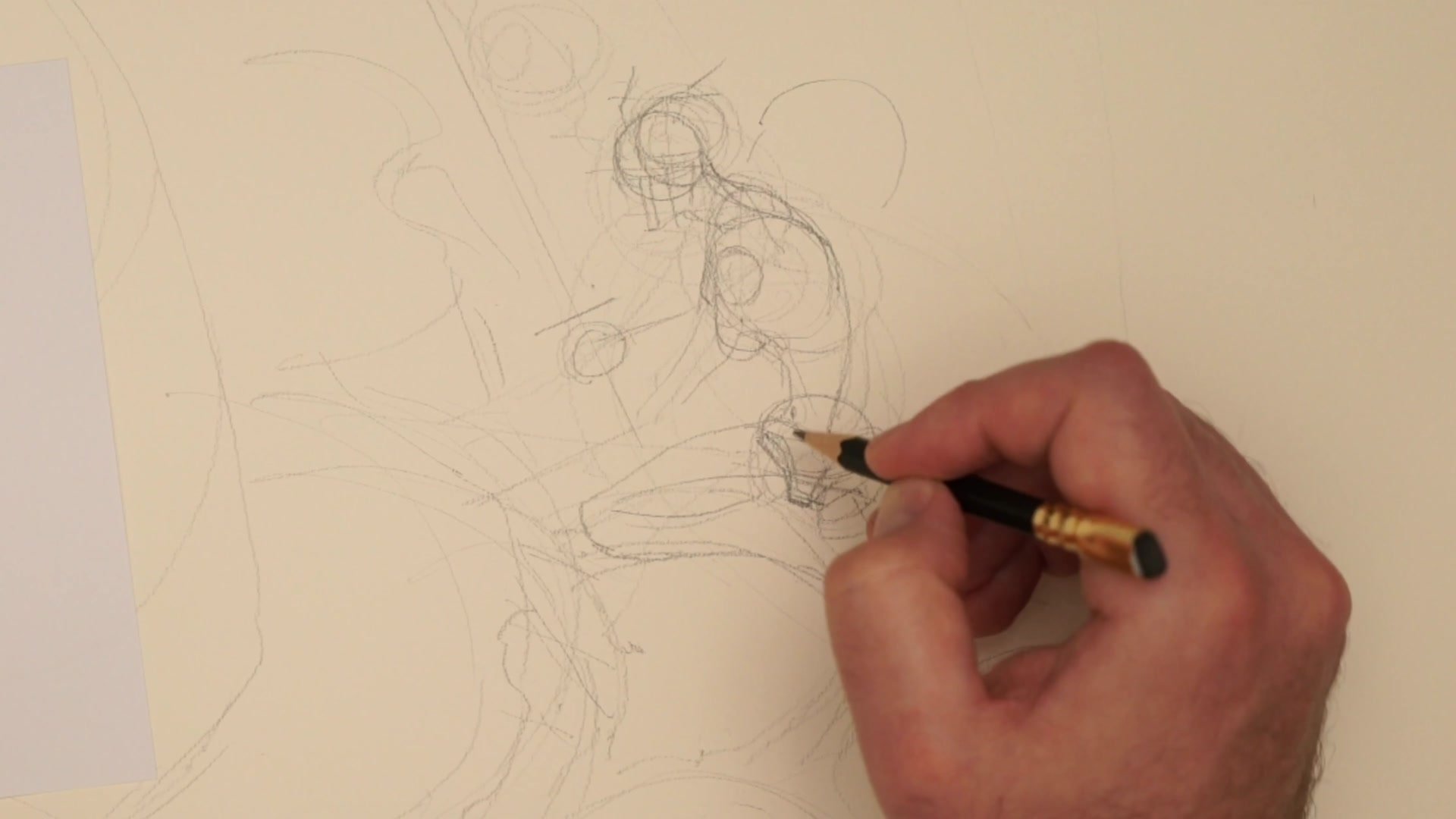
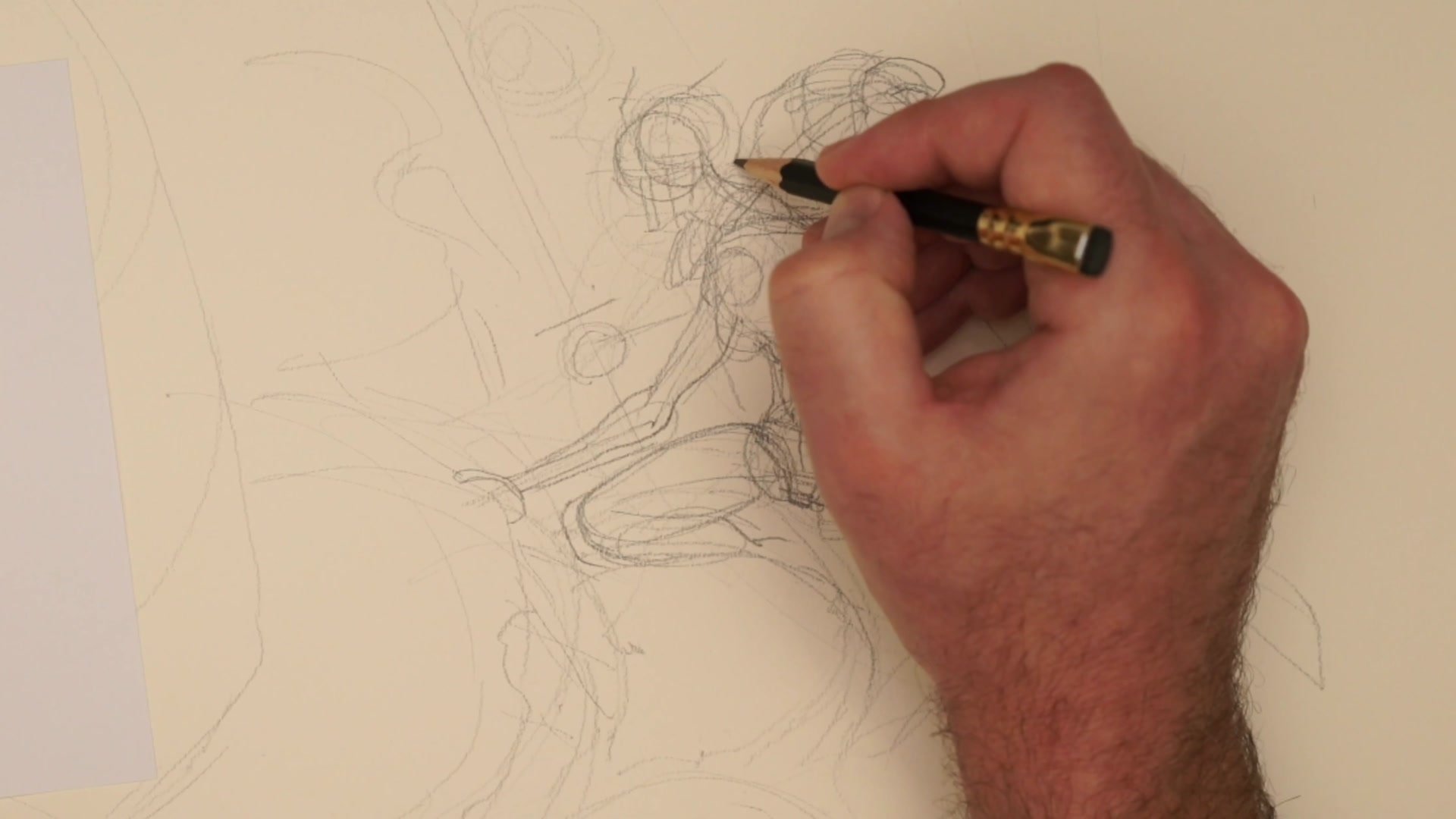
Blocking In From Thumbnail
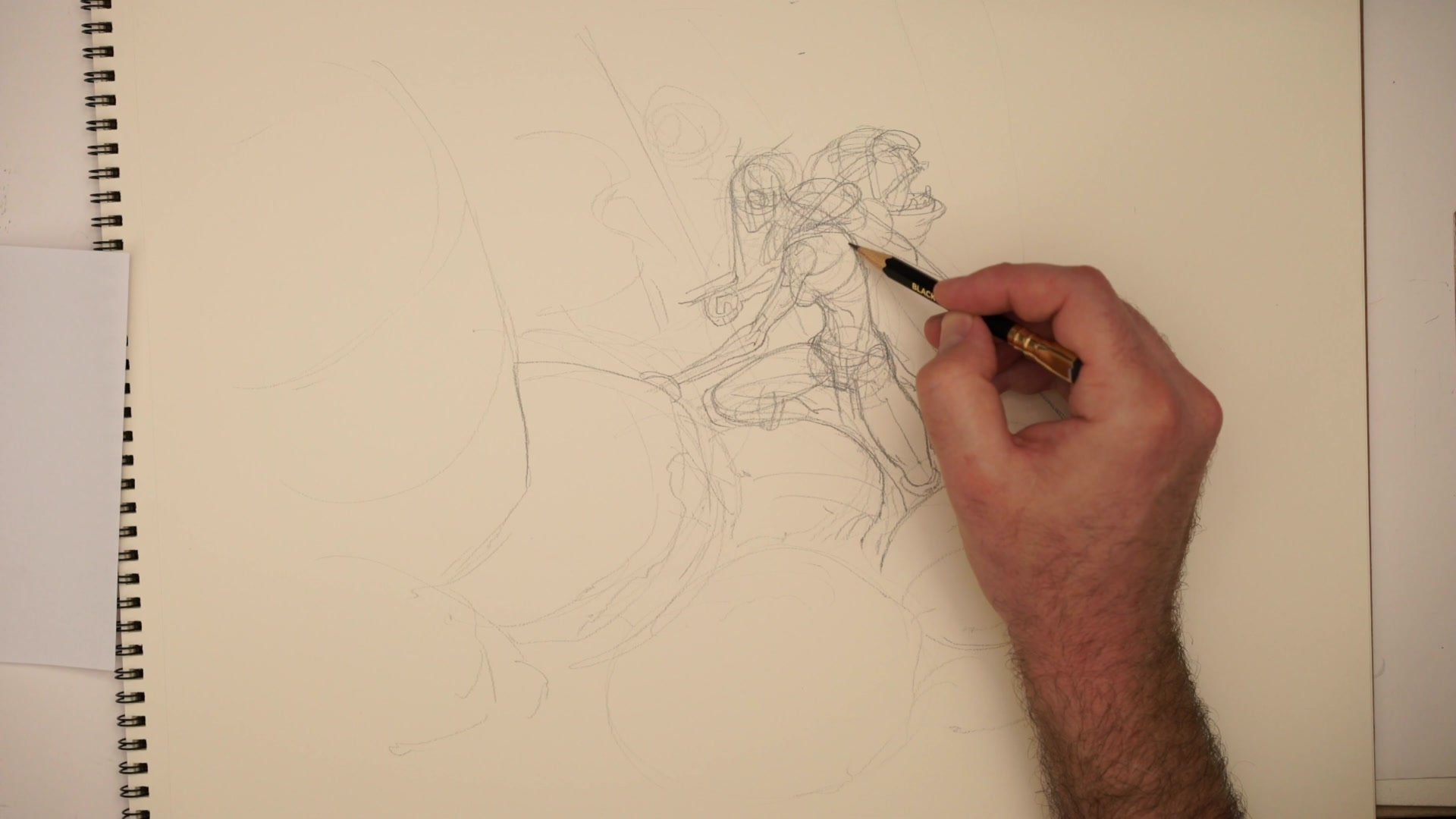
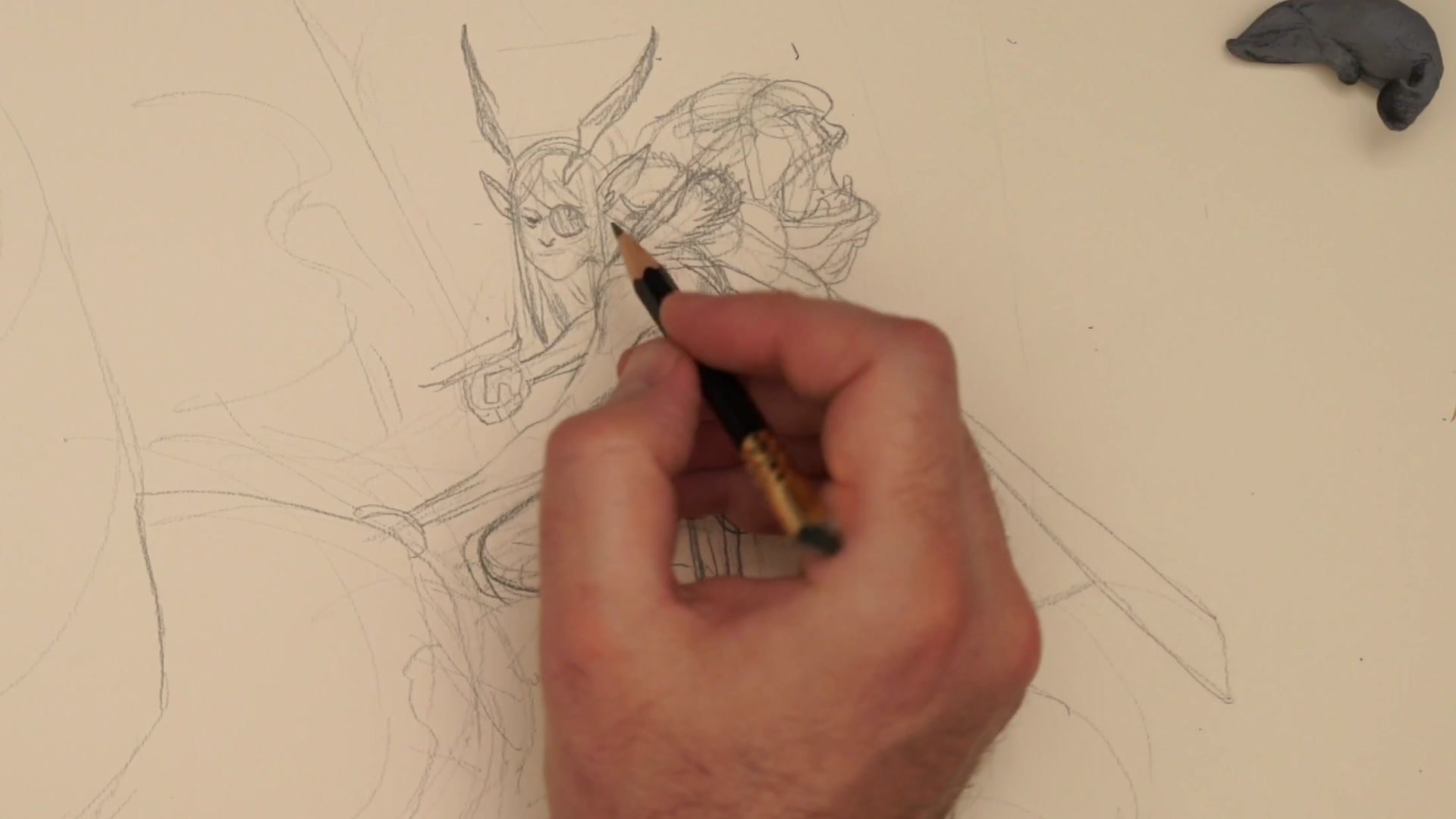
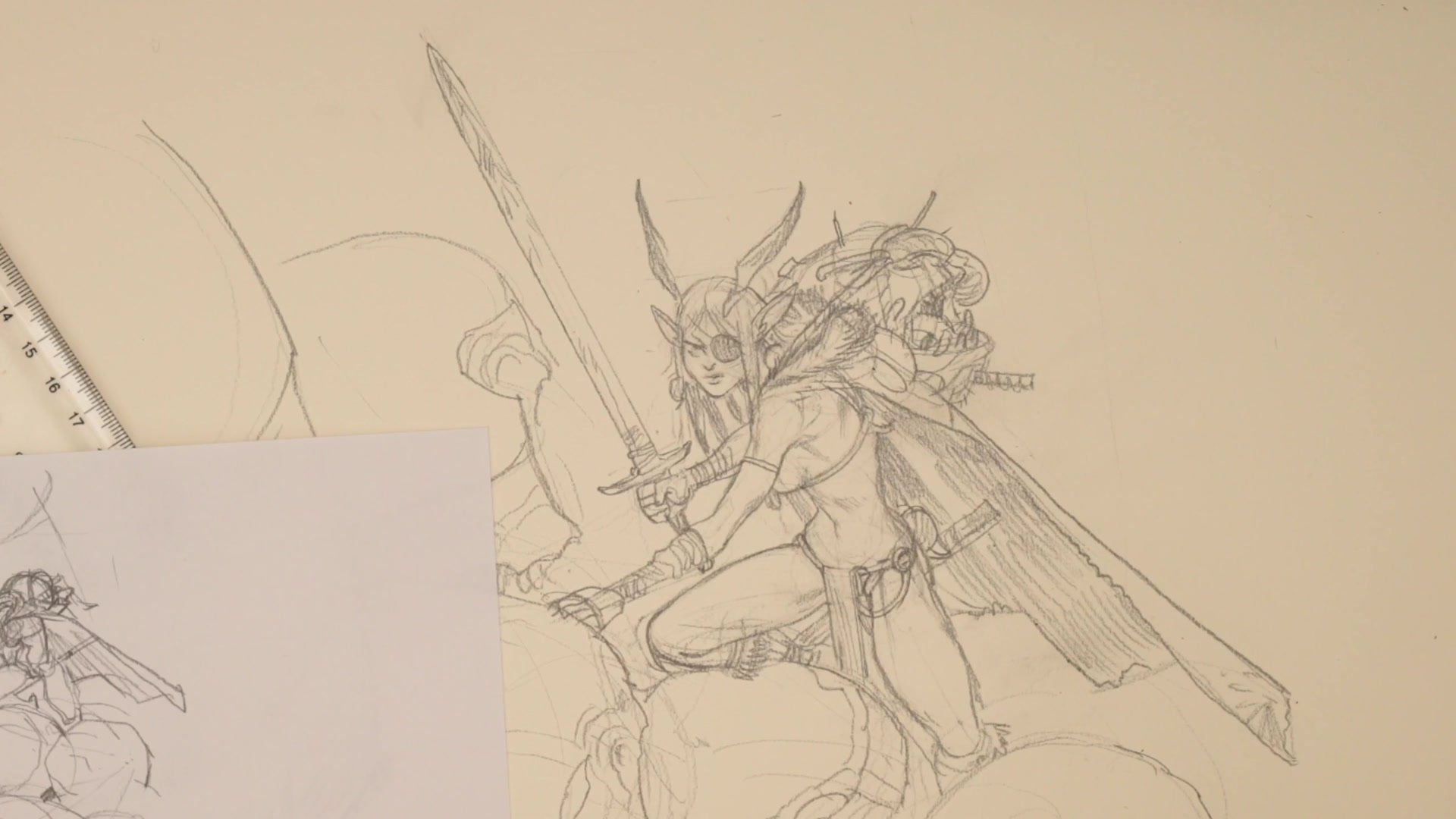
The session begins with transferring a small thumbnail sketch onto larger paper by eye rather than tracing or scanning. This transfer process starts with blocking in where everything sits on the page - getting the overall placement right before committing to any detail. The first marks are deliberately faint, establishing the composition's major shapes: the rocks, the character's torso position, the sword, and the rough vanishing point for the downward perspective.
There is a clear emphasis on making sure everything fits before refining. The torso twist is established early - spine going one way, pelvis another - because that twist drives the entire sense of motion in the pose. Contact points between the character and the rocks get particular attention, since they anchor the climbing action and sell the perspective.
Anatomy and Structure
Refining Anatomy and Character
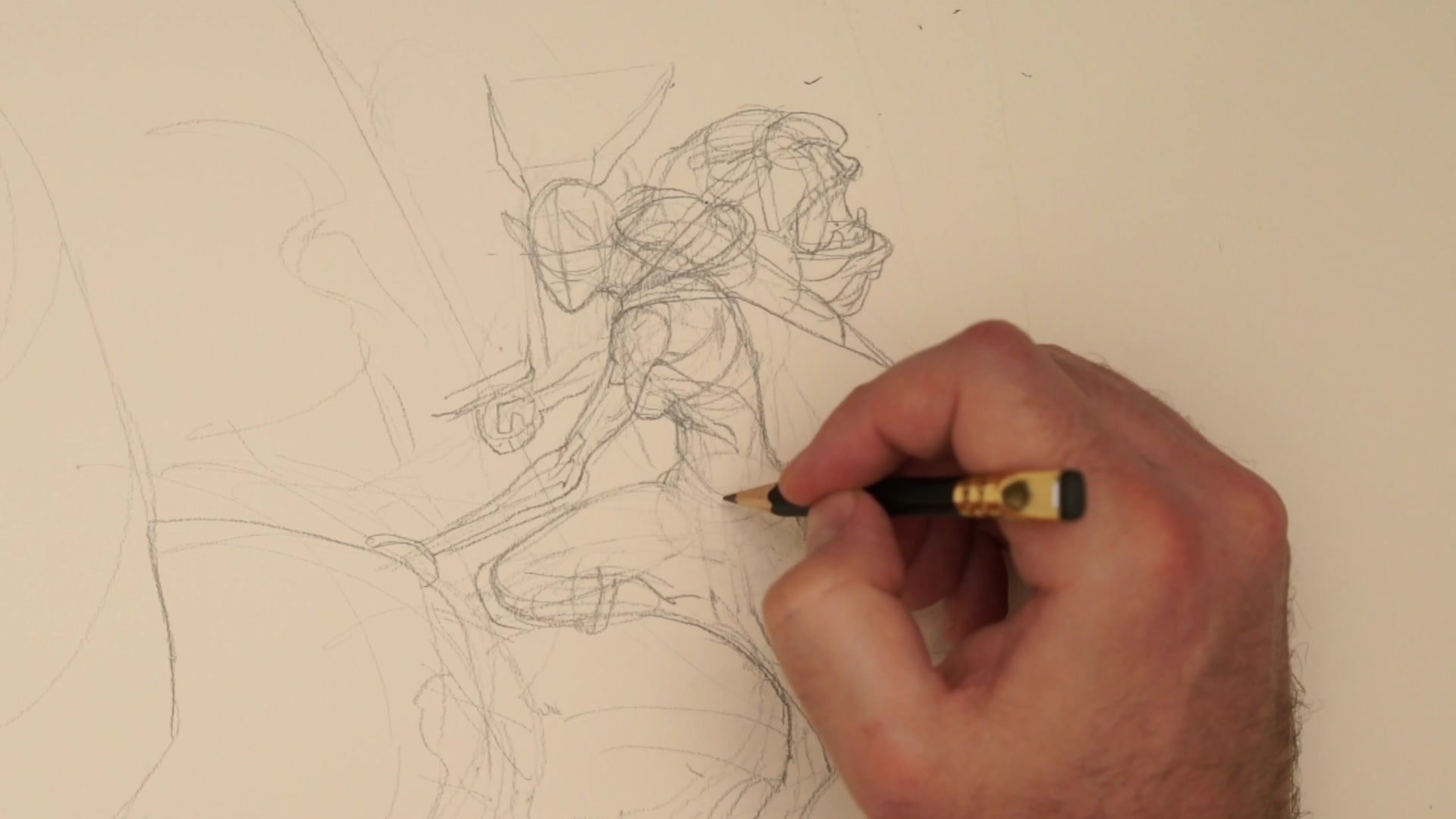
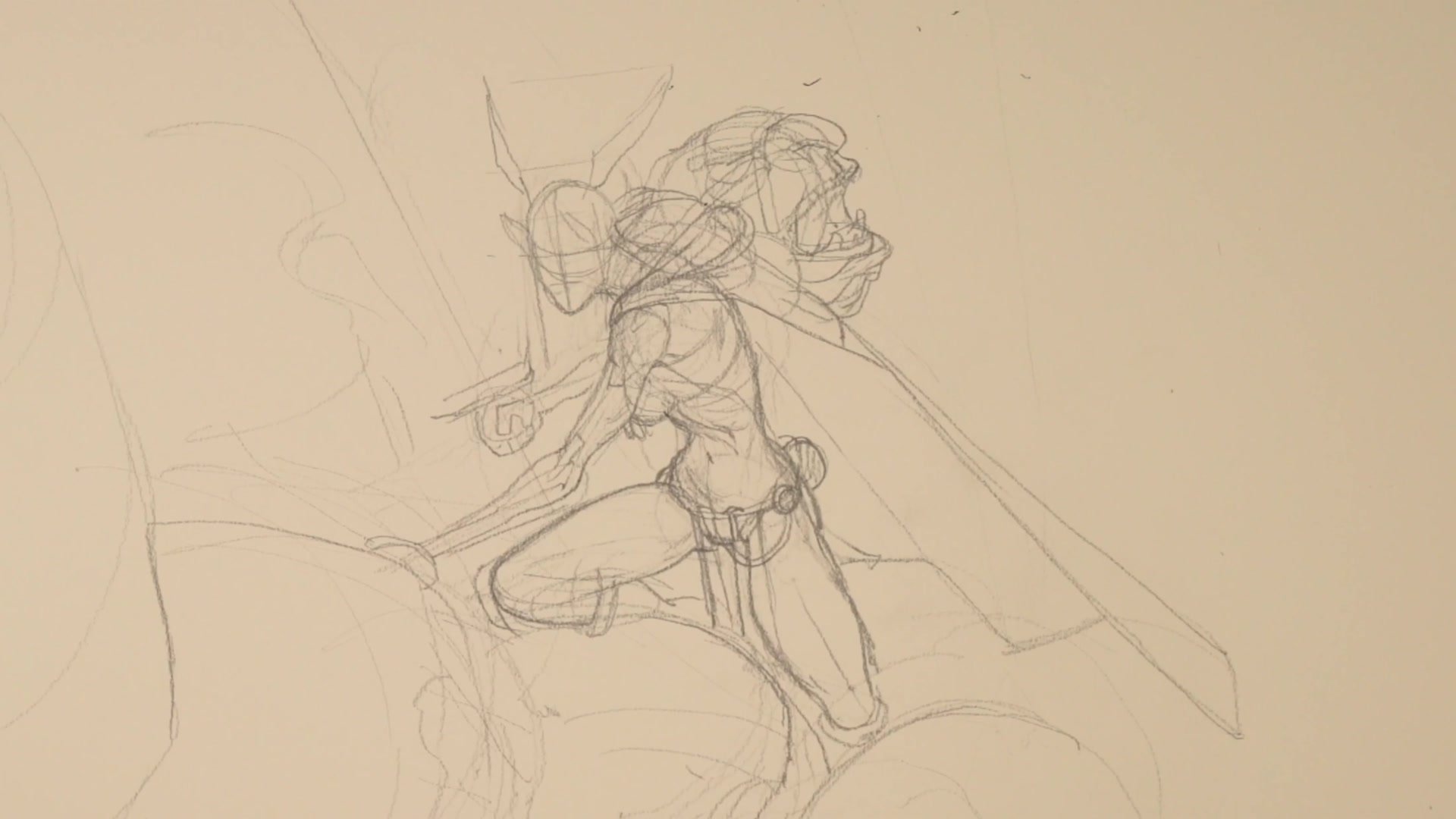
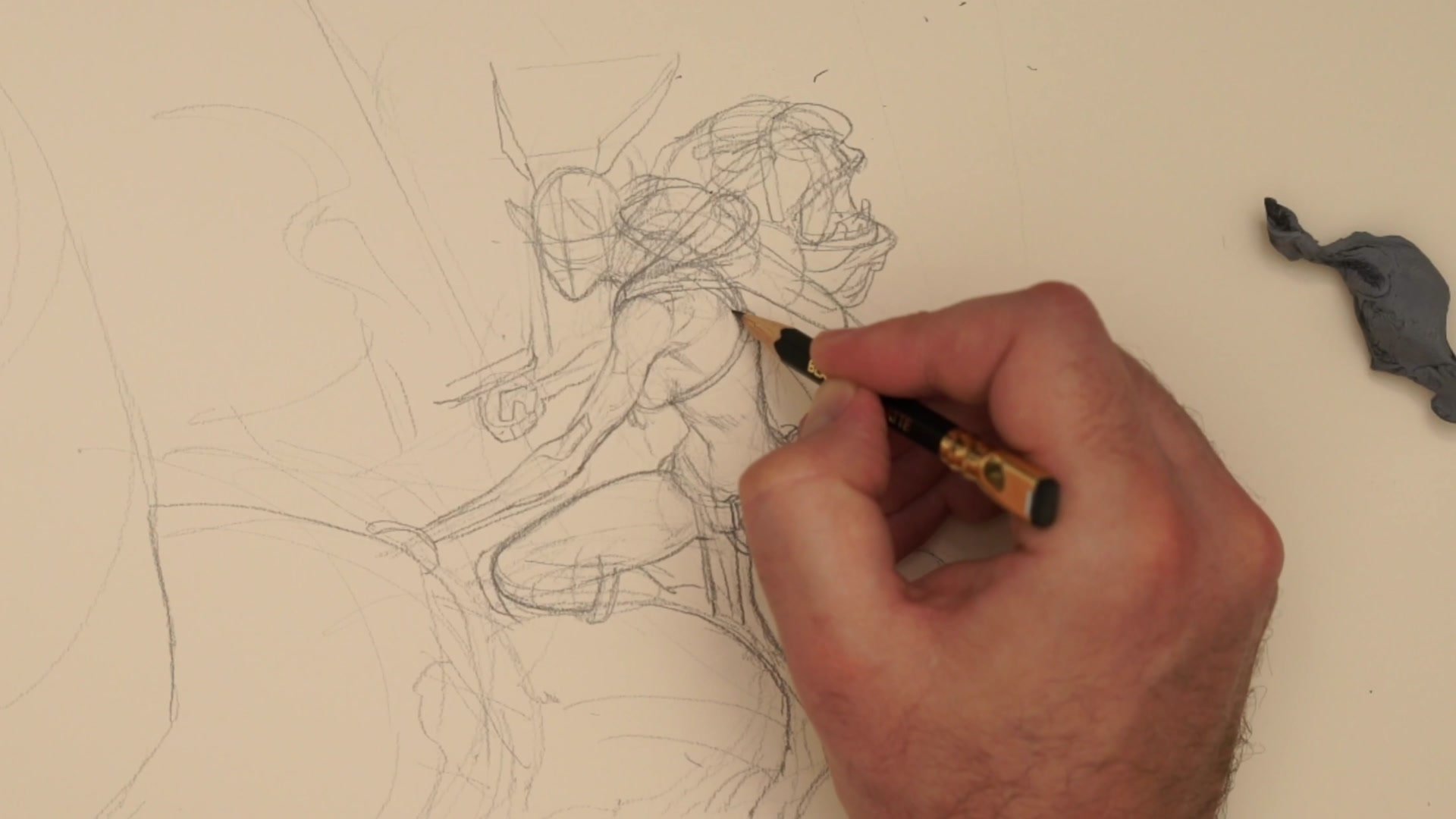
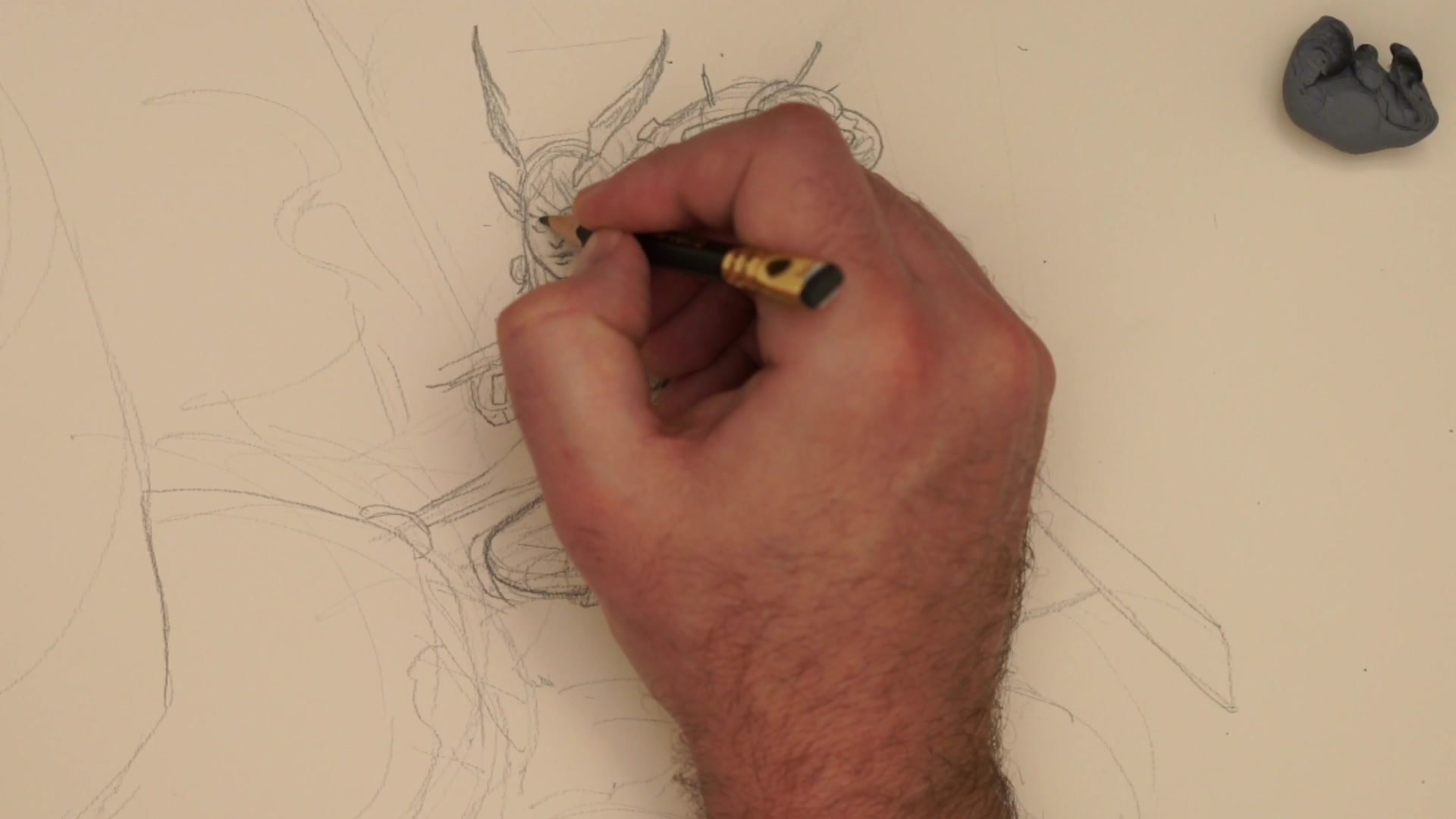
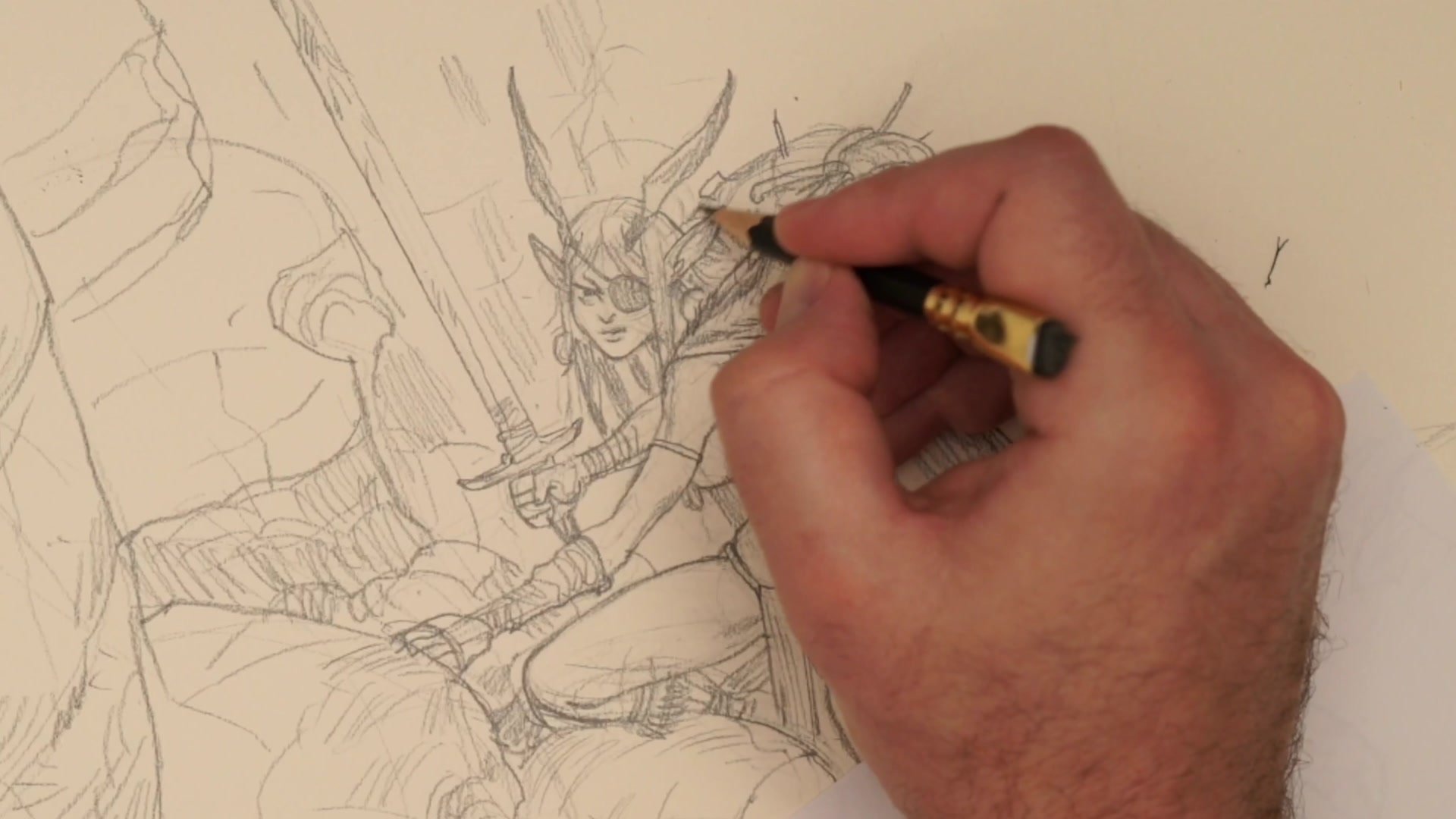
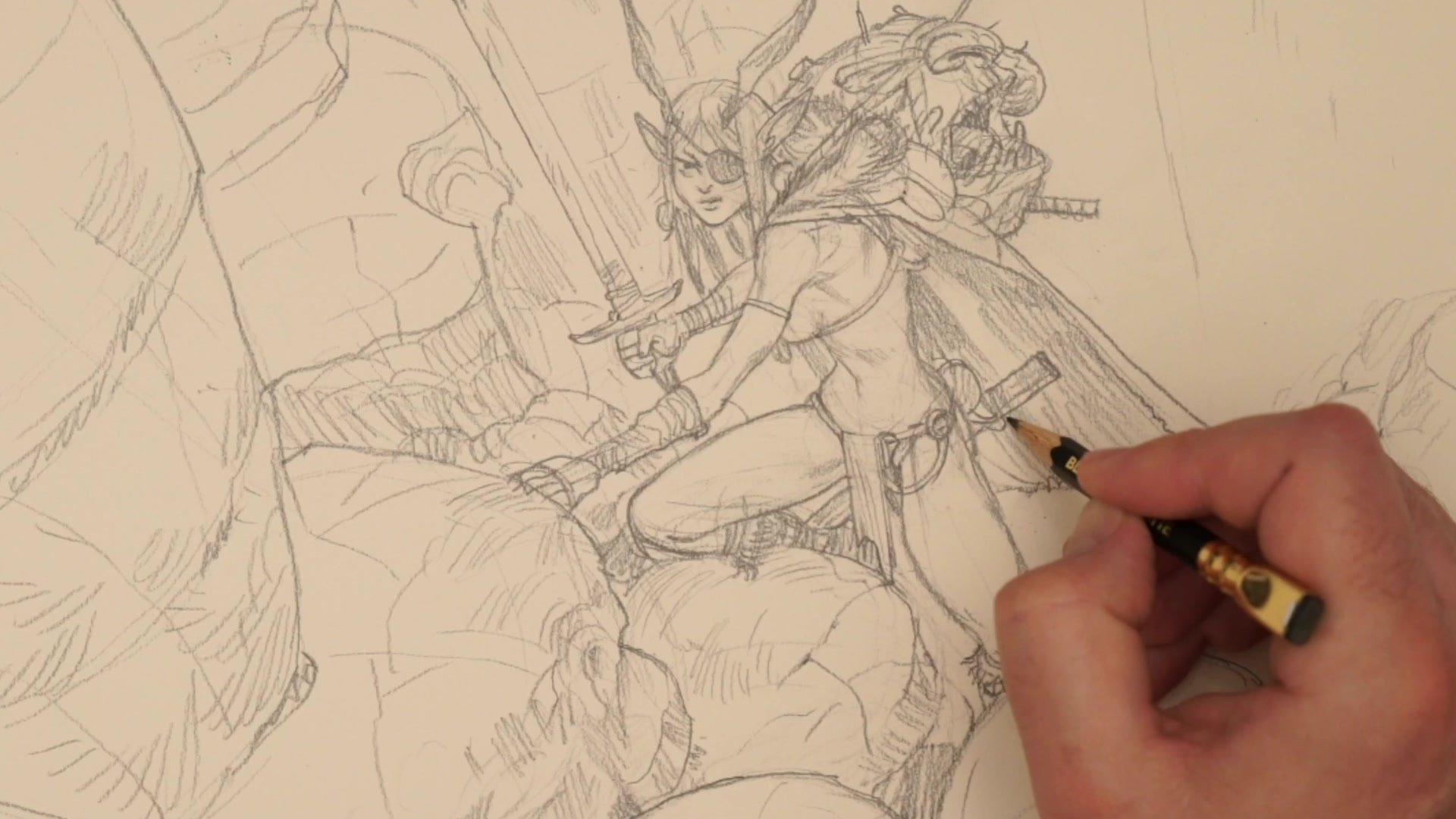
The middle phase of the session involves working through the anatomy of a twisted, foreshortened figure. The rib cage, pelvis, and spine connections all get revisited multiple times as the pose develops. There is honest acknowledgment throughout that some areas are not working - the head position gets redrawn, the neck relationship adjusted, and facial features reworked repeatedly to find the right expression.
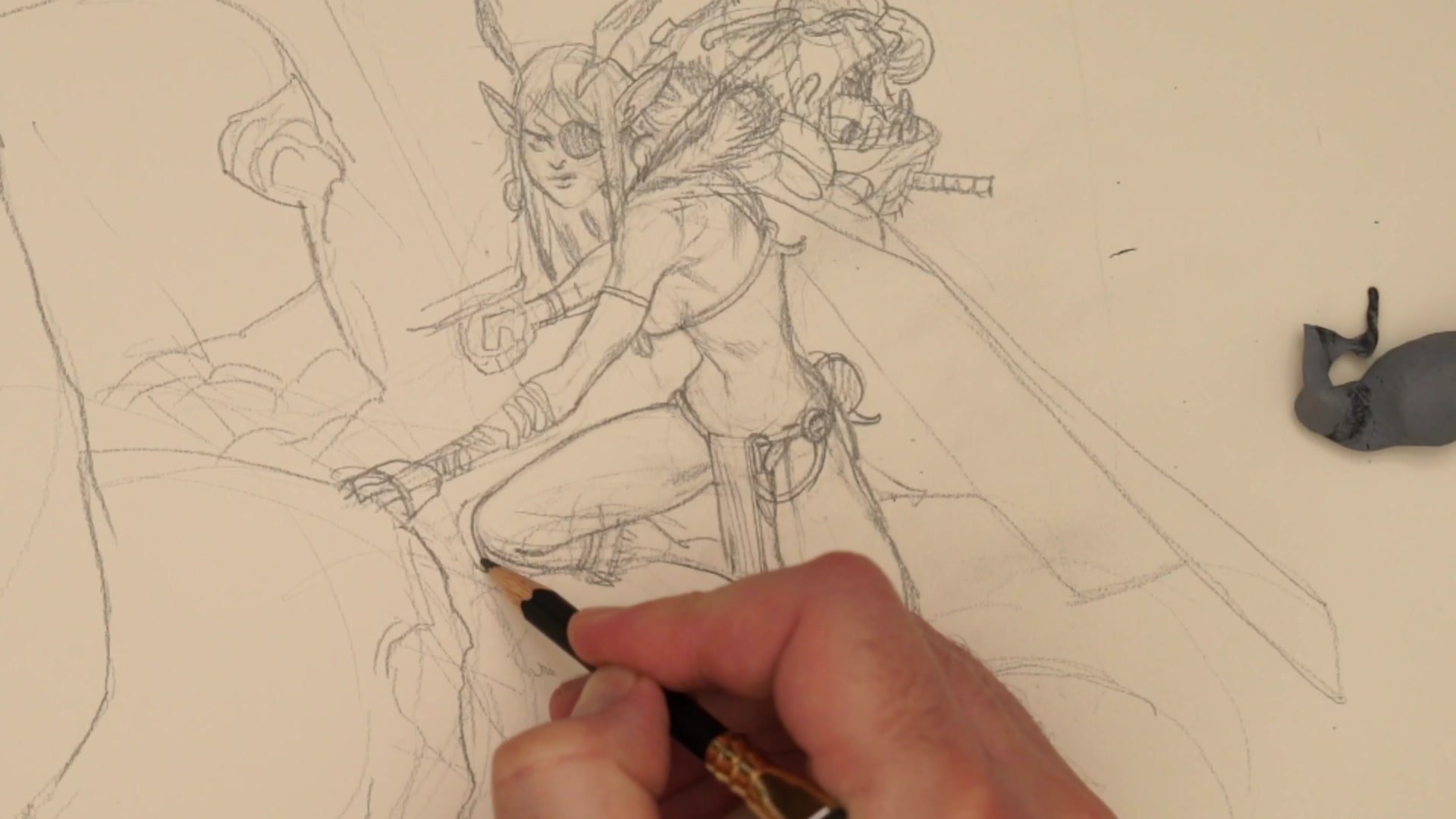
Costume and character details layer on gradually: horns, earrings, a cape, a trophy strapped to the character's back. Each addition requires decisions about how much detail to commit to and whether that detail helps or distracts from the focal area. The pencil needs regular sharpening as definition gets lost in the textured paper surface.
Composition and Detail
Hierarchy of Detail
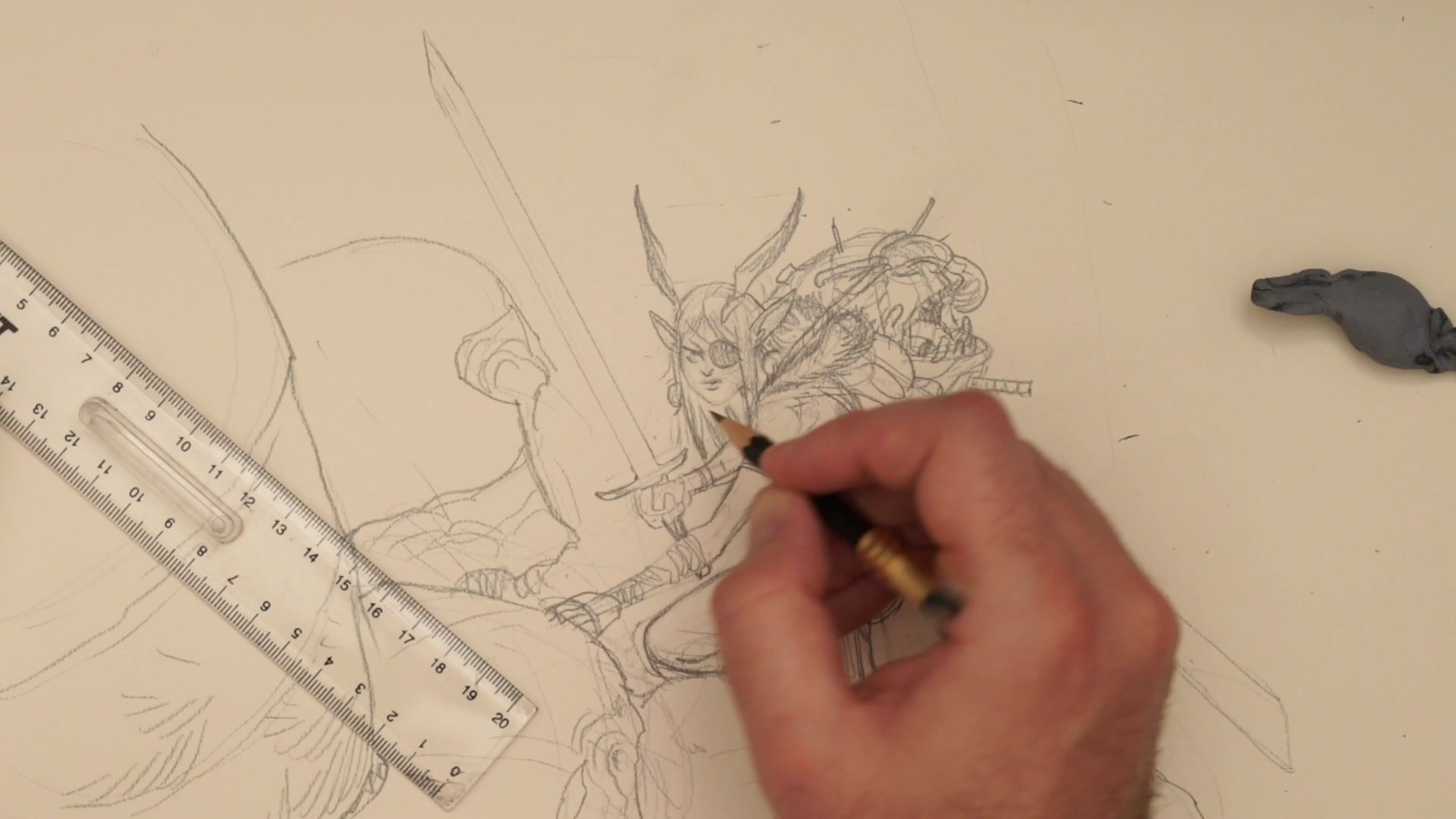
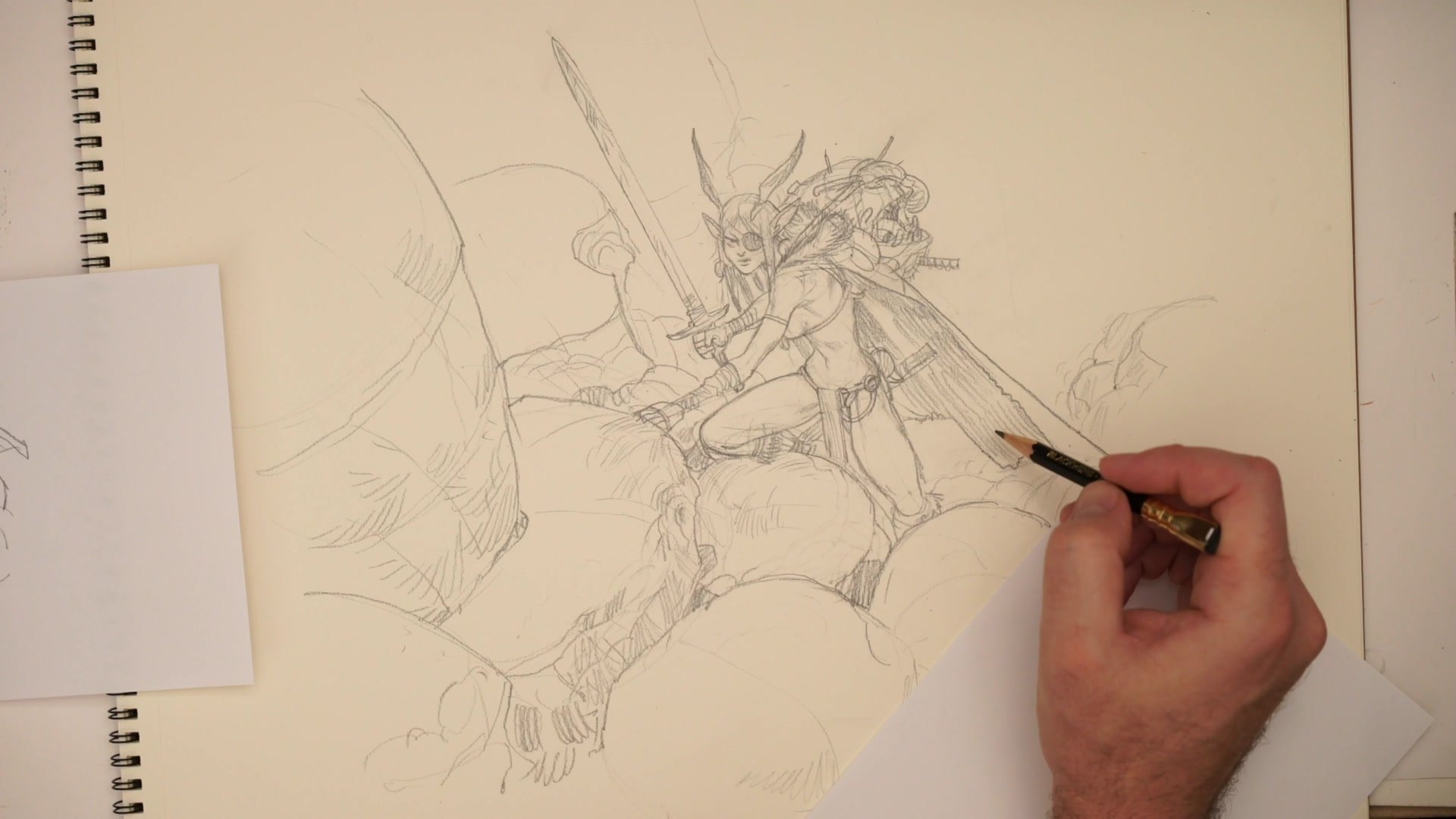
The final phase focuses on what makes vignette-style illustration work: managing the hierarchy of detail across the entire composition. The character gets the most refinement while the rocks and environmental elements fade progressively into looser, more abstract marks. This balance between tight focus and open space is described as one of the most valuable skills to develop through sketchbook practice.
Decisions about rock textures, silhouette variety, and the spatial relationship between foreground boulders and receding background shapes all play into creating depth without overworking the piece. The vignette approach is presented as particularly useful for building composition muscles - it exercises foreground, middle ground, and background thinking without requiring every element to be fully rendered.
Final Drawing
Key Techniques
Thumbnail Transfer: Redrawing a thumbnail by eye rather than tracing builds the ability to replicate compositions at any scale and reinforces understanding of the original design decisions.
Block In First: Establishing where everything sits on the page before committing to detail prevents running out of space and ensures the composition works at full size.
Hierarchy of Detail: The most important element gets the most refinement while everything else progressively loosens, creating natural focal points and visual rhythm.
Vignette Illustration: Fading edges and open shapes allow a drawing to feel complete without rendering everything, while still exercising composition and depth fundamentals.
Try This
Start Small: Draw a quick thumbnail sketch on copy paper to establish the basic composition and character pose before committing to larger paper.
Block the Whole Page: Transfer the thumbnail to a full sheet by blocking in all major shapes faintly first, making sure everything fits before adding any detail.
Fade the Edges: Practice the vignette approach by giving the focal character full detail while letting rocks and environment dissolve into looser, more abstract marks toward the edges.