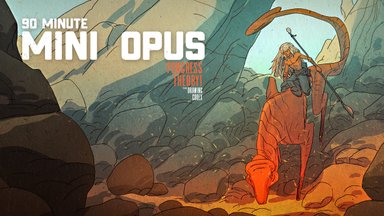
Learning Through Real-Time Drawing Practice
Summary
From Failed Thumbnail to Finished Illustration
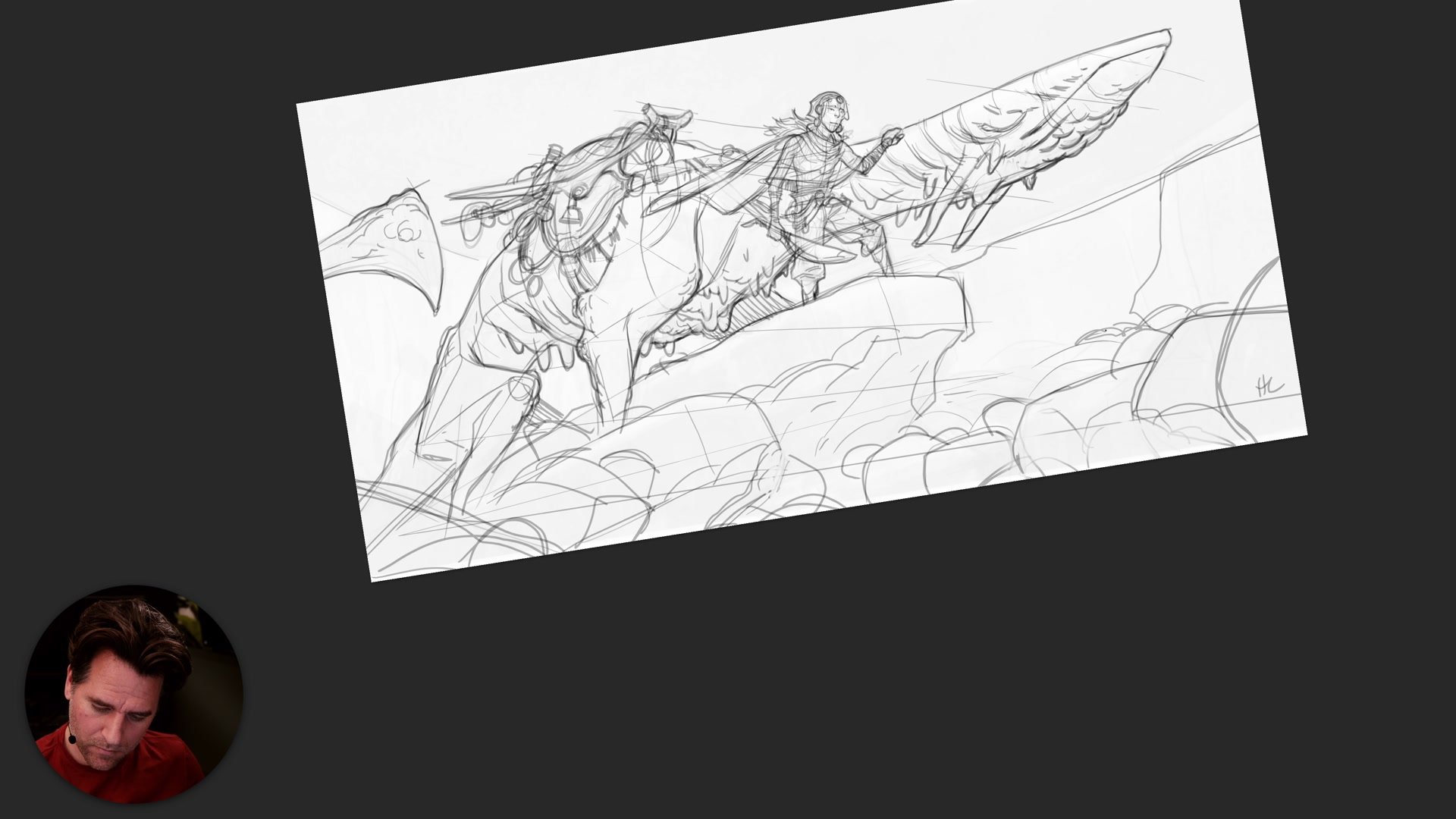
This three-and-a-half-hour real-time session tackles a problem every artist faces: a thumbnail that looked promising but fell apart when taken to finished lines. The original sketch had strong energy and composition, but a previous attempt to create a finished illustration from it failed. The construction phase between thumbnail and final lines was missing, and without that structural bridge, the anatomy and form could not hold together.
This session demonstrates how to revisit that failed image using a construction drawing approach. A secondary scaffolding phase is built between the loose thumbnail and the confident final lines, applying the Loomis Method and deliberate secondary form development to create the structural foundation the original attempt lacked.
Early Construction
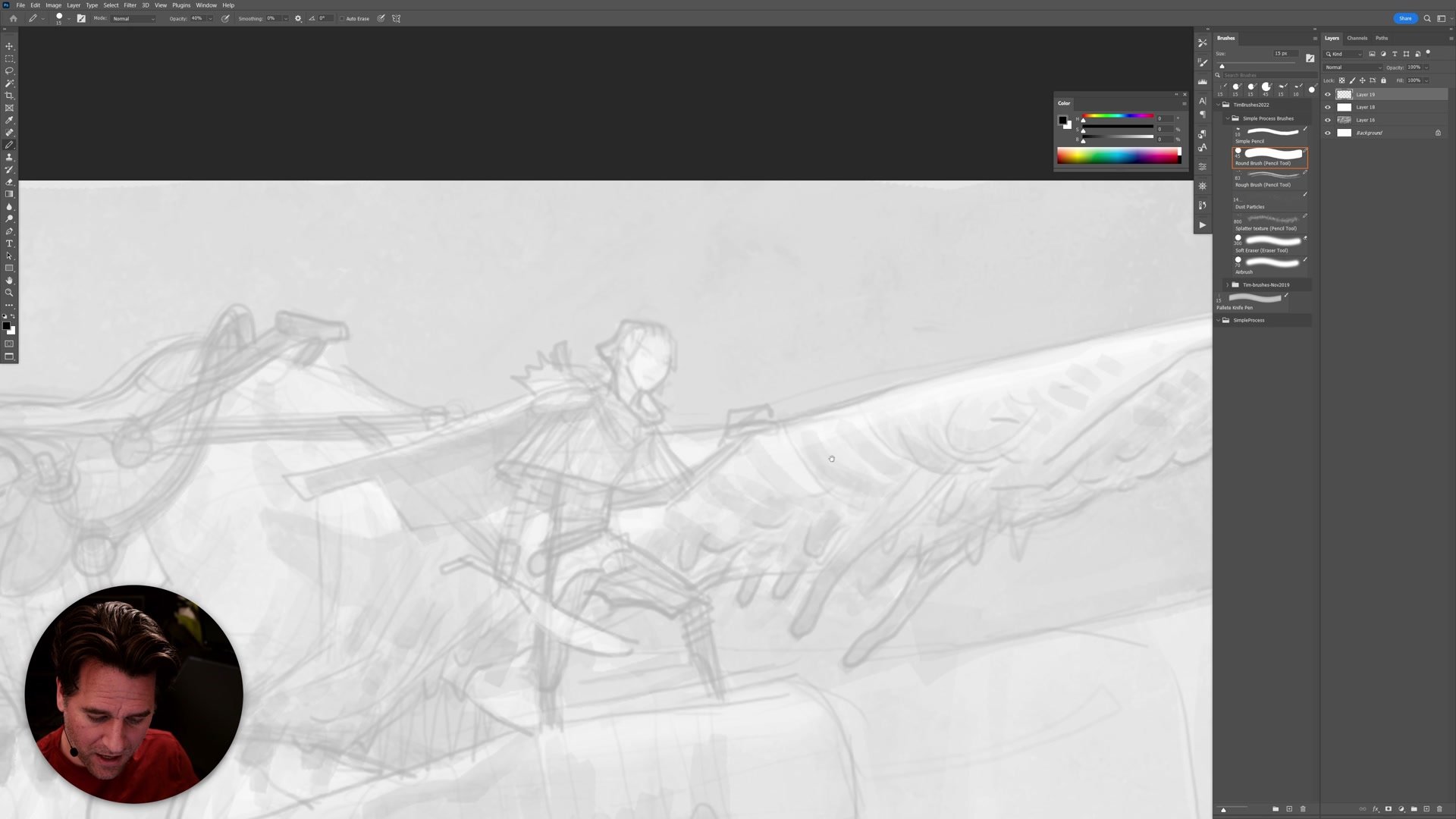
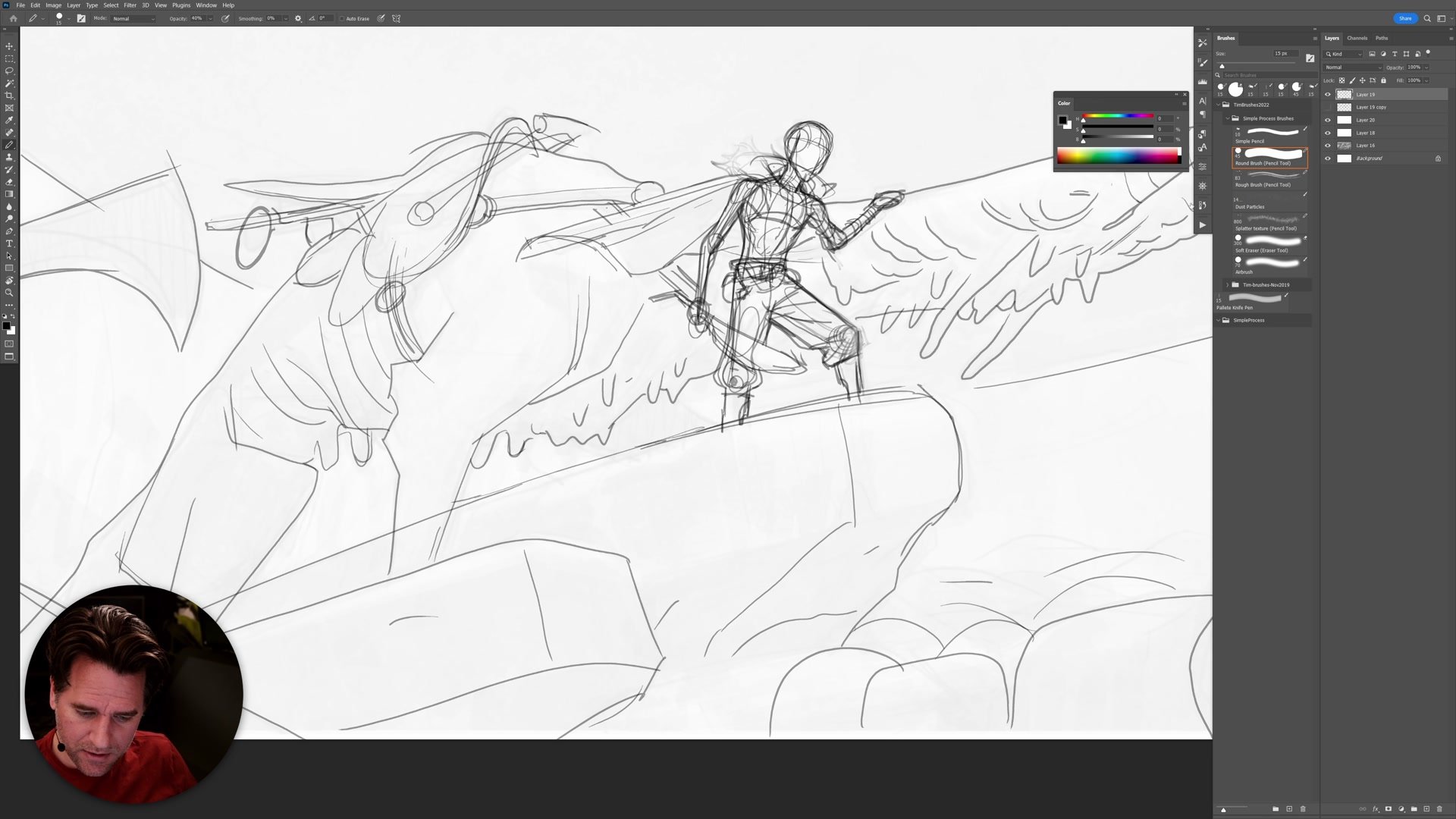
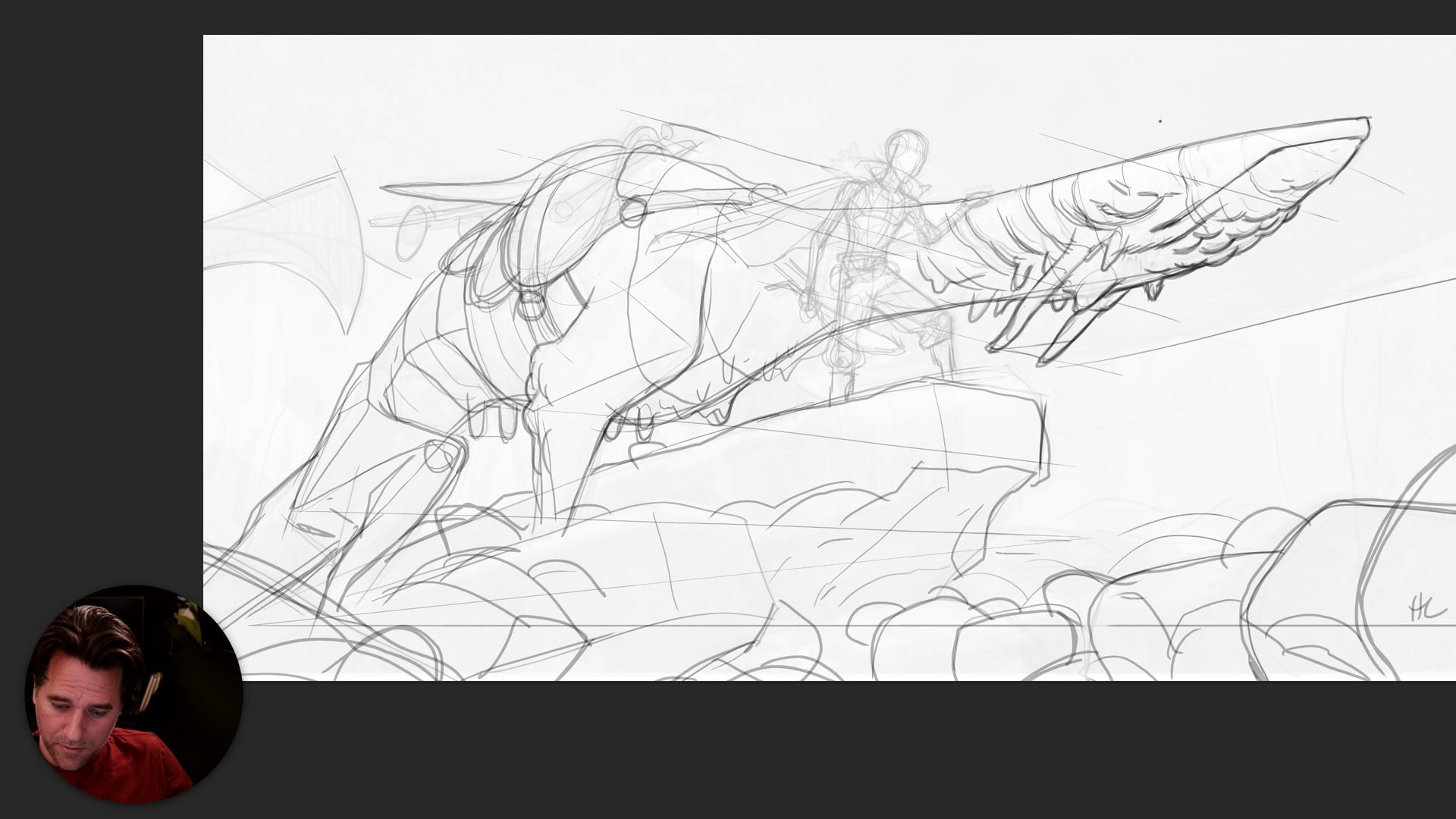
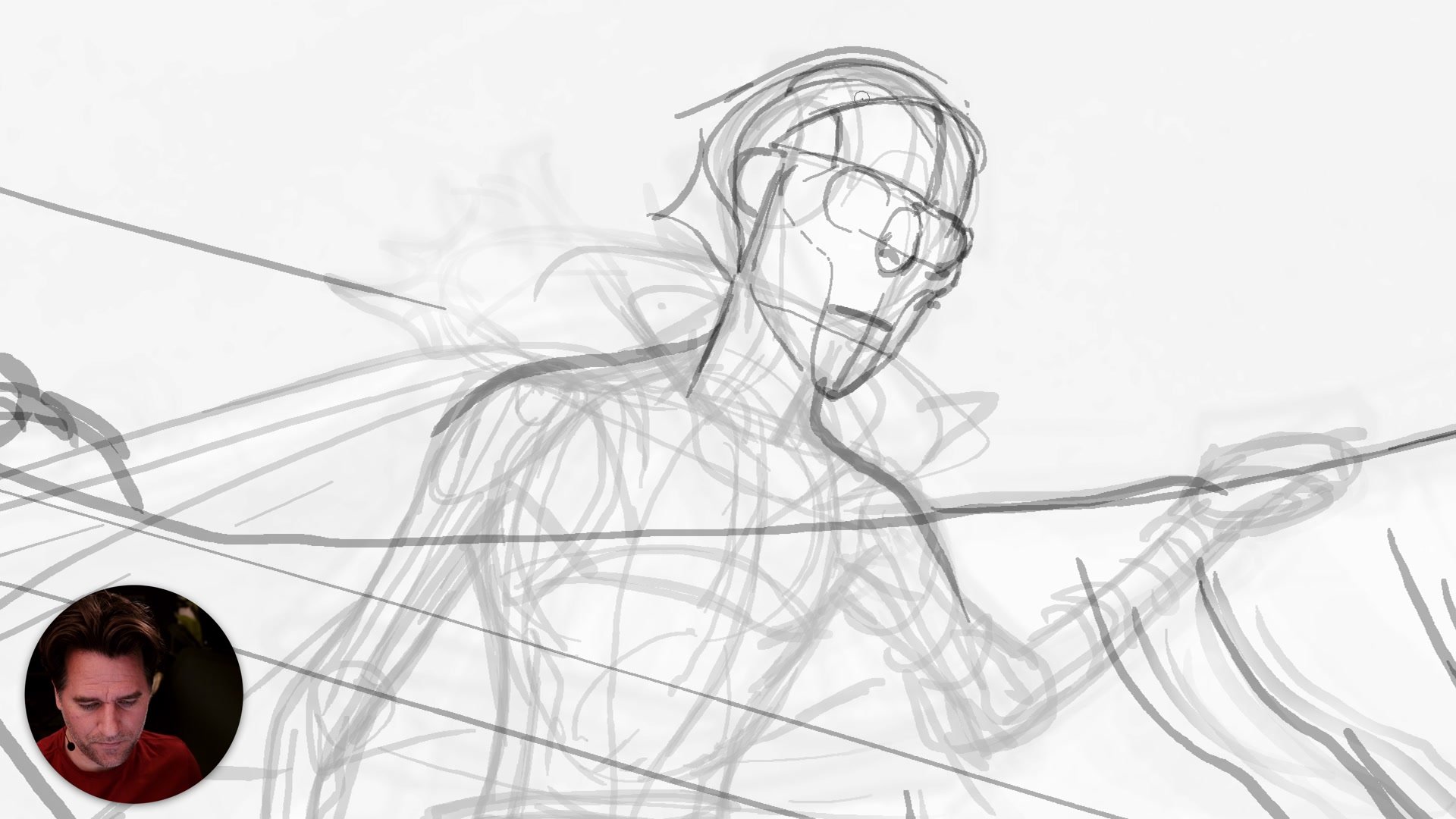
The Construction Phase
The core problem addressed in this session is the gap between thumbnail energy and finished line quality. Thumbnails succeed because they capture gesture, composition, and feeling without worrying about structural accuracy. But translating that energy into finished work requires a construction phase that most artists skip or rush through.
This intermediate step works like a penciling phase. Rather than jumping straight from the loose thumbnail to final inking, the construction layer builds proper scaffolding for anatomy, perspective, and form. The Loomis Method provides the framework for figure construction, establishing the head as a unit of measurement and building the body proportions from there. Secondary form development, where large primary shapes are broken into smaller anatomical structures, gives the construction enough detail to make confident line decisions later.
The process takes significant time. Building this structural bridge is not quick work, and the session shows that reality honestly.
Building Structure
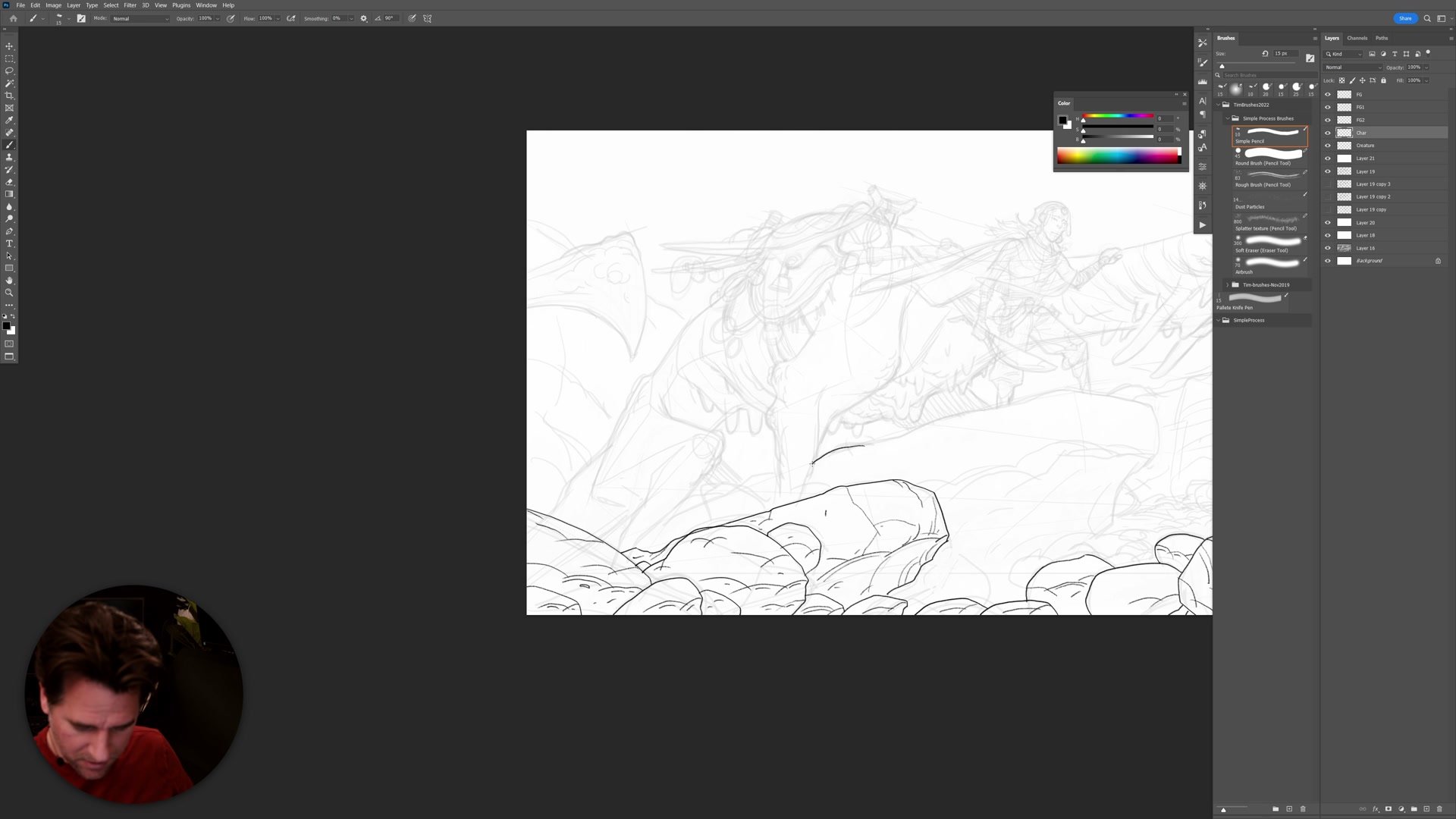
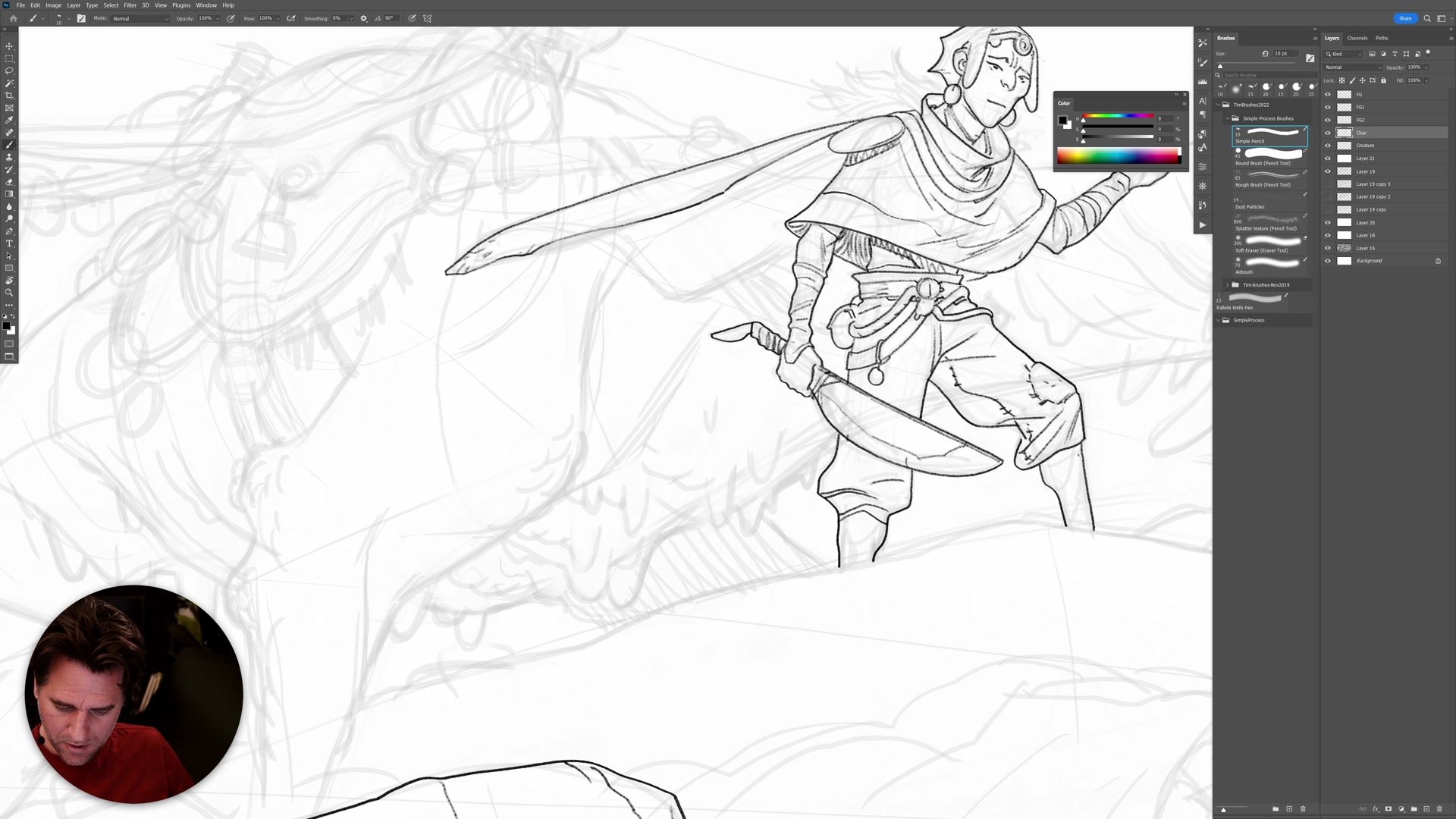
Creature Design and Detail
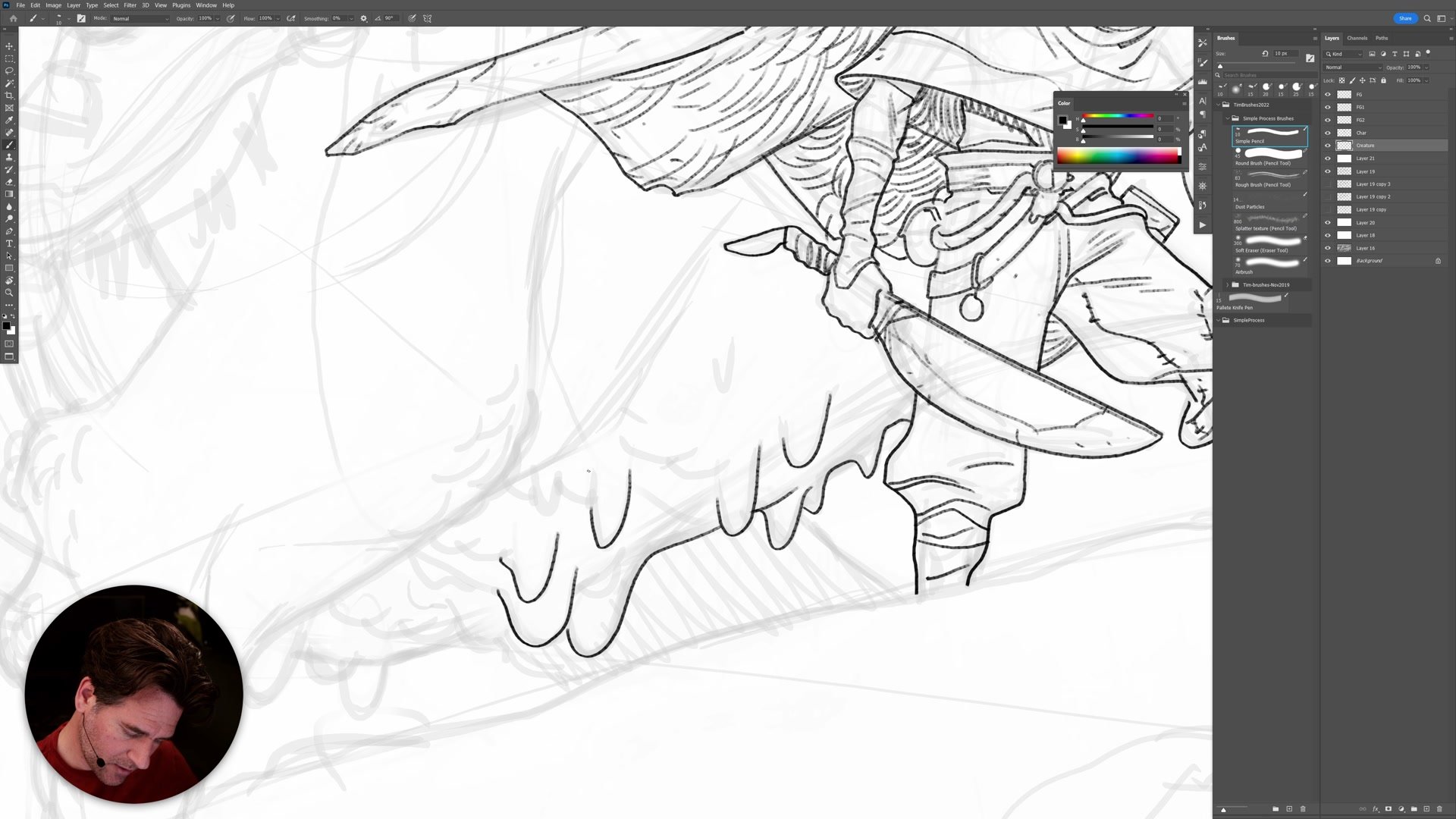
Working through creature design alongside the character introduces additional complexity. The creature in this illustration needs its own internal logic, with anatomical features that read as organic and believable even though the design is entirely invented. The challenge is making the creature feel consistent with the character riding it, both in terms of scale and visual language.
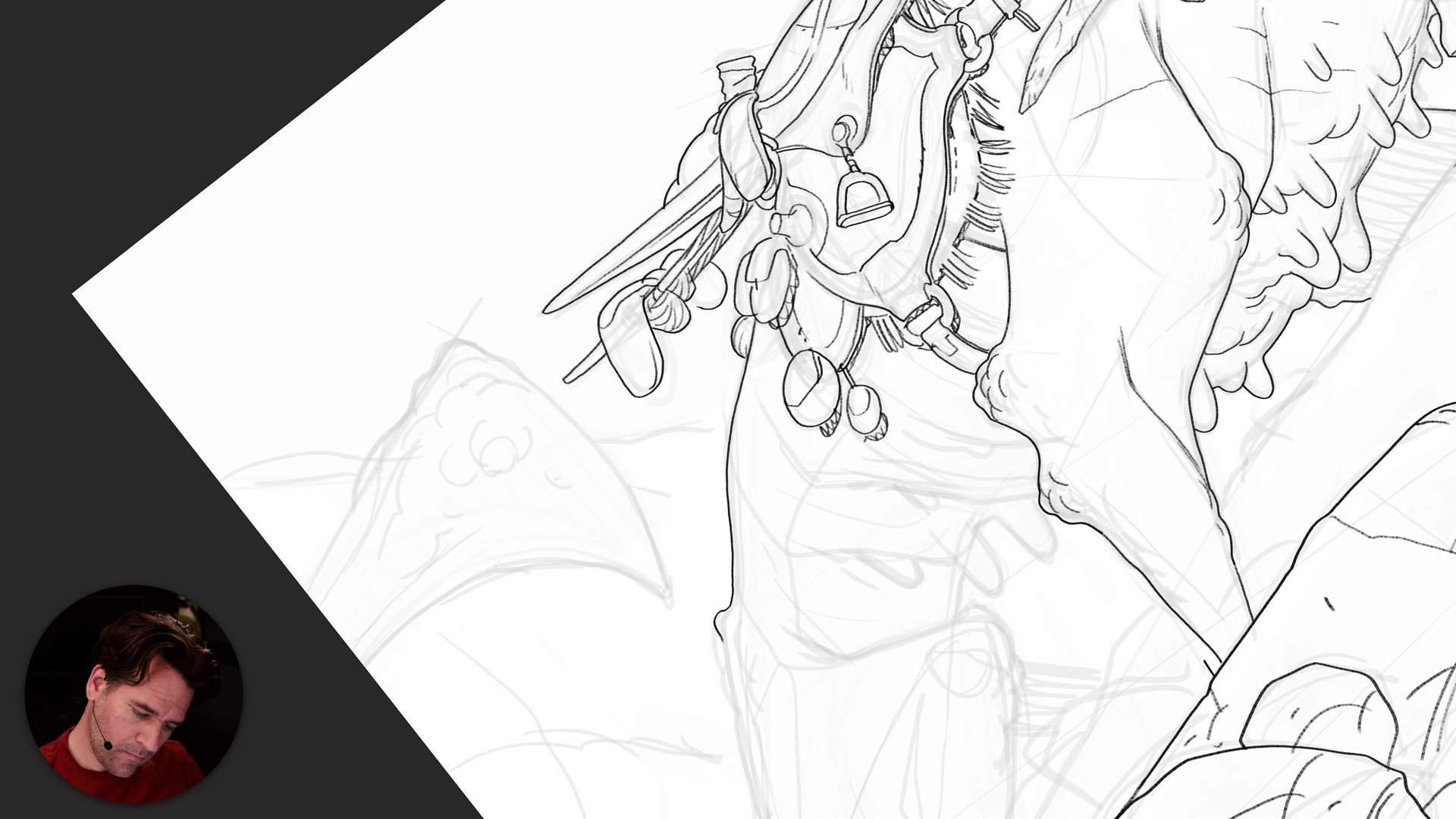
Equipment design, saddle construction, and costume details all require working through the same construction approach. Each element gets its own structural pass before committing to final lines. Silhouette breakup plays an important role here. The dripping, organic textures on the creature need to feel intentional rather than random, and the patterns of repeated shapes contribute to the overall visual identity of the piece.
Simplifying the toolset to primarily a round brush forces more thoughtful decisions about line weight, mark-making, and how repetition of shape creates visual rhythm.
Inking and Refinement
Final Lines and Color
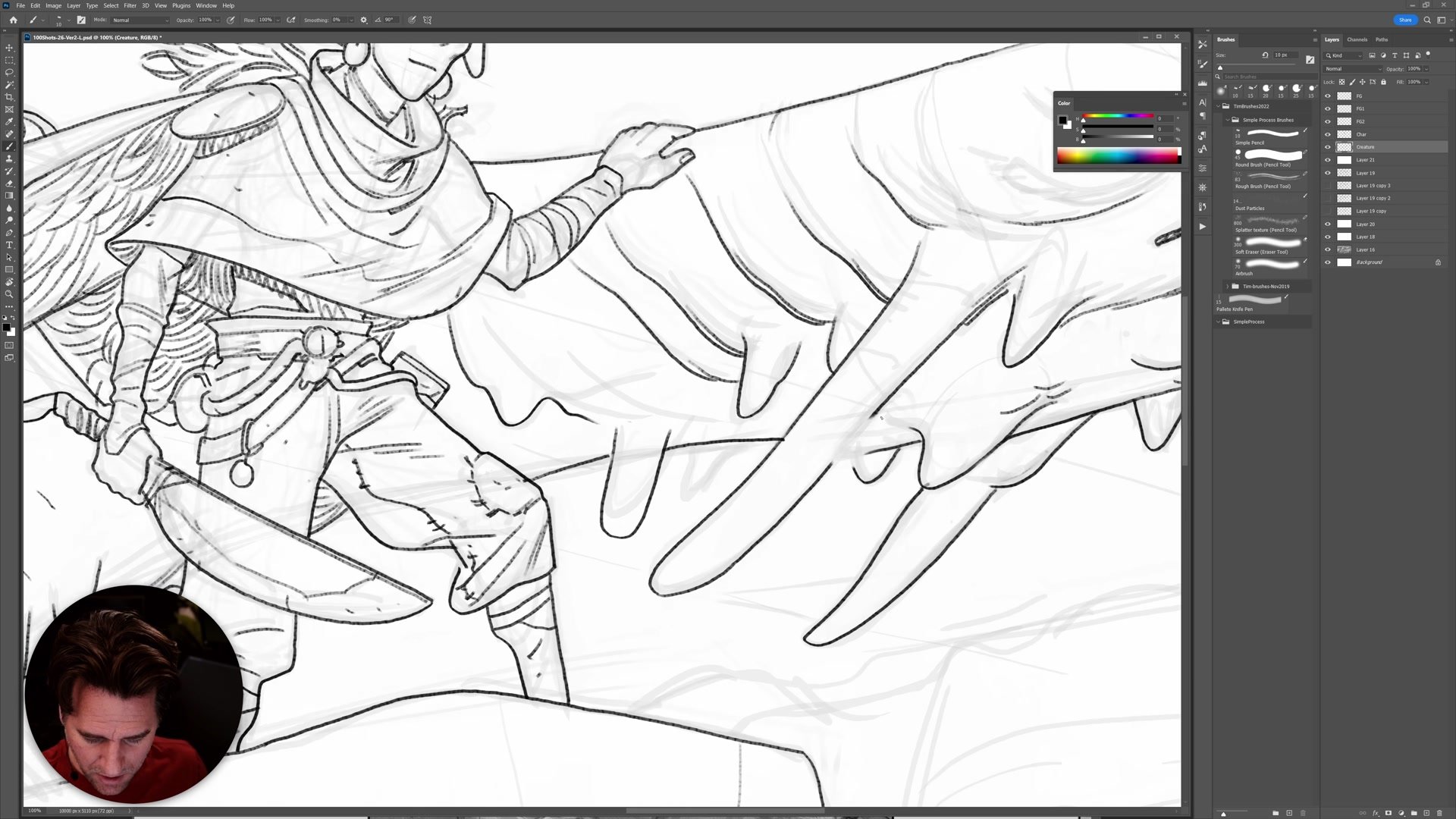
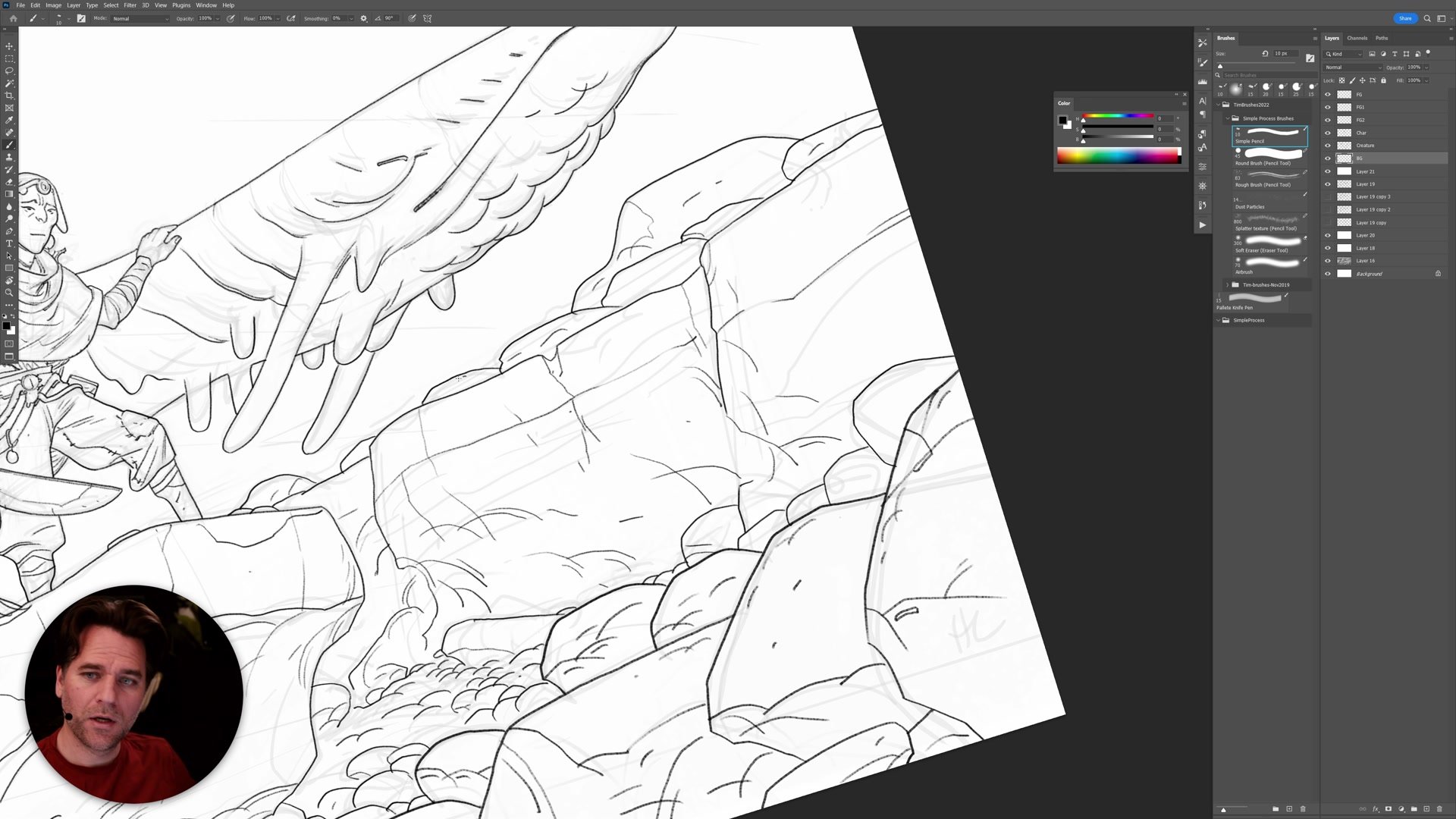
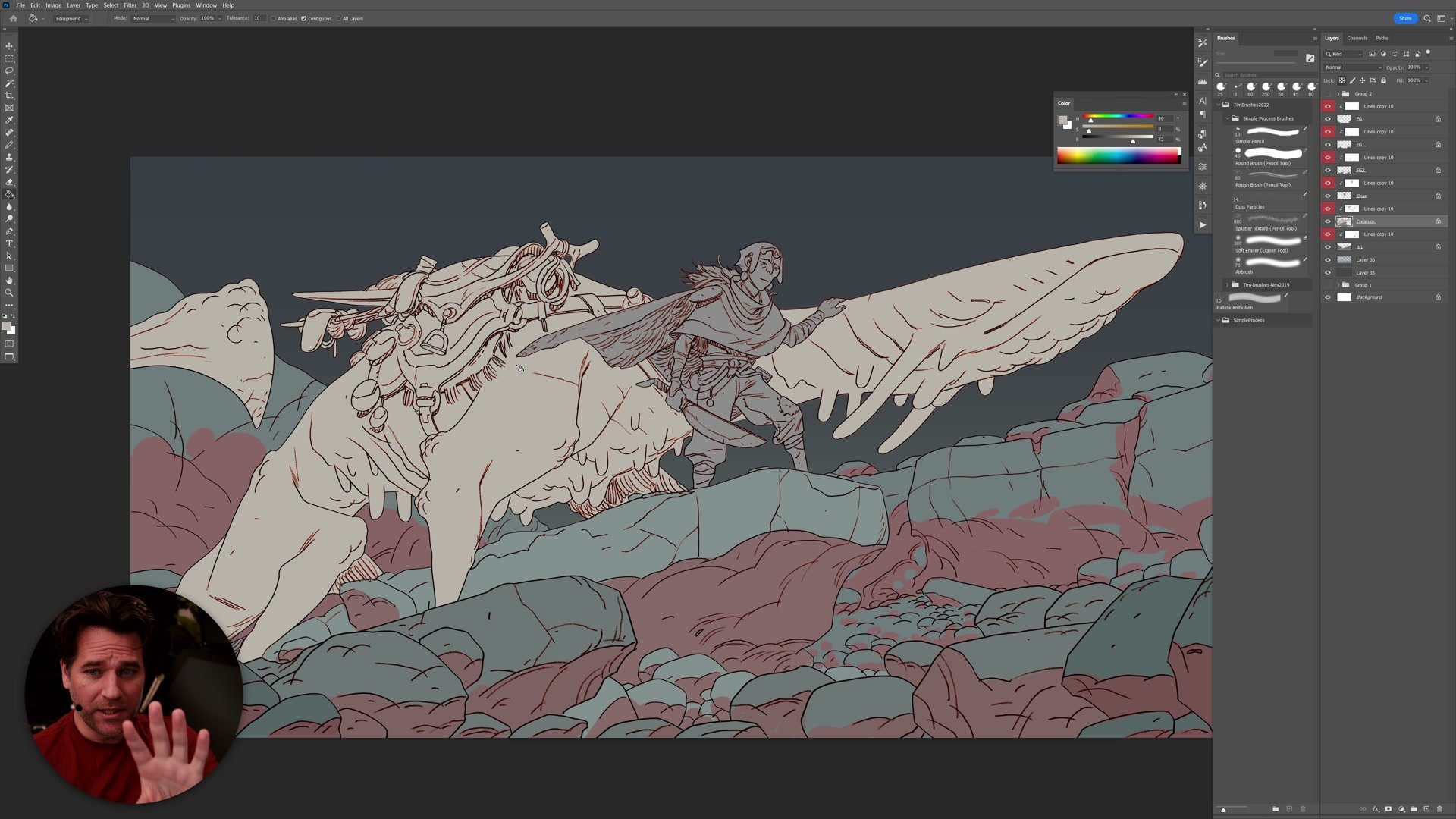
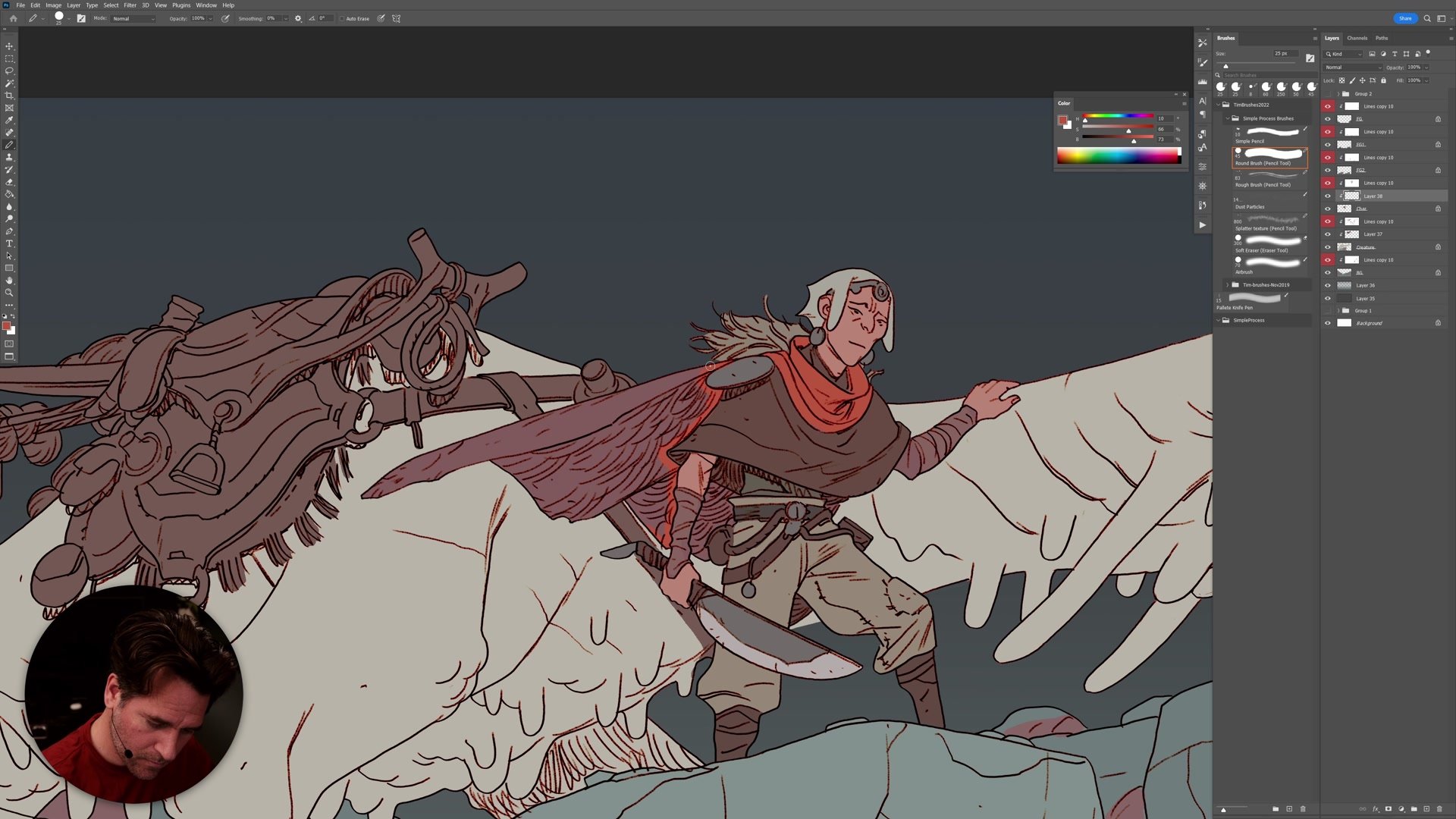
Moving from construction to final lines requires balancing structural accuracy with the energy of the original thumbnail. The digital workflow allows erasing and reworking areas that are not reading correctly, and the session shows this iterative refinement happening repeatedly. Areas that seemed resolved during construction sometimes need further adjustment once clean lines reveal new problems.
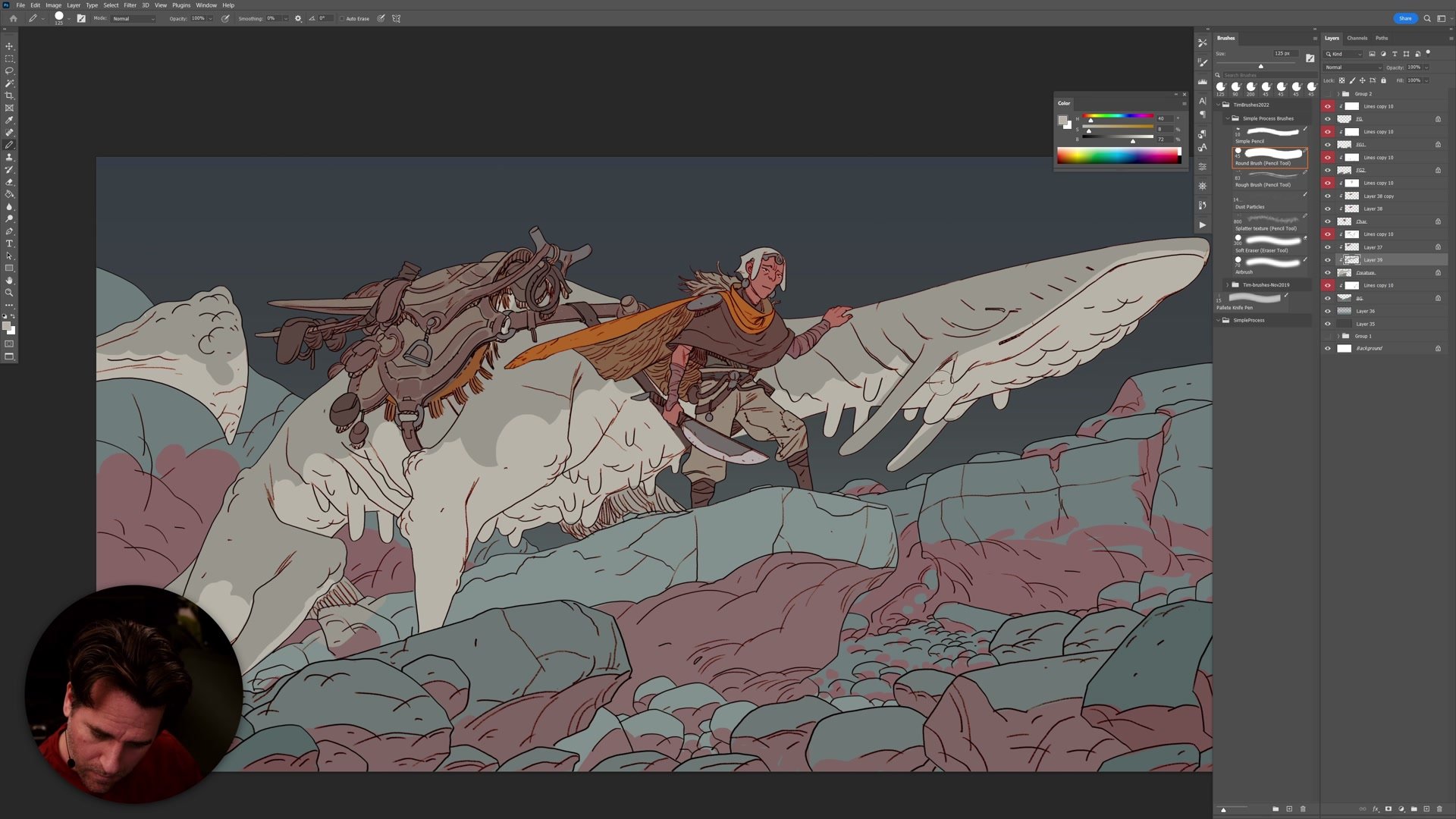
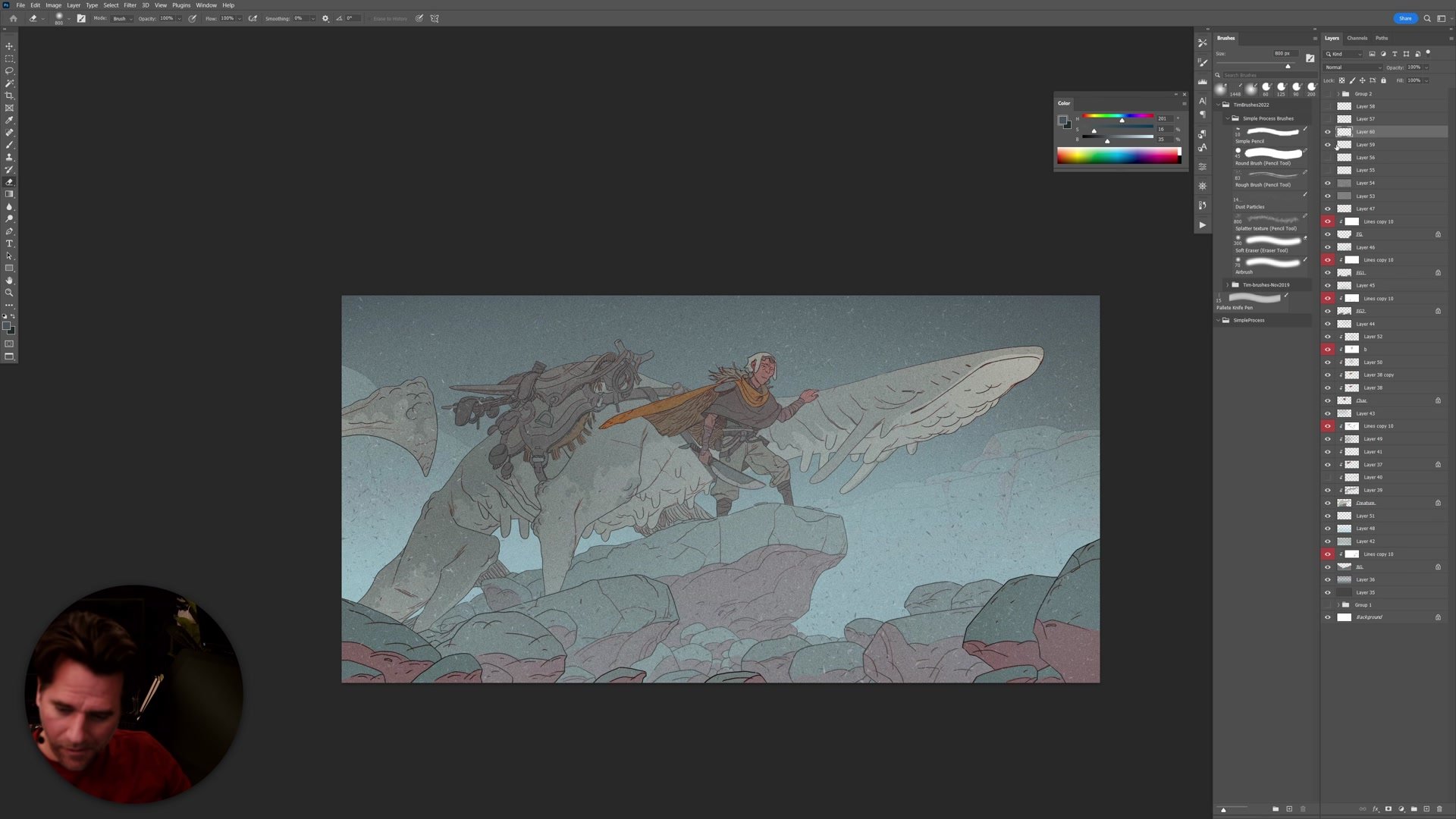
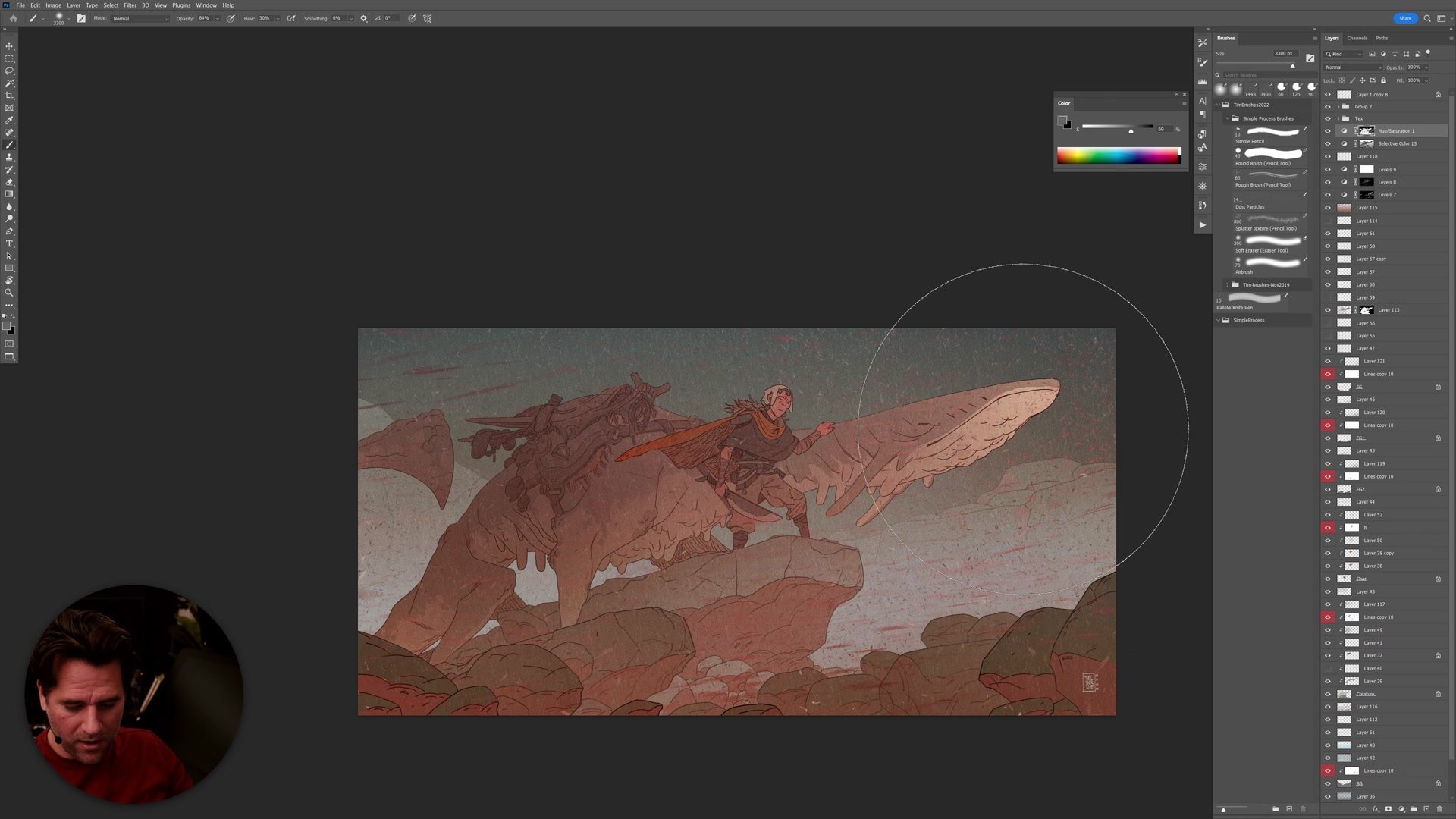
The color phase uses flat color separation to establish the major value relationships, working with a limited palette that emphasizes the character against the creature and environment. The approach prioritizes readability over rendering, keeping the illustration in a line-and-color style rather than pushing into painterly territory. Final color adjustments and atmosphere effects bring the piece together, though the honest conclusion is that some images remain challenging regardless of how much structural work goes into them.
Finished Illustration
Key Techniques
Construction Phase: Building a structural scaffolding layer between the thumbnail and final lines prevents losing energy during translation. This intermediate step provides the confidence needed for committed line decisions.
Secondary Form Development: Breaking large primary shapes into smaller anatomical structures creates the detail needed for convincing finished work. Without this step, the gap between loose sketch and tight rendering becomes overwhelming.
Simplified Tool Approach: Working primarily with a round brush limits options in a productive way, forcing more thoughtful decisions about line weight, mark-making, and shape repetition.
Revisiting Failed Work: Returning to thumbnails that previously failed offers insight into gaps in process and skill. The image in memory often differs from what was actually drawn, and reconciling that gap is part of artistic growth.
Try This
Find a Failed Thumbnail: Look through old sketches or thumbnails that never made it to finished illustrations. Pick one that still has potential and energy in its composition.
Build the Construction Layer: Instead of jumping to final lines, create an intermediate construction phase using basic proportions and the Loomis Method to establish the structural framework.
Commit to Final Lines: Once the construction feels solid, work through final lines and observe where the original energy survives and where it needs adjustment.