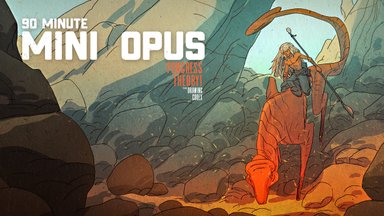
Real-Time Character Drawing - The Lion Rider
Summary
Structural Drawing in Real Time
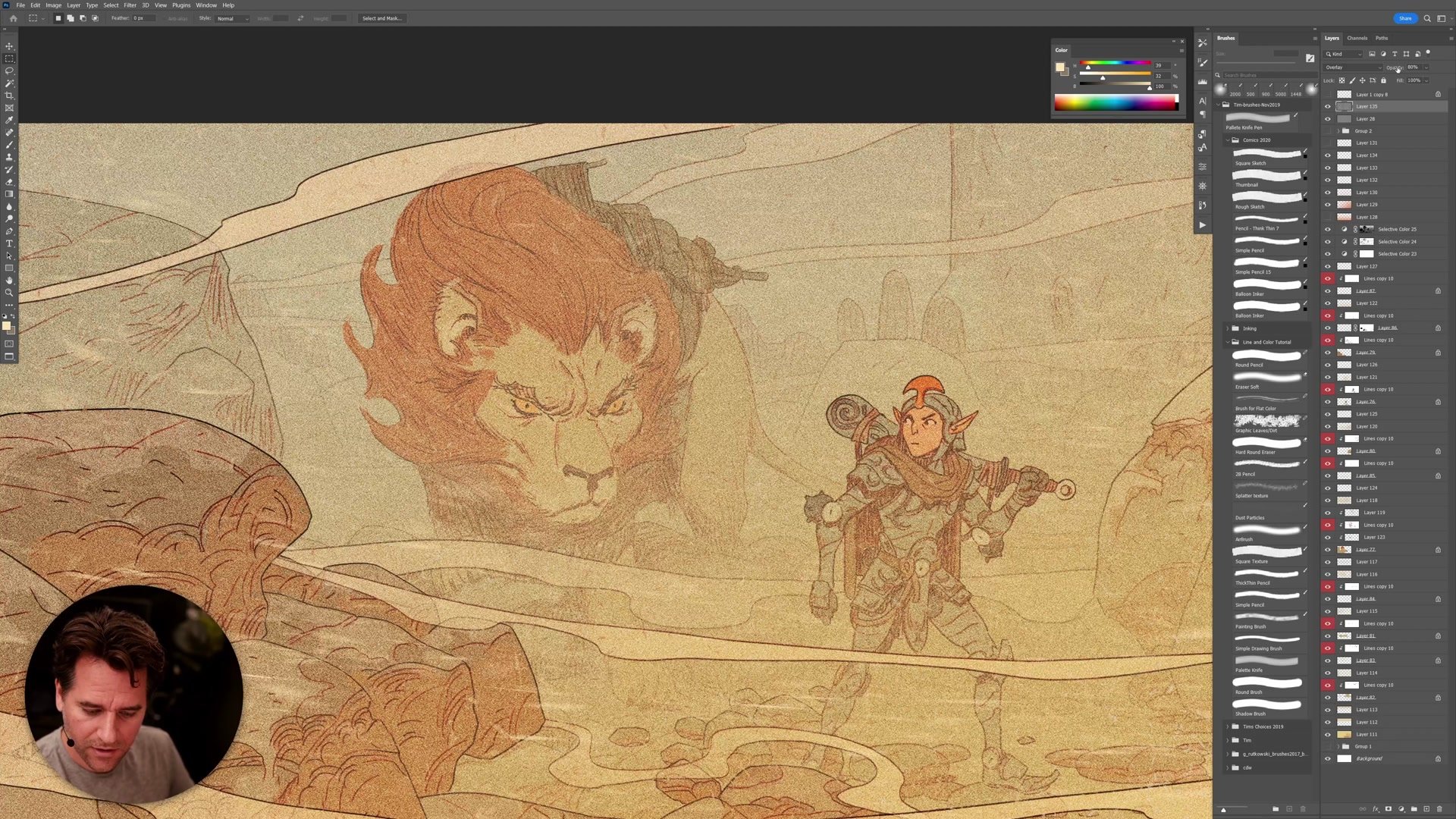
Most drawing tutorials edit out the actual decision-making process. The hesitation, the corrections, the moments where construction principles are being applied instinctively rather than consciously explained. This three-and-a-half-hour session draws a lion rider character from imagination in Photoshop, fully narrated and uncut, showing how structural construction, animal anatomy reference, and stylized character design work together across the full process from gesture to color.
The Art Ritual format demonstrates that finished illustration comes from a reliable sequence of steps: rough gesture, structural construction, inking, flatting, and color rendering. Each phase builds on the previous one, and watching the entire process reveals where foundational principles actually matter and where intuitive mark-making takes over.
Gesture and Construction
Building Overlap and Depth
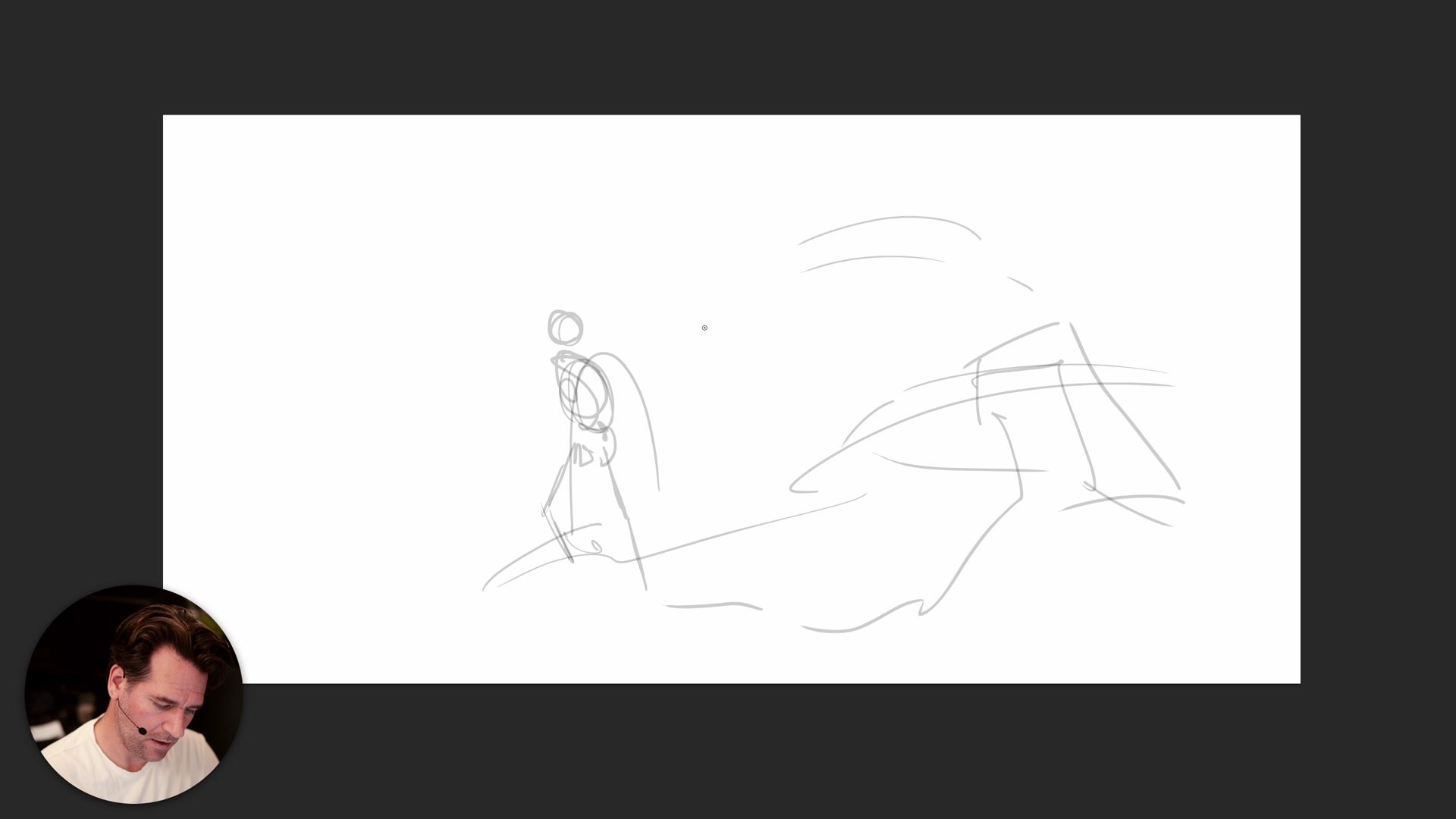
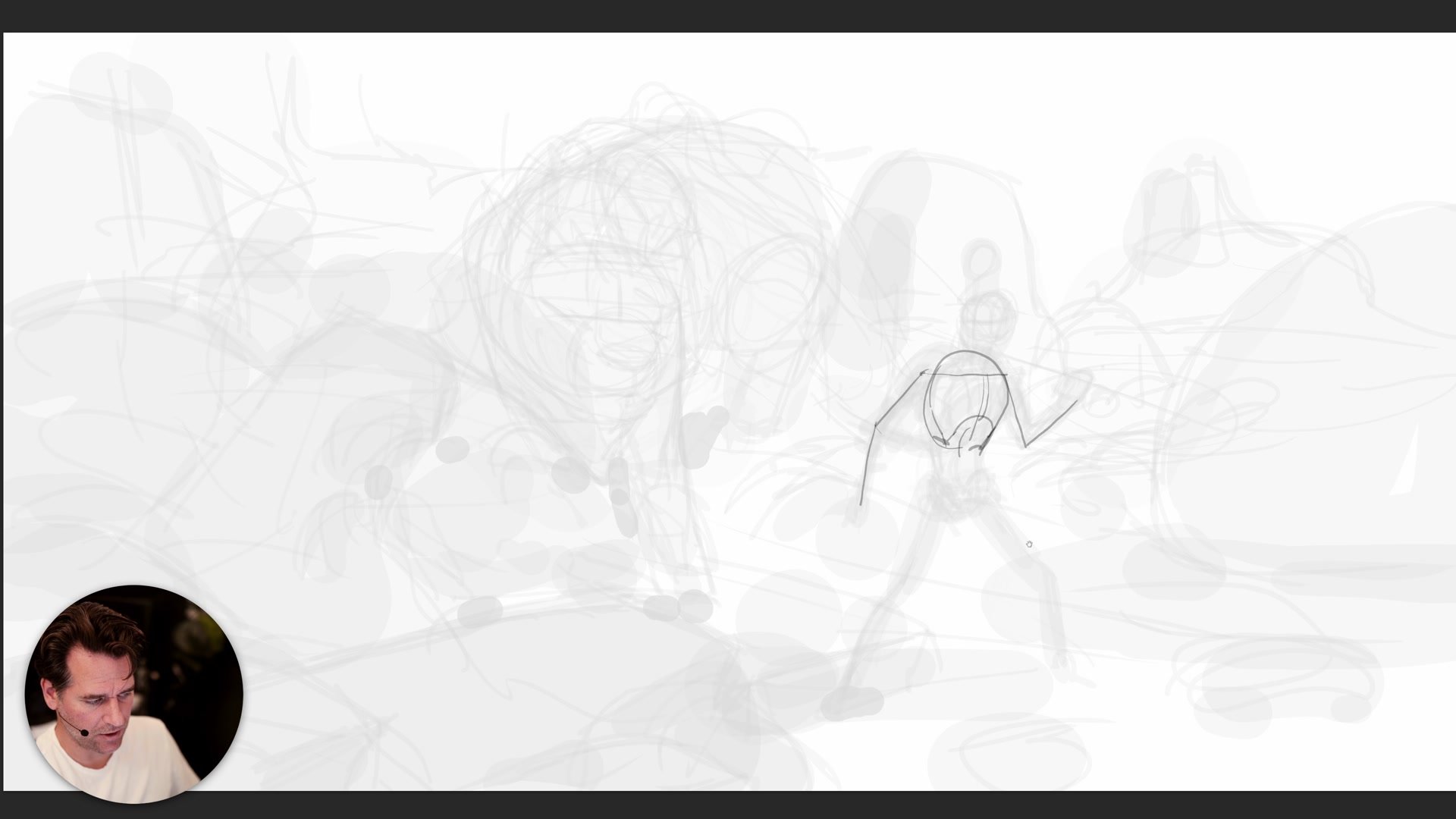
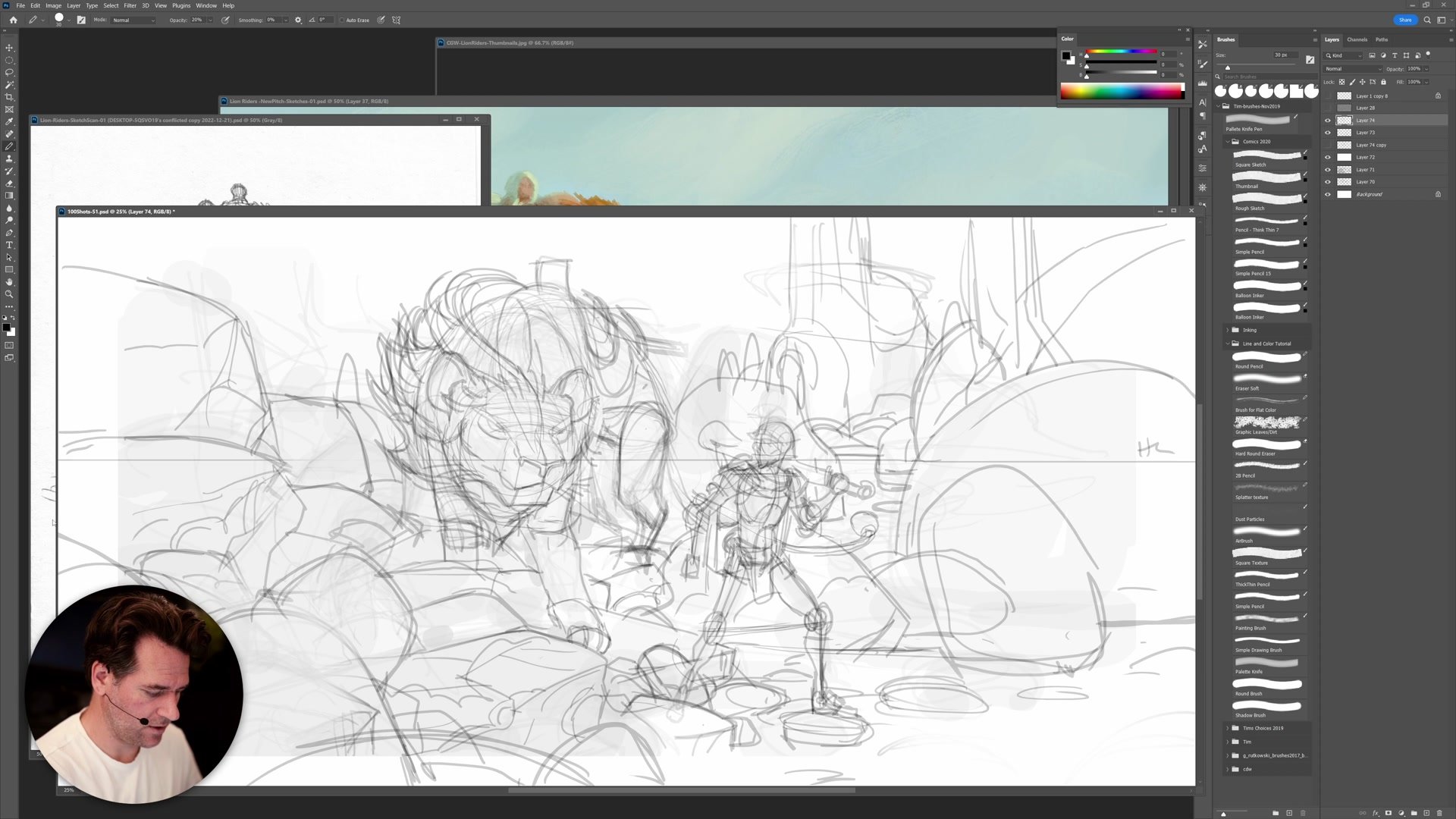
The session begins with rough gesture exploration, establishing the relationship between rider and lion before committing to any construction. Rather than starting with a detailed thumbnail, the approach involves playing with compositions directly, treating the early phase as exploration rather than planning.
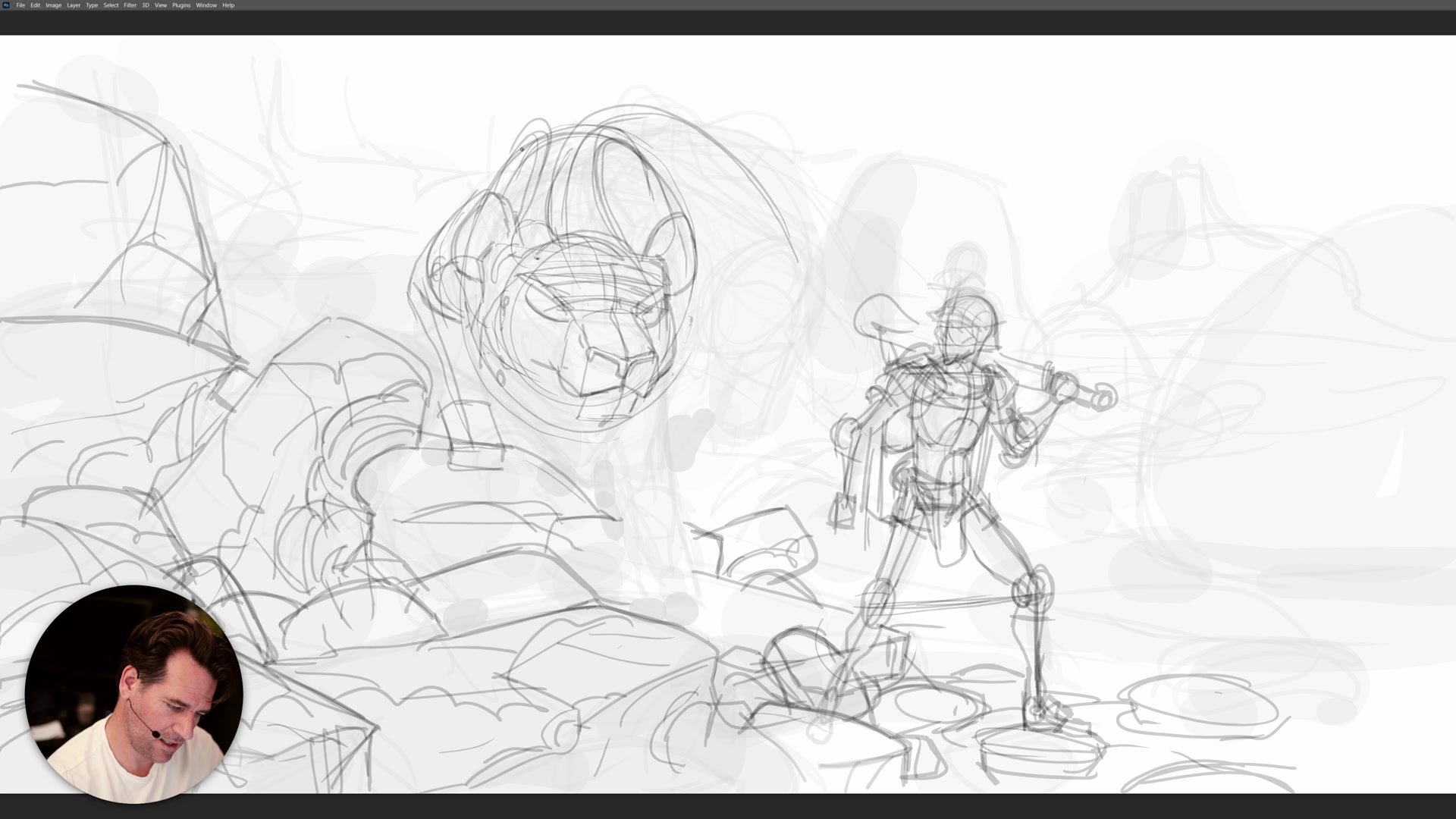
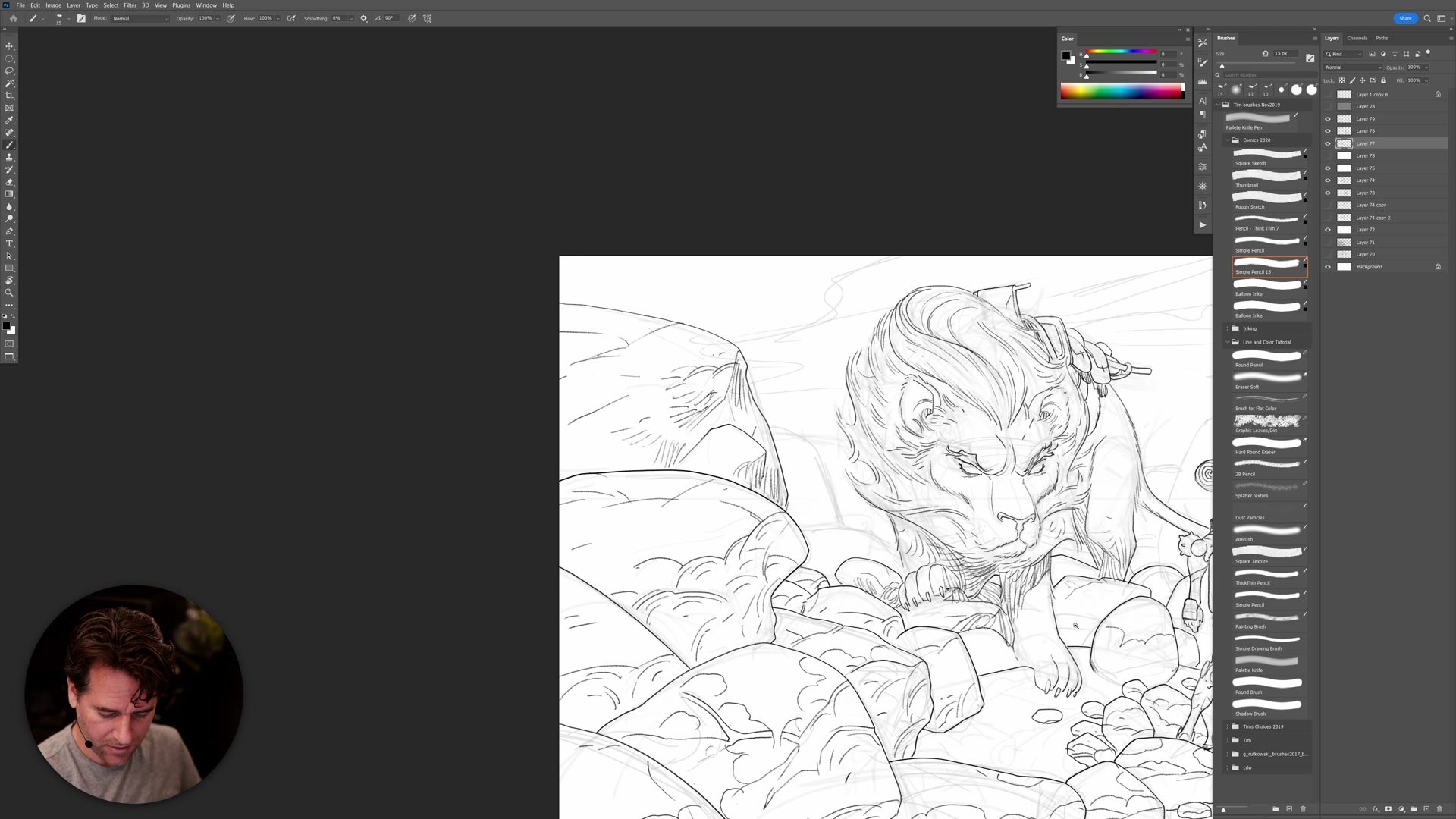
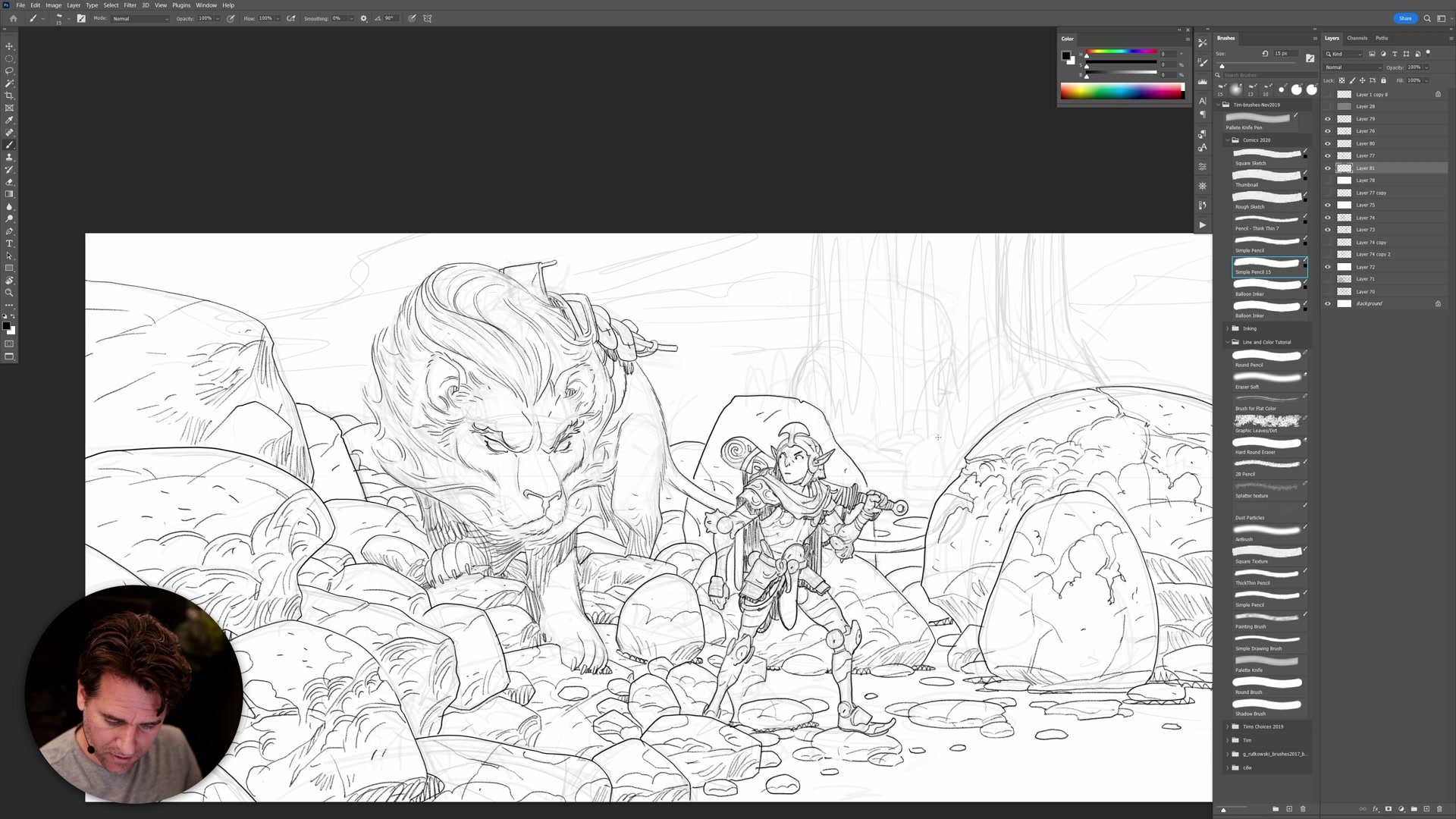
A core principle that runs through the entire construction phase is overlap. Every element, from the rocks in the environment to the relationship between the lion and rider, relies on one thing being placed in front of another to create depth. The approach is compared to working in a film prop department: the question is not just how to draw rocks, but where to position them so they build visual depth through overlapping silhouettes. Getting these basic overlaps right means much of the image takes care of itself.
Inking and Refinement
Animal Construction and Reference
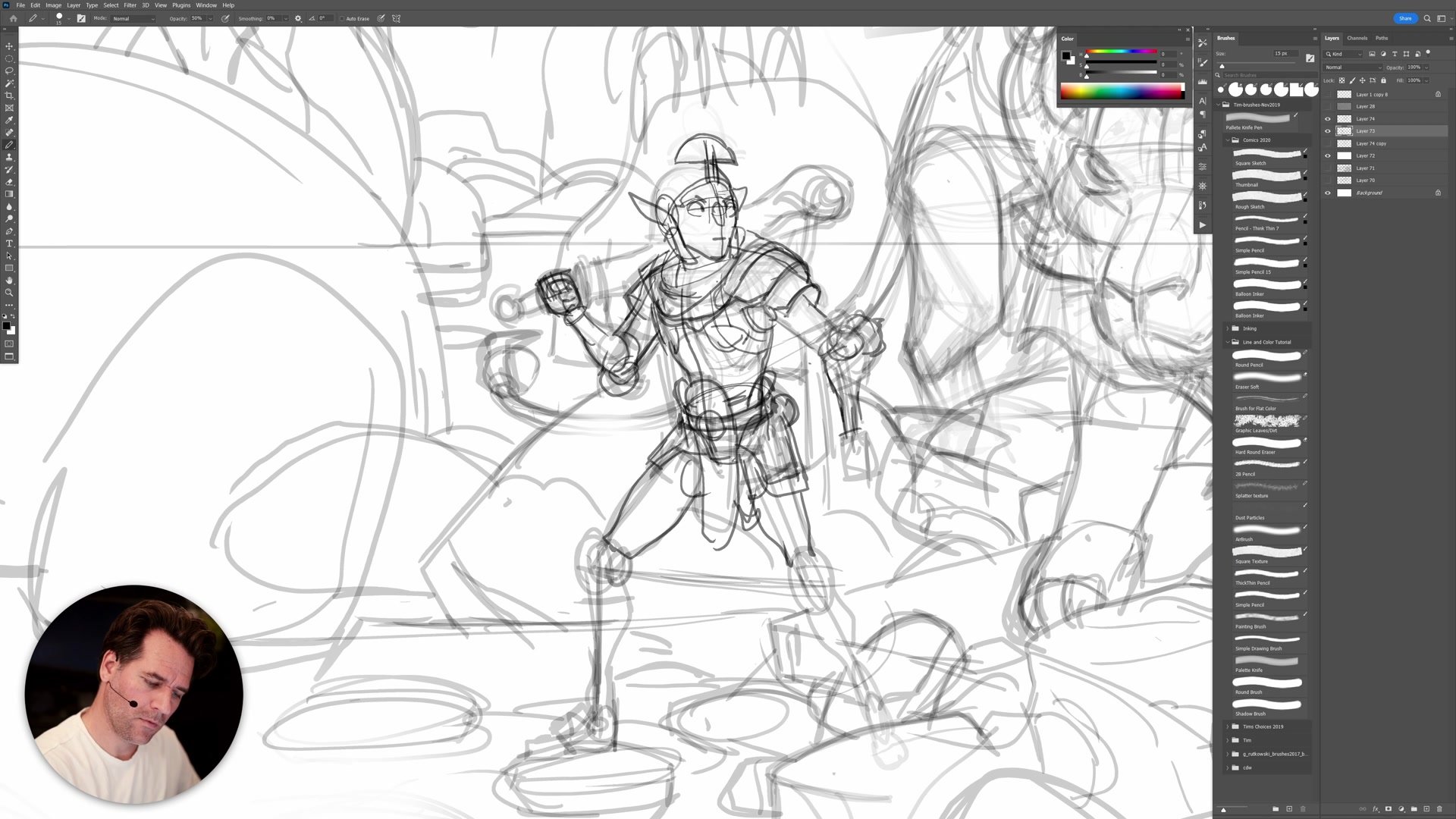
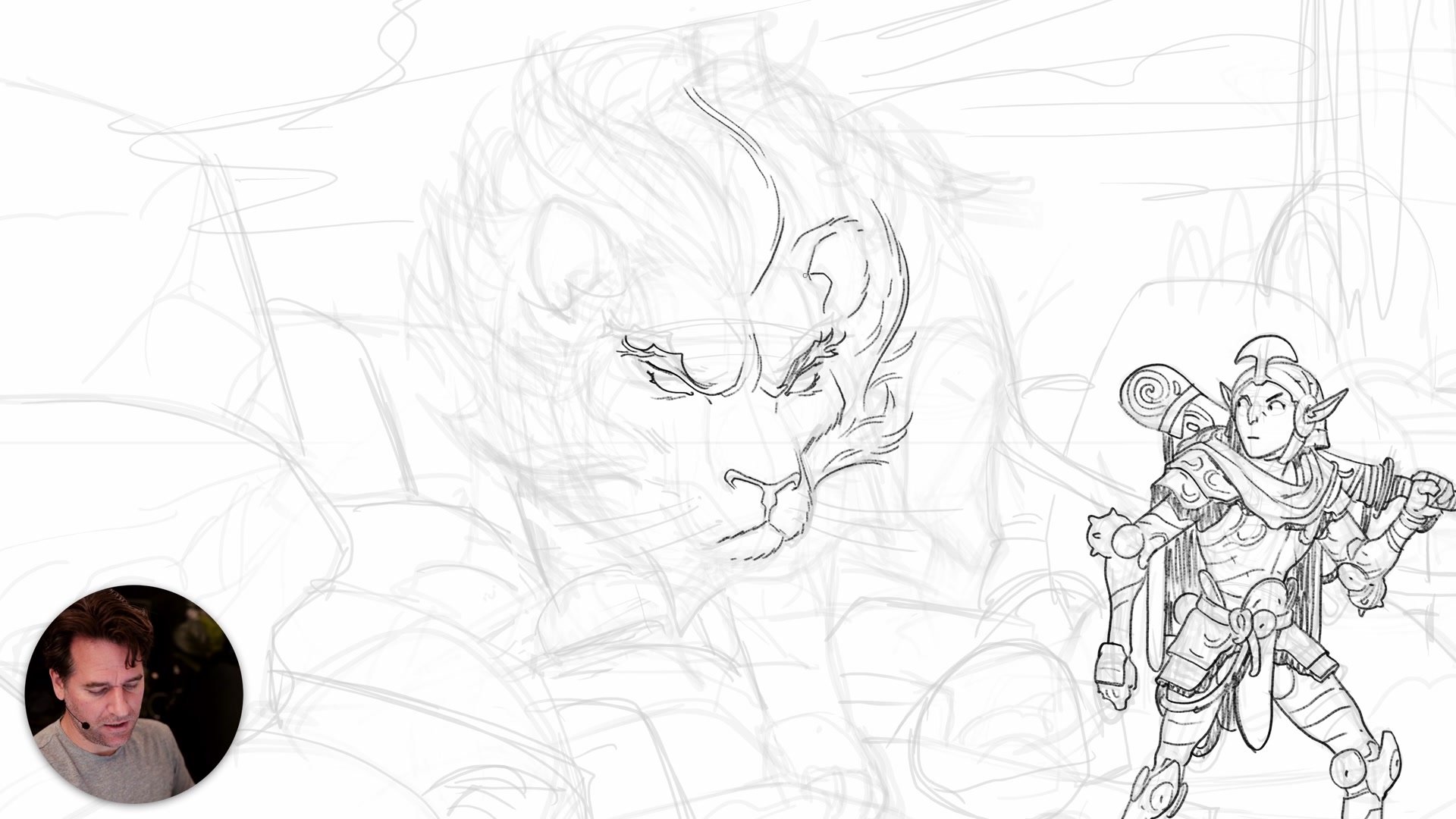
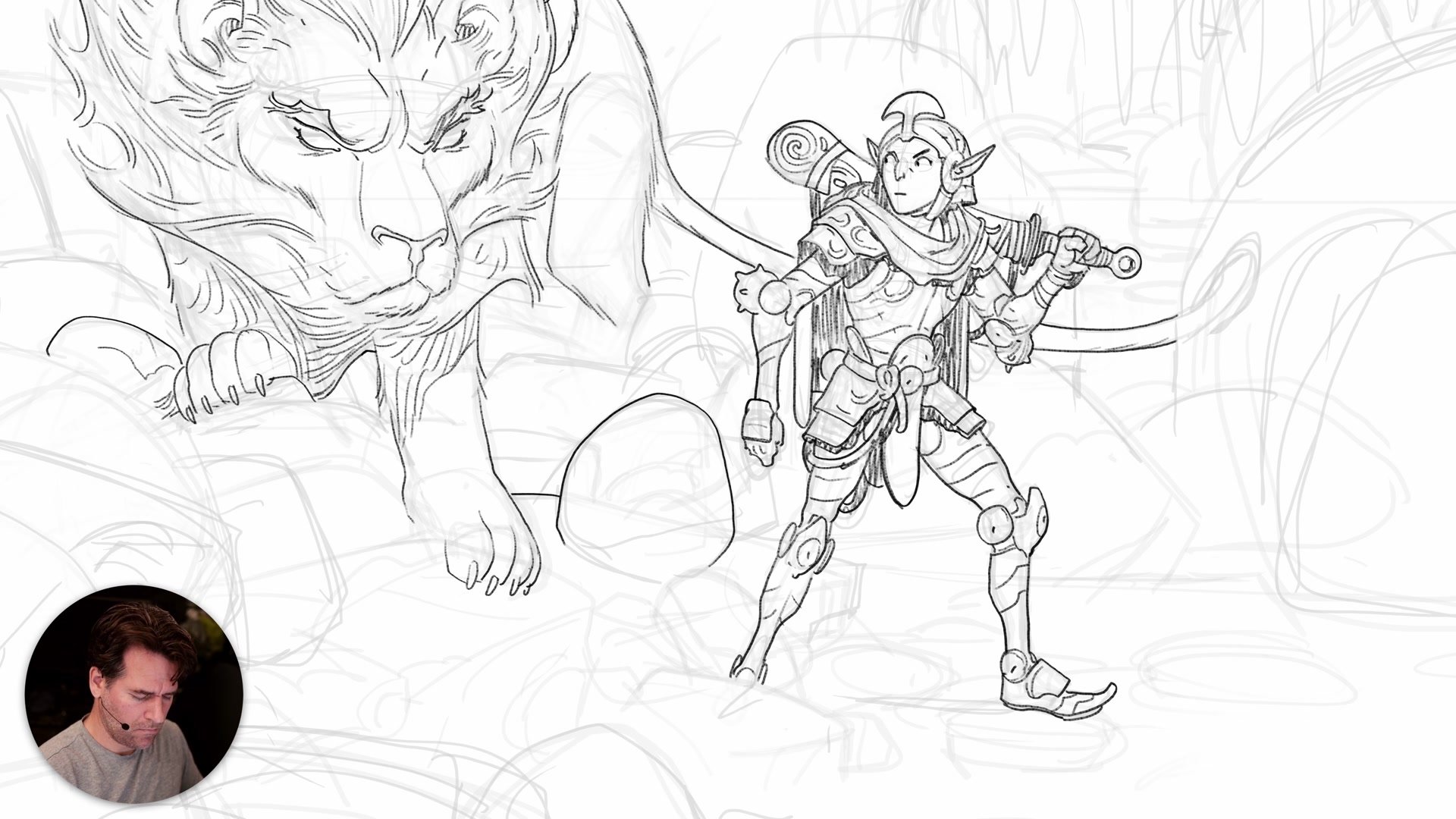
Constructing the lion involves working from anatomical reference rather than guessing. In this case, Ken Hultgren's "The Art of Animal Drawing" provides the structural foundation, with particular attention to how the rib cage, shoulder blades, and spine create the underlying form. The anatomy stays stylized, but the construction underneath follows real structural logic: center line first, then rib cage and pelvis as separate masses connected by the spine.
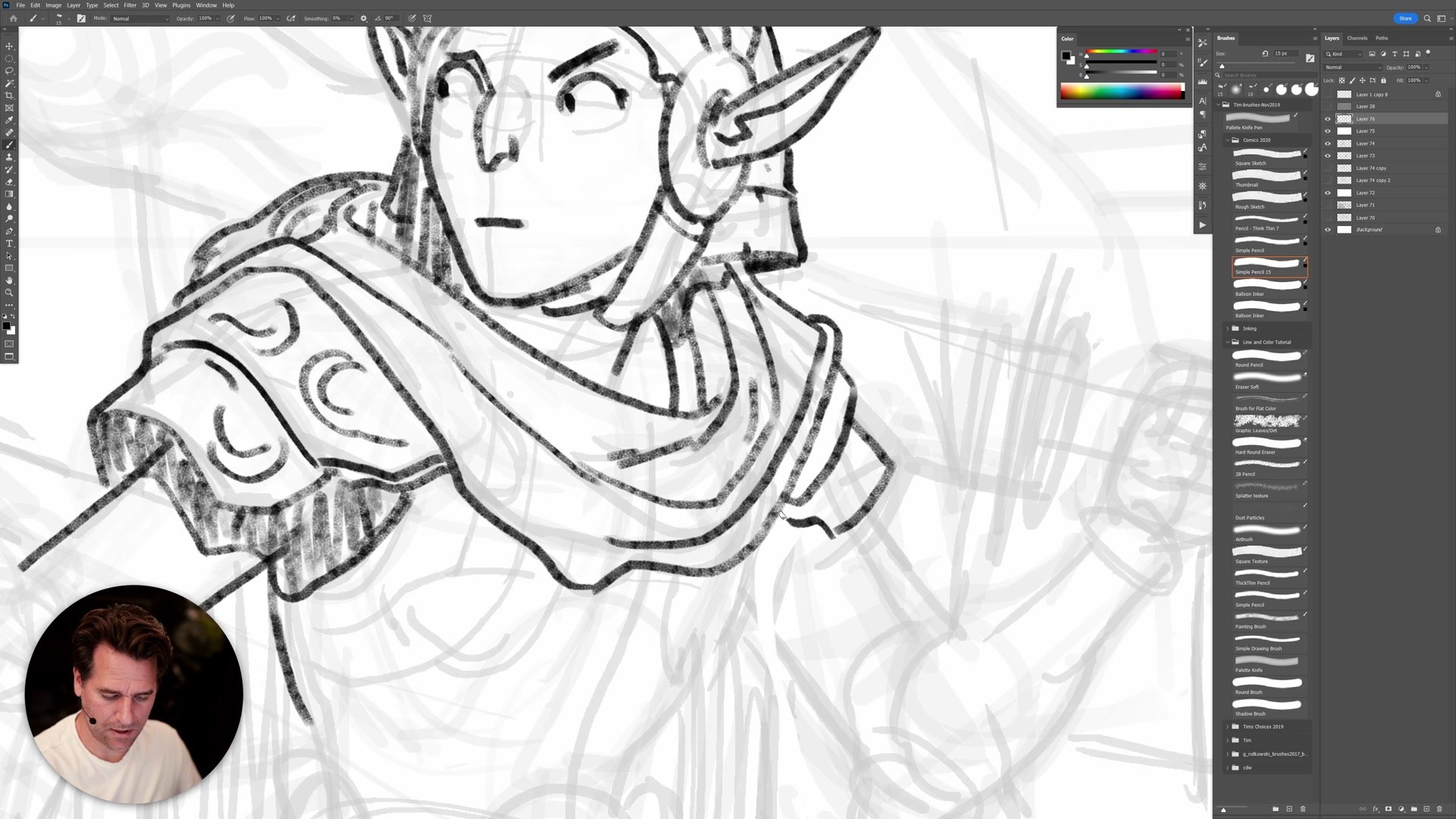
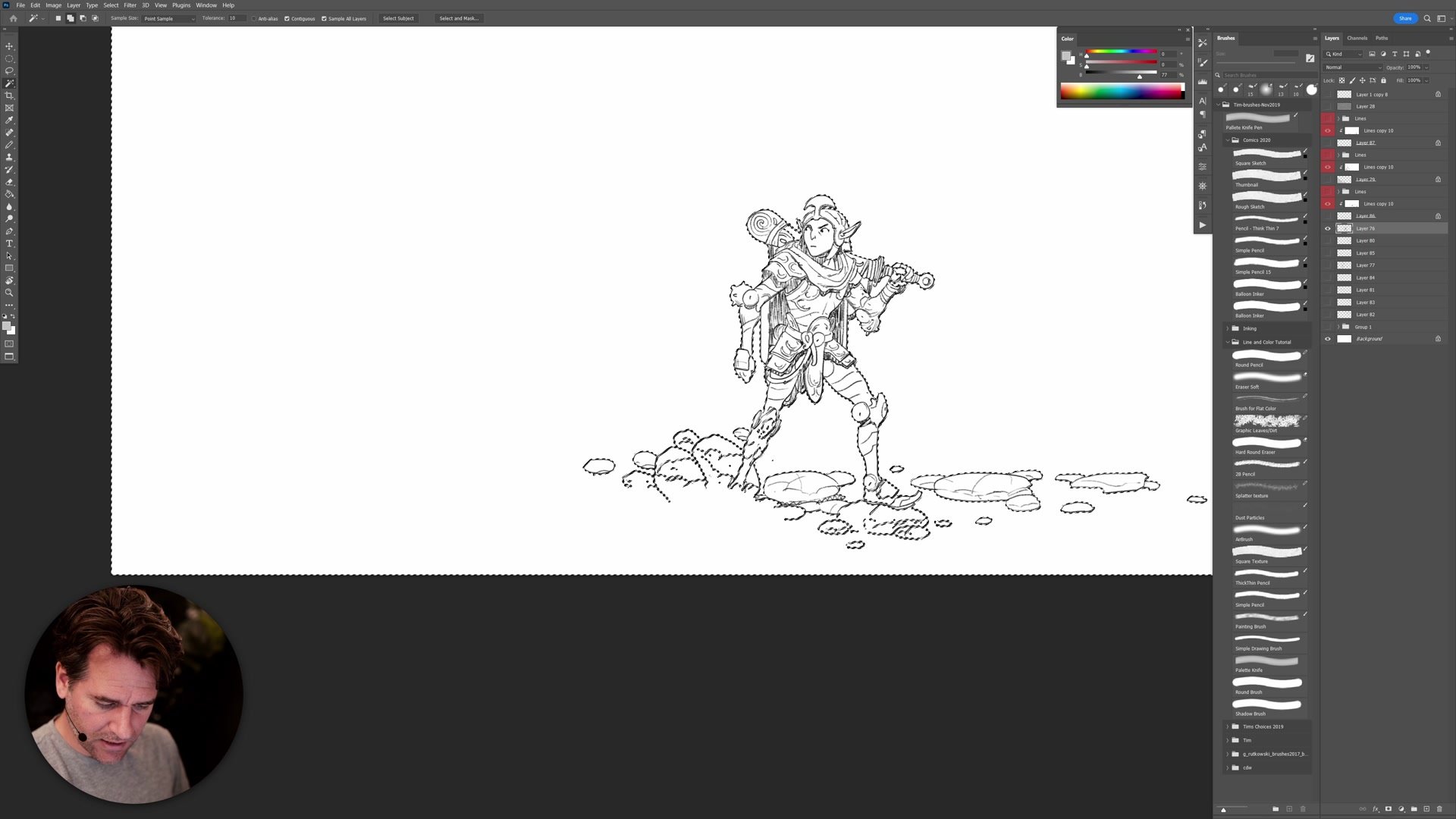
The character rider follows the same principles. The figure construction uses basic forms and proportions, then pushes them toward a stylized result. Armor, costume details, and personality elements layer on top of solid structural underpinning. The deliberate approach of keeping things rough and sketchy in the early stages preserves the character and energy that tighter initial construction would eliminate.
Flatting and Color
Taking Breaks and the Color Phase
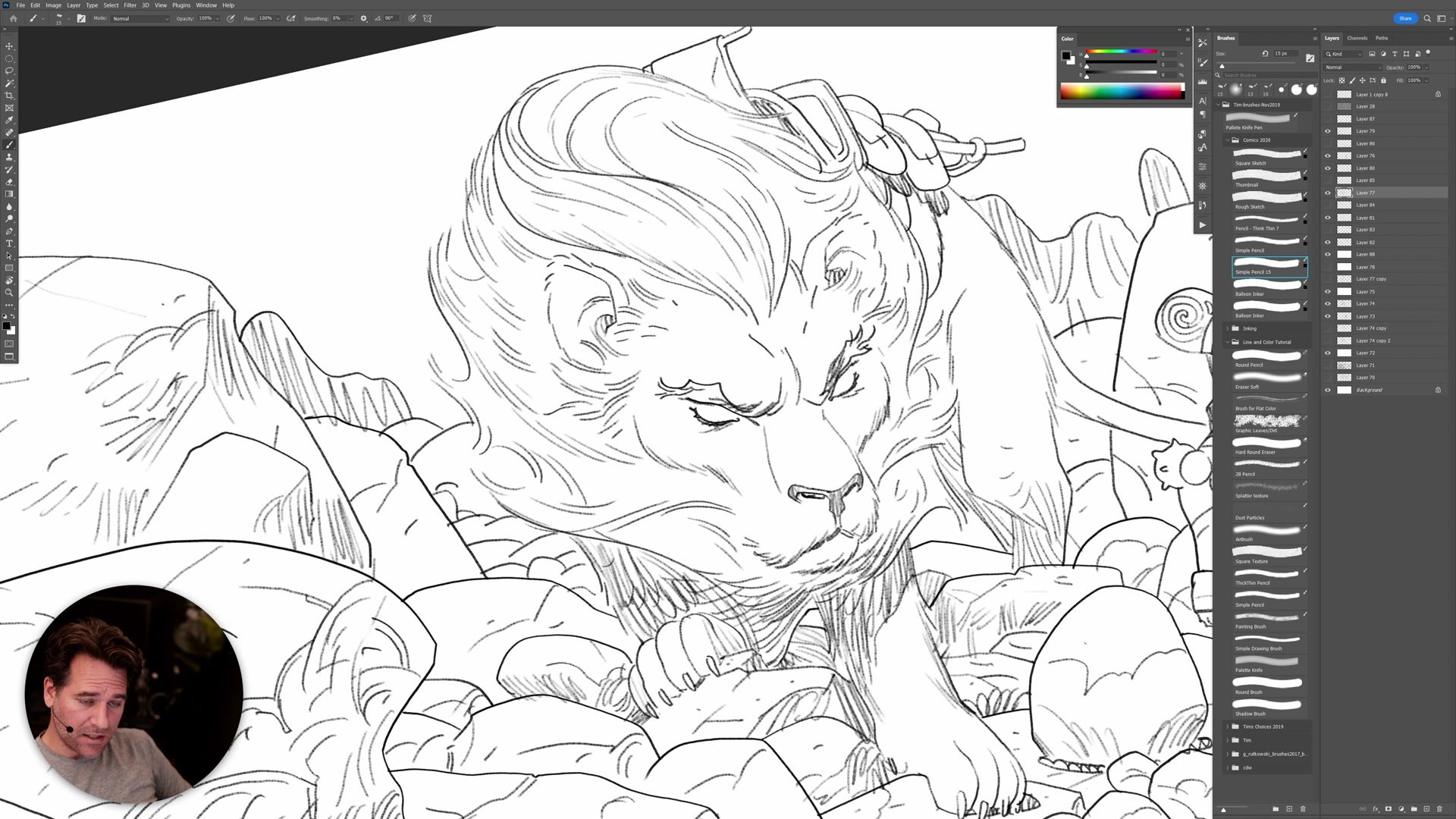
Leaving and returning to an image is treated as a strategic tool rather than a disruption. The key is to handle tricky elements before stopping and to leave clear visual notes about what comes next, so re-engagement is smooth. Coming back with fresh eyes catches proportion issues that were invisible during the flow state, like the lion's head being slightly too large.
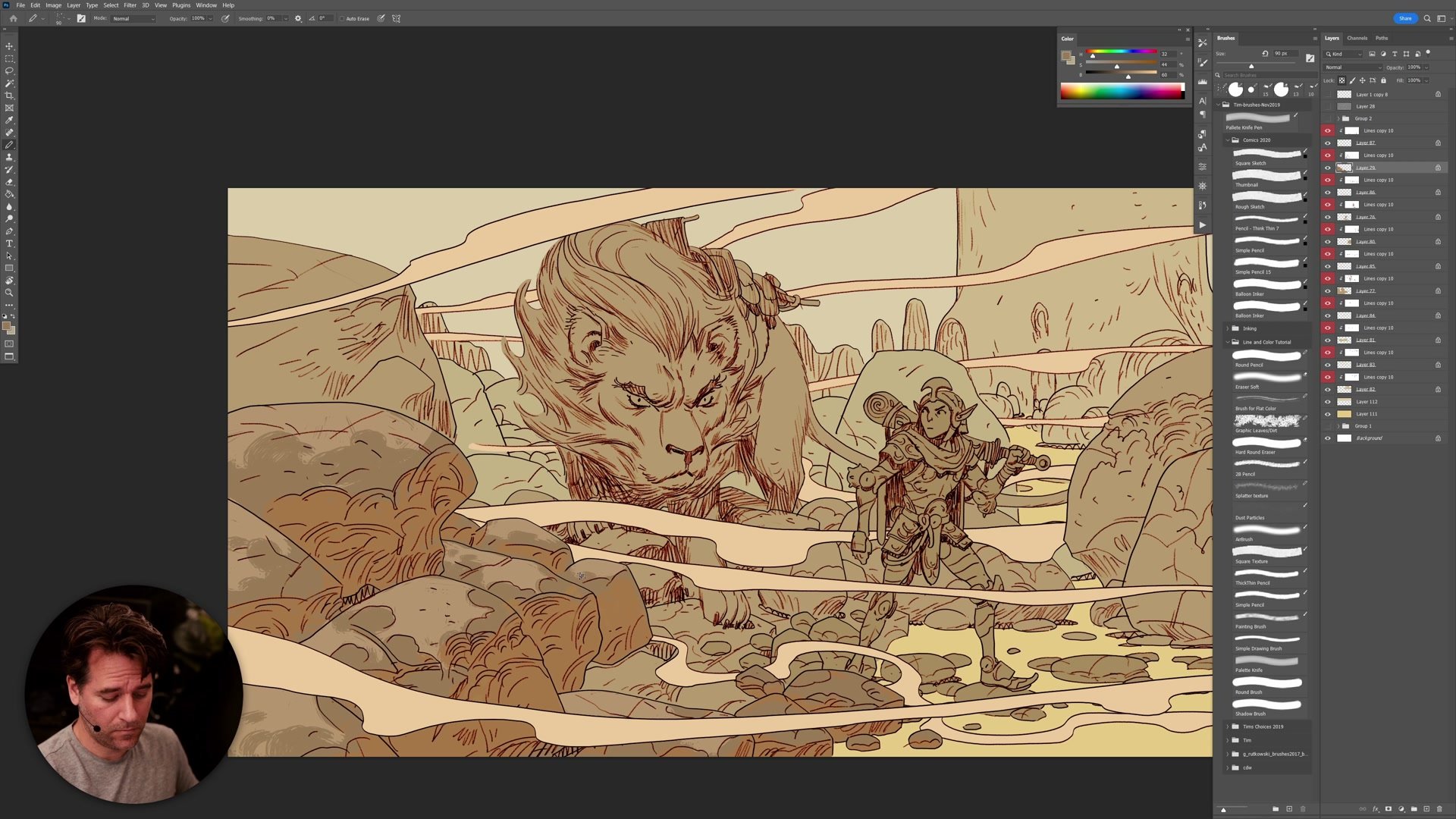
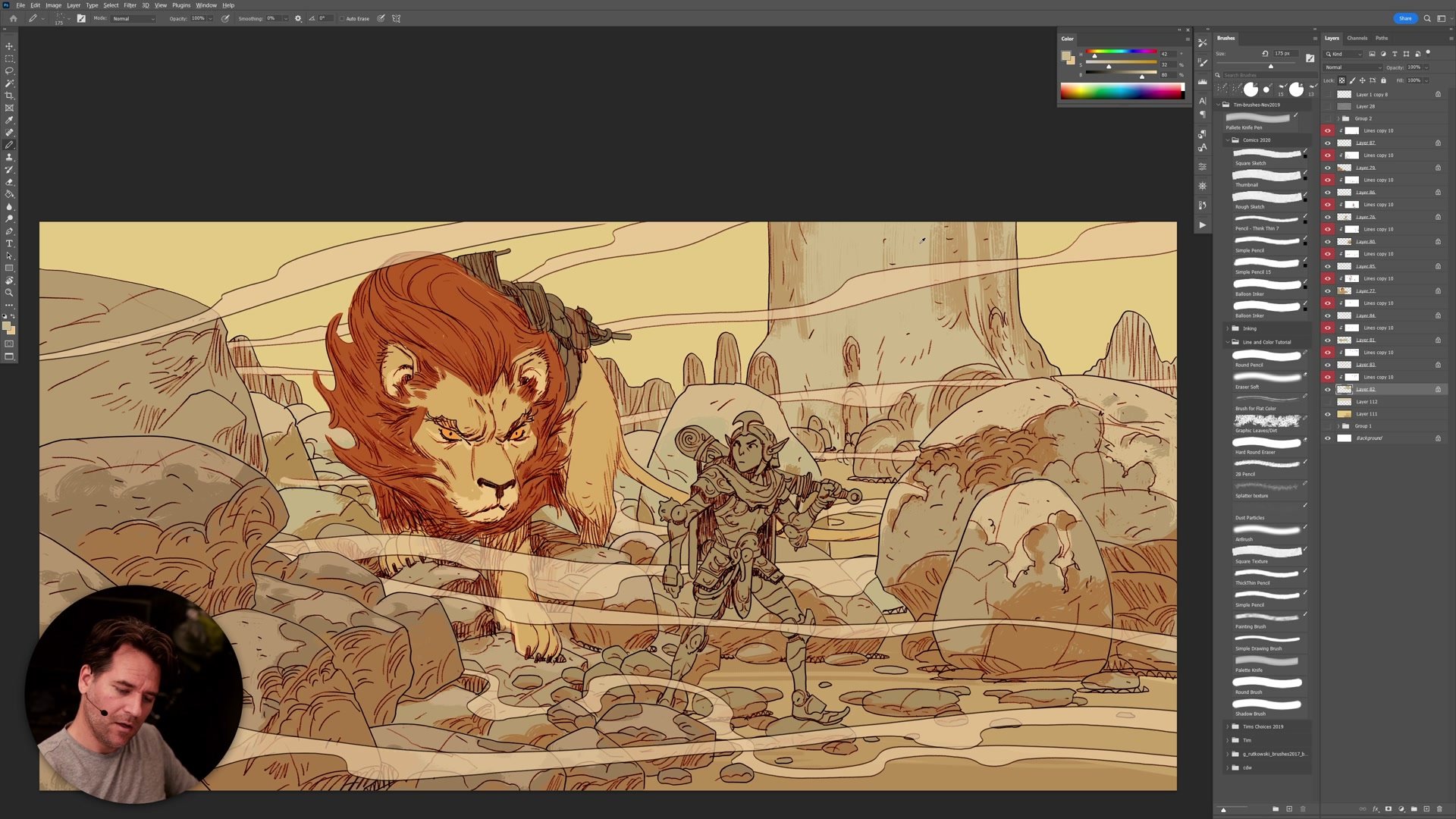
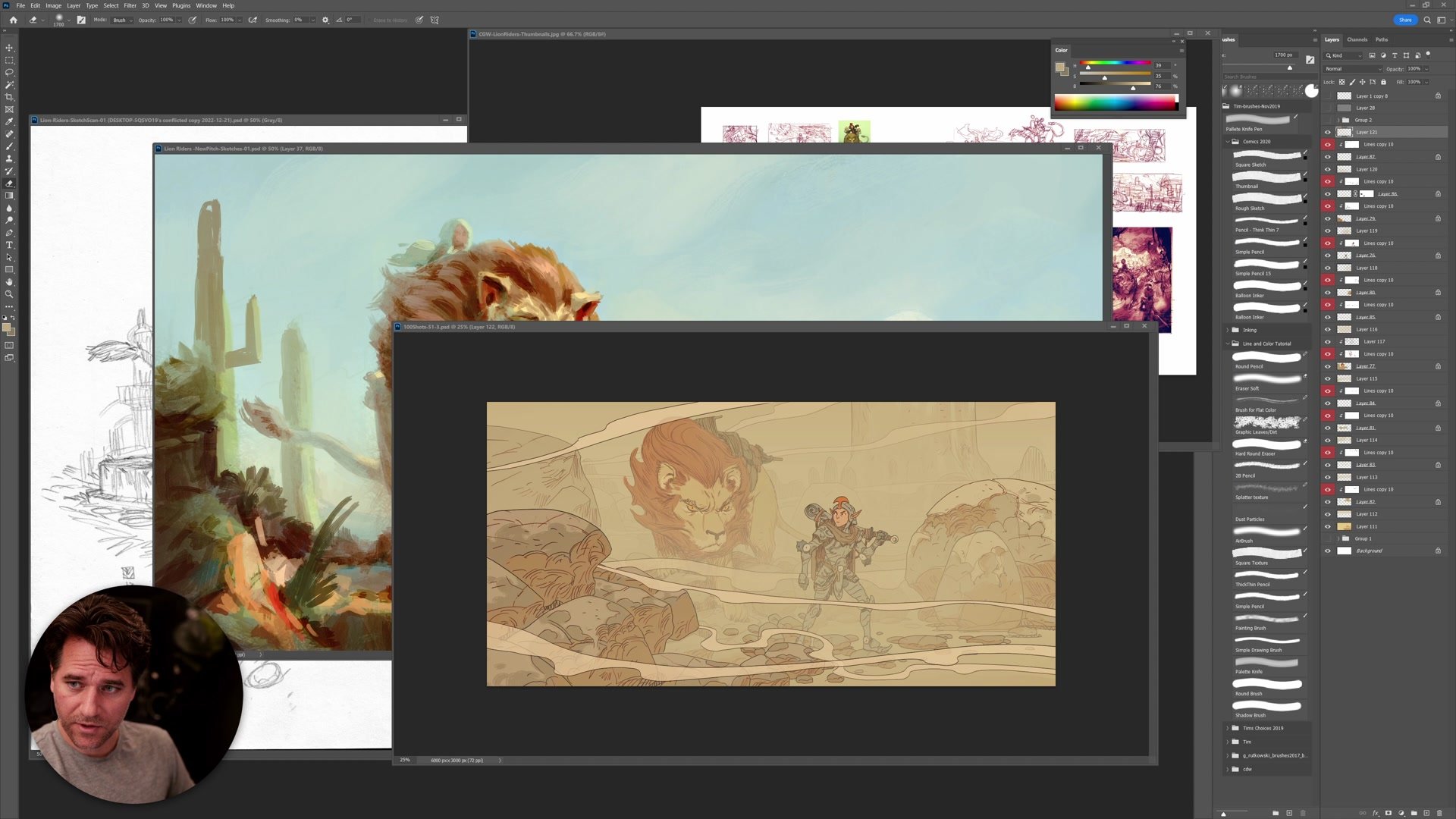
The color phase uses Photoshop actions to flatten shapes quickly, selecting areas with the wand tool and Quick Mask to create clean flat layers that clip the line art. Color choices stay limited and warm, with contrast pushed through gradients and texture overlays rather than complex rendering. The approach demonstrates that unsophisticated, direct color application creates effective results when the underlying line work carries the image.
Final Details
Key Principles
Overlap Creates Depth: Positioning elements so they overlap is the most basic and most effective way to build spatial depth. Thinking about where to place objects matters more than how to render them.
Reference Enables Stylization: Using anatomical reference like Ken Hultgren's animal drawing book provides structural understanding that makes deliberate stylization possible. Construction follows real anatomy even when the final result is highly stylized.
Breaks Are Strategic: Leaving and returning to an image catches problems that were invisible during flow state. Handle the tricky parts before stopping, and leave clear visual cues for what to work on next.
Process Over Polish: A reliable sequence of gesture, construction, inking, flatting, and color produces finished work consistently. Rushing any phase or skipping structural steps creates problems that compound through every subsequent stage.
Try This Session
Set a Timer: Block out two to three hours for a single illustration session with no interruptions. Pick a character concept with at least two elements to compose together, like a rider and mount or a figure in an environment.
Work the Full Process: Move through gesture, construction, inking, and color in sequence. Resist the urge to jump to detail before the structure is resolved. Narrate decisions out loud to stay conscious of when construction principles are guiding choices.
Take One Break: Halfway through, step away for ten minutes. When returning, check proportions and relationships before resuming. Notice what fresh eyes reveal that working eyes missed.