Practice Drawing An Action Pose
Summary
Building An Action Pose From Scratch
Most figure drawing instruction presents the Loomis mannequin as an academic exercise, disconnected from the actual process of creating dynamic character art. The gap between drawing a static mannequin in a textbook and constructing a character in a compelling action pose is enormous, and rarely addressed directly.
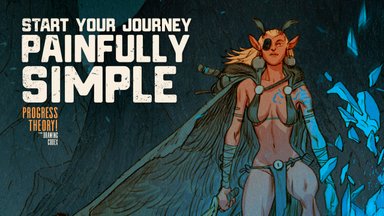
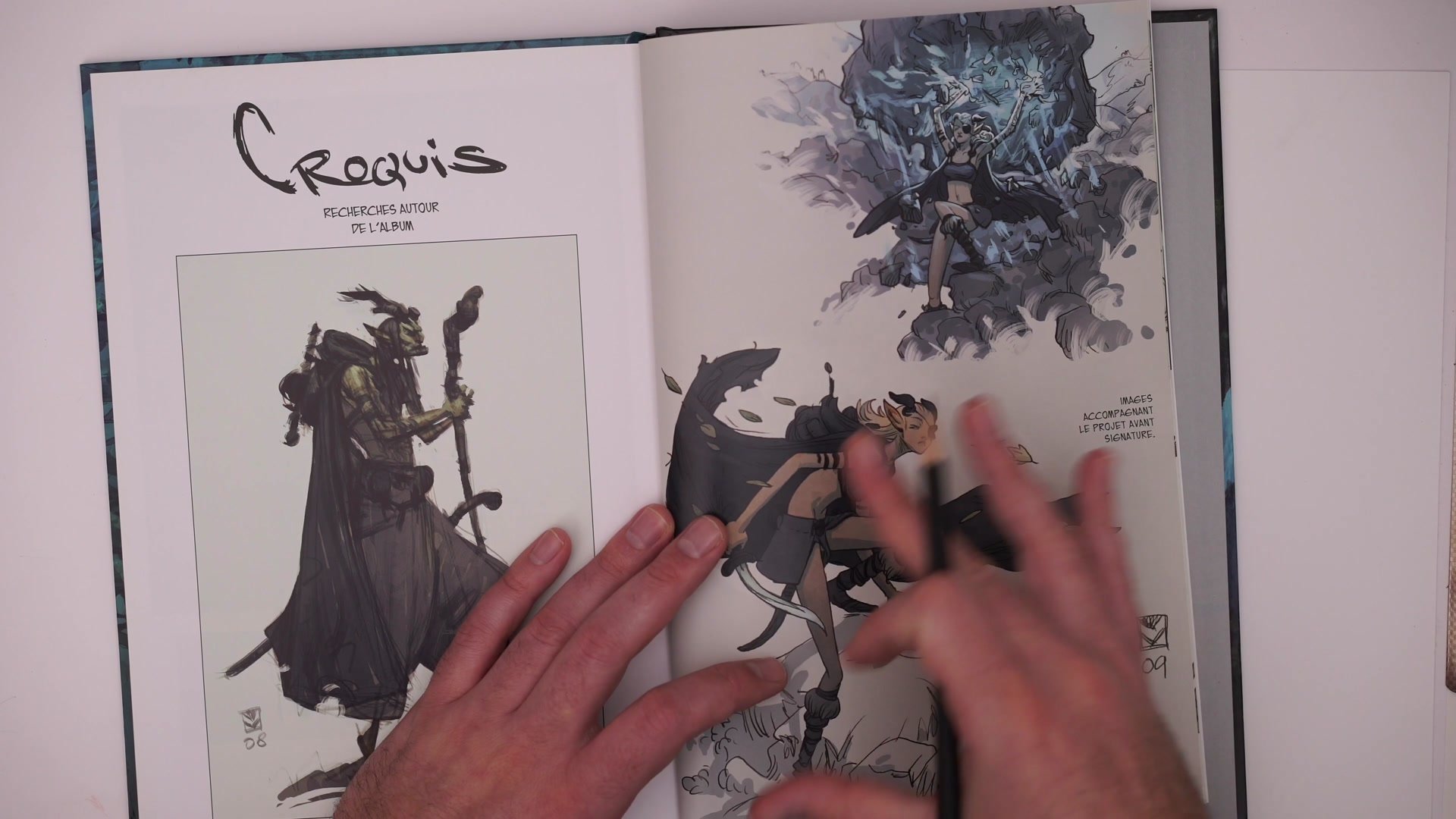
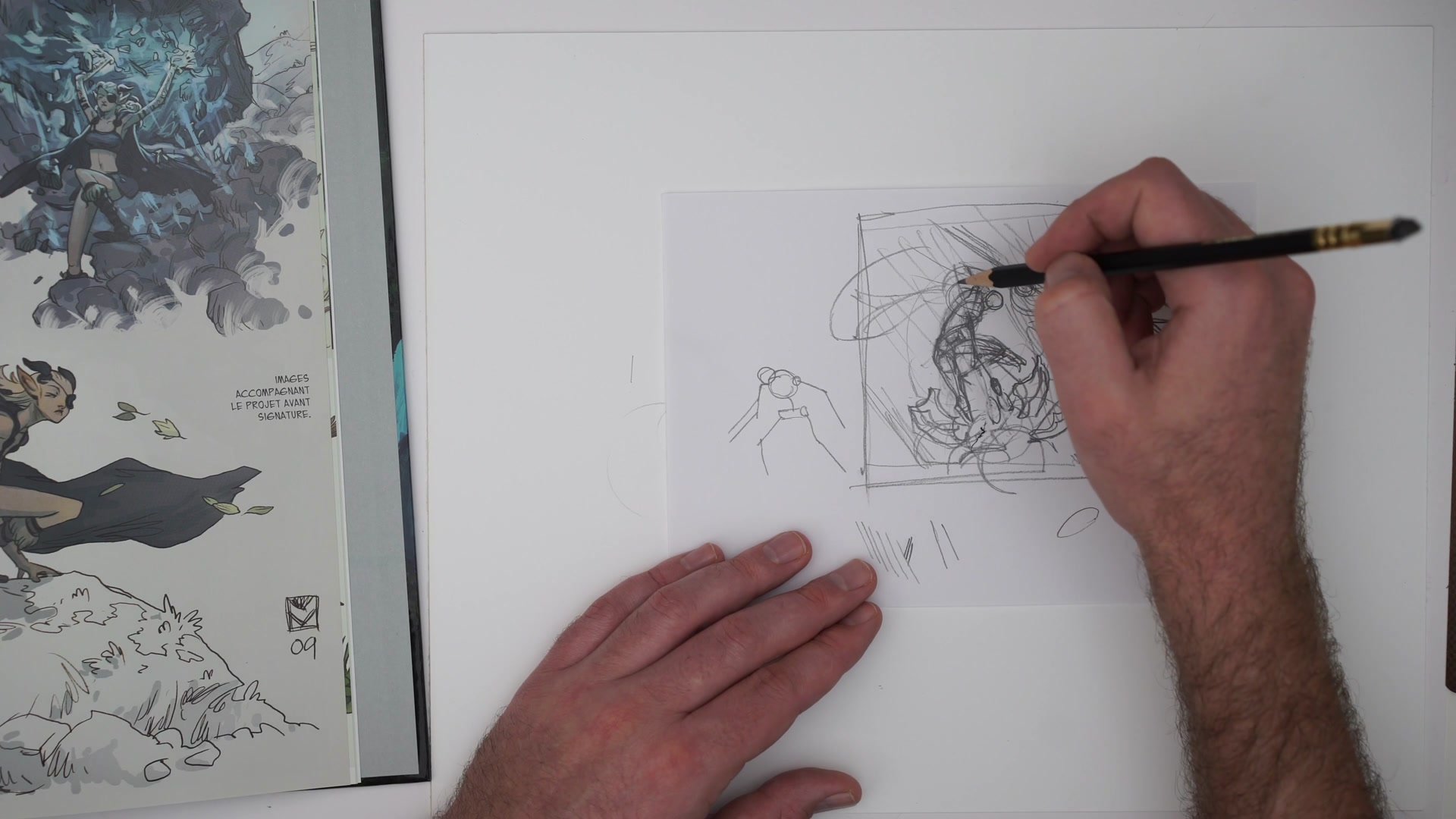
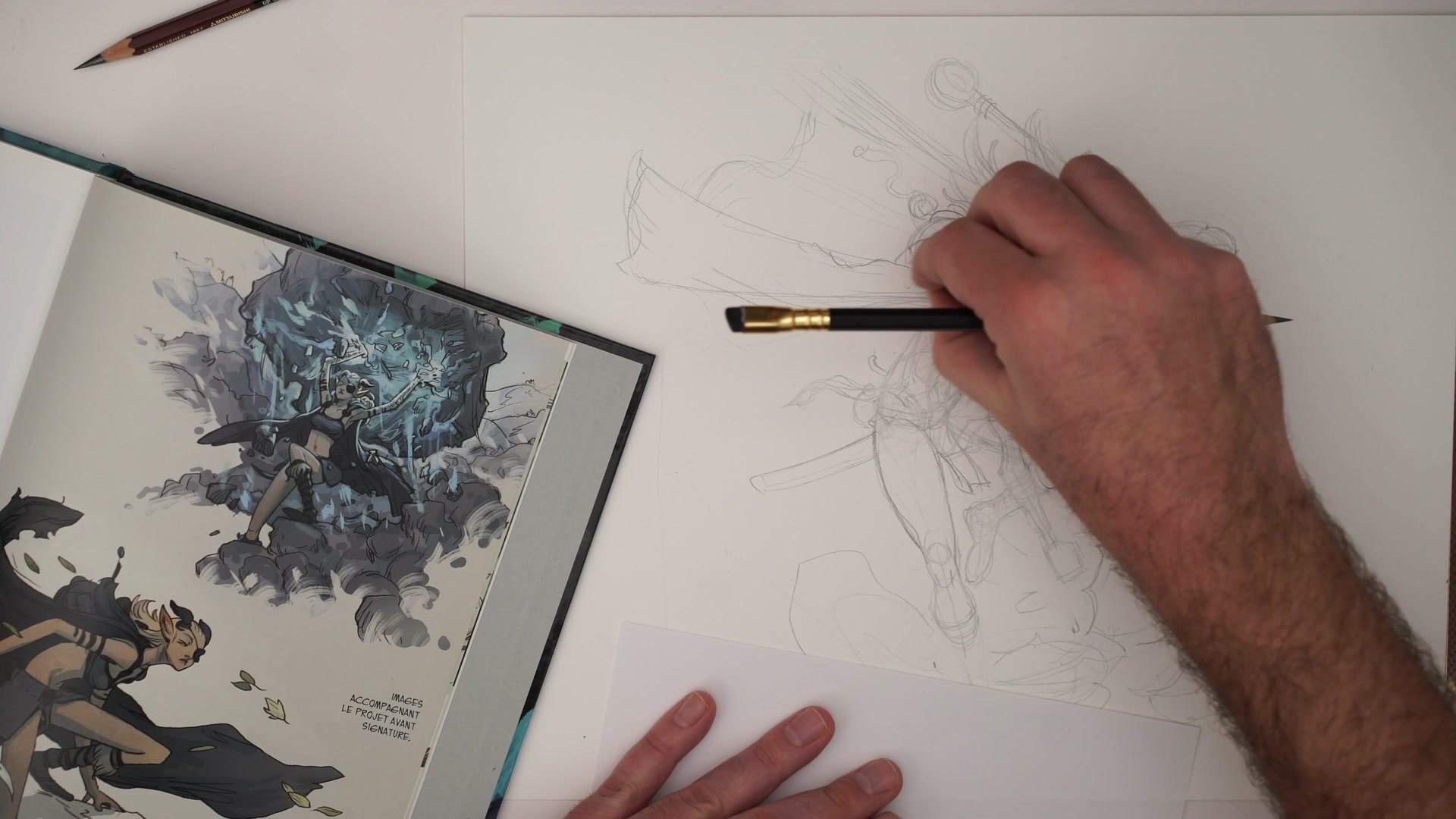
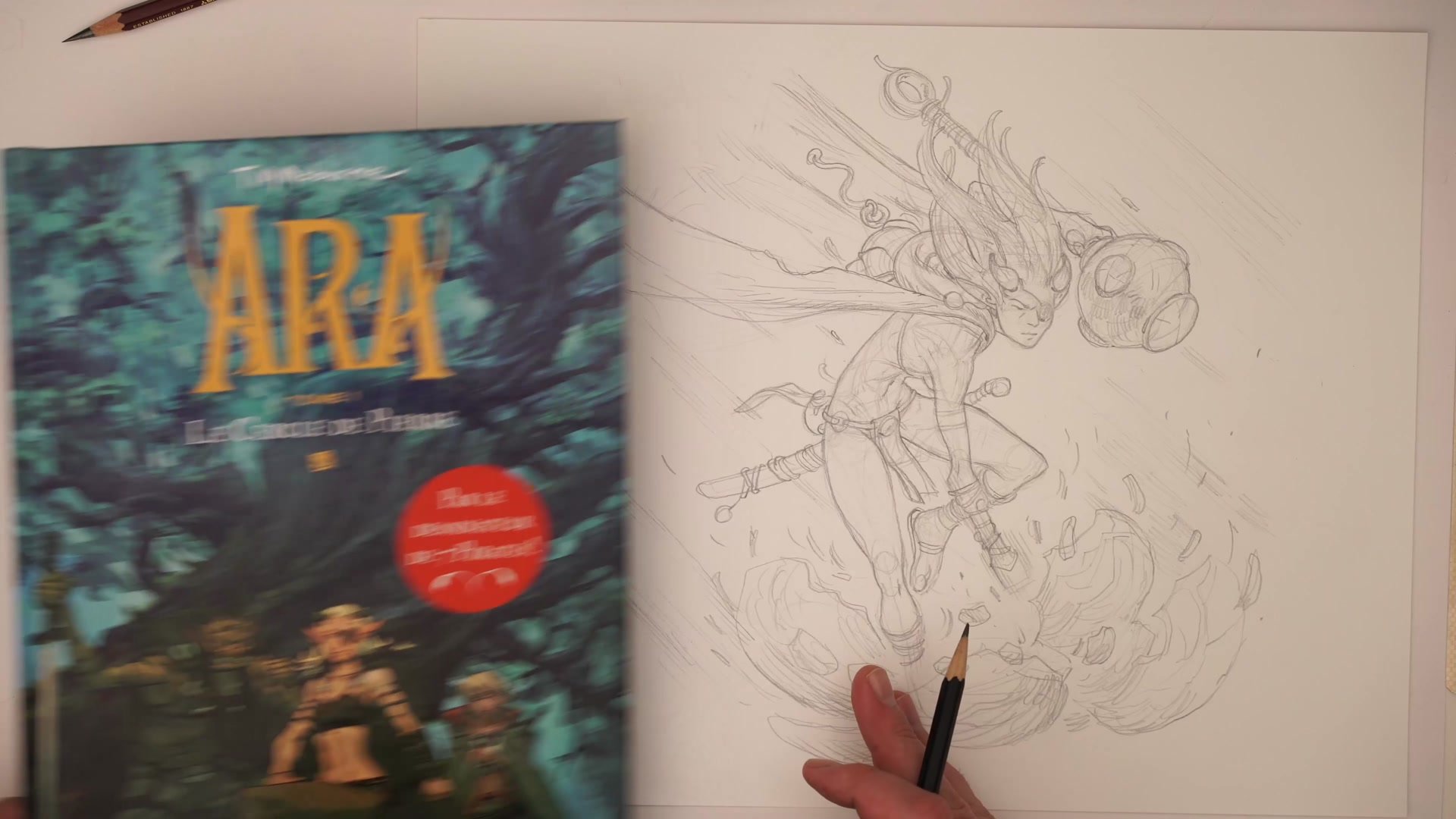
This two-hour demonstration bridges that gap by building a fantasy character from the very first thumbnail sketch through mannequin construction, anatomy, costume, and illustrative elements. The subject is Ara, an original elf character from a published comic, drawn entirely in pencil on Bristol board. Every decision about proportion, tangent management, and when to prioritize story over anatomical perfection is discussed as it happens in real time.
Setup and Planning
The Four-Stage Process
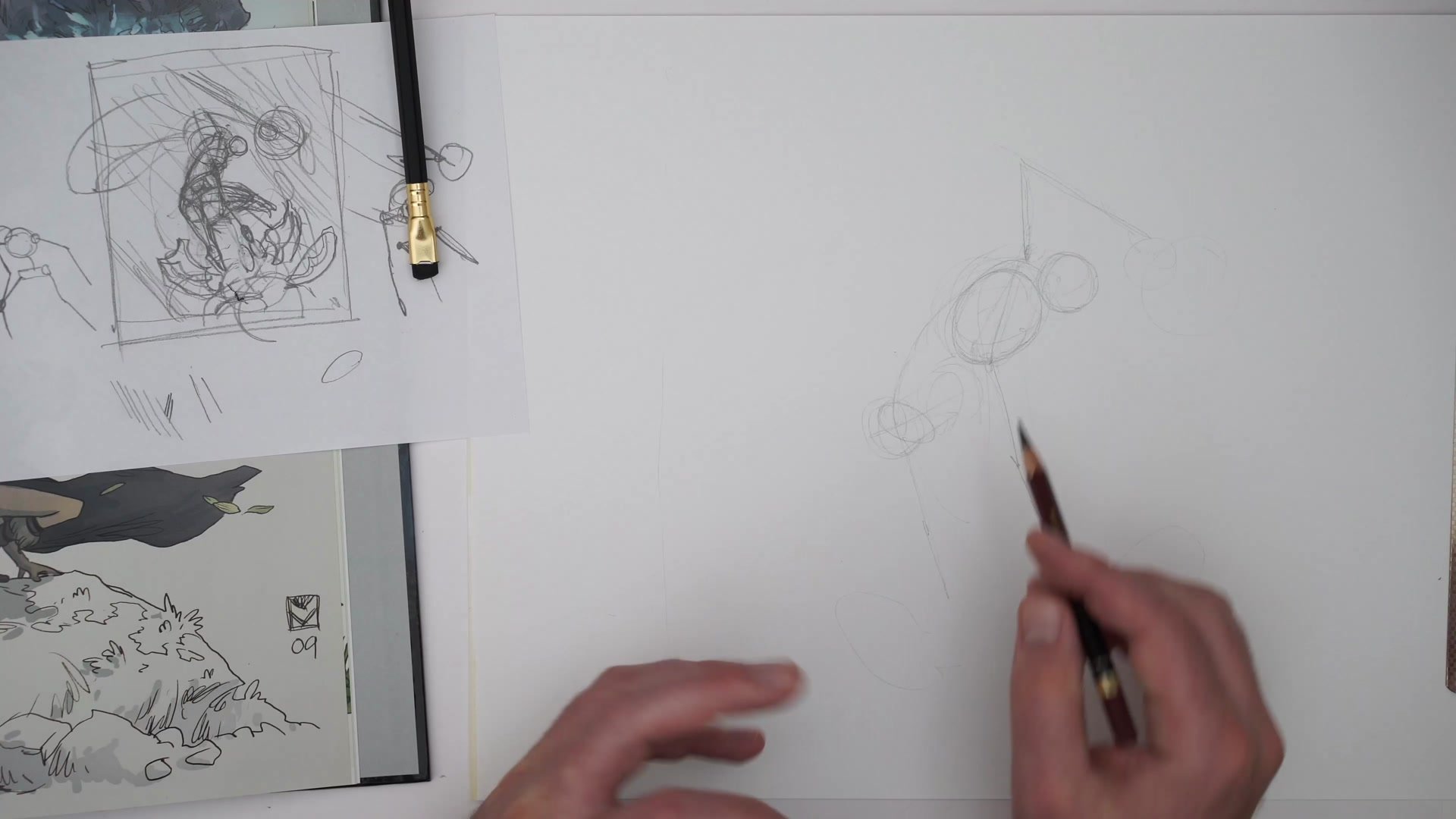
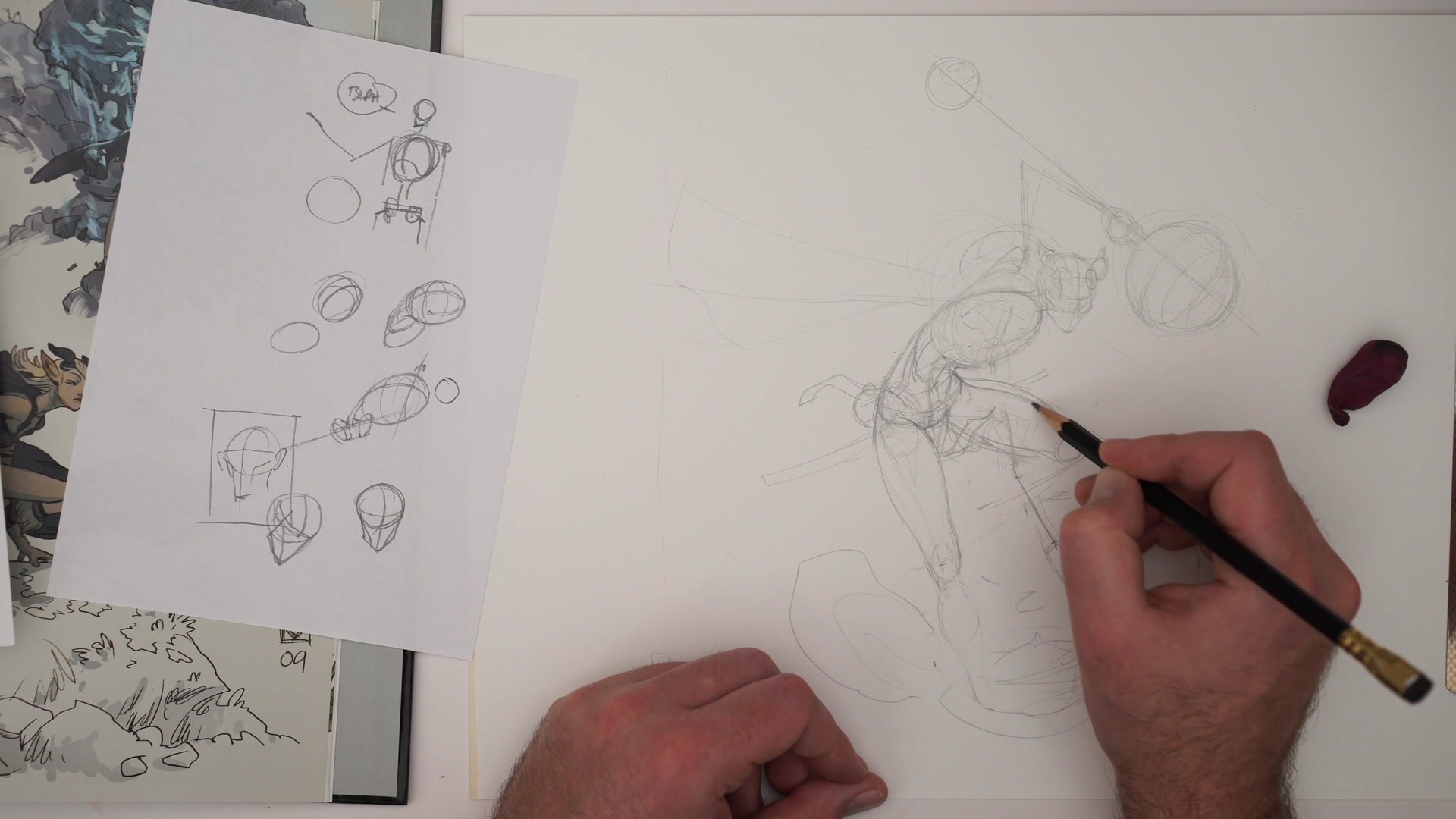
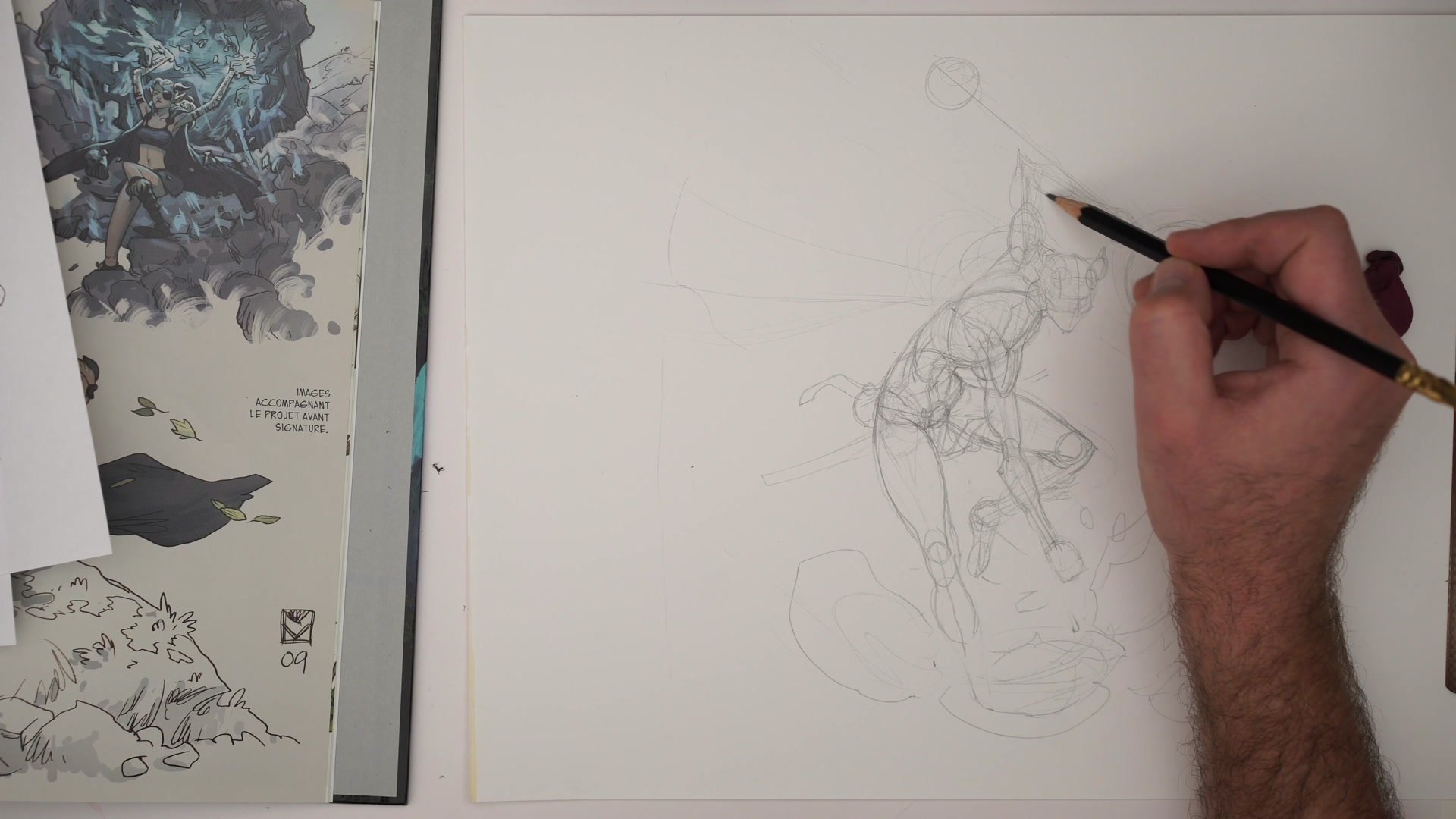
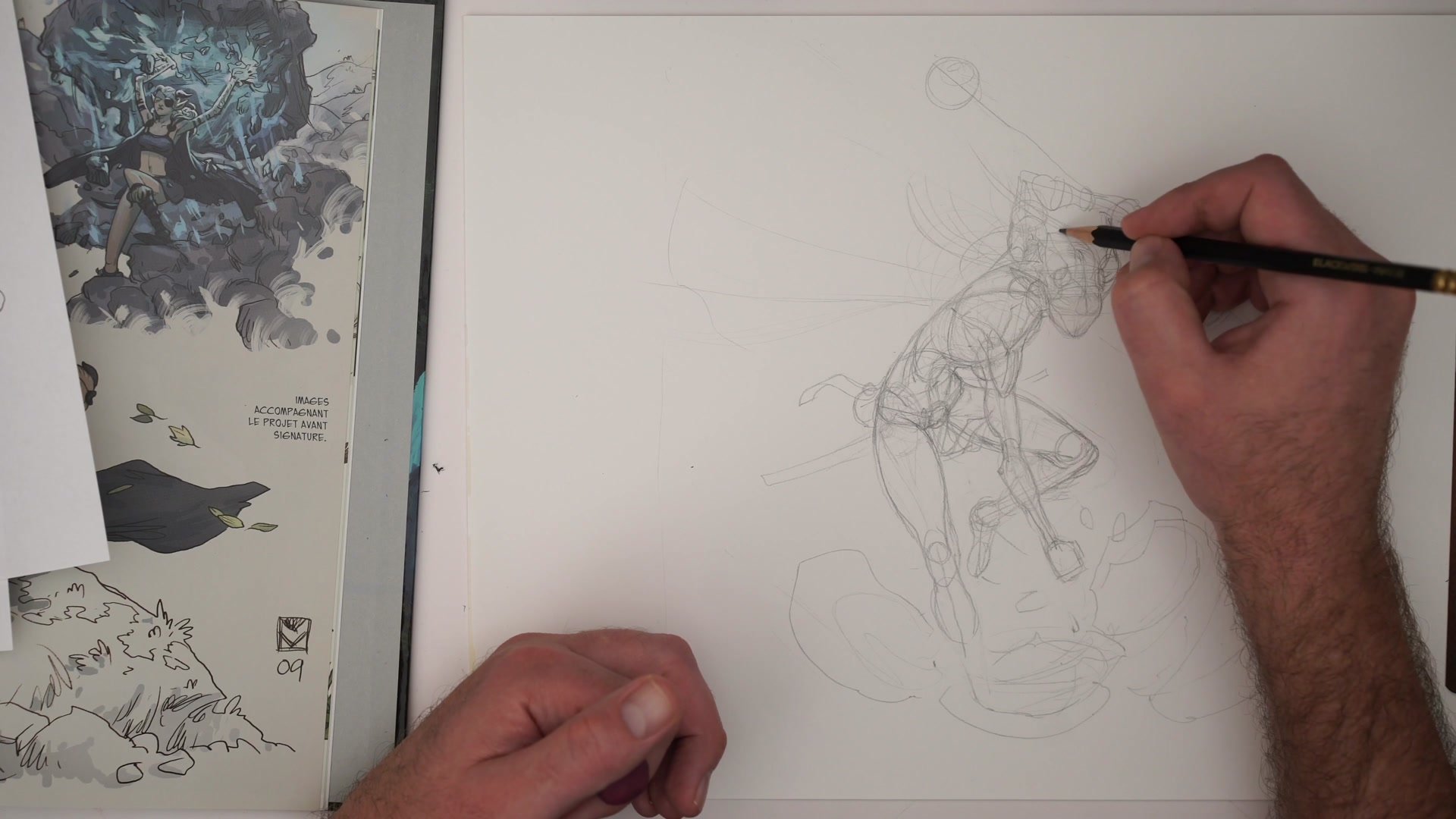
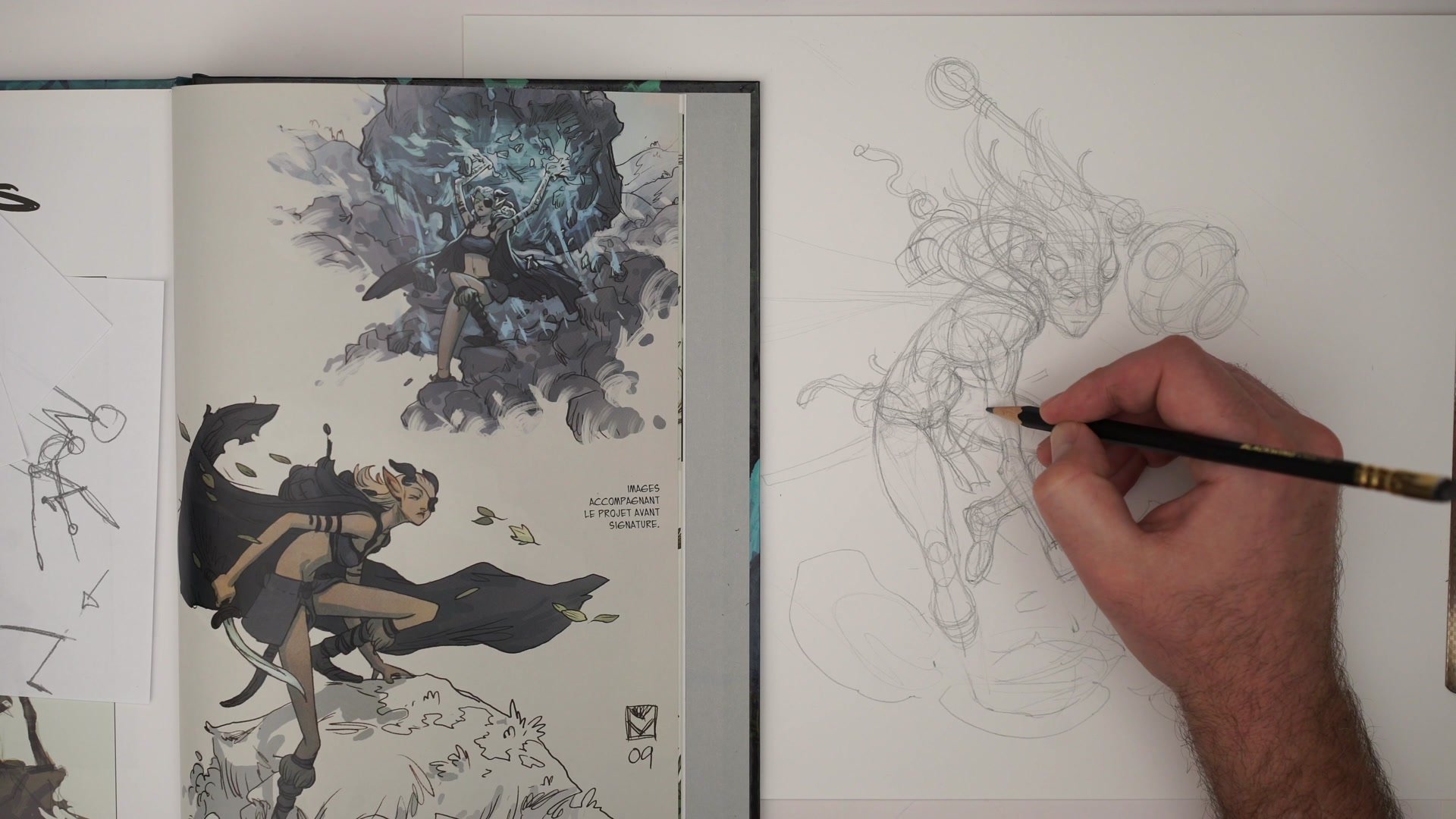
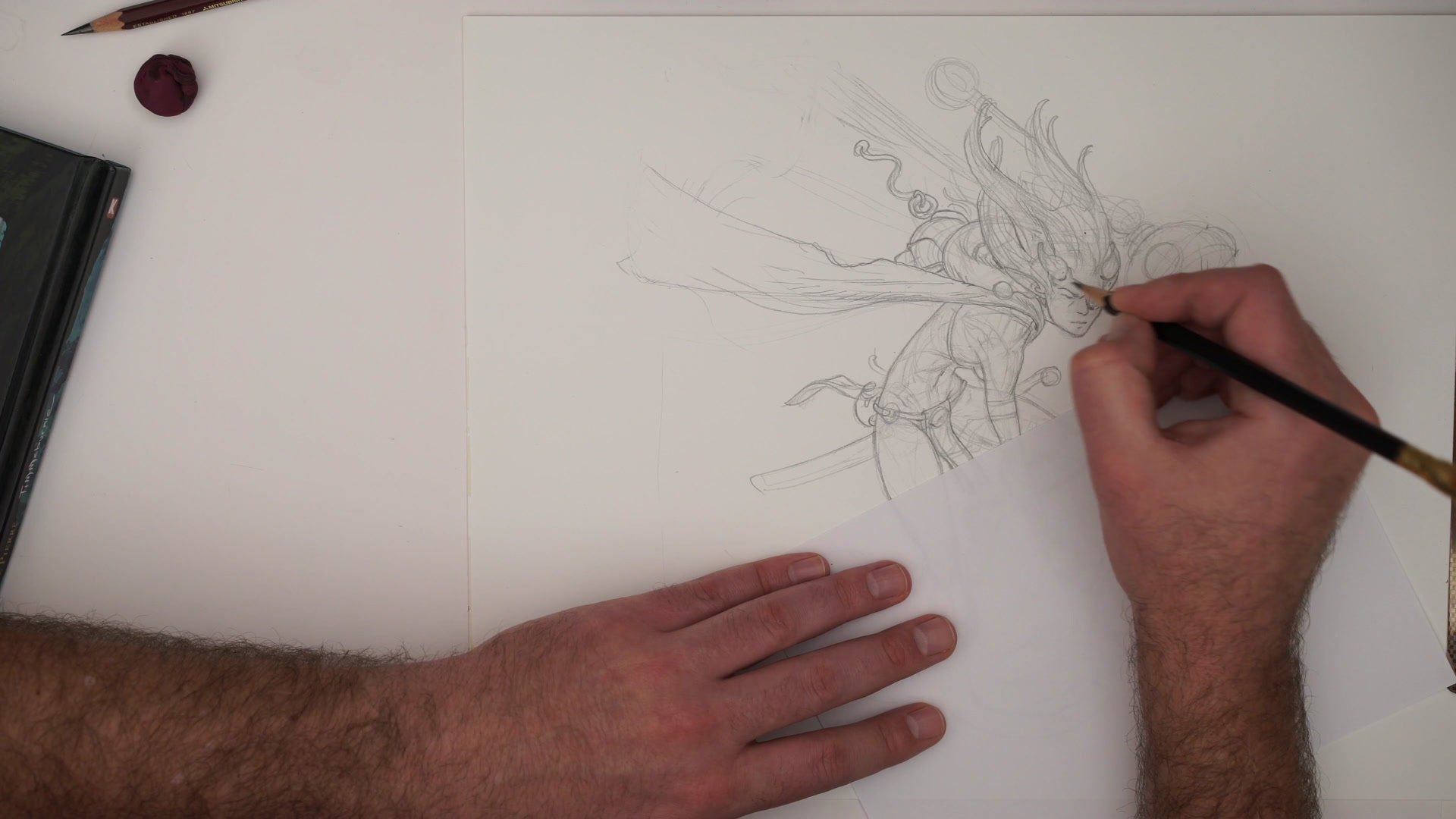
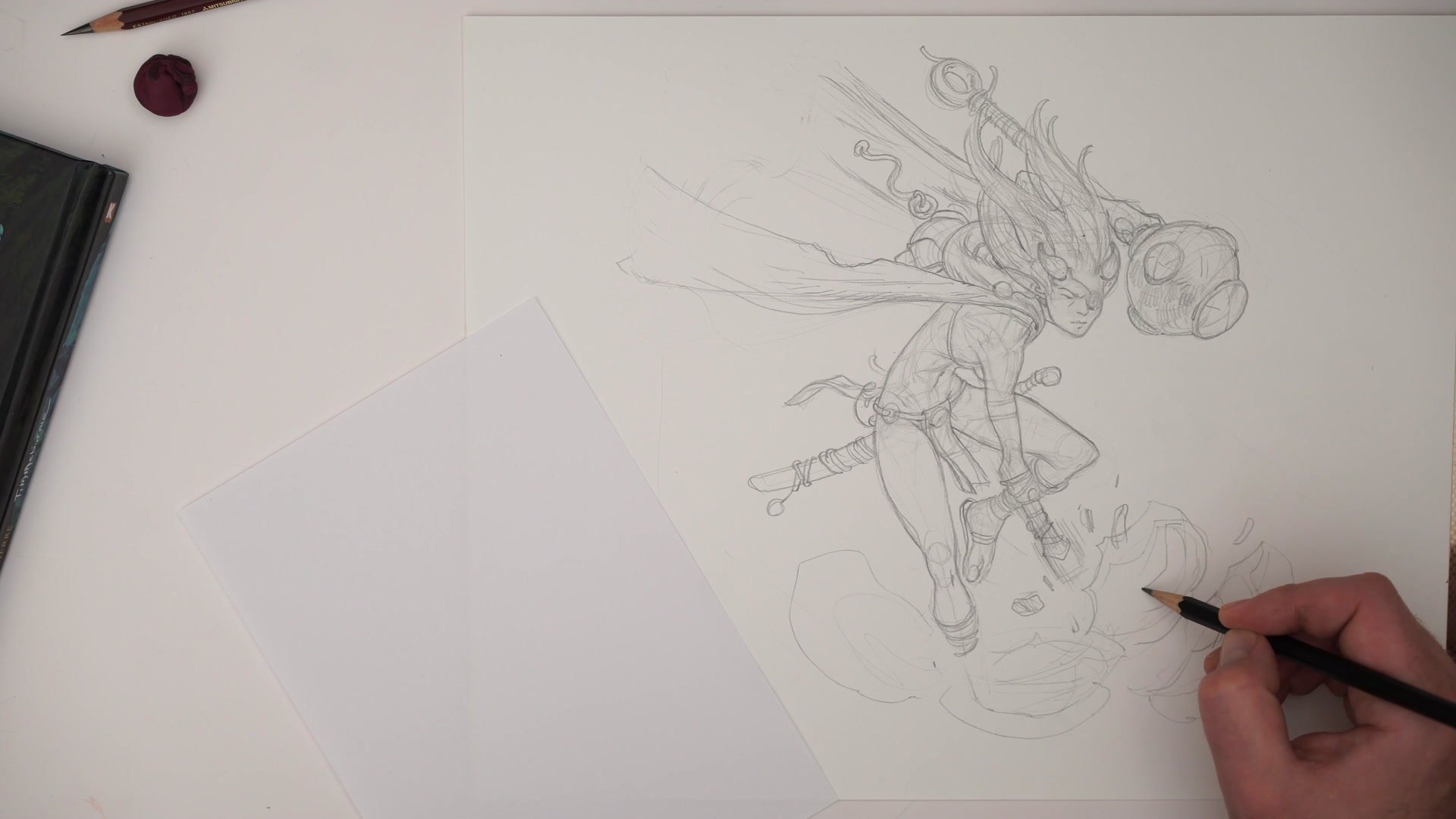
The drawing follows a clear four-stage process: transfer, pose, form, and detail. Transfer means getting the rough concept onto the page at the right scale, answering the simple question of whether the drawing will actually fit. The pose stage establishes the stick figure and mannequin, finding the spine, center lines, and major joint positions. Form adds musculature and three-dimensional anatomy over that framework. Detail brings costume, character features, and illustrative elements.
What makes this process practical is that the stages overlap. The mannequin phase already incorporates character-specific elements like horn placement and weapon positioning, because those features affect tangents and compositional flow. Waiting until the detail phase to figure out where horns attach to the skull would mean redrawing the entire head construction. Anything critical to the silhouette or the pose becomes part of the mannequin stage, regardless of whether it is technically anatomy or costume.
Mannequin Construction
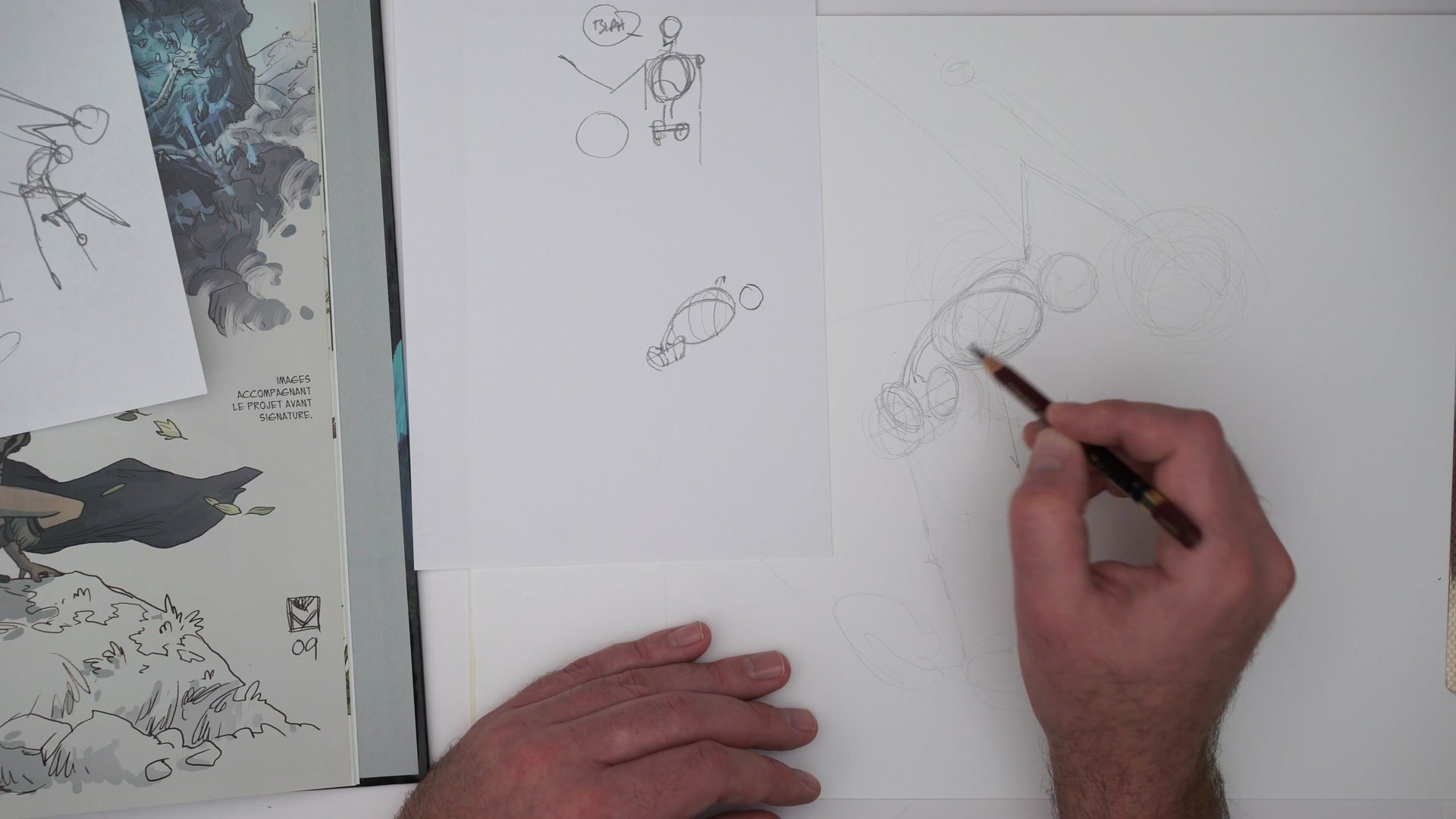
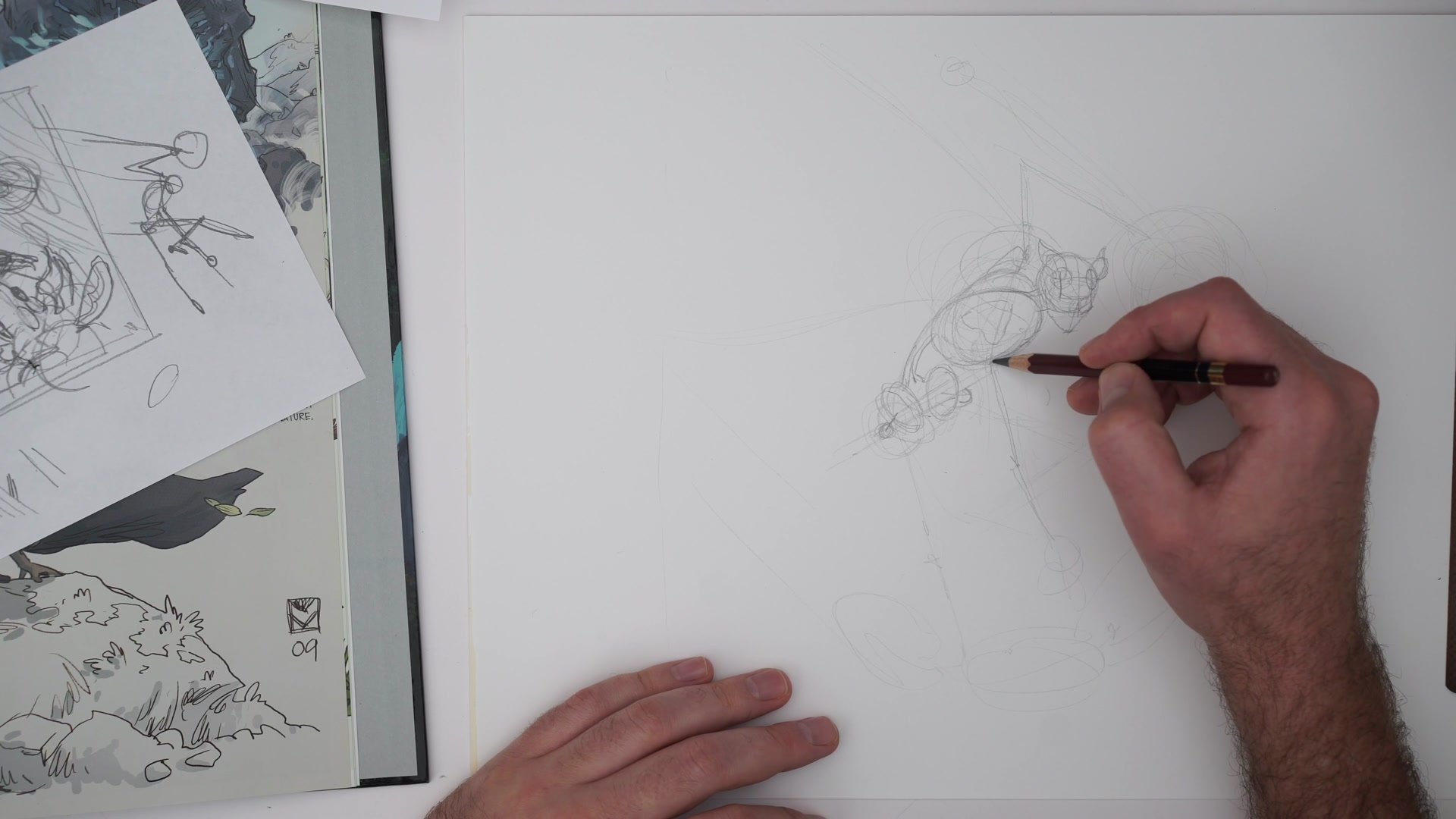
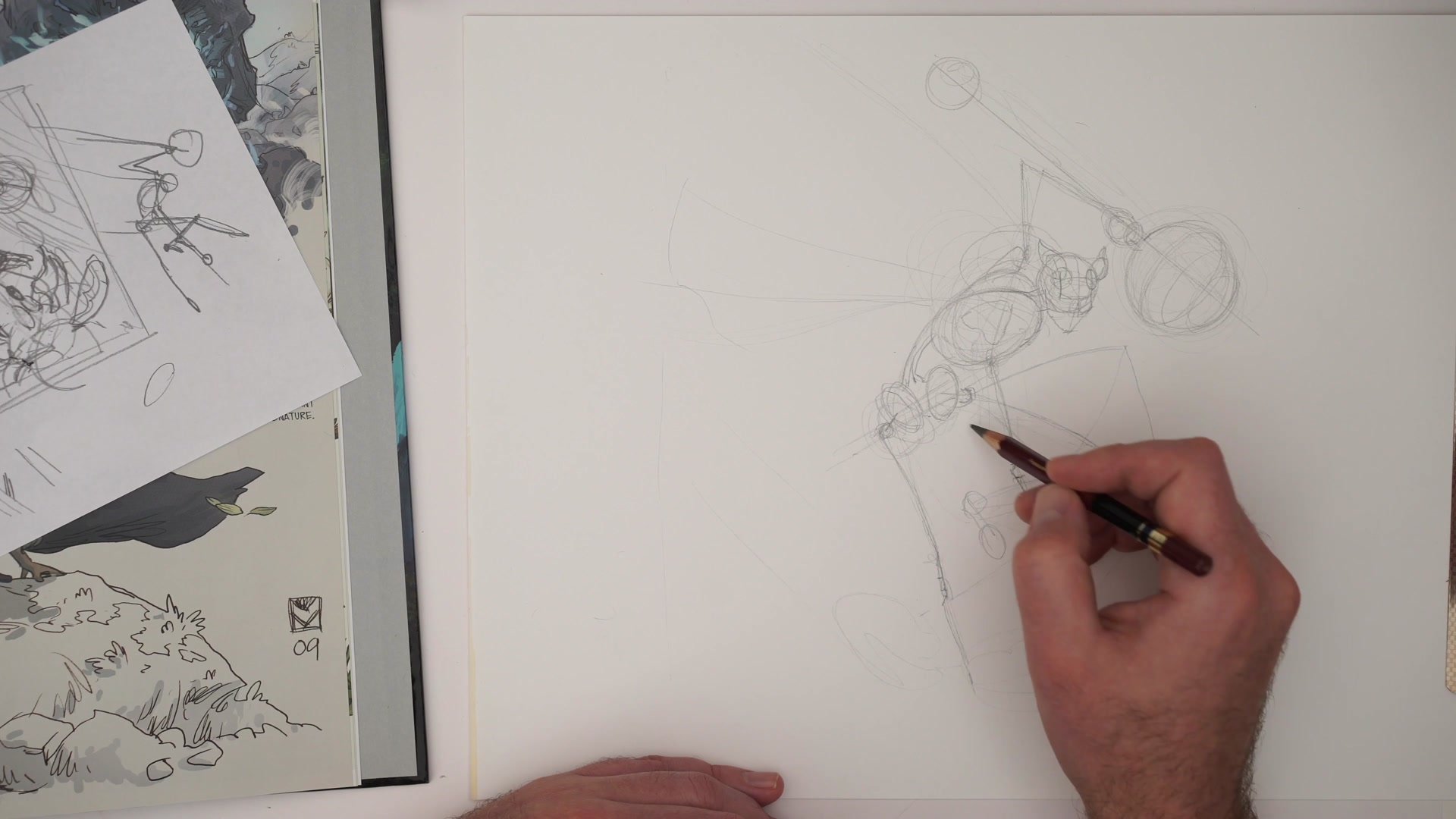
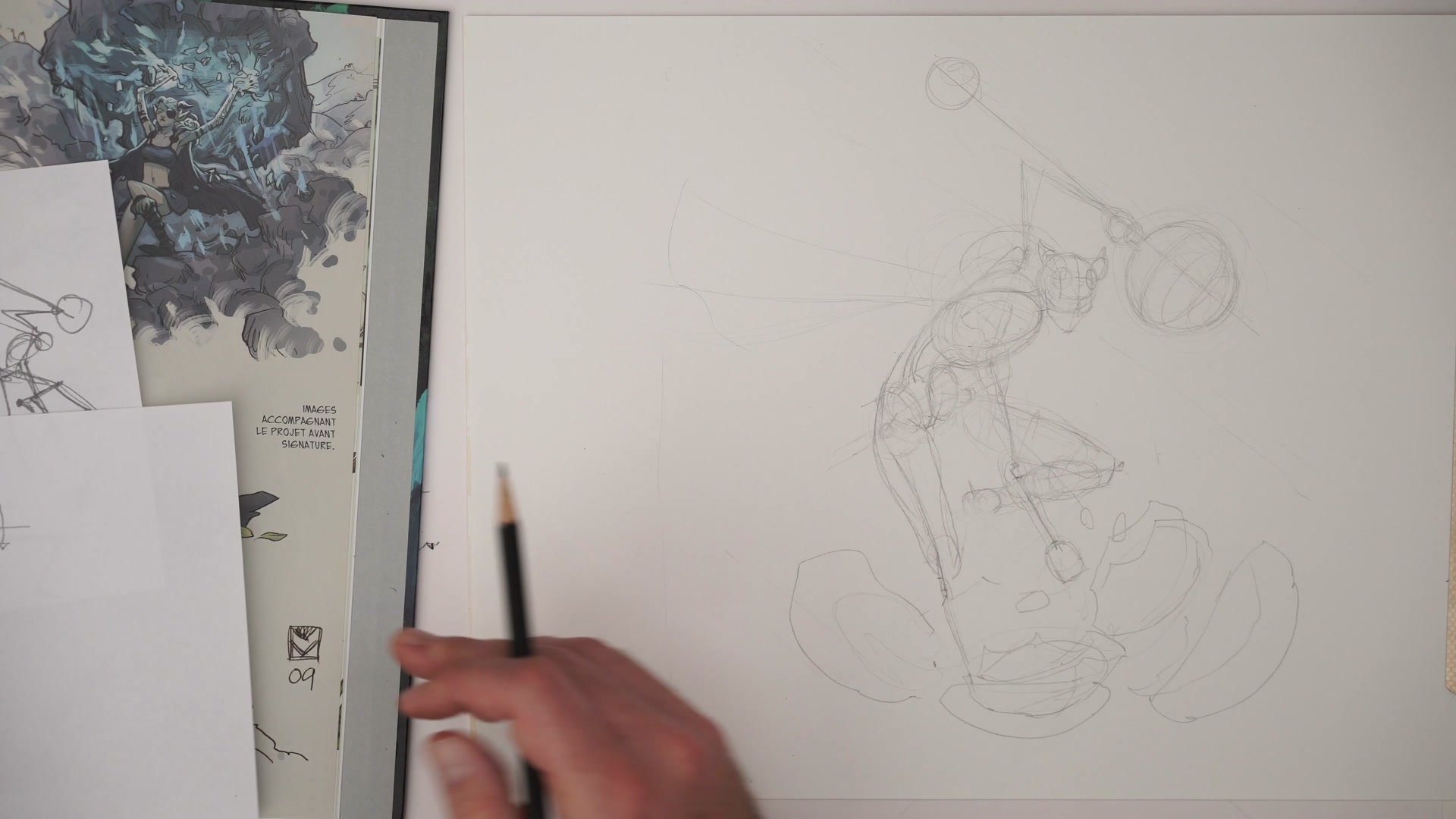
Tangent Awareness and Spidey Sense
A major theme throughout the demonstration is what gets called a drawing spidey sense. This is the subconscious awareness of when poses are going to create problems, particularly around tangents. Tangents occur where forms overlap or meet in confusing ways, making it impossible to separate one limb from another. A hand crossing behind a knee, an elbow lining up with a heel, any spot where the silhouette becomes ambiguous.
The honest approach to tangent problems depends entirely on intent. For a quick sketch, the solution might be to simply fade out or obscure the problematic area. For a polished cover illustration, every tangent needs to be resolved through careful pose planning. The demonstration shows both approaches in practice: some tangent issues get solved structurally, while others get handled by letting hair, a cape, or environmental elements cover the trouble spot. This is not laziness. It is the professional reality of directing the viewer's eye toward what matters and away from what does not.
Anatomy and Refinement
Adding Illustrative Elements
The final phase transforms a character drawing into something that feels more like an illustration. Rather than attempting a full background, the approach starts small: a few rocks being shattered, speed lines to imply motion, a cape caught in the wind. These simple additions create narrative context and compositional energy without requiring a fully rendered environment.
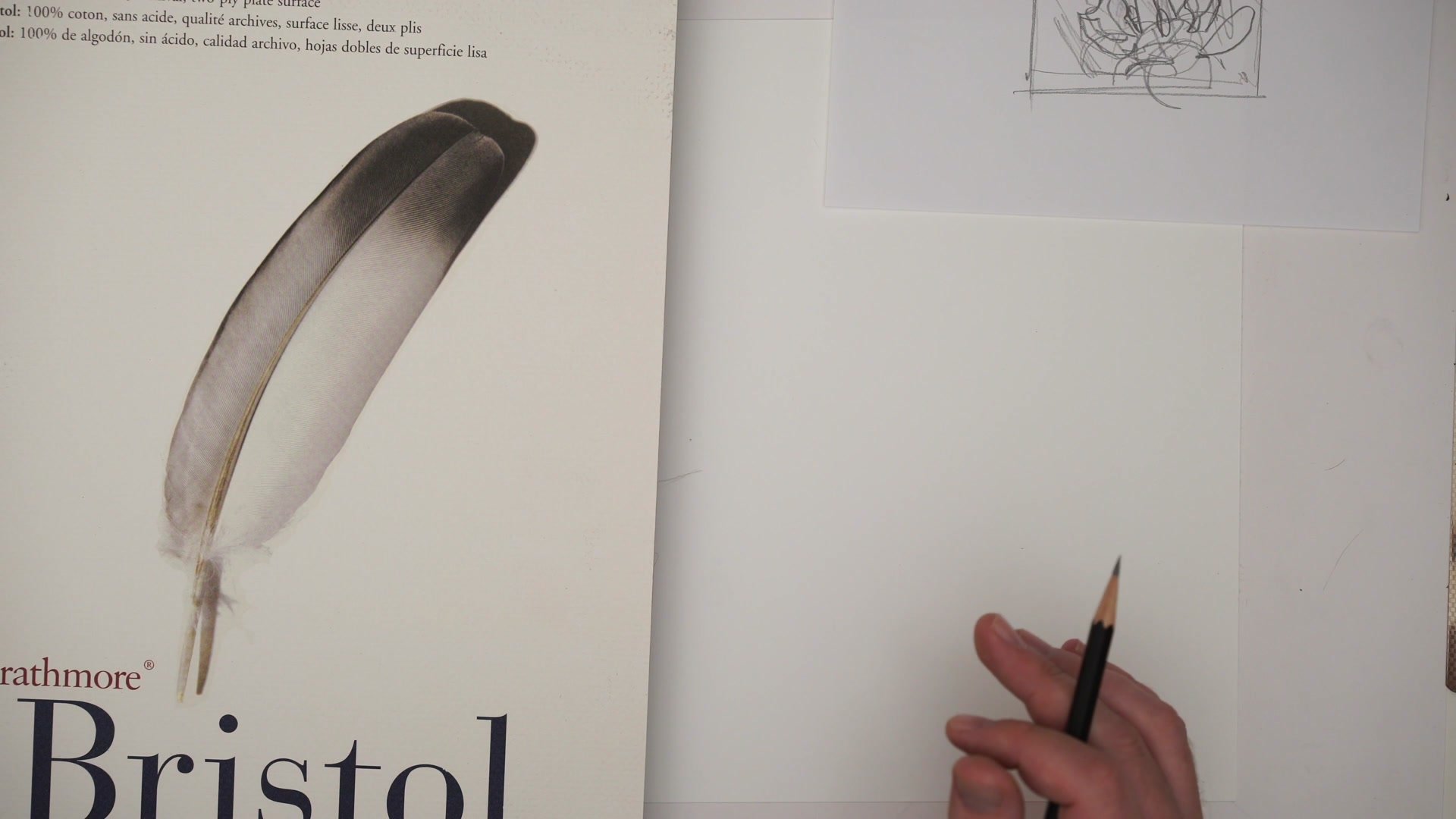
This incremental approach to backgrounds is especially valuable for character-first artists. Instead of jumping from isolated figures to complex scenes, the path is to add one or two interactive elements at a time. A character standing becomes a character doing something, which becomes a character doing something with something. Each step builds compositional thinking without overwhelming the drawing process. The medium matters too. Pencil on Bristol board encourages a sketchy, tonal approach that rewards looseness. Responding to what the tools do well rather than fighting them produces more natural results, and the iterative erase-and-redraw workflow that good cotton paper allows makes successive refinement passes possible without destroying the surface.
Final Drawing
Key Principles
Four-Stage Construction: Transfer, pose, form, detail. Each stage answers specific questions, and overlapping between stages is not only acceptable but necessary when character-specific features affect the pose.
Tangent Management: Where forms meet determines whether a pose reads clearly. The solution depends on intent: resolve structurally for polished work, or obscure creatively for sketches. Developing an instinct for problematic tangents comes from practice, not theory.
Paper Affects Process: Different paper surfaces change how graphite responds, how erasure works, and how successive passes feel. Bristol board allows heavy rework. Choosing tools that match the intended workflow prevents frustration.
Story Over Perfection: Directing the viewer's eye through narrative elements, compositional hierarchy, and purposeful detail makes anatomical imperfections disappear. Good artists show viewers what they want them to see.
Practice This
Start With A Known Character: Pick a character from a comic, manga, or your own work that you know well enough to draw without heavy reference. This frees your brain to focus on construction rather than design decisions.
Build The Mannequin First: Block in the full pose using simple forms before adding any anatomy or detail. Include anything critical to the silhouette at this stage, even if it seems like a detail phase item.
Add One Illustrative Element: Once the figure is constructed, add a single environmental or action element. Rocks, speed lines, a simple prop interaction. Practice making a character drawing feel like a small illustration without committing to a full background.